An empirical analysis of exact algorithms for the unbounded knapsack problem
Henrique Becker, Luciana S. Buriol

TL;DR
This paper empirically compares various exact algorithms for the unbounded knapsack problem, highlighting the effectiveness of the terminating step-off algorithm and analyzing instance hardness across different approaches.
Contribution
It provides a comprehensive empirical analysis of seven algorithms, introduces new instance classes, and discusses properties like dominances affecting algorithm performance.
Findings
The terminating step-off algorithm has the lowest mean solving time on recent benchmarks.
State-of-the-art algorithms exploit threshold and collective dominances.
New instances favor branch-and-bound over dynamic programming without high dominance items.
Abstract
This work presents an empirical analysis of exact algorithms for the unbounded knapsack problem, which includes seven algorithms from the literature, two commercial solvers, and more than ten thousand instances. The terminating step-off, a dynamic programming algorithm from 1966, presented the lowest mean time to solve the most recent benchmark from the literature. The threshold and collective dominances are properties of the unbounded knapsack problem first discussed in 1998, and exploited by the current state-of-the-art algorithms. The terminating step-off algorithm did not exploit such dominances, but has an alternative mechanism for dealing with dominances which does not explicitly exploits collective and threshold dominances. Also, the pricing subproblems found when solving hard cutting stock problems with column generation can cause branch-and-bound algorithms to display…
Click any figure to enlarge with its caption.
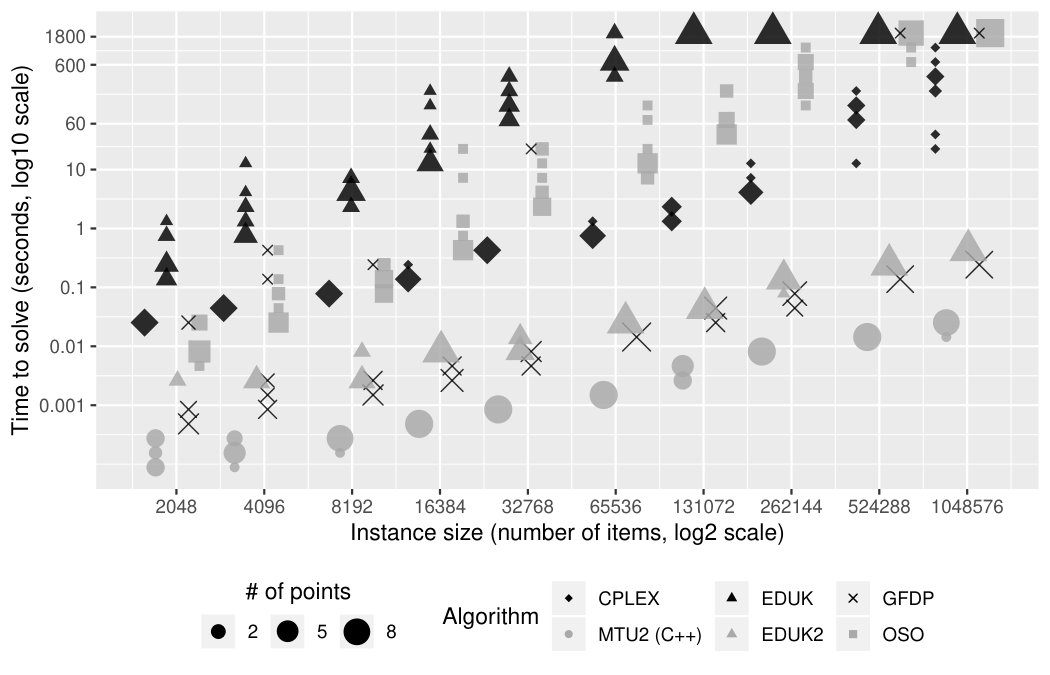 Figure 1
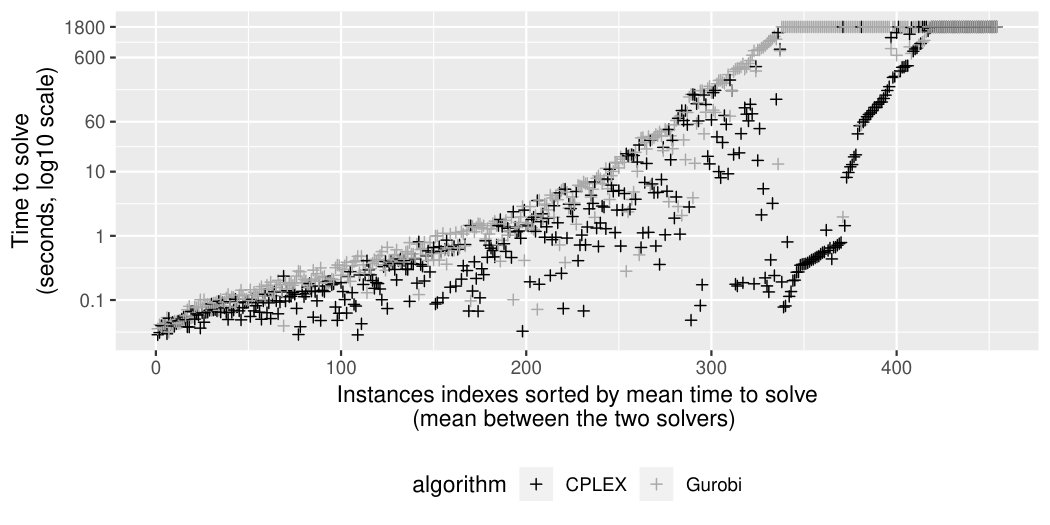 Figure 2
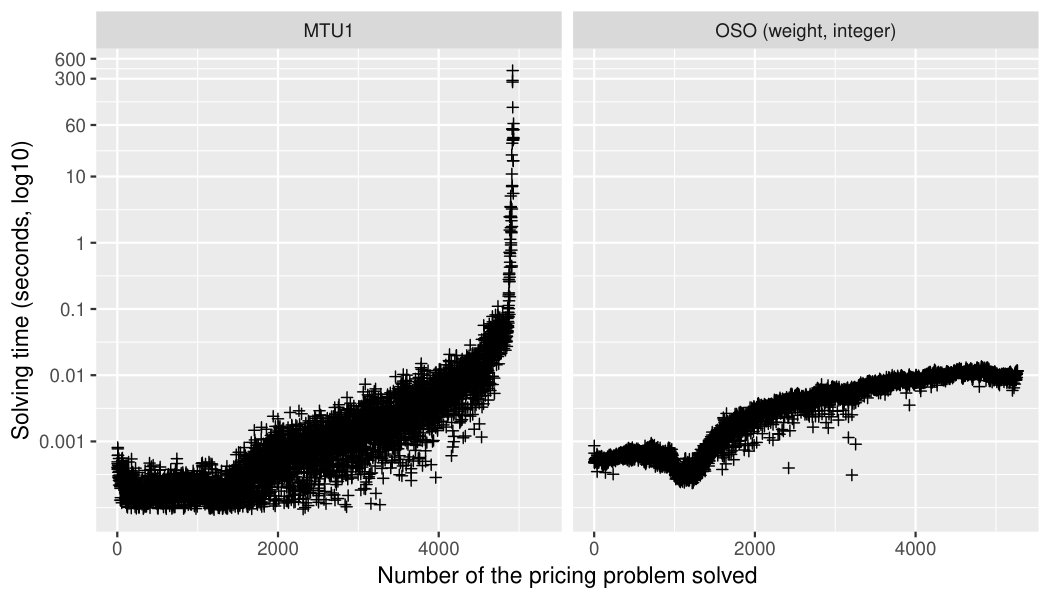 Figure 3
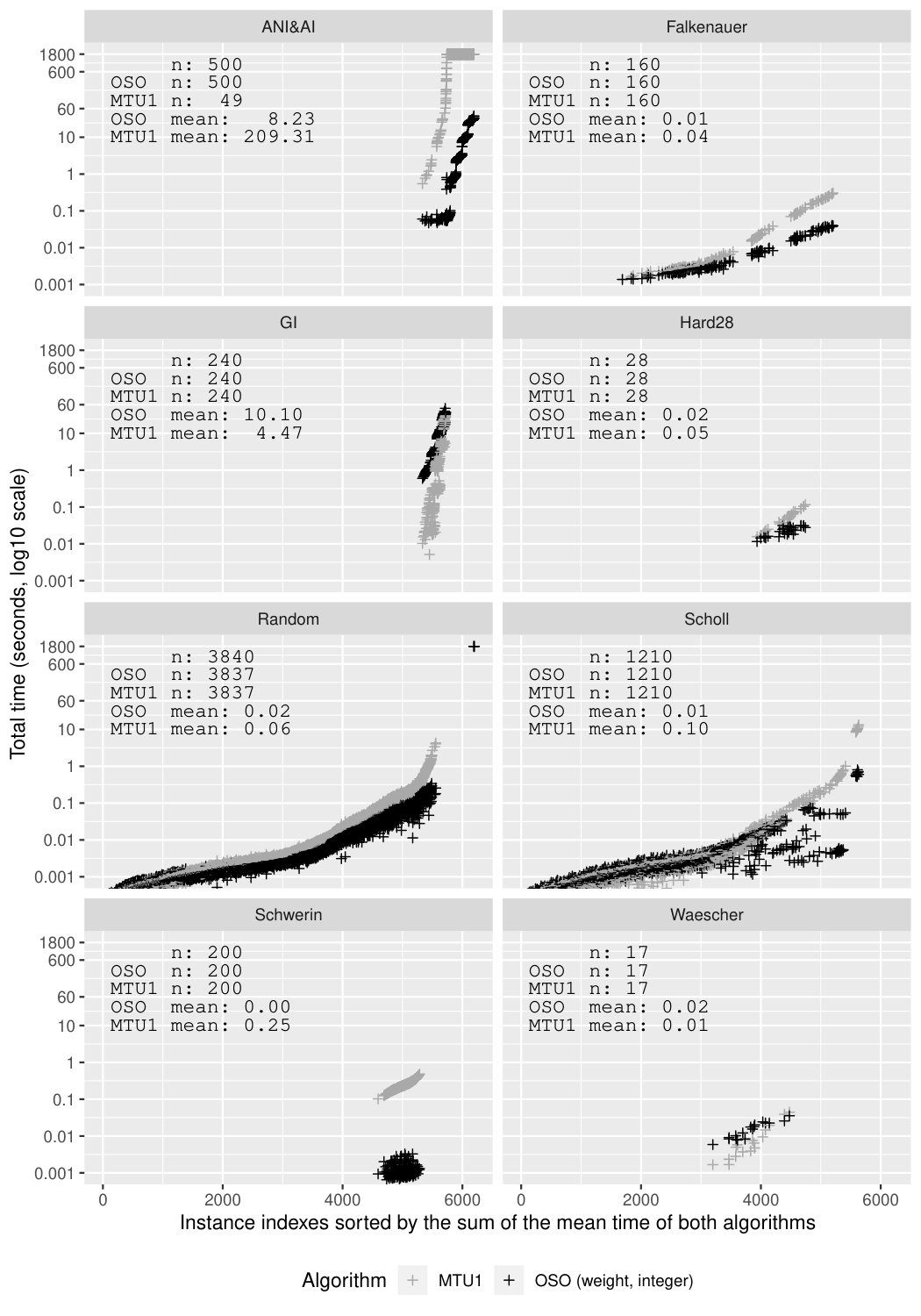 Figure 4
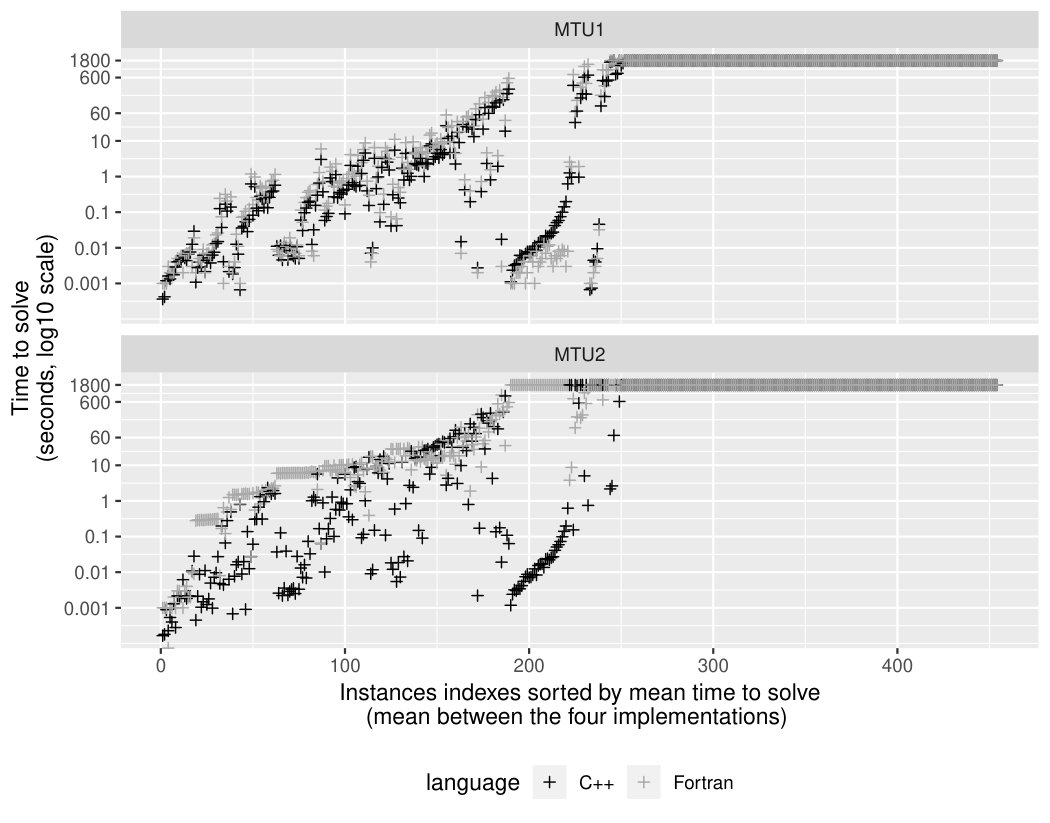 Figure 5
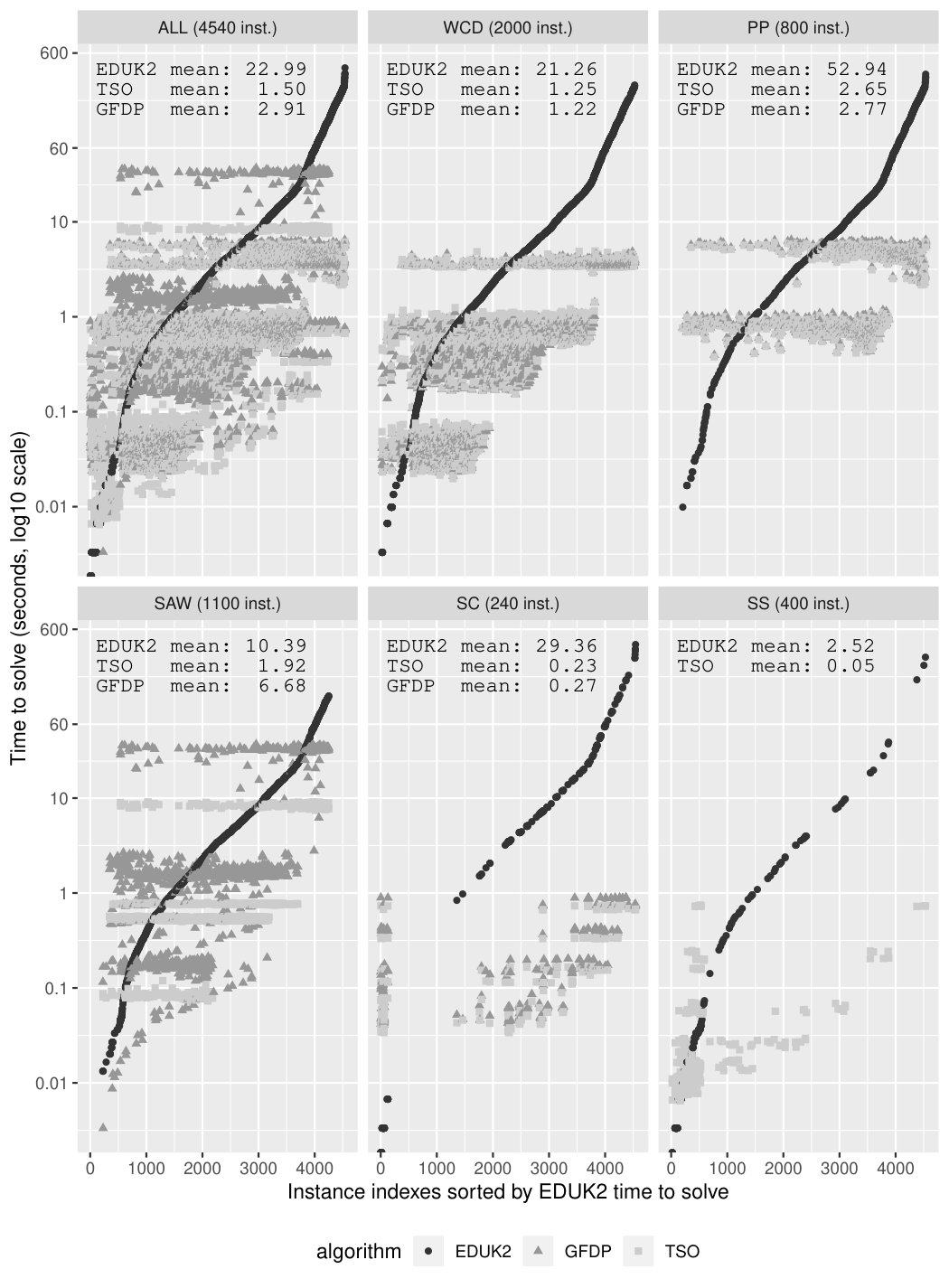 Figure 1
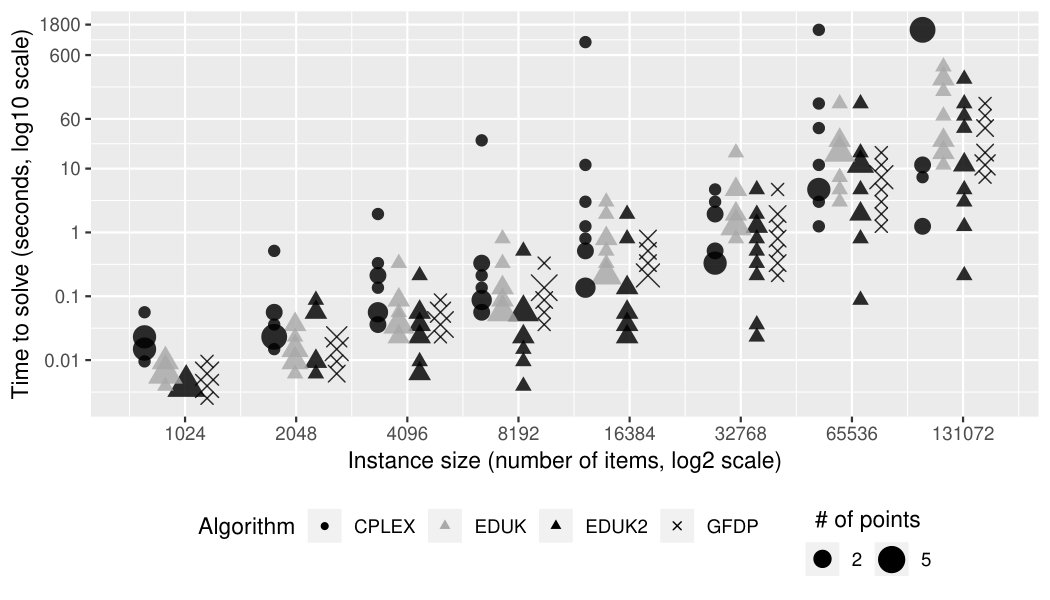 Figure 1
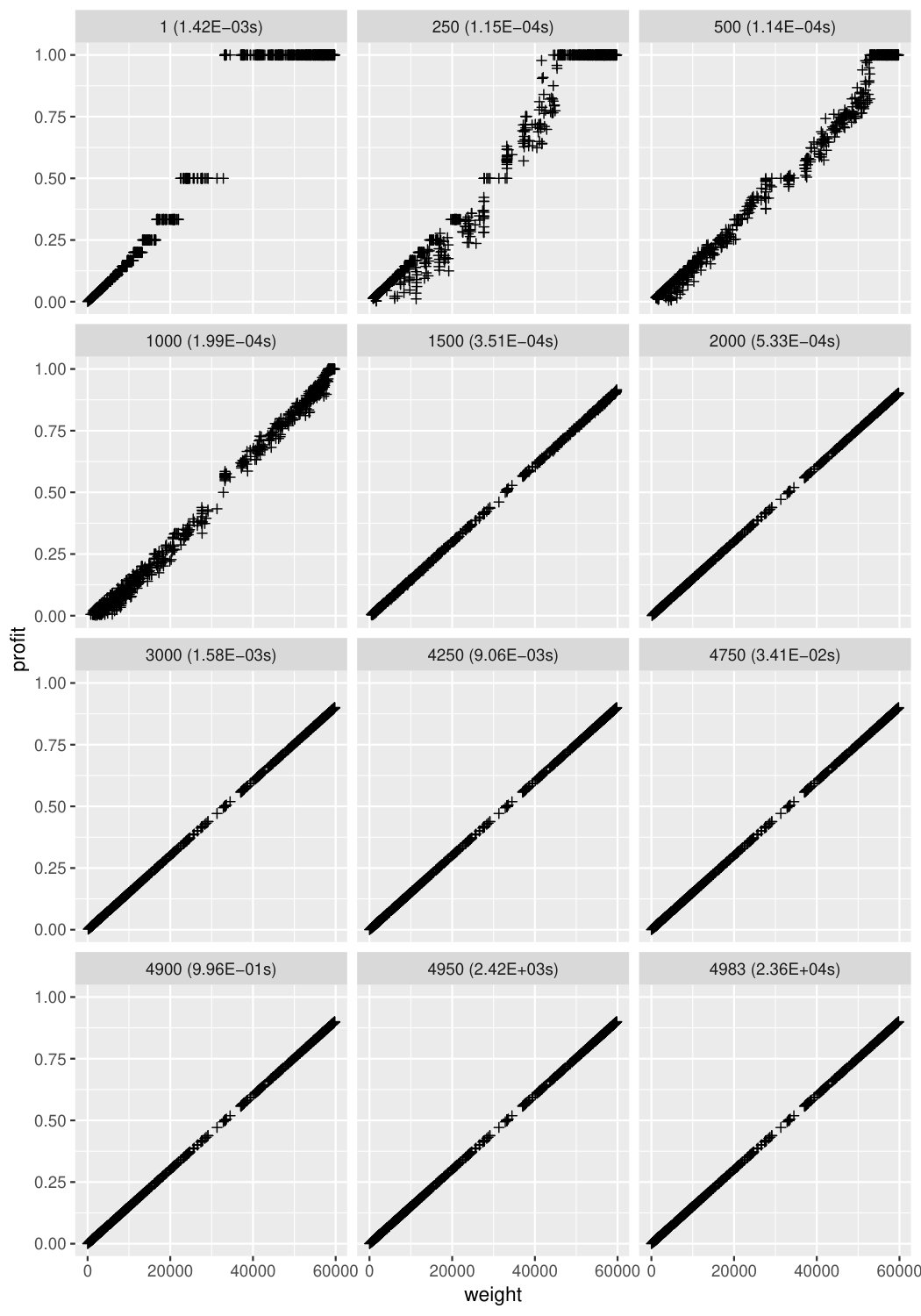 Figure 8
Peer Reviews
No public reviews on file for this paper yet. If you reviewed it on a platform where reviews are public (OpenReview, ICLR, NeurIPS, ICML), you can paste yours below so the community can read it here.
Videos
No videos yet. Explain this paper in a talk, walkthrough, or lecture? Add one.