Observation of $C\!P$ violation in charm decays
LHCb collaboration: R. Aaij, C. Abell\'an Beteta, B. Adeva, M., Adinolfi, C.A. Aidala, Z. Ajaltouni, S. Akar, P. Albicocco, J. Albrecht, F., Alessio, M. Alexander, A. Alfonso Albero, G. Alkhazov, P. Alvarez Cartelle,, A.A. Alves Jr, S. Amato, Y. Amhis, L. An, L. Anderlini

TL;DR
This paper reports the first observation of charge-parity (CP) violation in charm hadron decays, using LHCb data to measure asymmetries in $D^0$ decays with high significance.
Contribution
It provides the first experimental evidence of CP violation in charm decays, combining multiple measurements to achieve a five-sigma significance.
Findings
Measured $ riangle A_{CP}$ significantly different from zero
Combined results yield $ riangle A_{CP} = (-15.4 imes 10^{-4})$
Observation exceeds five standard deviations, confirming CP violation in charm decays.
Abstract
A search for charge-parity () violation in and decays is reported, using collision data corresponding to an integrated luminosity of 6 collected at a center-of-mass energy of 13 TeV with the LHCb detector. The flavor of the charm meson is inferred from the charge of the pion in decays or from the charge of the muon in decays. The difference between the asymmetries in and decays is measured to be for -tagged and for -tagged mesons. Combining these with previous LHCb results leads to $$\Delta A_{C\!P} = ( -15.4 \pm 2.9)…
Click any figure to enlarge with its caption.
 Figure 1
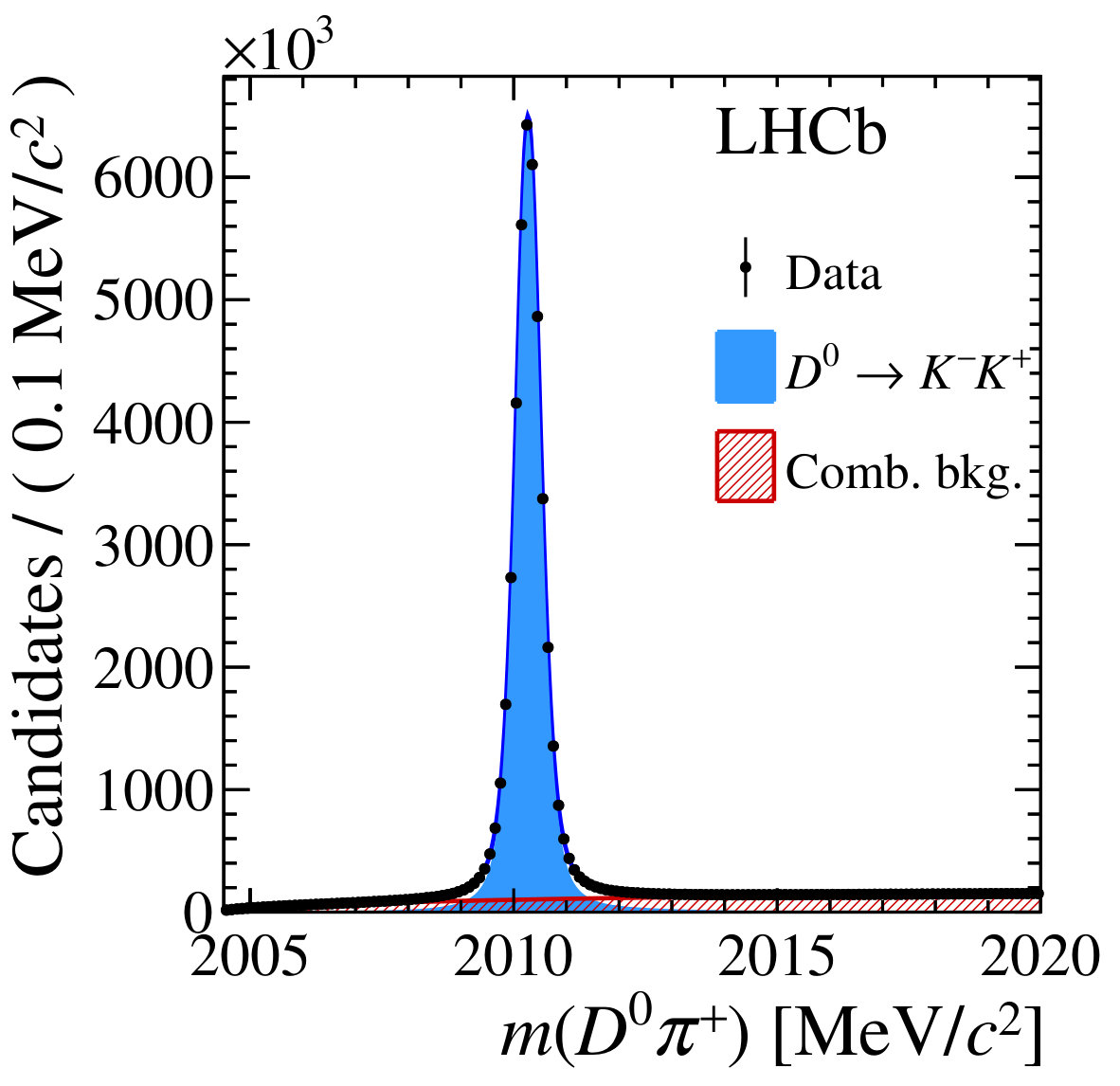 Figure 2
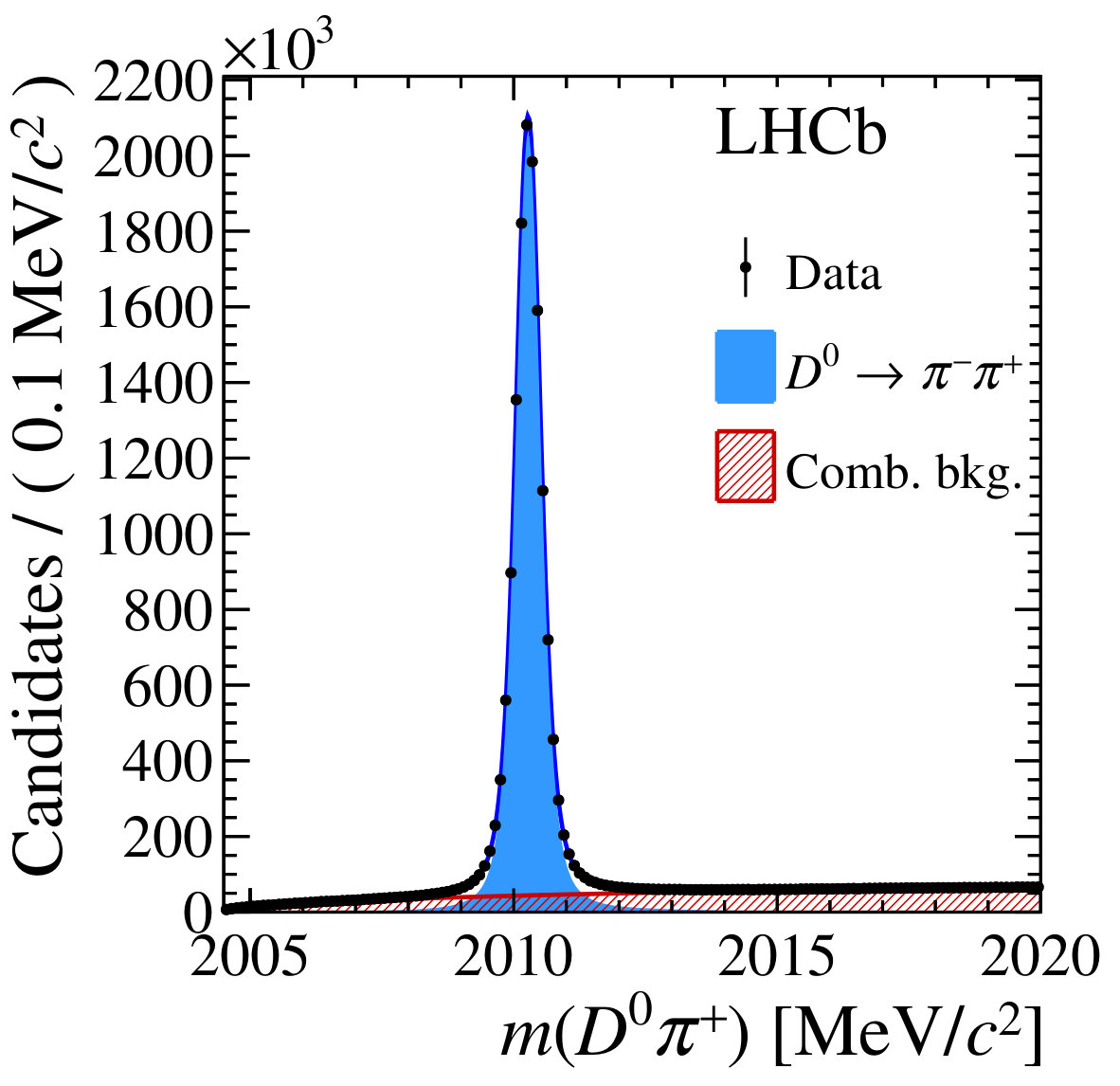 Figure 3
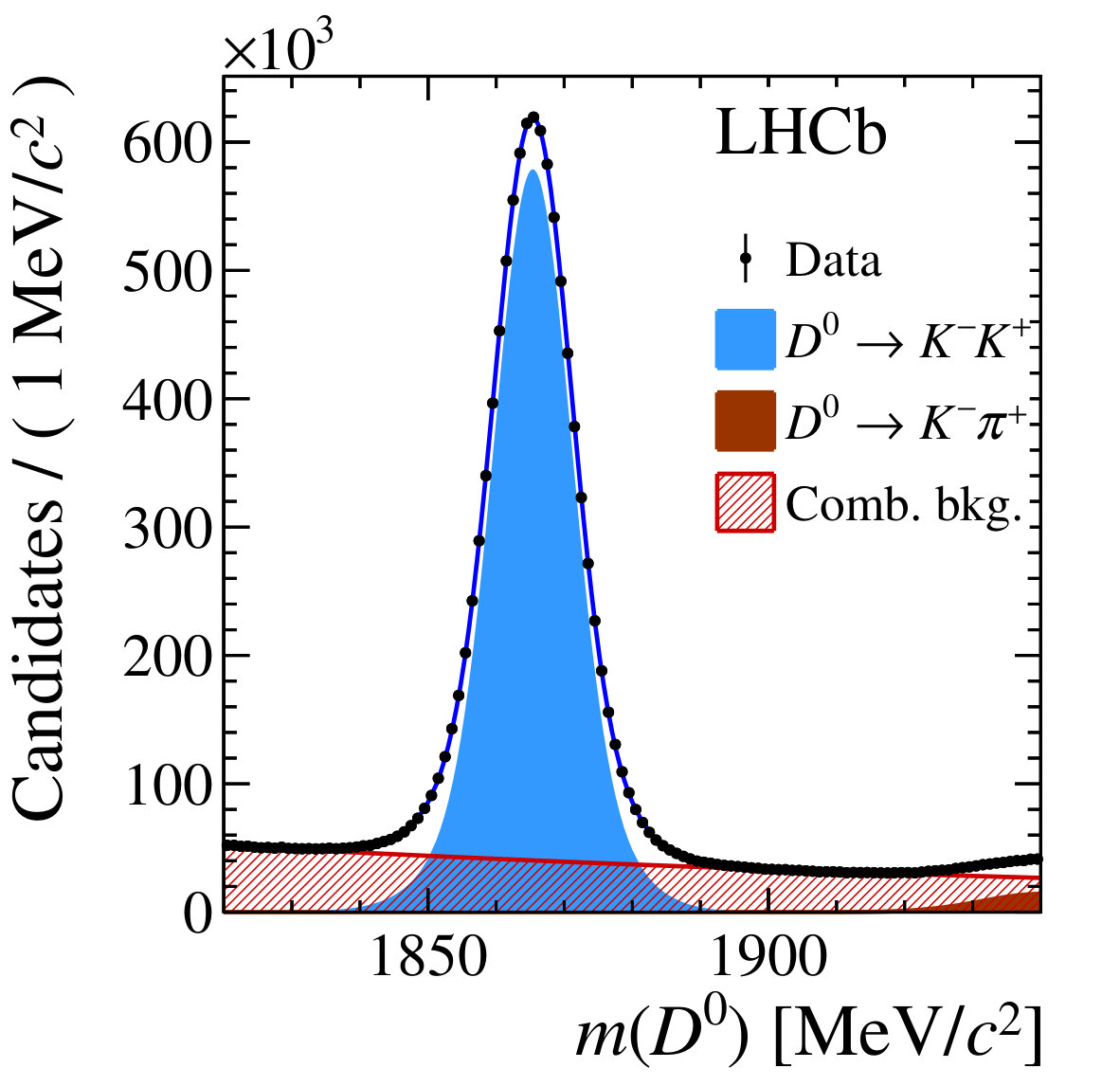 Figure 4
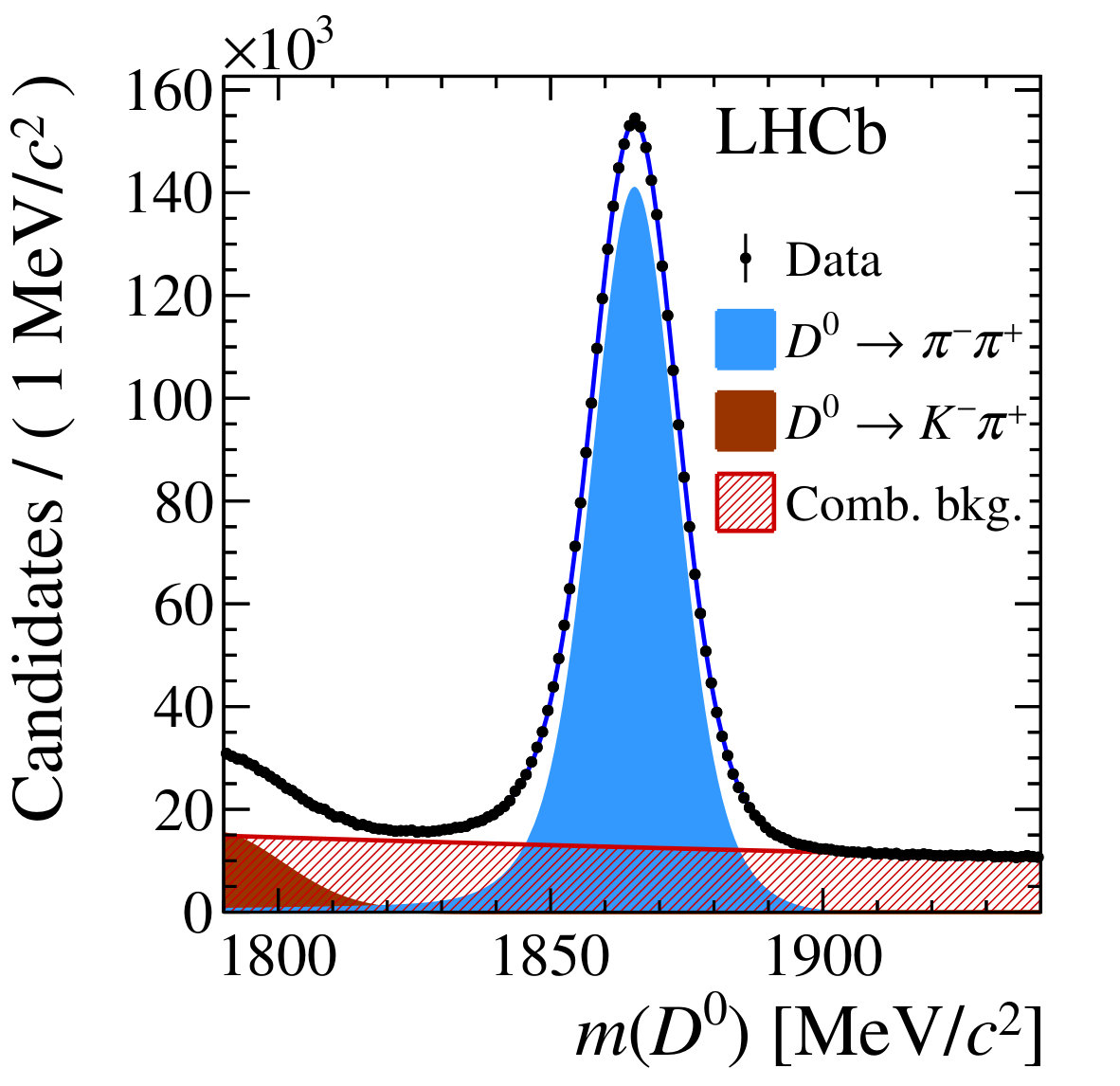 Figure 5
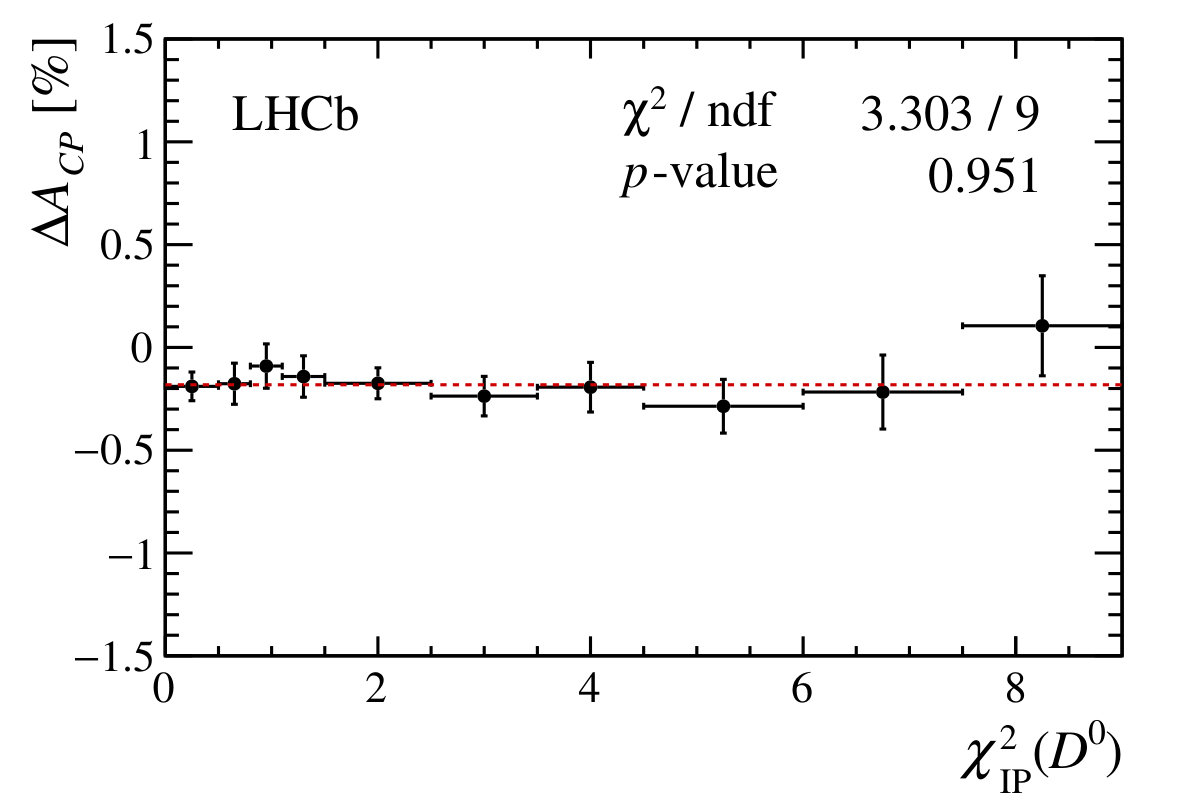 Figure 6
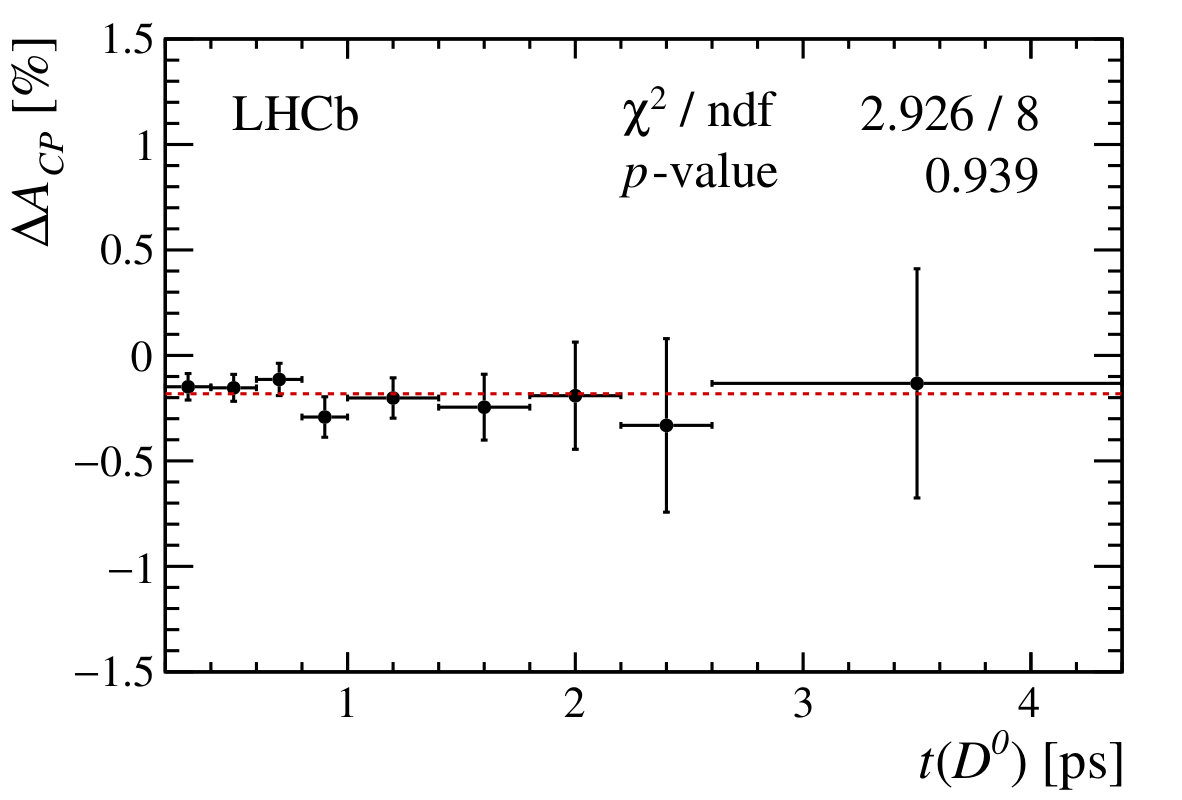 Figure 7
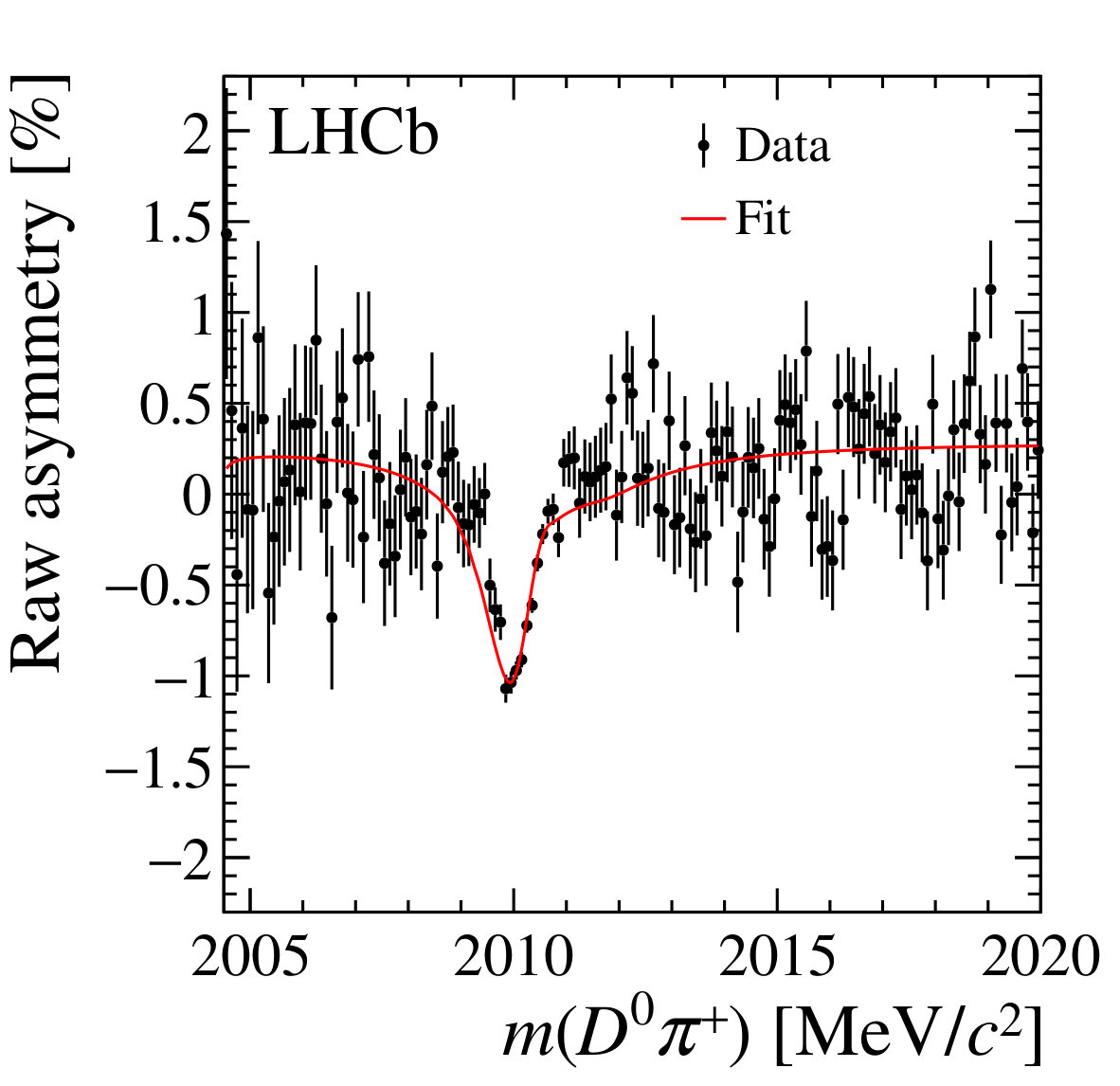 Figure 8
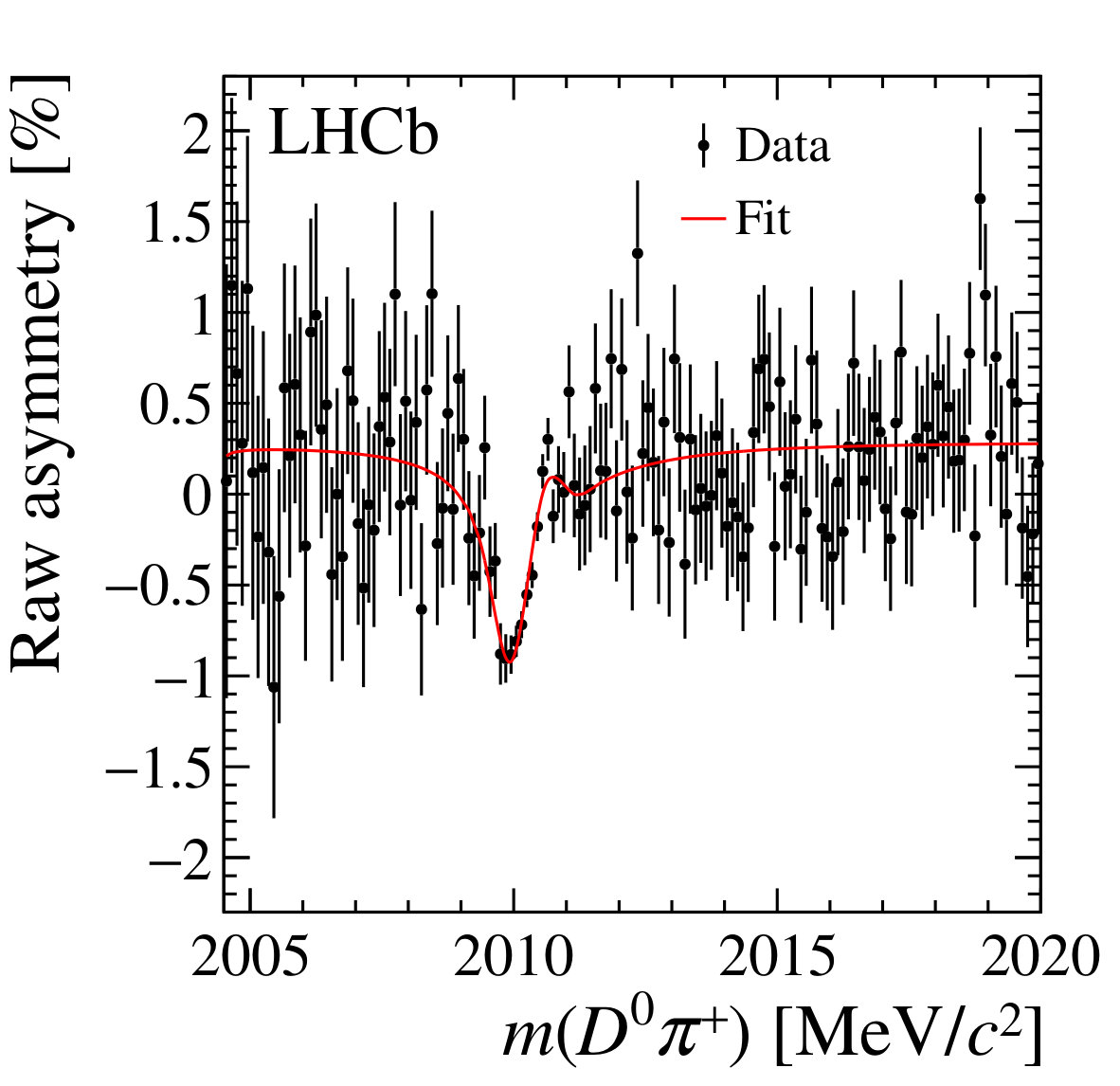 Figure 9
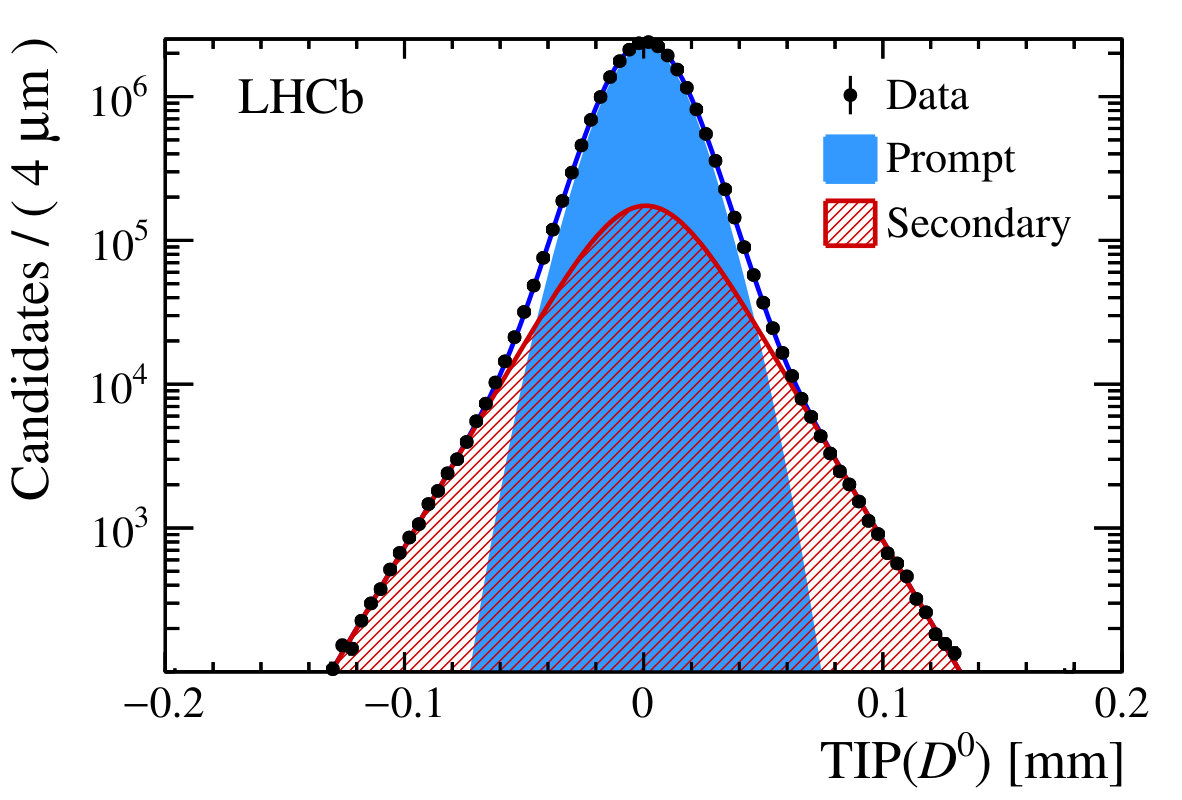 Figure 10
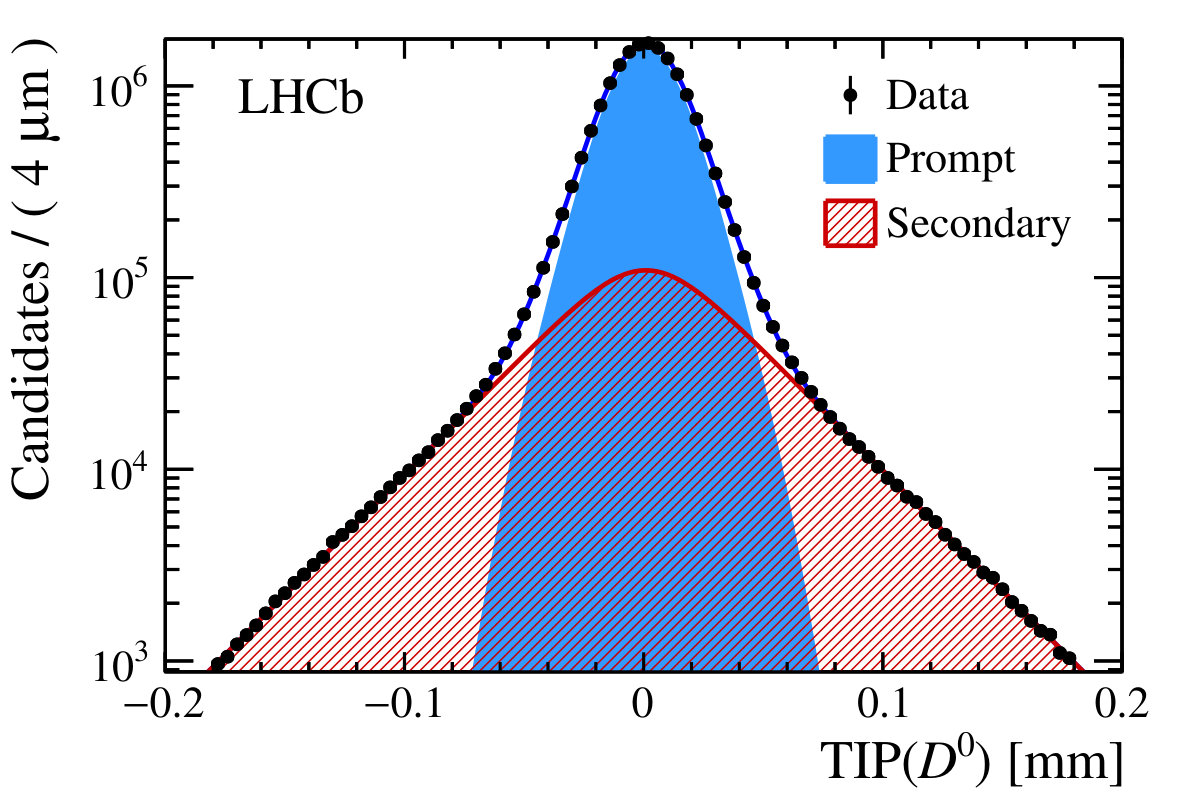 Figure 11
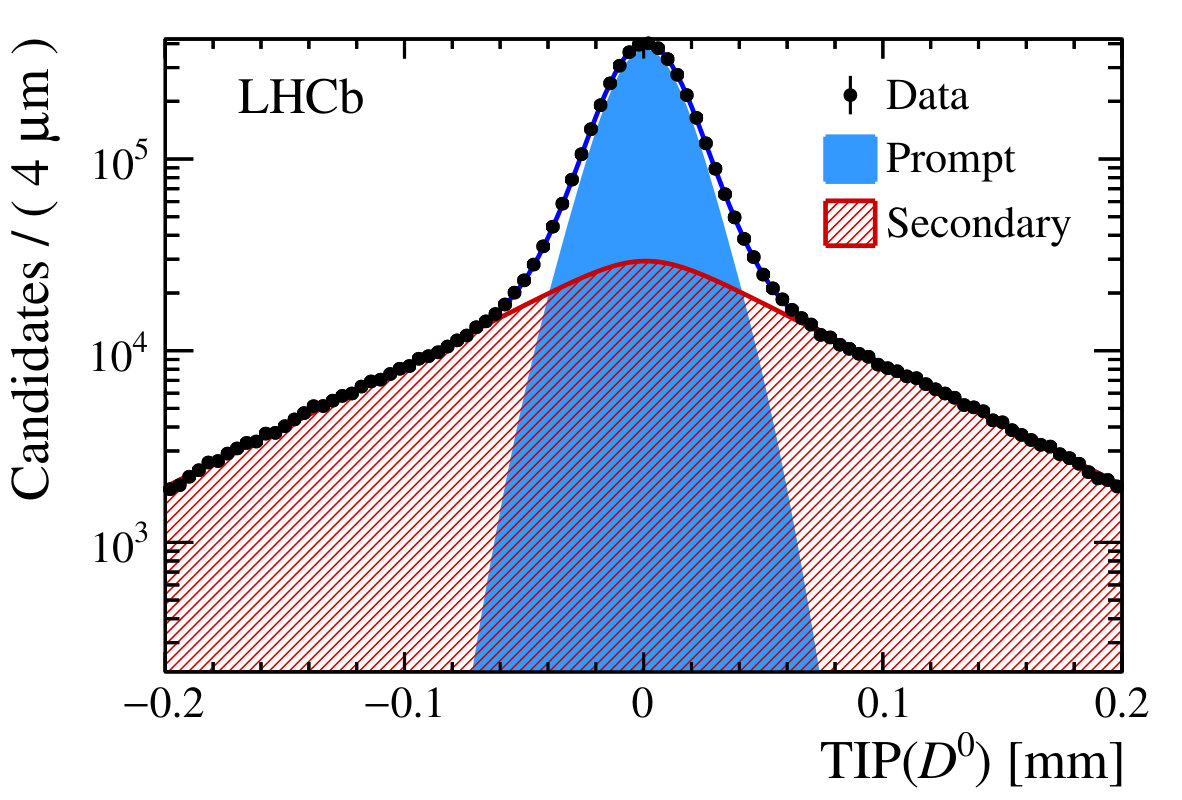 Figure 12
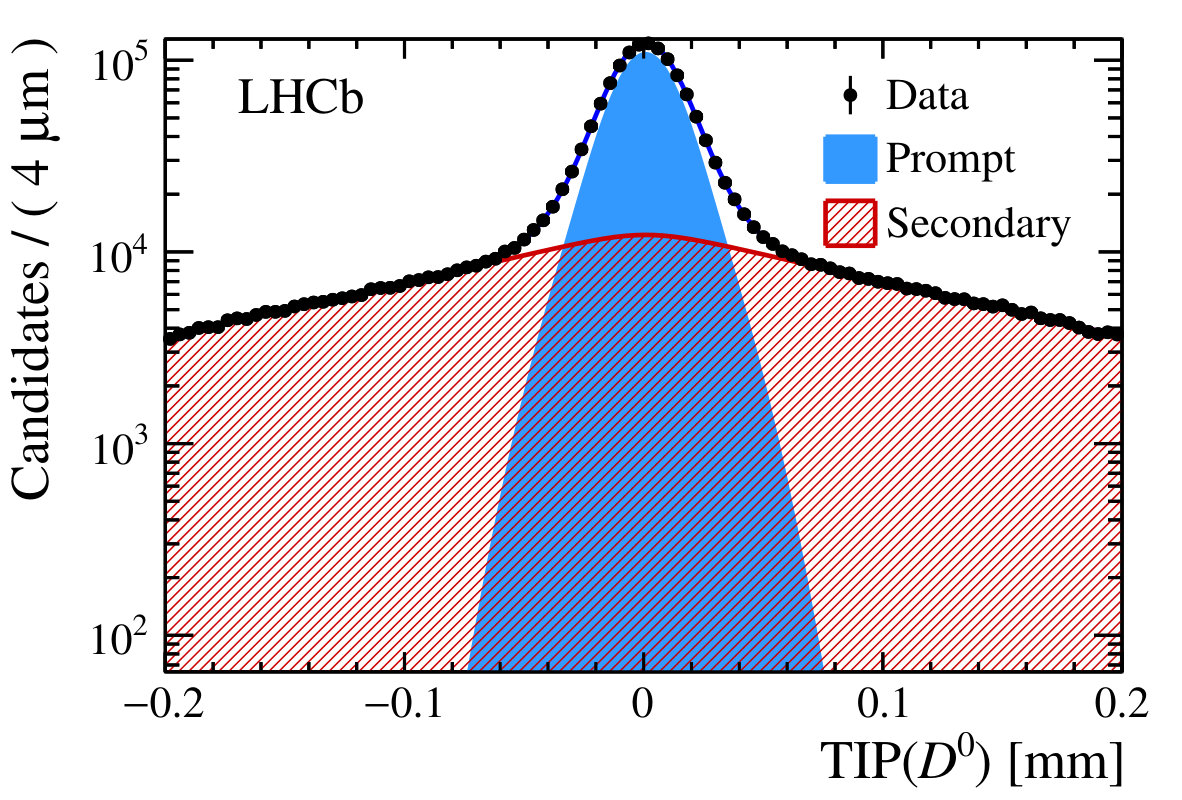 Figure 13
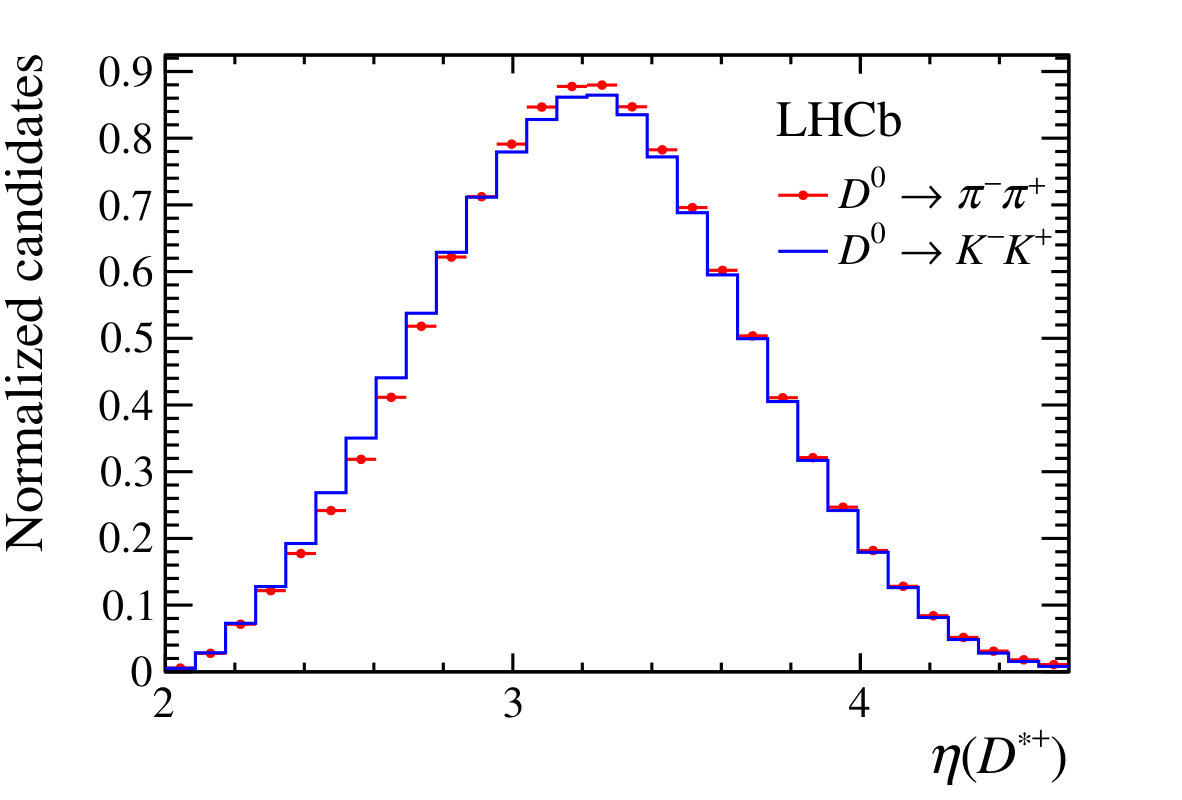 Figure 14
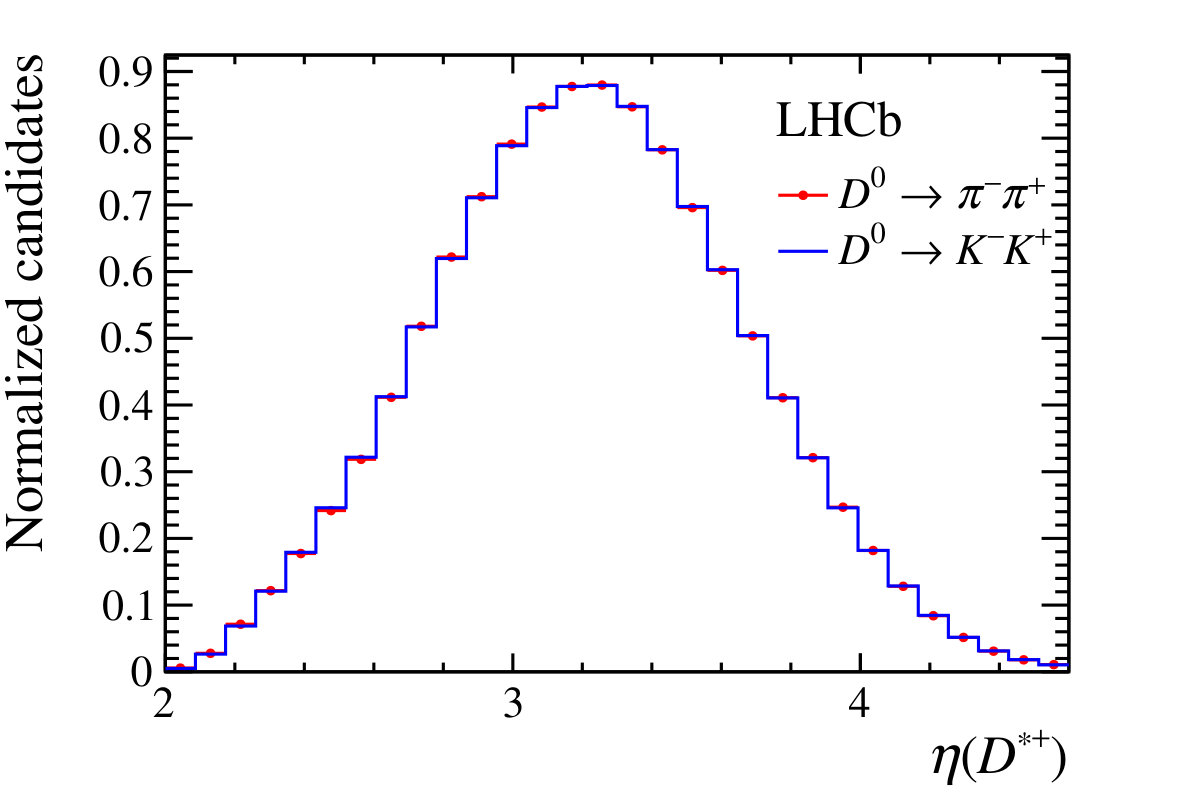 Figure 15
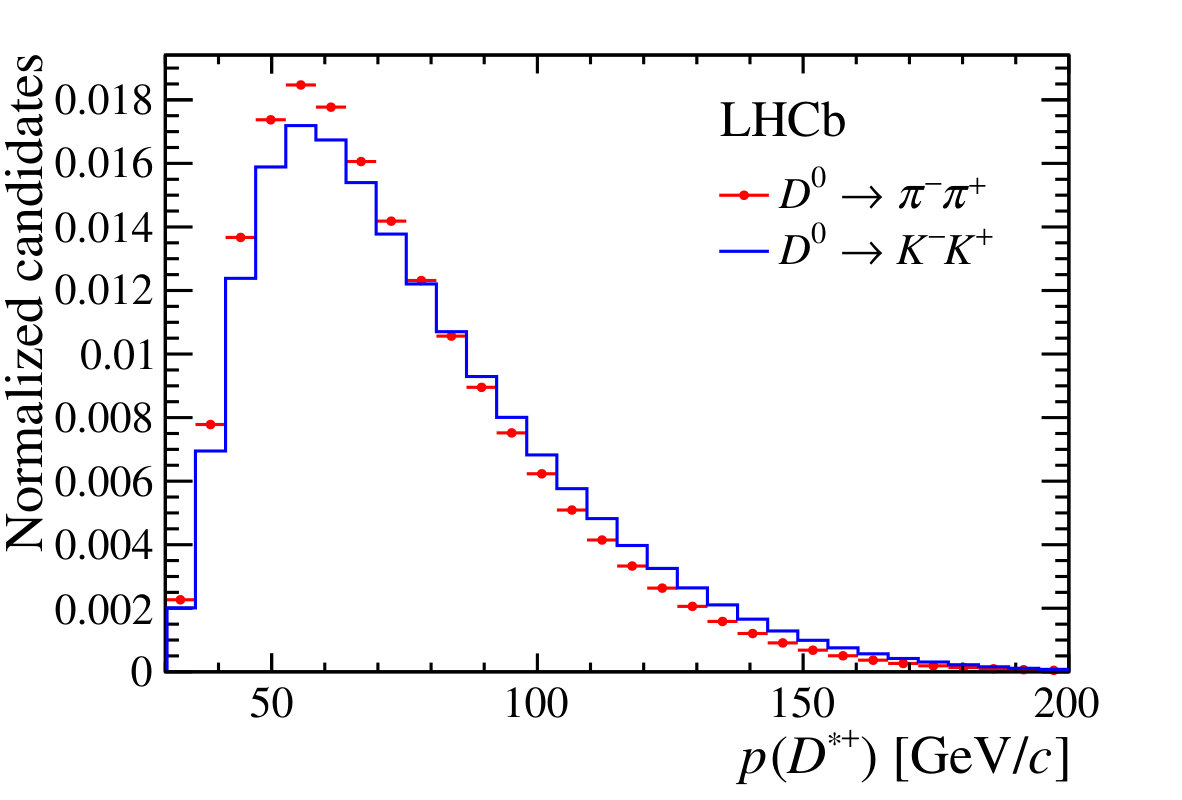 Figure 16
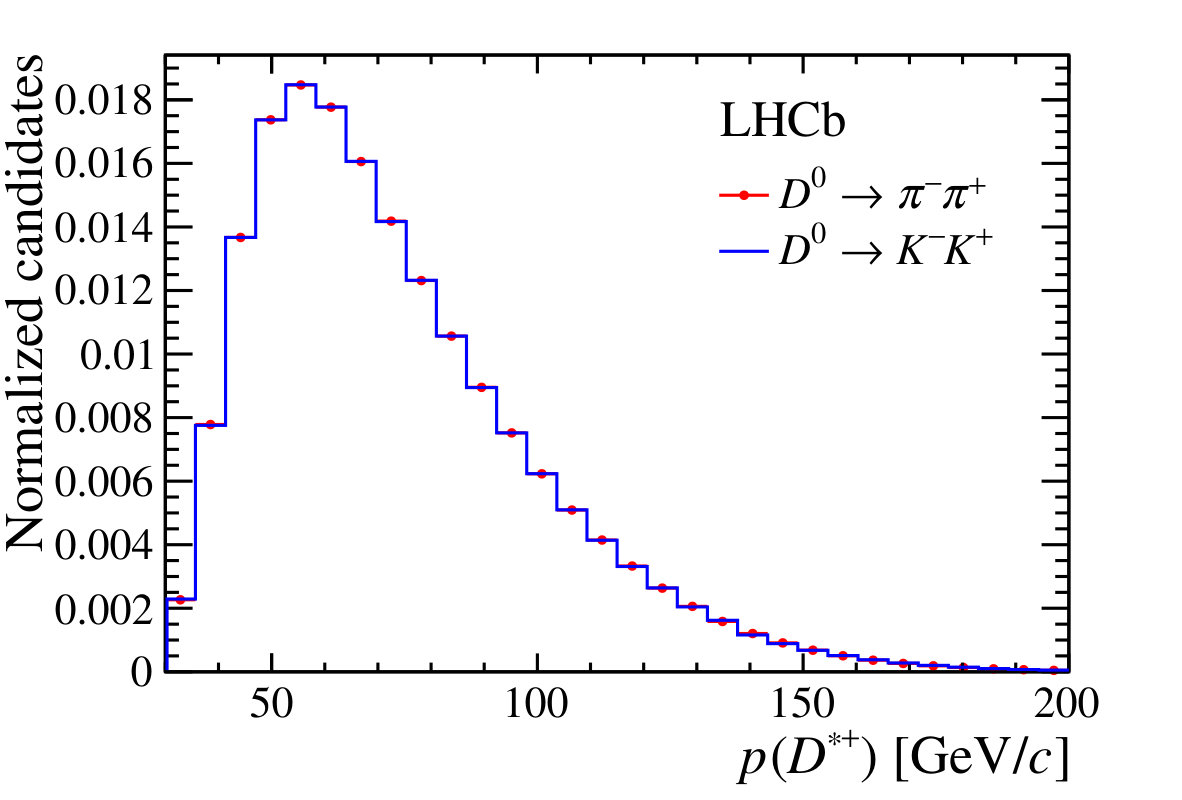 Figure 17
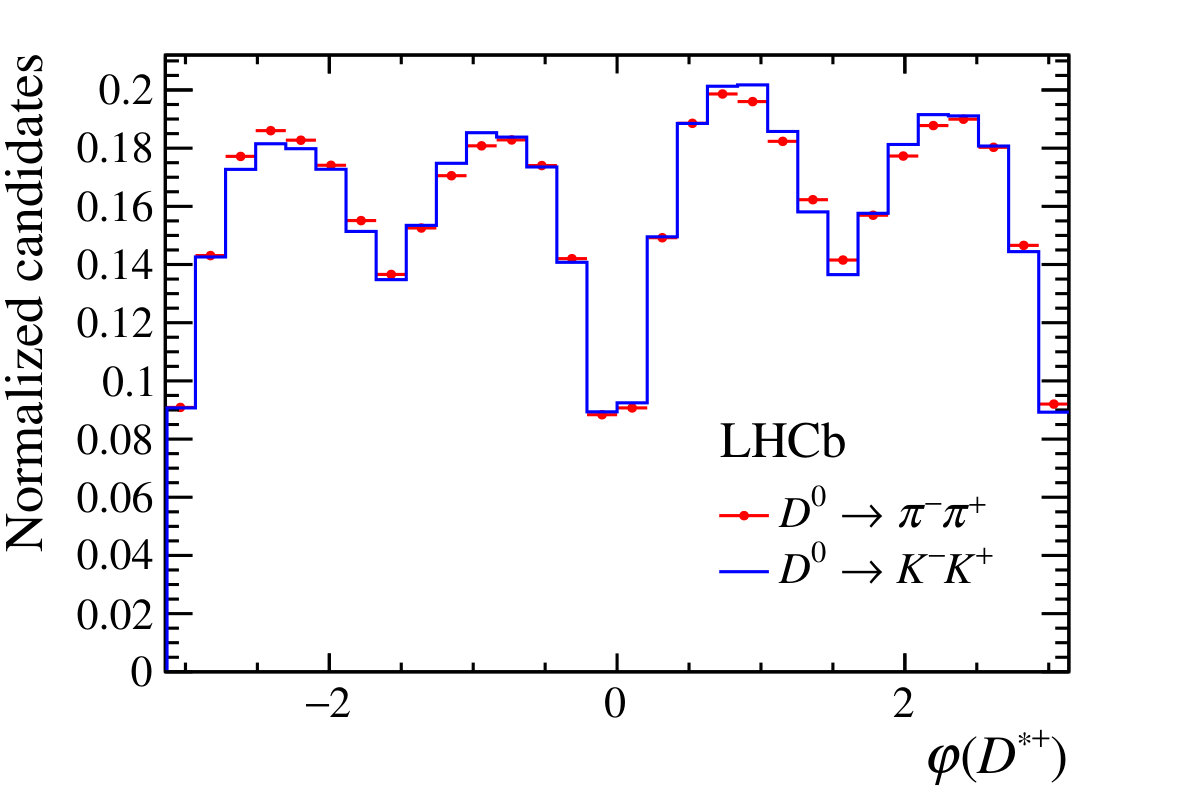 Figure 18
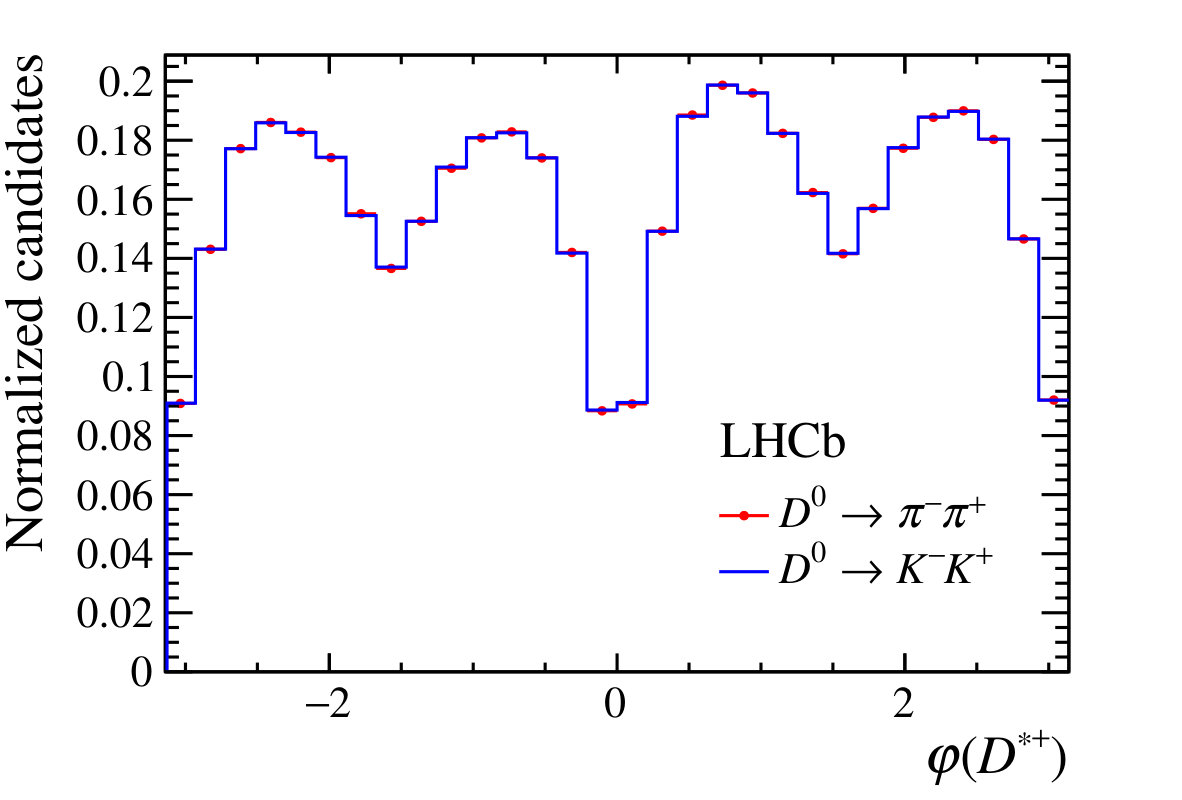 Figure 19
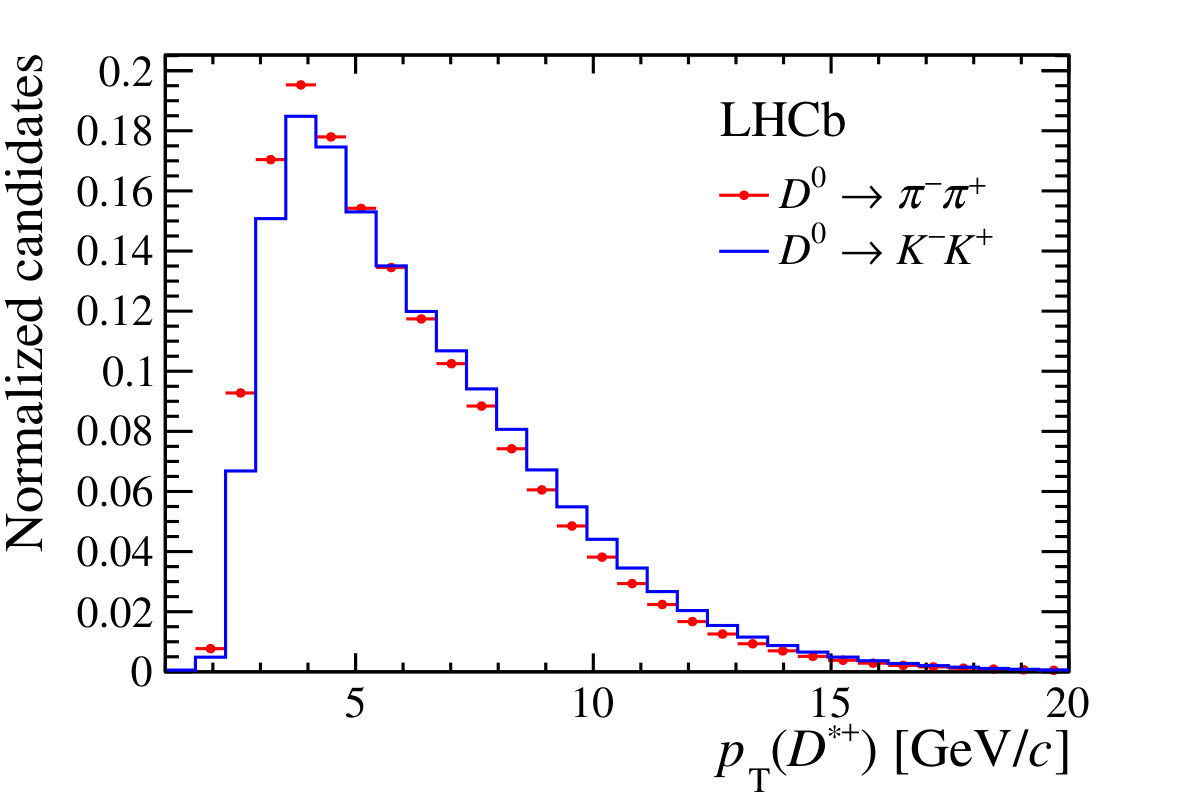 Figure 20
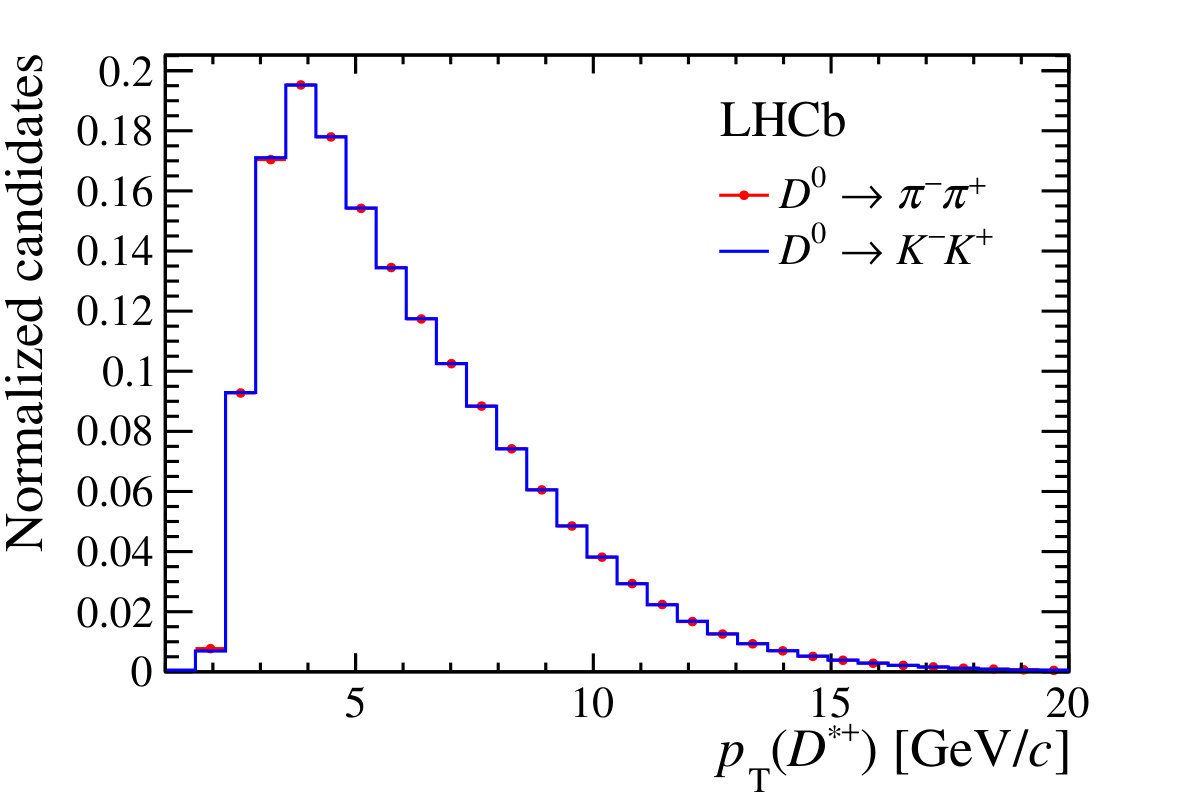 Figure 21
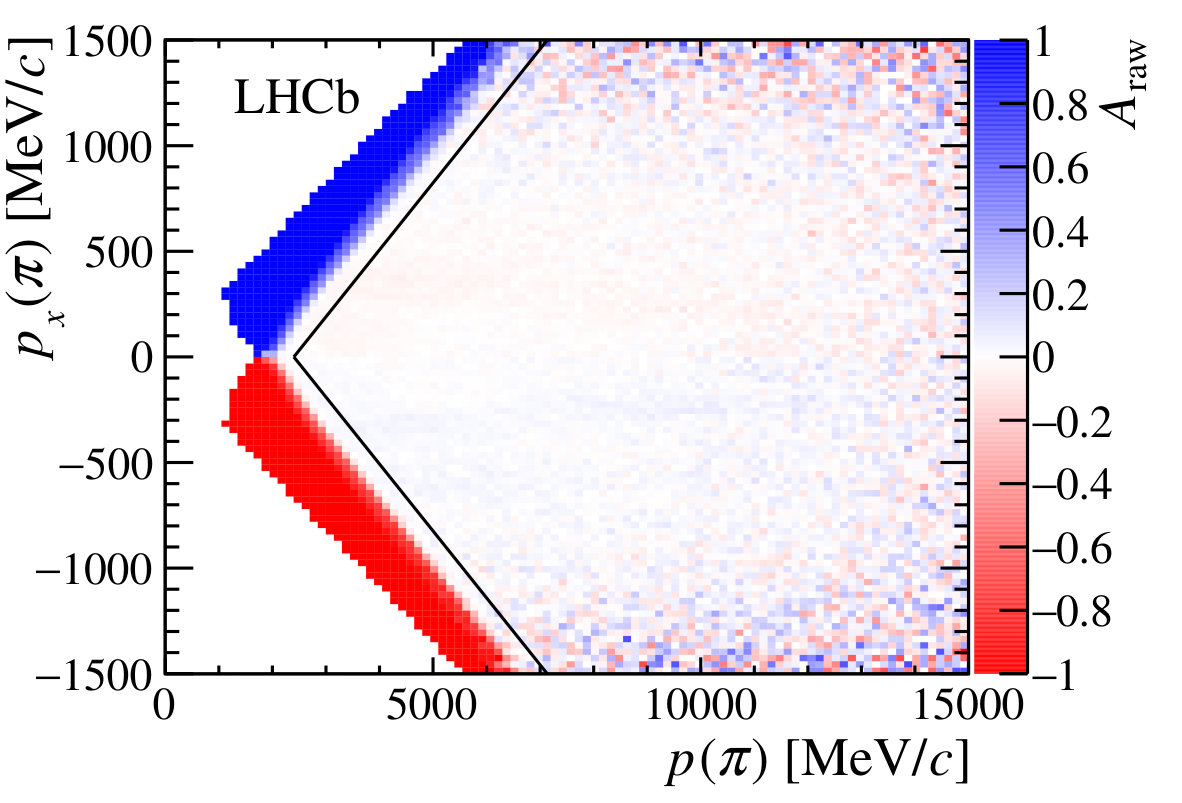 Figure 22
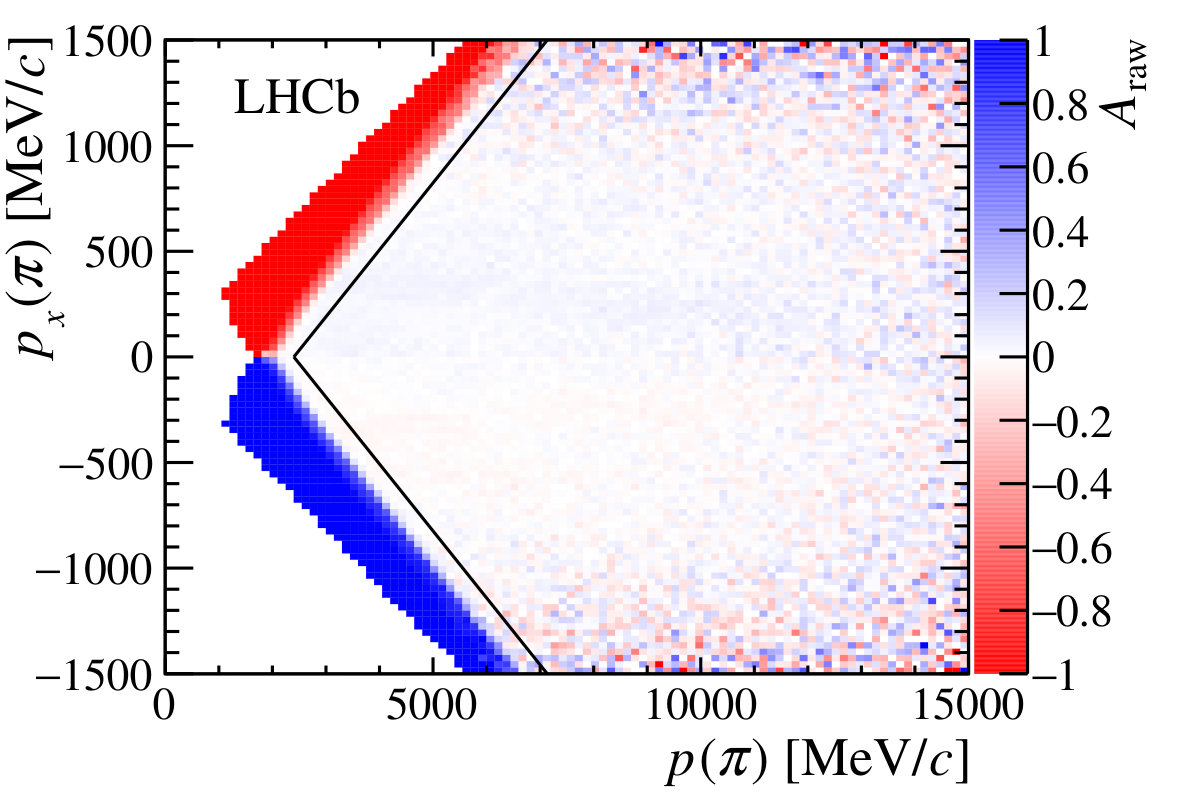 Figure 23
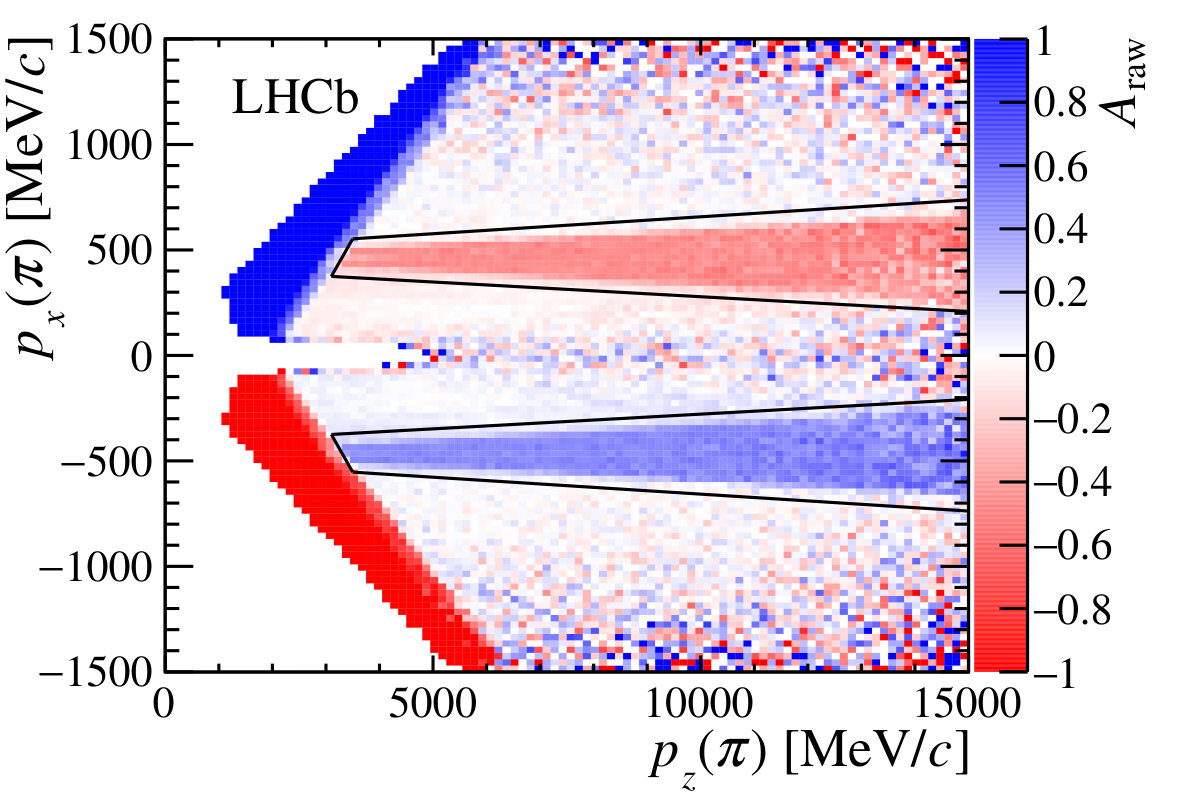 Figure 24
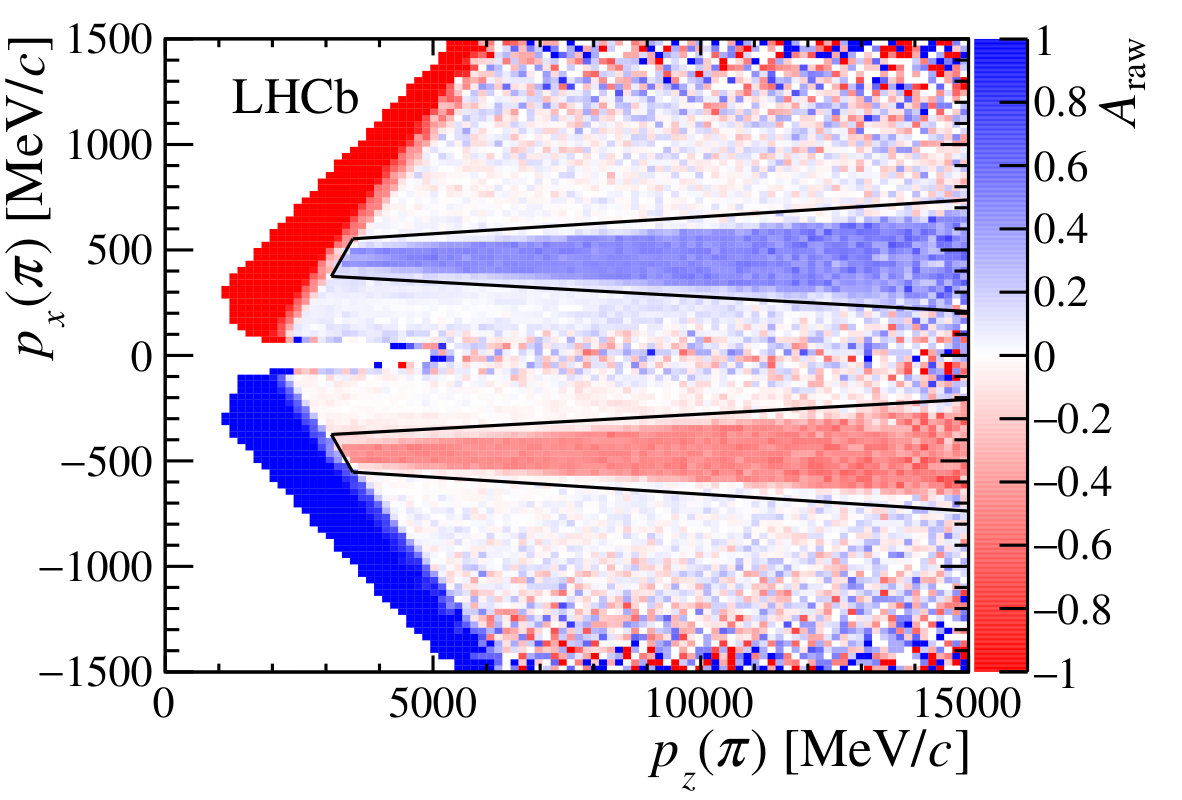 Figure 25
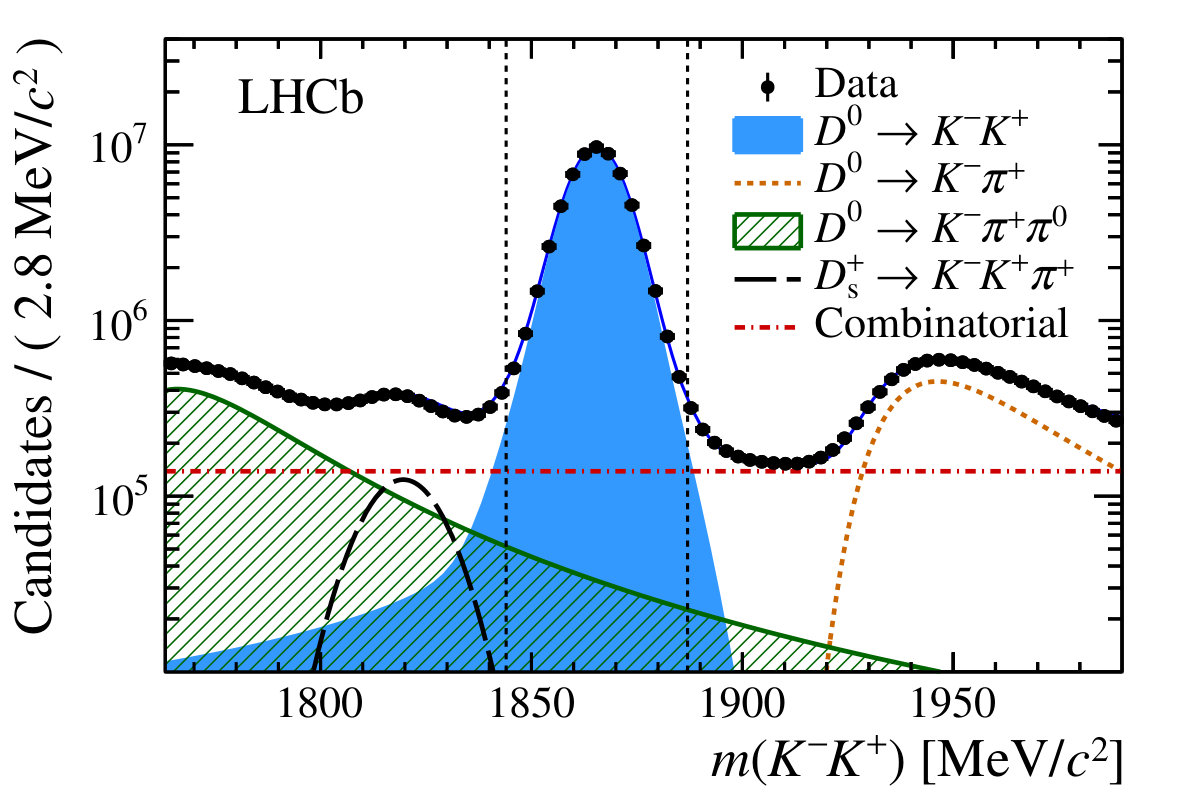 Figure 26
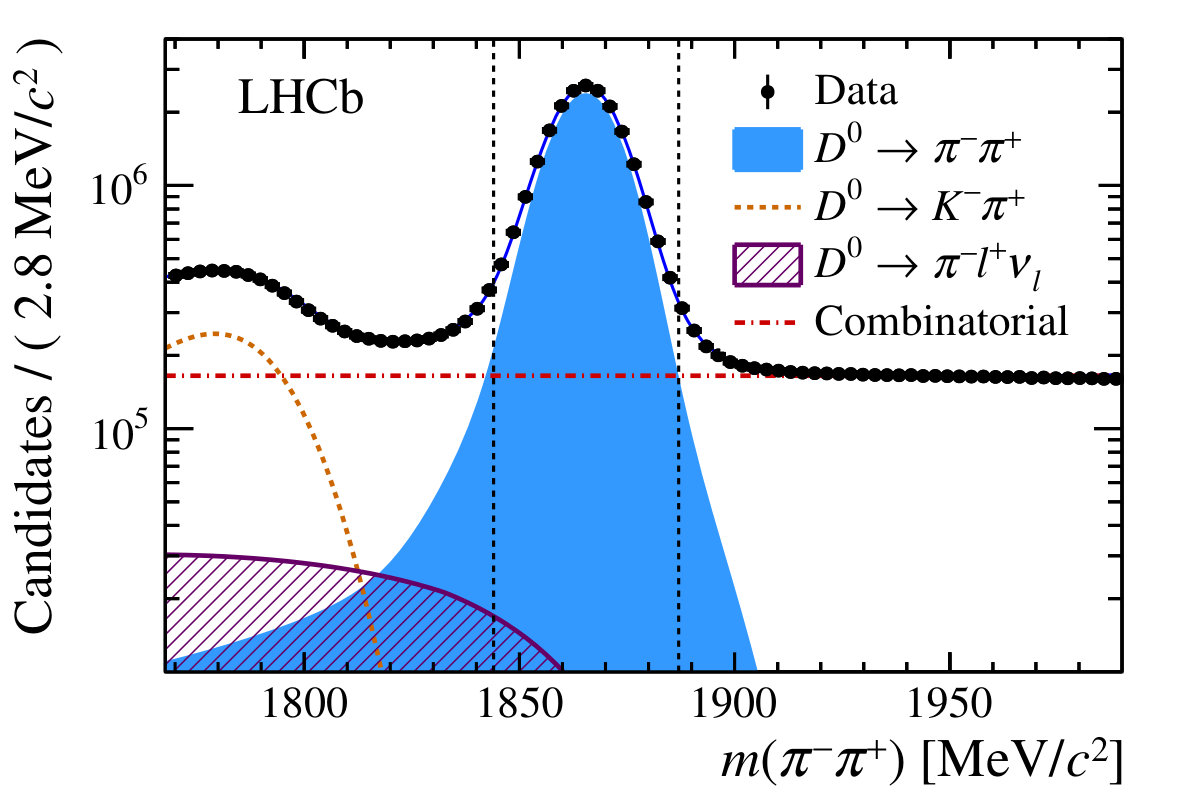 Figure 27
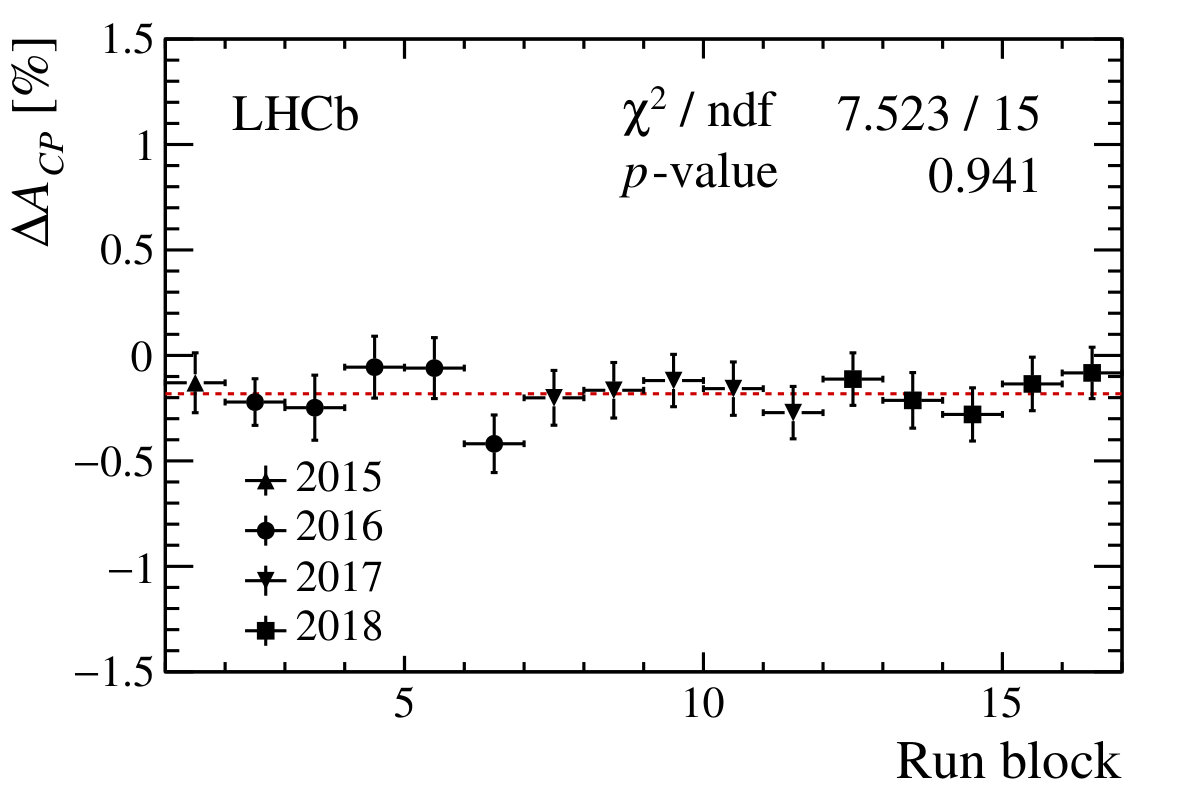 Figure 28
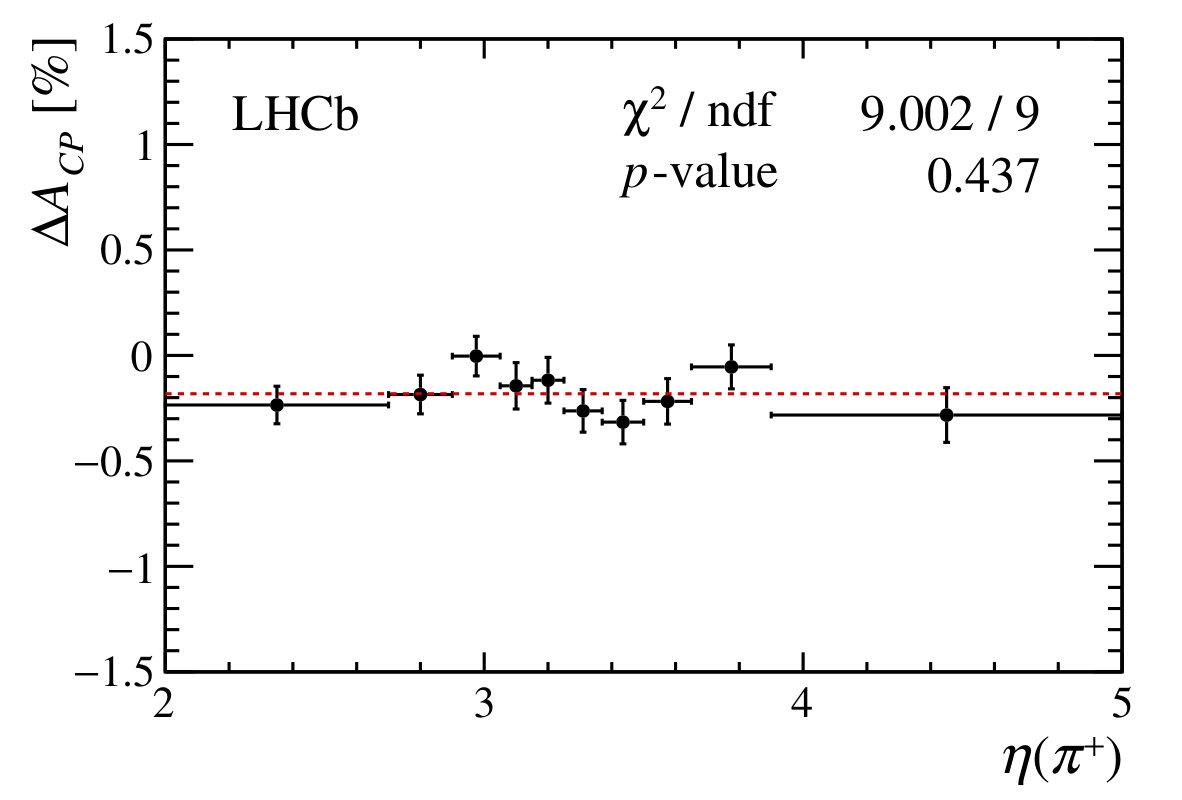 Figure 29
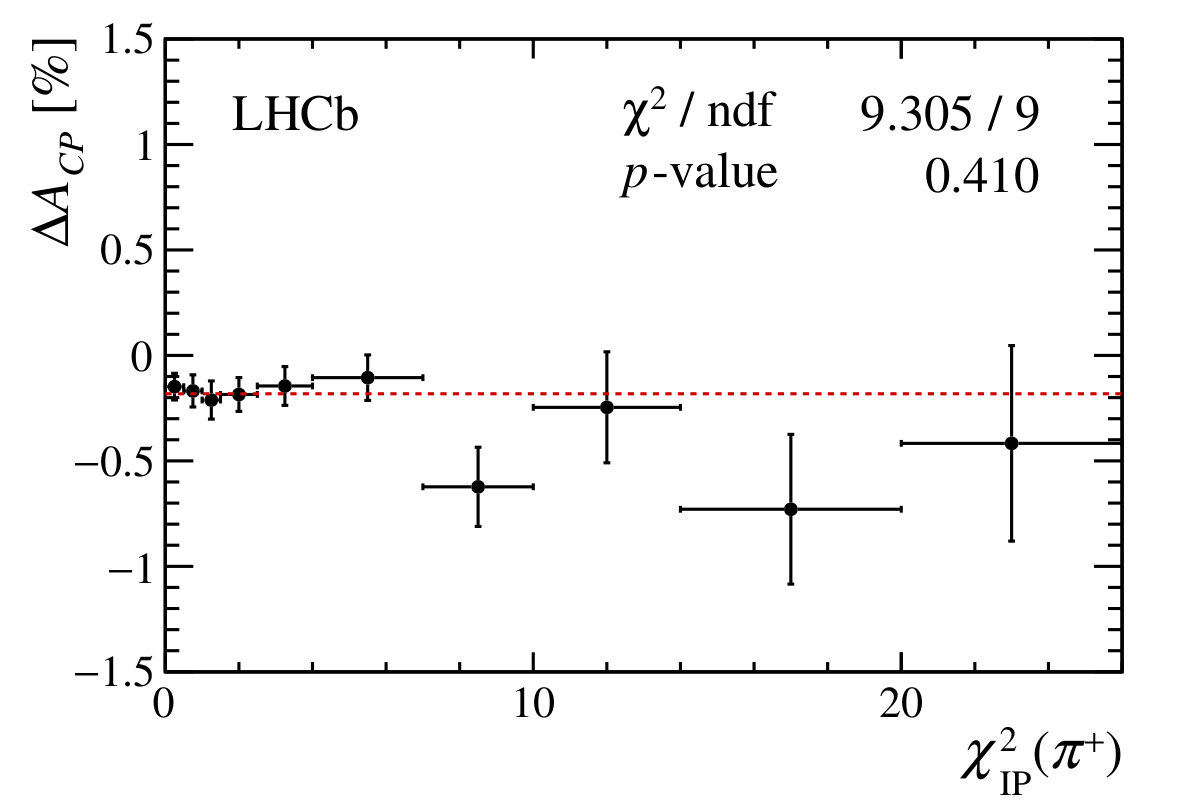 Figure 30
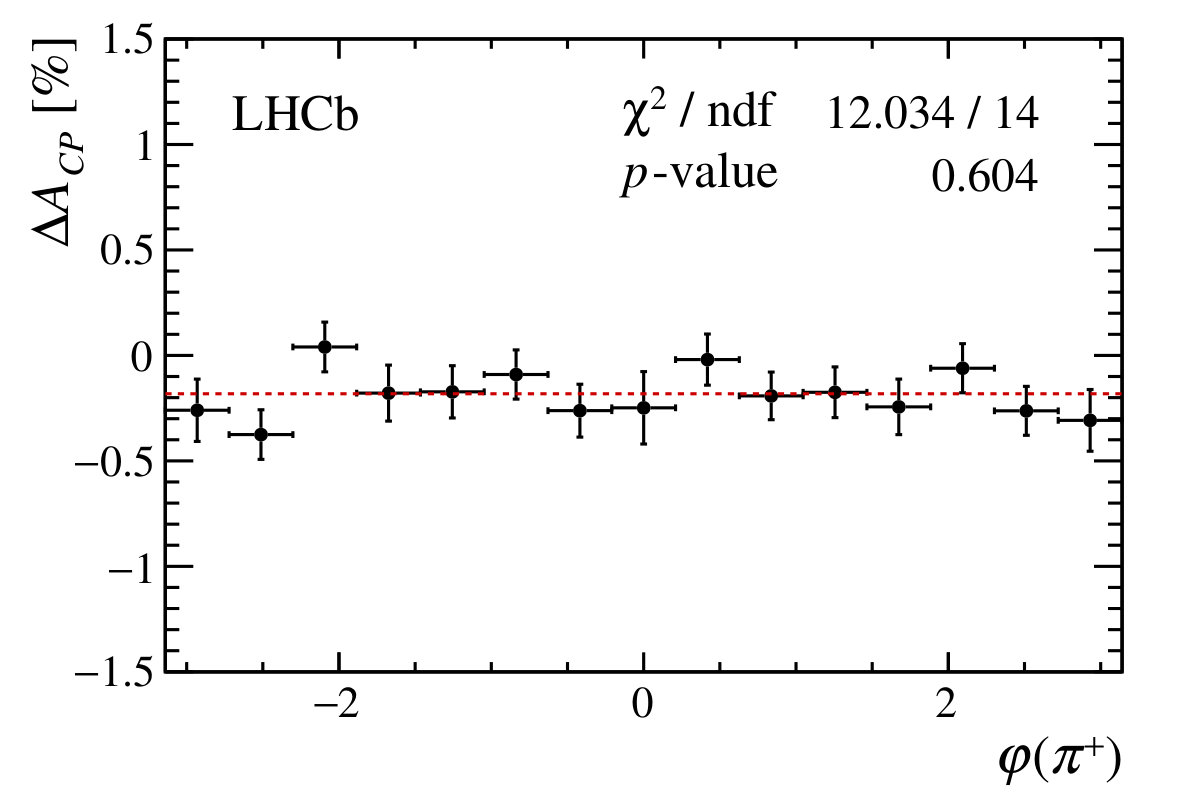 Figure 31
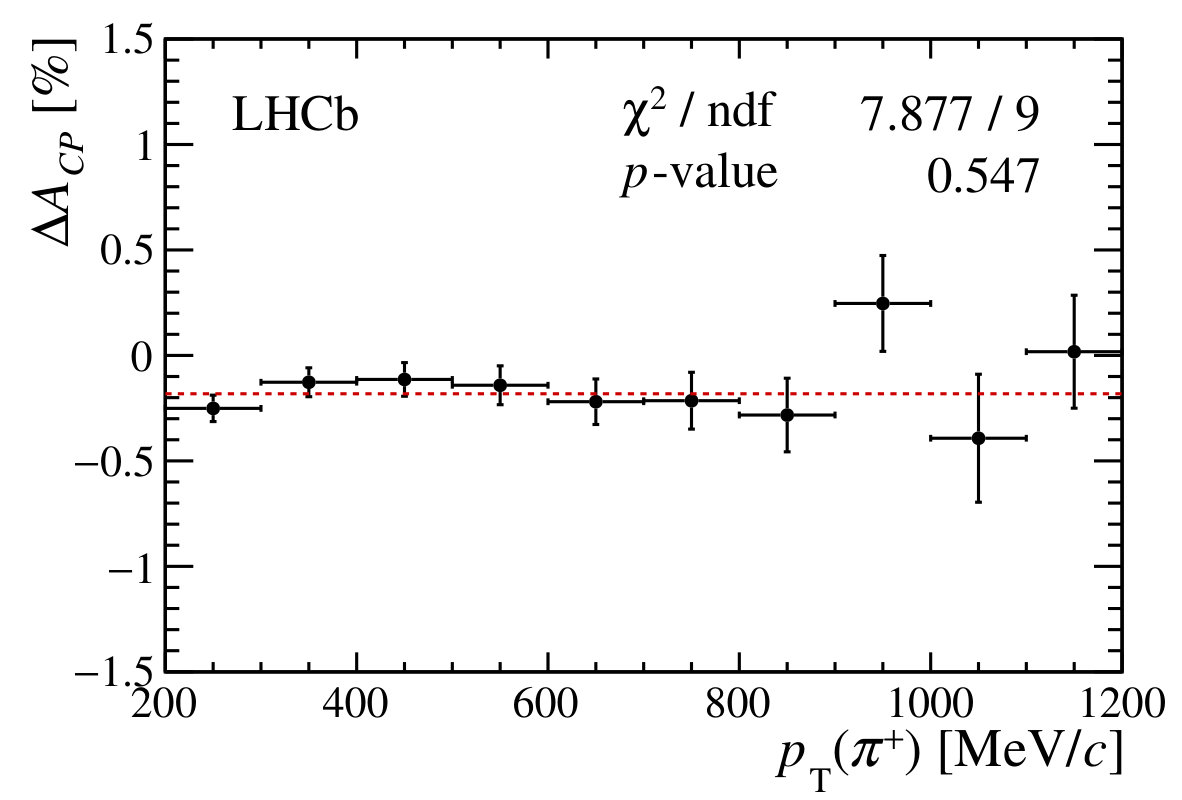 Figure 32
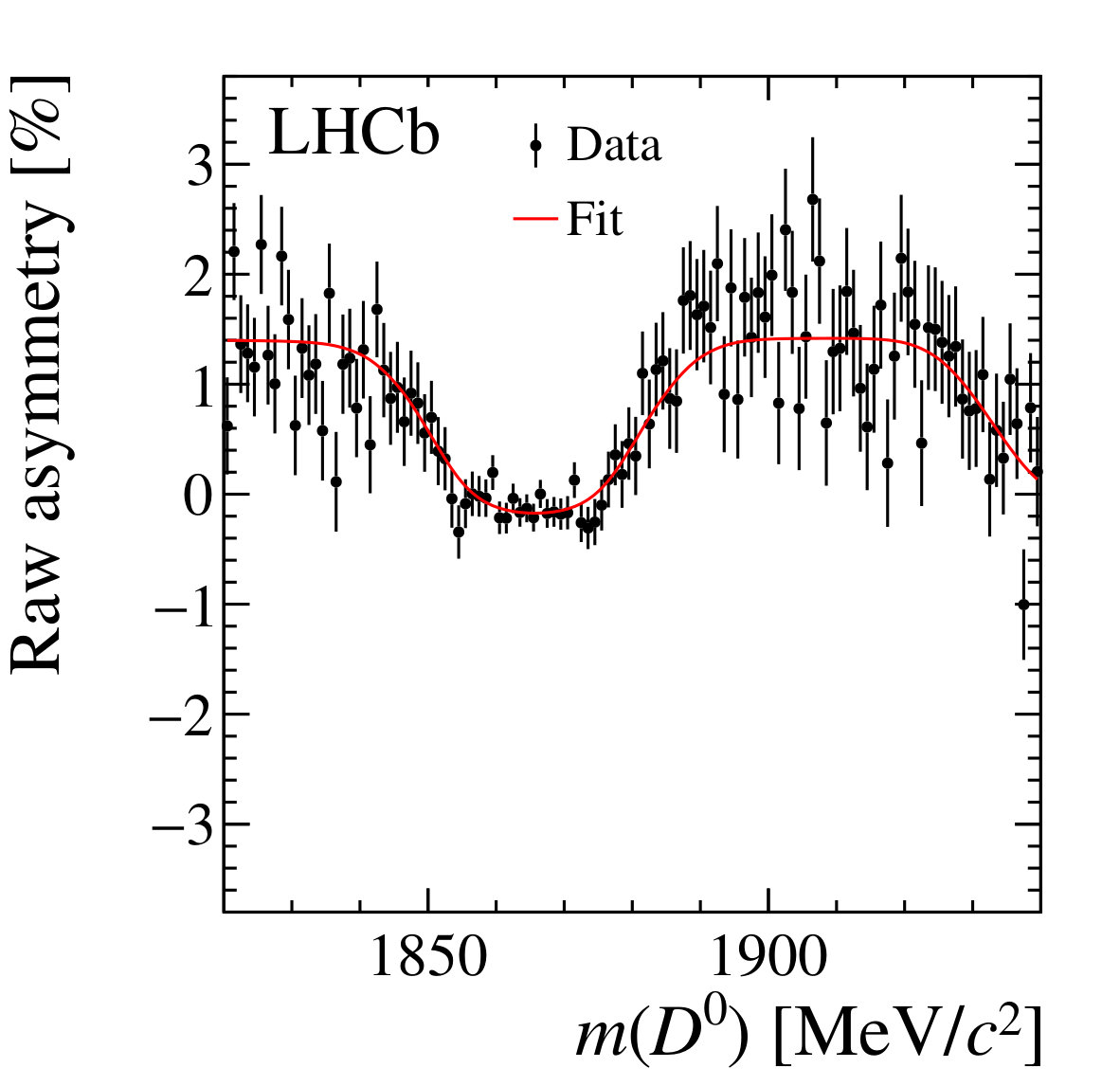 Figure 33
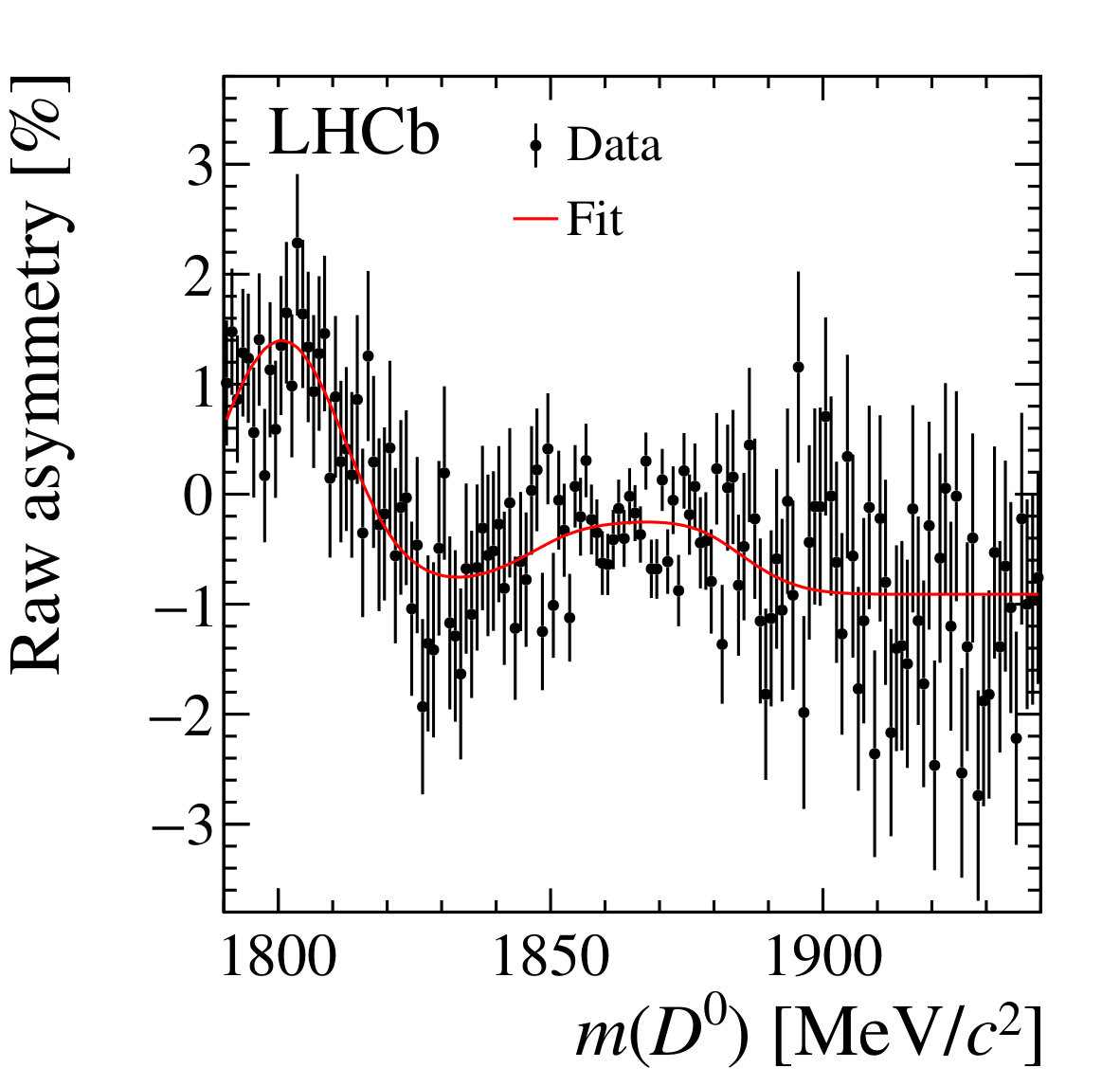 Figure 34
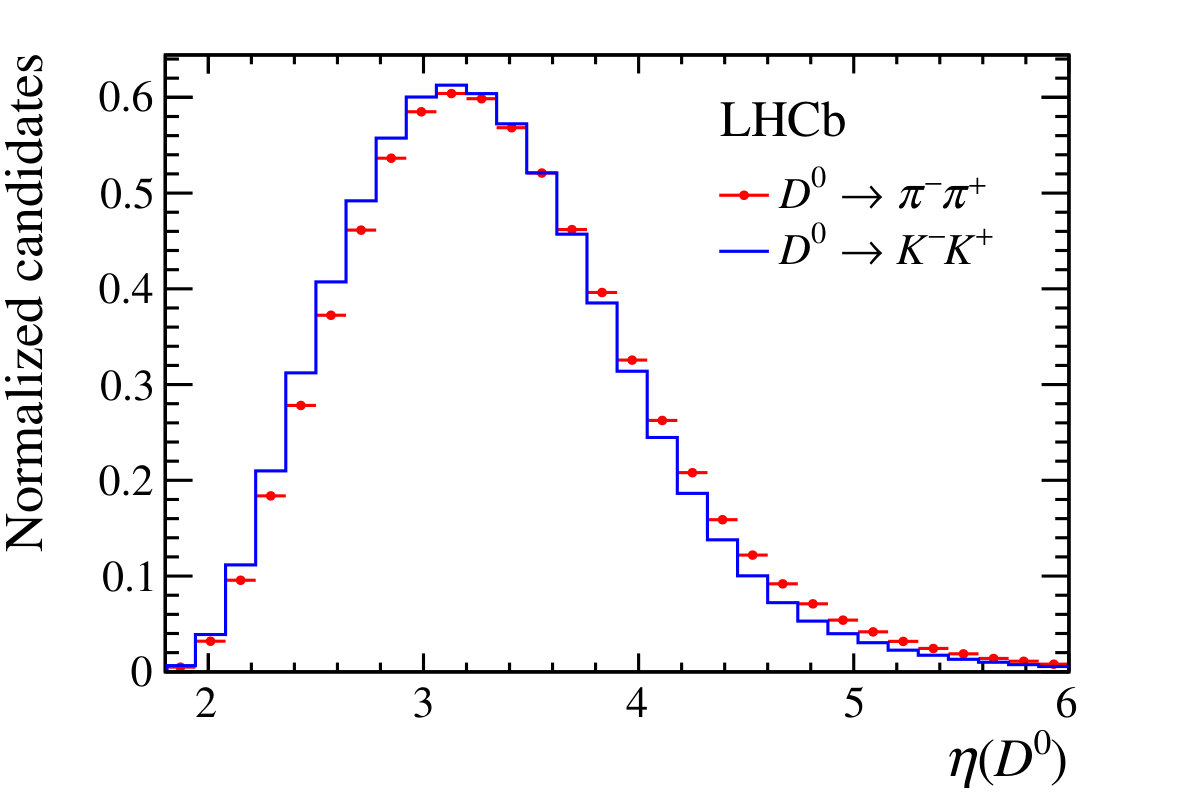 Figure 35
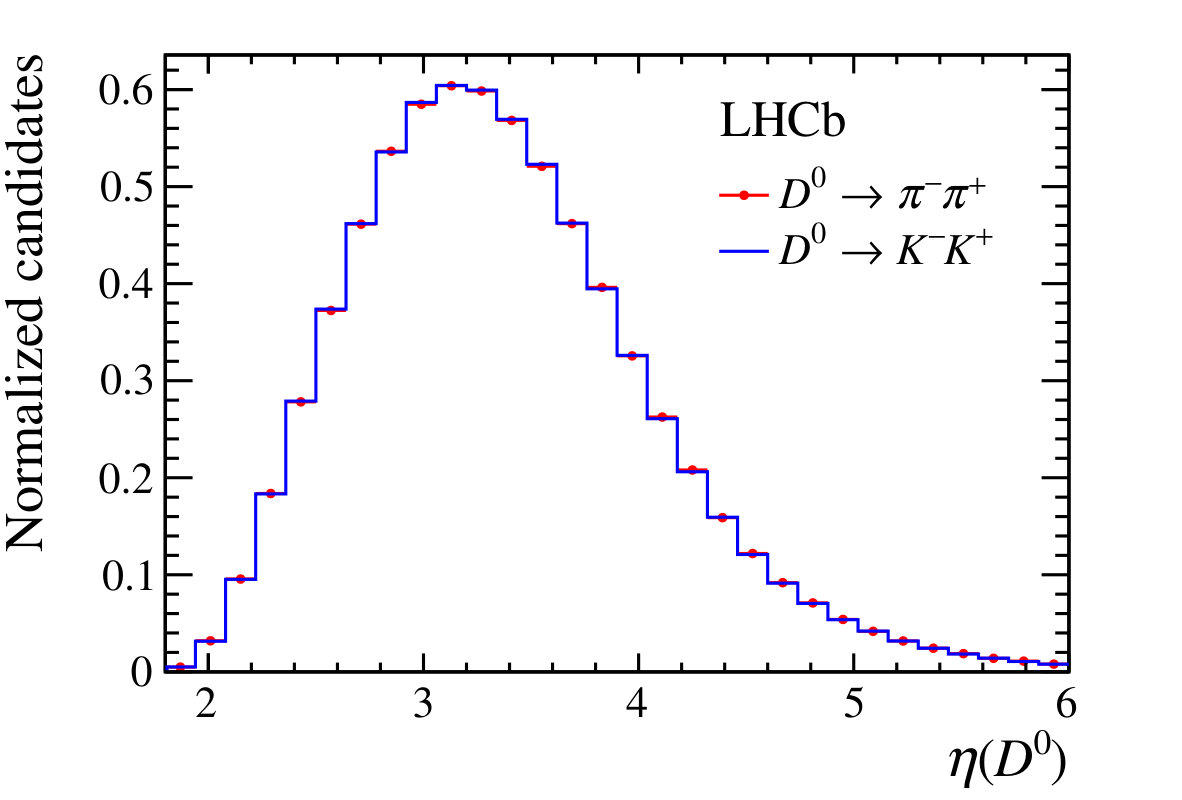 Figure 36
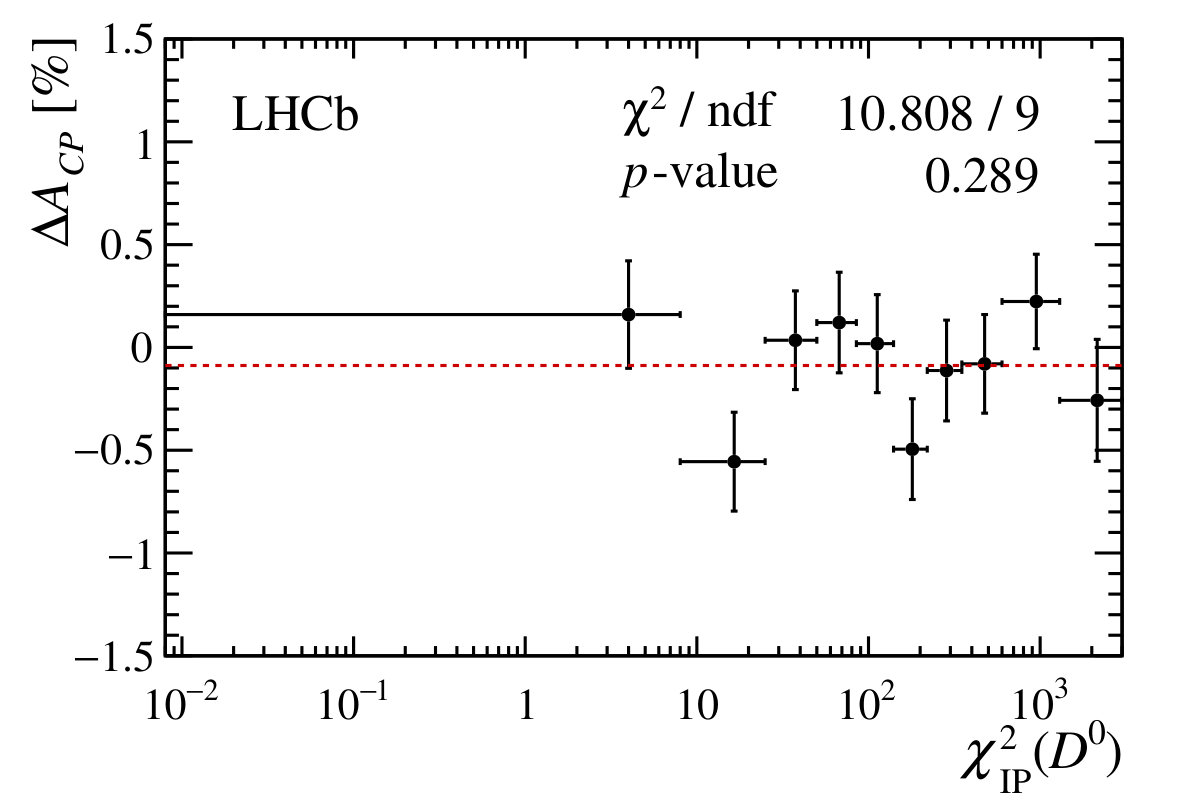 Figure 37
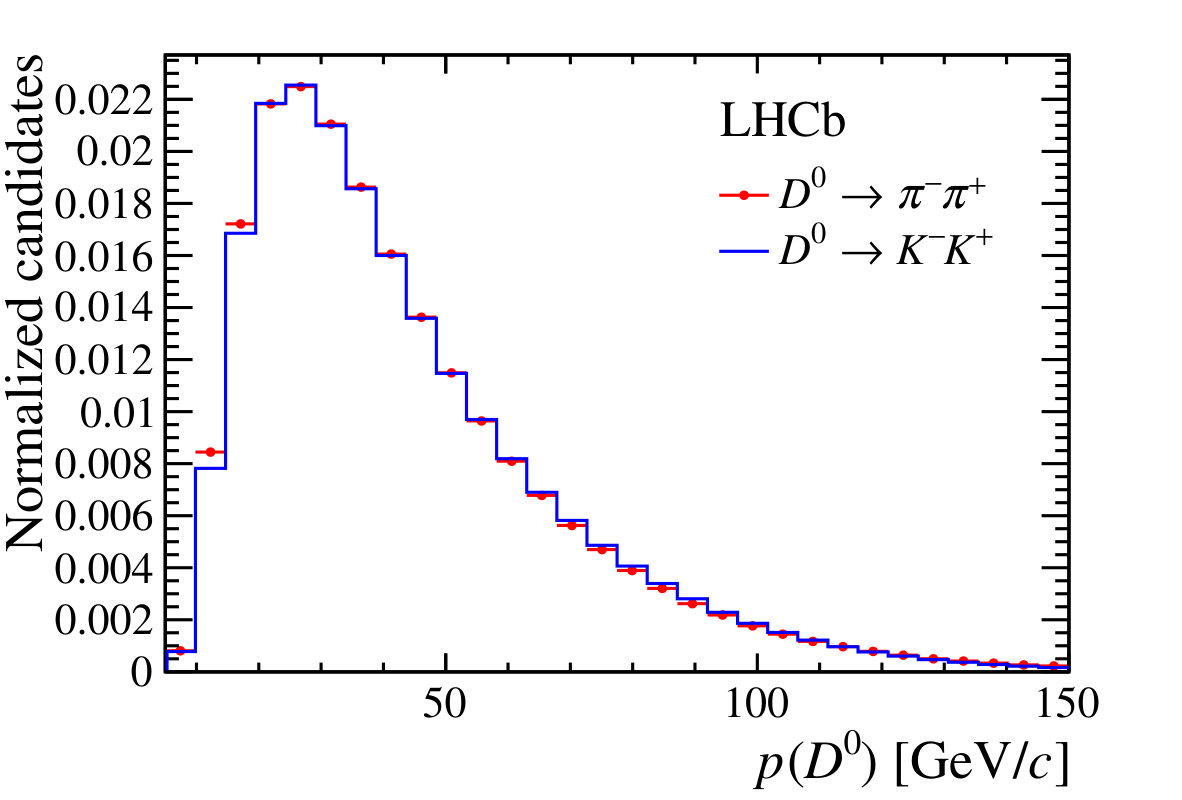 Figure 38
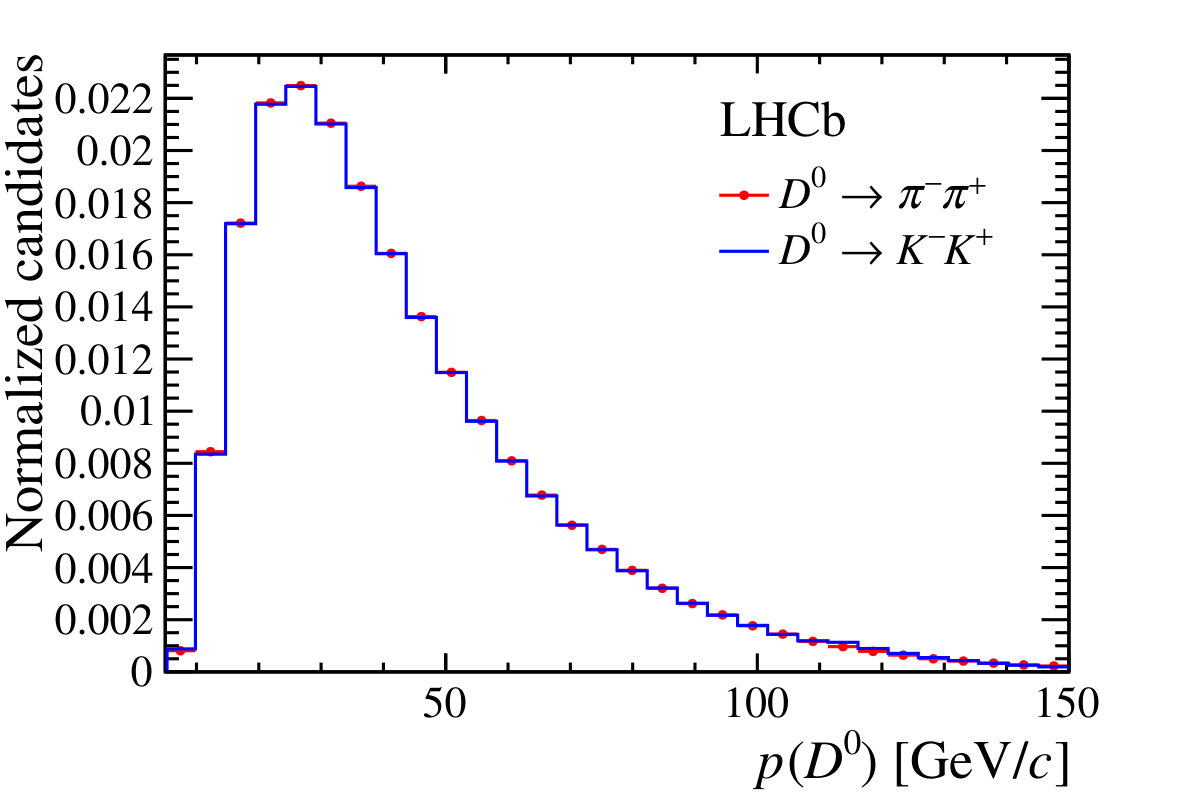 Figure 39
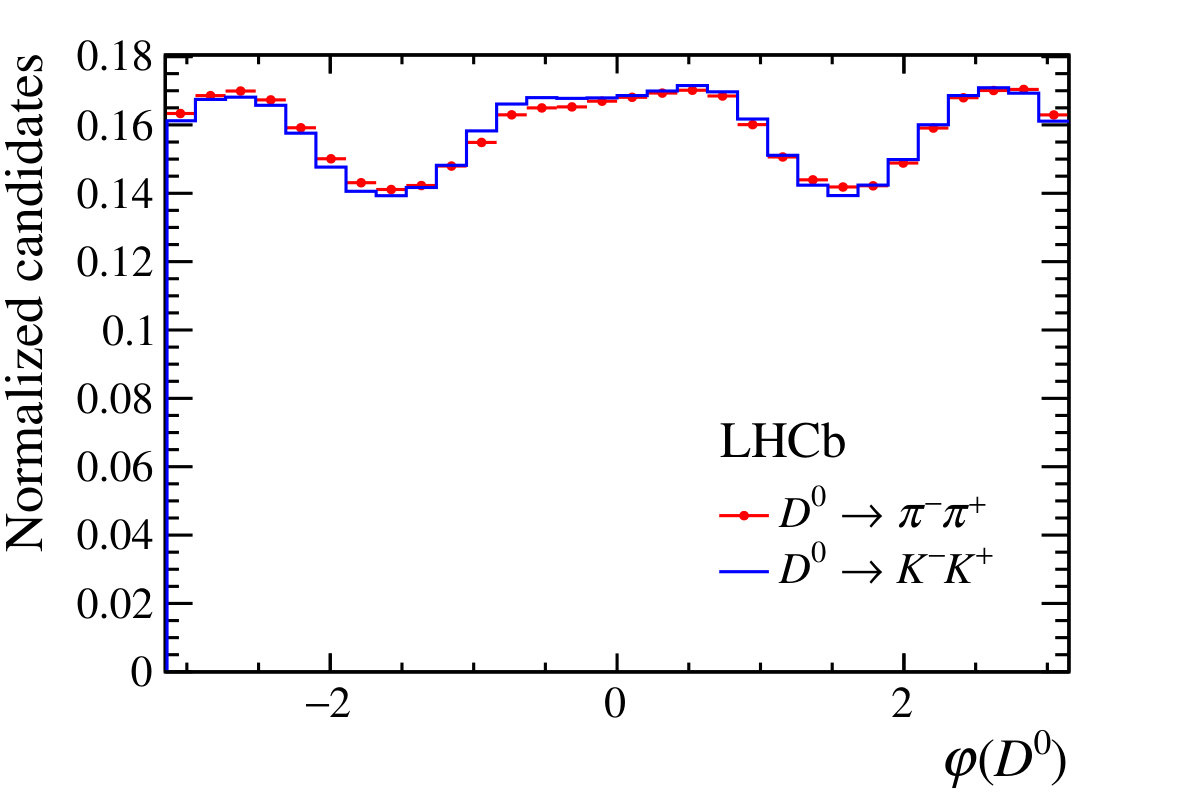 Figure 40
| Source | -tagged | -tagged |
|---|---|---|
| Fit model | 0.6 | 2 |
| Mistag | – | 4 |
| Weighting | 0.2 | 1 |
| Secondary decays | 0.3 | – |
| Peaking background | 0.5 | – |
| fractions | – | 1 |
| reco. efficiency | – | 2 |
| Total | 0.9 | 5 |
Peer Reviews
No public reviews on file for this paper yet. If you reviewed it on a platform where reviews are public (OpenReview, ICLR, NeurIPS, ICML), you can paste yours below so the community can read it here.
Videos
No videos yet. Explain this paper in a talk, walkthrough, or lecture? Add one.
EUROPEAN ORGANIZATION FOR NUCLEAR RESEARCH (CERN)
CERN-EP-2019-042
LHCb-PAPER-2019-006
May 31, 2019
Observation of violation in charm decays
LHCb collaboration†††Authors are listed at the end of this Letter.
A search for charge-parity () violation in and decays is reported, using collision data corresponding to an integrated luminosity of 5.9 collected at a center-of-mass energy of 13 TeV with the LHCb detector. The flavor of the charm meson is inferred from the charge of the pion in decays or from the charge of the muon in decays. The difference between the asymmetries in and decays is measured to be for -tagged and for -tagged mesons. Combining these with previous LHCb results leads to
[TABLE]
where the uncertainty includes both statistical and systematic contributions. The measured value differs from zero by more than five standard deviations. This is the first observation of violation in the decay of charm hadrons.
Published in Phys. Rev. Lett. 122 (2019) 211803
© 2024 CERN for the benefit of the LHCb collaboration. CC-BY-4.0 licence.
The noninvariance of fundamental interactions under the combined action of charge conjugation () and parity () transformations, so-called violation, is a necessary condition for the dynamical generation of the baryon asymmetry of the universe [1]. The Standard Model (SM) of particle physics includes violation through an irreducible complex phase in the Cabibbo-Kobayashi-Maskawa (CKM) quark-mixing matrix [2, 3]. The realization of violation in weak interactions has been established in the - and -meson systems by several experiments [4, 5, 6, 7, 8, 9, 10, 11, 12], and all results are well interpreted within the CKM formalism. However, the size of violation in the SM appears to be too small to account for the observed matter-antimatter asymmetry [13, 14, 15], suggesting the existence of sources of violation beyond the SM.
The observation of violation in the charm sector has not been achieved yet, despite decades of experimental searches. Charm hadrons provide a unique opportunity to measure violation with particles containing only up-type quarks. The size of violation in charm decays is expected to be tiny in the SM, with asymmetries typically of the order of –, but due to the presence of low-energy strong-interaction effects, theoretical predictions are difficult to compute reliably [16, 17, 18, 19, 20, 21, 22, 23, 24, 25, 26, 27, 28, 29, 30, 31, 32, 33, 34]. Motivated by the fact that contributions of beyond-the-SM virtual particles may alter the size of violation with respect to the SM expectation, a number of theoretical analyses have been performed [19, 27, 35, 32].
Unprecedented experimental precision can be reached at LHCb in the measurement of -violating asymmetries in and decays. The inclusion of charge-conjugate decay modes is implied throughout except in asymmetry definitions. Searches for violation in these decay modes have been performed by the BaBar [36], Belle [37], CDF [38, 39] and LHCb [40, 41, 42, 43, 44] collaborations. The corresponding asymmetries have been found to be consistent with zero within a precision of a few per mille.
This Letter presents a measurement of the difference of the time-integrated asymmetries in and decays, performed using collision data collected with the LHCb detector at a center-of-mass energy of 13 TeV, and corresponding to an integrated luminosity of 5.9.
The time-dependent asymmetry, , between states produced as or mesons decaying to a eigenstate at time is defined as
[TABLE]
where denotes the time-dependent rate of a given decay. For or , can be expressed in terms of a direct component associated to violation in the decay amplitude and another component associated to violation in – mixing or in the interference between mixing and decay.
A time-integrated asymmetry, , can be determined, and its value will exhibit a dependence on the variation of the reconstruction efficiency as a function of the decay time. To first order in the – mixing parameters, it can be written as [38, 45]
[TABLE]
where denotes the mean decay time of decays in the reconstructed sample, incorporating the effects of the time-dependent experimental efficiency, is the direct asymmetry, the lifetime and the asymmetry between the and effective decay widths [46, 47]. In the limit of U-spin symmetry, the direct asymmetry is equal in magnitude and opposite in sign for and , though the size of U-spin-breaking effects at play is uncertain [19]. Taking to be independent of final state [19, 48, 49], the difference in asymmetries between and decays is
[TABLE]
where and is the difference of the mean decay times and .
The mesons considered in this analysis are produced either promptly at a collision point (primary vertex, PV) in the strong decay of mesons (hereafter referred to as ) to a pair or at a vertex displaced from any PV in semileptonic decays, where denotes a hadron containing a quark and stands for potential additional particles. The flavor at production of mesons from decays is determined from the charge of the accompanying pion (-tagged), whereas that of mesons from semileptonic -hadron decays is obtained from the charge of the accompanying muon (-tagged). The raw asymmetries measured for -tagged and -tagged decays are defined as
[TABLE]
where is the measured signal yield for the given decay. These can be approximated as
[TABLE]
where and are detection asymmetries due to different reconstruction efficiencies between positive and negative tagging pions and muons, whereas and are the production asymmetries of mesons and hadrons, arising from the hadronization of charm and beauty quarks in collisions [50]. Owing to the smallness of the involved terms, which averaged over phase space for selected events are or less [50, 51, 52, 53], the approximations in Eqs. (5) are valid up to corrections of . The values of and , as well as those of and , are independent of the final state , and thus cancel in the difference, resulting in
[TABLE]
This simple relation between and the measurable raw asymmetries in and makes the determination of largely insensitive to systematic uncertainties.
The LHCb detector is a single-arm forward spectrometer designed for the study of particles containing or quarks, as described in detail in Refs. [54, 55]. The LHCb tracking system exploits a dipole magnet to measure the momentum of charged particles. Although the analysis presented in this Letter is expected to be insensitive to such effects, the magnetic-field polarity is reversed periodically during data taking to mitigate the differences of reconstruction efficiencies of particles with opposite charges. Data sets corresponding to about one half of the total integrated luminosity are recorded with each magnetic-field configuration.
The online event selection is performed by a trigger, which consists of a hardware stage based on information from the calorimeter and muon systems, followed by two software stages. In the first software stage, events used in this analysis are selected if at least one track has large transverse momentum and is incompatible with originating from any PV, or if any two-track combination forming a secondary vertex, consistent with that of a decay, is found in the event by a multivariate algorithm [56, 57]. In between the first and second software stages, detector alignment and calibration are performed and updated constants are made available to the software trigger [58]. In the second stage, candidates are fully reconstructed using kinematic, topological and particle-identification (PID) criteria. Requirements are placed on: the decay vertex, which must be well separated from all PVs in the event; the quality of reconstructed tracks; the transverse momentum; the angle between the momentum and its flight direction; PID information; and the impact-parameter significances () of the decay products with respect to all PVs in the event, where the is defined as the difference between the of the PV reconstructed with and without the considered particle. In the analysis of the -tagged sample, candidates are formed by combining a candidate with a muon under the requirement that they are consistent with originating from a common vertex. In addition, requirements on the invariant mass of the system, , and on the corrected mass () are applied. The corrected mass partially recovers the missing energy of the unreconstructed particles and is defined as [59], where is the momentum of the system transverse to the flight direction of the hadron, determined from the primary and vertices.
In the offline selection, trigger signals are associated to reconstructed particles. Selection requirements are applied on the trigger decision, taking into account the information on whether the decision was taken due to the signal decay products or to other particles produced in the event. Fiducial requirements are imposed to exclude kinematic regions characterized by large detection asymmetries for the tagging pion or muon. Very large raw asymmetries, up to 100%, occur in certain kinematic regions because, for a given magnet polarity, low-momentum particles of one charge at large or small polar angles in the horizontal plane may be deflected out of the detector or into the (uninstrumented) LHC beam pipe, whereas particles with the other charge are more likely to remain within the acceptance [60]. About 35% and 10% of the selected candidates are rejected by these fiducial requirements for the -tagged and -tagged samples, respectively. In the retained samples, raw asymmetries are typically at the percent level or below. For -tagged mesons, a requirement on the is applied to suppress the background of mesons from decays, and PID requirements on the decay products are further tightened. Then the and pion candidates are combined to form candidates by requiring a good fit quality of the vertex and the invariant mass of candidates to lie within a range of about standard deviations around the known mass. The vertex is determined as a common vertex of and tagging candidates, and is constrained to coincide with the nearest PV [61].
For -tagged mesons, the candidates are further filtered using a dedicated boosted decision tree (BDT) to suppress the combinatorial background due to random combinations of charged kaon or pion pairs not originating from a decay. The variables used in the BDT to discriminate signal from combinatorial background are: the fit quality of the and the decay vertices; the flight distance; the impact parameter, i.e., the minimum distance of its trajectory to the nearest PV; the transverse momenta of the decay products, the significance of the distance between the and decay vertices; the invariant mass and the corrected mass . To suppress background from -hadron decays to (), where the resonance decays to a pair of muons, candidates are vetoed if the invariant mass of the () pair, where the pion (kaon) is given the muon mass hypothesis, lies within a window of about around the or known masses.
The data sample includes events with multiple and candidates. The majority of these events contain the same reconstructed meson combined with different tagging pions or muons. When multiple candidates are present in the event, only one is kept randomly. The fractions of events with multiple candidates are about 10% and 0.4% in the -tagged and -tagged samples, respectively. A small fraction of events, of the order of per mille, belong to both the selected -tagged and -tagged samples.
As the detection and production asymmetries are expected to depend on the kinematics of the reconstructed particles, the cancellation in the difference between the raw asymmetries in Eq. (6) may be incomplete if the kinematic distributions of reconstructed or candidates and of the tagging pions or muons differ between the and decay modes. For this reason, a small correction to the sample is applied by means of a weighting procedure [60]. For the -tagged sample, candidate-by-candidate weights are calculated by taking the ratio between the three-dimensional background-subtracted distributions of transverse momentum, azimuthal angle and pseudorapidity of the meson in the and modes. An analogous procedure is followed for the -tagged sample, where distributions are used instead of those of the meson. It is then checked a posteriori that the distributions of the same variables for tagging pions and muons are also equalized by the weighting. The application of the weights leads to a small variation of , below for both the -tagged and -tagged samples.
The raw asymmetries of signal and background components for each decay mode are free parameters determined by means of simultaneous least-square fits to the binned mass distributions of and candidates for the -tagged sample, or and candidates for the -tagged sample. In particular, in the analysis of the -tagged sample the fits are performed to the and distributions. As outlined in Ref. [38], using these distributions has the advantage that they are the same for both and decay modes.
The signal mass model, which is obtained from simulation, consists of the sum of three Gaussian functions and a Johnson function [62], whose parameters are free to be adjusted by the fit to the data. The mean values of the Gaussian functions are distinct for positive and negative tags, whereas widths and fractions are shared. The parameters of the Johnson function, which accounts for the slight asymmetric shape of the signal distribution due to the proximity of the threshold, are also shared. The combinatorial background is described by an empirical function of the form , where and are two free parameters which are shared among positive and negative tags. In the analysis of the -tagged sample, the fits are performed to the distributions. The signal is described by the sum of two Gaussian functions convolved with a truncated power-law function that accounts for final-state photon radiation effects, whereas the combinatorial background is described by an exponential function. A small contribution from decays with a misidentified kaon or pion is also visible, which is modeled as the tail of a Gaussian function. Separate fits are performed to subsamples of data collected with different magnet polarities and in different years. All partial values corresponding to each subsample are found to be in good agreement and then averaged to obtain the final results. If single fits are performed to the overall -tagged and -tagged samples, small differences of the order of a few are found. The and distributions corresponding to the entire samples are displayed in Fig. 1 (see also Ref. [60] for the corresponding asymmetries as a function of mass). The -tagged (-tagged) signal yields are approximately () million decays and () million decays. In the case of -tagged decays, the fits to the distributions do not distinguish between background that produces peaks in , which can arise from decays where the correct tagging pion is found but the meson is misreconstructed, and signal. The effect on of residual peaking backgrounds, suppressed by selection requirements to less than 1% of the number of signal candidates, is evaluated as a systematic uncertainty.
Studies of systematic uncertainties on are carried out independently for the -tagged and -tagged samples. Several sources affecting the measurement are considered. In the case of -tagged decays, the dominant systematic uncertainty is related to the knowledge of the signal and background mass models. It is evaluated by generating pseudoexperiments according to the baseline fit model, then fitting alternative models to those data. A value of is assigned as a systematic uncertainty, corresponding to the largest variation observed using the alternative functions. Possible differences between and invariant-mass shapes are investigated by studying a sample of 232 million and decays. The effect on is estimated to be order of at most, hence negligible. A similar study with pseudoexperiments is also performed with the -tagged sample and a value of is found.
In the case of -tagged decays, the main systematic uncertainty is due to the possibility that the flavor is not tagged correctly by the muon charge because of misreconstruction. The probability of wrongly assigning the flavor (mistag) is studied with a large sample of -tagged decays by comparing the charges of kaon and muon candidates. Mistag rates are found to be at the percent level and compatible for positively and negatively tagged decays. The corresponding systematic uncertainty is estimated to be , also taking into account the fact that wrongly tagged decays include a fraction of doubly Cabibbo-suppressed and mixed decays, calculated to be with negligible uncertainty for both the and final states using input from Ref. [63].
Systematic uncertainties of and accounting for the knowledge of the weights used in the kinematic weighting procedure are assessed for -tagged and -tagged decays, respectively. Although suppressed by the requirement that the trajectory points back to the PV, a fraction of mesons from decays is still present in the final -tagged sample. As and decays may have different levels of contamination, the value of may be biased because of an incomplete cancellation of the production asymmetries of hadrons. The fractions of mesons from decays are estimated by performing a fit to the distribution of the -candidate impact parameter in the plane transverse to the beam direction [60]. The corresponding systematic uncertainty is estimated to be . A systematic uncertainty associated to the presence of background components peaking in and not in is determined by fits to the distributions [60], where these components are modeled using fast simulation [64]. The main sources are the decay for the final state, and the and decays for the final state. Yields and raw asymmetries of the peaking-background components measured from the fits are then used as inputs to pseudoexperiments designed to evaluate the corresponding effects on the determination of . A value of is assigned as a systematic uncertainty.
In the case of -tagged decays, the fractions of reconstructed decays can be slightly different between the and decay modes, which could lead to a small bias in . Using the LHCb measurements of the -hadron production asymmetries [50], the systematic uncertainty on is estimated to be . The combination of a difference in the reconstruction efficiency as a function of the decay time between the and modes and the presence of neutral -meson oscillations may also cause an imperfect cancellation of in . The associated systematic uncertainty is estimated to be .
All individual contributions are summed in quadrature to give total systematic uncertainties on of and for the -tagged and -tagged samples, respectively. A summary of all systematic uncertainties is reported in Table 1. Other possible systematic uncertainties are investigated and found to be negligible.
Numerous additional robustness checks are carried out [60]. The measured value of is studied as a function of several variables, notably including: the azimuthal angle, , transverse momentum and pseudorapidity of -tagged and -tagged mesons as well as of the tagging pions or muons; the of the and vertex fits; the track quality of the tagging pion and the charged-particle multiplicity in the event. Furthermore, the total sample is split into subsamples taken in different run periods within the years of data taking, also distinguishing different magnet polarities. No evidence for unexpected dependences of is found in any of these tests. A check using more stringent PID requirements is performed, and all variations of are found to be compatible within statistical uncertainties. An additional check concerns the measurement of , that is the difference of the background raw asymmetries in and final states. As the prompt background is mainly composed of genuine candidates paired with unrelated pions originating from the PV, is expected to be compatible with zero. A value of is obtained.
The difference of time-integrated asymmetries of and decays is measured using 13 TeV collision data collected with the LHCb detector and corresponding to an integrated luminosity of 5.9. The results are
[TABLE]
Both measurements are in good agreement with world averages [65] and previous LHCb results [43, 42].
By making a full combination with previous LHCb measurements [43, 42], the following value of is obtained
[TABLE]
where the uncertainty includes statistical and systematic contributions. The significance of the deviation from zero corresponds to 5.3 standard deviations. This is the first observation of violation in the decay of charm hadrons.
The interpretation of in terms of direct violation and requires knowledge of the difference of reconstructed mean decay times for and decays normalized to the lifetime, as shown in Eq. (3). The values corresponding to the present measurements are and , whereas that corresponding to the full combination is . The uncertainties include statistical and systematic contributions, and the world average of the lifetime is used [66].
By using in addition the LHCb average [46, 47], from Eq. (3) it is possible to derive
[TABLE]
which shows that, as expected, is primarily sensitive to direct violation. The overall improvement in precision brought by the present analysis to the knowledge of is apparent when comparing with the value obtained from previous measurements, [65].
In summary, this Letter reports the first observation of a nonzero asymmetry in charm decays, using large samples of and decays collected with the LHCb detector. The result is consistent with, although in magnitude at the upper end of, SM expectations, which lie in the range – [16, 17, 18, 19, 20, 21, 22, 23, 24, 25, 26, 27, 28, 29, 30, 31, 32, 33, 34]. In particular, the result challenges predictions based on first-principle QCD dynamics [19, 33]. It complies with predictions based on flavor- symmetry, if one assumes a dynamical enhancement of the penguin amplitude [16, 26, 27, 28, 29, 30, 32]. In the next decade, further measurements with charmed particles, along with possible theoretical improvements, will help clarify the physics picture, and establish whether this result is consistent with the SM or indicates the presence of new dynamics in the up-quark sector.
Acknowledgements
We express our gratitude to our colleagues in the CERN accelerator departments for the excellent performance of the LHC. We thank the technical and administrative staff at the LHCb institutes. We acknowledge support from CERN and from the national agencies: CAPES, CNPq, FAPERJ and FINEP (Brazil); MOST and NSFC (China); CNRS/IN2P3 (France); BMBF, DFG and MPG (Germany); INFN (Italy); NWO (Netherlands); MNiSW and NCN (Poland); MEN/IFA (Romania); MSHE (Russia); MinECo (Spain); SNSF and SER (Switzerland); NASU (Ukraine); STFC (United Kingdom); NSF (USA). We acknowledge the computing resources that are provided by CERN, IN2P3 (France), KIT and DESY (Germany), INFN (Italy), SURF (Netherlands), PIC (Spain), GridPP (United Kingdom), RRCKI and Yandex LLC (Russia), CSCS (Switzerland), IFIN-HH (Romania), CBPF (Brazil), PL-GRID (Poland) and OSC (USA). We are indebted to the communities behind the multiple open-source software packages on which we depend. Individual groups or members have received support from AvH Foundation (Germany); EPLANET, Marie Skłodowska-Curie Actions and ERC (European Union); ANR, Labex P2IO and OCEVU, and Région Auvergne-Rhône-Alpes (France); Key Research Program of Frontier Sciences of CAS, CAS PIFI, and the Thousand Talents Program (China); RFBR, RSF and Yandex LLC (Russia); GVA, XuntaGal and GENCAT (Spain); the Royal Society and the Leverhulme Trust (United Kingdom); Laboratory Directed Research and Development program of LANL (USA).
Supplemental material
Arithmetic average of mean decay times
The arithmetic average of the reconstructed mean decay times for and decays, , can be useful when interpreting the measurement of . The values corresponding to the present measurements are and , whereas that corresponding to the combination with previous LHCb measurements is . The uncertainties include statistical and systematic contributions, and the world average of the lifetime is used.
Additional plots
The reference list from the paper itself. Each links out to its DOI / PubMed record.
- 1[1] A. D. Sakharov, Violation of CP invariance, C asymmetry, and baryon asymmetry of the universe , Pisma Zh. Eksp. Teor. Fiz. 5 (1967) 32 · doi ↗
- 2[2] N. Cabibbo, Unitary symmetry and leptonic decays , Phys. Rev. Lett. 10 (1963) 531 · doi ↗
- 3[3] M. Kobayashi and T. Maskawa, C P 𝐶 𝑃 C\!P -violation in the renormalizable theory of weak interaction , Prog. Theor. Phys. 49 (1973) 652 · doi ↗
- 4[4] J. H. Christenson, J. W. Cronin, V. L. Fitch, and R. Turlay, Evidence for the 2 π 2 𝜋 2\pi decay of the K 2 0 superscript subscript 𝐾 2 0 K_{2}^{0} meson , Phys. Rev. Lett. 13 (1964) 138 · doi ↗
- 5[5] K Te V collaboration, A. Alavi-Harati et al. , Observation of direct CP violation in K S , L → π π → subscript 𝐾 S L 𝜋 𝜋 K_{\rm S,L}\rightarrow\pi\pi decays , Phys. Rev. Lett. 83 (1999) 22 , ar Xiv:hep-ex/9905060 · doi ↗
- 6[6] NA 48 collaboration, A. Lai et al. , A precise measurement of the direct CP violation parameter R e ( ε ′ / ε ) 𝑅 𝑒 superscript 𝜀 ′ 𝜀 Re({\varepsilon}^{\prime}/{\varepsilon}) , Eur. Phys. J. C 22 (2001) 231 , ar Xiv:hep-ex/0110019 · doi ↗
- 7[7] Ba Bar collaboration, B. Aubert et al. , Observation of C P 𝐶 𝑃 C\!P violation in the B 0 superscript 𝐵 0 B^{0} meson system , Phys. Rev. Lett. 87 (2001) 091801 , ar Xiv:hep-ex/0107013 · doi ↗
- 8[8] Belle collaboration, K. Abe et al. , Observation of large C P 𝐶 𝑃 C\!P violation in the neutral B 𝐵 B meson system , Phys. Rev. Lett. 87 (2001) 091802 , ar Xiv:hep-ex/0107061 · doi ↗