Time-Dependent Multiconfiguration Self-Consistent-Field Study on Resonantly Enhanced High-Harmonic Generation from Transition Metal Elements
Imam S. Wahyutama, Takeshi Sato, Kenichi L. Ishikawa

TL;DR
This study uses advanced first-principles simulations to analyze high-harmonic generation in transition metals, revealing the crucial role of 3p electrons and giant resonances in resonant enhancement.
Contribution
It demonstrates the application of TD-CASSCF and TD-ORMAS methods to open-shell atoms, identifying the origin of resonant harmonics in transition metals.
Findings
Resonant peak at ~50 eV matches experimental observations
3p electrons are essential for resonant harmonic generation
Constructively interfering 3p-3d giant resonances cause the enhancement
Abstract
We theoretically study high-harmonic generation (HHG) from transition metal elements Mn and Mn, using full-dimensional, all-electron, first-principles simulations. The HHG spectra calculated with the time-dependent complete-active-space self-consistent-field (TD-CASSCF) and occupation-restricted multiple-active-space (TD-ORMAS) methods exhibit a prominent peak at eV, successfully reproducing resonant enhancement observed in previous experiments [R.A. Ganeev \textit{et al.}, Opt. Express \textbf{20}, 25239 (2012)]. Artificially freezing orbitals in simulations results in its disappearance, which shows the essential role played by electrons in the resonant harmonics (RH). Further transition-resolved analysis unambiguously identifies constructively interfering - () giant resonance transitions as the origin of the RH, as also implied by its…
Click any figure to enlarge with its caption.
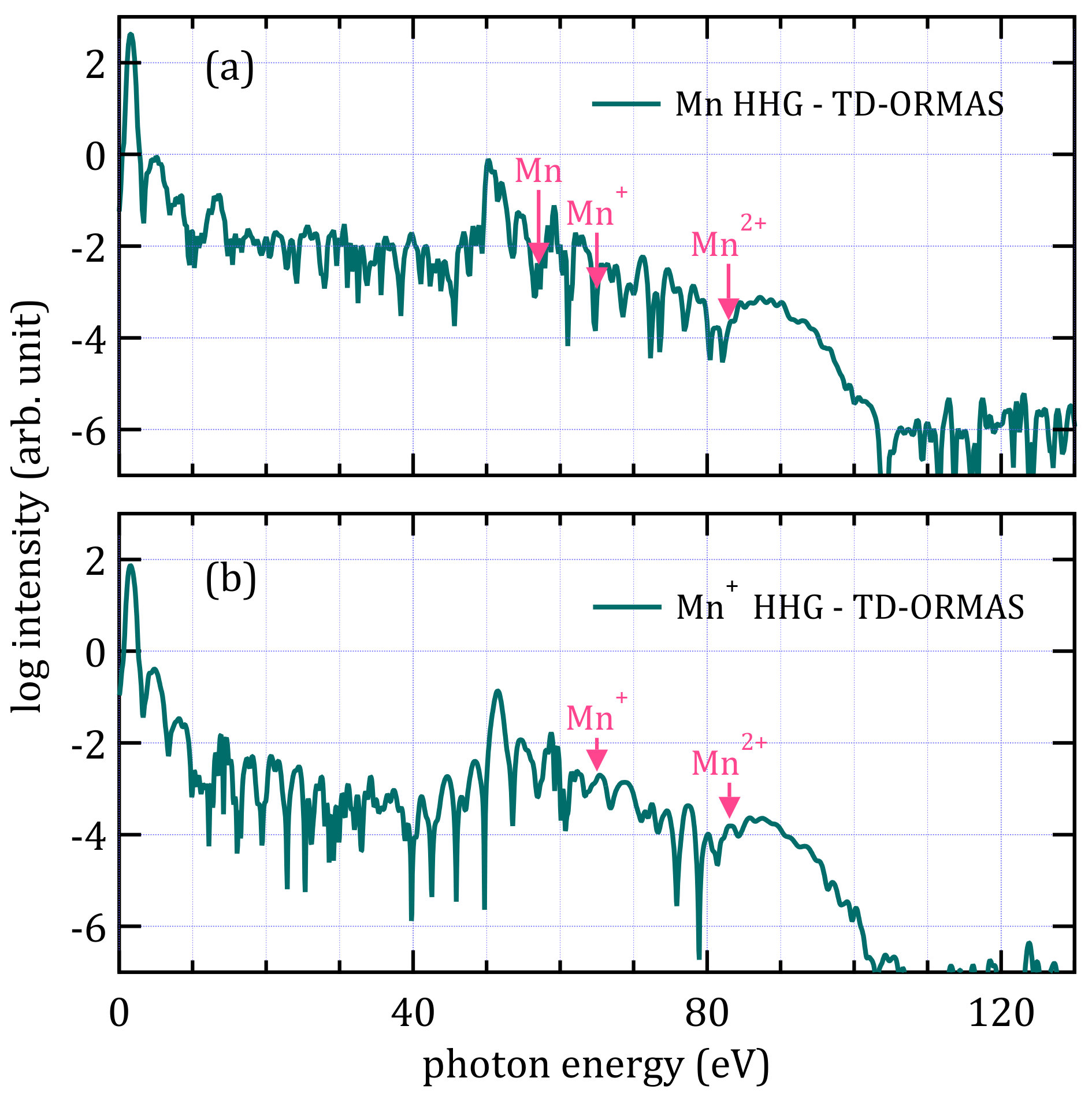 Figure 1
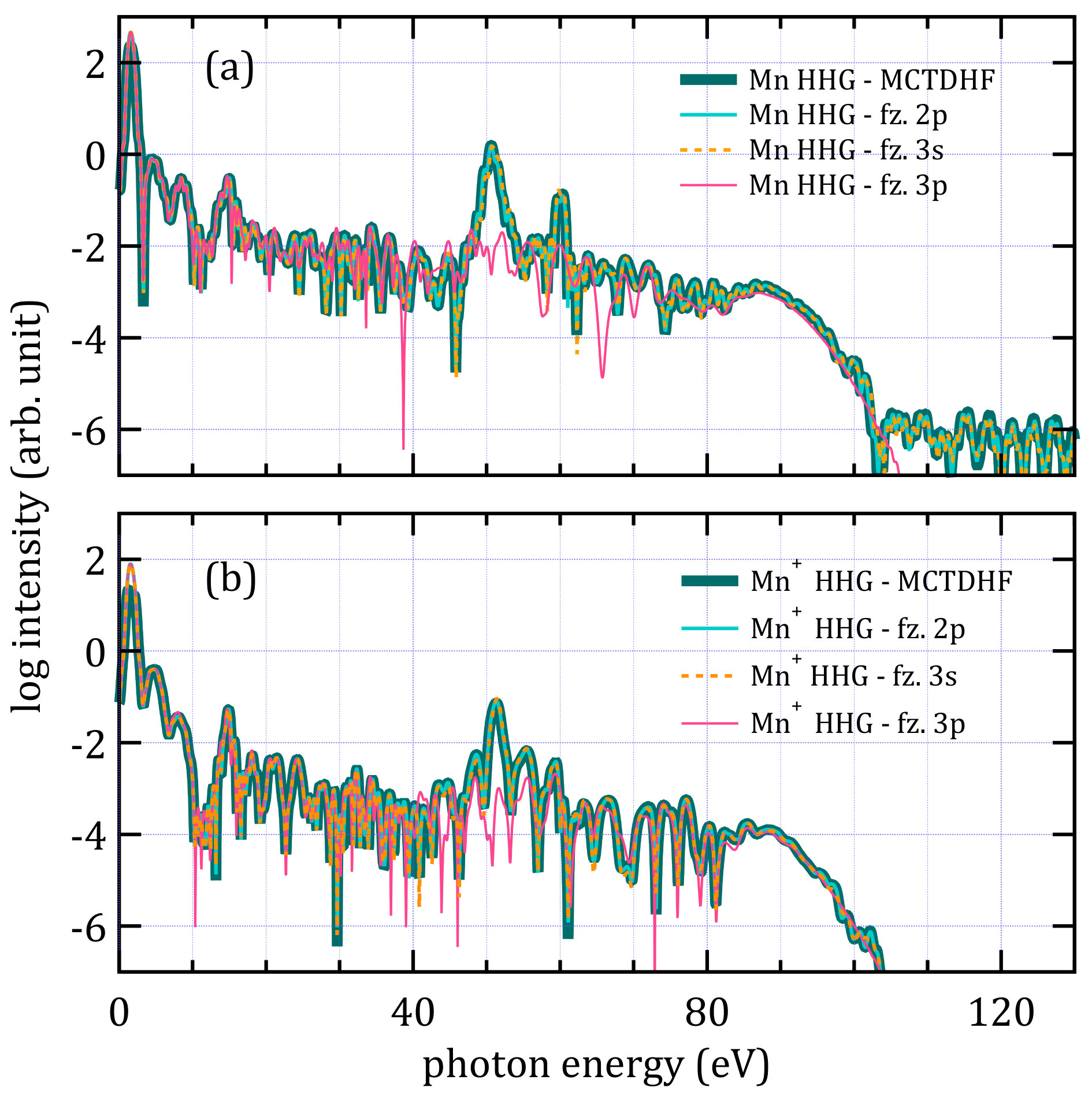 Figure 2
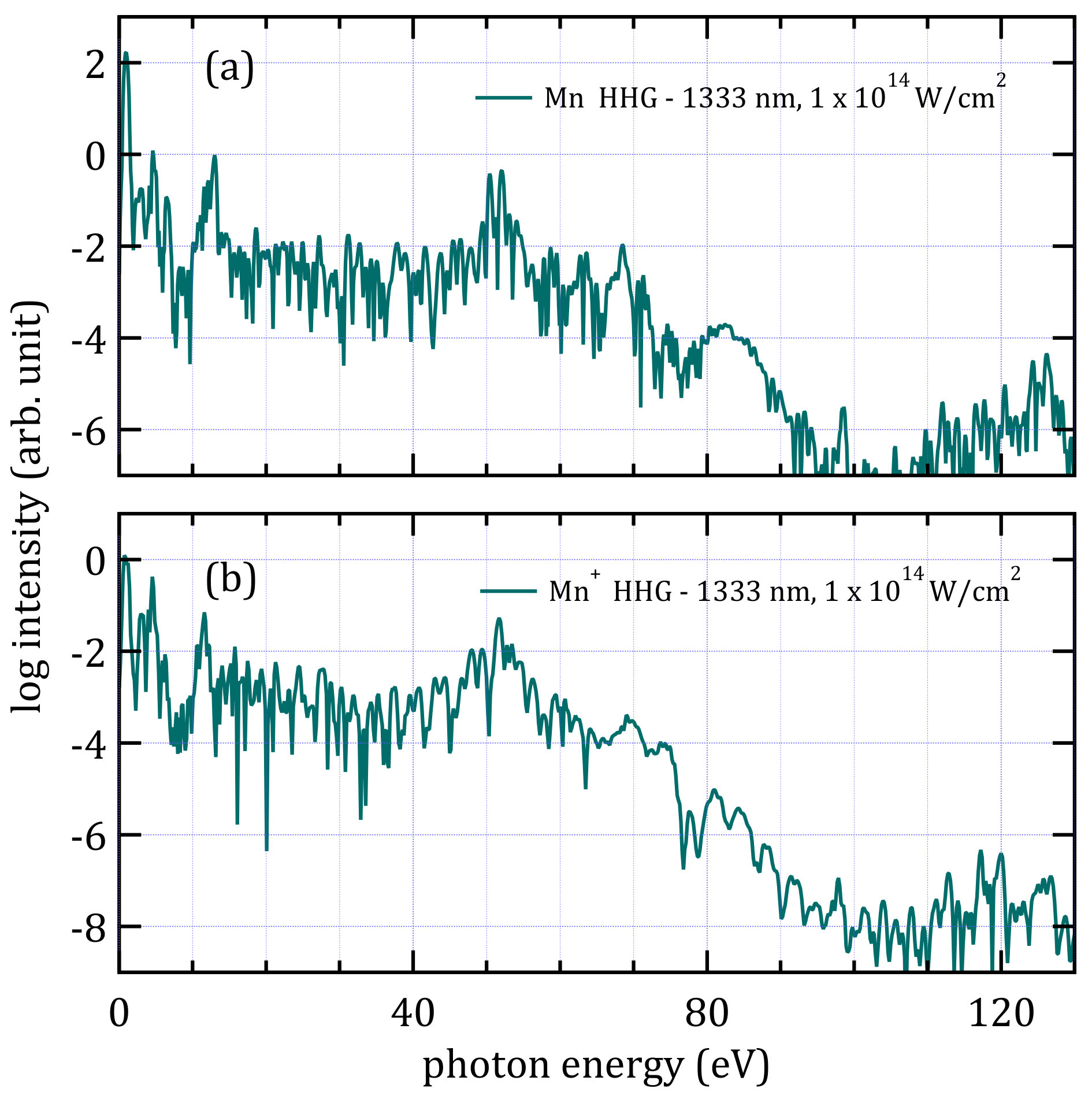 Figure 3
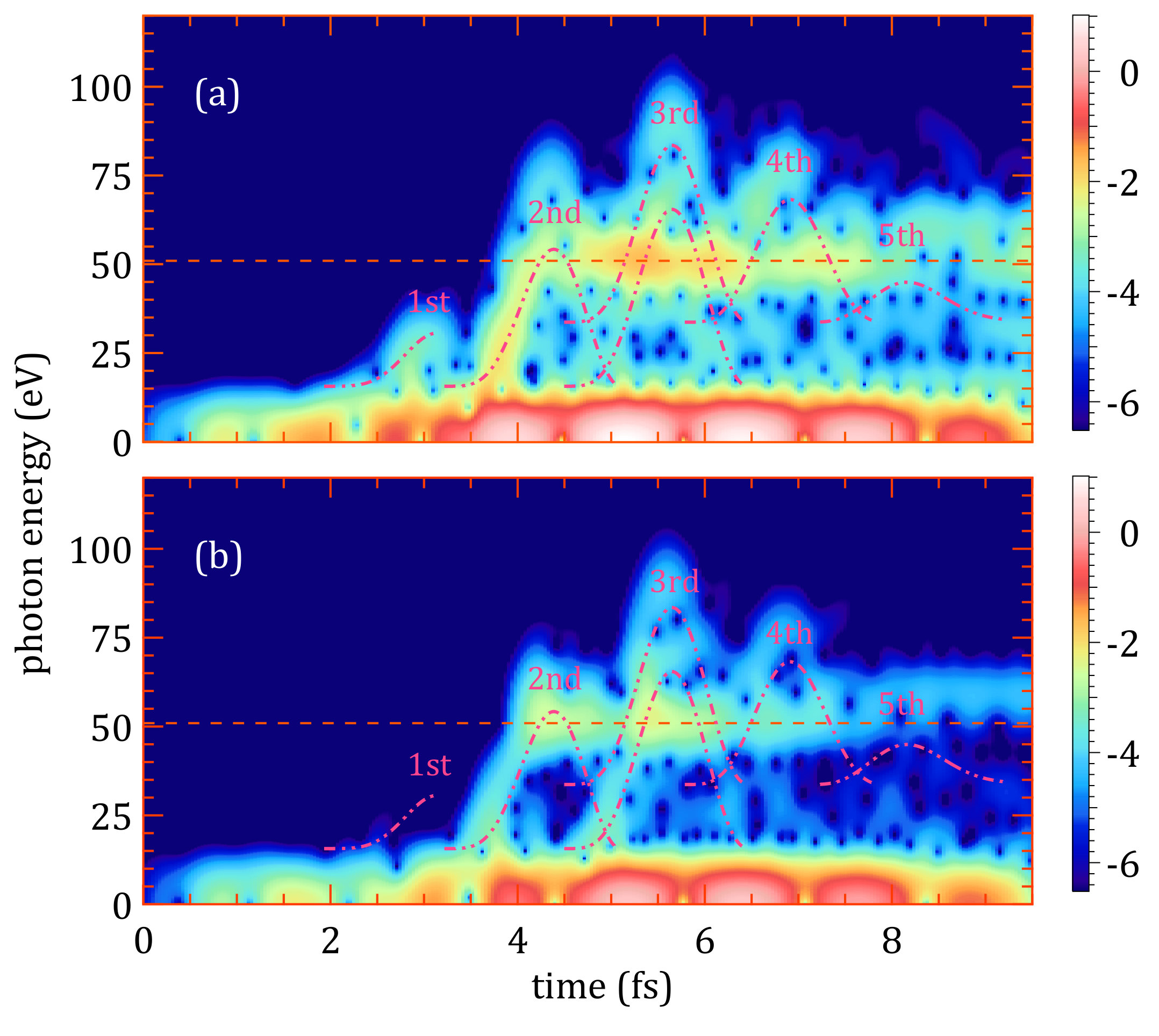 Figure 4
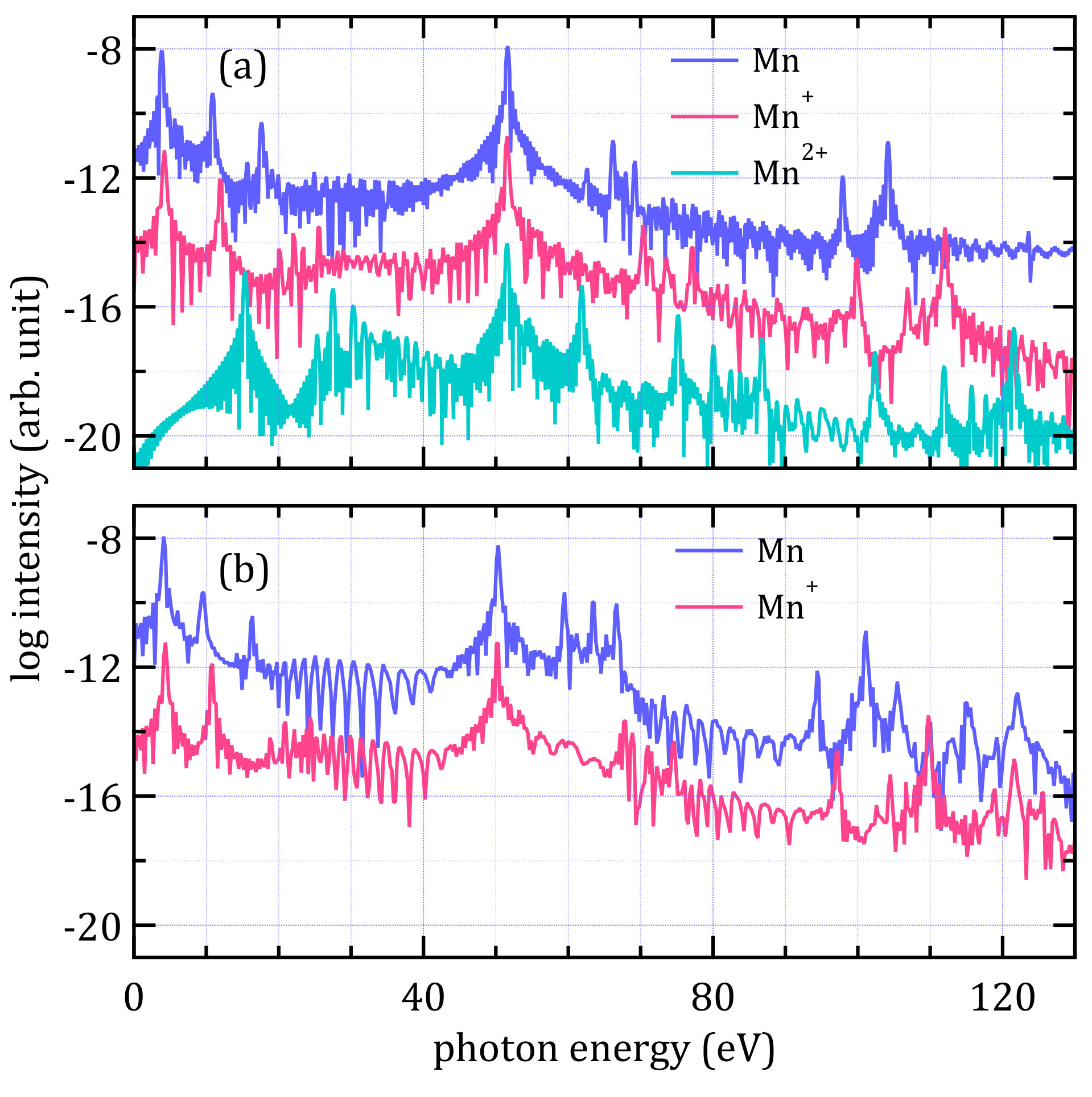 Figure 5
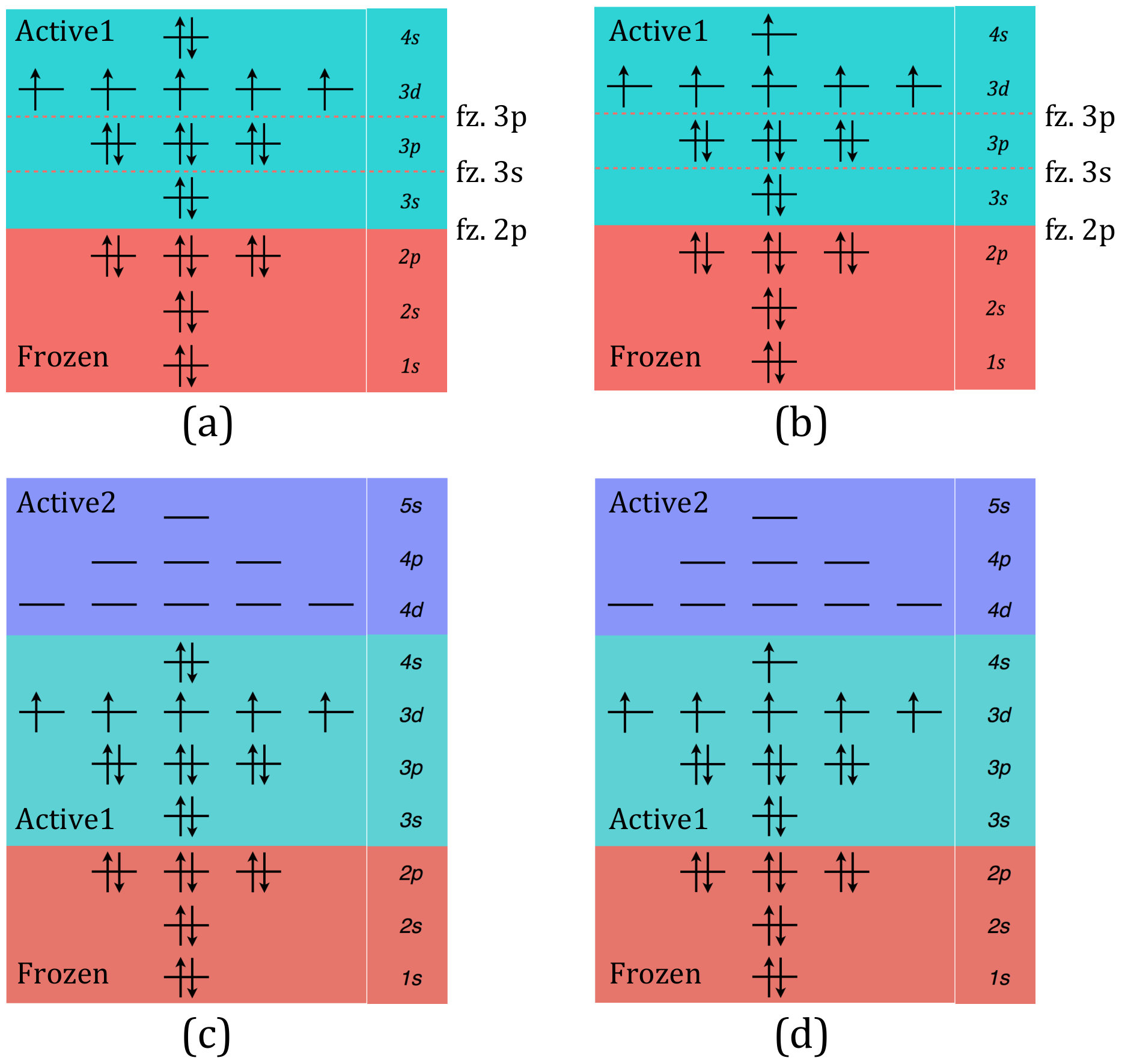 Figure 6
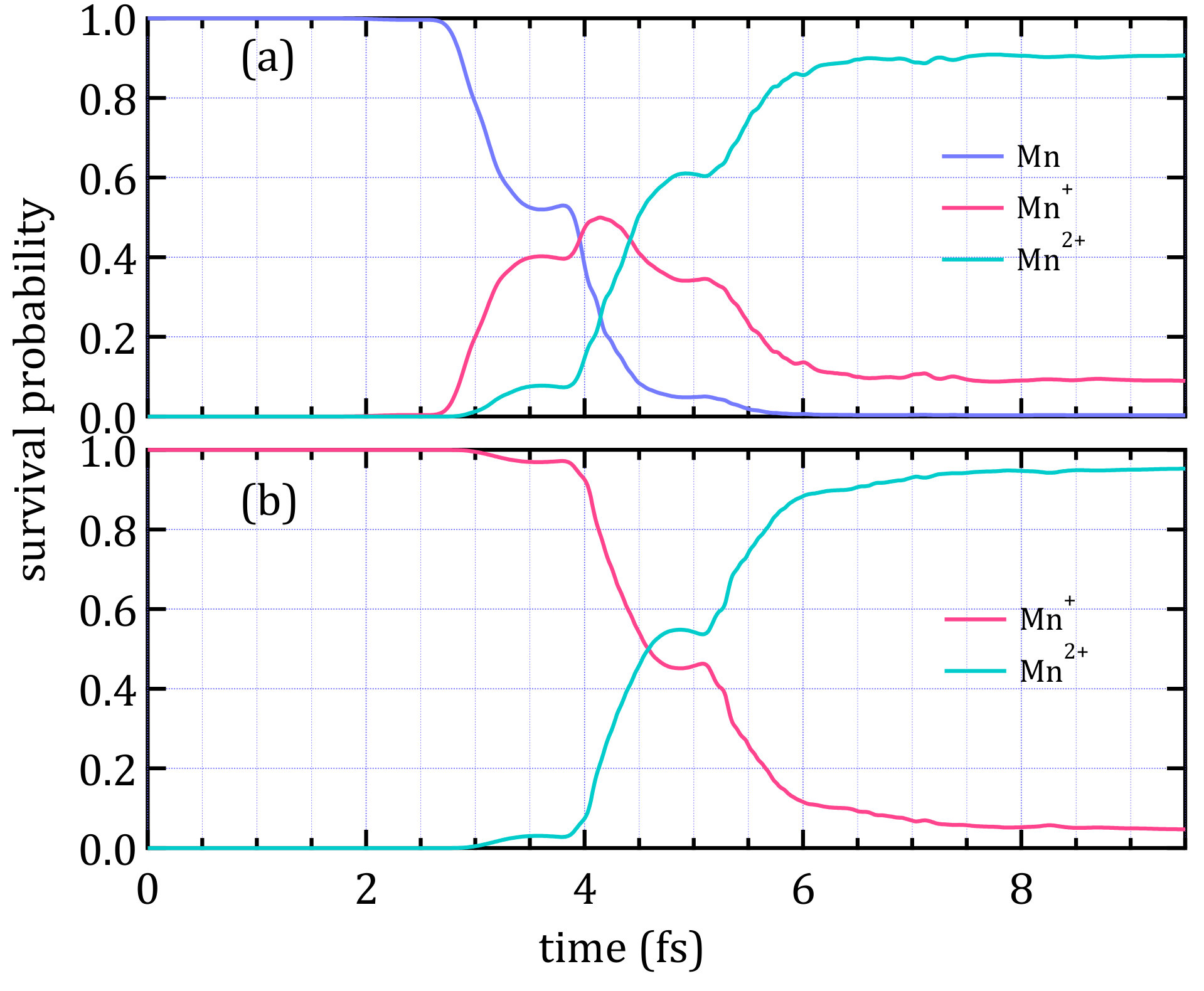 Figure 7
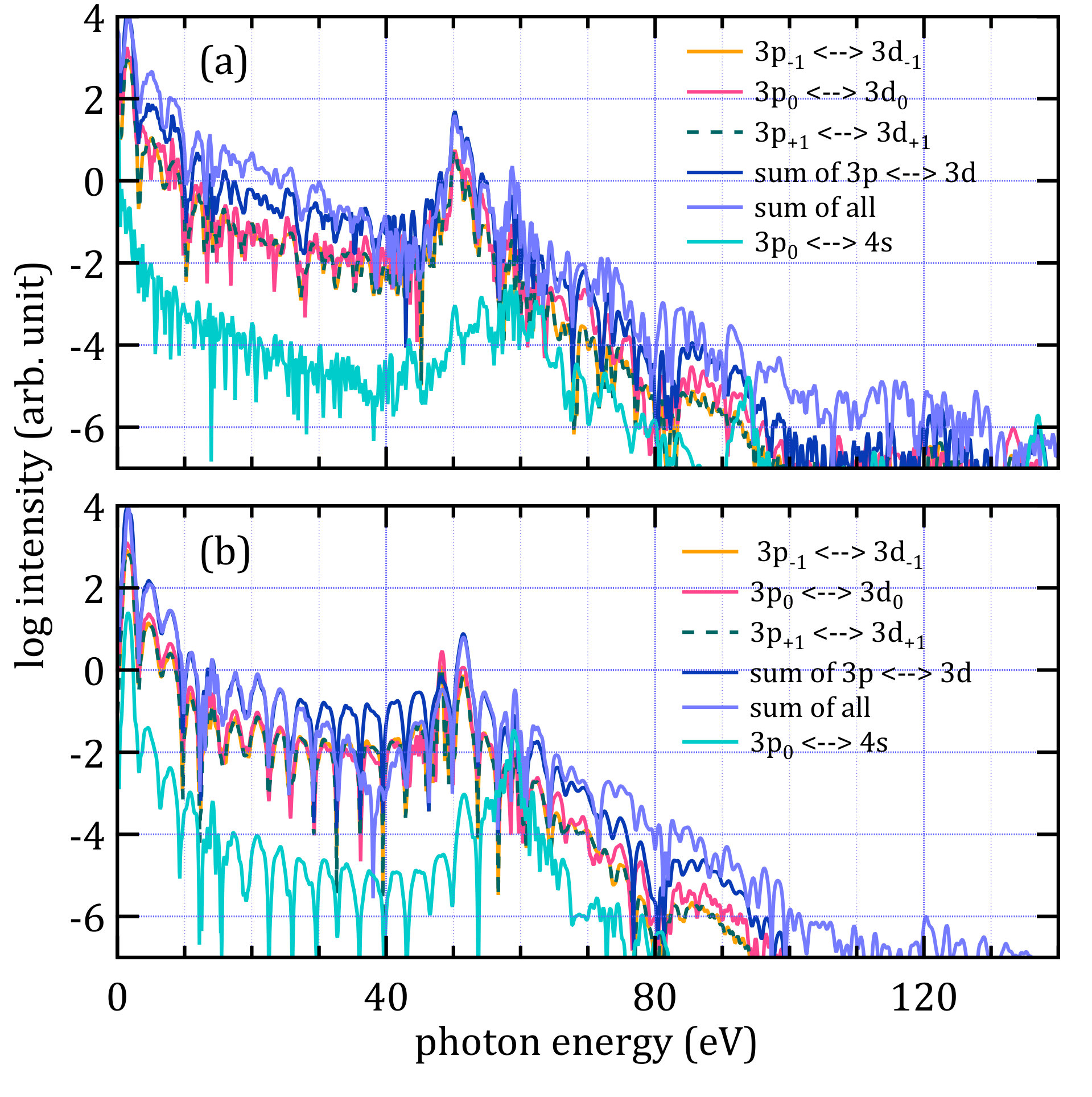 Figure 8
Peer Reviews
No public reviews on file for this paper yet. If you reviewed it on a platform where reviews are public (OpenReview, ICLR, NeurIPS, ICML), you can paste yours below so the community can read it here.
Videos
No videos yet. Explain this paper in a talk, walkthrough, or lecture? Add one.
Time-Dependent Multiconfiguration Self-Consistent-Field Study on Resonantly Enhanced High-Harmonic Generation from Transition Metal Elements
Imam S. Wahyutama
Department of Nuclear Engineering and Management, Graduate School of Engineering, The University of Tokyo, 7-3-1 Hongo, Bunkyo-ku, Tokyo 113-8656, Japan
Takeshi Sato
Department of Nuclear Engineering and Management, Graduate School of Engineering, The University of Tokyo, 7-3-1 Hongo, Bunkyo-ku, Tokyo 113-8656, Japan
Photon Science Center, Graduate School of Engineering, The University of Tokyo, 7-3-1 Hongo, Bunkyo-ku, Tokyo 113-8656, Japan
Research Institute for Photon Science and Laser Technology, The University of Tokyo, 7-3-1 Hongo, Bunkyo-ku, Tokyo 113-0033, Japan
Kenichi L. Ishikawa
Department of Nuclear Engineering and Management, Graduate School of Engineering, The University of Tokyo, 7-3-1 Hongo, Bunkyo-ku, Tokyo 113-8656, Japan
Photon Science Center, Graduate School of Engineering, The University of Tokyo, 7-3-1 Hongo, Bunkyo-ku, Tokyo 113-8656, Japan
Research Institute for Photon Science and Laser Technology, The University of Tokyo, 7-3-1 Hongo, Bunkyo-ku, Tokyo 113-0033, Japan
Abstract
We theoretically study high-harmonic generation (HHG) from transition metal elements Mn and Mn+, using full-dimensional, all-electron, first-principles simulations. The HHG spectra calculated with the time-dependent complete-active-space self-consistent-field (TD-CASSCF) and occupation-restricted multiple-active-space (TD-ORMAS) methods exhibit a prominent peak at eV, successfully reproducing resonant enhancement observed in previous experiments [R.A. Ganeev et al., Opt. Express 20, 25239 (2012)]. Artificially freezing orbitals in simulations results in its disappearance, which shows the essential role played by electrons in the resonant harmonics (RH). Further transition-resolved analysis unambiguously identifies constructively interfering - () giant resonance transitions as the origin of the RH, as also implied by its position in the spectra. Time-frequency analysis indicates that the recolliding electron combines with the parent ion to form the upper state of the transitions. In addition, this study shows that the TD-CASSCF and TD-ORMAS methods can be applied to open-shell atoms with many unpaired inner electrons.
pacs:
Valid PACS appear here
††preprint: APS/123-QED
I Introduction
High intensity and ultrashort laser pulses have become an indispensable tool both in scientific researches and industrial applications for studying or manipulating the properties of matter. High-harmonic generation (HHG) is one of the important research domains that have emerged thanks to the remarkable advancement of high-intensity ultrashort laser technologies. HHG is a nonperturbatively nonlinear optical process in which a fundamental strong-laser field is converted into harmonics of very high orders upon interaction with atoms, molecules, and solids. The nature of the HHG process is closely intertwined with the electronic structure and dynamics of the generating medium. Hence, a variety of quantum scale phenomena have been succesfully identified by devising specialized measurement techniques such as electronic structure detection Baykusheva et al. (2017), observation of Rabi flopping Ciappina et al. (2015), multi-channel interference Gui-Hua et al. (2016), and spectroscopy of Cooper minimum Wong et al. (2013); Scarborough et al. (2018).
High-harmonic (HH) radiation is an excellent source of coherent XUV photons that can fit into a labroom Agostini and DiMauro (2004); Krausz and Ivanov (2009); Protopapas et al. (1997). A number of applications for studying atomic and material properties have been reported Wong et al. (2013); Scarborough et al. (2018); Ciappina et al. (2015); Baykusheva et al. (2017); Gui-Hua et al. (2016) demonstrating its potential as a reliable tool for studying light-matter interaction in the attosecond time scale. Further increase in harmonic intensity is desirable to fully explore its areas of use.
It has frequently been reported that the use of transition metal plasma as a generating medium leads to resonant enhancement of a single or a few harmonics Ganeev et al. (2006); Suzuki et al. (2006); Ganeev et al. (2007a, 2012a, 2011, 2012b, b); Haessler et al. (2013). The resonant harmonics (RH) lie close to the giant transition lines in the absorption or emission response of the elements Ganeev et al. (2006), e.g., eV in Sn plasma Suzuki et al. (2006); Ganeev et al. (2011, 2012b); Fareed et al. (2017), eV in In Ganeev et al. (2006), and 50 eV in Mn Ganeev et al. (2012a). The RH generation would offer an attractive way to increase HHG yield around a certain photon energy. It might also serve as a new platform to explore multielectron dynamics in intense laser fields using HHG, which is usually considered to be of single electron nature in most cases.
In this work, we theoretically investigate the resonant HHG process, using Mn and its cation Mn+ as target systems for the scrutiny of the underlying mechanism. The resonance in HHG spectra from Mn+ was observed experimentally by Ganeev et al. Ganeev et al. (2012a) where the harmonic peak around 50 eV is enhanced by more than an order of magnitude relative to neighboring harmonics, and the 3-3 resonance was suggested to be relevant, as implied by the peak position Ganeev et al. (2012a).
Prior to the present work, there have been theoretical efforts on RH from transition metal elements over the past decade. Milošević in Ref. Milošević (2007) and Milošević (2006) studied the effect of coherent superposition in the initial state and found that a three-step process starting from an excited state but returning to the ground one exhibits an enhanced harmonic. In Ref. Strelkov et al. (2014), the line shape of resonant harmonic is discussed in terms of Fano lineshape. A modelling of the autoionizing state is performed in Refs. Haessler et al. (2013); Fareed et al. (2017); Tudorovskaya and Lein (2011); Frolov et al. (2010) using a parametrized potential barrier. Milošević has also investigated the property of resonant harmonic such as intensity and phase in Ref. Milošević (2010). Other reports of varying elaboration have also been published, see e. g. Ref. Strelkov (2010); Ivanov and Kheifets (2008); Figueira de Morisson Faria et al. (2002). Most of the above-mentioned attempts use an effective model potential within the single-active-electron approximation. Although not targeted at transition metal plasma, one particular work that starts to consider the possibility of multielectron effects has been done by Redkin and Ganeev Redkin and Ganeev (2010), who have simulated a fullerene-like model system using multiconfiguration time-dependent Hartree-Fock (MCTDHF) method within the two-active-electron jelliumlike sphere approximation.
In the present work, we do all-electron three-dimensional (3D) ab initio simulations based on the time-dependent multiconfiguration self-consistent-field (TD-MCSCF) methods Ishikawa and Sato (2015), which describe the system wavefunction by the superposition of Slater determinants consisting of time-dependent spin-orbital functions. Specifically, we apply state-of-the-art implementation of the time-dependent complete-active-space self-consistent-field (TD-CASSCF) Sato and Ishikawa (2013); Sato et al. (2016); Orimo et al. (2018) and time-dependent occupation-restricted multiple-active-space (TD-ORMAS) Sato and Ishikawa (2015) methods, which classify spatial orbitals into doubly occupied core and correlated active orbitals. Previously, these methods have been applied to either closed-shell systems or systems having a single unpaired valence electron Tikhomirov et al. (2017); Sato et al. (2016); Sato and Ishikawa (2015); Li et al. . Here, we extend our methods to general open-shell atoms such as transition metals, having many unpaired electrons ( and for Mn and Mn+, respectively) that can equally participate in the dynamics under strong laser fields. We successfully reproduce the RH at eV and unambiguously identify the 3-3 giant resonance as its origin, by taking full advantage of TD-CASSCF and TD-ORMAS to analyze transition dynamics between different orbitals. Our results show that the three 3-3 lines () constructively interfere to form the RH peak.
This paper is organized in the following way. The overview of the two methods used for our simulations is given in Sec. II. The results are presented and discussed in Sec. III. Conclusions and future possibilities are given in Sec. IV. Hartree atomic units are used throughout unless otherwise noted.
II TD-CASSCF and TD-ORMAS Methods
We consider an -electron atom (or ion) with atomic number irradiated by a laser field linearly polarized along the axis. In the velocity gauge and within the dipole approximation, its dynamics is described by the time-dependent Schrödinger equation,
[TABLE]
with being the vector potential.
In the TD-CASSCF and TD-ORMAS methods, we express the total wave function as,
[TABLE]
where denotes the antisymmetrization operator, and the closed-shell determinants formed with time-independent doubly occupied frozen-core and time-dependent doubly occupied dynamical-core orbitals, respectively, and the determinants constructed from active orbitals. Whereas in the TD-CASSCF method the active electrons are fully correlated among the active orbitals within prescribed numbers of up- and down-spin electrons, the TD-ORMAS method further subdivides the active orbitals into an arbitrary number of subgroups, specifying the minimum and maximum number of electrons accommodated in each subgroup.
We specifically consider Mn and Mn+ in the present study, whose ionization potential, barrier-suppression intensity Haessler et al. (2013); Ilkov et al. (1992), and the ground-state configuration are summarized in Table 1. Orbital subspace decomposition used in this study is shown in Fig. 1. Note that at least spatial orbitals are required for the correct spin multiplicities. TD-CASSCF simulations use and determinants for Mn and Mn+, respectively. In TD-ORMAS simulations, up to two-electron excitations from Active1 to Active2 are allowed, which results in 86510 determinants for Mn and 66068 for Mn+.
The equations of motion (EOMs) describing the temporal evolution of the CI coefficients and the orbitals are derived on the basis of the time-dependent variational principle (TDVP) Reinhard (1977); Löwdin and Mukherjee (1972); Moccia (1973); Heller (1976) and read,
[TABLE]
where denotes the total Hamiltonian, the one-body Hamiltonian, the projector onto the orthogonal complement of the occupied orbital space. is a non-local operator describing the contribution from the interelectronic Coulomb interaction, defined as
[TABLE]
where and are the one- and two-electron reduced density matrices, and is given, in the coordinate space, by
[TABLE]
The matrix element is given by,
[TABLE]
with . ’s within one orbital subspace (frozen core, dynamical core and each subdivided active space) can be arbitrary Hermitian matrix elements, and in this paper, they are set to zero. On the other hand, the elements between different orbital subspaces are determined by the TDVP. Their concrete expressions are given in Ref. Sato and Ishikawa (2015), where is used for working variables.
Our numerical implementation Sato et al. (2016) employs a spherical harmonics expansion of orbitals with the radial coordinate discretized by a finite-element discrete variable representation Rescigno and McCurdy (2000); McCurdy et al. (2004); Schneider et al. (2006, 2011). Specifically, to obtain the ground states we use 12 finite elements each of which contains 25 grid points. For subsequent time-dependent simulations, up to finite elements (including those used in the ground state) are employed. The initial ground state is obtained through imaginary time propagation of the EOMs. The Hartree-Fock energies ( a.u. for Mn and a.u. for Mn+) perfectly match the values reported in Ref. Koga et al. (1995). For the CASSCF and ORMAS cases, electron correlation leads to the lowering of the ground-state energy. For example, the ORMAS method yields the ground state energy of Mn to be a.u.. We confirm that the total orbital and spin angular momenta of the ground state match the term notations for both Mn () and Mn+ ().
We calculate HHG spectra as the magnitude squared of the Fourier transform of the dipole acceleration , defined as Sato et al. (2016),
[TABLE]
Here, the additional term accounts for the correction to the Ehrenfest formula in the presence of frozen core orbitals. Its explicit expression is found in Ref. Sato et al. (2016).
III Results and Discussions
III.1 Resonant high-harmonic emission from Mn and Mn+
Let us first examine if our simulations reproduce the resonant harmonics in the HH response of Mn and Mn+. The harmonic spectra from Mn and Mn+ obtained with the TD-CASSCF method for a fundamental laser field with nm central wavelength, W/cm2 peak intensity, and foot-to-foot four-cycle pulse shape are shown in Fig. 2(a) and (b) (blue solid, marked as “fz. ”), respectively. The results of the MCTDHF simulations, in which all the 15 orbitals in Fig. 1(a) and (b) are treated as active, are also shown (green thick solid curves). The perfect overlap of the results by the two methods indicates numerical convergence for this number of orbitals. The results of the TD-ORMAS simulations are plotted in Fig. 3 for the same laser parameters as in Fig. 2. In both Figs. 2 and 3, we clearly see an RH slightly above 50 eV, substantially enhanced in comparison with neighboring harmonics, for both Mn and Mn+, whose position is in excellent agreement with the experimental value ( eV Ganeev et al. (2012a)).
We have calculated HH spectra for 1333 nm wavelength and peak intensity with the TD-ORMAS method (Fig. 4), while keeping the ponderomotive energy unchanged. In spite of substantial difference in laser parameters, we can see that the resonant harmonic peak remains at eV. Thus, the RH position is governed by atomic properties, rather than laser parameters.
Then, we make use of the flexibility in orbital-subspace decomposition to find out which orbitals contribute to RH. We have performed TD-CASSCF simulations by varying the boundary between the active and frozen spaces in Fig. 1. Whereas freezing virtually does not change the spectrum, freezing up to leads to the disappearance of the RH peak (Fig. 2). This indicates that the appearance of the enhanced peak involves the dynamics of electrons.
In Fig. 5 are shown the (single-photon) excitation spectra of Mn, Mn+, and Mn2+, obtained as a Fourier transform of the dipole response to a quasi-delta-function pulse with the field being finite at three time steps ( W/cm2 peak intensity). Although there are slight differences between the TD-CASSCF and TD-ORMAS results, we see a strong excitation line at eV in all the cases, which reproduces the position of the well-known - giant resonance line Cooper et al. (1989); von dem Borne et al. (2000) and coincides with the RH in the HHG spectra. These observations strongly suggest that the RH originates from the - resonance line, as also implied experimentally Ganeev et al. (2012a).
Before ending this subsection, let us briefly discuss the cutoff energies. The arrows in Fig. 3 mark the cutoff positions expected from the cutoff law with being the ponderomotive energy. Even if the simulation starts from Mn or Mn+, the HHG spectra extend further up to the cutoff corresponding to Mn2+. Indeed, as expected from the barrier-suppression intensity (Table 1) and confirmed by Fig. 6 showing the temporal variation of the fraction of each species, Mn is mostly ionized in the early stage, and Mn+ is further substantially ionized to Mn2+. The comparison between Fig. 6 and the time-freqency structure of HHG shown in Fig. 7 also indicates that the higher plateau appears after the production of Mn2+. In spite of its high ionization potential, harmonic response of Mn2+ is enhanced probably through laser-induced electron recollision Tikhomirov et al. (2017); Abanador et al. (2018); Li et al. .
III.2 Transition-resolved analysis
The results in the previous Subsection motivate us to analyze contributions from individual transition lines. For the transition-resolved analysis, let us rewrite the dipole acceleration Eq. (II) as,
[TABLE]
where , and denotes the initial orbitals, obtained through imaginary-time relaxation. Since each initial orbital has a definite parity, the terms for vanish. Then, we can view,
[TABLE]
as a contribution from a transition between orbital pair and to the dipole acceleration.
With the orbitals used in TD-ORMAS simulations [Fig. 1(c) and (d)], we can identify the following transitions satisfying the selection rule:
[TABLE]
where the subscripts denote the magnetic quantum numbers. We have calculated the power spectrum of each transition line as the magnitude squared of Fourier transform of .
The spectrum of each of , the contribution of their sum, and the total spectrum of all the lines listed in Eq.(III.2) are presented in Fig. 8 for Mn and Mn+. The sum contribution of has a clear peak at eV and dominates the total contribution in that photon energy region. The other transitions involving such as are by orders of magnitude weaker. Moreover, the position and form of the peak agree very well with those of the RH in the HHG spectra shown in Fig. 3. It should also be noticed that the sum spectrum of the three lines is approximately one order of magnitude stronger than the contribution of each transition. These observations unambiguously establish that the resonant harmonic at eV, experimentally discovered Ganeev et al. (2012a) and numerically reproduced by our ab initio simulations is driven by a constructive interference of electron dynamics occurring between and orbitals.
Superposed on the spectrograms in Fig. 7, we plot, as a function of time, the recombination energy, defined as the sum of the kinetic energy of the returning electron and the ionization potential, or, harmonic photon energy expected from the three-step model Corkum (1993); Kulander et al. (1993). We see that RH photons are emitted mainly when the recombination energy is eV, where the recolliding electron has to be recaptured by the parent ion in order to induce a transition. This is consistent with recombination to autoionizing states (the upper states of the - giant resonance lines in the present case), proposed in Refs. Haessler et al. (2013); Fareed et al. (2017); Tudorovskaya and Lein (2011); Frolov et al. (2010). Whereas these studies used the single-active-electron approximation with a model potential barrier, our all-electron ab initio simulations support this process as a mechanism of RH generation from Mn and Mn+.
IV Conclusions
We have applied the TD-CASSCF and TD-ORMAS methods to open-shell elements to study resonant enhancement in high-harmonic generation from transition metal elements Mn and Mn+. Our simulations have successfully reproduced the presence and position ( eV) on the experimentally observed resonance harmonics Ganeev et al. (2012a). While its position suggests the relevance with the - giant resonance lines, we have performed a series of analyses to unambiguously verify it. First, we have taken advantage of flexibility in orbital subspace decomposition to vary the boundary between frozen-core and active orbitals, and found that freezing up to leads to the disappearance of the RH, which shows the essential role of the electrons. Then, we have calculated the contribution of each transition between initial orbitals to harmonic spectra. It has indeed revealed that the RH is dominated by the - () transitions, constructively interfering. It has followed from the inspection of the HHG time-frequency structure that the RH is emitted mainly, if not exclusively, when the sum of the kinetic energy of the returning electron and the ionization potential of Mn or Mn+ is eV. This implies that the electron recombines to the autoionizing upper state of the - transitions, as proposed previously within the single-active-electron approximation using a model potential barrier Haessler et al. (2013); Fareed et al. (2017); Tudorovskaya and Lein (2011); Frolov et al. (2010).
Acknowledgements.
This research was supported in part by a Grant-in-Aid for Scientific Research (Grants No. 16H03881, No. 17K05070, and No. 18H03891) from the Ministry of Education, Culture, Sports, Science and Technology (MEXT) of Japan and also by the Photon Frontier Network Program of MEXT. This research was also partially supported by the Center of Innovation Program from the Japan Science and Technology Agency (JST), by CREST (Grant No. JPMJCR15N1), JST, and by Quantum Leap Flagship Program of MEXT. I.S.W. gratefully acknowledges support from Special Graduate Program in Resilience Engineering of the University of Tokyo.
The reference list from the paper itself. Each links out to its DOI / PubMed record.
- 1Baykusheva et al. (2017) D. Baykusheva, S. Brennecke, M. Lein, and H. J. Wörner, Phys. Rev. Lett. 119 , 203201 (2017) . · doi ↗
- 2Ciappina et al. (2015) M. F. Ciappina, J. A. Pérez-Hernández, A. S. Landsman, T. Zimmermann, M. Lewenstein, L. Roso, and F. Krausz, Phys. Rev. Lett. 114 , 143902 (2015) . · doi ↗
- 3Gui-Hua et al. (2016) L. Gui-Hua, X. Hong-Qiang, Y. Jin-Ping, C. Wei, C. Ya, L. Xiao-Jun, C. Jing, and X. Xin-Hua, Acta Phys. Sin-Ch. Ed. 65 , 224208 (2016) . · doi ↗
- 4Wong et al. (2013) M. C. H. Wong, A.-T. Le, A. F. Alharbi, A. E. Boguslavskiy, R. R. Lucchese, J.-P. Brichta, C. D. Lin, and V. R. Bhardwaj, Phys. Rev. Lett. 110 , 033006 (2013) . · doi ↗
- 5Scarborough et al. (2018) T. D. Scarborough, T. T. Gorman, F. Mauger, P. Sándor, S. Khatri, M. B. Gaarde, K. J. Schafer, P. Agostini, and L. F. Di Mauro, Appl. Sci. 8 (2018) .
- 6Agostini and Di Mauro (2004) P. Agostini and L. F. Di Mauro, Rep. Prog. Phys. 67 , 1563 (2004) .
- 7Krausz and Ivanov (2009) F. Krausz and M. Ivanov, Rev. Mod. Phys. 81 , 163 (2009) . · doi ↗
- 8Protopapas et al. (1997) M. Protopapas, C. H. Keitel, and P. L. Knight, Rep. Prog. Phys. 60 , 389 (1997) .