Effect of power-law Maxwell field to the gravitational lensing
O. Gurtug, M. Mangut

TL;DR
This paper investigates how nonlinear electrodynamics, modeled by the power-law Maxwell field, influences gravitational lensing, revealing that electric charge and field strength can significantly modify light bending near massive objects.
Contribution
It extends gravitational lensing analysis to Einstein-power-Maxwell theory, showing the impact of nonlinear electromagnetic fields on light deflection.
Findings
Bending angle increases with stronger electric fields.
Charge affects the closest approach distance of light.
Nonlinear electrodynamics alters gravitational lensing predictions.
Abstract
In this paper, we extend the gravitational bending of light studies in Kottler metrics to comprise nonlinear electrodynamics within the framework of Einstein - power - Maxwell theory. We show that the closest approach distance and the gravitational bending of light are affected from the presence of charge for particular values of the power parameter , which is defined by means of energy conditions. It is shown that the bending angle of light is stronger in the case of a strong electric field, which is the case for .
Click any figure to enlarge with its caption.
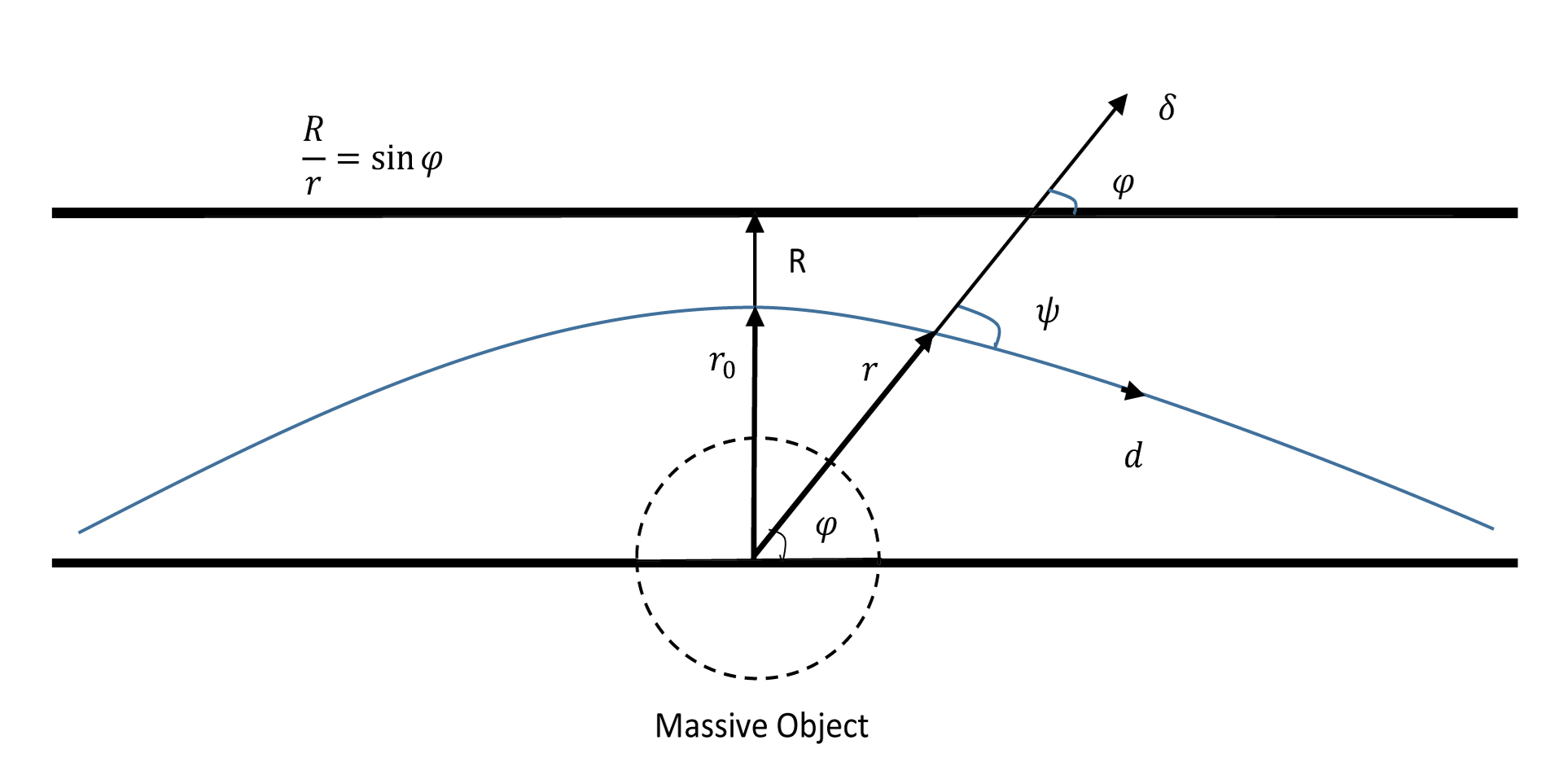 Figure 1
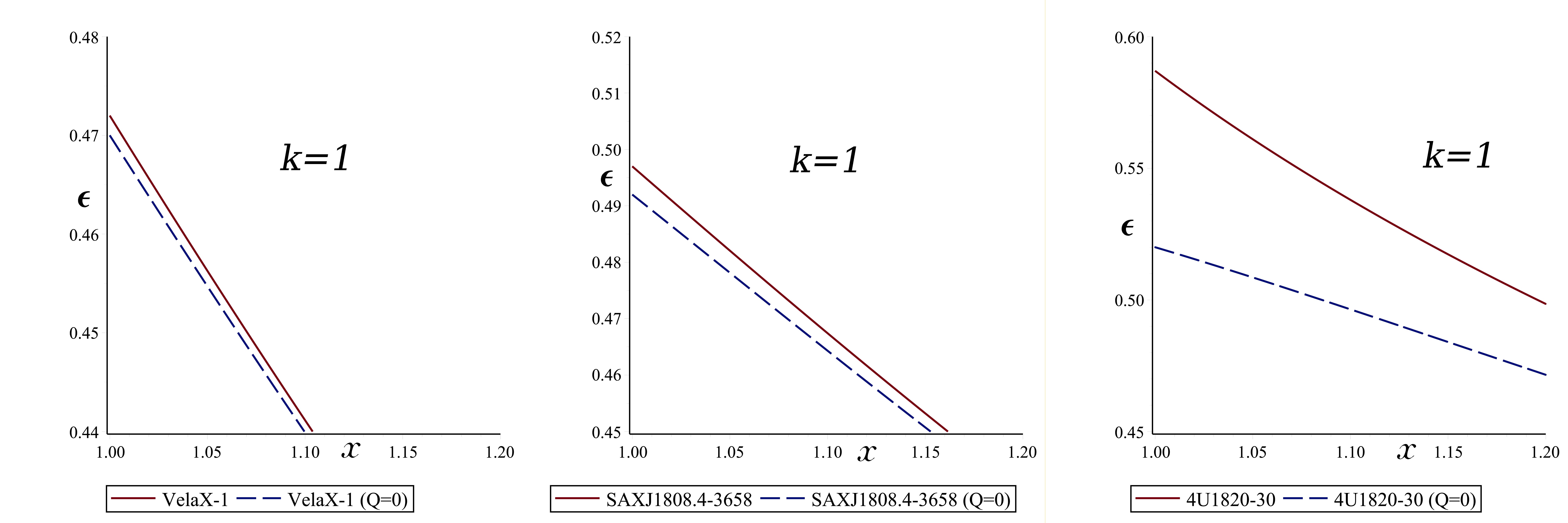 Figure 2
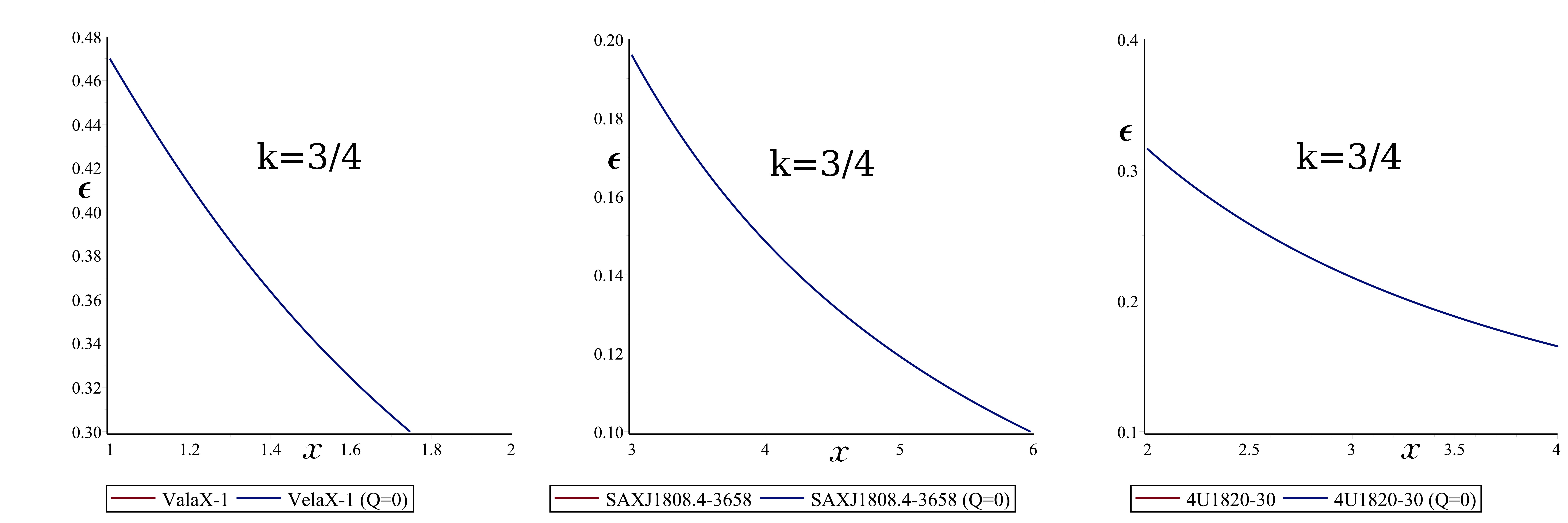 Figure 3
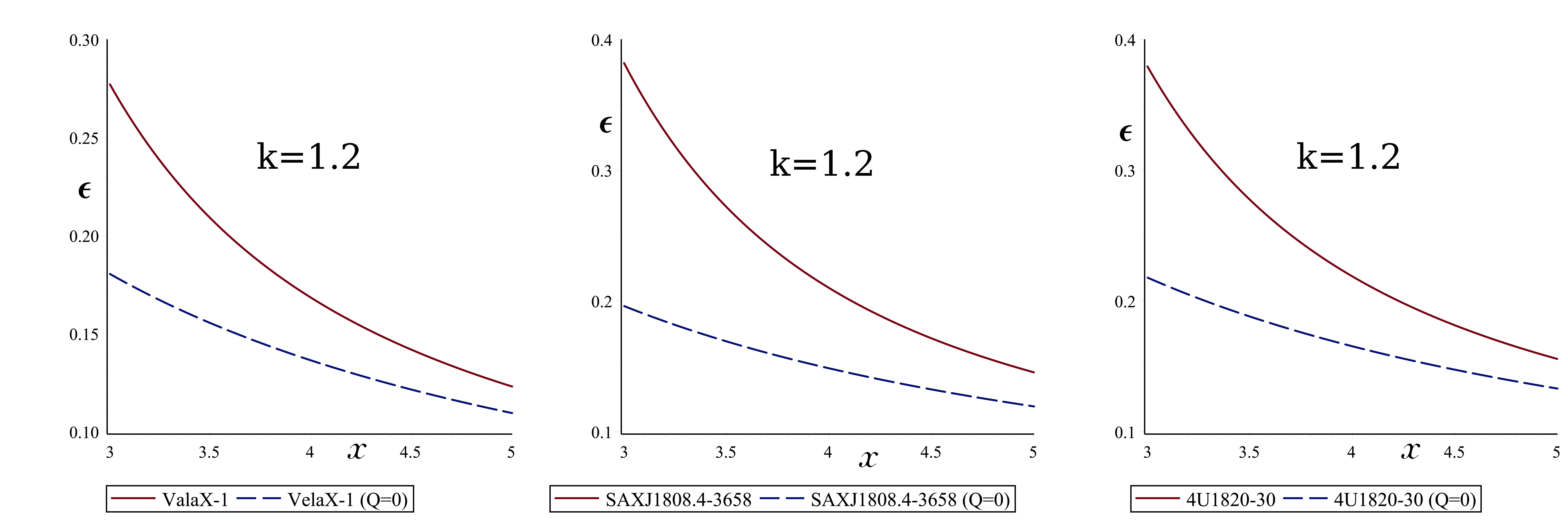 Figure 4
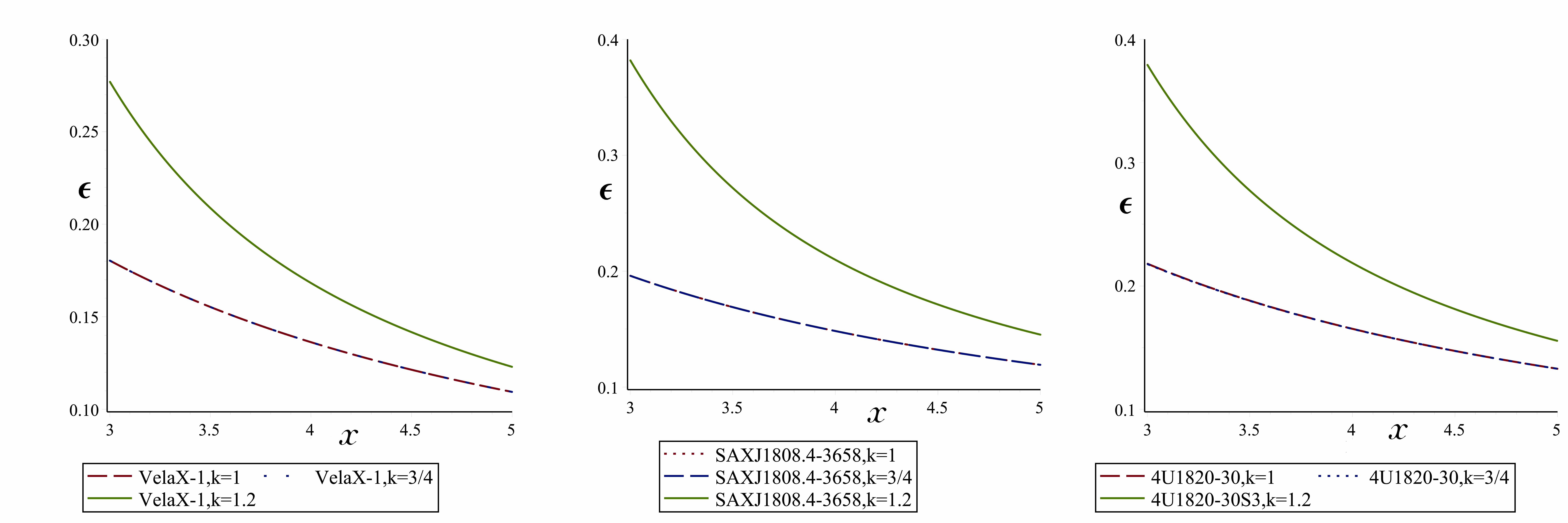 Figure 5
| Charged Compact Stars | M | Radius (km) | Electric Charge (C) |
|---|---|---|---|
| Vela X-1 (CS1) | |||
| SAXJ 1808.4-3658 (CS2) | |||
| 4U 1820-30 (CS3) |
Peer Reviews
No public reviews on file for this paper yet. If you reviewed it on a platform where reviews are public (OpenReview, ICLR, NeurIPS, ICML), you can paste yours below so the community can read it here.
Videos
No videos yet. Explain this paper in a talk, walkthrough, or lecture? Add one.
Effect of power-law Maxwell field to the gravitational lensing
O. Gurtug
[email protected];[email protected]
T. C. Maltepe University, Faculty of Engineering and Natural Sciences, Istanbul -Turkey
Department of Physics, Faculty of Arts and Sciences, Eastern Mediterranean University, Famagusta, North Cyprus via Mersin 10, Turkey
M. Mangut
Department of Physics, Faculty of Arts and Sciences, Eastern Mediterranean University, Famagusta, North Cyprus via Mersin 10, Turkey
Abstract
In this paper, we extend the gravitational bending of light studies in Kottler metrics to comprise nonlinear electrodynamics within the framework of Einstein - power - Maxwell theory. We show that the closest approach distance and the gravitational bending of light are affected from the presence of charge for particular values of the power parameter , which is defined by means of energy conditions. It is shown that the bending angle of light is stronger in the case of a strong electric field, which is the case for .
Gravitational lensing, power-law Maxwell field, nonlinear electrodynamics
pacs:
95.30.Sf, 98.62.Sb
I Introduction
The question of whether the cosmological constant contributes to the bending angle of light has been pondered by many scientists. The pioneering study in this regard belongs to N. J. Islam, who stated that has no influence on the bending angle of light 1 . This result was confirmed by other authors 2 ; 3 ; 4 ; 5 ; 6 . The arguments in 1 ; 2 ; 3 ; 4 ; 5 ; 6 are based on the vanishing of the cosmological constant in the second order null geodesic equation. However, Rindler and Ishak (RI) have shown that the cosmological constant does indeed contribute to the bending angle of light 7 . All these discussions in the aforementioned papers are based on the Kottler metric 8 , which describes the geometry of Schwarzschild metric coupled with the cosmological constant (Schwarzschild - de Sitter, SdS). The marked distinction between RI and the other authors is the method of calculation of the bending angle. RI method incorporates with the inner product of two coordinates in curved space, which paves the way to include the contribution of all the matter fields existed in the spacetime structure. Therefore, if one wants to study the effect of the background matter fields on the bending angle of light, then the method proposed by RI is adequate. Thus, one may extend the method of RI to include the electric charge together with the cosmological constant and investigate their combined effect on the gravitational bending of light.
It has been known from observational stellar data that the compact objects, namely, Vela X-1, SAXJ1808.4-3658 and 4U1820.30 are categorized as charged compact stars 9 . The peculiar feature of these compact stars is to hold a very huge electric charge. The charge value at the surface of the star is estimated to be Coulomb 10 . Such a huge charge produces very strong electric field in the surrounding geometry. Solutions to the Einstein’s field equations for a static spherically symmetric systems have shown that charge associated with massive objects appear as higher order corrections to the SdS solution. The geometry around the compact object of such solutions can be associated with the external geometry of a charged black hole, which may exhibit a region of spacetime filled with strong electric field in the presence of cosmological constant. From an astrophysics point of view, it is important to investigate any gravitational lensing effect that arise due to the presence of charge in addition to the cosmological constant.
It has been known that the magnetars, which are known as the charged rotating stars or black holes may produce strong magnetic field. When the magnetic field is so strong, the standard linear electrodynamics is not a correct model to describe the geometry around the magnetars. In recent years, there is a growing interest to use nonlinear electrodynamics in astrophysics. It has been demonstrated in 11 ; 12 that, unlike the standard linear Maxwell theory in which the background magnetic field is not effective on the gravitational redshift, when the background is filled with nonlinear magnetic field, it contributes to the gravitational redshift. This contribution is in the sense that, it tends the gravitational redshift to infinity as the nonlinear magnetic field grows. In analogy to this, if there is a strong electric field emanated from charged compact stars, its effect could be studied best by employing nonlinear electrodynamics.
Basically, nonlinear electrodynamics has been introduced to overcome the divergences in self - energy of point like charges in the standard linear Maxwell theory. The Born - Infeld nonlinear electrodynamic model was developed with the expectation to resolve these divergences 13 ; 14 ; 15 ; 16 ; 17 ; 18 . It has been shown that this model helps to remove curvature singularities at the core of black holes 19 .
Another alternative model to nonlinear electrodynamics is the power - law Maxwell field. In this model, the Lagrangian density of the electromagnetic field is described by , where is the nonlinearity parameter. This parameter is a real rational number, which becomes bounded to some intervals by means of energy conditions. It is worth to note that, in this model of nonlinear electrodynamics, conformal invariance condition is satisfied whenever the nonlinearity parameter is chosen. Here, denotes the dimension of the spacetime. This choice implies traceless Maxwell’s energy - momentum tensor. In the last decade, power - law Maxwell field has been used in various studies ranging from lower to higher dimensions 20 ; 21 ; 22 ; 23 ; 24 ; 25 ; 26 ; 27 .
In the present paper, we shall investigate the effect of nonlinear electrodynamics on the gravitational bending of light in the presence of cosmological constant. Because of the observational nature, gravitational bending of light is the most striking consequence of the Einstein’s theory of relativity. In these phenomena, light emerging from distant galaxies/stars, bends when it passes near a massive object. There are considerable amount of research articles that considers the effect of cosmological constant on the bending angle of light (in addition to references 1-7, see 31 ; 32 ). However, there is no common consensus on its effect. In this article, we shall go one step forward and investigate the bending angle of light, when it passes close to a charged compact star surrounded by strong electric field in the presence of cosmological constant. This problem is important, because, the existence of neutron stars or black holes dominated by a strong electric field is a known fact about our universe. Among the others; Vela X-1, SAXJ1808.4-3658 and 4U1820.30 are the well known observed charged compact stars (CCS) in astrophysics. In order to describe the geometry around these CCS in the presence of strong electric field coupled with the cosmological constant, one may consult Einstein - power - Maxwell theory that incorporates a nonlinear electrodynamics through a nonlinear parameter . Within this context, the solution obtained by Hendi and his co - workers 28 is used for studying the bending angle of light in the presence of nonlinear electromagnetic field coupled with the cosmological constant. Though the contribution of cosmological constant to the bending angle of light has been extensively studied, the contribution of nonlinear electrodynamics has not been studied in detail.
The paper is organized as follows. In Sec II, the action of the Einstein-power-Maxwell formalism and the solution to dimensional gravity in the presence of cosmological constant is given. The possible values of nonlinear parameter is obtained with the help of energy conditions. The method of calculating the bending angle of light proposed by RI is briefly explained. In Sec. III, the bending angle of light is calculated for (which is the linear Maxwell extension of 7 ), and (nonlinear Maxwell extension of 7 ). The obtained results are compared with the outcomes of 7 and the contribution of charge on the bending angle of light is clarified. In section IV, relevant astrophysical applications are studied numerically for three realistic charged compact star. The paper is concluded with a results and discussion in Sec. V.
II Einstein - power law Maxwell Field Solutions in
Dimensional Gravity
The dimensional action in Einstein - power law Maxwell theory of gravity with a cosmological constant is given by,
[TABLE]
in which is the Ricci scalar, is the positive cosmological constant (for asymptotically de-Sitter solutions) with a length scale and where is the nonlinearity parameter with the Maxwell invariant . Note that linear Maxwell limit is restored when . The metric ansatz for dimensional gravity is given in standard form by
[TABLE]
The solution to the Einstein-power law Maxwell equations was given in any dimension in 28 , and the particular solution in dimensional gravity is given by
[TABLE]
in which and are charge and mass related integration constants. The electric charge and the ADM mass of the object are defined by,
[TABLE]
[TABLE]
II.1 Energy Conditions
Before calculating the bending angle of light in the presence of nonlinear electrodynamics, the energy conditions must be checked for possible values of the parameter . This is important within the context of the considered model of nonlinear electrodynamics, as far as the physically acceptable solutions are concerned.
The energy momentum tensor of the power - law Maxwell field is given by,
[TABLE]
in which The nonzero component of the electromagnetic field tensor is given by
[TABLE]
As a direct consequence, the Maxwell invariant , where is the electric field.
The weak energy conditions (WEC) state that
[TABLE]
where is the energy density, and are the principal pressures defined by,
[TABLE]
[TABLE]
[TABLE]
WEC is satisfied whenever The strong energy condition (SEC) states that
[TABLE]
This condition together with the WEC reveals that The dominant energy condition (DEC) states that
[TABLE]
This condition yields If WEC, SEC and DEC are combined, gets bounded to In addition to energy conditions, one can also impose the causality condition which is defined by
[TABLE]
The analysis has revealed that the causality condition is satisfied for As a consequence, if the nonlinearity parameter is chosen such that it satisfies the constraint condition then all the energy conditions are satisfied and the resulting solution to the Einstein-power law Maxwell equations becomes physically acceptable.
II.2 Bending Angle
As is well known, the inner product of two vectors remains invariant under the rotation of coordinate systems. Rindler and Ishak have used this property in 7 to calculate the relativistic bending angle of light in the following way. The angle between two coordinate directions and as shown in Fig.1 is given by the invariant formula,
[TABLE]
In this formula, is the metric tensor of the constant time slice of the metric (2), a two-dimensional curved space, which is defined at the equatorial plane (when ) in the following form 29 , as the orbital plane of the light rays ,
[TABLE]
As a requirement of the formalism, we need to define null geodesics equation. The constants of motion in the considered spacetime are
[TABLE]
in which stands for proper time. Using these conserved quantities, we obtain
[TABLE]
and
[TABLE]
where and represent energy and angular momentum, respectively. It has been found convenient to introduce a new variable , such that, Using this transformation, Eq.(19) transforms to
[TABLE]
Once the above differential equation is solved, the obtained solution is used to define another equation in the following way,
[TABLE]
Now, if the direction of the orbit is denoted by and that of the coordinate line constant we have
[TABLE]
If we use these definitions in (15), we obtain,
[TABLE]
The one - sided bending angle is therefore defined as
III Bending of Light in the Presence of Linear and Nonlinear
Electrodynamics
The main purpose of this paper is to study the effect of linear and nonlinear electromagnetic fields ( in the form of power-law Maxwell invariant described by , where is the nonlinearity parameter.) on the bending angle of light. Our motivation for introducing nonlinear electrodynamics is as follows: When the light passes through a region in which the surrounding geometry is filled by strong electric field, such a strong electric field is best described by nonlinear electrodynamics. This effect will be investigated in dimensional geometry where the power - law Maxwell field is coupled to Schwarzschild- de Sitter (SdS) metric. In the present paper, we shall consider the extension of the RI’s paper with different values of parameter . We shall investigate the cases where (linear electrodynamics), () and () ( nonlinear electrodynamics ).
III.1 The case in linear electrodynamics:
In this subsection, we will extend the study of RI for the SdS case to the charged SdS. This problem has already been considered in 30 partly, by employing the method of RI. The contribution of electric charge to the bending angle of light within the context of Reissner-Nordström - de Sitter metric is shown. In the present paper, the effect of the electric charge and the cosmological constant on the bending of light will be investigated in more detail. The spacetime geometry for this case is described by
[TABLE]
Here . The orbital equation for the light in this spacetime is obtained from Eq.(20), and is given by
[TABLE]
The homogeneous part of equation (25) has solution in harmonic form. At this stage, we prefer to use the same solution used in 7 , namely This solution corresponds to the undeflected light in the absence of gravity, displayed as a solid horizontal line in Fig. 1. This choice ensures that we recover the results found in 7 , when we set . Then, we substitute the first order homogeneous solution to the right hand side and solve for the full inhomogeneous equation (25), which admits the approximate solution as
[TABLE]
We differentiate Eq.(26) with respect to in accordance with Eq.(21) to get
[TABLE]
In equations (26) and (27), the constant parameter is called the impact parameter and in the case of aymptotically flat metrics it is defined as . As mentioned in 7 , since the considered spacetime is not asymptotically flat, the effect of other parameters should also be taken into account. Hence, in conjunction with 7 , this parameter is related with the physically meaningful area distance of closest approach by,
[TABLE]
From this result, it is seen that the closest approach distance increases when compared to the uncharged case 7 . Note that, the cosmological constant does not have any contribution to the closest distance .
The one - sided bending angle of light is calculated by using Eq.(23). As can be seen from Fig.1, the value of this angle is measured relative to the coordinate planes where constant. For the small bending angle, We then take for large distance away from the source. For this particular case, the one - sided bending angle is
[TABLE]
The total bending angle is defined as the twice of this angle, namely, It is important to note the difference in the contribution to the bending angle of light between the cosmological constant and the electric charge. While the positive cosmological constant decreases the bending angle, the electric charge has the tendency to increase it. As an observational viewpoint this contribution may be negligibly small, but from the theoretical viewpoint it is important to see how the electric charge enters the calculation.
In order to explore the contribution of electric charge in the presence of the cosmological constant, we consider also the bending angle occurring at , rather than zero. This value is chosen intentionally to compare the obtained results with the outcomes of RI’s work 7 . When in Eq.(26), we have,
[TABLE]
If we assume that and as in 7 , we obtain,
[TABLE]
[TABLE]
Note that the one - sided bending angle is defined as and for small angle it may be written as, Since we obtain the one - sided bending angle as,
[TABLE]
This result indicates that the effect of cosmological constant and the electric charge on the bending angle of light is not in phase. Furthermore, the contribution of the charge to the bending angle of light is more dominant when compared to small angle calculation (, namely Eq.(29)). Of course, the above result is a consequence of the assumption made on the values of and The exact results without imposing these conditions are as follows:
[TABLE]
and
[TABLE]
where is given in Eq.(30), and the one-sided bending angle becomes,
[TABLE]
III.2 The case in nonlinear electrodynamics:
The metric in this case is given by
[TABLE]
in which is related to the star’s charge through, The orbital equation of the light is obtained as
[TABLE]
The approximate solution of this equation is found to be
[TABLE]
and equation (21) becomes,
[TABLE]
The closest distance of approach in the presence of nonlinear electrodynamics becomes,
[TABLE]
When we compare equations (28) and (41), it is observed that the closest distance decreases with respect to the linear Maxwell case. Next, we calculate the bending angle when which is the bending angle named as the small angle For this particular case we found that
[TABLE]
then the one - sided bending angle becomes
[TABLE]
This result indicates that the contribution of the charge to the bending angle of light is negligible, due to the fact that For the sake of completeness, it is of interest to look at the bending angle of light when The values of and is exactly the same as in Eq.(31), while is obtained as,
[TABLE]
we find the one - sided bending angle of light as
[TABLE]
Note that, in obtaining the Eq. (45), only the dominant terms are preserved, the higher order terms are ignored. The peculiar feature of nonlinear electrodynamics is very clear in the above equation. The charge and the cosmological constant are coupled together.
III.3 The case in nonlinear electrodynamics:
In this subsection, we consider the case where the nonlinearity parameter The solution for this particular case describes a region of spacetime, which is dominated by strong electric field. The bending angle of light is calculated for . The metric function for the power parameter is obtained from Eq.(3) which yields,
[TABLE]
The equation for the light in this spacetime is obtained from Eq.(20) as,
[TABLE]
The first approximate solution is substituted back in Eq.(47) and its resulting solution for is obtained as
[TABLE]
and the equation (21) becomes,
[TABLE]
The integral expression in equations (48) and (49), whenever necessary can be evaluated in terms of incomplete Beta functions . The closest approach distance occurs when which is found to be
[TABLE]
The comparison of the closest approach distance to the results found formerly for and reveals that when the closest approach distance becomes larger than the other two cases. The one - sided bending angle measured at is given by
[TABLE]
The calculation of one-sided bending angle for three different parameters indicates that the charge of the compact star contributes to the bending angle. In contrast to the positive cosmological constant, the charge of the star has the tendency to increases the bending angle of light. The next section is devoted to discuss numerically about the effect of power parameter and the electric charge by using the real approximate values of three different charged compact stars.
IV Relevant Astrophysical Applications
In this section, we discuss relevant astrophysical applications. The obtained bending angles for different power parameter are studied numerically to display the effect of electric charge in the presence of cosmological constant. Our numerical analysis are carried for three realistic charged compact stars whose properties are tabulated in Table-1 9 .
In our numerical analysis, we take as the reference point at which the one-sided bending angle is measured. This point corresponds to a very large distance away from the source. The bending angle is plotted against , here denotes the radius of the charged compact star. It is important to mention here that the geometrized units are converted to Standard International units (S.I units). The mass () and the electric charge () are converted to S.I units by multiplying the mass with and the charge with Here is the gravitational constant, is the speed of light and is the free space permittivity. Thus, the one-sided bending angle is measured in .
In figures 2, 3 and 4, the one-sided bending angles for three different charged compact stars are plotted for linear electrodynamic case and nonlinear electrodynamic cases and , respectively. In each of these figures the variation in the bending angle with and without charge is displayed. The solid line in each figure displays the change in the bending angle when the electric charge is taken into consideration. It is very clear to observe in figures 2 and 4, which corresponds to and , respectively, that the one-sided bending angle in the charged case is greater than the uncharged case. Moreover, in the case for , which represents a stronger electric field, the one-sided bending angle is greater. On the other hand, when the nonlinearity parameter , the effect of charge to the bending angle is almost negligible as depicted in Fig.3. This particular case in fact corresponds to weak electric fields.
The variation in the one-sided bending angle as a function of power-law exponent is studied numerically in Fig. 5, for the set of charged compact stars. The plots depicted that the one-sided bending angle becomes stronger as the power parameter increases, which implies strong electric fields.
Since the electric charge is extremely large in our compact objects considered, the produced electric field will also be very large. At this stage, one may naturally ask whether the system is stable against pair creation. It has been known that the critical electric field (Schwinger limit) for pair creation is The compact stars considered in this study have electric fields at the surface in the order of , when calculated from Eq.(7) for the linear electrodynamic case As a result, near the surface of these stars, particle creation is inevitable. But, at the distances away from the surface, say , the intensity of the electric field is in the order of , which is below the level of critical value and therefore particle creation do not occur. In view of this fact, it is worthwhile to emphasize that the bending angle calculations for , and their numerical analysis ignores the possible pair creation. The corresponding figures display only the behaviour in the variation of the bending angle as the distance darameter increases. However, when the outcomes of the nonlinear electrodynamics is used, for example in the case of , the corresponding electric field becomes proportional to and the produced electric field intensity at the surface of the star becomes smaller than the critical electric field value for pair creation. As mentioned in 10 , according to the recent observations, there are magnetars which have magnetic fields as high as to . And, the known critical limit for pair creation in vacuum is . However, observations have revealed that those magnetars are stable. In view of this fact, it would not be wrong to state that the linear electrodynamics may not be a suitable model to explore the physics around these highly densed charged compact objects. This controversial subject is not the scope of this paper, however, it deserves to be investigated in a separate paper. In this manuscript, we have investigated only the effect of power-Maxwell field to the gravitational bending of light in the presence of cosmological constant. Our analysis has revealed that both the electric charge and the power parameter does contribute to the gravitational bending angle of light.
V Results and Discussions
In this paper, we have studied the gravitational lensing by a charged massive object surrounded by a strong electric field coupled with the cosmological constant. The strong electric field is characterized by the Maxwell invariant , in which the parameter stands for the nonlinearity parameter. The allowable values of this parameter is obtained by using the energy conditions. As a result, the nonlinearity parameter must satisfy the inequality for a physically acceptable solution.
In our analysis; we first consider the case when , which describes the linear Maxwell extension of the SdS case 7 . It is shown that the presence of charge contributes to the closest approach distance Note that the cosmological constant is not effective, but the charge is. Regardless of the sign of the charge, the closest approach distance increases when compared to the SdS case. It is interesting to compare the contribution of charge to the bending angle of light occurring at different values. The one-sided bending angle corresponding to is given in Eq.(29). On the other hand, Eq.(33) corresponds to Our first observation is that charge has an adverse effect on the bending angle when compared to the cosmological constant. Furthermore, for small angle calculation (i.e. ), the contribution of charge is very weak relative to the cosmological constant. But, the calculation for has revealed that the contribution of charge is more dominant. In each of these cases, charge has the tendency to increase the one-sided bending angle.
Next, the effect of nonlinear electrodynamics is considered for values of and . When the nonlinearity parameter the effect of charge on the closest approach distance is weaker compared to the case. This behavior is also valid for one-sided bending angle calculations that occurs at and The effect of electric charge is almost negligible when . But, the calculations for the nonlinearity parameter which corresponds to strong electric fields are more striking. The plots for charged compact stars have shown that the one-sided bending angle is stronger. Furthermore, the sign of charge is effective both on the closest approach distance and the one-sided bending angle.
As a final remark, although the discussions among the scientists are still continuing whether or not the cosmological constant contributes to the bending angle of light 36 ; 37 , with this study we added yet another question about the contribution of charge within the context of nonlinear electrodynamics.
The reference list from the paper itself. Each links out to its DOI / PubMed record.
- 1(1) N. J. Islam, Phys. Lett. A 97 , 239 (1983).
- 2(2) W. H. C. Freire, V. B. Bezerra and J. A. S. Lima, Gen. Rel. Grav . 33 , 1407 (2001).
- 3(3) A.W. Kerr, J. C. Hauck and B. Mashhoon , Class. Quant. Grav . 20 , 2727 (2003).
- 4(4) V. Kagramanova, J. Kunz and C. Lammerzahl, Phys. Lett. B 634 , 465 (2006).
- 5(5) M. Serano and Ph. Jetzer, Phys. Rev. D 73 , 063004 (2006).
- 6(6) F. Finelli, M. Galaverni and A. Gruppuso, Phys. Rev. D 75 , 043003 (2007).
- 7(7) W. Rindler and M. Ishak, Phys. Rev. D 76 , 043006 (2007).
- 8(8) F. Kottler, Ann. Phys. , 361 , 401 (1918).