Constraints on anomalous HVV couplings from the production of Higgs bosons decaying to $\tau$ lepton pairs
CMS Collaboration

TL;DR
This paper investigates anomalous Higgs to vector boson couplings, including CP properties, using LHC data and matrix element techniques, providing the most stringent constraints to date consistent with the Standard Model.
Contribution
It introduces a combined analysis of Higgs decays to tau pairs and four-lepton channels to set new limits on anomalous HVV couplings and CP violation parameters.
Findings
Most stringent constraints on anomalous HVV couplings.
Results consistent with Standard Model expectations.
Combined analysis improves sensitivity to CP-violating effects.
Abstract
A study is presented of anomalous HVV interactions of the Higgs boson, including its properties. The study uses Higgs boson candidates produced mainly in vector boson fusion and gluon fusion that subsequently decay to a pair of leptons. The data were recorded by the CMS experiment at the LHC in 2016 at a center-of-mass energy of 13 TeV and correspond to an integrated luminosity of 35.9 fb. A matrix element technique is employed for the analysis of anomalous interactions. The results are combined with those from the H decay channel presented earlier, yielding the most stringent constraints on anomalous Higgs boson couplings to electroweak vector bosons expressed as effective cross section fractions and phases: the -violating parameter and the -conserving parameters …
Click any figure to enlarge with its caption.
 Figure 1
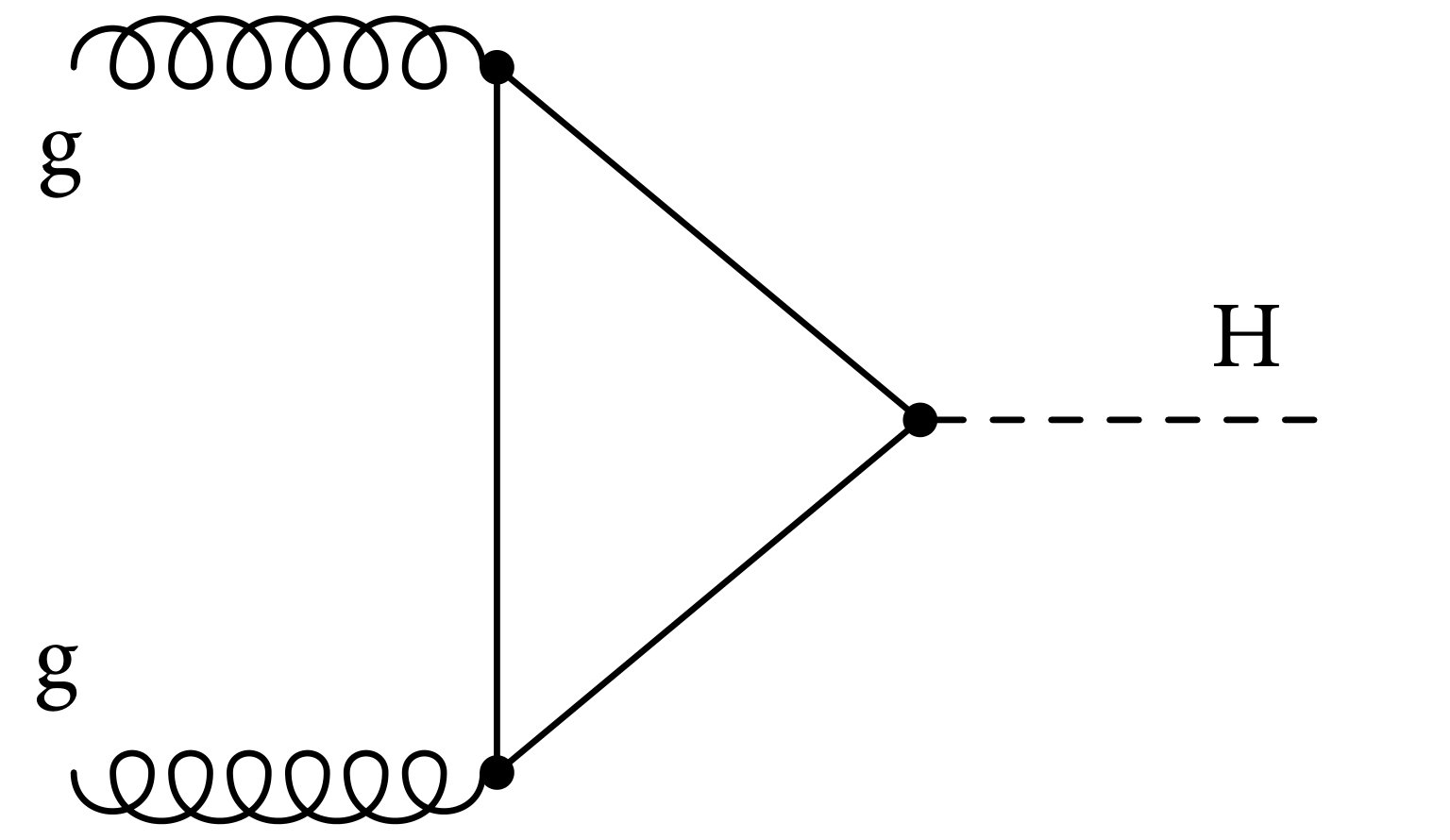 Figure 1
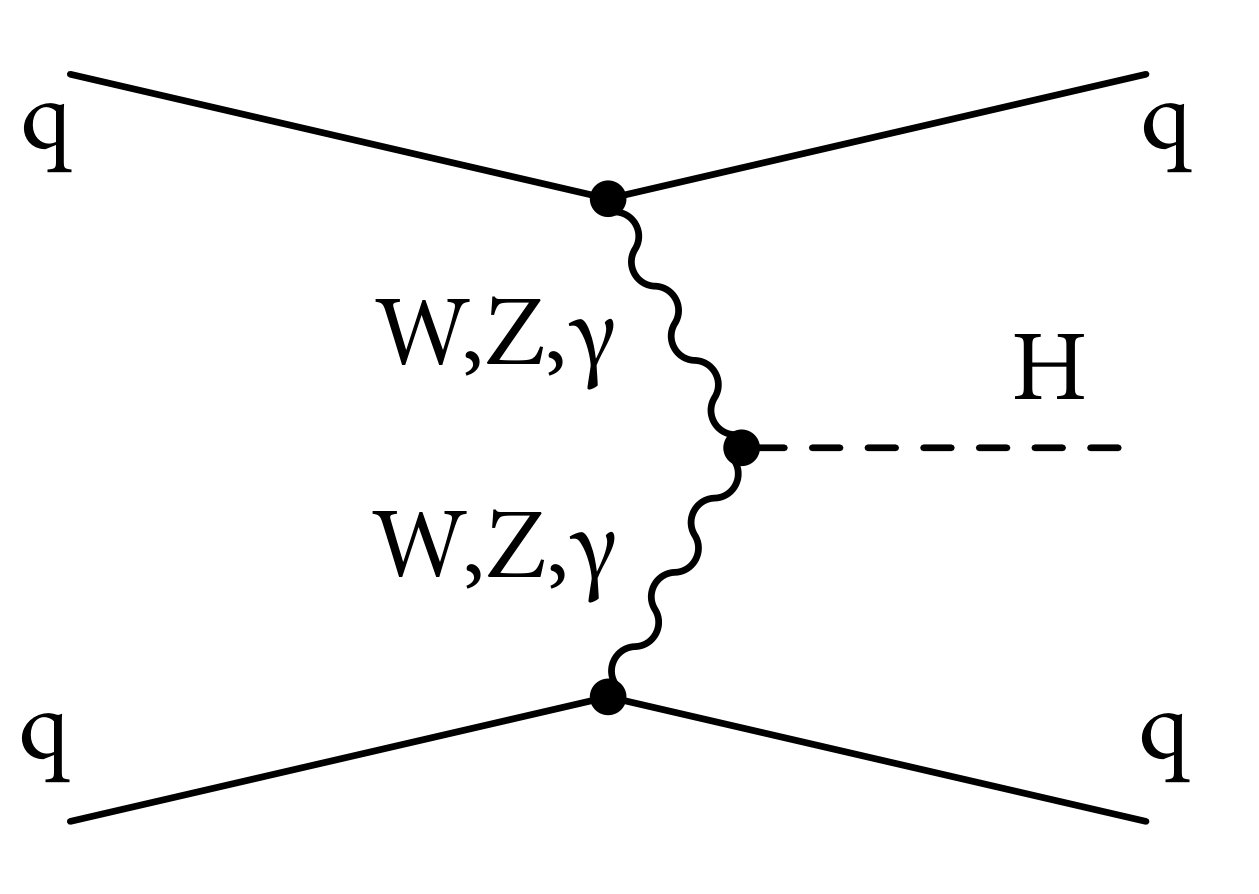 Figure 1
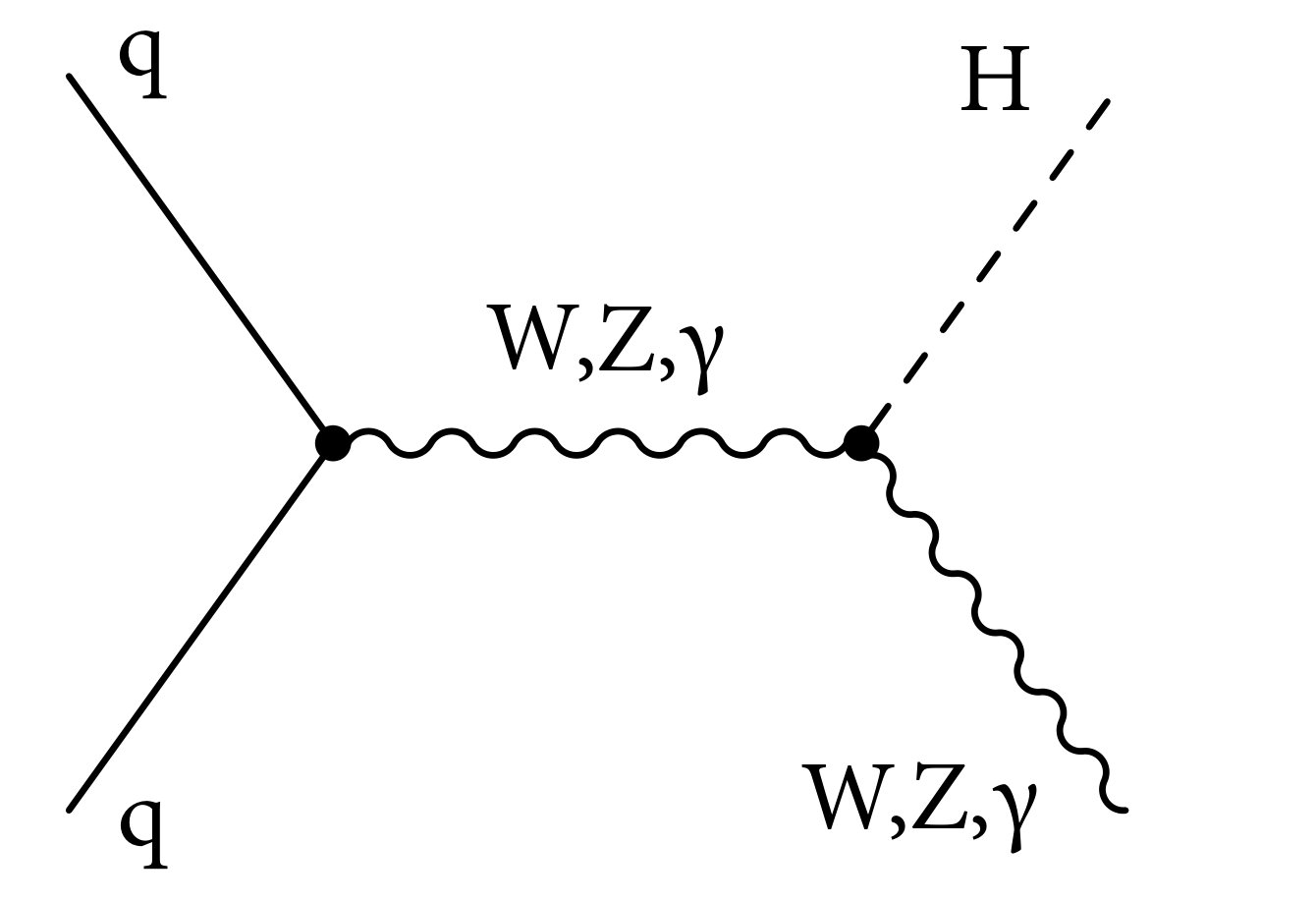 Figure 1
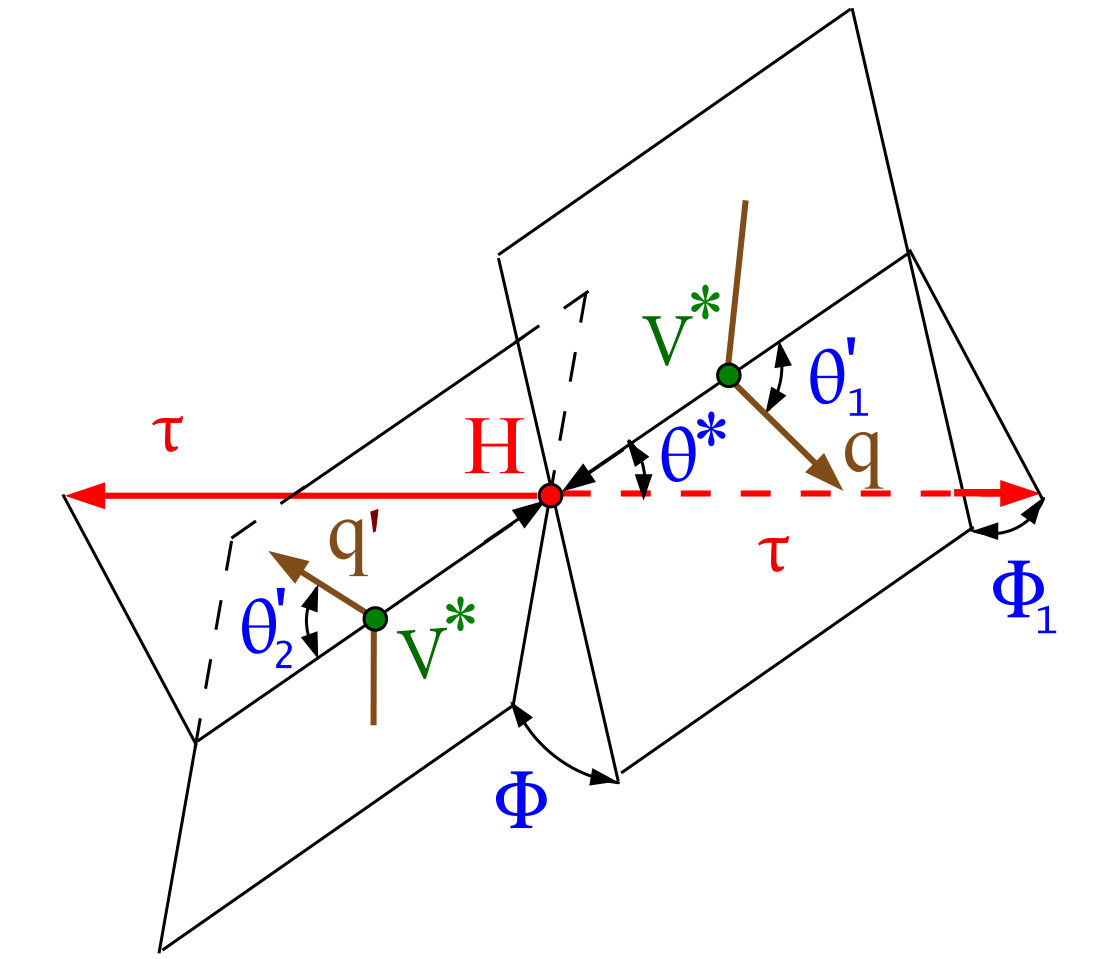 Figure 2
 Figure 2
 Figure 3
 Figure 3
 Figure 4
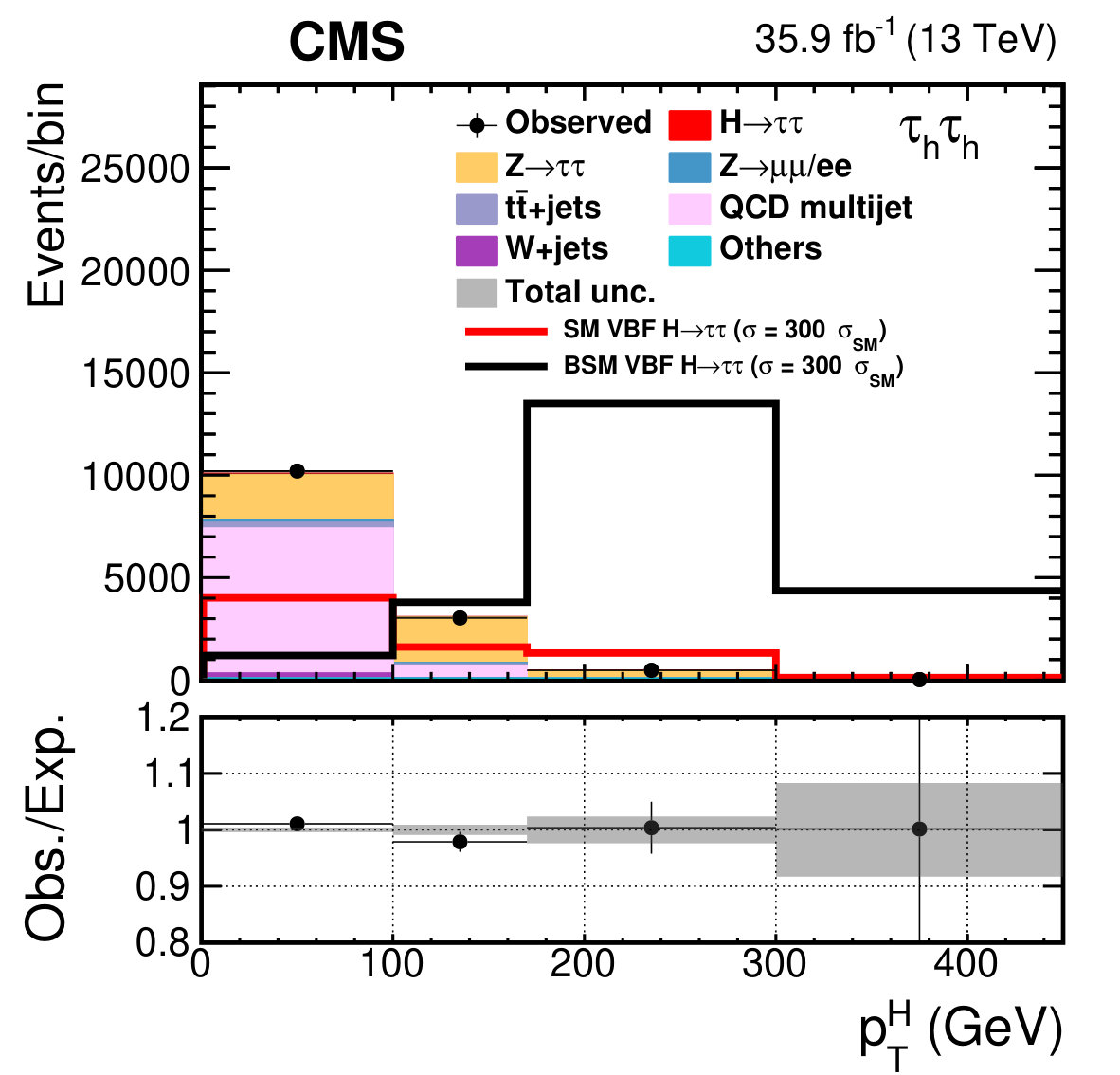 Figure 4
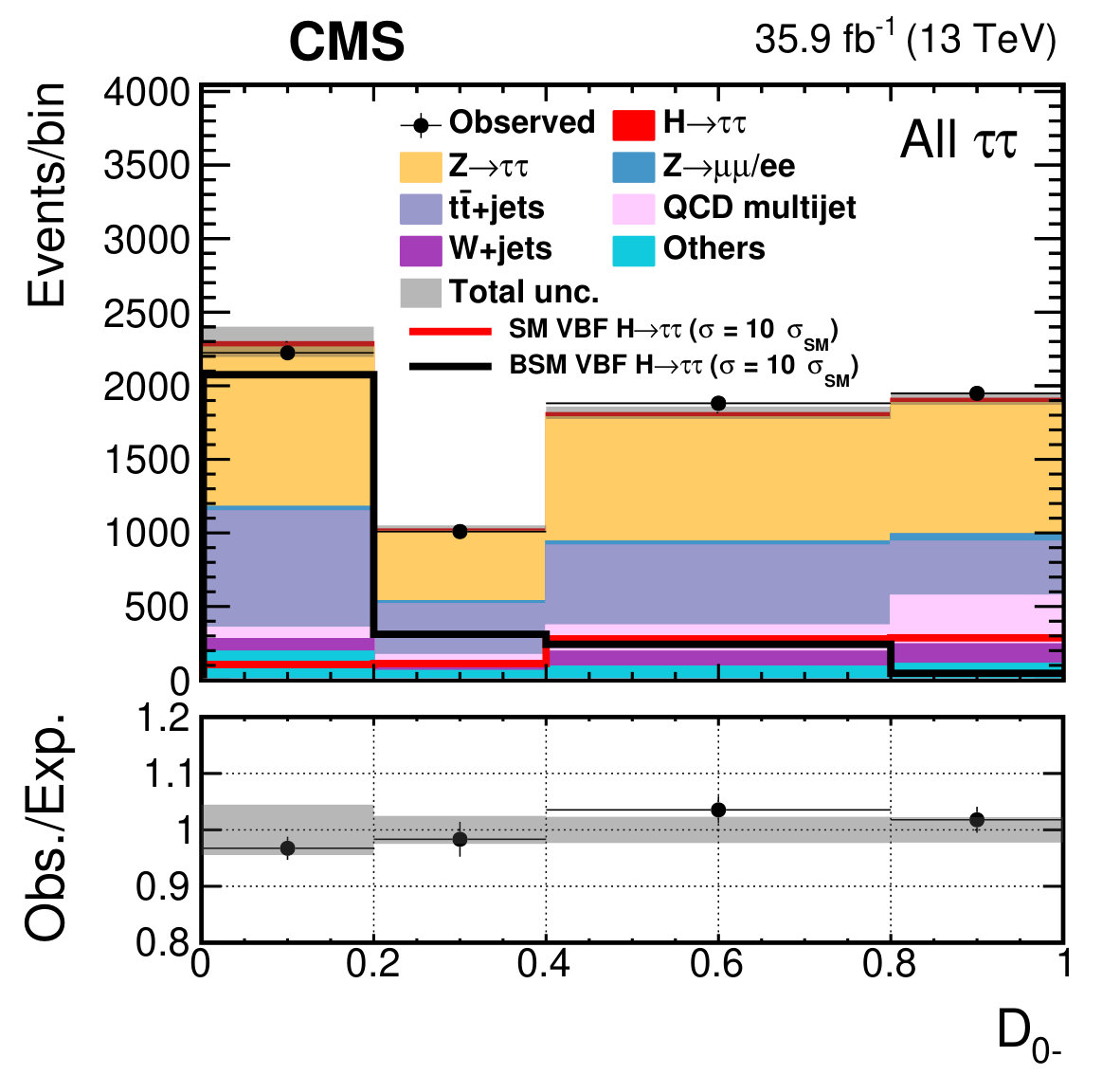 Figure 5
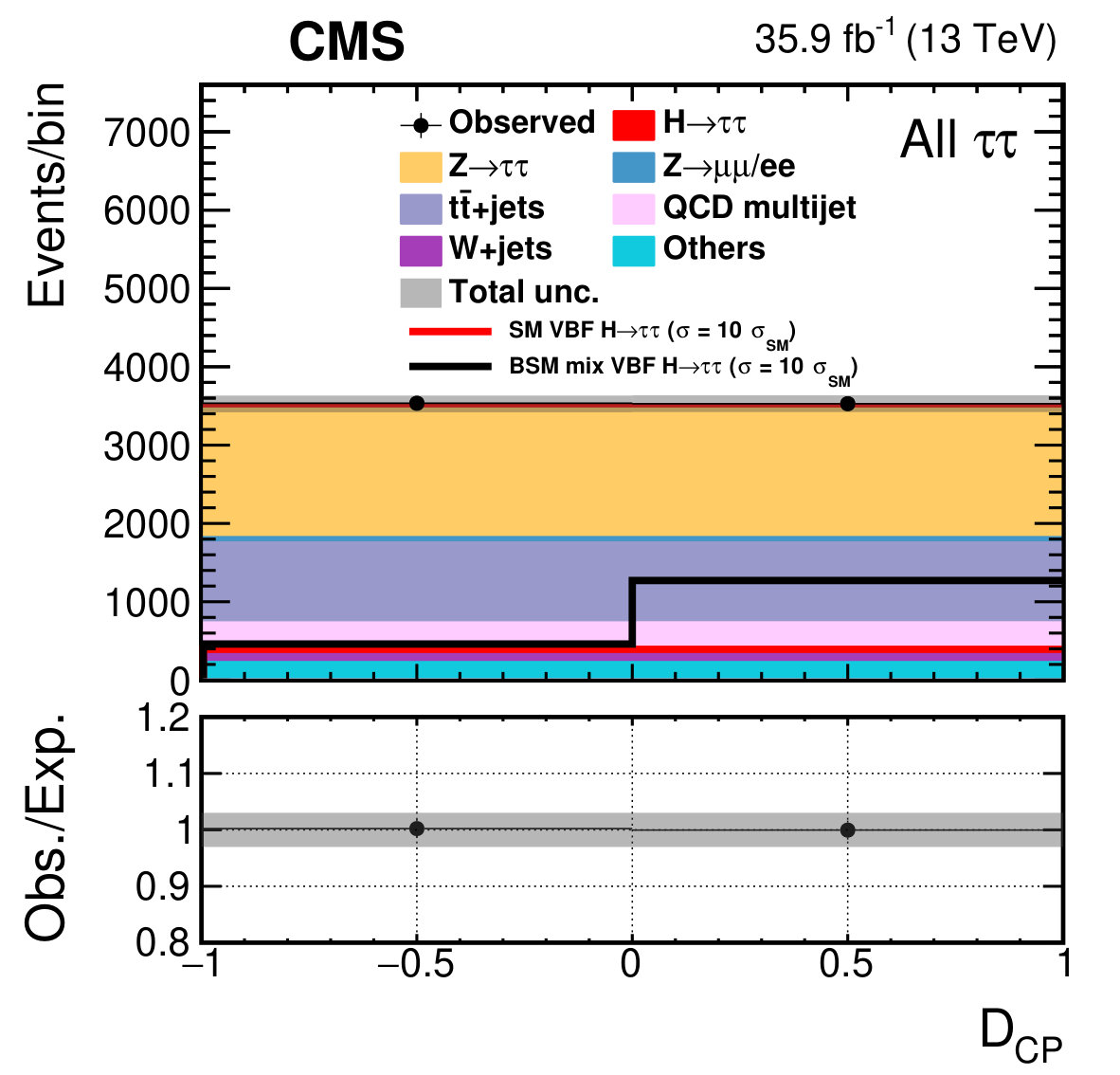 Figure 5
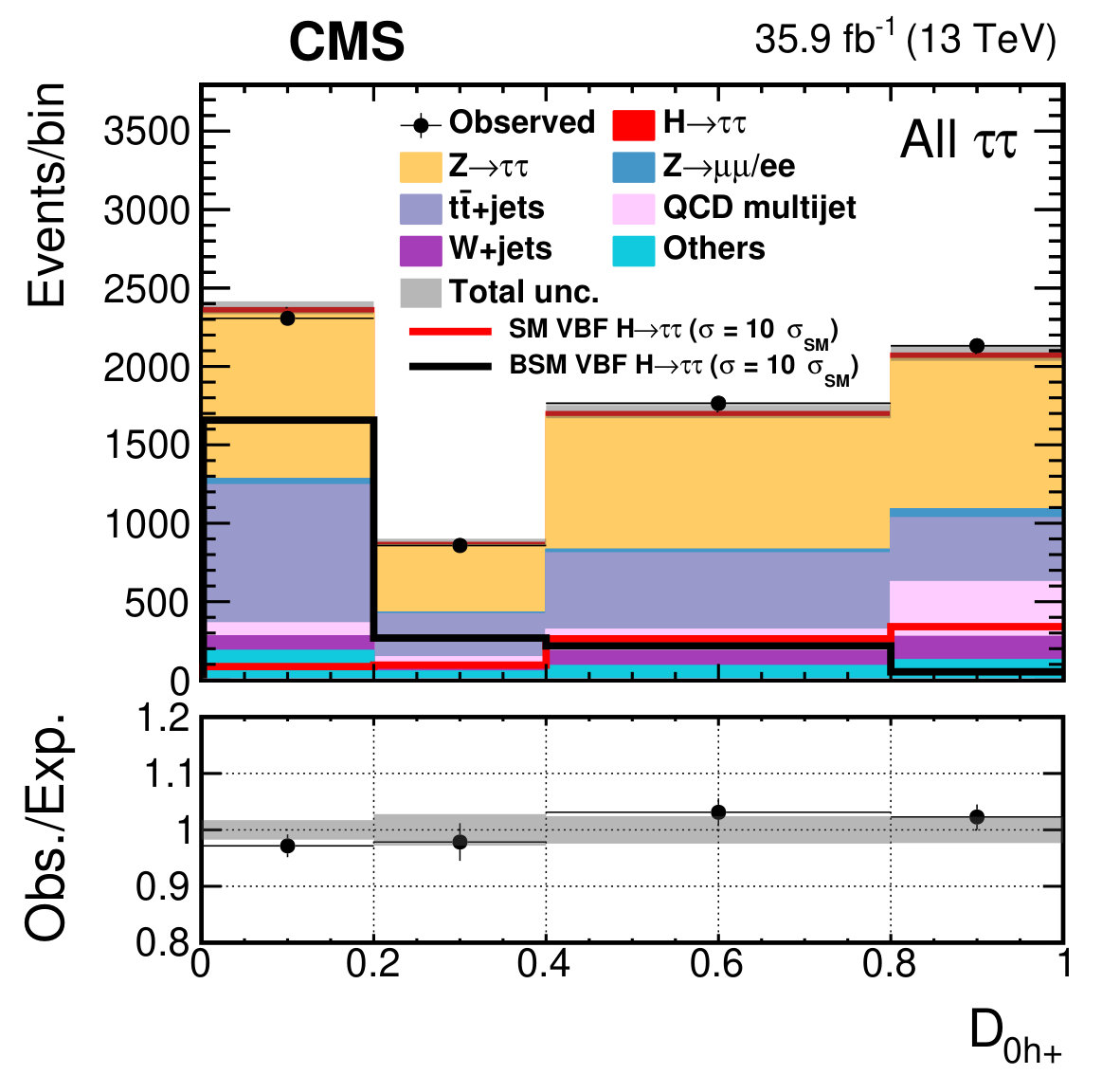 Figure 5
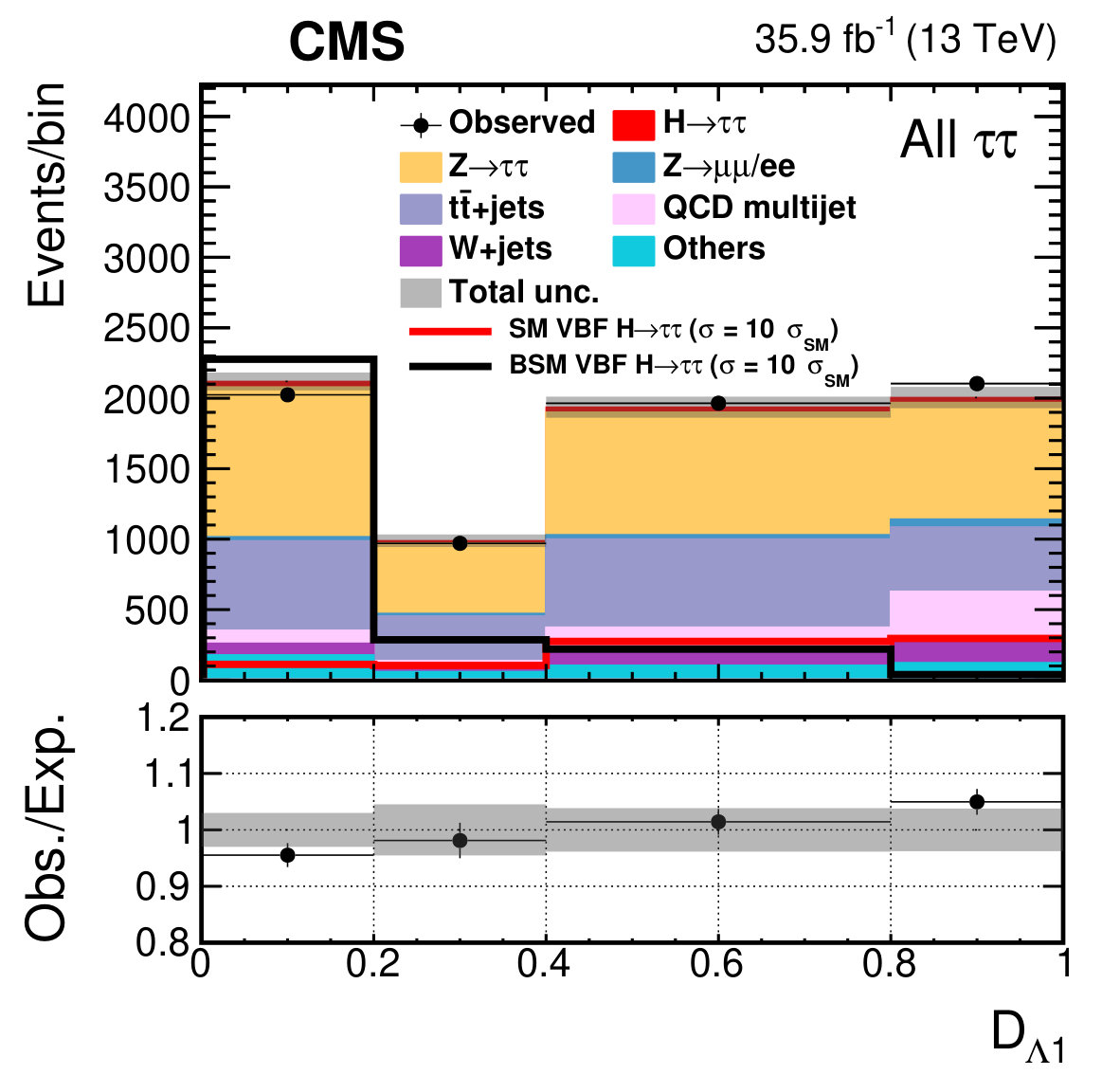 Figure 5
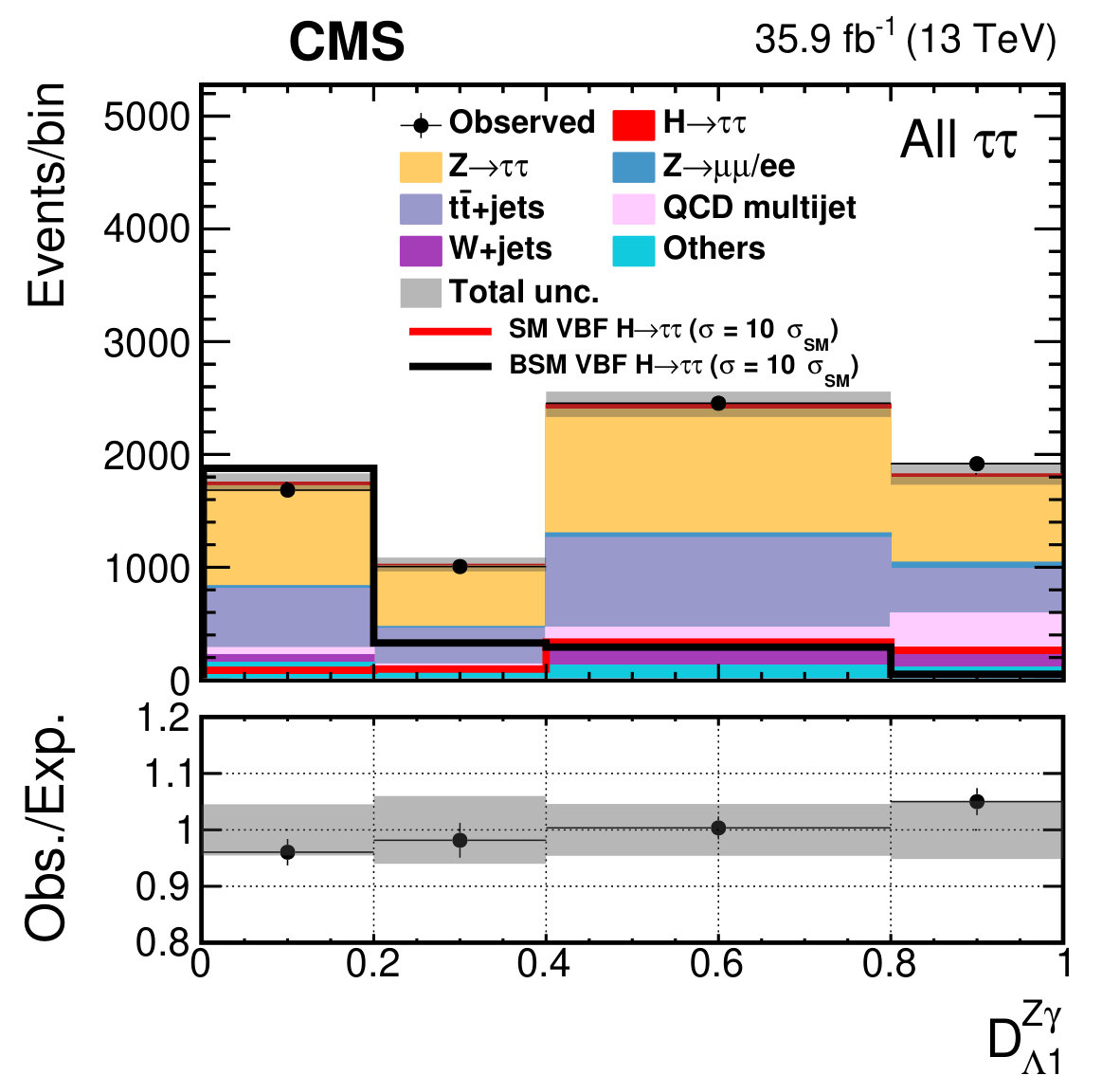 Figure 5
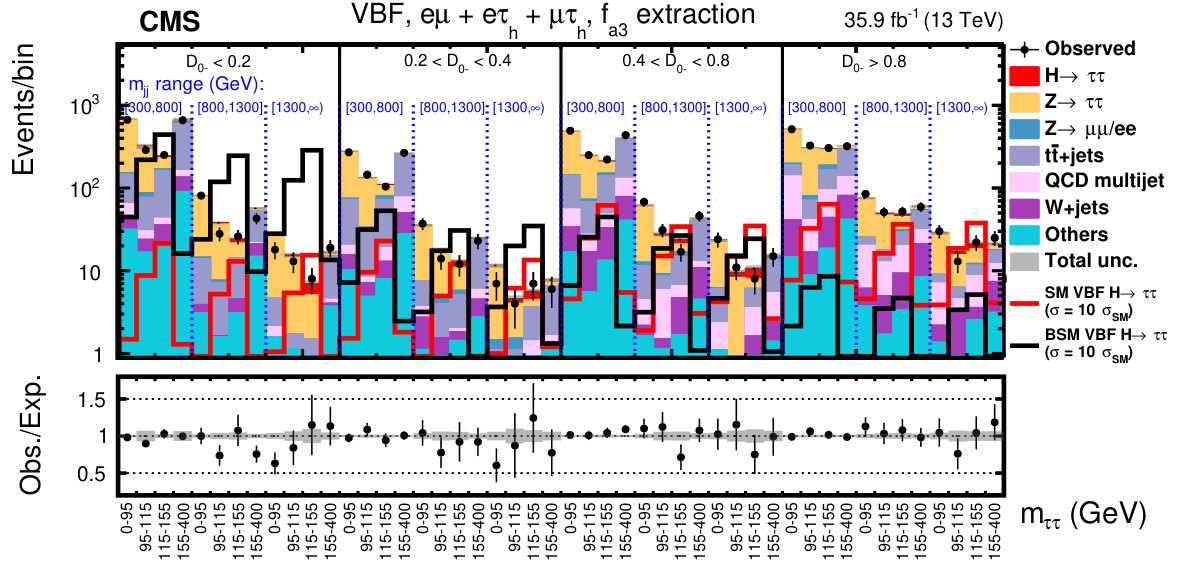 Figure 6
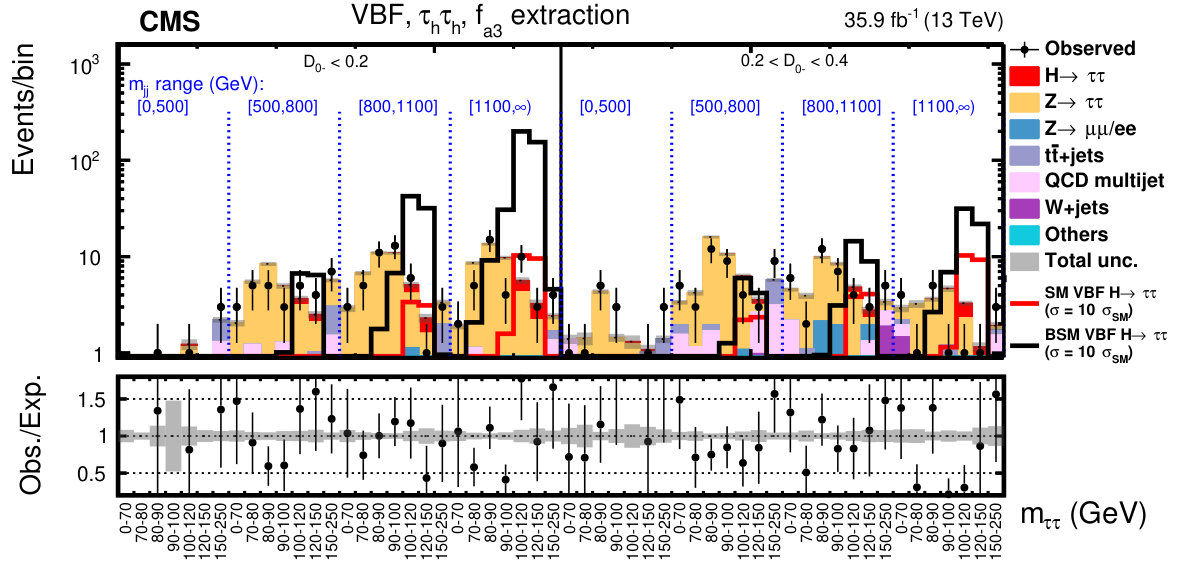 Figure 6
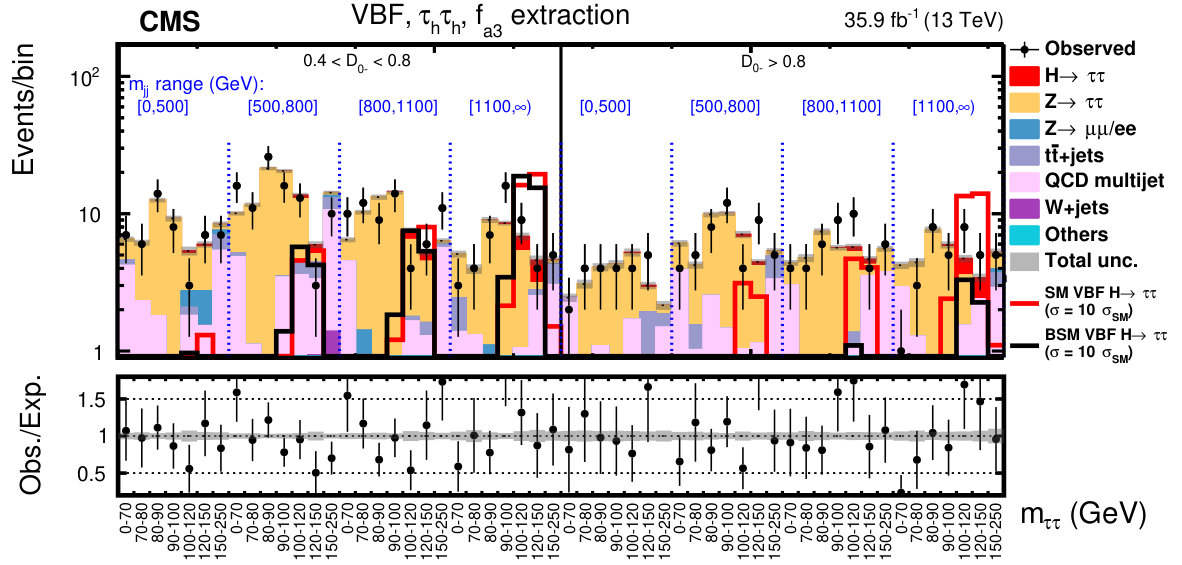 Figure 6
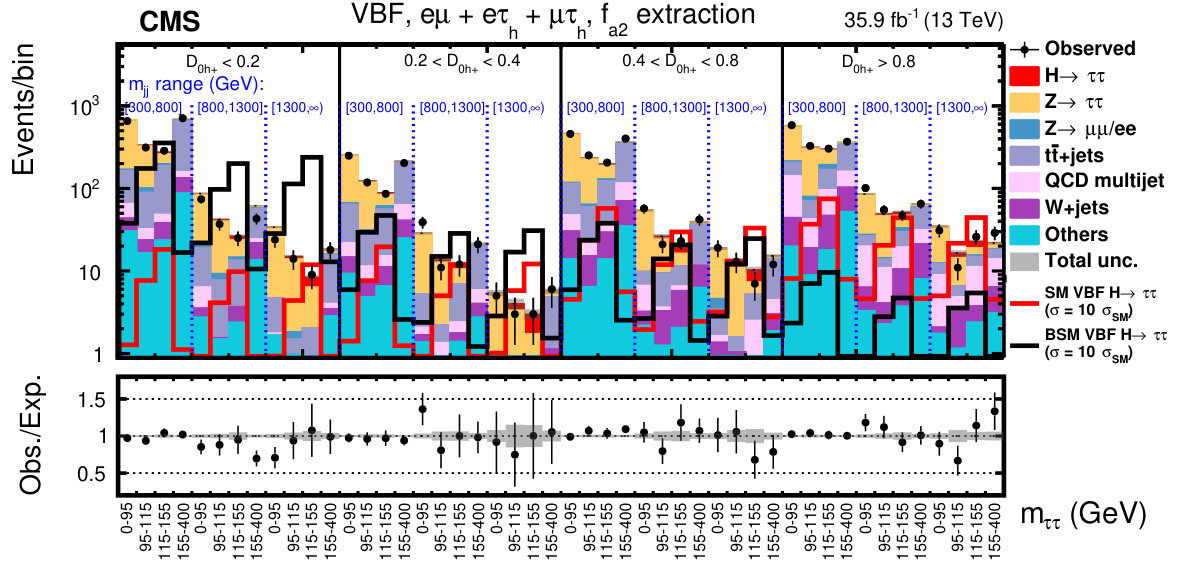 Figure 7
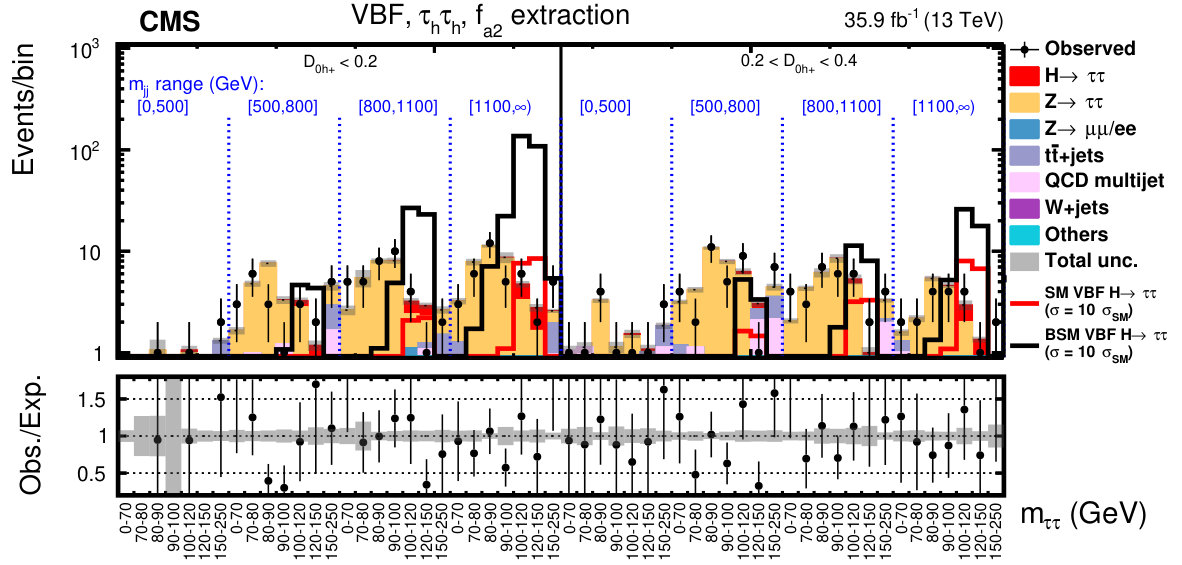 Figure 7
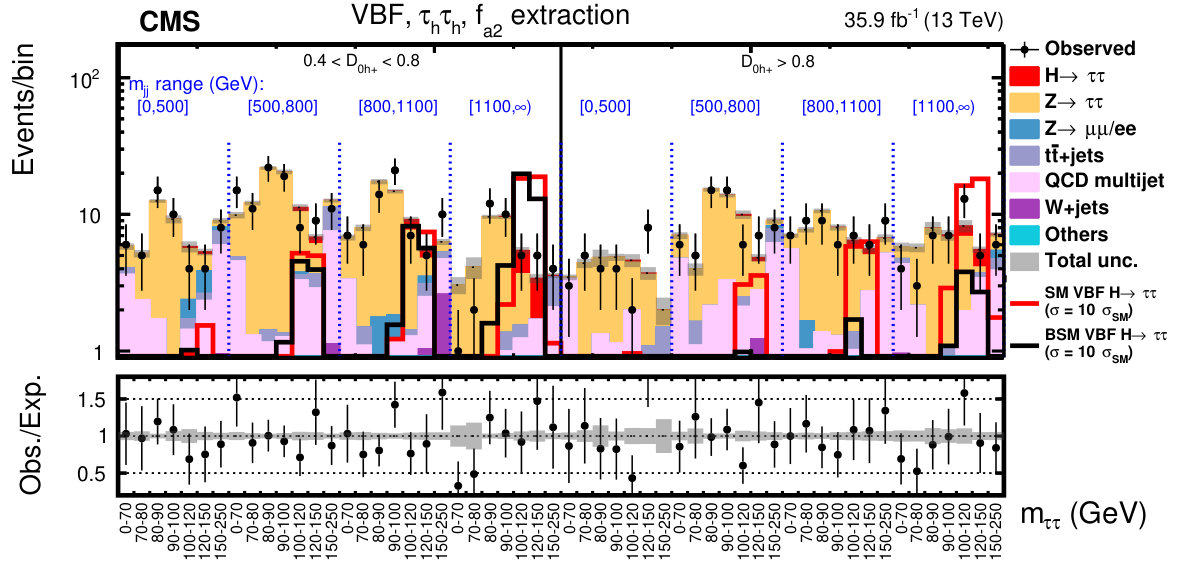 Figure 7
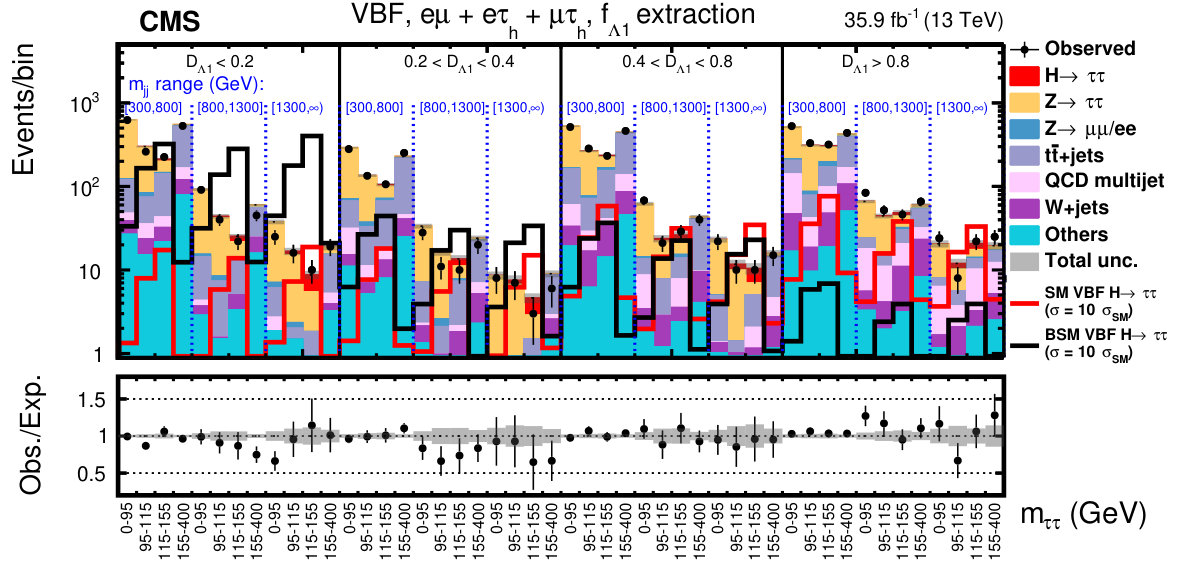 Figure 8
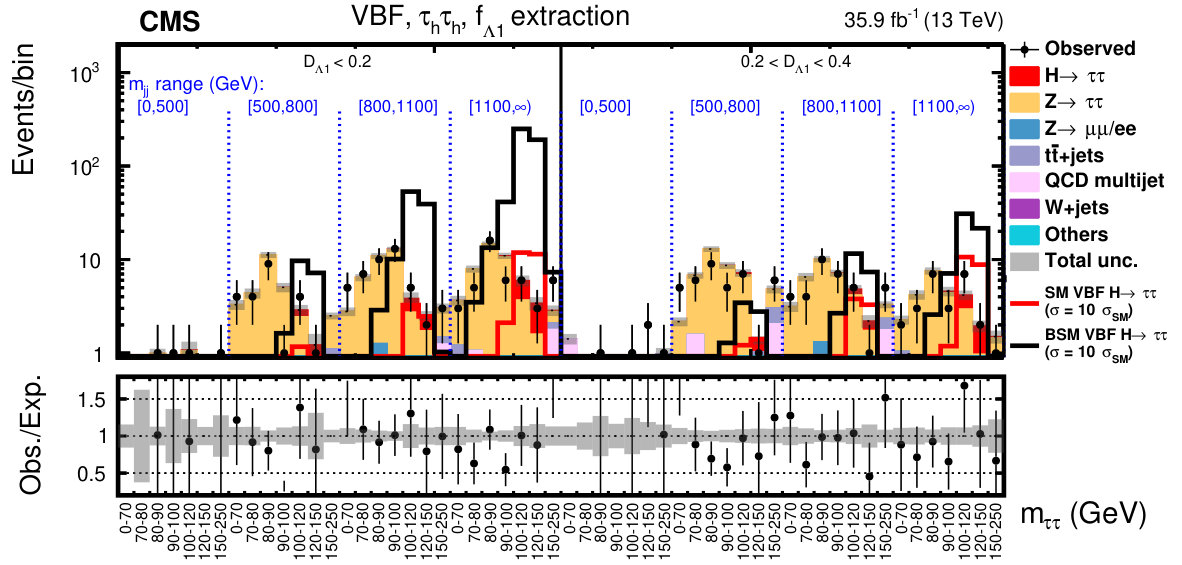 Figure 8
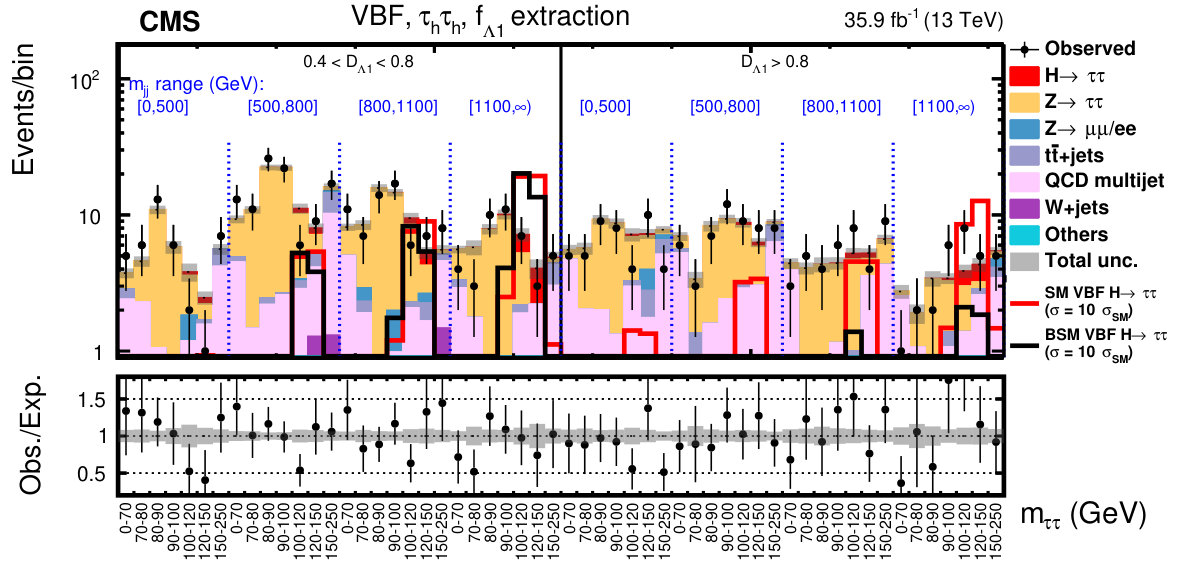 Figure 8
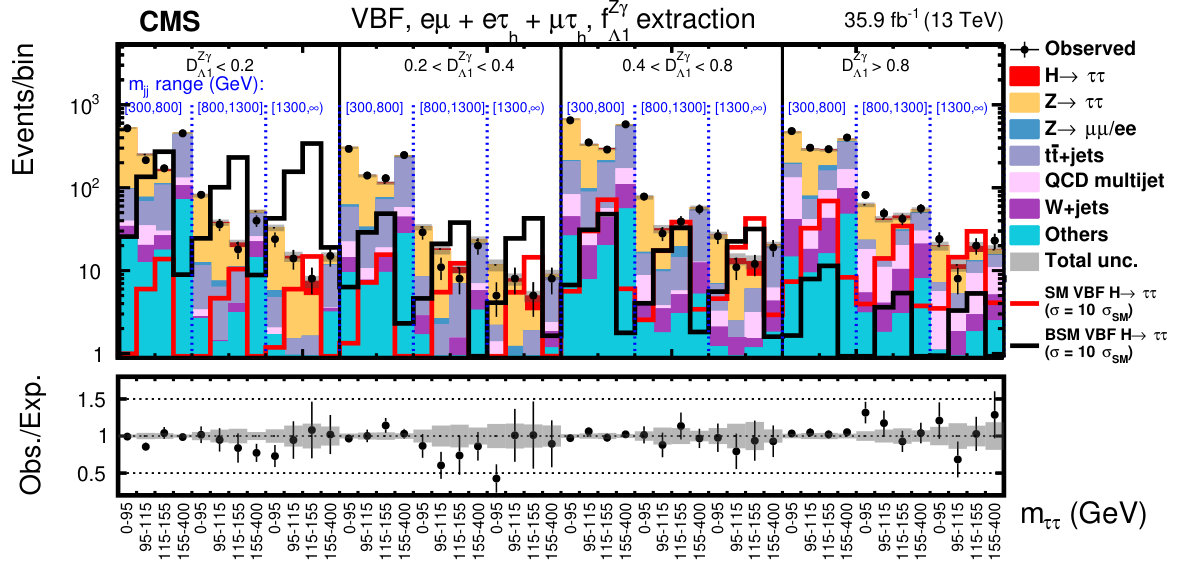 Figure 9
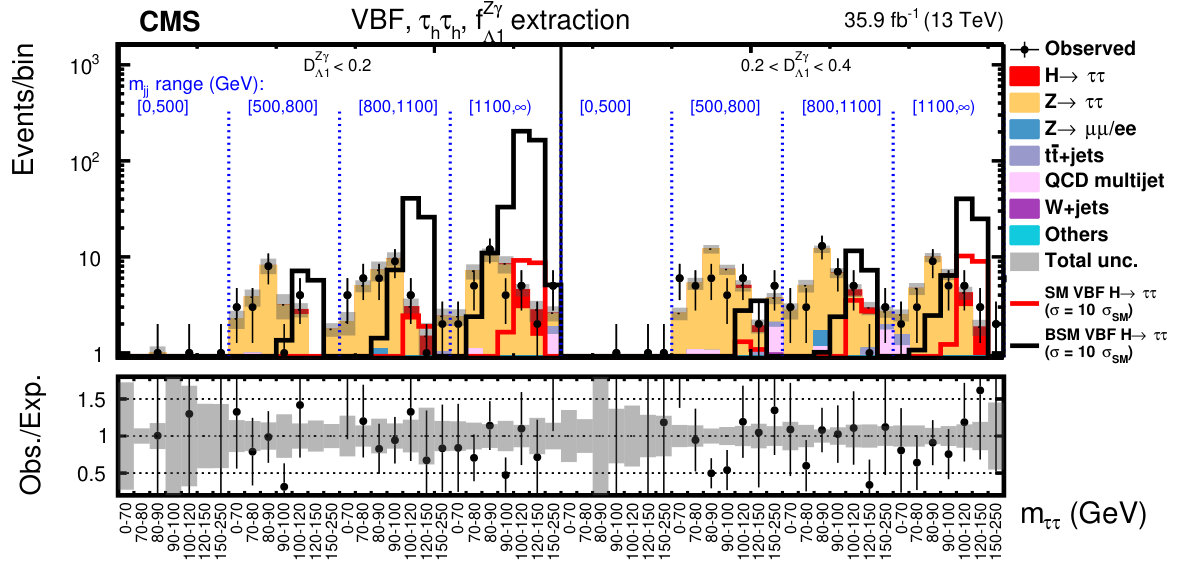 Figure 9
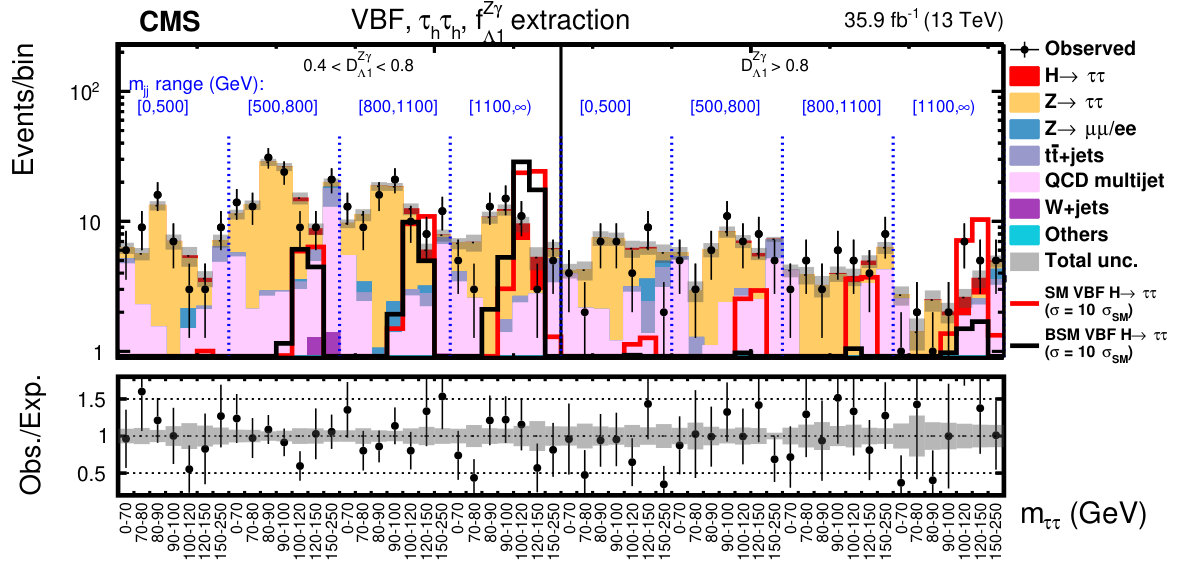 Figure 9
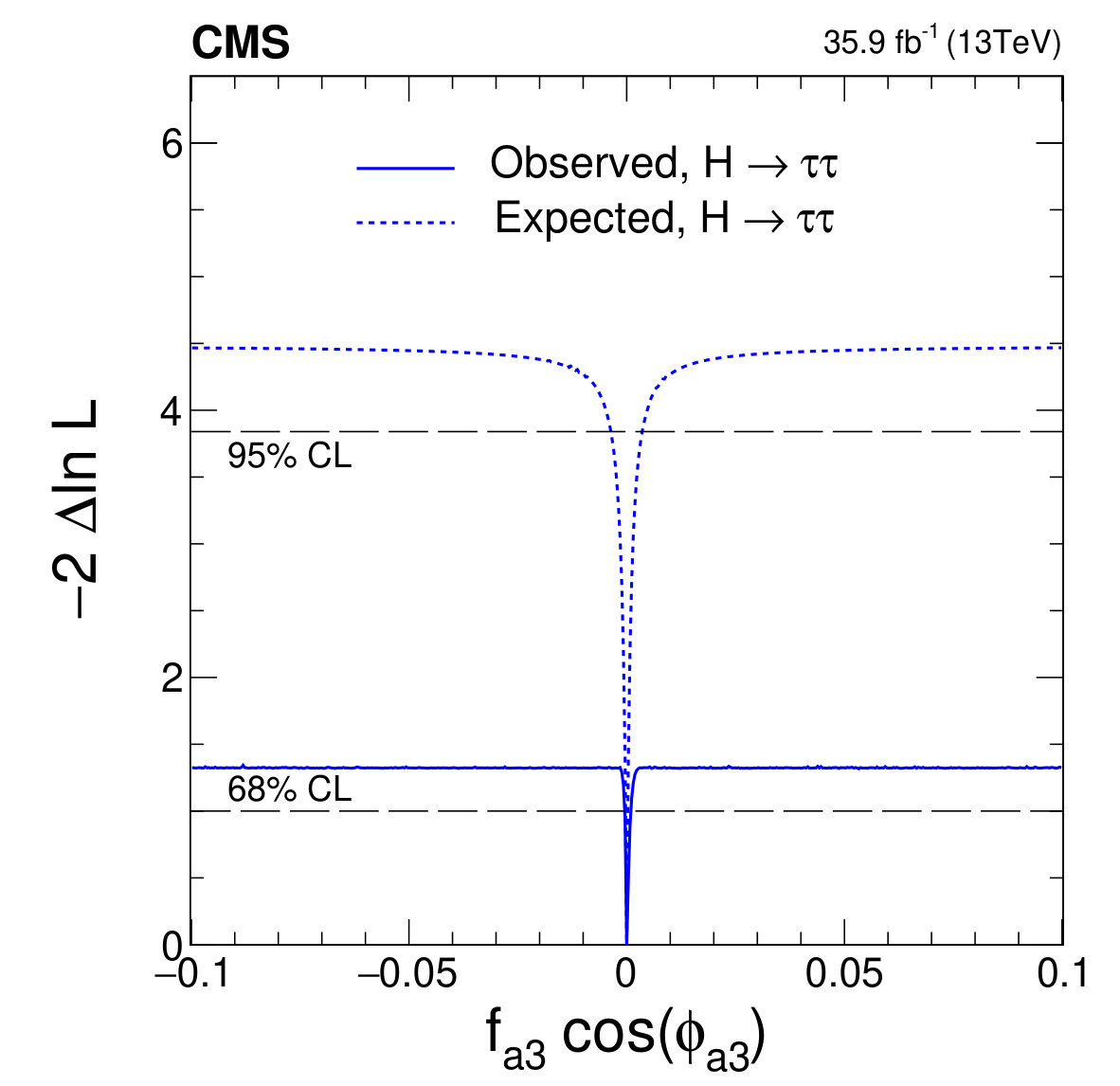 Figure 10
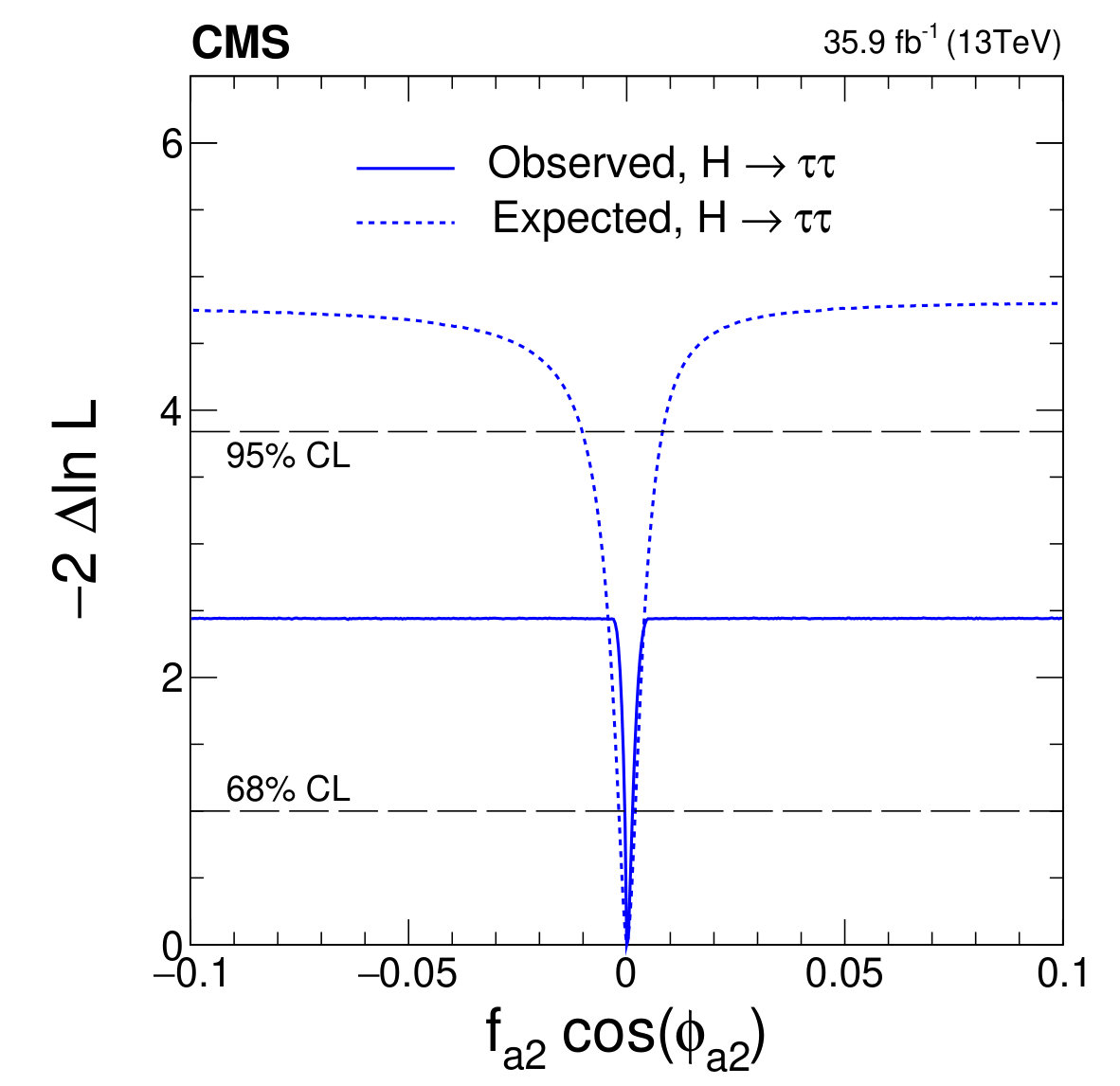 Figure 10
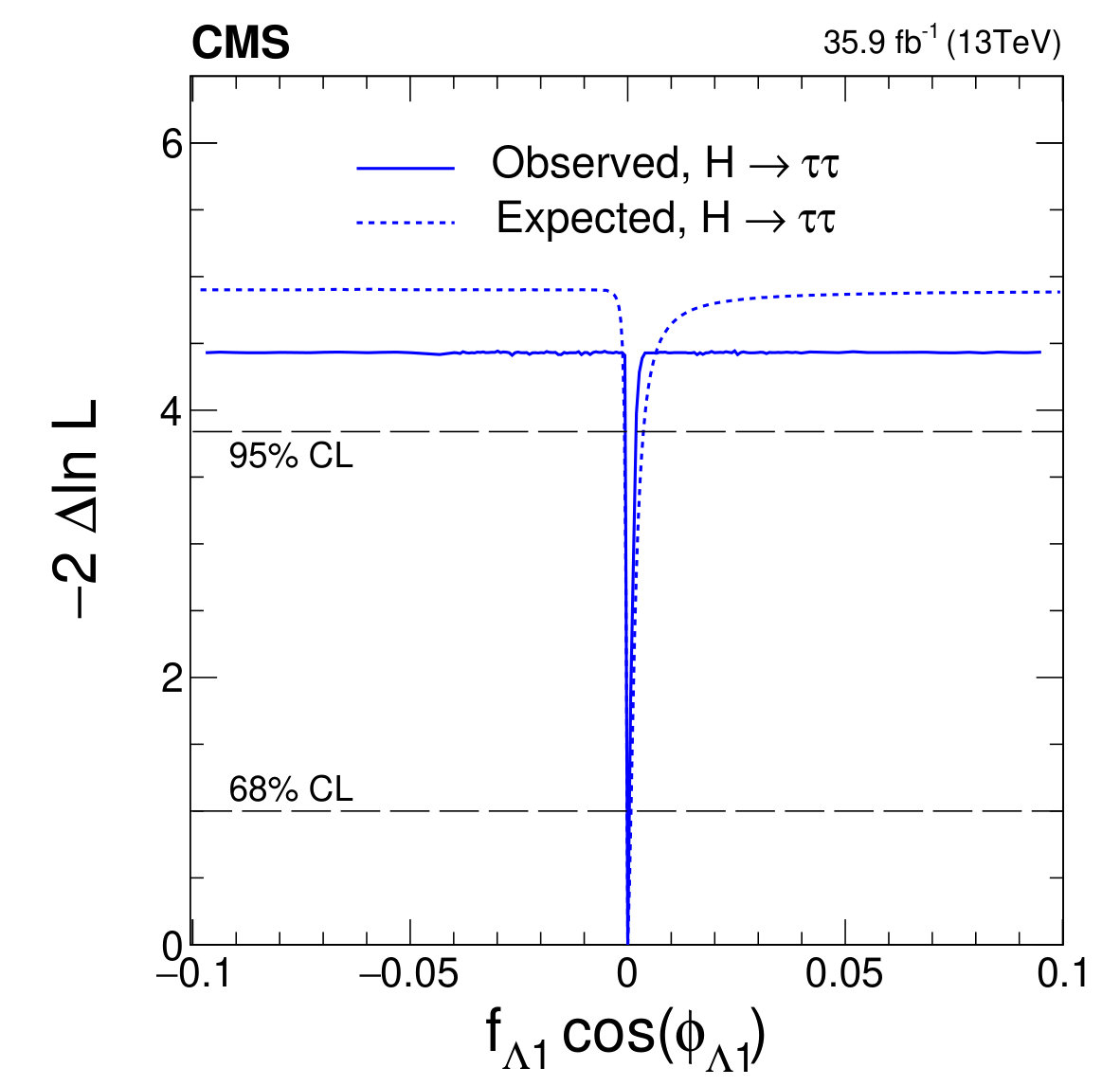 Figure 10
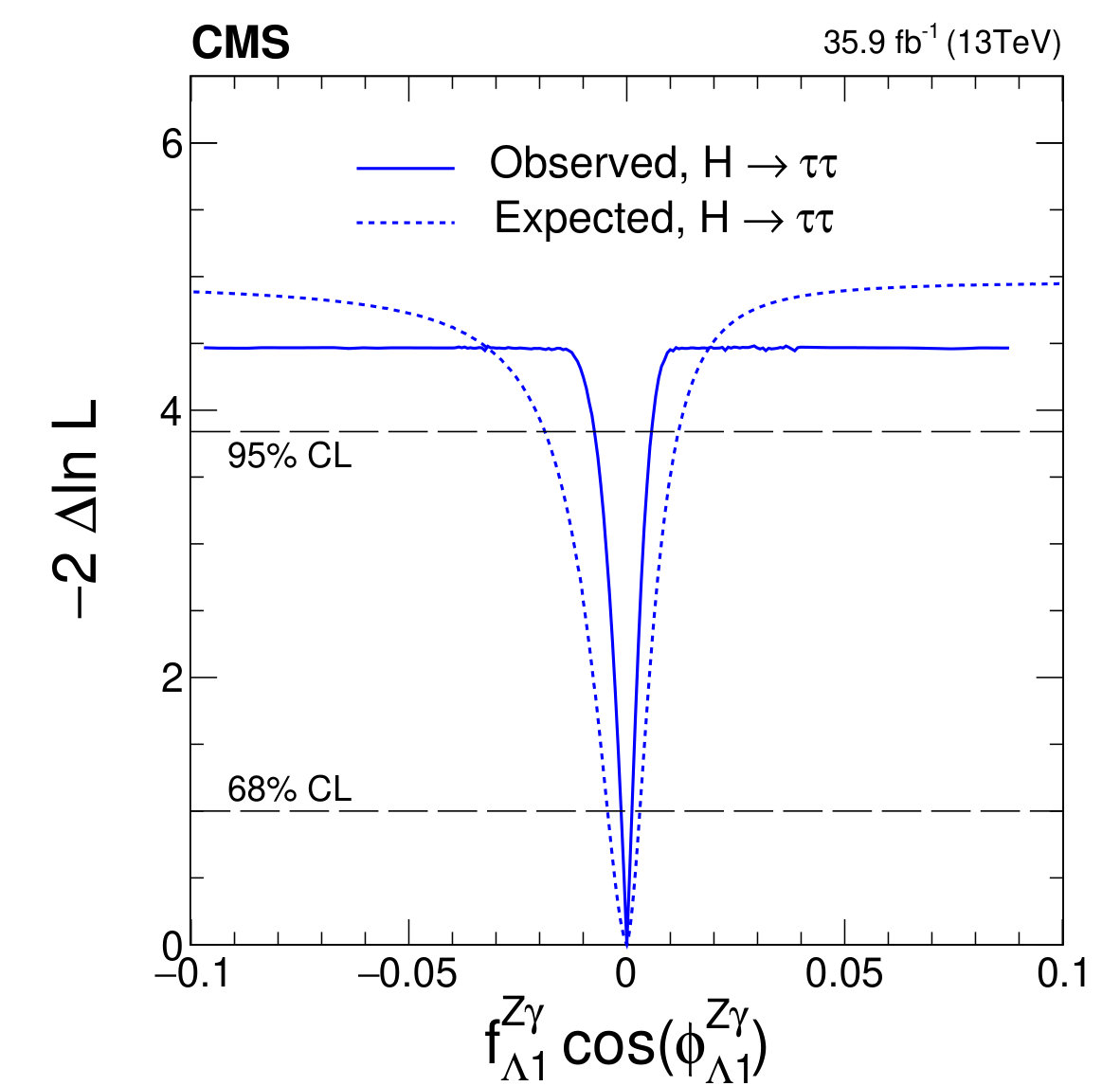 Figure 10
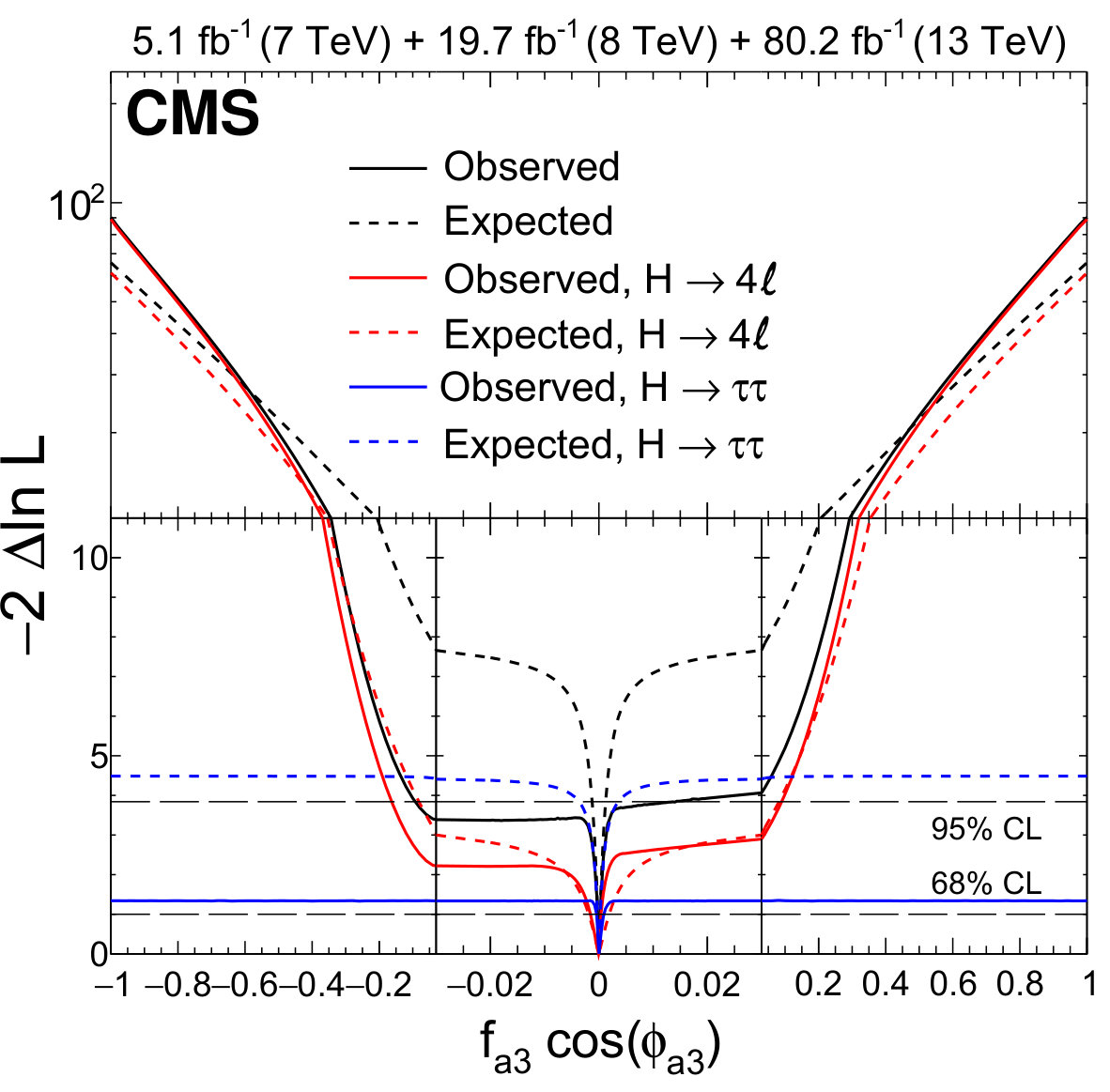 Figure 11
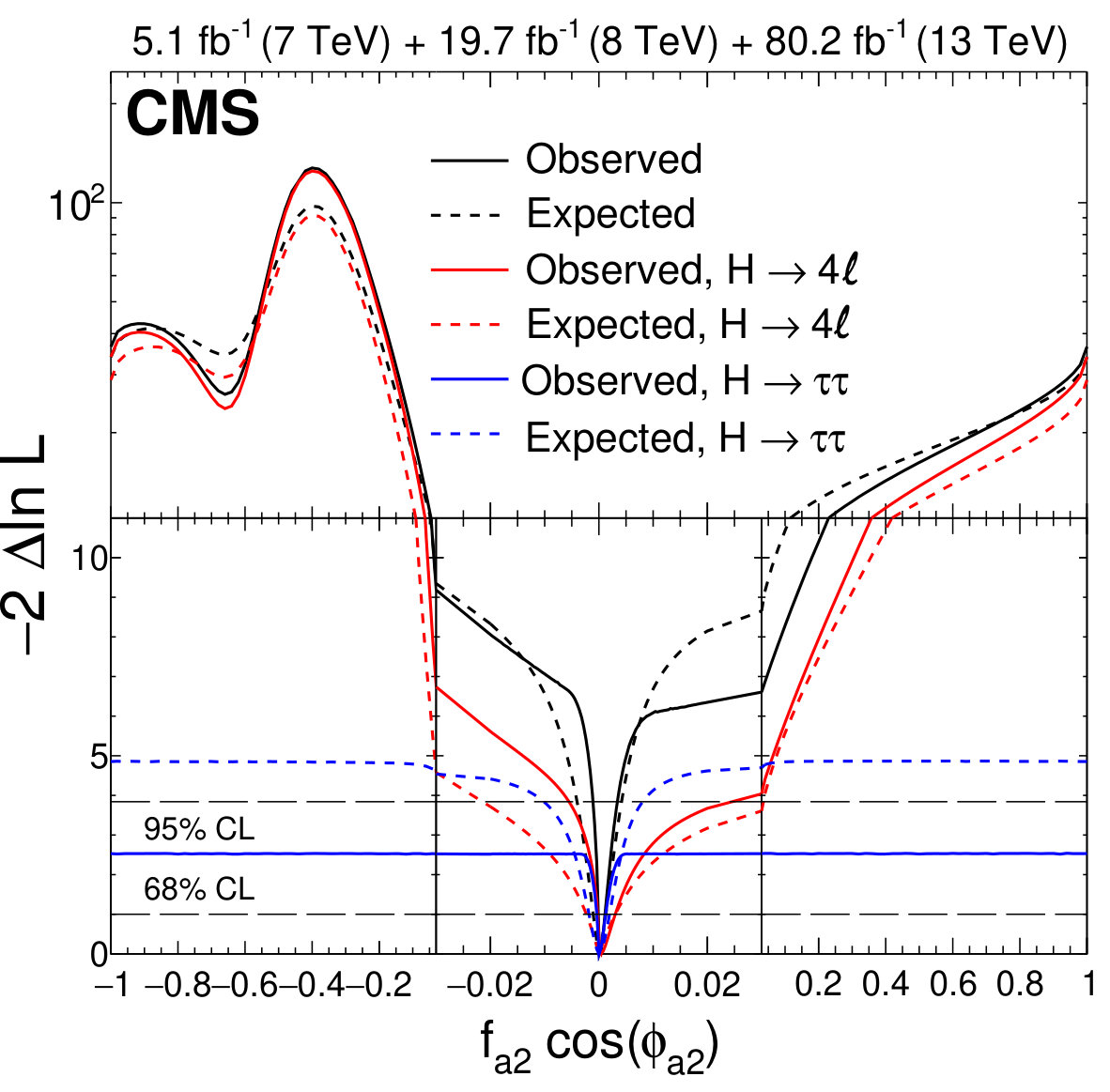 Figure 11
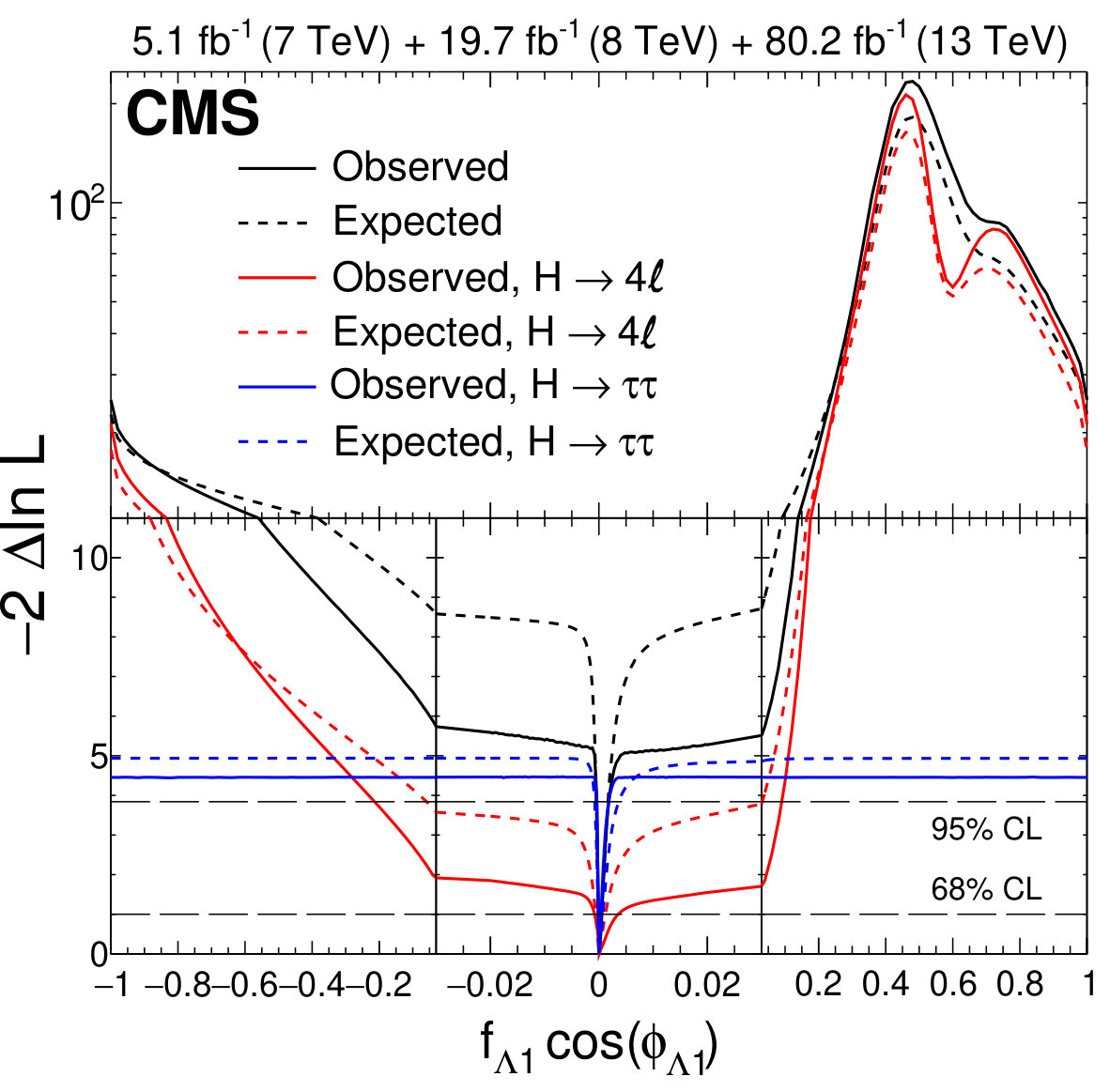 Figure 11
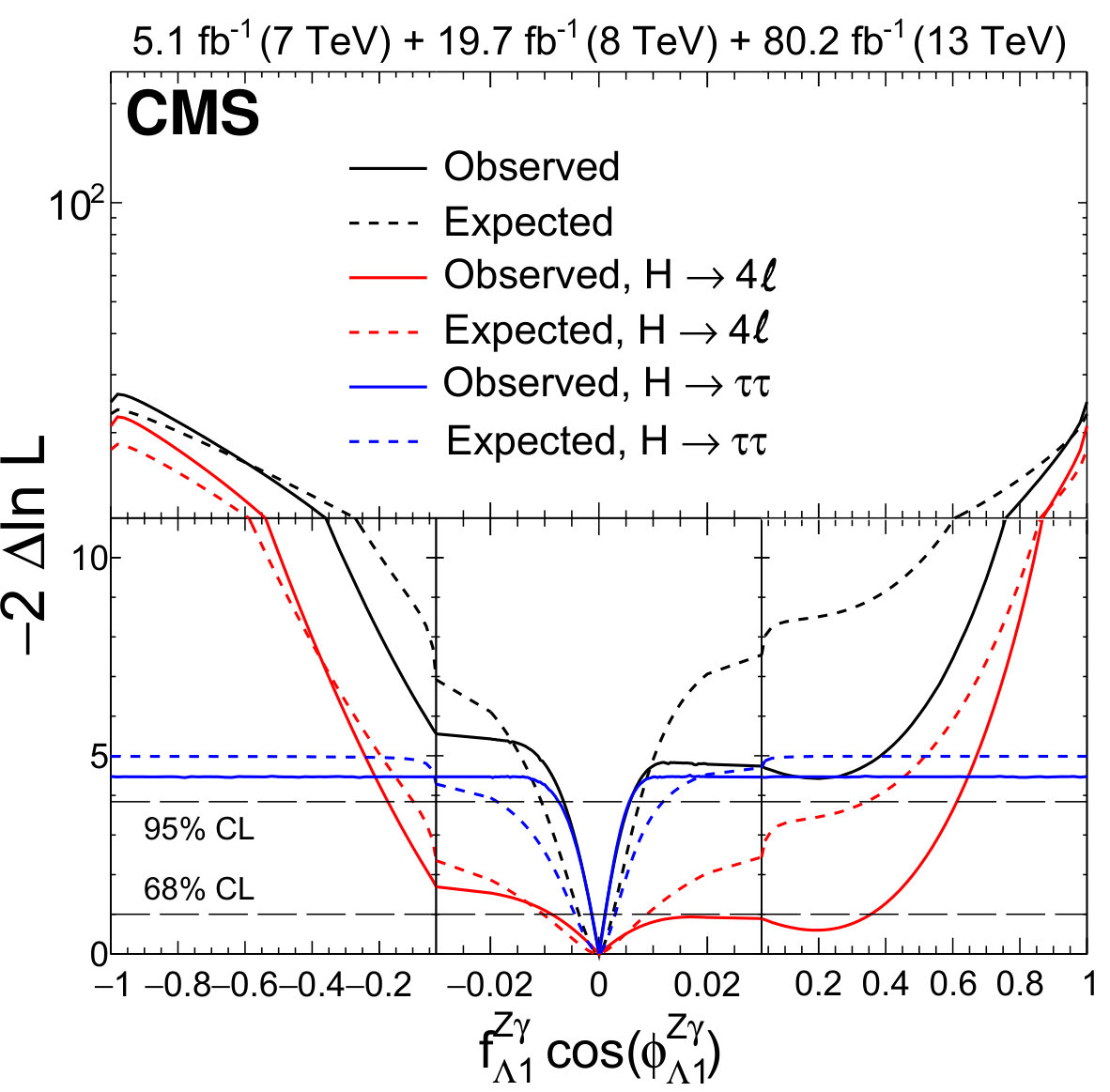 Figure 11
 Figure 36
 Figure 37
| (1) |
Peer Reviews
No public reviews on file for this paper yet. If you reviewed it on a platform where reviews are public (OpenReview, ICLR, NeurIPS, ICML), you can paste yours below so the community can read it here.
Videos
No videos yet. Explain this paper in a talk, walkthrough, or lecture? Add one.
\cmsNoteHeader
HIG-17-034
\RCS
\RCS
\cmsNoteHeader
HIG-17-034
Constraints on anomalous couplings from the production of Higgs bosons decaying to lepton pairs
Abstract
A study is presented of anomalous interactions of the Higgs boson, including its properties. The study uses Higgs boson candidates produced mainly in vector boson fusion and gluon fusion that subsequently decay to a pair of leptons. The data were recorded by the CMS experiment at the LHC in 2016 at a center-of-mass energy of 13\TeVand correspond to an integrated luminosity of 35.9\fbinv. A matrix element technique is employed for the analysis of anomalous interactions. The results are combined with those from the decay channel presented earlier, yielding the most stringent constraints on anomalous Higgs boson couplings to electroweak vector bosons expressed as effective cross section fractions and phases: the -violating parameter and the -conserving parameters , , and . The current dataset does not allow for precise constraints on properties in the gluon fusion process. The results are consistent with standard model expectations.
0.1 Introduction
The Higgs boson () discovered in 2012 at the CERN LHC [1, 2, 3] has thus far been found to have properties consistent with expectations from the standard model (SM) [4, 5, 6, 7, 8, 9, 10]. In particular, its spin-parity quantum numbers are consistent with according to measurements performed by the CMS [11, 12, 13, 14, 15, 16, 17] and ATLAS [18, 19, 20, 21, 22, 23] experiments. It is still to be determined whether small anomalous couplings contribute to the or interactions, where stands for vector bosons and f stands for fermions. Because nonzero spin assignments of the boson have been excluded [13, 19], we focus on the analysis of couplings of a spin-0 boson. Previous studies of anomalous couplings were performed by both the CMS and ATLAS experiments using either decay-only information [11, 12, 13, 18, 19, 21], including associated production information [15, 16, 17, 20, 22, 23], or including off-shell boson production [14, 17]. In this paper, we report a study of couplings using information from production of the boson decaying to leptons. These results are combined with the previous CMS measurements using both associated production and decay information in the channel [17], resulting in stringent constraints on anomalous boson couplings. Here and in the following denotes an electron or muon.
The decay has been observed by the CMS experiment, with over five standard deviation significance [24]. The sample can be used to study the quantum numbers of the boson and its anomalous couplings to SM particles, including its properties. The dominant production mechanisms of the boson considered in this paper are shown at leading order in QCD in Fig. 1. Anomalous , , , , and couplings affect the correlations between the boson, the beam line, and the two jets in vector boson fusion (VBF), in associated production with a vector boson decaying hadronically (, where ), and also in gluon fusion production with additional two jets. The gluon fusion production with two additional jets appears at higher order in QCD with an example of gluons appearing in place of the vector bosons shown in the VBF diagram in the middle of Fig. 1. A study of anomalous couplings in associated production with top quarks, or , and anomalous couplings in the decay of the boson are also possible using events [25]. However, more data are needed to reach sensitivity to such anomalous effects, and it has been confirmed that these anomalous couplings would not affect the measurements presented in this paper.
To increase the sensitivity to anomalous couplings in the boson production, the matrix element likelihood approach (mela) [2, 26, 27, 28, 29] is utilized to form optimal observables. The analysis is optimized for VBF production and is not additionally optimized for or gluon fusion production. However, all three production mechanisms are included in the analysis, using a general anomalous coupling parametrization. The channel has advantages over other boson decay channels because of the relatively high significance of the signal events in the VBF channel [24]. Three mutually exclusive categories of events are reconstructed in the analysis: the VBF category targets events with two associated jets in the VBF event topology, the boosted category contains events with one jet or more jets if the event is not in the VBF category, and the 0-jet category targets boson events produced via gluon fusion without associated jets. The simultaneous analysis of all three categories of events is necessary to boost the sensitivity to anomalous couplings from events with partial kinematic information reconstructed in the non-VBF categories and to normalize the relative contribution of different production mechanisms.
The analysis utilizes the same data, event selection, and categorization as Ref. [24] and is described in Sec. 0.3. The phenomenological model and Monte Carlo (MC) simulation are described in Sec. 0.4. The matrix element techniques used to extract the kinematic information are discussed in Sec. 0.5. The implementation of the likelihood fit using kinematic information in the events is presented in Sec. 0.6. The results are presented and discussed in Secs. 0.7 and 0.8, before conclusions are drawn in Sec. 0.9.
0.2 CMS detector
The central feature of the CMS apparatus is a superconducting solenoid of 6\unitm internal diameter, providing a magnetic field of 3.8\unitT. Within the solenoid volume, there are a silicon pixel and strip tracker, a lead tungstate crystal electromagnetic calorimeter (ECAL), and a brass and scintillator hadron calorimeter, each composed of a barrel and two endcap sections. Forward calorimeters extend the pseudorapidity, , coverage provided by the barrel and endcap detectors. Muons are detected in gas-ionization chambers embedded in the steel flux-return yoke outside the solenoid.
Events of interest are selected using a two-tiered trigger system [30]. The first level (L1), composed of custom hardware processors, uses information from the calorimeters and muon detectors to select events at a rate of around 100\unitkHz within a time interval of less than 4\mus. The second level, known as the high-level trigger, consists of a farm of processors running a version of the full event reconstruction software optimized for fast processing, and reduces the event rate to about 1\unitkHz before data storage.
A more detailed description of the CMS detector, together with a definition of the coordinate system used and the relevant kinematic variables, can be found in Ref. [31].
The data samples used in this analysis correspond to an integrated luminosity of 35.9\fbinvcollected in Run 2 of the LHC during 2016 at a center-of-mass energy of 13\TeV.
0.3 Event reconstruction and selection
The analysis uses the same dataset, event reconstruction, and selection criteria as those used in the analysis leading to the observation of the boson decay to a pair of leptons [24].
0.3.1 Event reconstruction
The reconstruction of observed and simulated events relies on the particle-flow (PF) algorithm [32], which combines the information from the CMS subdetectors to identify and reconstruct particles emerging from collisions. Combinations of these PF candidates are used to reconstruct higher-level objects such as jets, candidates, or missing transverse momentum, . The reconstructed vertex with the largest value of summed physics object is taken to be the primary interaction vertex, where is the transverse momentum. The physics objects are the objects constructed by a jet finding algorithm [33, 34] applied to all charged tracks associated with the vertex and the corresponding associated missing transverse momentum.
Electrons are identified with a multivariate discriminant combining several quantities describing the track quality, the shape of the energy deposits in the ECAL, and the compatibility of the measurements from the tracker and the ECAL [35]. Muons are identified with requirements on the quality of the track reconstruction and on the number of measurements in the tracker and the muon systems [36]. To reject nonprompt or misidentified leptons, an isolation requirement is applied according to the criteria described in Ref. [24].
Jets are reconstructed with an anti-\ktclustering algorithm [37], as implemented in the \FASTJETpackage [34]. It is based on the clustering of neutral and charged PF candidates within a distance parameter of 0.4. Charged PF candidates not associated with the primary vertex of the interaction are not considered when building jets. An offset correction is applied to jet energies to take into account the contribution from additional interactions within the same or nearby bunch crossings. In this analysis, jets are required to have \GeVand absolute pseudorapidity , and to be separated from the selected leptons by a distance parameter of at least 0.5, where is the azimuthal angle in radians. The combined secondary vertex algorithm is used to identify jets that are likely to originate from a bottom quark (“\cPqb jets”). The algorithm exploits track-based lifetime information along with the secondary vertex of the jet to provide a likelihood ratio discriminator for \cPqb jet identification.
Hadronically decaying leptons, denoted as , are reconstructed with the hadron-plus-strips algorithm [38, 39], which is seeded with anti-\ktjets. This algorithm reconstructs candidates based on the number of tracks and the number of ECAL strips with energy deposits within the associated - plane and reconstructs one-prong, one-prong+(s), and three-prong decay modes, identified as and , respectively. A multivariate discriminator, including isolation and lifetime information, is used to reduce the rate for quark- and gluon-initiated jets to be identified as candidates. The working point used in this analysis has an efficiency of about 60% for genuine , with about 1% misidentification rate for quark- and gluon-initiated jets, for a range typical of originating from a boson. Electrons and muons misidentified as candidates are suppressed using dedicated criteria based on the consistency between the measurements in the tracker, the calorimeters, and the muon detectors [38, 39]. The energy scale as well as the rate and the energy scale of electrons and muons misidentified as candidates are corrected in simulation to match those measured in data [24].
The missing transverse momentum is defined as the negative vector sum of the transverse momenta of all PF candidates [40]. The details of the corrections to for the mismodeling in the simulation of , , and boson processes are described in Ref. [24].
Both the visible mass of the system and the invariant mass of the system are used in the analysis. The visible mass is defined as the invariant mass of the visible decay products of the leptons. The observable is reconstructed using the svfit [41] algorithm, which combines the \ptvecmissand its uncertainty with the 4-vectors of both candidates to calculate a more accurate estimate of the mass of the parent boson. The estimate of the 4-momentum of the boson provided by svfit is used to calculate the kinematic observables discussed in Sec. 0.5.
0.3.2 Event selection and categorization
Selected events are classified according to four decay channels, , , , and . The resulting event samples are made mutually exclusive by discarding events that have additional loosely identified and isolated electrons or muons.
The largest irreducible source of background is Drell-Yan production of , while the dominant background sources with jets misidentified as leptons are QCD multijet and . Other contributing background sources are , single top, , and diboson production.
The two leptons assigned to the boson decay are required to have opposite charges. The trigger requirements, geometrical acceptances, and transverse momentum criteria are summarized in Table 0.3.2. The thresholds in the lepton selections are optimized to increase the sensitivity to the signal, while also satisfying the trigger requirements. The pseudorapidity requirements are driven by reconstruction and trigger requirements.
The reference list from the paper itself. Each links out to its DOI / PubMed record.
- 1[1] ATLAS Collaboration, “Observation of a new particle in the search for the Standard Model Higgs boson with the ATLAS detector at the LHC”, Phys. Lett. B 716 (2012) 1, 10.1016/j.physletb.2012.08.020 , ar Xiv:1207.7214 . · doi ↗
- 2[2] CMS Collaboration, “Observation of a new boson at a mass of 125 Ge V with the CMS experiment at the LHC”, Phys. Lett. B 716 (2012) 30, 10.1016/j.physletb.2012.08.021 , ar Xiv:1207.7235 . · doi ↗
- 3[3] CMS Collaboration, “Observation of a new boson with mass near 125 Ge V in pp collisions at s 𝑠 \sqrt{s} = 7 and 8 Te V”, JHEP 06 (2013) 081, 10.1007/JHEP 06(2013)081 , ar Xiv:1303.4571 . · doi ↗
- 4[4] S. L. Glashow, “Partial-symmetries of weak interactions”, Nucl. Phys. 22 (1961) 579, 10.1016/0029-5582(61)90469-2 . · doi ↗
- 5[5] F. Englert and R. Brout, “Broken Symmetry and the Mass of Gauge Vector Mesons”, Phys. Rev. Lett. 13 (1964) 321, 10.1103/Phys Rev Lett.13.321 . · doi ↗
- 6[6] P. W. Higgs, “Broken symmetries, massless particles and gauge fields”, Phys. Lett. 12 (1964) 132, 10.1016/0031-9163(64)91136-9 . · doi ↗
- 7[7] P. W. Higgs, “Broken symmetries and the masses of gauge bosons”, Phys. Rev. Lett. 13 (1964) 508, 10.1103/Phys Rev Lett.13.508 . · doi ↗
- 8[8] G. S. Guralnik, C. R. Hagen, and T. W. B. Kibble, “Global conservation laws and massless particles”, Phys. Rev. Lett. 13 (1964) 585, 10.1103/Phys Rev Lett.13.585 . · doi ↗