A semi-implicit compressible model for atmospheric flows with seamless access to soundproof and hydrostatic dynamics
Tommaso Benacchio, Rupert Klein

TL;DR
This paper presents a second-order numerical scheme for atmospheric flows that seamlessly integrates soundproof and hydrostatic dynamics, enabling larger time steps and improved efficiency for small to planetary scale simulations.
Contribution
The authors develop a semi-implicit, second-order finite volume scheme that unifies compressible, soundproof, and hydrostatic models within a single framework, allowing flexible and efficient atmospheric simulations.
Findings
Scheme is competitive on nonhydrostatic and hydrostatic benchmarks.
Large time step capability demonstrated on planetary inertia-gravity wave test.
Seamless switching between soundproof and hydrostatic modes achieved.
Abstract
We introduce a second-order numerical scheme for compressible atmospheric motions at small to planetary scales. The collocated finite volume method treats the advection of mass, momentum, and mass-weighted potential temperature in conservation form while relying on Exner pressure for the pressure gradient term. It discretises the rotating compressible equations by evolving full variables rather than perturbations around a background state, and operates with time steps constrained by the advection speed only. Perturbation variables are only used as auxiliary quantities in the formulation of the elliptic problem. Borrowing ideas on forward-in-time differencing, the algorithm reframes the authors' previously proposed schemes into a sequence of implicit midpoint, advection, and implicit trapezoidal steps that allows for a time integration unconstrained by the internal gravity wave speed.…
Click any figure to enlarge with its caption.
 Figure 1
 Figure 2
 Figure 3
 Figure 4
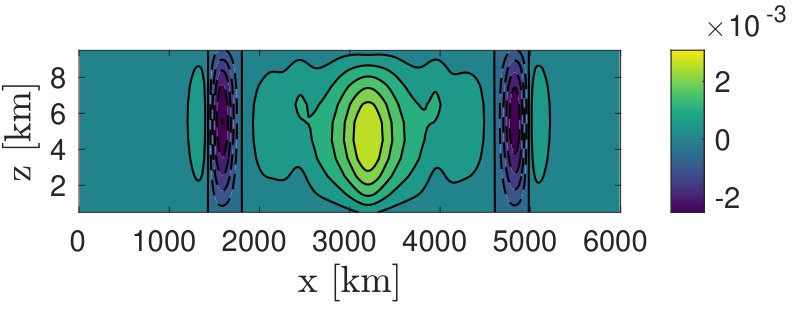 Figure 5
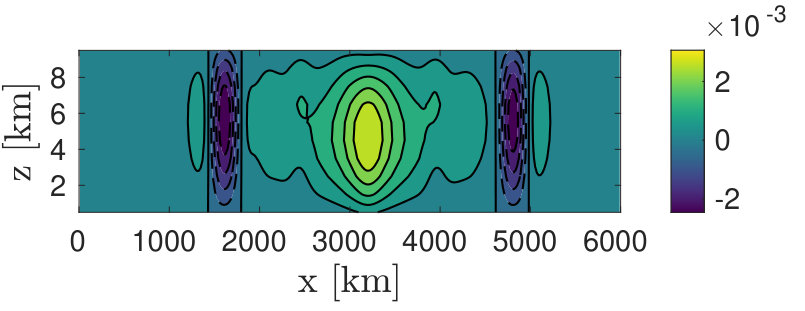 Figure 6
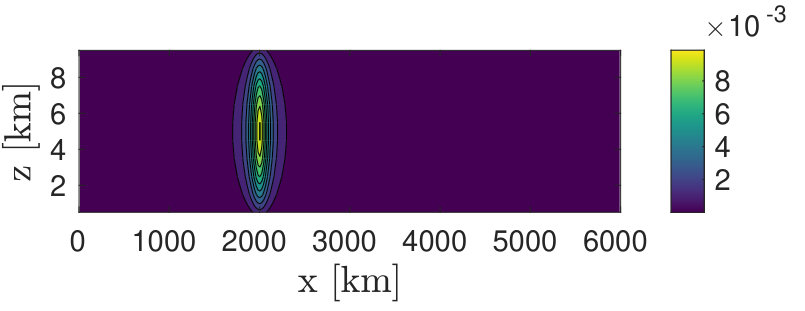 Figure 7
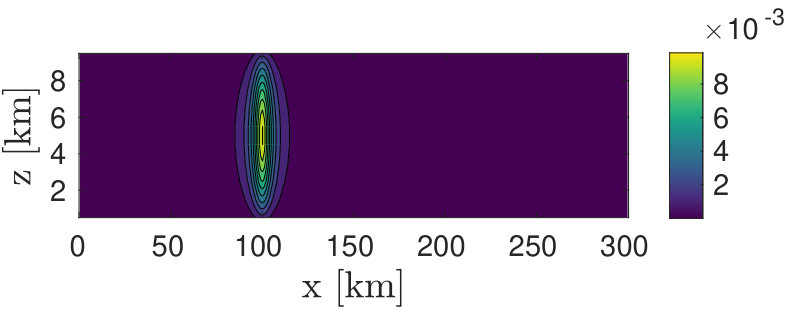 Figure 8
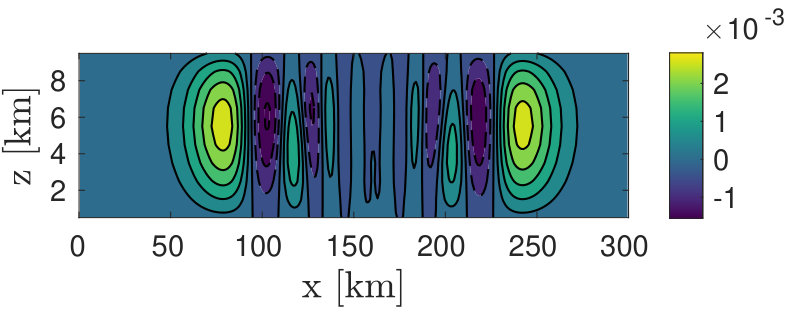 Figure 9
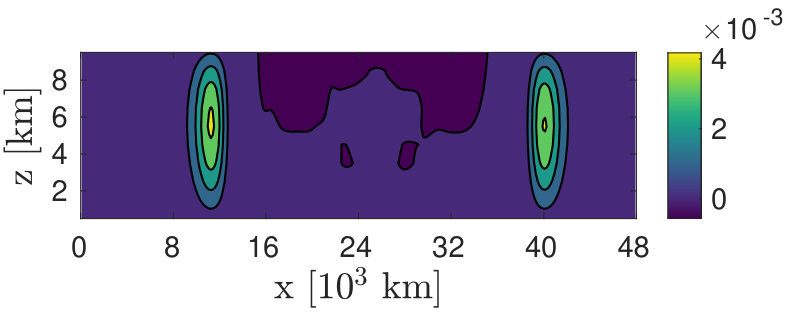 Figure 10
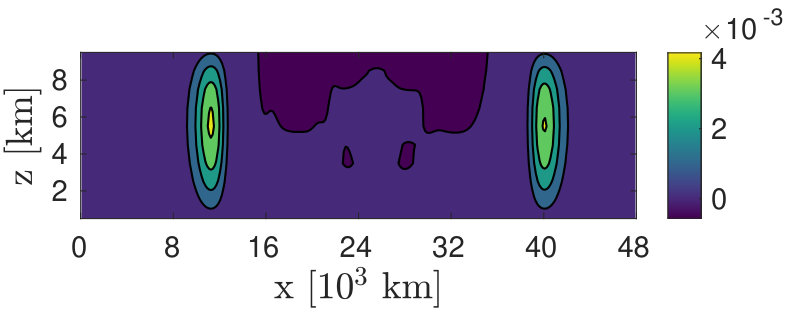 Figure 11
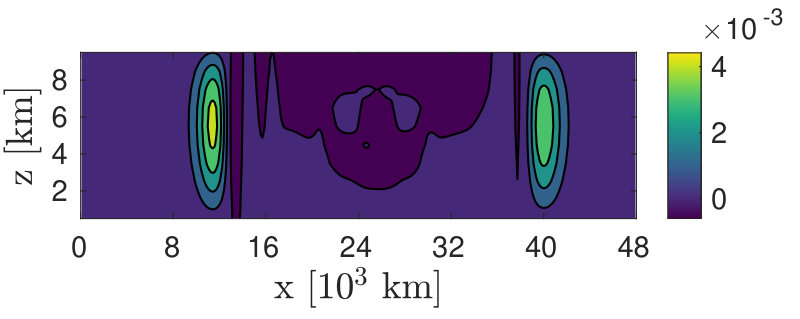 Figure 12
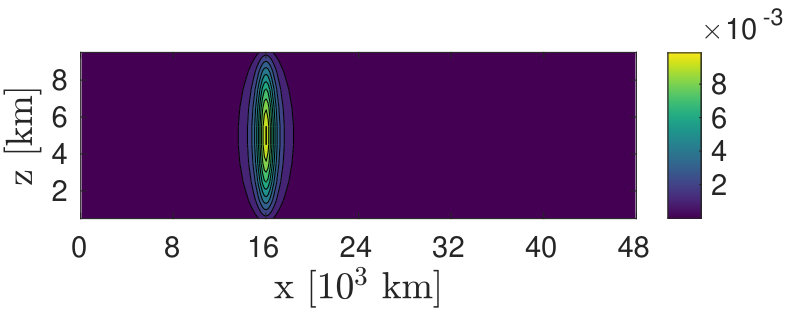 Figure 13
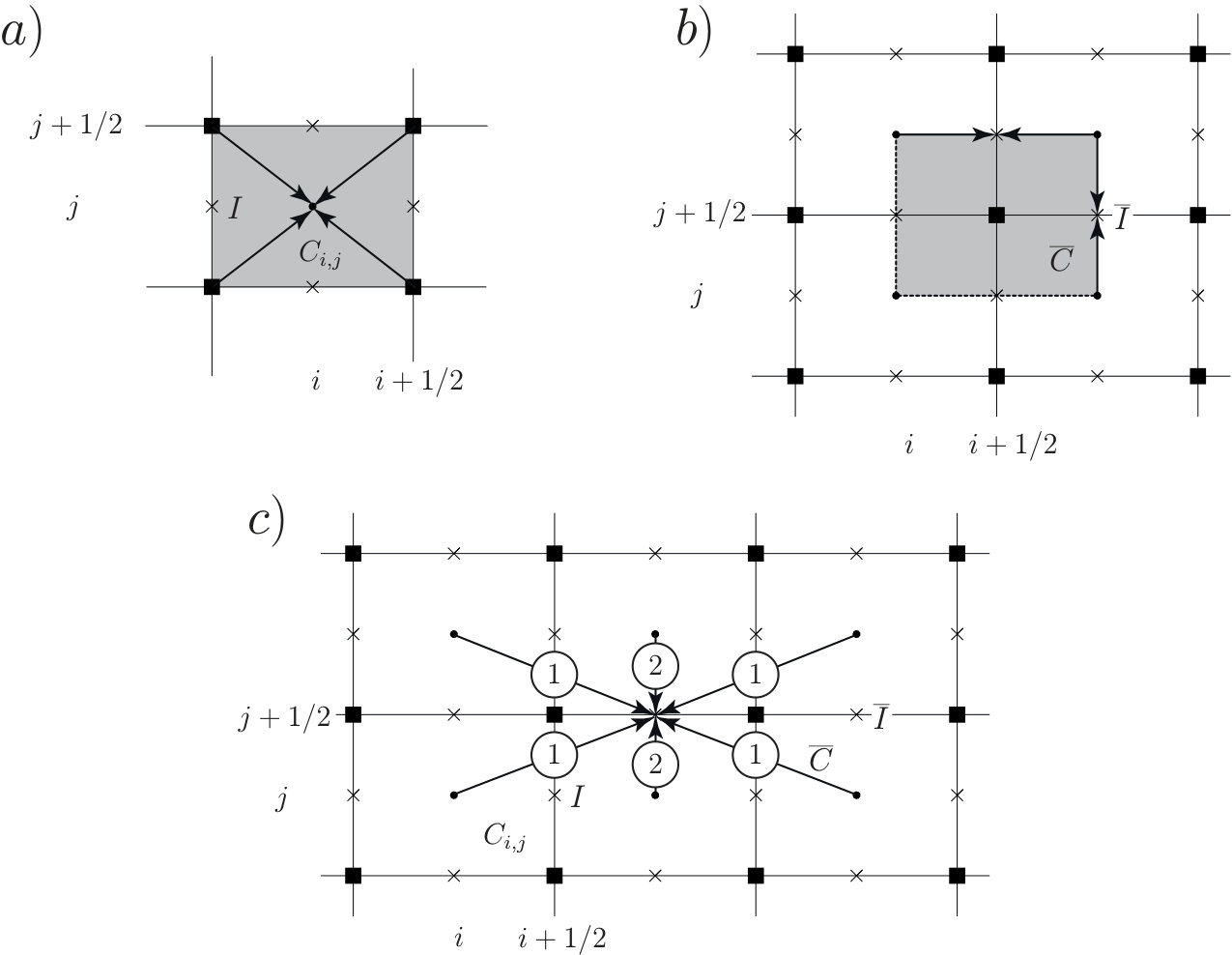 Figure 14
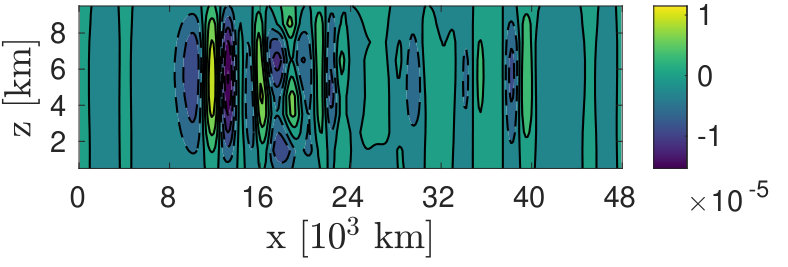 Figure 15
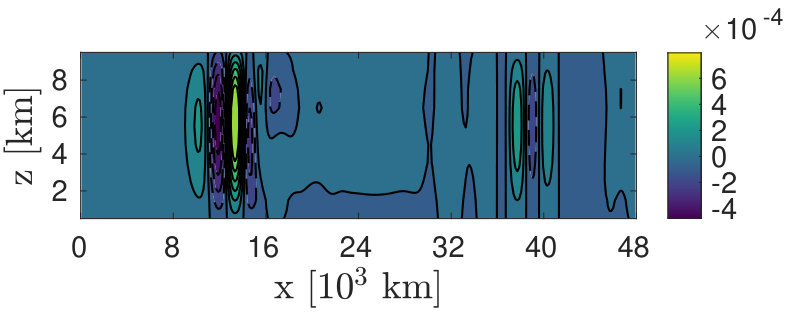 Figure 16
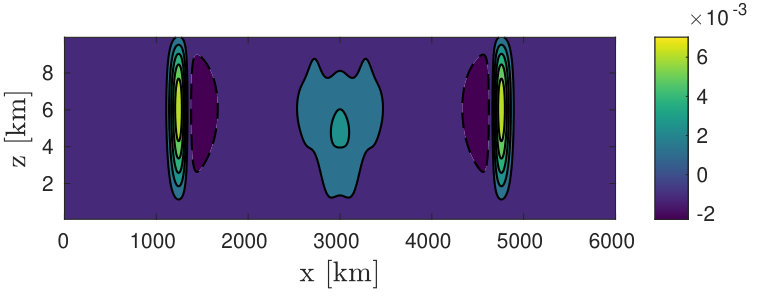 Figure 17
 Figure 18
 Figure 19
 Figure 20
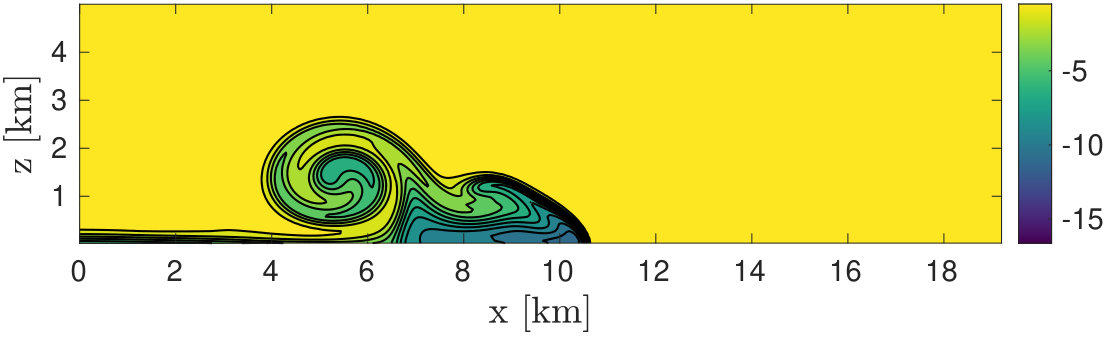 Figure 21
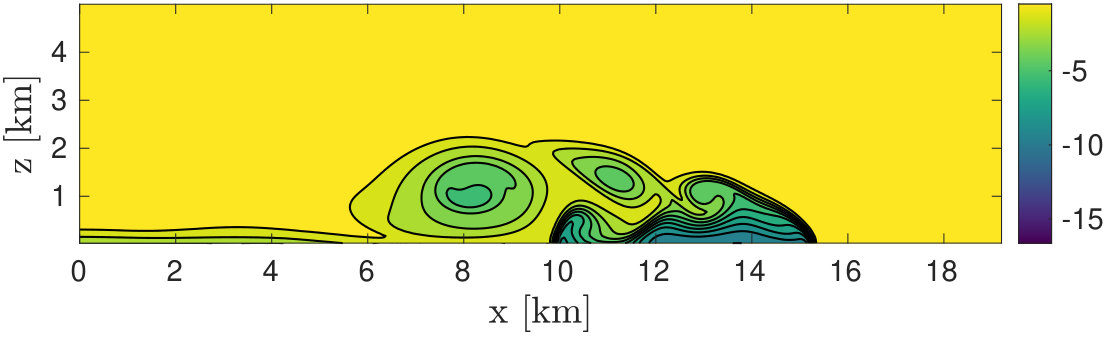 Figure 22
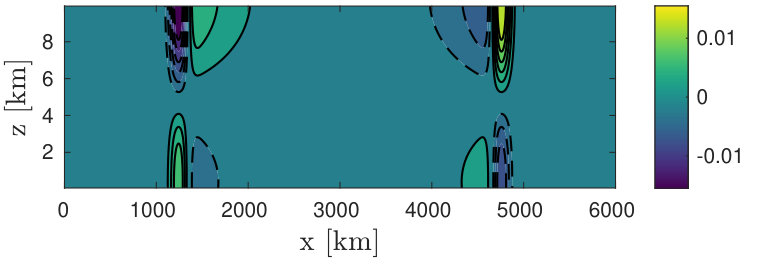 Figure 23
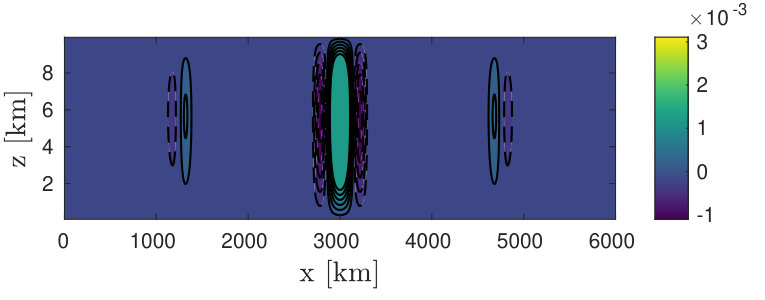 Figure 24
Peer Reviews
No public reviews on file for this paper yet. If you reviewed it on a platform where reviews are public (OpenReview, ICLR, NeurIPS, ICML), you can paste yours below so the community can read it here.
Videos
No videos yet. Explain this paper in a talk, walkthrough, or lecture? Add one.