Graphene-based Perfect Absorbers: Systematic Design and High Tunability
Xuchen Wang, Sergei A. Tretyakov

TL;DR
This paper presents a systematic design of graphene-based perfect absorbers using metallic metasurfaces, achieving high tunability and complete absorption across frequencies despite low carrier mobility in processed graphene.
Contribution
It introduces a metasurface-based approach to enhance absorption in low-mobility graphene, enabling tunable and complete absorption in the THz band.
Findings
Complete absorption achieved at various frequencies.
Strong tunability of absorption with Fermi level modulation.
Metasurface design compensates for low mobility issues.
Abstract
Experimental realization of efficient graphene-based absorbers is a challenging task due to the low carrier mobility in processed graphene. In this paper, we circumvent this problem by placing uniform graphene sheets on metallic metasurfaces designed for improving the absorption properties of low-mobility graphene. Complete absorption can be achieved for different frequencies with the proper metasurface design. In the THz band, we observe strong tunability of the absorption frequencies and magnitudes when modulating graphene Fermi level.
Click any figure to enlarge with its caption.
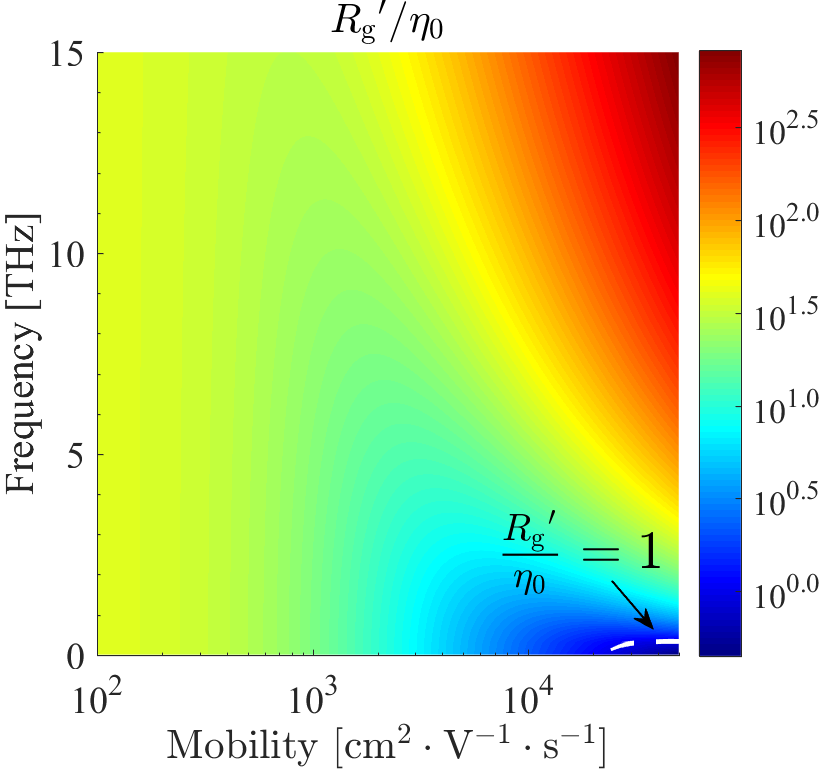 Figure 1
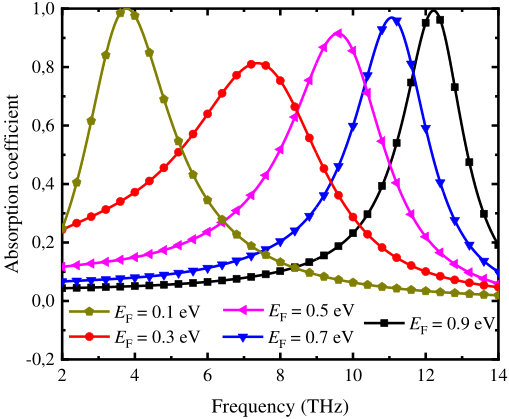 Figure 2
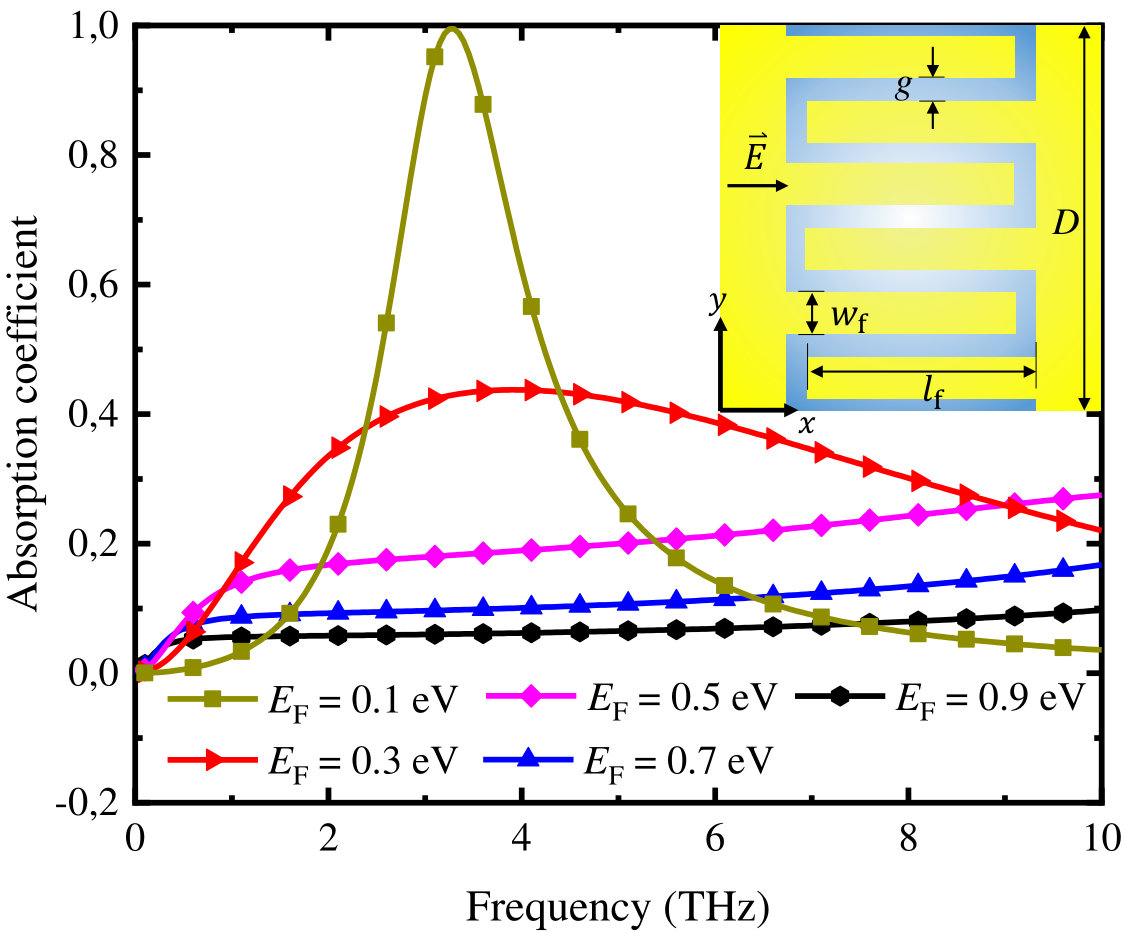 Figure 3
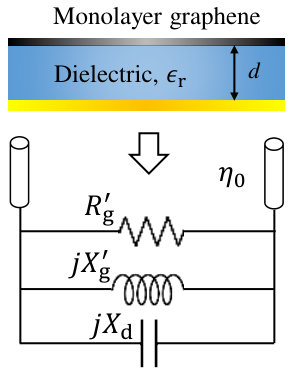 Figure 4
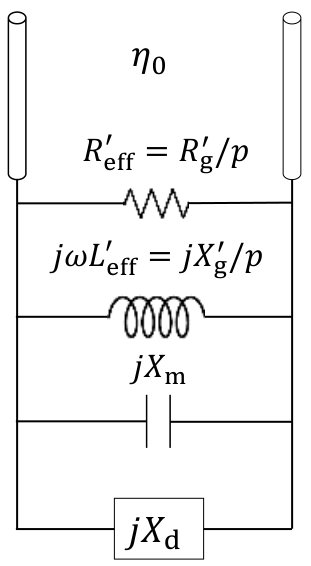 Figure 5
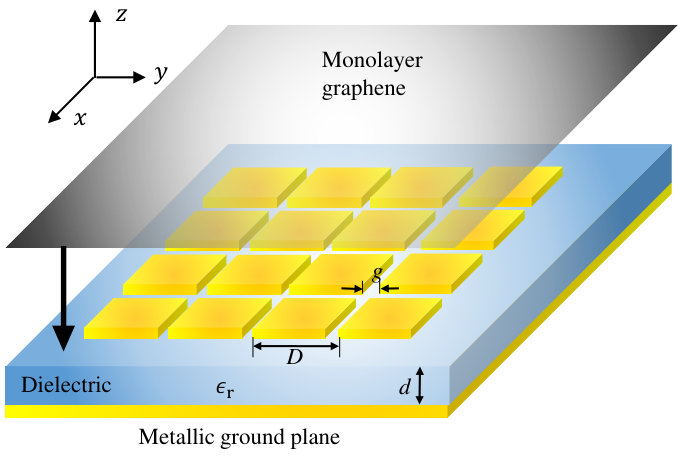 Figure 6
Peer Reviews
No public reviews on file for this paper yet. If you reviewed it on a platform where reviews are public (OpenReview, ICLR, NeurIPS, ICML), you can paste yours below so the community can read it here.
Videos
No videos yet. Explain this paper in a talk, walkthrough, or lecture? Add one.
Graphene-based Perfect Absorbers: Systematic Design and High Tunability
Xuchen Wang∗, Sergei A. Tretyakov
Department of Electronics and Nanoengineering
Aalto University, P. O. Box 15500, FI-00076 Aalto, Finland
Email: [email protected]
Abstract
Experimental realization of efficient graphene-based absorbers is a challenging task due to the low carrier mobility in processed graphene. In this paper, we circumvent this problem by placing uniform graphene sheets on metallic metasurfaces designed for improving the absorption properties of low-mobility graphene. Complete absorption can be achieved for different frequencies with the proper metasurface design. In the THz band, we observe strong tunability of the absorption frequencies and magnitudes when modulating graphene Fermi level.
I Introduction
In the literature, most of the theoretical works predict perfect absorption in graphene with the assumptions of high mobility ( ) and high Fermi level [1]. However, the typical achievable mobility in experiment is around [2], which makes these theoretical models impractical to be implemented. Despite the large efforts devoted to improve the absorption properties of graphene, it has been shown that a monolayer graphene behaves as a poor absorber in almost all the frequencies. From the circuit-theory perspective, the main reason for the weak absorption in graphene is the severe impedance mismatch between graphene and its surrounding materials (the sheet impedance of undoped graphene is usually several thousand ohm per square or more).
In this talk, we will present and discuss the use of metasurfaces for reducing the effective impedance of graphene, i.e., for improving the absorption efficiency in graphene. With this method, even in very poor quality graphene samples ( ), the realization of perfect absorption is possible. In addition, we will show how the proposed structures are highly tunable for different frequencies or levels of absorption in the THz band. Readers can get more detailed information in [3].
II Theory
At THz frequencies or below, the surface conductivity of graphene is described by the Drude model, , where is the angular frequency, is the Fermi level, and is the scattering rate (related to carrier mobility and Fermi level ). Using an equivalent circuit model, the graphene sheet can be considered as a complex-impedance sheet, with the sheet impedance .
Let us first discuss the absorption characteristics of a graphene Salisbury screen where the graphene layer is supported by a grounded substrate, as depicted in Fig. 1. The equivalent circuit of this structure is described as a parallel resonant circuit. Instead of expressing graphene sheet impedance as a series connection of resistance and reactance, here we interpret graphene as a resistor shunt connected with an inductor (), where
[TABLE]
Since the graphene sheet is inductive in the THz band, the substrate thickness should be between and to ensure its impedance is capacitive and thus create a high impedance surface at the resonant frequency.
The use of this equivalent circuit model allows systematic design of perfect absorbers: the parallel resistance controls the absorption efficiency, while the inductance together with the capacitive grounded substrate determine the resonant frequency. In order to achieve perfect absorption at a resonant frequency, should be equal to free space impedance . We assume the graphene Fermi level is eV in its natural state (no intentional chemical or electrical doping). For this value of , Fig. 1 shows the calculated shunt resistance with respect to frequency and graphene mobility, where one can see that is huge compared to the free space impedance when . This is the main reason why perfect absorption in a complete graphene layer is quite difficult to obtain in experiment.
To reduce the shunt resistance of graphene. we replace the substrate with a reflective-type metasurface, as shown in Fig. 2. The metasurface consists of the grounded substrate and the periodically arranged square patches with the period and gap size . The graphene sheet is directed transferred onto this metallic metasurface. In the area where graphene and metal are contacted, graphene is actually shorted by the metallic patches. Therefore, the complete graphene sheet is equivalent to be patterned into mesh-type strips with effective impedance , where is called the scaling factor. The grid reactance of periodic patches is expressed as with . In principle, by choosing a suitable scaling factor , can be matched to the free space impedance . By properly choosing the substrate thickness and permittivity or period , the resonant frequency can be adjusted to the expected one.
III Electrical tunability
In this section, we present two tunable scenarios for absorption frequency and amplitude with different graphene quality. The assumed carrier mobilities in these two cases are typical values in experiment. In the first case, we use graphene with . Perfect absorption is designed at 3.8 THz ( eV) according to the design rules in Section II. By improving the Fermi level of graphene from 0.1 eV to 0.9 eV, large shift of the peak frequency is observed. The center absorption frequency is tuned from 3.8 THz to 12.3 THz, as shown in Fig. 3.
The other scenario is strong tunability of absorption amplitude at a specified frequency. We assume very low-quality graphene with . For perfect absorption at 3.3 THz, scaling factor is calculated as . If the period is 5 m, the gap size of the patches is as narrow as nm. This nano-scale channel not only brings fabrication challenges, but also results in Fermi-level spinning effect in graphene channels. We replace the straight gap with meandered slot, as shown in the inset of Fig. 4. The intersected fingers largely increase the length of graphene channel in one unit thus decreasing the effective resistance of graphene. We can see in Fig. 4 that the absorption achieves unity with low Fermi levels and almost zero at high Fermi levels, as a switchable absorber.
IV Conclusions
In this paper, we use a simple transmission-line model to explain the weak wave absorption in graphene, and propose metallic metasurface substrates to obtain complete and tunable absorption in the THz band. This method is effective even for graphene samples of poor quality.
Acknowledgment
This project has received funding from the European Union’s Horizon 2020 research and innovation programme-Future Emerging Topics (FETOPEN) under grant agreement No 736876.
The reference list from the paper itself. Each links out to its DOI / PubMed record.
- 1[1] S. Thongrattanasiri, F. H. Koppens, and F. J. G. De Abajo, “Complete optical absorption in periodically patterned graphene,” Physical Review Letters , vol. 108, no. 4, p. 047401, 2012.
- 2[2] S. Kim, M. S. Jang, V. W. Brar, K. W. Mauser, and H. A. Atwater, “Electronically tunable perfect absorption in graphene,” ar Xiv preprint ar Xiv:1703.03579 , 2017.
- 3[3] X.-C. Wang and S. A. Tretyakov, “Tunable perfect absorption in continuous graphene sheets on metasurface substrates,” ar Xiv preprint ar Xiv:1712.01708 , 2017.