Spin-Orbital-Intertwined Nematic State in FeSe
J. Li, B. Lei, D. Zhao, L. P. Nie, D. W. Song, L. X. Zheng, S. J. Li,, B. L. Kang, X. G. Luo, T. Wu, X. H. Chen

TL;DR
This study uncovers a nontrivial spin-orbit coupling effect in FeSe's nematic state, revealing orbital-dependent spin susceptibility, orbital reconstruction, and a spin-orbital-intertwined nematicity that advances understanding of its nematic transition mechanism.
Contribution
It demonstrates the role of spin-orbit coupling and Hund's coupling in the nematic state of FeSe, highlighting orbital-dependent effects and spin-orbital interplay.
Findings
Orbital-dependent spin susceptibility dominated by 3dxy orbital.
Orbital reconstruction occurs on 3dxy, 3dxz, and 3dyz orbitals below Tnem.
Development of in-plane anisotropy indicating spin-orbital-intertwined nematicity.
Abstract
The importance of the spin-orbit coupling (SOC) effect in Fe-based superconductors (FeSCs) has recently been under hot debate. Considering the Hund's coupling-induced electronic correlation, the understanding of the role of SOC in FeSCs is not trivial and is still elusive. Here, through a comprehensive study of 77Se and 57Fe nuclear magnetic resonance, a nontrivial SOC effect is revealed in the nematic state of FeSe. First, the orbital-dependent spin susceptibility, determined by the anisotropy of the 57Fe Knight shift, indicates a predominant role from the 3dxy orbital, which suggests the coexistence of local and itinerant spin degrees of freedom (d.o.f.) in the FeSe. Then, we reconfirm that the orbital reconstruction below the nematic transition temperature (Tnem ~ 90 K) happens not only on the 3dxz and 3dyz orbitals but also on the 3dxy orbital, which is beyond a trivial…
Click any figure to enlarge with its caption.
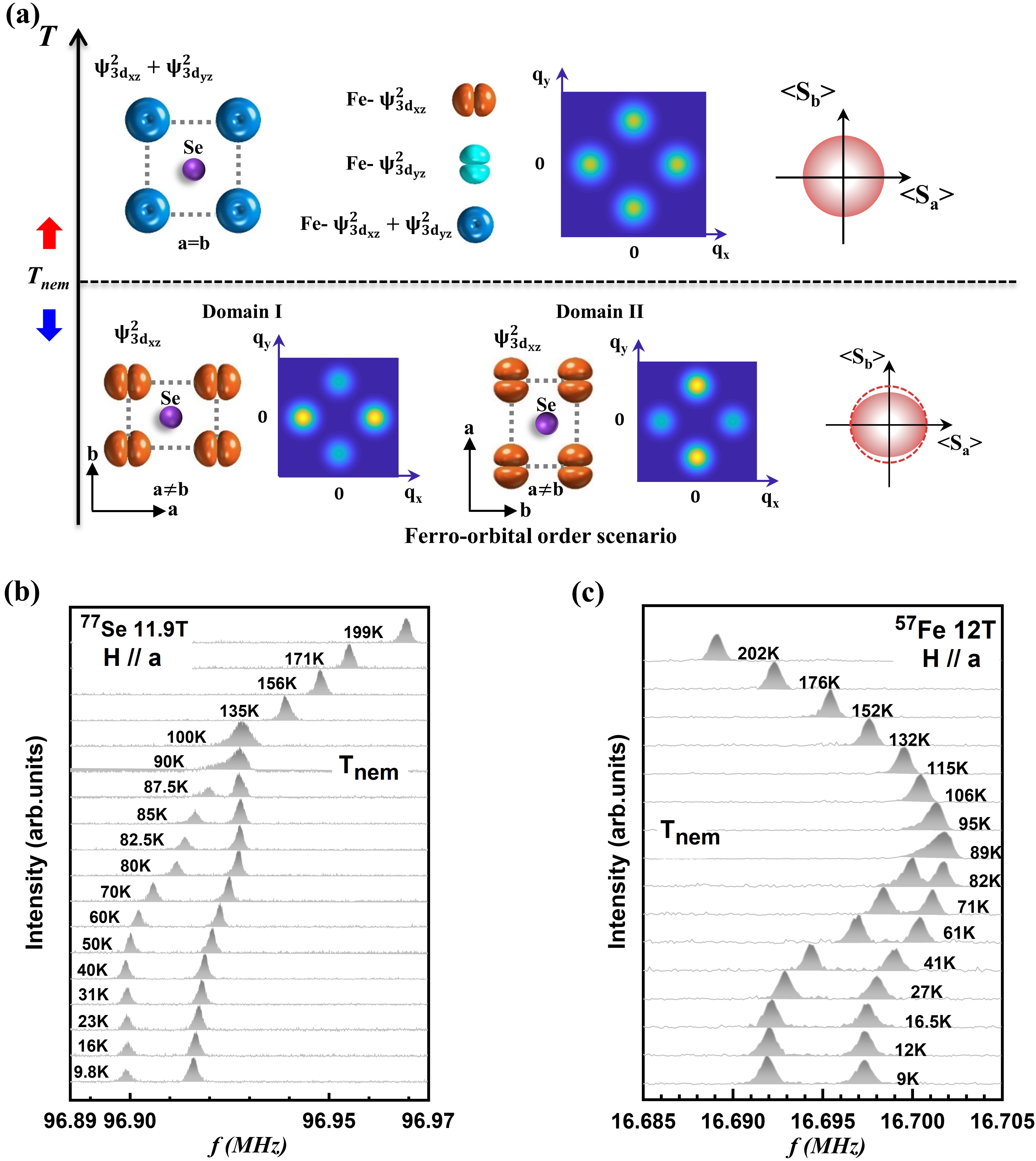 Figure 1
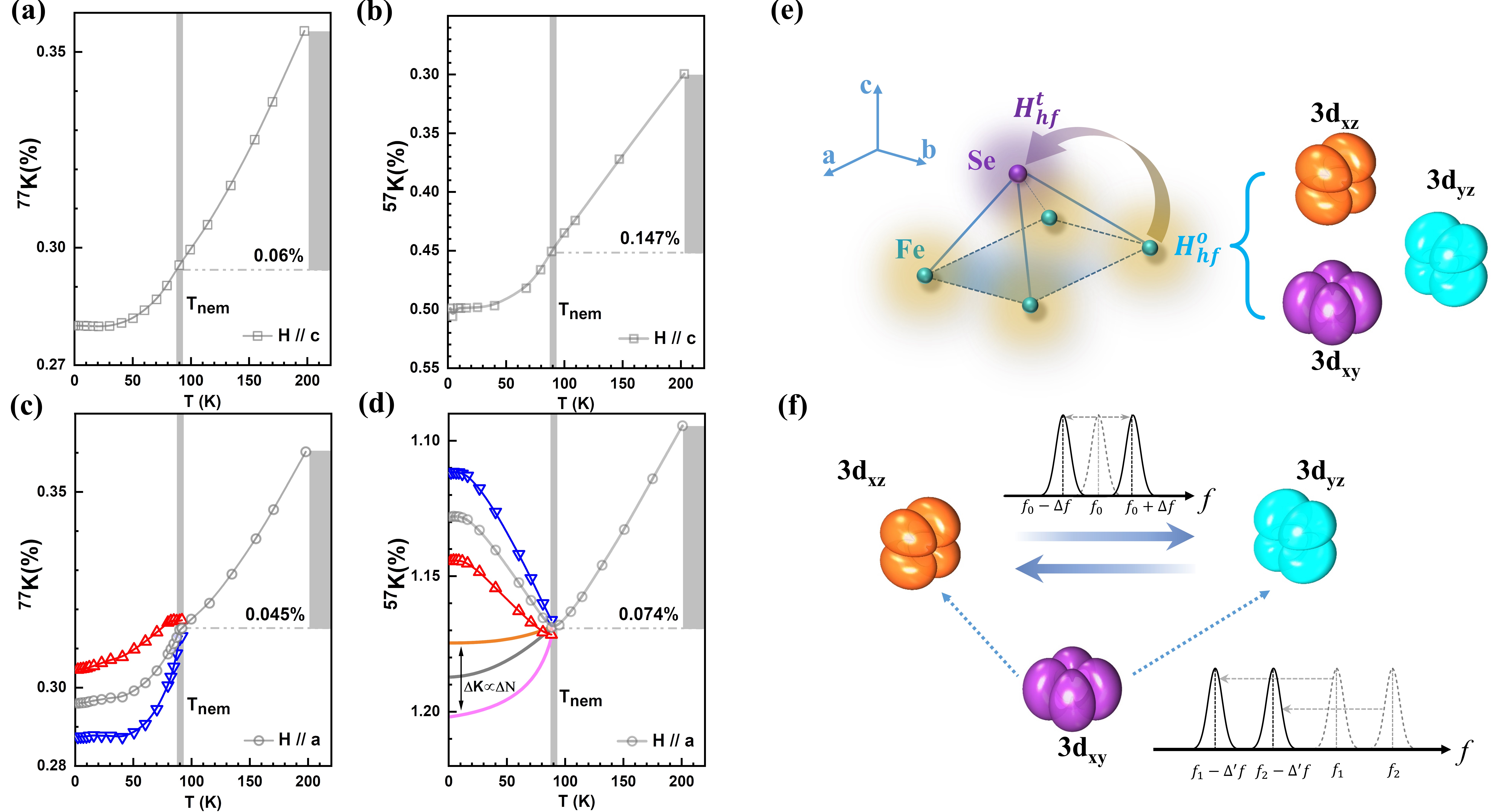 Figure 2
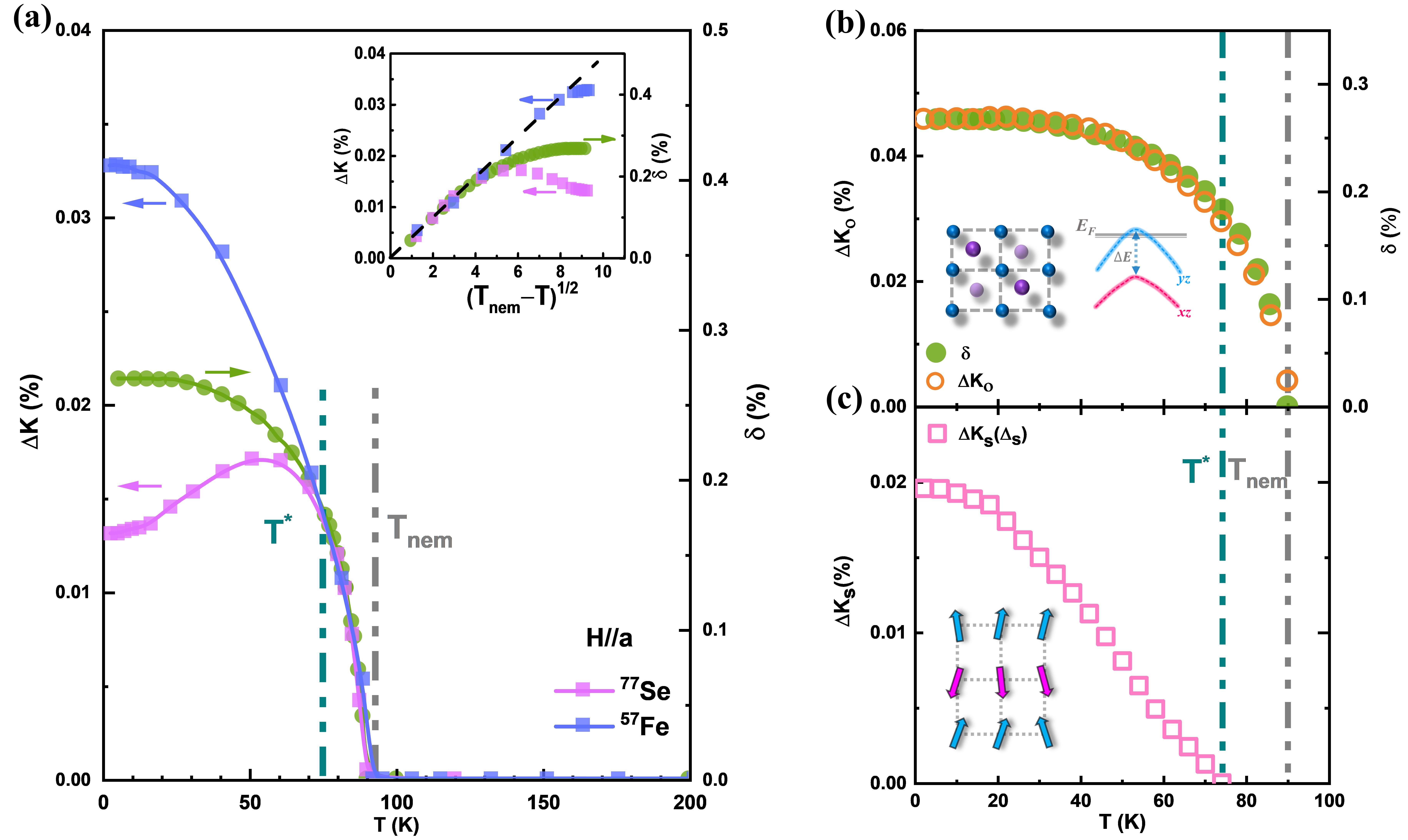 Figure 3
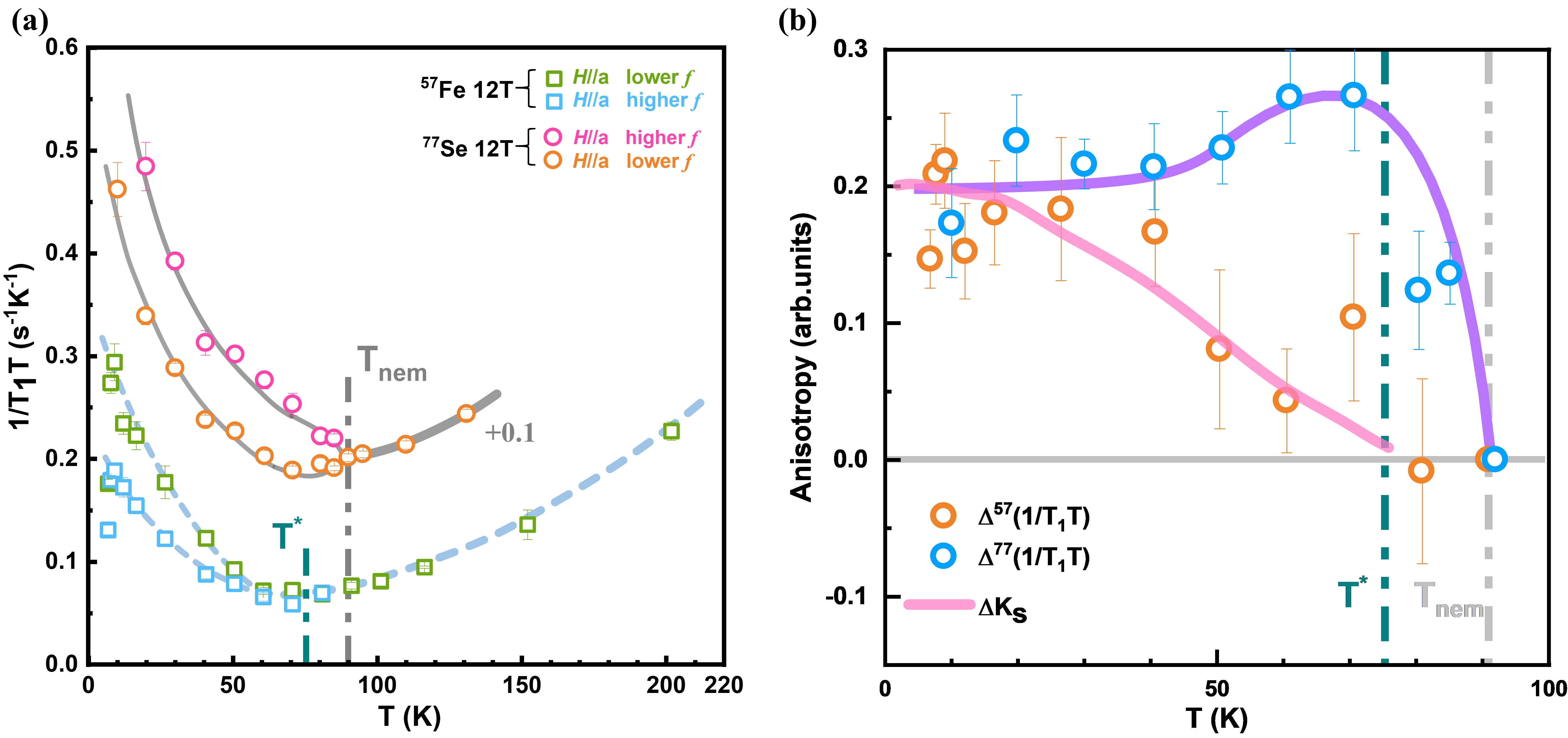 Figure 4
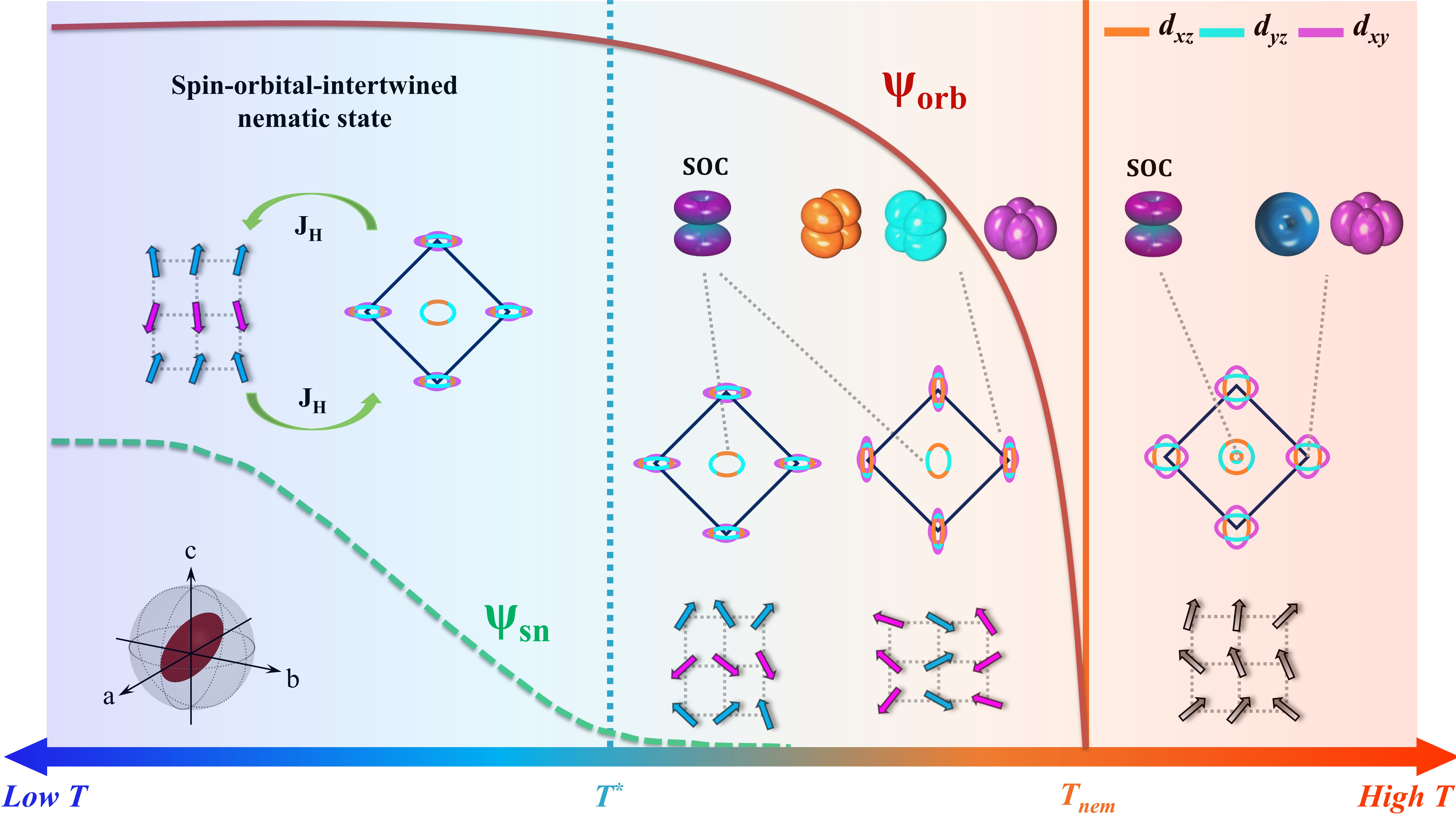 Figure 5
Peer Reviews
No public reviews on file for this paper yet. If you reviewed it on a platform where reviews are public (OpenReview, ICLR, NeurIPS, ICML), you can paste yours below so the community can read it here.
Videos
No videos yet. Explain this paper in a talk, walkthrough, or lecture? Add one.