Knot Floer homology and strongly homotopy-ribbon concordances
Maggie Miller, Ian Zemke

TL;DR
This paper proves that strongly homotopy-ribbon concordances induce injective maps on knot Floer homology, revealing new structural properties of these concordances in knot theory.
Contribution
It establishes the injectivity of the map on knot Floer homology induced by strongly homotopy-ribbon concordances, a novel result in the study of knot invariants.
Findings
Injective maps on knot Floer homology from strongly homotopy-ribbon concordances
New insights into the structure of knot concordances
Advancement in understanding knot invariants and their relations
Abstract
We prove that the map on knot Floer homology induced by a strongly homotopy-ribbon concordance is injective.
Click any figure to enlarge with its caption.
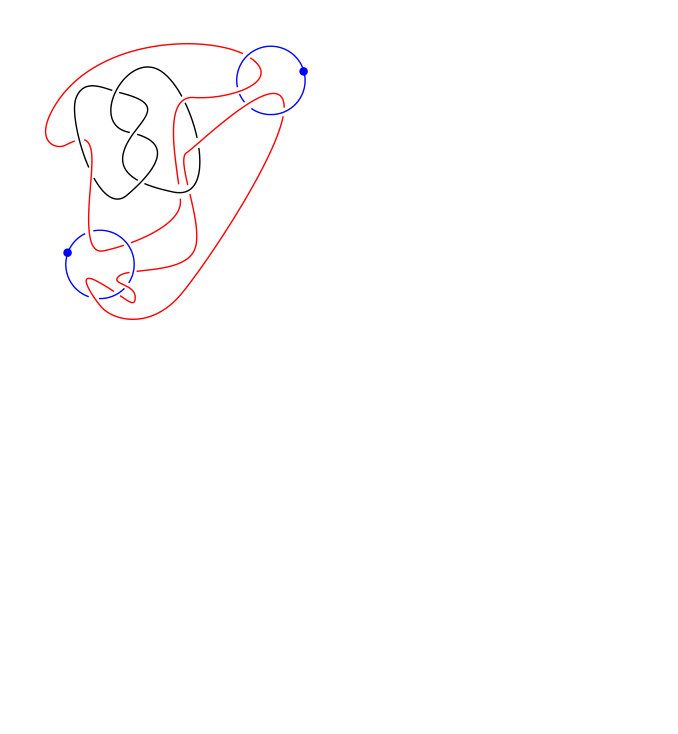 Figure 1
 Figure 1
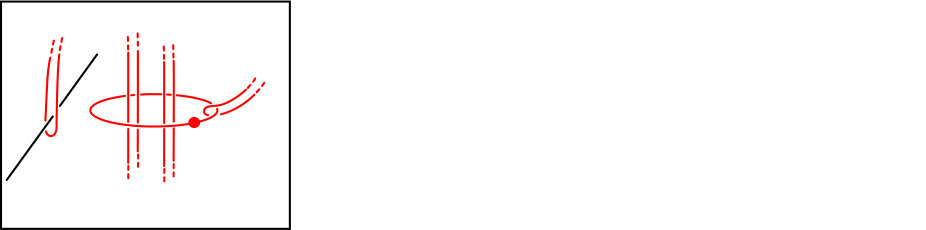 Figure 2
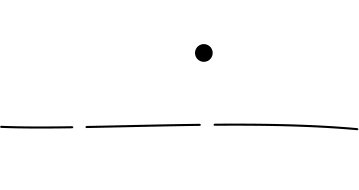 Figure 4
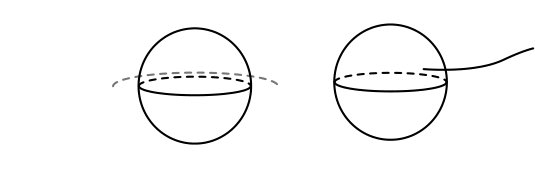 Figure 5
 Figure 6
 Figure 7
 Figure 8
Peer Reviews
No public reviews on file for this paper yet. If you reviewed it on a platform where reviews are public (OpenReview, ICLR, NeurIPS, ICML), you can paste yours below so the community can read it here.
Videos
No videos yet. Explain this paper in a talk, walkthrough, or lecture? Add one.
Knot Floer homology and strongly homotopy-ribbon concordances
Maggie Miller
Department of Mathematics
Princeton University
Princeton, NJ 08544, USA
and
Ian Zemke
Department of Mathematics
Princeton University
Princeton, NJ 08544, USA
Abstract.
We prove that the map on knot Floer homology induced by a strongly homotopy-ribbon concordance is injective. One application is that the Seifert genus is monotonic under strongly homotopy-ribbon concordance.
MM was supported by NSF grant DGE-1656466. IZ was supported by NSF grant DMS-1703685.
1. Introduction
A concordance from to is a smoothly embedded annulus in such that . A ribbon concordance from to is a concordance such that the projection of to is Morse and has only index 0 and 1 critical points.
If is a concordance from to , write , and for the fundamental groups of the complements. A homotopy-ribbon concordance is a concordance such that
[TABLE]
The definition is justified by a result of Gordon [Gordon]*Lemma 3.1 which implies that ribbon concordances are homotopy-ribbon.
In fact, Gordon showed something stronger: if is a ribbon concordance, then its complement can be built by attaching only 1-handles and 2-handles to .
Justified by Gordon’s observation, one can make the following definition:
Definition 1.1**.**
A strongly homotopy-ribbon concordance from to is a concordance such that the complement of can be constructed by attaching 4-dimensional 1-handles and 2-handles to .
Strongly homotopy-ribbon concordance has been studied by, e.g., Cochran [CochranRibbon] and Larson-Meier [LarsonFiberedRibbon].
By definition, we have
[TABLE]
[TABLE]
It is unknown whether the first two inclusions are strict.
In this paper, we show that knot Floer homology obstructs strongly homotopy-ribbon concordance. Our argument is based on a result of the second author [ZemRibbon] for ribbon concordance.
1.1. Knot Floer homology and strongly homotopy-ribbon concordances
Knot Floer homology is an invariant of knots in 3-manifolds discovered independently by Ozsváth and Szabó [OSKnots] and Rasmussen [RasmussenKnots].
If is a knot in , the simplest version of knot Floer homology is the hat version, which is a bigraded vector space:
[TABLE]
The index denotes the Maslov grading, and the Alexander grading.
Associated to a concordance from to , Juhász and Marengon [JMConcordance] described a bigraded homomorphism
[TABLE]
which is well defined up to bigraded automorphisms of and . The ambiguity can be eliminated by picking a decoration of the concordance consisting of a pair of disjoint arcs on running from to . Their construction used a more general construction of link cobordism maps described by Juhász [JCob] for link Floer homology.
There is a more general version of knot Floer homology, the infinity version, denoted
[TABLE]
which is a -filtered, bigraded chain complex over the ring . We refer the reader to [Man-Intro-HFK] for a nice introduction to the numerous versions of knot Floer homology.
The second author [ZemCFLTQFT] constructed a bigraded, filtered, -equivariant cobordism map
[TABLE]
The second author showed that the cobordism map induced by a ribbon concordance is left invertible [ZemRibbon]*Theorem 1.1. Our main result is that the same is true for strongly homotopy-ribbon concordances:
Theorem 1.2**.**
If is a strongly homotopy-ribbon concordance from to , then the induced map
[TABLE]
admits a left inverse. In particular, the induced map
[TABLE]
is an injection.
Our proof uses a similar doubling trick as [ZemRibbon]: if denotes the concordance from to obtained by turning around and reversing the orientation of , then we will show that
[TABLE]
Remark 1.3*.*
In fact, the proof of Theorem 1.2 works for strongly homotopy-ribbon concordances in an arbitrary -cobordism of . See Remark 4.3. This is potentially interesting because one may allow a homotopy-ribbon disk to live in any homotopy . See, e.g., [CassonLoop].
Ozsváth and Szabó [OSgenusbounds] proved that knot Floer homology detects the Seifert genus:
[TABLE]
Combined with our Theorem 1.2, we obtain the following generalization of [ZemRibbon]*Theorem 1.5:
Corollary 1.4**.**
If there is a strongly homotopy-ribbon concordance from to , then
[TABLE]
By Remark 1.3, Corollary 1.4 applies whenever there is a strongly homotopy-ribbon concordance from to in any -cobordism of .
2. Strongly homotopy-ribbon concordances
In this section, we demonstrate that ribbon concordances are strongly homotopy-ribbon concordances. This is described in the proof of [Gordon]*Lemma 3.1, however we give a proof for the reader’s convenience.
Lemma 2.1**.**
If is a ribbon concordance from to , then is a strongly homotopy-ribbon concordance.
Proof.
Suppose is a ribbon concordance. For notational simplicity, we restrict to the case when the concordance has a single 0-handle and 1-handle. The concordance has a movie consisting of a single birth followed by a saddle, which is shown in Figure 2.1. The birth adds an unknot , and the saddle adds a band .
In Figure 2.2, another movie of a concordance is shown, featuring a 4-dimensional 1-handle and 2-handle, but no births or saddles. Write for the attaching sphere of the 1-handle, and for the attaching sphere of the 2-handle. In Figure 2.2, we use the dotted unknot notation for 1-handle attachment. We note that the transition through frames 3, 4 and 5 in Figure 2.1 is achieved by a sequence of isotopies (we remind the reader that handlesliding the knot over the knot or the dotted unknot corresponding to corresponds to an isotopy of the knot in the 3-manifold obtained by surgering on and ).
We claim that the movies shown in Figure 2.1 and Figure 2.2 can be related by a set of 4-dimensional movie moves. This is achieved by taking the movie in Figure 2.1 and adjoining a canceling pair of 4-dimensional 1- and 2-handles. Write for the 2-handle, which we assume is a 0-framed unknot. After sliding over the dotted unknot forming the 1-handle, and sliding the band over (repeatedly), the band now cancels the birth which added , and we are left with the movie in Figure 2.2. ∎
3. A handle decomposition of the doubled concordance
We now describe a handle decomposition of the complement of the doubled concordance , when is strongly homotopy-ribbon.
Lemma 3.1**.**
Suppose that is a strongly homotopy-ribbon concordance from to , and has a handle decomposition consisting of 1-handles, attached along 0-spheres , and 2-handles, attached along framed knots . A handle decomposition for the complement of is as follows:
- (1)
* 1-handles, attached along .* 2. (2)
* 2-handles, attached along .* 3. (3)
* 2-handles, attached along 0-framed meridians of .* 4. (4)
* 3-handles, attached along 2-spheres obtained by taking the belt spheres of the 1-handles, removing disks where they intersect , and adding a collection of pairwise disjoint annuli which connect the punctures to the 0-framed meridians , and are contained in a neighborhood of the knots . See Figure 3.1 for an example.*
Proof.
The proof is standard, though it is usually presented in the context of closed -manifolds, where the -handles need not be described explicitly. See [GompfStipsicz]*Example 4.6.3. For notational simplicity, we focus on the case when the complement of has a handle decomposition with one 1-handle and one 2-handle. The general case is a straightforward modification.
Let denote the attaching 0-sphere of the 1-handle. Write for the 3-manifold obtained from by surgery along . (In general, we write for the manifold obtained by surgery on a framed sphere in a 3-manifold ). Note that . Let be the knot along which the 2-handle is attached. The framing of induces an identification of a neighborhood of with . Write for this neighborhood. The surgered manifold is obtained from by removing and gluing in . The belt sphere of the 2-handle is the knot
[TABLE]
which is framed using the same identification of as .
The surgered manifold is canonically diffeomorphic to . The attaching sphere of the 3-handle in is easy to see with this description: it coincides with the belt sphere of 1-handle, under the identification of with .
We consider now the image of the attaching 2-sphere of the 3-handle in . Outside of (the neighborhood of ), the attaching sphere of the 3-handle coincides with the belt sphere of the 1-handle attached along . Inside of , it is equal to a collection of annuli of the form , where is a radial arc extending from to . There is one annulus for each intersection point of with the belt sphere of the 1-handle.
Next, we push out of the neighborhood , so that we obtain a more standard Kirby calculus picture. When we do this, it is straightforward to check that becomes a 0-framed meridian, and that the annuli are as described. ∎
4. Proof of the main theorem
Our proof follows from a “sphere tubing” property of the link Floer TQFT from [ZemCFLTQFT], which we state below in Lemma 4.2. We first review some background about the link Floer TQFT.
The link Floer TQFT uses the following decorated link cobordism category, originally described by Juhász [JCob]:
Definition 4.1**.**
- (1)
A multi-based link in a 3-manifold is an orientated link , containing two finite collections of basepoints, and , such that each component of contains at least one basepoint and one basepoint. Furthermore, as one traverses , the basepoints alternate between and . 2. (2)
A decorated link cobordism from to consists of a cobordism from to , as well as a decorated surface , as follows. The surface is a properly and smoothly embedded surface in , such that . Furthermore, is a properly embedded 1-manifold which divides into two subsurfaces, and , which satisfy and .
The link Floer TQFT from [ZemCFLTQFT] assigns cobordism maps to a slightly different version of knot Floer homology than we described in the introduction. If is a multi-pointed knot and , we consider a version of knot Floer homology which we denote by . Explicitly, if is a Heegaard diagram, then is freely generated over the 2-variable polynomial ring by intersection points with . The differential counts Maslov index 1 holomorphic disks in the symmetric product (where ) via the formula
[TABLE]
In the above expression, denotes the total multiplicity of a class over the basepoints, and is defined similarly.
The chain complex has a filtration given by powers of and . If is torsion and is null-homologous, there are also three gradings: two Maslov gradings, and , as well as an Alexander grading . The gradings are related by the equation . The actions of and have -bigradings of and , respectively.
For a knot in , the previously described knot Floer complex is obtained by decorating with two basepoints to form , inverting and in , and taking the subcomplex in Alexander grading zero. The action of on corresponds to the action of the product on . The differential drops both Maslov gradings by 1, and preserves the Alexander grading.
If is a decorated link cobordism from to , and , then the construction from [ZemCFLTQFT] gives a map
[TABLE]
When and are understood from context, we will simply write for the cobordism map.
If is a concordance in , decorated with a pair of arcs, the link cobordism maps preserve the Maslov and Alexander gradings by [ZemAbsoluteGradings]*Theorem 1.4. Correspondingly, the cobordism maps restrict to give maps on (the subcomplex in Alexander grading 0), as described in the introduction.
Before we prove Theorem 1.2, we recall the key lemma proven by the second author [ZemRibbon]*Lemma 3.1:
Lemma 4.2**.**
Suppose that is a decorated concordance in , and is a smoothly embedded 2-sphere in the complement of . Let be a decorated concordance obtained by connecting and with a tube, away from the decorations. Then
[TABLE]
as maps from to .
Proof.
Since is obtained by inverting and in , and then taking the subcomplex in Alexander grading zero, it suffices to prove the analogous claim on .
We factor the cobordism map through a closed neighborhood of the sphere . Here we use the fact that the tube meets in an unknot. Write and for intersections of and with . After an isotopy, we may assume that both and are disks which intersect the dividing set in a single arc. We obtain cobordism maps
[TABLE]
where is a doubly pointed unknot, is the structure on which evaluates trivially on , and is its restriction to . (Note that by definition, , with vanishing differential). Since and coincide outside of , using the composition law, it suffices to show that .
There is a chain isomorphism
[TABLE]
where we view the latter complex as having vanishing differential, and denotes the rank 1 vector space over , concentrated in -bigrading .
The grading change formula from [ZemAbsoluteGradings]*Theorem 1.4 implies that and both have -bigrading . Noting that and have bigrading and , from Equation (1) we find that has rank 1 in -bigrading . Hence, if and are both non-zero, then they must be equal. By capping off with a 3-handle and a 4-handle, we obtain a 2-knot in decorated with a single dividing curve. The corresponding cobordism map is non-zero by [ZemRibbon]*Lemma 4.1, so we conclude and are both non-zero, and hence equal. ∎
Proof of Theorem 1.2.
See Figure 4.1 for a schematic example of this proof.
Let be a strongly homotopy-ribbon concordance from to , and let be the concordance from to obtained by turning around and reversing the orientation of . Lemma 3.1 gives a handle decomposition of the complement of . Let be , decorated with a pair of dividing arcs, and let denote , decorated with the mirrored decoration.
By the composition law for link cobordisms,
[TABLE]
so it suffices to show that
We use the handle decomposition described in Lemma 3.1. Note that if we ignore the knot , then the handle decomposition describes . The knot may of course be tangled with the 2-handle attaching spheres .
The idea is as follows. We “pull” the knot away from the attaching spheres for the 4-dimensional handles. Of course to achieve this, we must pull through the framed knots (i.e. we must perform a sequence of crossing changes of with the knots ). To achieve a crossing change of with a framed knot , we can isotope a segment of parallel to until we reach the 0-framed meridian , and then “handleslide” across . Given the explicit description of the attaching spheres of the 3-handles stated in Lemma 3.1, this isotopy and handleslide can be performed in the complement of the attaching 2-spheres of the 3-handles.
Note that handlesliding across is not actually a handleslide of the described -manifold, as is not a handle attaching circle. Rather, this move changes the concordance . Indeed the two concordances are related by tubing to the 2-sphere , which is isotopic to the union of a small Seifert disk of unknot in together with a core of the 2-handle attached along . (That is, consists of the cocore of the -handle attached along and the core of the -handle attaching along , glued along their common boundary.) This move does not change the cobordism map by Lemma 4.2.
After untangling from all of the attaching spheres of the 4-dimensional handles, we are left with the identity knot cobordism , completing the proof. ∎
Remark 4.3*.*
The above proof works for strongly homotopy-ribbon concordances in an -cobordism from to itself. Upon disentangling from the attaching spheres for the complement of , we are left with the complement of the concordance inside of , where is the homotopy 4-sphere obtained by filling in with two 4-balls. By factoring the cobordism map through the connected sum sphere, the induced map is easily seen to be the identity.
Acknowledgments
We would like to thank András Juhász for helpful conversations, in particular for pointing out that the tubing operation from [ZemRibbon] can be interpreted in terms of sliding a surface over a 2-sphere. We would also like to thank the anonymous referee for some helpful comments.
References