TL;DR
This paper presents an adaptive observer for estimating charge state and crossover flux in redox flow batteries, using a novel model and Lyapunov-based stability analysis, validated on a laboratory prototype.
Contribution
It introduces a new adaptive observer design for simultaneous estimation of charge and crossover flux in disproportionation redox flow batteries, with stability guarantees.
Findings
Crossover flux can be modeled as a linear function of state of charge.
The observer design is validated on a laboratory prototype.
Stability and convergence are proven using Lyapunov analysis.
Abstract
This article considers a model formulation and an adaptive observer design for the simultaneous estimation of the state of charge and crossover flux in disproportionation redox flow batteries. This novel nonaqueous battery chemistry allows a simple isothermal lumped parameter model to be formulated. The transport of vanadium through the porous separator is a key unknown function of battery variables and it is approximated in the space of continuous functions. The state and parameter observer adaptation laws are derived using Lyapunov analysis applied to the estimation error, the stability and convergence of which are proved. Numerical values of observer gains are calculated by solving a polytopic linear matrix inequality and equality problem via convex optimization. The performance of this design is evaluated on a laboratory flow battery prototype, and it is shown that the crossover…
Click any figure to enlarge with its caption.
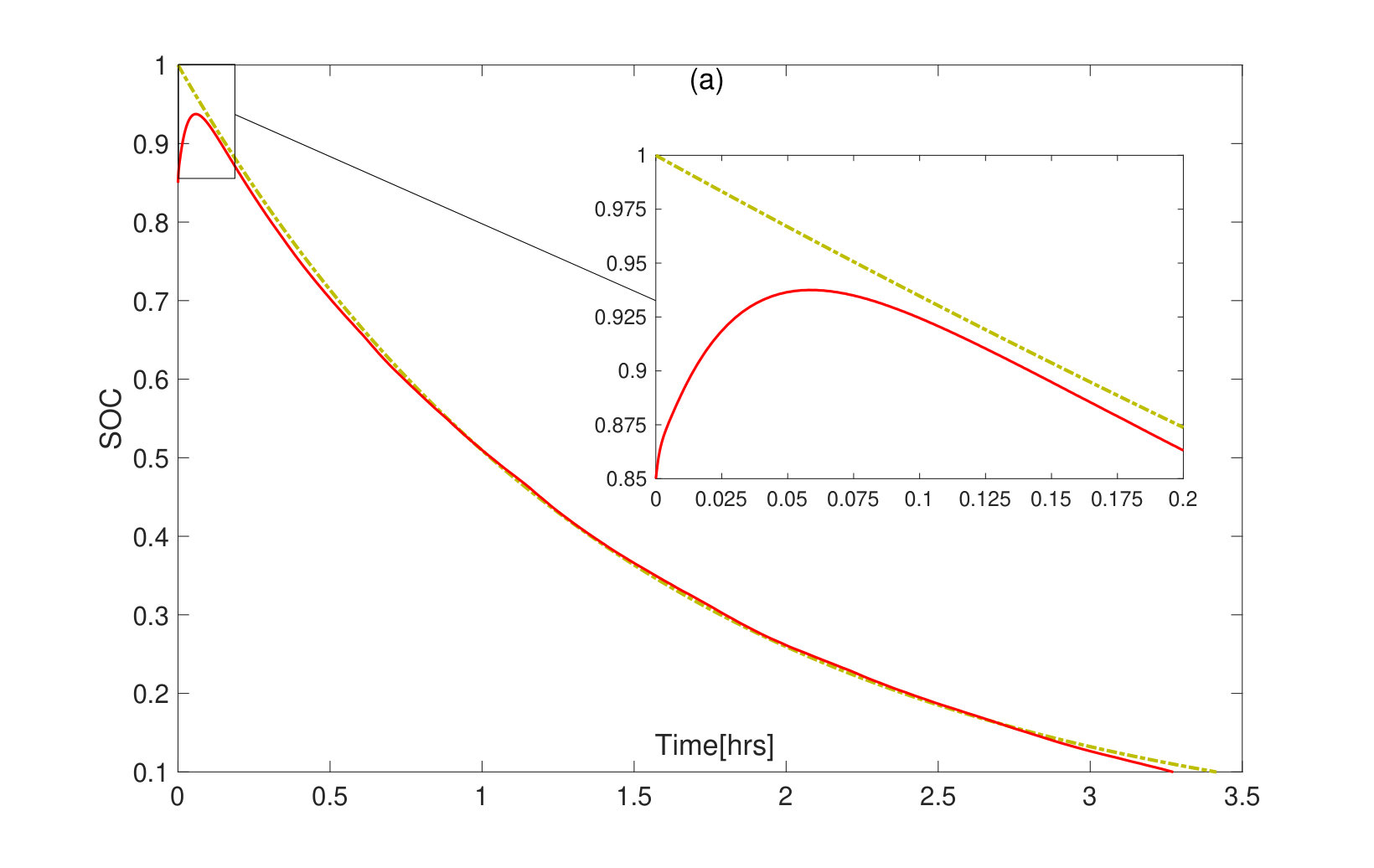 Figure 1
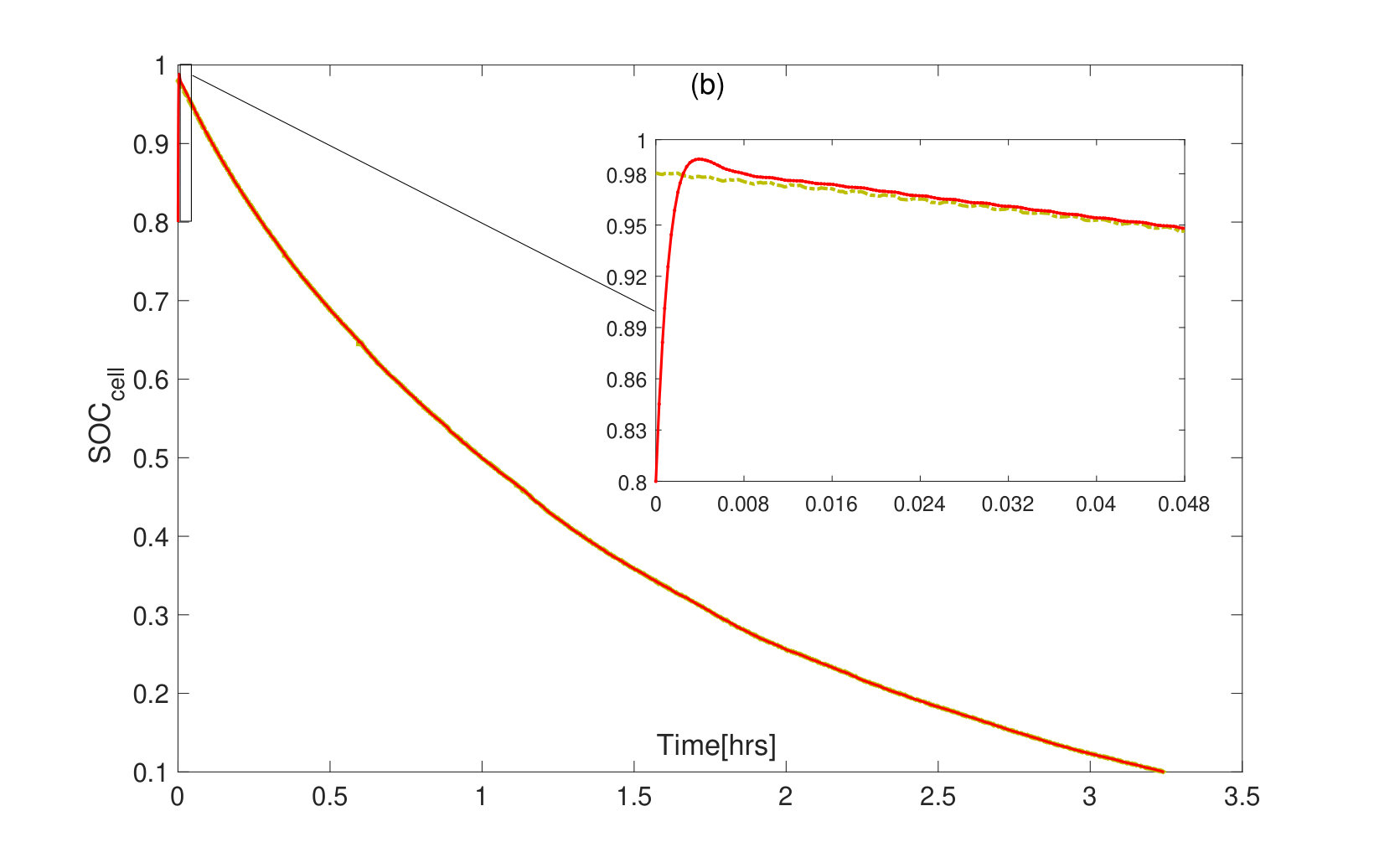 Figure 2
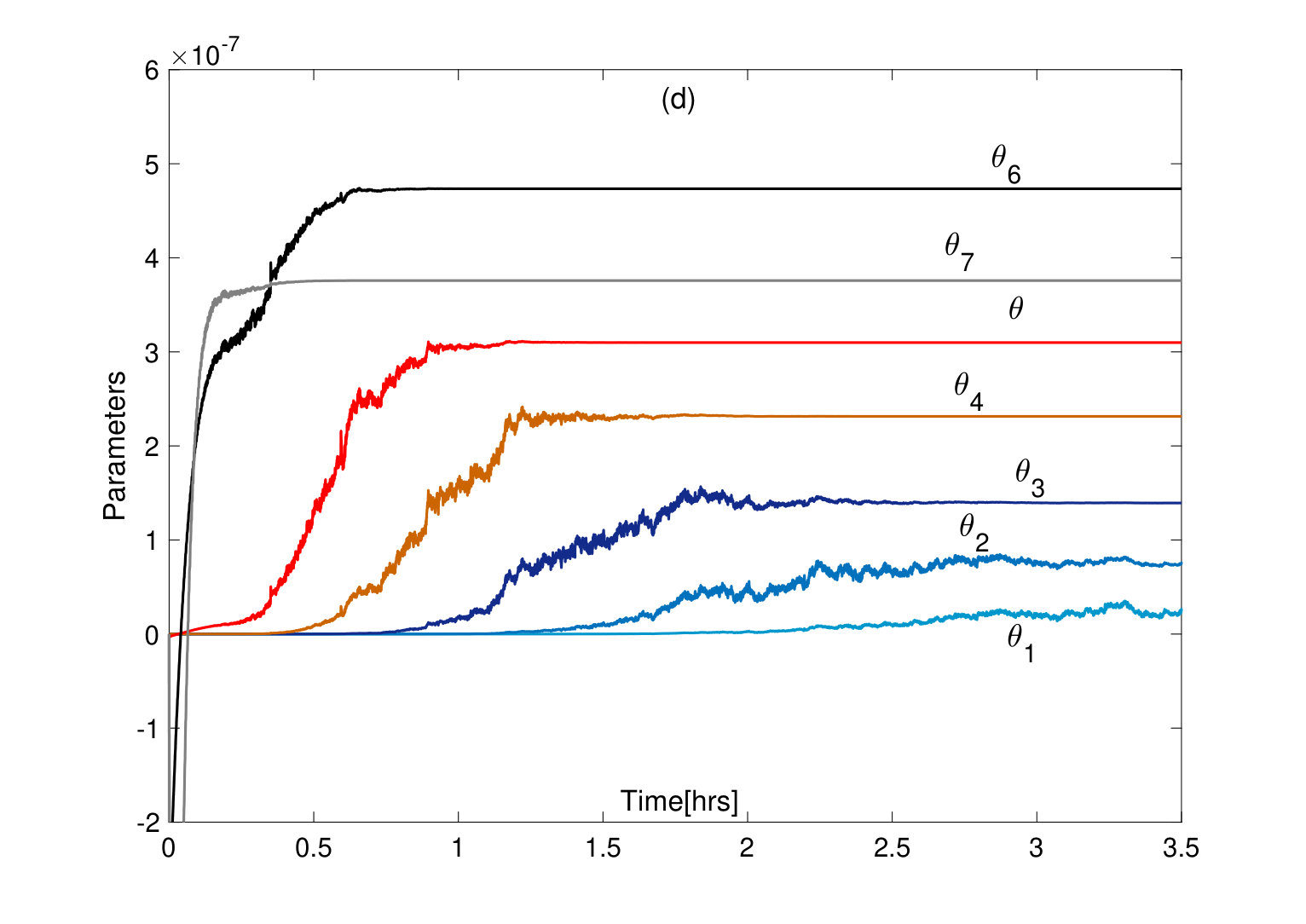 Figure 3
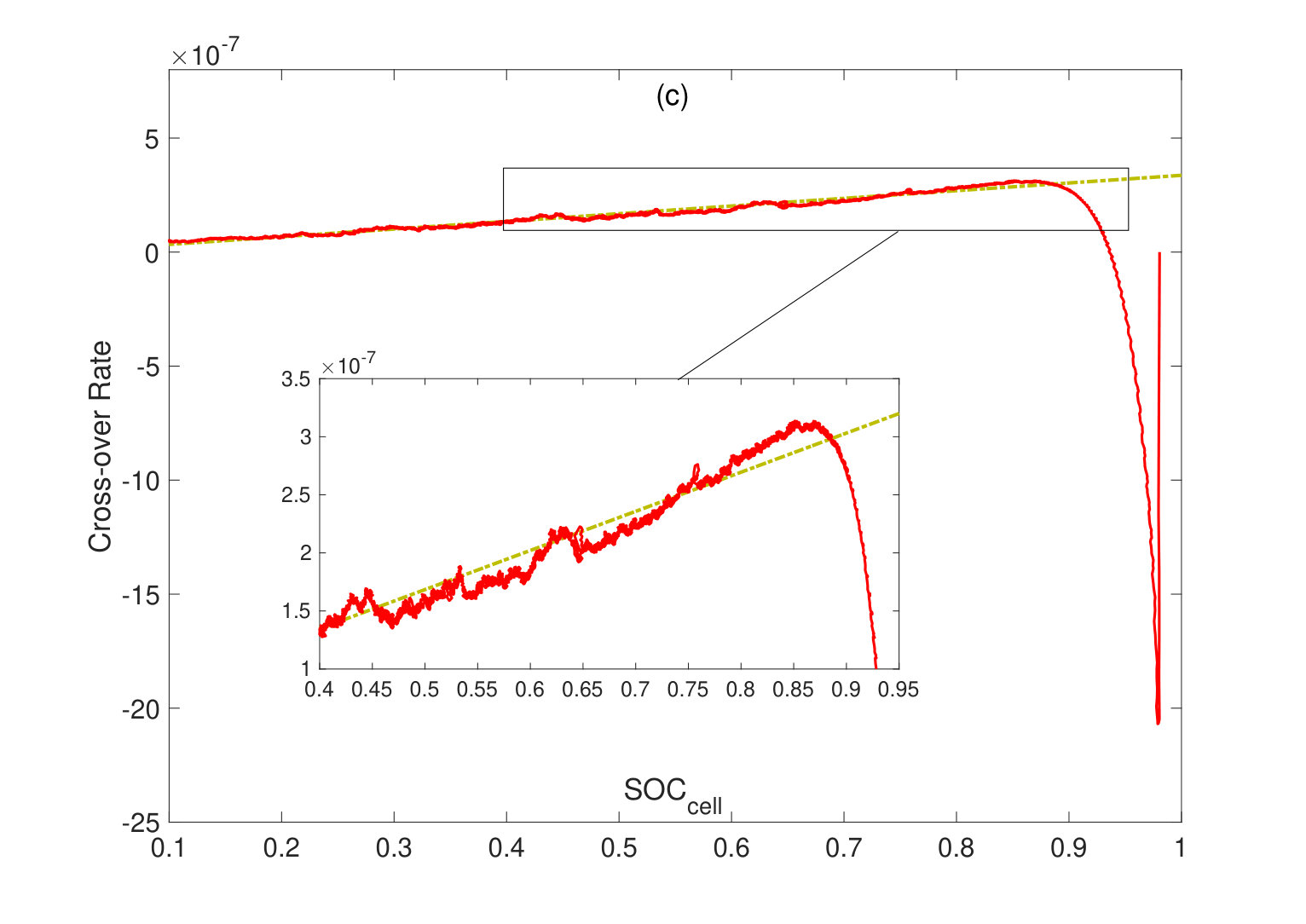 Figure 4
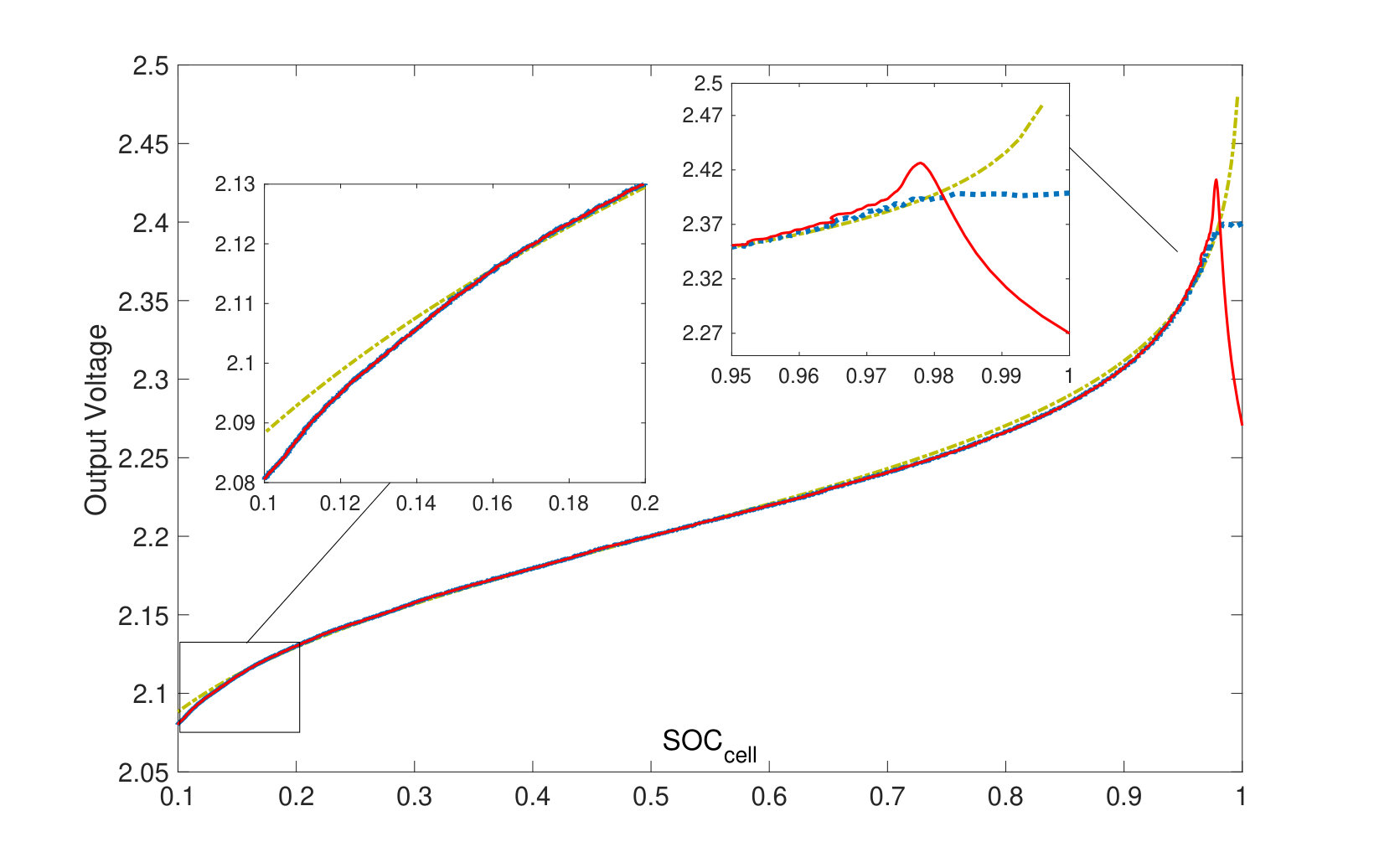 Figure 5
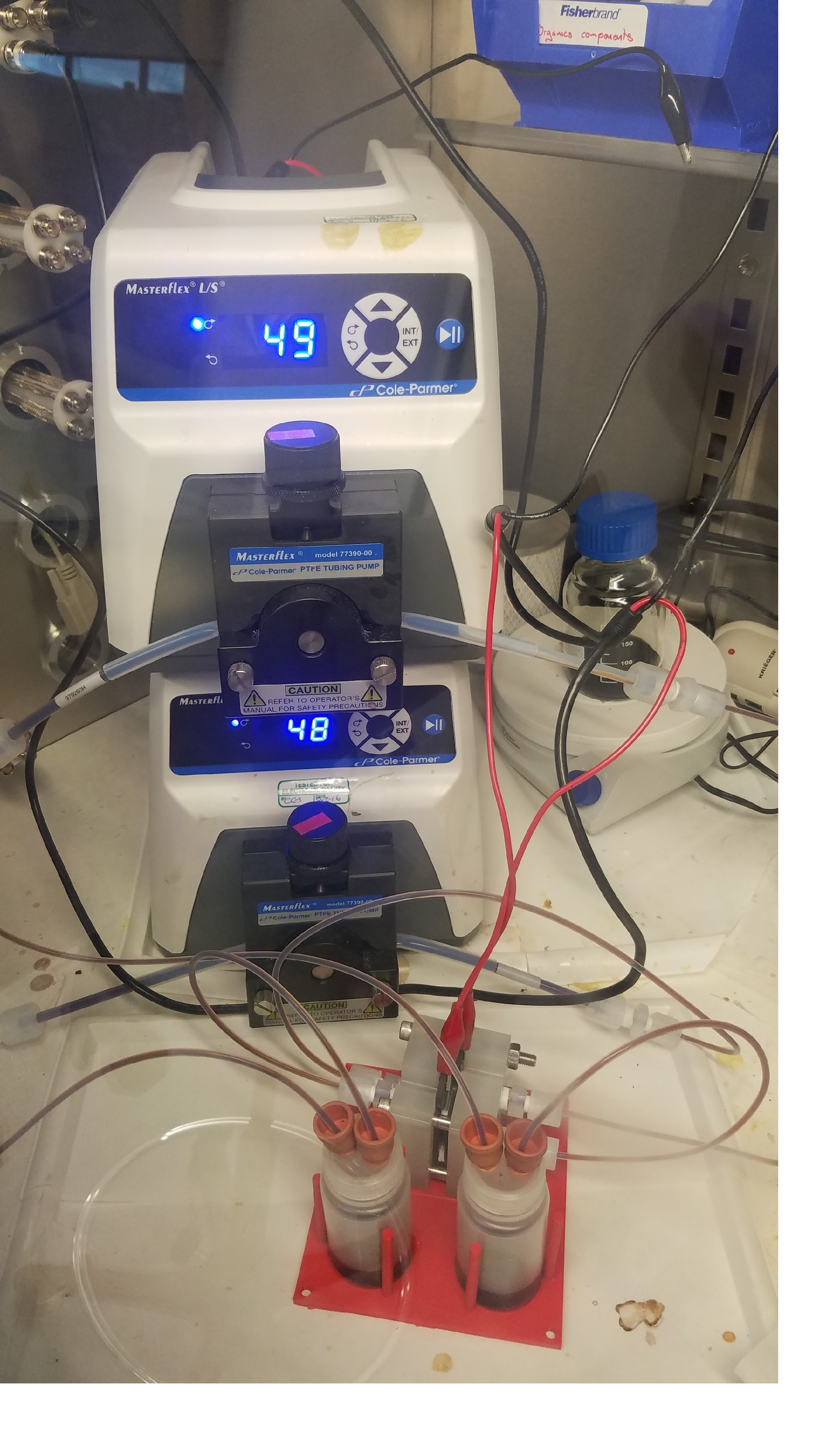 Figure 6
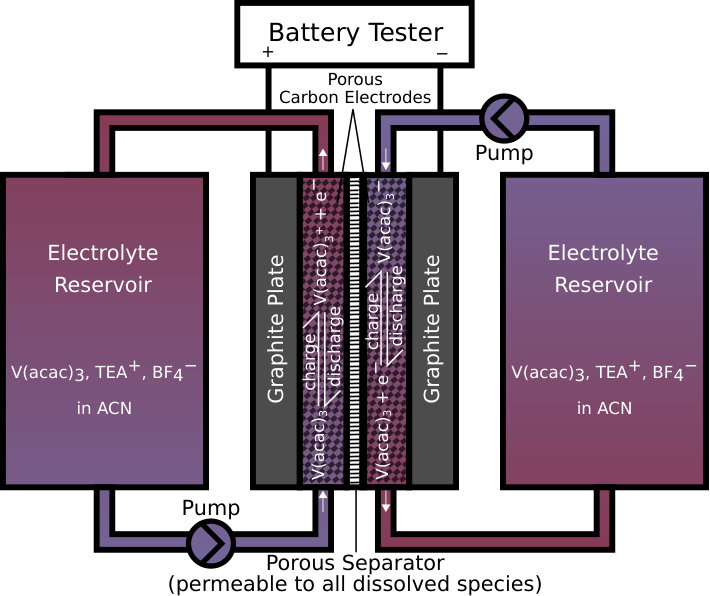 Figure 7
| Symbol | Description | Value | Units |
|---|---|---|---|
| Reservoir volume | 17.6 | mL | |
| Half-cell volume | 0.6985 | mL | |
| Initial concentration | mol/L | ||
| Volumetric flow rate | 9.0 | mL/min | |
| Porosity of carbon electrode | – | ||
| Equilibrium cell potential | V |
Peer Reviews
No public reviews on file for this paper yet. If you reviewed it on a platform where reviews are public (OpenReview, ICLR, NeurIPS, ICML), you can paste yours below so the community can read it here.
Code & Models
Videos
No videos yet. Explain this paper in a talk, walkthrough, or lecture? Add one.
An Adaptive Observer Design for Charge-State and Crossover Estimation in Disproportionation Redox Flow Batteries undergoing Self-Discharge
Pedro Ascencio, Kirk Smith, Charles W. Monroe∗, and David Howey∗ Pedro Ascencio ([email protected]), Kirk Smith ([email protected]), Prof. Charles W. Monroe ([email protected]) and Prof. David Howey ([email protected]) are with the Department of Engineering Science, University of Oxford, Oxford OX1 3PJ, United Kingdom. ∗Joint corresponding authors.
Abstract
This article considers a model formulation and an adaptive observer design for the simultaneous estimation of the state of charge and crossover flux in disproportionation redox flow batteries. This novel nonaqueous battery chemistry allows a simple isothermal lumped parameter model to be formulated. The transport of vanadium through the porous separator is a key unknown function of battery variables and it is approximated in the space of continuous functions. The state and parameter observer adaptation laws are derived using Lyapunov analysis applied to the estimation error, the stability and convergence of which are proved. Numerical values of observer gains are calculated by solving a polytopic linear matrix inequality and equality problem via convex optimization. The performance of this design is evaluated on a laboratory flow battery prototype, and it is shown that the crossover flux can be considered a linear function of state of charge for this battery configuration during self-discharge.
I Introduction
Although redox flow batteries (RFBs) have become a promising alternative for grid-scale energy storage, many fundamental challenges have to be addressed to make them competitive. A persistent issue is the crossover of active species through the separator, which leads to electrolyte imbalance and capacity fade [1, 2, 3, 4].
To improve the design and management of RFBs, several multi-physics models have been developed, in particular for all-vanadium chemistries [5, 6, 7]. The pioneering studies commonly assume perfect membrane selectivity. More realistic distributed-parameter models usually include, in both porous electrodes and across the separator, species, charge, and momentum conservation, mass transport by diffusion, convection and migration, ohmic losses, and interfacial reaction kinetics [8, 9, 10, 11]. Alternatively, simpler and computationally-tractable lumped parameter approaches have been proposed, accounting for ion transport across the membrane through standard pseudo-steady transport assumptions, which establish species fluxes proportional to their concentration differences [12, 13, 14, 15].
All of these models involve parameters that are commonly assumed known, by means of standard experiments or model fits (e.g. [16]). In particular, the separator crossover flux, typically taken to be governed by Fickian diffusion [17, 18, 19, 20], is analyzed to quantify side reactions that consume the active species and consequently cause capacity fade [21, 10]. These models do not fully address the more complex transport behaviour of the membrane, for example caused by solute/solute interactions or microstructural effects [22, 23]. The resulting unmodeled dynamics, in addition to the assumption of invariance of the model parameters with respect to battery internal states, leads to erroneous long-term predictions of performance.
To account for the physico-chemical properties of the battery and their changes, model parameters are typically obtained either via experimental methods, or least squares regression approaches (see discussion in [24, 25])111There may be identifiability challenges in accordance with the type/structure of model selected and excitation of the battery [26, 27].. Due to their simple practical implementation, real-time observer-based schemes for lumped parameter models of RFBs have also received attention [28, 29, 30, 31, 32]. These on-line identification methods are robust against uncertain initial conditions and can perform predictions of the main states of the battery based on a fixed set of parameters, or in some cases simultaneously provide their continuous estimation. In general, similar to the widespread on-line estimation methods for lithium-ion batteries [33], these approaches use electrical equivalent circuit models (ECMs) to emulate the RFB behaviour, and commonly perform the state/parameter estimation via the extended Kalman filter (EKF) [28, 34, 29, 32], amongst other model-based observer schemes [30, 31]. However, due to limitations in the formulation of the model, or convergence issues of the EKF, the crossover flux is not explicitly included in this type of approach.
This paper therefore addresses the challenge of simultaneous estimation of battery states and crossover flux for a novel type of nonaqueous RFB based on vanadium acetylacetonate disproportionation [35, 36]. This underlying chemistry allows a particularly simple isothermal lumped-parameter model to be employed for a disproportionation redox flow battery (DRFB). The model considers the state of charge in one half-cell and its associated electrolyte reservoir, alongside the crossover flux out of the half-cell through the separator. A general mathematical structure is used to express crossover flux, avoiding any assumptions particular to a given transport mechanism through the membrane.
To perform an on-line simultaneous estimation of the battery unknown states and parameters, an adaptive observer is designed via the standard Lyapunov second method of stability. From the analysis of the stability and convergence of the observer estimation error, a coupled Linear Matrix Inequalities and Equality (LMI-LME) problem is derived, which is numerically solved via convex optimization, using a polytopic approach.
I-A Notation
The space of all continuous functions on the domain into is denoted . The set of (symmetric) positive definite matrices of dimension is denoted , and is the identity matrix of dimension . Also, , , with being a real vector of dimension , and with being a real matrix, where denotes the largest eigenvalue; stands for the smallest eigenvalue.
II Modeling DRFBs
In a DRFB, identical liquid electrolyte solutions are stored in two separate reservoirs (see Figure 1), which contain a single metal electroactive species that can be both oxidized and reduced. When the battery is fully discharged, the active species in both reservoirs have identical oxidation states. The vanadium acetylacetonate () compound supports disproportionation electrochemistry.
A typical \ceV(acac)3 cell differs significantly from a traditional aqueous all-vanadium RFB. To access the high redox potential associated with \ceV(acac)3 disproportionation, one must use a nonaqueous solvent whose electrochemical stability window is wider than water. The reversible nature of the disproportionation reaction means that the battery is tolerant to crossover, which impacts coulombic efficiency but does not permanently degrade charge capacity. This in principle enables use of porous separators, rather than costly ion-exchange materials, and opens up a value tradeoff between the reactor capital cost and its coulombic efficiency [3, 35, 23, 36, 37].
Cyclic voltammetry experiments [35] reveal two main redox couples associated with
[TABLE]
with an equilibrium cell potential of 2.18 [V] [35, 23]. Crossover and the resulting self-discharge of the battery is due to the comproportionation of and to form [23].
II-A Isothermal Lumped Parameter Model
Due to the symmetry inherent to disproportionation chemistry, the model analysis can be carried out by considering only one side of the battery. Let be the amount of neutral species remaining in one reservoir. In isothermal operation, its rate of change is due to the current222positive current is considered a discharge process driven by the battery, and the crossover flow through the separator, namely
[TABLE]
where is Faraday’s constant and stands for some variables/states of the battery333This formulation has a particular lumped parameter validity in the discharge process, where there are no chemical and electric potential gradients and the typical resulting distributed dynamics from these phenomena are negligible [3].. Thus, for an initial amount of neutral in the prepared solution , considering the half-cell reactor volume to be negligible with respect to the overall volume in the reservoir , the state-of-charge of the overall system can be described by:
[TABLE]
with and , being the initial and overall concentration of neutral species in the battery, respectively.
Similarly to a continuous stirred tank reactor model, we apply conservation of mass to one half-cell only, and assuming perfect mixing, this leads to
[TABLE]
where represents the amount of neutral in the half-cell, represents the state of charge in the reactor (which may be different from the overall SOC), and stands for the volumetric flow rate in the reactor (considered measurable and equal in both chambers); and with accounting for the known porosity of the carbon electrode. Thus, from (2)-(3), the resulting space-state isothermal lumped parameter model for the DRFB is
[TABLE]
where stands for the measurable output voltage of the battery in accordance with the Nernst equation, is the universal gas constant, and accounts for voltage drops due to overpotentials, likely caused by kinetic and resistive phenomena ().
II-B General Approximate Model
Due to the nature of the electrochemical phenomena involved in RFBs, it can be considered that the unknown function for crossover flow , with a compact set, and a vector of battery variables, which could be states, inputs or outputs of the model, or even other measurements, independent of the model. Thus, using the universal approximation property of radial basis functions (RBFs) [38] or fuzzy inference systems [39] (in accordance with Stone-Weierstrass approximation theorem [40]),
[TABLE]
, with being a piece-wise constant vector of parameters and an arbitrarily small approximation error in accordance with number of bounded basis functions selected , where .
Let be the vector of battery states. Using the above-described approximation of the crossover function, (4)-(5) can be formulated as
[TABLE]
with444In terms of the observer design, matrices and are considered known. The inversion of is based on Condition 1, for small errors in the voltage measurements. and being unknown state and parameter initial conditions, respectively, being the measurable battery output, the measurement error, and for consecutive time intervals. This model, however, must satisfy the following conditions:
Condition 1**.**
*The functional structure of the term in (5) is such that the non-linear mapping is globally invertible555In particular, based on the strictly increasing (monotonic) property of the logarithm function, this is satisfied under open-circuit conditions (zero applied current and internal self-discharge) since , for .. In addition, due to errors in the measurements, the inversion of this mapping is such that in (7) is always bounded: , , for some . *
Condition 2**.**
*Crossover through the separator represents a slow degradation process such that in (7) there exist finite time intervals , and bounded parameters: , which lead to a bounded approximation error: in (6), , for some and . *
Condition 3**.**
*The vector of basis functions in (6) is always bounded: , and every vector function , with . In addition, this satisfies the Lipchitz condition with respect to the battery states/variables, namely , for some , and , . *
Condition 4**.**
The volumetric flow rate is a bounded measurable variable with and , so that its domain of operation is a compact set known in advance. Thus, the time-varying matrix in (4) can always be embedded in a polytope of matrices where
[TABLE]
, where denotes the convex hull (minimal convex polytope) **[41, 42*]**. *
III Adaptive Observer Design
For the approximate model (7), the observer design can be carried out using Lyapunov stability theory [43] applied to state and parameter estimation of nonlinear uncertain systems [44, 45, 46, 47, 48, 49, 50]. The aim is to achieve stability in the sense of uniformly ultimately bounded (UUB) convergence of the observer estimation error.
III-A Adaptive Observer
An adaptive Luenberger-type observer [51] for simultaneous estimation of battery state and parameters for the system (7) has the structure
[TABLE]
where , and are estimated states, parameters and outputs, respectively, and are estimated initial conditions, stands for the estimated states/variables of the battery chosen to model the crossover flux, denotes the output estimation error, is the observer linear feedback gain and is the adaptive compensation function to adapt parameters in (6) as the battery evolves.
III-B Observer Estimation Error
The dynamical error between the model (7) and the proposed observer (8) can be written as:
[TABLE]
where , and are estimation errors for states, parameters and outputs, respectively, and are initial error conditions; , and ; is the closed-loop compensated matrix.
Property 1**.**
Given the error dynamic (9), the expression
[TABLE]
represents part of the uncertain dynamic which cannot be compensated by the observer feedback gain nor adaptive function in (8), with , and for some . If Conditions 1-3 are satisfied, the following upper bound hold:
[TABLE]
*, where the boundedness of the basis functions selected plays a relevant role. *
III-C Observer Feedback Gain and Adaptation Law
Lemma 1**.**
Let be a bounded signal for some , and state-variables in (6) be such that for some . If Conditions 2-3 are satisfied and and are properly selected so that , then the following inequality holds:
[TABLE]
*where and with , , and . *
Proof.
Following similar arguments described in [52, 49], based on the binomial property , using bounds stated in Conditions 2-3 and considering , the selection of and such that yields
[TABLE]
Theorem 1**.**
Let Conditions 1-3 be satisfied by (7). If some positive constants and are chosen such that and the solution for the coupled Linear Matrix Inequality and Equality problem:
[TABLE]
exists for some , , (), and , , then the adaptive observer (8) using the feedback gain and adaptation function
[TABLE]
respectively, for some and , guarantees that the state estimation error and the parameter estimation error have a UUB dynamic **[43, pp. 168, 346]**.
Proof.
Let be a Lyapunov function candidate666For clarity, the time-dependence in most of the functions after this has been dropped.. Its time derivative along the trajectory (9) yields
[TABLE]
If the signal in (9) is decomposed by factor , then , where represents the uncertain term which can be compensated by the observer feedback term in (8). Thus, considering (12) so that , (14) can be written as
[TABLE]
Based on the LME condition in (11), substituting (13) into (15) and considering bounds from Conditions 1-3, the term can be upper bound by:
[TABLE]
where and . With respect to the term , by virtue of Lemma 1 for the positive constants , so that and Property 1, this leads to:
[TABLE]
Imposing the condition , for some , () and , a Riccati-like inequality is posed [52] which, by means of the Schur complement [41, 47], can be transformed to the constrained time-variant problem (11), convex in terms of the variables . If this problem is feasible, (17) can be written as:
[TABLE]
with , for some , so that (18) is negative defined outside of the ball set forth by the radii:
[TABLE]
Therefore, according to the standard Lyapunov theorem: and have a convergent dynamic which is UUB [46, 53, 43, 54].
Remark 1**.**
*Under the ideal situation of in ((10)), zero output measurement error () and , the equilibrium point is uniformly stable and can be proved on the basis of Barbalat’s lemma. However, as is well-known, the convergence of the parameters to their actual values is only guaranteed under persistent excitation conditions, namely , for some , and [54, 55, 49]. *
III-D Polytopic Design Approach
Considering that the volumetric flow rate in (4) satisfies Condition 4, the approximate model (7) admits a polytope description so that the time-variant nature of the LMI-LME problem (11) can be recast as a polytopic convex problem [49, 42, 50, 41]:
[TABLE]
with and vertices of the convex hull , ; degree of freedom to maximise the uncertainty allowed by the LMI-LME (11), for a given and provided its feasible solution , with . The constants and are selected to adjust norm bounds of matrices and , respectively.
Remark 2**.**
*In the crossover approximation (6) and consequent Lyapunov analysis of the observer estimation error (9), the basis functions are not necessarily dependent on the measurable output variable. If this is the case, for zero output measurement error (), the LMI-LME problem (11) can be solved via a polytopic formulation of the Strictly Positive Real (SPR) condition on the resulting error dynamic [54]. *
IV RFB Experimental Methods
The self-discharge experiment was performed inside an argon-filled glovebox (PureLab, Inert Technologies, USA) with 0.1 M vanadium acetylacetonate (V(acac)3, 98%, Strem, UK) as the active species dissolved in anhydrous acetonitrile (ACN, 99.8%, Sigma, UK) dried over molecular sieves (3 Å, Sigma-Aldrich, USA) with 0.2 M tetraethylammonium tetrafluoroborate (TEABF4, Sigma, 99%, UK) used as a supporting salt.
A flow cell designed for nonaqueous electrolytes was used with 2.20 cm2 of active area and reservoir volumes of 18 mL each. The flowrate of 9 mL/min corresponds to a reactor residence time of 4.65 s when using electrodes with a porosity of 0.87. Porous carbon felt electrodes (Alfa-Aesar, UK) compressed 50% to a final thickness of 3.17 mm were used in a flow-through configuration alongside impervious bipolar graphite plates (GraphiteStore, USA). A polypropylene porous separator (Celgard 4650, Celgard, USA) was used to separate the counter-current electrolyte flow inside the cell.
Peristaltic pumps (MasterFlex, Cole-Palmer, USA) circulated electrolyte through the half-cells using polytetrafluoroethylene (PTFE) tubing with perfluoroalkoxy alkane (PFA) compression fittings. Wetted materials in the system consisted entirely of PTFE, PFA, polypropylene, impervious graphite, and carbon felt. Figure 2 shows the operating experimental setup previously detailed.
V Experimental Results
The flow battery was cyled between 3 V and 1 V three times at 20 mA/cm2 with a battery tester (MACCOR 4000 series, USA) to precondition the system before charging to the 3 V voltage cutoff and letting the battery self-discharge at open circuit. Values of the experimental parameters in the model (4)-(5) are provided in Table I.
For comparison and validation purposes, the following linear function for the crossover term in (4) has been considered:
[TABLE]
where L/min is the mass-transfer coefficient, a proposed constant which describes the expected linear relationship between and . This value for was calculated by fitting the model, (4)-(5), including (23), to the experimental data assuming an initial condition of 100% at the beginning of the experiment and 50% when the output voltage of the battery reached the equilibrium voltage of 2.2 V. Figure 3 illustrates the model-predicted internal battery states and mass-transfer term, respectively (dash-dot lines). Figure 4 depicts the model voltage output as a function of the predicted , which is mostly in good agreement with its measured value (dotted line), with the exception of the extreme zones of , where unmodeled dynamics in the argument of the Nernst equation (5) are expected to be present.
Regarding the proposed on-line adaptive observer (8), and have been selected as its initial conditions. For the crossover approximation (6), , and seven () normalized radial basis functions, uniformly centred in with variance , have been considered. With respect to the observer gains in (12)-(13), and have been selected to obtain to a slow parameter adaptation. The numerical solution of the polytopic LMI-LME problem (20), considering , , , and , has been obtained via the Yalmip toolbox for Matlab [56] using the SDP package part of the Mosek solver [57]. More details about its Matlab code implementation and data can be found in [58]. The simultaneous estimation of the state-of-charge and crossover flux is shown in Figure 3 (solid lines), achieving similar behaviour to the aforementioned model (4)-(5)-(23). In particular, the estimated crossover flux, whose parameter convergence to stationary values is shown in 3(d), is in agreement with the linear relationship proposed in (23). Figure 4, solid lines, illustrates the accurate on-line predicted output voltage based on the estimated states provided by the adaptive observer.
VI Concluding Remarks
In this article an isothermal lumped model of a disproportionation redox flow battery and a related adaptive observer design have been presented. The design of the observer linear feedback gain and parameter adaptation law is based on Lyapunov stability theory and carried out by solving a polytopic LMI-LME problem. This provides a systematic methodology where the UUB convergence of state and parameter estimation errors is guaranteed. The crossover term has been approximated via radial basis functions, enabling continual estimation of the crossover flux as the battery discharges, which can then can be used predictively. A linear relationship between crossover flux and , captured by mass-transfer coefficient , is typically built into simple lumped-parameter RFB models, which assume pseudo-steady diffusion across a planar separator. In the adaptive observer, this relationship is not assumed, yet the observer reveals this linear dependence, as seen in Figure 3. Data from a vanadium acetylacetonate DRFB undergoing self-discharge was analyzed, demonstrating the observer’s capability to estimate state-of-charge and crossover simultaneously.
VII Acknowledgments
This work was carried out with funding support received from the Faraday Institution (faraday.ac.uk; EP/S003053/1), grant number FIRG003.
The reference list from the paper itself. Each links out to its DOI / PubMed record.
- 1[1] Puiki Leung, Xiaohong Li, Carlos Ponce de León, Leonard Berlouis, C. T. John Low, and Frank C. Walsh. Progress in redox flow batteries, remaining challenges and their applications in energy storage. RSC Adv. , 2:10125–10156, 2012.
- 2[2] Massimo Guarnieri, Paolo Mattavelli, Giovanni Petrone, and Giovanni Spagnuolo. Vanadium redox flow batteries, potentials and challenges of a emerging storage technology. IEEE Industrial Electronics Magazine , 10(4):20–31, 2016.
- 3[3] Rebecca A. Potash, James R. Mc Kone, Sean Conte, and Héctor D. Abruña. On the benefits of a symmetric redox flow battery. Journal of The Electrochemical Society , 163(3):A 338–A 344, 2016.
- 4[4] Xianfeng Li, Huamin Zhang, Zhensheng Mai, Hongzhang Zhang, and Ivo Vankelecom. Ion exchange membranes for vanadium redox flow battery (vrb) applications. Energy Environ. Sci. , 4:1147–1160, 2011.
- 5[5] Adam Z. Weber, Matthew M. Mench, Jeremy P. Meyers, Philip N. Ross, Jeffrey T. Gostick, and Qinghua Liu. Redox flow batteries: a review. Journal of Applied Electrochemistry , 41(10):1137–1164, Sep 2011.
- 6[6] Q. Xu and T.S. Zhao. Fundamental models for flow batteries. Progress in Energy and Combustion Science , 49:40–58, 2015.
- 7[7] Q. Zheng, X. Li, Y. Cheng, G. Ning, F. Xing, and F. Zhang. Development and perspective in vanadium flow battery modeling. Applied Energy , 132:254–266, 2014.
- 8[8] A.A. Shah, H. Al-Fetlawi, and F.C. Walsh. Dynamic modelling of hydrogen evolution effects in the all-vanadium redox flow battery. Electrochimica Acta , 55(3):1125 – 1139, 2010.
