Relatively bounded perturbations of J-non-negative operators
Friedrich Philipp

TL;DR
This paper advances perturbation theory for J-non-negative operators, providing improved spectral bounds and applying these results to indefinite Sturm-Liouville problems with L^p potentials.
Contribution
It introduces new perturbation results for J-non-negative operators and spectral enclosures for diagonally dominant J-self-adjoint matrices.
Findings
Enhanced bounds on non-real eigenvalues of indefinite Sturm-Liouville operators
Spectral enclosures for diagonally dominant J-self-adjoint matrices
Improved perturbation theorems for J-non-negative operators
Abstract
We improve known perturbation results for self-adjoint operators in Hilbert spaces and prove spectral enclosures for diagonally dominant -self-adjoint operator matrices. These are used in the proof of the central result, a perturbation theorem for -non-negative operators. The results are applied to singular indefinite Sturm-Liouville operators with -potentials. Known bounds on the non-real eigenvalues of such operators are improved.
Click any figure to enlarge with its caption.
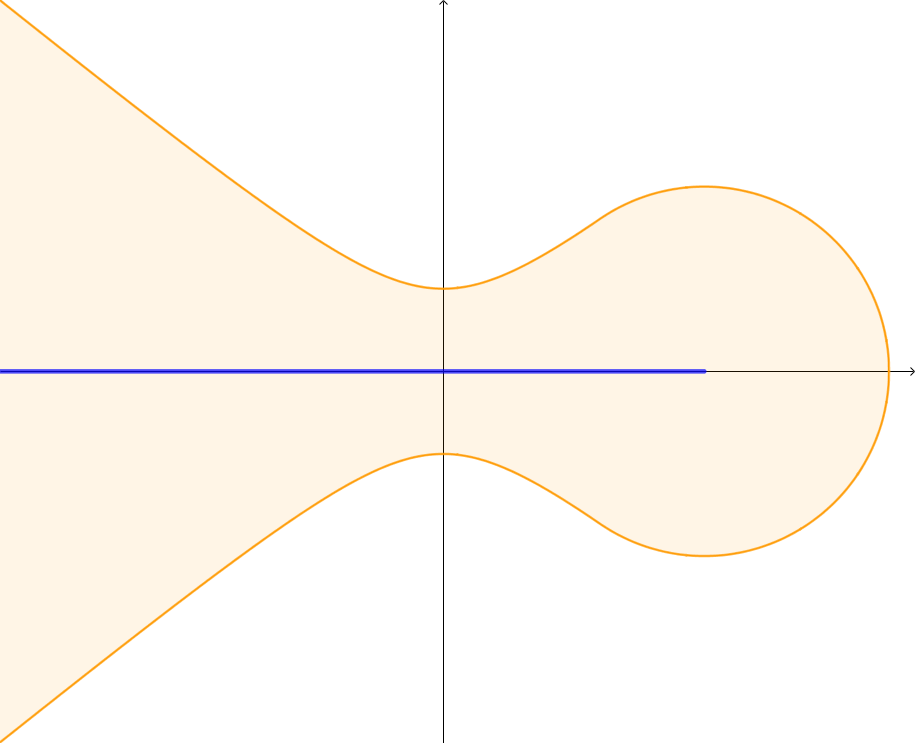 Figure 1
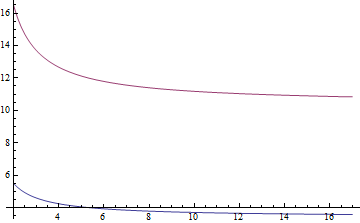 Figure 2
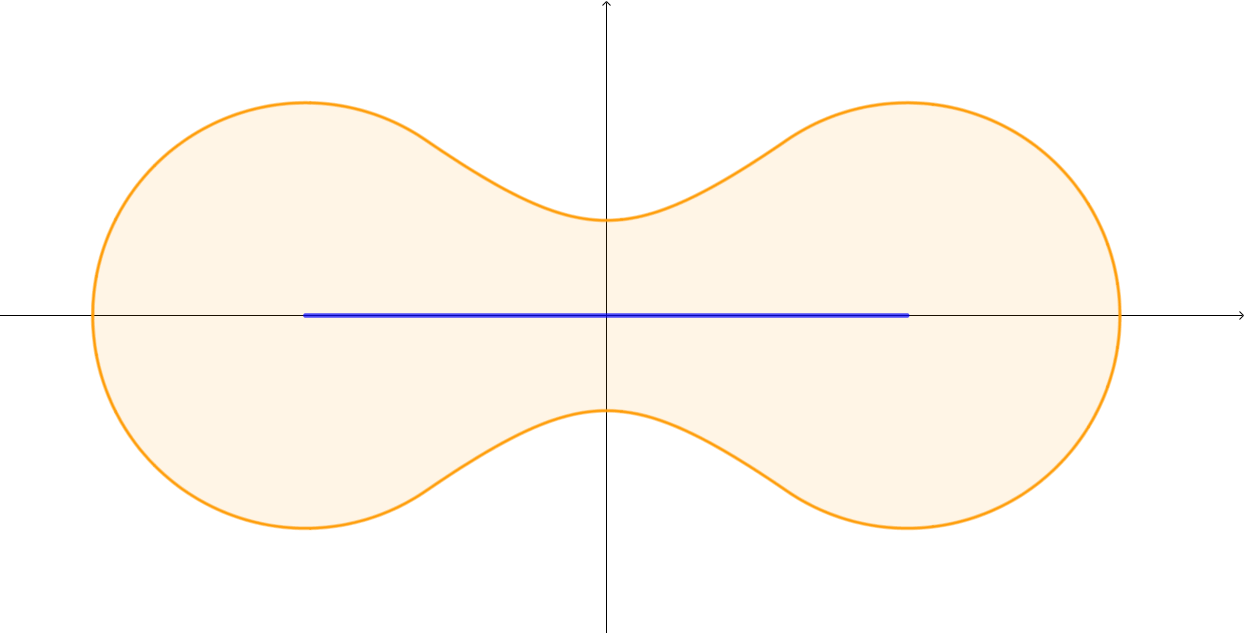 Figure 3
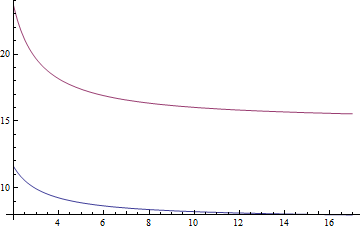 Figure 4
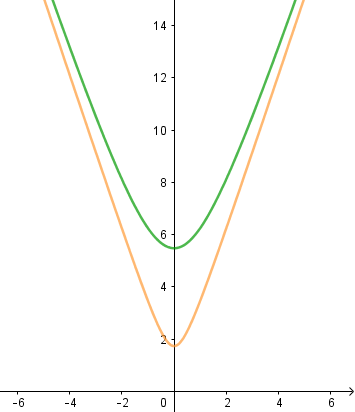 Figure 5
Peer Reviews
No public reviews on file for this paper yet. If you reviewed it on a platform where reviews are public (OpenReview, ICLR, NeurIPS, ICML), you can paste yours below so the community can read it here.
Videos
No videos yet. Explain this paper in a talk, walkthrough, or lecture? Add one.
Taxonomy
TopicsSpectral Theory in Mathematical Physics · Matrix Theory and Algorithms · Quantum chaos and dynamical systems
Relatively bounded perturbations of J-non-negative operators
Friedrich Philipp
F. Philipp: Technische Universität Ilmemau, Institute of Mathematics, Germany
[email protected] www.tu-ilmenau.de/obc/team/friedrich-philipp
Abstract.
We improve known perturbation results for self-adjoint operators in Hilbert spaces and prove spectral enclosures for diagonally dominant -self-adjoint operator matrices. These are used in the proof of the central result, a perturbation theorem for -non-negative operators. The results are applied to singular indefinite Sturm-Liouville operators with -potentials. Known bounds on the non-real eigenvalues of such operators are improved.
Key words and phrases:
-self-adjoint operator, -non-negative operator, relatively bounded perturbation, spectral enclosure
2010 Mathematics Subject Classification:
Primary 47B50, 47A55; Secondary 47E05, 34L15
1. Introduction
-self-adjoint operators are special generally non-self-adjoint operators in Hilbert spaces; they appear in various applications in mathematics and mathematical physics such as the Klein-Gordon equation [17, 18, 24, 40, 41] and other types of wave equations [14, 21, 30, 31], PT-symmetry in quantum mechanics [8, 32, 42, 43, 46] & [3, Sec. 7], and self-adjoint analytic operator functions [35, 37, 38, 39], just to name a few.
They also occur naturally as realizations of indefinite Sturm-Liouville expressions [5, 6, 12, 13, 29, 45, 48]. As a motivation, let us consider such an indefinite Sturm-Liouville operator:
[TABLE]
with a real-valued potential , , defined on the maximal domain
[TABLE]
It is well known that the non-real spectrum of is bounded and consists of isolated eigenvalues, see, e.g., [5, 7], and it is of particular interest to find bounds on these eigenvalues.
The first result in this direction has been established in [6] for . Later, it was refined and immensely generalized to unbounded potentials and a large class of weights in [7]. Recently, the bound on the imaginary part from [7] could be further improved in [9]. The methods in [7] and [9], however, differ significantly from those used in [6]. In fact, while the authors in [7, 9] work explicitly with the differential expressions and operators, the result in [6] follows from an abstract theorem on bounded perturbations of -non-negative operators. The idea is simple: we write , where
[TABLE]
and is the operator of multiplication with . If further denotes multiplication with , then and is -non-negative, i.e., is self-adjoint and non-negative. Hence, the abstract theorem can be applied.
Here, we proceed in a similar way as in [6]: we first prove an abstract theorem on relatively bounded perturbations of -non-negative operators and apply it to the above situation. In this case, we require with since these potentials lead to relatively bounded perturbations of . As a consequence, we obtain bounds on the non-real eigenvalues of (see Theorem 6.2); these are of the same flavor as those in [7], but surprisingly improve them significantly in the case (see Figure 5).
Let us now touch upon the abstract situation in more detail. For this, let be a self-adjoint involution on a Hilbert space , i.e., . A linear operator in is called -self-adjoint if the composition is a self-adjoint operator in . In contrast to self-adjoint operators, the spectrum of a -self-adjoint operator is not necessarily real. The only restriction, in general, is its symmetry with respect to the real axis and it is not hard to construct -self-adjoint operators whose spectrum covers the entire complex plane (see, e.g., Example 5.4) or is empty. It is therefore reasonable to consider special classes of -self-adjoint operators—e.g., (locally) definitizable operators [26, 34], or, more specific, -non-negative operators. A -self-adjoint operator with non-empty resolvent set is called -non-negative if . It is well known [34] that a -non-negative operator has real spectrum and possesses a spectral function on with the possible singularities [math] and .
Several types of perturbations of -non-negative operators have already been investigated in numerous works. Here, we only mention [1, 4, 23, 27] for compact and finite-rank perturbations, [2, 3, 6, 22] for bounded perturbations and [25] for form-bounded perturbations. The main result in [6] states that a bounded perturbation of a -non-negative operator which satisfies a certain regularity condition can be spectrally decomposed into a bounded operator and a -non-negative operator. In particular, the non-real spectrum of the perturbed operator is contained in a compact set and bounds on were given explicitly. We call such operators -non-negative over (cf. Definition 2.2).
Here, our focus lies on relatively bounded perturbations of the form , where is -non-negative and is both -symmetric and -bounded. Our main result, Theorem 5.2, generalizes that of [6] and shows that whenever the -bound of is sufficiently small, then the operator is -non-negative over with a compact set which is specified in terms of the relative bounds of .
A brief outline of the paper is as follows. First of all, we provide the necessary notions and definitions in Section 2. In Section 3 we consider a self-adjoint operator in a Hilbert space and an -bounded operator with -bound less than one and provide enclosures for the set
[TABLE]
As a by-product, this result yields an improvement of spectral enclosures from [10] for the operator (cf. Corollary 3.5 and Remark 3.6). However, the main reason for considering the set is Theorem 4.1 in Section 4 which states in particular that the non-real spectrum of -self-adjoint diagonally dominant block operator matrices of the form
[TABLE]
is contained in if both the -bound of and the -bound of are less than one. It is now a key observation that our main object of investigation – the operator – can be written in the form 1.3. A renormalization procedure then allows us to derive the main result, Theorem 5.2. In Section 6 we apply Theorem 5.2 to singular indefinite Sturm-Liouville operators.
Notation: Throughout, and stand for Hilbert spaces. In this paper, whenever we write , we mean that is a linear operator mapping from to , where does not necessarily coincide with nor do we assume that it is dense in . The space of all bounded operators with is denoted by . As usual, we set . The spectrum of an operator in is denoted by , its resolvent set by . The set of eigenvalues of is called the point spectrum of and is denoted by . The approximate point spectrum of is the set of all for which there exists a sequence such that for all and as . Throughout, for a set and we use the notation . For we also write . These sets are intentionally defined to be closed.
2. Preliminaries
Let be a self-adjoint involution, i.e., . The operator induces an (in general indefinite) inner product on :
[TABLE]
An operator in is called -self-adjoint (-symmetric) if is self-adjoint (symmetric, resp.). Equivalently, is self-adjoint (resp. symmetric) with respect to the inner product . The spectrum of a -self-adjoint operator is symmetric with respect to , that is, . However, more cannot be said, in general. It is easy to construct examples of -self-adjoint operators whose spectrum is the entire complex plane (see, e.g., Example 5.4 below). Therefore, the literature usually focusses on special classes of -self-adjoint operators or on local spectral properties as the spectral points of positive and negative type which we shall explain next.
Let be a -self-adjoint operator. The subset () of consists of the points for which each sequence with for all and as satisfies
[TABLE]
A point () is called a spectral point of positive (negative) type of and a set is said to be of positive (negative) type with respect to if (, resp.). The notion of the spectral points of positive and negative type was introduced in [36] (see also [33]). It is immediate that implies that for each , , we have . Hence, is a -positive subspace. In fact, much more holds (see [36]): We have and, if , then
- (1)
there exists an open (complex) neighborhood of such that each point in is either contained in or in . In particular, ; 2. (2)
there exists a local spectral function111For a definition of this notion we refer to, e.g., [44, Definition 2.2]. on such that for each Borel set with the projection is -self-adjoint and is a Hilbert space.
Roughly speaking, the part of the operator with spectrum in is a self-adjoint operator in a Hilbert space. Similar statements hold for the spectral points of negative type.
Definition 2.1**.**
A -self-adjoint operator in is said to be -non-negative if and , that is, for (equivalently, for ). The operator is said to be uniformly -positive if it is -non-negative and , i.e., .
It is well known that the spectrum of a -non-negative operator is real and that as well as , see, e.g., [34]. Consequently, possesses a spectral function on with the possible singularities [math] and . The projection is then defined for all Borel sets for which and . The points [math] and are called the critical points of . If both and are bounded as , the point [math] is said to be a regular critical point of . In this case, the spectral projection also exists if . A similar statement holds for the point . In the sequel, we agree on calling a -non-negative operator regular if its critical points [math] and both are regular.
As was shown in [6], the perturbation of a regular -non-negative operator with a bounded -self-adjoint operator leads to a -self-adjoint operator whose non-real spectrum is bounded and for which there exist such that is of positive type and is of negative type with respect to . Hence, the perturbed operator exhibits the same good spectral properties as a -non-negative operator in the exterior of a compact set. We call such an operator -non-negative in a neighborhood of . The following definition makes this more precise. Here, for a set we define . By we denote the open upper complex half-plane. We also set and .
Definition 2.2**.**
Let be a compact set, , such that is simply connected. A -self-adjoint operator in is said to be -non-negative over if the following conditions are satisfied:
- (i)
. 2. (ii)
. 3. (iii)
There exist and a compact set such that for we have
[TABLE]
The relation (2.1) means that the growth of the resolvent of at is of order at most . The order is if the fraction in (2.1) can be replaced by .
Remark 2.3**.**
Note that the notion of -non-negativity over does not depend on explicitly, but only on the inner product . That is, if is an equivalent Hilbert space scalar product on such that for some -self-adjoint involution , then an operator in is -non-negative over in if and only if it is -non-negative over in .
Due to (ii) a -self-adjoint operator that is -non-negative over possesses a (local) spectral function on with a possible singularity at . We say that is regular at if is not a singularity of . By [6, Thm. 2.6 and Prop. 2.3] this is the case if and only if there exists a uniformly -positive operator in such that .
In this paper we investigate relatively bounded perturbations of regular -non-negative operators. Recall that an operator is called relatively bounded with respect to an operator (or simply -bounded) if and
[TABLE]
where . The infimum of all possible in (2.2) is called the -bound of . It is often convenient to assume that the -bound of is less than one. Then, if is closed, also is closed (see [28, Thm. IV.1.1]) and if is self-adjoint and symmetric, the sum is self-adjoint. The latter statement is known as the Kato-Rellich theorem (see, e.g., [28, Thm. V.4.3]).
3. Perturbations of self-adjoint operators
In this section, always denotes a self-adjoint operator in a Hilbert space and is an -bounded operator, where is another Hilbert space. We note that in this situation we have
[TABLE]
whenever . The following set will play a crucial role in our spectral estimates in the subsequent sections:
[TABLE]
Although its proof is elementary it seems that the following result is new.
Lemma 3.1**.**
Let and be Hilbert spaces, let be a self-adjoint operator in , and let be such that
[TABLE]
where , . Then
[TABLE]
For we have
[TABLE]
Proof.
Let . Then
[TABLE]
If , this implies
[TABLE]
where . Therefore and due to , for it is sufficient that for each . But the latter is just equivalent to not being contained in the right-hand side of (3.2). ∎
Corollary 3.2**.**
Under the assumptions of Lemma 3.1 we have
[TABLE]
Proof.
We prove that is contained in the right-hand side of (3.4) for arbitrary . For this, let , i.e., , which implies
[TABLE]
Indeed, the last inequality follows from . ∎
Remark 3.3**.**
Let and be as in Lemma 3.1 and . Let us consider the global behaviour of the function
[TABLE]
First of all, we always have . If , then has no local minima but a global maximum at . Let , , and set
[TABLE]
Then we have , and has a global maximum and a global minimum at
[TABLE]
respectively. Let , . If , then has no local maxima but a global minimum at zero. If , then has no local minima but a global maximum at zero. In case , we have .
Corollary 3.4**.**
Let and be Hilbert spaces, let be a self-adjoint operator in which is bounded from above by , and let be such that
[TABLE]
where , . Then
[TABLE]
If and , then
[TABLE]
Proof.
We only have to prove the last claim, which follows from (3.3) if the function from (3.5) does not exceed the value on . Hence, let and . Then also . Assume that . Then , and Remark 3.3 implies that for all . Let , . Then is equivalent to with as defined in (3.6). Note that and that . Hence for all . For and the claim follows by continuity of on , which is an immediate consequence of T(S-\lambda)^{-1}-T(S-\mu)^{-1}=(\lambda-\mu)\big{[}T(S-\lambda)^{-1}\big{]}(S-\mu)^{-1}. ∎
A similar result holds for the case where is bounded from below. It follows from Corollary 3.4 by considering .
Let us briefly consider the situation where and thus . If and , then
[TABLE]
implies that also . By contraposition, . This immediately leads to the following corollary.
Corollary 3.5**.**
Let be a Hilbert space, let be a self-adjoint operator in , and let be such that
[TABLE]
where , . Then
[TABLE]
Remark 3.6**.**
Corollary 3.5 improves and refines the first two parts of Theorem 2.1 in [10]. The general spectral inclusion in [10] is
[TABLE]
In the case where the spectral enclosure (3.8) is obviously strictly sharper. However, both boundary curves have the same asymptotes so that the improvement of the spectral inclusion only takes effect for ‘not too large’ (see Figure 2 below). In the second part of [10, Thm. 2.1] it was proved that if is a spectral gap of such that , then . This now follows immediately from the first enclosure in (3.8).
Example 3.7**.**
We consider the massless Dirac operator on with Hermitian matrices as in [10, Section 5.1]. Its domain is given by . As in [10] one shows that for a potential , , one has
[TABLE]
for every , where . By Corollary 3.5, we have
[TABLE]
The envelope of this set in the first quadrant is the curve , , where
[TABLE]
The spectrum of is thus bounded by this curve. Figure 3 shows the curve and the spectral inclusion from [10].
4. Spectral properties of diagonally dominant J-self-adjoint operator matrices
In this section we consider a Hilbert space (where denotes the orthogonal sum of subspaces) and operator matrices of the form
[TABLE]
where and are self-adjoint operators in the Hilbert spaces and , respectively, and is -bounded such that also is -bounded. In particular, and . Such operator matrices are called diagonally dominant (cf. [47, Def. 2.2.1]). It is clear that the operator is -symmetric, where is the involution operator
[TABLE]
which induces the indefinite inner product
[TABLE]
The following theorem is essentially a generalization of [19, Thm. 4.3], where the operator was assumed to be bounded.
Theorem 4.1**.**
Assume that both the -bound of and the -bound of are less than one. Then is -self-adjoint,
[TABLE]
and
- (i)
* is of positive type with respect to .* 2. (ii)
* is of negative type with respect to .*
Moreover, if , setting
[TABLE]
we have
[TABLE]
Proof.
By assumption, there exist constants , , such that
[TABLE]
and
[TABLE]
Define the operators
[TABLE]
with and . Obviously, is -self-adjoint and is -symmetric. Also, for with we have
[TABLE]
Hence, is -bounded with -bound less than one. By the Kato-Rellich theorem, is self-adjoint, which means that is -self-adjoint.
For the proof of (4.2) let such that (i.e., ). We have to show that . For this, we make use of the first Schur complement of which, for , is defined by
[TABLE]
We shall exploit the fact that follows if is boundedly invertible (see, e.g., [47, Thm. 2.3.3]). Since , the operator is -bounded with -bound . Hence, is closed (see [28, Thm. IV.1.1]). Now, for we have (cf. (3.1))
[TABLE]
From this it easily follows that is closed for every . We also have . Therefore, for , ,
[TABLE]
But . Hence, if (for a similar argument applies), the numerical range of is contained in the half-plane , where . Hence, for every and , ,
[TABLE]
This implies that for each with the operator is injective and has closed range. Let us now prove that there exists such that . Then it follows (cf. [28, Ch. IV.5.6]) that and thus . Set . Then
[TABLE]
By Lemma 3.1 the bounded operator has norm less than one for sufficiently large . This shows that is boundedly invertible for such .
Above we have concluded from that . If , one obtains by means of analogous arguments, using the second Schur complement .
Let us now prove the estimate (4.3) for the resolvent of . For this, let such that as above. By [47, Thm. 2.3.3] we have
[TABLE]
Denote the last factor by . Then
[TABLE]
Note that, since is normal, we have
[TABLE]
Therefore, for the first factor in (4.5) we have the same estimate as for the last. For the middle factor in (4.5) we obtain from (4.4) with that
[TABLE]
and therefore (4.3) in the case follows. The estimate for the other case can be derived similarly by using the second Schur complement.
In the following last step of this proof we shall show that (i) holds true. The proof of (ii) follows analogous lines. Let such that . We have to show that . For this, assume that is a sequence with and as . Let with . Then
[TABLE]
in . Applying gives (cf. (3.1))
[TABLE]
Set , . Since both and are bounded sequences, we conclude that as and so
[TABLE]
that is, for sufficiently large. Therefore, we obtain
[TABLE]
and thus, indeed, . ∎
Although (4.2) in Theorem 4.1 is a fairly accurate estimate on the non-real spectrum, it requires complete knowledge about the norms of and for all . However, by making use of Lemma 3.1 we immediately obtain the following theorem, where the spectral inclusion is expressed in terms of the spectra of and instead of parameter-dependent norms.
Theorem 4.2**.**
Consider the operator matrix in (4.1) with self-adjoint diagonal entries and and assume that
[TABLE]
and
[TABLE]
where , . Then
[TABLE]
Moreover, setting , we have
- (i)
* is of positive type with respect to .* 2. (ii)
* is of negative type with respect to .*
Remark 4.3**.**
If is bounded (i.e., and ), Theorem 4.2 implies that , that is of positive type and is of negative type with respect to . This result was already obtained in [6, Thm. 3.5] and more general spectral enclosures for have recently been found in [19]. Analogous methods might also lead to more general enclosures in the relatively bounded case. However, to avoid technical details we shall not touch this topic here.
For a short discussion of (4.6), assume for simplicity that and . Clearly, if, e.g., , the intersection in (4.6) does not improve the unions. On the other hand, if, e.g., is bounded from above by and is bounded from below by , we obtain from (4.6) that
[TABLE]
That is,
[TABLE]
if and
[TABLE]
if . The following corollary treats the case where, in addition, and for some , which becomes relevant in the next section.
Corollary 4.4**.**
Consider the operator matrix in (4.1) with and with some and assume that
[TABLE]
and
[TABLE]
where , . Then the operator in (4.1) is -non-negative over , where
[TABLE]
and is regular at .
Proof of Corollary 4.4.
It follows directly from Theorem 4.2 and the preceding discussion that the non-real spectrum of is contained in . Theorem 4.2 also implies that is of positive type and is of negative type with respect to .
Let us prove that the growth of the resolvent of at is of order at most (cf. Definition 2.2 (iii)). In fact, we prove that the order is . For this, let such that . If , then by Corollary 3.4 we have . Thus, from (4.3) in Theorem 4.1 we obtain
[TABLE]
A similar reasoning applies to the case where .
The regularity of at follows from [6, Prop. 2.3] (see also [11]) since is uniformly -positive and leaves invariant. ∎
5. A perturbation result for J-non-negative operators
Let be a self-adjoint involution in the Hilbert space inducing the inner product and let be a -non-negative operator in with spectral function . Assume that both [math] and are not singular critical points of (i.e., is regular) and . Then both spectral projections exist, , and is a bounded and boundedly invertible -non-negative operator which satisfies . In particular, is both self-adjoint and unitary with respect to the (positive definite) scalar product , where
[TABLE]
By we denote the norm corresponding to . Since is equivalent to the original norm, is a Hilbert space. According to [6, Lemma 3.8] we have
[TABLE]
where stands for the strong limit. We set
[TABLE]
Note that from it follows that . In what follows, by we denote the adjoint of with respect to the scalar product .
Lemma 5.1**.**
Let . Then
[TABLE]
Moreover for , we have
[TABLE]
as well as
[TABLE]
Proof.
Since the spectrum of a bounded operator is contained in the closure of its numerical range, we have
[TABLE]
Hence, from we obtain .
Let now . Then we immediately obtain and, by the first claim,
[TABLE]
Moreover,
[TABLE]
Hence, .
Let denote the orthogonal projection onto with respect to the scalar product . By [6, Lemma 3.9] we have . Note that is a non-negative self-adjoint operator in . Hence, we have
[TABLE]
Therefore, for ,
[TABLE]
and consequently, . A similar reasoning applies to . ∎
We can now state and prove the main theorem in this section.
Theorem 5.2**.**
Let be a regular -non-negative operator in with and let , where is as in (5.2). Furthermore, let be a -symmetric operator in with such that
[TABLE]
where , . Then the operator is -self-adjoint.
Let . If , then is a -non-negative operator. Otherwise, the operator is -non-negative over
[TABLE]
where222If , we set . . In both cases the operator is regular at . If , then is -non-negative over
[TABLE]
Remark 5.3**.**
If , then the bound in (5.4) is better than that in (5.3). If is bounded (i.e., and ), we obtain from the second part of Theorem 5.2 that is -non-negative over
[TABLE]
where and , which is the same result as [6, Thm. 3.1].
The following example (cf. [6, Example 3.2]) shows that the assumption on the regularity of in Theorem 5.2 cannot be dropped.
Example 5.4**.**
Let be a Hilbert space and let be an unbounded selfadjoint operator in such that . Consider the following operators in :
[TABLE]
It is easy to see that is a -non-negative operator and is a bounded -selfadjoint operator. Moreover, as we conclude for every , that is, .
Proof of Theorem 5.2.
Without loss of generality we assume that . As , it follows from the Kato-Rellich theorem that is -self-adjoint. Equivalently, is -self-adjoint in .
Let denote the -orthogonal sum of subspaces. Then we have and , where and . Hence, is defined on both and and we can write and as operator matrices
[TABLE]
where
[TABLE]
Note that is -non-negative in which implies that in . Moreover, since is -symmetric (and hence -symmetric in ), we have that . Hence,
[TABLE]
In particular, is a self-adjoint operator in . For , we obtain from Lemma 5.1 that
[TABLE]
Hence, is -bounded (in ) with bounds and . As , Corollary 3.5 implies that the operator is bounded from above by and is bounded from below by (both with respect to ). Now, for we have
[TABLE]
Since , it follows that
[TABLE]
Similarly, for one obtains
[TABLE]
As seen above, is bounded from below by and is bounded from above by . Corollary 4.4 and Remark 2.3 thus imply that the operator is -non-negative over , where
[TABLE]
In particular, . Hence, if the lower bound of is non-negative, the operator is -non-negative. Assume that . Then for we have
[TABLE]
and similarly for . Thus, is also -non-negative over , where
[TABLE]
and . This finishes the proof of the first part of the theorem. Since is regular at , there exists a uniformly -positive operator in such that (see [11]). From it follows that is regular at .
For the second part of the theorem, let . Then we have
[TABLE]
Therefore,
[TABLE]
which implies
[TABLE]
Similarly, for we have
[TABLE]
We apply Corollary 4.4 and conclude that the claim holds if only , which is equivalent to . But since the first part of the theorem yields better bounds for (e.g., ), we require that ∎
Since the -bound of an -compact operator is always zero (see [15, Corollary III.7.7]), the next corollary immediately follows from Theorem 5.2.
Corollary 5.5**.**
Let be a regular -non-negative operator in with and let be a -symmetric operator in which is -compact. Then the operator is -self-adjoint, -non-negative over for some , and regular at .
6. An application to singular indefinite Sturm-Liouville operators
In this section we apply the abstract Theorem 5.2 to indefinite Sturm-Liouville operators arising from differential expressions of the form
[TABLE]
with a real-valued potential , . The maximal domain corresponding to is given by
[TABLE]
where stands for the space of functions which are locally absolutely continuous. The maximal operator associated with is defined as
[TABLE]
We also define the corresponding definite Sturm-Liouville operator by
[TABLE]
where is the operator of multiplication with the function . Note that and hence is a fundamental symmetry.
If , , it is well known that the operator is self-adjoint and bounded from below. In fact, this holds for much more general differential expressions (cf. [7, Thm. 1.1]). Consequently, the operator is -self-adjoint and it was shown in [5, Thm. 4.2] that is non-negative over for some compact . In particular, the non-real spectrum of is contained in . It is also known (cf. [5]) that the non-real spectrum of consists of isolated eigenvalues which can only accummulate to , where is the infimum of the essential spectrum of . However, the set could not explicitly be specified in [5].
Recently, in [7] spectral enclosures for the non-real spectrum have been found: . However, this does not mean that the operator is non-negative over for might be much smaller than . In Theorem 6.2 below, we provide explicit bounds on the compact set , thereby improving the bounds from [7] if .
The following lemma sets the ground for the applicability of Theorem 5.2 to the problem. In its proof we make use of the Fourier transform. Here, we use the definition
[TABLE]
for Schwartz functions . The Fourier transform is extended to a unitary operator in in the usual way. By we denote the Sobolev space of regularity order on , i.e.,
[TABLE]
Recall that for we have and thus, for , .
Lemma 6.1**.**
Let . Then for any and any we have and for any the following inequality holds:
[TABLE]
Proof.
We first observe that for we have and hence, for ,
[TABLE]
where . Thus, for we obtain
[TABLE]
which yields the desired inequality for . For the inequality is evident.
Now, let and fix . Set . Then is bounded both as an operator from to (with norm ) and from to (with norm ). By the Riesz-Thorin interpolation theorem (see, e.g., [16, Thm. 6.27]), is also bounded as an operator from to , , with norm
[TABLE]
Now, the claim follows from setting and the simple inequality , which holds for and . ∎
Theorem 6.2**.**
Let , , and set
[TABLE]
[TABLE]
as well as
[TABLE]
Then the singular indefinite Sturm-Liouville operator from (6.1) with potential is -non-negative over , where
[TABLE]
Proof.
The differential operator , defined by
[TABLE]
is -self-adjoint. In fact, is -non-negative and neither [math] nor is a singular critical point of , see [13]. Also, obviously, .
*Step 1. *(Calculation of ) We have , where (see (5.1))
[TABLE]
According to [6, Proof of Thm. 4.2] for we have
[TABLE]
where . Setting and , we obtain
[TABLE]
and thus
[TABLE]
where . Taking into account that
[TABLE]
for any with , an application of Fubini’s theorem and the dominated convergence theorem yields
[TABLE]
Taking real parts, we find that (see (6.4))
[TABLE]
For and a measurable symmetric kernel satisfying the homogeneity condition formally define the sesquilinear form
[TABLE]
By [20, Thm. 319], the form is well-defined and bounded if . In this case, its bound is given by . Here, we shall consider the kernels
[TABLE]
For these we have the bounds , , and . Thus,
[TABLE]
and therefore
[TABLE]
On the other hand, if we choose functions with , we obtain
[TABLE]
For , choosing a function , , with (i.e., ) and leads to , showing that
[TABLE]
*Step 2. *(Estimation of the exceptional region ) Let the operator be defined by
[TABLE]
By Lemma 6.1 we have and, for any and ,
[TABLE]
This implies that for all and all we have
[TABLE]
In particular, is -self-adjoint by the Kato-Rellich theorem. By [7, Thm. 1.1] the same is true for the operator . And since , it follows that and thus .
From (6.5) we get that with we have
[TABLE]
where
[TABLE]
We have if and only if . Therefore, for we set as well as
[TABLE]
[TABLE]
The minimum of is attained at and equals . We choose this and obtain , where
[TABLE]
as well as . Now, the second part of Theorem 5.2 implies that for each the operator is -non-negative over , where
[TABLE]
For any we have
[TABLE]
The minimum of on is attained at . Choosing , we find that is -non-negative over , where , and we have just proved the claimed bound on for . Furthermore, for we have
[TABLE]
and the theorem is proved. ∎
Remark 6.3**.**
(a) The bound on the real part in (6.3) can be further slightly improved by minimizing the expression , where .
(b) In [6] it was proved that . In the proof of Theorem 6.2 we have now shown that .
(c) Estimates on the non-real spectrum of singular indefinite Sturm-Liouville operators have been obtained in [7] for various weights and potentials. In the case of the signum function as weight and a negative potential the enclosure in [7, Cor. 2.7 (ii)] for the non-real eigenvalues of reads as follows:
[TABLE]
A direct comparison shows that the enclosure for the non-real spectrum of in Theorem 6.2 is strictly better in the sense that the region in (6.3) is properly contained in that described by (6.6) (see Figure 5). This is remarkable inasmuch as our bound (6.3) was mainly obtained by applying the abstract perturbation result Theorem 5.2, whereas in [7] the authors work directly with the differential expressions. It is also noteworthy that the estimates in [7, Cor. 2.7 (ii)] are of the same form as in (6.3).
(d) Recently, the bound on the imaginary part of the eigenvalues of could be further significantly improved in [9] by using a Birman-Schwinger type principle. However, the bounding region in [9] is not compact. To be precise, it was shown that each eigenvalue of in (6.1) satisfies 2^{\frac{3}{2p}-1}|\lambda|^{\frac{1}{p}}|\operatorname{Im}\lambda|^{1-\frac{1}{p}}\,\leq\,\big{(}|\lambda|+|\operatorname{Re}\lambda|\big{)}^{\frac{1}{2p}}\|q\|_{p}, which implies
[TABLE]
Acknowledgments
The author thanks Jussi Behrndt, Christian Gérard, David Krejčiřík, Ilya Krishtal, Christiane Tretter, and Carsten Trunk for valuable discussions and hints.
Author Affiliation
The reference list from the paper itself. Each links out to its DOI / PubMed record.
- 1[1] T.Ya. Azizov, J. Behrndt, F. Philipp, and C. Trunk, On domains of powers of linear operators and finite rank perturbations, Oper. Theory: Adv. Appl. 188 (2008), 31–36.
- 2[2] S. Albeverio, A. K. Motovilov, and A. A. Shkalikov, Bounds on variation of spectral subspaces under J-self-adjoint perturbations, Integral Equations Operator Theory 64 (2009), 455–486.
- 3[3] S. Albeverio, A.K. Motovilov, and Christiane Tretter, Bounds on the spectrum and reducing subspaces of a J 𝐽 J -self-adjoint operator, Indiana Univ. Math. J. 59 (2010), 1737–1776.
- 4[4] J. Behrndt and P. Jonas, On compact perturbations of locally definitizable self-adjoint relations in Krein spaces, Integral Equations Operator Theory 52 (2005), 17–44.
- 5[5] J. Behrndt and F. Philipp, Spectral analysis of singular ordinary differential operators with indefinite weights, J. Differ. Equ. 248 (2010), 2015–2037.
- 6[6] J. Behrndt, F. Philipp, and C. Trunk, Bounds on the non-real spectrum of differential operators with indefinite weights, Math. Ann. 357 (2013), 185–213.
- 7[7] J. Behrndt, P. Schmitz, and C. Trunk, Spectral bounds for indefinite singular Sturm-Liouville operators with uniformly locally integrable potentials, J. Differ. Equ. 267 (2019), 468–493.
- 8[8] C. M. Bender and S. Boettcher, Real spectra in non-Hermitian Hamiltonians having PT-symmetry, Phys. Rev. Lett. 80 (1998), 5243–5246.