Revealing correlations between a system and an inaccessible environment
Manuel Gessner, Heinz-Peter Breuer

TL;DR
This paper reviews a local detection method for identifying correlations between a controllable quantum system and an inaccessible environment, supported by recent experimental demonstrations with photons and trapped ions.
Contribution
It summarizes the theoretical framework and recent experimental progress in detecting system-environment correlations without direct access to the environment.
Findings
Successful experimental detection with single photons
Implementation with trapped ions
Validation of the local detection method
Abstract
How can we detect that our local, controllable quantum system is correlated with some other inaccessible environmental system? The local detection method developed in recent years allows to realize a dynamical witness for correlations without requiring knowledge of or access to the environment that is correlated with the local accessible quantum system. Here, we provide a brief summary of the theoretical method and recent experimental studies with single photons and trapped ions coupled to increasingly complex environments.
Click any figure to enlarge with its caption.
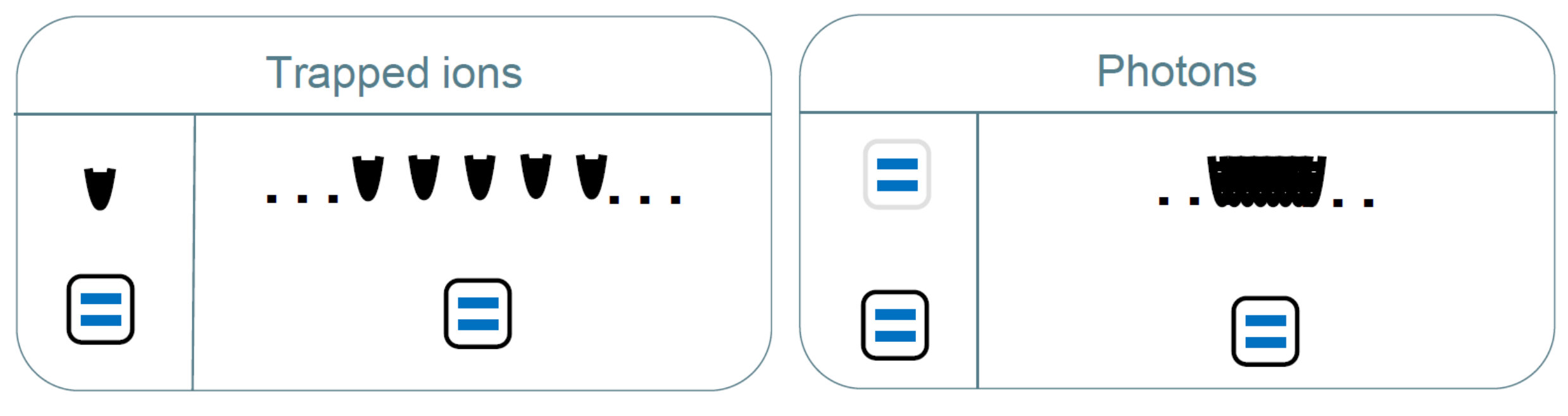 Figure 1
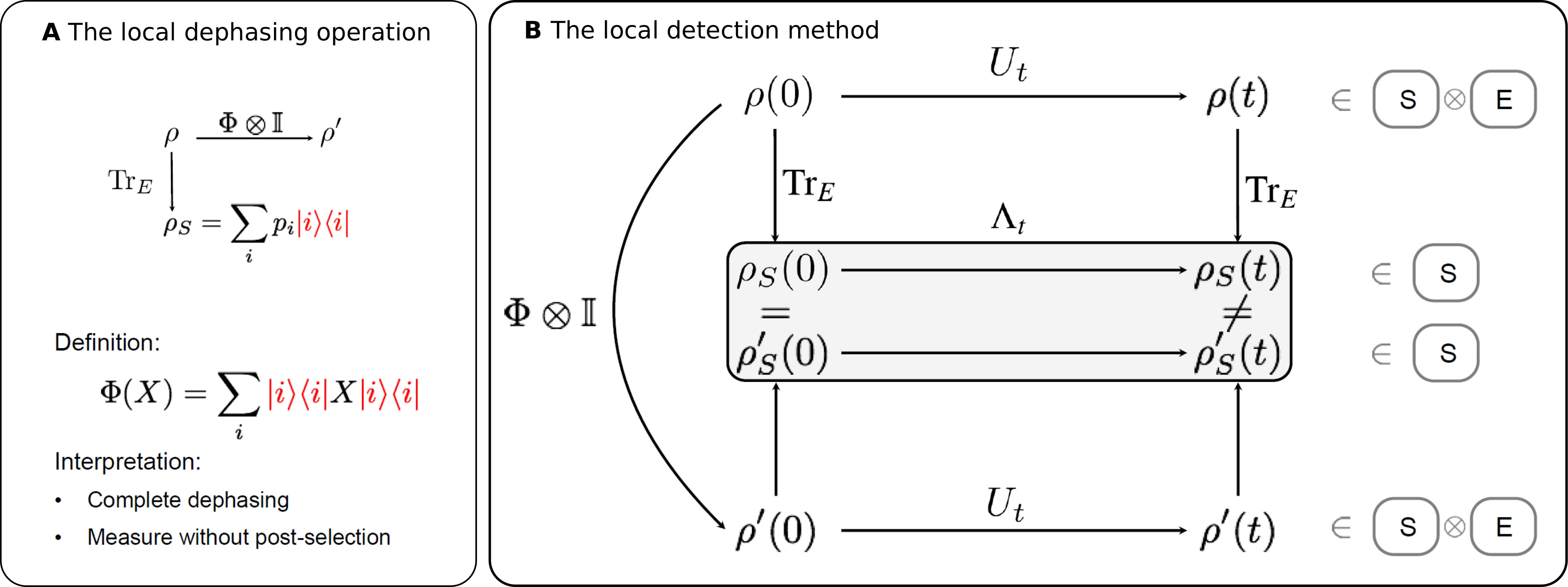 Figure 2
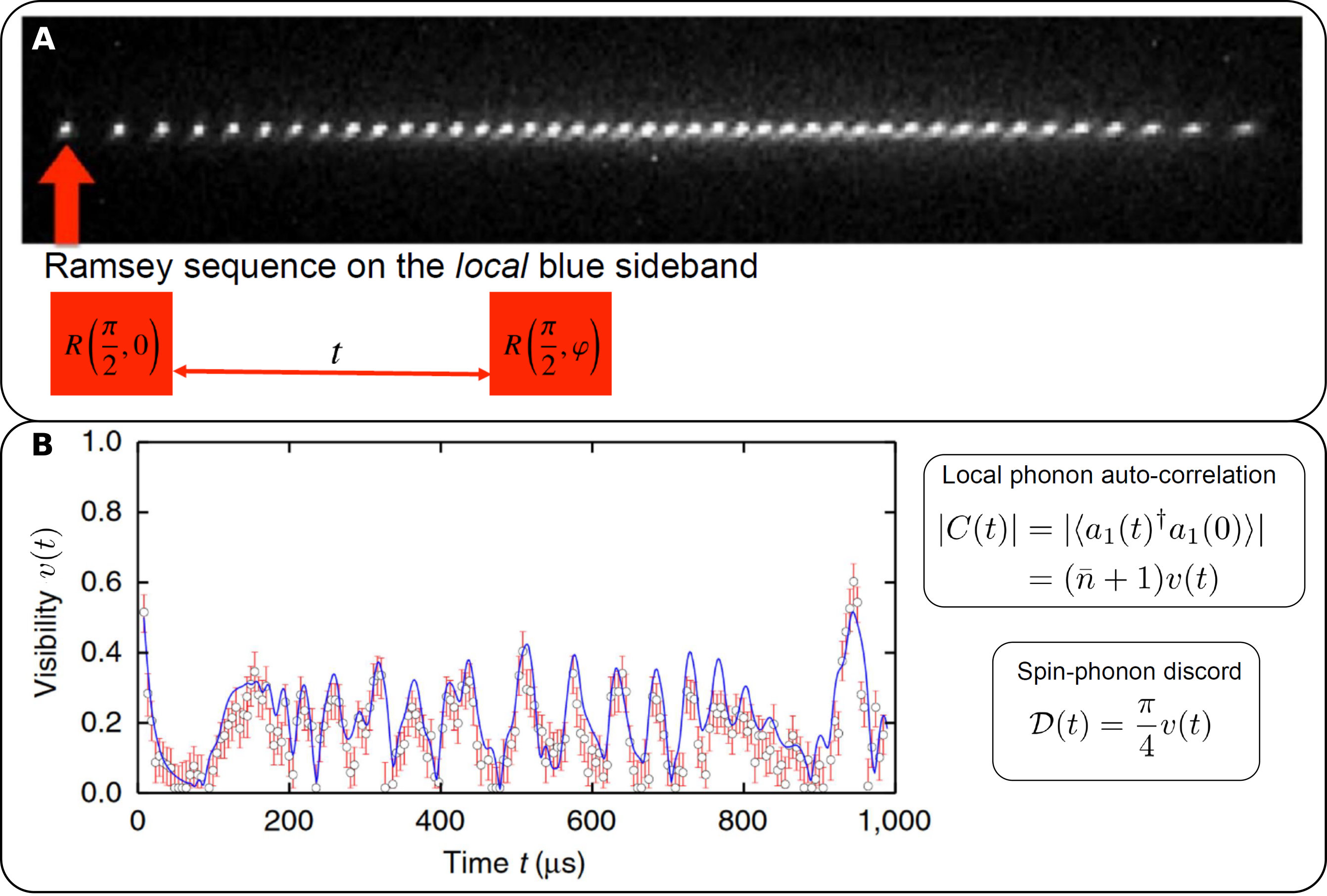 Figure 3
Peer Reviews
No public reviews on file for this paper yet. If you reviewed it on a platform where reviews are public (OpenReview, ICLR, NeurIPS, ICML), you can paste yours below so the community can read it here.
Videos
No videos yet. Explain this paper in a talk, walkthrough, or lecture? Add one.
11institutetext: Département de Physique, École Normale Supérieure, PSL Université, CNRS, 24 Rue Lhomond, 75005 Paris, France,
11email: [email protected] 22institutetext: Physikalisches Institut, Universität Freiburg, Hermann-Herder-Straße 3, D-79104 Freiburg, Germany,
22email: [email protected]
Revealing correlations between a system and an inaccessible environment
Manuel Gessner 11
Heinz-Peter Breuer 22
Abstract
How can we detect that our local, controllable quantum system is correlated with some other inaccessible environmental system? The local detection method developed in recent years allows to realize a dynamical witness for correlations without requiring knowledge of or access to the environment that is correlated with the local accessible quantum system. Here, we provide a brief summary of the theoretical method and recent experimental studies with single photons and trapped ions coupled to increasingly complex environments.
keywords:
open quantum systems, initial correlations, quantum discord, quantum information theory
1 Introduction
Correlations are a ubiquitous concept in the field of quantum information theory. Establishing their presence is therefore a central task in many experimental studies and applications. Typically, this requires access to all of the correlated parties in order to perform a measurement of some observable which is sensitive to the correlations in question. In some cases, however, access may be limited to only one controllable quantum system that may share correlations with other parties, beyond the reach of the experimenter.
Most prominently, quantum correlations must be shared non-locally among several parties to realize, e.g., quantum communication protocols. Usually, experimental access for each party is limited to the local degrees of freedom whereas those of other parties remain inaccessible. Similarly, interaction with an undesired eavesdropper can create correlations that may be harmful to the security of the protocol. Yet, the eavesdropper’s system is not available for measurements. In realistic situations, quantum systems further become correlated with their environment due to the unavoidable interaction with uncontrollable modes. Also in this case, the environment is usually not accessible for measurements to verify the presence of these correlations. Finally, we may also consider the problem of characterizing a high-dimensional multipartite system. If it was possible to identify the correlation properties without requiring measurements on all of its subsystems, the complexity of the task could potentially be reduced dramatically. All of these scenarios lead us to the question, how can correlations with an inaccessible system be revealed?
In this manuscript, we will review the local detection method that permits to identify correlations in a bipartite system by only measuring one of the two subsystems. This is enabled by the strong dynamical influence of initial correlations on the evolution of an open quantum system [1]. More specifically, the detected correlations can be identified as quantum discord and the local signal can be used to provide a lower bound on a quantitative measure of this class of correlations.
The goal of the present contribution is to provide a brief overview of the recent theoretical and experimental activities on this topic. For a more thorough discussion of the technical aspects we refer to the original literature and the recently published review article [2], as well as selected Chapters in [3].
2 Theory
2.1 General method
A local witness for initial correlations between an accessible system and an inaccessible environment was first introduced in [4]. By monitoring the evolution of the trace distance [5] between two arbitrary quantum states of the accessible system, a witness for initial correlations in either of the two initial states can be constructed. To this end, one makes use of the contractivity property of the trace distance [6] which ensures that the trace distance of any pair of states can never increase under positive maps, such as a dynamical evolution in absence of initial correlations. Hence, any increase of the trace distance above its initial value is an indicator of initial correlations (assuming that the environmental quantum state is the same in both cases) in any of the two quantum states [4]. This method allows for a direct information-theoretic interpretation and quantification of the information flow between the system and the environment and the correlations between them, in close relationship to measures for quantum non-Markovianity developed recently [7]. However, it leaves open the question about how the two states should be chosen, e.g., in the case when the system is prepared in one given state and we are interested in its correlations. Furthermore, one may be interested in learning more about the specific class of correlated quantum states that is identified by a positive witness.
The local detection method extends the above witness for initial correlations to answer these questions, as has been demonstrated in [8]. The underlying scheme is represented in Fig. 1. We assume that the total system, which is only partially accessible, is initially in the quantum state . The accessible degrees of freedom form the subsystem (regarded as open system), while the inaccessible degrees of freedom constitute the environment . Furthermore, a quantum operation acting locally on the accessible subsystem is used to produce a suitable reference state
[TABLE]
Taking to be a controlled local dephasing operation on the accessible system (see Fig. 1), the reference state becomes locally indistinguishable from the original state , i.e., both states share the same reduced density matrices for system and environment. This means that if the two states and are different, they must differ in terms of their correlations. Moreover, if the initial state contains no correlations it is easy to verify that the reference state will be identical to .
The potential change of correlations that is entailed by the local dephasing operation can have a significant impact on the dynamics of the accessible open system. Denoting the unitary time evolution operator of the total system (composed of open system and environment ) by , we can write the reduced open system density matrices corresponding to the total initial states and as follows,
[TABLE]
While at time zero and are identical, any deviation of the open-system states at some later time, i.e.
[TABLE]
provides a witness for correlations in the initial state . Notice that the local dephasing operation and the measurements on the local evolution can be realized without accessing the environment at any point.
Introducing an appropriate norm in the open system’s state space we can define a distance measure for quantum states by means of
[TABLE]
such that condition (3) can be written as . It is possible to interpret this scheme in the context of the witness discussed at the beginning of this chapter. In this case, we have chosen the pair of states as and , where the two are related to each other by the local dephasing operation. Since this operation never introduces correlations, this construction allows us to trace back any witness for correlations to the original state . Furthermore, since both states have by construction the same initial reduced density matrix their initial distance is zero. A witness for initial correlations is thus registered when they become the least bit distinguishable. For this reason, the local detection method is not linked to a particular choice for a distance measure for quantum states, such as the trace distance. Instead, it can be realized by any suitable observable that indicates the difference of the evolved quantum states at some later time .
Let us finally also discuss the question regarding the nature of the detected correlations. It is possible to show that the distance between the states and is a simple measure for discord-type correlations [8, 9, 10]. Quantum discord describes a non-classical phenomenon that occurs in correlated bipartite quantum states [11, 12]. Quantum states that do not commute with any local observable have non-zero discord [13]. While for pure states this concept is equivalent to entanglement, the two notions are different for mixed states. Quantum discord can be related to the performance of several quantum information protocols [14], most notably the activation of entanglement [15, 16], the distribution of entangled quantum states with a separable carrier [17, 18, 19, 20, 21, 22], and local quantum inferometry [23].
2.2 Performance of various distance measures
As discussed above the local detection method based on the dephasing map works, at least in principle, for any choice of metric in the open system’s state space. This is due to the fact that the reduced initial states and are identical and, hence, any metric is able to detect whether or not the open systems states will differ at some later time. However, different observables or distance measures can have different sensitivities to reveal that and indeed differ significantly from each other.
A natural metric on the quantum state space is given by the trace distance mentioned already, which is based on the trace norm defined by
[TABLE]
The trace distance has the advantage that it is a contraction under trace preserving quantum operations, which leads to the conclusion that the quantity defined in (4) provides a lower bound for the initial distance of the total states,
[TABLE]
and, hence, a lower bound for the discord-type quantum correlations mentioned above. Note that the right-hand side of this inequality is independent of time and, therefore, also the maximum over time represents a lower bound for such correlations:
[TABLE]
The trace distance between two quantum states and can be interpreted as a measure for the distinguishability of these states [24, 25]. This means that these states can be successfully distinguished by means of a single measurement with a maximal probability given by
[TABLE]
provided both states have been prepared with equal probabilities of . In the case of a biased preparation of and with different probabilities and , the two states can be distinguished with a maximal probability of
[TABLE]
where is known as Helstrom matrix [26].
The performance of the local detection scheme based on the trace norm of the Helstrom matrix has been studied in Ref. [27]. Quite interestingly, it turns out that for the method based on the dephasing map the trace distance, corresponding to the unbiased case , is optimal in the sense that it shows the largest increase due to the presence of correlations.
However, the situation changes if one considers detection schemes in which the reduced initial states are not equal to each other. In fact, different distance measures can then show a quite different ability to detect initial correlations, as has been shown in Ref. [28]. On the one hand, the example studied in this reference indicates that the detection power of the trace distance is significantly larger than that of other well-known distance measures for quantum states, namely the Bures metric, the Hellinger distance and the Jensen-Shannon divergence. On the other hand, in those cases the trace norm of the Helstrom matrix can show an even better performance than the trace distance [27].
2.3 Applications to complex open quantum systems
The method described above has been applied to the ensemble-averaged dynamics of complex open quantum systems in Refs. [8, 9], using group theoretical methods to determine averages over the unitary group [29] (see also [30, 31] for related techniques). Employing the Hilbert-Schmidt distance as a measure for the distance of quantum states, it can be demonstrated that for a generic dynamical evolution, one expects the local detection method to successfully reveal correlations, but the influence of the initial correlations vanishes in the limit of systems with a large effective environmental dimension. Nevertheless, there are examples of memory-less, fully Markovian and infinite-dimensional environments that lead to the successful detection of correlations using the local detection method. For a more detailed discussion, see [2]. Further theoretical examples may also be found in [32].
2.4 Application: Spin chain undergoing a quantum phase transition
Quantum correlations play a special role for the ground state of quantum many-body systems undergoing a quantum phase transition [33]. As a function of some external control parameter, the properties of the system change abruptly, most notably those of the ground state [34], but the transition usually affects the entire excitation spectrum [35, 36].
Measuring these correlations is challenging due to the large number of degrees of freedom in extended many-body quantum systems. For this reason, it is interesting to notice that the local detection method allows us to reveal the drastic change of the ground-state correlation properties through measurements on only a single particle [10]. In a theoretical study, a one-dimensional spin model with long-range interactions is used as a testbed for the local detection method. Measurements are performed only on one of the spins in the chain. The quantum phase transition is indicated by a peak in the signal related to the correlations between the measured spin and the bath formed by the remainder of the spins in the chain. It is remarkable that this signal is visible even for small, finite temperatures as demonstrated in Ref. [10].
3 Experiments
The local detection method has been implemented in different scenarios with both trapped ions and photons. The experiments can be classified according to the schema displayed in Fig. 2. In all cases, the controllable (accessible) quantum system was modeled by a qubit (two-level system). The simulated environments range from single qubits to a continuum of harmonic-oscillator modes and a chain of 42 transverse phonons.
3.1 Single trapped ion
In a first experiment with a single trapped ion, an electronic two-level system realized the controllable open system [37]. Interactions with the single-mode harmonic oscillator environment, the ion’s motional degree of freedom, can be implemented by suitable laser control. By driving the qubit transition with a detuning equal to the trap frequency, excitations are coherently exchanged between the two degrees of freedom. This evolution leads to the generation of correlations between the qubit and the motion. Combined with controlled changes of the laser-cooling parameters, this provides access to a class of correlated probe states with a tunable environmental temperature.
To realize the local dephasing operation, a spectrally broad transition was addressed by far-detuned laser light, inducing a controllable ac-Stark shift that can be chosen such that any phase information between the qubit’s ground- and excited states is deleted. Since the qubit is diagonal in the computational basis (as is confirmed by state tomography), this operation realizes the desired local dephasing. Subsequent driving of the sideband transition and monitoring of the qubit reveals the presence of correlations in the initial state. A lower bound for the initial quantum discord is obtained by evaluating the trace distance of the two evolutions, which can be directly extracted from the evolution of the excited-state population. The signal is visible also at higher temperatures, as is confirmed by experimental data at average phonon numbers up to around 5 [37] and analytical arguments for even higher values [3].
3.2 Chain of trapped ions
In a later extension of the above experiment, a single electronic qubit is correlated with the phonon degrees of freedom of trapped-ion chains of variable length up to 42 ions [38]. All the phonons are coupled due to long-range Coulomb interactions. The experiment involves a Ramsey sequence on the sideband transition on a fast time scale, faster than the phonon-phonon hopping rate between neighboring ions (Fig. 3). This ensures that the excitation of the qubit is accompanied by a creation of a localized phonon at the same site. As this local excitation is not an eigenstate of the chain, the phonon starts to travel and delocalize throughout the chain. By correlating the qubit with the single phonon that is created by the sideband interaction, the phonon can be traced during its evolution in the thermally excited bath of up to around 200 phonons, realizing a local quantum probe of a complex quantum dynamical system.
The revivals of the phonon at the initial site can be monitored through the visibility of a Ramsey interferometer sequence. To this end, two fast local sideband pulses are separated by a tuneable waiting time. Quite interestingly, it can be shown within reasonable approximations that the locally measurable visibility is directly linked to the modulus of the phonon auto-correlation function of the first site [38]
[TABLE]
Moreover, the scheme allows the determination of a measure for the quantum discord between the electronic degree of freedom of the first ion and its motional degree of freedom, which is defined by the change of the composite quantum state (measured in term of the trace distance) induced by the dephasing operation. It turns out that within a very good approximation the discord is also directly related to the visibility through
[TABLE]
which enables the measurement of the quantum discord in the experiment [38].
3.3 Photons with a two-level environment
Two environmental quantum states for photonic polarization qubits are realized by the paths at the output of a beam splitter [39]. Using spontaneous parametric down-conversion and manipulating the polarization states as a function of their path leads to the controlled generation of polarization-momentum correlated photons. The discord-type correlations of these states can then be revealed using the local detection method without ever measuring the momentum degree of freedom. In this experiment, the method was complemented by a second step, a trace-distance based witness for initial correlations that is susceptible also to classical correlations of zero discord. This allows to identify and distinguish quantum discord from purely classical correlations.
3.4 Photons with a continuum of environmental frequency modes
In birefringent materials the polarization degree of freedom of single photons is coupled to the photon’s own frequency modes [40]. Each mode is described by a quantum harmonic oscillator and typical frequency distributions of single photons comprise a continuum of modes. This effect was harnessed to simulate a continuous, memory-less environment for optical polarization qubits for an implementation of the local detection method [40].
A series of correlated states is prepared by Alice and sent to Bob whose task is to detect the presence of correlations without ever measuring the frequency modes. A Michelson-Moreley interferometer is used to reveal these correlations. The local dephasing operation is realized by means of a long polarization-maintaining fiber that destroys the phase information relative to polarization and frequency. Its axis is aligned to the measured eigenbasis of the polarization qubits to ensure dephasing in the correct basis. State tomography of the polarization qubit is performed before and after the dephasing. The correlations are successfully revealed using the local detection method, even though the coupling of the open system is realized with a continuum of modes that represent a fully Markovian environment.
4 Conclusions
The local detection scheme discussed in this contribution provides a method to locally detect and quantify correlations between an accessible open system and an inaccessible environment. Thus, in more general terms it allows to determine correlations in a composite quantum system without requiring access to all of its subsystems. Necessary requirements for implementing the method are (i) the presence of interactions between the potentially correlated subsystems, and (ii) a good level of control of the accessible part of the composite system. The second condition refers to the implementation of the local dephasing operation, which requires knowledge of the eigenbasis of the state of the accessible subsystem.
As we have discussed and illustrated here, the scheme is very general and flexible, and paves the way for many theoretical and experimental applications in the fields of complex open system and quantum information. In particular, it is important to note that the scheme does not require control or even knowledge of the state of the total system, of the system-environment interaction Hamiltonian, or of the initial environmental state.
Up to now, experimental realizations of the local detection method have been carried out for both trapped ion systems and for photonic systems. In all these experiments the accessible, open system represents a qubit, formed by an electronic degree of freedom of an ion or by the polarization degree of freedom of a photon. On the other hand, the environmental system can either be another simple qubit system or a much more complex system formed by the many modes of a long ion chain or by a continuum of frequency modes.
The development of experimental applications to composite local systems would be highly interesting. It would allow to study the impact of correlations with an external environment onto entangled states of well-controlled degrees of freedom. This would further open up new avenues towards a theoretical extension of the local detection method to multipartite scenarios. A related recently developed method allows to detect quantum discord with an inaccessible system by witnessing the generation of entanglement among two non-interacting, controllable systems [41].
Revealing nonclassical properties and correlations with inaccessible objects may provide a promising route towards identifying quantum effects in complex situations where a detailed quantum description of the object is challenging. This approach has been recently suggested in the context of biological systems [42], quantum processes [43], and even for tests of quantum gravity [44].
Acknowledgments
This work was funded by the LabEx ENS-ICFP:ANR-10-LABX-0010/ANR-10-IDEX-0001-02 PSL*. M. Gessner would like to thank the organizers of the 684. WE-Heraeus-Seminar “Advances in open systems and fundamental tests of quantum mechanics” for being given the opportunity to present this work.
The reference list from the paper itself. Each links out to its DOI / PubMed record.
- 1[1] H.-P. Breuer and F. Petruccione, The Theory of Open Quantum Systems (Oxford University Press, 2002).
- 2[2] M. Gessner, H.-P. Breuer, and A. Buchleitner, The Local Detection Method: Dynamical Detection of Quantum Discord with Local Operations in F. F. Fanchini, D. O. Soares Pinto, and G. Adesso (eds.) Lectures on General Quantum Correlations and their Applications (Springer International Publishing, 2017) pp. 275-307. · doi ↗
- 3[3] M. Gessner, Dynamics and Characterization of Composite Quantum Systems , (Springer International Publishing 2017). · doi ↗
- 4[4] E.-M. Laine, J. Piilo, and H.-P. Breuer, Witness for initial system-environment correlations in open-system dynamics, Europhys. Lett. 92 , 60010 (2010) . · doi ↗
- 5[5] M. Nielsen and I. Chuang, Quantum Computation and Quantum Information , (Cambridge University Press, Cambridge, 2000).
- 6[6] M. B. Ruskai, Beyond Strong Subadditivity? Improved Bounds on the Contraction of Generalized Relative Entropy Rev. Math. Phys. 6 147 (1994) . · doi ↗
- 7[7] H.-P. Breuer, E.-M. Laine, J. Piilo, and B. Vacchini, Colloquium: Non-Markovian dynamics in open quantum systems, Rev. Mod. Phys. 88 , 021002 (2016) . · doi ↗
- 8[8] M. Gessner, H.-P. Breuer, Detecting Nonclassical System-Environment Correlations by Local Operations, Phys. Rev. Lett. 107 , 180402 (2011) . · doi ↗