Magnetospheric Switching in PSR B1828-11
I. H. Stairs, A. G. Lyne, M. Kramer, B. W. Stappers, J. van Leeuwen,, A. Tung, R. N Manchester, G. B. Hobbs, D. R. Lorimer, A. Melatos

TL;DR
This paper investigates the magnetospheric state switching in PSR B1828-11, revealing two distinct modes linked to changes in the pulsar's spin-down rate, and discusses their implications for understanding pulsar magnetospheres.
Contribution
It provides the first detailed characterization of the two extreme magnetospheric states in PSR B1828-11 and their association with spin-down variations.
Findings
Identification of two distinct magnetospheric modes
Correlation between mode states and spin-down rate changes
Brief interpretation of the mode-switching phenomenon
Abstract
PSR B1828-11 is a young pulsar once thought to be undergoing free precession and recently found instead to be switching magnetospheric states in tandem with spin-down changes. Here we show the two extreme states of the mode-changing found for this pulsar and comment briefly on its interpretation.
Click any figure to enlarge with its caption.
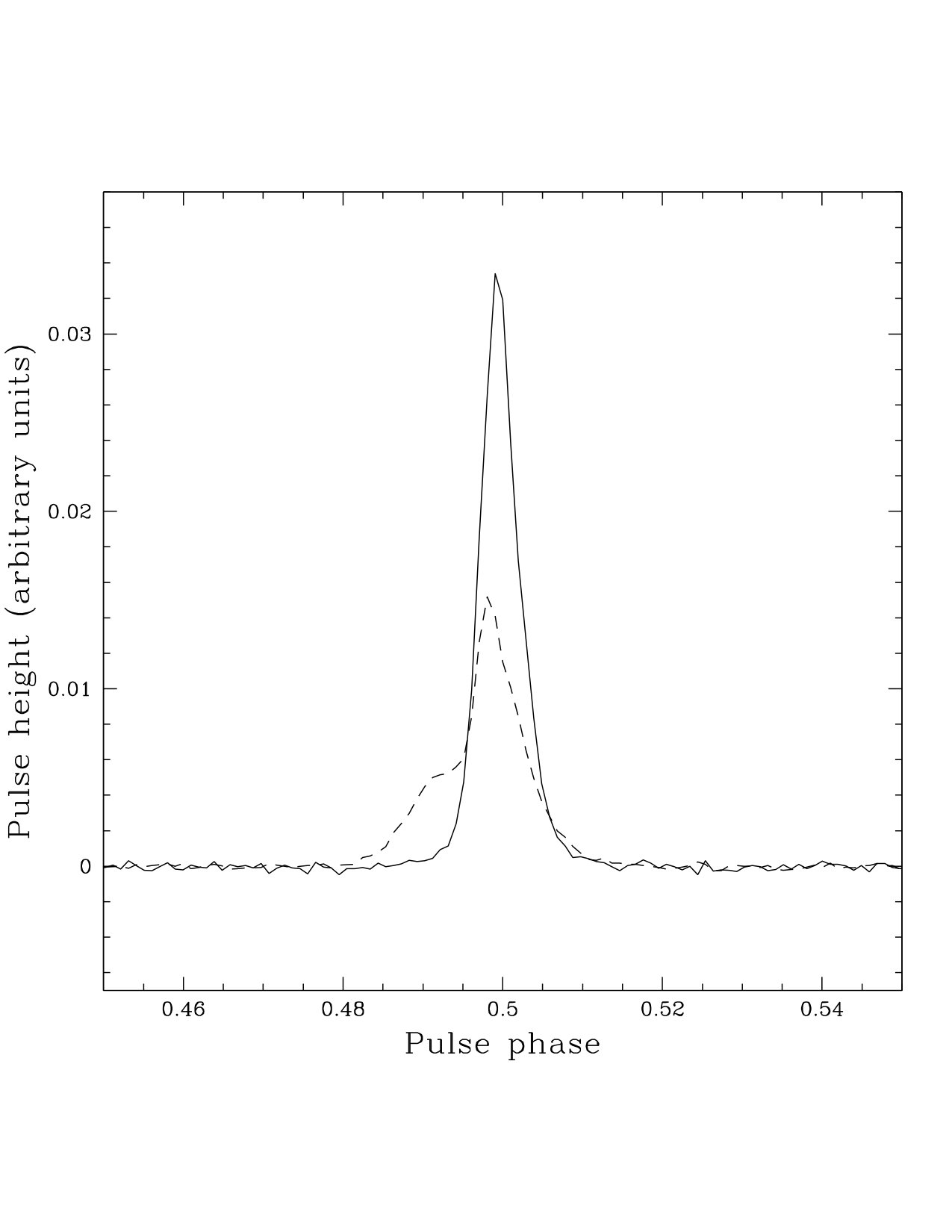 Figure 1
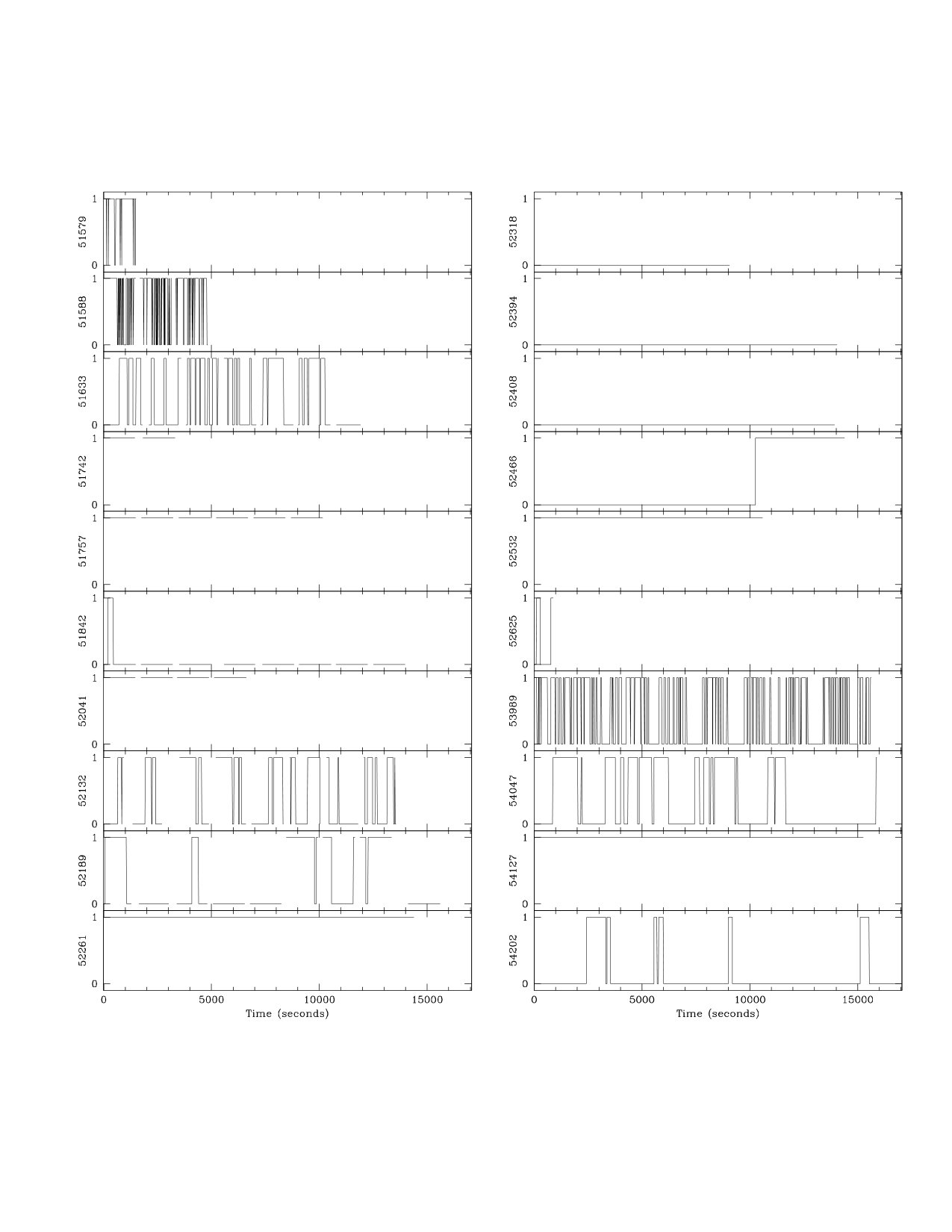 Figure 2
Peer Reviews
No public reviews on file for this paper yet. If you reviewed it on a platform where reviews are public (OpenReview, ICLR, NeurIPS, ICML), you can paste yours below so the community can read it here.
Videos
No videos yet. Explain this paper in a talk, walkthrough, or lecture? Add one.
Taxonomy
TopicsPulsars and Gravitational Waves Research · Geophysics and Gravity Measurements · High-pressure geophysics and materials
Magnetospheric Switching in PSR B182811
I. H. Stairs
1 A. G. Lyne
2 M. Kramer
3,2 B. W. Stappers
2
J. van Leeuwen
4,5 A. Tung
1,6 R. N. Manchester
7
G. B. Hobbs
7
D. R. Lorimer
8,9 A. Melatos10
1Dept. of Physics and Astronomy, University of British Columbia, 6224 Agricultural Road, Vancouver, B.C., V6T 1Z1, Canada
email: [email protected]
2Jodrell Bank Centre for Astrophysics, School of Physics and Astronomy, University of Manchester, Manchester, M13 9PL, UK
3Max-Planck-Institut für Radioastronomie, Auf dem Hügel 69, D-53121 Bonn, Germany
4ASTRON, The Netherlands Institute for Radio Astronomy, Postbus 2, 7990 AA, Dwingeloo, The Netherlands
5Anton Pannekoek Institute for Astronomy, Univ. of Amsterdam, Science Park 904, 1098 XH Amsterdam, The Netherlands
6Teacher Education Office, University of British Columbia, 2125 Main Mall, Vancouver, BC V6T 1Z4, Canada
7CSIRO Astronomy and Space Science, Marsfield NSW 2122, Australia
8Department of Physics and Astronomy, West Virginia University, PO Box 6315, Morgantown, WV 26506, USA
9Center for Gravitational Waves and Cosmology, Chestnut Ridge Research Building, Morgantown, WV 26505, USA
10School of Physics, University of Melbourne, Parkville VIC 3010, Australia
(2017)
Abstract
PSR B182811 is a young pulsar once thought to be undergoing free precession and recently found instead to be switching magnetospheric states in tandem with spin-down changes. Here we show the two extreme states of the mode-changing found for this pulsar and comment briefly on its interpretation.
keywords:
pulsars: individual (PSR B182811)
††volume: 337††journal: Pulsar Astrophysics - The Next 50 Years††editors: P. Weltevrede, B.B.P. Perera, L. Levin Preston & S. Sanidas, eds.
1 Introduction
PSR B182811 is young pulsar with a spin period of 0.405 s and DM of about 160 pc cm*-3* ([Clifton et al. 1992]). Years of routine observations with the Jodrell Bank Observatory showed that its period derivative varied with an approximately dual-sinusoidal pattern with periods of about 500 and 250 days. At the same time, the profile was seen to vary between “wide” and “narrow” states, with the average profile shape following the same pattern as . These phenomena were initially interpreted as evidence for free precession ([Stairs, Lyne & Shemar 2000]) and an abundant literature sprang up (e.g., [Link 2006]) attempting to understand such precession given the standard picture of the superfluid neutron-star interior with vortices pinned to the crust (e.g., [Sedrakian, Wasserman & Cordes 1999]).
The recognition of a difference of 50% in spin-down rate in PSR B1931+24 when that intermittent pulsar was in one of its weeks-long off states ([Kramer et al. 2006]) led to a new interpretation for these and other pulsars: namely that the changes in were related to abrupt switches in the profile state, a phenomenon labeled “magnetospheric switching” ([Lyne et al. 2010]). PSR B182811 was also noted to show evidence of rapid profile changes, as in mode-changing pulsars. Meanwhile, other authors continued to develop alternative models for the effects seen in PSR B182811, including free precession combined with magnetospheric switching ([Jones 2012]) and non-radial oscillations ([Rosen, McLaughlin & Thompson 2011]). Seymour & Lorimer (2013) found evidence that the variations are consistent with behaviour seen in low-dimensional chaotic systems. Their analysis suggests that the variations could be produced by a coupled system of three differential equations with as one of the “governing variables” controlling the changes in the pulsar.
2 Data and Results
We obtained long (generally multi-hour) 1400-MHz observations of PSR B182811 on 20 occasions, sampling multiple cycles of the variations as determined by Lyne et al. (2010). On 16 occasions we used the Parkes telescope, employing the 2 512 0.5 MHz 1-bit filterbank with samples every 0.25 ms. On the last 4 occasions we used the Green Bank Telescope (GBT), employing the BCPM ([Backer et al. 1997]) with 96 1-MHz frequency channels with 72-s sampling. Each observation was folded with 10-second sub-integrations using dspsr ([van Straten & Bailes 2011]) and wide and narrow profiles were identified by eye using viewing programs from the PSRCHIVE distribution ([van Straten, Demorest & Osłowski 2012]).
Full details of the data acquistion, reduction, analysis and interpretation will be shortly be presented elsewhere (Stairs et al., in prep.). Here we present a subset of the results.
Mode-changing is seen in many of the long observations, while other days show only narrow or only wide profiles. Fig. 1 summarizes the states seen on each day. It is clear that the transition rate of the mode changes varies as well as the average profile shape.
Fig. 2 show the profiles observed with Parkes on MJD 52466. These were obtained by summing, respectively, all the 10-s sub-integrations labeled “narrow” or “wide” on that day. The flux density is uncalibrated. The cumulative profile for each Parkes epoch is well-described as a linear combination of these two extreme profiles; the GBT data are similarly well-described using one day’s extrema. This agreement with two extreme profiles argues strongly against the precession model, in which one would expect smooth changes.
The mode-changing transition rate has a relationship to the cycle which may indicate that this quantity forms the second governing variable in the chaos model; see Stairs et al. (in prep.) for a complete discussion. We advocate that other pulsars with known quasi-periodicities be carefully examined for evidence of variable rates of mode-changing.
Acknowledgements
IHS is supported by an NSERC Discovery Grant and by the Canadian Institute for Advanced Research. JvL received funding for this research from the Netherlands Organisation for Scientific Research (NWO) under project ”CleanMachine” (614.001.301). The Green Bank Observatory is a facility of the National Science Foundation operated under cooperative agreement by Associated Universities, Inc. The Parkes radio telescope is part of the Australia Telescope National Facility which is funded by the Australian Government for operation as a National Facility managed by CSIRO. We thank Ryan Hyslop, Jennifer Riley, Raymond Lum and Cindy Tam for their work on earlier versions of the profile analysis.
The reference list from the paper itself. Each links out to its DOI / PubMed record.
- 1[Backer et al. 1997] Backer D. C., Dexter M. R., Zepka A., D. N., Wertheimer D. J., Ray P. S., Foster R. S., 1997, PASP, 109, 61
- 2[Clifton et al. 1992] Clifton T. R., Lyne A. G., Jones A. W., Mc Kenna J., Ashworth M., 1992, MNRAS, 254, 177
- 3[Jones 2012] Jones D. I., 2012, MNRAS, 420, 2325
- 4[Kramer et al. 2006] Kramer M., Lyne A. G., O’Brien J. T., Jordan C. A., Lorimer D. R., 2006, Science, 312, 549
- 5[Link 2006] Link B., 2006, A&A, 458, 881
- 6[Lyne et al. 2010] Lyne A., Hobbs G., Kramer M., Stairs I., Stappers B., 2010, Science, 329, 408
- 7[Rosen, Mc Laughlin & Thompson 2011] Rosen R., Mc Laughlin M. A., Thompson S. E., 2011, Ap J, 728, L 19
- 8[Sedrakian, Wasserman & Cordes 1999] Sedrakian A., Wasserman I., Cordes J. M., 1999, Ap J, 524, 341