Is it possible to reconcile extragalactic IMF variations with a universal Milky Way IMF?
David Guszejnov, Philip F. Hopkins, Andrew S. Graus

TL;DR
This study investigates whether existing models of the stellar initial mass function (IMF) can reconcile observed variations in extragalactic environments with the near-universality of the Milky Way's IMF, finding current models insufficient.
Contribution
The paper demonstrates that current cloud-scale IMF models cannot simultaneously explain extragalactic IMF variations and Milky Way constraints, suggesting the need for more complex models or alternative explanations.
Findings
Current models predict too much IMF variation in the Milky Way.
No existing models can reproduce the observed extragalactic IMF variations.
Alternative interpretations or more complex models are required.
Abstract
One of the most robust observations of the stellar initial mass function (IMF) is its near-universality in the Milky Way and neighboring galaxies. But recent observations of early-type galaxies can be interpreted to imply a bottom-heavy IMF, while others of ultra-faint dwarfs could imply a top-heavy IMF. This would impose powerful constraints on star formation models. We explore what sort of cloud-scale IMF models could possibly satisfy these constraints. We utilize simulated galaxies which reproduce (broadly) the observed galaxy properties, while they also provide the detailed star formation history and properties of each progenitor star-forming cloud. We then consider generic models where the characteristic mass of the IMF is some arbitrary power-law function of progenitor cloud properties, along with well-known literature IMF models, which scale with Jeans mass, turbulent…
Click any figure to enlarge with its caption.
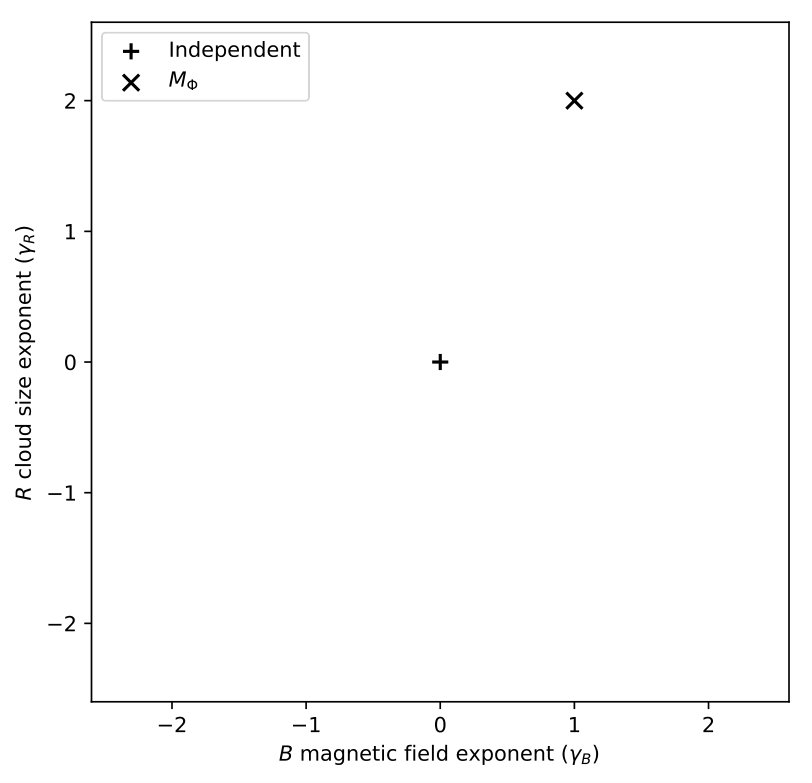 Figure 1
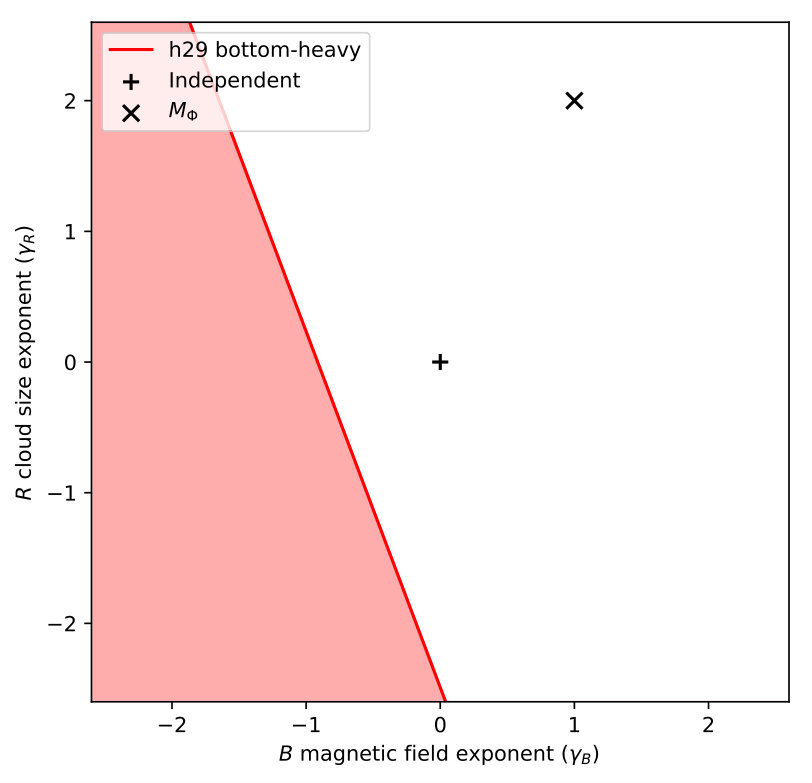 Figure 2
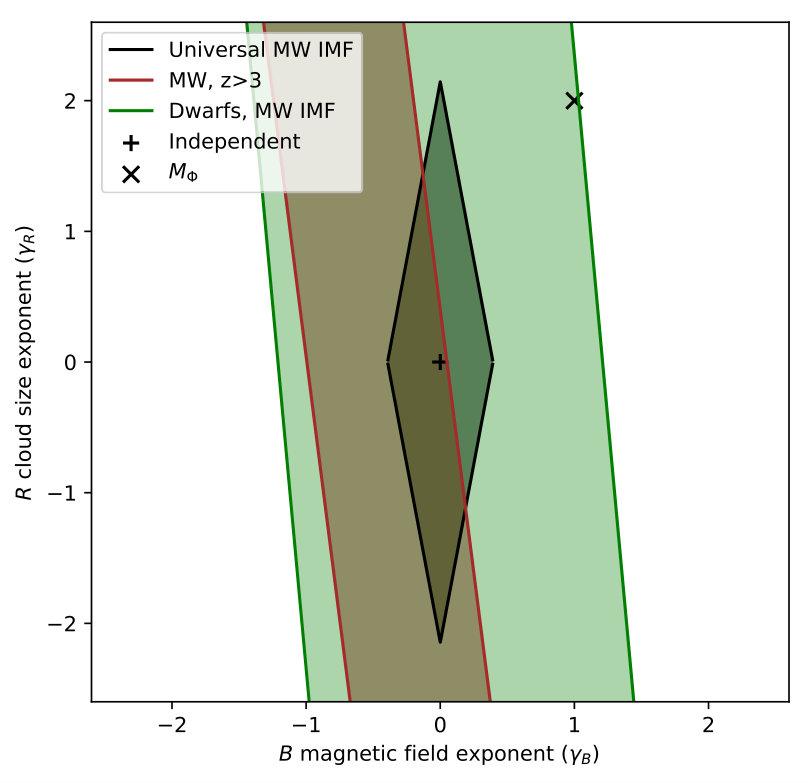 Figure 3
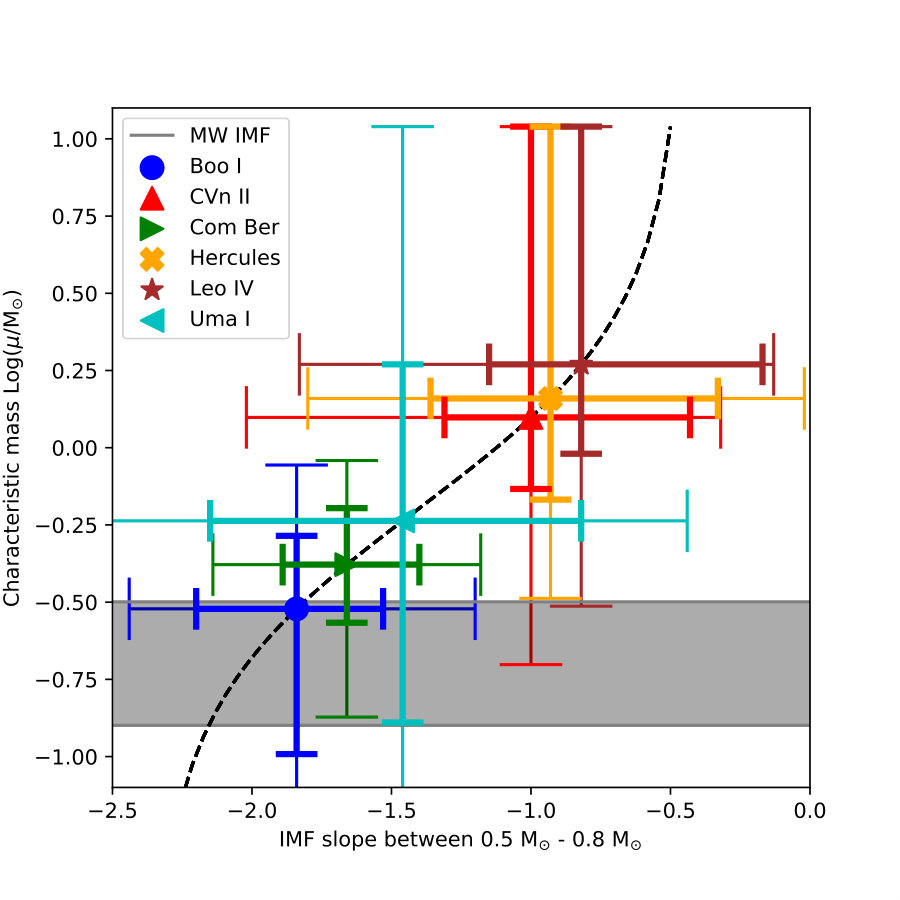 Figure 4
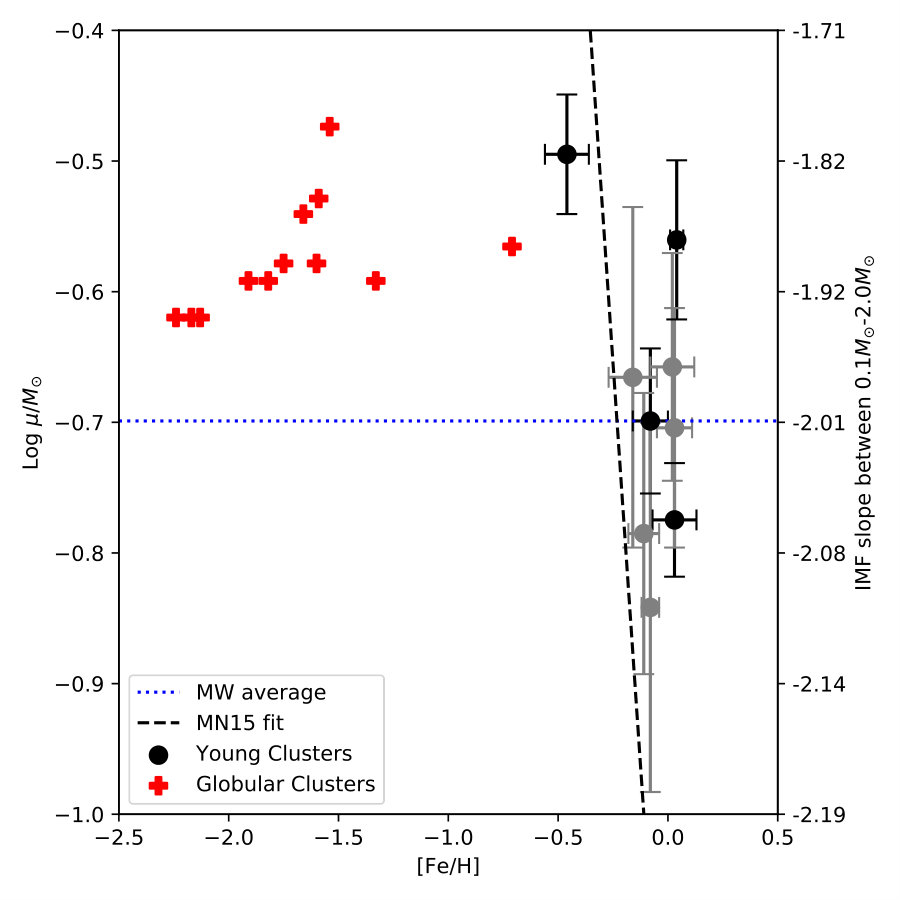 Figure 5
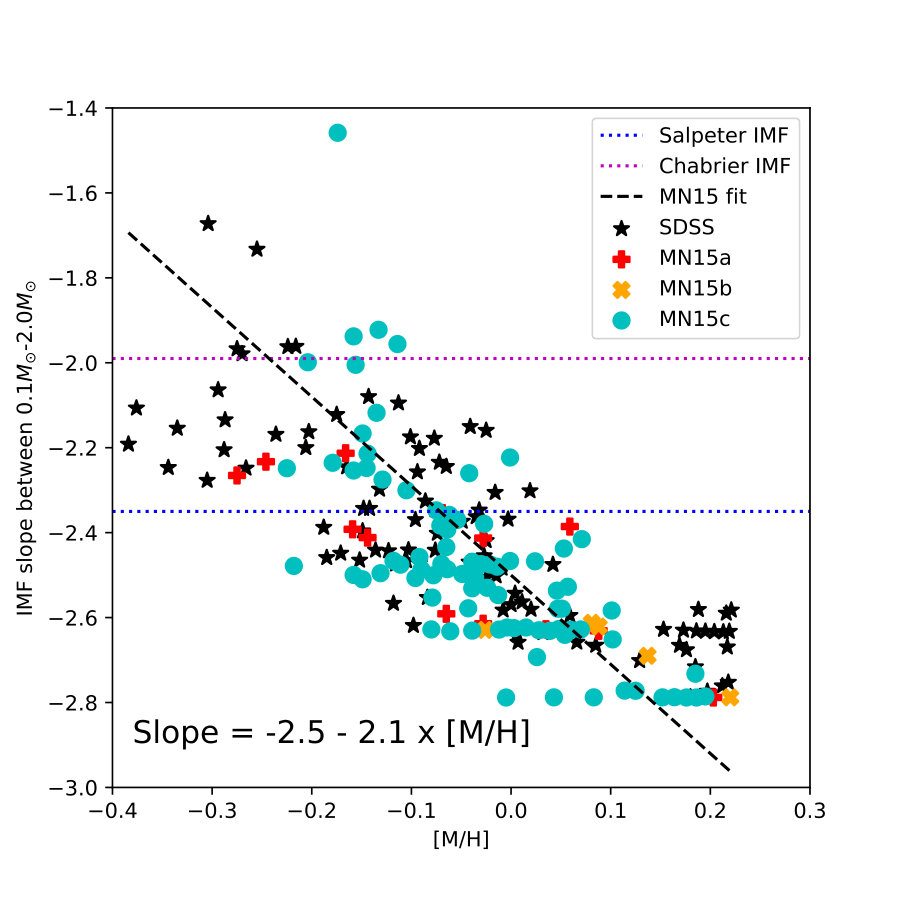 Figure 6
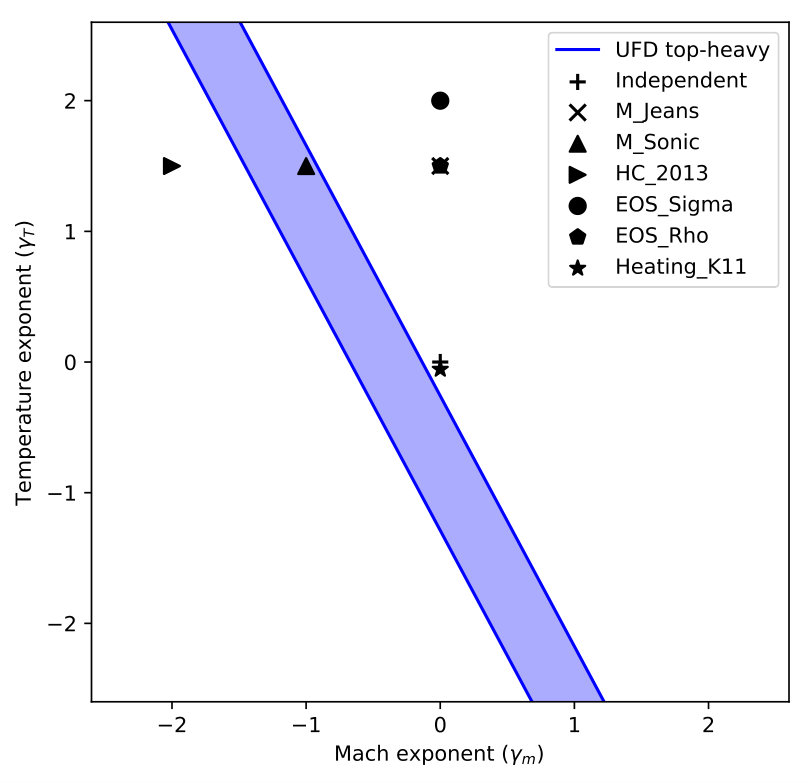 Figure 7
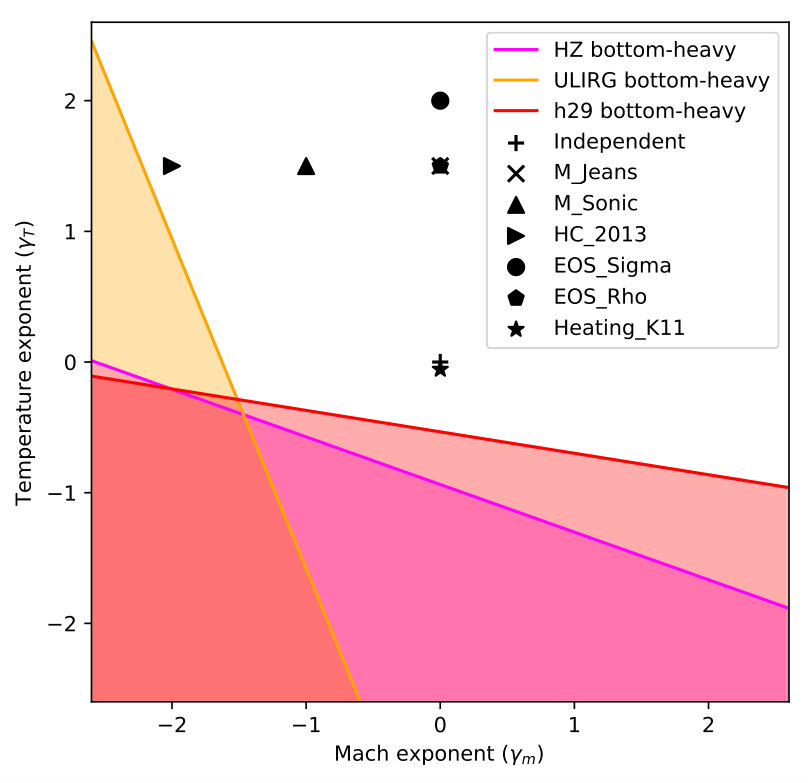 Figure 8
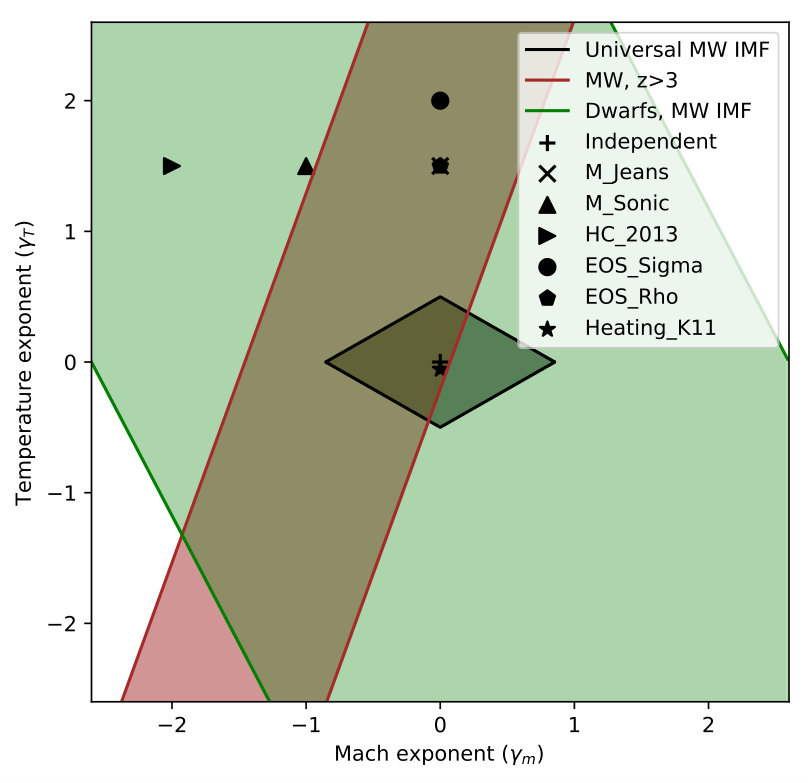 Figure 9
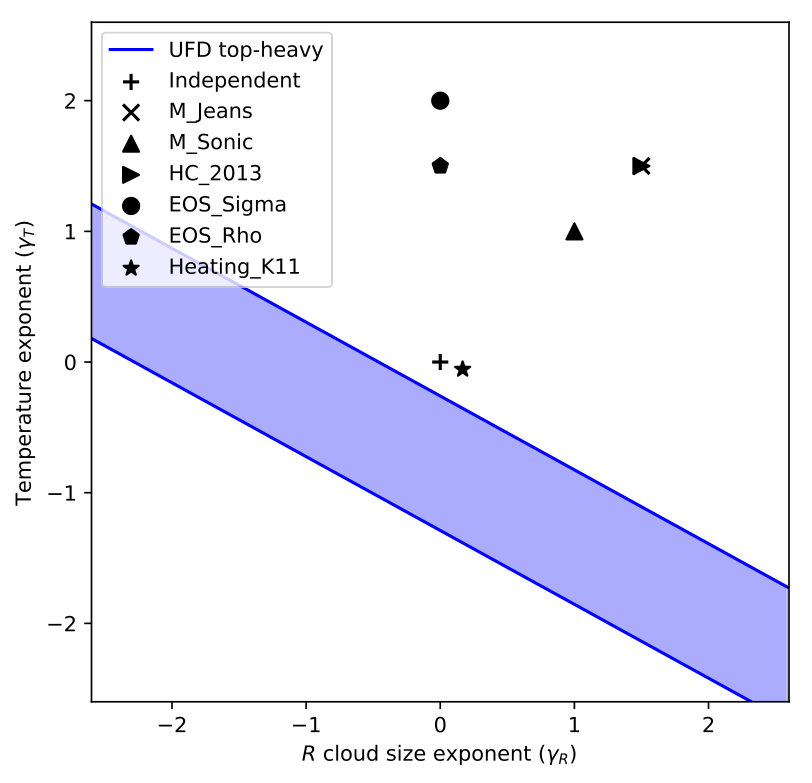 Figure 10
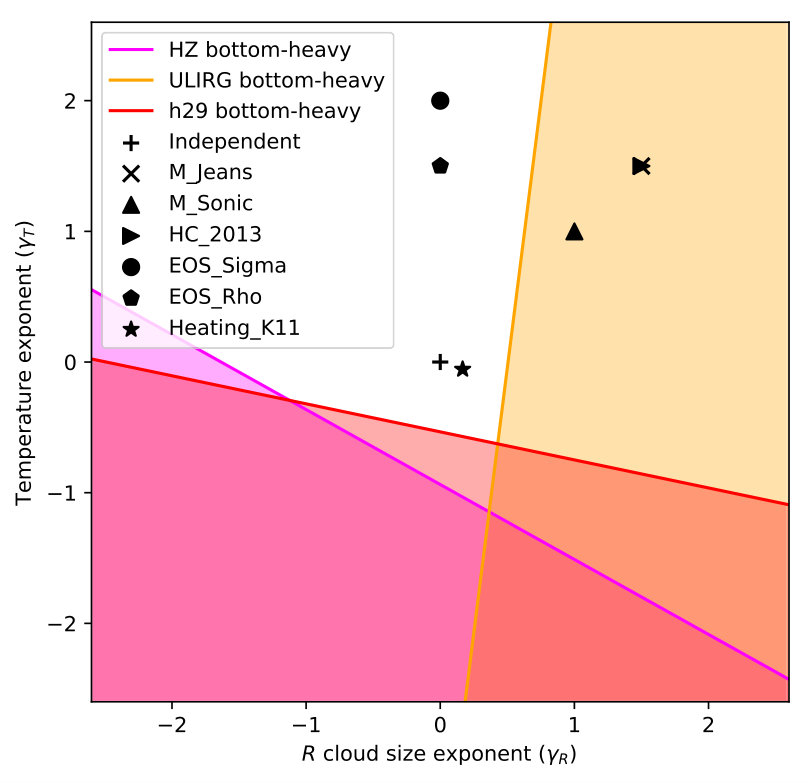 Figure 11
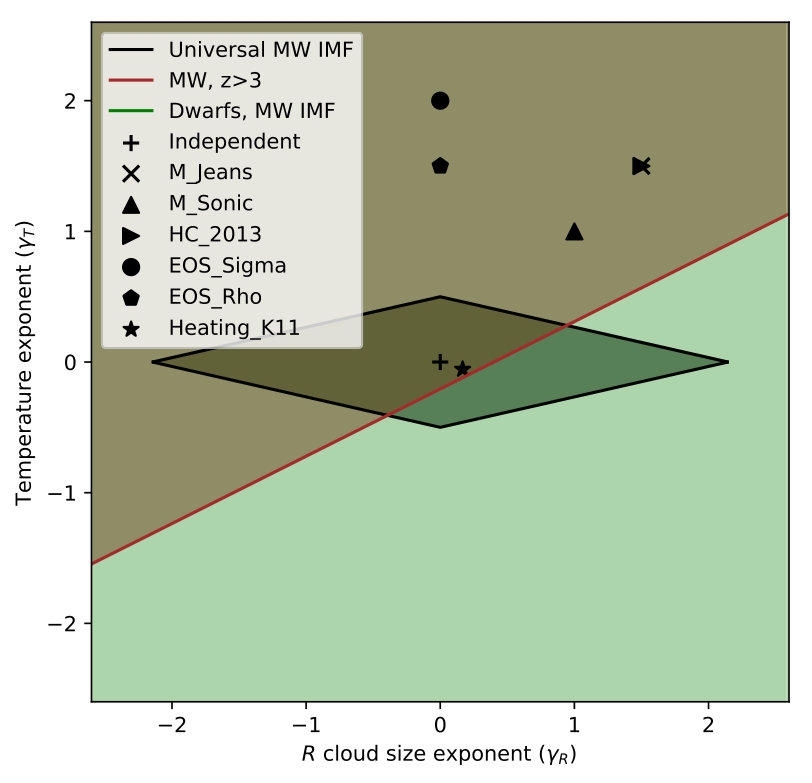 Figure 12
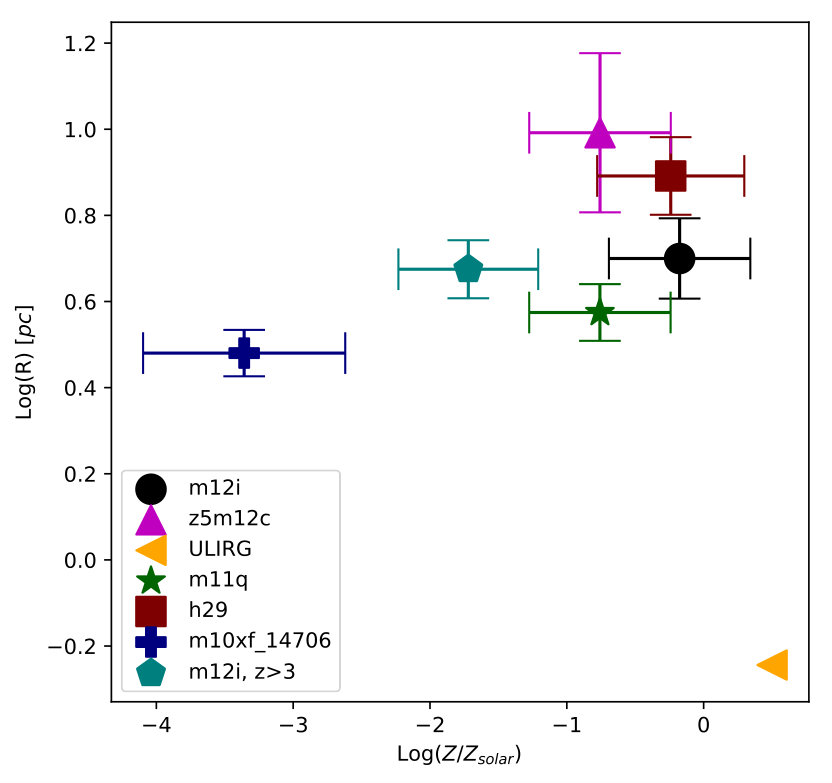 Figure 13
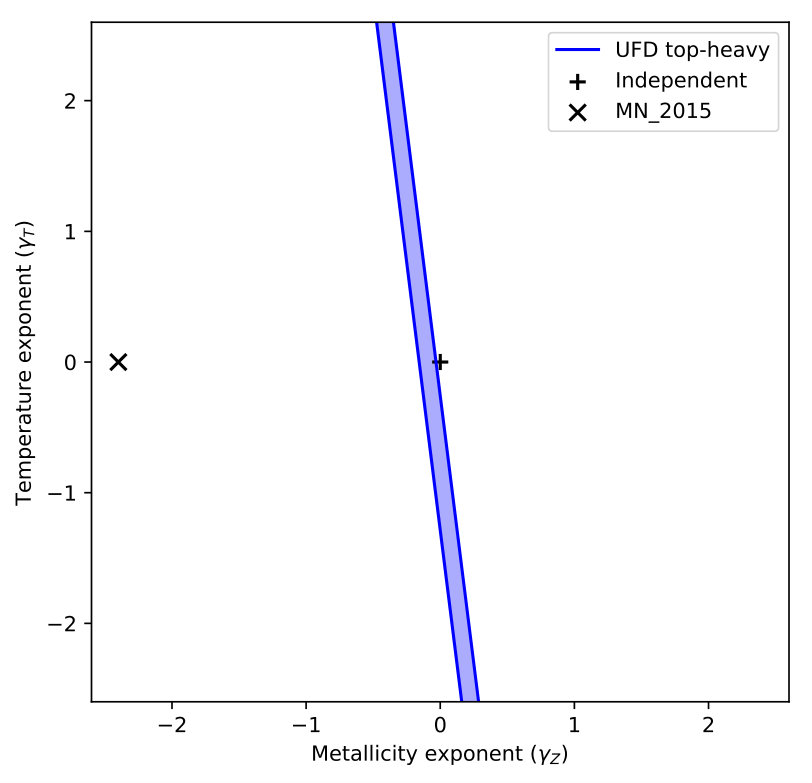 Figure 14
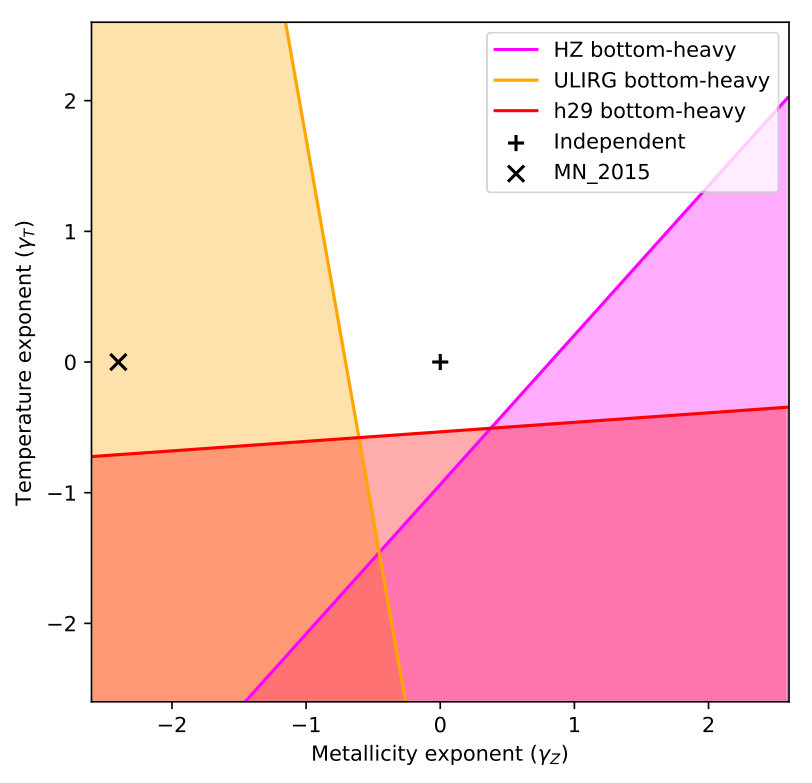 Figure 15
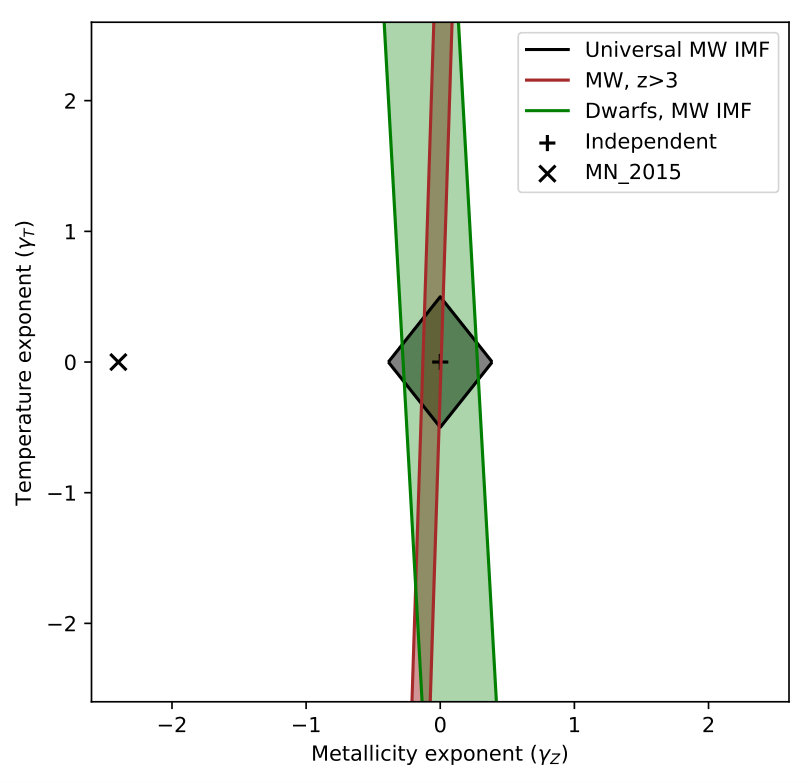 Figure 16
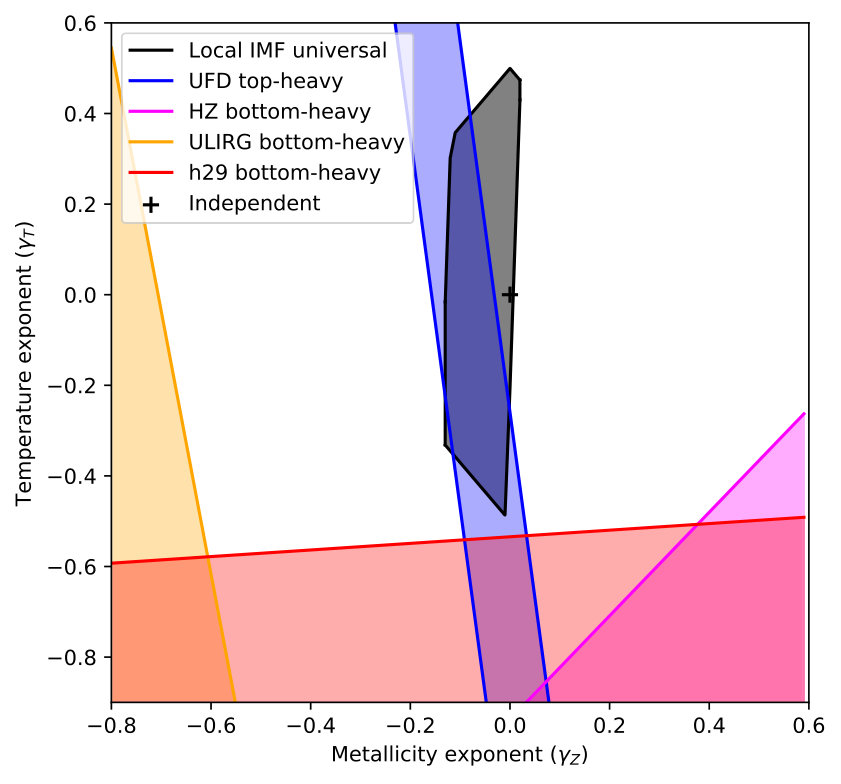 Figure 17
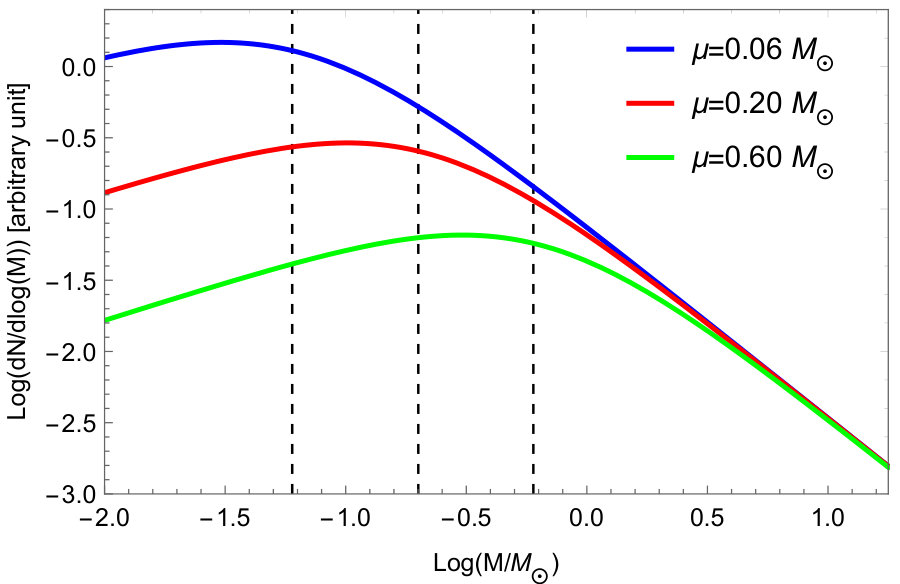 Figure 18
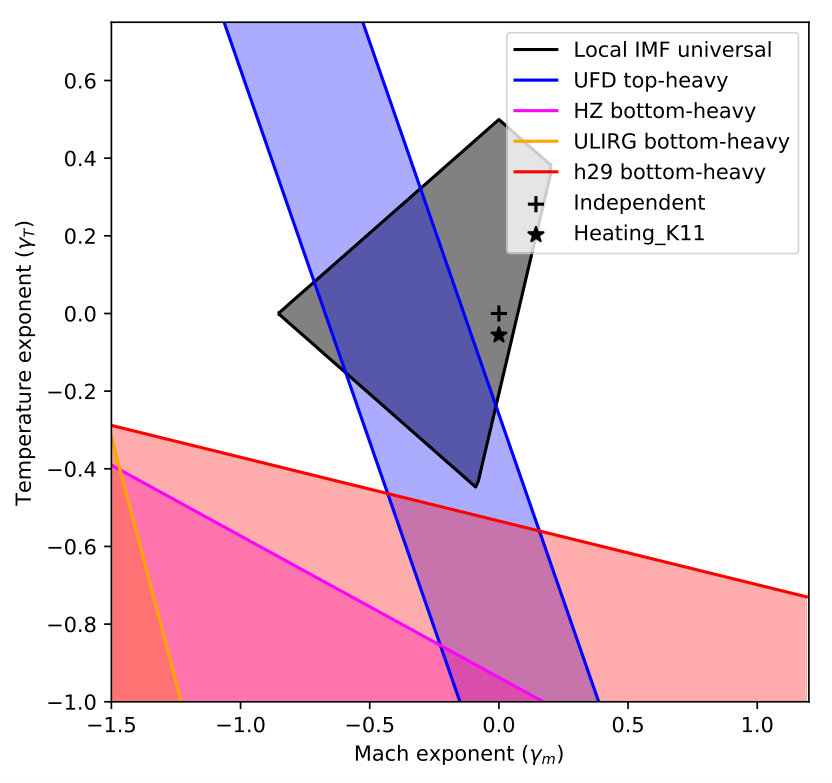 Figure 19
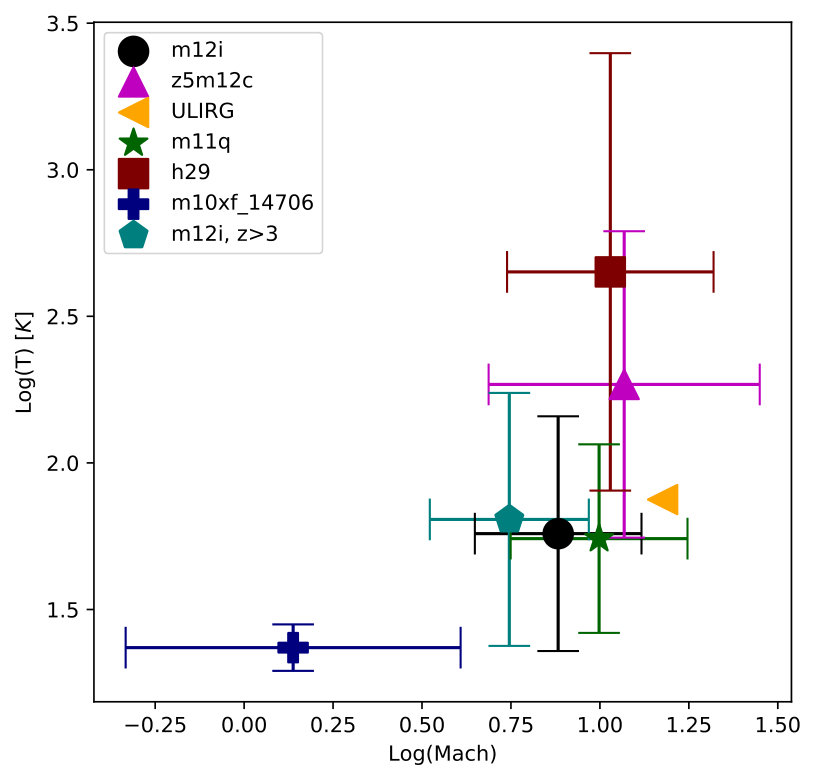 Figure 20
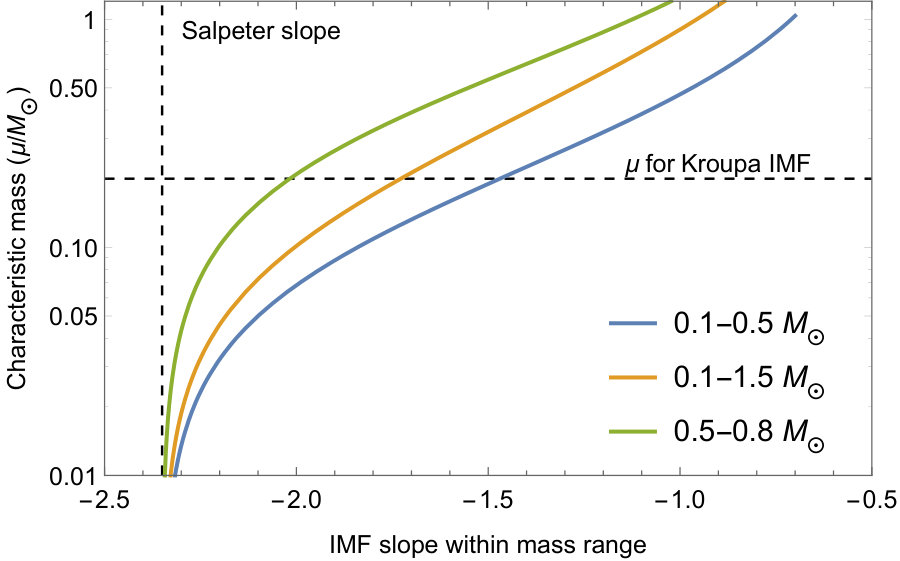 Figure 21
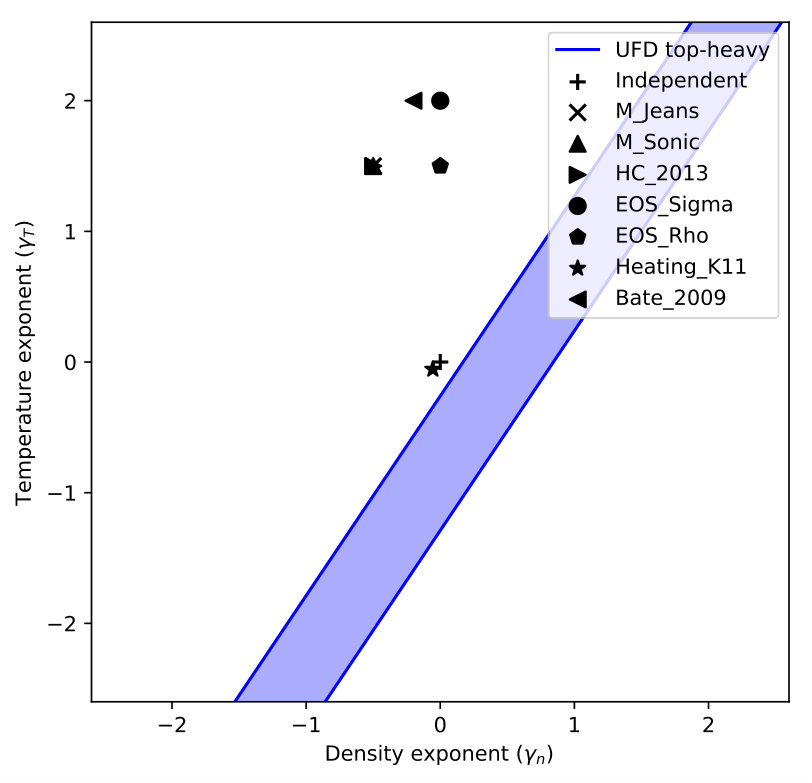 Figure 22
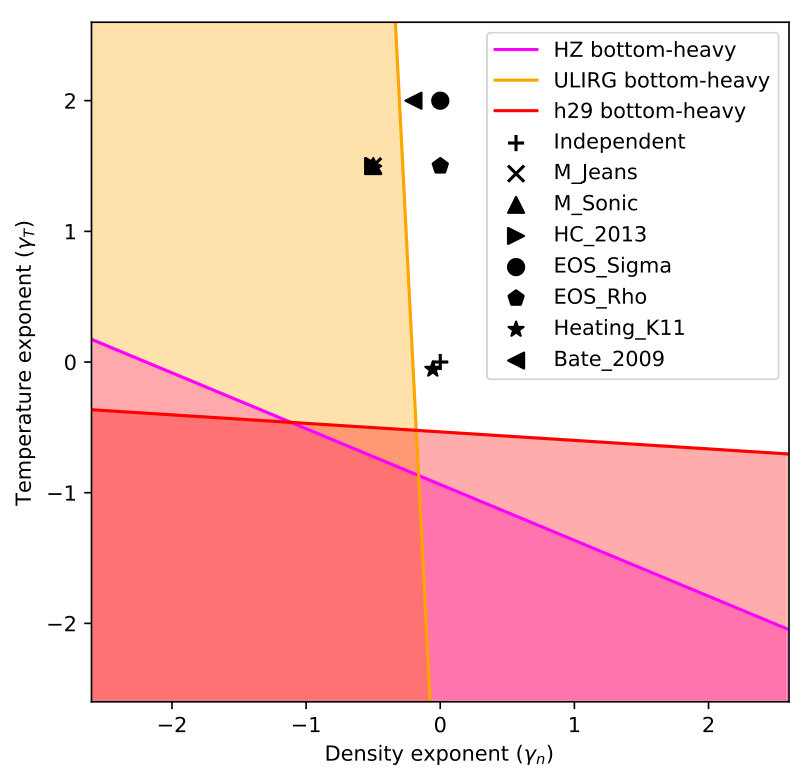 Figure 23
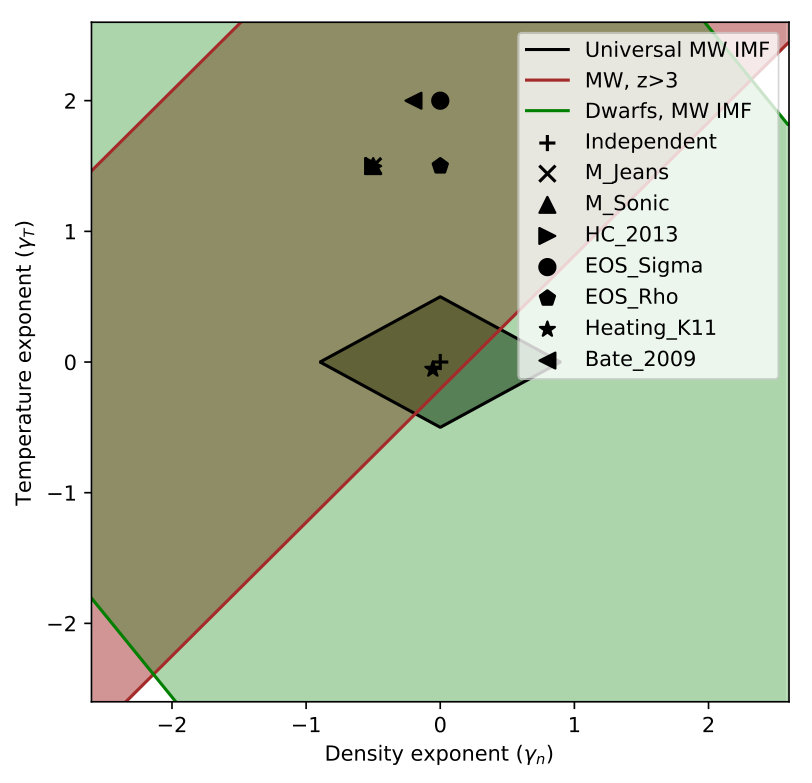 Figure 24
| Key | Type | Redshift | ||||||||
| m12i | MW-like | 55 | 0.1 | 85 | ||||||
| m11q | Dwarf, LMC-like | 32 | -0.62 | 75 | ||||||
| m10xf_14706 | UFD, satellite | 23 | -3.3 | N/A | ||||||
| h29_HR | Early type | 0.84 | 92 | -0.15 | 256 | |||||
| z5m12c | Early type | 3.3 | 110 | -0.75 | N/A |
| ULIRG-like cloud star-forming clouds | |
|---|---|
| Density | |
| Temperature | |
| Turbulent dispersion () | |
| Metallicity ( | |
| Magnetic field | 100 |
| Environment | Constraint | Reference | Proxy | |
|---|---|---|---|---|
| Milky Way | Universal IMF | Offner et al. (2014) | m12i | |
| Universal IMF | Bastian et al. (2010) and Figure 8 | |||
| Dwarf Galaxies | MW-like IMF | Offner et al. (2014) | m11q | |
| UFD Galaxies | Top-heavy IMF | Gennaro et al. (2018a) | m10xf_14706 | |
| MW-like IMF | Offner (2016) | |||
| Early Type Galaxies | Bottom-heavy IMF | Conroy et al. (2017) | z5m12c | |
| h29_HR | ||||
| ULIRG values | ||||
| MW-like IMF | Collier et al. (2018b) | z5m12c | ||
| h29_HR | ||||
| ULIRG values | ||||
| IMF Model | IMF scale () | Reference | Key | IMF variation/shift [dex] | ||||||
| sink particle average | bulk properties | |||||||||
| Jeans Mass | Bate & Bonnell 2005 | M_Jeans | 0.71 | 0.10 | -0.03 | -0.88 | 0.65 | 1.24 | -0.99 | |
| Turbulent/Sonic Mass | Hopkins 2012 | M_Sonic | 0.96 | 0.30 | 0.05 | -0.13 | 0.47 | 1.16 | -1.28 | |
| Hennebelle & Chabrier 2013 | HC_2013 | 1.98 | 0.37 | 0.12 | 0.61 | 0.28 | 1.01 | -1.57 | ||
| Opacity-limited, | Jappsen et al. 2005 | EOS_Rho | 0.60 | 0.07 | -0.06 | -0.58 | 0.76 | 1.27 | 0.17 | |
| Opacity-limited, | Bate 2009 | EOS_Sigma | 0.80 | 0.10 | -0.07 | -0.78 | 1.02 | 1.69 | 0.23 | |
| Protostellar Heating | Krumholz 2011 | Heating_K11 | 0.03 | 0.0001 | 0.005 | -0.01 | -0.04 | -0.05 | -0.14 | |
| Metallicity dependent | Martín-Navarro et al. 2015c | MN_2015 | 1.24 | 3.7 | 1.73 | 7.64 | 1.40 | 0.39 | -1.62 | |
Peer Reviews
No public reviews on file for this paper yet. If you reviewed it on a platform where reviews are public (OpenReview, ICLR, NeurIPS, ICML), you can paste yours below so the community can read it here.
Videos
No videos yet. Explain this paper in a talk, walkthrough, or lecture? Add one.
Is it possible to reconcile extragalactic IMF variations with a universal Milky Way IMF?
Dávid Guszejnov1, Philip F. Hopkins2 and Andrew S. Graus1
1Department of Astronomy, The University of Texas at Austin, Austin, TX 78712, USA
2TAPIR, MC 350-17, California Institute of Technology, Pasadena, CA 91125, USA E-mail:[email protected]
(To be submitted to MNRAS, )
Abstract
One of the most robust observations of the stellar initial mass function (IMF) is its near-universality in the Milky Way and neighboring galaxies. But recent observations of early-type galaxies can be interpreted to imply a “bottom-heavy” IMF, while others of ultra-faint dwarfs could imply a “top-heavy” IMF. This would impose powerful constraints on star formation models. We explore what sort of “cloud-scale” IMF models could possibly satisfy these constraints. We utilize simulated galaxies which reproduce (broadly) the observed galaxy properties, while they also provide the detailed star formation history and properties of each progenitor star-forming cloud. We then consider generic models where the characteristic mass of the IMF is some arbitrary power-law function of progenitor cloud properties, along with well-known literature IMF models which scale with Jeans mass, “turbulent Bonnor-Ebert mass”, temperature, the opacity limit, metallicity, or the “protostellar heating mass”. We show that no IMF models currently in the literature – nor any model where the turnover mass is an arbitrary power-law function of a combination of cloud temperature/density/size/metallicity/velocity dispersion/magnetic field – can reproduce the claimed IMF variation in ellipticals or dwarfs without severely violating observational constraints in the Milky Way. Specifically, they predict too much variation in the “extreme” environments of the Galaxy, compared to that observed. Either the IMF varies in a more complicated manner, or alternative interpretations of the extragalactic observations must be explored.
keywords:
stars: formation – turbulence – galaxies: star formation – cosmology: theory
1 Introduction
The mass distribution of stars at formation (often called the initial mass function or IMF) is a key part of cosmic evolution as it affects essentially all astrophysical scales. A key finding regarding the IMF is its apparent universality in the Milky Way and its satellite galaxies (see the reviews of Chabrier, 2003; Bastian et al., 2010; Offner et al., 2014; Krumholz, 2014), regardless of the locations and age of the observed population with a few possible outliers (e.g. Espinoza et al., 2009). While the IMF appears to be universal in the Galaxy, recent observations of the extragalactic IMF have been extrapolated to imply significant variations. Recent studies have looked at the centers of massive early type galaxies (ETGs) and have seen an apparent excess of low mass stars, a “bottom-heavy IMF” (see van Dokkum & Conroy, 2010, 2011; Conroy & van Dokkum, 2012; Treu et al., 2010; Sonnenfeld et al., 2015; Cappellari et al., 2012; Posacki et al., 2015; Martín-Navarro et al., 2015b, c). One must be cautious as these measurements use fundamentally different methods (e.g. Stellar Population Synthesis, SPS) than those used for IMF measurement in the Milky Way (e.g. star counting). For more details see the recent review of Hopkins 2018. This means that various interpretation of these extragalactic results can lead to different implied IMFs. Furthermore, several other studies conflict with the claimed variations (e.g. Smith, 2014; Smith et al., 2015, 2017; Collier et al., 2018a). Meanwhile observations relying on star counts in Ultra Faint Dwarf Galaxies imply an overabundance of high mass stars, a “top-heavy IMF” (see Geha et al., 2013; Gennaro et al., 2018a). Note, that due to large uncertainties in the results, MW-like IMFs are not entirely ruled out by many of these observations (e.g. Offner, 2016), and some UFD galaxies have IMFs consistent with a MW IMF, which means that the previously observed variations could be due to observational artefacts (El-Badry et al., 2017; Gennaro et al., 2018b).
Nonetheless, several theoretical models have been proposed to explain the claimed IMF variations. In fact, analytic sonic mass/turbulent Bonnor-Ebert mass models111In these models the IMF is regulated by isothermal turbulence, the higher the turbulent velocity dispersion the more the clouds fragment, which leads to more low mass stars. (e.g. Hennebelle & Chabrier, 2008, 2013; Hopkins, 2012) provide a remarkably good fit to the observed bottom-heavy IMF in ETGs. Several empirical models have also been proposed including ones that tie the IMF variations to metallicity (Martín-Navarro et al., 2015c)222Note that the observed IMF variations in ETGs correlate not only with metallicity but with the galactic scale velocity dispersion as well, see Zhou et al. (2019).. However, these models all have trouble explaining the apparent universality of the IMF in the Galaxy. For example, Guszejnov et al. (2017) have shown that the above mentioned sonic-mass based models predict too much IMF variation within the MW – dense, high Mach number regions like the Arches cluster, the “Brick” cloud and the galactic nucleus should have bottom heavy IMFs, while observations indicate a slightly top-heavy IMF (Espinoza et al., 2009; Hußmann et al., 2012). Furthermore, IMF measurements using star counting have consistently found no sign of metallicity dependence in globular clusters from super solar metallicities down to (e.g., De Marchi et al. 2010, see Bastian et al. 2010 and references therein). In fact, the most successful IMF models in the MW rely on heating via protostellar radiation to self-regulate the IMF with a turnover mass that depend exceptionally weakly on the environmental properties (see Krumholz, 2011). A significant problem with these models is that - due to their weak dependence on gas properties - they are likely unable to reproduce the claimed IMF variations even in extreme environments.
In this paper, we explore whether it is possible to reconcile the claimed IMF variations in ETGs and UFDs with the apparent IMF universality in the Milky Way. Similar to Guszejnov et al. (2017) we investigate IMF models that assume that the IMF of a stellar population is set by the properties of the progenitor cloud out of which they form. We gather cloud properties from high resolution cosmological simulations of different types of galaxies, allowing us to predict the properties of the entire stellar population of the galaxy for any IMF model.
The paper is organized as follows. In § 2.1 we introduce a simple 1-parameter analytic model (based on Maschberger 2013) to map the observed “IMF slopes” to actual mass functions. In § 2.2 we quantify both the observed IMF universality in the MW and the observed variations in UFDs and ETGs within the framework of our 1-parameter model. § 2.3 details the properties of the simulated galaxies we use for this study, while § 2.4 details the specific IMF models we investigate. We present our final results in § 3.
2 Model and Methods
2.1 IMF slope and characteristic mass
Observations relying on the integrated spectra of galaxies (SPS modeling) are currently unable to probe the IMF in its entire mass range. Instead they constrain the relative number for a few select types of stars, effectively calculating the “slope” of the IMF in relatively small mass ranges. As different measurements probe slightly different regions of the IMF (Hopkins, 2018), it is necessary to find a model that allows one to compare between these measurements.
In this paper we use a simplified version of the parametric IMF model of Maschberger (2013). In the model the IMF has the following form:
[TABLE]
In the low and high mass limits this simplifies to power laws with and slopes respectively. The characteristic mass scale is , this is where the function transitions between the two limits. Note that is just a normalization constant that depends on , and , as well as and , the low and high mass cut-offs of the IMF for which we use and .
Since most observations only measure a single slope of the IMF, it is necessary to reduce the number of parameters for our IMF model. In this paper we adopt and , which are the canonical fit values for the MW IMF. The adoption of these “fixed” slopes is further motivated by the fact that most scale-free structure formation processes naturally produce a slope in the mass function (Guszejnov et al., 2018). These parameters lead to the one parameter IMF model that we adopt for the rest of the paper, where
[TABLE]
This leaves the characteristic mass scale as the only free parameter, so our model essentially assumes that the IMF has a universal shape that can only be shifted to lower or higher masses (see Figure 1). As observations only constrain the IMF slope in a small dynamic range, such a one-parameter IMF can fit the observations.
Armed with this simple, one-parameter model we can create a one-to-one mapping between the slopes measured in different mass ranges and the characteristic mass (the “peak”/“turnover mass”) of the IMF. Figure 2 shows that the inferred characteristic mass is sensitive to the probed mass range, so one should be cautious when trying to compare different observations.
One of the aims of this paper is to explore the space of possible IMF models and identify what regions of this space would satisfy observational constraints. Due to the complexity of the task we limit our model space to theories where the IMF has the shape prescribed by Eq. 2 with a variable characteristic scale , which is determined by the properties of the star-forming cloud. For simplicity we further assume that can be approximately described as a power law in the form of
[TABLE]
where is the density, is the temperature, is the size scale, is the turbulent Mach number, is the metallicity and is the average magnetic field of the progenitor cloud. There are numerous examples of such IMF models, which have a somewhat fixed IMF shape and tie the characteristic mass to some property of the progenitor cloud, like Jeans mass (e.g. Bate & Bonnell, 2005), turbulent properties (e.g. Hennebelle & Chabrier, 2008; Hopkins, 2012; Padoan & Nordlund, 2011) or pressure (e.g. Krumholz, 2011).
2.2 IMF constraints
In this paper we investigate the effects of the following (proposed) observational constraints on the IMF model space (see Table 3 for quick summary):
Universal IMF in the MW: It has been fairly well established in the literature that the IMF in the MW is close to universal, regardless of the age and location of the stellar population (see reviews of Bastian et al., 2010; Offner et al., 2014; Hopkins, 2018). Slight variation is possible in the characteristic mass on which we impose the conservative estimate of 0.2 dex based on Figure 3 of Bastian et al. 2010. Furthermore, based on resolved star counts the IMFs of old stellar populations have a similar or slightly more massive peak (see Figure 8 and the references in the caption), still within the 0.2 dex limit333Note that dynamical evolution significantly alter the mass function of globular clusters leading to an apparent shift of the IMF peak to higher masses in studies that do not account for these effect (Baumgardt et al., 2008; Kruijssen, 2009). After correcting for these biases one can recover a near-universal IMF in the MW for populations of all ages.. 2. 2.
MW-like IMF in dwarfs: Dwarf galaxies like the LMC and SMC appear to have the same IMF as the MW despite different galactic metallicity, stellar mass and turbulent properties (see review Offner et al., 2014). Note that the completeness limit of these studies is (see Da Rio et al., 2009; Gouliermis, 2012) so the peak of the IMF is not actually resolved, thus some variation is possible. 3. 3.
Top-heavy IMF in ultra-faint dwarf galaxies: Several recent observations have been extrapolated to imply top-heavy IMFs in ultra faint dwarf (UFD) galaxies (see Geha et al., 2013; Gennaro et al., 2018a, b) but there is no consensus in the field about these claims (e.g. Offner, 2016). As Fig 3 shows, these results do not rule out a MW-like IMF with high confidence but are plausibly consistent with having a factor of 2 higher than in the MW. Due to this uncertainty, we explore the constraints arising from either having a top-heavy IMF or MW-like UFD IMF. 4. 4.
Bottom-heavy in early-type galaxies: There is growing indirect evidence suggesting that centers of early-type galaxies (ETGs) may have IMFs that are significantly more bottom heavy than the MW IMF (e.g. van Dokkum & Conroy, 2010, 2011; Conroy & van Dokkum, 2012; Treu et al., 2010; Sonnenfeld et al., 2015; Cappellari et al., 2012). A recent study by Conroy et al. (2017) put the characteristic mass for one such galaxy below , about a factor of 3 smaller than the MW value. 5. 5.
MW-like IMF in early-type galaxies: Several recent studies using gravitational lensing have found ETGs to have mass-to-light ratios consistent with a MW-like IMF (see Collier et al., 2018a, b). This contradicts the results from studies using stellar population synthesis models. In this paper we will investigate the effects of both constraints.
2.3 Simulations
We utilize several simulated galaxies from the Feedback in Realistic Environments (FIRE) project (Hopkins et al. 2014)444http://fire.northwestern.edu. These galaxies have been presented in detail in Hopkins et al. (2018), Anglés-Alcázar et al. (2017) and Graus et al. (2019) with one exception (z5m12c) that we will later discuss in § 2.3.1 (also, see § 2.3.2 on how we choose our UFD proxy). These are cosmological “zoom-in” simulations, which means that the simulation starts from a large cosmological box that is later rerun with increased resolution in areas of matter concentration (“zooms-in” on galaxies). The simulations proceed from to present day (except z5m12c and h29_HR, see § 2.3.1). They are run using the GIZMO code Hopkins 2015)555http://www.tapir.caltech.edu/~phopkins/Site/GIZMO.html, with the mesh-free Godunov “MFM” method for the hydrodynamics (Hopkins, 2015). Self-gravity is included with fully-adaptive force and hydrodynamic resolution. The simulations include detailed metallicity-dependent cooling physics from K, including photo-ionization/recombination, thermal bremsstrahlung, Compton, photoelectric, metal line (following Wiersma et al. 2009), molecular, fine structure (following Ferland et al. 2013), dust collisional and cosmic ray processes, including both a meta-galactic UV background and each star in the simulation as a local source. The mass resolution for individual simulations is fixed and varies between among our simulated galaxies (see Table 1).
The resolution of these cosmological simulations is not high enough to resolve the formation of individual stars (), instead star formation is approximated from resolved scales using a sink particle method. Gas is transformed into a sink particle if it:
Is locally self-gravitating 2. 2.
Is self-shielding 3. 3.
Is Jeans-unstable 4. 4.
Exceeds a minimum density threshold (, see Table 1)
Such a sink particle is transformed into a “star cluster sink particle” on its dynamical time. Each of these represent a stellar population with the same formation properties (age, metallicity etc.) an thus the same IMF.
These “star cluster sink particles” provide feedback to the simulation via OB & AGB mass-loss, SNe Ia & II, and multi-wavelength photo-heating and radiation pressure; with inputs taken directly from stellar evolution models (Leitherer et al., 1999), assuming (in-code) a universal IMF (Kroupa, 2002)666A major caveat of our analysis is that the feedback processes in the simulations assume a Kroupa IMF, so our post-processing neglects the potential feedback from a varying IMF and how it could enhance or suppress further IMF variation in a galaxy..
In this work, similar to Guszejnov et al. (2017), we use cosmological simulations instead of present-day observations because they give us access to the entire star formation history of a galaxy. In a simulation we know the properties of star forming progenitor clouds at all times, allowing us predict the IMF variation for the entire stellar population in a galaxy.
2.3.1 Finding a Proper Proxy for Massive Elliptical Galaxies
For our analysis we utilize simulated present-day galaxies where the at-formation properties of all sink particles (star clusters) are available. We use these galaxies as proxies for the Milky Way (m12i), LMC and SMC (m11q) and UFDs (m10q). For early type galaxies we currently don’t have access to such simulations so in this study we use three different proxies:
h29_HR: This is a simulated FIRE galaxy with additional black hole physics which lead to extreme starburst behavior, similar to what we expect in early type galaxies (see simulation A2 in Anglés-Alcázar et al., 2017, for details). Unfortunately for these runs the at-formation properties of sinks were not saved. Re-running the simulation would have been very expensive, so instead we post-processed the about 150 snapshot files of the simulation, taking actively star-forming gas from each to approximate the distribution of progenitor cloud properties over cosmic time. In our previous study (Guszejnov et al., 2017) we found that this approach provides a good approximation of the actual distribution. A major caveat with this proxy is that AGN feedback is poorly understood and thus it is not implemented in these simulations, despite the fact that it is believed to be one of the main mechanisms shutting off star formation. 2. 2.
z5m12c: This run was originally conceived to study galaxy scaling relation in the era of reionization (see Ma et al., 2018, for details of the simulation setup). It utilizes the same FIRE physics suite and the progenitor cloud properties are saved for all sink particles. Although this galaxy was simulated only to , it is the progenitor of massive elliptical galaxy. The reason the simulation was not run further is due to the uncertainties in the physics that would quench star formation in such a galaxy. The stellar mass of z5m12c is only at , which is only a few percent of the mass it would attain by , the time from which most ETG IMF measurements are from. Nevertheless we can still use this simulated galaxy to look at the oldest population of stars in a ETGs. 3. 3.
Both previous proxies have important caveats, so as a complementary approach we will approximate the properties of the progenitor clouds in ETGs using typical values for galaxies with extreme star formation (e.g. an Ultra Luminous Infrared Galaxy - ULIRG), see Table 2.
Our 3 proxies essentially cover three possible ways to deal with the uncertain physics related to the quenching of star-formation in early type galaxies. With h29_HR we neglect it and carry on with the simulation until . In the case of z5m12c the simulation is stopped before AGN feedback could become important (), so we are essentially assuming very strong, early quenching. Finally, by using the canonical ULIRG values we avoid the potential issues with the simulations, but these values are highly arbitrary.
2.3.2 Finding a Proxy for Ultra Faint Dwarf Galaxies
To find an appropriate proxy for a UFD galaxy we use the simulations of Graus et al. (2019). With a combination of the Rockstar halo finder (Behroozi et al., 2013), and the Amiga Halo Finder (Knollmann & Knebe, 2009, AHF) we identify halos and then select for galaxies with a low stellar mass (). In m10xf there are over 150 such low-mass, from these we restrict our study to those whose stellar population is well-resolved (>25 “star” sink particles), which essentially sets the lower bound to our galaxy masses as . This leaves 8 galaxies, for our study we choose m10xf_14706, the one with the lowest stellar mass (). Note that picking a different galaxy from this group does not change the qualitative results of this study.
2.4 From Parent Cloud to IMF Properties
Because the simulations resolve down to cloud scales, but no further, we treat each star-forming gas element as an independent “parent cloud”, which sets the initial conditions for its own detailed IMF model (in accordance with the IMF models we investigate). Specifically, whenever a sink particle is spawned, we record all properties of the parent gas element from which it formed, and use these in post-processing to predict the IMF for the stellar population it spawns. From this point we infer the IMF characteristic mass from the initial conditions of the parent clouds that form stars in the simulations (see Guszejnov et al., 2016, for an example of how GMC properties could be mapped to the IMF). While we investigate the entire model space described by Eq. 3 we give special attention to the following classes of models that are common in the literature (summarized in Table 4):
- •
Jeans mass models: Gas clouds collapse primarily through the Jeans instability. This model assumes that the initial Jeans mass of the progenitor cloud sets the characteristic mass of the stars it spawns (e.g. Bate & Bonnell 2005), so
[TABLE]
Note that the models may still assume sub-fragmentation to smaller scales, but the key assumption (for our purposes) is simply that the turnover mass is proportional to the parent cloud Jeans mass.
- •
Opacity limited equation of state (EOS) models: As clouds become denser they reach the point where they become opaque to their own cooling radiation, leading to a transition from isothermal to adiabatic behavior, suppressing fragmentation at the Jeans mass corresponding to this critical volume density (e.g. Low & Lynden-Bell 1976; Whitworth et al. 1998; Larson 2005; Glover & Mac Low 2007; Jappsen et al. 2005; Masunaga & Inutsuka 2000). Motivated by radiation transfer simulations like Bate (2009) we also investigated the case where the transition occurs at a critical surface density . The resulting characteristic masses are:
[TABLE]
where and are the critical densities for the isothermal-adiabatic transition.
- •
Turbulent/sonic mass models: Several analytical theories derive the core mass function (CMF) and the IMF from the properties of the turbulent medium, in which they form (e.g. Padoan & Nordlund 2002; Hennebelle & Chabrier 2008; Hopkins 2012; Hennebelle & Chabrier 2013). In these models, both the CMF and IMF peaks are set by the “sonic mass” , namely the turbulent Jeans or Bonner-Ebert mass at the sonic scale () below-which the turbulence becomes sub-sonic and therefore fails to generate large density fluctuations (which seed fragmentation). The various theories give slightly different answers to this critical mass, in this paper we will use the definitions of Hopkins (2012) and Hennebelle & Chabrier (2013), which give:
[TABLE]
where is defined through the linewidth-size relation
[TABLE]
In our simulations is estimated for a progenitor cloud (sink particle) by measuring the velocity dispersion (after subtracting the mean shear) between neighboring gas particles in a sphere of radius (taken to be that which encloses the nearest gas neighbours).
- •
Protostellar feedback models: Although there are a number of ways newly-formed stars can regulate star formation, most studies have concluded that at the scale of the IMF peak (early protostellar collapse of clouds) the most important self-regulation mechanism is radiative feedback from protostellar accretion (Bate, 2009; Krumholz, 2011; Guszejnov et al., 2016). This sets a unique mass and spatial scale within which the protostellar heating has raised the temperature to make the core Jeans-stable, suppressing fragmentation. The resulting critical mass is
[TABLE]
where is the pressure of the gas. There are several other formulas in the literature (e.g. Bate 2009); the differences are due to the detailed uncertainties in the treatment of radiation. However, for our purposes, they give nearly identical results, so we will focus on the model from Krumholz (2011).
- •
Metallicity dependent IMF models: Some SPS analyses of early-type galaxies have been empirically fit by assuming a trend of increasingly shallow IMF slopes with decreasing metallicity (see Martín-Navarro et al. 2015c and Figure 8). This phenomenological model sets the slope of the IMF (in the range) as:
[TABLE]
where M/H is the logarithm of the mass-weighted total metallicity relative to the solar value. Note that the actual measurements are only sensitive to the IMF in the regime and the above relation was derived in Martín-Navarro et al. 2015c by assuming a two-part IMF with fixed parameters below . To preserve generality, we use instead the single-power-law IMF fit from that work which yields:
[TABLE]
Using the one-parameter model from Eq. 2, we can convert the metallicity-slope relation into the -metallicity relation of
[TABLE]
As shown in Figure 8 this phenomenological model provides a good fit for the inferred extragalactic IMFs but drastically overpredicts the variations for old stellar populations within the MW.
3 Results and Discussion
Using our simulation proxies we can calculate the shifts and variations of the IMF for the previously mentioned models. Table 4 shows although some models can come close to reproducing the claimed UFD and ETG IMF variations (e.g. Hennebelle & Chabrier 2013), these drastically violate IMF universality within the MW. We find that none of the current models in the literature can satisfy all constraints, so we extend our search to generic models following Equation 3.
Using the variations in progenitor cloud properties in the MW-like galaxy of m12i we can identify the IMF models (the exponents for Eq. 3) that would satisfy IMF universality in the MW (this exercise is worked out in detail by Guszejnov et al. (2017)). With our additional constraints for old MW populations, dwarf galaxies, UFDs and ETGs from § 2.2 we can further restrict the model space, see Appendix A. We investigate both models from the literature (see Table 4 for results) and generic models following Equation 3 (see Figure 6 for an example). In general, we can draw the following conclusion:
- •
The large difference in average cloud metallicity in the older () stellar population in our MW-like galaxies (m12i,see Figure 4) compared to average and the significant scatter in metallicity in the latter, only allows the IMF characteristic mass to have a weak metallicity dependence (see Figure 6).
- •
There is little-to-no overlap between the regions that satisfy local IMF universality and those that reproduce the observed IMF shifts in ETGs (see Figure 6 and Figure 8).
- •
MW universality strongly rules out most IMF models in the literature, including the turbulent/sonic mass models (see Guszejnov et al., 2017, for a detailed analysis).
- •
There exists a significant region of the model space that satisfies the assumption that the IMF is near universal in all types of galaxies ( scatter in the galactic mean ). An example of such “weakly varying IMF” models is the protostellar heating model of Krumholz 2011 (Heating_K11).
None of the models detailed in § 2.4 can reproduce the IMF variations which have been claimed for either ETGs or UFDs without grossly violating constraints from the local measurements with resolved star counts. Meanwhile the only model that reproduces the MW observations (the Protostellar Heating model) predicts essentially zero IMF variations in almost all environments. It is therefore natural to ask whether there even exists a model that can reproduce both the claimed variations and the near-universality in the MW. Progenitor clouds have essentially 6 (nearly) independent properties: size, density, temperature, Mach number, magnetic field strength and metallicity999In the simulations we used there is some correlation between these quantities, but we neglect them here for simplicity. Taking them into account does not change the result significantly.. We are looking for the exponents corresponding to these quantities in Eq. 3. If these quantities are independent then MW universality allows us to restrict the space we search to a 6D rectangle whose sides are described by: , where is how many orders of magnitude of scatter quantity has in our proxy for the MW (m12i), while is the maximum allowed scatter in the MW IMF peak (0.2 dex, see § 2.2). Within this region we use a Monte-Carlo search to find a set of exponents that would satisfy all criteria. We find the following:
There is a significant volume in the model space that satisfies local IMF universality and produces a top-heavy IMF UFD galaxies. 2. 2.
In case of our ETG proxy where we followed the galaxy evolution to without AGN effects we find that there is no IMF model in the shape of Equation 3 that can satisfy local IMF universality and produce the claimed bottom-heavy IMF. 3. 3.
There exist a small volume in the model space that seems to satisfy local IMF universality and reproduce the observed IMF variations in both UFDs and ETGs (either z5m12c or ULIRG values, not both). These models however do not correspond to any known physical mechanism (e.g. ). Furthermore they all utilize the fact that the cloud sizes in z5m12c and in the ULIRG values are significantly different from the values in m12i. Note that the mass resolution and the critical density of the simulations (see Table 1) set a size scale that appears in the sink particle sizes and thus in the progenitor cloud sizes (essentially the size scale where the simulation replaces gas clouds with sink particles). To verify these models we use a lower mass resolution version of m12i (, like in Guszejnov et al. 2017), which clearly rules out all of these models. This means that there is no generic model that satisfies all constraints. 4. 4.
If we relax the claimed variations in early-type galaxies (e.g. a factor 2 shift instead of 3) we find that a significant volume of the model space can produce appropriate bottom-heavy IMFs for both simulation proxies (z5m12c and h29_HR) as well as satisfying local IMF universality and producing a top-heavy IMF for UFDs. Still, these models correspond to no known physical mechanism (e.g. ).
4 Conclusions
In this paper we used different types of simulated galaxies to infer what constraints different observational claims impose on theoretical IMF models. We mainly focused on three common claims from the literature: 1) that the IMF in the MW and nearby dwarf galaxies is nearly universal, 2) that the IMF in early-type galaxies is “bottom-heavy” and 3) that the IMF in ultra-faint dwarf galaxies is “top-heavy”. We found that the current models in the literature either fail to reproduce the observed IMF variations or violate IMF universality in the MW.
We also investigated generic IMF models where the IMF characteristic mass is a power-law of progenitor cloud properties. Despite the high dimensionality of the model space, we find that no model where the turnover mass is an arbitrary power-law function of a combination of cloud temperature/density/size/metallicity/velocity dispersion/magnetic field can reproduce the claimed IMF variation in ellipticals or dwarfs without severely violating observational constraints in the Milky Way.
One possibility is that the characteristic mass of the IMF is set by a yet unknown physical mechanism. Another, more likely scenario is that the magnitude of of IMF variations in ETGs are overestimated in stellar population synthesis models. This would further explain why non-SPS based methods (e.g. gravitational lensing, see Collier et al. 2018a) appear to contradict SPS-based observations. There are a several possible reasons for such a bias, most of them coming from the inherent uncertainties of extrapolating stellar atmosphere models to extreme metallicities. We find that relaxing the claimed variations greatly increases the number of possible models.
Acknowledgments
Support for DG and PFH was provided by an Alfred P. Sloan Research Fellowship, NSF Collaborative Research Grant #1715847 and CAREER grant #1455342, and NASA grants NNX15AT06G, JPL 1589742, 17-ATP17-0214. Numerical calculations were run on the Caltech compute cluster “Wheeler,” allocations from XSEDE TG-AST130039 and PRAC NSF.1713353 supported by the NSF, and NASA HEC SMD-16-7592. This work used computational resources of the University of Texas at Austin and the Texas Advanced Computing Center (TACC; http://www.tacc.utexas.edu), the NASA Advanced Supercomputing (NAS) Division and the NASA Center for Climate Simulation (NCCS). DG and ASG were supported by the Harlan J. Smith McDonald Observatory Postdoctoral Fellowship. We would like to thank Stella Offner, Daniel Anglés-Alcázar and Alexa Villaume for their help and comments.
Appendix A Effects of individual constraints on the allowed IMF exponents
In this appendix we show how the individual constraints affect the available parameter space for the IMF models defined by Equation 3. Figure 7 show that the requirement for low galactic scatter in the characteristic IMF mass drastically reduce the available exponents. Requiring that old stellar populations have similar or slightly more massive further restricts this space, especially in the case of the metallicity exponent . Meanwhile, Figure 8 show that although a large volume of parameter space would reproduce the inferred bottom-heavy IMF in early type galaxies, few models in the literature can do so and only in case of using canonical ULIRG values instead of simulated galaxies.
The reference list from the paper itself. Each links out to its DOI / PubMed record.
- 1Alves de Oliveira et al. (2013) Alves de Oliveira C., Moraux E., Bouvier J., Duchêne G., Bouy H., Maschberger T., Hudelot P., 2013, A&A , 549, A 123 · doi ↗
- 2Anglés-Alcázar et al. (2017) Anglés-Alcázar D., Faucher-Giguère C.-A., Quataert E., Hopkins P. F., Feldmann R., Torrey P., Wetzel A., Kereš D., 2017, MNRAS , 472, L 109 · doi ↗
- 3Bastian et al. (2010) Bastian N., Covey K. R., Meyer M. R., 2010, ARA&A , 48, 339 · doi ↗
- 4Bate (2009) Bate M. R., 2009, MNRAS , 392, 1363 · doi ↗
- 5Bate & Bonnell (2005) Bate M. R., Bonnell I. A., 2005, MNRAS , 356, 1201 · doi ↗
- 6Baumgardt et al. (2008) Baumgardt H., De Marchi G., Kroupa P., 2008, Ap J , 685, 247 · doi ↗
- 7Bayo et al. (2011) Bayo A., et al., 2011, A&A , 536, A 63 · doi ↗
- 8Behroozi et al. (2013) Behroozi P. S., Wechsler R. H., Wu H.-Y., 2013, Ap J , 762, 109 · doi ↗