Efficient Winograd or Cook-Toom Convolution Kernel Implementation on Widely Used Mobile CPUs
Partha Maji, Andrew Mundy, Ganesh Dasika, Jesse Beu, Matthew Mattina,, Robert Mullins

TL;DR
This paper presents optimized implementation strategies for Winograd and Cook-Toom convolution algorithms on mobile ARM Cortex-A CPUs, achieving up to 60% faster inference in CNNs by leveraging SIMD instructions and resource utilization improvements.
Contribution
It introduces efficient implementation techniques for Winograd and Cook-Toom convolutions on embedded ARM CPUs, addressing a gap in optimized CNN deployment on mobile devices.
Findings
Up to 60% inference latency reduction compared to existing methods
Effective utilization of ARMv8-A NEON SIMD instructions
Region-wise multi-channel implementation improves performance
Abstract
The Winograd or Cook-Toom class of algorithms help to reduce the overall compute complexity of many modern deep convolutional neural networks (CNNs). Although there has been a lot of research done on model and algorithmic optimization of CNN, little attention has been paid to the efficient implementation of these algorithms on embedded CPUs, which usually have very limited memory and low power budget. This paper aims to fill this gap and focuses on the efficient implementation of Winograd or Cook-Toom based convolution on modern Arm Cortex-A CPUs, widely used in mobile devices today. Specifically, we demonstrate a reduction in inference latency by using a set of optimization strategies that improve the utilization of computational resources, and by effectively leveraging the ARMv8-A NEON SIMD instruction set. We evaluated our proposed region-wise multi-channel implementations on Arm…
Click any figure to enlarge with its caption.
 Figure 1
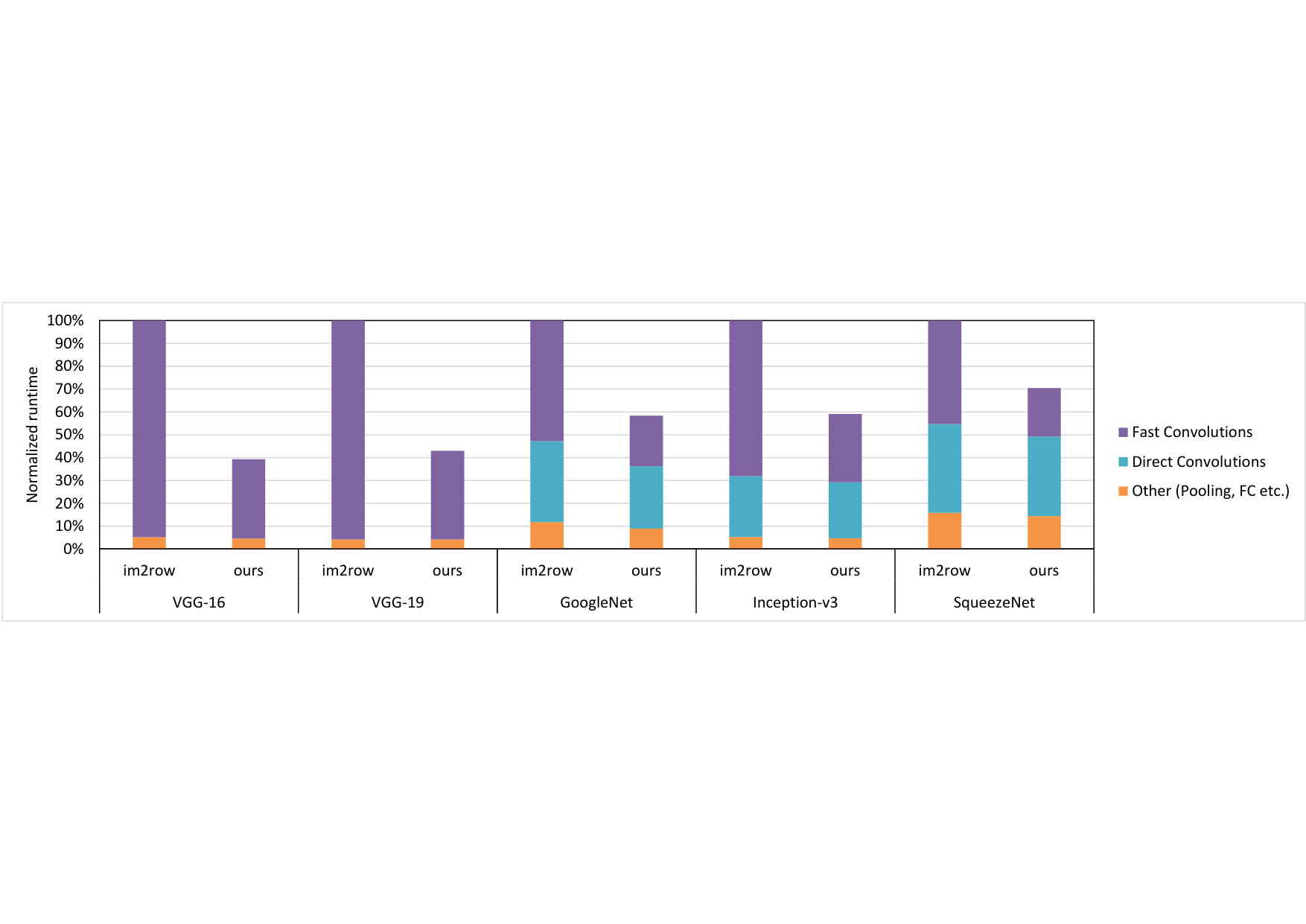 Figure 2
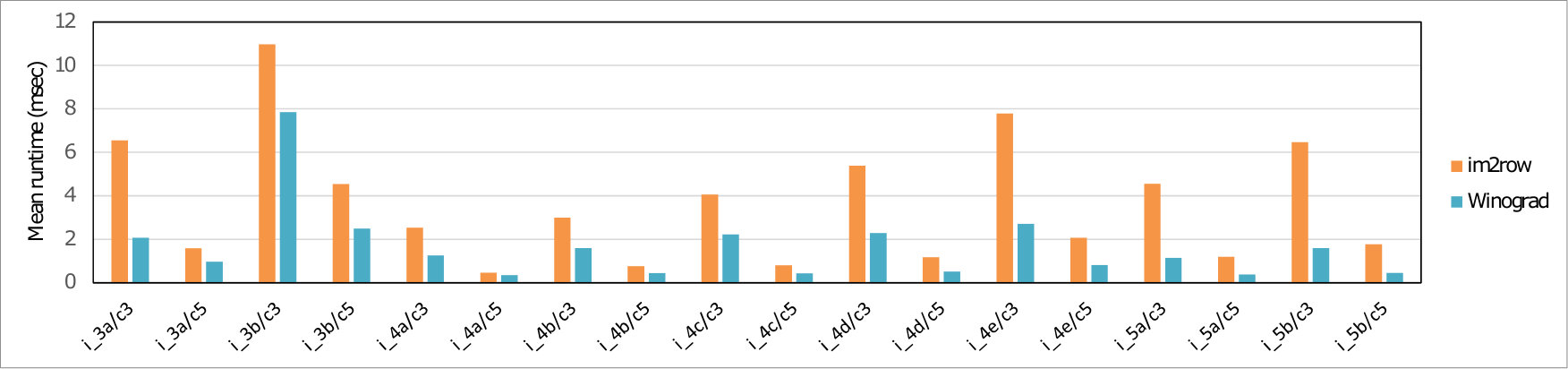 Figure 3
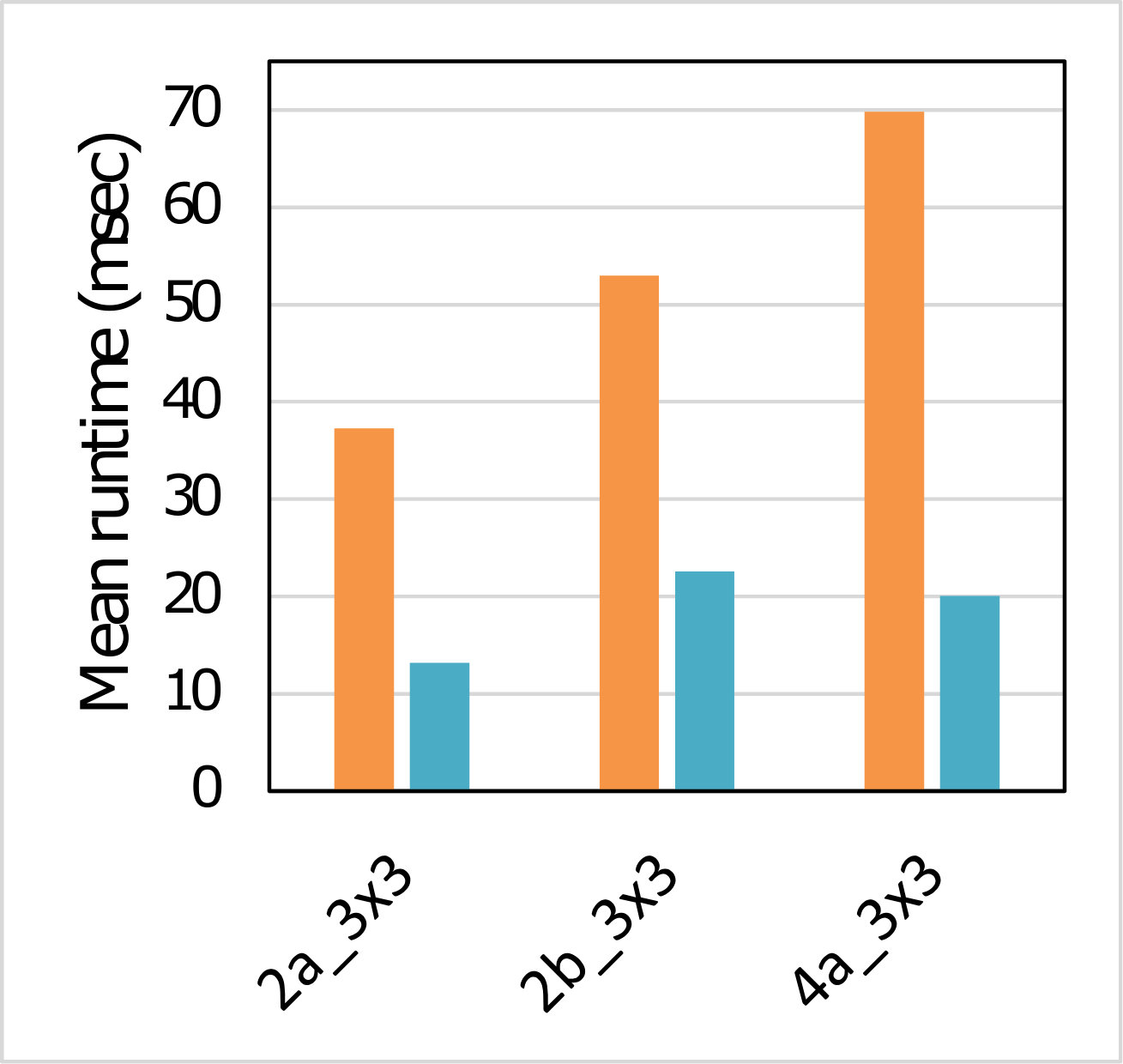 Figure 4
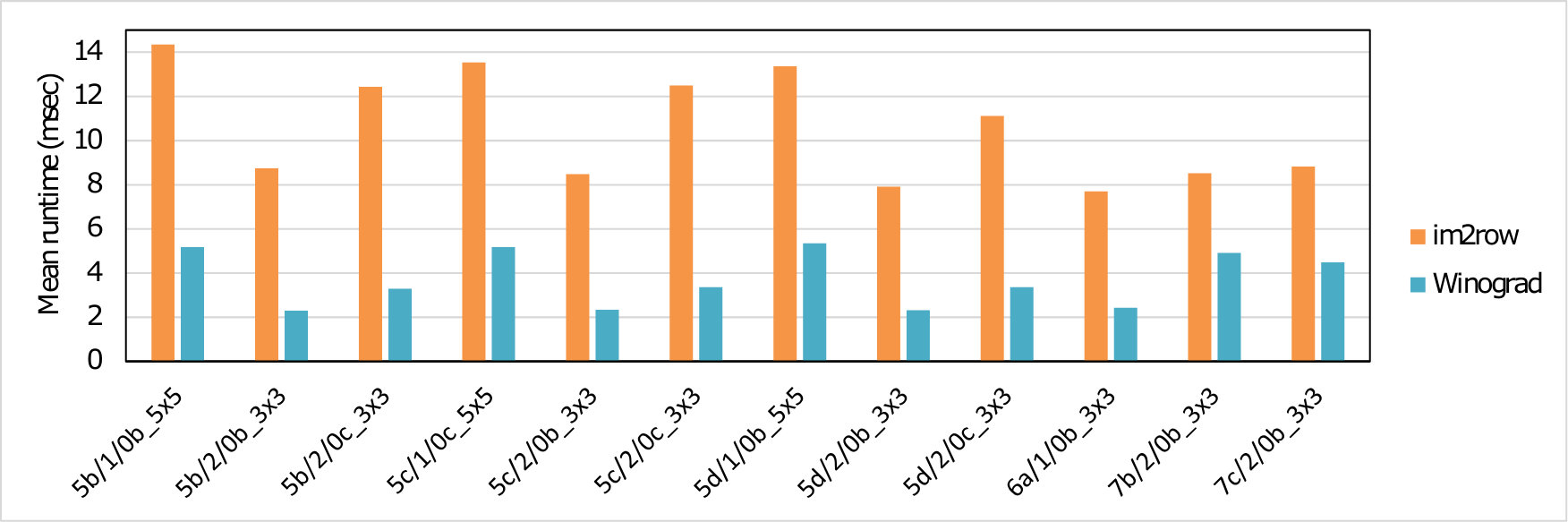 Figure 5
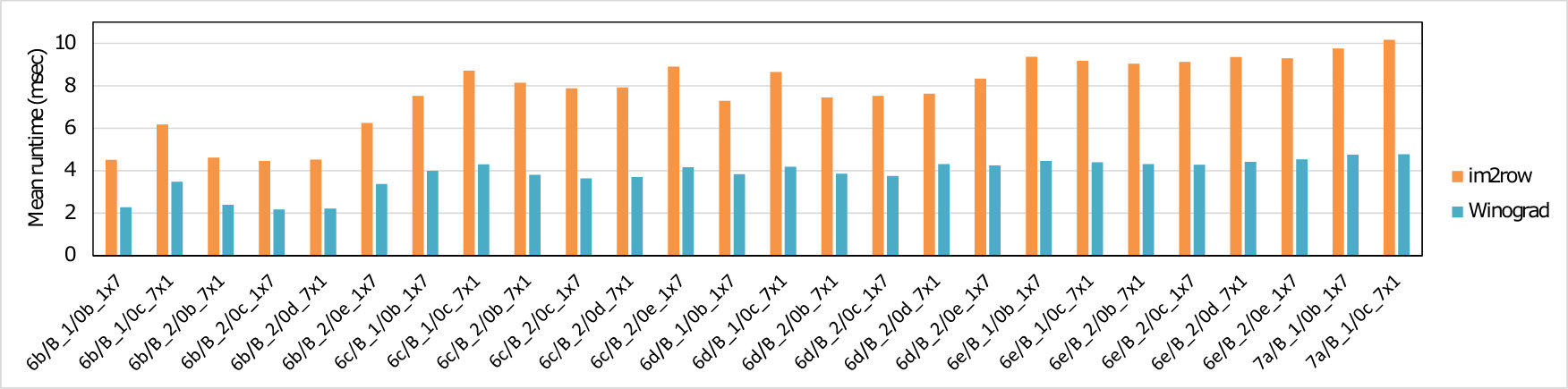 Figure 6
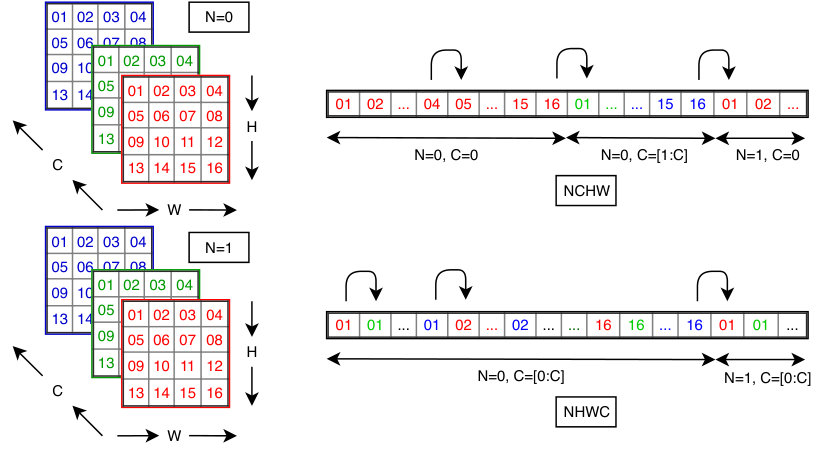 Figure 7
 Figure 8
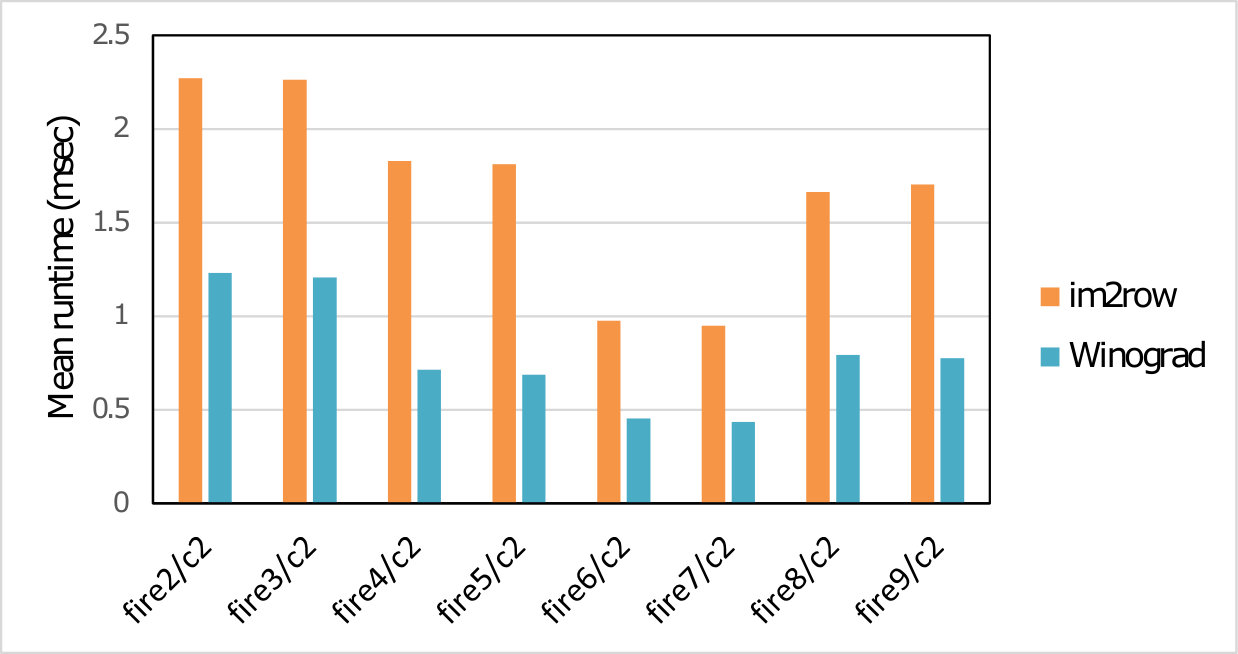 Figure 9
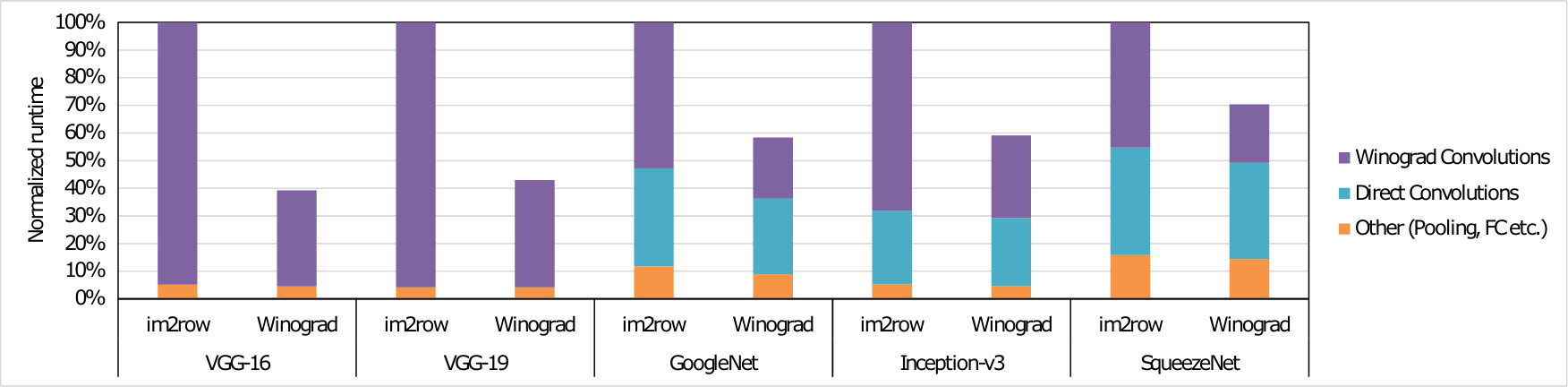 Figure 10
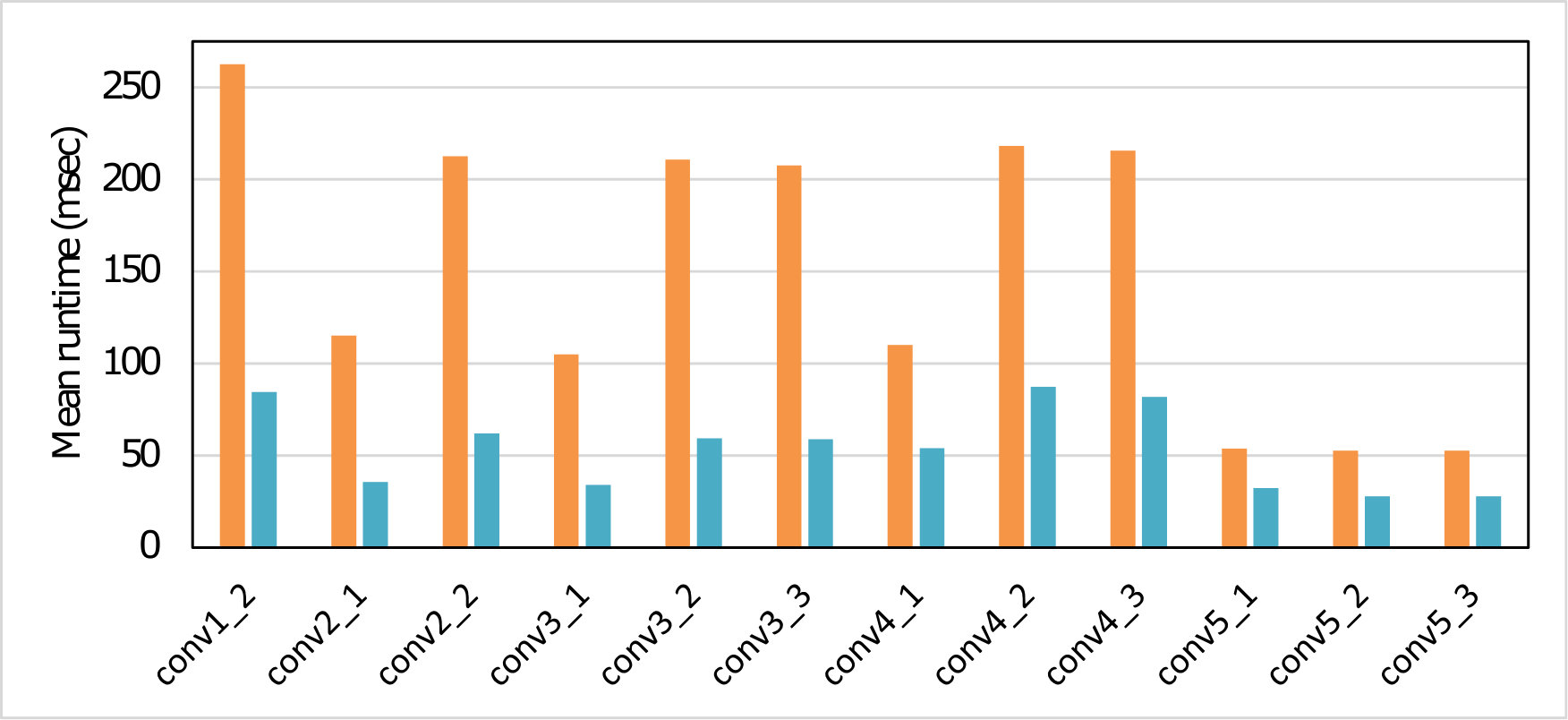 Figure 11
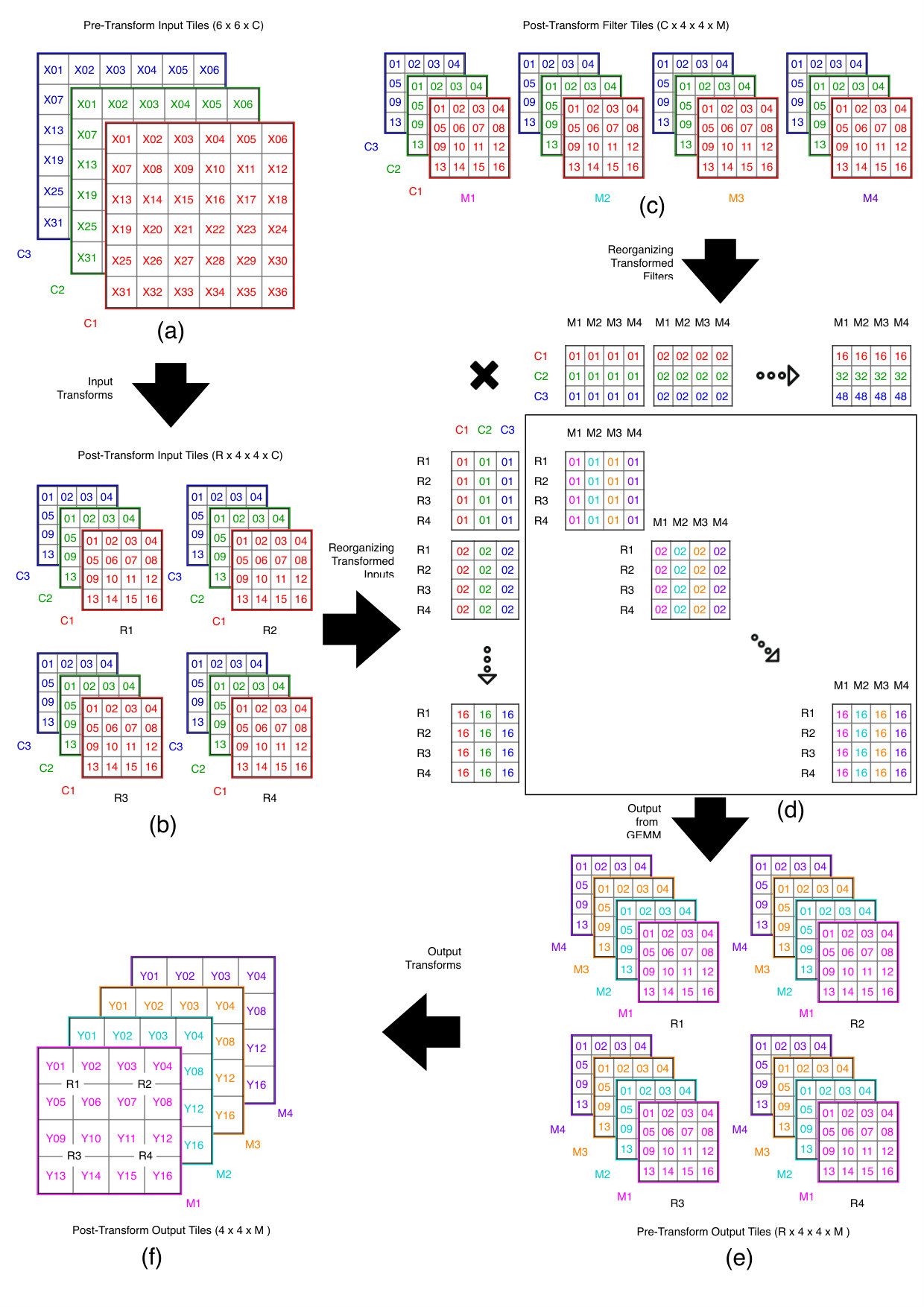 Figure 12
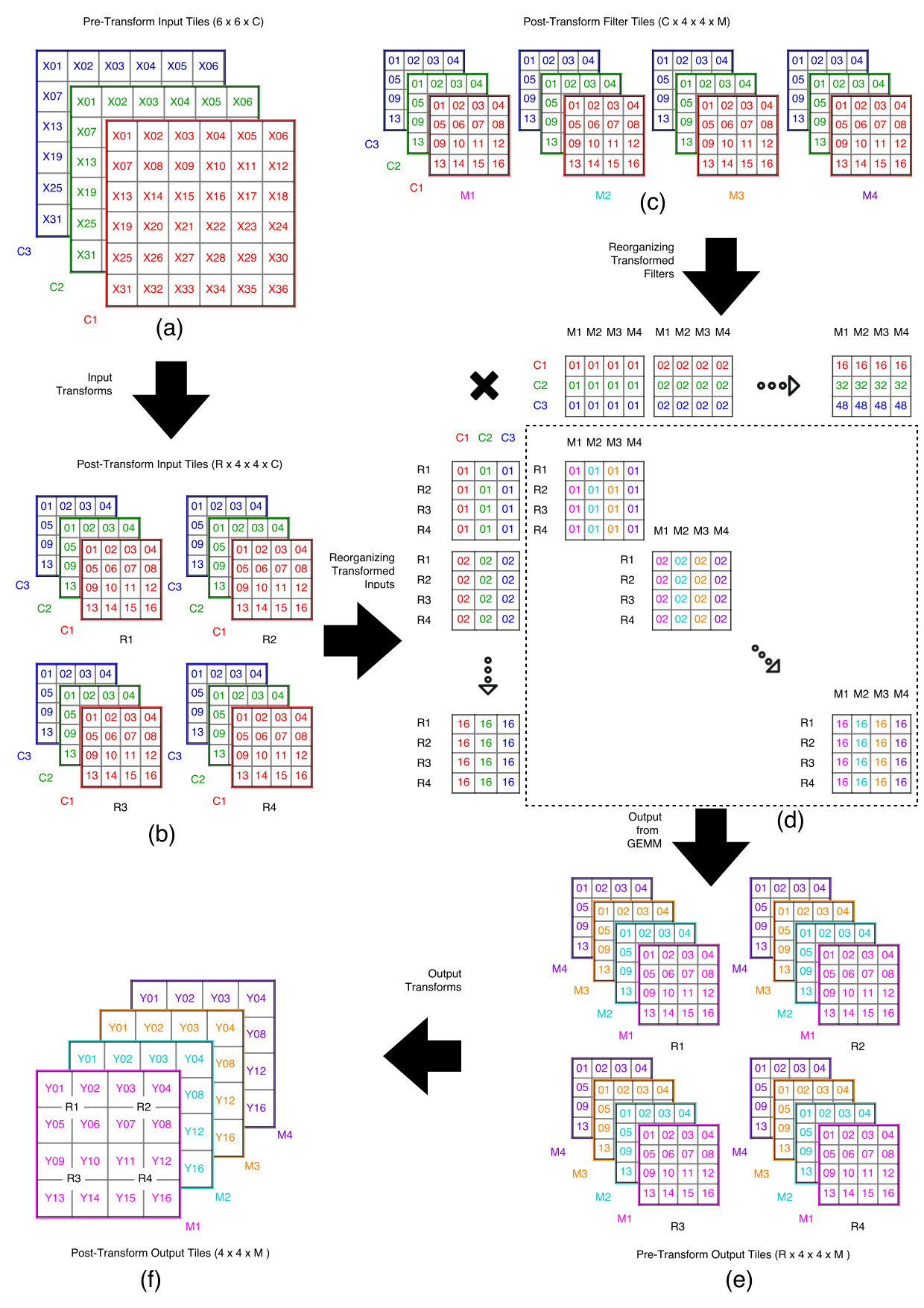 Figure 13
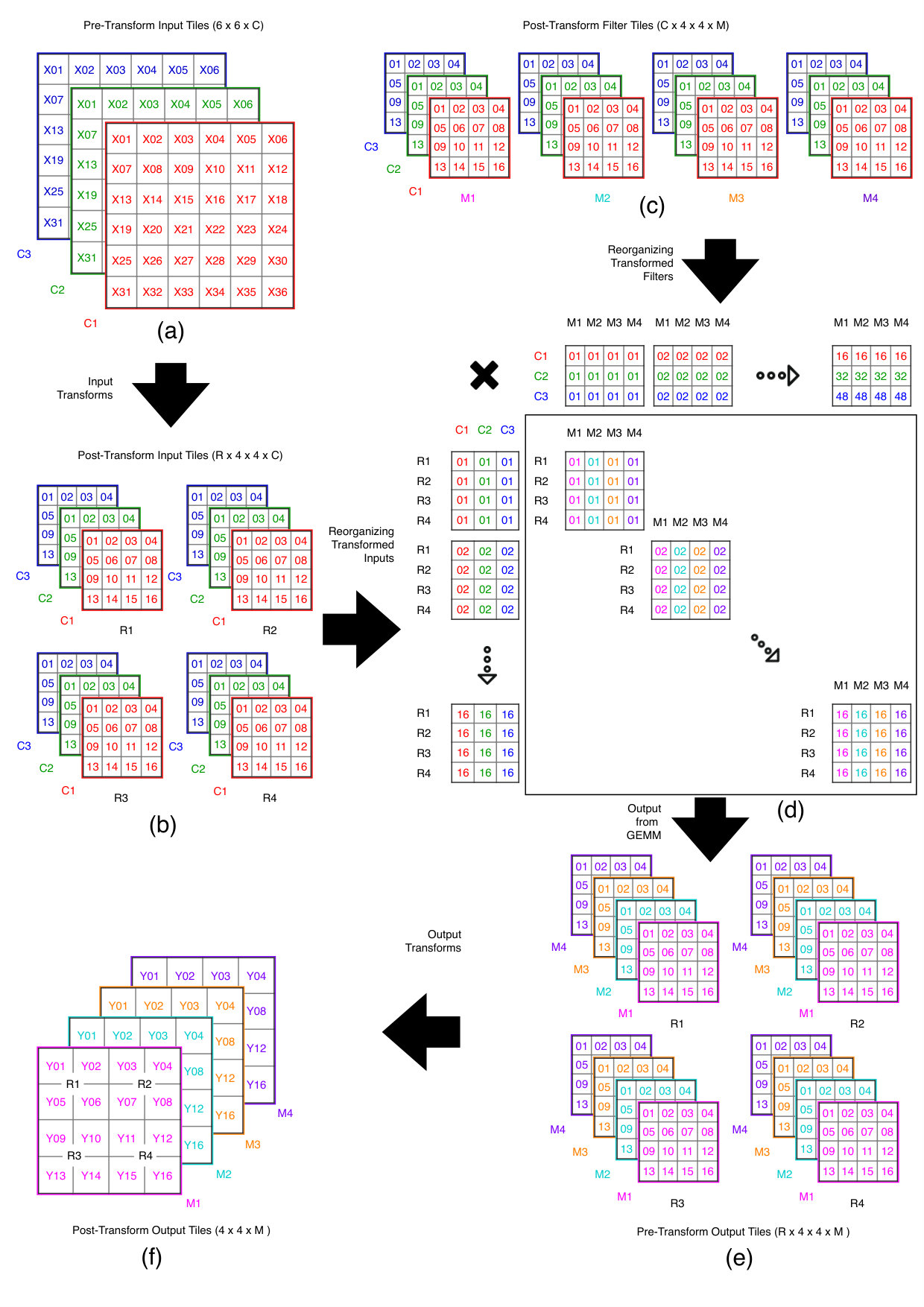 Figure 14
| VGG-16 | GoogleNet | Inception-v3 | SqueezeNet | |||||
|---|---|---|---|---|---|---|---|---|
| Full Network | Fast Layers | Full Network | Fast Layers | Full Network | Fast Layers | Full Network | Fast Layers | |
| Using Im2Row Scheme | 1929.43 | 1829.10 | 173.13 | 91.42 | 750.37 | 510.92 | 29.72 | 13.47 |
| Using Our Scheme | 758.05 | 670.79 | 101.04 | 38.38 | 443.40 | 224.42 | 20.91 | 6.29 |
| Speedup (msec) | 1171.38 | 1158.31 | 72.09 | 53.04 | 306.98 | 286.51 | 8.81 | 7.18 |
| Speedup (%) | 60.71% | 63.33% | 41.64% | 58.02% | 40.91% | 56.08% | 29.64% | 53.28% |
| Model | Per-layer Speedup | ||
|---|---|---|---|
| Layer-type | Average Speedup | Peak Speedup | |
| VGG-16 | |||
| VGG-19 | |||
| GoogleNet | |||
| GoogleNet | |||
| Inception-v3 | |||
| Inception-v3 | |||
| Inception-v3 | |||
| Inception-v3 | |||
| SqueezeNet | |||
Peer Reviews
No public reviews on file for this paper yet. If you reviewed it on a platform where reviews are public (OpenReview, ICLR, NeurIPS, ICML), you can paste yours below so the community can read it here.
Videos
No videos yet. Explain this paper in a talk, walkthrough, or lecture? Add one.
Efficient Winograd or Cook-Toom Convolution Kernel Implementation on Widely Used Mobile CPUs
Partha Maji
University of Cambridge
,
Andrew Mundy
Arm Research
,
Ganesh Dasika
Arm Research
,
Jesse Beu
Arm Research
,
Matthew Mattina
Arm Research
and
Robert Mullins
University of Cambridge
Abstract.
The Winograd or Cook-Toom class of algorithms help to reduce the overall compute complexity of many modern deep convolutional neural networks (CNNs). Although there has been a lot of research done on model and algorithmic optimization of CNN, little attention has been paid to the efficient implementation of these algorithms on embedded CPUs, which usually have very limited memory and low power budget. This paper aims to fill this gap and focuses on the efficient implementation of Winograd or Cook-Toom based convolution on modern Arm Cortex-A CPUs, widely used in mobile devices today. Specifically, we demonstrate a reduction in inference latency by using a set of optimization strategies that improve the utilization of computational resources, and by effectively leveraging the ARMv8-A NEON SIMD instruction set. We evaluated our proposed region-wise multi-channel implementations on Arm Cortex-A73 platform using several representative CNNs. The results show significant performance improvements in full network, up to 60, over existing im2row/im2col based optimization techniques.
CNN, Winograd, Cook-Toom, Embedded CPU
††copyright: none††conference: EMC2 ’19: The 2nd workshop on Energy Efficient Machine Learning and Cognitive Computing for Embedded Applications; Feb 17, 2019; Washington D.C., USA††price:
1. Introduction
The agility of cloud computing is great - but it simply isn’t sufficient. In the near future there will be more demand for AI at the edge than in the cloud. As people need to interact with their digitally-assisted technologies (e.g. personal assistants, wearables, autonomous cars, healthcare, and other smart IoT devices) in real-time, waiting on a datacenter many miles away isn’t going to work. Not only the latency matters, but often these edge devices are not within the range of the cloud needing them to operate autonomously for the most part. Even when these devices are connected to the cloud, moving high-volume of data to the centralized datacenter is not scalable, due to communication cost that impacts performance and energy consumption (Sze et al., 2017). Since the latency and security risk of relying on the cloud are intolerable, we need a significant portion of computation closer to the edge to permit secure, autonomous, and real-time decision making. This poses an enormous challenge in terms of implementing emerging AI workloads on resource constrained low power embedded systems. When it comes to image and video the performance of many modern embedded applications is enhanced by application of neural networks, and more specifically by convolutional neural network (CNN). Although there has been a lot of research done on algorithmic optimization of CNN (Sze et al., 2017), such as the Winograd, the Cook-Toom, and the Strassen, little attention has been paid to the efficient implementation of these algorithms on widely available energy efficient embedded CPUs. This paper aims to fill this gap and investigates if emerging, compute-heavy deep CNNs can be implemented efficiently using such fast arithmetic scheme on widely used resource constrained mobile class CPUs. Specifically, we target Cortex-A class processors as Arm-based SoCs are ubiquitous in today’s mobile computing (Fox and Myreen, 2010).
We introduce a novel region-wise multi-channel scheme using GEMM (General Matrix Multiplication) for energy efficient implementation of Winograd or Cook-Toom based convolution on resource-constrained mobile CPUs. We show that our scheme performs better than classical im2row/col techniques. Unlike existing implementations which are limited to 2D convolutions only, we apply variations of the base algorithms to both the 2D () and 1D layers (, ), where is the height/width of the filter. We demonstrate the efficiency of our scheme by implementing a number of widely used state-of-the-art deep CNNs on the energy-efficient Arm Cortex-A73 processor (Demler, 2016).
Our results show that by effectively using Armv8-A NEON SIMD instructions and appropriate choice of variations of Winograd or Cook-Toom based convolution an average and a peak per layer speedup on top of aggressively optimized solutions using the classical im2row/col technique is achievable. As an example, our multithreaded implementation of SqueezeNet on Arm Cortex-A73 can achieve an average inference rate of 47 frames/sec – sufficient for many real-time embedded applications (Ananthanarayanan et al., 2017). Our scheme can be readily deployed to other widely used ARMv8-A cores.
2. Strategies for Efficient Multichannel Winograd or Cook-Toom Kernel Implementation on Armv8-A Cores
The Winograd or Cook-Toom class of algorithms (Lavin, 2015; Maji and Mullins, 2018) help to reduce the overall compute complexity of convolution by reducing the number of required multiplication. Implementations of these algorithms are well suited to CNNs consisting of small filters and low power embedded systems as the resources and power budget are very limited. Using the Winograd or Cook-Toom based convolution, a typical layer of a convolutional neural network (CNN) can be expressed in the following matrix equation
[TABLE]
where and are the transform matrices for the weight and the input sequence , , respectively. is the inverse transformation matrix, and is the elementwise (Hadamard) product.
First, we note that the equation shown above applied a filter to only a small input region of size to produce an output region of size (a.k.a. ). To perform larger convolutions we must, therefore, break the input tensor into multiple regions of size . The output tensor must also be divided into an equivalent number of regions, each of which is computed as the elementwise multiplication and accumulation of the corresponding input regions (representing input channels) with their respective weight tiles. This algorithm is illustrated in Listing 1.
We break our region wise multi-channel algorithm into three steps:
- (1)
Input Transform Progresses over regions of the input tensor, transforms them into the Winograd domain and scatters the results into the ‘A’ matrices for the GEMMs. 2. (2)
GEMM Multiplies the ‘A’ matrices generated in the input transform with ‘B’ (matrices generated when the weights were transformed into the Winograd domain) to form the ‘C’ matrices. 3. (3)
Output Transform Repeatedly gathers regions of values from the ‘C’ matrices, transforms them back into the spatial domain and writes the results into the output tensor.
2.1. Data Layout and SIMD Computation
There are a variety of ways in which 4D tensors can be arranged in memory. Two common options are called NCHW and NHWC – where N stands for the number of batches (or concurrent inferences), C for the number of channels, and H and W stand for height and width, respectively. In NCHW each plane of the tensor is stored contiguously in memory – i.e., pixel is followed by – whereas in NHWC all of the channels of a given pixel are stored contiguously (i.e., value is followed by ). When writing vectorized (SIMD) code, tensor ordering is crucial to achieving performance.
In the Armv8-A architecture, there are thirty-two 128-bit SIMD registers. Each SIMD register can, therefore, store four 32-bit single-precision values. Hence, under NCHW a single SIMD register will store, after a 128-bit load, a row of four pixels, whereas under NHWC the same register would store four channels of data for a single pixel. We can see the effect of these orderings through the example of implementing the input transform for .
2.1.1. Input Transform For
The characteristic equation for this transform is:
[TABLE]
Under NCHW ordering we would use four registers to store , a region of the input tensor. The transform matrices could be hard-coded as a series of row-transformations, such that computing could be expressed as:
XTx[0] = vsubq_f32(x[0], x[2]); // x_1i - x_3i
XTx[1] = vaddq_f32(x[1], x[2]); // x_2i + x_3i
XTx[2] = vsubq_f32(x[2], x[1]); // x_3i - x_2i
XTx[3] = vsubq_f32(x[1], x[3]); // x_2i - x_4i
By transposing the result, this code sequence can be repeated such that we compute . Once this is completed we have 16 values (four registers containing four values each) which must be scattered, as described before, to 16 separate matrices.
In contrast, under NHWC ordering, we would use sixteen SIMD registers to represent four channels of a region of the input tensor. The transformation can be hardcoded, but in this case we operate on four channels of data simultaneously, as in Listing 2. Once the transformation is complete we are left with sixteen registers, each containing four channels worth of data. These registers can be scattered directly into the the input matrices for the GEMMs.
2.1.2. Choice of NHWC over NCHW
For the specific instance of there are merits to both approaches. However, when we consider using either different data widths (such as half-precision floating point) or different version of Winograd or Cook-Toom algorithms we begin to see advantages to the NHWC ordering.
For example, although we can use four SIMD registers to represent 16 values in single-precision floating point in NCHW – four values to a register – this breaks down when we move to half-precision and each register can contain eight values, whereas the NHWC code could be simply modified to work on eight channels of data simultaneously.
Likewise, were we to implement the input transform for , which requires use of input regions, we could, in NHWC ordering use 36 values (and the stack) to represent each input region. However, in NCHW, we would need to use one-and-a-half registers to represent each row of six values. For these reasons, we prefer the use of NHWC ordered data.
2.1.3. Efficient Tensor Ordering for ARMv8-A Cores
The convolution of a tensor consisting of input layers and regions with a deep set of filters can be expressed as GEMMs of the form or , and that, of these, we preferred the former as shown in Figure 2. This selection follows directly from our choice of NHWC tensor ordering. Specifically, we note that, under NHWC, each SIMD register contains multiple channels of data and that these values must be written into matrices of shape or . Assuming row-major ordered matrices we note that, in the latter case, we could use multi-element structured stores (e.g., ST4 (single structure), (Arm-Ltd., 2017a)) to combine and store values from different registers. Alternatively, an unstructured store (STR (Arm-Ltd., 2017a)) could be used to write out a whole register into successive columns of an matrix. Since we found unstructured stores to have a higher throughput than their structured counterparts we choose to use the first form.
2.2. Using GEMM to Compute Hadamard Products
By inspecting the basic convolution algorithm illustrated in Listing 1 we observe, firstly, that the fundamental operation is an element-wise multiply-accumulate (element-wise addition of Hadamard products). Secondly, we note that there are two axes in which data is reused - (1) Weight tile is used across all input regions in layer , and, (2) Input region contributes to all output regions at . These observations suggest that one way of implementing a complete convolution is to leverage the GEMM (General Matrix Matrix Multiplication) algorithm since there exist a wide range of good GEMM implementations (e.g., (Frison et al., 2017)) capable of exploiting the SIMD instructions of the Armv8-A architecture. Figure 2 shows an example for a tensor being convolved with four filters. An array of 16 GEMMs of size is constructed, with the input tensor being represented by the first set of matrices and the weights by the latter.
3. Evaluation and Results
We chose five widely used CNNs of different sizes and complexities to validate our implementation, namely, VGG19, VGG16, GoogleNet, Inception-v3, and SqueezeNet (Sze et al., 2017). We benchmarked our implementation on the Huawei HiKey 960 development platform using IEEE 754 fp32 standard.
3.1. Results – per-layer speedup
We implemented five different variants of the fast algorithm and bench-marked them on individual layers of all the selected models. In each case we measured the number of cycles taken to perform all three stages of our algorithm (Input transform, GEMMs and Output transform) on the ’big’-cluster which consists of four Cortex-A73 core. As a baseline against which to compare we also benchmarked the GEMM calls which would result from application of the classical im2row technique to the same layers. Table 2 presents the speedup achieved by our region-wise multi-channel Winograd scheme over the GEMM.
3.2. Results – whole-network speedup
To measure the effectiveness of Winograd or Cook-Toom based acceleration for end-to-end CNN, we also benchmarked the runtime of entire models. In these cases we used the Arm Compute Library (Arm-Ltd., 2017b) to evaluate single-batch (batch size of 1) inferences of these networks on multi-threaded () Cortex-A73. Two sets of benchmarks were run: in one, layers suitable for the Winograd-based acceleration use our scheme, and the rest use baseline im2row scheme; in the other all layers use im2row. Figure 3 and Table 1 shows the normalized and the absolute runtime of the five CNNs (whole-network), respectively.
4. Conclusions
Winograd or Cook-Toom based acceleration on Arm’s Cortex A CPUs can dramatically reduce the compute time and energy cost of individual convolution layers – by up to 4. However, these speedup numbers are lower than the theoretical values. Partially, this is due to the challenges involved in implementing the algorithm in a real system but largely it is because the theoretical speed-up of this class of algorithm disregards the cost of transforming to and from the alternative domain of computation. This gap between the theoretical and achieved speed-ups can be somewhat overcome by amortizing the transform costs over those of the GEMMs. As the number of output channels increases, the speed-up will asymptotically approach the maximum achievable.
The reference list from the paper itself. Each links out to its DOI / PubMed record.
- 1(1)
- 2Ananthanarayanan et al . (2017) G. Ananthanarayanan, P. Bahl, P. Bodík, K. Chintalapudi, M. Philipose, L. Ravindranath, and S. Sinha. 2017. Real-Time Video Analytics: The Killer App for Edge Computing. Computer 50, 10 (2017), 58–67. https://doi.org/10.1109/MC.2017.3641638 · doi ↗
- 3Arm-Ltd. (2017 a) Arm-Ltd. 2017 a. Arm Architecture Reference Manual Armv 8, for Armv 8-A architecture profile.
- 4Arm-Ltd. (2017 b) Arm-Ltd. 2017 b. Compute Library Arm Developer. https://developer.arm.com/technologies/compute-library . (Accessed on 03/28/2018).
- 5Demler (2016) Mike Demler. 2016. The Linley Group - Cortex-A 73 Improves Mobile Efficiency. https://www.linleygroup.com/newsletters/newsletter_detail.php?num=5536 . (Accessed on 09/19/2018).
- 6Fox and Myreen (2010) Anthony Fox and Magnus O. Myreen. 2010. A Trustworthy Monadic Formalization of the AR Mv 7 Instruction Set Architecture. Springer-Verlag, 243–258. http://dx.doi.org/10.1007/978-3-642-14052-5_18 · doi ↗
- 7Frison et al . (2017) Gianluca Frison, Dimitris Kouzoupis, Andrea Zanelli, and Moritz Diehl. 2017. BLASFEO: Basic linear algebra subroutines for embedded optimization. Co RR abs/1704.02457 (2017). ar Xiv:1704.02457 http://arxiv.org/abs/1704.02457
- 8Lavin (2015) Andrew Lavin. 2015. Fast Algorithms for Convolutional Neural Networks. Co RR abs/1509.09308 (2015). ar Xiv:1509.09308 http://arxiv.org/abs/1509.09308