Constraints on mediator-based dark matter and scalar dark energy models using $\sqrt s = 13$ TeV $pp$ collision data collected by the ATLAS detector
ATLAS Collaboration

TL;DR
This paper presents constraints on various dark matter and dark energy models using ATLAS collider data at 13 TeV, interpreting results across multiple mediator types and extended Higgs sector models, including implications for dark energy.
Contribution
It provides the first interpretation of collider data constraints on light scalar particles related to dark energy models, alongside dark matter mediator constraints.
Findings
Constraints on spin-1 and spin-0 mediators from collider data
Limits set on extended Higgs sector models with additional mediators
First-time interpretation of collider results for dark energy scalar particles
Abstract
Constraints on selected mediator-based dark matter models and a scalar dark energy model using up to TeV collision data collected by the ATLAS detector at the LHC during 2015-2016 are summarised in this paper. The results of experimental searches in a variety of final states are interpreted in terms of a set of spin-1 and spin-0 single-mediator dark matter simplified models and a second set of models involving an extended Higgs sector plus an additional vector or pseudo-scalar mediator. The searches considered in this paper constrain spin-1 leptophobic and leptophilic mediators, spin-0 colour-neutral and colour-charged mediators and vector or pseudo-scalar mediators embedded in extended Higgs sector models. In this case, also TeV collision data are used for the interpretation of the results. The results are also interpreted…
Click any figure to enlarge with its caption.
 Figure 1
 Figure 2
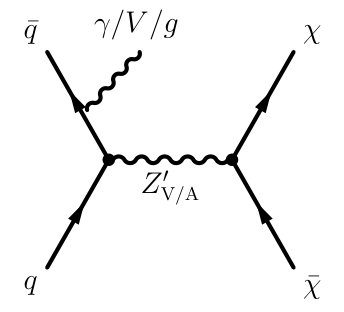 Figure 1
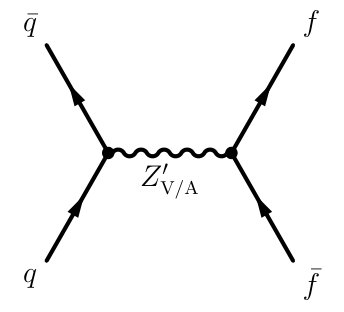 Figure 1
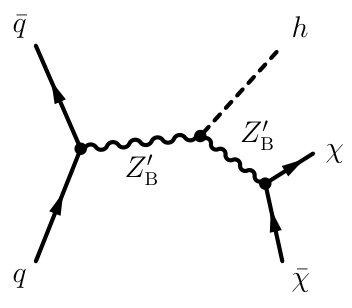 Figure 2
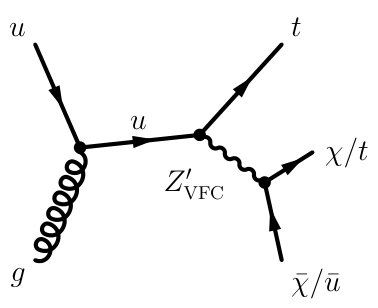 Figure 2
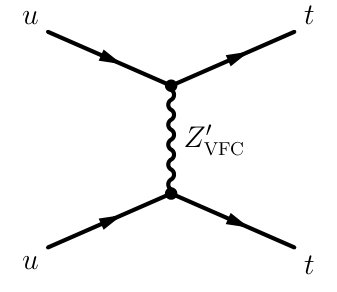 Figure 2
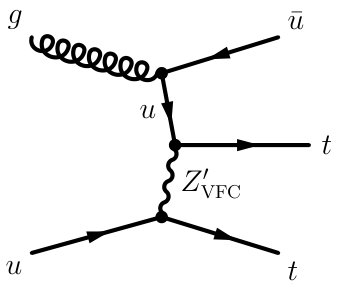 Figure 2
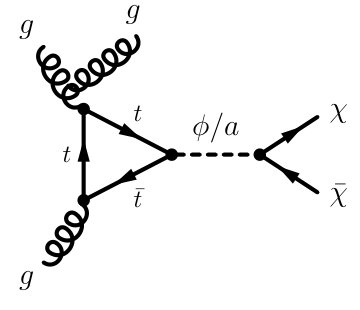 Figure 3
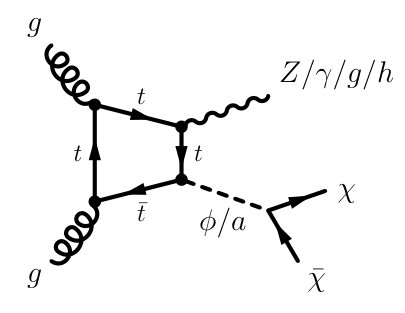 Figure 3
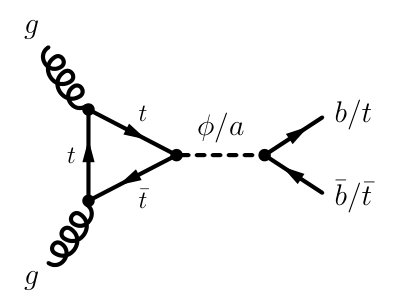 Figure 3
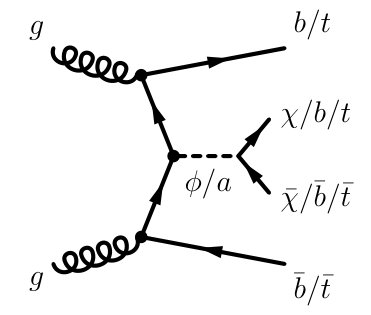 Figure 3
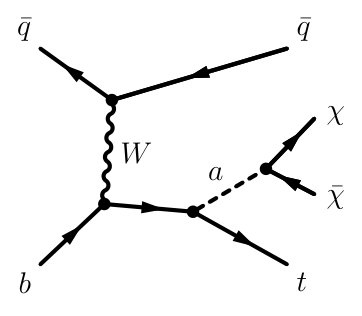 Figure 3
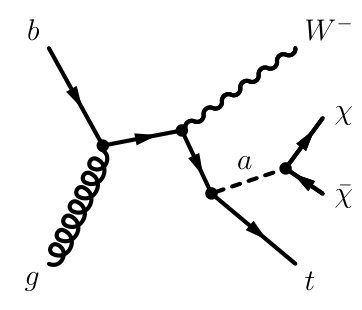 Figure 3
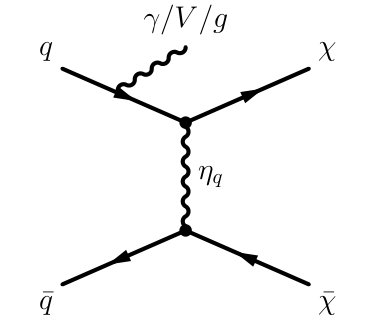 Figure 4
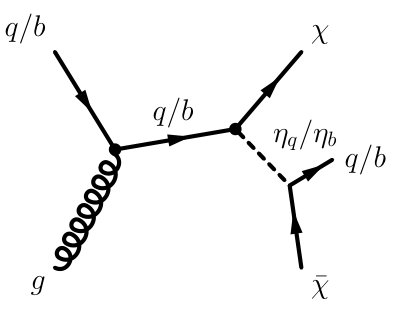 Figure 4
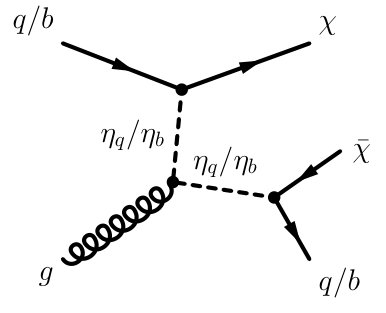 Figure 4
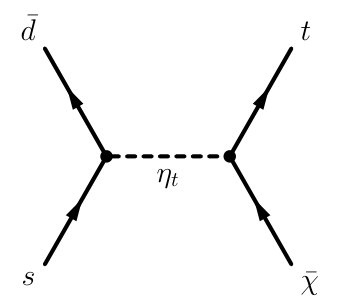 Figure 4
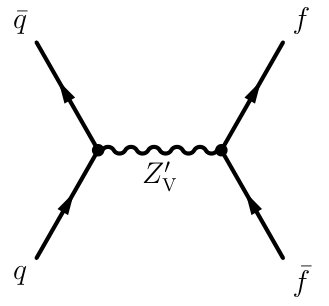 Figure 5
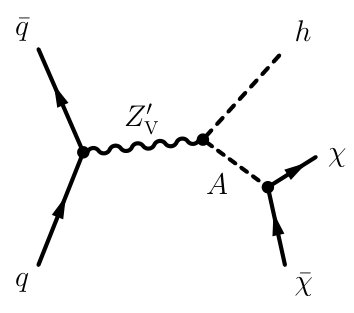 Figure 5
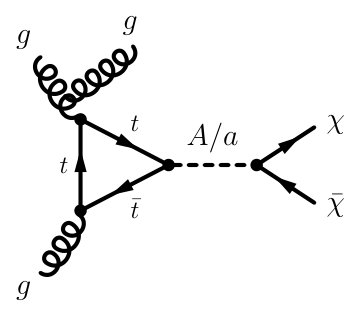 Figure 6
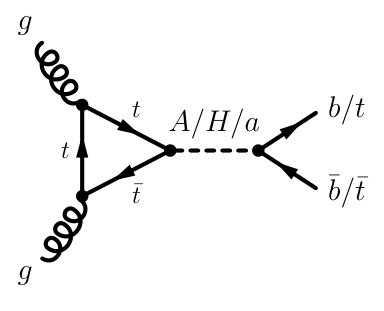 Figure 6
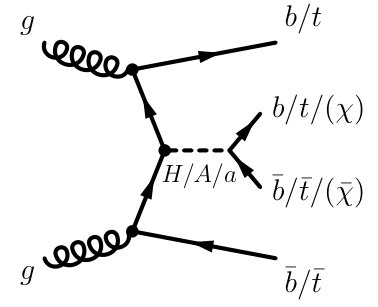 Figure 6
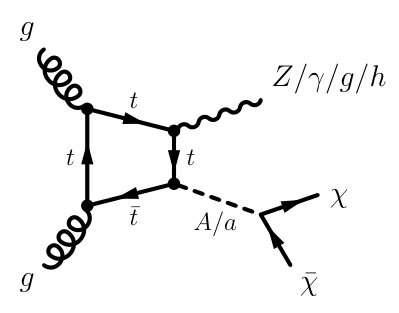 Figure 6
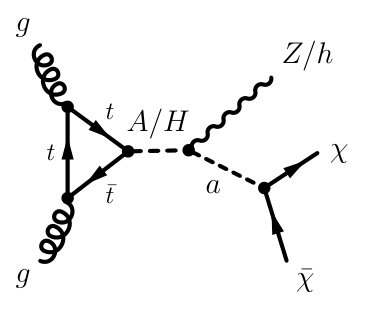 Figure 6
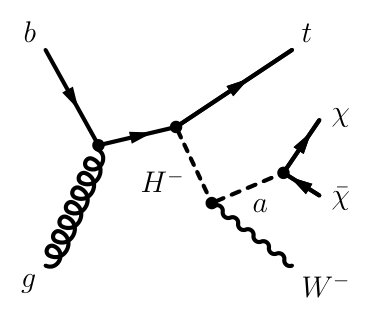 Figure 6
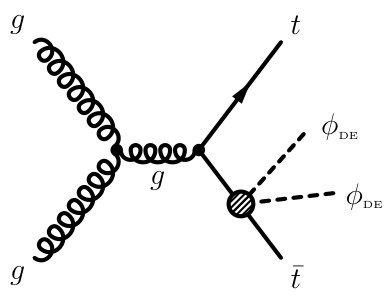 Figure 7
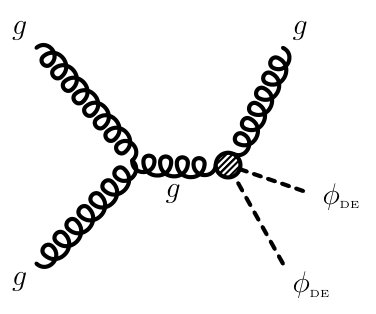 Figure 7
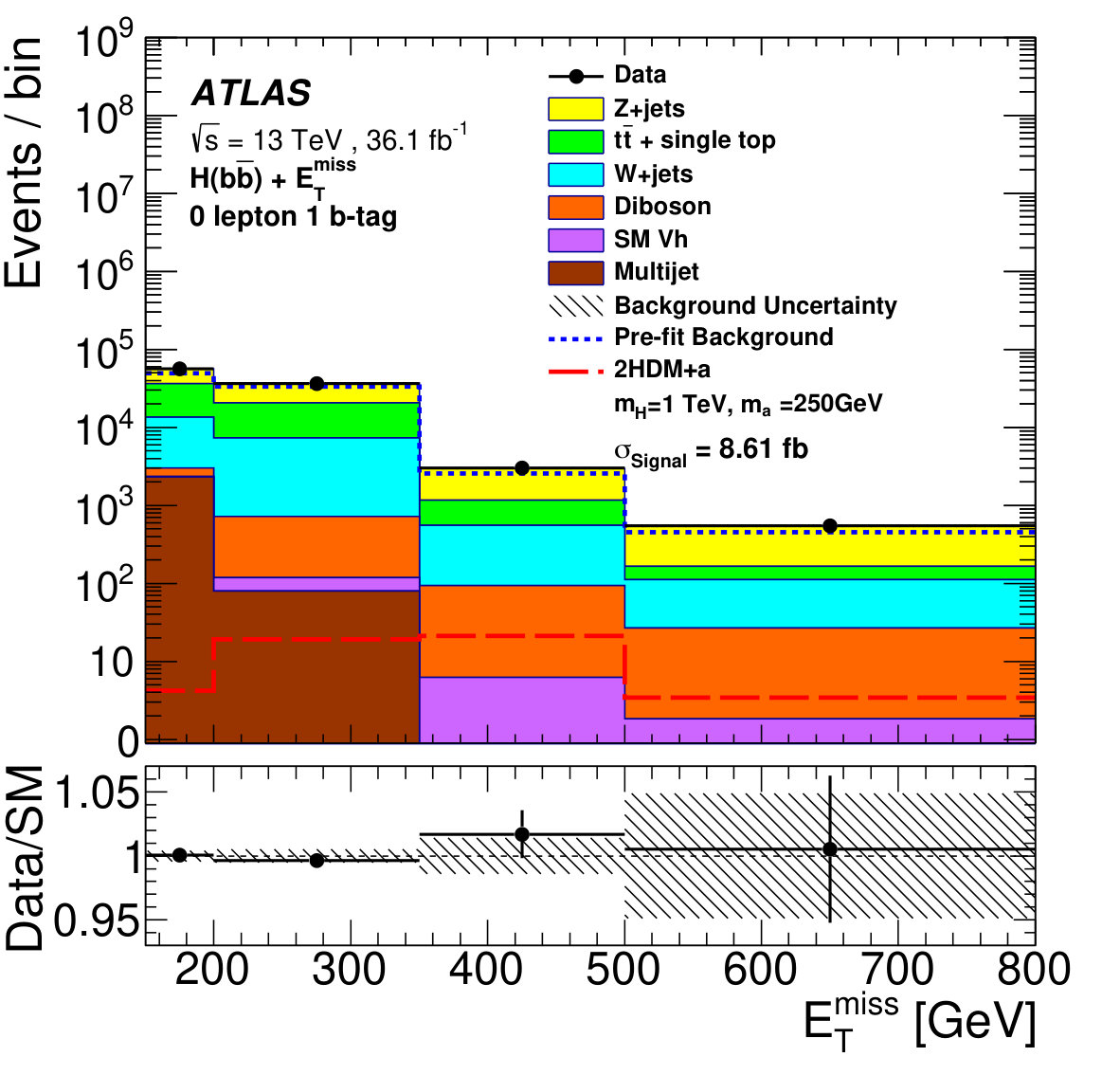 Figure 8
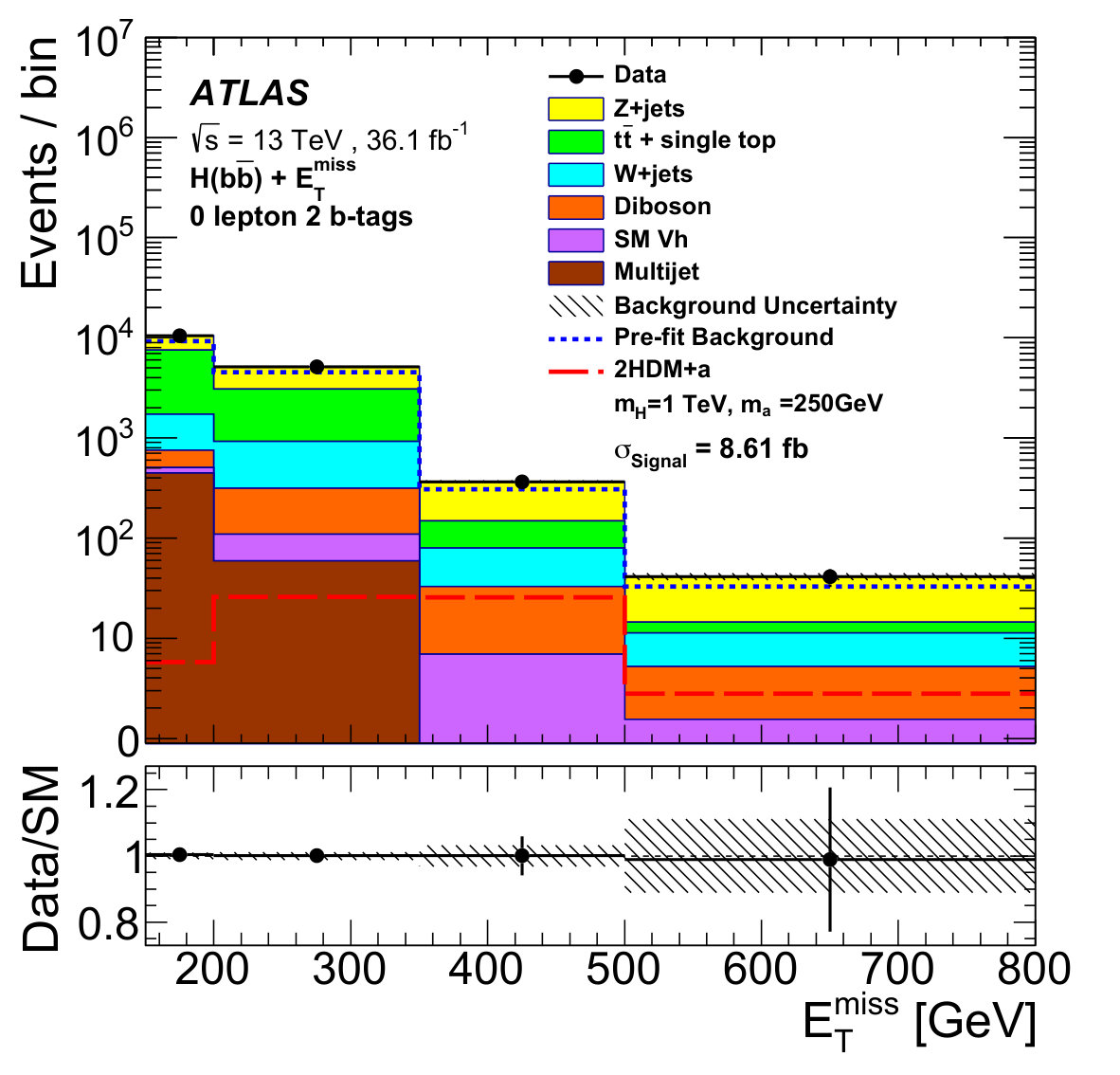 Figure 8
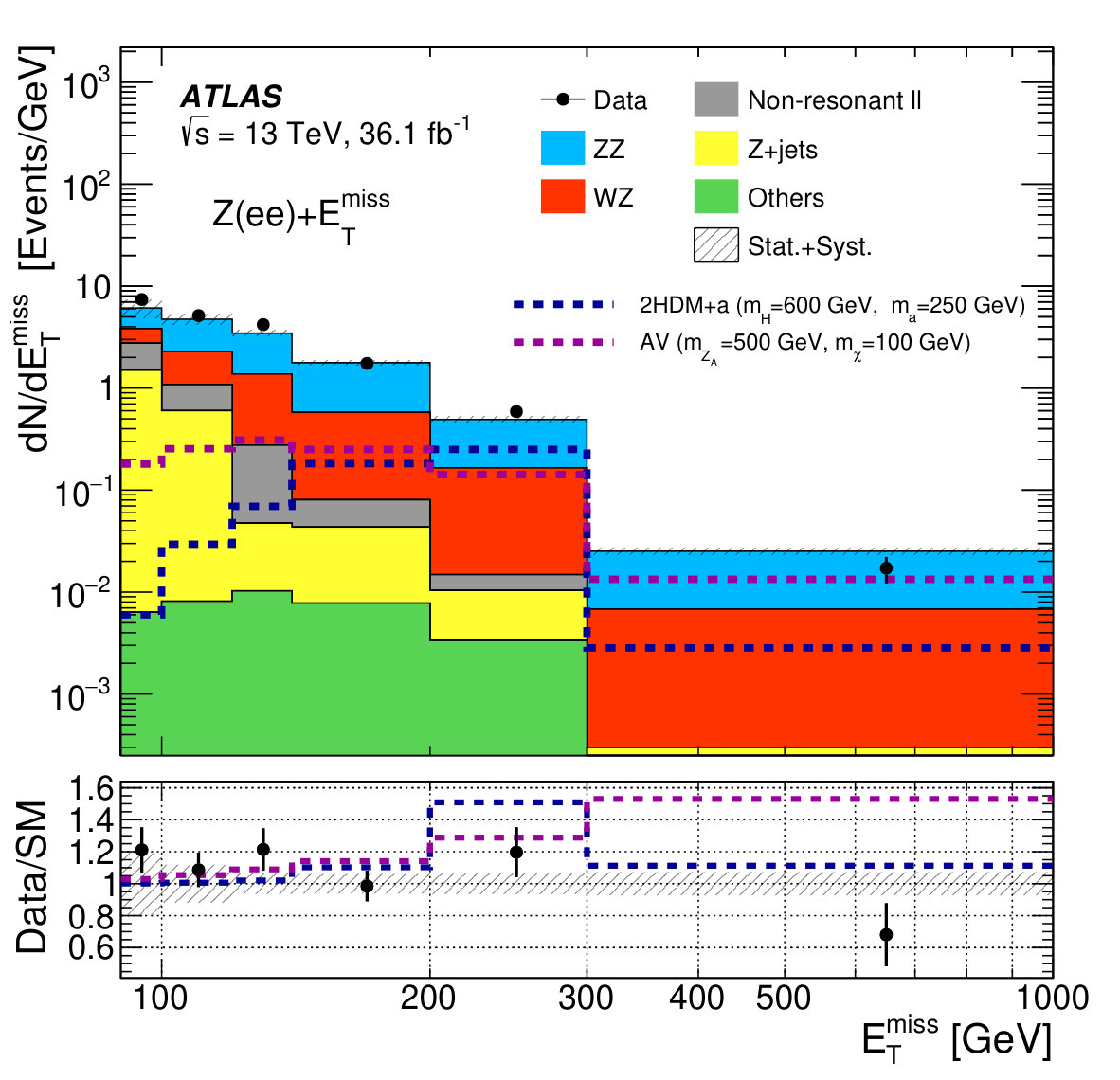 Figure 8
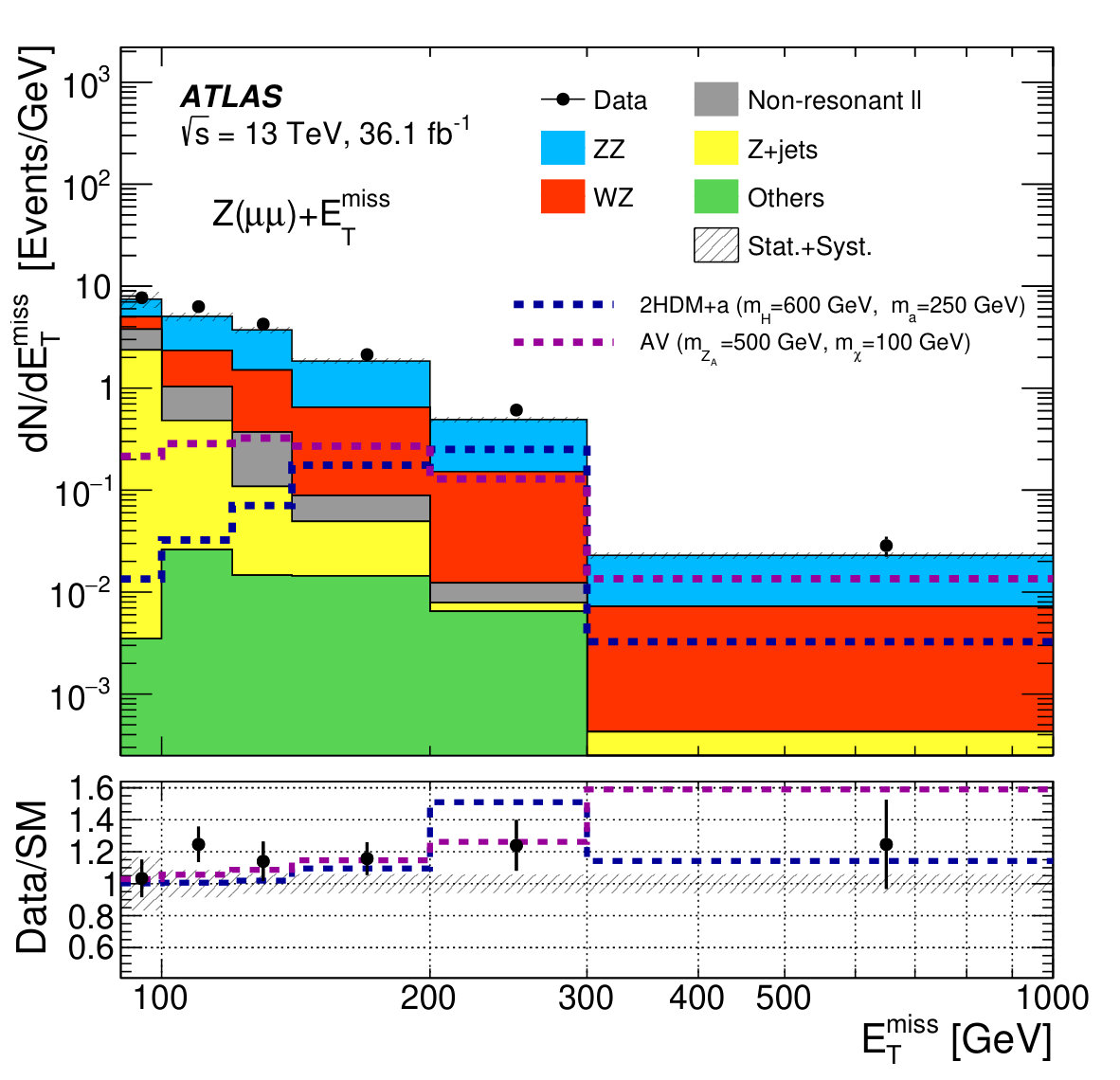 Figure 8
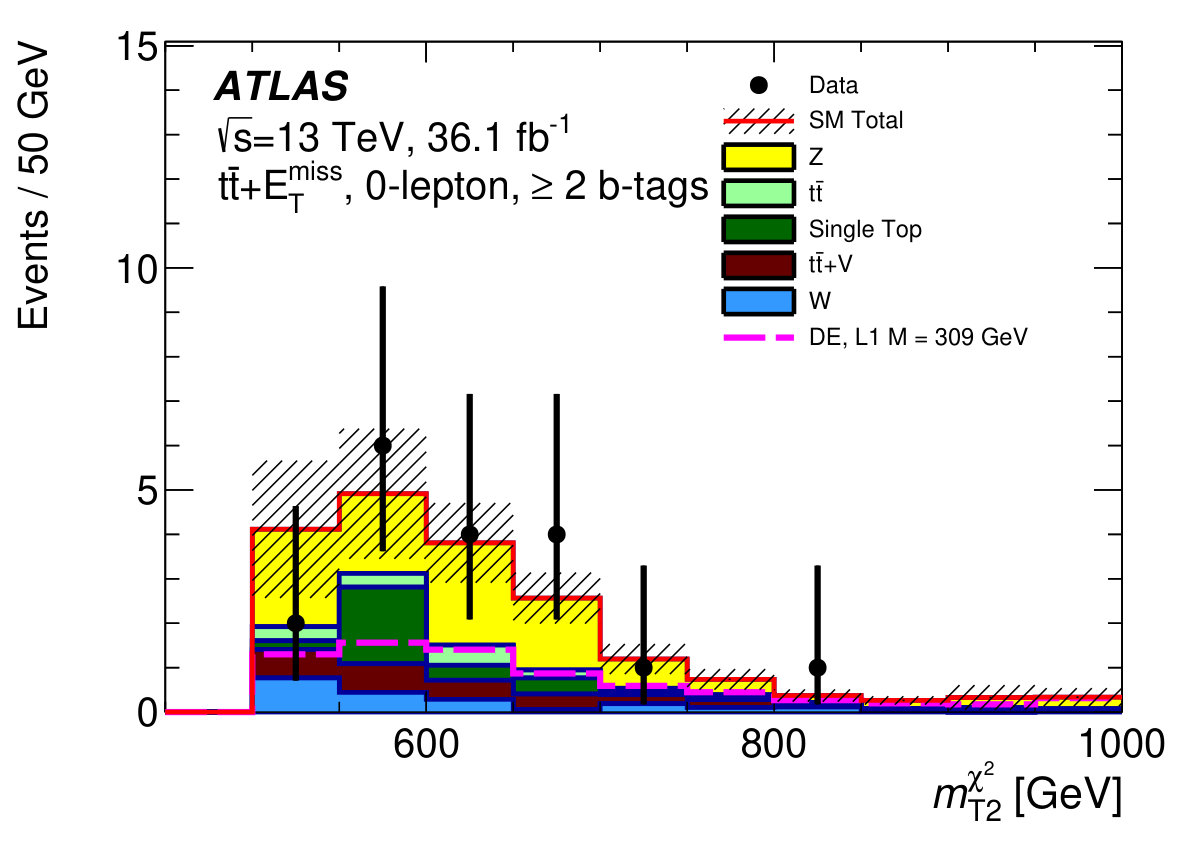 Figure 9
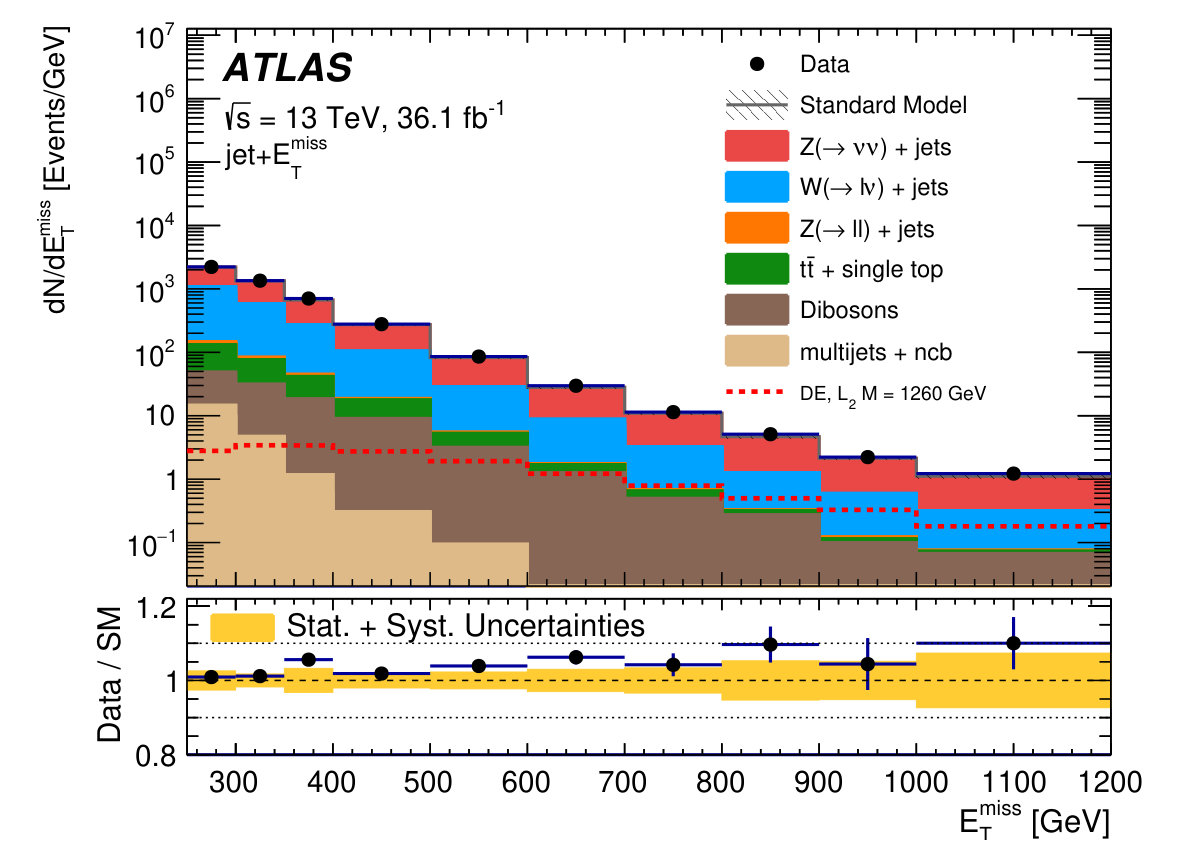 Figure 9
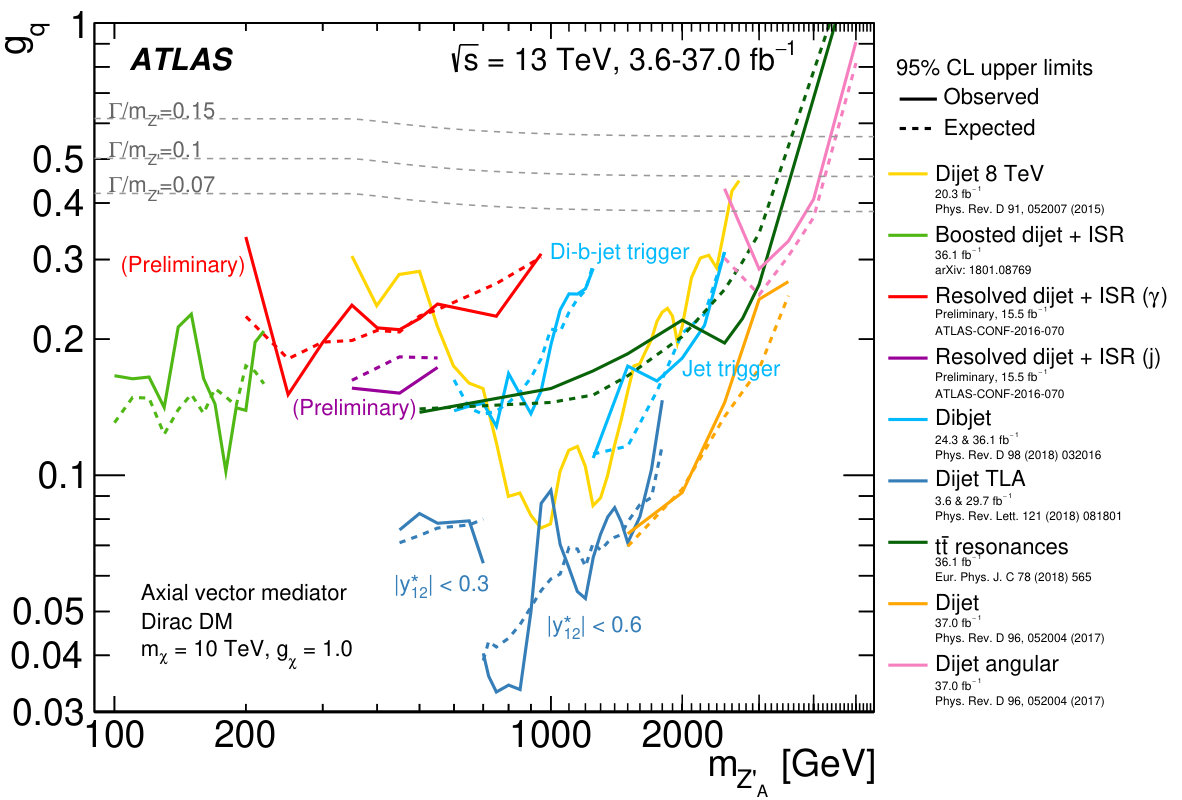 Figure 10
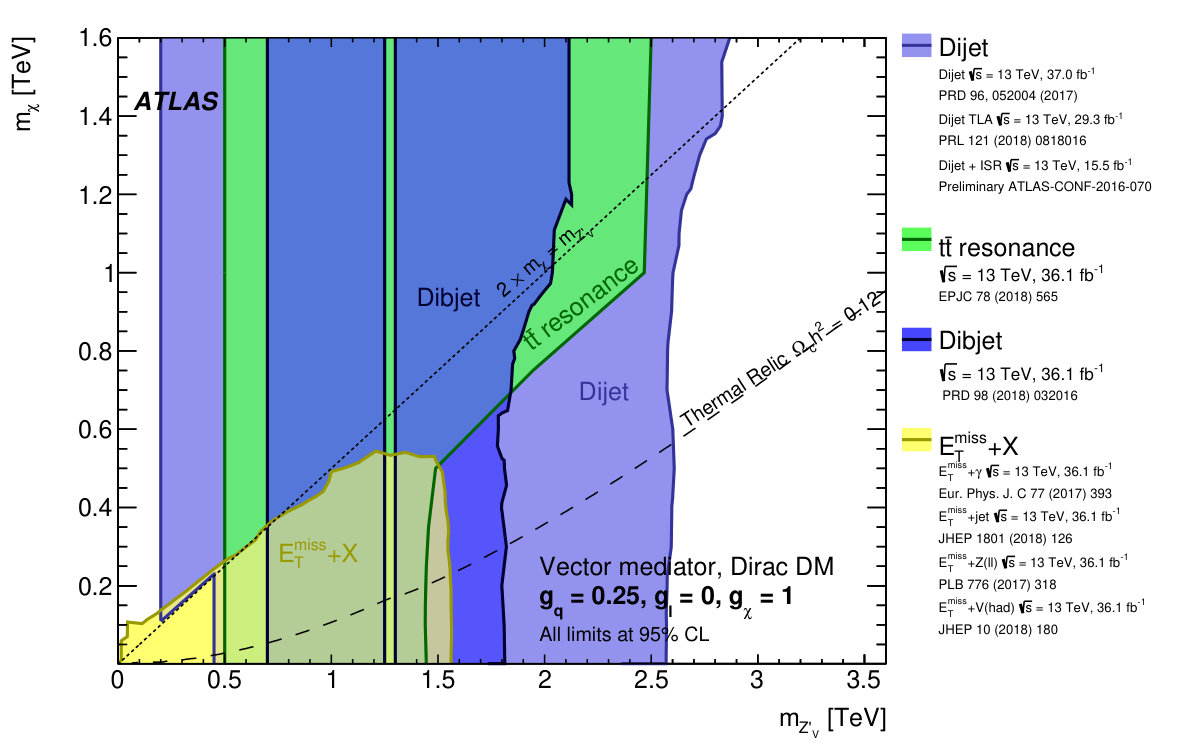 Figure 11
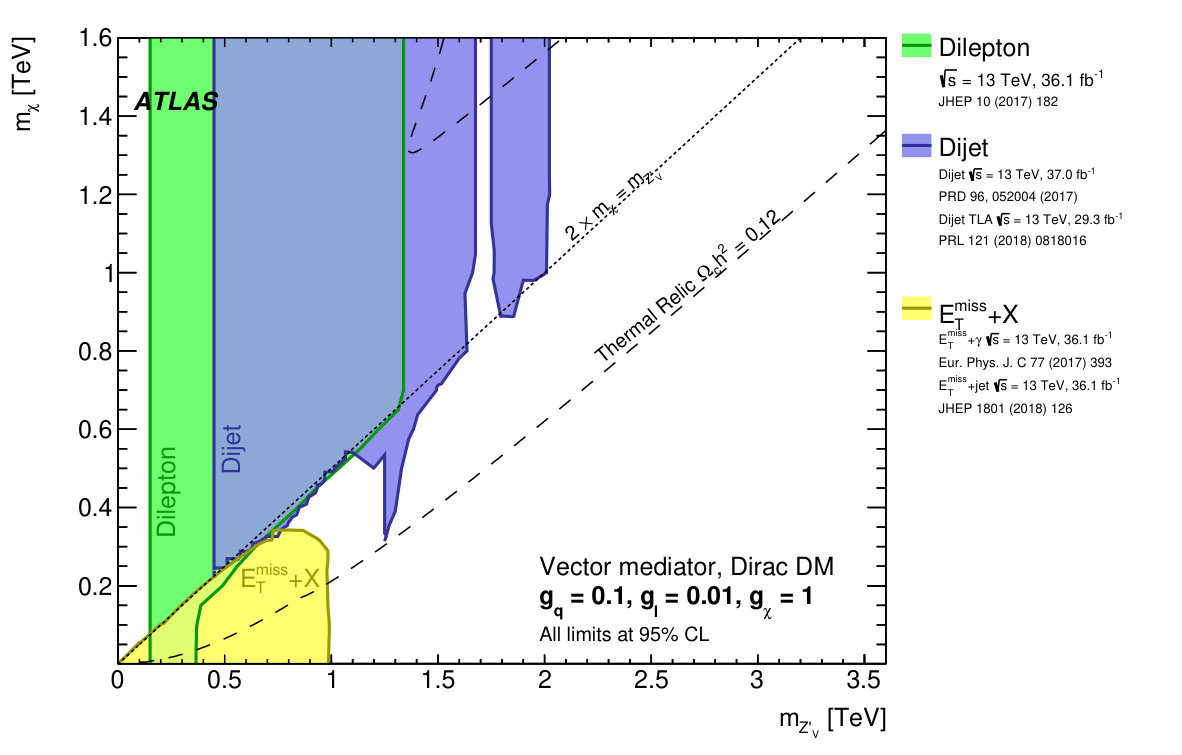 Figure 11
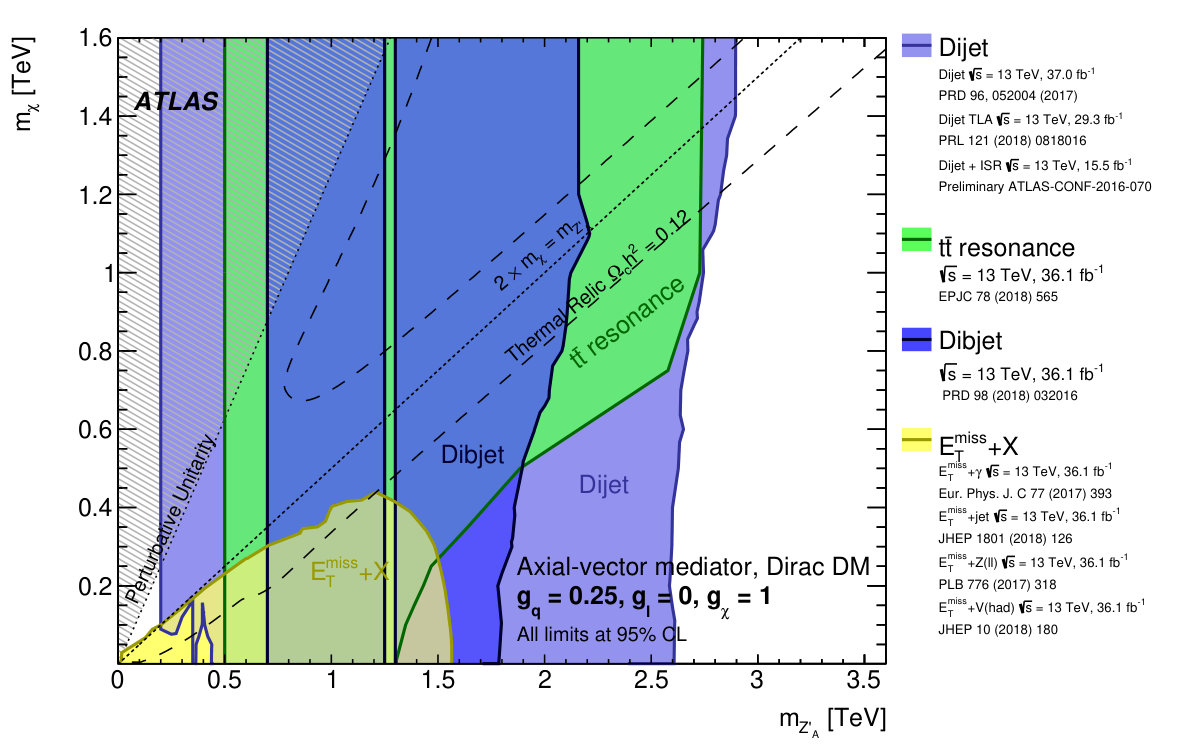 Figure 12
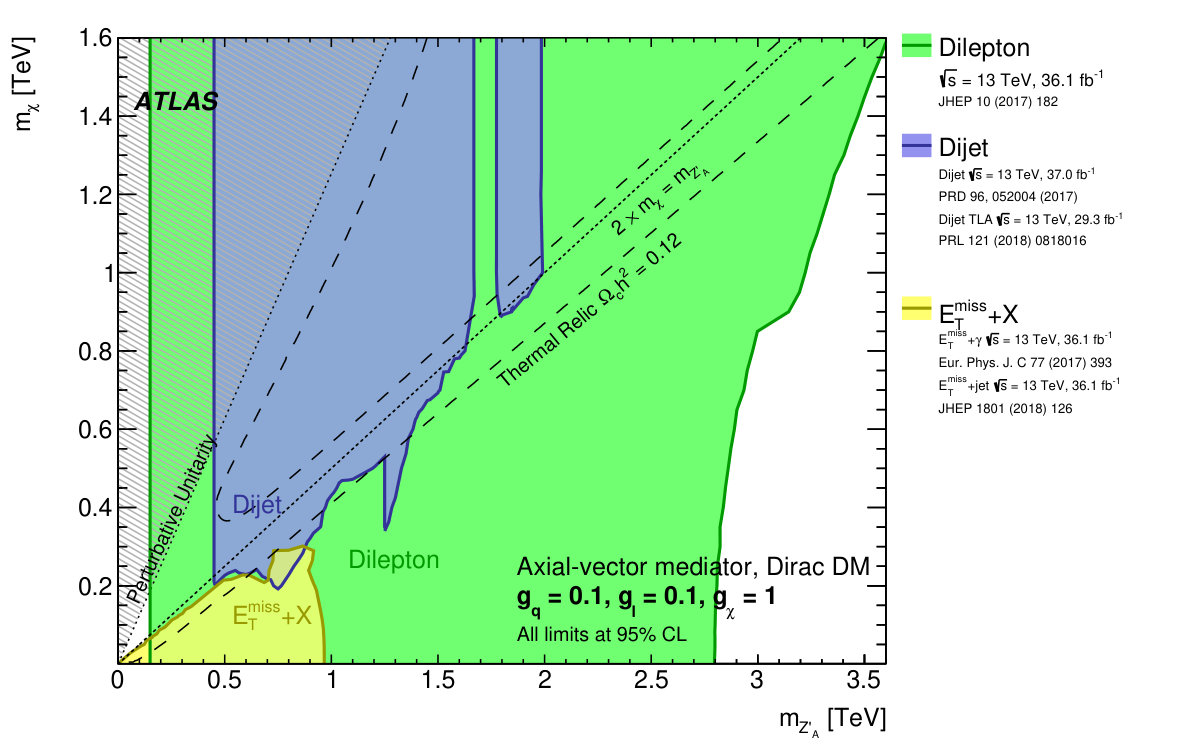 Figure 12
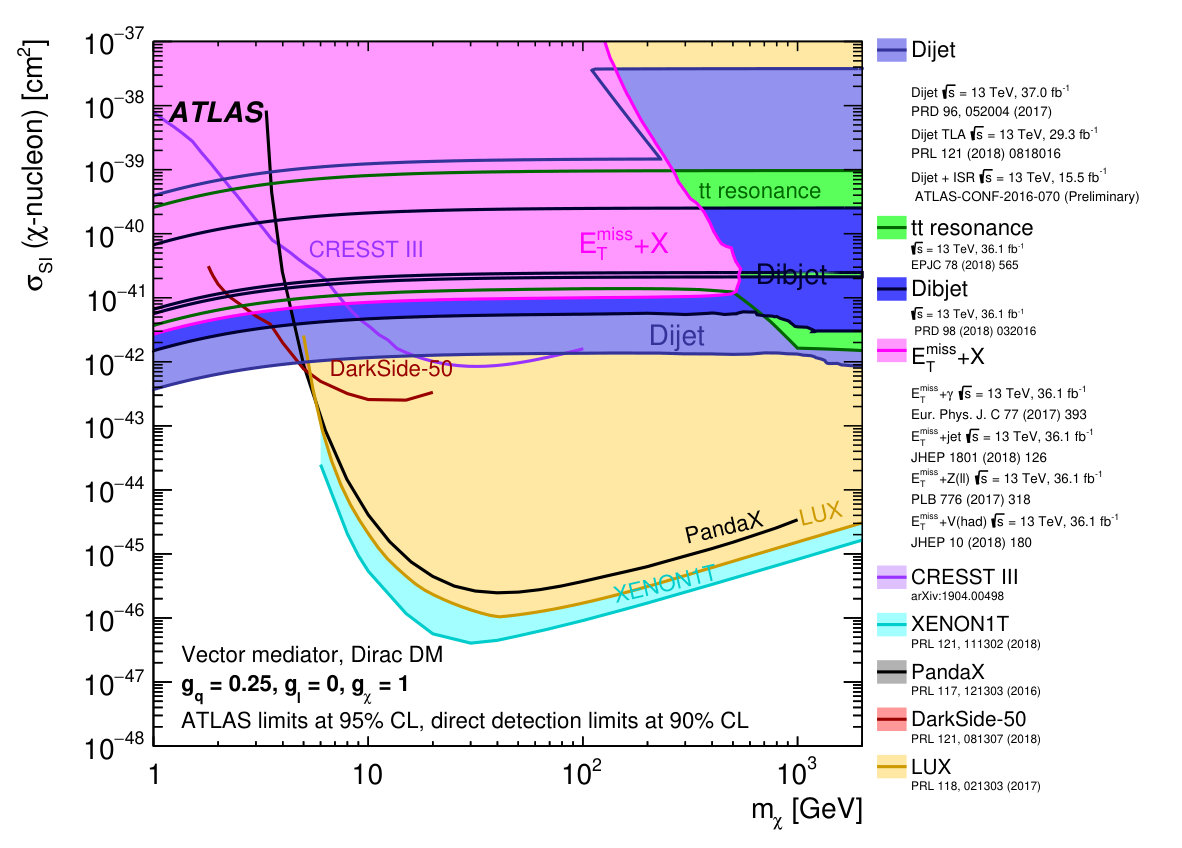 Figure 13
| Short description | Acronym | Symbol | Charge | Signatures | Results | |
| (Sec. 4) | Section: | |||||
| Vector/axial-vector mediator | V/AV | / | jet///+, difermion resonance | 6.1.1 | ||
| Vector baryon-number-charged mediator | VBC | baryon-number | 6.1.2 | |||
| Vector flavour-changing mediator | VFC | flavour | , | 6.1.3 | ||
| Scalar/pseudo-scalar mediator | S/PS | / | jet+, | 6.2.1 | ||
| Scalar colour-charged mediator | SCCq/b/t | colour, 2/3 electric-charge | jet+, , | 6.2.2 | ||
| Two-Higgs-doublet plus vector mediator | 2HDM+ | 6.3.1 | ||||
| Two-Higgs-doublet plus pseudo-scalar mediator | 2HDM+ | , , , | 6.3.2 | |||
| Dark energy | DE | jet+, + | 6.4 |
| Analysis | Models targeted | Final-state signature | Key Characteristics | Results |
|---|---|---|---|---|
| Jet [26] | V/AV, S/PS, SCCq, DE | 1–4 jets, , 0 . | Binned likelihood fit of . | Section 6.1.1, 6.2.1, 6.2.2, 6.4 |
| [186, 29] | 2HDM+ | 2 jets, , , . | Single-bin likelihood fit. | Section 6.3.2 |
| [21] | V/AV | 1 photon, 0–1 jets, , 0 . | Binned likelihood fit of . | Section 6.1.1 |
| [24] | V/AV, 2HDM+ | 2 , , . | Binned likelihood fit of | Section 6.1.1, 6.3.2 |
| [20] | V/AV, 2HDM+ | , candidate (resolved and boosted topologies). | Binned likelihood fit of . | Section 6.1.1, 6.3.2 |
| [23] | VBC, 2HDM+, 2HDM+ | , candidate (resolved and boosted topologies). | Binned likelihood fit of in bins of . | Section 6.1.2, 6.3.1, 6.3.2 |
| [22] | VBC, 2HDM+, 2HDM+ | 2 photons, , . | Analytic function fit of . | Section 6.1.2, 6.3.1, 6.3.2 |
| [30] | VFC | , candidate (all decay channels). | Binned likelihood fit of () in the leptonic (hadronic) channel. | Section 6.1.3 |
| [25] | S/PS, SCCb, 2HDM+ | 1–2 -jets, , 0 . | Binned likelihood fit of . | Section 6.2.1, 6.2.2, 6.3.2 |
| [25, 25, 27] | S/PS, SCCt, 2HDM+, DE | 0–2, 1–2 -jets, 1–4 jets, , . | Binned likelihood fit. | Section 6.2.1, 6.2.2, 6.3.2, 6.4 |
| Analysis | Models targeted | Final-state signature | Key Characteristics | Results |
|---|---|---|---|---|
| Dijet [190] | V/AV | 2 jets, , . | Sliding-window fit of the distribution. | Section 6.1.1 |
| Dijet angular [190] | V/AV | 2 jets, , . | Binned likelihood fit of . | Section 6.1.1 |
| TLA dijet [194] | V/AV | 2 trigger-level jets, , . | Sliding-window fit of the distribution. | Section 6.1.1 |
| Resolved dijet+ISR [195] | V/AV | 3 jets (or 2 jets and 1 photon), , . | Parametric function fit of the distribution. | Section 6.1.1 |
| Boosted dijet+ISR [196] | V/AV | 1 large- jet, 1 jet or photon, . | Data-driven extrapolation from control region via transfer factor. | Section 6.1.1 |
| Dibjet [198] | V/AV | 2 jets (1 and 2 -jets), , . | Sliding-window parametric fit of the distribution. | Section 6.1.1 |
| Dilepton [199] | V/AV | 2 or 2 . | from fitted MC spectrum. | Section 6.1.1 |
| Same-sign [110] | VFC | 2 same-sign , 2 -jets, , . | Background with real leptons from MC. | Section 6.1.3 |
| resonance [200] | V/AV | 1 , hadronic candidate (resolved and boosted topologies), . | bkg from MC, binned likelihood fit of . | Section 6.1.1 |
| [201] | 2HDM+ | 1 , high jet multiplicity. | Parameterised extrapolation from low to high jet multiplicity. Binned likelihood fit of jet and -jet multiplicities. | Section 6.3.2 |
| Model and Final State | UFO | Generator and Parton Shower | Cross-section | Additional details |
| DMV [26, 215] | powheg-box v2 [216] + Pythia 8.205 [217] | NLO | Particle-level rescaling of leptophobic scenario of Ref. [26] (see Appendix A.1) | |
| DMSimp [116, 218] | MG5_aMC@NLO 2.4.3 (NLO) [213] + Pythia 8.212 | NLO | Leptophobic scenario simulated, other scenarios obtained by cross-section rescaling (see Appendix A.1) | |
| DMSimp | MG5_aMC@NLO 2.5.3 (NLO) + Pythia 8.212 | NLO | Particle-level rescaling of LO samples of Ref. [20] to each of the four NLO scenarios (see Appendix A.1) | |
| or +ISR | DMSimp | MG5_aMC@NLO 2.2.3 (NLO) + Pythia 8.210 | NLO | Leptophobic scenario simulated, other scenario obtained by Gaussian resonance limits and cross-section rescaling [214] |
| DMSimp | MG5_aMC@NLO 2.2.3 (NLO) + Pythia 8.210 | NLO | Leptophobic scenario simulated, other scenario obtained by Gaussian resonance limits and cross-section rescaling [214] | |
| DMSimp | MG5_aMC@NLO 2.2.3 (NLO) | NLO | Gaussian resonance limits and cross-section rescaling [214] | |
| DMSimp | MG5_aMC@NLO 2.4.3 (LO) + Pythia 8.186 | LO | Particle-level rescaling of the topcolour-assisted technicolour samples of Ref. [200] (see Appendix A.1) | |
| MonotopDMF [219] | MG5_aMC@NLO 2.2.3 (LO) +Pythia 8.210 | LO | Ref. [30] and Appendix A.2 | |
| Higgs_scalar [106, 220] | MG5_aMC@NLO 2.2.3 (LO) +Pythia 8.186 | LO | Ref. [22], simulated for | |
| 2HDM+ | Zp2HDM [158, 221] | MG5_aMC@NLO 2.2.3 (LO) +Pythia 8.186 | LO | Ref. [23, 22] |
| Model and Final State | UFO | Generator and Parton Shower | Cross-section | Additional details |
|---|---|---|---|---|
| DMS_tloop [113, 222] | powheg-box v2 + Pythia 8.205 | NLO | Ref. [26] | |
| DMScalarMed_loop [113, 223] | MG5_aMC@NLO 2.3.3 (LO) + Pythia 8.186 | NLO [116] | Up to one additional parton. Ref. [25] | |
| DMScalarMed_loop | MG5_aMC@NLO 2.3.3 (LO) + Pythia 8.186 | NLO [212] | Up to one additional parton. Ref. [25] | |
| dmS_T [101, 224] | MG5_aMC@NLO 2.3.3 (LO) + Pythia 8.186 | LO | Ref. [26, 101] | |
| DM_Bflavored [131, 225] | MG5_aMC@NLO 2.3.3 (LO) + Pythia 8.186 | LO | Ref. [25] | |
| MonotopDMF [30, 219] | MG5_aMC@NLO 2.3.3 (LO) +Pythia 8.210 | LO | Ref. [30] | |
| 2HDM+: | Pseudoscalar_2HDM [152, 226] | MG5_aMC@NLO 2.3.3 (LO) | NLO | Cross-section based rescaling from simplified model samples of Ref. [25] |
| 2HDM+: | Pseudoscalar_2HDM | MG5_aMC@NLO 2.4.3 (LO) + Pythia 8.212 | LO | Only gluon-initiated production considered [152] |
| 2HDM+: | Pseudoscalar_2HDM | MG5_aMC@NLO 2.4.3 (LO) + Pythia 8.212 | LO | -quark-initiated production considered only for |
| 2HDM+: | Pseudoscalar_2HDM | MG5_aMC@NLO 2.4.3 (LO) + Pythia 8.212 | LO | Ref. [152] |
| Model | UFO | Generator and Parton Shower | Cross-section |
|---|---|---|---|
| Dark Energy | Standard_Model_cosmo_no_c10 [82] | MG5_aMC@NLO 2.6.1 (LO) + Pythia 8.212 | LO |
Peer Reviews
No public reviews on file for this paper yet. If you reviewed it on a platform where reviews are public (OpenReview, ICLR, NeurIPS, ICML), you can paste yours below so the community can read it here.
Videos
No videos yet. Explain this paper in a talk, walkthrough, or lecture? Add one.
\AtlasTitle
Constraints on mediator-based dark matter and scalar dark energy models using TeV collision data collected by the ATLAS detector \AtlasAbstract Constraints on selected mediator-based dark matter models and a scalar dark energy model using up to TeV collision data collected by the ATLAS detector at the LHC during 2015–2016 are summarised in this paper. The results of experimental searches in a variety of final states are interpreted in terms of a set of spin-1 and spin-0 single-mediator dark matter simplified models and a second set of models involving an extended Higgs sector plus an additional vector or pseudo-scalar mediator. The searches considered in this paper constrain spin-1 leptophobic and leptophilic mediators, spin-0 colour-neutral and colour-charged mediators and vector or pseudo-scalar mediators embedded in extended Higgs sector models. In this case, also TeV collision data are used for the interpretation of the results. The results are also interpreted for the first time in terms of light scalar particles that could contribute to the accelerating expansion of the universe (dark energy).
\PreprintIdNumberCERN-EP-2018-334 \AtlasJournalRefJHEP 1905 (2019) 142 \AtlasDOI10.1007/JHEP05(2019)142
\size@chapter\sectfont
Contents
@afterheading@starttoc
toc
1 Introduction
The existence of a non-luminous component of matter and the origin of the accelerating expansion of the universe are two major unknowns in our current understanding of the universe.
The existence of dark matter (DM) is supported by a variety of astrophysical measurements, ranging from the rotational speed of stars in galaxies, over precision measurements of the cosmic microwave background [1, 2], to gravitational lensing measurements [3, 4, 5]. However, the nature and properties of the DM remain largely unknown. Searches for particle DM are performed using different complementary approaches: the measurement of elastic scattering of DM by nuclei and electrons in a detector [6, 7, 8, 9, 10, 11, 12, 13, 14], the detection of Standard Model (SM) particles produced in the annihilations or decays of DM in the universe [15, 16, 17, 18, 19], the production of DM particles at colliders [20, 21, 22, 23, 24, 25, 26, 27, 28, 29, 30, 31, 32, 33, 34, 35, 36, 37, 38], and the study of the effect of DM interactions on astrophysical systems [39, 40]. Another major unknown in the physics of our universe, beside the nature of DM, is the origin of its accelerating expansion [41, 42]. In the context of a homogeneous and isotropic universe, this implies the existence of a repulsive force, which causes the universe to expand at an accelerating rate [43]. Assuming general relativity, one of the simplest explanation for this repulsive force is a new type of matter which mimics a constant energy density, thus dubbed dark energy (DE). The effect of DE on cosmological scales is studied by measuring the redshift–distance relation using supernovae, baryon acoustic oscillations, the matter power spectrum and the cosmic microwave background, as well as gravitational lensing [44]. On microscopic scales, DE is probed by laboratory experiments searching for additional gravitational forces that would lead to deviations from the law [45, 46, 47, 48, 49, 50, 51, 52, 53]. Multi-messenger astronomical observations also provide important information for understanding the nature of DE [54, 55, 56].
The work reported in this paper considers the hypothesis that the DM is composed of a weakly interacting massive particle (WIMP) [57]. WIMPs can account for the relic density of non-relativistic matter in the early universe [58] measured in data from the Planck [2] and WMAP [1] experiments. For benchmarking purposes it is assumed that WIMPs are Dirac fermions in all models evaluated in this paper. Theories such as R-parity-conserving supersymmetry [59, 60, 61, 62] can also provide such WIMP DM candidates. These models are examined using a wide range of experimental signatures [63, 64, 65, 66, 67, 68, 69, 70, 71, 72, 73] in searches performed by the ATLAS and CMS Collaborations. These searches are not included in this paper.
For most of the models in this paper, WIMPs are potentially pair-produced in collisions at the Large Hadron Collider (LHC) [74]. These particles, denoted by the symbol throughout this paper, are stable over cosmological scales and do not interact with the detector. To identify events with DM, additional particle(s), , need to be produced in association with DM in a collision, in order to tag the event and detect the recoiling WIMPs as missing transverse momentum (with magnitude ). If the DM candidates can be produced at the LHC via an -channel exchange of a new particle, then this mediator could also decay back into SM final states: resonance searches can therefore also be used to constrain DM models. The interplay of resonance and searches depends on the specific model choice and is further outlined in this paper. In the models under study, some of which are new with respect to previous ATLAS publications, one or more new particles mediate the interaction of DM with the SM particles. The first category considers simplified models mediated by a vector, axial-vector, scalar or pseudo-scalar mediator. In the case of simplified vector and scalar mediators, different types of interactions are explored (baryon-charged, neutral-flavour-changing and coloured interactions). The second category considers less simplified models involving an extended Higgs sector plus an additional mediator, either a vector or a pseudo-scalar particle. The assumptions and choices of the models closely follow the work of the DM Forum/LHC DM Working Group [75, 76, 77, 78]. Analyses focusing on signatures compatible with (unstable) long-lived particles decaying in the detector volume are also not considered in this paper [79].
Results from particle physics experiments may be used to elucidate the microscopic nature of DE [80, 81]. Hadron collider data considering final states are used to constrain Horndeski models of DE [82] in an effective field theory (EFT) framework [83].
This paper aims to provide an overview of the experimental programme of ATLAS searches [84] for mediator-based DM production performed to date using 13 TeV proton–proton collisions delivered by the LHC in 2015 and 2016. The studies presented in this paper use public ATLAS results. Since no significant excess over the expected SM background was found in any of these analyses, the results are used to constrain the available phase space for DM models. Furthermore, DE models are also constrained using these analyses.
The paper is structured as follows. The DM and DE models evaluated in this paper are outlined in Section 2, while the data and simulation samples are described in Section 3. The data analyses for each different signature are briefly described in Section 4, where the complementarity of different final states is also discussed. Finally, the dominant systematic uncertainties affecting the modelling of the signal samples are highlighted in Section 5 and the results are presented in Section 6, followed by the conclusions (Section 7).
2 Theoretical framework
All DM results presented in this paper are interpreted in the framework of simplified DM models [85, 86, 87, 88, 75, 78], where a new particle (or set of particles) mediates the interaction of DM with the SM particles. These DM simplified models, which overcome some of the shortcomings of previous EFT-based DM models [89, 90, 87, 91, 92, 93], can be classified according to content and properties of the particles that mediate the interaction between DM and SM particles (mediator sector), giving rise to collider signatures with different kinematic characteristics and topologies.
Two classes of models are taken into account: the case where the mediator sector is composed of a single particle, either of spin-1 (Section 2.1) or of spin-0 (Section 2.2), and the case where the mediator sector is composed of an extended Higgs sector plus an additional mediator, either a spin-1 (Section 2.3.1) or spin-0 (Section 2.3.2) particle.
Finally, a Horndeski model of DE [94] is studied within an EFT framework and is used to interpret the results (Section 2.4).
All models described in this section are summarised in Table 1. For all models, the width of the mediator is always assumed to be the smallest width that can be calculated from all other parameters [75] (minimal width assumption). Furthermore this paper assumes DM to be a Dirac fermion.111The alternative assumption that DM is a Majorana fermion changes not only the set of allowed interactions, but also the total cross-section for the ones that are allowed. Aside from these, changing the choice of Dirac fermions, Majorana fermions, or scalars is expected to produce minor changes in the kinematic distributions of the visible particles in the final state. However, these assumptions have not been evaluated further in terms of simplified DM models [75].
2.1 Vector or axial-vector dark matter models
The first category of models under study in this paper consists of a set of simplified models with a single spin-1 particle that acts as the mediator. This category of models that assume the existence of new gauge symmetries is among the most commonly studied extensions of the SM [95] and provides a convenient framework to describe the interaction between the SM and DM. Three types of simplified models involving a single spin-1 particle are investigated: a neutral mediator [96, 97, 93, 98, 99, 100, 101, 102], a baryon-number charged mediator [103, 104, 105, 106] and a flavour-changing neutral-current mediator [107, 108, 109].
2.1.1 Neutral interaction
One vector or axial-vector simplified model (V/AV) [75] consists of a simple extension of the SM with an additional U(1) gauge symmetry under which the DM particles are charged. The new mediator () is either a vector () or an axial-vector () boson. The model has five parameters [75]: the masses of the mediator and the DM particle ( and , respectively), the flavour-universal coupling of the boson to all flavour quarks, ; the coupling to all lepton flavours, ; and the coupling to DM, . Representative diagrams for this model are shown in Figure 1. The mediator can decay into a pair of quarks, a pair of leptons, or a pair of DM particles. In the latter case, an additional visible object has to be produced in association with the mediator as initial-state radiation (ISR), as shown in Figure 1(a). The visible object can either be a jet, a photon or a or boson. In order to highlight the complementarity of dedicated searches based on different final states [77], two coupling scenarios, a leptophobic and a leptophilic mediator, respectively, are considered for the interpretation of these models (see Section 6.1.1).
2.1.2 Baryon-number-charged interaction
The baryon-number-charged mediator simplified model [106, 75] (VBC) considers a spin-1 vector mediator. It also assumes that the charge of the U(1) symmetry coincides with the baryon number and it is spontaneously broken by a baryonic Higgs scalar. The DM candidate in this model is a stable baryonic state and it is neutral under the SM gauge symmetry. While the model can provide an ISR signature through -channel -mediator production subsequently decaying into a pair of DM candidates as for the V/AV models described in the previous section (Figure 1(a)), it can also exhibit a distinctive signature [106], as shown in Figure 2(a). The model has five parameters [106], whose values are chosen to enhance the cross-section for final states relative to traditional ISR signatures. The mixing angle between the baryonic and the SM Higgs bosons, , is fixed to in order to comply with the current Higgs boson coupling measurements. The coupling of the mediator with the quarks, , and the DM, , are set to and , respectively. The coupling of the mediator with the Higgs boson, , is set to the ratio of the mediator mass to the vacuum expectation value (VEV) of the baryonic Higgs boson: . The mediator is naturally leptophobic, thus evading the current constraints coming from the dilepton resonance searches. Different mediator and DM masses are investigated.
2.1.3 Flavour-changing interaction
The flavour-changing vector mediator model (VFC) [109] permits the interaction of the DM candidate with the top quark. A spin-1 colour-neutral mediator enables a flavour-changing interaction of the DM with ordinary matter, for instance between the top quark and the up quark. For simplicity, the mediator is allowed to couple only to the right-handed component of the top-quark field [109]. This model predicts flavour-changing neutral current (FCNC) processes which are suppressed in the SM. A representative diagram of the on-shell production of the new mediator is shown in Figure 2(b). The mediator can either decay invisibly, leading to a final state involving a single top quark and large missing transverse momentum, or decay visibly, producing a distinctive final state containing two top quarks with the same electric charge (). A similar topology arises from the -channel exchange of the mediator, as depicted in Figs. 2(c) and 2(d).
The model is fully predictive once the four main parameters are specified [110]: the mass of the mediator , the DM mass , and the couplings of the mediator to the DM particles and to the quarks, and , respectively. In the context of the analyses described in this paper, the mass of the DM candidate has negligible impact on the kinematics, provided that , and it is fixed to . This reduces the number of dimensions of the parameter space to three. The sensitivity of the experimental analyses to this model is explored in three scenarios that investigate different parameter planes as a function of , and the invisible branching ratio of the mediator, .
2.2 Scalar or pseudo-scalar dark matter models
The second category of models under study in this paper consists of a set of simplified models with a single spin-0 particle that composes the mediator sector. In simplified models the mediator couples to SM fermions proportionally to the Higgs Yukawa couplings. These models can therefore be easily included in the extended Higgs boson sectors of ultraviolet-complete (UV-complete) theories. The various models can be grouped in two broad categories: colour-neutral [111, 112, 113, 114, 115, 116, 117, 118, 119, 120] or colour-charged mediators [107, 108, 109, 121, 122, 123, 124, 125, 126, 127, 128, 129, 130, 131, 132, 133, 134, 135]. The latter category is divided into three further models with different final states.
2.2.1 Colour-neutral interaction
In the scalar or pseudo-scalar simplified models (S/PS) a new spin-0 gauge particle mediates the interaction, at tree level, with a DM particle [113, 75]. The mediator is considered to be either a scalar () or a pseudo-scalar (). This model has four parameters [25]: the mass of the mediator or ; the DM mass; the DM-mediator coupling, ; and the coupling of the mediator with the SM fermions. The latter is composed of a flavour-universal term, , which is a free parameter of the model and multiplies the SM-Yukawa coupling for each of the fermions [113]. This particular form of interaction, common to all models with spin-0 mediators evaluated in this paper, is typically referred to as the minimal flavour violation (MFV) ansatz and by construction, it relaxes the severe restrictions on the coupling of new spin-0 colour-neutral particles to the SM fermions imposed by flavour measurements [136, 137, 138]. Furthermore, it implies that these mediators are sizeably produced through loop-induced gluon fusion or in association with heavy-flavour quarks (see Figure 3). According to whether the mediator decays into a pair of DM or SM particles, different final states are sensitive to these models. Due to the Yukawa-like structure of the couplings, visible final states with two or four top quarks are particularly important signatures. Final states involving a single top quark and may also play an important role in constraining these models [139, 140, 141, 142, 143, 144]. Despite the absence of a dedicated parameter that regulates the relative importance of up-type and down-type quark couplings (otherwise present in UV completions of these models as in Section 2.3.2), it is also important to study final states involving bottom quarks separately, since these become a relevant signature if the up-type couplings are suppressed.
2.2.2 Colour-charged interaction
The scalar colour-charged interaction model (SCC) assumes that the scalar mediator couples to left- or right-handed quarks and it is a colour triplet. The DM particle(s) is produced via a -channel exchange of the mediator which leads to a different phenomenology from that of colour-neutral interactions. These models have a strong connection with the minimal supersymmetric Standard Model (MSSM) [145, 146] with a neutralino DM and first- and second-generation squarks with universal masses. They share with it the same cross-sections and phenomenology when the mediator is pair-produced via strong interaction. Nevertheless, additional production diagrams are taken into account in this scenario, since values assumed for the couplings of the mediator to quarks and DM differ from those of the MSSM.
As in the case of the MSSM, it is reasonable to decouple the first two generations from the third, considering the different mass scales. For this purpose, three different models are considered:222These three scenarios provide benchmarks for each signature considered and do not aim to be an exhaustive set of models involving colour-charged interactions
In the SCCq model, the mediator, , couples to the left-handed quarks of the first and second generations and is a SU(2) singlet under the SM. The mediator decays into a quark–DM pair, so that the strongest sensitivity for these models is provided by searches involving jets and missing transverse momentum. The three model parameters are the mediator mass, the DM mass, and the flavour-universal coupling to quarks and DM, . This model is described in detail in Refs. [101, 26] and representative diagrams are shown in Figures. 4(a), 4(b) and 4(c). 2. 2.
In the SCCb model, the mediator, , couples to the right-handed bottom quark. Following previous publications [147, 25], the specific realisation of this model is obtained within the framework of “flavoured” DM, where the DM candidate is the lightest component of a flavour triplet [131]. With these assumptions, the mediator always decays into a -quark–DM pair. Of the three parameters of the model, the mediator and DM masses and the coupling, , only the first two are varied, while the last one is set to the value predicting a DM relic density compatible with astrophysical observations [136]. Representative diagrams for these models are presented in Figures. 4(b) and 4(c). 3. 3.
In the SCCt model, the mediator, , consists of a SU(2)-singlet field that couples to right-handed quarks, and is produced by down-type quark–anti-quark fusion, and it decays into a top quark and a DM particle. The representative diagram is shown in Figure 4(d). This specific realisation of the model [109], which gives rise to a characteristic signature composed of a single top quark and an invisible particle, can be related to the MSSM if an additional R-parity violating interaction of the top squark with the down-type quarks is assumed. The coupling strength of the mediator to DM and top quarks, denoted by , and the coupling strength to light-flavour down-type quarks, , are free parameters of the model.
2.3 Extended Higgs sector dark matter models
The third category of models aims to extend the simplified DM mediator models by involving an extended two-Higgs-doublet sector (2HDM) [148, 149, 150, 151, 152, 153, 154, 155, 156], together with an additional mediator to DM, either a vector or a pseudo-scalar. This embeds the simplified models in a UV-complete and renormalisable framework and allows the investigation of a broad phenomenology predicted by these types of models. In both models, the 2HDM sector has a CP-conserving potential and a softly broken symmetry [157], and the alignment limit is assumed, so that the lightest CP-even state, , of the Higgs sector can be identified with the SM Higgs boson.
2.3.1 Two-Higgs-doublet models with a vector mediator
The first two-Higgs-doublet model [158], denoted for brevity 2HDM+ in the following, is based on a type-II 2HDM [157, 159] with an additional U(1) gauge symmetry, which gives rise to a new massive gauge boson state. The boson, which can mix with the boson, couples only to right-handed quarks and only to the Higgs doublet that couples to the up-type fermions. The CP-odd scalar mass eigenstate, , from the extended Higgs sector couples to DM particles and complies with electroweak precision measurement constraints. The phenomenology of this model is extended with respect to the simplified case due to the presence of a new decay mode , as shown in Figure 5, with the boson decaying into a pair of DM particles with a large branching ratio (when kinematically possible), as long as the decay into a pair of top quarks is kinematically forbidden [32]. Additional signatures involving decays of the boson into SM particles or the and bosons are possible in the model. However, the model parameters are chosen in order to be consistent with the constraints from searches for heavy-boson resonances on this model [160], and therefore these signatures are not considered further in the context of this interpretation. The model has six parameters [160]: , the ratio of the vacuum expectation values of the two Higgs doublets, is set to unity; , the DM mass, is set to ; and , the coupling of the new U(1) gauge symmetry, is set to 0.8. The masses and of the two CP-even and charged Higgs bosons are set to , and , respectively, while , the mass of the CP-odd Higgs partner and are free parameters and varied in the interpretation.
2.3.2 Two-Higgs-doublet models with a pseudo-scalar mediator
The second 2HDM model [152], 2HDM+, includes an additional pseudo-scalar mediator, . In this case also, the 2HDM coupling structure is chosen to be of type-II, although many of the interpretations in this paper hold for a type-I case too. The additional pseudo-scalar mediator of the model couples the DM particles to the SM and mixes with the pseudo-scalar partner of the SM Higgs boson. The physics of the model is fully captured by 14 parameters: the masses of the CP-even ( and ), CP-odd ( and ) and charged () bosons; the mass of the DM particle (); the three quartic couplings between the scalar doublets and the boson ( and ); and the coupling between the boson and the DM, ; the electroweak VEV, ; the ratio of the VEVs of the two Higgs doublets, ; and the mixing angles of the CP-even and CP-odd weak eigenstates, and , respectively. The coupling is chosen, having a negligible effect on the kinematics in the final states of interest. The alignment and decoupling limit () is assumed, thus is the SM Higgs boson and . The quartic coupling is chosen to ensure the stability of the Higgs potential for our choice of the masses of the heavy Higgs bosons which are themselves fixed to the same value () to simplify the phenomenology and evade the constraints from electroweak precision measurements [152]. The other quartic couplings are also set to in order to maximise the trilinear couplings between the CP-odd and the CP-even neutral states.
This model is characterised by a rich phenomenology. The production of the lightest pseudo-scalar is dominated by loop-induced gluon fusion, followed by associated production with heavy-flavour quarks or associated production with a Higgs or boson (Figures 6(a)-6(c)). Furthermore, according to the Higgs sector’s mass hierarchy, Higgs and bosons can be produced in the resonant decay of the heavier bosons into the lightest pseudo-scalar (see for example Figures 6(d)-6(f)). The pseudo-scalar mediator can subsequently decay into either a pair of DM particles or a pair of SM particles (mostly top quarks if kinematically allowed), giving rise to very diverse signatures. The four-top-quark signature [161] is particularly interesting in this model if the neutral Higgs partner masses are kept above the decay threshold, since, when kinematically allowed, all heavy neutral bosons can contribute to this final state, as depicted in the diagram of Figure 6(c). Four benchmark scenarios [78] that are consistent with bounds from electroweak precision, flavour and Higgs observables are chosen to investigate the sensitivity to this model as a function of relevant parameters: and .
2.4 EFT model of scalar dark energy
The Horndeski theories [94] introduce a dark energy scalar which couples to gravity and provide a useful framework for constraining the cosmological constant problem and the source of the acceleration of the expansion of the universe. The model considered in this paper is an EFT implementation of these theories [82]. In this model, the dark energy field is assumed to couple to matter universally. The model contains two classes of effective operators: operators which are invariant under shift-symmetry , where denotes the DE scalar field, and operators which break this symmetry. Shift-symmetric operators contain derivative interactions of with the SM particles, while operators that break the shift-symmetry contain direct interactions of with the SM. In the former case the DE scalar is pair-produced and does not decay within the volume of collider experiments, thereby resulting in in the detector, while the latter case includes Yukawa-type interactions , which allow the scalar to decay into SM fermions, thereby changing the expected signatures. The interactions arising from the shift-symmetry breaking operators are tightly constrained [162] and are not evaluated here.
There are nine shift-symmetric Lagrangian effective operators in the model, each suppressed by powers of a characteristic energy scale according to the operator’s dimensionality:
[TABLE]
where is the operator’s dimension and are the Wilson coefficients. Operators – correspond to interactions of the DE field with SM fields. The leading, i.e. least suppressed, operators of dimension eight are
[TABLE]
where is the energy-momentum tensor corresponding to the SM Lagrangian. The operator corresponds to a derivative coupling of the DE field to the conformal anomaly, ( for a Dirac field), and is therefore proportional to the mass of the SM fermions to which DE couples. Signatures which probe DE production in association with are therefore the most sensitive to this type of coupling and are used here. The operator involves derivatives of the SM fields and is therefore proportional to their momenta. Final states involving large momentum transfers, such as the jet+ signature, offer the highest sensitivity to this type of coupling. The and operators are referred to as (kinetically dependent) conformal [163] and disformal, respectively. Operators – correspond to higher-order versions of and . The operator corresponds to a generalised kinetic term for the DE scalar and operators – correspond to the non-trivial Galilean terms [164]. In this paper, only and are considered. Due to the absence of terms allowing the decay of the DE scalars into SM particles, the DE particles () are stable and they escape the detector producing a missing-momentum signature.
The validity of the EFT approach in the context of collider data [165, 166, 167] is assessed with the procedure described in Ref. [75], imposing the condition , where is the centre-of-mass energy of the hard interaction and is the effective coupling associated with the UV completion of the EFT.
Representative Feynman diagrams corresponding to the and operators for the and mono-jet signatures are shown in Figure 7.
3 Dataset and Signal simulation
This paper interprets analyses of collision data recorded at a centre-of-mass energy of by the ATLAS detector during 2015 and 2016. Unless otherwise specified, the integrated luminosity of the dataset, after requiring that all detector subsystems were operational during data recording, amounts to fb*-1*.
Monte Carlo (MC) simulated event samples were used to aid in the estimation of the background from SM processes and to model the DM and DE signals. Simulated events were processed either through a detector simulation [168] based on Geant4 [169] or through a fast simulation [168] with a parameterisation of the calorimeter response and Geant4 for the other parts of the detector [170]. Either of these ATLAS detector simulations were used for background processes (details in the specific analysis references) and most of the signal processes, as detailed in the following.
Two sets of samples were used for the modelling of the signal processes considered in this paper. One set of samples is based on signal events processed through the ATLAS detector simulation, referred to as “reconstructed” samples. The second set of samples consists of signal events composed of particle-level objects, defined according to the guiding principles outlined in Ref. [171], and not including any resolution effect due to the ATLAS detector. These are referred to as “particle-level” samples. Particle-level samples were used to define a rescaling procedure specifically designed to broaden the range of signal models and parameter choices considered in the interpretation of the results. The procedure allows the use of less extensive computational resources that would be needed to provide a full detector simulation for the large set of considered signals, while providing a complete picture of the current experimental coverage for these models. The rescaling procedure calculated a set of correction weights for a reference model as the ratio of the acceptance for a baseline signal sample to the acceptance of the signal sample of interest. Both of these acceptances are derived in a particle-level simulation. These weights were then applied to the reconstructed baseline signal sample of the reference model, assuming similar detector effects for the two models. The same procedure was used in some cases to rescale between signal samples of the same reference model but for different parameter choices which affect the kinematics of the final state. Closure-tests were performed to determine the reliability of this procedure and assign specific systematic uncertainties when needed. Further details about the rescaling used in the V/AV, VFC and the 2HDM+ signal samples are given in Appendix A.
The generation settings for signal models considering a spin-1 mediator are summarised in Table 4. For each model the table indicates the Universal FeynRules Output (UFO) model [172] implementation, the matrix element (ME) generator, the parton shower (PS), and the cross-section normalisation, at QCD leading-order or next-to-leading order accuracy (LO and NLO, respectively). Following the notation of the previous section, the simplified models are indicated with , while the baryon-charged and flavour-changing interactions are indicated as and , respectively. The 2HDM model with an additional vector mediator is indicated as 2HDM+. When relevant for the generations settings, each separate final state considered in this paper is indicated for each model.
The generation settings for signal models considering a spin-0 mediator are summarised in Table 5. Following the notation of the previous section, the colour-neutral (colour-charged) simplified models are indicated with (). The 2HDM with additional pseudo-scalar mediator is indicated as 2HDM+.
The model implementations, settings and parameter scans follow the prescriptions of the DM Forum/LHC DM Working Group [75, 76, 77, 78].
Finally, the generation settings for the DE model are also indicated in Table 6.
4 Experimental signatures
Dark matter searches are an important component of the ATLAS physics programme. Several final-state signatures are targeted to maximise the discovery potential. This section presents summaries of the different searches for DM and is not intended to be exhaustive. More details are available in the reference papers. Table 2 summarises the DM searches for invisible final states, while Table 3 summarises the searches for visible final states. These tables also provide an overview of the models (Table 1) which are constrained by each of these signatures and which of these intepretations have not been presented elsewhere.
Electrons, muons, photons and jets are reconstructed by combining the signals from the different components of the ATLAS detector333ATLAS uses a right-handed coordinate system with its origin at the nominal interaction point (IP) in the centre of the detector and the -axis along the beam pipe. The -axis points from the IP to the centre of the LHC ring, and the -axis points upwards. Cylindrical coordinates are used in the transverse plane, being the azimuthal angle around the -axis. The pseudorapidity is defined in terms of the polar angle as . Angular distance is measured in units of . The rapidity is defined at , where is the energy and is the component of its momentum along the -axis. The rapidity difference between two jets is defined as . [173, 174, 175, 176, 177]. Leptons () in the following refers to electrons or muons. In several analyses, events with identified leptons are rejected from the signal region selection. This is referred to as a lepton veto. The analyses may implement different lepton and photon selection criteria for particle identification [176, 178, 175, 173], isolation [179, 175, 173], and kinematic requirements (). Small- and large- jets are reconstructed from energy deposits in the calorimeters using the anti- jet algorithm [180, 181] and using a radius parameter of and , respectively. Reclustered large- jets are reconstructed from small- jets using a radius parameter of either or . Multivariate algorithms are used to identify small- jets with containing -hadrons (-jets) [182, 183]. This is referred to as -tagging. For large- jets, -tagging is applied to their associated track-jets, which are constructed from tracks reconstructed in the inner detector using the anti- jet algorithm with . The missing transverse momentum (with magnitude ) is calculated from the negative vector sum of transverse momenta () of electrons, muons and jet candidates and an additional soft term [184] which includes activity in the tracking system originating from the primary vertex but not associated with any reconstructed particle. Some analyses may also consider photons in the reconstructions.
4.1 Searches for invisible final states
Searches for WIMP candidates at the LHC are characterised by the requirement of large since WIMPs escape detection. Therefore, final states with additional visible particles are considered in the selection of the events. These additional particles may come from initial-state radiation or from associated production. Several signatures that are listed in the following are exploited and optimised to enhance the sensitivity to different DM models.
Jet
The jet+ analysis [26], commonly referred to as the mono-jet analysis, is characterised by the presence of an energetic jet and large . The analysis selects events with , at least one jet with , and at most three additional jets with . Events are required to pass a lepton veto. To reduce the contribution from multi-jet background where large can originate from jet energy under-measurement, a minimum separation in the azimuthal angle between each selected jet and the direction is also required: . The +jets, +jets, and top-quark-related backgrounds are constrained using MC event samples normalised to data in selected control regions containing leptons. In the case of +jets and +jets events, MC predictions are reweighted to account for higher-order QCD and electroweak corrections as a function of the vector-boson [185]. The normalisation factors for these backgrounds are extracted simultaneously using a binned likelihood fit of the distributions in all control and signal regions that includes systematic uncertainties. The remaining SM backgrounds from diboson processes are determined using MC simulated samples, while the multi-jet background contribution is extracted from data.
Searches for invisible Higgs boson decays have been performed using several production and decay channels at a centre-of-mass energy of [29]. Results of searches in the vector-boson fusion (VBF) production channel and in associated production of a Higgs boson with a boson are statistically combined with the measured production and decay rates of the Higgs boson in the , , , , , , and channels to set an upper limit on the Higgs boson’s invisible branching ratio of 0.23 at 95% confidence level (CL). This combined limit is used in the results quoted in Section 6. Among the direct searches, the VBF production of Higgs bosons decaying into invisible particles [186] is the most sensitive one, setting an upper limit on the invisible branching ratio of 0.28. The VBF+ analysis requires and two jets with . Three orthogonal signal regions are defined by varying the threshold imposed on the leading jet and the invariant mass of the two jets. Additional requirements on the angular separation of the two jets are applied to enhance the sensitivity to VBF production. In particular, the two leading jets are required to be well separated in pseudorapidity. Lepton and -jet vetoes are applied to reduce contamination from jets and top-quark backgrounds, respectively. Dedicated control regions with one and two leptons in the final state are used to constrain the contributions from dominant +jets backgrounds, through a simultaneous fit together with the signal region. The multi-jet background is estimated using a data-driven technique. Searches for (inv) and (inv) [24, 20, 187] have been performed at centre-of-mass energy . Constraints using a VBF+ analysis are also available using collision data [188, 189]. However, the combination gives more stringent limits, thus it is used here.
Events in the analysis [21] are required to pass the lepton veto and to have a photon with . Events with more than one jet () or with a jet fulfilling are rejected. Three exclusive signal regions with ranges between , , and above are defined. The , , and +jets backgrounds are normalised in control regions using a simultaneous likelihood fit of all regions, but with independent normalisation factors for each region. The backgrounds due to photons from the misidentification of electrons or jets in processes such as +jets, diboson, and multi-jet events are estimated using data-driven techniques.
The event selection criteria in this analysis [24] require large and a pair of high- leptons. Two opposite-sign, same-flavour leptons satisfying and are required. The lepton pair is required to have an invariant mass between and to be consistent with originating from a boson. Events with an additional lepton with or a -jet with are vetoed. To target events consistent with a boosted boson produced in the direction opposite to , additional requirements are imposed on the azimuthal angle between the dilepton system and and on the angular distance between leptons. A single inclusive signal region is defined with for each of the and channels. The dominant background in this analysis, production, is estimated from MC simulation. The background is normalised to data in a three-lepton control region. The contributions from +jets and non-resonant- backgrounds are estimated using data-driven techniques. A statistical combination of the two decay channels is used for the final results.
This analysis [20] selects events with and a hadronically decaying or boson candidate. The vector-boson candidate is defined with one large- jet with in a boosted topology () or with two small- jets with in a resolved topology. In both cases, a lepton veto is applied. Additional requirements are applied to the invariant mass of the boson candidate. Several signal regions are defined according to the -jet multiplicity. Similarly, several control regions are defined according to lepton and -jet multiplicity. The normalisations of the and +jets background processes are constrained using a simultaneous fit of all control and signal regions of the distribution. The subdominant contribution from diboson and single-top-quark production is obtained from simulation. Multi-jet contributions are estimated with a data-driven technique.
The analysis [23] is defined by the requirement of , a lepton veto, and the presence of a Higgs boson candidate decaying to two -jets with suitable invariant mass. Events with mis-measured are rejected by imposing constraints on , between the missing momentum direction and the direction of any selected jet in the event. Two sets of signal regions are defined targeting moderate-momentum (resolved) and high-momentum (boosted) Higgs boson candidates. In each case, the regions are further split according to whether there are one or two -jets. The resolved regime, defined in three exclusive regions between and , selects a Higgs boson candidate reconstructed from the two leading -tagged small- jets (or from a -tagged and a non--tagged small- jet) with . In the boosted regime, defined by , the leading large- jet with is the Higgs boson candidate. The -jet multiplicity is defined by the number of -tagged track-jets associated with the large- jet. Backgrounds involving the production of bosons in association with heavy-flavour quarks or top-quark pairs are normalised in dedicated control regions distinct from the signal regions by requiring one or two leptons. A simultaneous binned likelihood fit to the invariant mass of the Higgs boson candidate is performed in all signal and control regions. The multi-jet background is obtained with a data-driven technique. Other subdominant backgrounds are estimated from simulation.
The events in this analysis [22] are selected by requiring at least two photons with . The two leading photons are chosen to reconstruct the Higgs candidate, which is required to satisfy . The leading (sub-leading) photon is also required to have . Events with leptons are vetoed. Events with and in Ref. [22] are used for the interpretation of DM models, where is the scalar sum of the transverse momentum of all reconstructed objects in the event. The backgrounds are extracted by fitting an analytic function to the diphoton invariant mass distribution. In the case of the non-resonant background, the normalisation and shape are obtained by fitting the invariant mass distribution in data to an exponential function. The SM Higgs boson background shape is modelled with a double-sided Crystal Ball function and fitted to the MC simulation.
The analysis [30] searches for events with one top quark and relatively large . Two signal regions are defined depending on the decay channel of the top quark. The leptonic channel selects events with a positively charged lepton with , , and transverse mass of the lepton and the , , larger than . One -jet with is additionally required. The hadronic channel is optimised to select events with a top quark produced with a large boost. Events are selected with and one large- jet with with one -tagged track-jet associated with it. Events failing the lepton veto are rejected. Dedicated control regions are defined to constrain the and +jets backgrounds from data. The multi-jet background is estimated from data, whereas other remaining backgrounds are taken from simulation. All signal and control regions for the two decay channels are fitted simultaneously to extract the background normalisation. In the case of the hadronic channel, the transverse mass of the large- jet and the are the discriminating variables, while for the leptonic channel, the distribution is used to discriminate signal from background.
The analysis [25] selects events with two energetic jets (), at least one of which is , , and additional total hadronic energy restricted to be less than . This last requirement rejects top-quark background. The dominant background for this analysis, +jets events, is constrained from data in a dedicated control region, which is fitted together with the signal region. The + analysis [25] instead exploits a selection with at least two -jets and a considerably lower requirement, . The azimuthal separations between the -jets and are exploited to enhance the separation between the signal and the irreducible background in this channel (+), which is constrained from data in a dedicated control region. The results are extracted by fitting an observable that relies on the pseudorapidity difference between the two -jets: .
The + analysis [28, 25, 27] is split into three channels according to the decays of the bosons from the top-quark decays: 0-lepton, where both bosons decay hadronically, 1-lepton, where one of the two bosons decays leptonically and 2-leptons where both bosons decay leptonically. The analyses targeting the 0-lepton channel exploit two sets of signal topologies: spin-0 DM models [25], used for the DM interpretations presented in this paper, and top-squark decays into a top quark and a neutralino [28], used for the DE interpretation in this paper. Both analyses are characterised by a set of signal regions which select events with at least four energetic jets, at least two of which are , and relatively high . Requirements on the invariant mass of reclustered large- jets are imposed to identify events where a boson or a top quark are boosted. The dominant backgrounds (+jets, top-quark processes and ) are constrained in dedicated control regions. The three signal regions used for the DE interpretation are statistically combined, while the two signal regions in the DM analysis are not. The analysis targeting the 1-lepton channel selects events with at least four energetic jets, at least one of which is , one isolated lepton and high . The events are also required to have at least one hadronic top candidate with invariant mass loosely compatible with the mass of the top quark. Requirements on the transverse and asymmetric stransverse masses [27] are used to suppress semileptonic and dileptonic events, respectively. Requirements on the azimuthal angle between the lepton and and on are also exploited to further suppress the background contamination of the signal regions. All top-quark background processes are estimated in dedicated control regions. Finally, the analysis targeting the 2-lepton channel selects events with two opposite-sign leptons which are inconsistent with being produced in the decay of a boson. At least one -jet is also required in the selections. The and the stransverse mass ( [25]) requirements are such that . The dominant backgrounds in this channel ( and ) are estimated in dedicated control regions.
None of these analyses shows a significant deviation from the expected SM background, and thus exclusion limits can be set for the relevant models. These limits are discussed in Section 6. The observed distributions compared with the background predictions are shown in Figure 8 for the and analyses, with representative 2HDM+ signal distributions shown in each case. These two analyses have the strongest sensitivity for this model, as discussed in Section 6.3.2. The observed and distributions compared with the background predictions are shown in Figure 9 for the + (0-lepton channel) and jet+ analyses, respectively, with representative DE signal distributions shown in each case. Figures 8 and 9 show background predictions after the corresponding fit in each analysis.
4.2 Searches for visible final states
Several searches for narrow resonances are interpreted in terms of the DM models described in Section 2. These searches explore several final-state signatures by selecting different visible particles, thus requiring the presence of reconstructed objects such as jets or leptons, covering a variety of kinematic regions. In some of the analyses described below, further identification techniques are employed to select final states with top quarks.
Dijet
For this analysis [190] events with at least two small- jets are selected if the of the leading (sub-leading) jet is greater than . The dijet selection requires a rapidity difference and the invariant mass of the dijet system to be . The background estimation is obtained by fitting the falling distribution. Bin widths are chosen to approximate the resolution, and thus are wider for higher masses. A sliding-window fitting technique is used, where restricted regions of the spectrum are fitted with a functional form. The background is constructed bin-by-bin by performing a likelihood fit to the data in each window and using the fit value in the central bin for the background estimate. The values from the full set of windows are then combined to create the background estimate for the full mass range. Model-independent limits on the visible cross-section for a hypothetical signal that produces a Gaussian contribution to the distribution (for several signal widths) are provided for this analysis (see Appendix A of Ref. [191]). This analysis was performed in data corresponding to an integrated luminosity of 37.0\;\mbox{fb{}^{-1}}.
Dijet angular
A dijet selection can also be exploited to search for deviations from the SM expectation in angular distributions, characteristic of wider resonances where the nominal dijet search would lose sensitivity. A dijet angular analysis [190] is performed in events with two jets following the requirements of the dijet search, but relaxing the requirement to 1.7. Due to different kinematics in this loosened selection, the mass of the dijet pair is required to be . The analysis makes use of the variable 444 is defined as the polar angle with respect to the direction of the initial partons in the dijet centre-of-mass frame., constructed so that, in the limit of massless parton scattering and when only the -channel scattering contributes to the partonic cross-section, the angular distribution is approximately independent of . MC events from multi-jet production are modelled at LO in QCD, and reweighted to NLO predictions from NLOJET++ [192, 193] using mass- and angle-dependent correction factors. Additional electroweak mass- and angle-dependent correction factors are applied. The data are compared with a SM template in different ranges, and different bins.
Trigger-object-level dijet
For the dijet analysis described before, the high threshold imposed on the leading jet is limited by the trigger selection driven by the bandwidth available for single-jet triggers, thus it only targets . The limitation from the high-level trigger selection is overcome by recording only high-level trigger jet information, rather than the full detector readout, to a dedicated data stream, reducing the storage needs per event. This strategy allows to record all events passing the single-jet level-one (L1) trigger (with lower threshold than in the high-level trigger) with minimal bandwidth increase. The dataset collected corresponds to an integrated luminosity of 29.3\;\mbox{fb{}^{-1}}. This trigger-object-level dijet analysis (TLA dijet) [194] selects events with at least two trigger-level jets with . Two selection criteria are used: in the mass range and for . The leading trigger-level jet is required to have and for the and selections, respectively, to ensure full efficiency for the L1 triggers. The search is then interpreted in terms of resonances with a mass between and . The background strategy used in the dijet search is also used here.
Resolved dijet + ISR
Another alternative strategy to search for low-mass dijet resonances is to select events with a pair of jets recoiling against a photon or an additional jet from ISR. The resolved dijet + ISR analyses [195] select events with a high- ISR object ( or jet), used to trigger the event, and a relatively low mass dijet resonance. Dijet+ events contain at least one photon with and at least two jets with . The two leading jets must satisfy , which allows to probe of dijet invariant masses between and . The three-jet selection requires at least one jet with as well as two additional jets with . The leading jet is chosen as the ISR candidate, and the second- and third-highest- jets are required to satisfy . This selection probes a mass range between about and . The background contribution is estimated by fitting the distribution. This analysis was performed in collision data corresponding to an integrated luminosity of 15.5\;\mbox{fb{}^{-1}}.
Boosted dijet + ISR
In the case of a dijet+ISR selection, if the associated ISR photon or jet has large transverse momentum, the dijet resonance candidate is reconstructed as a large- jet [196] of radius 1.0 with mass . To enhance the sensitivity to quark pair decays, jet substructure techniques are used to discriminate between a two-particle jet from a decay of a boosted resonance and a single-particle jet [197]. Events are required to have a large- jet, the resonance candidate, and at least one ISR object candidate. The azimuthal angular separation between the resonance candidate and the ISR object is required to satisfy . A requirement ensures sufficient collimation of the resonance candidate. In the ISR jet (photon) channel, the large- jet satisfies and the ISR jet (photon) has . A data-driven technique is used to model the expected background in the signal region via a transfer factor that extrapolates from a control region with inverted jet substructure requirements.
Dibjet
The dibjet search [198] targets dijet resonances with one or two jets identified as -jets. Two different analyses cover both the low and high invariant mass regions. Events in the high invariant mass region are selected with at least two jets, one of which has and passes an inclusive jet trigger. The rapidity difference is required to be . This analysis covers the region with . The low invariant mass region uses a trigger targeting events with two jets containing -hadrons, which provides access to lower dibjet invariant masses () compared to the single jet trigger: . The rapidity difference requirement is tightened to . In this case, only the two--jets selection is considered. Because the double -jet trigger was not available during the full data-taking period, the total integrated luminosity used for the low-mass analysis corresponds to 24.3\;\mbox{fb{}^{-1}} of collision data. A background estimation strategy similar to that of the dijet analysis is used in these analyses.
Dilepton
The dilepton analysis [199] selects events with at least two same-flavour leptons. The pair of electrons (muons) with highest () are chosen as the candidate decay products of the resonance. Only the muon channel candidates are required to have opposite charge, due to higher charge misidentification for high- electrons and the misreconstruction associated with wrongly measured charge in muons. Background processes with two prompt leptons are modelled using MC samples. The background is smoothed for . This is done by fitting the MC spectrum and the resulting fitted function is used to set the expected event yields in that mass range. A data-driven method is employed to estimate backgrounds with at least one misidentified lepton. The distribution is explored between and .
Same-sign
Events in the same-sign analysis [110] are selected with exactly two leptons with positive charge and at least one -jet. Events are required to satisfy , where is defined as the scalar sum of the of all selected objects, including jets. Additionally, requirements on and the azimuthal separation between the two leptons are imposed. Signal regions for the different lepton flavours (, and ) are treated separately. Irreducible SM backgrounds are determined using MC simulation samples. Backgrounds from fake leptons are estimated using data-driven techniques.
resonance
The resonance analysis [200] selects events with two top-quark candidates. Events are required to have a leptonic top-quark decay, selected by requiring a charged lepton and consistent with a leptonic decay of a boson, and a small- jet close by. Events are classified as boosted or resolved depending on their hadronic activity. In the boosted selection, events contain one large- jet passing top-tagging requirements. In the resolved selection, events have at least four small- jets and fail the boosted selection. The invariant mass, , is reconstructed from the decay products of the two top-quark candidates in the event. The -jet multiplicity is used for further categorisation. The SM production is estimated using MC samples and fixed-order theory calculations. The multi-jet and +jets background contribution is estimated using data-driven techniques.
The analysis [201] searches for events characterised by a single lepton and high jet multiplicity. Events are categorised by their jet multiplicity, which is defined using three thresholds: , , and . Events are further separated into five bins corresponding to the -jet multiplicity. The +jets and +jets background production is estimated using a combined fit to these jet and -jet multiplicity bins. The normalisation of these backgrounds is extrapolated from lower to higher jet multiplicity, while the -jet multiplicity shape is taken from a parameterised extrapolation from data (simulation) for the (+jets) background.
As in the case of the searches for invisible final states, these analyses found no significant deviation from the expected SM backgrounds. Therefore, exclusion limits are placed on the allowed phase space of the corresponding signal models, as discussed in Section 6.
4.3 Complementarity and combination of signatures
It can be seen from Tables 2 and 3 that several analyses are often sensitive to the same model. In cases like the final-states searches, originating from initial-state radiation or associated production, a variety of final states are evaluated: . Since the mediator couples DM to SM particles, it is also possible to reinterpret results from resonance searches targeting the mediator directly. The complementarity depends on the choice of model as well as coupling values. For the V/AV model, this paper considers , dijet, dibjet and resonance final states. All results for this model are new or have been updated from previous publications, except for the interpretations. For the VBC and 2HDM+ models, this paper considers only , which dominates the sensitivity for the chosen parameter values. All possible final states (same-sign and the ) are taken into account for the VFC model. Only invisible final states, , are considered for the S/PS model. The SCCq, SCCb and SCCt models are each addressed with a specific signature: , , , respectively, and all results were presented in each specific analysis paper. Various final states are evaluated in order to place the first constraints on the 2HDM+ model by ATLAS searches: , , and . Finally, the constraints on DE models are set using jet+ and + final states.
Complementarity can also be found when studying different SM decay channels of a given signature. Two natural candidates from the analyses discussed here are the () searches and the (fully hadronic, semileptonic and fully leptonic) searches.
The results from the searches presented in Section 6.3.1 correspond to a statistical combination of the and searches and not published before elsewhere. The analysis has a larger reach in mediator masses, however its sensitivity is limited at lower masses by the threshold requirement of the trigger used to record the events for this analysis. The analysis covers a lower mass region owing to its selection based on a photon trigger. For the combination, the luminosity, experimental, and signal modelling uncertainties were taken to be correlated between the two channels. In the analysis the systematics uncertainties are not significantly constrained by the fit. This is mainly due to the use of a single signal region and no control regions. In the case of the systematics uncertainties are constrained due to the use of dedicated control regions. It is observed, however, that the results from the combination and the individual results are very similar. While the channel dominates the sensitivity, searches in different decay channels are of interest in probing different kinematic regions defined by different analyses strategies.
For this paper, the exclusion limits discussed in Section 6 are combined based on the best expected exclusion for each signal model, unless separate contours are shown. The combination and comparison of this channel is also a novel result of this paper.
5 Systematic uncertainties
Systematic uncertainties for both the background and signal models are considered in each of the analyses presented in Section 4. These uncertainties, as well as statistical uncertainties, depend on the event selection, the phase space covered by a given analysis, and its background estimation strategy. The systematic uncertainties include experimental and theoretical uncertainties. Experimental uncertainties may include uncertainties in the absolute jet and energy scales and resolutions, the jet quality requirements, pile-up corrections, -tagging efficiencies, the soft contributions to and the luminosity. Uncertainties in lepton identification and reconstruction efficiencies, energy/momentum scale and resolution are included for events with selected or vetoed leptons. Uncertainties due to the finite statistics of the background MC samples and others related to the modelling of the background processes are also included in the analyses.
The signal modelling is subject to experimental and theoretical uncertainties. The experimental uncertainties are the same as for the background processes. Theoretical uncertainties affecting the production cross-section (normalisation) and the acceptance are considered separately. The strategy used to estimate systematic uncertainties for those signal models studied in this paper which are not discussed in previous publications is outlined below.
The results for the 2HDM+ and DE signal models include theoretical systematic uncertainties due to parton distribution functions (PDFs), evaluated following the PDF4LHC recommendations [202]. The choice of different PDFs results in up to 2% uncertainty in the acceptance and up to 10% uncertainty in the cross-section. Uncertainties related to the choice of renormalisation and factorisation scales are derived by varying independently such scales by a factor of and relative to the nominal values used for the MC generation. They account for an uncertainty in the acceptance below 5% for the different analyses. Uncertainties in initial- and final-state radiation due to the parton shower modelling are estimated by generating MC samples with alternative underlying event and multi-parton interaction parameter choices resulting in uncertainties between 5% and 15% in the signal acceptance, typically increasing at higher mediator masses. In the very large jet multiplicity phase space of the analysis they reach values of 50%.
In some cases, additional uncertainties are included to account for non-closure effects of the rescaling procedure described in Section 3. These uncertainties include a contribution from the statistical uncertainty associated with the acceptance ratios determined from the baseline signal sample. For the () analysis this translates in up to 7% (8%) uncertainty in the final 2HDM+ signal yields.
6 Interpretation of the results
This section summarises the exclusion limits set by ATLAS published searches briefly outlined in Section 4, on the various signal models described in Section 2 (following the notation in Table 1). The analyses and corresponding signal regions are referred to by their analysis labels defined in Tables 2 and 3. The observed and expected 95% confidence level (CL) exclusion limits are obtained from the signal region or combination of regions of each contributing analysis using the CLs [203] method. The signal contamination in CRs across different analyses are kept minimal through dedicated selection requirements and hence are not explicitly taken into account in the following results. In Section 6.3.1 a statistical combination of the final states is used to derive the results.
6.1 Vector or axial-vector dark matter models
6.1.1 Neutral interaction
The V/AV simplified model is strongly constrained by searches for a high-mass resonance decaying into a pair of fermions and searches for associated production of DM particles with an ISR object.
As presented in Figure 10 for the case of an axial-vector mediator, each resonance search analysis is sensitive to complementary regions of the mass–coupling parameter space. Couplings above the exclusion line are excluded, as long as the width predicted by the model is smaller than the maximal ratio of width to mediator mass () to which the analysis is sensitive. This limitation arises where the background model is estimated via a sliding-window fit of the distribution. Specifically, the TLA dijet analysis assuming is sensitive up to around , the TLA dijet analysis requiring and the boosted dijet+ISR analysis are sensitive up to around , while the dijet and dibjet analyses are sensitive up to around . Finally, the dijet angular analysis is sensitive up to . No limitation in sensitivity arises from large width resonances in the resonance analysis, as the background is constrained in dedicated control regions. The different dijet analyses (see Section 4.2 for details) are sensitive to different mass regimes as well as coupling values. For illustrative purpose, the dijet + ISR Preliminary searches are shown in the plot, as they constraint a unique portion of the parameter space. At the time of writing, a dijet + ISR analysis based on 80\;\mbox{fb{}^{-1}} of integrated luminosity was published [206], which also probes a similar parameter space. The boosted dijet+ISR analysis has the best reach for low masses, excluding mediator masses between and . Two new interpretations, for the dibjet and resonance analyses, are presented for these models. The dibjet ( resonance) analysis places constraints on mediators with masses between and , in the same region of sensitivity of the dijet, TLA dijet, and boosted dijet+ISR analyses.
To illustrate the complementarity of the searches [75, 77], three different coupling scenarios are also considered in the interpretation of the results:
Scenario 1
, , (leptophobic /);
Scenario 2
, , (leptophilic );
Scenario 3
, , (leptophilic ).
In particular, the lower lepton coupling value is set to highlight the dilepton search sensitivity even for very small values of this parameter.
The exclusions from the resonance searches (dijet, dibjet, dilepton) in the plane are derived from the limits placed on resonances reconstructed with a Gaussian shape, while the limits from the + and resonance analyses are derived using a mixture of simulated signal samples and rescaling procedures as described in Section 3. For each scenario in Figures 11 and 12, dashed curves labelled “thermal relic” correspond to combinations of DM and mediator mass values that are consistent with a DM density of and a standard thermal history, as computed in MadDM [77, 204]. Between the two curves, annihilation processes described by the simplified model deplete the relic density to below the thermal value (except for Figure 11(a), where this occurs above the dashed curve). A dotted line indicates the kinematic threshold where the mediator can decay on-shell into DM particles. Excluded regions that are in tension with the perturbative unitary considerations of Ref. [205] are indicated by shading in Figure 12.
The sensitivity reach of the various experimental signatures for the leptophobic vector-mediator scenario as a function of the DM and mediator masses is summarised in Figure 11(a). Since the chosen universal quark coupling is relatively high in comparison with other benchmarks, the strongest limits are obtained from the resonance searches. These analyses are sensitive to mediator masses between and with little dependence on the DM mass. Opening of the decay channel, significantly reduces the sensitivity observed at high mediator masses and for when . The boosted dijet + ISR search is not reinterpreted here but has sensitivity in this region. The lower limit on the mass is determined by the trigger requirements of the resolved dijet + ISR analysis. For , masses up to are excluded by the resolved dijet + ISR, dijet TLA and dijet searches. Compared to the dijet searches, the resonance analysis is particularly sensitive to the reduction in effective cross-section related to changes of the branching ratio, as can be inferred from the coupling reach of Figure 10. Conversely, the sensitivity of the + signatures is highest in the region , up to mediator masses of and provides unique coverage for masses below . The sensitivity of these analyses is strongly decreased for , where the DM particles are produced off-shell, with a consequent strong reduction of the production cross-section. For this reason, only the jet+ and analyses can probe the off-shell regime for this benchmark scenario, and only in the case of very low mediator and DM masses. It is important to highlight that if the value chosen for were reduced, the relative interplay between the dijet and + searches would change, as exemplified by the change of the dijet limit in the different coupling scenarios described in the following.
The experimental limits for the leptophilic vector-mediator model are summarised in Figure 11(b). In this case, the mediator decay rates into quarks are reduced in favour of a higher branching ratio to DM particles, reducing the sensitivity of dijet searches to this scenario, whereas the leptonic branching ratio allows dilepton searches to impose constraints on a wide range of mediator masses. The gap in sensitivity of dijet searches around mediator masses of about is due to statistical fluctuation in the dijet spectrum. This benchmark highlights the complementarity among dijet, dilepton, and + final states. In this case, dibjet and resonance searches are not included in the final result. The resonance searches exclude mediator masses between and (except for a small gap around ), if and between and for all DM masses. Complementarily, the + searches exclude mediator masses up to for .
Similar considerations can be made for the axial-vector mediator models, presented in Figure 12, with the exception that in the presence of non-vanishing coupling to leptons (leptophilic scenario), the dilepton resonance search becomes by far the most sensitive analysis for this model, excluding the mass range for any DM mass. Also in this case, the sensitivity of this analysis increases when the is kinematically forbidden and becomes independent of the DM mass above threshold. For , masses up to are excluded.
Collider experiments provide an approach to DM searches which is complementary to direct and indirect detection experiments [76]. It is therefore interesting and informative, though model-dependent, to compare the V/AV limits with the results from other DM searches. Figure 13 shows the translation of the V/AV model limits into limits on the spin-dependent –proton and spin-independent –nucleon scattering cross-sections as a function of the DM mass. The direct detection experiments dominate the sensitivity by a few orders of magnitude for DM masses above , thanks to coherence effects, the spin-independent interaction cross-section with heavy nuclei is enhanced by , where is the number of nucleons in a nucleus. However, with the assumed coupling strengths, the analyses presented in this paper complement direct detection limits in the low DM mass range where the direct DM search experiments have less sensitivity due to the very low energy recoils that such low-mass DM particles would induce. The lower edge of the sensitivity contour for all analyses in Figure 13(a) (Figure 13(b)) is driven by the high-mass reach of each analysis in Figure 11(a) (12(b)), as the scattering cross-section limit is inversely proportional to the mediator mass reach (raised to the fourth power). Conversely, the upper edge of the scattering cross-section contour for the dijet and dilepton analyses is driven by their low-mass sensitivity limit due to the trigger requirements employed in these analyses. Further details of this comparison are discussed in Appendix B.
6.1.2 Baryon-charged interaction
In the context of the VBC model, the results from the and analyses are interpreted in the plane formed by the and DM masses, due to the characteristic signature of this model involving Higgs-strahlung from the mediator. The interpretation was developed subsequently to the original publication [23]. The results are shown in Figure 14 in the plane for , and . The dashed lines indicate the expected exclusion contours from the two separate channels and their combination (based on best expected limits), while the black solid line shows the observed exclusion, presented only for the combined result. The band around the expected combined contour shows the effect of one-standard-deviation variation of the total systematic uncertainties. The analysis sets the strongest bounds in this model, excluding mediator masses up to for all DM mass hypotheses for which the mediator invisible decay is kinematically allowed. Due to the lower branching ratio, the is less sensitive to this model for high mediator masses, but it is competitive for thanks to the higher acceptance of the analysis which can trigger on the photons instead of the and its smaller systematic uncertainties compared to the analysis.
6.1.3 Neutral flavour-changing interaction
For the VFC models, expected and observed limits from the and same-sign analyses are derived for each independent subprocess leading to the two signatures, as described in Section 2.1.3 and schematically summarised in Figures 2(b)–2(d). These individual results are converted into limits for the complete VFC model following the rescaling procedure described in Section A.2. These results were obtained subsequently to the original analyses publications.
The sensitivity of the experimental analyses to this model is explored in three scenarios that investigate different interpretation variables (where is the invisible branching ratio of the mediator):
Scenario 1
interpretation plane, assuming or .
Scenario 2
interpretation plane, assuming .
Scenario 3
interpretation plane, assuming .
The first scenario, presented in Figure 15, directly identifies the constraints on the main parameters of the model. The two different coupling values highlight the different contributions of the invisible final state (), which probes values down to for mediators and can exclude couplings down to for mediators when the DM coupling is set to unity. In this scenario the visible final state () constrains couplings down to for mediator masses up to and it is relatively independent of . This is due to the fact that the sensitivity of this final state is dominated by the -channel exchange of the mediator and therefore it is sensitive to only through the total width of the mediator. In this result, only mediator masses above are under study. However, mediator masses down to are excluded by previous publications [207] for a coupling assumption of .
Limits are quite similar for the two DM coupling values for the same-sign tt analysis. The sensitivity of this final state is dominated by the -channel exchange of especially for the values of which are probed. This process is sensitive to only through the total with of the mediator involved in the propagator, and therefore does not change drastically when is varied.
The second and third scenarios, presented in Figure 16, further highlight the complementarity between the visible and invisible final states as a function of the couplings and the invisible branching ratio of the mediator. Couplings of the mediator to SM fermions can be excluded down to for any value of or .
6.2 Scalar or pseudo-scalar dark matter models
6.2.1 Colour-neutral interaction
The most stringent limits on S/PS models are obtained from + final states, which are studied in three channels assuming fully-hadronic, semileptonic and fully-leptonic top pair decays, respectively. The fully leptonic channel excludes scalar-mediator models with unitary couplings up to mediator masses of , setting in this mass range the strongest upper limits on the ratio of the signal production cross-section to the nominal cross-section (signal strength or ), as shown in Figure 17(a). In the case of pseudo-scalar mediator models (Figure 17(b)), similar sensitivity is obtained by all channels and mediator masses in the range – are excluded. In all cases, a DM mass of is assumed, but the results are valid for all DM mass choices for which the mediator’s decay into a pair of DM particles is kinematically allowed (). Pseudo-scalar mediator models can also be constrained by jet+ final states, where the mediator is produced through loop-induced gluon fusion. Although the limits obtained by this signature are not competitive with the + final state, except in the mass range above , they provide a complementary constraint, which would become particularly important in case of a discovery. For the scalar model, the jet+ final-states cross-section is instead too small to be probed. Ditop resonance searches in final states with two or four tops can also constrain this parameter space for . However, production through a spin-0 resonance presents a strong interference pattern with SM top pair production [208], which needs to be treated with care. On the other hand, four-top final states are characterised by relatively low event yields with the currently available integrated luminosity. For these reasons the study of these final states is not considered here. Finally, + final states are also used to set constraints on these simplified models, resulting in upper limits on the signal strength between and for mediator masses below . These results quantify the sensitivity to these models if up-type couplings are suppressed.
6.2.2 Colour-charged interaction
The strongest exclusion limits on colour-charged mediators that couple to first- and second-generations left-handed quarks are set by the jet+ analysis. Assuming a unitary coupling, mediator masses up to are excluded for . Furthermore, mediator masses below are excluded for all DM masses such that the decay is kinematically allowed. The strongest exclusion limits on colour-charged mediators that couple to third-generation right-handed -quarks are set by the analysis. Assuming a coupling set to the value that yields a relic density value consistent with astrophysical observations, masses up to are excluded for . Finally, final states are used to constrain the colour-charged mediator’s coupling to right-handed top quarks. Mediator masses up to are excluded, assuming a DM particle mass and setting the coupling strengths of this model to: and .
6.3 Extended Higgs sector dark matter models
6.3.1 Two-Higgs-doublet models with a vector mediator
The 2HDM+ model is constrained by the and analyses. The results are interpreted in terms of exclusion limits in the (, ) plane shown in Figure 18. The statistical combination of the two analyses is also presented. Masses of the pseudo-scalar in the range – are excluded for . The limit in sensitivity is driven by the fact that the branching ratio decreases with increasing due to decay channels involving top quarks or other heavy bosons of the extended Higgs sector becoming accessible (, and ). At higher the loss in branching ratio is combined with the smaller production cross-section so that the reach of the analysis is limited to smaller pseudo-scalar masses. For and , there are no more competing decay channels and the reach of the analysis does not depend on any longer. This creates the turnover in the exclusion contour for .
The two decay signatures are highly complementary at low masses, as can be observed in the enlarged inset in the figure, while the analysis dominates the sensitivity at high masses. Due to this complementarity, the gain obtained by the statistical combination of the two signatures is limited to the low mass region for this model.
6.3.2 Two-Higgs-doublet models with a pseudo-scalar mediator
As highlighted in Section 2.3.2, the 2HDM+ model is characterised by a rich phenomenology. Constraints on this model from ATLAS searches are presented in this paper. Four different benchmark scenarios are used to evaluate the sensitivity to this model achieved by the , +, , and analyses. These four benchmark scenarios [78] are consistent with bounds from electroweak precision, flavour and Higgs observables and are chosen to highlight the complementarity of the various final states. These scenarios represent two-dimensional and one-dimensional scans of a five-dimensional parameter space, used to present the exclusion limits.
Scenario 1
exclusion plane assuming and ;
Scenario 2
exclusion plane assuming and ;
Scenario 3
exclusion scan assuming
- a)
, and , or ; 2. b)
, and or ;
Scenario 4
exclusion scan assuming GeV, GeV, , .
In all cases, the masses of the heavy pseudo-scalar, heavy scalar, and charged bosons are kept equal (). As visible in the results presented in Figure 19(a), the exclusion sensitivity is vastly dominated by the and analyses in the first scenario. These analyses are mostly sensitive to the production diagrams of Figures 6(d) and 6(e) and their sensitivity depends on both pseudo-scalar mediator masses. The maximum reach is obtained for light pseudo-scalar up to , if the boson mass is set to , while for boson masses between and are excluded. The combined contours of the and analyses include the and exclusion areas, although the analysis still complements at low values. Finally, the branching ratio limit constrains very low values of for mass below and above , being sensitive only to the boson production cross-section.
In the context of 2HDM models, it is customary to investigate the sensitivity in terms of the parameter. This is achieved in the second scenario presented in Figure 19(b). Although the exclusion reach is dominated also in this case by the and analyses, two additional signatures contribute at : the + and the analyses. The sensitivity of the former analysis is driven by the production cross-section of the mediator in association with a top-quark pair and it decreases when the decay of the light pseudo-scalar into a top-quark pair is kinematically allowed and competes with . On the other hand, the sensitivity of the latter analysis is fairly independent of due to the contribution to the total four-top production cross-section from the heavy bosons , both of which have masses fixed to in this scenario. In the case of the analysis, the exclusion was not investigated below . Given the non-trivial dependency of the width on in this channel, it is not possible to extrapolate beyond the area explored.
Figures 20(a) and 20(b) present the exclusion limits dependence on the mixing angle, , for a low-mass and high-mass hypothesis, as evaluated in the third scenario. The limits are expressed in terms of the ratio of the excluded cross-section to the nominal cross-section of the model. For scenario 3a (Figure 20(a)), the lowest cross-section values are excluded by the and analyses. The sensitivity of both analyses monotonically improves as a function of , as the cross-section of the non-resonant and resonant production diagrams, in Figures 6(d) and 6(e) respectively, increases with . Conversely, the same production diagrams for the signatures have very different dependence on the mixing angle [152] in the two regimes explored here. The contribution of each diagram is also affected by the different and analysis selections. For this scenario, both analyses have maximum of sensitivity around . The three heavy-flavour signatures, +, + and , are presented for different assumptions. A value of is studied for +, with the aim of probing the parameter space where the coupling of the mediator to down-type quarks is enhanced. However, the + and signatures are presented for as they are not yet able to probe values near unity. The signature, in particular, shows a dependence complementary to the other signatures due to the combined contribution of all neutral bosons decaying into top-quark pairs and is particularly sensitive at very small mixing angles. Scenario 3b, presented in Figure 20(b), sets the mass of the light pseudo-scalar so that the decay is kinematically allowed, which introduces an additional dependence to the analyses interpreted in this scenario. For this reason, the highest sensitivity for each analysis is found to be broadly around (or slightly below) the maximal mixing condition (), except for the and signatures. The signature shows a constant sensitivity as a function of (with an increase for very high values) due to the mass assumptions of this scenario ( and ) which cause the production cross-section to be completely dominated by the process. The signatures have a complex dependence on the mixing angle. This is due to the different contributions of resonant and non-resonant processes to the final selection in the two analyses. In this case it is possible to observe that the analysis presents a maximum in sensitivity around the maximal mixing condition. The analysis instead shows a local sensitivity minimum around .
Finally, Figure 21 presents the reach of the various experimental searches in a cosmological perspective, following the prescription of the fourth benchmark scenario. In this case, the observed exclusion limits in terms of the ratio of the excluded cross-section to the nominal cross-section of the model are investigated as a function of the DM mass, which is the parameter with the strongest impact on the relic density predicted by the 2HDM+ model. The region beyond was not explored by the analysis, thus the exclusion is not shown. For the same reason, the + exclusion is not shown beyond . The long-dashed line indicates the computed relic density for the 2HDM+ model as a function of the DM mass. The two valleys at and determine the two -funnel and -funnel regions [209, 210, 78] where the predicted relic density is depleted by the resonant enhancement of the processes . The plateau around and above is determined by the increase in annihilation cross-section of the DM particles close to threshold for and . For DM masses around or the model predicts a relic density which is equal to or below the thermal value, . As the DM mass increases further, annihilation via single -channel diagrams is more and more suppressed and the observed DM relic density can again be reproduced. At low values of this happens around and is outside the range in Figure 21. For all signatures considered, the sensitivity is independent of the DM mass as long as the lightest pseudo-scalar mediator, whose mass is fixed at in this scenario, is allowed to decay into a pair. The analysis excludes this parameter space. For higher DM masses, the sensitivity of all analyses quickly decreases and no exclusion is observed. For all parameter choices that fulfil or deplete the relic density value are still unconstrained.
6.4 Scalar dark energy model
The results of the jet+ and + analyses are interpreted in terms of limits on the two Lagrangian effective operators and for a scalar DE model, introduced in Section 2.4. The results are derived as a function of the suppression scale, and , for each operator and the effective coupling associated with the UV completion of the EFT, , and are shown in Figure 22. The EFT operators are only valid in the regime where the momentum transfer is . For the limits shown in Figure 22, it is assumed that the EFT approximation is valid for events where . For events failing this requirement, the iterative rescaling procedure detailed in Ref. [75] is applied. The + analysis yields the most stringent constraints on the operator (Figure 22(a)), as expected from the fact that the interaction described by is proportional to the masses of the SM fermions to which the DE scalar couples. The limits are obtained from the search channel (fully hadronic, semileptonic or fully leptonic top pair decays) that provides the smallest expected CLs value. The fully-hadronic and semileptonic channels contribute the most and similarly to the final sensitivity of the analysis, which excludes a suppression scale of about for . The + search is not yet sensitive to weakly coupled models, due to the high momentum transfers involved in the production of the top quarks, which are close to the exclusion limit.
The jet+ analysis yields the most stringent constraints on the operator (Figure 22(b)), due to the fact that this interaction is proportional to the momenta of the particles involved, excluding up to for . Due to the absence of heavy particles in the final state, the region of EFT validity for the jet+ search is larger, with the constraints extending to lower values of the effective coupling.
These results improve upon the constraints on the disformal operator from astrophysical probes and non-collider experiments by several orders of magnitude [211] and also represent a significant improvement on the limits obtained by a similar reinterpretation of ATLAS and CMS results that made use of a smaller dataset at TeV [82].
7 Conclusions
This paper summarises the lively experimental programme of searches for mediator-based particle dark matter and scalar dark energy performed by the ATLAS Collaboration. The analyses presented are based on up to 37 fb*-1* of proton–proton collisions data at a centre-of-mass energy of collected by the ATLAS detector at the LHC in 2015 and 2016. The analysis considers up to 4.7 fb*-1* at centre-of-mass energy of and 20.3 fb*-1* at centre-of-mass energy of . The results from the searches presented are in agreement with the Standard Model predictions, thus results are translated into exclusion limits on mediator-based dark matter and dark energy models.
Results on simplified models with the exchange of a vector or axial-vector mediator in the -channel with Dirac fermions as dark matter candidates are compared across different visible and invisible final states. In particular, additional interpretations for these models are presented for , and all resonance searches except for boosted dijet + ISR. Masses of leptophobic (leptophilic) vector and axial-vector mediators between and (), for coupling values and , and , are excluded at 95% CL. Results from and final states are compared in this paper in the context of a baryon-charged interaction; masses of the boson are excluded up to for and coupling values of and . Strong limits on a flavour-changing mediator model are set thank to two complementary search approaches targeting visible and invisible decays of the mediator, . Masses up to for coupling values of and are excluded for invisible decays, while coupling values between 0.14 and 0.35 for mediator masses between and are excluded for visible decays.
Exclusion limits for simplified model of dark matter production including a colour-neutral scalar (pseudo-scalar) mediator are compared for +, + and jet+ final states. Mediator masses below (in the range –) are excluded for dark matter particles with and . Masses for colour-charged mediators, coupling to first- and second-generation left-handed quarks, are excluded up to , for for . Colour-charged mediators that couple to right-handed -quarks (-quarks) are excluded for masses up to () for low dark matter masses.
A first interpretation of an extended two-Higgs-doublet model with an additional pseudo-scalar, , which couples the dark matter particles to the Standard Model is used to study the broad phenomenology with diverse final-state signatures predicted by this type of model. Masses of the pseudo-scalar mediator, , are excluded up to for , and . The and searches are the most sensitive analyses in this high mediator-mass region. Previously published limits on a two-Higgs-doublet model with an additional vector mediator are improved upon by the statistical combination of the two decay channels studied: and . Mediator masses between and are excluded for dark matter masses of .
Finally, a Horndeski model for dark energy is studied in the context of ATLAS searches. This model introduces a dark energy scalar which couples to gravity. Limits on the two Lagrangian effective operators, and , are set by the + and jet+ analyses, respectively. The suppression scale is excluded up to for for the operator. For the operator, suppression scales up to for are excluded. These results are the first interpretation of a dark energy model by a collider experiment.
In this paper, many interpretations in the context of DM and DE models were added with respect to previous publications. This allowed to restrict very significantly the available parameter space of spin-0, spin-1 and 2HDM-based mediator-DM models as well as EFT DE models.
Appendix
Appendix A Signal models generation details
The model implementations, settings and parameter scans used in this paper follow the prescriptions of the DM Forum/LHC DM Working Group [75, 76, 77, 78]. and all generation settings used for signal models in this paper are summarised in Tables 4, 5 and 6.
A.1 V/AV models
For all V/AV models, reconstructed samples were produced only for a specific reference scenario (either a vector or an axial-vector leptophobic mediator model). Rescaling factors for the acceptance () and the cross-section () were calculated to match the acceptance and cross-section of each of the other scenarios to the reference. The acceptance weights were calculated for each mass hypothesis as the ratio of the particle-level acceptance for each of the NLO benchmark models considered () to the particle-level acceptance of the analysis for the reference NLO scenario in a fiducial region ():
[TABLE]
The cross-section weights were calculated for each mass hypothesis in a similar way, as the ratio of the reference cross-section at NLO to each cross-section of the four NLO benchmark models. The acceptance rescaling weights were found to be consistent with unity for the and signatures.
A few specific exceptions apply to this treatment. In case of the signature, the cross-section rescaling factors were calculated from LO samples (DMSimp [116, 212] generated with MG5_aMC@NLO 2.4.3 (LO) [213]) and applied to the samples described in Table 4. In the specific case of the signature, the baseline samples were generated at LO and rescaled at particle level to match the NLO samples described in the table. Finally, the exclusions from the resonance searches (dijet, dilepton, dibjet) as a function of the interpretations are derived from the limits calculated for Gaussian-shape resonances [214], and the samples in Table 4 are only used to derive the cross-section normalisation for the final results and the limits for the leptophobic mediator models as a function of the universal coupling strength. The samples were obtained from the topcolour-assisted technicolour samples of [200] rescaled at particle level to match the DMSimp models described in Table 4. The correction weights between the two samples were calculated from the bin-by-bin ratio of the invariant mass distributions of the system for the two samples at particle level. An additional uncertainty is assigned to account for this procedure as described in Section 5.
A.2 VFC model
The VFC model is studied in two final states: and (via ).
A complete set of models with the full ATLAS detector simulation was generated as a function of and assuming minimal width and unitary couplings, following the generation settings summarised in Table 4. In order to assess the experimental constraints on all the the model parameters, , and subsequently , a rescaling procedure is applied.
In the case of the final state, for each point in the parameter space, rescaling factors were calculated at particle level to match the acceptance and cross-section to those of the simulated reference model.
Three different matrix-element amplitudes contribute to the same-sign top-quark signature () relevant for this model: (i) prompt production in Figure 2(c), (ii) on-shell mediator in Figure 2(b), (iii) off-shell mediator in Figure 2(d). The relative contributions of the three amplitudes depend on the model parameters, but not the kinematic properties of each process. The three subprocesses, which were generated separately with full detector simulation, are combined according to the following formula to model the signal kinematics for any choice of parameter values ():
[TABLE]
The functions can be computed with MadGraph as the ratio of the desired cross-section to the baseline cross-section:
[TABLE]
A.3 2HDM+ models with heavy-flavour final states
The signature of the 2HDM+ model can be successfully described [78] as the superposition of the associated production of two heavy-flavour quarks with either the light or the heavy pseudo-scalar mediator, which subsequently decays into a pair. When the masses of the two pseudo-scalar mediators are sufficiently different, the contributions of the two processes can be factorised, and the 2HDM+ model can be described in terms of two sets of colour-neutral pseudo-scalar simplified models, each corresponding to the desired choice for and .
The acceptance of the analysis for each point of interest in the 2HDM+ parameter space is therefore derived as:
[TABLE]
where is the acceptance of the analysis for the colour-neutral pseudo-scalar simplified model for a certain mass choice of the -boson, and computed in fully reconstructed samples and are the production cross-sections for and ), respectively. 555The procedure is also valid for production. However the impact of the correction was found to be minimal [78] and is neglected in this paper. This rescaling is valid in the on-shell region, [78].
Appendix B Comparison with direct and indirect searches
Searches for weakly-interactive massive particles (WIMPs) [57] represent the current paradigm for searches for particle dark matter (DM). Within this paradigm, understanding the nature of DM requires a measurement of its interaction cross-section with Standard Model particles. This can be achieved using three complementary methods [227], schematically depicted in Figure 23 and briefly outlined in the following.
Direct Searches
These searches aim to measure the elastic scattering of DM with nuclei in low background underground detectors such as CRESST-III [6], LUX [7], PICO [8], DEAP [9], PandaX [10], XENON [11, 12] and SuperCDMS [13, 14]. These direct detection experiments ultimately measure the strength of the interactions between WIMPs and the partons composing protons and neutrons and are sensitive to the properties of the DM halo around Earth.
Indirect Searches
These searches aim to measure the annihilations or decays of DM particles in astrophysical systems, by means of neutrino detectors such as SuperKamiokande [15] or IceCube [16] or by means of either ground or space telescopes, for example the H.E.S.S. Cherenkov telescope [17, 18], AMS [228] and Fermi-LAT [19]. This measurement closely relates to the processes that determine the abundance of DM in the early universe and the interpretation of the results depends on the DM distribution in the universe as well as the SM particles into which the DM preferentially annihilates or decays.
Collider Searches
These searches aim to discover DM particles and to measure the DM production cross-section through collisions of high-energy particles. The most stringent results to date on WIMPs are provided by the ATLAS [20, 21, 22, 23, 24, 25, 26, 27, 28, 29, 30], CMS [31, 32, 34, 35, 229] and LHCb [230, 231] experiments at the LHC. Sub-GeV DM candidates are also constrained by the MiniBooNE experiment at Fermilab [232]. The interpretation of these results closely depends on the underlying mechanisms that couple DM to SM particles. In the simplified model framework considered in this paper this underlying mechanism is assumed to be the production of new mediator(s) state(s) which subsequently decay into DM.
The present understanding of the DM puzzle is encompassed in the summary and comparison of the experimental results of these three approaches. Likewise, the discovery of DM as an elementary particle will require determination of its interaction cross-section with SM particles via each of these methods. It is convenient and customary to compare these different approaches in terms of spin-dependent (spin-independent) –nucleon scattering cross-sections as a function of the DM mass. In this paper, the ATLAS exclusion limits are converted into bounds on the –nucleon scattering cross-sections for the following models:
- •
Vector and axial-vector neutral (V/AV) mediator models (two of the benchmark coupling scenarios, see Section 6.1.1 for details).
- •
Vector baryon-charged (VBC) mediator model.
- •
Scalar colour-neutral mediator model.
For each model, the translation procedure to convert and compare these limits is well defined and described in Ref. [76]. The interpretation in the spin-dependent (SD) and spin-independent (SI) DM–nucleon cross-sections, and , respectively, depends on the mediator mass and the couplings assumptions. Each comparison is valid solely in the context of the specific model and coupling assumptions. The ATLAS limits are always shown at 95% confidence level (CL) and the direct detection limits at 90% CL.
ATLAS exclusion limits for pseudo-scalar colour-neutral mediator models should be compared with indirect search experiments in terms of the DM annihilation cross-section , as the rate in direct searches experiments is suppressed by additional velocity-dependent terms entering the cross-section. However, the observed exclusion limits for pseudo-scalar mediator models with a unitary coupling assumption are limited to a very narrow mass range, due to a small data excess in the analysis (Figure 17(b)). Therefore, this comparison is deferred to the results with the full Run-2 dataset.
The observed limits for the V/AV, VBC and scalar mediator models are compared with limits from direct search experiments in Figures 24–26. The excluded regions are indicated by shaded areas inside the contours. Each combined contour summarises the ATLAS results for each considered model, obtained by using the best expected limit for each parameter point in the figure. When the contour does not close inside the plotted area, the exclusion of smaller scattering cross-sections does not imply that larger scattering cross-sections (beyond the vertical axis range) are also excluded.
The spin-dependent WIMP–neutron (WIMP–proton) scattering cross-section in the context of the leptophobic mediator model is shown in the upper (lower) panel of Figure 24. The difference between the WIMP–proton and WIMP–neutron cross-sections is negligible. The ATLAS exclusion curves are therefore identical in the two panels. The collider searches for this specific leptophobic axial-vector model complement the reach of the direct searches and extend beyond it, being particularly sensitive in the low-DM-mass parameter space, where the LUX and PICO experiments have less sensitivity due to the very low-energy recoils that such low-mass dark matter particles would induce. As in the case of the interpretation of the results in terms of mediator and DM masses (Section 6.1.1), if the values chosen for the couplings are reduced, the relative interplay between direct and collider searches changes. This is exemplified by the change of lepton and quark couplings in the leptophilic mediator model shown in Figure 25, where the reach of resonant dijet final states is greatly reduced in favour of dilepton searches (differently for the two scenarios) and limited to mediator masses above . The sensitivity of the searches is the same for the two models in Figures 24 and 25(b). This is a coincidental result of two opposite effects [76]: the fact that the scattering cross-section limit is inversely proportional to the mediator mass reach (raised to the fourth power), which is higher in the leptophobic mediator model (Figure 12(a)), and the fact that the limit is proportional to , which is lower in the leptophilic mediator model.
The spin-independent WIMP–nucleon scattering cross-section results for leptophobic, leptophilic, or baryon-charged vector mediator and scalar colour-neutral mediator are compared with the most stringent direct detection limits to date from the LUX, CRESST-II, XENON1T, SuperCDMS and PandaX experiments in Figure 26. One contour for each model is presented in the figure and it includes the combination, based on the best expected limit for each parameter point, of every analysis considered for each model and presented in Section 6. The excluded regions are indicated by shaded areas inside the contour. As before, when the contour does not close inside the plotted area, the exclusion of smaller scattering cross-sections does not imply that larger scattering cross-sections (beyond the vertical axis range) are also excluded. The collider searches in this case complement the reach of the direct searches for . By comparing the exclusion reach of the ATLAS searches for each of the four models considered in Figure 26, it is possible to gauge the importance of the production mechanism assumptions for the collider limits, which represent a complementary and not exclusive approach to DM searches with respect to direct and indirect searches.
Acknowledgements
We thank CERN for the very successful operation of the LHC, as well as the support staff from our institutions without whom ATLAS could not be operated efficiently.
We acknowledge the support of ANPCyT, Argentina; YerPhI, Armenia; ARC, Australia; BMWFW and FWF, Austria; ANAS, Azerbaijan; SSTC, Belarus; CNPq and FAPESP, Brazil; NSERC, NRC and CFI, Canada; CERN; CONICYT, Chile; CAS, MOST and NSFC, China; COLCIENCIAS, Colombia; MSMT CR, MPO CR and VSC CR, Czech Republic; DNRF and DNSRC, Denmark; IN2P3-CNRS, CEA-DRF/IRFU, France; SRNSFG, Georgia; BMBF, HGF, and MPG, Germany; GSRT, Greece; RGC, Hong Kong SAR, China; ISF and Benoziyo Center, Israel; INFN, Italy; MEXT and JSPS, Japan; CNRST, Morocco; NWO, Netherlands; RCN, Norway; MNiSW and NCN, Poland; FCT, Portugal; MNE/IFA, Romania; MES of Russia and NRC KI, Russian Federation; JINR; MESTD, Serbia; MSSR, Slovakia; ARRS and MIZŠ, Slovenia; DST/NRF, South Africa; MINECO, Spain; SRC and Wallenberg Foundation, Sweden; SERI, SNSF and Cantons of Bern and Geneva, Switzerland; MOST, Taiwan; TAEK, Turkey; STFC, United Kingdom; DOE and NSF, United States of America. In addition, individual groups and members have received support from BCKDF, CANARIE, CRC and Compute Canada, Canada; COST, ERC, ERDF, Horizon 2020, and Marie Skłodowska-Curie Actions, European Union; Investissements d’ Avenir Labex and Idex, ANR, France; DFG and AvH Foundation, Germany; Herakleitos, Thales and Aristeia programmes co-financed by EU-ESF and the Greek NSRF, Greece; BSF-NSF and GIF, Israel; CERCA Programme Generalitat de Catalunya, Spain; The Royal Society and Leverhulme Trust, United Kingdom.
The crucial computing support from all WLCG partners is acknowledged gratefully, in particular from CERN, the ATLAS Tier-1 facilities at TRIUMF (Canada), NDGF (Denmark, Norway, Sweden), CC-IN2P3 (France), KIT/GridKA (Germany), INFN-CNAF (Italy), NL-T1 (Netherlands), PIC (Spain), ASGC (Taiwan), RAL (UK) and BNL (USA), the Tier-2 facilities worldwide and large non-WLCG resource providers. Major contributors of computing resources are listed in Ref. [233].
The reference list from the paper itself. Each links out to its DOI / PubMed record.
- 1[1] G. Hinshaw “Nine-Year Wilkinson Microwave Anisotropy Probe (WMAP) Observations: Cosmological Parameter Results” In Astrophys. J. Suppl. 208 , 2013, pp. 19 DOI: 10.1088/0067-0049/208/2/19 · doi ↗
- 2[2] Y. Akrami “Planck 2018 results. I. Overview and the cosmological legacy of Planck”, 2018 ar Xiv: 1807.06205 [astro-ph.CO]
- 3[3] V. Trimble “Existence and Nature of Dark Matter in the Universe” In Ann. Rev. Astron. Astrophys. 25 , 1987, pp. 425–427 DOI: 10.1146/annurev.aa.25.090187.002233 · doi ↗
- 4[4] Gianfranco Bertone, Dan Hooper and Joseph Silk “Particle dark matter: Evidence, candidates and constraints” In Phys. Rept. 405 , 2005, pp. 279–390 DOI: 10.1016/j.physrep.2004.08.031 · doi ↗
- 5[5] Jonathan L. Feng “Dark Matter Candidates from Particle Physics and Methods of Detection” In Ann. Rev. Astron. Astrophys. 48 , 2010, pp. 495–545 DOI: 10.1146/annurev-astro-082708-101659 · doi ↗
- 6[6] G. Angloher “Results on light dark matter particles with a low-threshold CRESST-II detector” In Eur. Phys. J. C 76.1 , 2016, pp. 25 DOI: 10.1140/epjc/s 10052-016-3877-3 · doi ↗
- 7[7] D.. Akerib “Results from a Search for Dark Matter in the Complete LUX Exposure” In Phys. Rev. Lett. 118.2 , 2017, pp. 021303 DOI: 10.1103/Phys Rev Lett.118.021303 · doi ↗
- 8[8] C. Amole “Dark Matter Search Results from the PICO-60 C 3 F 8 Bubble Chamber” In Phys. Rev. Lett. 118.25 , 2017, pp. 251301 DOI: 10.1103/Phys Rev Lett.118.251301 · doi ↗