Searching for Gamma-Ray Millisecond Pulsars: Selection of Candidates Revisited
Xuejie Dai, Zhongxiang Wang, Jithesh Vadakkumthani

TL;DR
This study revisits gamma-ray millisecond pulsar candidate selection using 10-year LAT data, applying refined criteria to identify 48 promising sources for radio follow-up, enhancing the search for these elusive objects.
Contribution
The paper presents a revised selection method for gamma-ray MSP candidates based on extensive LAT data analysis, improving candidate identification for targeted radio observations.
Findings
48 gamma-ray MSP candidates identified from LAT data
Refined selection criteria reduce contamination from variable sources
Most candidates are undergoing radio follow-up observations
Abstract
We are starting a project to find -ray millisecond pulsars (MSPs) among the unidentified sources detected by the Large Area Telescope (LAT) onboard the {Fermi Gamma-Ray Space Telescope (Fermi)}, by radio observations. The selection of good candidates from analysis of the LAT data is an important part of the project. Given that there is more than 10 years worth of LAT data and the advent of the newly released LAT 8-year point source list (FL8Y), we have conducted a selection analysis, on the basis of our previous analysis, and report the results here. Setting the requirements for the unidentified sources in FL8Y of Galactic latitudes 5 and curvature significances 3, there are 202 sources with detection signficances 6. We select 57 relatively bright ones (detection significances 15) and analyze their 10.2 years of LAT data. Their…
Click any figure to enlarge with its caption.
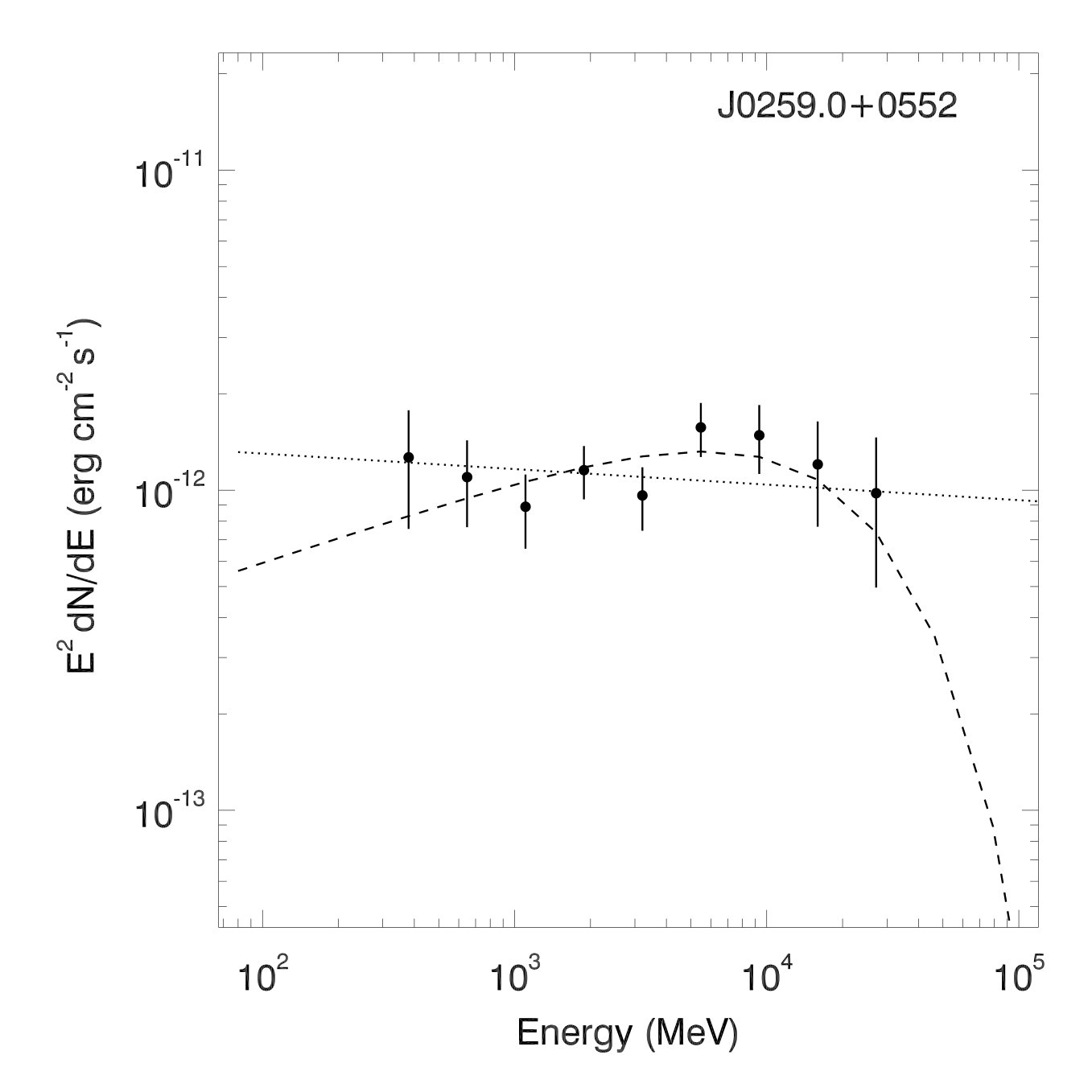 Figure 1
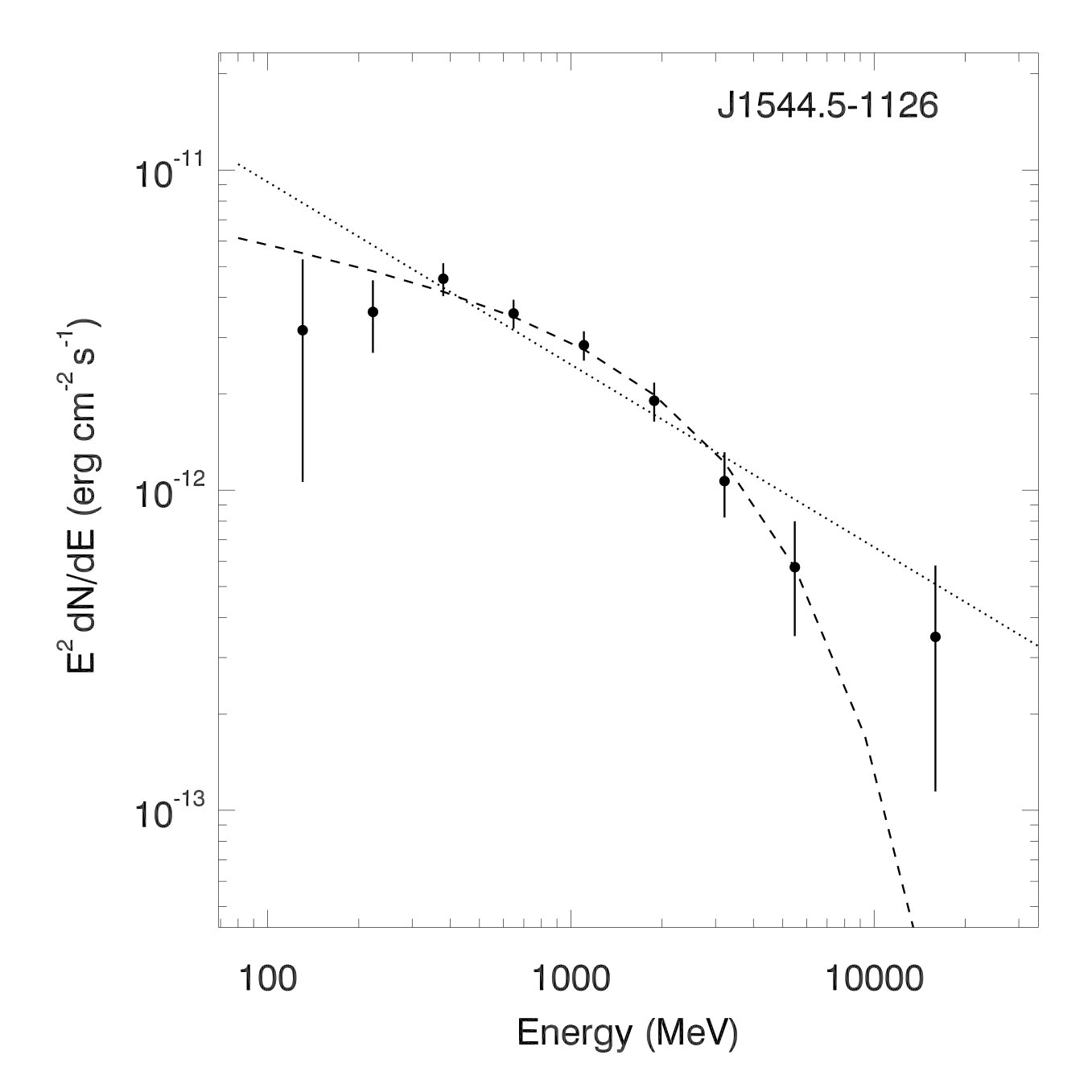 Figure 2
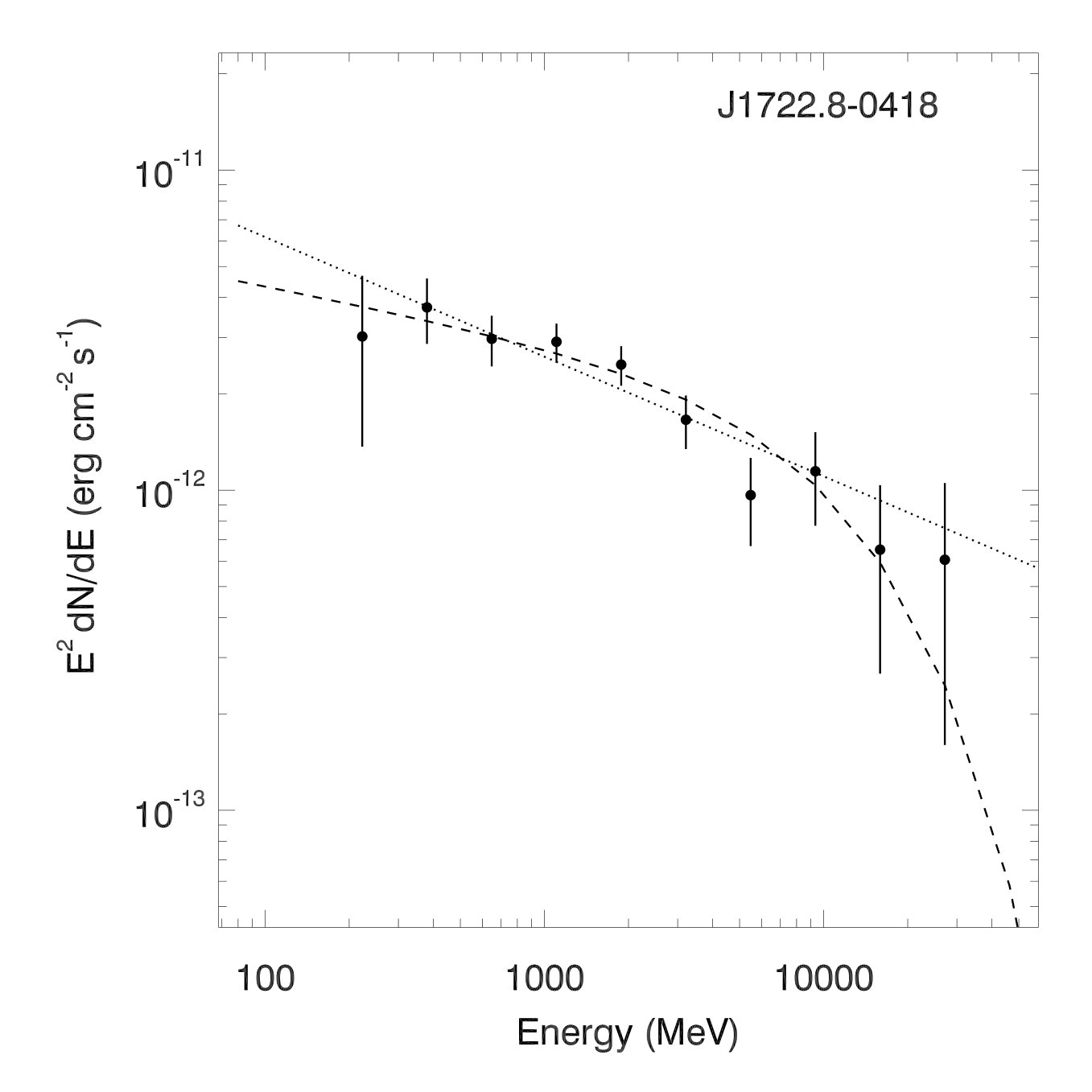 Figure 3
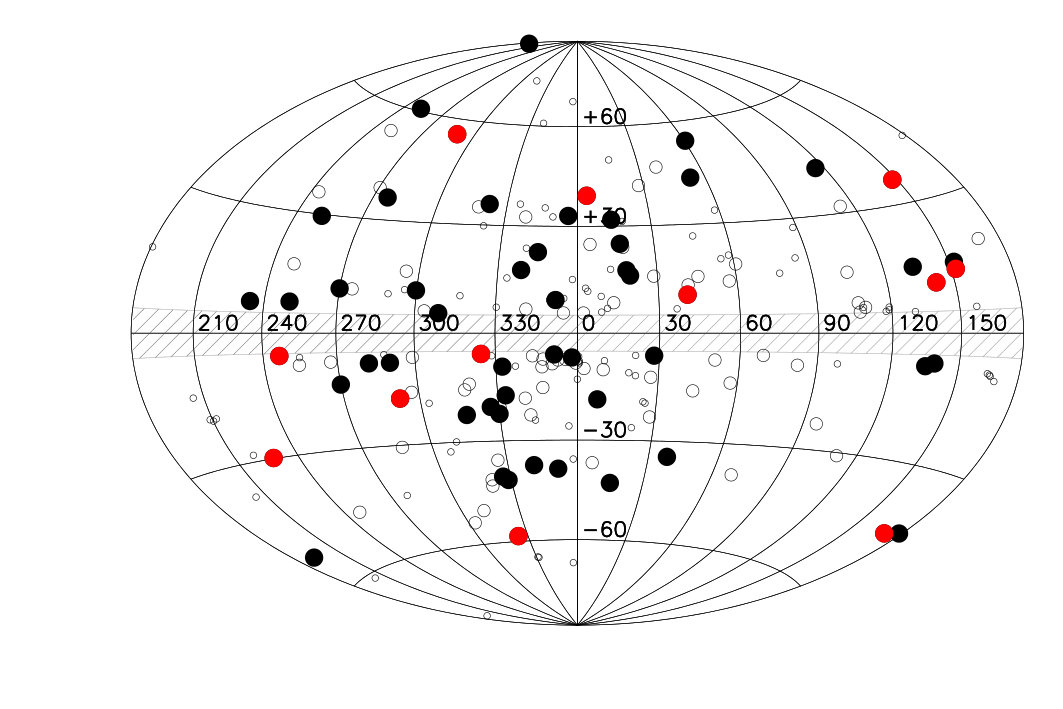 Figure 4
| FL8Y Name | Model | Flux/10-9 | Ec | TS | Signif_Curve | |
|---|---|---|---|---|---|---|
| (photons cm-2s-1) | (GeV) | () | ||||
| J0259.00552 | PL | 3.7 0.5 | 2.05 0.06 | 358 | ||
| PLE | 2.8 0.5 | 1.7 0.1 | 22 9 | 362 | 3.12 | |
| J0418.96636 | PL | 9.5 0.6 | 2.29 0.04 | 650 | ||
| PLE | 7.2 0.7 | 1.7 0.1 | 5 1 | 681 | 6.74 | |
| J0523.32527 ∗ | PL | 10.3 0.4 | 2.11 0.03 | 2206 | ||
| PLE | 7.5 0.5 | 1.3 0.1 | 3.3 0.5 | 2279 | 11.17 | |
| J0533.75946 | PL | 7.3 0.6 | 2.54 0.06 | 289 | ||
| PLE | 6.0 0.6 | 1.6 0.2 | 1.7 0.4 | 326 | 6.45 | |
| J0736.93231 a | PL | 16 1 | 2.62 0.05 | 505 | ||
| PLE | 14 1 | 2.1 0.4 | 2 2 | 509 | 3.53 | |
| J0843.46713 | PL | 2.6 0.3 | 1.95 0.05 | 472 | ||
| PLE | 1.5 0.2 | 1.0 0.2 | 3.9 0.7 | 516 | 6.62 | |
| J0940.57610 | PL | 7.5 0.6 | 2.36 0.05 | 392 | ||
| PLE | 5.8 0.7 | 1.7 0.2 | 3.1 0.8 | 416 | 5.91 | |
| J1221.50634 | PL | 6.2 0.6 | 2.32 0.06 | 421 | ||
| PLE | 4.5 0.6 | 1.8 0.2 | 3 1 | 424 | 4.69 | |
| J1543.60245 a | PL | 7.3 0.6 | 2.51 0.06 | 266 | ||
| PLE | 6.3 0.7 | 1.9 0.2 | 3 1 | 283 | 4.57 | |
| J1603.36010 | PL | 3.4 0.4 | 2.01 0.06 | 190 | ||
| PLE | 1.4 0.2 | 0.6 0.1 | 3.2 0.4 | 229 | 6.29 | |
| J1827.51141 b | PL | 6.1 0.8 | 2.31 0.07 | 238 | ||
| PLE | 3.7 0.8 | 1.5 0.2 | 4.4 1.5 | 247 | 4.65 | |
| J2333.15528 | PL | 3.7 0.3 | 2.24 0.06 | 378 | ||
| PLE | 2.8 0.3 | 1.6 0.2 | 4 1 | 399 | 5.01 |
| FL8Y Name | Model | Flux/10-9 | Ec | TS | Signif_Curve | |
|---|---|---|---|---|---|---|
| (photons cm-2s-1) | (GeV) | () | ||||
| J1544.51126 | PL | 12.3 0.7 | 2.57 0.05 | 597.98 | ||
| PLE | 11.6 0.8 | 2.2 0.2 | 3 2 | 598.39 | 2.06 | |
| J1722.80418 | PL | 11 1 | 2.37 0.06 | 362 | ||
| PLE | 9 1 | 2.2 0.1 | 14 7 | 360 | 2.71 |
| Source | OBSID | Exposure | R.A. | Dec. | ||||
| (sec) | (h:m:s) | () | (cm-2) | () | ||||
| J0259.0+0552 | 00084646003 | 3094 | 02:58:57.86 | +05:52:44.25 | 8.18 | 2.73/5 |
| Source | OBSID | Exposure | Counts | ||
|---|---|---|---|---|---|
| (sec) | s-1) | ( cm-2) | () | ||
| J0418.9+6636 | 00047153001 | 3678 | <2.88 | 20.5 | <1.77 |
| J0736.93231 | 00047171006 | 2394 | <4.68 | 39.2 | <3.52 |
| J0843.4+6713 | 00031603001 | 4617 | <1.89 | 3.28 | <0.84 |
| J0940.57610 | 00084695002 | 737 | <21.17 | 9.84 | <10.96 |
| J1221.50634 | 00032457002 | 5071 | <2.93 | 2.42 | <1.27 |
| J1603.36010 | 00084769008 | 1298 | <9.47 | 24.9 | <6.16 |
| J1827.5+1141 | 00047276001 | 2141 | <4.63 | 14.5 | <2.60 |
| J2333.15528 | 00084897014 | 1929 | <6.10 | 1.23 | <2.55 |
Peer Reviews
No public reviews on file for this paper yet. If you reviewed it on a platform where reviews are public (OpenReview, ICLR, NeurIPS, ICML), you can paste yours below so the community can read it here.
Videos
No videos yet. Explain this paper in a talk, walkthrough, or lecture? Add one.
Abstract
We are starting a project to find -ray millisecond pulsars (MSPs) among the unidentified sources detected by the Large Area Telescope (LAT) onboard the Fermi Gamma-Ray Space Telescope (Fermi), by radio observations. The selection of good candidates from analysis of the LAT data is an important part of the project. Given that there is more than 10 years worth of LAT data and the advent of the newly released LAT 8-year point source list (FL8Y), we have conducted a selection analysis, on the basis of our previous analysis, and report the results here. Setting the requirements for the unidentified sources in FL8Y of Galactic latitudes 5∘ and curvature significances 3, there are 202 sources with detection signficances 6. We select 57 relatively bright ones (detection significances 15) and analyze their 10.2 years of LAT data. Their variability is checked to exclude variable sources (likely blazars), test statistic maps are constructed to avoid contaminated sources, and curvature significances are re-obtained and compared to their -ray spectra to exclude non-significant sources. In the end, 48 candidates are found. Based on the available information, mostly from multi-wavelength studies, we discuss the possible nature of several of the candidates. Most of these candidates are currently being observed with the 65-meter Shanghai Tian Ma Radio Telescope.
keywords:
Pulsars; gamma-rays; multi-wavelength
\pubvolume
0 \issuenum1 \articlenumber5
\historyReceived: 29 December 2018; Accepted: 5 February 2019; Published: date
\TitleSearching for Gamma-Ray Millisecond Pulsars: Selection of Candidates Revisited \AuthorXuejie Dai 1,2,∗, Zhongxiang Wang 1 and Jithesh Vadakkumthani 3
\corresCorrespondence:[email protected]
1 Introduction
The Large Area Telescope (LAT), onboard the Fermi Gamma-Ray Space Telescope (Fermi), has been monitoring the whole sky for more than 10 years. Because of its great capabilities, we have entered a great era where thousands of -ray sources have been detected and identified, allowing us to study different types of objects and their high-energy emission processes in detail. From these studies, it has been found that most of detected sources belong to the blazar class of Active Galactic Nuclei (AGN; Ackermann et al. (2015)). In the Milky Way, pulsars are the dominant -ray sources Abdo et al. (2013); Acero et al. (2015). Thus far, 234 pulsars have been identified to have -ray emission by LAT 111https://confluence.slac.stanford.edu/display/GLAMCOG/Public+List+of+LAT-Detected+Gamma-Ray+Pulsars, and nearly half of them are millisecond pulsars (MSPs).
An effective way to identify -ray pulsars is to search for pulsed emission at radio frequencies in LAT sources. The Shanghai Tian Ma Radio Telescope, a newly built, 65 meter diameter telescope with observing frequencies of 1.25–50 GHz, is capable of carrying out such searches. For the purpose of finding new -ray pulsars, previously we had conducted selections of candidate -ray MSPs among Fermi LAT unidentified sources Dai et al. (2016, 2017). The selections were based on the Fermi LAT third source catalog (3FGL; Acero et al. (2015)), which contains nearly 1000 unidentified sources among 3033 sources, obtained from the first four years of all-sky monitoring. Our main selection criteria are (1) Galactic latitudes ; (2) non-variable; (3) curvature significance (Signif_curve in 3FGL; Acero et al. (2015)) of a source’s emission greater than 3 (see also Section 2.4). The first is to avoid the relatively crowded Galactic plane. We note that, among 131 young (i.e., non-MSP) -ray pulsars, only 19 have magnitudes of Galactic latitudes greater than 5*∘*; therefore, there is only small chance that we also selected candidate young pulsars. The latter two help to distinguish a candidate from blazars. Pulsars have stable emission, generally described with a power law with an exponential cutoff (i.e., some degree of curvature in the spectra), in contrast to the highly variable and power-law like emission from blazars (e.g., see Williamson et al. (2014); Ackermann et al. (2015)). Using these criteria, we selected 101 sources from 3FGL and found 52 candidate MSPs; 49 were rejected, due to low detection significances (average_sig ; Acero et al. (2015)), confusion or mixed with extended bright emission regions, based on the Test Statistic (TS) maps we calculated Dai et al. (2016), or low curvature significances based on spectra we obtained Dai et al. (2016, 2017). Among the candidates, two sources, 3FGL J0514.64406 and J1946.45403, have already been identified as the pulsars PSR J05144407 Bhattacharyya (2017) and PSR J19465403 Ray et al. (2016).
Now, more than 10 years of LAT data have been collected and the preliminary LAT 8-year point source list (FL8Y)222https://fermi.gsfc.nasa.gov/ssc/data/access/lat/fl8y/ has been released, in which more than 5000 sources are listed, with their source locations and spectral properties provided. Given these sources, re-analysis for the source selection is warranted, which will confirm our previous selection of candidates, add new candidates, and also help to check the improvement of the new data catalog. We, thus, conducted the analysis based on the FL8Y and report the results here.
FL8Y Target Selection
We selected targets from the unassociated sources in FL8Y using the two criteria: Having Galactic latitudes of 5∘ and having curved spectra with PLEC_SigCurv 3. No variability information is provided in FL8Y, and we had to obtain it from our own analysis (see below, in Section 2.2). There are 202 sources with detection significance Signif_avg 6. Their positions, in Galactic coordinates, are shown in Figure 1. Different sizes of circles are used to indicate the detection significances (the larger, the higher). In this analysis, we selected those whose Signif_avg 15 (marked with filled circles in Figure 1). There are 57 sources, with 37 of them included in our previous analysis, and were found to be good candidates Dai et al. (2016, 2017). We, therefore, mainly focused on analysis of the data for the 20 new sources.
2 Fermi LAT Data and Data Analysis
2.1 LAT Data
LAT is a pair-production telescope with a wide field-of-view, recording the direction, energy, and arrival time of each -ray photon in the energy range of from below 20 MeV to more than 300 GeV Atwood et al. (2009). It scans the whole sky every three hours. In this analysis, we used approximately 10.2 yrs of LAT data selected from the Pass 8 database. The time period is from 4 August 2008 15:43:39 to 31 October 2018 23:56:35 (UTC). For each target, we extracted data in a region centered at the target’s position with a size of 15∘ in radius. Because of the relatively large uncertainties of the instrument response function of the LAT in the low energy range (below 200 MeV), we chose the data in the energy range from 200 MeV to 300 GeV. Events with zenith angles larger than 90∘ were rejected, which is the recommendation of the LAT team to exclude possible contamination from the Earth’s limb.
2.2 Variability Analysis
Since pulsar -ray emission is stable, compared to the highly variable blazars, variability analysis can help to select pulsars among blazars for high Galactic sources. However, FL8Y does not have the variability information. Therefore, for each target, we performed aperture photometry to construct its light curve. We followed the steps provided by the Fermi Science Support Center333https://fermi.gsfc.nasa.gov/ssc/data/analysis/scitools/aperture_photometry.html. An aperture of radius 1∘ was used. We obtained light curves binned in 30-day intervals. There were 124 data points in each light curve, but, as Fermi encountered operational anomaly in March of 2018, one corresponding data point was not included. Following the LAT catalogs, we estimated the variability index for each target, which is defined as the sum of the differences between the log likelihoods, in which the source flux is constant and those in which the flux is optimized in each time bin Abdo et al. (2010). The criterion was for a distribution with 122 degrees of freedom, a light curve was considered significantly variable if the value was larger than 161.25 (at a 99% confidence level). We found that 13 of the 20 new targets did not have significant variations. Therefore, 13 sources were selected from this analysis. We also checked the variability indices for the 37 sources in our previous analysis, and they were all still non-variables.
We note that, in the past few years, it has been found that several MSP binaries show orbital modulation in -rays, which suggests that certain flux variations may be seen from MSP binaries. However, these MSP binaries either have very weak periodic signals (e.g., Romani et al. (2015); Strader et al. (2016)), or are much brighter than our targets (e.g., Ng et al. (2018); An et al. (2018)). In any case, the variability analysis here is mainly to exclude blazars as completely as possible, since blazars are the dominant population among the extra-galactic sources.
2.3 Maximum Likelihood Analysis
We performed a standard binned maximum likelihood analysis Mattox et al. (1996) on the data of each target, using LAT science tools package v11r5p3 with the P8R2_SOURCE_v6 instrument response functions. A source model, based on the FL8Y catalog, was created, which included all sources within 20∘ of a target. The source model also included the Galactic and the extragalactic diffuse background models, gll_iem_v06.fits and iso_P8R2_SOURCE_V6_v06.txt Acero et al. (2016), respectively. The spectral normalization and photon index parameters of the sources within 4∘ from each target were set free, and the normalizations of the diffuse background components were also free parameters. All the other parameters were fixed at their catalog values.
We generated -size TS maps for our targets, for the purpose of checking whether a target was a point-like source, without being contained in an extended emission region or mixed with nearby unknown sources. Previously, this step was important as some sources were found to have such problems and were rejected. For a given source, the square root of its TS value was, approximately, the detection significance. We examined the TS maps of our 13 targets, and found that all of them were ‘clean’ point-like sources without any contamination. We also repeated the analysis for the 37 previous sources, since more data were available than before, and they were confirmed to be clean.
2.4 Spectral Analysis
To evaluate the curvature significances for our targets, we used the models of a power law (PL) and a PL with an exponential cutoff (PLE); the latter is considered to describe pulsar -ray emission well, with the cutoff energies at several GeV Abdo et al. (2013); Xing and Wang (2016).
The PL model has the form
[TABLE]
where is the normalization, is the photon index, and we set GeV. The PLE model has the form
[TABLE]
where is the cutoff energy.
Running the gtlike task, we obtained and , the maximum likelihood values modeled with PL and PLE, respectively, for each target. Then, the curvature significance was calculated by . We found that, among the 13 new sources, 12 of them had significant curvature and one, J1722.80418, did not; the results, for both cases, are given in Table 1 and Table 2, respectively. It is interesting to note that there were three sources (in Table 1) which were previously analyzed and rejected, because of either low curvature significance or not being a clean point-like source. We also checked our previous 37 candidates and found that one source, J1544.51126, did not have significant curvature anymore. Its spectral results are given in Table 2.
We evenly divided energy logarithmically from 0.1 to 300 GeV into 15 energy bands, and obtained the spectra of these sources. Spectral data points with their flux values two times greater than the flux uncertainties were kept. The spectra of J1722.80418 and J1544.51126, as well as their best PL and PLE fits, are shown in Figure 2. The spectra confirm our above results.
3 Swift X-ray Data Analysis
We searched for possible X-ray counterparts to the 12 candidates. Among them, J0523.32527 has been considered to be an MSP binary system, and two other sources (J0533.7+5946 and J1543.60245) have not been covered by X-ray observations. For the rest of the sources, we obtained the Swift X-ray Telescope (XRT; Burrows et al. (2005)) data of the longest exposure from the High Energy Astrophysics Science Archive Research Center (HEASARC). The data were processed using the xrtpipeline tool in the HEASOFT package version 6.22.1 distributed by HEASARC, and the calibration files version 20180710 available in the Swift CALDB. We searched the X-ray sources in the XRT images using the detect command available in ximage with a detection threshold of . A detected X-ray source inside the Fermi error circle was considered as a possible X-ray counterpart.
Among the 9 sources, only J0259.0+0552 had a possible X-ray counterpart, while the rest of the sources had no counterparts. The exact position of the detected X-ray source was derived using the xrtcentroid task, and the source and background events were extracted from a circular region of radius 47 arcsec. This source was faint, and there were not sufficient spectral counts to perform detailed spectral modeling; thus we used the Cash Statistic Cash (1979) for the spectral fitting. A simple absorbed power law was used for the spectral fitting, where the absorption was fixed at the Galactic value Kalberla et al. (2005), and best-fit spectral parameters are given in Table 3. For the no X-ray counterpart cases, the upper limits on the count rates were estimated, using the uplimit command in ximage. We, then, converted the upper limits on the count rates into fluxes by using webPIMMS444https://heasarc.gsfc.nasa.gov/cgi-bin/Tools/w3pimms/w3pimms.pl, where we assumed an absorbed PL model with and the absorption column density of the Galactic values. The results are given in Table 4.
4 Results and Discussion
Based on the latest FL8Y catalog and analysis of 10.2 years of Fermi LAT data, we have revisited our selection of candidate MSPs. Now, the number of catalog sources that fit the MSP type nearly doubles if our simple selection criteria are used. We have analyzed the data for relatively bright sources with detection significances greater than 15, and 48 among 57 selected targets have been established as good candidate MSPs. Among the rejected, the source J1544.51126 was found not to have sufficient curvature significance. However, it has been studied at multi-wavelengths and identified as a -ray-emitting low mass X-ray binary (a good candidate of the transitional MSP Bertoni et al. (2015); Bogdanov and Halpern (2015)). On the other hand, among 12 new candidates, we have recovered three sources from the rejected ones in our previous analysis. Previously, we could reject a few sources because they were located in an extended emission region or mixed with nearby sources, but in this analysis we did not find any such cases. Combining these facts, the latest catalog appears to be improved.
Among the new candidates (see Table 1), J0523.32527 is an actual candidate MSP binary, based on mutli-wavelength studies Strader et al. (2014), but as it is marked as an unidentified source in the catalog, it appears in our selection. The spectra of pulsars generally have a form of a power law with an exponential cutoff. The parameter ranges of –1.64 and –4.65 (3) were obtained from the fitting of the -ray spectra of 39 known MSPs with a PLE model Xing and Wang (2016). Considering the ranges, particularly the range which is more reliably determined from spectral analysis, 10 of the 11 new candidates have consistent values, suggesting they are good MSP candidates. The exceptional one, J0259.0+0552, has GeV, which is too large; although the uncertainty is also large. In Figure 3, we show the spectrum of J0259.0+0552, indicating its strong emission at high energies of 10 GeV. Given this, it is not likely a MSP, which has also been pointed out recently Frail et al. (2018). In addition, we note that J1221.50634 has been suggested to be associated with a redshift z = 0.44 quasar Álvarez Crespo et al. (2016), but the association is questionable Lefaucheur and Pita (2017). The results are generally consistent with those obtained from statistical and machine learning techniques Saz Parkinson et al. (2016), in which most of our new candidates were also classified as MSPs or a young pulsar (J0736.93231), but J0259.0+0552, J0843.4+6713, and J1221.50634 were classified as active galactic nuclei.
The list of the selected candidates are among those being observed at the 13 cm band (2.2–2.4 GHz) with the 65-m Tian Ma Radio Telescope (see, e.g., Yan et al. (2018)), which is a fully steerable Cassegrain antenna. The pulsar searching mode, with a time resolution of 65 s, is being used in our observations. Hopefully the observations, a test run with the Tian Ma Telescope, will turn out to be fruitful. If that is the case, we would lower the detection significances and have more candidates for investigation. The selection criteria might also be adjusted to include more candidates. In addition, observations at other wavelengths will certainly help; for example, since the known -ray pulsars have -ray to X-ray flux ratios of 10–105 Abdo et al. (2013), X-ray observations can help to locate source positions accurately. In our analysis of archival Swift X-ray data, only one possible X-ray counterpart to J0259.0+0552 was found, and for the other 8 sources covered with the X-ray observations, flux upper limits of \sim$$10^{-13} erg s*-1* cm*-2* were obtained. The -ray fluxes of these sources in 0.1–100 GeV were (4–10) erg s*-1* cm*-2*, indicating that, if these sources are MSPs, the X-ray observations were probably not deep enough. Thus, further X-ray observations are also being planned for identifying candidate MSPs and studying their likely binary nature.
\authorcontributions
formal analysis, D.X.; writing–original draft preparation, D.X.; writing–review and editing, W.Z.; supervision, W.Z.; X-ray analysis, J.V.
\funding
This research was funded by the National Program on Key Research and Development Project (Grant No. 2016YFA0400804) and the National Natural Science Foundation of China (11633007).
Acknowledgements.
This research made use of the High Performance Computing Resource in the Core Facility for Advanced Research Computing at Shanghai Astronomical Observatory. \conflictsofinterestThe authors declare no conflict of interest. \reftitleReferences
The reference list from the paper itself. Each links out to its DOI / PubMed record.
- 1Ackermann et al. (2015) Ackermann, M.; Ajello, M.; Atwood, W.B.; Baldini, L.; Ballet, J.; Barbiellini, G.; Bastieri, D.; Becerra Gonzalez, J.; Bellazzini, R.; Bissaldi, E.; et al. The Third Catalog of Active Galactic Nuclei Detected by the Fermi Large Area Telescope. Astrophys. J. 2015 , 810 , 14, doi: \changeurlcolor black 10.1088/0004-637X/810/1/14 . · doi ↗
- 2Abdo et al. (2013) Abdo, A.A.; Ajello, M.; Allafort, A.; Baldini, L.; Ballet, J.; Barbiellini, G.; Baring, M.G.; Bastieri, D.; Belfiore, A.; Bellazzini, R.; et al. The Second Fermi Large Area Telescope Catalog of Gamma-Ray Pulsars. Astrophys. J. Suppl. Ser. 2013 , 208 , 17, doi: \changeurlcolor black 10.1088/0067-0049/208/2/17 . · doi ↗
- 3Acero et al. (2015) Acero, F.; Ackermann, M.; Ajello, M.; Albert, A.; Atwood, W.B.; Axelsson, M.; Baldini, L.; Ballet, J.; Barbiellini, G.; Bastieri, D.; et al. Fermi Large Area Telescope Third Source Catalog. Astrophys. J. Suppl. Ser. 2015 , 218 , 23, doi: \changeurlcolor black 10.1088/0067-0049/218/2/23 . · doi ↗
- 4Dai et al. (2016) Dai, X.J.; Wang, Z.X.; Vadakkumthani, J.; Xing, Y. Identification of candidate millisecond pulsars from Fermi LAT observations. Res. Astron. Astrophys. 2016 , 16 , 97, doi: \changeurlcolor black 10.1088/1674-4527/16/6/097 . · doi ↗
- 5Dai et al. (2017) Dai, X.J.; Wang, Z.X.; Vadakkumthani, J.; Xing, Y. Identification of candidate millisecond pulsars from Fermi LAT observations II. Res. Astron. Astrophys. 2017 , 17 , 072, doi: \changeurlcolor black 10.1088/1674-4527/17/7/72 . · doi ↗
- 6Williamson et al. (2014) Williamson, K.E.; Jorstad, S.G.; Marscher, A.P.; Larionov, V.M.; Smith, P.S.; Agudo, I.; Arkharov, A.A.; Blinov, D.A.; Casadio, C.; Efimova, N.V.; et al. Comprehensive Monitoring of Gamma-Ray Bright Blazars. I. Statistical Study of Optical, X-Ray, and Gamma-Ray Spectral Slopes. Astrophys. J. 2014 , 789 , 135, doi: \changeurlcolor black 10.1088/0004-637X/789/2/135 . · doi ↗
- 7Bhattacharyya (2017) Bhattacharyya, B. Search for pulsars and transients with the GMRT. IAU Symp. 2017 , 337 , 17–20, doi: \changeurlcolor black 10.1017/S 1743921317009218 . · doi ↗
- 8Ray et al. (2016) Ray, P.S.; Ransom, S.M.; Camilo, F.M.; Kerr, M.; Reynolds, J.; Sarkissian, J.; Freire, P.; Thankful Cromartie, H.; Barr, E.D. Timing and Fermi LAT Analysis of Four Millisecond Pulsars Discovered in Parkes Radio Searches of Gamma-ray Sources. In Proceedings of AAS 227th Meeting of the American Astronomical Society, Kissimmee, FL, USA, 7–8 January 2016.