Eigenvalue Approximation for Krein-Feller-Operators
Uta Freiberg, Lenon Minorics

TL;DR
This paper investigates how the eigenvalues and eigenfunctions of Krein-Feller-Operators behave as the underlying probability measures converge, providing explicit representations and convergence rates, especially on the Cantor set.
Contribution
It introduces a measure-theoretic sine function representation of eigenvalues and analyzes their limiting behavior and convergence speed for sequences approaching invariant measures.
Findings
Eigenvalues are zeros of measure-theoretic sine functions.
Eigenfunctions' limiting behavior is characterized.
Convergence rates of eigenvalues and eigenfunctions are established.
Abstract
We study the limiting behavior of the eigenvalues of Krein-Feller-Operators with respect to weakly convergent probability measures. Therefore, we give a representation of the eigenvalues as zeros of measure theoretic sine functions. Further, we make a proposition about the limiting behavior of the previously determined eigenfunctions. With the main results we finally determine the speed of convergence of eigenvalues and -functions for sequences which converge to invariant measures on the Cantor set.
Click any figure to enlarge with its caption.
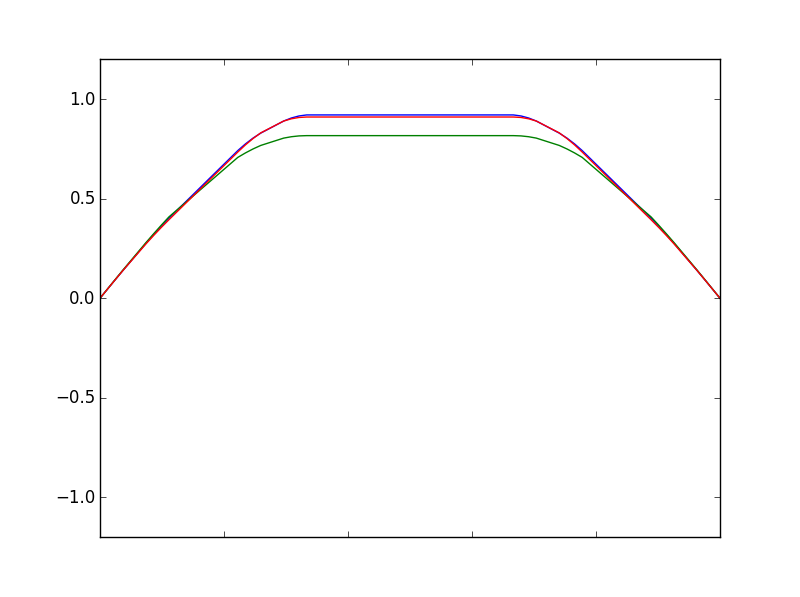 Figure 1
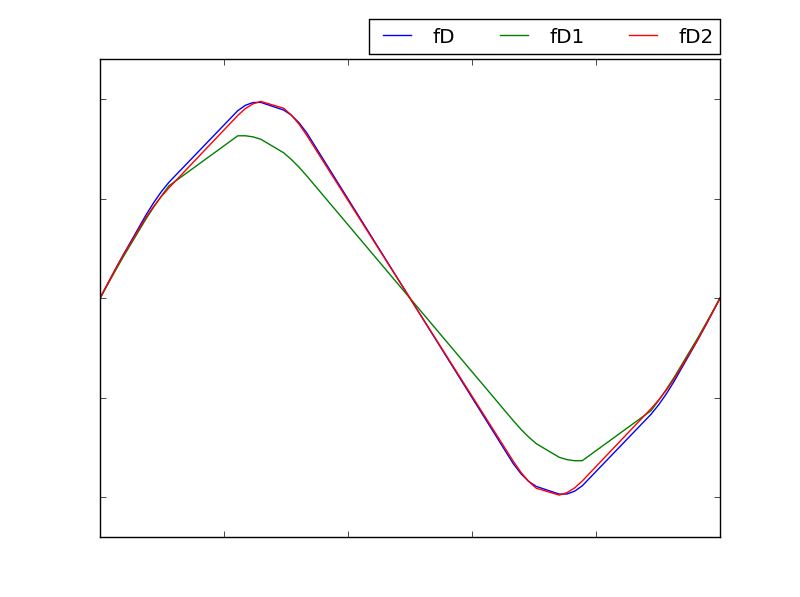 Figure 2
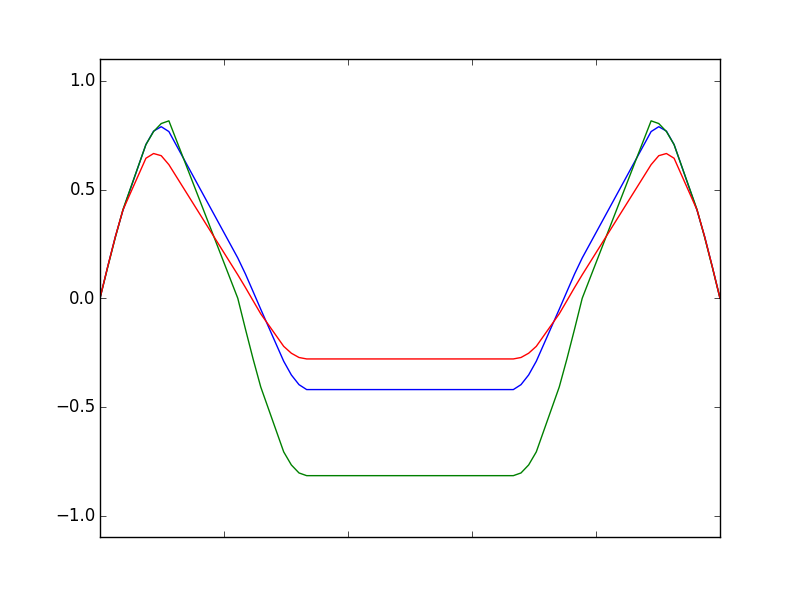 Figure 3
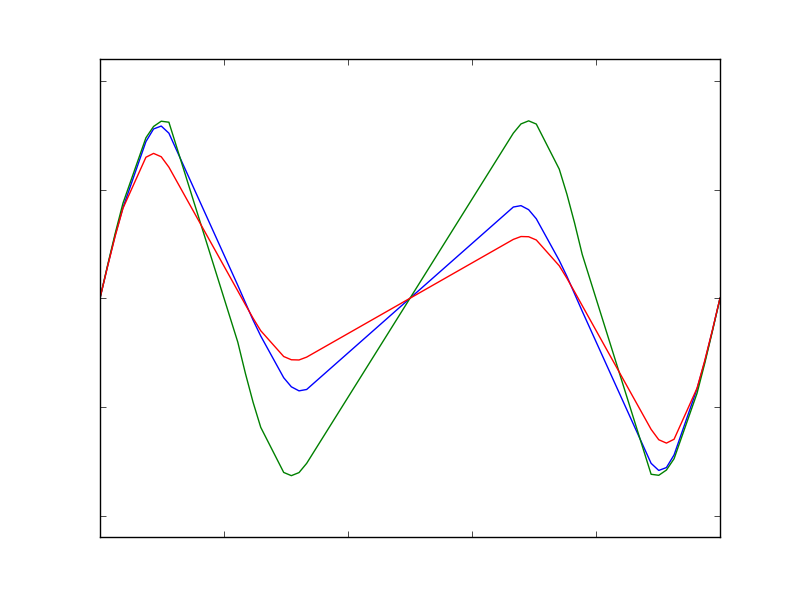 Figure 4
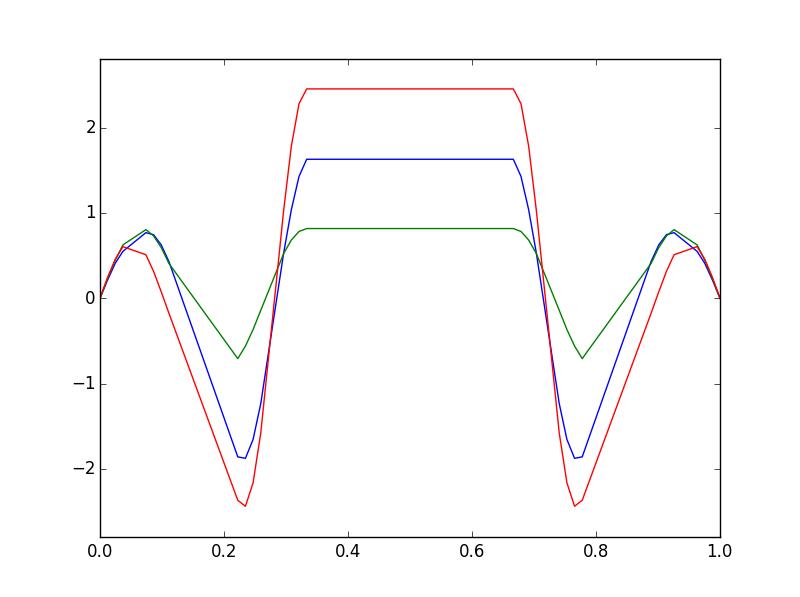 Figure 5
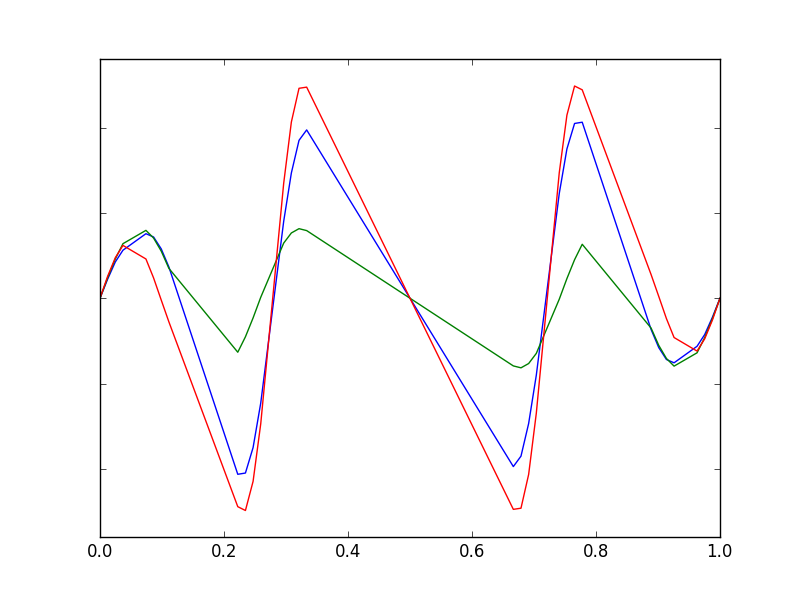 Figure 6
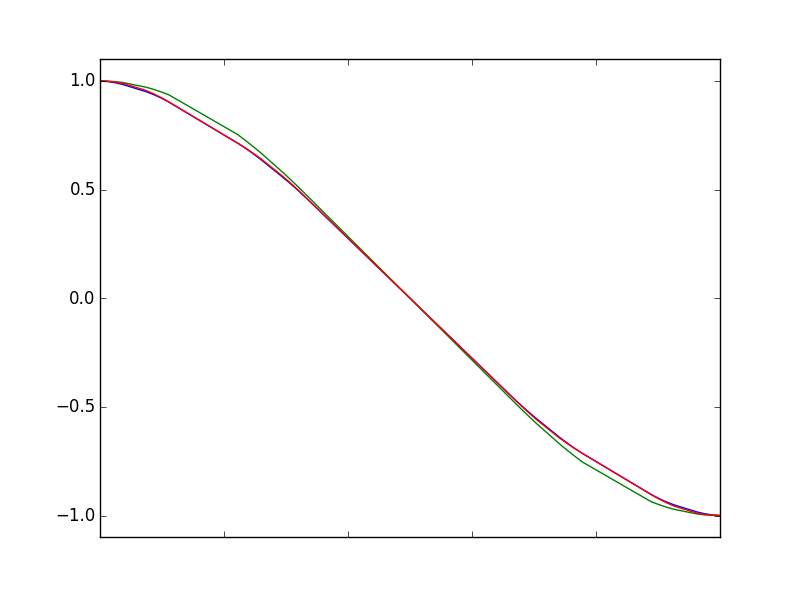 Figure 7
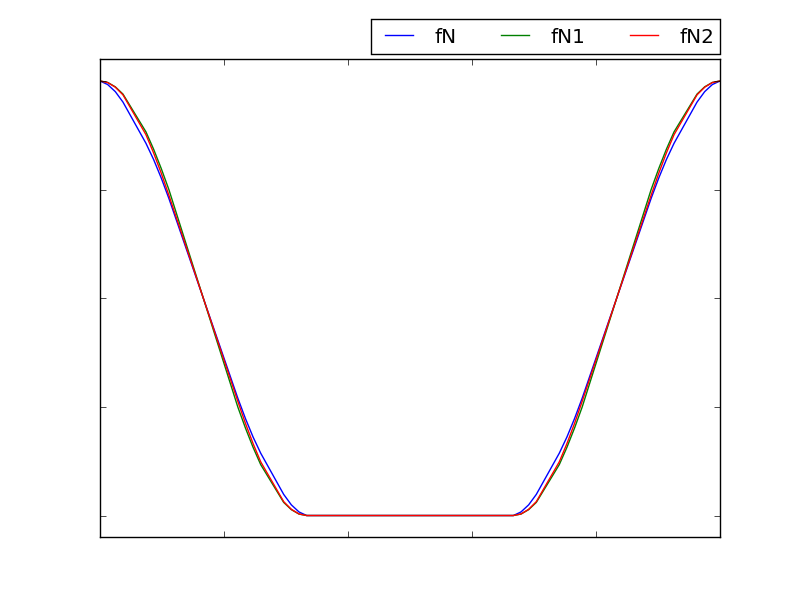 Figure 8
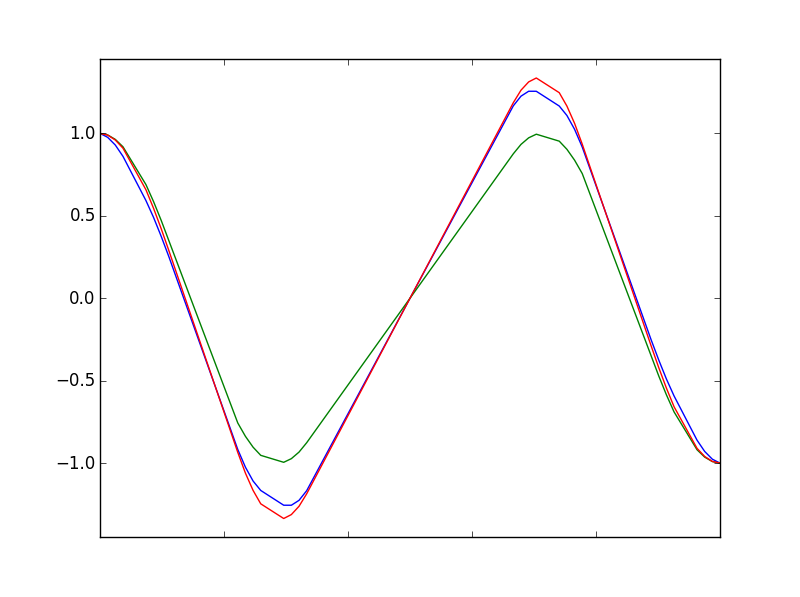 Figure 9
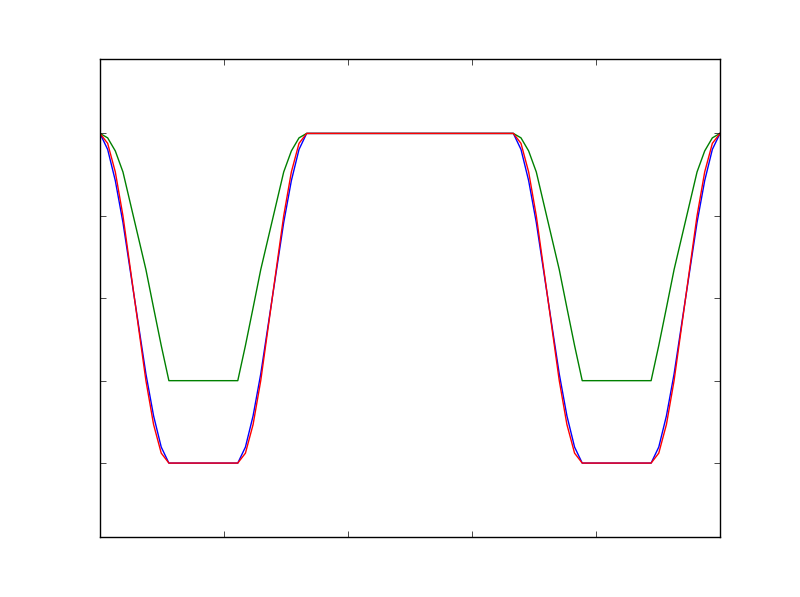 Figure 10
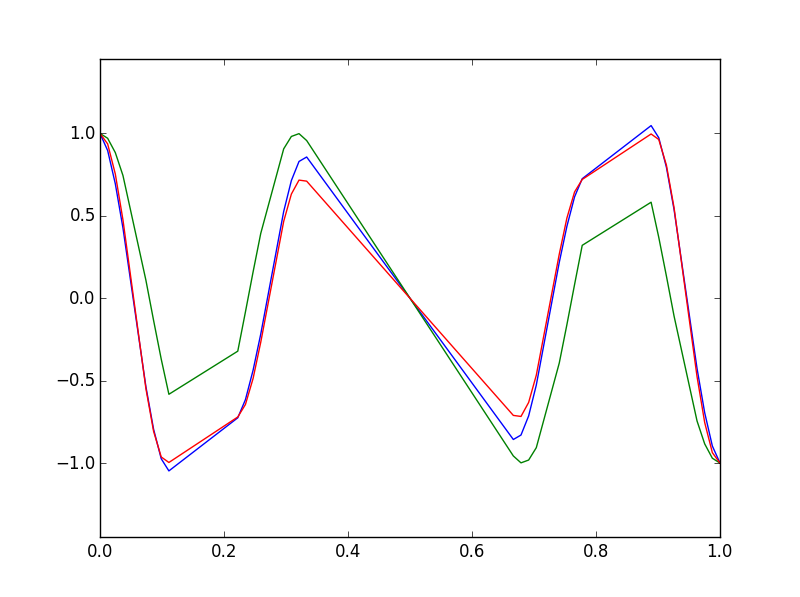 Figure 11
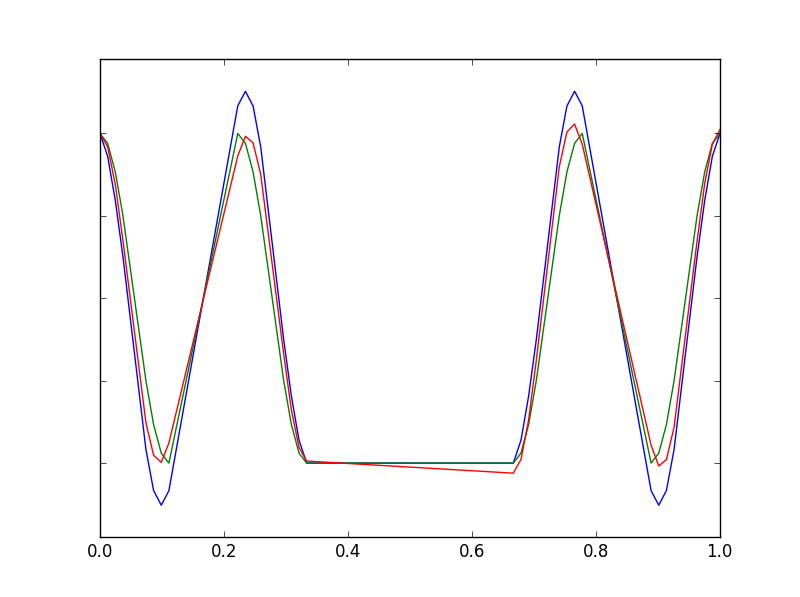 Figure 12
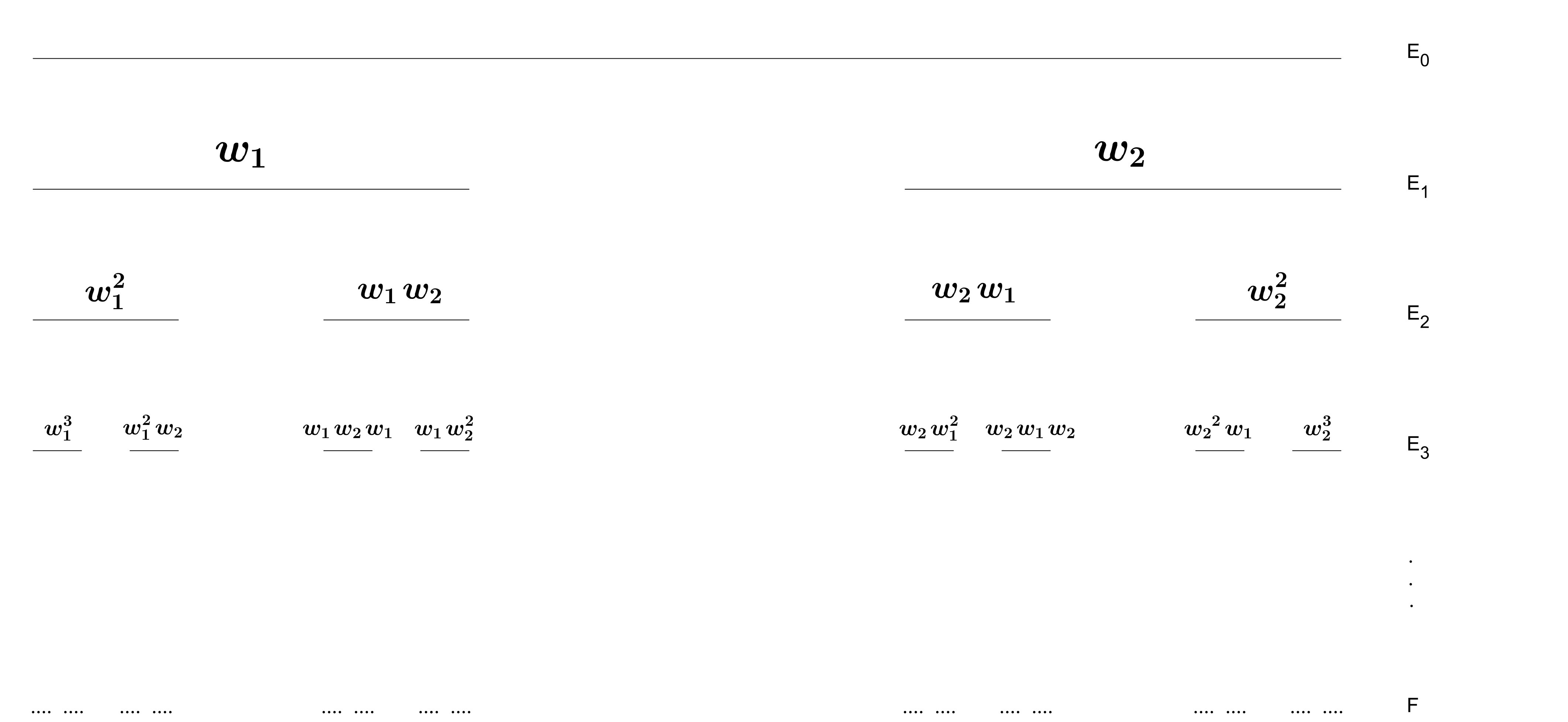 Figure 13
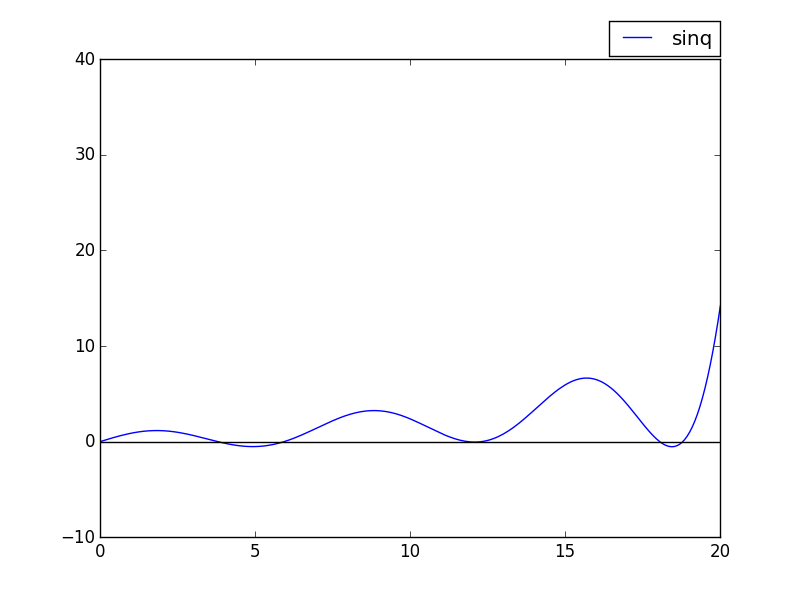 Figure 14
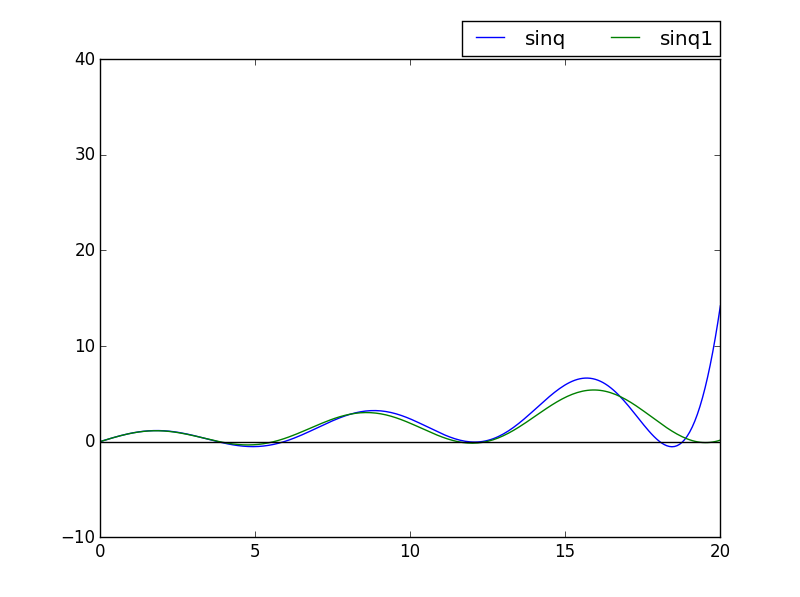 Figure 15
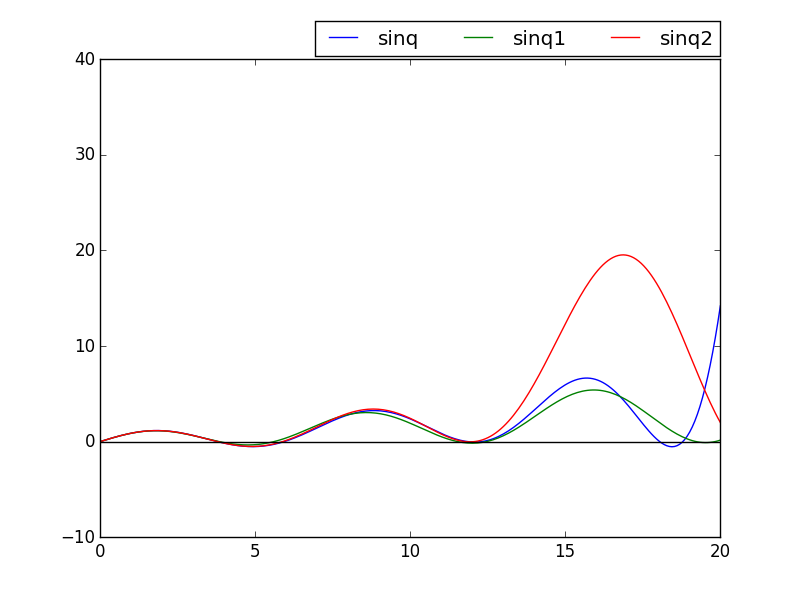 Figure 16
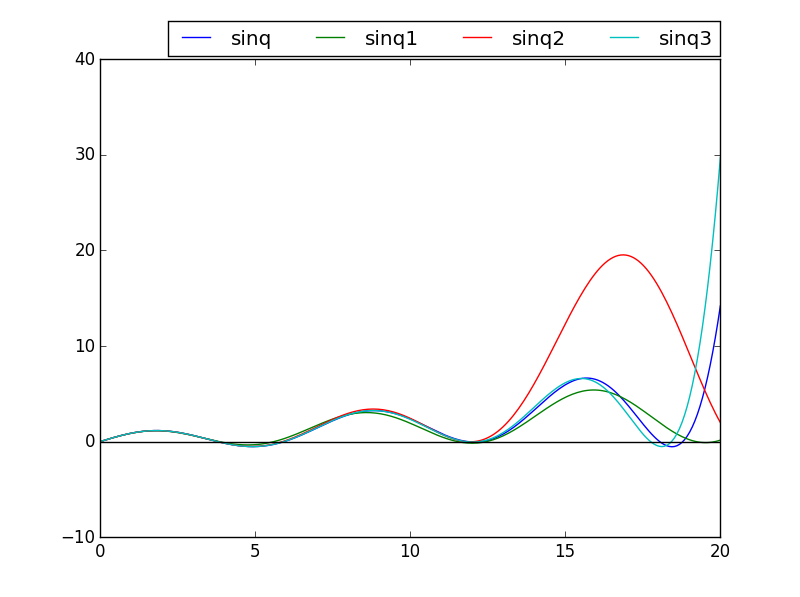 Figure 17
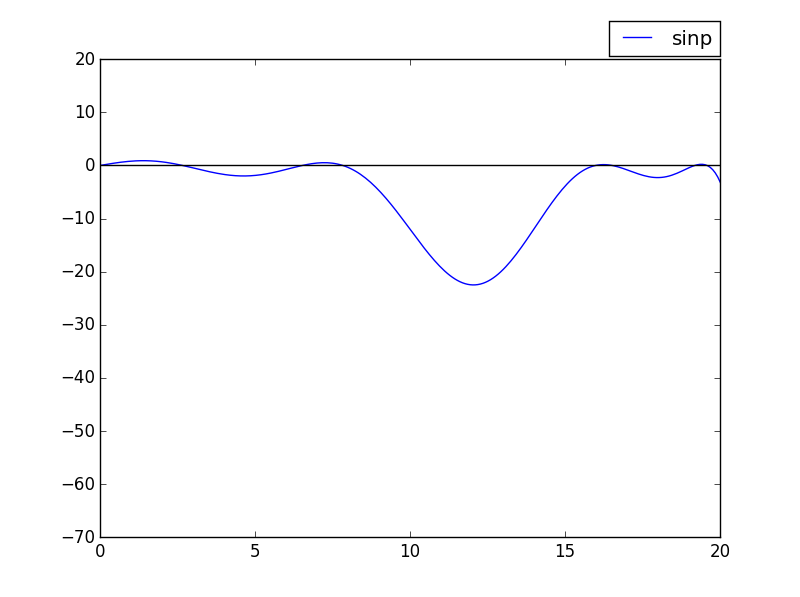 Figure 18
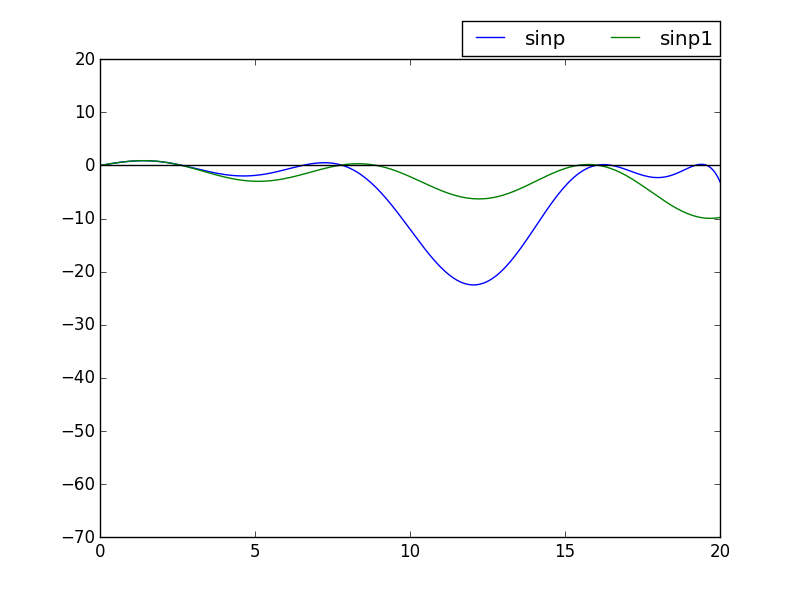 Figure 19
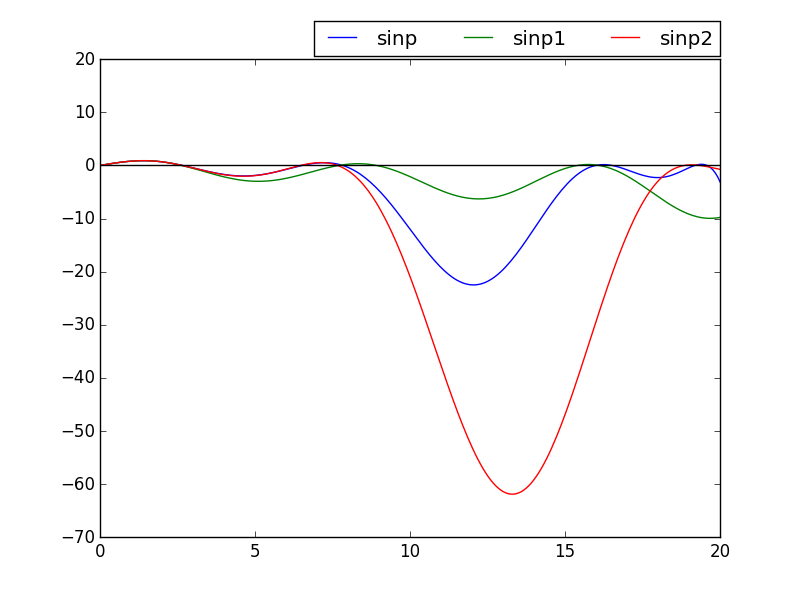 Figure 20
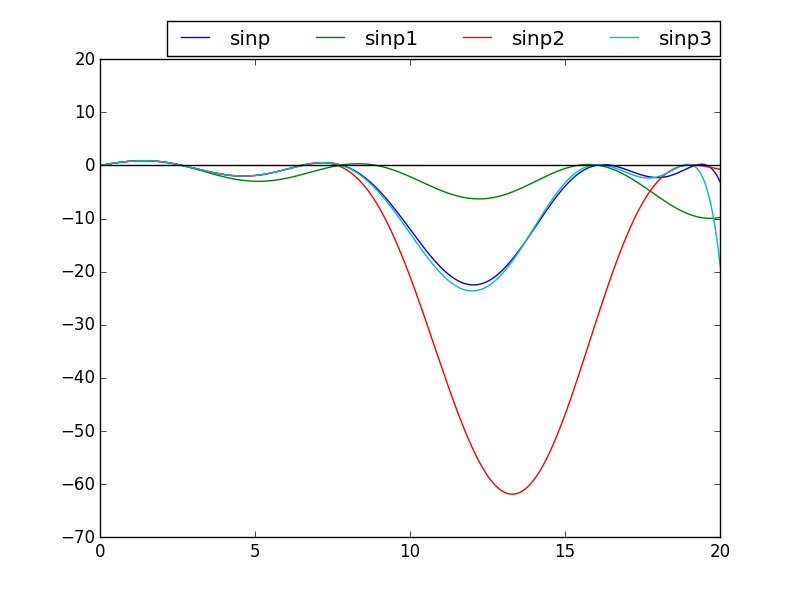 Figure 21
Peer Reviews
No public reviews on file for this paper yet. If you reviewed it on a platform where reviews are public (OpenReview, ICLR, NeurIPS, ICML), you can paste yours below so the community can read it here.
Videos
No videos yet. Explain this paper in a talk, walkthrough, or lecture? Add one.
\setkomafont
section10pt
Eigenvalue Approximation for Krein-Feller-Operators
Uta Freiberg111 Institute of Stochastics and Applications, University of Stuttgart, Pfaffenwaldring 57, 70569 Stuttgart, Germany, e-mail: [email protected], Lenon Minorics222 Institute of Stochastics and Applications, University of Stuttgart, Pfaffenwaldring 57, 70569 Stuttgart, Germany, e-mail: [email protected]
Abstract: We study the limiting behavior of the eigenvalues of Krein-Feller-Operators with respect to weakly convergent probability measures. Therefore, we give a representation of the eigenvalues as zeros of measure theoretic sine functions. Further, we make a proposition about the limiting behavior of the previously determined eigenfunctions. With the main results we finally determine the speed of convergence of eigenvalues and -functions for sequences which converge to invariant measures on the Cantor set.
Introduction
Let be a non-atomic Borel probability measure on and
[TABLE]
is called -Derivative of . Further, define
[TABLE]
Then, the Krein-Feller-Operator w.r.t. is given as
[TABLE]
Analytic properties of Krein-Feller-Operators are developed in [7]. Many papers deal with this operator and with the resulting eigenvalue problem, see for example Feller [6], Freiberg et al. [7, 8, 9, 10, 11, 12, 13, 15], Fujita [16], Minorics [20, 21], Ngai et al. [23, 24, 3, 4, 17] and for higher dimensional generalizations Freiberg and Seifert [14] and Solomyak et al. [26, 22].
In this paper we consider the corresponding eigenvalue problem
[TABLE]
with Dirichlet or Neumann boundary conditions. In [19, Theorem 1] it is shown, that the eigenvalues of (1) with Dirichlet or Neumann boundary conditions are countable infinite, have no finite accumulation points and multiplicity one. Moreover, if the sequence of Neumann eigenvalues is given by and the sequence of Dirichlet eigenvalues by , then
[TABLE]
where is a Neumann and Dirichlet eigenvalue, if it solves (1) with Neumann and Dirichlet boundary conditions, respectively. In [1, Chapter 4] a concept of measure theoretic trigonometric functions is developed, whereby the zeros of measure theoretic sine functions are the eigenvalues of (1) with Dirichlet or Neumann boundary conditions.
We consider sequences of probability measures those distribution functions converge uniformly to the distribution function of some Borel probability measure and show that the corresponding eigenvalues satisfy
[TABLE]
where denotes the sequence of Neumann and the sequence of Dirichlet eigenvalues of the Krein-Feller-Operator w.r.t. , respectively.
As an example, we then consider Krein-Feller-Operators w.r.t. , where is given as the unique invariant Borel probability measure to the IFS , , , and weight vector , , . Therefore is singular w.r.t. the one-dimensional Lebesgue measure. The concept of invariant measures is developed in [18]. We construct a sequence of non-atomic Borel probability measures , and get
[TABLE]
For a treatment of the classical theory of boundary problems on the real line see e.g. Atkinson [2].
Measure theoretic trigonometric functions
Let be a non-atomic Borel probability measure on .
Definition 2.1**.**
Let , and . For let
[TABLE]
and
[TABLE]
Lemma 2.2**.**
For all , and holds
[TABLE]
Proof.
[12, Lemma 2.4]. ∎
Lemma 2.3**.**
For fixed the series in Definition 2.1 converge uniformly absolutely on and
[TABLE]
Proof.
[1, Lemma 3.6]. ∎
Theorem 2.4**.**
- (i)
The Neumann eigenvalues , are the squares of the positive zeros of the function , . Up to a multiplicative constant, the corresponding eigenfunctions are given by
[TABLE] 2. (ii)
The Dirichlet eigenvalues , are the squares of the non-negative zeros of the function , . Up to a multiplicative constant, the corresponding eigenfunctions are given by
[TABLE]
Proof.
[1, Proposition 3.8] ∎
To prove the following statements, we need the multiplication formula
[TABLE]
where and are absolutely summable sequences.
Lemma 2.5**.**
For all holds
[TABLE]
where .
Proof.
For all follows with (2)
[TABLE]
Let , . Then and thus
[TABLE]
Analogously we get
[TABLE]
and thus
[TABLE]
∎
Lemma 2.6**.**
For all holds
[TABLE]
Proof.
Let and . Then
[TABLE]
and hence
[TABLE]
whereby the last equality follows from Lemma 2.5. In [1] Corollary 4.3 the formula
[TABLE]
is shown. Together with Lemma 2.5 we get
[TABLE]
Thus the statement follows. ∎
Proposition 2.7**.**
Let If is a zero of , then is no local extremum of .
Proof.
If is a local extremum of , then . Because , the statement follows with Lemma 2.6. ∎
Analogously we get the following proposition.
Proposition 2.8**.**
Let If is a zero of , then is no local extremum of .
Eigenvalue approximation
The main results of this paper are included in this section. Therefore, let be a finite non-atomic Borel probability measure on with distribution function . Further, let be a sequence of non-atomic Borel probability measures on with distribution functions such that converges uniformly to .
Before stating the main results, we need some estimates to get the speed of convergence of the measure theoretic trigonometric functions. Therefore, we denote and by and respectively and and by and respectively.
Lemma 3.1**.**
For all and all holds
[TABLE]
Proof.
First we prove the assertion for . Since
[TABLE]
we get for
[TABLE]
Thereby the assertion holds for . Assume the assertion holds for . Then
[TABLE]
Because
[TABLE]
and Lemma 2.2, it follows
[TABLE]
Together with the induction hypothesis and (3) we get
[TABLE]
For the induction is the same as for . Therefore the assertion holds for . Then for , we get
[TABLE]
We get the assertion for analogously. The proof for is similar to the proof of the induction basis of . ∎
Proposition 3.2**.**
For all holds
[TABLE]
where only depends on .
Proof.
We show the assertion for by applying Lemma 3.1. Analogously we get the other assertions. For all holds
[TABLE]
∎
Remark 3.3**.**
Especially we get
[TABLE]
Proposition 3.4**.**
For all and all holds
[TABLE]
Proof.
The estimates are consequences of Lemma 3.1. ∎
Proposition 3.5**.**
, , , and , , , converge uniformly on bounded intervals to , , , and , , , , respectively.
Proof.
The statement follows from Proposition 3.2, its proof and Proposition 3.4, whereby an analogous statement to Proposition 3.4 holds for and . ∎
Lemma 3.6**.**
Let be continuously differentiable and be a sequence of continuously differentiable functions on s.t. and uniformly on bounded intervals. If has exactly one zero in , and if on , then has exactly one zero in for all .
Proof.
Let be the unique zero of in . Because uniformly on and by assumption we have at least one zero of for each . Therefore it is sufficient to show that this zero is unique in . Suppose, there are infinite many s.t. has at least two zeros in , i.e. there exists a subsequence s.t. with and for all . W.l.o.g. let for all . Because
[TABLE]
and the Taylor formula (together with the mean value theorem)
[TABLE]
and f^{\prime}\big{|}_{[a,b]}\neq 0, we get
[TABLE]
Analogously we get . Moreover, Taylor’s formula implies that there exists s.t.
[TABLE]
and therefore, because , we get for all . Let . Then, because , follows
[TABLE]
for . Thereby the last estimate follows, because is continuous and converge to uniformly on bounded intervals. Because is arbitrary, it follows that . This is a contradiction to the assumption. ∎
Theorem 3.7**.**
For all holds
[TABLE]
and for all holds
[TABLE]
where and only depend on .
Proof.
We show the statement for , . The proof for works analogously. For the statement is obvious. Let and . Applying Proposition 2.6, we have . Because the zeros of are countable and have no finite accumulation points we get
[TABLE]
for all , sufficiently small. Because is continuous and , there exists a sufficiently small neighbourhood of s.t. . Thereby let be s.t. (4) holds and s.t. is the unique zero of on .
Then Proposition 3.5 implies, that there exists a unique for all s.t. . Applying Taylor’s formula, there exists a with
[TABLE]
and therefore for , whereby because
[TABLE]
holds. Let and , sufficiently large, s.t.
[TABLE]
To complete the proof, we first have to show inductively, that for all . Thereby the assertion is obvious for . Assume, that the assertion holds for . Because of , \operatorname{sinp}\big{|}_{[z_{m}-\epsilon,z_{m}+\epsilon]\backslash\{z_{m}\}}\neq 0 and Proposition 3.5, we can apply Lemma 3.6. This implies, that just a finite number of have more than one zero in . Analogously we get for a sufficiently small . This implies that also just a finite number of have more than one zero in . Applying the uniformly convergence on and , we get that just a finite number of have a zero in . Let be minimal s.t. , has a unique zero in , has no zero in and has a unique zero in for all . Thereby the assertion follows.
Moreover, let be s.t. for all . With Taylor’s formula there exists a between and s.t.
[TABLE]
Let , sufficiently small s.t. (5) implies
[TABLE]
for . This is possible, because is continuous and
[TABLE]
for holds. Thereby we get for , sufficiently large,
[TABLE]
Together with (6) and Proposition 3.2, we have
[TABLE]
∎
In the following, we denote the -th Neumann and Dirichlet eigenfunction of by and , respectively.
Theorem 3.8**.**
For all holds
[TABLE]
and for all holds
[TABLE]
where and only depend on .
Proof.
It holds
[TABLE]
For we have with a generalized binomial formula
[TABLE]
and thus if , we get
[TABLE]
Since by Theorem 3.7, we can choose large enough such that for and thus
[TABLE]
By Lemma 2.2 the last sum is convergent and thus we can conclude the claim. ∎
Eigenvalue approximation for Cantor Measures
In this section we use the results of the previous section to give the speed of convergence of the eigenvalues and -functions of approximations of Cantor measures. Therefore, let be the unique invariant Borel probability measure on the unit interval induced by the IFS , , , and weight vector , , For reasons of simplicity we only consider the classical Cantor set, but the following concept can be modified to Cantor like sets. W.l.o.g. let . For we define by
[TABLE]
where , and denotes the Borel -Algebra on . Figure 1 shows how weights the intervals in the -th approximation step of the Cantor set . Remark, that the attractor of the given IFS is F. This implies . Then , is a non-atomic Borel probability measure and the identity
[TABLE]
where , , holds. Furthermore, it is well known that converges weakly to .
Lemma 4.1**.**
There exists a Borel probability measure on such that
[TABLE]
where is the distribution function for given Borel measure .
Proof.
First we show
[TABLE]
Therefore let , and . We have by definition
[TABLE]
Also and are constant and equal on . Therefore it is sufficient to show the statement on . Let be the left boundary of . Because of (10) we get
[TABLE]
Let . Then
[TABLE]
If , then
[TABLE]
whereby has been used. If , then and , where is the left boundary of . Hence we get
[TABLE]
Since is arbitrary, the statement follows on and therefore (9). Thus
[TABLE]
For we get iteratively
[TABLE]
Hence is a Cauchy sequence on the Banach Space . Thus the limit exists in . Especially converge weakly to a Borel probability measure on . Furthermore follows
[TABLE]
Hence the claim follows. ∎
Since is the weak limit of , we get with Lemma 4.1
Proposition 4.2**.**
It holds
[TABLE]
With Theorem 3.7 and Theorem 3.8 we therefore get
Theorem 4.3**.**
For all holds
[TABLE]
and for all holds
[TABLE]
where and only depend on .
The following figures show the approximation of the Neumann and Dirichlet eigenvalues and the approximation of the eigenfunctions for the special case .
i are the functions w.r.t. , and is the function w.r.t. . i are the functions w.r.t. , and is the function w.r.t. .
The following figures show the first six Neumann and Dirichlet eigenfunctions. Thereby fN and fD are the Neumann and Dirichlet eigenfunctions w.r.t. , respectively and fNi and fDi are the Neumann and Dirichlet eigenfunctions w.r.t. , i=1,2, respectively. The Neumann and Dirichlet eigenfunction has exactly and zeros in , , respectively.
**Acknowledgement
** The authors thank the anonymous referee for helpful suggestions for improvement. In particular, thanks to some simple changes and rearrangements, we could formulate and prove our results in much more generality.
The reference list from the paper itself. Each links out to its DOI / PubMed record.
- 1[1] P. Arzt, Measure theoretic trigonometric functions, J. Fractal Geom. 2 (2015), no. 2, 115-169.
- 2[2] F. V. Atkinson, Discrete and continuous boundary problems , Academic Press, Inc., New York, London, 1964.
- 3[3] E. J. Bird, S.-M. Ngai, and A. Teplyaev, Fractal Laplacians on the unit interval. Ann. Sci. Math. Quebec 27 (2003), 135-168.
- 4[4] J. Chen and S.-M. Ngai, Eigenvalues and eigenfunctions of one-dimensional fractal Laplacians defined by iterated function systems with overlaps , J. Math. Anal. Appl. 364 (2010), 222-241.
- 5[5] J. Elstrodt, Maß- und Integrationstheorie, 2nd ed., Springer, 2011.
- 6[6] W. Feller, Generalized second order differential operators and their lateral conditions, Illinois journal of mathematics 1, 1957.
- 7[7] U. Freiberg, Analytic properties of measure theoretic Krein-Feller-operators on the real line, Math. Nachr. 260 (2003), 34-47.
- 8[8] U. Freiberg, Spectral asymptotics of generalized measure geometric Laplacians on Cantor like sets , Forum Math. 17 (2005), no. 2, 87-104.