Simple current auto-equivalences of modular tensor categories
Cain Edie-Michell

TL;DR
This paper explores how invertible objects can be used to construct auto-equivalences in modular tensor categories, establishing conditions for their monoidal, braided, or pivotal properties and demonstrating their application on real-world examples.
Contribution
It introduces a systematic method for constructing auto-equivalences from invertible objects and analyzes their properties within modular tensor categories.
Findings
Derived conditions for auto-equivalences to be monoidal, braided, or pivotal.
Constructed explicit auto-equivalences for several real-world modular tensor categories.
Analyzed the composition of auto-equivalences built from invertible objects.
Abstract
In this short note we investigate the process of constructing auto-equivalences of modular tensor categories using invertible objects. We derive conditions on the invertible object for the resulting auto-equivalence to be either monoidal, braided, or pivotal. We also discuss the composition of these auto-equivalences constructed from invertible objects. To demonstrate the practicality of this construction, we construct auto-equivalences of several real-world examples of modular tensor categories.
Click any figure to enlarge with its caption.
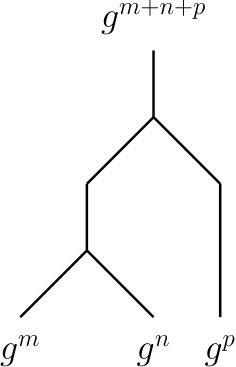 Figure 1
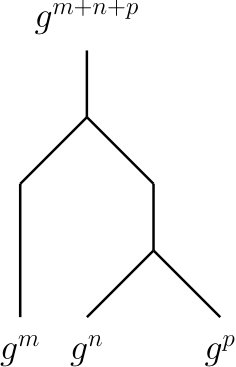 Figure 2
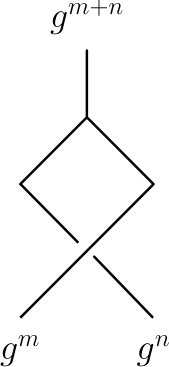 Figure 3
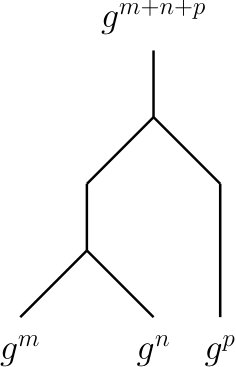 Figure 4
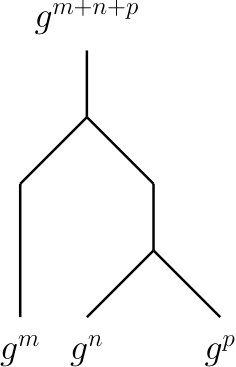 Figure 5
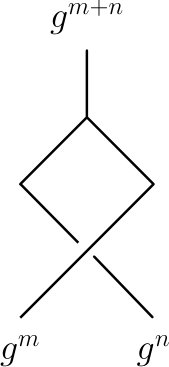 Figure 6
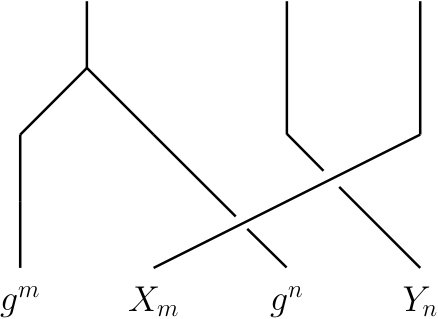 Figure 7
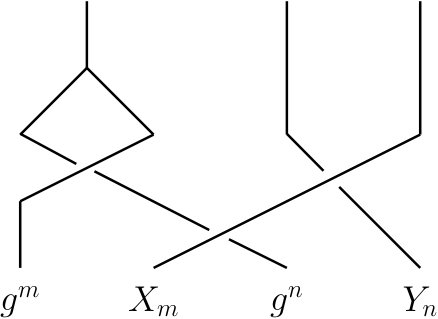 Figure 8
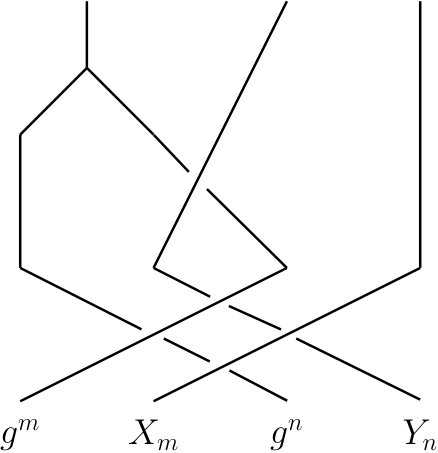 Figure 9
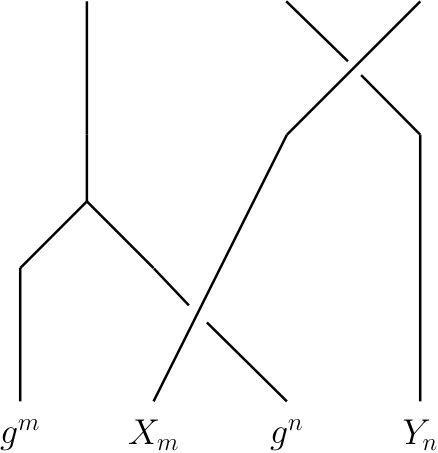 Figure 10
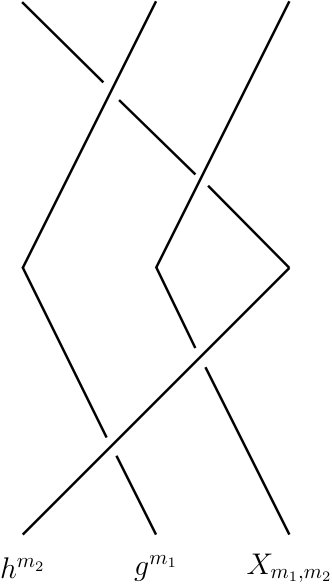 Figure 11
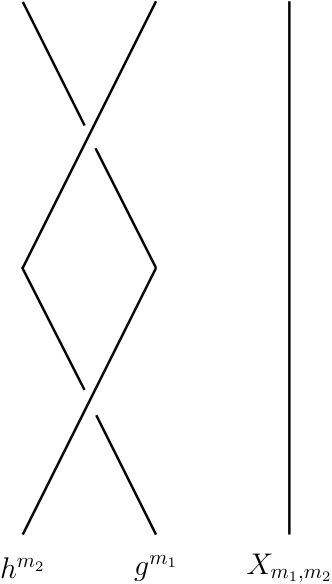 Figure 12
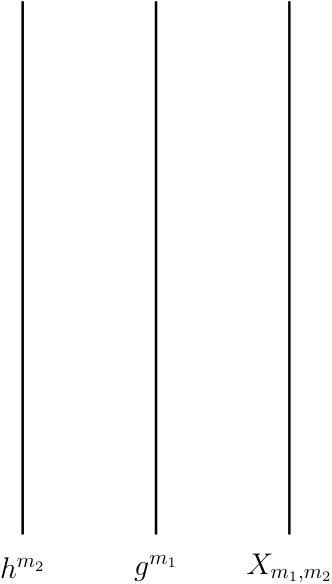 Figure 13
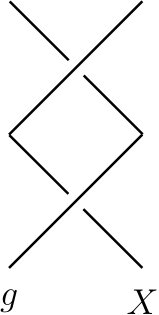 Figure 14
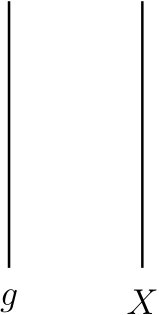 Figure 15
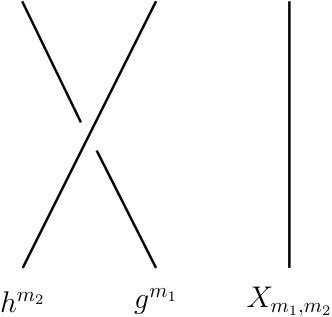 Figure 16
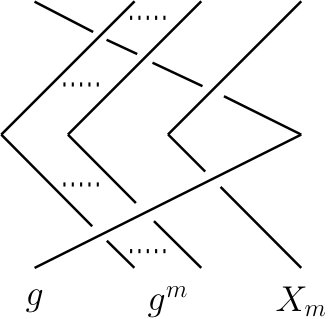 Figure 17
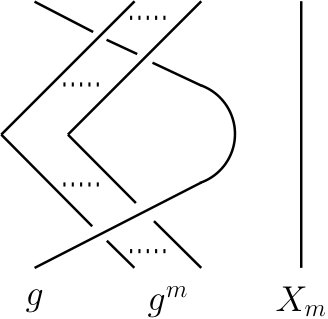 Figure 18
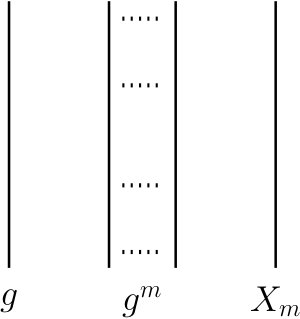 Figure 19
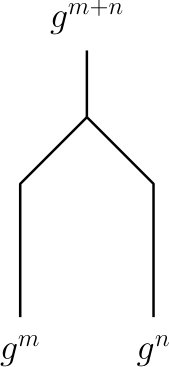 Figure 20
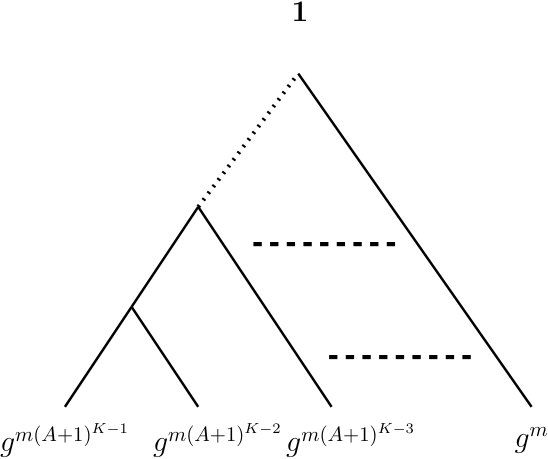 Figure 21
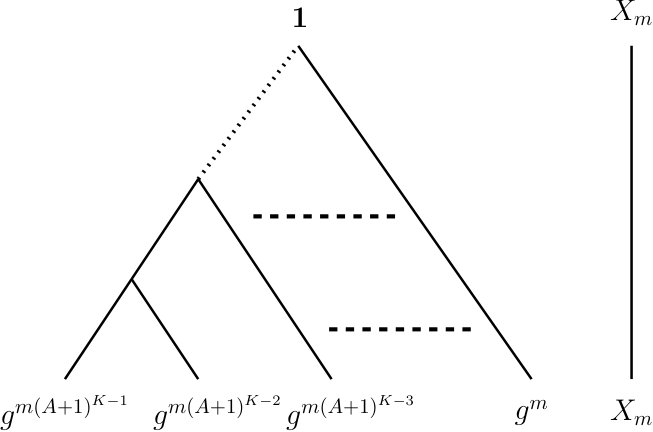 Figure 22
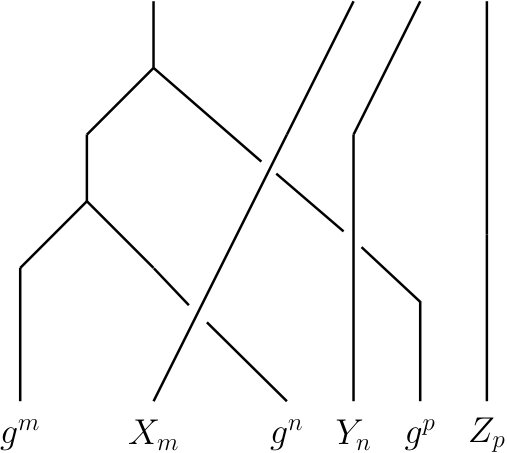 Figure 23
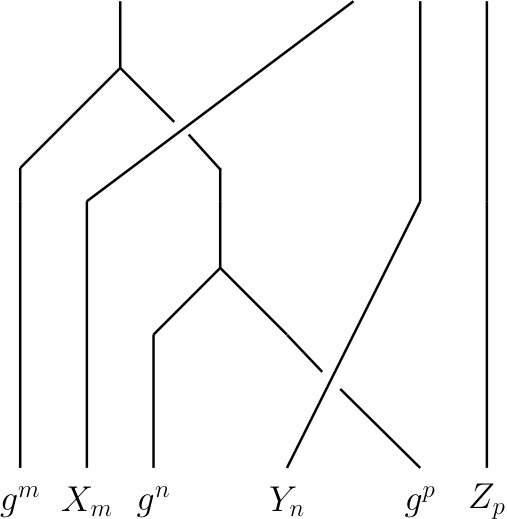 Figure 24
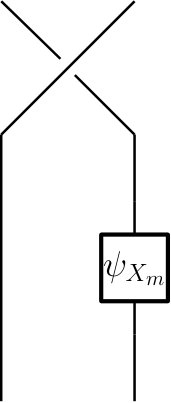 Figure 25
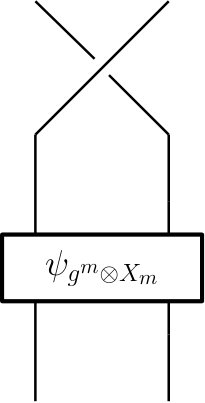 Figure 26
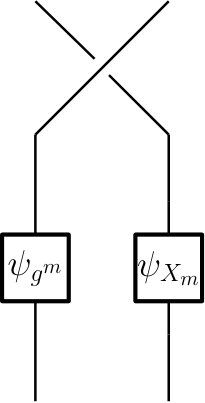 Figure 27
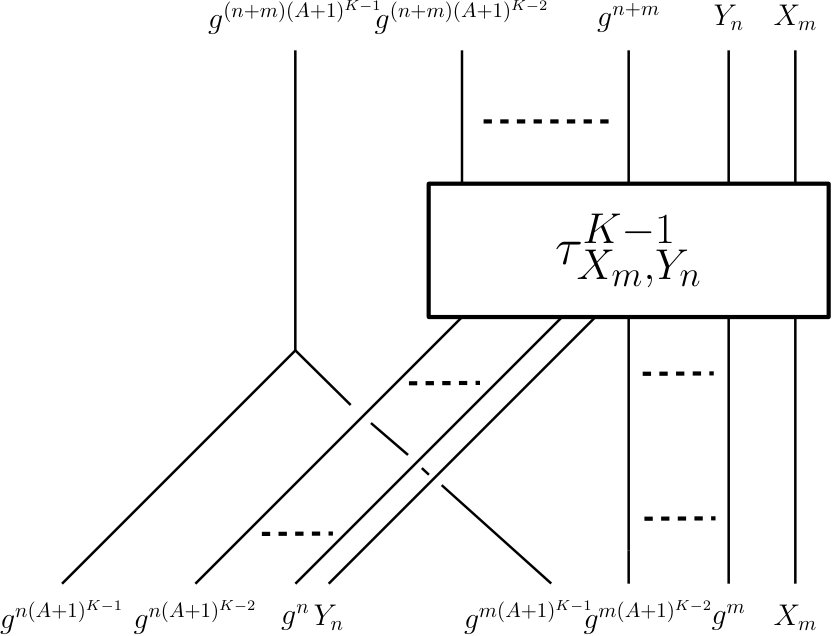 Figure 28
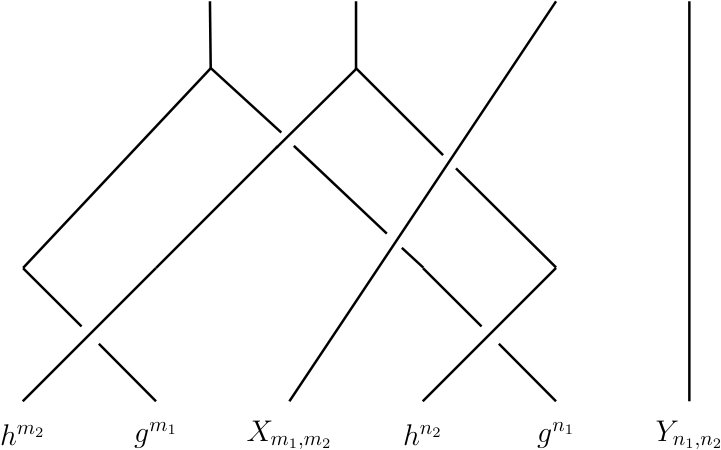 Figure 29
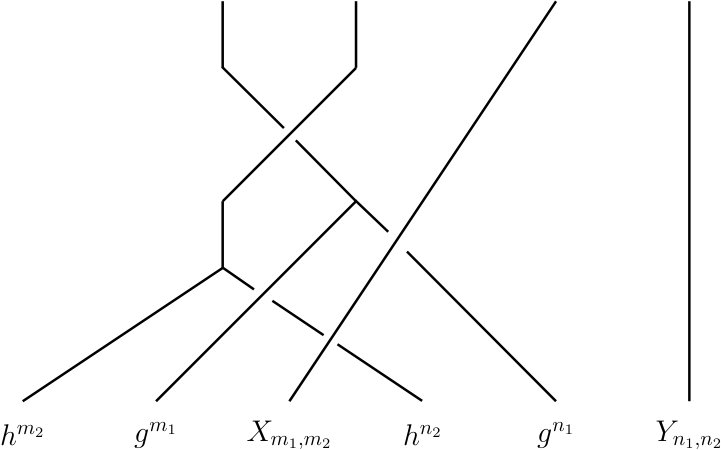 Figure 30
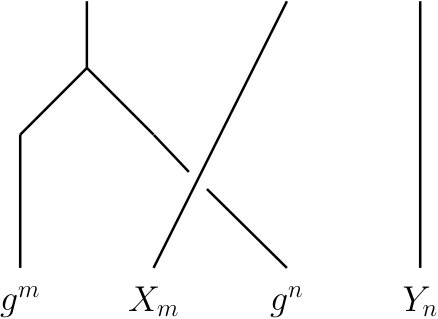 Figure 31
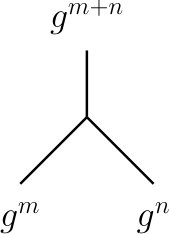 Figure 32
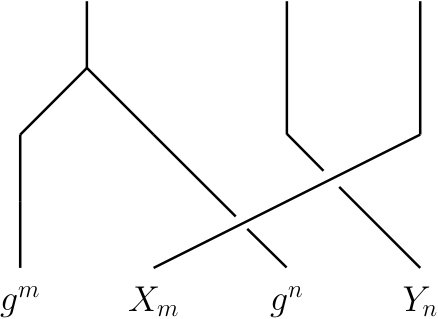 Figure 33
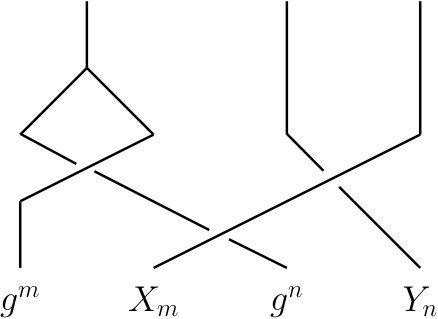 Figure 34
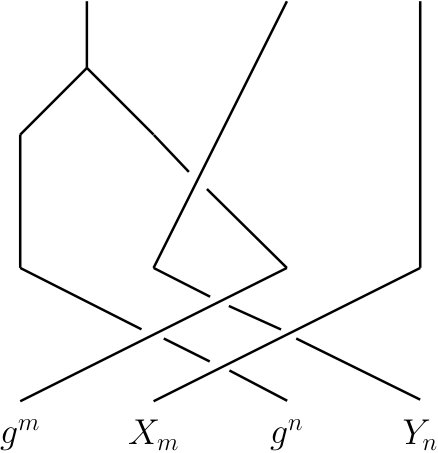 Figure 35
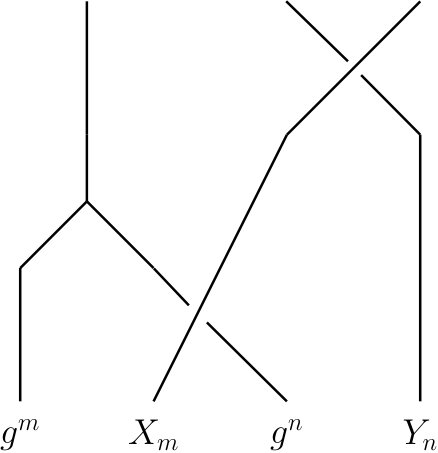 Figure 36
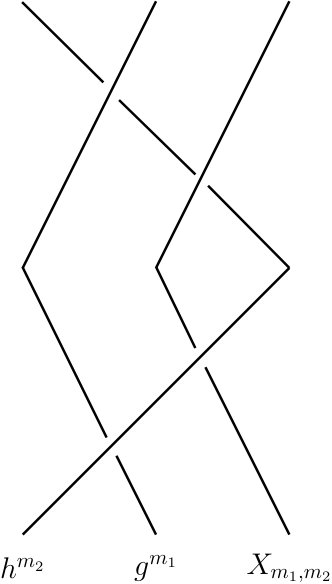 Figure 37
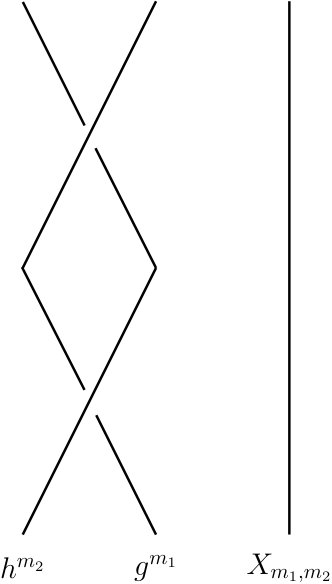 Figure 38
 Figure 39
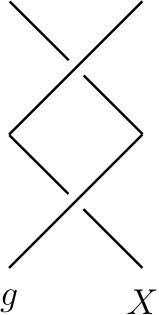 Figure 40
Peer Reviews
No public reviews on file for this paper yet. If you reviewed it on a platform where reviews are public (OpenReview, ICLR, NeurIPS, ICML), you can paste yours below so the community can read it here.
Videos
No videos yet. Explain this paper in a talk, walkthrough, or lecture? Add one.
Simple current auto-equivalences of modular tensor categories
Cain Edie-Michell
Cain Edie-Michell
Department of Mathematics, Vanderbilt University
Nashville USA
Abstract.
In this short note we investigate the process of constructing auto-equivalences of modular tensor categories using invertible objects. We derive conditions on the invertible object for the resulting auto-equivalence to be either monoidal, braided, or pivotal. We also discuss the composition of these auto-equivalences constructed from invertible objects. To demonstrate the practicality of this construction, we construct auto-equivalences of several real-world examples of modular tensor categories.
1. Introduction
Given any algebraic object, one should always attempt to study its group of symmetries. This guiding principle is particularly relevant to modular tensor categories, given the connections they provide between operator algebras, representation theory, and certain quantum field theories. A symmetry of a modular tensor category is encoded by a monoidal auto-equivalence of that category, either braided or just plain monoidal. These auto-equivalences are important ingredients in various constructions regarding modular tensor categories. In particular, braided auto-equivalences play a key role in the classification of “quantum subgroups” of modular tensor categories, and are the starting point in applying the process of gauging [2] which can produce new examples of modular tensor categories.
There is a process from conformal field theory known as simple current automorphisms [1, 5, 8], which takes an invertible object in a modular tensor category, and produces an automorphism of the fusion ring of that category. However (outside of the special case when the invertible object has order 2 [4, Theorem 9.3]) there is a gap in the literature regarding the categorical nature of these fusion ring automorphisms. In particular, it is not true in general that every fusion ring automorphism lifts to a monoidal auto-equivalence, and thus there is no guarantee that simple current automorphisms lift to monoidal auto-equivalences. In this short note we investigate the categorical nature of these simple current automorphisms.
The authors main motivation to study simple current auto-equivalences arose via the study of the auto-equivalences of the modular tensor category of level integrable representations of . A large class of auto-equivalences of these categories can be constructed through simple current auto-equivalences, hence it was necessary for the author to prove the results of this note. As these simple current auto-equivalences provide a very general method for constructing monoidal auto-equivalences of modular tensor categories, we choose to present this information in its own note. We anticipate it will have applications to other researchers working with modular tensor categories.
In this note we construct monoidal structure maps for simple current automorphisms, and show that these structure maps satisfy the hexagon identity, thus showing that simple current automorphisms always lift to monoidal auto-equivalences. Further, we give necessary and sufficient conditions for these simple current auto-equivalences to be either braided, or pivotal. We summarise the main results of this note in the following Theorem.
Theorem 1.1**.**
Let be a modular tensor category and let be an invertible object of order . Let be the unique eigenvalue of the braid , and fix a primitive -th root of unity such that .
Suppose is coprime to , then there exists a monoidal auto-equivalence of defined by
[TABLE]
where is such that is equal to the unique eigenvalue of the braid .
The auto-equivalence is braided if and only if either
[TABLE]
The auto-equivalence is pivotal if and only if the categorical dimension of is 1.
In order to help understand the composition of these simple current auto-equivalences we also prove Proposition 3.9, which gives an upper bound on the order of a simple current auto-equivalence, and Proposition 3.8, which gives a sufficient condition for two simple current auto-equivalences to commute.
We end this note by working through several examples coming from quantum groups at integer levels. We use these examples to demonstrate the practicality of Theorem 1.1 in constructing monoidal auto-equivalences of real-world modular tensor categories.
2. Preliminaries
A braided fusion category is a fusion category, along with a collection of natural isomorphisms
[TABLE]
satisfying a certain coherence equation. We direct the reader to [3] for additional details.
We say a fusion category is pivotal if there exist a collection of natural isomorphisms
[TABLE]
that give a monoidal natural isomorphism .
We define the symmetric centre of a braided fusion category by
[TABLE]
A modular tensor category is a pivotal braided fusion category whose symmetric centre is trivial.
In this note we investigate auto-equivalences of modular tensor categories. A monoidal auto-equivalence of a monoidal category is an abelian auto-equivalence , along with monoidal structure structure isomorphisms
[TABLE]
satisfying the hexagon equation
[TABLE]
We are also interested in braided auto-equivalences of braided tensor categories. A braided auto-equivalence of is a monoidal auto-equivalence satisfying
[TABLE]
If is pivotal with pivotal isomorphisms then we say a monoidal auto-equivalence is pivotal if
[TABLE]
where .
3. Main Results
In this section we begin with an invertible object in a modular tensor category, and construct an abelian endo-functor. We then derive conditions on the invertible object for the endo-functor to be an auto-equivalence, a monoidal auto-equivalence, a braided auto-equivalence, or a pivotal auto-equivalence.
Let be a modular tensor category, and an invertible object of order . It follows from [7, Section 2.5] that
[TABLE]
for some -th root of unity if is even, and -th root of unity if is odd. In either case is an -th root of unity, so we can define the integer
[TABLE]
Fix a primitive -th root of unity, such that
[TABLE]
We remark this choice of -th root of will have a surprisingly non-trivial effect on the resulting auto-equivalence that we are about to construct.
For each we define
[TABLE]
a full abelian sub-category of . With these abelian sub-categories in hand we can write
[TABLE]
giving the structure of a -graded category. The non-degeneracy of ensure this grading is faithful. i.e, Let be the supported grading group of . Then is a divisor of , and it can be checked that the object lives in the symmetric centre of .
We define an abelian graded endo-functor by:
[TABLE]
and extend linearly to obtain a functor defined on all of .
Let us investigate when this functor is an abelian auto-equivalence of .
Lemma 3.1**.**
The abelian endo-functor is an auto-equivalence of if and only if is coprime to .
Proof.
Let . The functor sends to the object . We compute
[TABLE]
Thus, as , we see that . Hence is an auto-equivalence if and only multiplication by induces an automorphism of the group , i.e. if and only if is coprime to . ∎
Our goal now is to construct monoidal structure maps for the abelian auto-equivalence that satisfy the hexagon equation, hence giving the structure of a monoidal auto-equivalence of . We begin by picking basis elements for the 1-dimensional Hom-spaces . Graphically we draw these basis elements as
[TABLE]
The results of [7, Section 2.5] show that we can pick these basis elements so that we have the following 6j-ology:
[TABLE]
where
[TABLE]
In general we have that certain 6j symbols are non-trivial, however the following Lemma shows that we have trivial 6j symbols for the cases we care about.
Lemma 3.2**.**
If is coprime to , then is an -th root of unity.
Proof.
If is odd then is automatically an -th root of unity. If is even then , as otherwise would be coprime to . Thus is an -th root of unity. ∎
We choose the following monoidal structure maps for
[TABLE]
We remark that one can also choose different monoidal structure maps by reversing the braiding. We state without proof that this different choice results in a naturally isomorphic monoidal auto-equivalence.
Lemma 3.3**.**
Suppose is coprime to , then is a monoidal auto-equivalence.
Proof.
To prove this claim we have to show that the hexagon equation is satisfied. That is we need
[TABLE]
for every , and . After an isotopy, and an application of the 6j-ology, we have that the above equations are equivalent to having for all , which follows from Lemma 3.2. ∎
Remark 3.4**.**
From now on we will simply write for the monoidal auto-equivalence of , suppressing the monoidal structure maps .
We investigate when the monoidal functor is braided. For this we need to compute the R symbols for powers of the object . From [7, Section 2.5], it follows that we can arrange the trivalent vertices so that
[TABLE]
while still satisfying the 6j conditions from earlier. With these R relations, we can directly compute when is braided.
Lemma 3.5**.**
The monoidal auto-equivalence is braided if and only if either
- •
, and , or
- •
, and , or
- •
, and , or
- •
, and .
Proof.
For the monoidal auto-equivalence to be braided we exactly need the following equality of morphisms
[TABLE]
for all and . We can write
[TABLE]
Hence the monoidal functor is braided if and only if
[TABLE]
Setting shows that . Hence must be a primitive root of unity. Further, recall that . Thus we have
[TABLE]
and hence must be a multiple of .
If then an exhaustive search reveals the solutions
[TABLE]
If , then , which then implies that
[TABLE]
Hence divides , and so must be either or . Another exhaustive search reveals the solutions
[TABLE]
∎
Remark 3.6**.**
We note that when the order of is 3 and then generates a modular subcategory of . Thus factorises as . The braided automorphism constructed above is exactly the braided auto-equivalence of induced by the braided auto-equivalence of the factor.
We also investigate when the monoidal auto-equivalence is pivotal.
Lemma 3.7**.**
The monoidal auto-equivalence is pivotal if and only if the categorical dimension of is equal to .
Proof.
From the definition of a pivotal functor we see that is pivotal if and only if
[TABLE]
for all . Hence, is pivotal if and only if for all , which is equivalent to having .
From the 6j symbols above, we can compute that the categorical dimension of is equal to . Hence the result follows after applying Lemma 3.2. ∎
Ideally one would like to understand composition of these simple current auto-equivalences. Naively one would expect some kind of behavior such as
[TABLE]
However this naive composition does not hold in general. For an example consider an object of order with braiding eigenvalue . Then we have that
[TABLE]
Thus the auto-equivalences generically form a Klein-four group.
When one considers composition between simple current auto-equivalences coming from two different invertible objects, then it appears impossible to give an answer without knowledge of a large collection of braiding eigenvalues. However, if we assume that the two invertible objects braid symmetrically, then we can prove the following fact.
Proposition 3.8**.**
Let be a modular tensor category, and invertible objects in such that , then
[TABLE]
Proof.
Let be a the braiding eigenvalue of , and be the braiding eigenvalue of . As we now have two gradings on , we write to indicate that lives in with respect to the grading induced by , and lives in with respect to the braiding induced by .
Let us first consider the object . By definition we have
[TABLE]
As the objects and braid symmetrically with each other, we then have
[TABLE]
Therefore lives in with respect to the grading induced by . Thus
[TABLE]
Essentially the same argument shows that
[TABLE]
We construct a natural isomorphism
[TABLE]
Checking that is monoidal amounts to showing that
[TABLE]
which follows as and braid symmetrically. ∎
One would ideally like to know the order of the monoidal auto-equivalence . The following Lemma gives an upper bound for this order. The only examples we are aware of where this bound is not sharp are modular tensor categories of the form , where is an Ising category, is an arbitrary modular tensor category, and is the non-trivial invertible object in the Ising factor.
Proposition 3.9**.**
Let be an integer such that
[TABLE]
then
[TABLE]
Proof.
A similar computation to that in Lemma 3.1 shows that maps . Thus, if , then
[TABLE]
The tensor structure maps for , which we will denote , are given by the recursive formula:
[TABLE]
If is an integer such that
[TABLE]
then for all . In particular, the morphism
[TABLE]
give a non-trivial map .
We claim that
[TABLE]
gives a monoidal natural isomorphism , where
[TABLE]
To prove is a monoidal natural isomorphism we need to show that
[TABLE]
Resolving the crossings in the right hand side of this equation, using the 6j-relations and the R-relations, reveals that this equation is satisfied if and only if
[TABLE]
Hence we have proven that gives a monoidal natural isomorphism . ∎
Remark 3.10**.**
When is odd we have that the in the above proof is always 1.
Remark 3.11**.**
By Eulers Theorem we always have the solution to
[TABLE]
however this solution is rarely the smallest such .
4. Examples
Let us consider some examples of the practicality of Theorem 1.1. Our example modular tensor categories will all be categories of level integrable representations of an affine Lie algebra , which we denote . For details on these categories we direct the reader to [9].
at level 2
We begin with an example that illustrates the effect the choice of has in applying Theorem 1.1.
We consider the modular tensor category . The simple objects of are parametrised by triples of integers such that . We write these simple objects as . In particular the category contains the order 4 invertible object , which has braiding eigenvalue . We compute , thence is coprime to the order of , so we can apply Theorem 1.1 to construct monoidal auto-equivalences of .
If we choose then we get a monoidal auto-equivalence of that sends
[TABLE]
and fixes all other objects.
If we choose then we get a braided auto-equivalence of that sends
[TABLE]
and fixes all other objects. Interestingly this braided auto-equivalence is the charge conjugation auto-equivalence of . It is certainly not true in general that charge conjugation auto-equivalences can be realised as simple current auto-equivalences. An easy counter example is given by .
at level 2
Let us now apply Theorem 1.1 to compute the entire auto-equivalence group of a modular tensor category. Being able to compute the entire auto-equivalence group is special to this example, and in general Theorem 1.1 will not give all auto-equivalences of a modular tensor category.
We consider the modular tensor category . The simple objects of this category are parametrised by 5-tuples of integers such that . We write these simple objects as . Hence this category has 21 simple objects. In particular we have the five non-trivial invertible objects
[TABLE]
We compute that is coprime to the order only for the invertible objects , , and . Thus we can apply Theorem 1.1 to get the three monoidal auto-equivalences
[TABLE]
the last of which is a braided auto-equivalence. As there are too many simple objects to completely describe completely how each auto-equivalence behaves, we simply describe how each auto-equivalence acts on the tensor generator . It follows from [6] that this completely describes the auto-equivalence. We have
[TABLE]
A conceptionally easy, but computationally hard planar algebra argument shows that the category has no non-trivial monoidal auto-equivalences that fix every object. Therefore we see that
[TABLE]
Further, an application of Proposition 3.9 shows that each of these auto-equivalences has order 2. Thus to determine the subgroup structure of the auto-equivalences generated by and we simply need to determine how they compose with each other. We find that
[TABLE]
Thus the simple current auto-equivalences and generate a group. We claim without proof that is the entire auto-equivalence group of .
at level 2
Our final example will consider a modular tensor category whose invertible objects form a group.
We consider the modular tensor category . The simple objects of this category are parametrised by 4-tuples such that . We write these simple objects as . This category has 11 simple objects. In particular we have the three non-trivial invertible objects , and . Each of these invertible objects has order 2, and braid eigenvalue . An application of Theorem 1.1 gives the three auto-equivalences
[TABLE]
We directly compute how each of these auto-equivalences acts on the simple objects of :
The auto-equivalence sends
[TABLE]
and fixes all other simple objects.
The auto-equivalence sends
[TABLE]
and fixes all other simple objects.
The auto-equivalence sends
[TABLE]
and fixes all other simple objects.
We state without proof that the category has a single non-trivial auto-equivalence that fixes every object. This fact allows us to see that the auto-equivalences
[TABLE]
generate a group isomorphic to either or , depending on if either , or if is isomorphic to with twisted tensor structure maps. However, an application of Proposition 3.8 shows that
[TABLE]
Thus the auto-equivalences
[TABLE]
generate a group.
The reference list from the paper itself. Each links out to its DOI / PubMed record.
- 1[1] Denis Bernard. String characters from Kac-Moody automorphisms. Nuclear Phys. B , 288(3-4):628–648, 1987.
- 2[2] Shawn X. Cui, César Galindo, Julia Yael Plavnik, and Zhenghan Wang. On gauging symmetry of modular categories. Comm. Math. Phys. , 348(3):1043–1064, 2016.
- 3[3] Vladimir Drinfeld, Shlomo Gelaki, Dmitri Nikshych, and Victor Ostrik. On braided fusion categories. I. Selecta Math. (N.S.) , 16(1):1–119, 2010. ar Xiv: 0906.0620 MR 2609644 DOI:10.1007/s 00029-010-0017-z . · doi ↗
- 4[4] Cain Edie-Michell. Equivalences of graded categories, 2017. ar Xiv: 1711.00645 .
- 5[5] Terry Gannon. The automorphisms of affine fusion rings. Adv. Math. , 165(2):165--193, 2002. ar Xiv: 0002044 1887583 .
- 6[6] David Kazhdan and Hans Wenzl. Reconstructing monoidal categories. In I. M. Gel ′ fand Seminar , volume 16 of Adv. Soviet Math. , pages 111--136. Amer. Math. Soc., Providence, RI, 1993. MR 1237835 .
- 7[7] Frank Quinn. Group categories and their field theories. In Proceedings of the Kirbyfest (Berkeley, CA, 1998) , volume 2 of Geom. Topol. Monogr. , pages 407--453. Geom. Topol. Publ., Coventry, 1999. ar Xiv: 9811047 MR 1734419 DOI:10.2140/gtm.1999.2.407 . · doi ↗
- 8[8] A. N. Schellekens. Fusion rule automorphisms from integer spin simple currents. Phys. Lett. B , 244(2):255--260, 1990.