Differentially rotating strange star in general relativity
Enping Zhou, Antonios Tsokaros, Koji Uryu, Renxin Xu, Masaru Shibata

TL;DR
This study investigates the properties of differentially rotating strange stars in general relativity, revealing significant differences from neutron stars and implications for astrophysical observations.
Contribution
It extends previous models by analyzing strange stars with new rotation profiles, highlighting differences in maximum mass and rotational behavior compared to neutron stars.
Findings
Maximum mass of strange stars drops rapidly with increased differential rotation.
Transition to toroidal sequences occurs at smaller differential rotation rates.
An $ extit{ extbf{A}}$-insensitive relation between maximum mass and angular momentum persists.
Abstract
Rapidly and differentially rotating compact stars are believed to be formed in binary neutron star merger events, according to both numerical simulations and the multi-messenger observation of GW170817. The lifetime and evolution of such a differentially rotating star, is tightly related to the observations in the post-merger phase. Various studies on the maximum mass of differentially rotating neutron stars have been done in the past, most of which assume the so-called -const law as the rotation profile inside the star and consider only neutron star equations of state. In this paper, we extend the studies to strange star models, as well as to a new rotation profile model. Significant differences are found between differentially rotating strange stars and neutron stars, with both differential rotation laws. A moderate differential rotation rate for neutron stars is found to be too…
Click any figure to enlarge with its caption.
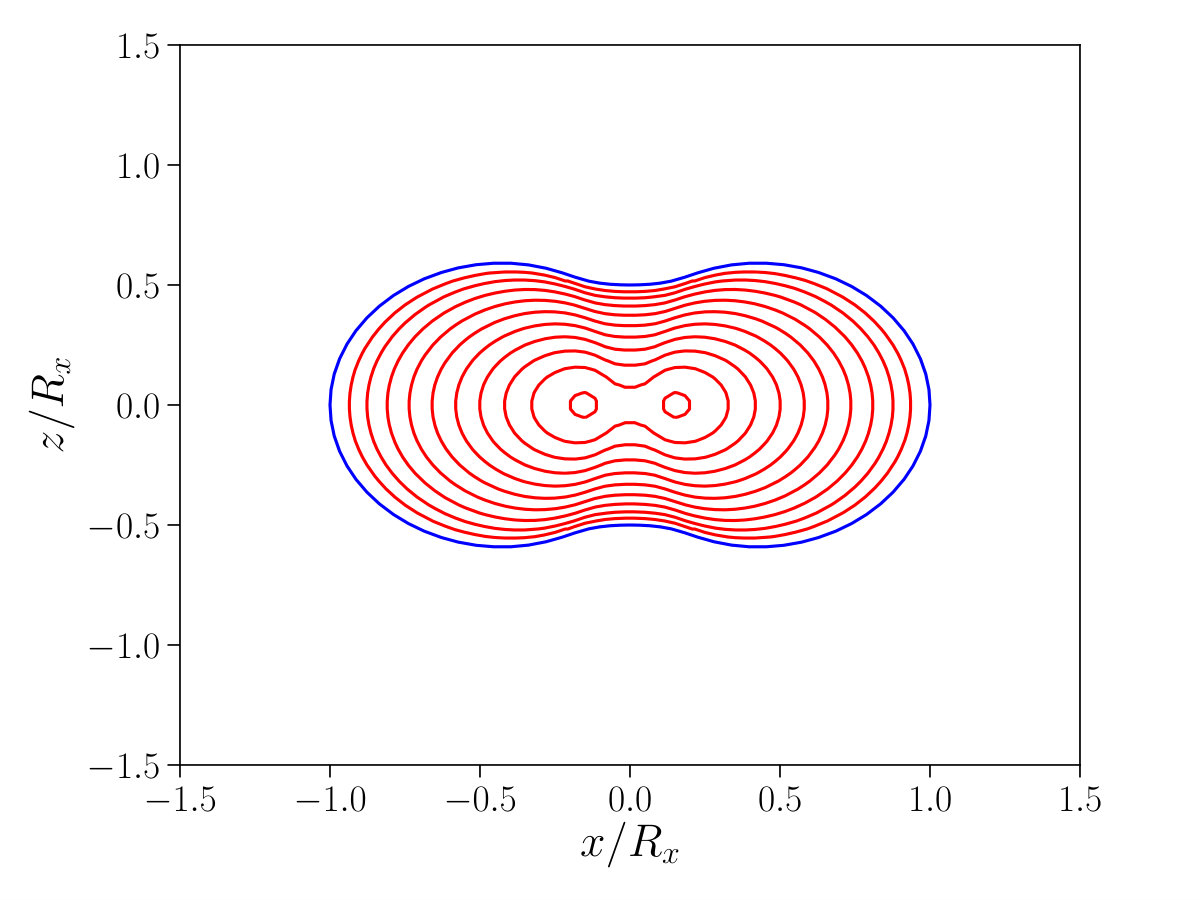 Figure 1
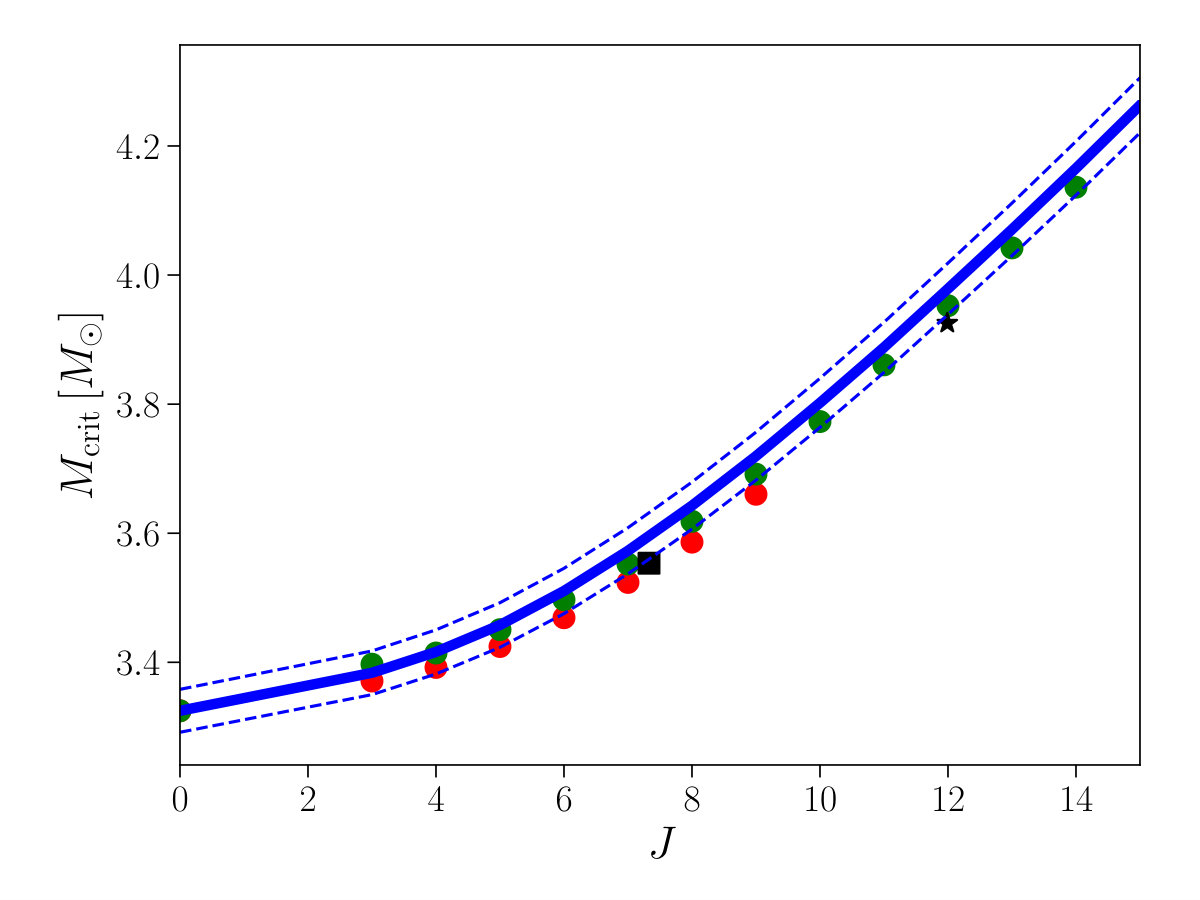 Figure 2
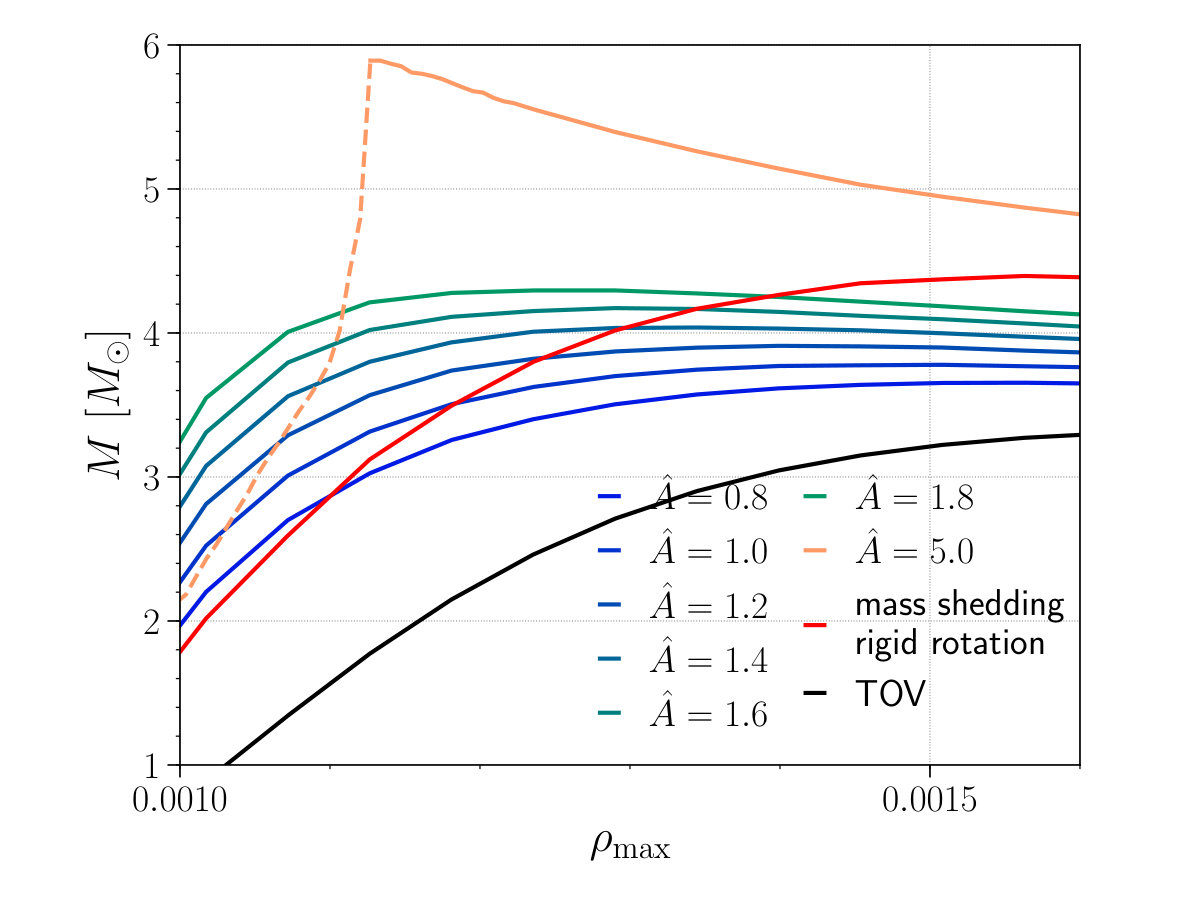 Figure 3
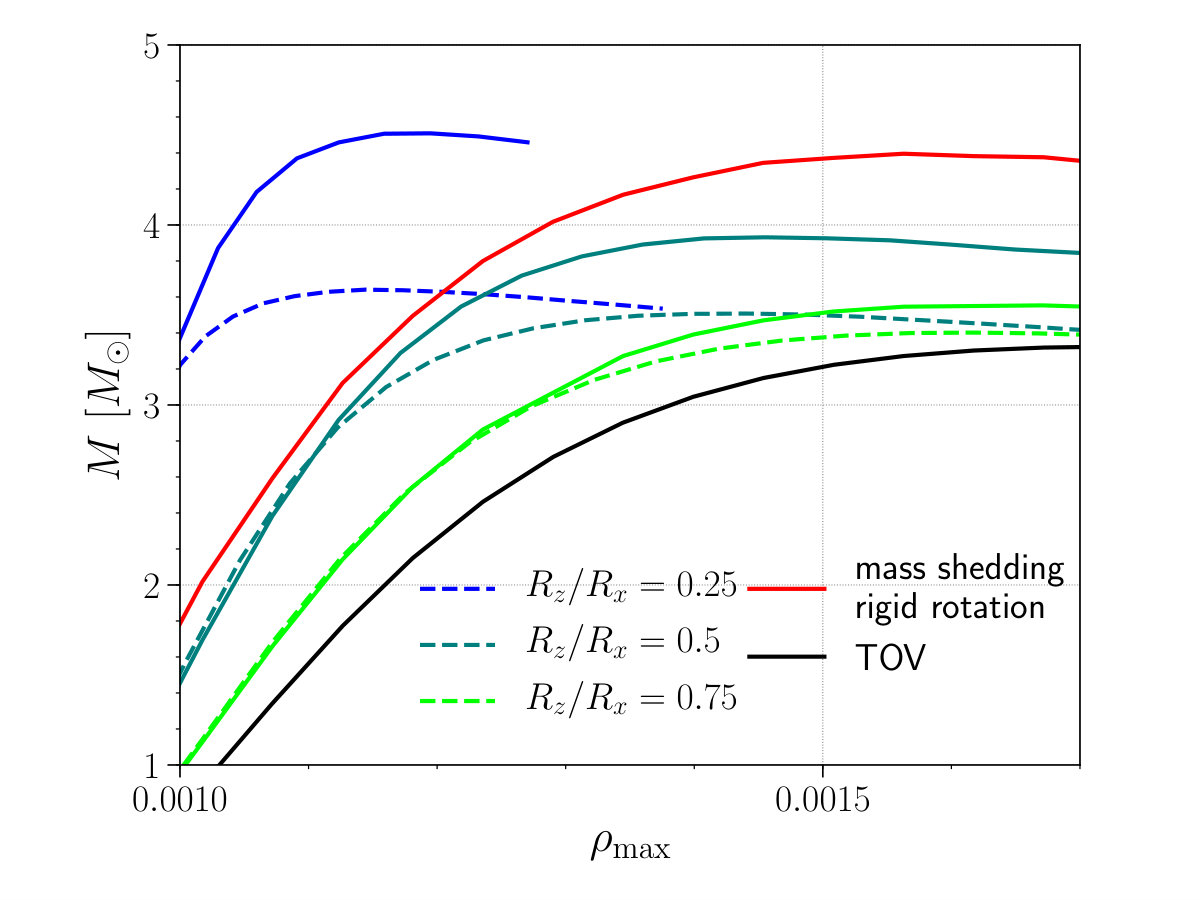 Figure 4
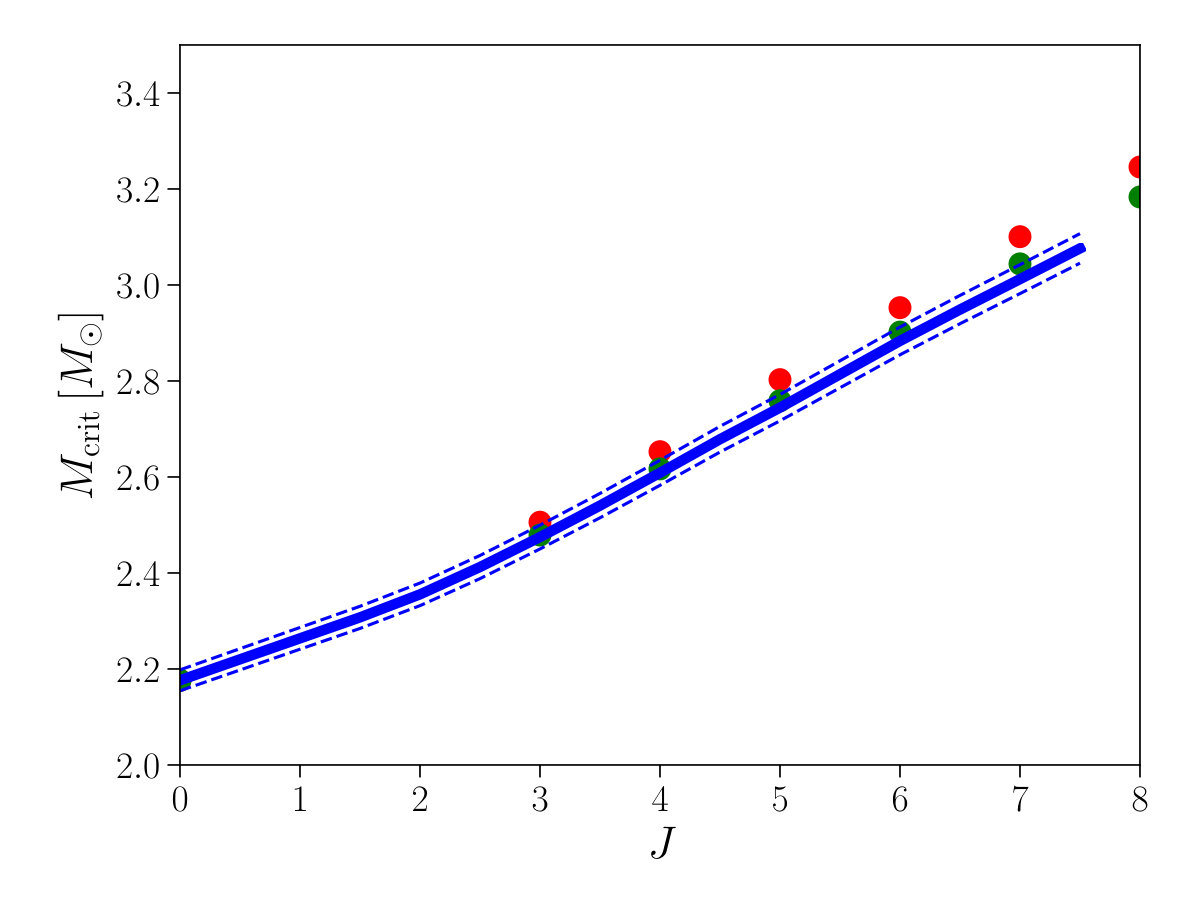 Figure 5
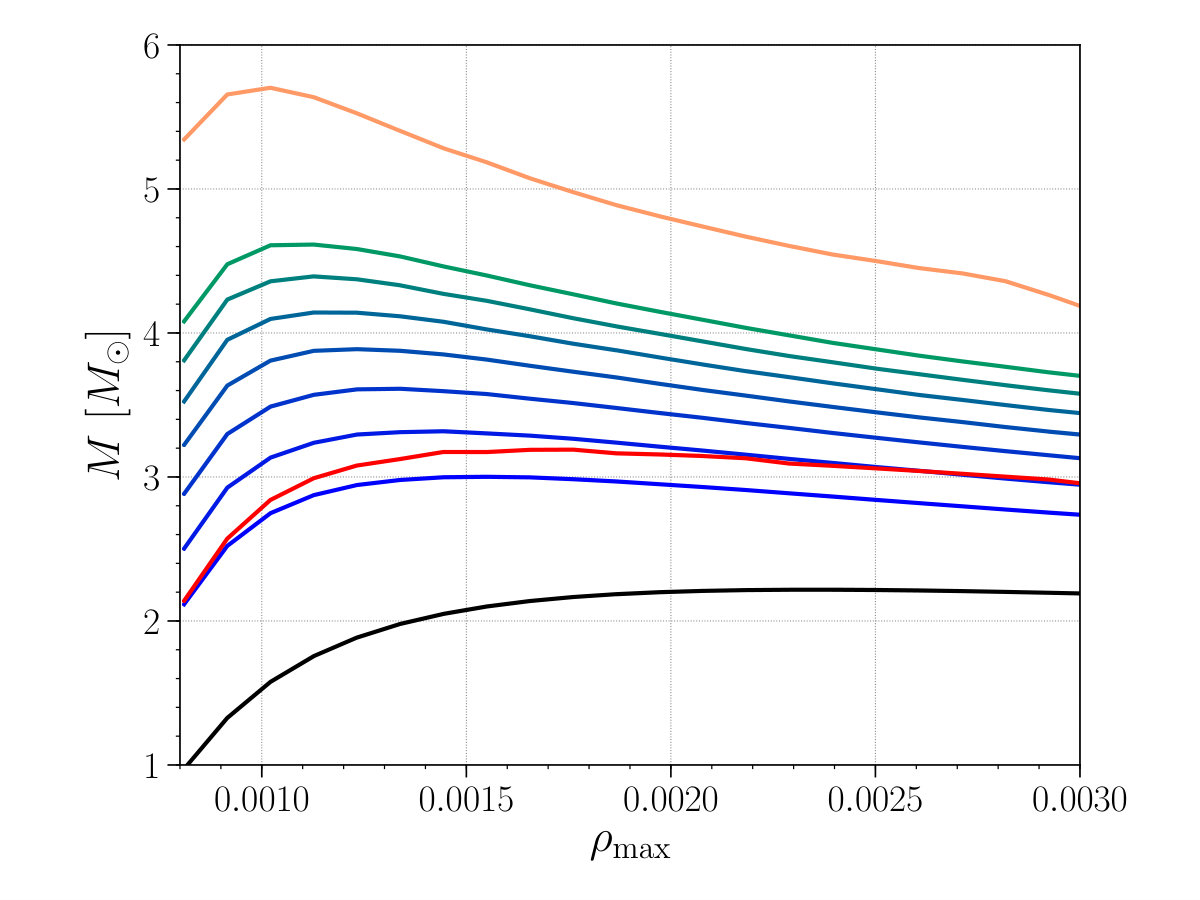 Figure 6
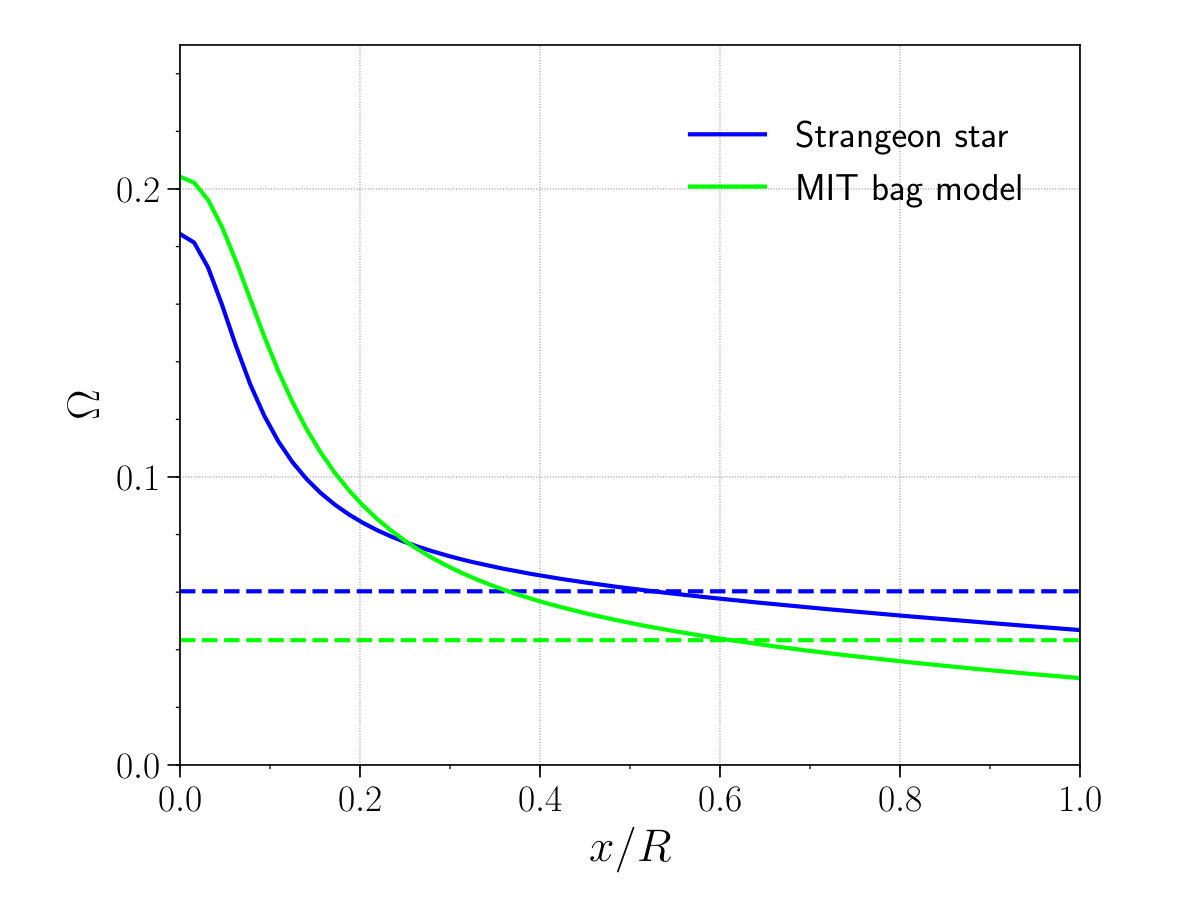 Figure 7
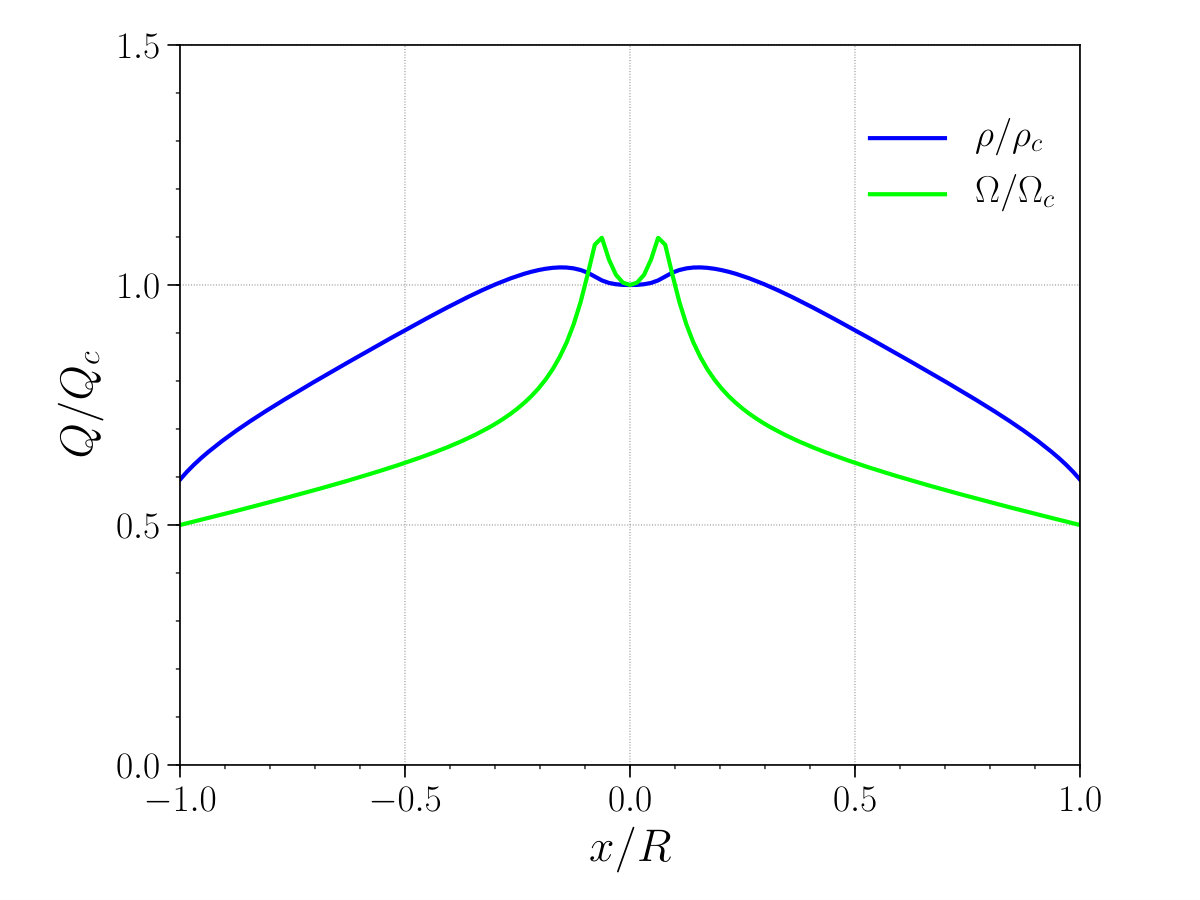 Figure 8
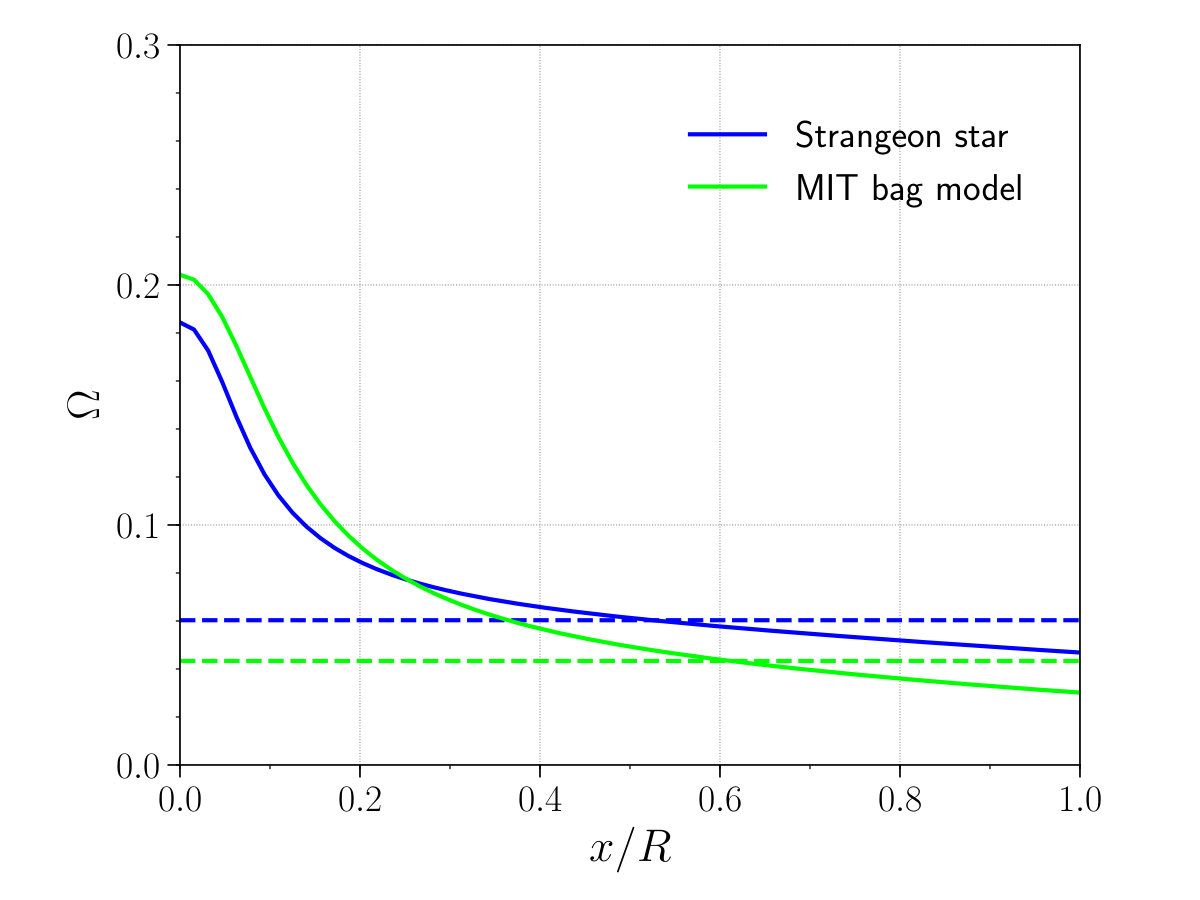 Figure 9
| EOS | |||||
|---|---|---|---|---|---|
| MIT | 2.217 | 11.814 | 792.8 | ||
| LX | 3.325 | 10.459 | 381.9 |
| Model | ||||||||
|---|---|---|---|---|---|---|---|---|
| UR-LX | 4.82 (15.1) | 0.53125 (0.584) | 0.0603 | 4.39 | 16.4 | 0.222 | ||
| DR-LX-1 | 4.36 (12.4) | 0.015625 (0.0190) | 0.382 | 3.78 | 10.3 | 0.183 | ||
| DR-LX-2 | 4.07 (14.4) | 0.25 (0.295) | 0.110 | 4.49 | 17.6 | 0.290 | ||
| DR-LX-3 | 4.83 (10.9) | 0.9375 (0.947) | 0.0638 | 3.25 | 2.28 | 0.0135 | ||
| DR-LX-4 | 4.26 (12.8) | 0.50 (0.553) | 0.0945 | 3.92 | 11.9 | 0.203 | ||
| UR-MIT | 8.23 (15.1) | 0.484375 (0.523) | 0.0433 | 3.17 | 8.56 | 0.198 | ||
| DR-MIT-1 | 6.79 (13.9) | 0.015625 (0.0172) | 0.163 | 3.60 | 10.8 | 0.236 |
Peer Reviews
No public reviews on file for this paper yet. If you reviewed it on a platform where reviews are public (OpenReview, ICLR, NeurIPS, ICML), you can paste yours below so the community can read it here.
Videos
No videos yet. Explain this paper in a talk, walkthrough, or lecture? Add one.
Differentially rotating strange star in general relativity
Enping Zhou
Max Planck Institute for Gravitational Physics (Albert Einstein Institute), Am Mühlenberg 1, Potsdam-Golm, 14476, Germany
State Key Laboratory of Nuclear Science and Technology and School of Physics, Peking University, Beijing 100871, People’s Republic of China
Antonios Tsokaros
Department of Physics, University of Illinois at Urbana-Champaign, Urbana, IL 61801, USA
Kōji Uryū
Department of Physics, University of the Ryukyus, Senbaru, Nishihara, Okinawa 903-0213, Japan
Renxin Xu
State Key Laboratory of Nuclear Science and Technology and School of Physics, Peking University, Beijing 100871, People’s Republic of China
Kavli Institute for Astronomy and Astrophysics, Peking University, Beijing, 100871, People’s Republic of China
Masaru Shibata
Max Planck Institute for Gravitational Physics (Albert Einstein Institute), Am Mühlenberg 1, Potsdam-Golm, 14476, Germany
Center for Gravitational Physics, Yukawa Institute for Theoretical Physics, Kyoto University, Kyoto, 606-8502, Japan
Abstract
Rapidly and differentially rotating compact stars are believed to be formed in binary neutron star merger events, according to both numerical simulations and the multi-messenger observation of GW170817. Questions that have not been answered by the observation of GW170817 and remain open are whether or not a phase transition of strong interaction could happen during a binary neutron star merger event that forms a differentially rotating strange star as a remnant, as well as the possibility of having a binary strange star merger scenario. The lifetime and evolution of such a differentially rotating star, is tightly related to the observations in the post-merger phase. Various studies on the maximum mass of differentially rotating neutron stars have been done in the past, most of which assume the so-called -const law as the rotation profile inside the star and consider only neutron star equations of state. In this paper, we extend the studies to strange star models, as well as to a new rotation profile model. Significant differences are found between differentially rotating strange stars and neutron stars, with both the -const law and the new rotation profile model. A moderate differential rotation rate for neutron stars is found to be too large for strange stars, resulting in a rapid drop in the maximum mass as the differential rotation degree is increased further from , where is a parameter characterizing the differential rotation rate for -const law. As a result the maximum mass of a differentially rotating self-bound star drops below the uniformly rotating mass shedding limit for a reasonable degree of differential rotation. The continuous transition to the toroidal sequence is also found to happen at a much smaller differential rotation rate and angular momentum than for neutron stars. In spite of those differences, -insensitive relation between the maximum mass for a given angular momentum is still found to hold, even for the new differential rotation law. Astrophysical consequences of these differences and how to distinguish between strange star and neutron star models with future observations are also discussed.
I Introduction
In the coming multi-messenger astronomy era led by the observation of GW170817 (Abbott et al., 2017) and its electromagnetic (EM) counterparts (The LIGO Scientific Collaboration et al., 2017), it’s very likely that a conclusion could be drawn on the equation of state (EoS) of compact stars, which is a challenging topic in nuclear physics due to the non-perturbative nature of strong interaction at low energy scale. In fact, GW170817 alone has already provided ample information on the radius of neutron stars (NSs) by measuring the tidal deformability in the gravitational wave (GW) signal at the late inspiral stage (c.f. systematic studies in (Annala et al., 2018; Abbott et al., 2018)). Moreover, constraints on the maximum mass have also been put forward by considering the fate of the merger remnant together with the electromagnetic counterparts of GW170817 (Rezzolla et al., 2018; Ruiz et al., 2018; Shibata et al., 2017; Bauswein et al., 2017).
However, besides conventional NS EoSs, other possibilities such as stars composed of strange quark matter (Farhi and Jaffe, 1984; Alcock et al., 1986; Haensel et al., 1986), namely strange star (SS) models, are not excluded by the observation of GW170817 (Abbott et al., 2017). In addition, the EM counterparts of GW170817 could also be understood within the scenario of a binary strange star (BSS) merger (Li et al., 2016; Lai et al., 2018a; Bauswein et al., 2009; Paulucci et al., 2017). Because of their self-bound nature, SSs are quite different from NSs. The tidal deformability measurement from GW170817 will imply a different radius constraint if the SS branch is taken into account (Montana et al., 2018; Most et al., 2018a). For the case that it is supported by rigid rotation, the maximum mass of SSs can be increased much more than NSs (Li et al., 2016). Rotating SSs can reach much higher ratio than NSs, leading to a more important role of triaxial instabilities for the case that the rotation is fast enough (Zhou et al., 2018a; Gondek-Rosińska et al., 2000). Even in the case of a binary neutron star (BNS) merger, whether or not a phase transition and the formation of a SS happens during the merger will significantly alter the GW signals (Most et al., 2018b). Considering all of the above, it’s also quite important to calculate models of differentially rotating strange stars, which has never been done before, to better understand the observation of binary merger events.
Depending on the maximum mass of the EoS and the total mass of the merging binary, there could be several different outcomes after the merger: a prompt collapse to a black hole, a short-lived hypermassive neutron star (HMNS, the mass of which exceeds the mass-shedding limit with rigid rotation, hence is only stable with differential rotation) or a long-lived supramassive neutron star. The amount and the velocity of the ejected mass in the post-merger phase, the neutrino emission as well as the energy injection from the merger remnant is quite different in every case. Therefore, it’s possible to make constraints on the remnant type, hence the maximum mass of the EoS, according to the EM counterparts of the merger event.
Following the evolution of a differentially rotating compact star in the post-merger phase for a long time is computationally expensive. Therefore the study of equlibrium models is very useful, especially when one is concerned with the parameter space explorations (e.g. (Breu and Rezzolla, 2016; Bozzola et al., 2018)). Also the evolution of SSs is a numerically challenging problem due to its finite surface density. As a result, calculating differentially rotating SSs is an effective way to study the outcome of merger events for the hypothetical SS formation. The choice of a differential rotation law (i.e., the angular velocity as a function of the cylindrical radial coordinate in the Newtonian case) is essential for modeling differentially rotating stars. In the case of relativistic gravity, instead, one has to choose the relativistic specific angular momentum as a function of angular velocity (i.e., , in which and is the 4-velocity of the fluid). The most commonly used differential rotation law is the so-called -const law (Komatsu et al., 1989; Ansorg et al., 2009; Gondek-Rosińska et al., 2017; Studzińska et al., 2016; Baumgarte et al., 2000; Morrison et al., 2004; Kaplan et al., 2014),
[TABLE]
in which and are two constant parameters in the model. A dimensionless parameter is also quite often used, where is the equatorial radius of the star. This choice results in a monotonically decreasing angular velocity with respect to the cylindrical radius. However, it has been realized that such a differential rotation profile is not realistic from numerical simulations of BNSs mergers. In the equatorial plane, simulations suggest that the angular velocity starts from a nonzero finite value on the rotational axis; then increases towards a maximum value; and then decreases to a minimum (Shibata et al., 2005; Hotokezaka et al., 2013; Dietrich et al., 2015; Bauswein and Stergioulas, 2015; Kastaun and Galeazzi, 2015; Hanauske et al., 2017). Hence, it’s quite interesting and important to model differentially rotating stars with such a rotation law, as is done in (Uryū et al., 2017).
In this paper, we have applied both the -const law as well as a more realistic rotation law to SS models. The Compact Object CALculator (cocal) code which we have modified to include self-bound stars and tested its convergence and accuracy before (Zhou et al., 2018a), is used for constructing the equilibrium solutions. We have compared our results to those of neutron stars and found that for differentially rotating SSs, both the drop of the maximum mass and the transition to the toroidal sequence happens at much larger differential rotation rate, compared with the results of NSs. Interestingly enough, the maximum mass of a differentially rotating SS can be smaller than that of a rigidly rotating one for both differential rotation laws with a reasonable differential rotation rate.
The paper is organized as follows: the SS EoSs used in this paper will be introduced in Sec.II. In Sec III we briefly review the formulations and differential rotation laws used in the calculation. The results will be presented in Sec. IV. The astrophysical implications of those results will be discussed in Sec. V. Note that in this paper we use units with unless otherwise stated. Here and are the gravitational constant and speed of light, respectively.
II Strange Star Equation of States
In this work, we have considered two types of EoS for SSs. One of them is the widely used MIT bag model Chodos et al. (1974). As we are only interested in the self-bound nature of SSs and its impact of differential rotation, the effects of perturbative quantum choromodynamics (QCD) due to gluon mediated quark interactions (Fraga et al., 2001; Alford et al., 2005; Li et al., 2017; Bhattacharyya et al., 2016) will not be considered, nor the finite mass of the strange quark. This allows us to have a much simpler EoS model for numerical calculations (similar to e.g. (Limousin et al., 2005)), in which pressure is related to total energy density according to
[TABLE]
where is the total energy density at the surface and the bag constant (Alcock et al., 1986; Haensel et al., 1986). and are pressure and total energy density of the matter, respectively. In this work, is chosen to be .
Another EoS model considered in this work is the so-called strangeon star model (Lai and Xu, 2017). Unlike the MIT bag model in which quarks are assumed to be de-confined and described by Fermi gas approximation, Lai and Xu suggested that clustering of quarks is possible at the density of a cold compact star since the coupling of strong interaction is not negligible at such energy scale. Lai and Xu attempted to approach the EoS with phenomenological models, i.e., to compare the potential with the interaction between inert molecules (Lai and Xu, 2009) (a similar approach has also been discussed in Guo et al. (2014)). They also take the lattice effects into account as the potential could be deep enough to trap the strangeons. Combining the inter-cluster potential and the lattice thermodynamics, an EoS could be derived in terms of number density of constituent strangeon ():
[TABLE]
The parameters and , are the depth of the potential and the characteristic range of the interaction, respectively111Note that this equation has a unique non-zero root, demonstrating the self-bound nature of strangeon star model.. The EoS depends also on the number of quarks in each strangeon particle (). Similar to the MIT bag model case, we use the rest-mass density parameter in the numerical code, which is
[TABLE]
where is the atomic mass unit. In this work the model with and is chosen. The details about the explicit implementation of SS models in the cocal code are explained in detail in our previous work (Zhou et al., 2018a).
Both the MIT bag model and the strangeon star model used in this work satisfy the maximum mass constraint by the discovery of massive pulsars Demorest et al. (2010); Antoniadis et al. (2013); Zhou et al. (2018a) as well as the tidal deformability constraint by GW170817 ((Abbott et al., 2017; Zhou et al., 2018b; Lai et al., 2018a), also c.f. Table.1). It’s worth to remark that there is a positive correlation between the maximum mass and tidal deformabilty for NS EoSs as they both relate to the stiffness of the EoS model. According to Fig.1 in (Annala et al., 2018), in order to satisfy the tidal deformability constraint, there will be an upper limit for the maximum mass of any NS EoSs. This correlation holds qualitatively for SSs (c.f. (Lai et al., 2018b; Zhou et al., 2018b)) but not quantitatively due to the finite surface density of SSs which leads to a correction in the calculation of tidal deformablity (Damour and Nagar, 2009; Postnikov et al., 2010). As a result, it’s much easier for strange star models to accommodate the observation of GW170817 and massive pulsars at the same time. Additionally, previous studies have also demonstrated the possibility of understanding some puzzling observations within SS scenario, such as the energy release during pulsar glitches (Zhou et al., 2014), the peculiar X-ray flares (Xu and Liang, 2009), the optical/UV excess of X-ray-dim isolated neutron stars Wang et al. (2017) as well as the multiple internal plateau stages in short gamma bursts (Hou et al., 2018).
In Table.1, we list some properties of the two EoS considered in this work. The MIT bag model has a much larger ratio between central density and surface density compared with the strangeon star model for the Tolman-Oppenheimer-Volkoff (TOV) maximum mass solution (i.e., 5.42/1.4 versus 4.03/2). This result indicates that the strangeon star model is more similar to an incompressible EoS than MIT bag model quantitatively. Moreover, this difference in incompressibility will remain the same regardless of the bag constant we are using for MIT model. As pointed out by (Haensel et al., 1986; Gondek-Rosińska et al., 2000), when neglecting strange quark mass and interaction between quarks mediated by gluons (as the model used in this paper), the properties of the maximum mass solution for both rotating and non-rotating cases simply rescale with the bag constant, keeping unchanged. This quantitative difference between the two models will be discussed again in Sec.IV.1.
III Differential rotation models
The hydrostatic equation in equilibrium can be derived from the conservation of energy-momentum, , in which is the energy-momentum tensor of a perfect fluid. For stationary and axisymmetric differential rotating stars the Euler equation becomes Uryū et al. (2016)
[TABLE]
where is the specific enthalpy, the rest mass density, the temperature, and the specific entropy. Assuming isentropic configurations, Eq. (5) can be integrated as
[TABLE]
provided an integrability condition is assumed. in Eq. (6) is a constant to be determined once the axis ratio and central density of the star is fixed.
The choice of a differential rotation law is exactly a choice for . As explained in (Uryū et al., 2016), a simple generalization of the -const law (Eq. (1)) is
[TABLE]
where is a parameter characterizing the differential rotation rate, is the angular velocity along the rotation axis and is a new parameter. Setting one recovers the -const law. In the cocal code normalized coordinates are used (equatorial radius of the star is normalized to 1), thus parameter in Eq. (7) is the same as in other studies such as (Baumgarte et al., 2000). The rotation profile reduces to rigid rotation in the limit of .
Apart from the -const law, we have also considered a more realistic differential rotation profile used in (Uryū et al., 2017) which mimics the nonmonotonic distribution as observed in the HMNS remnant formed in BNS simulations Hanauske et al. (2017); Kastaun and Galeazzi (2015). It should be reminded that for such a nonmonotonic differential rotation profile becomes a multi-valued function. Hence the integrability condition is written as instead. As described in (Uryū et al., 2017) we use
[TABLE]
where , and are parameters that control the differential rotation profile. For the integration in Eq. (6), the following rearrangement is applied
[TABLE]
The choice of is (1,3) in our calculations. For this law, rather than fixing and , we choose to fix the ratio between the maximum angular velocity and the central angular velocity () as well as the equatorial angular velocity with respect to the central () and then solve for the corresponding and iteratively for each solution (Uryū et al., 2017).
Fixing the two angular velocity ratios mentioned above, we find that the corresponding and parameters vary more significantly for SSs with different central densities and axis ratios, than in NSs (Uryū et al., 2017). For solutions with large central densities or close to the mass shedding limit this affects the convergence of the method in a very delicate way. Hence, similar to what is done in (Uryū et al., 2017), we concentrate on differential solutions with several constant axis ratios (i.e., and 0.75) instead of exploring the entire parameter space. The results will be demonstrated in the next section.
For the equations of the gravitational field we employ the Isenberg-Wilson-Mathews (IWM) formulation (Isenberg and Nester, 1980) which assumes the spatially conformal flat approximation Zhou et al. (2018a). Its validity and accuracy in calculating both rigidly rotating and differentially rotating relativistic stars has been verified in (Cook et al., 1996; Iosif and Stergioulas, 2014). According to our comparison as well as previous results, it will be useful to keep in mind that the quantities calculated and reported in this paper might have up to 2% error for global quantities (e.g. ADM mass) and up to 5% error for local quantities (e.g. angular velocity).
IV Results
In this section we present results for differentially rotating SSs both with the -const as well as with the more realistic law Eq. (8). We focus on the properties of the maximum mass and the transition to toroidal topologies for the EoSs mentioned in Sec. II.
IV.1 Maximum mass of differentially rotating strange star
Differentially rotating NSs could normally reach much higher maximum mass compared with uniformly rotating ones, thus called HMNS. According to previous investigations with both polytropic EoS (Baumgarte et al., 2000) or more realistic EoSs (Weih et al., 2018; Bozzola et al., 2018), the maximum mass of HMNS increases as the differential rotation increases as long as the rotational profile is not extremely differential. To be precise, increases as decreases for various NS EoSs for . For the case that is smaller than 1, the maximum mass can actually drop, although it is still larger than the uniformly rotating mass shedding limit222Neutron stars supported only by rigid rotation are called supramassive (SMNS) (Cook et al., 1992). (c.f. (Rezzolla and Zanotti, 2013)). The maximum possible mass of a differentially rotating model could be as high as twice of the non-rotating maximum mass (Baumgarte et al., 2000) or even 2.5 times depending on the EoS models (Espino and Paschalidis, 2019).
Regarding the maximum mass of differentially rotating star, it’s important to clarify the configuration types. As first pointed out by (Ansorg et al., 2009), there are 4 types of differentially rotating neutron stars. For small differential rotation rate, differentially rotating star has a mass shedding limit when the star is still ellipsoidal (type A). Whereas for moderate differential rotation rates, there exists type B and C solutions, for which the maximum mass is at the toroidal limit (). The difference between type B and C is that the later can smoothly transit into an ellipsoidal sequence and eventually a spherical star by reducing angular momentum whereas the former one cannot and terminates at when losing angular momentum. Note that when the differential rotation rate is modest, there is also type D solutions co-exists with type C solution (as type B co-exists with type A), which have two mass shedding limit but no toroidal or spherical limit. For SSs, we have found that only type C solutions exist for most of the parameter range we considered. In another word, type A and B solutions vanishes at much smaller differential rotation rate for SSs compared with NSs. Details will be explained again in Section.IV.3. There is indeed one model we have shown in Fig.1, which type A and C solutions still co-exist at different maximum density range for and we are showing the maximum mass of them respectively (in dash and solid). For all the other cases, without further mention, the maximum mass case is for type C configuration.
In order to investigate the maximum mass of a hypermassive strange star (HMSS) and its dependence on the parameter, we have calculated HMSS models with the -const law and various choices of ranging from 0.6 to 6. This will enable us to make a direct comparison with the HMNS models which obey the same differential rotating law. Solutions are calculated for both the strangeon star model and MIT bag model mentioned above.
The broadbrush picture of HMSSs with -const law is similar to that of HMNSs, but the quantitative dependence on the parameter (namely the differential rotation rate) is quite different from what was mentioned in the paragraphs above. As parameter approaches infinity, the rigid rotation mass shedding limit will be recovered for HMSSs. Decreasing from infinity results to an increase of the maximum mass of HMSSs, up until for both strangeon star model and for MIT bag model (the corresponding value for HMNSs is around 1). This maximum possible mass for HMSSs is above 5 . As is further decreased from , the maximum mass begins to decrease (as in the HMNS case). We have chosen several models with ranging from 2 to 0.5 in Fig. 1 and Fig. 2 to better illustrate the difference compared with HMNSs with a moderate differential rotation rate.
There are several interesting points in the results shown in the figures. First of all, as pointed by Gondek-Rosińska et al. (2000), the maximum mass of a rigidly rotating SS (red curve) is approximately 40 larger than (black curve) for both EoSs, almost twice as large as the case of NS EoSs (Breu and Rezzolla, 2016). Secondly, compared with the results of polytropic NSs with shown in Fig. 1 in Baumgarte et al. (2000) where the maximum mass of HMNSs increases significantly from to 1.0, the maximum mass of HMSSs actually decreases significantly in the exactly same range of . In other words, while is a small differential rotation degree for NSs, it corresponds to very large one for SSs. This is understandable, considering the self-bound nature of SSs. SSs have finite surface densities which are of the same order of magnitude as the central density. In this sense, SSs are more like an incompressible star. In the case of NSs, varying the equatorial angular velocity has a smaller effect since the density at the equator approaches zero. For SSs the situation is completely different, and the configuration of the star is affected much more by differential rotation.
Another interesting feature is that HMSSs can have a smaller maximum mass than in the rigid rotation case with a moderate differential rotation rate. 333 Note that this can in principle also happen for NSs, but with unrealistically extreme differential rotation profile, e.g. for a polytropic EoS. For the strangeon star this happens at while for the MIT bag model at . Two aspects can account for this very interesting result: on one hand, due to the finite surface density and larger incompressibility, the maximum mass of strange stars drops more rapidly as differential rotation is enhanced in strange stars; on the other hand, the supra-massive mass shedding limit for SSs are much larger than NSs given the same , making it possible for the HMSS maximum mass to drop below it with moderate . The quantitative difference for MIT bag model and strangeon star model could then also be interpreted by the difference in their incompressibility, as mentioned in Sec.II. In addition, the rotational profile for the critical case where the maximum mass becomes comparable to mass shedding limit of the rigid rotation case can also be seen in Fig.3. MIT bag model indeed needs a larger physical differential rotation rate , as it has a larger and smaller .
In order to probe the behavior above under the more realistic differential rotation law Eq. (8), we construct sequences of differentially rotating stars with deformations in Fig. 4. The parameters are chosen such that and . Both the -const law (dashed lines) and the new differential rotation law (solid lines) are shown for comparison. As it can be seen, with the new differential law the maximum mass is increased compared with the -const law case. The smaller the axis ratio is (in other words, the faster the rotation), the more significant the difference between the two cases. In the case of , the maximum mass exceeds the mass shedding limit for rigid rotation.
However, as can be seen by comparing the ’DR-LX-I’ and ’DR-LX-II’ models in Table.2, the angular momentum and kinetic energy are also increased in the case of the non-monotonic differential rotation law as a trade off for a higher maximum mass. The angular momentum and kinetic energy of the merger remnant originate from the binary inspiral stage, which should be independent of the rotation law. Hence, for merger events, only comparing the remnant mass to the mass shedding limit might not be sufficient enough to tell the real outcome of the merger product, especially for the case that the remnant normally wouldn’t obtain enough angular momentum to reach the mass shedding limit. In this case, investigating the relationship between the maximum mass for a given angular momentum will be particularly useful, which we will explore in the next subsection.
IV.2 Critical mass of constant angular momentum sequences
One of the most important results in the theory of stability of rigidly rotating stars is the “turning point” theorem of Friedman, Ipser, and Sorkin (Friedman et al., 1988) which states that along a sequence with a constant angular momentum and varying mass and central density, secular instability sets in at the maximum mass i.e. at the turning point of the curve. The conjecture that similar to uniformly rotating stars, the dynamical stability line also exists in differentially rotating stars was proven in the affirmative at Weih et al. (2018) and thus the turning-point criterion can be used as a first approximation for finding the critical mass for prompt collapse to a black hole. We refer to this critical mass by hereafter 444 In practice, we find by finding the point where .
Inspired by the fact mentioned in the previous subsection, that the maximum mass of HMSS correlates with its angular momentum, it is interesting to investigate whether HMSSs follow a similar universal relationship revealed by (Bozzola et al., 2018). In particular, it has been found that the relationship between and is -insensitive. Furthermore, when re-normalized by the TOV maximum mass, the relationship between dimensionless critical mass and angular momentum is found to be independent on EoSs of NSs (Bozzola et al., 2018). In other words, for any NS EoSs, the enhancement in maximum mass is determined only by the angular momentum of the rotating star but not how the angular momentum is distributed inside the star. The reason that a HMNS can have a larger maximum mass than a SMNS is because a HMNS can reach larger angular momentum. Although in (Bozzola et al., 2018) it has been shown that this EoS-independent relationship cannot be extended for the case of even uniformly rotating SSs, it’s quite useful if one can at least verify whether the -insensitive relationship still holds for differentially rotating SSs.
We have considered the case of and 3.0 for both strangeon star model and MIT bag model to test the relationship between and . The results are shown in Fig. 5, where the rigid rotation case (solid blue line) and the differential rotation case (colored dots) are compared. As can be seen, even though already represents a large differention rotation degree for SSs, the - relation doesn’t deviate much from the rigid rotation case (which is ) for both EoSs. The relative difference as defined in (Bozzola et al., 2018) satisfies
[TABLE]
for SSs too, where denotes for a certain for uniform rotation case and for differential rotation case. According to the upper panel in Fig.5, the angular momentum of a differentially rotating strangeon star can reach is much smaller than that of the rigid rotating case. This explains why a HMSS could have a smaller maximum mass than SMSS. What’s more interesting is that, as can be seen from the upper panel of Fig.5, the solutions with the new differential rotation law are also found to follow this relation between and . This result excludes the possibility that this relationship is due to a choice of any particular differential rotation law. Hence, one can try to infer the outcome of a binary merger event without having to know the details of the rotational profile in the merger remnant.
IV.3 Type C solutions of differentially rotating strange star
Another interesting and important feature of differentially rotating relativistic stars is the existence of different types of solutions according to their geometrical surface shape, namely spheroidal or toroidal classes (Ansorg et al., 2009). By using cocal, we are able to construct and study the Type C solutions of differentially rotating SSs according to the classification in (Ansorg et al., 2009). For rigidly rotating relativistic stars or differentially rotating stars with relatively weak differential rotation rates, the solution sequences terminate at the so-called mass-shedding limit with a finite axis ratio . Nevertheless, with a relatively strong differential rotation degree, the solution sequence could go through a continuous transition to a toroidal class with . In such solution sequences, the stellar surface in the plane may look like a peanut-shape and the maximum density is no longer in the center of the star but in a ring of a finite radius inside the star (c.f. Fig. 6 as an example). Identifying such solutions for differentially rotating SSs is helpful in determining the maximum mass as well as in understanding the influence of a certain differential rotation rate.
According to the parameter study for the solution space of differentially rotating NSs (Gondek-Rosińska et al., 2017), type C solutions come to exist for 555Note that in (Gondek-Rosińska et al., 2017) the definition of is different from used in this paper, but are related simply as ., although a more precise value depends on the central density. In order to make a comparison we have also tested the -const law for SSs. Properties of selected type C solutions for differentially rotating SSs are listed in Tab. 2. It turns out that type C solutions emerge at much larger , thus much smaller differential rotation rate. For instance, for both strangeon star and MIT bag model with (which corresponds to in Fig. 5 in (Gondek-Rosińska et al., 2017)), toroidal solutions are already found for the whole central density range we considered.
We have identified the first solution in a sequence, the maximum density of which is no longer at the center of the star, as the beginning of the transition to the toroidal class666Identically, one can also try to find the first solution, the surface of which in the plane is no longer elliptical.. By doing so, we realize that the transition happens at an axis ratio very close to 1 for differentially rotating SSs with . In other words, with very little angular momentum, the differential rotation is already playing an important role in the changing of the configuration of a SS. One such solution is also listed as ’DR-LX-3’ in Tab. 2 to illustrate the onset of this transition.
Similar analysis has been conducted for the solutions with the new differential rotation law. Although as mentioned above, it’s not easy to have a solution with very small axis ratio as it’s increasingly difficult to adopt the and parameter for smaller axis ratios. Despite of that, we still managed to reach and find toroidal solutions for the low central density sequence for the case used in our calculation ( and ). For relatively large central density sequence, we attempt to figure out whether the transition to toroidal class is already triggered by looking at the stellar surface and density profile of the star. The result shows that for case, the onset of the transition already happens for all the central density range (an example can be found in Fig.6). Hence, this type C solution should be a common feature for differentially rotating relativistic stars, regardless of the EoSs and details of the rotation profile.
V Discussion and Conclusion
In this paper, we have calculated differentially rotating SSs, with both MIT bag model and strangeon star model. Besides the widely used -const law, we have also considered a more realistic non-monotonic rotation profile. The maximum mass of HMSSs, toroidal solutions and the relationship between the critical mass and angular momentum are investigated and compared with previous results of HMNSs. Two major differences are found between HMNSs and HMSSs: first, with a moderate differential rotation rate, the maximum mass of a HMNS is increased significantly as the parameter decreases (from 2.0 to 1.0). Whereas in the same range, the maximum mass of a HMSS drops significantly. In particular, the maximum mass drops below the rigid rotation case with a moderate differential rotation rate. Secondly, the continuous transition to the toroidal solutions happens at much larger , i.e. much smaller differential rotation rate (typically compared with in the case of NSs). Both differences indicate that a moderate differential rotation degree for NSs is already too large for SSs. The self-bound nature of SSs can account for this difference, as a certain difference in the angular velocity will play a more important role for SSs, the density of which is almost uniform inside the star. Despite these differences, similarly to NSs, a universal relationship between and is found for SSs, even for the new differential rotation law. This provides a more realistic way to interpret the outcome of a binary merger event, rather than compare the remnant mass with the maximum mass.
Combining all the results we have obtained in this paper, one conclusion we can draw on the differentially rotating SS remnant formed in a binary merger event is that it’s most likely to be a type C solution whose maximum density is not at the center. Meanwhile, due to the self-bound nature, the moment of inertia of SSs is larger than NSs and hence the ratio (similar results have already been reported in (Zhou et al., 2018a) and the resulting secular instability for uniformly rotating SSs are studied). According to previous studies on the dynamical instabilities (Centrella et al., 2001; Saijo et al., 2003; Shibata et al., 2002, 2003) of differentially rotating NSs, for the extremely differential rotation rate cases (especially for the case the maximum density is no longer in the center, c.f. the discussions in (Saijo et al., 2003)), the ratio for onset of such dynamical instabilities could be reduced significantly. Consequently, such instabilities may easily take place if a differentially rotating SS is formed in a binary merger, redistributing matter and angular momentum inside the star and destroying the toroidal shape of the star in a few central rotation periods, thus producing additional signatures in the GW radiation of the post-merger phase. At the same time, such instability will compete against other mechanism such as magnetorotational instability in dissipating the differential rotation, whereas the later one is known to be responsible to enhance magnetic field of the merger remnant with the differential rotational kinetic energy. Therefore, the remnant SS might have significantly smaller dipole magnetic fields compared with a NS remnant scenario, providing a way to distinguish between a BSS and BNS merger scenario with the EM counterparts.
Acknowledgements.
E.Z. would like to thank Luciano Rezzolla for his warm host in the Relastro group in Uni Frankfurt and for useful discussions with the group members. This work was supported by the National Key R&D Program of China (Grant No. 2017YFA0402602), the National Natural Science Foundation of China, and the Strategic Priority Research Program of Chinese Academy Sciences (Grant No. XDB23010200). A.T. was supported by NSF Grants No. PHY-1602536 and No. PHY-1662211 and NASA grant 80NSSC17K0070 to the University of Illinois at Urbana-Champaign. K.U. was supported by JSPS Grant-in-Aid for Scientific Research (C) 15K05085 and 18K03624 to the University of Ryukyus. M.S. was supported by JSPS Grant-in-Aid for Scientific Research (A) 16H02183. The simulations were performed on the clusters LOEWE (CSC, Frankfurt) and Yoichi (AEI, Potsdam).
The reference list from the paper itself. Each links out to its DOI / PubMed record.
- 1Abbott et al. (2017) B. P. Abbott et al. (LIGO Scientific Collaboration and Virgo Collaboration), Phys. Rev. Lett. 119 , 161101 (2017) . · doi ↗
- 2The LIGO Scientific Collaboration et al. (2017) The LIGO Scientific Collaboration, the Virgo Collaboration, B. P. Abbott, R. Abbott, T. D. Abbott, F. Acernese, K. Ackley, C. a Adams, T. Adams, P. Addesso, and et al. (LIGO Scientific Collaboration and Virgo Collaboration), Astrophys. J. Lett. 848 , L 12 (2017) .
- 3Annala et al. (2018) E. Annala, T. Gorda, A. Kurkela, and A. Vuorinen, Physical Review Letters 120 , 172703 (2018) , ar Xiv:1711.02644 [astro-ph.HE] . · doi ↗
- 4Abbott et al. (2018) B. P. Abbott, R. Abbott, T. D. Abbott, F. Acernese, K. Ackley, C. Adams, T. Adams, P. Addesso, R. X. Adhikari, V. B. Adya, and et al., Physical Review Letters 121 , 161101 (2018) , ar Xiv:1805.11581 [gr-qc] . · doi ↗
- 5Rezzolla et al. (2018) L. Rezzolla, E. R. Most, and L. R. Weih, Astrophys. J. Lett. 852 , L 25 (2018) , ar Xiv:1711.00314 [astro-ph.HE] . · doi ↗
- 6Ruiz et al. (2018) M. Ruiz, S. L. Shapiro, and A. Tsokaros, Phys. Rev. D 97 , 021501 (2018) , ar Xiv:1711.00473 [astro-ph.HE] . · doi ↗
- 7Shibata et al. (2017) M. Shibata, S. Fujibayashi, K. Hotokezaka, K. Kiuchi, K. Kyutoku, Y. Sekiguchi, and M. Tanaka, Phys. Rev. D 96 , 123012 (2017) , ar Xiv:1710.07579 [astro-ph.HE] . · doi ↗
- 8Bauswein et al. (2017) A. Bauswein, O. Just, H.-T. Janka, and N. Stergioulas, Astrophys. J. Lett. 850 , L 34 (2017) , ar Xiv:1710.06843 [astro-ph.HE] . · doi ↗