Chemical connections between low-mass stars and planets building blocks investigated by stellar population synthesis
Cabral Nahuel, Nad\`ege Lagarde, C\'eline Reyl\'e, Aur\'elie, Guilbert-Lepoutre, Annie C. Robin

TL;DR
This paper integrates stellar population synthesis with a chemical model to predict the composition of planet building blocks across different Milky Way stellar populations.
Contribution
It combines the Besançon stellar population model with a stoichiometric model to analyze chemical compositions of planet building blocks in various galactic populations.
Findings
Chemical abundances of PBB vary across galactic populations.
Correlations between stellar properties and PBB composition identified.
Model provides statistical constraints for star-planet property studies.
Abstract
Connecting star and planet properties in a single model is not straightforward. Stellar population synthesis models are key to explore combined statistical constraints from stars and planets observations. The Besan\c{c}on stellar population synthesis model (Robin et al. 2003, Lagarde et al. 2017) includes now the stellar evolutionary tracks computed with the stellar evolution code STAREVOL (Lagarde et al. 2012, Amard et al. 2016). It provides the global (M, R, Teff, etc) and chemical properties of stars for 54 chemical species. It enables to study the different galactic populations of the Milky Way (the halo, the bulge, the thin and thick disc) and a specific observational survey. Here, we couple the Besan\c{c}on model with a simple stoichiometric model (Santos et al. 2017) in order to determine the expected composition of the planet building blocks (PBB). We investigate the trends and…
Click any figure to enlarge with its caption.
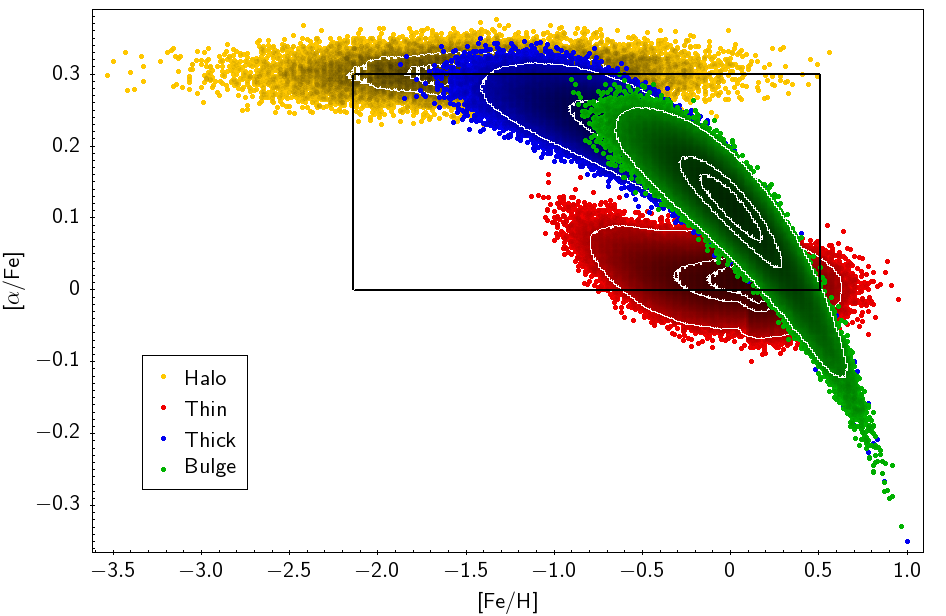 Figure 1
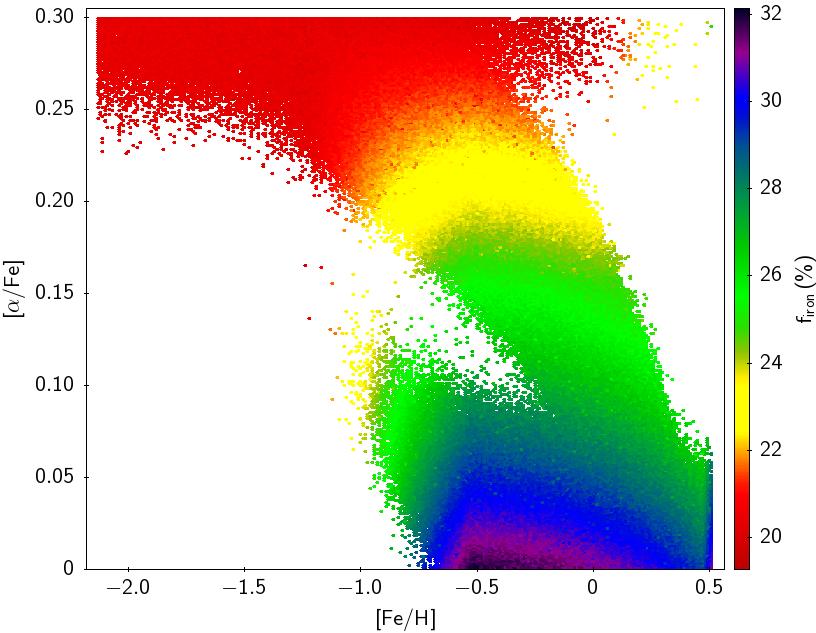 Figure 2
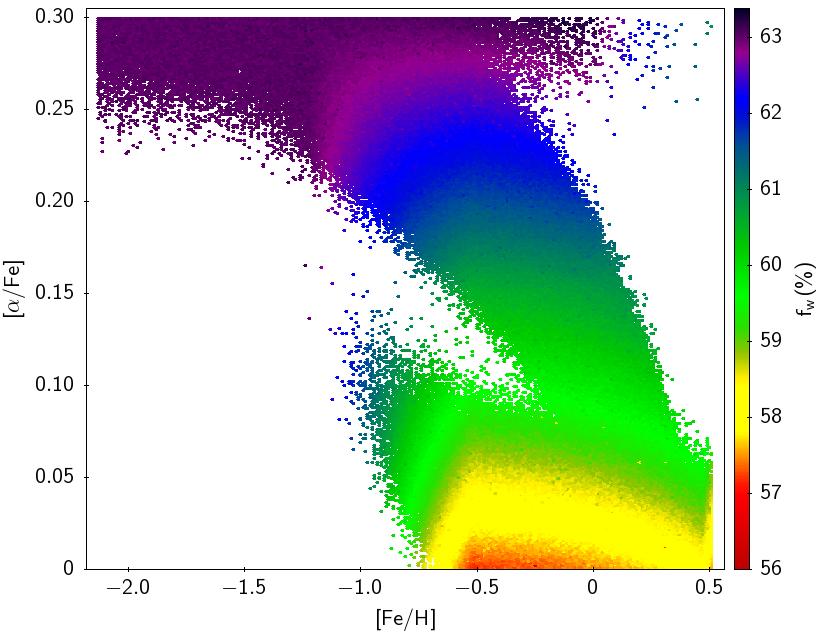 Figure 3
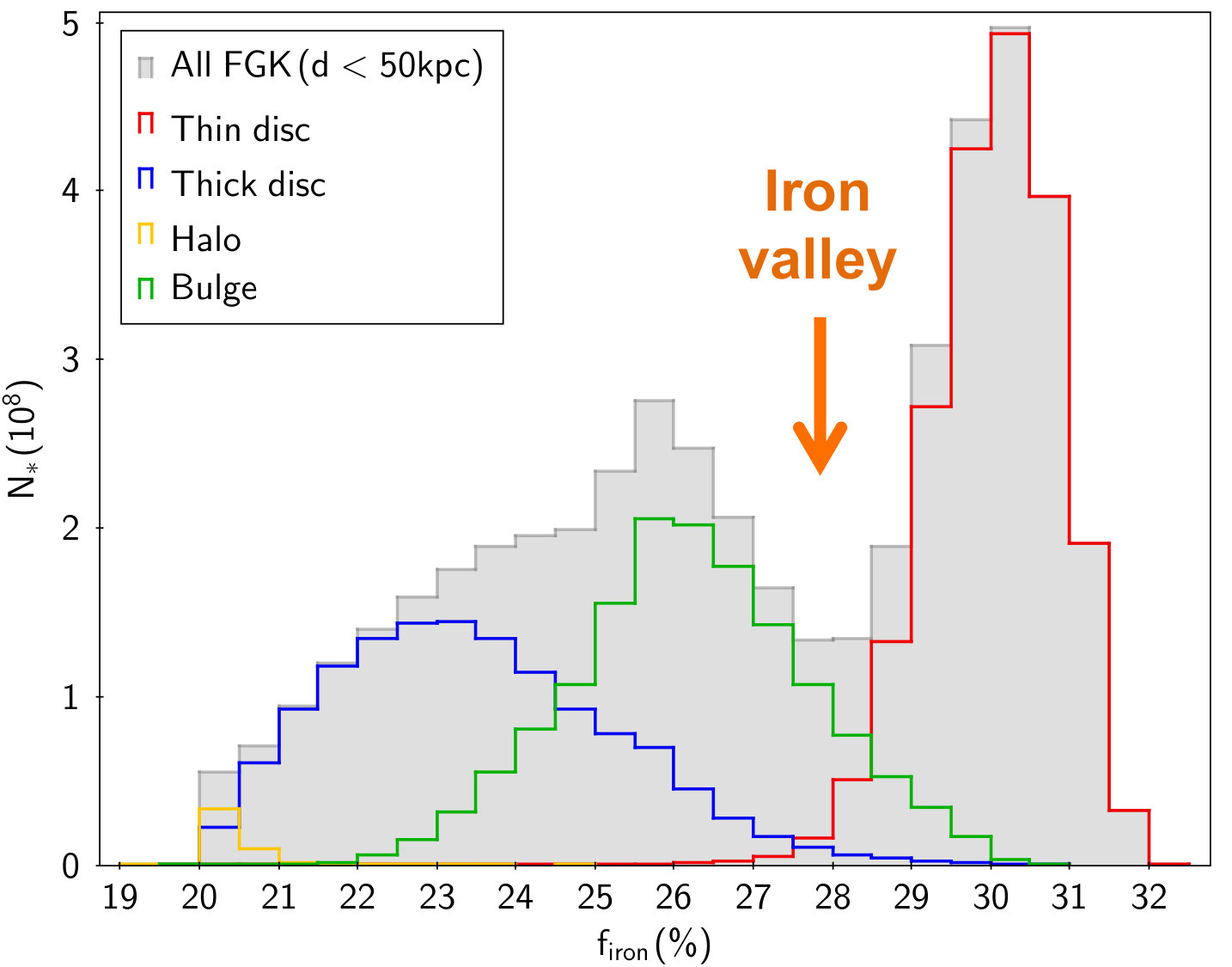 Figure 4
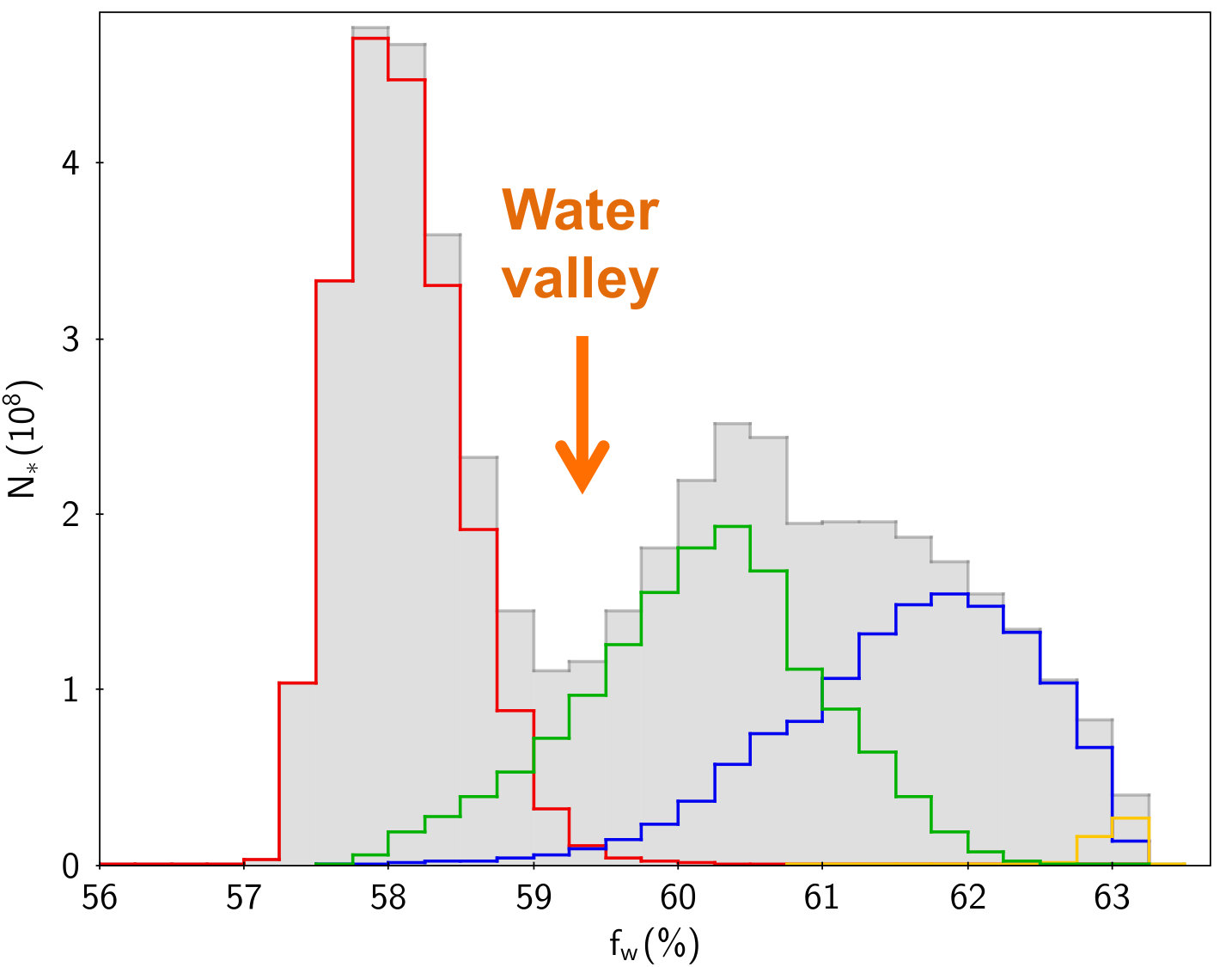 Figure 5
Peer Reviews
No public reviews on file for this paper yet. If you reviewed it on a platform where reviews are public (OpenReview, ICLR, NeurIPS, ICML), you can paste yours below so the community can read it here.
Videos
No videos yet. Explain this paper in a talk, walkthrough, or lecture? Add one.
Taxonomy
TopicsStellar, planetary, and galactic studies · Astronomy and Astrophysical Research · Spectroscopy and Laser Applications
\publisher
Zenodo \conferenceThe 20th Cambridge Workshop on Cool Stars, Stellar Systems, and the Sun \conferencedate2018
\absConnecting star and planet properties in a single model is not straightforward. Stellar population synthesis models are key to explore combined statistical constraints from star and planet observations. The Besançon stellar population synthesis model (e.g. Robin et al., 2003; Lagarde et al., 2017) includes now the stellar evolutionary tracks computed with the stellar evolution code STAREVOL (e.g. Lagarde et al., 2012; Amard et al., 2016). It provides the global (M, R, Teff, etc) and chemical properties of stars for 54 chemical species. It enables to study the different galactic populations of the Milky Way (the halo, the bulge, the thin and thick disc) and a specific observational survey. Here, we couple the Besançon model with a simple stoichiometric model (Santos et al., 2017) in order to determine the expected composition of the planet building blocks (PBB). We investigate the trends and correlations of the expected chemical abundances of PBB in the different stellar populations of the Milky Way (Cabral et al., 2018).
Chemical connections between low-mass stars and planet building blocks investigated by stellar population synthesis
Cabral Nahuel
1 Nadège Lagarde
1 Céline Reylé
1 Aurélie Guilbert-Lepoutre1 and Annie C. Robin1
1 Institut UTINAM, CNRS UMR6213, Univ. Bourgogne Franche-Comté, OSU THETA Franche-Comté-Bourgogne, Observatoire de Besançon, France
††editors: S. J. Wolk
1 Introduction
Future spatial missions (TESS, CHEOPS, PLATO and JWST) will improve considerably our understanding of the formation of planetary systems. Exploring connections between star and planet properties provide key constrains on planet formation models. Currently, space-based (Kepler, CoRoT) and ground-based exoplanet surveys (HARPS) have shown that the presence of planetary companions is closely linked to the metallicity and the chemical abundances of the host stars (e.g. Adibekyan et al., 2015). Moreover, TESS, CHEOPS, and JWST are expected to bring huge improvements in our characterization of planets. The asteroseismic survey PLATO will provide stellar properties with high accuracy (Rauer et al., 2014; Miglio et al., 2017).
Planet properties are observed to correlate with metallicity and specific elemental ratios of the host stars. Moreover, the different stellar populations in our Galaxy are characterized by different metallicities and alpha abundances due to their different way and epoch of formation and chemical evolution (Haywood et al., 2013). Thus, the different stellar galactic populations could produce planets with very different properties.
Stellar synthetic models are particularly useful to analyse star-planet correlations in the Milky Way. In line with the previous work of Santos et al. (2017), we explore statistical trends of the PBB composition in the different galactic populations. We use the Besançon Galaxy Model (BGM) to simulate the global and chemical properties of stars in different populations (Lagarde et al., 2017). We then apply the stoichiometric model from Santos et al. 2017 to these synthetic populations. This allows us to give robust predictions of the PBB for the whole Milky Way. The development of such a coherent and integrated model is important to prepare the interpretation of future large scale surveys of exoplanets search.
2 Numerical model
2.1 The Besançon Galaxy Model
The Besançon stellar populations synthesis model provides the global (e.g., M, R, Teff) and chemical properties of stars for 54 chemical species. Four populations are considered: the halo, the bulge, the thin and thick disks. For each one we assume different initial mass functions (IMF) and different formation and evolution histories. In each case, the IMF is a three-slopes power law. The star formation history (SFH) and the IMF of the thick disk and halo have been set from comparisons to photometric data from 2MASS and SDSS surveys (Robin et al., 2014). The star formation rate, in the thin disk population, is assumed decreasing exponentially with time (Aumer & Binney, 2009). The parameters of the SFH and the IMF of the thin disk have been fit to the Tycho-2 catalog (Czekaj et al. 2014).
The new version of the BGM includes a new grid of stellar evolution models computed with the stellar evolution code STAREVOL (e.g. Lagarde et al., 2012; Amard et al., 2016) for stars with 0.7 M⊙ Lagarde et al. (2017) and Lagarde et al. (2018). These stellar evolution tracks have been computed from the pre-main sequence to the early asymptotic giant branch at six metallicities ([Fe/H]= 0.51, 0, -0.23, -0.54, -1.2, -2.14), and at different -enhancements ([/Fe]=0.0, 0.15 and 0.30) to simulate all populations.
To determine the [/Fe]-[Fe/H] trend, for the four galactic populations, the data release 12 of the APOGEE spectroscopic survey (Majewski et al., 2017) has been used :
[TABLE]
An intrinsic Gaussian dispersion of 0.02 dex is added to these relations. Moreover, we necessarily limit our calculations to the border of the stellar grid in metallicity and alpha content -2.14<[Fe/H]<0.51 and 0<[/Fe]<0.3 (see Fig. 1).
2.2 Stoichiometric model
We use the stoichiometric model published in Santos et al. (2017). In this simple model, the molecular abundances in the protoplanetary disk, and their mass fraction, can be computed from the stellar abundances of a handful of elements. Fe, Si, Mg, O and C together with H and He control the species expected from the equilibrium condensation of H2, He, CH4, H2O, Fe, MgSiO3, Mg2SiO4 and SiO2 (Lodders, 2003; Bond et al., 2010). These compounds dominate the rocky interior of Earth-like planet (see e.g. Sotin et al., 2007).
Since we limited our synthetic population to the borders of the stellar grids (-2.14<[Fe/H]<0.51, 0<[/Fe]<0.3) all simulated stars have 1<Mg/Si<2. We write here the inverted stoichiometric relations corresponding to the case 1<Mg/Si<2 (assuming the equations on Appendix B of S17):
[TABLE]
with the number of atoms of each specie .
These relations enable the computation of the expected mass fractions of PBB, the iron-to-silicate mass fraction () and the water mass fraction () :
[TABLE]
where with the number of atoms of each species and their mean molecular weights. The total mass is given by .
3 Chemical trends of PBB in the Milky Way
We simulate the FGK sample to distances up to 50 kpc from the Sun. This large volume covers the Milky Way up to the external parts. Our simulation has a total of 4 850 600 000 stars: 42% from the thin disk, 27% from the thick disk, 30% from the bulge, and 1% from the halo.
3.1 The water/iron valley
The synthetic population computed with the BGM predicts a distinct distribution between the thin disk stars with iron-rich PBB, and other stellar populations with water-rich PBB, implying a significant dip in the number of stars around f_{iron}$$\sim28% and f_{w}$$\sim59% (Fig. 2). This "iron/water valley” results from the stellar alpha content distributions in the synthetic stellar populations. Indeed, in Fig. 3 we show that and are mainly function of [/Fe]. Moreover, the density of stars around solar metallicity and [/Fe]0.1 is smaller due to the known gap between the thin and the thick disk. This gap translates into a bimodal distribution in the and histograms. The synthetic population computed with the BGM shows the presence of the "iron/water valley” because of the clear dependence of and on [/Fe] (Fig. 3), and because of the known gap between the thin and the thick disk on [/Fe].
3.2 Expected exoplanets composition
From the expected chemical composition of planet building blocks we can discuss the expected exoplanets composition. The stoichiometric model (Santos et al., 2017) predicts for the Sun f_{iron}$$\sim$$33\%, f_{w}$$\sim$$60\% and f_{Z}$$\sim$$1.3\%. These values of and are in line with the values of =67.11% and =1.31% found by Lodders (2003). Moreover, f_{iron}$$\sim$$3\% is consistent with the values observed in the meteorites and the rocky planets of the solar system, Earth, Venus and Mars (see e.g. Drake & Righter, 2002).
Figure 2 shows that the synthetic thin disk stars present PBB chemical composition compatible with the values of the solar system. Thus, the thin disk stars could produce planets with similar composition to the rocky planets of the solar system. Metal-poor stars of the thick disk might produce planets with lower iron mass. Similar results are obtained by Santos et al. (2017) with HARPS observations. This should have an impact on the radius of rocky planets. Indeed, a low iron mass fraction may produce a smaller core (Valencia et al., 2007). However, statistically the thick disc stars should present much higher water mass fractions. It is worth noting that, the bulge presents PBB compositions similar to the solar ones, and should also be able to host rocky planets with solar-system-like composition. Instead, halo stars should produce water rich planets.
4 Conclusion
The different stellar populations we observe in our Galaxy are characterized by different metallicities and alpha-element abundances. We aim to build an integrated tool to predict the planet building blocks composition as a function of the stellar populations. We investigate the trends of the expected PBB composition with the chemical abundance of the host star, in different parts of the Galaxy, predicted by stellar population synthesis. The new version of the BGM, including the simple stoichiometric model derived by S17, appears as a powerful tool to predict chemical composition of PBB. This may be crucial to prepare interpretation of on-going and future large scale surveys of exoplanet search.
We run the BGM to generate a synthetic sample of FGK stars up to 50 kpc. This enables to establish general trends for our Galaxy. The main results obtained in this work:
- •
Alpha content dependence: Iron and water mass fractions, and , are mainly function upon the initial alpha content [/Fe] of the host stars. We have shown that this dependence explains well the iron/water valley.
- •
Iron/water valley: Since it exists a gap on [/Fe] between the thin disk and the other galactic populations (thick disk, bulge and halo), and because and have a clear dependance on [/Fe], our simulations show an iron/water valley. The valley is predicted by our simulations to be at f_{iron}$$\sim$$28\% and f_{w}$$\sim$$59\%.
- •
PBB trends: Our simulations show that the thin disk is expected to present iron rich and water poor PBB, while the thick disk should have iron poor but water rich PBB. Santos et al. 2017 found similar results with the HARPS observations. Cabral et al. (2018), with simulations of the solar neighborhood (d<100pc and d<1kpc) confirm these general trends. The bulge presents intermediate values of and , between the ones of the thin and thick discs. Since its mass fraction values overlap with the ones of the thin disc, it could produce rocky planets with solar-system-like composition.
We linked host star abundances and expected PBB composition in an integrated model of the Galaxy (Cabral et al., 2018). Derived trends are an important step for statistical analyses of expected planet properties. In particular, internal structure models may use these results to derive statistical trends of rocky planets properties, constrain habitability and prepare interpretation of on-going and future large scale surveys of exoplanet search.
The reference list from the paper itself. Each links out to its DOI / PubMed record.
- 1Adibekyan et al. (2015) Adibekyan, V., Santos, N. C., Figueira, P., Dorn, C., Sousa, S. G., et al. 2015, A&A, 581, L 2.
- 2Amard et al. (2016) Amard, L., Palacios, A., Charbonnel, C., Gallet, F., & Bouvier, J. 2016, A&A, 587, A 105.
- 3Aumer & Binney (2009) Aumer, M. & Binney, J. J. 2009, MNRAS, 397, 1286.
- 4Bond et al. (2010) Bond, J. C., O’Brien, D. P., & Lauretta, D. S. 2010, Ap J, 715, 1050.
- 5Cabral et al. (2018) Cabral, N., Lagarde, N., Reylé, C., Guilbert-Lepoutre, A., & Robin, A. 2018, Ar Xiv e-prints.
- 6Drake & Righter (2002) Drake, M. J. & Righter, K. 2002, Nature, 416, 39.
- 7Haywood et al. (2013) Haywood, M., Di Matteo, P., Lehnert, M. D., Katz, D., & Gómez, A. 2013, A&A, 560, A 109.
- 8Lagarde et al. (2012) Lagarde, N., Decressin, T., Charbonnel, C., Eggenberger, P., Ekström, S., et al. 2012, A&A, 543, A 108.