On-the-fly adaptivity for nonlinear twoscale simulations using artificial neural networks and reduced order modeling
Felix Fritzen, Mauricio Fern\'andez, Fredrik Larsson

TL;DR
This paper introduces an adaptive multi-fidelity surrogate modeling approach combining reduced order models and neural networks for efficient, accurate nonlinear multiscale simulations, with strategies for on-the-fly model switching and error estimation.
Contribution
It presents a novel hybrid surrogate framework with adaptive switching and error surrogates, enhancing efficiency and accuracy in complex multiscale simulations.
Findings
Effective on-the-fly switching algorithms developed
ANN-based error surrogates improve model selection
Numerical examples demonstrate significant performance gains
Abstract
A multi-fidelity surrogate model for highly nonlinear multiscale problems is proposed. It is based on the introduction of two different surrogate models and an adaptive on-the-fly switching. The two concurrent surrogates are built incrementally starting from a moderate set of evaluations of the full order model. Therefore, a reduced order model (ROM) is generated. Using a hybrid ROM-preconditioned FE solver, additional effective stress-strain data is simulated while the number of samples is kept to a moderate level by using a dedicated and physics-guided sampling technique. Machine learning (ML) is subsequently used to build the second surrogate by means of artificial neural networks (ANN). Different ANN architectures are explored and the features used as inputs of the ANN are fine tuned in order to improve the overall quality of the ML model. Additional ANN surrogates for the stress…
Click any figure to enlarge with its caption.
 Figure 1
 Figure 2
 Figure 3
 Figure 4
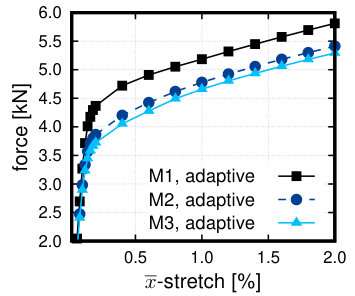 Figure 5
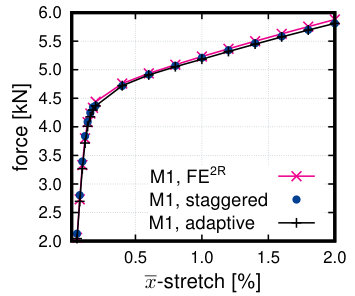 Figure 6
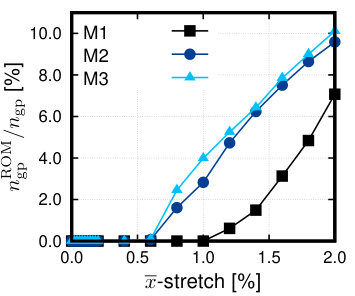 Figure 7
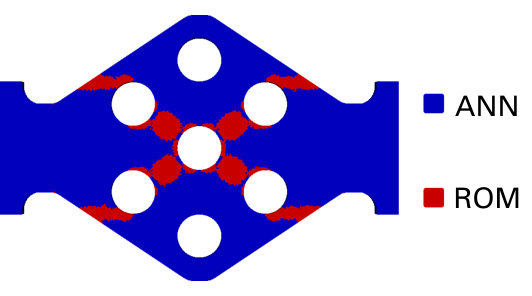 Figure 8
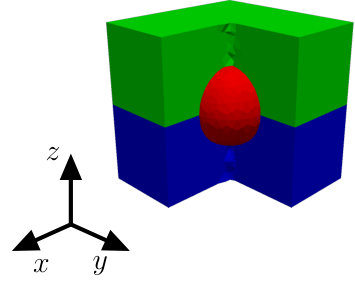 Figure 9
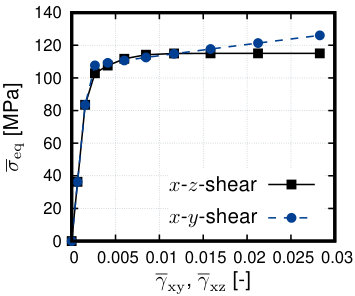 Figure 10
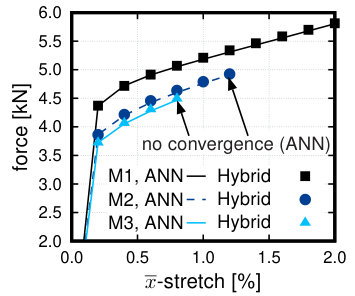 Figure 11
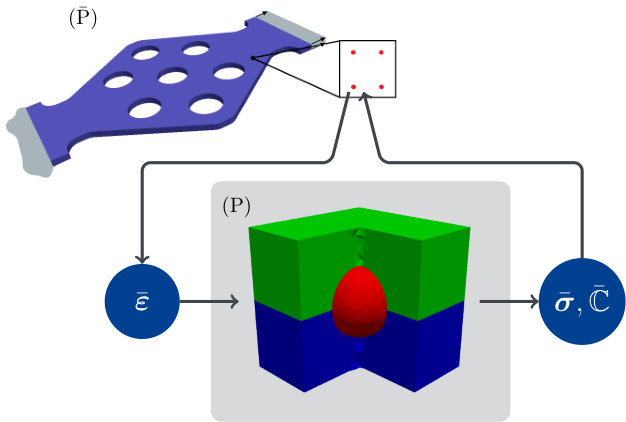 Figure 12
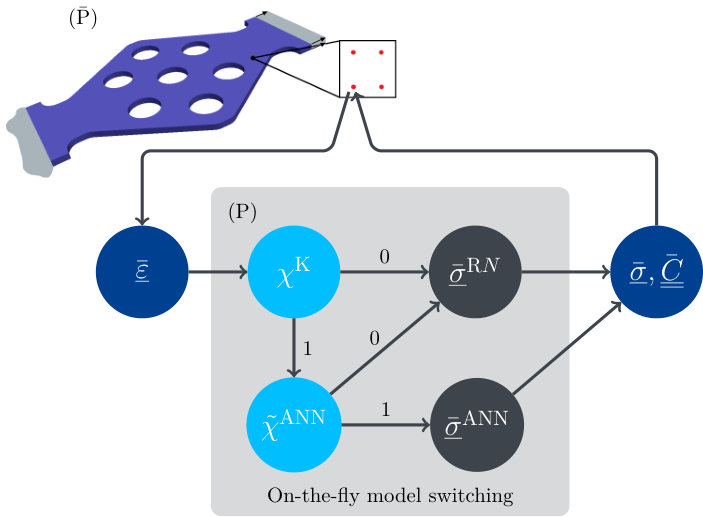 Figure 13
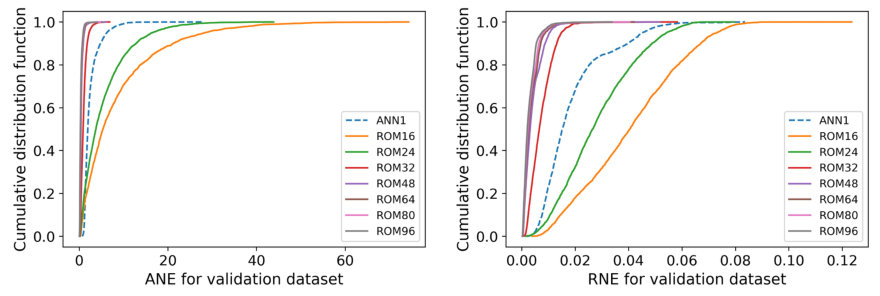 Figure 14
Peer Reviews
No public reviews on file for this paper yet. If you reviewed it on a platform where reviews are public (OpenReview, ICLR, NeurIPS, ICML), you can paste yours below so the community can read it here.
Videos
No videos yet. Explain this paper in a talk, walkthrough, or lecture? Add one.