Fermion Conformal Bootstrap in 4d
Denis Karateev, Petr Kravchuk, Marco Serone, Alessandro Vichi

TL;DR
This paper uses numerical conformal bootstrap methods to establish bounds on operator dimensions and OPE coefficients in 4d non-supersymmetric CFTs, revealing a new fake primary effect affecting these bounds.
Contribution
It introduces a novel analysis of four-point functions of Weyl spinors in 4d CFTs and uncovers a previously unobserved fake primary effect influencing bootstrap bounds.
Findings
Discovered universal bounds on operator dimensions and OPE coefficients.
Identified a fake primary effect causing discontinuities in bootstrap bounds.
Developed a new numerical method for approximating 4d conformal blocks.
Abstract
We apply numerical conformal bootstrap techniques to the four-point function of a Weyl spinor in 4d non-supersymmetric CFTs. We find universal bounds on operator dimensions and OPE coefficients, including bounds on operators in mixed symmetry representations of the Lorentz group, which were inaccessible in previous bootstrap studies. We find discontinuities in some of the bounds on operator dimensions, and we show that they arise due to a generic yet previously unobserved fake primary effect, which is related to the existence of poles in conformal blocks. We show that this effect is also responsible for similar discontinuities found in four-fermion bootstrap in 3d, as well as in the mixed-correlator analysis of the 3d Ising CFT. As an important byproduct of our work, we develop a practical technology for numerical approximation of general 4d conformal blocks.
Click any figure to enlarge with its caption.
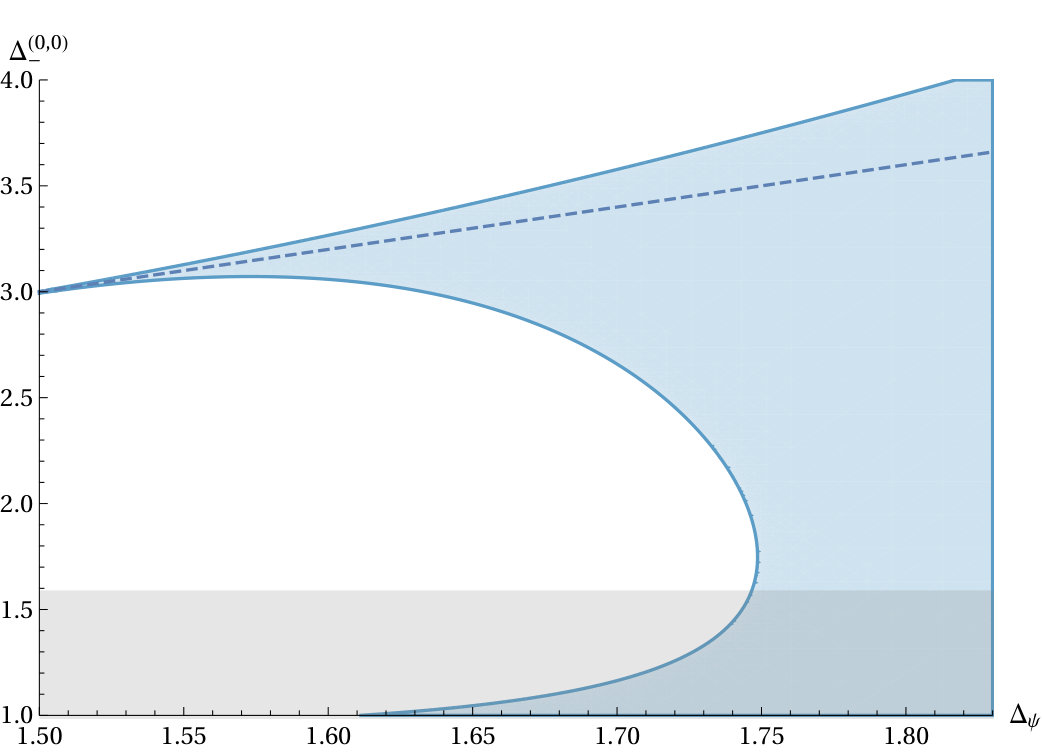 Figure 1
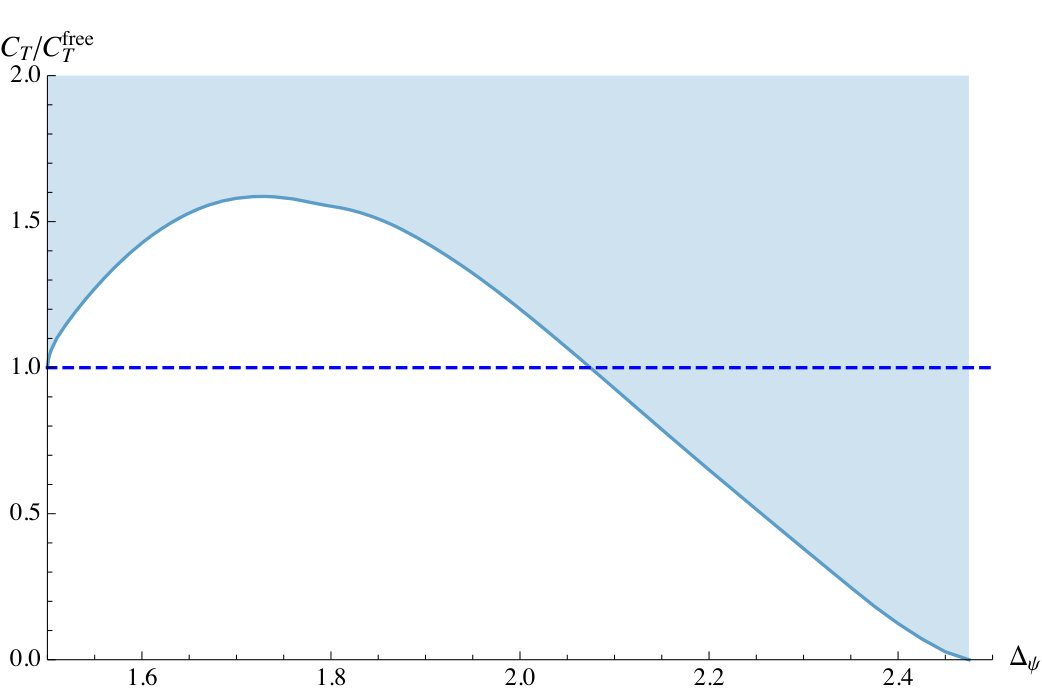 Figure 2
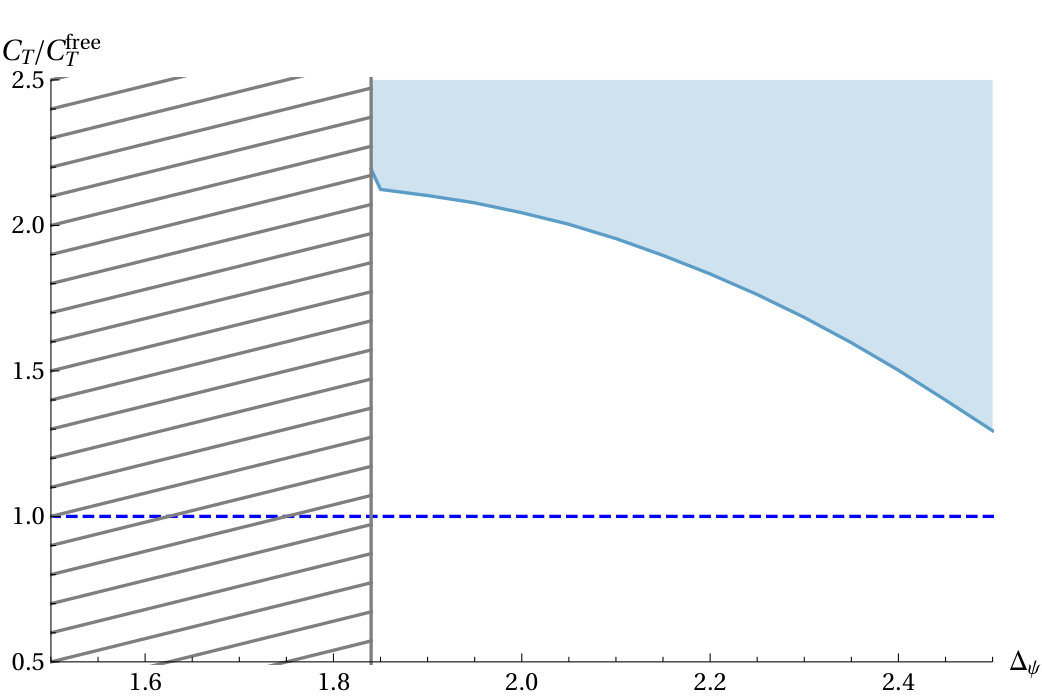 Figure 3
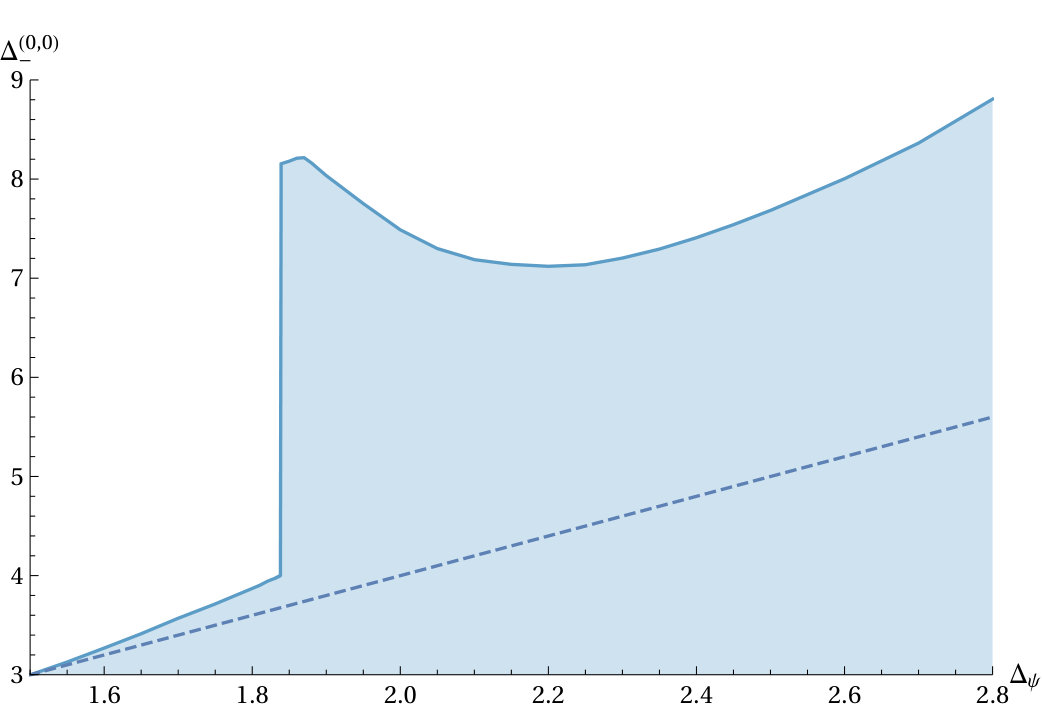 Figure 4
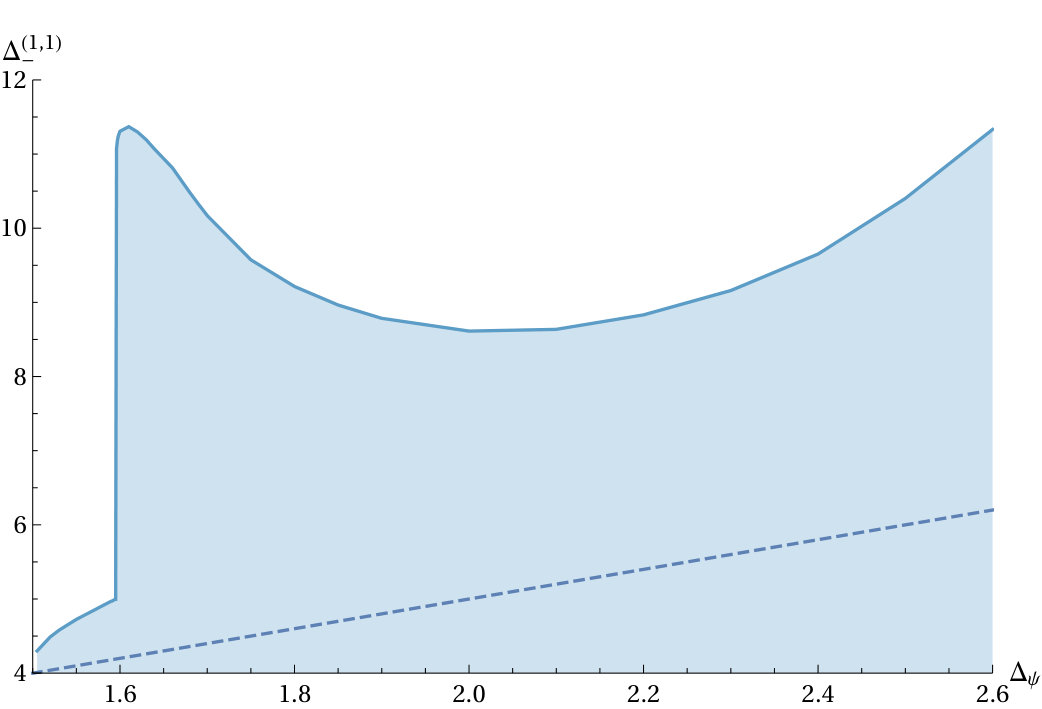 Figure 5
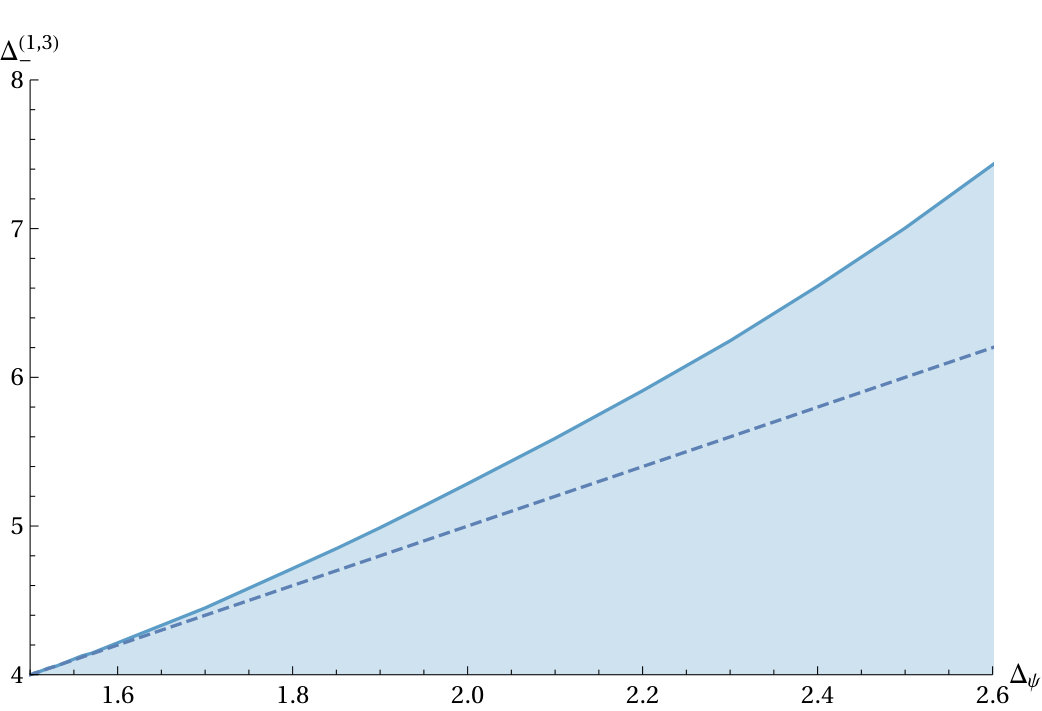 Figure 6
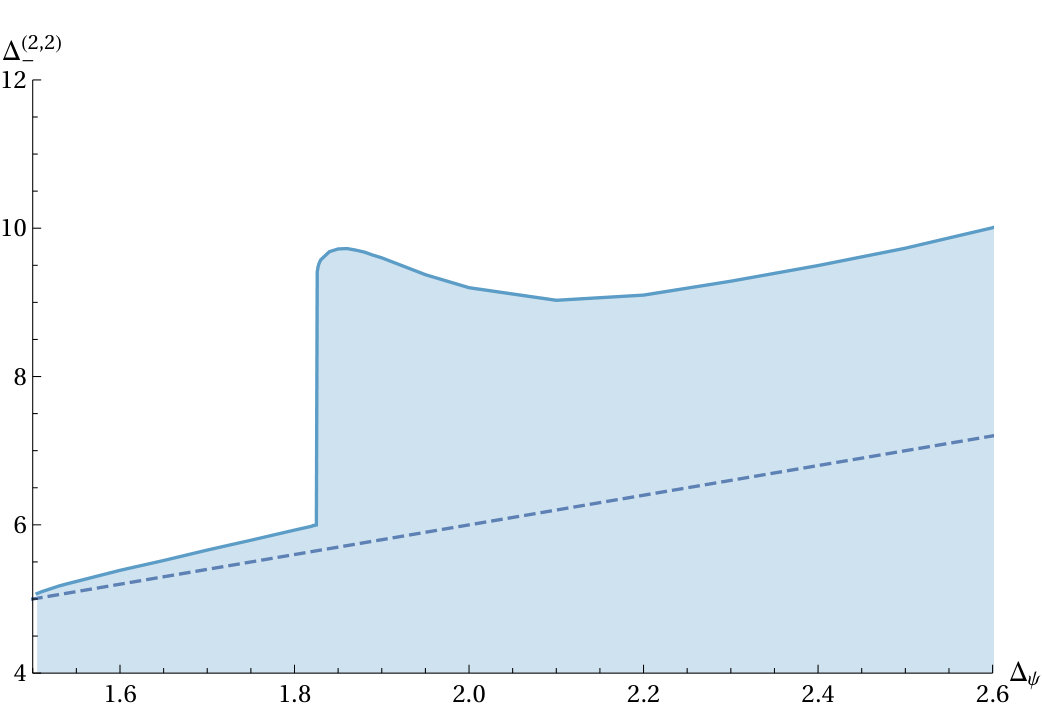 Figure 7
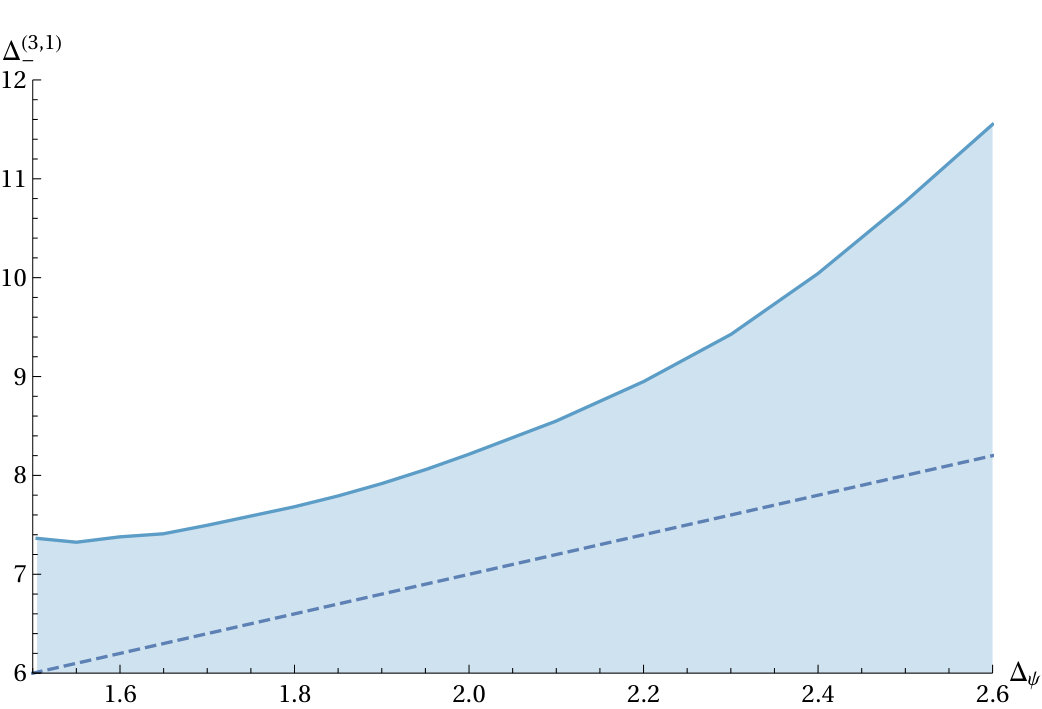 Figure 8
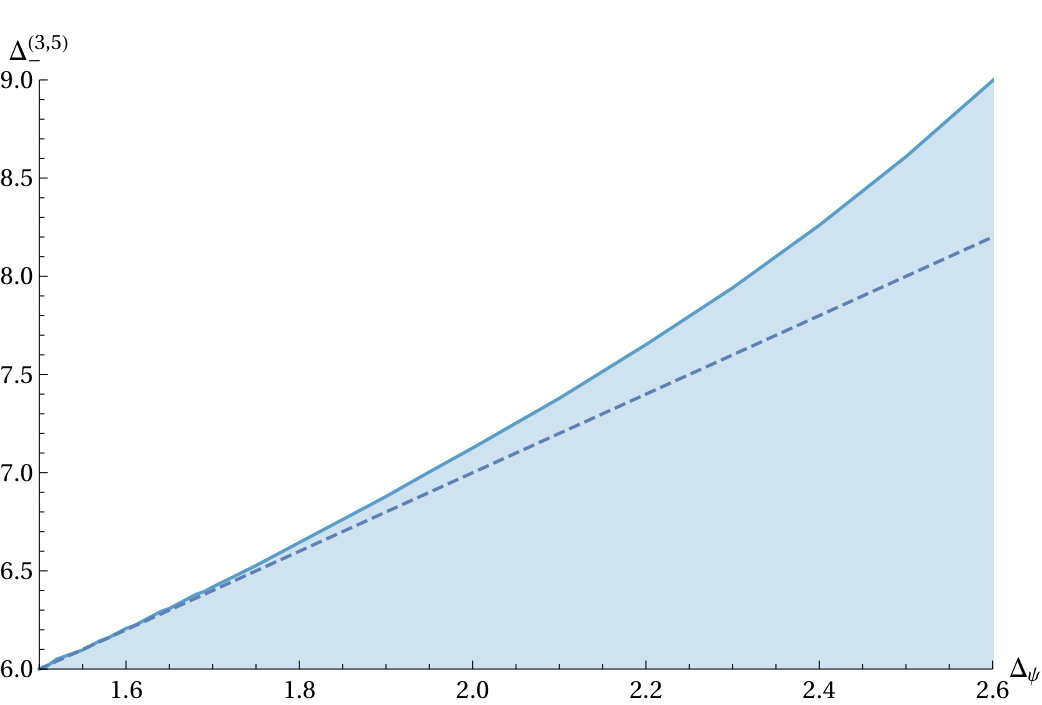 Figure 9
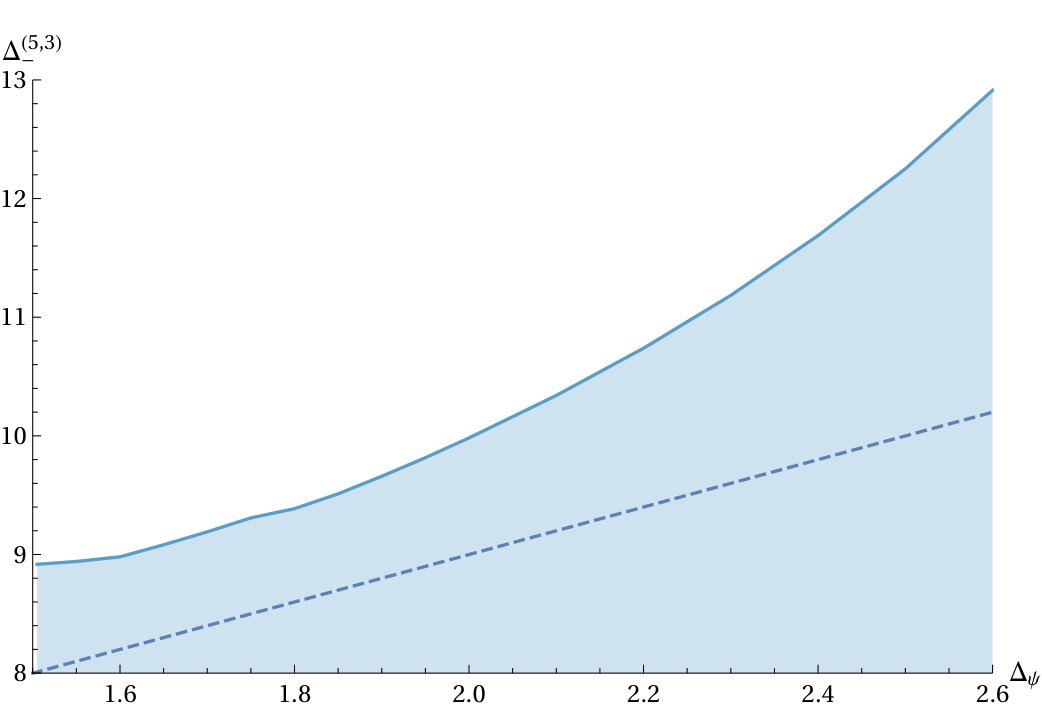 Figure 10
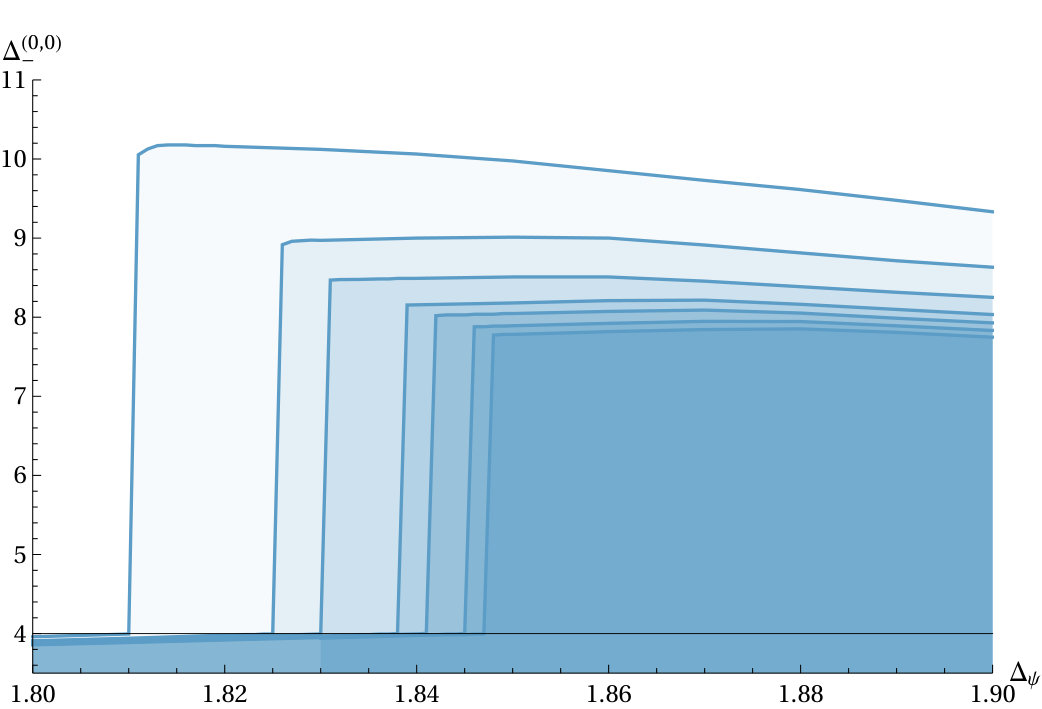 Figure 11
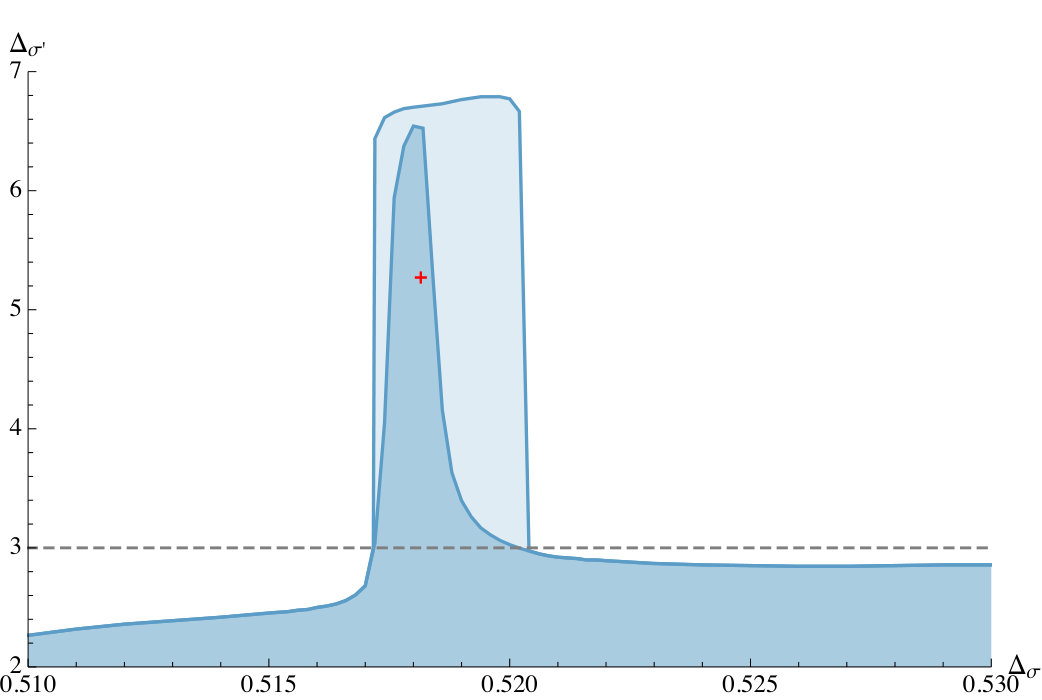 Figure 12
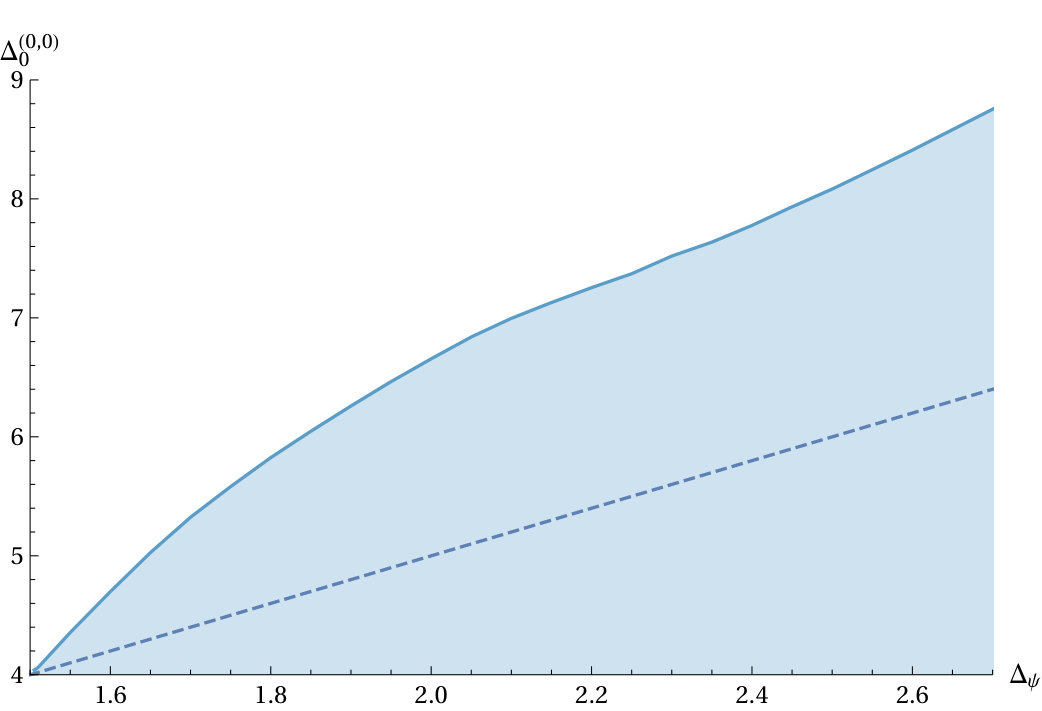 Figure 13
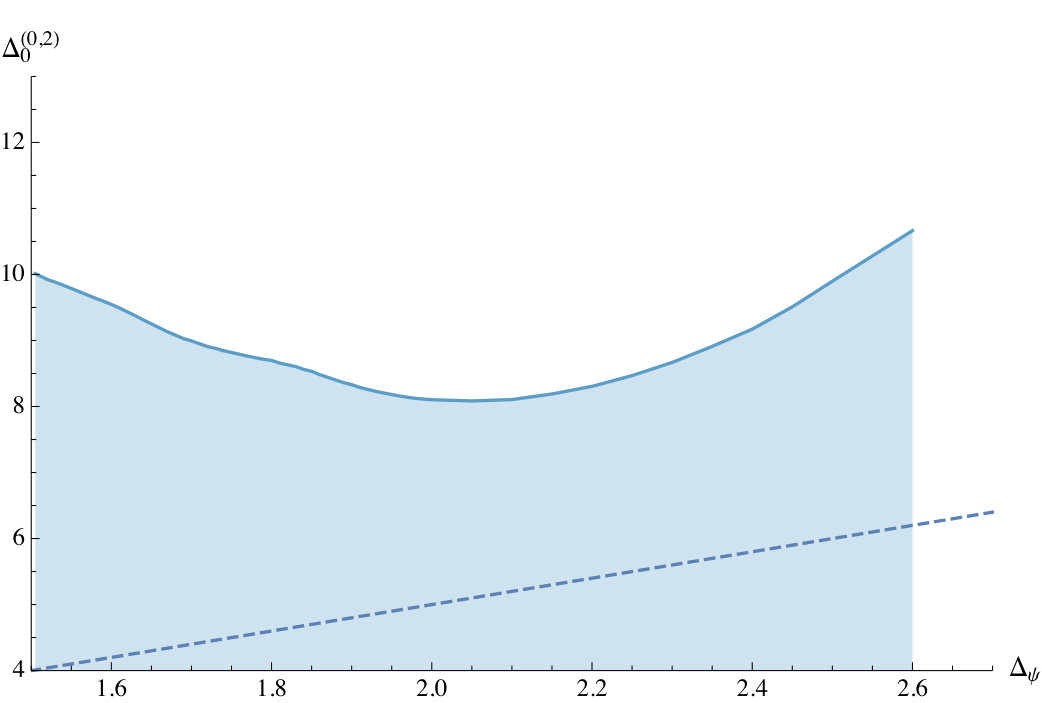 Figure 14
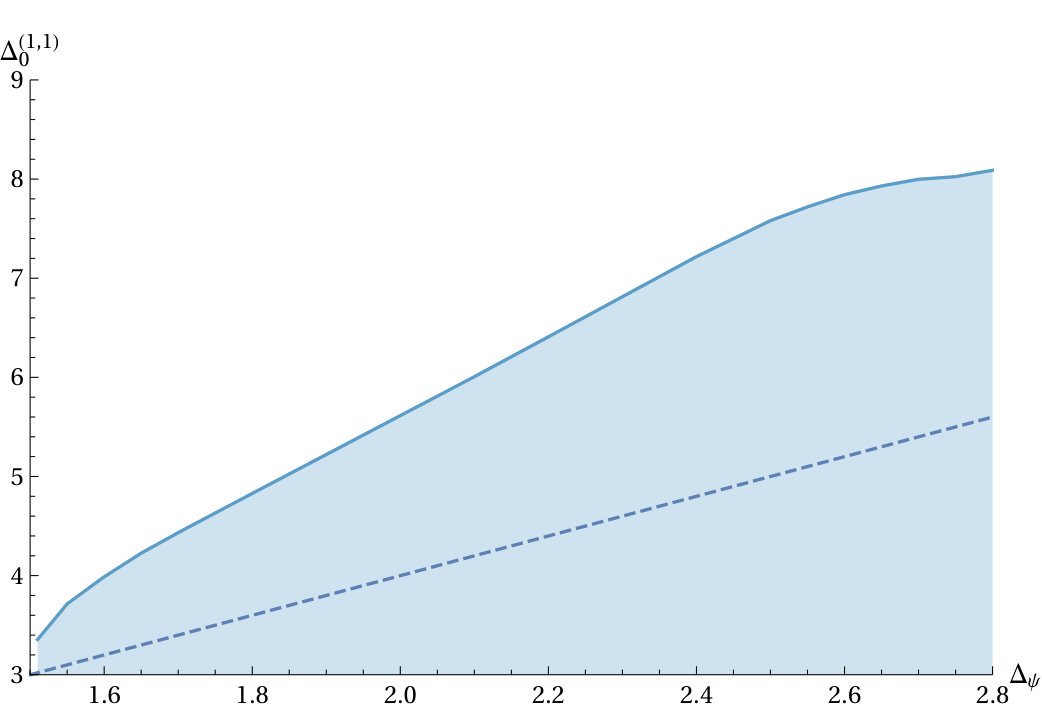 Figure 15
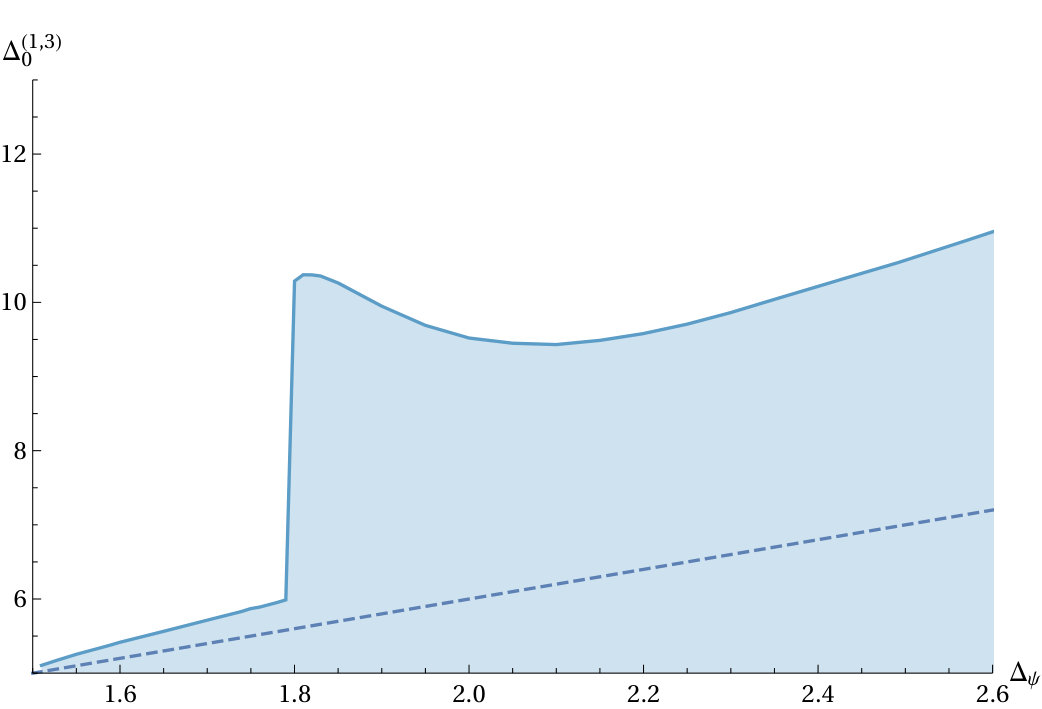 Figure 16
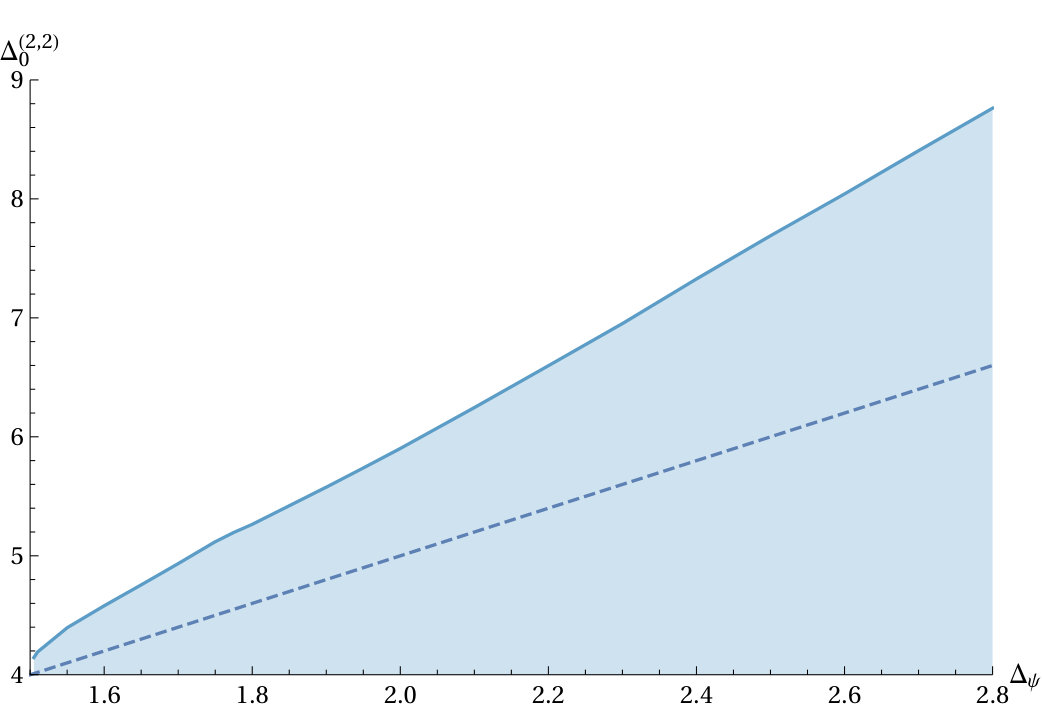 Figure 17
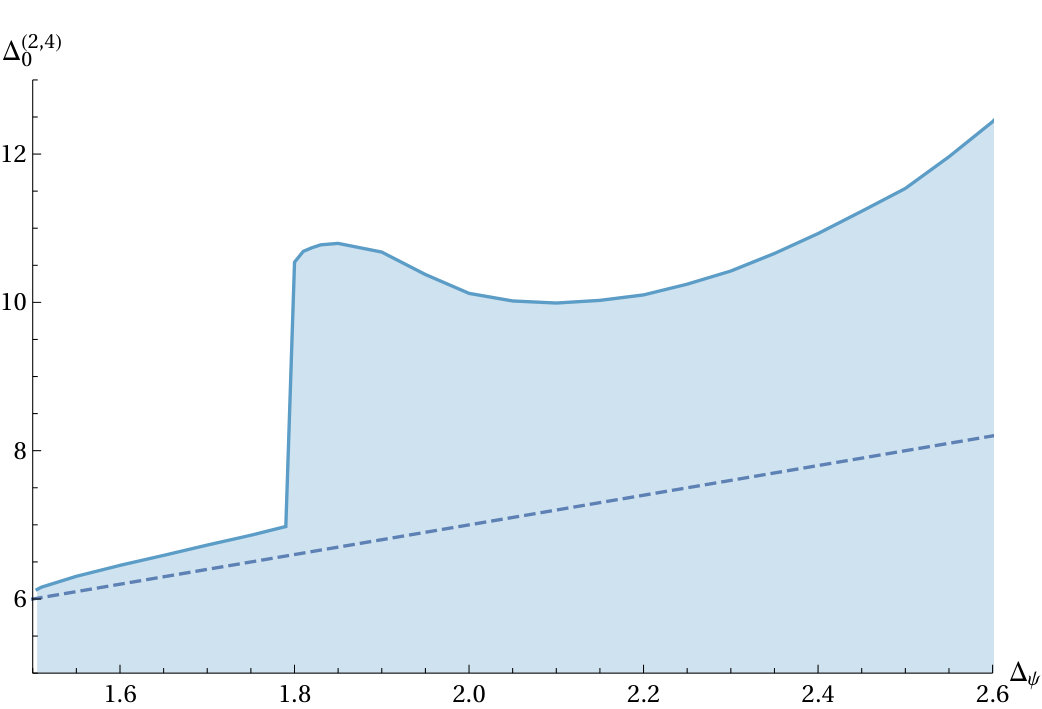 Figure 18
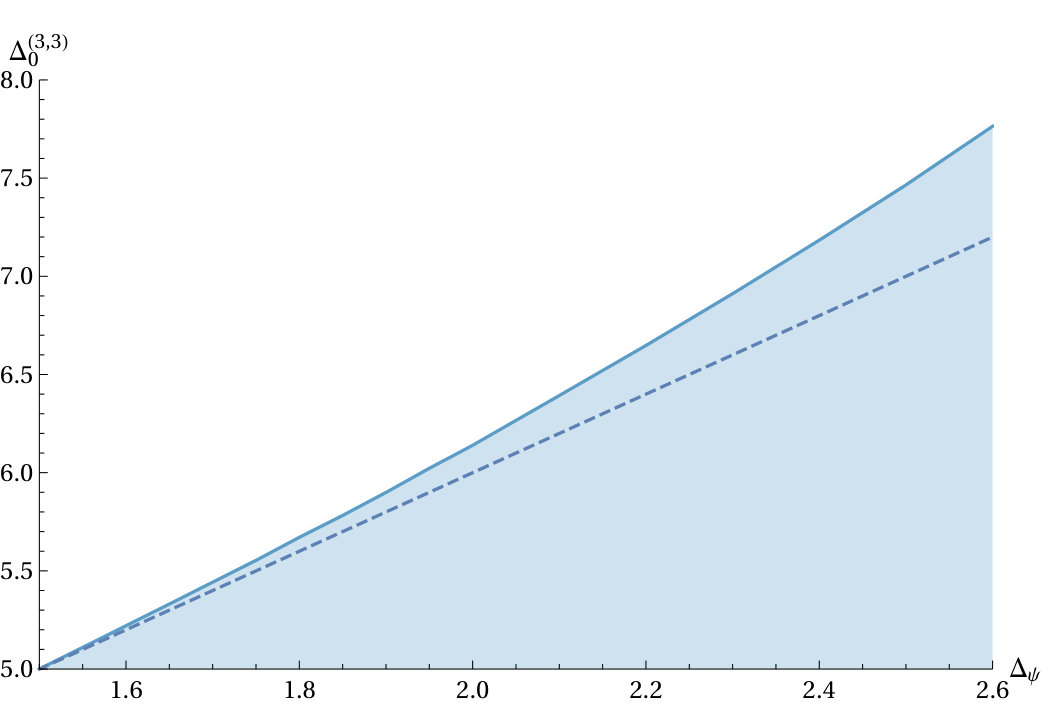 Figure 19
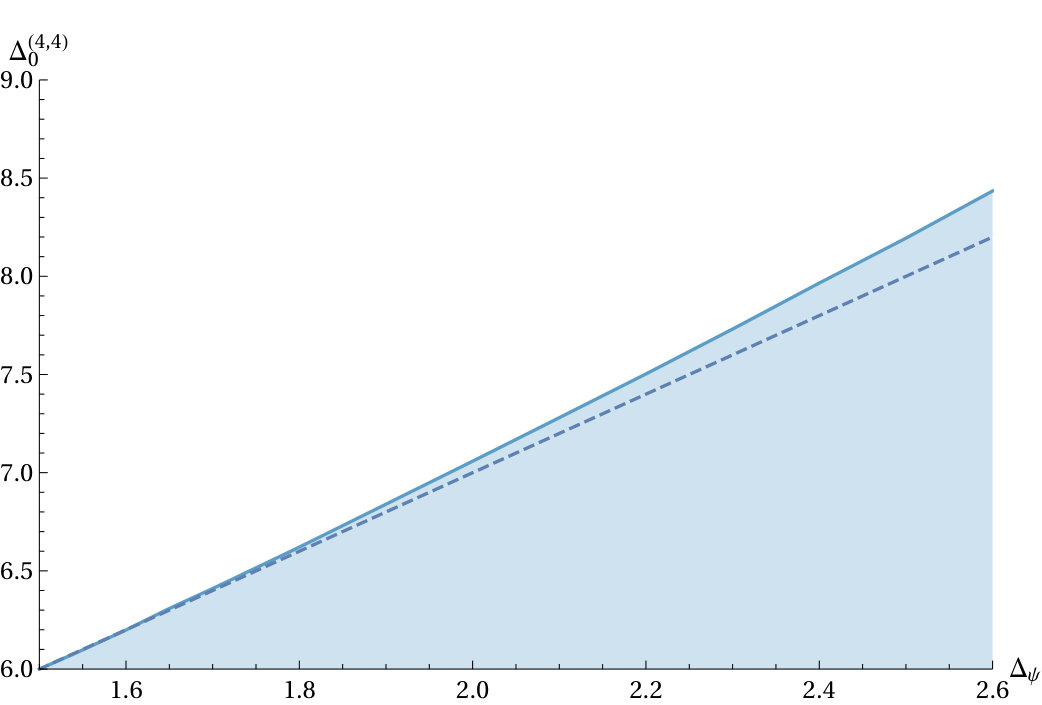 Figure 20
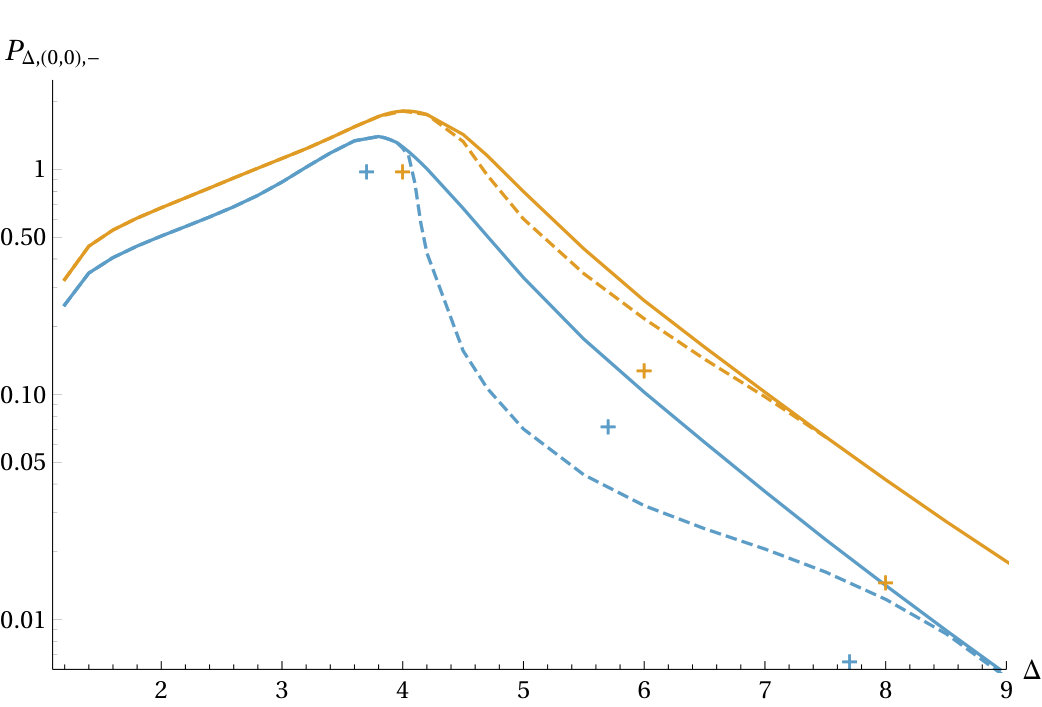 Figure 21
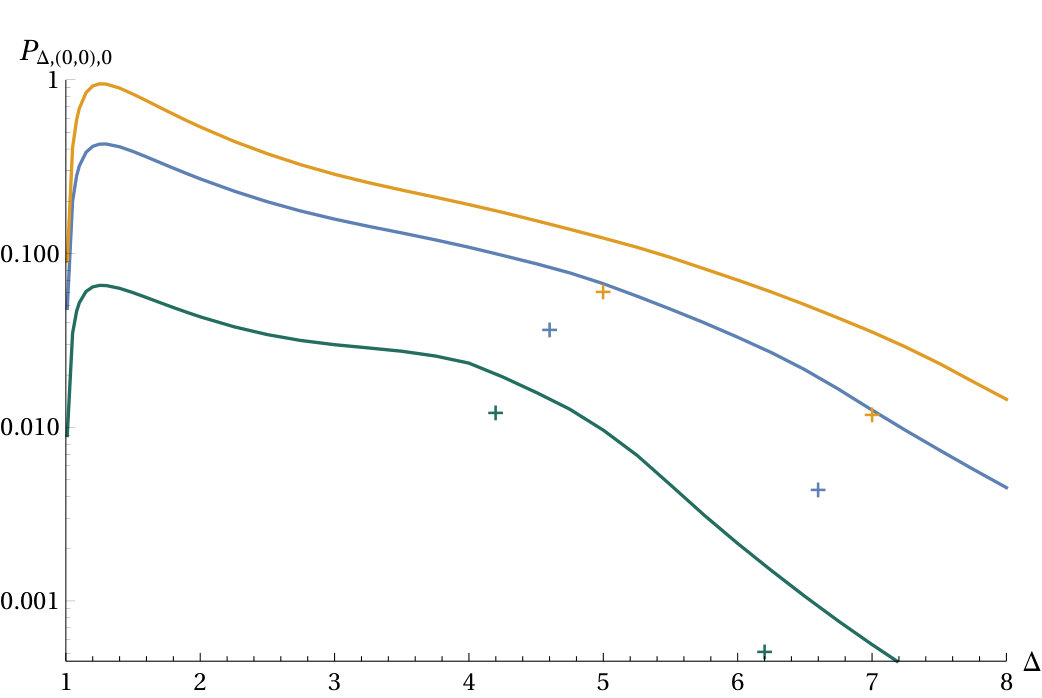 Figure 22
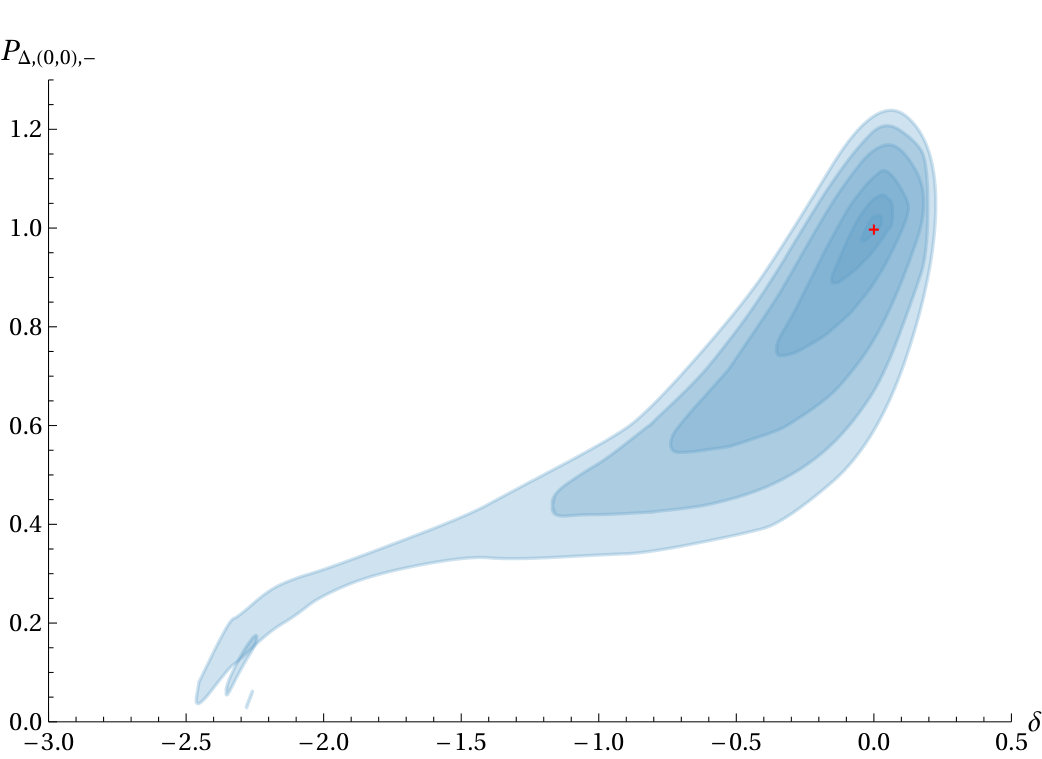 Figure 23
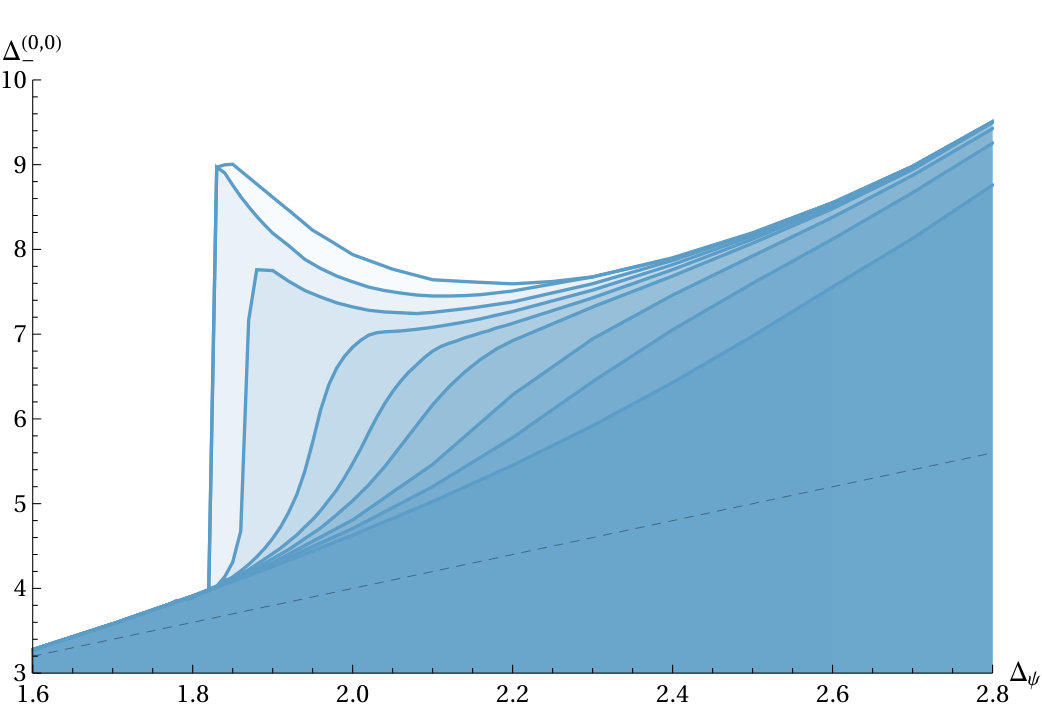 Figure 24
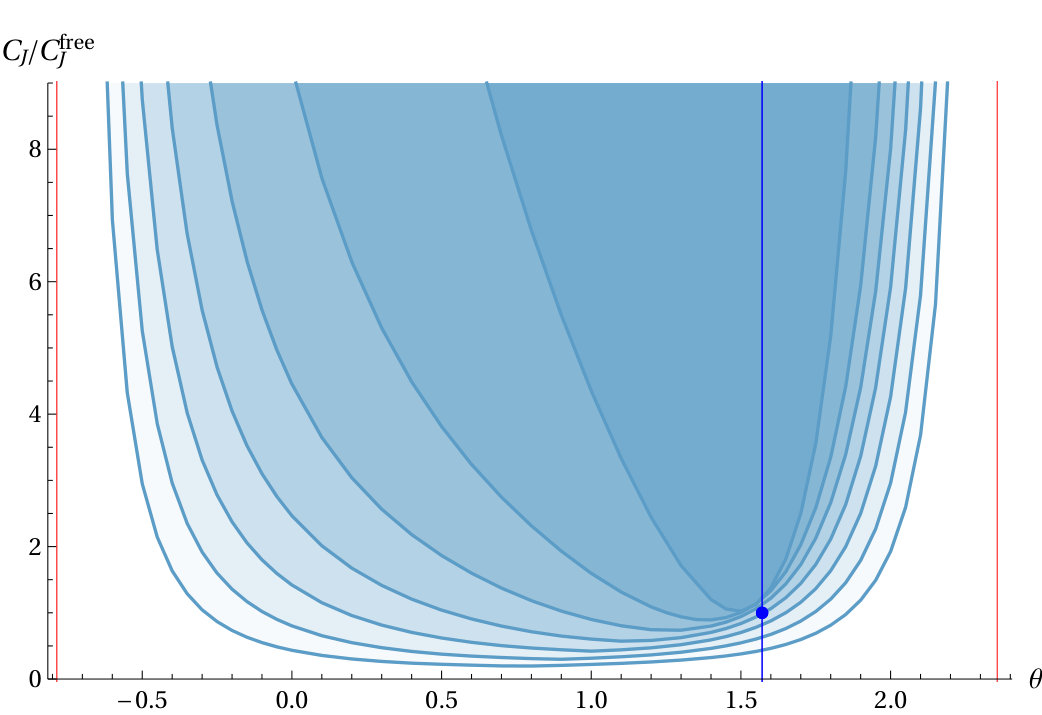 Figure 25
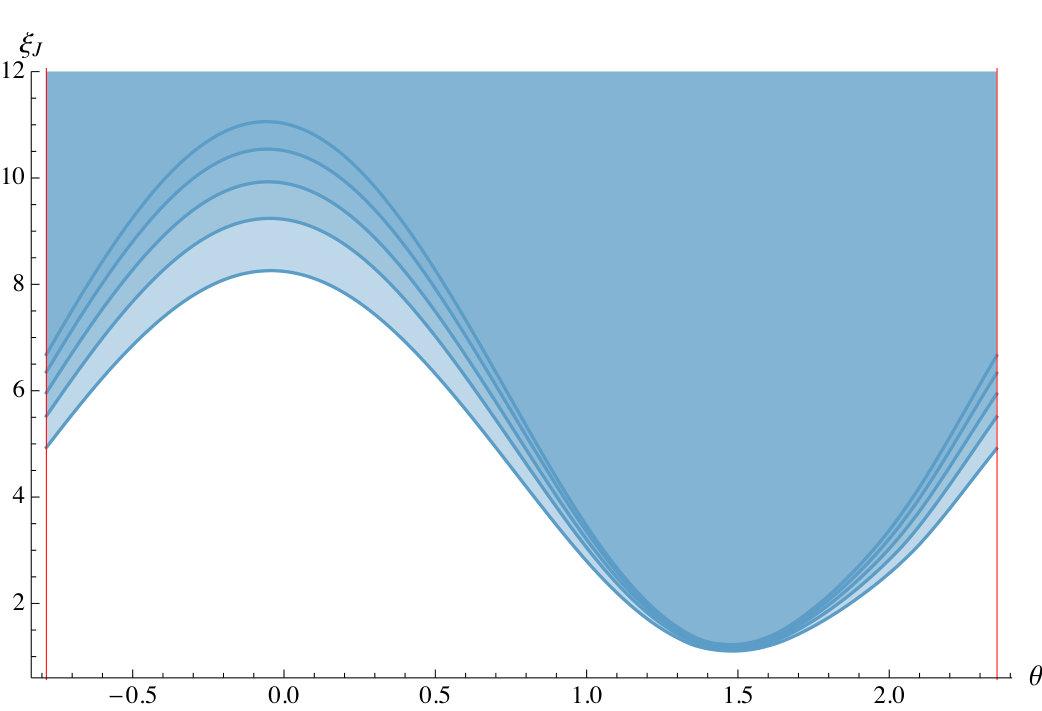 Figure 26
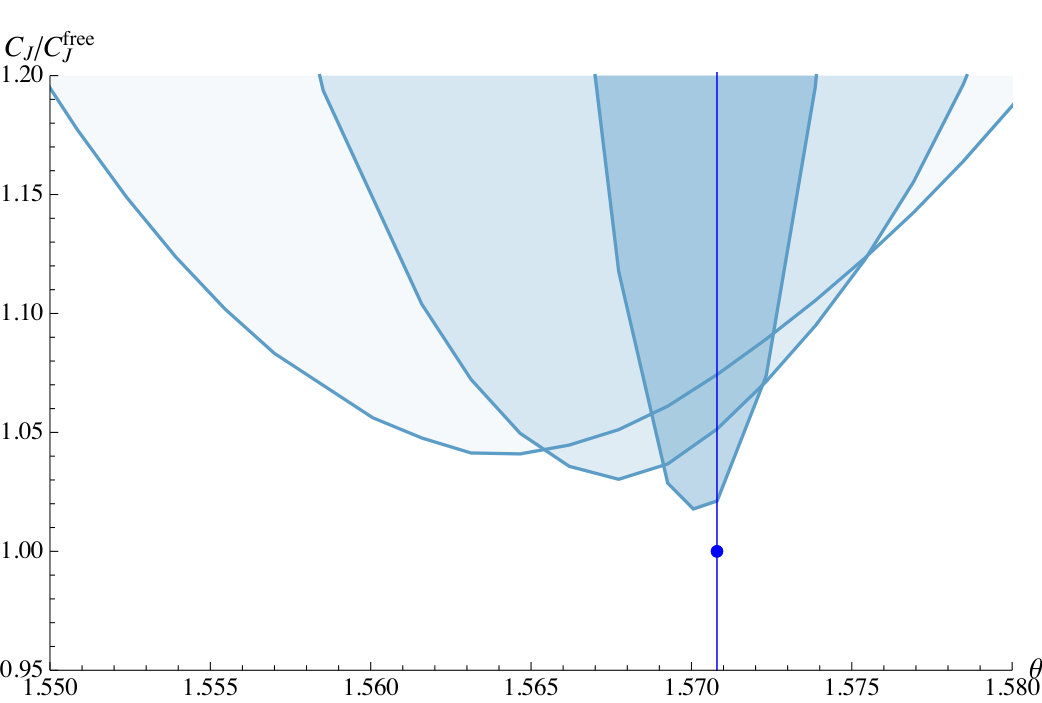 Figure 27
Peer Reviews
No public reviews on file for this paper yet. If you reviewed it on a platform where reviews are public (OpenReview, ICLR, NeurIPS, ICML), you can paste yours below so the community can read it here.
Videos
No videos yet. Explain this paper in a talk, walkthrough, or lecture? Add one.