A Consistent Reduced Network for HCN Chemistry in Early Earth and Titan Atmospheres: Quantum Calculations of Reaction Rate Coefficients
Ben K. D. Pearce, Paul W. Ayers, Ralph E. Pudritz

TL;DR
This study uses quantum chemistry and transition state theory to calculate and analyze reaction rate coefficients for HCN formation in early Earth and Titan atmospheres, providing new data and insights into reaction pathways.
Contribution
It presents 15 new reaction rate coefficients and demonstrates the effectiveness of CVT with DFT energies for modeling atmospheric reaction networks.
Findings
93% of calculated coefficients match experimental values within an order of magnitude.
The H2CN -> HCN + H reaction dominates above 320 K.
The N + CH3 -> HCN + H2 pathway is less efficient than previously thought.
Abstract
HCN is a key ingredient for synthesizing biomolecules such as nucleobases and amino acids. We calculate 42 reaction rate coefficients directly involved with or in competition with the production of HCN in the early Earth or Titan atmospheres. These reactions are driven by methane and nitrogen radicals produced via UV photodissociation or lightning. For every reaction in this network, we calculate rate coefficients at 298 K using canonical variational transition state theory (CVT) paired with computational quantum chemistry simulations at the BHandHLYP/augcc-pVDZ level of theory. We also calculate the temperature dependence of the rate coefficients for the reactions that have barriers from 50 to 400 K. We present 15 new reaction rate coefficients with no previously known value; 93% of our calculated coefficients are within an order of magnitude of the nearest experimental or recommended…
Click any figure to enlarge with its caption.
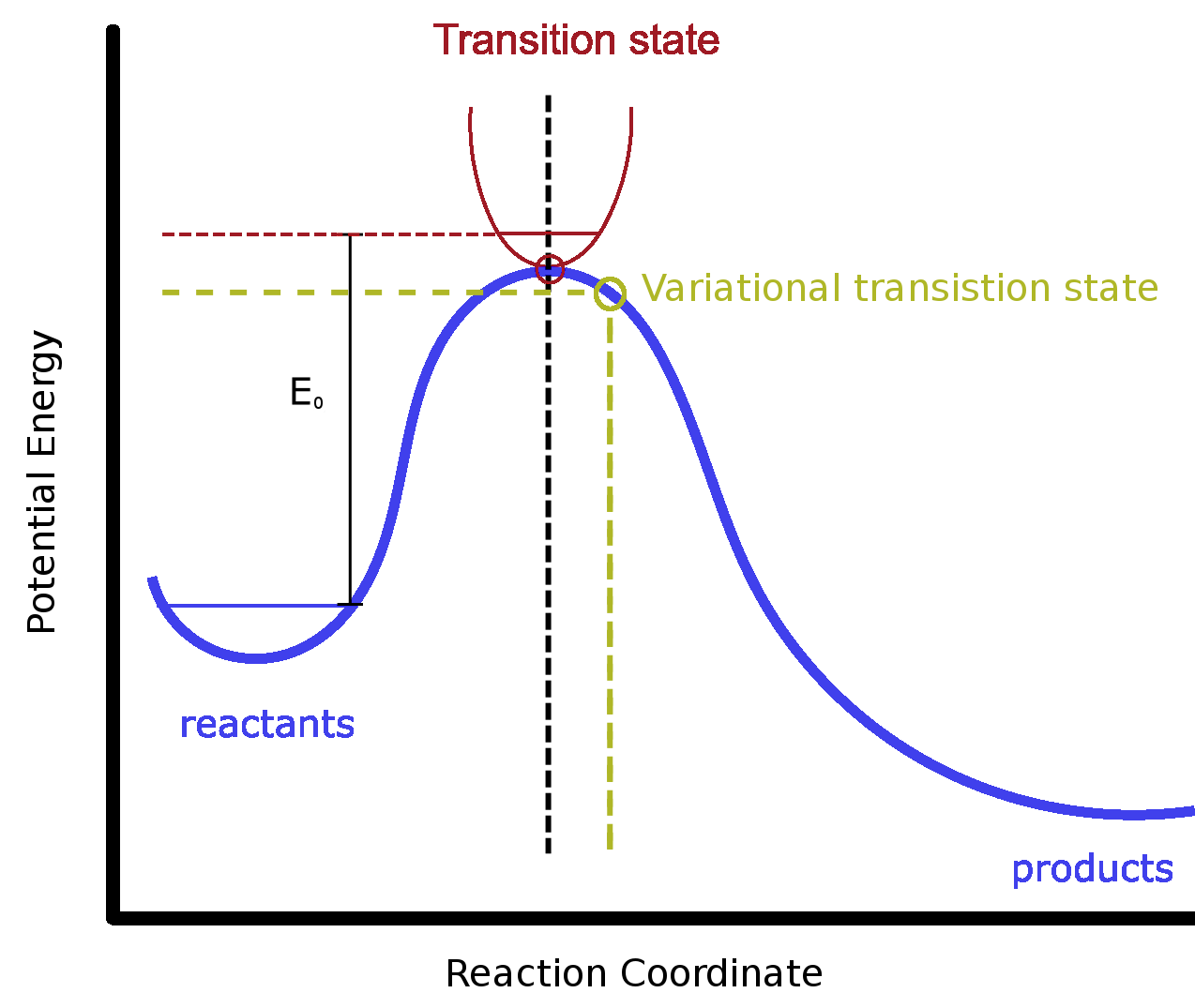 Figure 1
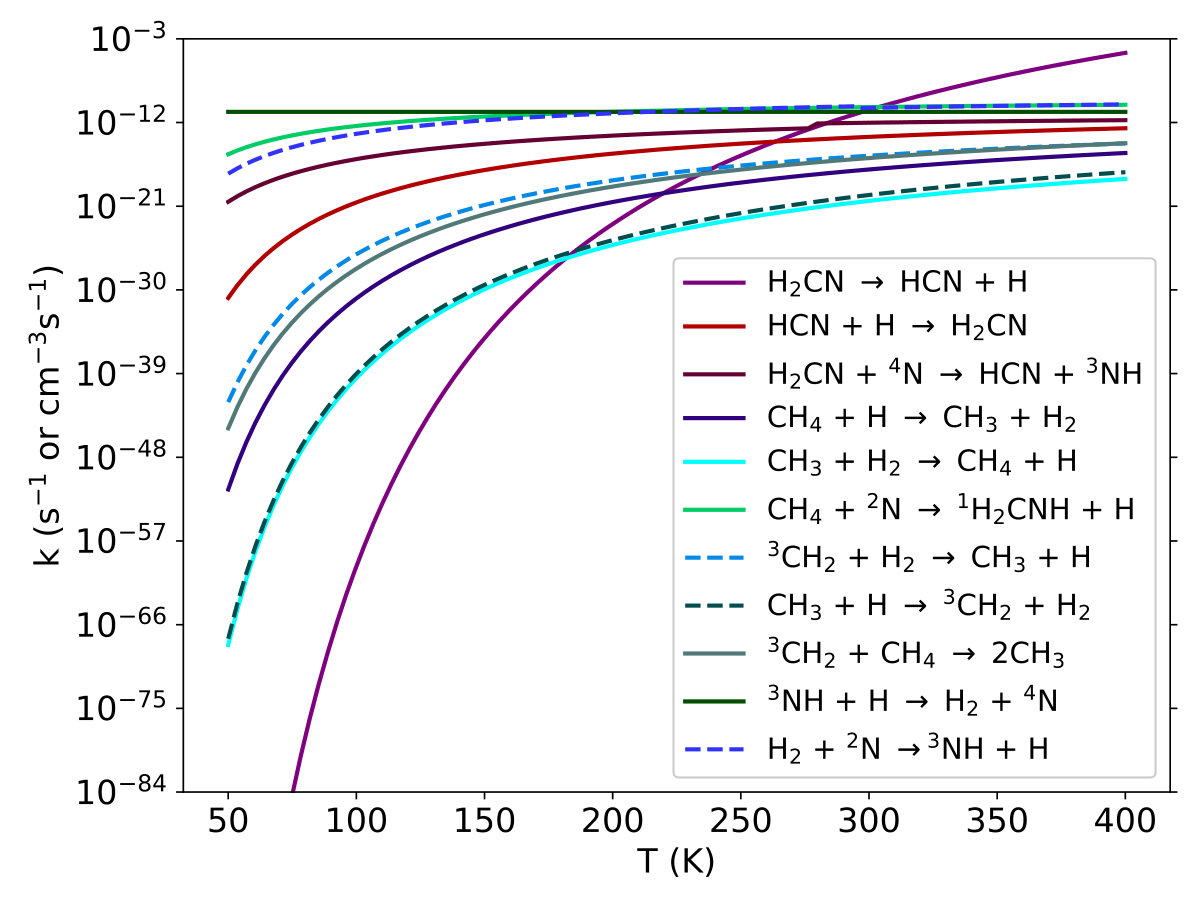 Figure 2
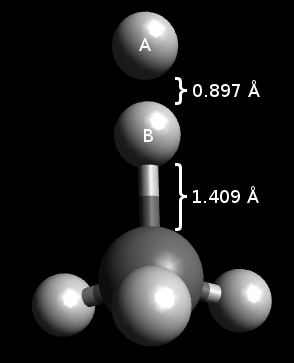 Figure 3
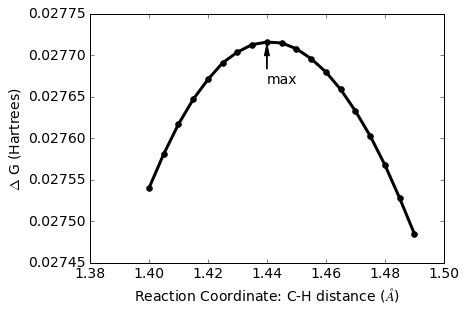 Figure 4
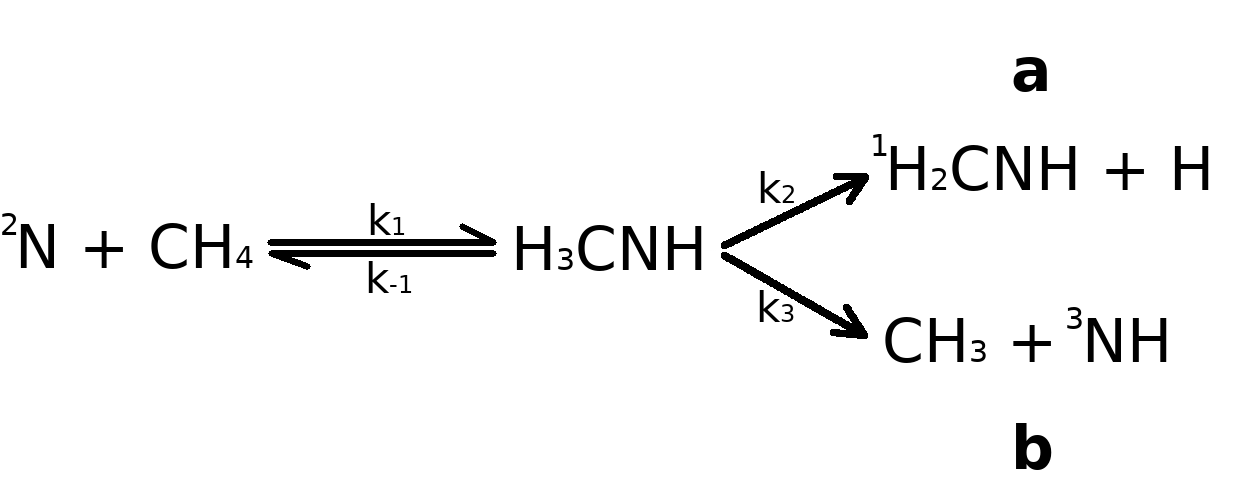 Figure 5
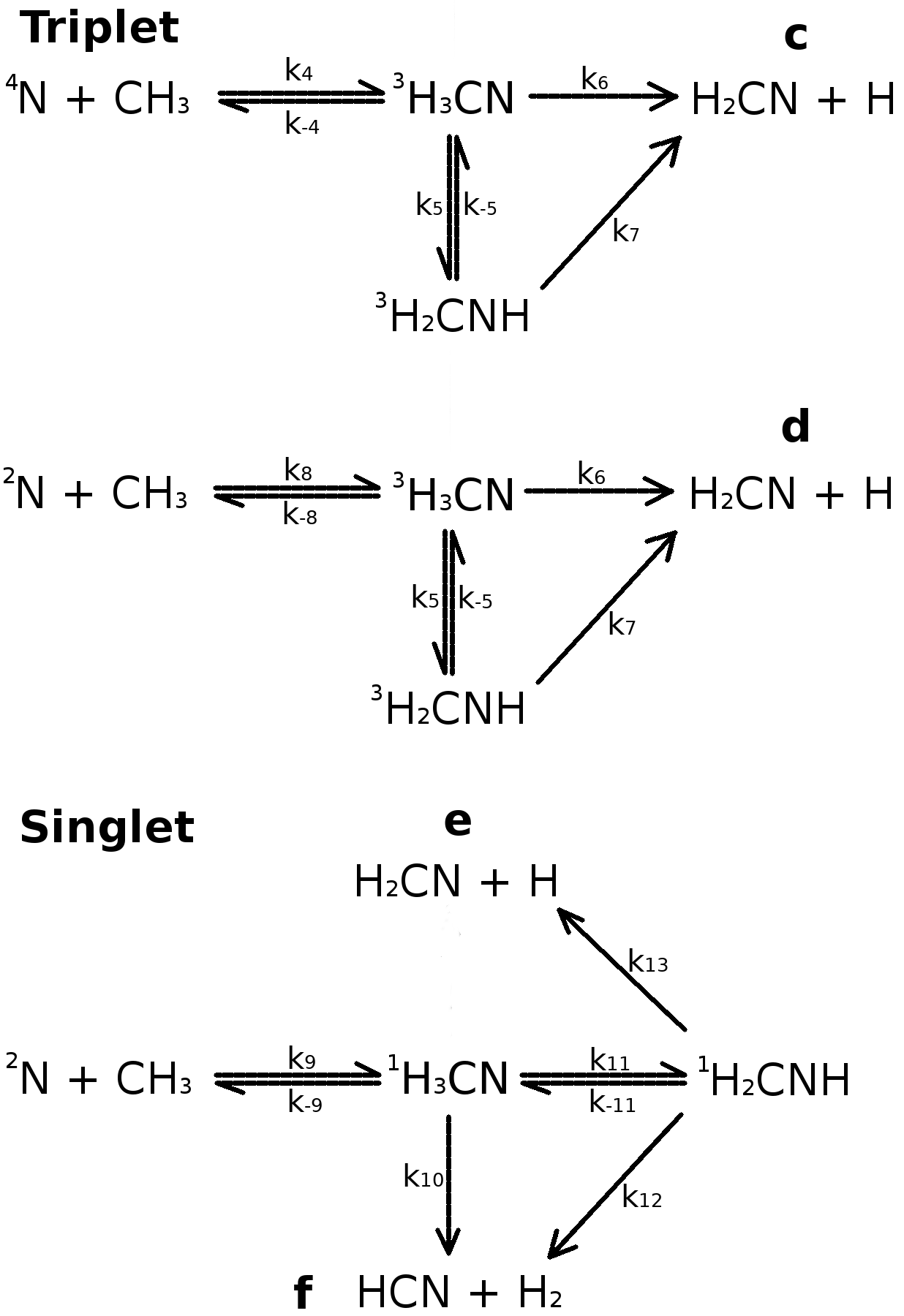 Figure 6
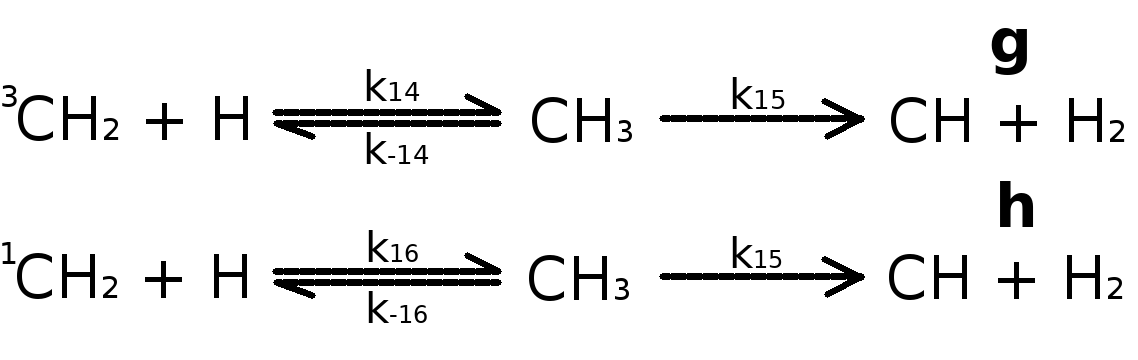 Figure 7
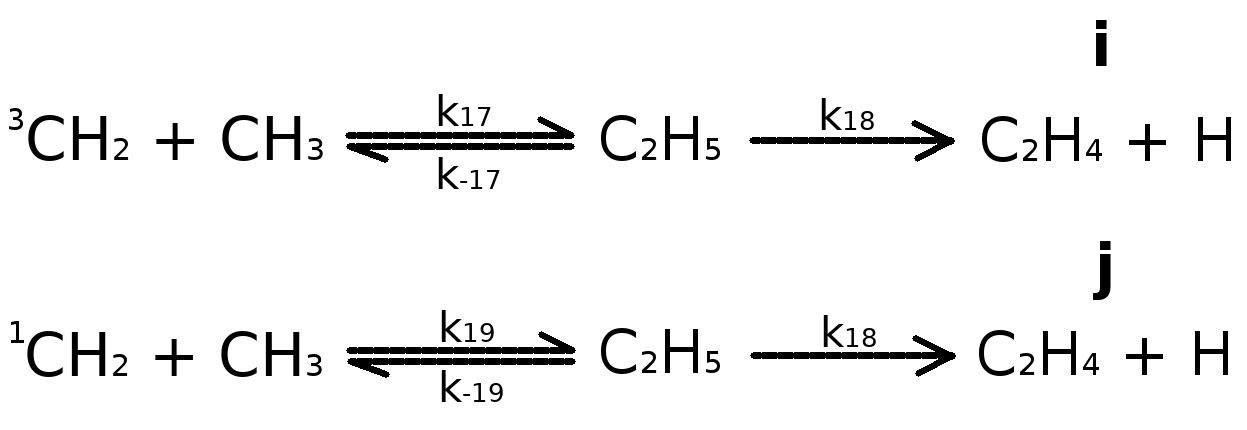 Figure 8
Peer Reviews
No public reviews on file for this paper yet. If you reviewed it on a platform where reviews are public (OpenReview, ICLR, NeurIPS, ICML), you can paste yours below so the community can read it here.
Videos
No videos yet. Explain this paper in a talk, walkthrough, or lecture? Add one.