Improving performance of inverse Compton sources through laser chirping
Bal\v{s}a Terzi\'c, Geoffrey Krafft, Aaron Brown, Trenton Hagerman,, Erik Johnson, Vittoria Petrillo, Illya Drebot, Cesare Maroli, Marcel, Ruijter

TL;DR
This paper introduces a new computational method for inverse Compton sources that accounts for laser chirping to reduce ponderomotive broadening, significantly enhancing spectral density and aligning simulations closely with experimental results.
Contribution
The paper develops a novel simulation approach incorporating laser chirping to mitigate non-linear broadening effects in inverse Compton scattering, enabling higher spectral densities.
Findings
Simulations show improved agreement with experiments.
Laser chirping reduces spectral broadening.
Enhanced peak spectral density achieved.
Abstract
We present a new paradigm for computation of radiation spectra in the non-linear regime of operation of inverse Compton sources characterized by high laser intensities. The resulting simulations show an unprecedented level of agreement with the experiments. Increasing the laser intensity changes the longitudinal velocity of the electrons during their collision, leading to considerable non-linear broadening in the scattered radiation spectra. The effects of such ponderomotive broadening are so deleterious that most inverse Compton sources either remain at low laser intensities or pay a steep price to operate at a small fraction of the physically possible peak spectral output. This ponderomotive broadening can be reduced by a suitable frequency modulation (also referred to as "chirping", which is not necessarily linear) of the incident laser pulse, thereby drastically increasing the peak…
Click any figure to enlarge with its caption.
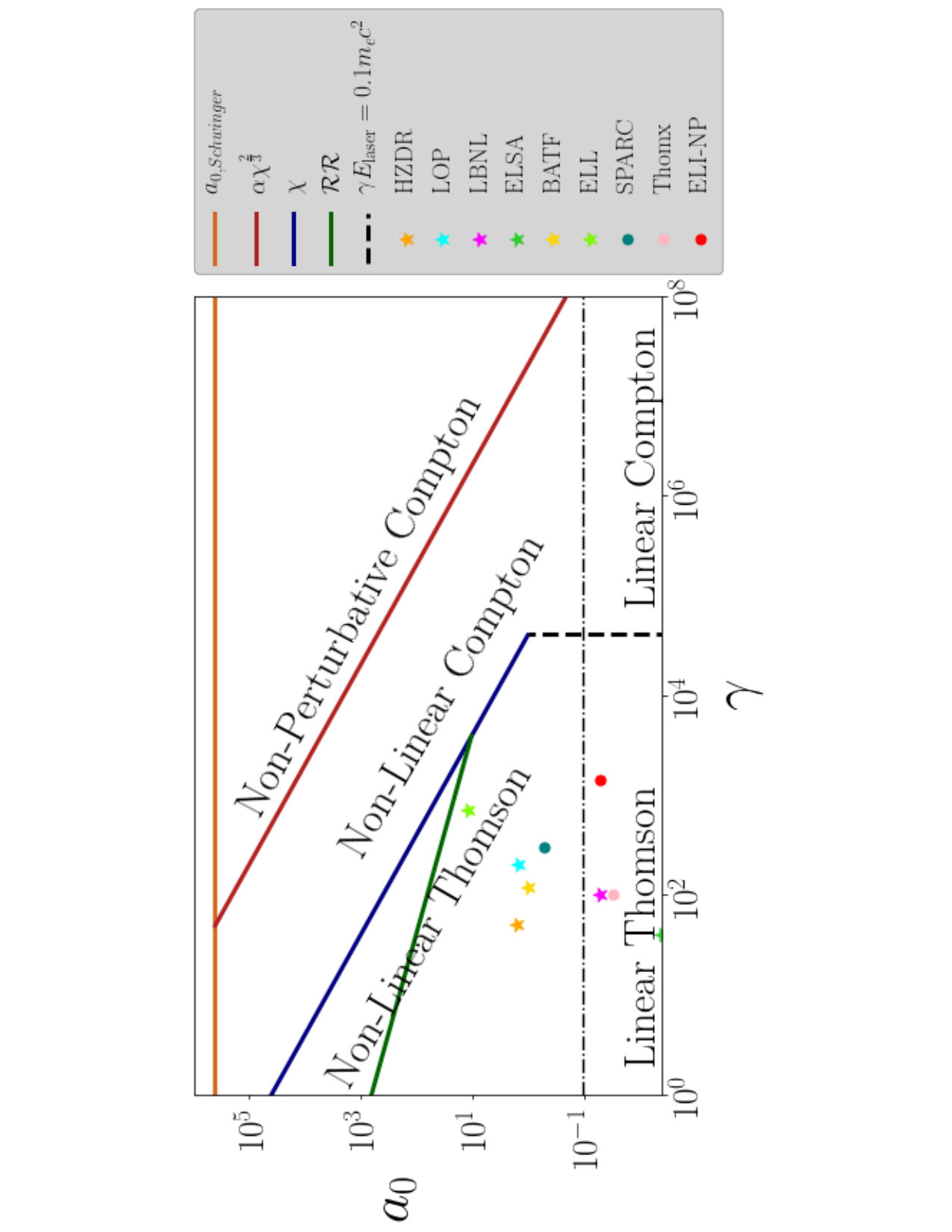 Figure 1
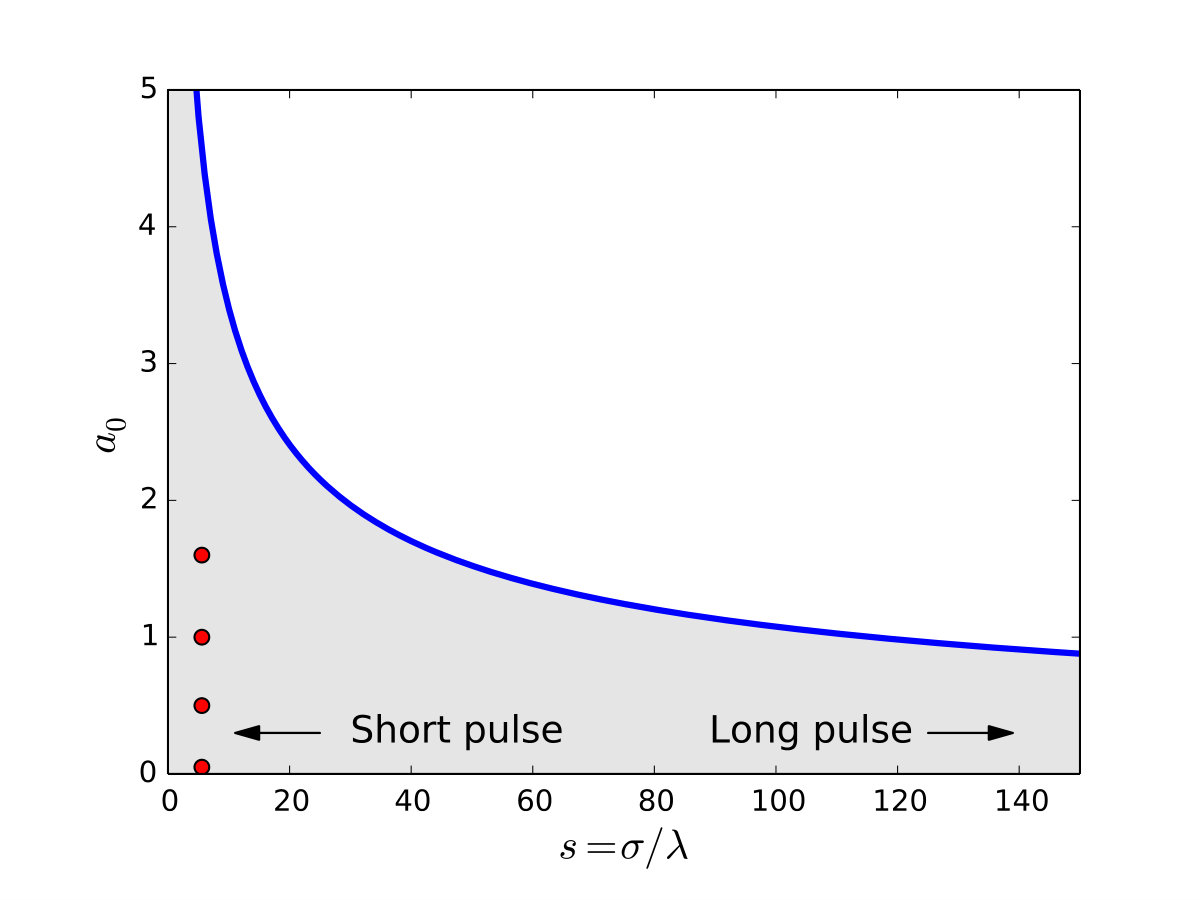 Figure 2
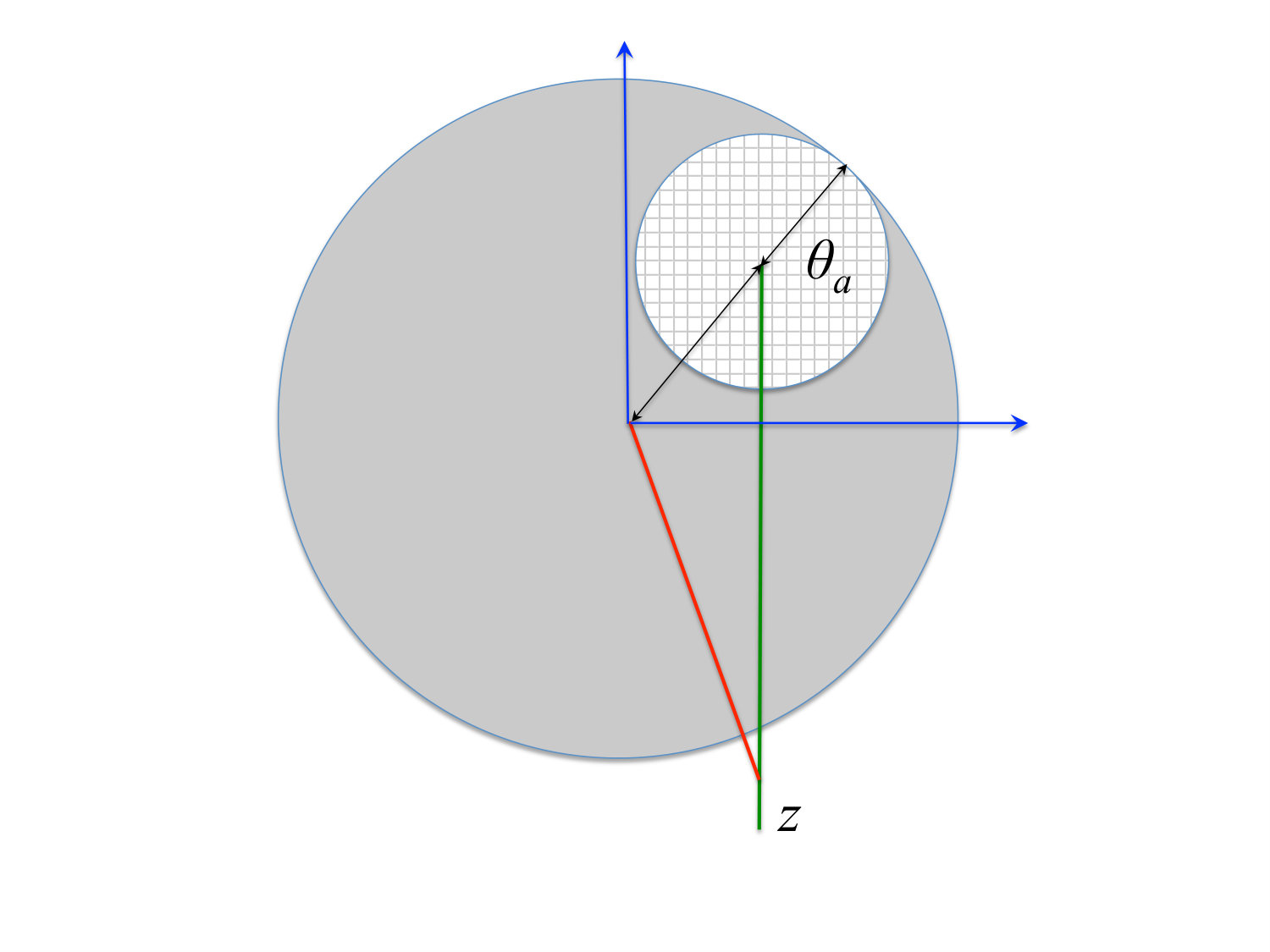 Figure 3
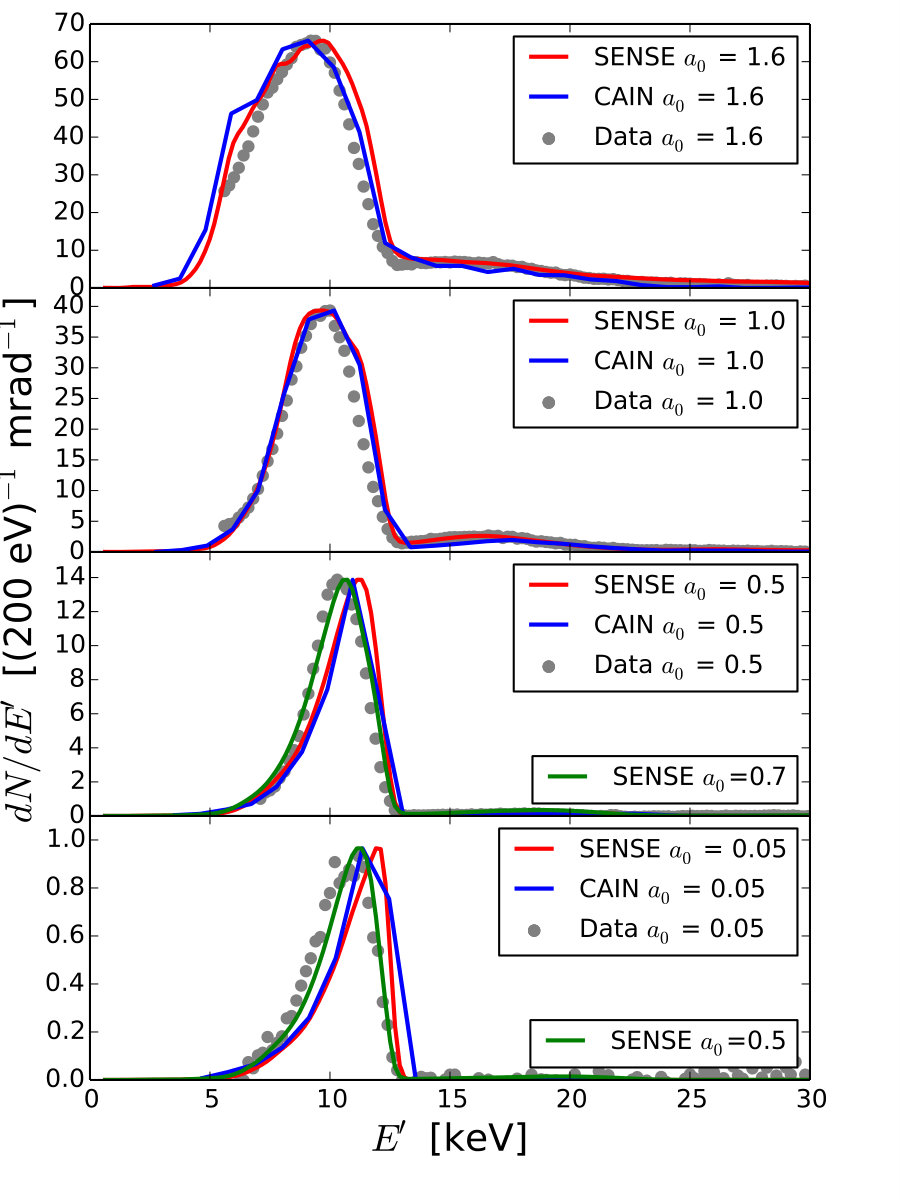 Figure 4
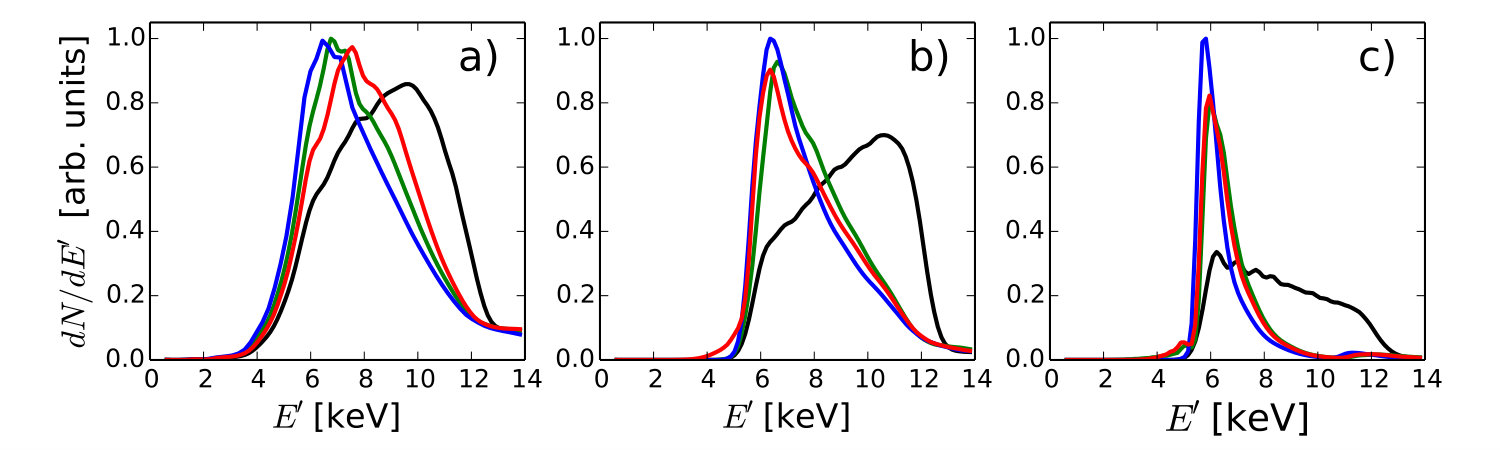 Figure 5
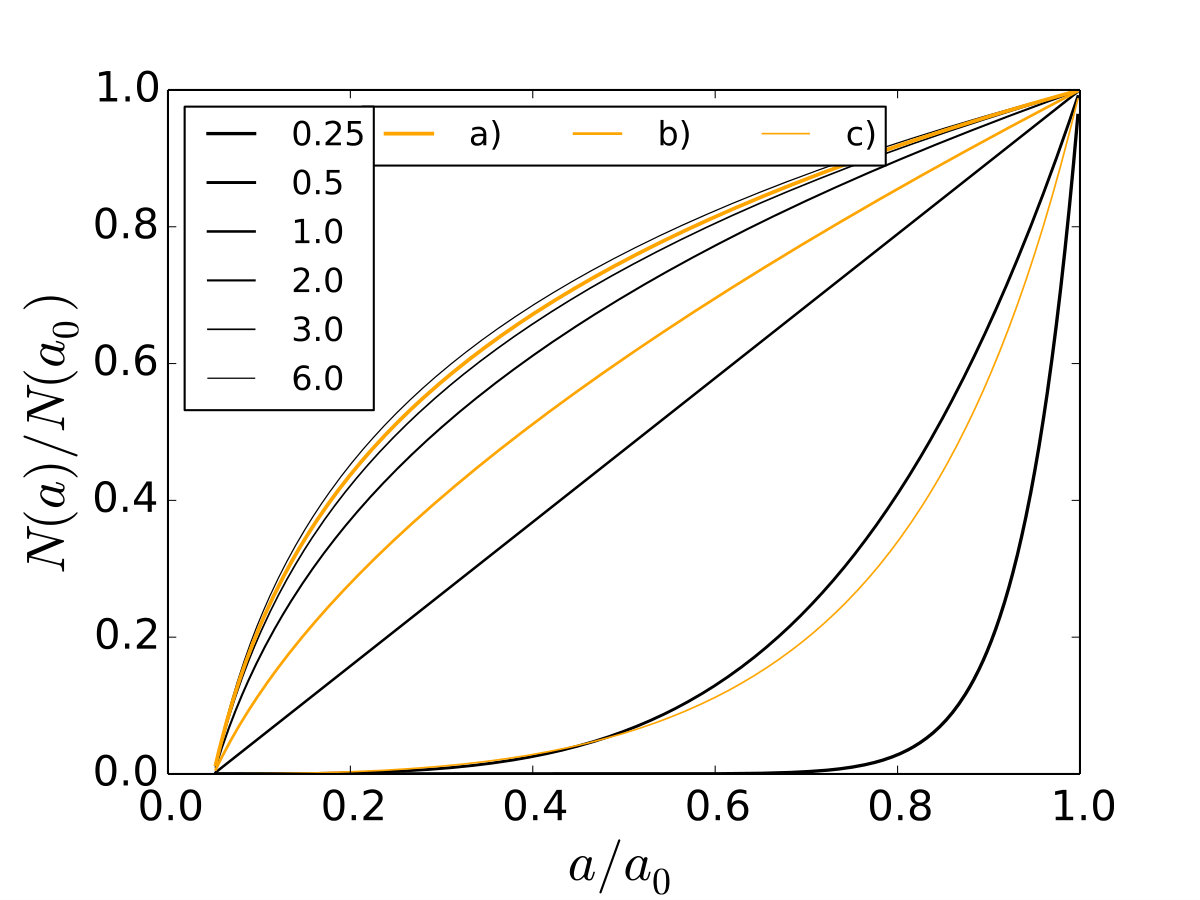 Figure 5
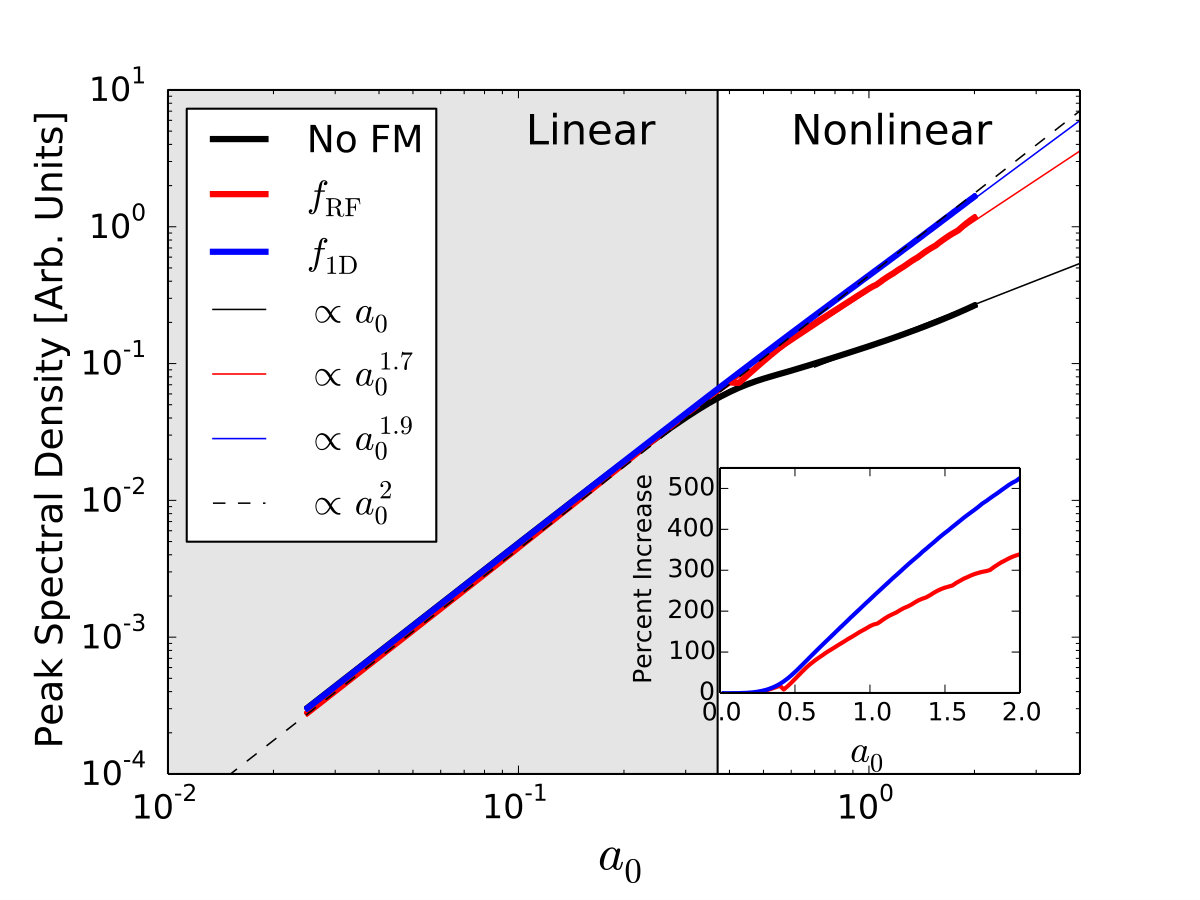 Figure 6
| Laser Pulse | Electron Beam | ||||||
|---|---|---|---|---|---|---|---|
| Quantity | Variable | Value | Unit | Quantity | Variable | Value | Unit |
| Wavelength | nm | Energy | MeV | ||||
| Pulse duration | 14.86 | fs | Energy spread | 0.00175 | |||
| Horizontal spot size | 13.59 | m | Horizontal spot size | m | |||
| Vertical spot size | 13.59 | m | Vertical spot size | m | |||
| Pulse length | 4.5 | m | Horizontal emittance (normalized) | mm mrad | |||
| Normalized length | 5.57 | Vertical emittance (normalized) | mm mrad | ||||
Peer Reviews
No public reviews on file for this paper yet. If you reviewed it on a platform where reviews are public (OpenReview, ICLR, NeurIPS, ICML), you can paste yours below so the community can read it here.
Videos
No videos yet. Explain this paper in a talk, walkthrough, or lecture? Add one.
11institutetext: Department of Physics, Center for Accelerator Science, Old Dominion University, Norfolk, Virginia 23529, USA
Thomas Jefferson National Accelerator Facility, Newport News, Virginia 23606, USA
INFN-Milan, via Celoria 16, 20133 Milano, Italy
Universita degli Studi di Milano, via Celoria 16, 20133 Milano, Italy
Universita di Roma La Sapienza, P. le A. Moro 5, 00185 Roma, Italy
Linear accelerators Electron sources X- and gamma-ray sources, mirrors, gratings, and detectors
Improving performance of inverse Compton sources through laser chirping
B. Terzić 11
G. A. Krafft 1122
A. Brown 11
T. Hagerman 11
E. Johnson 11
V. Petrillo 3344
I. Drebot 33
C. Maroli 33
M. Ruijter 33551122334455
Abstract
We present a new paradigm for computation of radiation spectra in the non-linear regime of operation of inverse Compton sources characterized by high laser intensities. The resulting simulations show an unprecedented level of agreement with the experiments. Increasing the laser intensity changes the longitudinal velocity of the electrons during their collision, leading to considerable non-linear broadening in the scattered radiation spectra. The effects of such ponderomotive broadening are so deleterious that most inverse Compton sources either remain at low laser intensities or pay a steep price to operate at a small fraction of the physically possible peak spectral output. This ponderomotive broadening can be reduced by a suitable frequency modulation (also referred to as “chirping”, which is not necessarily linear) of the incident laser pulse, thereby drastically increasing the peak spectral density. This frequency modulation, included in the new code as an optional functionality, is used in simulations to motivate the experimental implementation of this transformative technique.
pacs:
29.20.Ej
pacs:
29.25.Bx
pacs:
07.85.Fv
1 Introduction
When a relativistic electron beam interacts with a high-field laser beam, intense and highly collimated electromagnetic radiation will be generated through Compton scattering [1, 2]. Through relativistic upshifting and the relativistic Doppler effect, highly energetic polarized photons are radiated along the electron beam motion when the electrons interact with the laser light. For example, x-ray radiation can be obtained when optical lasers are scattered from electrons of tens-of-MeV beam energy. Because of the desirable properties of the radiation produced, many groups around the world have been designing, building, and utilizing inverse Compton sources (ICS) for a wide variety of purposes. Sources of electromagnetic radiation relying upon Compton scattering are being applied in fundamental physics research and compact accelerator-based sources specifically designed for potential user facilities have been built [3]. One remarkable feature of the radiation emerging from such sources, compared to bremsstrahlung sources, is its narrow-band nature. Applications to x-ray structure determination [4], dark-field imaging [5, 6], phase contrast imaging [5], and computed tomography [7] have been demonstrated experimentally and take full advantage of the narrow bandwidth of ICS.
Depending on the properties of the two fundamental elements of ICS—the energy of an electron beam and the intensity of a laser—there are several regimes of operations, shown in Fig. 1. With the increasing electron beam energies, there are: (i) Thomson regime at low-to-medium electron beam energies (), where the electron recoil can be neglected; and (ii) Compton regime at high electron beam energies (), requiring proper accounting for electron recoil. As the laser intensity increases, there are: (i) linear regime at low laser intensities; and (ii) non-linear regime at high laser intensities. The onset of non-linearity is quantified by the increase in the amplitude of the normalized vector potential () representing the laser , where is the laser envelope, the coordinate along the laser pulse and the mean wavelength of the laser.
In this letter, we develop a paradigm for computation of radiation spectra emitted from ICS operating in the non-linear Thomson regime, extending to high laser intensities and low-to-medium electron beam energies. The resulting new computer code, SENSE (Simulation of Emitted Non-linear Scattering Events), uses a three-dimensional (3D) pulse model for the laser beam, a significant generalization of the one-dimensional (1D) plane-wave model. The electron beam is either generated by random sampling its bulk properties or supplied as input.
2 SENSE code
SENSE computes spectra of the scattered radiation in ICS by integrating a spectrum due to a collision of a single electron with a 3D laser pulse over an entire distribution of electrons. Monte Carlo integration over a solid angle of the physical aperture with the angular size of is used to compute a spectrum for each of simulation particle sampling a distribution of electrons. The total spectrum is the average of these individual spectra. It is written in Python, and uses Cython and numpy for computational efficiency [20, 21]. It is parallelized to run on multiple CPUs.
SENSE is applicable in the non-linear Thomson regime, where electron recoil can be neglected. The range of the laser field parameter for which this formalism is applicable is derived by requiring that the total number of photons emitted is less than one [22], and is given by , with the laser pulse length and the fine structure constant. For the Dresden experiment [23] simulated in the next section (, so SENSE is applicable for the field strength parameters . All simulations reported here are well within this limit, as are most other existing and future ICS. The parameter space for which SENSE is applicable is shown in Fig. 2.
There is a fundamental difference between the Monte Carlo implementation in CAIN [24] and SENSE. Both codes start by randomly sampling the electron distribution. However, CAIN models the incoming laser beam scattering off each such electron from the sample with a number of individual scattered particles. While this directly models what happens in an experiment, albeit on orders-of-magnitude smaller scales, it ensures that the rare events in nature will be equally rare in a simulation, leading to poor statistics in those regions. In contrast, SENSE computes scattering probabilities—the likelihood of scattered photons to be found in each portion of the spectrum. Therefore, the accuracy in each portion of the spectrum computed by SENSE is the same, determined only by the accuracy of the Monte Carlo integration.
There are two important features of SENSE that CAIN either does not have or implements only in a cumbersome way: (1) an arbitrary shape of the laser pulse and (2) an arbitrary laser frequency modulation (FM) scheme.
SENSE uses the code designed in [25] and amended for FM in [22] for backscattered, on-axis photons (, ). It is first generalized to arbitrary angles and , in order to evaluate the total scattered radiation spectrum:
[TABLE]
where
[TABLE]
{widetext}
[TABLE]
SENSE models electron beam’s emittance and the energy spread with a geometric argument. The 3D pulsed nature of a laser is modeled by varying effective field parameter for each electron based on its path through the laser.
An electron along the -axis of collision passes through the laser pulse head on. An electron with transverse motion , , will pass through the laser pulse at an angle, thereby extending its path by :
[TABLE]
Because each electron passing through a laser pulse see the same number of wavelengths, extending the path traveled means that the effective wavelength of the laser is increased , or, equivalently, the frequency is decreased (“red-shifted”) . Barred quantities are experimental parameters.
The resulting effects on scattered radiation frequency are obtained from . The effects of the energy spread can be found by replacing to obtain where . This means that in order to properly account for angles (emittance) and the energy spread, the computed spectra should be red-shifted by a factor . Therefore, SENSE computes
[TABLE]
is computed by integrating over the physical aperture as shown in Fig. 3.
In the 3D laser pulse model, the strength of the effective laser field that an electron experiences depends on its path. An on-axis electron “sees” the maximum strength.
We model electrons with angles as taking straight paths through the laser pulse. For an electron at the beginning of interaction with the laser beam (), the spatial coordinates are . The time coordinate is . After normalizing transverse momenta , an electron’s trajectory is:
[TABLE]
In these new coordinates, a gaussian laser pulse with rms size , , as experienced by the electron is
[TABLE]
where
[TABLE]
The maximum magnitude of the vector potential occurs at the center of the pulse, at . This means that the new laser pulse shape given in Eq. (7) is also a gaussian, only with a changed size and the amplitude of the normalized vector potential . The change in the path length of an electron’s passage through the laser pulse is
[TABLE]
shifting the wavelength . For electrons with angles , the ratio can be smaller (larger) than unity, in which case the frequencies are red-(blue-)shifted.
3 Simulating experimental results
We simulate the Dresden experiment [23] using both CAIN [24] and SENSE. We assume that both the laser pulse and the electron beam are gaussian-distributed with rms sizes as reported in Table 1[23]. At the collision, the centers of the two beams overlap. The simulations with both CAIN and SENSE seem to be insensitive to the size and shape of the aperture. The aperture used in SENSE simulation is circular, while the physical aperture used in the Dresden experiment was rectangular [23]. In all of our simulations—those reported here and many others—the agreement between the results produced by CAIN and SENSE is remarkable, especially considering that they are based on two vastly different approaches.
The simulations in Fig. 4 model the results of Fig. 3 from [23]. For the largest values of the laser field, , the agreement between the experiments and simulations using CAIN is very good, and SENSE even better. However, for lower values, , there is a shift to the right in the simulations from both codes. Increasing the strength of the laser field from to and from to 0.5 in SENSE simulation produces excellent fits to the data, comparable to those for the larger values of . The discrepancy between the experiments and the simulations for the lower values of the strength of the laser field is likely due to a different geometry of collision. It is unclear which of the geometries reported in Fig. 2 of [23] was used in experiments.
4 Improved performance via laser chirping
In [22], we presented a novel and quite general analysis of the interaction of a high-field FM (chirped) 1D plane-wave laser and a relativistic electron, in which exquisite control of the spectral brilliance of the up-shifted Compton scattered photon is shown to be possible. We showed that the ponderomotive broadening can be eliminated by suitable FM of the incident laser. We suggested a practical realization of this compensation idea in terms of a chirped-beam-driven free electron laser oscillator and showed that significant compensation can occur, even with the imperfect matching.
Extending the FM technique from the 1D plane-wave to the 3D pulse model for the laser has been carried out recently [26]. Because the electrons colliding with a 3D laser pulse encounter a full range of laser field strengths , from 0 to —depending which portion of the pulse they pass through—the -dependent FM of the laser pulse cannot recover the narrow bandwidth of every electron in the distribution. Here we seek to answer by how much can the peak spectral density be increased by a FM of the laser pulse and when is FM most effective.
SENSE is capable of simulating FM of any form. We carried out simulations for a gaussian laser pulse with three FM prescriptions:
Optimal chirping for the 3D laser pulse model [26]:
[TABLE]
where , , and is an arbitrary constant and
[TABLE] 2. 2.
Optimal chirping for the 1D plane-wave model [22]:
[TABLE]
with the laser field strength, which varies from 0 to the maximum field strength . 3. 3.
FM produced by a free electron laser oscillator. When a driving beam bunch is long enough that the radio frequency (RF)-curvature-related energy spread is substantial, the frequency of the laser pulse produced will also be modulated [22]:
[TABLE]
where is the RF wavelength [22].
is a normalization constant such that is the laser frequency at the center of the pulse. The normalization constant shifts the scattered energy spectrum by a factor , without changing its shape. In the original derivation of the optimal FM for a 1D plane-wave [22], was adopted, such that , while consequent studies used such that [27, 28]. In the original derivation of the optimal FM for a 3D laser pulse [26], such that was applied. In the simulations reported here, was chosen to make for all three FMs: numerically computed for , for and for .
All three FMs are one-parameter functions. The peak spectral density is maximized by carrying out a systematic search over their respective parameters using a genetic algorithm [29, 22].
The distribution of laser field strength that a gaussian-distributed electron beam “sees” as it passes through the center of a gaussian laser pulse is quantified by a cumulative distribution
[TABLE]
where , . , are the ratios of transverse sizes of the two beams. Typical distributions are shown in Fig. 5 d).
The smaller the ratios , the larger the transverse size of the laser pulse in comparison to that of the electron beam, and the more peaked the distribution around . Vanishing ratios lead to the 1D plane-wave model in which all electrons experience the same strength of the laser field . The closer the beam sizes are to this 1D plane-wave limit, the more effective the FM. This is shown in Fig. 5.
Reducing the transverse size of the electron beam relative to the laser pulse—approaching the 1D plane-wave approximation in which most electrons “see” a laser field whose strength is narrowly distributed near the maximum value of —makes FM more efficient in increasing the peak spectral density of the scattered radiation. The increase due to FM depends on the relative sizes of the two beams, and can easily exceed 100% for electron beams that are half the transverse size of the laser pulse or smaller. It is also more pronounced at larger value of the laser field strength, as can be seen in Fig. 6. The scattered energy at which the peak spectral density occurs can be controlled by the normalization constant of the FM which only shifts the spectrum and does not change its shape. For the electron beams that are transversally small when compared to the laser pulse, when FM is most effective, the peak of the spectrum will be located just beyond .
The increase of the peak spectral density for the laser pulse without FM exhibits quadratic dependence on the laser field strength in the linear regime, but only linear in the non-linear regime (Fig. 6). All three FMs allow the dependence of the peak spectral density on the laser field to remain nearly quadratic throughout the non-linear regime, thereby substantially improving the return on investment in increasing laser intensity.
After comparing the efficiency of the three FM functional forms—optimal 3D laser pulse [26], optimal 1D plane-wave [22] and the RF-induced [22]—we find that they all are within about 20% of each other, with performing best. FM, the only form of the three attainable in the lab, can lead to a substantial increase in the peak spectral density—exceeding a factor of two for small electron beams at large strengths of the laser field parameter. This FM should be used in any future experiments involving laser chirping.
5 Conclusion
Our new code SENSE is in excellent agreement with the established code CAIN, and over which it offers several crucial advantages: (i) superior accuracy; (ii) better efficiency in cases marred by poor statistics; (iii) arbitrary shape of the laser pulse; and (iv) ability to model an arbitrary FM.
The exceptional level of accuracy of SENSE allows us to combine it with a multidimensional non-linear optimization tool, such as a genetic algorithm, and use it as both a diagnostic and an optimization tool. The set of parameter values (emittance and the energy spread of the electron beam; size of the laser pulse and possibly others) which minimizes the rms difference between the experiment and simulations pinpoints their actual experimental values. Similarly, this optimization tool can be used to find a set of parameter values which maximize the peak spectral density or minimize the radiation bandwidth, thereby improving the performance of the ICS.
The remarkable agreement between experiments and our new code SENSE strongly suggests that the underlying model correctly captures the relevant physics. This translates into confidence that SENSE can accurately describe physical behavior of collisions between electron beams and chirped laser pulses, a scenario which is yet to be tested experimentally. Simulations with SENSE strongly suggest that judiciously chirping the laser pulse substantially increases the spectral density. The increase depends on the strength of the laser field, the relative transverse sizes of the two beams and the form of the FM function. While for the current parameters in the Dresden experiment the returns due to chirping would be modest ( for ), reducing the transverse size of the electron beam by a factor of ten would yield a three-fold increase in the peak spectral density.
Acknowledgements.
We are grateful to Mohammed Zubair for his insight and consultation into computational methods. This paper is authored by Jefferson Science Associates, LLC under U.S. DOE Contract No. DE-AC05-06OR23177. B.T. acknowledges the support from the U.S. National Science Foundation award No. 1535641.
The reference list from the paper itself. Each links out to its DOI / PubMed record.
- 1[1] J. D. Jackson. Classical Electrodynamics . Wiley, 2007.
- 2[2] G. A. Krafft and G. Priebe. Reviews of Accelerator Science and Technology , 03(01):147–163, 2010.
- 3[3] Z. Huang and R. D. Ruth. Physical Review Letters , 80:976–979, Feb 1998.
- 4[4] J. Abendroth, M. S. Mc Cormick, T. E. Edwards, B. Staker, R. Loewen, M. Gifford, J. Rifkin, C. Mayer, W. Guo, Y. Zhang, P. Myler, A. Kelley, E. Analau, S. N. Hewitt, A. J. Napuli, P. Kuhn, R. D. Ruth, and L. J. Stewart. Physical Review Accelerators and Beams , 11:91–100, 2010.
- 5[5] M. Bech, O. Bunk, C. David, R. Ruth, J. Rifkin, R. Loewen, R. Feidenhans’l, and F. Pfeiffer. Journal of Synchrotron Radiation , 16(1):43–47, Jan 2009.
- 6[6] S. Schleede, F. G. Meinel, M. Bech, J. Herzen, K. Achterhold, G. Potdevin, A. Malecki, S. Adam-Neumair, S. F. Thieme, F. Bamberg, Ko. Nikolaou, A. Bohla, A. Ö. Yildirim, R. Loewen, M. Gifford, R. Ruth, O. Eickelberg, M. Reiser, and F. Pfeiffer. Proceedings of the National Academy of Sciences , 109(44):17880–17885, 2012.
- 7[7] K. Achterhold, M. Bech, S. Schleede, G. Potdevin, R. Ruth, R. Loewen, and Pfeiffer F. Scientific Reports , 3:1313, 2013.
- 8[8] A. I. Nikishov and V. I. Ritus. Journal of Experimental and Theoretical Physics , 19:529, 1964.