Spin asymmetry in single pion production induced by weak interactions of neutrinos with polarized nucleons
Krzysztof M. Graczyk, Beata E. Kowal

TL;DR
This paper investigates how spin asymmetries in single pion production by neutrinos on polarized nucleons can reveal details about the underlying interaction dynamics, especially the interference between resonance and nonresonance processes.
Contribution
It introduces predictions for spin asymmetries in neutrino-induced single pion production considering different target polarizations, highlighting their sensitivity to the nonresonance background.
Findings
Spin asymmetry provides complementary information to spin-averaged cross sections.
Normal polarization asymmetry is sensitive to interference between resonance and nonresonance contributions.
The approach enhances understanding of SPP dynamics and background modeling.
Abstract
The single pion production (SPP) in the charged-current neutrino (antineutrino) scattering off the polarized nucleon is discussed. The spin asymmetry is predicted within two approaches. The spin polarizations of the target nucleon that are longitudinal and perpendicular to the neutrino momentum are considered. It is shown, in several examples, that information about the SPP dynamics coming from the spin asymmetry is complementary to information obtained from measurements of spin averaged cross section. Indeed, the spin asymmetry is sensitive to the nonresonance background description of the SPP model. For the normal polarization of the target, the spin asymmetry is given by the interference between the resonance and the nonresonance contributions.
Click any figure to enlarge with its caption.
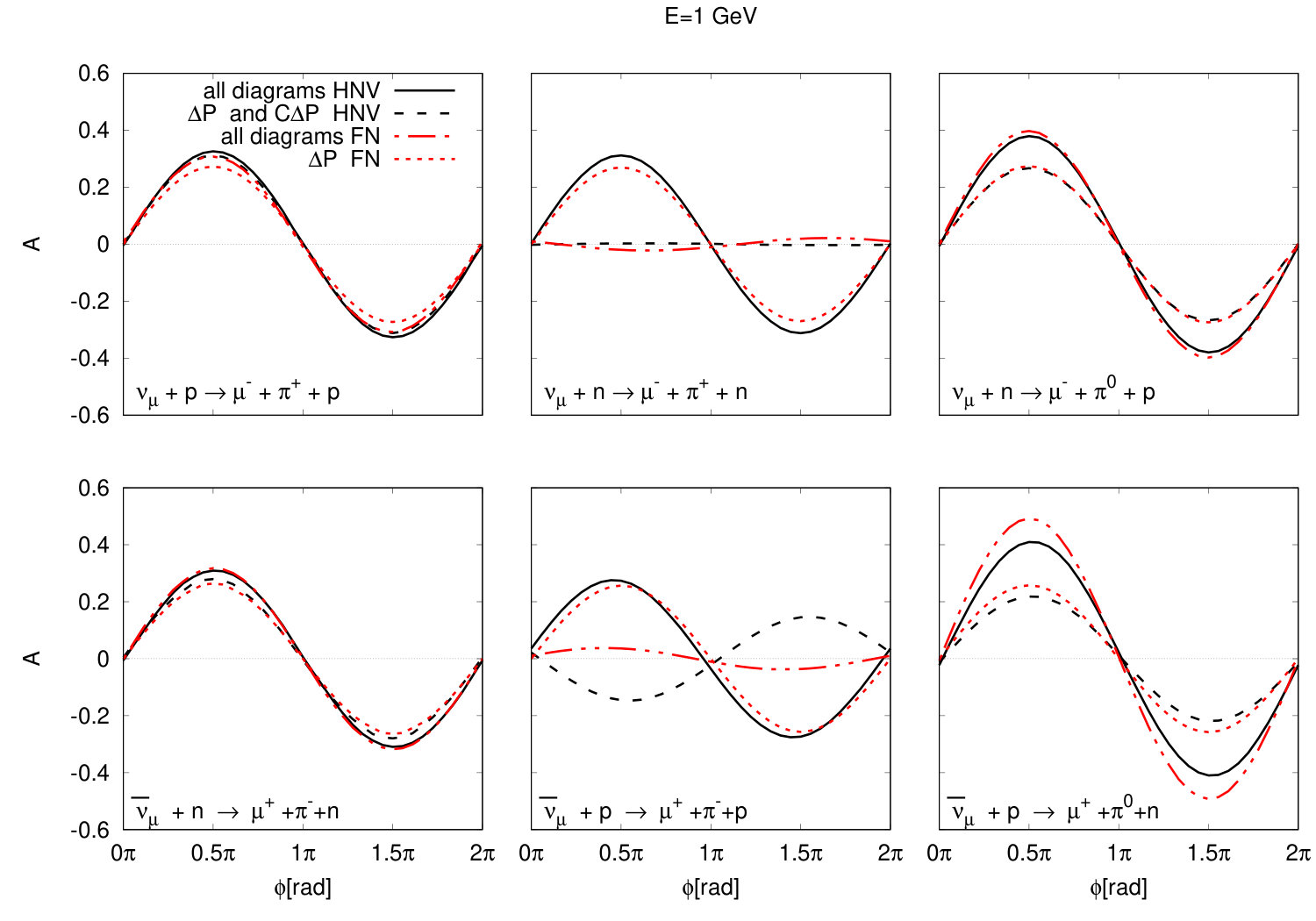 Figure 1
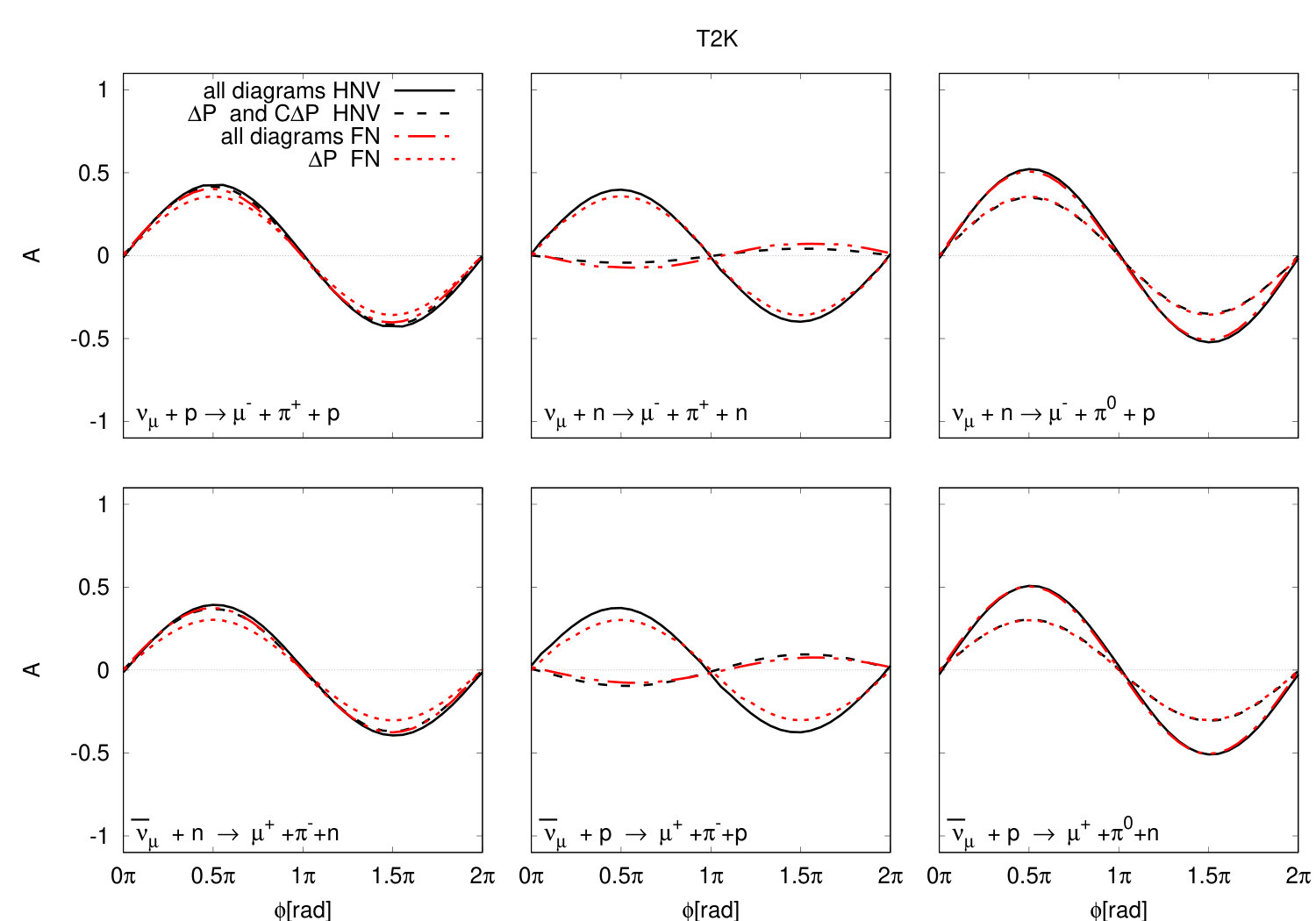 Figure 2
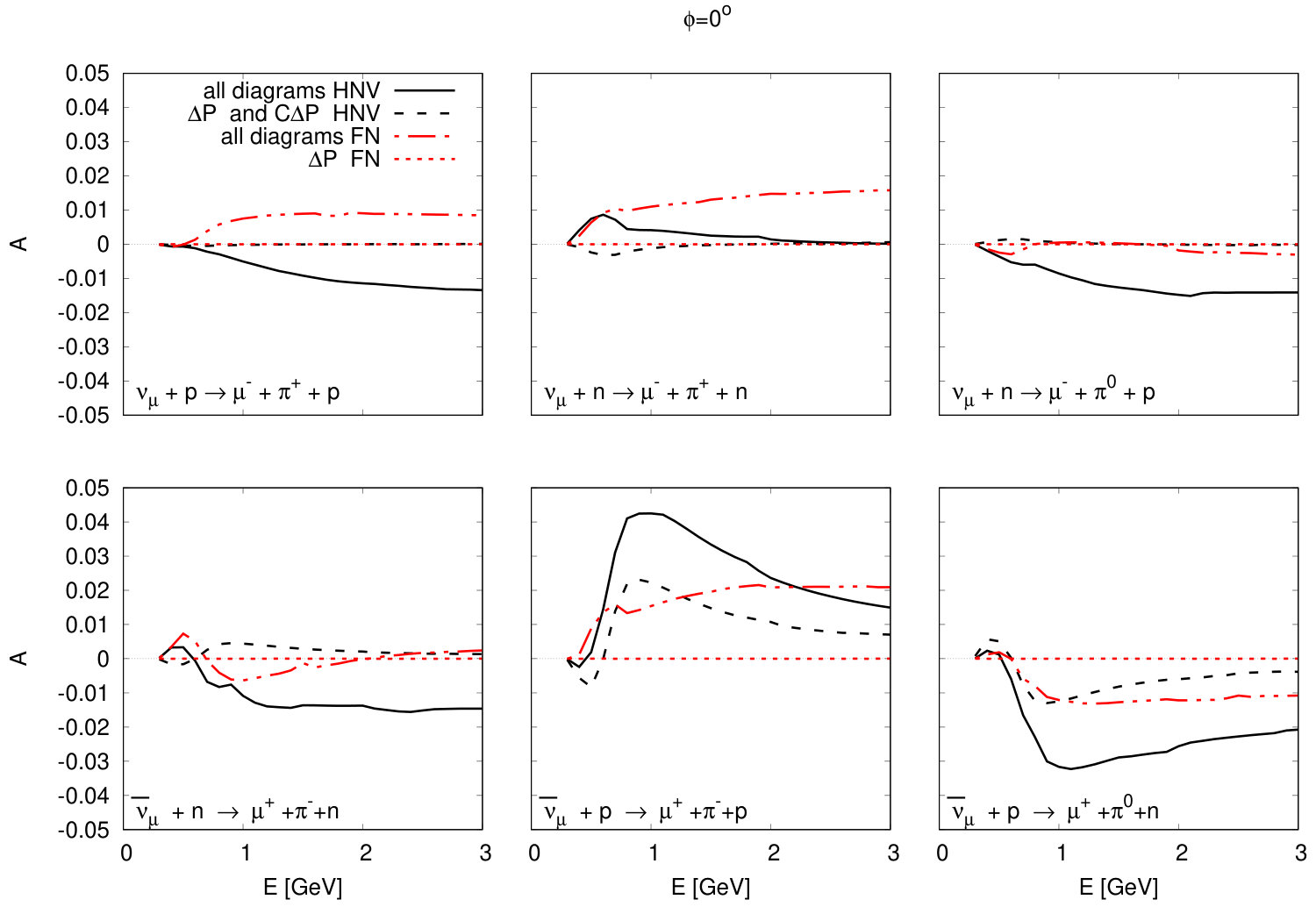 Figure 3
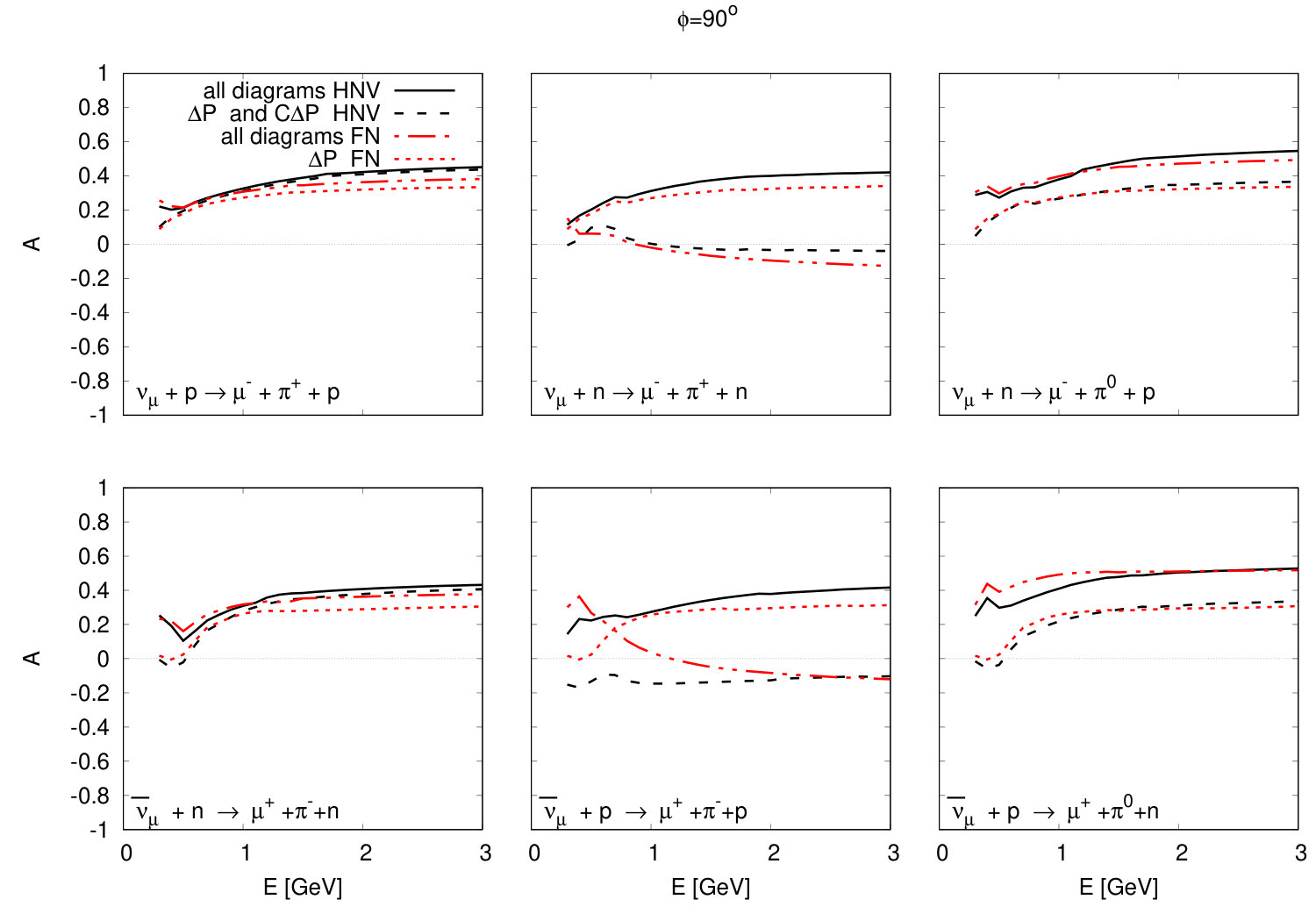 Figure 4
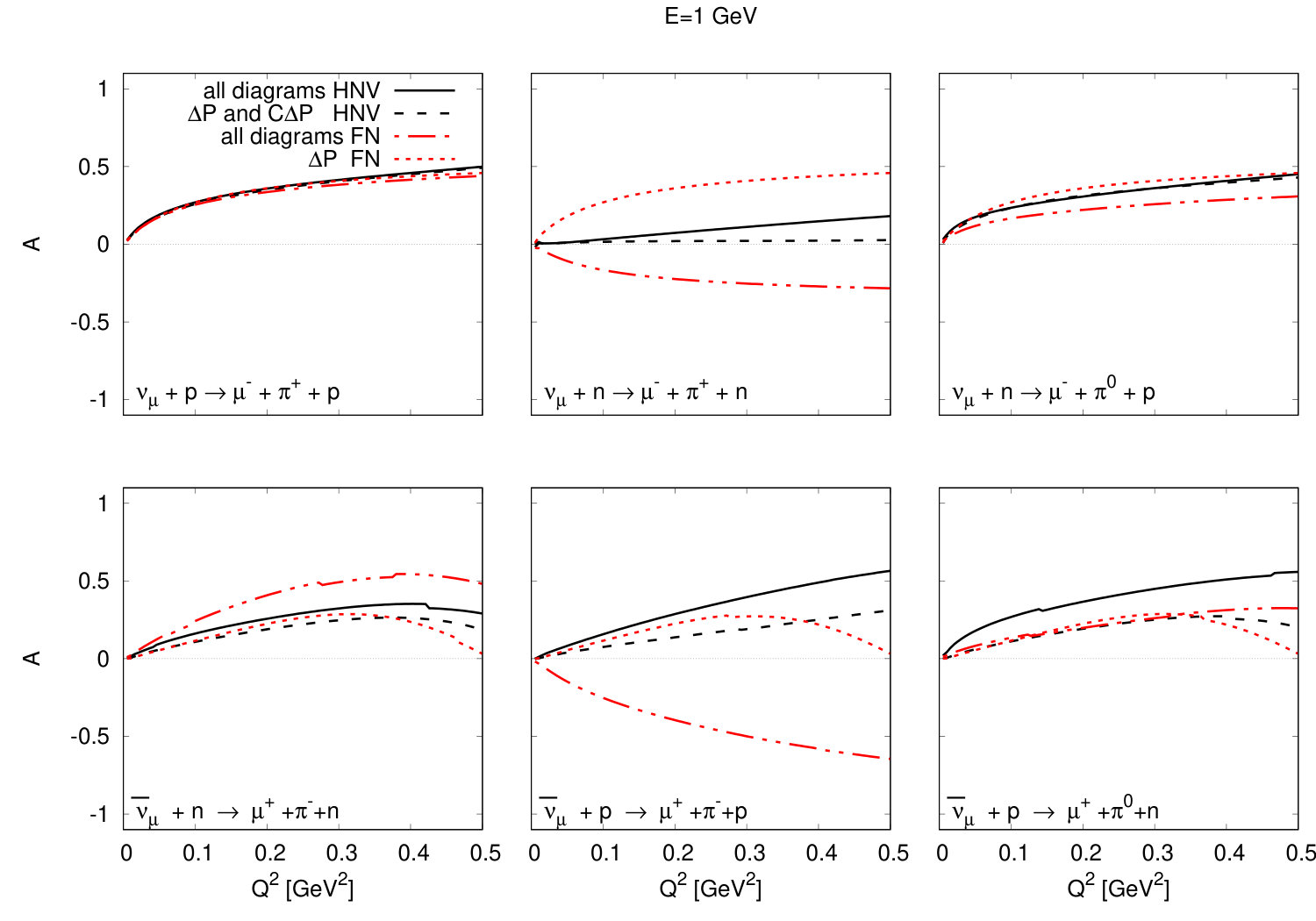 Figure 5
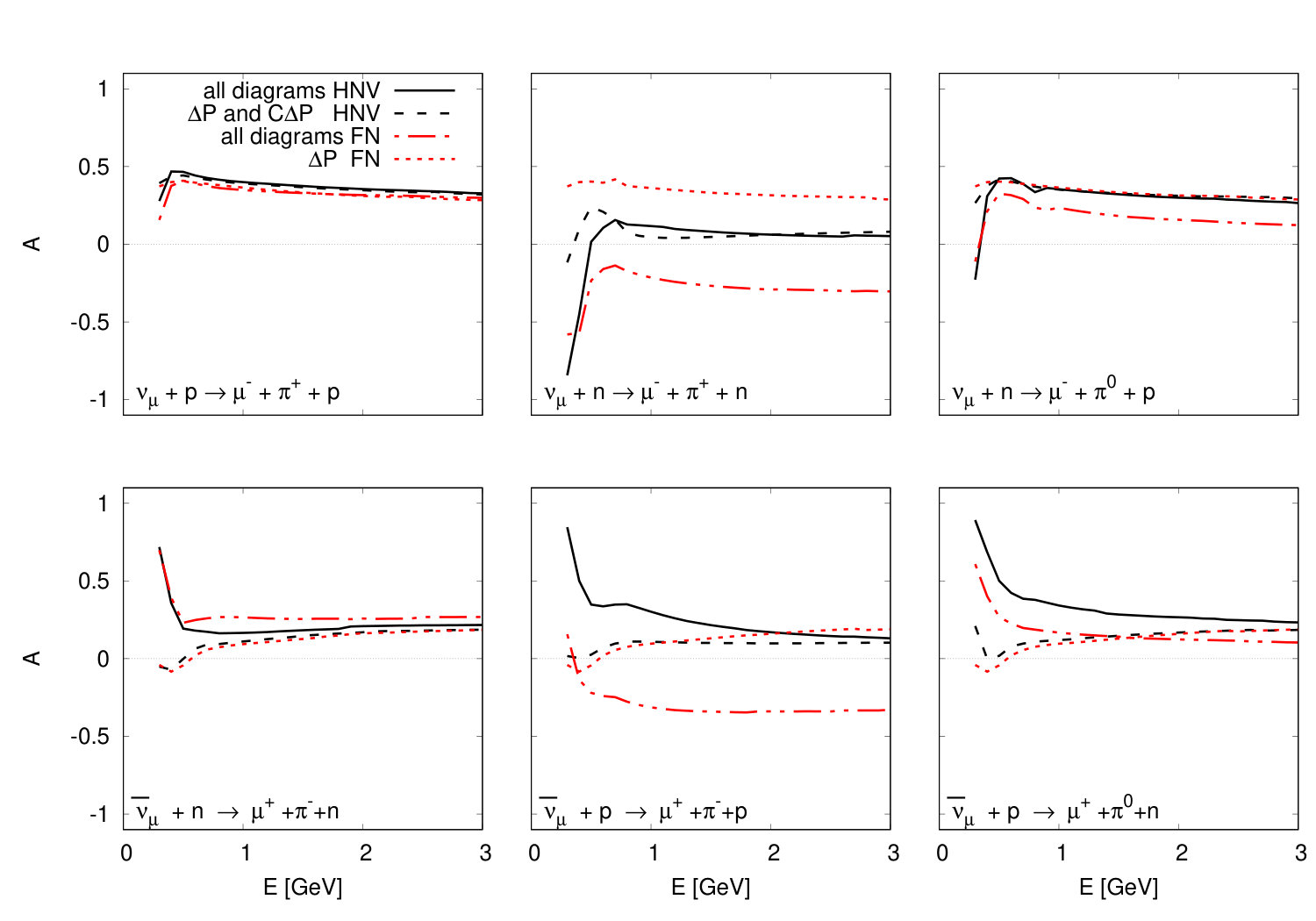 Figure 6
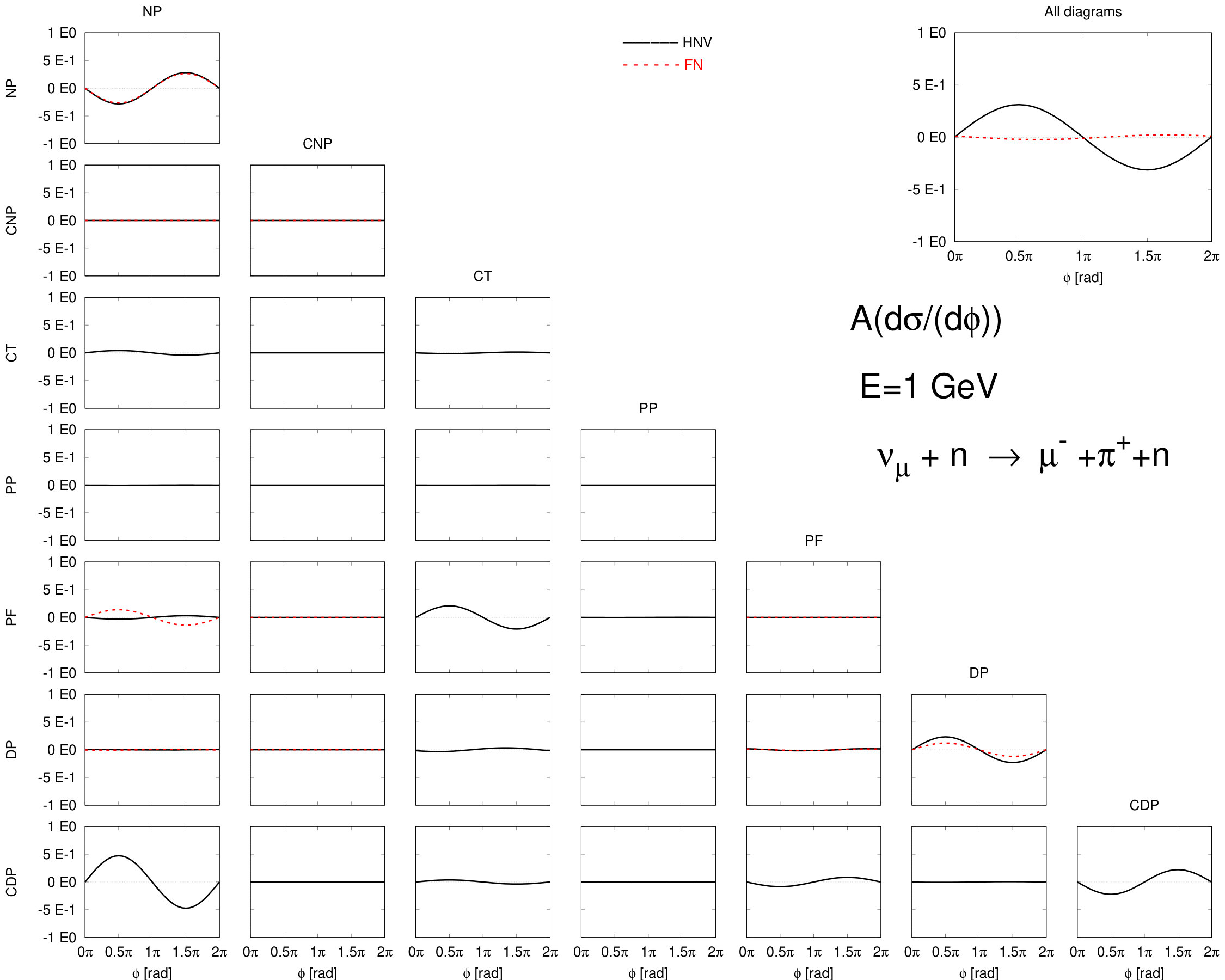 Figure 7
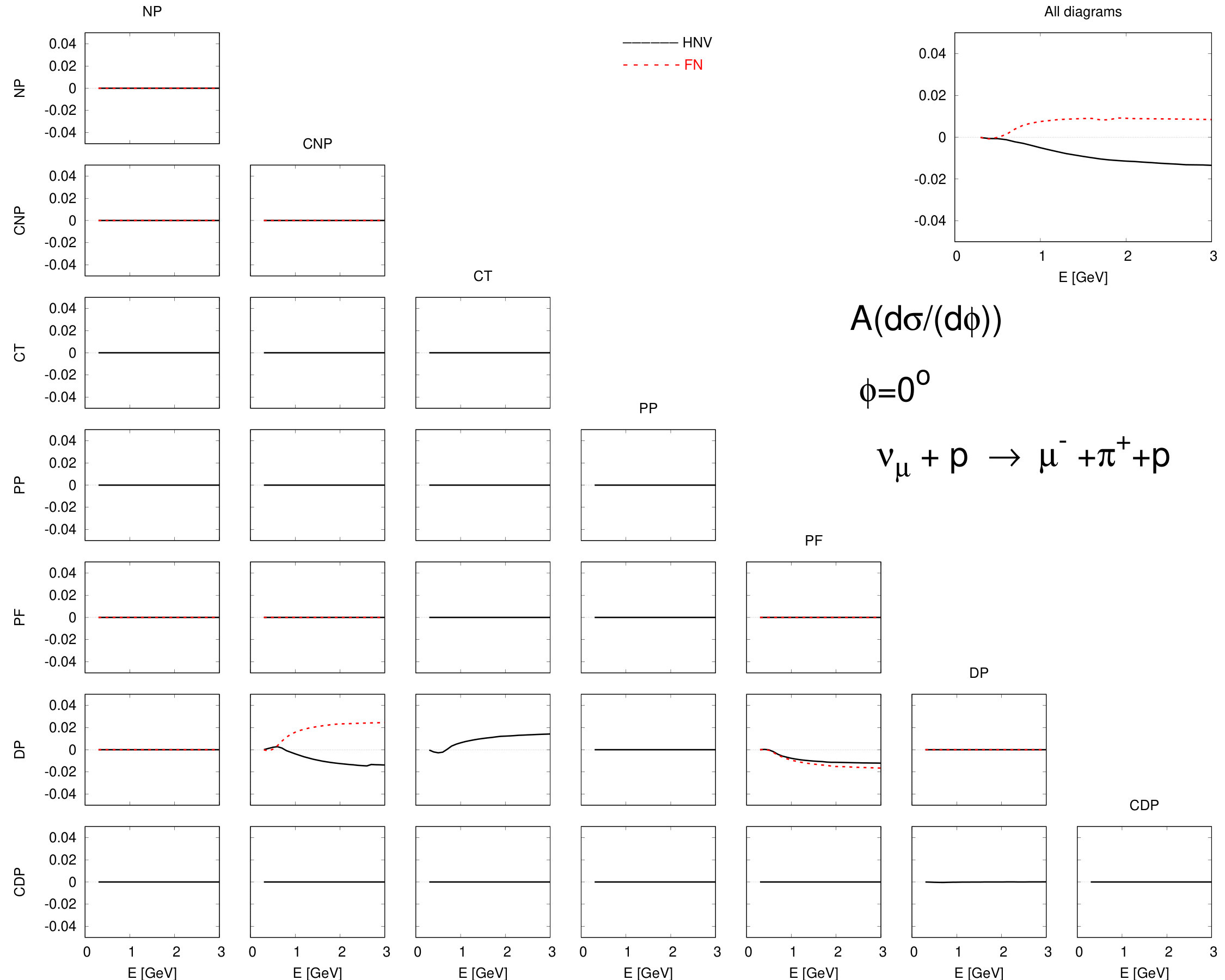 Figure 8
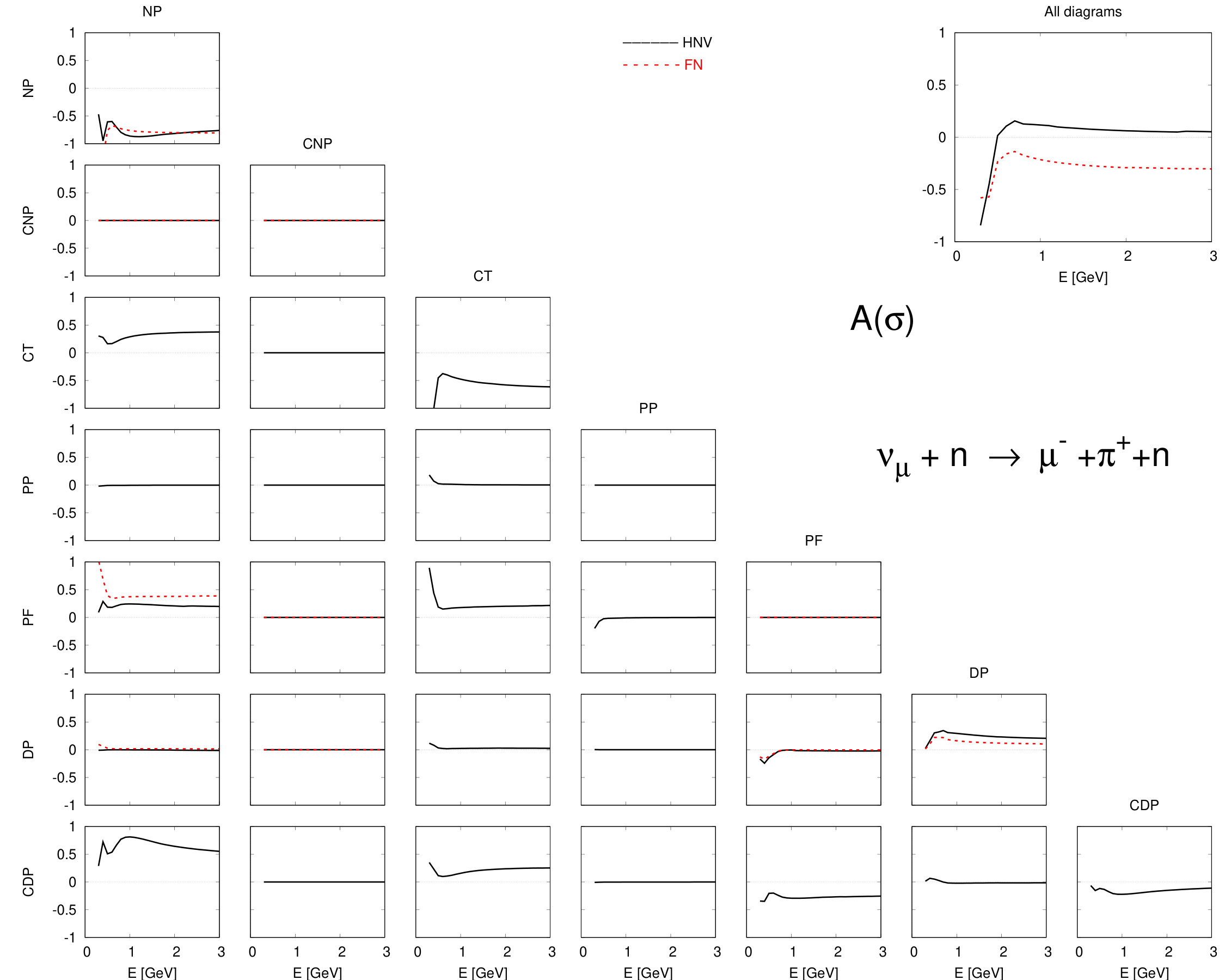 Figure 9
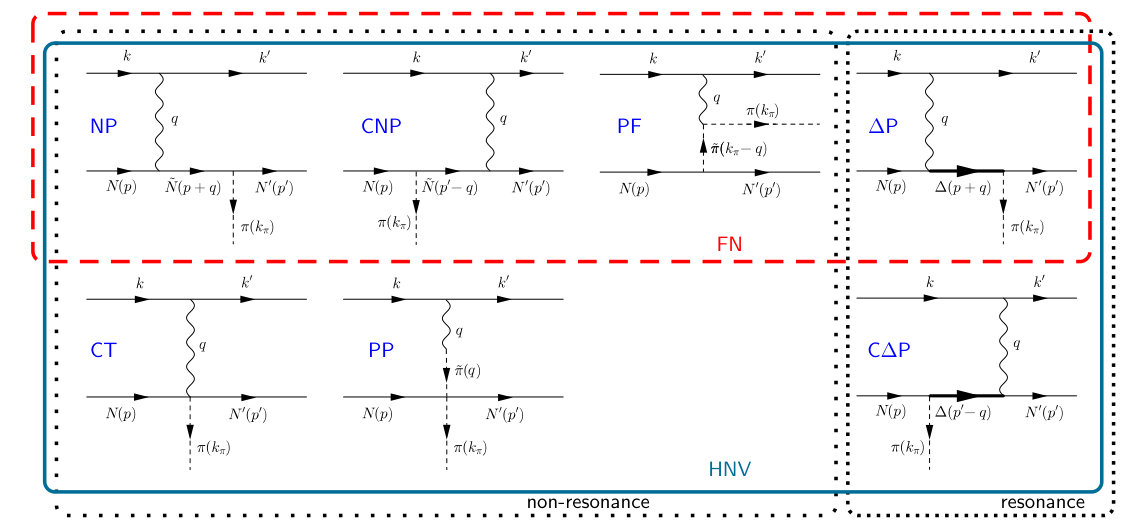 Figure 10
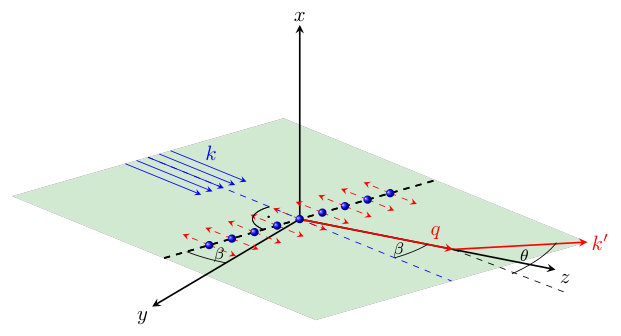 Figure 11
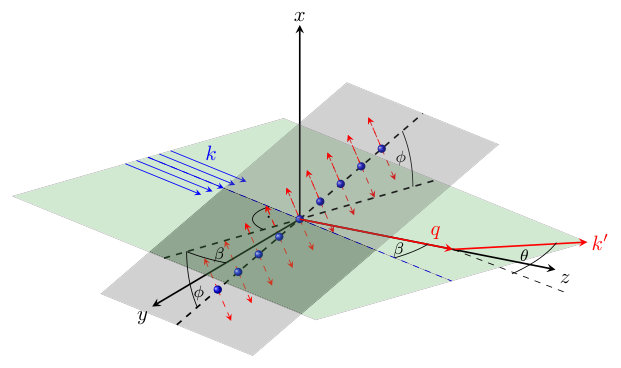 Figure 12
Peer Reviews
No public reviews on file for this paper yet. If you reviewed it on a platform where reviews are public (OpenReview, ICLR, NeurIPS, ICML), you can paste yours below so the community can read it here.
Videos
No videos yet. Explain this paper in a talk, walkthrough, or lecture? Add one.
\extrafloats
200
Spin asymmetry in single pion production induced by weak interactions of neutrinos with polarized nucleons
Krzysztof M. Graczyk
Beata E. Kowal
Institute of Theoretical Physics, University of Wrocław, plac Maxa Borna 9, 50-204, Wrocław, Poland
Abstract
The single pion production (SPP) in the charged-current neutrino (antineutrino) scattering off the polarized nucleon is discussed. The spin asymmetry is predicted within two approaches. The spin polarizations of the target nucleon that are longitudinal and perpendicular to the neutrino momentum are considered. It is shown, in several examples, that information about the SPP dynamics coming from the spin asymmetry is complementary to information obtained from measurements of spin averaged cross section. Indeed, the spin asymmetry is sensitive to the nonresonance background description of the SPP model. For the normal polarization of the target, the spin asymmetry is given by the interference between the resonance and the nonresonance contributions.
neutrino-nucleon interactions, single pion production, spin asymmetry, nucleon polarization, nonresonant background contribution
pacs:
13.15.+g, 13.60.Le
I Introduction
The neutrino oscillation phenomenon has been investigated for several decades. The oscillation parameters are relatively well established Wascko (2018); however, two parameters, -violation phase and the mixing angle , are still poorly known Valle (2018).
In the simplest two-flavor scenario, the probability for the oscillation reads
[TABLE]
where is the neutrino mass difference, is a mixing angle, is the neutrino energy, and is the distance between the source of the neutrinos and the detector.
In the long baseline experiments, such as T2K Wascko (2018) or Nova Sanchez (2018), the distance is known. The neutrino beam, produced at the accelerator, consists of mainly muon neutrinos of the energy of the order of 1 GeV. However, the beam is not monochromatic and its energy profile is obtained from the analysis of the interaction of the neutrinos with the target. Therefore, the determination of the oscillation parameters depends on the accuracy in estimation of the neutrino energy.
Usually the neutrino energy is reconstructed from the analysis of the quasielastic (QE) neutrino-nucleus scattering. The reconstruction is based on the knowledge of the neutrino-nucleon and the neutrino-nucleus cross sections Mosel (2016); Sánchez (2018). However, in the GeV energy range a sizable fraction of the detected interactions is inelastic. In particular, the so-called single pion production (SPP) processes are distinguished. The SPP events contribute to the background for the measurement of the QE scattering. Moreover, the neutral current production events can be wrongly identified as a the signal for oscillation.
Intense studies of the fundamental neutrino properties have caused new interest in the investigation of the neutrino-nucleon and the neutrino-nucleus scattering. In this work we focus on the problem of the single pion production in the neutrino-nucleon scattering in the energy range characteristic of the long baseline neutrino oscillation experiments. This topic has been studied theoretically Adler (1968); Rein and Sehgal (1981); Fogli and Nardulli (1979); Gershtein et al. (1980); Rein (1987); Sato et al. (2003); Hernandez et al. (2007a); Graczyk and Sobczyk (2008); Leitner et al. (2009); Graczyk et al. (2009); Nakamura et al. (2015); Serot and Zhang (2012); Lalakulich et al. (2010); Rafi Alam et al. (2016); Graczyk et al. (2014); Barbero et al. (2008); Alvarez-Ruso et al. (2016); Gonzalez-Jimenez et al. (2017); Hernandez and Nieves (2017); Yao et al. (2018, 2019) and experimentally Radecky et al. (1982); Kitagaki et al. (1986); Rodriguez et al. (2008); Aguilar-Arevalo et al. (2011); McGivern et al. (2016); Abe et al. (2017) for the last 50 years.
The SPP scattering amplitude is dominated by the resonance (RES) contribution given by a weak nucleon-resonance transition. However, a complete SPP model should include also the diagrams describing the so-called nonresonance background (NB) terms. The way the RES and NB contributions are treated gives rise to the differences between various theoretical approaches.
In order to test the SPP models their predictions must be confronted with the experimental measurements of the neutrino-nucleon and the neutrino-nucleus cross sections. As we explained in our previous paper Graczyk and Kowal (2018), the spin averaged cross sections contain only a part of the information about the dynamical structure of the SPP amplitudes. Complementary information can be obtained from the analysis of the polarization transfer (PT) observables.
The investigation of the PT in the neutrino-nucleon and the neutrino-nucleus scattering has been discussed since the 1960s Adler (1963); Pais (1971); Llewellyn Smith (1972); Kuzmin et al. (2004); Hagiwara et al. (2003); Graczyk (2005); Kuzmin et al. (2005); Bilenky and Christova (2013a, b); Akbar et al. (2016, 2017); Fatima et al. (2018a, b). Recently in Graczyk and Kowal (2018, 2017), we reported the results of the discussion of the impact of the NB contribution on the PT observables. It was shown that the components of the polarizations of the charged lepton and the final nucleon contain unique information about the relative phase between the RES and NB amplitudes which can be used to constrain theoretical models, in particular, the description of the nonresonant background.
In this report, instead of analyzing the polarizations of the final particles, the neutrino scattering off the polarized target is considered. We propose to investigate properties of a spin asymmetry observable. A similar quantity was discussed for the elastic electron-nucleon and the electron-nucleus scattering Dombey (1969); Donnelly and Raskin (1986). Indeed, the measurement of the asymmetry in the electron-nucleon scattering was proposed as an alternative technique to the Rosenbluth method for obtaining the electric and magnetic form factors of the nucleon. 111The first measurements of the spin asymmetry are reported in Ref. Alguard et al. (1976). In this work we calculate and analyze the spin asymmetry in the SPP induced by interactions of the neutrinos with the nucleons. We show that this observable is sensitive to the NB contribution. Hence, the spin asymmetry contains unique information about the SPP dynamics not accessible in the spin averaged cross section measurements.
Similarly as in Graczyk and Kowal (2018), two different SPP approaches are considered Hernandez et al. (2007b); Fogli and Nardulli (1979). Our studies are restricted to the neutrinos of the energy of the order of 1 GeV. Therefore, to model the RES contribution, we consider only the weak transition. The predictions are made for full models (RES and NB contributions) and the version of the models with resonance contribution only.
The paper is organized as it follows. In Sec. II the necessary formalism is introduced, Sec. III presents the numerical results and their discussion, and a summary is given in Sec. IV.
II Spin asymmetry
Let us consider the SPP processes induced by the charged current muon neutrino (antineutrino) interactions with the polarized nucleon target, namely,
[TABLE]
where and are the four-momenta of the initial and the final leptons, respectively, while ; ; and denote the four-momenta of the incoming nucleon (N), the outgoing nucleon (), and the pion, respectively. The calculations are made in the laboratory frame; hence, the spin four-vector of the target reads
[TABLE]
where .
The four-momentum transfer is denoted by
[TABLE]
where and denote the transfer of the energy and the momentum, respectively.
Let us introduce the hadronic invariant mass
[TABLE]
and
[TABLE]
Eventually, let denote a solid angle depending on and is a corresponding azimuth angle.
We define a spin asymmetry by the ratio
[TABLE]
where is the differential cross section. The asymmetry is linear in , namely, .
Two variants of the nucleon polarization are studied, namely,
- (i)
Longitudinal polarization: Nucleon polarized along the momentum of the incoming neutrino (see Fig. 1). In this case, and
[TABLE] 2. (ii)
Perpendicular polarization: Nucleon polarized along an axis which is perpendicular to the neutrino momentum (Fig. 2). In this case, and
[TABLE]
Notice that in the last variant the -dependence of cannot be trivially integrated out. Indeed the rotational symmetry (along ) is broken by the choice of the direction of the target’s spin. In order to perform calculations, we choose the coordinates so that
[TABLE]
where is the normal vector of the scattering plane spanned by and .
III Results and discussion
III.1 Numerical implementation
Our main objective is to study the properties of the spin asymmetry, in particular, its sensitivity to the NB contribution. To achieve this goal, similarly as in our previous work Graczyk and Kowal (2018), in order to perform the calculations, two SPP approaches are considered: the model by Hernandez, Nieves, and Valverde (HNV), as described in Hernandez et al. (2007b), and the model by Fogli and Nardulli (FN), as given in Fogli and Nardulli (1979). In both descriptions, the scattering amplitude is calculated in a tree level approximation.
The predictions of the spin asymmetry for neutrino (antineutrino) scattering off a longitudinally (8) and perpendicularly (9) polarized target are made for six charged-current SPP processes:
[TABLE]
The differential cross section, for the given SPP processes, has the structure
[TABLE]
where is the set of the diagrams, is the Clebsch-Gordan coefficient, and is a matrix element for a diagram .
The full amplitude of the HNV model consists of contributions from seven diagrams. The NB amplitudes are obtained from the nonlinear sigma model. The SPP contribution in the FN approach is given by five diagrams, where the NB contribution is motivated by the linear sigma model. All diagrams are plotted in Fig. 3. Our discussion is restricted to the first resonance region; hence, all calculations are performed for GeV.
In the HNV model the NB contribution is given by the following diagrams, nucleon-pole (NP), conjugate nucleon-pole (CNP), contact term (CT), pion in flight (PF) and pion-pole (PP). The resonance contribution is described by two diagrams: denotes the delta pole, and the conjugate delta pole.
The NB contribution in the FN model consists of three diagrams: pion in flight () and two nucleon pole diagrams, and . But in the latter two diagrams the pseudoscalar pion-nucleon coupling is implemented, in contrast to the HNV model, where the pseudovector coupling is considered. The weak transition is oversimplified. Indeed, there is only one resonance diagram and the vertex is described by only two form factors.
More details about the implementation of both models, the choice of the transition form factors etc., can be found in our previous paper Graczyk and Kowal (2018).
III.2 Spin asymmetry for longitudinal polarized target
Figure 4 presents the plots of the longitudinal spin asymmetry calculated for the neutrino and the antineutrino scattering off the polarized target. The asymmetry varies from to . Above GeV, weakly depends on the neutrino energy.
For the channels (11) and (14) (related by the isospin symmetry), the NB contribution to is negligible. Indeed, in this case the resonance contribution, from , is dominant. Therefore, the predictions of within the HNV and the FN models are very similar. However, for the other channels, the asymmetry is quite model dependent. Indeed, for the processes (12) and (15) (also related by the isospin symmetry), the asymmetries predicted within the HNV and FN models have completely different functional dependence (different sign and magnitude). Moreover, in this case the NB contribution is large and modifies significantly . To understand this property, we present Fig. 5, where the contributions to the spin asymmetry from various diagrams are distinguished. It can be noticed that the deviations between the HNV and FN models are due to the presence of the diagrams and in the HNV model. Eventually, in both approaches the diagram gives rise to the difference between the full and the RES model predictions.
Similar observations, as above, can be made when is examined; see Fig. 6.
III.3 Spin asymmetry for perpendicularly polarized target
The spin asymmetry is given by the scalar product . In the case of the perpendicularly polarized target, the components of are proportional to either or . As the result, the spin asymmetry can be written in the form
[TABLE]
The is dominated by the sinusoidal part. It is shown in Fig. 7, where the asymmetry is plotted. The sinusoidal character is maintained also when the asymmetry is calculated for the flux averaged cross sections, as it is illustrated in Fig. 8, where the -dependence of
[TABLE]
calculated for the energy spectrum, , of the T2K experiment Abe et al. (2013) is plotted.
Similarly as in the case of the longitudinally polarized target for two channels (11) and (14), the asymmetry is dominated by the resonance contribution of the diagram. Hence, in this case, is insensitive to details of the NB model.
It is important to remember that the FN model does not contain the diagram, required by gauge invariance. Lack of this contribution leads to the deviation between predictions of the obtained for the FN and the HNV models for the channels (12) and (15); see Figs. 7 and 8 as well as Fig. 9. In the latter figure the decomposition of the asymmetry into contributions from various diagrams is shown.
The spin asymmetry (18) has contributions from and ; however, plots of Figs. 7 and 8 suggest that the is dominant. It is interesting to remark that the component, connected with cosine, is given by the interference between the resonance and nonresonance amplitudes.222There is also a small but non-negligible contribution from the interference between and diagrams. Hence, any deviation of from the sinusoidal dependence is induced by the NB contribution. If the spin vector is parallel to the normal vector , then only the component contributes to the spin asymmetry. In this case
[TABLE]
The above property is illustrated in Fig. 10, where we plot the decomposition of into contributions from various interferences between diagrams.
In Fig. 11 (top panel) we plot as a function of energy. It is seen that the asymmetry is a small but nonvanishing function of the energy. The asymmetry takes the largest values when is perpendicular () to the normal vector ; see Fig. 11 (bottom panel).
IV Summary
Single pion production in the neutrino (antineutrino) scattering off the polarized target has been discussed. Two polarizations of the target have been considered, namely, longitudinal and perpendicular to the neutrino beam. In both cases, the spin asymmetry has been calculated within two different SPP models. It is demonstrated, in several examples, that the spin asymmetry is sensitive to the nonresonant background contribution. Moreover, it is shown that when polarization of the target is parallel to the normal of the scattering plane, the asymmetry is given by the interference between the resonance and the nonresonance diagrams.
In summary, the spin asymmetry contains additional, with respect to spin averaged cross section measurements, information about the SPP dynamics, which can be utilized to constrain significantly the single pion production models.
Acknowledgments
The scattering amplitudes and cross sections have been calculated using symbolic programming language FORM Vermaseren (2000).
The calculations have been carried out in the Wroclaw Centre for Networking and Supercomputing wcs , Grant No. 268.
The reference list from the paper itself. Each links out to its DOI / PubMed record.
- 1Wascko (2018) M. Wascko, “T 2k status, results, and plans,” (2018). · doi ↗
- 2Valle (2018) J. W. F. Valle (2018) ar Xiv:1812.07945 [hep-ph] .
- 3Sanchez (2018) M. Sanchez, “Nova results and prospects,” (2018). · doi ↗
- 4Mosel (2016) U. Mosel, Annual Review of Nuclear and Particle Science 66 , 171 (2016) . · doi ↗
- 5Sánchez (2018) F. Sánchez, “New neutrino cross-section measurements in t 2k,” (2018). · doi ↗
- 6Adler (1968) S. L. Adler, Annals Phys. 50 , 189 (1968) , [,225(1968)]. · doi ↗
- 7Rein and Sehgal (1981) D. Rein and L. M. Sehgal, Annals Phys. 133 , 79 (1981) . · doi ↗
- 8Fogli and Nardulli (1979) G. L. Fogli and G. Nardulli, Nucl. Phys. B 160 , 116 (1979) . · doi ↗