Efficient ion-photon qubit SWAP gate in realistic ion cavity-QED systems without strong coupling
Adrien Borne, Tracy E. Northup, Rainer Blatt, Barak Dayan

TL;DR
This paper proposes a practical, efficient ion-photon SWAP gate in cavity-QED systems that does not require strong coupling, enabling scalable quantum computing with current technology.
Contribution
It introduces a deterministic ion-photon qubit exchange scheme that relies on Purcell enhancement rather than strong coupling, simplifying experimental requirements.
Findings
High fidelities and efficiencies are achievable with current experimental setups.
The scheme works with larger, more practical cavities compatible with ion trapping.
The gate can also function as a single-photon quantum memory.
Abstract
We present a scheme for deterministic ion-photon qubit exchange, namely a SWAP gate, based on realistic cavity-QED systems with 171Yb+, 40Ca+ and 138Ba+ ions. The gate can also serve as a single-photon quantum memory, in which an outgoing photon heralds the successful arrival of the incoming photonic qubit. Although strong coupling, namely having the single-photon Rabi frequency be the fastest rate in the system, is often assumed essential, this gate (similarly to the Duan-Kimble C-phase gate) requires only Purcell enhancement, i.e. high single-atom cooperativity. Accordingly, it does not require small mode volume cavities, which are challenging to incorporate with ions due to the difficulty of trapping them close to dielectric surfaces. Instead, larger cavities, potentially more compatible with the trap apparatus, are sufficient, as long as their numerical aperture is high enough to…
Click any figure to enlarge with its caption.
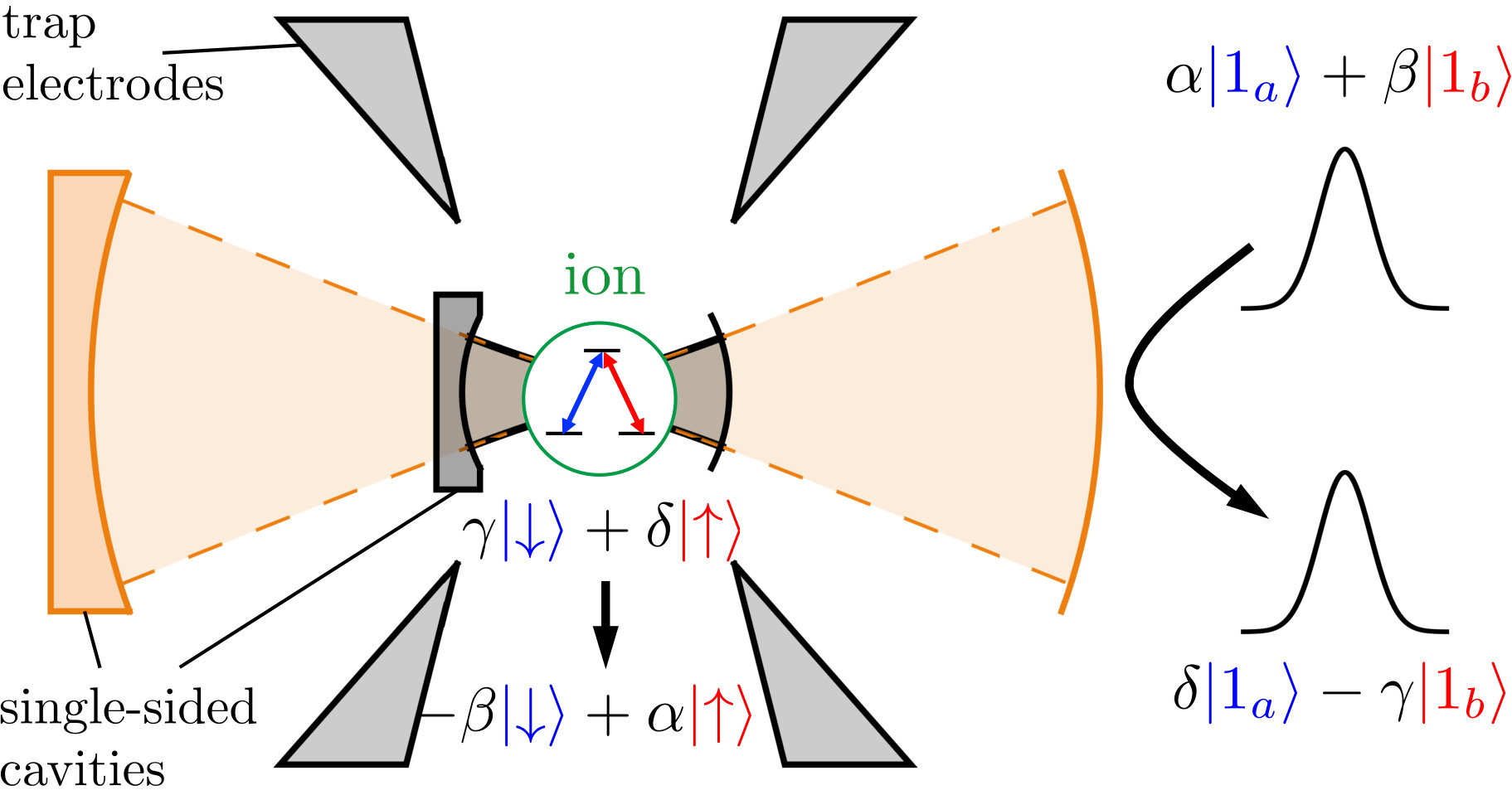 Figure 0
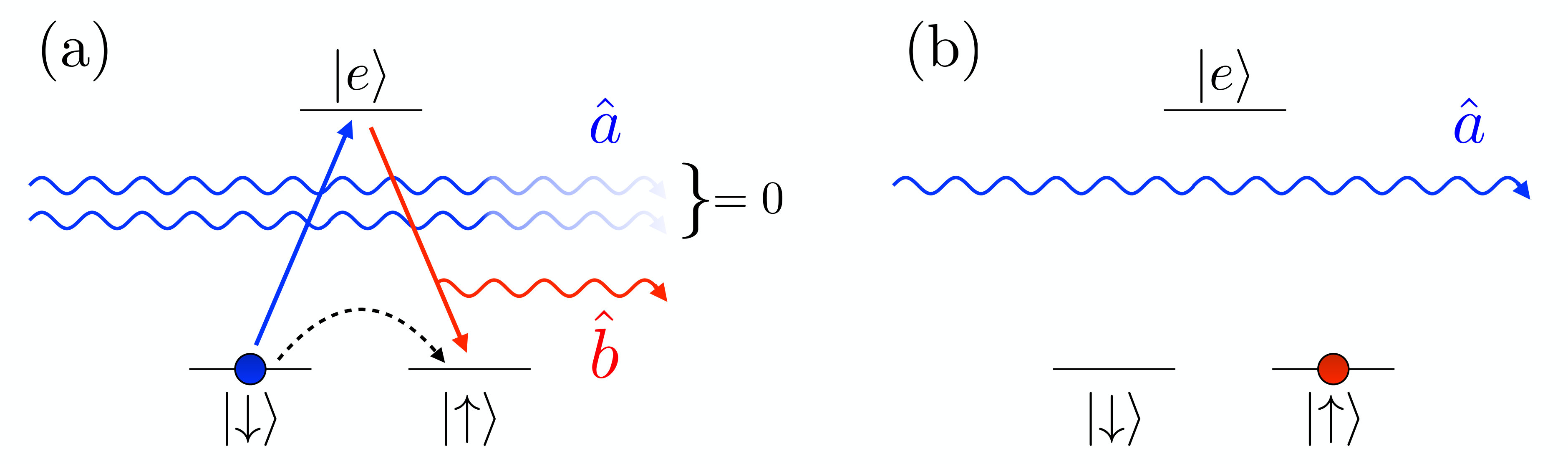 Figure 1
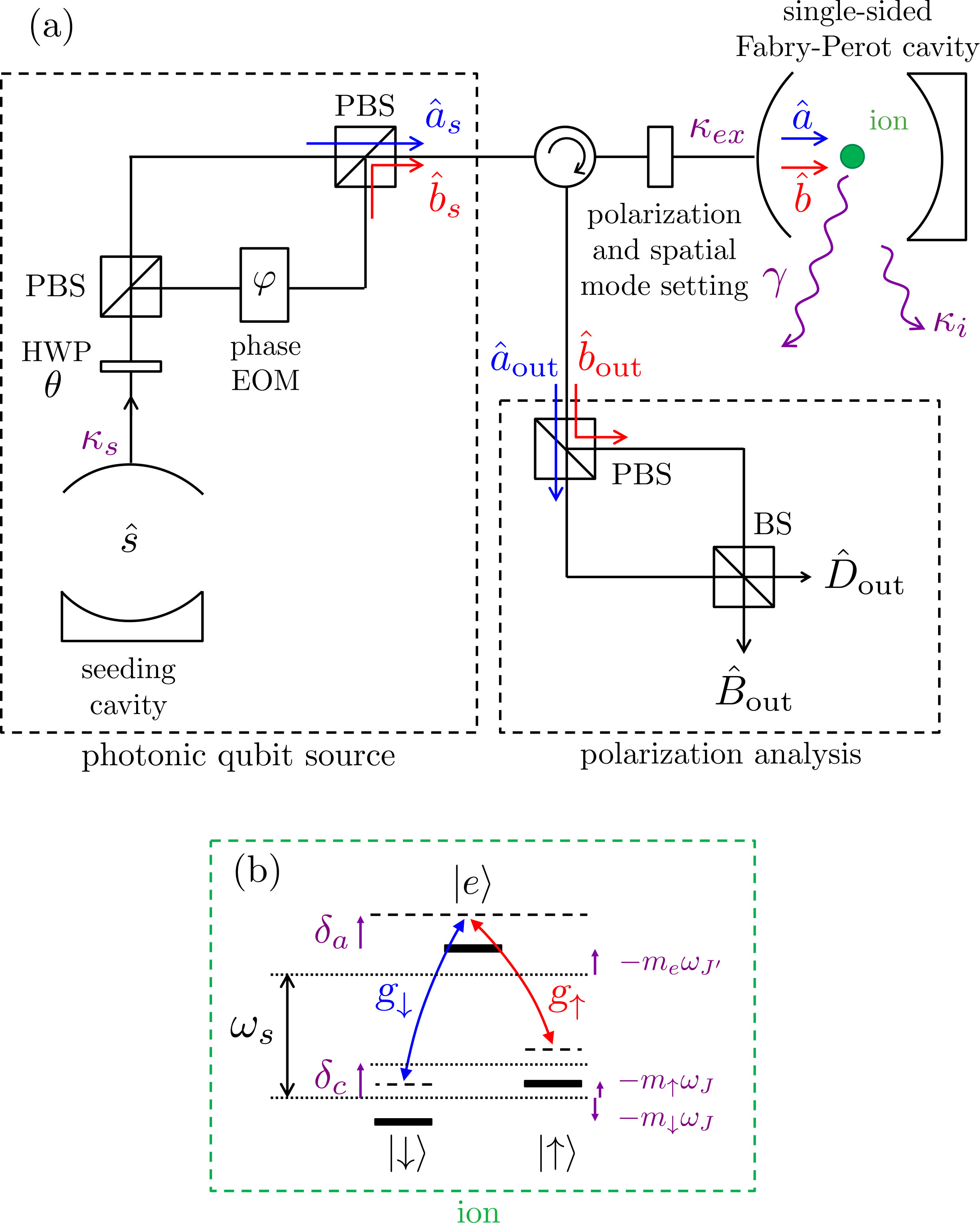 Figure 2
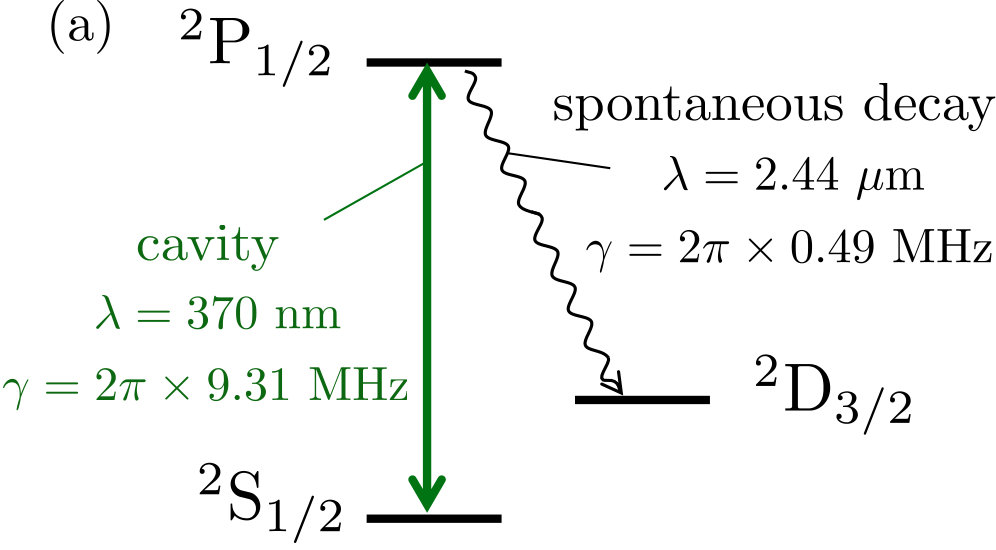 Figure 3
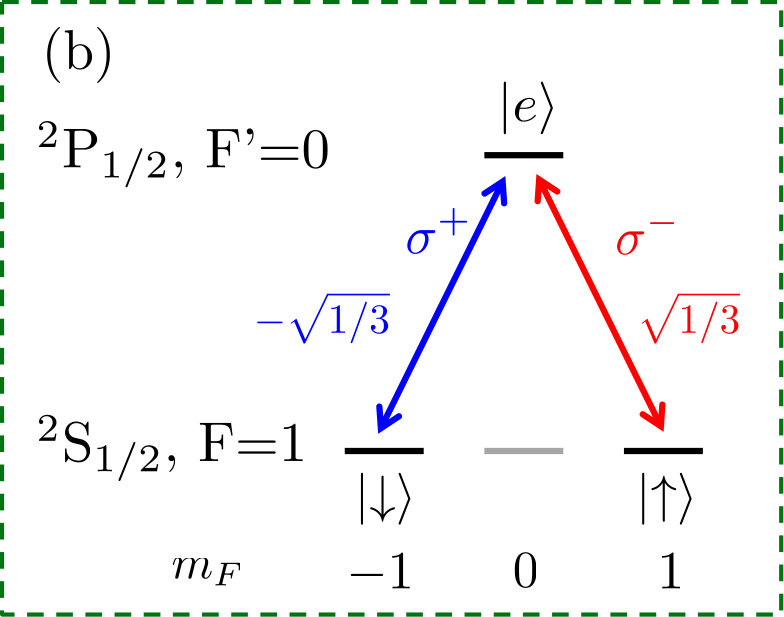 Figure 3
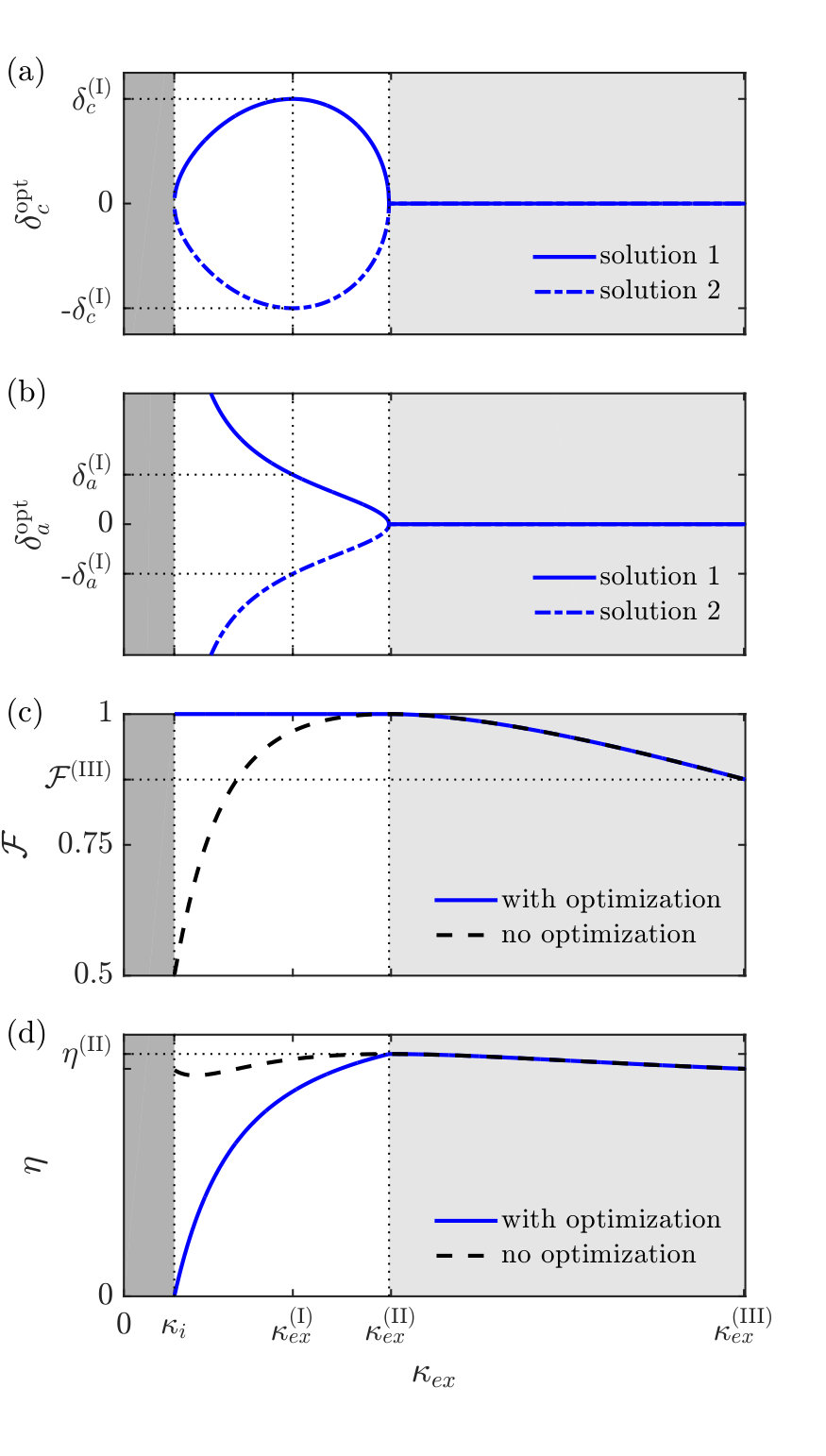 Figure 4
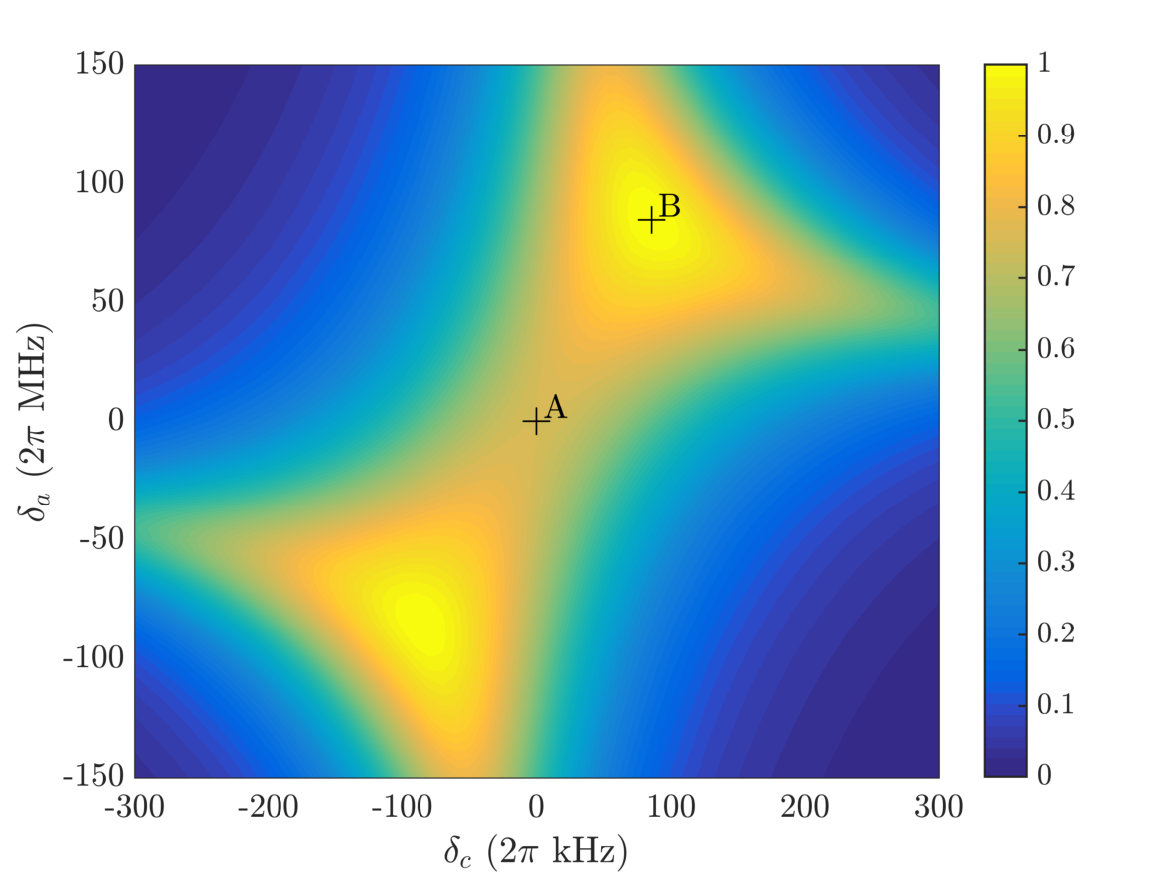 Figure 5
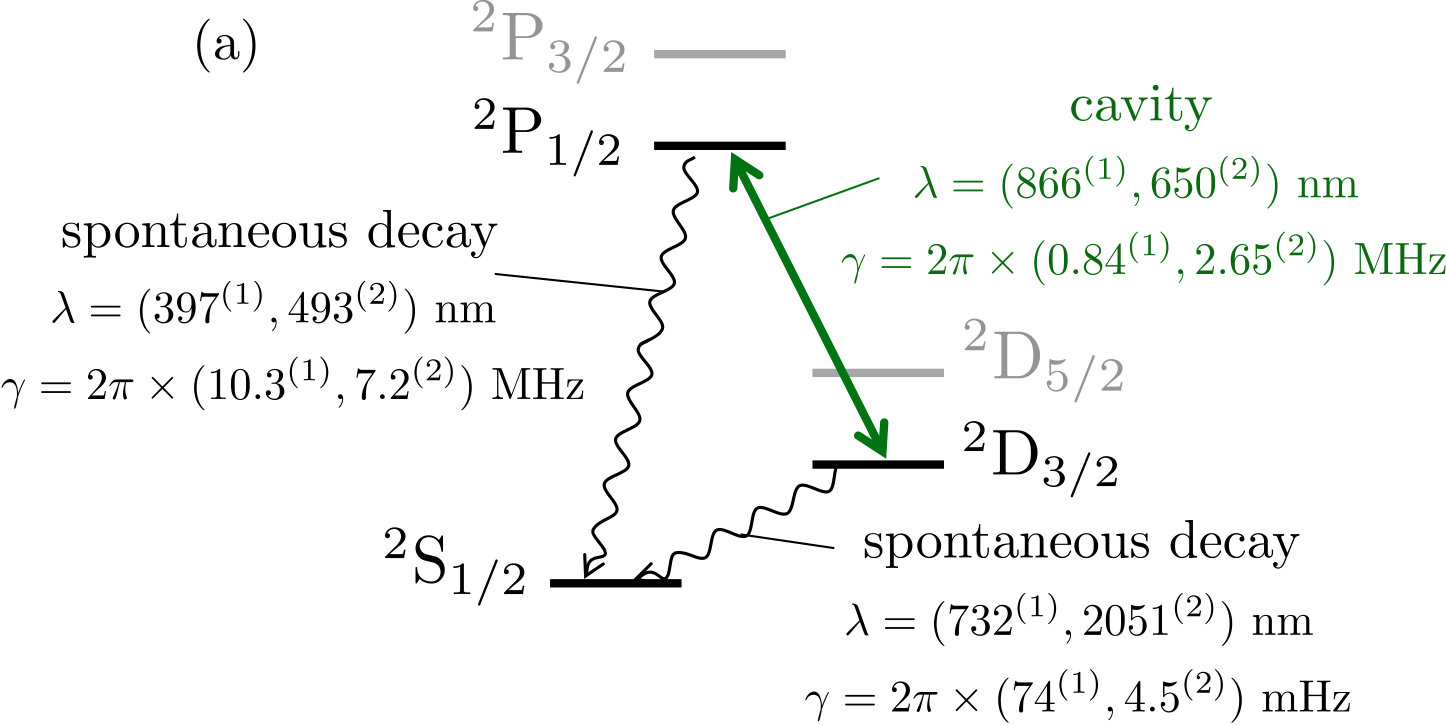 Figure 6
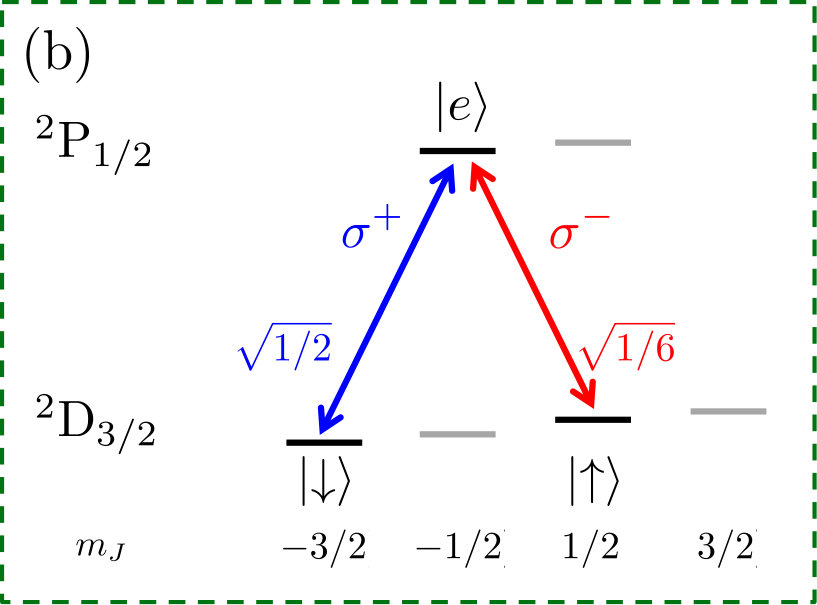 Figure 6
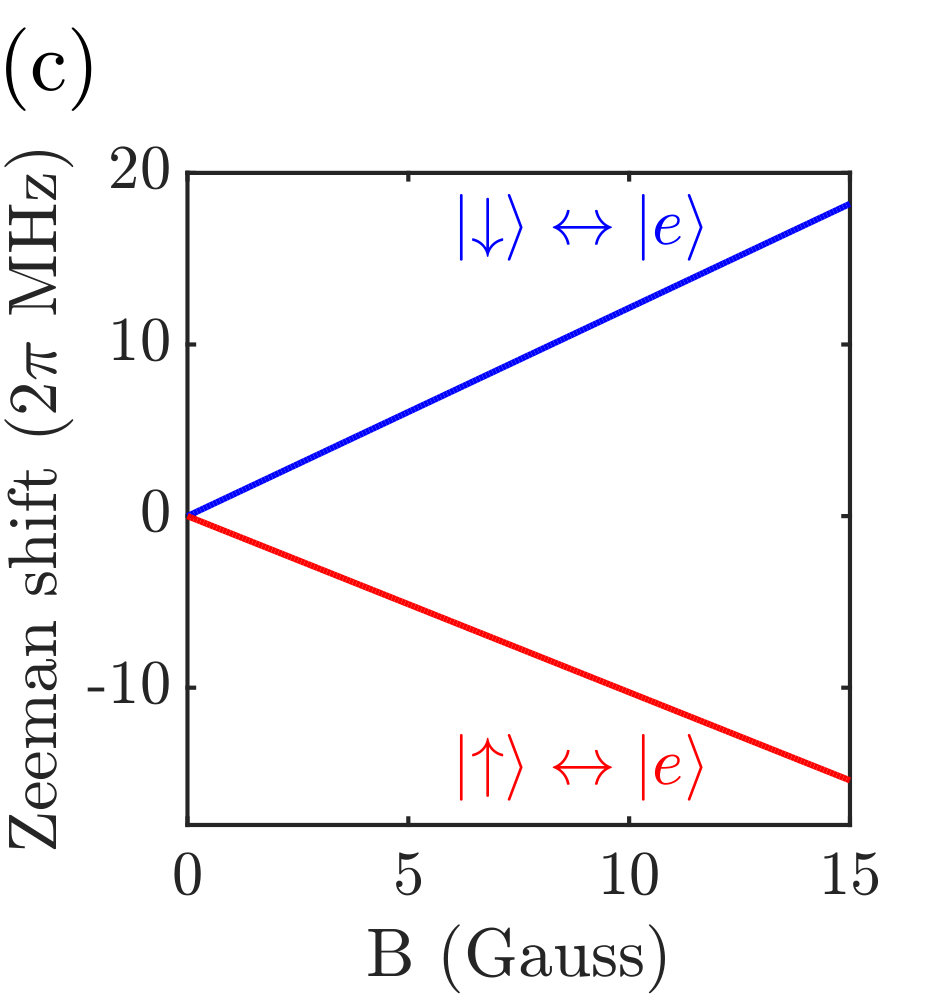 Figure 6
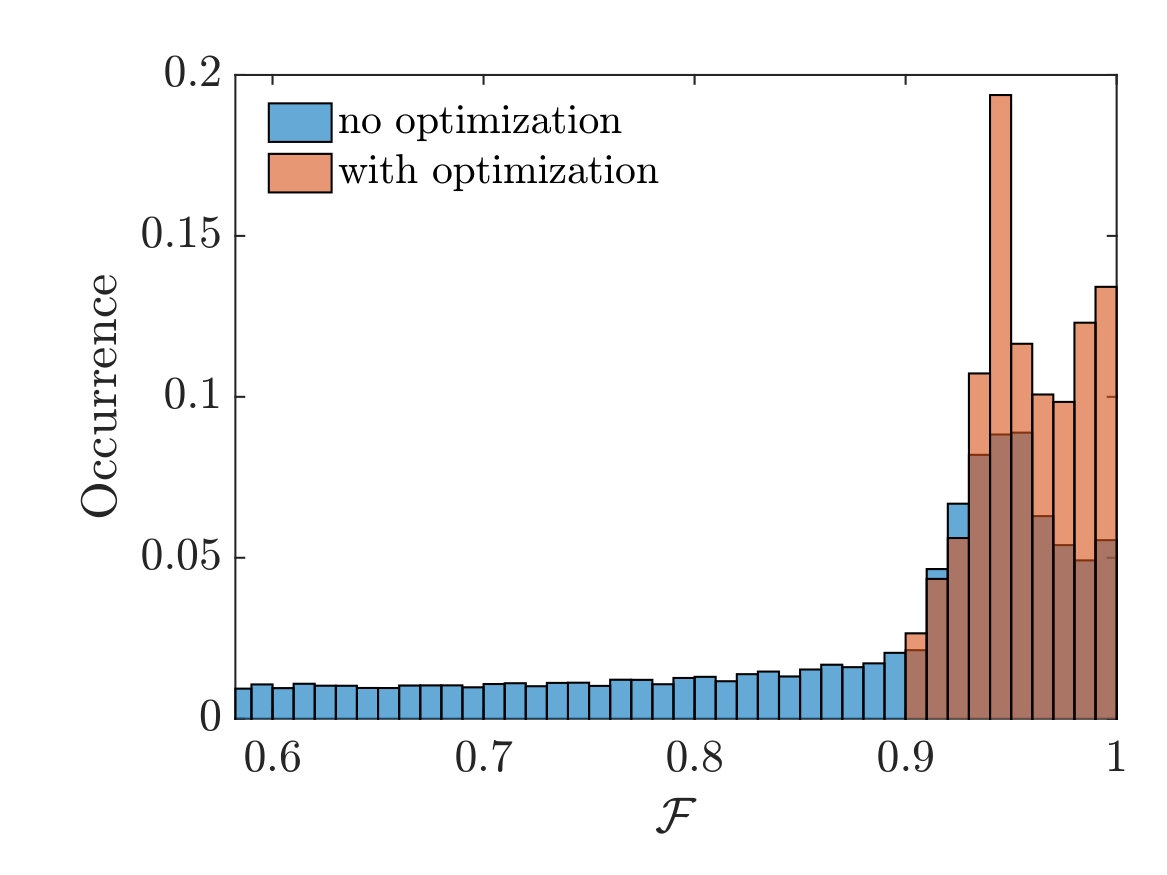 Figure 7
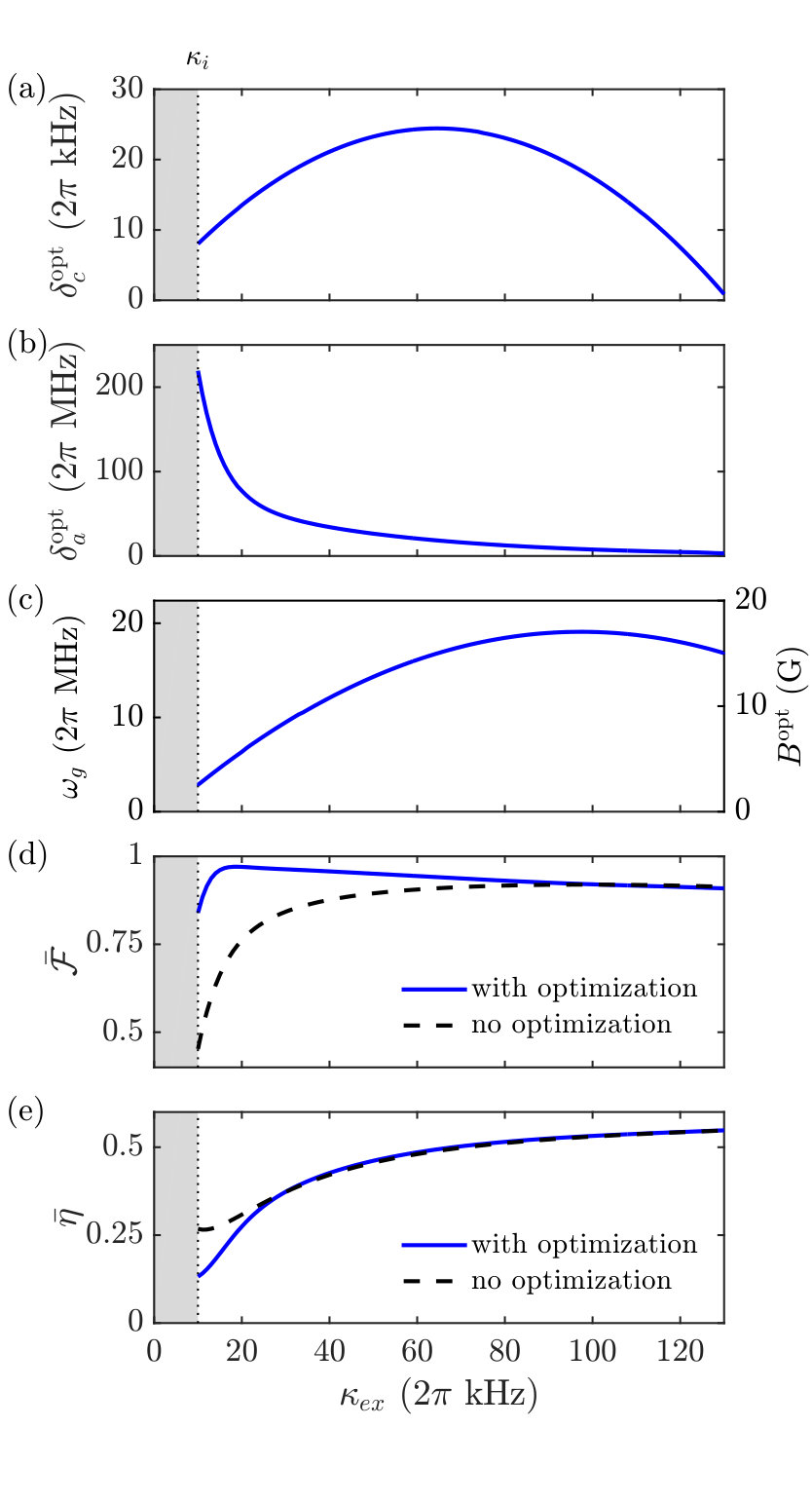 Figure 8
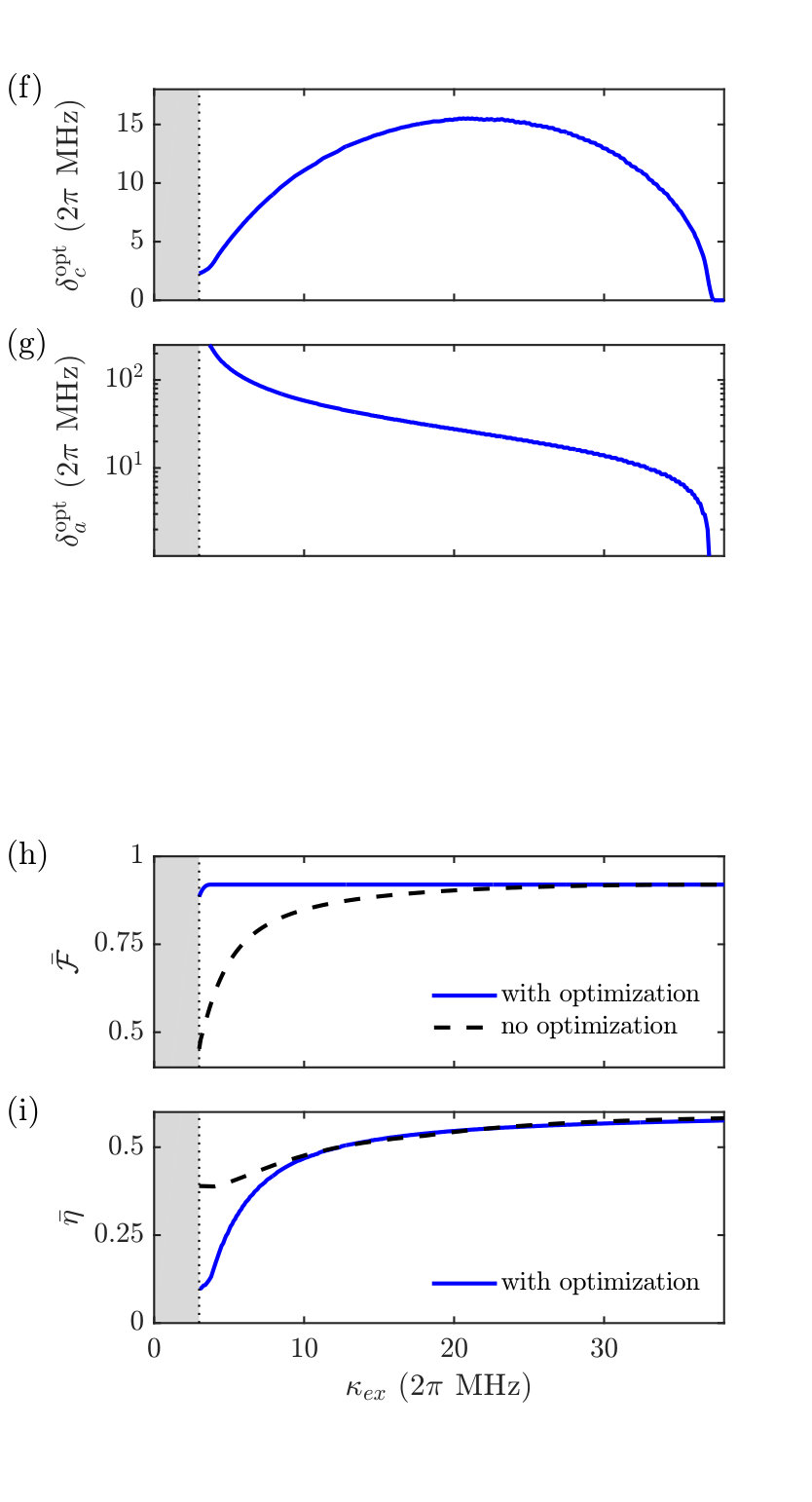 Figure 8
| Analytical expression | realistic conventional Fabry-Perot cavity | realistic fiber-based Fabry-Perot cavity | |
| 2 90 kHz | 2 30 MHz | ||
| 2 2.9 MHz | 2 40 MHz | ||
| 2 10 MHz | 2 10 MHz | ||
| , for | 2 257 kHz | 2 69 MHz | |
| 2 398 kHz | 2 103 MHz | ||
| , for | 2 743 kHz | 2 133 MHz | |
| 2 130 kHz | 2 32 MHz | ||
| 2 32 MHz | 2 25 MHz | ||
| 0.91 | 0.97 | ||
| 0.40 | 0.30 | ||
| 0.39 | 0.30 |
| Analytical expression | realistic conventional Fabry-Perot cavity | realistic fiber-based Fabry-Perot cavity | |
| 20 mm | 400 m | ||
| 300 ppm | 1500 ppm | ||
| 150 ppm | 1000 ppm | ||
| Finesse | |||
| 2 179 kHz | 2 45 MHz | ||
| 2 90 kHz | 2 30 MHz | ||
| Cooperativity | 3.1 | 2.2 | |
| Estimated gate time operation | s | 20 ns |
| typical conventional Fabry-Perot cavity | realistic fiber-based Fabry-Perot cavity | |
| 20 mm | 400 m | |
| 50 ppm | 600 ppm | |
| 17 ppm | 100 ppm | |
| Finesse | ||
| 2 30 kHz | 2 18 MHz | |
| 2 10 kHz | 2 3 MHz | |
| 2 MHz | 2 MHz | |
| 2 10 MHz | 2 10 MHz | |
| Cooperativity | 3.3 | 2.4 |
| Estimated gate operation time | 2 s | 20 ns |
Peer Reviews
No public reviews on file for this paper yet. If you reviewed it on a platform where reviews are public (OpenReview, ICLR, NeurIPS, ICML), you can paste yours below so the community can read it here.
Videos
No videos yet. Explain this paper in a talk, walkthrough, or lecture? Add one.
Efficient ion-photon qubit SWAP gate in realistic ion cavity-QED systems without strong coupling
Adrien Borne
\authormark1,2 Tracy E. Northup
\authormark3 Rainer Blatt
\authormark3,4 and Barak Dayan
\authormark1
\authormark1AMOS and Department of Chemical and Biological Physics, Weizmann Institute of Science, Rehovot 76100, Israel
\authormark2Laboratoire Matériaux et Phénomènes Quantiques, Université Paris Diderot, CNRS, UMR 7162, 75013 Paris, France
\authormark3Institut für Experimentalphysik, Universität Innsbruck, Technikerstraße 25, 6020 Innsbruck, Austria
\authormark4Institut für Quantenoptik und Quanteninformation, Österreichische Akademie der Wissenschaften, Technikerstraße 21a, 6020 Innsbruck, Austria
\authormark* [email protected]
Abstract
We present a scheme for deterministic ion-photon qubit exchange, namely a SWAP gate, based on realistic cavity-QED systems with 171Yb+, 40Ca+ and 138Ba+ ions. The gate can also serve as a single-photon quantum memory, in which an outgoing photon heralds the successful arrival of the incoming photonic qubit. Although strong coupling, namely having the single-photon Rabi frequency be the fastest rate in the system, is often assumed essential, this gate (similarly to the Duan-Kimble C-phase gate) requires only Purcell enhancement, i.e. high single-atom cooperativity. Accordingly, it does not require small mode volume cavities, which are challenging to incorporate with ions due to the difficulty of trapping them close to dielectric surfaces. Instead, larger cavities, potentially more compatible with the trap apparatus, are sufficient, as long as their numerical aperture is high enough to maintain small mode area at the ion’s position. We define the optimal parameters for the gate’s operation and simulate the expected fidelities and efficiencies, demonstrating that efficient photon-ion qubit exchange, a valuable building block for scalable quantum computation, is practically attainable with current experimental capabilities.
1 Introduction
Efficient ion-photon qubit exchange is a vital building-block for the modular scaling-up of ion-based quantum information systems [1, 2, 3, 4, 5]. Although heralded schemes [6, 7, 8, 9, 10, 11, 12] provide a basis for linking separate systems even with non-deterministic photonic links, there are many experimental efforts towards the attainment of efficient ion-photon interfaces via cavity quantum electrodynamics [13, 14, 15, 16, 17, 18, 19, 20, 21, 22, 23, 24, 25, 26, 27]. Typically, these efforts aim at obtaining the highest possible atom-cavity coupling rate (, also termed single-photon Rabi frequency) in order to reach the strong-coupling regime, i.e. the regime in which is the fastest rate in the system [28]. Since is inversely proportional to the square root of the cavity mode volume (), this implies miniature cavities ( mm), which in turn make the stability of the trap very challenging due to the proximity of the ion to dielectric surfaces [29, 30].
In contrast, the two native atom-photon gates demonstrated to date, the controlled-phase gate (suggested by Duan and Kimble [31] and demonstrated experimentally in [32] and following works) and SWAP gate (suggested in [33], theoretically studied in [34, 35, 36, 37, 38, 39] and demonstrated in [40]) do not strictly require strong coupling. Both gates do require high cooperativity , where is the cavity decay rate and the spontaneous emission rate of the atom into free space. This cooperativity essentially corresponds to Purcell enhancement and is proportional to , with being the quality factor of the cavity [41]. While this may suggest that small mode volume is required, note that both and scale linearly with the cavity round-trip length . This means that the Purcell enhancement - and the cooperativity - do not depend on [42] but are in fact proportional to , with being the mode area and the finesse of the cavity, namely the cavity lifetime in units of the round-trip time (see Fig. 1). Although this distinction may seem trivial, in ionic systems this is crucial as it allows placing ions sufficiently far from dielectrics.
In this work we wish to demonstrate quantitatively the feasibility and potential of realizing photon-ion qubit gates in practical systems. We do so by analyzing in detail the implementation of a photon-ion SWAP gate similar to that demonstrated with neutral atoms [40]. The underlying mechanism is the single-photon Raman interaction (SPRINT), and the system consists of a three-level -type quantum emitter inside a single-sided cavity, i.e. a cavity with one of its two mirrors being completely reflective. Both the mechanism and the system are described in the following Sec. 2. We then perform an analytical description in Sec. 3, which allows us to quantify the performance of the swap process by calculating its fidelity and efficiency for arbitrary ionic and photonic qubits. In Sec. 4, we finally apply our results to realistic situations with 171Yb+, 40Ca+ and 138Ba+ ions, analytically when the system is invariant under qubit rotation, and numerically otherwise. Also, we show that a proper choice of cavity coupling and detuning rates (cavity-field, cavity-ion and potentially Zeeman detunings) leads to optimization of the gate performance. We first consider a conventional cm-long Fabry-Perot cavity since we see that high cooperativity is required, but not strong coupling. Although not required, our model is also valid in the case of strong coupling. This led us to consider a fiber-based Fabry-Perot resonator as well in order to display the performances of the gate in that system.
2 Realization of an ion-photon SWAP gate
2.1 The underlying mechanism: single-photon Raman interaction
The implementation of the ion-photon SWAP gate under study in this paper relies on a scheme called single-photon Raman interaction (SPRINT) [33, 34, 35, 43, 36, 37, 38, 39]. Owing to quantum interference, it allows a single photon to deterministically control the state of a single quantum emitter, and vice versa. SPRINT requires a three-level system to couple independently each of two optical modes ( and ) forming a photonic qubit to one of the two ground states ( and ) forming a material qubit; that is, the optical modes and drive the transitions and , respectively. As depicted in Fig. 2(a) and provided that the two transitions are of equal strength, an incoming probe field of one photon in the mode interacting with the quantum emitter in the state destructively interferes with the field radiated in the same mode , phase-shifted by . This leads the system to emit a photon in the mode , forcing a Raman transfer of the quantum emitter from to [33, 34, 35, 43, 36, 37, 38, 39]. On the other hand, a probe in the mode does not interact with the quantum emitter in , leaving the entire system unchanged as depicted in Fig. 2(b).
This nonlinear interaction at the level of a photon is a coherent process that applies also to superposition states of both the photonic and the material qubits and accordingly acts as a SWAP gate between them. Under SPRINT, the photon-emitter joint state is indeed modified as follows:
[TABLE]
One of the most trivial applications of the SWAP gate is as a passive quantum memory for a photonic qubit, in which the outgoing photon heralds the successful arrival of the incoming photon. The idea of using the outgoing photon for heralding can be generalised to a sequence of swap operations occurring in various nodes of a quantum network where the outgoing photon from one node can be the input to the next. The outgoing photon of the entire sequence heralds its successful operation. SPRINT can also be used to engineer quantum states of light such as Fock and W states [44].
2.2 Implementation with a single ion trapped in a Fabry-Perot cavity
This ion-photon SWAP gate can then be implemented by coupling an ion, in which we identify a three-level system, to the optical modes through a Fabry-Perot resonator, which provides the necessary interaction enhancement. It has been shown in [39] that this process can reach unit fidelity by properly choosing the cavity coupling rate so as to get complete destructive interference between the probe and the field radiated in the same mode, provided that the two following conditions are met: (i) the intrinsic loss rate of the resonator must be smaller than the cavity field decay rate, and (ii) the spontaneous emission must be mostly directed into the cavity modes, i.e. as stated in the introduction. Note that the coupling rate to the Fabry-Perot resonator is set by the input-output mirror transmission and therefore cannot be fine-tuned, which can reduce the fidelity of the operation. This differs from the case of nanofiber-coupled whispering-gallery mode microresonators (as performed with neutral atoms [45, 46, 40]), in which coupling rates can continuously be tuned to reach a value optimizing the fidelity. Still, in the case of Fabry-Perot microresonators, we will show in the following that it is possible to circumvent this issue and restore the fidelity by properly setting frequency detuning parameters, at the cost of a reduced efficiency.
We describe SPRINT in the framework of cascaded systems [47, 37, 39] as shown in Fig. 3(a). A single-photon input pulse of frequency and linearly polarized is modeled by introducing a single-sided seeding cavity described by its annihilation operator , which emits with a decay rate . Although this restricts the temporal envelope of the single photon pulse to be a decaying exponential, the model will still apply to an arbitrary temporal pulse shape provided that is the lowest rate of the system [37, 39]. A half-wave plate (with angle between its fast axis and the incident polarization) and a Mach-Zehnder interferometer composed of two polarizing beam splitters (PBS) with an electro-optic phase modulator (phase ) in one arm enable one to define two orthogonal seeding modes of polarization and such that . The photon then couples to two orthogonal polarization modes and of a single-sided Fabry-Perot resonator at a rate . Although the second mirror of that single-sided cavity is ideally a perfect reflector, we account for its experimental non-zero transmission, as well as for absorption and scattering, as the intrinsic cavity loss occuring at a rate . The total cavity loss is denoted .
The ion trapped in the resonator can then interact with the photon through the transition from the ground state (resp. ) to the excited state , described by the lowering operators (resp. ), at the rates (resp. ). The -type level scheme is pictured in Fig. 3(b). We denote the Clebsch-Gordan coefficients associated with these two transitions by and , and introduce such that . The ion can also spontaneously emit in free space at the rate denoted .
Using the input-output formalism [48], we finally define two cavity output modes and as follows:
[TABLE]
In order to analyze the polarization of the field exiting the cavity, it is useful to express and in a different basis. This is performed by using a beam splitter, which enables us to define two new output operators and that describe the bright and dark ports of the beam splitter respectively. They will be explicated in the following development (Sec. 3).
Since SPRINT relies on destructive interference between the incoming probe and the field radiated by the quantum emitter in the same mode as the probe, a non-perfect spatial overlap of these beams will damage the fidelity of the interaction. For instance, a spatial mode matching of (e.g. in [49]) leads to about reduction in fidelity, assuming centered Gaussian beams. It is nonetheless possible to preserve the fidelity by shaping the transverse mode of the probe before the cavity.
In the following derivation, the system is modeled by considering the general case of an asymmetric system, i.e. not invariant under rotation of the Bloch sphere, which can be due to different Clebsch-Gordan coefficients or degeneracy lifting of the Zeeman sublevels. It is therefore here necessary to consider in our description arbitrary input superposition states, unlike in Ref. [39], where the symmetry of the system allowed the authors to consider both photonic and atomic states as always residing on the poles of the Bloch spheres.
3 Theoretical model
The dynamics of the system are given by the following Hamiltonian in a frame rotating at the probe frequency ():
[TABLE]
where is the population of the excited state. The probe frequency is detuned from the cavity resonance by , and from the atomic transition by . An applied magnetic field lifts the degeneracy in the total angular momentum and shifts the energy of each of the Zeeman sublevels of magnetic quantum numbers , and . The Larmor frequencies associated with the levels are with the Bohr magneton and the Landé factors. The non-Hermitian term accounts for the unidirectional interaction between the seeding cavity and the system. and are the optical field and ion Hamiltonians, which include losses and detunings, and is the Jaynes-Cummings term describing the photon-ion interaction.
In the Hilbert space , where is associated to the seeding cavity, and to the optical modes and , and to the state of the atom, the initial state can be written:
[TABLE]
where , and . According to the Schrödinger equation, the state evolves as
[TABLE]
where
[TABLE]
and introducing the following notations
[TABLE]
with . Provided that the driving pulse is long enough such that is the lowest rate of the system, Eq. (6) are solved by taking at all times. This steady-state solution gives:
[TABLE]
with a complex quantity defined as follows:
[TABLE]
Note that when , is the total cooperativity and quantifies the preferential spontaneous emission of the ion in the cavity modes rather than in free space.
Then Eqs. (2) lead us to the output field operators and , and the following beam splitter equations to the dark and bright output field operators and :
[TABLE]
where and , defining the atomic qubit, are also the reflection and transmission coefficients of the beam splitter respectively. It is indeed expected that the outgoing photon carries the initial state of the atom and will exit through the bright port of that fictitious beam splitter. In the case of an atomic qubit defined as a pole state of the Bloch sphere, the dark and bright modes simply reduce to the modes and .
Consequently, the probabilities for a single photon to exit the cavity in the dark and bright states are given by:
[TABLE]
[TABLE]
Note that these expressions reduce to that of Ref. [39] when the detunings are set to zero and for pole states of the Bloch sphere, e.g. .
We now quantify the operation of the SWAP gate by defining its fidelity , a figure of merit defined as the overlap of the final state with the expected state. For a given initial state defined by the set of parameters ,
[TABLE]
and is the efficiency of the process. We denote and the average fidelity and efficiency over the initial states.
originates from non-perfect destructive interference between the probe and the field radiated in the same mode as the probe because of intrinsic losses and limited cooperativity. Hence, in order to achieve unit swap fidelity, both the real and the imaginary parts of can be set to zero in Eq. (11). We obtain
[TABLE]
Unit fidelity can then only be reached in symmetric systems, whose degenerate transitions have equal Clebsch-Gordan coefficients.
is set by the transmission of the coupling mirror and is therefore not a good tuning parameter unlike in Ref. [39]. However, unit fidelity is found for symmetric systems by setting both the probe-cavity and atom-cavity detunings to the following optimal values:
[TABLE]
with the intrinsic cooperativity.
The parameters and being real, Eqs. (15) only have valid solutions for , where is the optimal coupling to the cavity [39]. Specifically, when the impedance-matching condition is fulfilled, the system already gives a unit fidelity and no detuning is needed; when , unit fidelity can be retrieved by tuning the previous detunings according to Eq. (15), at the expense of a decrease of the efficiency; and when , no correction can be performed here using these detuning parameters. It is therefore best to design the experiment by choosing a coupling mirror transmission such that , the fine-tuning optimization being performed by setting and .
Regarding the efficiency of the process, it is affected by the intrinsic losses and the spontaneous emission of the ion to free space. Whether the previous optimization of the fidelity is performed or not, the following upper bound holds:
[TABLE]
We turn next to the case where . Although the fidelity will not reach one, its optimization can still be performed numerically by setting with , i.e. averaged over all as the system is no longer symmetric under qubit rotations. This procedure then leads to a set of optimal parameters . Note that it may indeed be helpful in this situation to lift the degeneracy of the Zeeman sublevels by applying the external magnetic field in order to compensate for the imbalance in the transition strengths. This way, a larger atom-probe detuning can be chosen for the strongest transition.
4 Applications to ion systems
This section gives two numerical applications of the theoretical model developed in the previous section with actual experimental parameters: the first with a symmetric system and the second with an asymmetric system. In both cases, the quantization axis is chosen along the axis of the cavity to get rid of the transitions (i.e. with no change in magnetic quantum number). If needed, the external magnetic field will be applied along this axis. The optical qubit is then encoded in the two orthogonally polarized circular polarizations ( and ) associated with the and transitions. Note that if one were to choose a -system composed of a and a transitions, the Clebsch-Gordan coefficient associated to the transition would be multiplied by the geometric factor to account for the projection of the cavity polarization onto the dipole moment.
We consider Fabry-Perot resonators that can be conventional macroscopic cavities or fiber-based Fabry-Perot microcavities [14]. The latter are composed of laser-machined mirrors at the tip of a fiber, which allows for higher coupling rates but presents higher intrinsic losses. We will show that the SWAP gate protocol is realistic in both cavity systems thanks to Purcell enhancement, regardless of strong coupling. The gate performance indeed won’t improve because sub-mm cavities enable one to reach smaller mode volumes. Note however that choosing a long cavity, as motivated in our introduction, leads to larger mode diameters on the mirrors, which may limit the finesse of the cavity due to higher sensitivity to surface roughness and curvature imperfections of the mirrors. In the examples below, we therefore considered a cavity length m for fiber-based Fabry-Perot resonators, similarly to [25, 49, 27] and about twice as long as in [18, 17, 22, 50, 26] leading therefore to a mode diameter increase of the order of . This should prevent any deterioration of the finesse, which has been reported to be significant for mm [51].
We considered in our model the two polarization modes of the cavity to be degenerate in frequency, since situations with no birefringent splitting within the cavity linewidth were observed both in conventional cavities [19] and fiber-based cavities with mirrors designed with a high degree of rotational symmetry [50]. Nonetheless, our model is valid also when birefringence cannot be neglected. Two different probe-cavity detunings and (the subscripts and referring to the horizontal and vertical polarization modes, respectively) therefore need to be introduced in the Hamiltonian Eq. (3), which still remains formally equivalent to the one considered by performing the following change of variables:
[TABLE]
Note however that those effective quantities are no longer integers and vary with the external magnetic field.
4.1 Symmetric system
We first consider the transition, to in 171Yb+ at 370 nm, with a spontaneous emission rate into free space MHz (Fig. 4). As pictured in Fig. 4, and are the two transitions of the system, with strengths of equal magnitude .
Fig. 5 shows the optimized parameters (a) and (b) as a function of characterizing the coupling mirror transmission, in the range where the total cooperativity is bigger than one. In accordance with Eq. (15), two sets of solutions are shown, in solid and dashed lines. We introduce the three following coupling rates: associated to a maximal (labelled as ), , and associated to .
The associated optimized fidelity and efficiency are shown in solid blue lines in the frames (c) and (d); they reduce to the black dashed lines if no optimization is performed, i.e. . In accordance with the comments of Sec. 3, the fidelity reaches unity by tuning and to and when (white area in Fig. 5). In this coupling range and for , an analytic derivation shows that the fidelity increases by a quantity that equals with compared to the case where no detuning is applied.
Fig. 5 can be directly used for any cavity and ionic transition parameters by replacing the various variables with the analytical expressions reported in Table 1. As an example, we give the numerical values of these variables in the case of the ionic transition considered here and of a typical macroscopic Fabry-Perot resonator ( kHz and kHz) with an achievable coherent coupling rate MHz [15, 19], and in the case of a realistic fiber-based Fabry-Perot resonator ( MHz and MHz) with a coherent coupling rate MHz, high but already attained [26]. The cavity parameters needed to achieve the experimental situations of Table 1 are given in Table 2: specifically the length of the Fabry-Perot resonator, its input-output coupling mirror transmission , back mirror transmission and other intrinsic losses such as mirrors absorption and scattering .
Fig. 6 shows a map of the fidelity as a function of the parameters and for a given kHz: the optimization (point B) leads to a fidelity equal to 1, i.e. an increase of 25 compared to the situation where no detuning is applied (point A).
Finally, note that the gate operation time, here set by the seeder pulse duration , needs to be significantly longer than both the cavity lifetime and the enhanced atomic response time . In the above example of the conventional Fabry-Perot resonator (Table 2), is bound from below by the cavity decay time ( ns), i.e. of the order of a few s. In the case of the fiber-based Fabry-Perot resonator, is bound from below by the cavity-enhanced spontaneous emission time ( ns), i.e. of the order of a few tens of ns. In both cases, the length of the cavity affects the operation time of the gate: either through the cavity lifetime, , or through the cavity-enhanced decay time, .
4.2 Asymmetric system
Next, we consider the 2D3/2 - 2P1/2 transition of a 40Ca+ ion at 866 nm or 138Ba+ at 650 nm, where MHz MHz (Fig. 7). At such wavelengths, the cavity losses are much smaller than in the previous ultraviolet case, which allows to consider smaller mirror transmissions coefficients and smaller, state-of-the-art parameters (see Table 3). As pictured in Fig. 7, a system can be isolated from the level structure by considering for instance the two transitions and via an initial classical preparation, with no possible leakage to the other Zeeman sublevels. Note however that the 2D3/2 manifold being metastable ( sec, sec), the ion can decay to the manifold. Nonetheless, discarding this event by postselection will not affect the fidelity of SPRINT. Here the Clebsch-Gordan coefficients are : in this asymmetric configuration, the optimization of the fidelity can benefit from the use of an external magnetic field. The Zeeman shifts associated with these transitions are shown in Fig. 7.
Following Sec. 3, a numerical optimization of the parameters , and is performed in order to maximize the fidelity of the SWAP gate for arbitrary input optical and material qubits. The distribution of fidelities arising from these different initial qubits is displayed in Fig. 8 in the case of a macroscopic Fabry-Perot cavity (cf. Table 3). With the optimized parameters kHz, MHz and G, the distribution (red histogram) shows an average of , to be compared to in the case where no optimization is performed (blue histogram).
In Fig. 9, we consider two settings examples corresponding to a macroscopic cavity (frames (a) to (e)) and a fiber-based cavity (frames (f) to (i)), and perform the numerical optimization of the fidelity averaged over the input qubits as a function of . We display the optimal parameters , and (or equivalently the Larmor frequency ), the optimized and non-optimized fidelities, and corresponding efficiencies. In the conventional Fabry-Perot configuration, the maximal increase in the average fidelity is found at kHz and amounts to (from to ), while the associated efficiency decreases by (from to ). In the fiber-based Fabry-Perot configuration, the optimal applied magnetic fields would be too high to be experimentally reasonable (typically up to several kG): this originates from the higher intrinsic losses of such cavities. We then chose to perform the optimization with no applied magnetic field, which still leads in this case to a fair improvement of the fidelity to a mostly identical value of . For instance, choosing MHz leads to an increase in fidelity of and a decrease in efficiency of .
As in the previous section, the gate operation time in the case of a conventional Fabry-Perot resonator is here again bounded from below by the cavity decay time and equals a few s. In the case of a fiber-based Fabry-Perot resonator, and is of the order a few tens of ns.
4.3 Deviation from an isolated system
In this last section, we comment on the fact that a simple, ideal -type three-level atom coupled solely to two optical modes is unrealistic. The three levels of the -systems considered in this work are Zeeman sublevels that have been chosen such that selection rules should prevent the ion to decay to unwanted sub-levels. However, a photon with an imperfect polarization state could drive a "wrong" transition. An exhaustive study of such imperfections has been performed in Ref. [39]. Note that the Fabry-Perot setup considered here should be more robust to these imperfections (such as polarization mismatch, cross-talk between optical modes, presence of near-by excited states) than that considered in Ref. [39].
Additionally, the ion may decay to a different hyperfine manifold after being excited. These events have to be discarded in order to keep the fidelity of the process unharmed, at the price of lowering the efficiency. To do so, each realization of the proposed scheme must therefore include post-selection (e.g. through spectral filtering) and initial atomic repumping to the ground state manifold. The efficiency of the photon-ion process considered previously is then modified as follows:
[TABLE]
where is the cavity-enhanced spontaneous emission rate for the hyperfine transition of interest and is the spontaneous emission rate corresponding to all other transitions. As an illustration, we take the example provided in Sec. 44.2 for 138Ba+ (40Ca+) and a cooperativity , compatible with Table 3: with () MHz corresponding to the decay rate of the hyperfine transition 2D3/2 - 2P1/2 and () MHz to 2S1/2 - 2P1/2 , we find ().
Finally, the ground states of the three-level atom may be metastable (as it is the case in Sec. 44.2), allowing a decay channel to the ground state. Generally, this supports the need for an initial atomic preparation, although in practice the associated relaxation rates are about 7 to 9 orders of magnitude smaller than , hence than the gate timescale, for the ions considered in this work. These processes therefore have a negligible contribution on the modification of the efficiency.
5 Summary
This paper demonstrated the feasibility of implementing an ion-photon qubit SWAP gate in realistic trapped ion systems, based on the deterministic single-photon Raman interaction. Importantly, this scheme requires Purcell enhancement but not necessarily strong coupling: in other words, it enables the use of cavities with small mode area yet a reasonably long distance between the mirrors, which is favorable so that the ion trap potential remains undisturbed.
This theoretical analysis gave the framework to the swap protocol, in particular by discussing the relevant parameters leading to optimize its performance. Specifically, in the case of an equally weighted three-level system, we showed that there exists a range of extrinsic coupling rates where an appropriate tuning of the probe-cavity and probe-atom frequency detunings restores the fidelity to unity, however at the price of a decrease in the efficiency. In addition to these detunings, the degeneracy of the Zeeman sublevels can be lifted to further optimize the fidelity in the case of an unequally weighted three-level system. We quantitatively applied our model to realistic systems, involving 171Yb+, 40Ca+ and 138Ba+ ions. We showed that the implementation of a SPRINT-based SWAP gate is realistic in both state-of-the-art conventional and fiber-based Fabry-Perot cavities. This scheme, highly scalable and ns-fast, is therefore a powerful building block that can be further exploited to realize photon-photon quantum gates, in particular universal ones such as [35] or C-phase [52].
Acknowledgements
A. B. and B. D. acknowledge support from the Israeli Science Foundation, the Minerva Foundation and the Crown Photonics Center. This research was made possible in part by the historic generosity of the Harold Perlman family. T. N. and R. B. acknowledge financial support by the U.S. Army Research Laboratory’s Center for Distributed Quantum Information via the project SciNet: Scalable Ion-Trap Quantum Network, Cooperative Agreement No. W911NF15-2-0060, the Austrian Science Fund (FWF) through Project F 7109, and the European Union’s Horizon 2020 research and innovation program under grant agreement No. 820445 and project name ’Quantum Internet Alliance’.
Disclosures
The authors declare no conflicts of interest.
The reference list from the paper itself. Each links out to its DOI / PubMed record.
- 1[1] H. J. Kimble, “The quantum internet,” \Journal Title Nature 453 , 1023–1030 (2008).
- 2[2] L. Luo, D. Hayes, T. Manning, D. Matsukevich, P. Maunz, S. Olmschenk, J. Sterk, and C. Monroe, “Protocols and techniques for a scalable atom–photon quantum network,” \Journal Title Fortschritte der Physik 57 , 1133–1152 (2009).
- 3[3] L.-M. Duan and C. Monroe, “Colloquium: Quantum networks with trapped ions,” \Journal Title Rev. Mod. Phys. 82 , 1209–1223 (2010).
- 4[4] C. Monroe and J. Kim, “Scaling the ion trap quantum processor,” \Journal Title Science 339 , 1164–1169 (2013).
- 5[5] T. Northup and R. Blatt, “Quantum information transfer using photons,” \Journal Title Nat. Photon. 8 , 356–363 (2014).
- 6[6] M. D. Barrett, J. Chiaverini, T. Schaetz, J. Britton, W. M. Itano, J. D. Jost, E. Knill, C. Langer, D. Leibfried, R. Ozeri, and D. J. Wineland, “Deterministic quantum teleportation of atomic qubits,” \Journal Title Nature 429 , 737–739 (2004).
- 7[7] M. Riebe, H. Häffner, C. F. Roos, W. Hänsel, J. Benhelm, G. P. T. Lancaster, T. W. Körber, C. Becher, F. Schmidt-Kaler, D. F. V. James, and R. Blatt, “Deterministic quantum teleportation with atoms,” \Journal Title Nature 429 , 734–737 (2004).
- 8[8] S. Olmschenk, D. Matsukevich, P. Maunz, D. Hayes, L.-M. Duan, and C. Monroe, “Quantum teleportation between distant matter qubits,” \Journal Title Science 323 , 486–489 (2009).