Revealing the Hidden Heavy Fermi Liquid in CaRuO3
Yang Liu, Hari P. Nair, Jacob P. Ruf, Darrell G. Schlom, and Kyle M., Shen

TL;DR
This study uncovers a complex heavy Fermi liquid state in CaRuO3, revealing anisotropic Fermi surfaces and strong electron correlations, which clarify its unusual optical and electronic properties.
Contribution
First direct measurements of the Fermi surface and quasiparticle dispersion in CaRuO3, highlighting the role of octahedral rotations and heavy quasiparticles in its electronic structure.
Findings
Presence of small electron pockets and straight Fermi surface segments
Strong band-dependent mass renormalization and heavy quasiparticles
Temperature-dependent quasiparticle behavior near the Fermi energy
Abstract
The perovskite ruthenate has attracted considerable interest due to reports of possible non-Fermi-liquid behavior and its proximity to a magnetic quantum critical point, yet its ground state and electronic structure remain enigmatic. Here we report the first measurements of the Fermi surface and quasiparticle dispersion in CaRuO3 through a combination of oxide molecular beam epitaxy and in situ angle-resolved photoemission spectroscopy. Our results reveal a complex and anisotropic Fermi surface consisting of small electron pockets and straight segments, consistent with the bulk orthorhombic crystal structure with large octahedral rotations. We observe a strongly band-dependent mass renormalization, with prominent heavy quasiparticle bands which lie close to the Fermi energy and exhibit strong temperature dependence. These results are consistent with a heavy Fermi liquid with a complex…
Click any figure to enlarge with its caption.
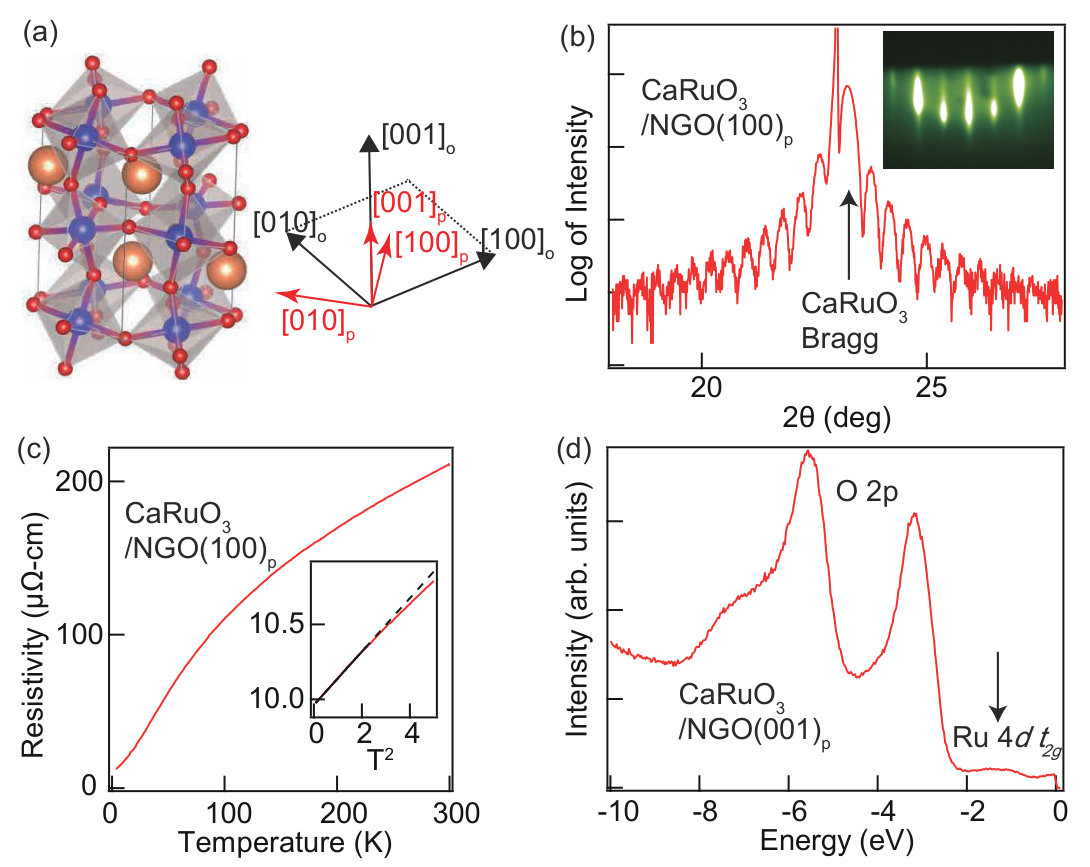 Figure 1
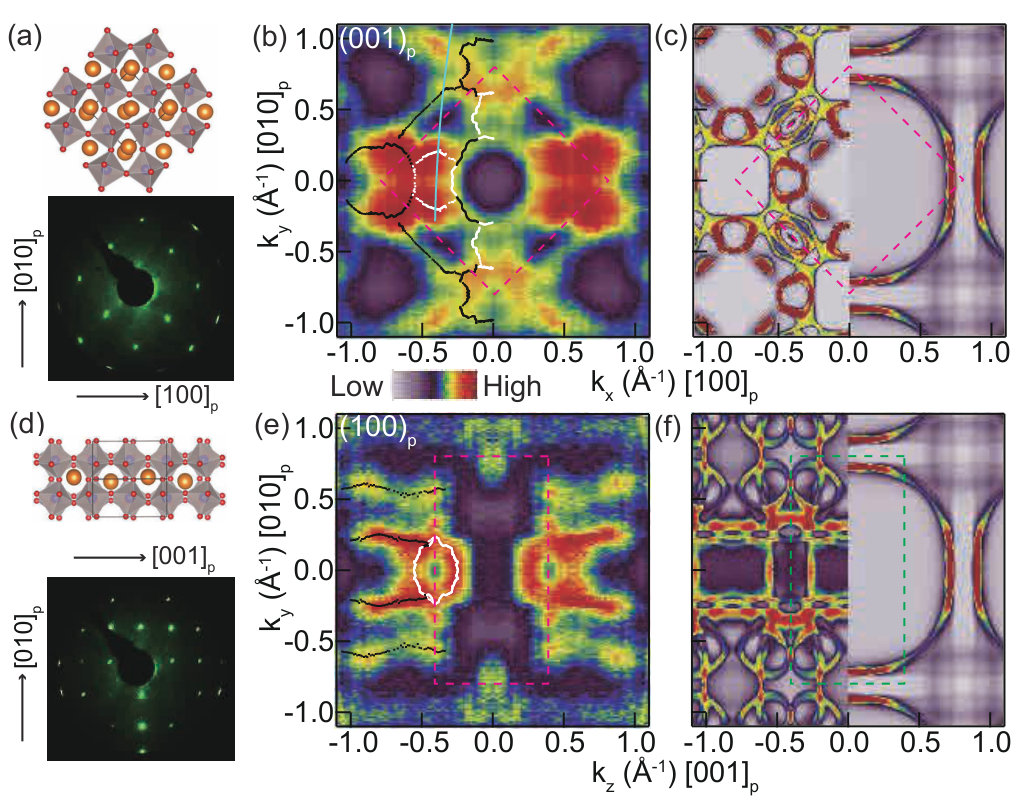 Figure 2
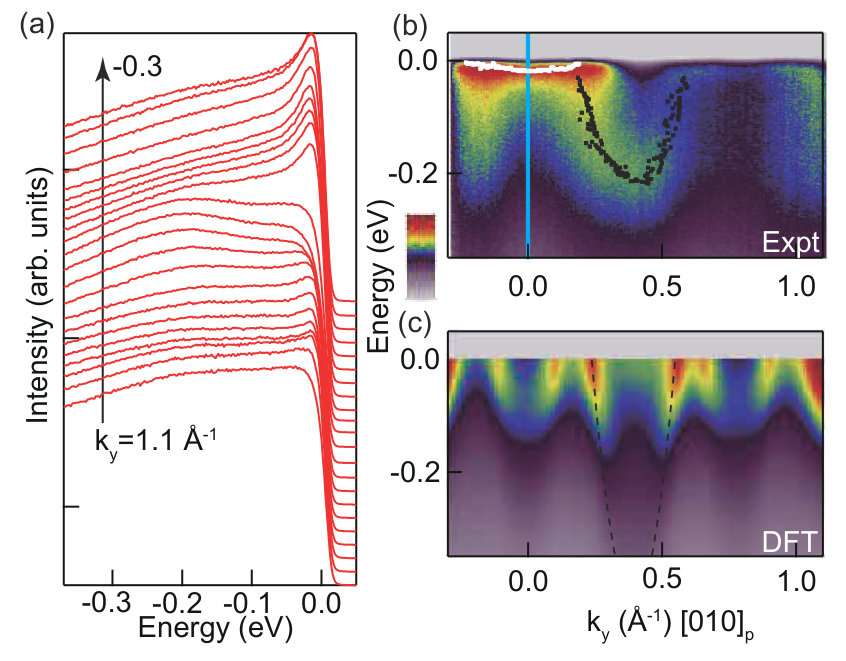 Figure 3
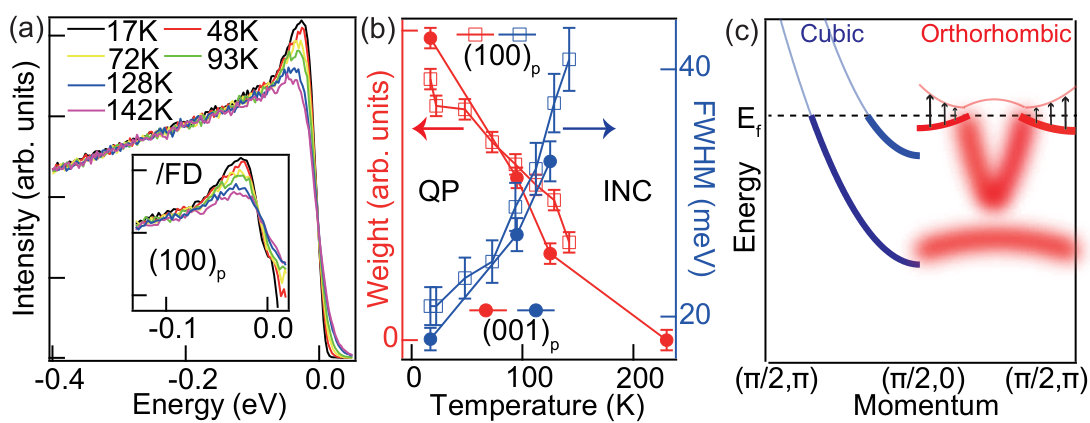 Figure 4
Peer Reviews
No public reviews on file for this paper yet. If you reviewed it on a platform where reviews are public (OpenReview, ICLR, NeurIPS, ICML), you can paste yours below so the community can read it here.
Videos
No videos yet. Explain this paper in a talk, walkthrough, or lecture? Add one.
Revealing the Hidden Heavy Fermi Liquid in CaRuO3
Yang Liu
Center for Correlated Matter and Department of Physics, Zhejiang University, China
Laboratory of Atomic and Solid State Physics, Department of Physics, Cornell University, Ithaca, New York 14853, USA
Department of Materials Science and Engineering, Cornell University, Ithaca, New York 14853, USA
Hari P. Nair
Department of Materials Science and Engineering, Cornell University, Ithaca, New York 14853, USA
Jacob P. Ruf
Laboratory of Atomic and Solid State Physics, Department of Physics, Cornell University, Ithaca, New York 14853, USA
Darrell G. Schlom
Department of Materials Science and Engineering, Cornell University, Ithaca, New York 14853, USA
Kavli Institute at Cornell for Nanoscale Science, Ithaca, New York 14853, USA
Kyle M. Shen
Laboratory of Atomic and Solid State Physics, Department of Physics, Cornell University, Ithaca, New York 14853, USA
Kavli Institute at Cornell for Nanoscale Science, Ithaca, New York 14853, USA
Abstract
The perovskite ruthenate has attracted considerable interest due to reports of possible non-Fermi-liquid behavior and its proximity to a magnetic quantum critical point, yet its ground state and electronic structure remain enigmatic. Here we report the first measurements of the Fermi surface and quasiparticle dispersion in CaRuO3 through a combination of oxide molecular beam epitaxy and in situ angle-resolved photoemission spectroscopy. Our results reveal a complex and anisotropic Fermi surface consisting of small electron pockets and straight segments, consistent with the bulk orthorhombic crystal structure with large octahedral rotations. We observe a strongly band-dependent mass renormalization, with prominent heavy quasiparticle bands which lie close to the Fermi energy and exhibit strong temperature dependence. These results are consistent with a heavy Fermi liquid with a complex Fermiology and small hybridization gaps near the Fermi energy. Our results provide a unified framework for explaining previous experimental results on CaRuO3, such as its unusual optical conductivity, and demonstrate the importance of octahedral rotations in determining the quasiparticle band structure, and electron correlations in complex transition metal oxides.
pacs:
71.27.+a, 79.60.-i, 74.70.Pq, 75.47.Lx
The ruthenates host a remarkably diverse class of exotic quantum phases, ranging from spin-triplet superconductivity, ferromagnetism, metamagnetism, spin-density waves, and quantum criticality, all with the same basic building block of corner-sharing RuO6 octahedra with a central Ru4+ ion MackenzieRMP2003 GrigeraScience2001 KosterRMP2012 . Amongst the ruthenates, CaRuO3 remains a particularly enigmatic compound. Measurements of the optical conductivity () and resistivity () have suggested that paramagnetic CaRuO3 exhibits a non-Fermi liquid (NFL) ground state LeePRB2002 KleinPRB1999 CapognaPRL2002 CaoSSC2008 , where the electronic excitations cannot be mapped directly to single-electron excitations, giving rise to physical properties not described by conventional Fermi liquid (FL) theory. Indeed, given its close similarity to its isostructural and isoelectronic ferromagnetic counterpart, SrRuO3, it has been argued that CaRuO3 might be on the cusp of a magnetic quantum critical point KleinPRB1999 CaoSSC2008 MazinPRB1997 , given the strong ferromagnetic fluctuations seen in nuclear magnetic resonance and induced ferromagnetism by defects and dopings YoshimuraPRL1999 HePRB2001 MaignanPRB2006 DurairajPRB2006 . On the other hand, the strong interplay between Hund’s coupling and electronic onsite repulsion in CaRuO3 could give rise to a fragile FL with a low coherence temperature, as recently proposed by dynamical mean-field theory (DMFT) GeorgesARCMP2013 MravljePRL2011 DangPRL2015 DangPRB2015 DengPRL2016 and supported by transport measurements below 2 K SchneiderRPL2014 . In particular, it has been proposed theoretically that the large RuO6 octahedral rotations in CaRuO3 may give rise to a multitude of low lying interband transitions that could mimic NFL effects in the optical conductivity DangPRL2015 GeigerPRB2015 . Nevertheless, precise knowledge of the momentum-dependent electronic structure, particularly the Fermi surface (FS), is crucial for understanding the true nature of the ground state and electromagnetic properties of CaRuO3.
In this Rapid Communication, we report the first momentum-resolved measurements of quasiparticle (QP) dispersions and FS in CaRuO3, by combining high quality thin film growth by reactive-oxide molecular-beam epitaxy (MBE) and in situ angle-resolved photoemission spectroscopy (ARPES) measurements. Our data reveal sharp, well-defined QP excitations that form a complex band structure arising from the large GdFeO3-type distortions in CaRuO3, confirming its FL ground state. We observe a manifold of heavy, flat QP bands close to the Fermi energy () caused by large octahedral rotations. Our measurement of the low-energy electronic structure provides a unified framework for explaining both the unconventional optical and terahertz conductivity LeePRB2002 DangPRL2015 SchneiderRPL2014 GeigerPRB2015 as arising from low-lying interband transitions, as well as the large electronic specific heat (80 mJ / mol K2) CaoSSC2008 KikugawaJPSJ2009 , and crossover behavior in resistivity and the Hall coefficient with temperature, originating from the unexpectedly heavy QP bands.
Epitaxial thin films of CaRuO3, typically nm, were grown by MBE in a dual-chamber Veeco GEN10 system in an oxidant ( O2 + O3) background pressure of 8 10*-7* torr and a substrate temperature of 800*∘* C, as measured using the k-space BandiT detector operating in blackbody mode. The film growth was monitored in real time using reflection high-energy electron diffraction (RHEED). Growth of and -oriented CaRuO3 films were achieved by selecting similarly oriented NdGaO3 (NGO) substrates. Immediately after growth, thin films were transferred under ultrahigh vacuum to a high-resolution ARPES system consisting of a VG Scienta R4000 analyzer and a VUV5000 helium plasma discharge lamp and monochromator MonkmanNM2012 . Measurements were performed at 17 K (unless noted otherwise) with an energy resolution meV with He I ( eV) photons and a base pressure of 7 torr. Spectra were also taken with He II ( eV) photons to confirm the bulk nature of the observed bands shown in the paper. After ARPES measurements, samples were characterized in detail by in situ low-energy electron diffraction (LEED), ex situ x-ray diffraction, electrical transport, and Hall measurements.
Figure 1(a) shows the crystal structure of bulk CaRuO3 with its type octahedral rotations GlazerAC2012 which cause highly distorted RuO6 octahedra and an orthorhombic lattice with lattice constants close to (), where is the pseudocubic lattice constant. Also shown in Fig. 1(a) is the correspondence between the orthorhombic (o) and pseudocubic (p) coordinate systems, which is commonly used to highlight the effect of octahedral rotations. The well-defined thickness fringes in x-ray diffraction (Fig. 1(b)) demonstrate the epitaxial, single-phase, and atomically flat nature of the thin films. In addition, RHEED (Fig. 1(b)) and low-energy electron diffraction (LEED, Fig. 2(a,d)) confirm that films with both the (001)o (same as (001)p) and (110)o (same as (100)p) out-of-plane orientations can be stabilized, which have subsequently been confirmed by ex situ transmission electron microscopy and synchrotron x-ray diffraction measurements. The typical residual resistivity ratios (RRRs = ) of samples measured by ARPES are on the order of 20, and RRRs on other samples as high as 75 have been measured NairAPLMaterials2018 , indicating the high quality of the films. The resistivity exhibits a FL-like behavior below K (hence a fragile FL), and cross over to a behavior above 2 K, consistent with previous measurements KleinPRB1999 CapognaPRL2002 CaoSSC2008 SchneiderRPL2014 KikugawaJPSJ2009 . Measurements of the valence band (Fig. 1(d)) show the O and Ru states, consistent with earlier reports by Yang et al. which focused on the origin of the broad hump around 1 eV binding energy (marked by an arrow) as being due to enhanced correlations YangPRB2016n2 .
In Fig. 2, we show maps in momentum space of the ARPES intensity at meV, for films aligned both along the (001)p (Fig. 2(b))and (100)p (Fig. 2(e)) directions. Both orientations show a complex FS comprised of small pockets arising from the large GdFeO3-type distortions, which cause band folding and hence small hole or electron pockets. The experimental Fermi wavevectors (s) from maxima in either the momentum distribution curves (MDCs) or energy distribution curves (EDCs) are summarized in the left halves in Fig. 2(b,e) as black dots. For the (001)p films, the experimental FS exhibits small pockets centered at (0,0), () and (), and possibly () (all defined within the pseudocubic coordinate). In comparison, we also plot DFT simulations of the corresponding -space maps calculated using Wien2K in the generalized gradient approximation (details in Supplemental Materials Supplemental ) in Figs. 2(c,f): left for the bulk structure (structure parameters adapted from ZayakPRB2006 ), right for the ideal cubic structure with 180*∘* Ru-O-Ru bonds. By comparing the experimental data with various slices through the DFT calculation, we estimate for the (001)p surface and for the (100)p surface under eV photons (Figs. S1 and S2 in Supplemental ). Those values of suggests an inner potential of eV and eV for the (001)p and (100)p surface respectively, similar to SrRuO3 Takizawathesis2007 . The orthorhombic DFT calculations in the left half of Fig. 2(c) qualitatively reproduces the multiplicity of small FS pockets, in contrast to the case of SrRuO3, where the band folding is much weaker MackenziePRB1998 AlexanderPRB2005 ShaiPRL2013 YangPRB2016 . Despite sharing the same structure, the rotation angles of the oxygen octahedra are approximately doubled in CaRuO3 compared to SrRuO3 (the averaged rotation angle along each of the three pseudocubic axis is in SrRuO3 versus for CaRuO3 ChengPNAS2013 KiyamaPRB1996 ). This leads to a significant difference in the momentum distribution of spectral weight, from reflecting nearly cubic symmetry in SrRuO3, to a much more complex structure in CaRuO3, and could be important for the observed differences in electromagnetic properties (Table I in Supplemental ).
The importance of octahedral rotations is even more evident when comparing the (001)p data to that from the (100)p surface which should be identical in the idealized cubic structure without rotations (right halves in Fig. 2(c,f)). The ARPES Fermi surface maps show dramatic differences (Fig. 2(e)) between the two orientations. For instance, in the (100)p films, there is only a single enclosed pocket near () together with long straight segments of high intensity running parallel to the [001]p direction which qualitatively match the corresponding orthorhombic DFT simulations for this surface. The average radius of this electron pocket is measured to be 0.15 Å*-1*, which is in agreement with the only frequency seen from SdH oscillations (0.12 Å*-1*) in similarly oriented (100)p films SchneiderRPL2014 . SdH oscillation results from an (001)p film are not available at the moment, but additional frequencies have been observed as the magnetic field is moved from [100]p towards the [001]p direction SchneiderRPL2014 , which is consistent with the ARPES FS map of (001)p films, showing additional small pockets due to strong band folding.
In Fig. 3(a), we show the EDCs along the momentum cut shown by the cyan line in Fig. 2(b). A weakly dispersive, sharp QP peak is clearly observed close to and whose intensity is highly dependent on the RRR, underscoring the importance of sample quality. The image plot is shown in Fig. 3(b), which also reveals a neighboring, broader band with significant dispersion (effective mass 0.8 ). To accurately extract the heavy QP dispersion, we divide the measured ARPES spectra by the Fermi-Dirac function convolved by a Gaussian resolution function Supplemental . The results reveal that the heavy QP band is electron-like with a fitted effective mass = 13.5 1.5 (black dots in Fig. 3(b)). The experimental data on (100)p films further confirm that these heavy QPs possess large masses along all three momentum directions (Fig. S4 in Supplemental ), which allows us to calculate the electronic specific heat associated with these heavy QPs to be 60 6.7 mJ / mol K2 Supplemental , accounting for a large portion of the experimental specific heat (80 mJ / mol K2). The remainder could be due to contributions from other lighter bands. DFT calculations for the bulk-like structure predicts for all relevant bands (see Fig. 3(c)) Supplemental . This strongly band-dependent renormalization, and the subsequent coexistence of heavy and light QPs near is remarkable and the origin of such large variations in the renormalization of bands from presumably the same orbitals remains unclear. As a result, only the light QP bands measured in experiment agree well with the DFT simulations of the Fermi surface and band dispersion (Figs. 2c, 2f, 3c), while the heavy QP bands show strong discrepancies with the DFT calculations due to their much stronger renormalization (the heavy bands were not used in comparing the Fermi surface topologies or determination for this reason). This strongly band-dependent renormalization and major discrepancies for the heavy bands indicate that DFT alone cannot explain the QP dispersion in CaRuO3, and the inclusion of onsite Hubbard repulsion and Hund’s coupling is likely essential. A full description of the electronic structure requires advanced theoretical tools, such as DFT + DMFT GeorgesARCMP2013 DangPRB2015 DengPRL2016 .
We emphasize that the observed QP bands are most likely derived from bulk, rather than surface states, given the clear differences in data taken with different photon energies (Fig. S6 in Supplemental ). Moreover, the heat capacity estimated from ARPES measurements matches closely to the bulk thermodynamic measurements, suggesting that the heavy QP bands which dominate this calculation probably correspond to bulk electronic states. In addition, the light QP bands are in qualitative agreement with bulk DFT calculations. While it is difficult to conclusively rule out subtle surface relaxations, the combination of the photon energy dependence and the agreement with bulk measurements and calculations, when taken as a whole, suggests that any possible surface relaxation is minimal enough not to qualitatively affect our observations, as supported by the LEED measurements which are also consistent with the bulk symmetry (Fig. 2).
A central question for CaRuO3 remains the robustness of the FL ground state, given the apparently low FL coherence temperature (1.5 K) deduced from resistivity measurements (Fig. 1(c)). We perform temperature dependent ARPES measurements and in fact observe well-defined QP peaks up to 100 K (Fig. 4(a)), thus providing direct spectroscopic evidence of robust FL-like QPs even to high temperatures. A detailed lineshape analysis shows the disappearance of the heavy QPs at K in Fig. 4(b), corresponding to the crossover in resistivity (Fig. 1(c)) and rapid change of Hall coefficient Supplemental GausepohlPRB1996 . Such a temperature dependence has also been reported in other ruthenates ShimoyamadaPRL2009 KondoPRL2016 and has been proposed to be a direct signature of strong correlations in a Hund’s metal MravljePRL2011 , where the interplay between and results in a large intermediate temperature range where the coherent spectral weight shows strong temperature dependence DangPRB2015 XuPRL2013 DengPRL2013 . The observation of heavy QPs with a strong temperature dependence, together with the large electronic specific heat and crossover behavior in resistivity and Hall coefficient, indicate a heavy Fermi liquid ground state with surprising similarities to heavy fermion systems SteglichPRL1979 . Whether there is any inherent connection between two systems would be an interesting topic of investigation for future studies.
In Fig. 4(c), we show a schematic summarizing our key observations for CaRuO3, where large octahedral rotations cause strong band folding and hybridization, resulting in a complex Fermi surface topology with many small electron or hole pockets and hybridization gaps near . Our results allows for a unified understanding of not only its electronic structure, but also the myriad of experimental observations previously reported in the literature. The complex band structure, comprised of many heavy bands which lie within 30 meV (7.25 THz or 242 cm*-1*) of , is the origin of the multitude of low-energy interband transitions, which mimics the signature of NFL optical conductivity previously reported. The large rotations also significantly reduce the bandwidth, leading to large mass renormalization for some bands near , while other light QPs coexist. This strongly band-dependent mass renormalization is remarkable and its origin is yet to be understood theoretically. The heavy QPs exhibit strong temperature dependence, a signature of strong correlation in Hund’s metals. Our results not only provide a first complete experimental understanding of the complex electronic structure of CaRuO3, but generally highlights the importance of octahedral rotations in correlated ruthenate perovskites and how it can impact the fermiology and physical properties, in a much more pronounced manner than other prototypical metallic perovskites, e.g., SrVO3/CaVO3 YoshidaPRB2010 .
We would like to thank A. Georges, Q. Han, and A.J. Millis for very helpful discussions and insights. This work was supported by the National Science Foundation through DMR-0847385, DMR-1308089, and through the Materials Research Science and Engineering Centers program (DMR-1719875, the Cornell Center for Materials Research), and the Research Corporation for Science Advancement (2002S). This work was performed in part at the Cornell NanoScale Facility, a member of the National Nanotechnology Infrastructure Network, which is supported by the National Science Foundation (Grant No. ECCS-0335765). Y. L. acknowledges support from National Natural Science Foundation of China (Grant No. 11674280) and National key RD program of the MOST of China (Grant No.2016YFA0300203).
The reference list from the paper itself. Each links out to its DOI / PubMed record.
- 1(1) A. P. Mackenzie and Y. Maeno, Rev. Mod. Phys. 75 , 657 (2003).
- 2(2) S. A. Grigera, R. S. Perry, A. J. Schofield, M. Chiao, S. R. Julian, G. G. Lonzarich, S. I. Ikeda, Y. Maeno, A. J. Millis, and A. P. Mackenzie, Science 294 , 329 (2001).
- 3(3) G. Koster, L. Klein, W. Siemons, G. Rijnders, J. S. Dodge, C.-B. Eom, D. H. A. Blank, and M. R. Beasley, Rev. Mod. Phys. 84 , 253 (2012).
- 4(4) Y. S. Lee, J. Yu, J. S. Lee, T.W. Noh, T.-H. Gimm, H.-Y. Choi, and C. B. Eom, Phys. Rev. B 66 041104 (2002).
- 5(5) L. Klein, L. Antognazza, T. H. Geballe, M. R. Beasley, and A. Kapitulnik, Phys. Rev. B 60 1448 (1999).
- 6(6) L. Capogna, A. P. Mackenzie, R. S. Perry, S. A. Grigera, L. M. Galvin, P. Raychaudhuri, A. J. Schofield, C. S. Alexander, G. Cao, S. R. Julian, and Y. Maeno, Phys. Rev. Lett. 88 076602 (2002).
- 7(7) G. Cao, O. Korneta, S. Chikara, L. E. De Long, and P. Schlottmann, Solid State Commun. 148 305 (2008).
- 8(8) I. I. Mazin and D. J. Singh, Phys. Rev. B 56 2556 (1997).