Controlled Forgetting: Targeted Stimulation and Dopaminergic Plasticity Modulation for Unsupervised Lifelong Learning in Spiking Neural Networks
Jason M. Allred, Kaushik Roy

TL;DR
This paper introduces Controlled Forgetting Networks (CFNs), a biologically inspired method for unsupervised lifelong learning in spiking neural networks that selectively adapts to new information while preserving prior knowledge.
Contribution
The paper presents a novel targeted plasticity mechanism using dopaminergic modulation to prevent catastrophic forgetting in SNNs during online learning.
Findings
Achieved 95.36% accuracy on MNIST in an unsupervised lifelong learning setting.
Demonstrated effective local adaptation without degrading performance on previous tasks.
Validated the approach as potentially the best unsupervised single-layer SNN performance on MNIST.
Abstract
Stochastic gradient descent requires that training samples be drawn from a uniformly random distribution of the data. For a deployed system that must learn online from an uncontrolled and unknown environment, the ordering of input samples often fails to meet this criterion, making lifelong learning a difficult challenge. We exploit the locality of the unsupervised Spike Timing Dependent Plasticity (STDP) learning rule to target local representations in a Spiking Neural Network (SNN) to adapt to novel information while protecting essential information in the remainder of the SNN from catastrophic forgetting. In our Controlled Forgetting Networks (CFNs), novel information triggers stimulated firing and heterogeneously modulated plasticity, inspired by biological dopamine signals, to cause rapid and isolated adaptation in the synapses of neurons associated with outlier information. This…
Click any figure to enlarge with its caption.
 Figure 1
 Figure 2
 Figure 3
 Figure 4
 Figure 5
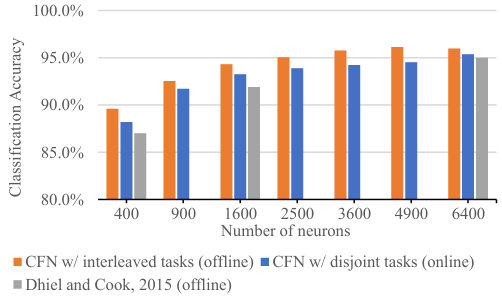 Figure 6
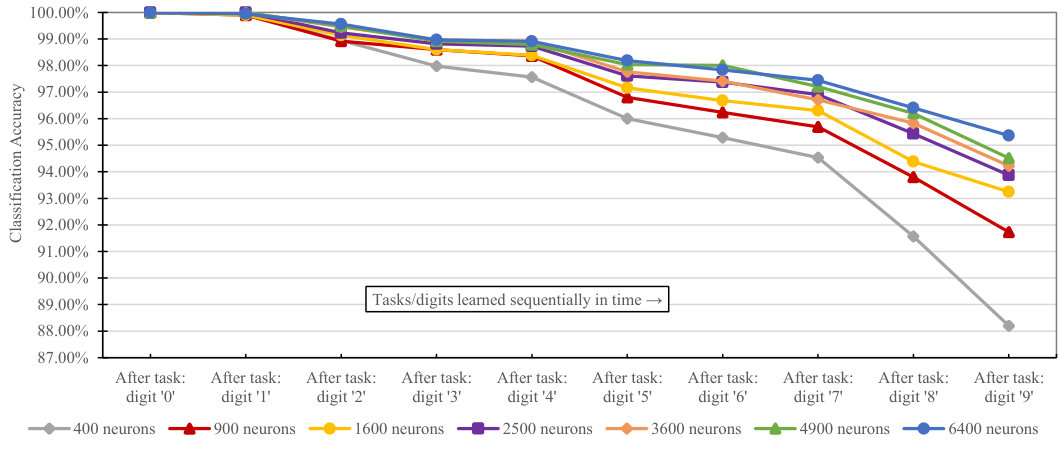 Figure 7
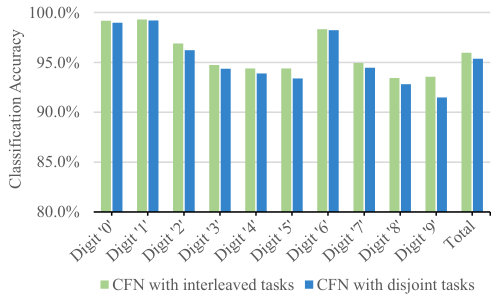 Figure 8
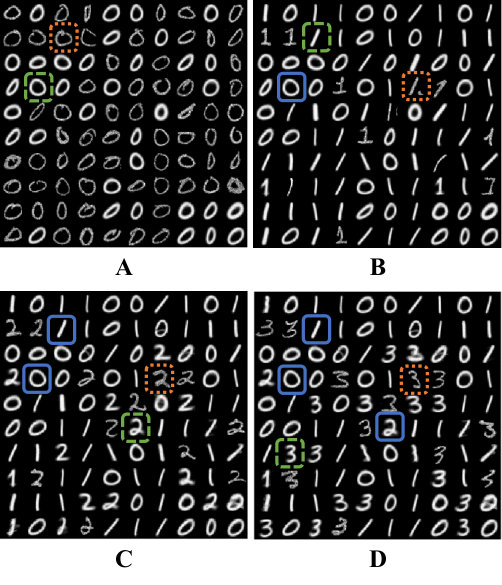 Figure 9
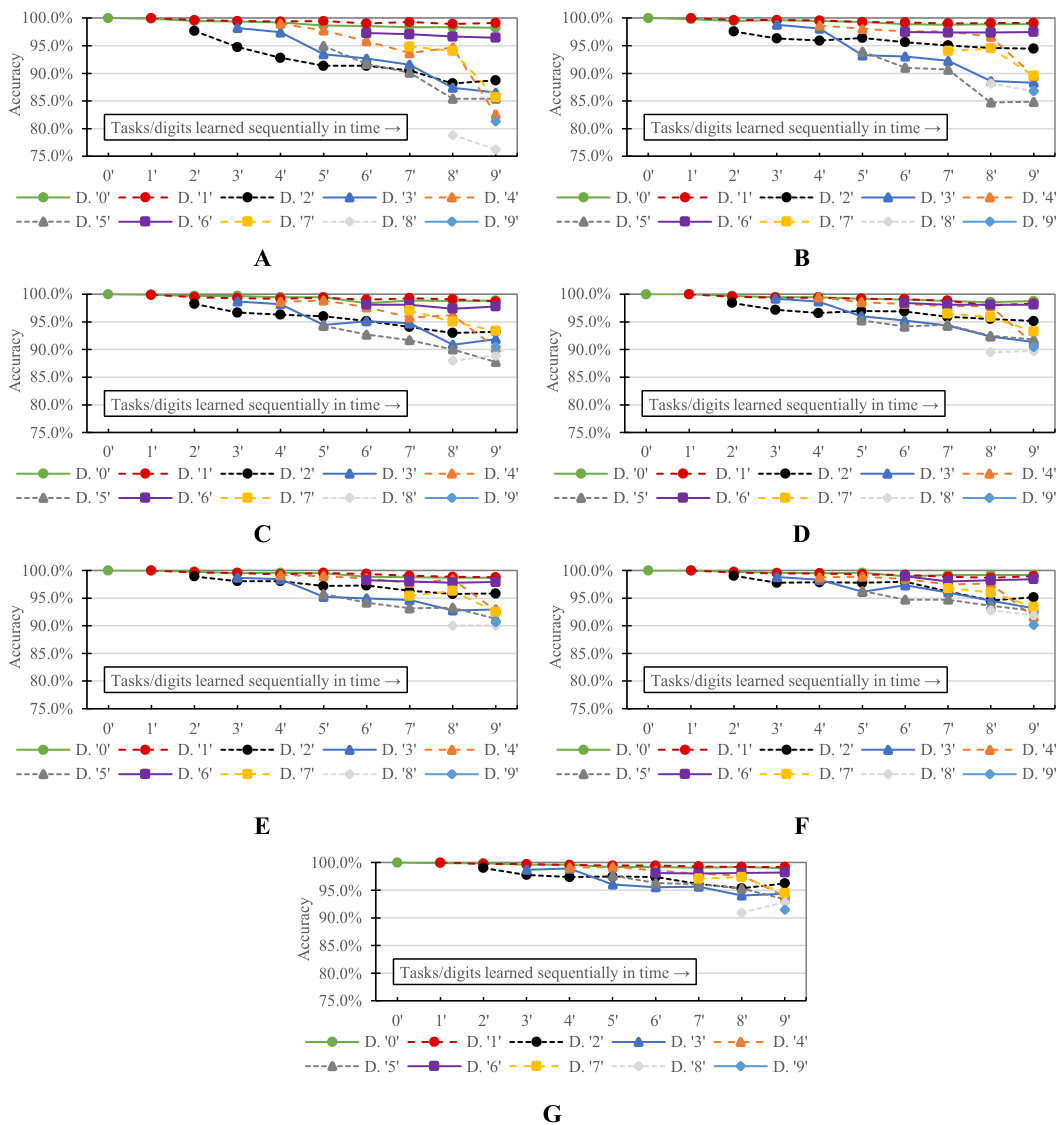 Figure 10
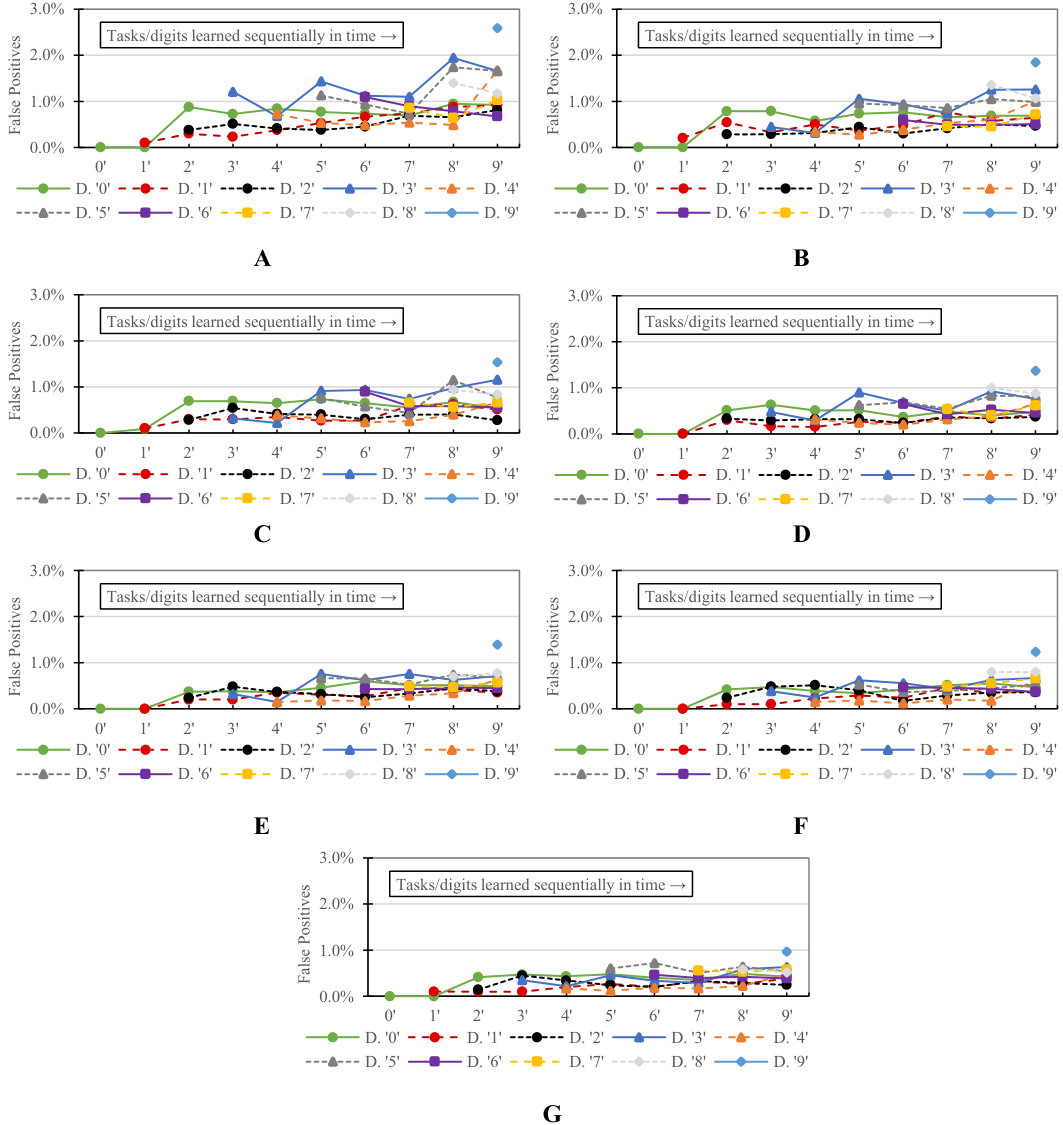 Figure 11
Peer Reviews
No public reviews on file for this paper yet. If you reviewed it on a platform where reviews are public (OpenReview, ICLR, NeurIPS, ICML), you can paste yours below so the community can read it here.
Videos
No videos yet. Explain this paper in a talk, walkthrough, or lecture? Add one.