Age of Information in Multiple Sensing
Alireza Javani, Marwen Zorgui, Zhiying Wang

TL;DR
This paper analyzes the age of information in networks with multiple sources and servers, deriving formulas for average age under various configurations and optimizing arrival rates for minimal age.
Contribution
It provides the first closed-form expressions for average age in multi-server, multi-source networks with Poisson arrivals and exponential service times.
Findings
Closed-form average age for single source with n servers.
Explicit average age formulas for n=2,3 sources and servers.
Optimal arrival rates for two-source case.
Abstract
Having timely and fresh knowledge about the current state of information sources is critical in a variety of applications. In particular, a status update may arrive at the destination much later than its generation time due to processing and communication delays. The freshness of the status update at the destination is captured by the notion of age of information. In this study, we first analyze a network with a single source, servers, and the monitor (destination). The servers independently sense the source of information and send the status update to the monitor. We then extend our result to multiple independent sources of information in the presence of servers. We assume that updates arrive at the servers according to Poisson random processes. Each server sends its update to the monitor through a direct link, which is modeled as a queue. The service time to transmit an update…
Click any figure to enlarge with its caption.
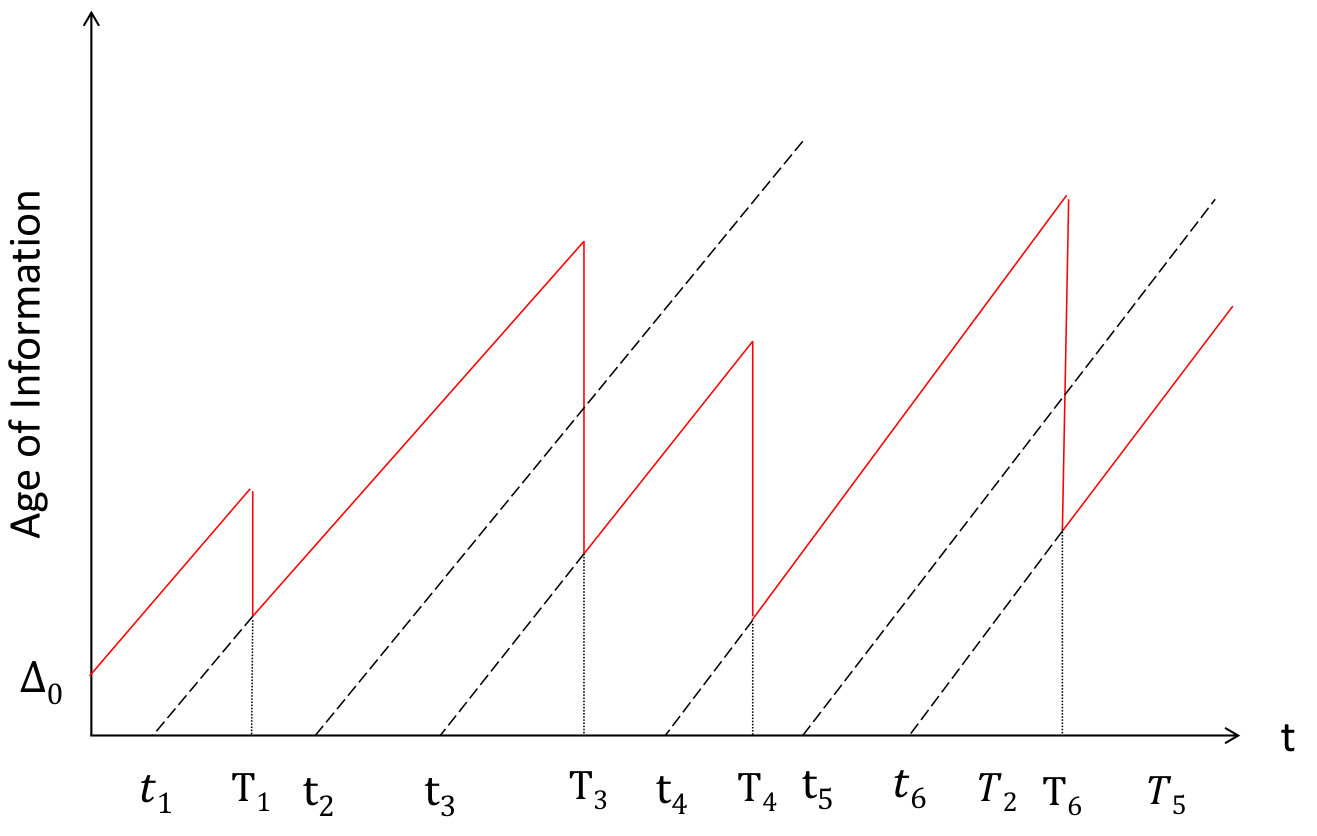 Figure 1
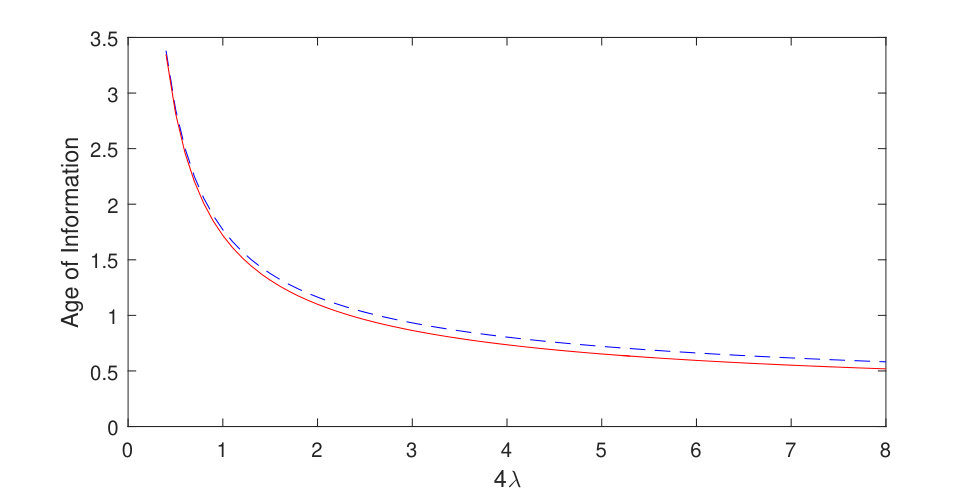 Figure 2
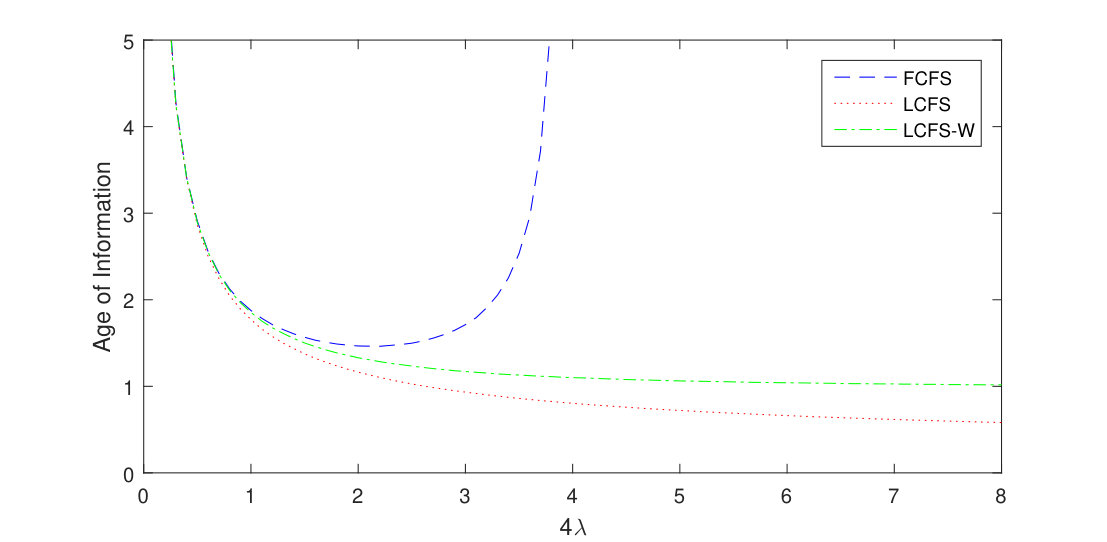 Figure 3
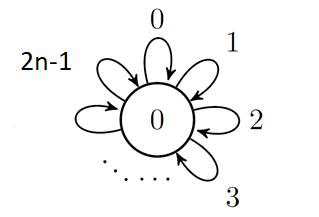 Figure 2
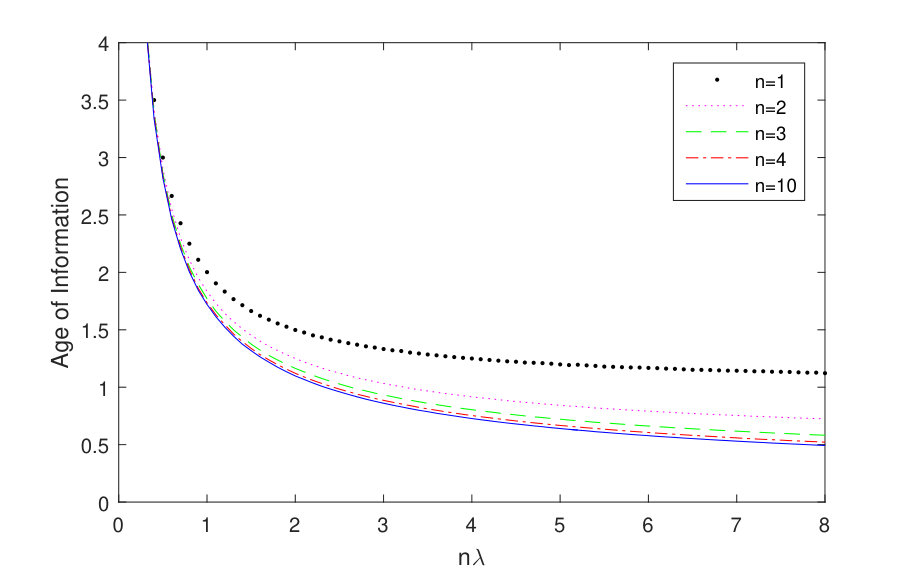 Figure 5
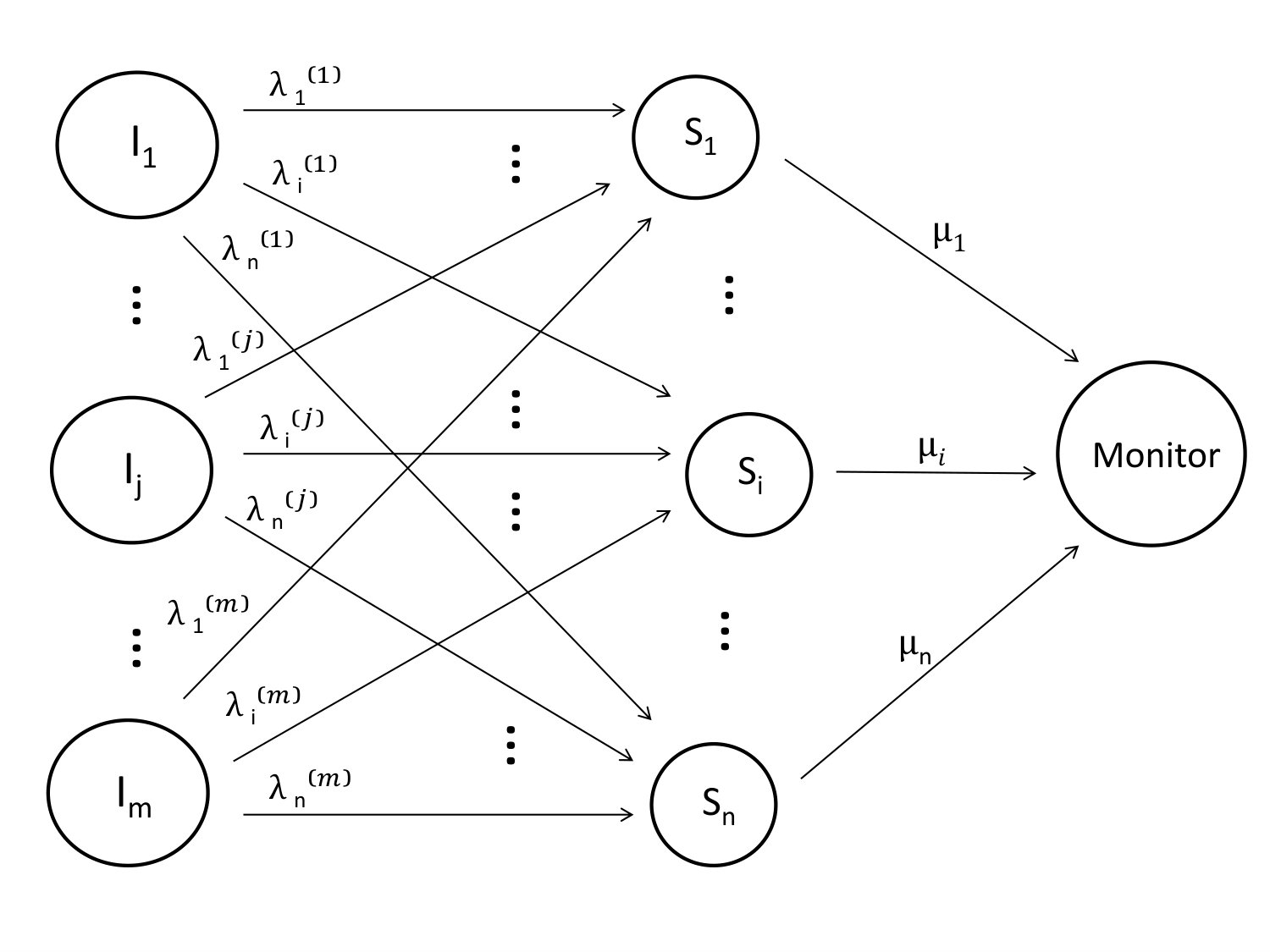 Figure 6
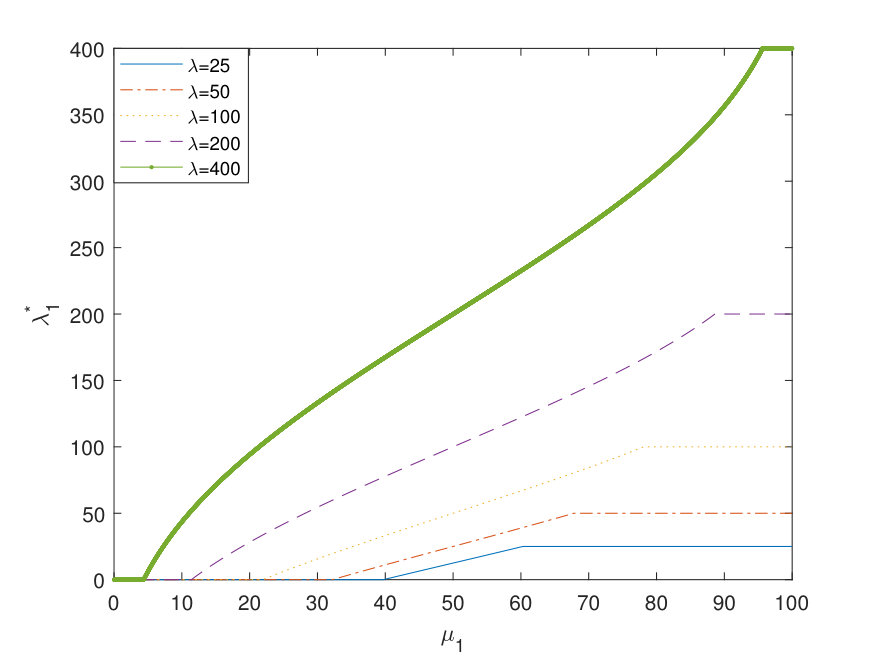 Figure 7
Peer Reviews
No public reviews on file for this paper yet. If you reviewed it on a platform where reviews are public (OpenReview, ICLR, NeurIPS, ICML), you can paste yours below so the community can read it here.
Videos
No videos yet. Explain this paper in a talk, walkthrough, or lecture? Add one.