Harmonic maps with prescribed singularities and applications in general relativity
Gilbert Weinstein

TL;DR
This paper establishes existence and uniqueness results for harmonic maps with prescribed singularities into non-positively curved spaces and explores their applications in general relativity.
Contribution
It provides a general theoretical framework for harmonic maps with singularities and surveys their relevance to problems in general relativity.
Findings
Proved existence and uniqueness of harmonic maps with prescribed singularities.
Applied harmonic map theory to specific problems in general relativity.
Surveyed various applications of harmonic maps in gravitational physics.
Abstract
This paper presents a general existence and uniqueness result for harmonic maps with prescribed singularities into non-positively curved targets, and surveys a number of applications to general relativity. It is based on a talk delivered by the author at The 11th Mathematical Society of Japan Seasonal Institute, The Role of Metrics in the Theory of Partial Differential Equations.
Click any figure to enlarge with its caption.
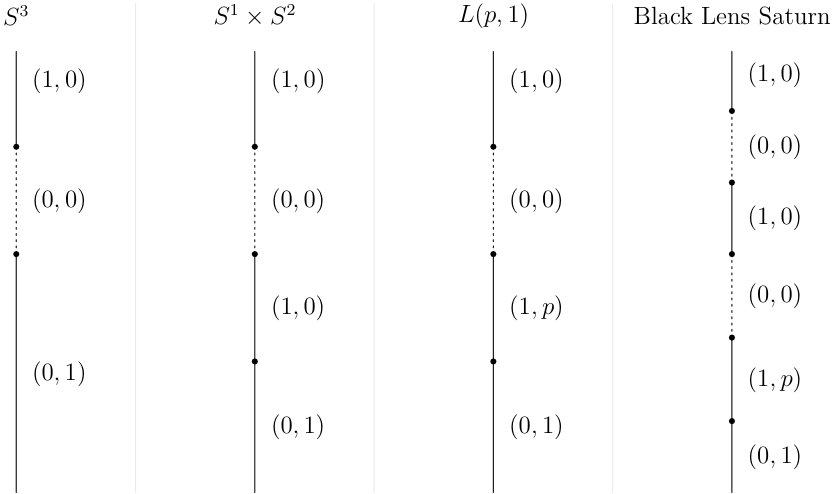 Figure 1
Peer Reviews
No public reviews on file for this paper yet. If you reviewed it on a platform where reviews are public (OpenReview, ICLR, NeurIPS, ICML), you can paste yours below so the community can read it here.
Videos
No videos yet. Explain this paper in a talk, walkthrough, or lecture? Add one.
Harmonic maps with prescribed singularities
and applications in general relativity
Gilbert Weinstein
Department of Mathematics & Department of Physics
Ariel University, Ariel, Israel 40700
Abstract.
This paper presents a general existence and uniqueness result for harmonic maps with prescribed singularities into non-positively curved targets, and surveys a number of applications to general relativity. It is based on a talk delivered by the author at The 11th Mathematical Society of Japan Seasonal Institute, The Role of Metrics in the Theory of Partial Differential Equations.
Key words and phrases:
Harmonic maps, black holes
The author wishes to express his thanks to the organizers of the MSJ-SI for their invitation to participate in this conference, and for their hospitality in Sapporo.
1. Introduction
We begin with a brief review of harmonic maps. Let and be Riemannian manifolds and let be a smooth map. Then is a cross-section of the tangent bundle of tensor-product with the pull back bundle of under . In local coordinates we have:
[TABLE]
There is a canonical positive definite inner product on this bundle with the norm expressed in local coordinates:
[TABLE]
From this we can form an energy:
[TABLE]
Definition 1.1**.**
A map is harmonic if for each it is a critical point of . The map is an local energy minimizer if for every , for all which agrees with on the boundary of . It is an energy minimizer if the same is true with .
Clearly every local energy minimizer is a harmonic map. The Euler-Lagrange equations read
[TABLE]
where are the Christoffel symbols of evaluated along , and is the Laplace-Beltrami operator on . This forms a system of semi-linear elliptic PDEs on with the nonlinearity being quadratic in the first derivatives of . For an arbitrary map , the left-hand side is a cross section of called the tension of .
Familiar examples of harmonic maps are the two cases: (i) , then and the harmonic map problem reduces to the linear Laplace equation; (ii) , then the harmonic map problem becomes the ODE problem for geodesics. The first significant nonlinear PDE result concerning harmonic maps was obtained by Eells-Sampson [eellssampson]: If the sectional curvature of satisfies , and is any smooth map, then there is a harmonic map homotopic to . Without the assumption on , harmonic maps and even energy minimizer can develop singularities, and the best one can do is control the size of the singular set [schoenuhlenbeck].
2. Harmonic maps with prescribed singularities
Consider first the linear case. Let be a complete Riemannian manifold111A similar result can be stated for a compact manifold with boundary. and let be a submanifold of co-dimension . Let be a positive continuous function, and let be the Green function for on , then
[TABLE]
is a harmonic function on which blows up on , . Now if is a geodesic in , then is a harmonic map into which blows up on . Before we state and prove a nonlinear analog of this result, we need two definitions.
Definition 2.1**.**
A model map is a map such that (i) is bounded; and (ii) decays ”fast enough”, in the sense that there is a function with at infinity and .
It turns out for instance that for , the case of interest for our applications, it is sufficient to require with .
Definition 2.2**.**
Two maps are asymptotic if is (i) bounded; and (ii) falls off to [math] at infinity.
Part (i) of this definition is inspired by the analogous definition for geodesics [eberleinoneill].
Theorem 1**.**
Let be a model map, and let either , or be a symmetric space of non-compact type and rank , then there is a unique harmonic map which is asymptotic to .
Proof.
For completeness, we give some of the details of the proof. We need the following Lemma [weinsteinMRL].
Lemma 1**.**
Let be smooth maps, and suppose , then
[TABLE]
The Hessian of the distance function is positive semi-definite, thanks to the hypothesis [schoenyau1979compact], hence denoting , we have
[TABLE]
wherever . Now, we get
[TABLE]
when , and since has a global minimum on the set , it follows trivially that also there. This completes the proof of the Lemma.
We now return to the proof of the Theorem. We first establish uniqueness. If are both harmonic and asymptotic to , then is asymptotic to and by Lemma 1, is a bounded subharmonic function on which tends to [math] at infinity. Since is of co-dimension , it follows from Lemma 8 in [weinsteinDMJ] that is weakly harmonic on . Hence by the maximum principle and .
We now prove existence. Fix some point , pick , and let . Since is compact and is smooth on , there exists a harmonic map such that on . Let , then by Lemma 1 and Definition 2.1, we have
[TABLE]
on , where is the function in Definition 2.1, hence and at infinity. Also on , thus by the maximum principle it follows immediately that independent of , and at infinity.
We now consider the maps restricted to a fixed set . These map into a fixed ball , and hence we can obtain local pointwise a priori bounds uniform in not just for but also for any number of derivatives. From here it is straightforward to obtain a sequence such that converges uniformly on compact subsets of together with two derivatives, and hence the limit will be harmonic and asymptotic to .
To achieve this, the first step is to obtain a priori local energy bounds. These follow from the pointwise bound above and require a particular coordinate system on the target of the harmonic map:
[TABLE]
where is either 1 or the rank of , and is a quadratic form on satisfying
[TABLE]
for some constants . Here where is the dimension of . The existence of such a coordinate system for symmetric spaces of non-compact type and rank was proved in [khuriweinsteinyamada2017]. However, we conjecture the same holds true for any rank. In this coordinate system, of the harmonic map equations read
[TABLE]
Multiplying by , where is a cut-off function, and integrating by parts, we obtain
[TABLE]
Now going back to Equation(2), multiplying by and integrating by parts, we obtain
[TABLE]
Combining these two inequalities gives the required local energy estimate where depends on but is independent of .
We can now establish a pointwise bound on the derivatives using the Bochner identity:
[TABLE]
Since , it follows
[TABLE]
where , and standard elliptic theory immediately gives an on from the bound already obtained. One can now bootstrap using the harmonic map equations (1) to get pointwise bounds on any number of derivatives independent of . ∎
3. Applications in general relativity
The applications to general relativity of harmonic maps with prescribed singularities stem from the following fact or variations thereof. Under the hypothesis of stationarity and -axisymmetry, i.e. admitting an isometric action of the group , the Einstein vacuum equations reduce to a harmonic map problem where -axis, and . Note that is a symmetric space of non-compact type and rank . We recall that the rank is the maximal dimension of a flat, i.e. a totally geodesic submanifold with vanishing curvature. For the sake of brevity, we will not expound here further on this reduction; see [khuriweinsteinyamada2017]*Section 2 for more details. We only comment on two essential features: the quotient space is 2 dimensional, and the Einstein equations decouple so that the system becomes semi-linear.
3.1. Non-degenerate vacuum black holes in 4-d gravity
In this case, the target is the hyperbolic plane [weinsteinMRL]. This line of investigation, which begun in the static linear case by Bach-Weyl [bachweyl], was pursued further in a series of papers by this author starting with [weinsteinCPAM1990], culminating with [weinsteinMRL], in which an earlier version of Theorem 1 was proved.
The metrics considered are of the form
[TABLE]
and are asymptotically flat. The twist potential is defined by , and is related to the metric function by , where is the Hodge dual in the flat -plane. The one form measures how far is from being hypersurface orthogonal. It vanishes in the static case, indicating the absence of rotation, in which case the Einstein equations reduce to one linear equation 222This is the case studied by Bach and Weyl in 1917.. The map blows up on the axis . The singular boundary conditions can be used to specify the number of black holes, their mass and their angular momenta. Once that data is prescribed, one constructs a model map , and there is, by Theorem 1, a unique solution to the harmonic map problem.
Also as pointed out in [weinsteinMRL], given such a harmonic map, one can reconstruct a solution of the original Einstein vacuum equations. The metric (3) thus constructed can be extended across if and only if there are no conical singularities, and if the metric components are sufficiently smooth up to the axis. The latter condition, which we call analytic regularity, was established in [weinsteinCPAM1990]; see also generalizations in [litian92, nguyen2011]. The angle deficiency is constant along any connected component of the axis, and it in fact vanishes on the two unbounded component [khuriweinsteinyamada2018]. With two black holes, it is related to the gravitational force acting between them . In the static linear case, Bach and Weyl first calculated , where and is a measure of the masses of the two bodies, and is a measure of their separation. It is conjectured that it is impossible to balance several rotating black holes. This is equivalent to a conical singularity always being present. Some results were obtained in [litian, weinsteinTAMS].
These results were generalized to the Einstein-Maxwell equations, and also later further generalized to the Einstein-Abelian-Yang-Mills equations, in which case , and respectively [weinsteinMRL].
3.2. Degenerate black holes in 4-d gravity
The generalization of these results to the degenerate horizon case, sometimes also called the extreme case, is primarily motivated by an idea of S. Dain [dain2008] which allows one to prove lower bounds on the ADM mass of axisymmetric data in terms of angular momentum and charge. Dain showed that the ADM mass is bounded below by a renormalized harmonic map energy and that this renormalized energy is minimized by the harmonic maps corresponding to extreme black holes. In particular, Dain [dain2008] proved the inequality where is the ADM mass and the angular momentum. This was generalized to multiple black holes where we proved , and is the harmonic map renormalized energy for the corresponding extreme black hole [chruscielliweinstein]. Dain’s result was later generalized to the charged single black hole case [chruscielcosta] , and we again generalized this to the multiple black hole case [khuriweinstein2015].
A key ingredient in these results is the construction of the minimizer corresponding to multiple black holes. The existence result for harmonic maps with prescribed singularities described in Section 2 is used to achieve this goal.
In the multiple black hole case, both in vacuum and in the charged case, the lower bound is not explicit, but it is conjectured that it is the same as in the single black hole case with and denoting the total charge and angular momentum.
3.3. Black holes in 5-d gravity
In this latest application of harmonic maps with prescribed singularities, we considered the problem of vacuum black holes in 5-d with non-spherical topology. In 4-d, a result of Hawking [hawking1972] shows that the cross section of any connected component of the event horizon in an asymptotically flat (AF) stationary spacetime satisfying the dominated energy condition (DEC), has positive Euler characteristic, and hence must be topologically a -sphere. However, the higher dimensional analogous result by Galloway and Schoen [schoengalloway] only shows that black hole boundaries are -dimensional Riemannian manifolds with positive Yamabe invariant. In particular, in 5-d this allows prime 3-d manifolds of positive Yamabe type, , , and the lens spaces . Some explicit examples with horizon topology, referred to as Black Rings, are known [emparanreall2008, pomeranskysenkov].
The target for the harmonic map problem is now the symmetric space . In [khuriweinsteinyamada2017], we constructed harmonic maps corresponding to AF spacetimes, and in [khuriweinsteinyamada2018] solutions corresponding to asymptotically locally Euclidean (ALE) spacetimes, i.e. whose spacelike infinity is modeled on , as well as asymptotically Kaluza-Klein (AKK), i.e. with spacelike infinity modeled on . Here too, we are able to construct multiple black hole solutions, provided the necessary topological obstructions are avoided.
The metrics we consider are now of the form
[TABLE]
where is minus the determinant of the metric on the orbits of , is the metric on the orbits of and is the determinant of . Also as before, the resulting metrics can be extended across the axis if and only if analytic regularity holds, and there are no conical singularities.
The topology of the horizon is prescribed via the rod structure, a pair of relatively prime integers assigned to each axis rod . Rods are subintervals of on which the rank of is either on axis rods, or on horizon rods. The end points of horizon rods are poles, points separating axis rods are called corners. The rod structure of an axis rod is defined to be such that is the generator of which degenerates on that rod. The topology of the horizon is determined by the rod structures of the two adjacent rods. Some simple examples of rod structure configurations are given in Figure 1. It turns out that the potentials are constant on each component of . The difference between the two constant values of adjacent to any horizon determines the angular momentum associated with that generator for that black hole. The data consists of the rod structure configuration and these constants. Given any data satisfying a mild admissibility condition, we showed in [khuriweinsteinyamada2017] that a model map could be constructed, and hence a unique harmonic map exists corresponding to this data.
In [khurimatsumotoweinsteinyamada], we analyzed the topology of the domain of outer communications of these solutions using linear plumbing. Plumbing is a construction used to glue together two disk bundles by identifying the bundles over two neighborhoods, crisscrossing base and fiber. Utilizing this technique we were able, given any rod structure configuration, to determine that the topology of the 4 slice in our solutions is a sequence of disk bundle plumbings.
4. Conclusion
In this paper, we sketched the proof of an existence and uniqueness result for harmonic maps with prescribed singularities and surveyed a number of applications to general relativity, particularly to black hole existence and uniqueness problems in dimensions 4 and 5, both with non-degenerate and degenerate horizons. In particular, the applications in dimension 5 provided a glimpse into an interesting interface between general relativity and low dimensional topology.
We believe there are many more applications of this versatile method which should yield answers to a number of interesting unanswered questions.
References