Facets of quantum information under non-Markovian evolution
Javid Naikoo, Supriyo Dutta, Subhashish Banerjee

TL;DR
This paper investigates two non-Markovian quantum noise models, RTN and NMD, analyzing their information flow, fidelity, coherence, and mixedness to understand their impact on quantum information processing.
Contribution
It introduces a quantum information perspective to characterize RTN and NMD models, linking non-Markovianity with information flow and coherence dynamics.
Findings
Memory effects align with quantum Fisher information flow.
Gate and channel fidelities characterize the noise channels.
Quantum coherence and mixedness are affected by the noise models.
Abstract
We consider two non-Markovian models: Random Telegraph Noise (RTN) and non-Markovian dephasing (NMD). The memory in these models is studied from the perspective of quantum Fisher information flow. This is found to be consistent with the other well known witnesses of non-Markovianity. The two noise channels are characterized quantum information theoretically by studying their gate and channel fidelities. Further, the quantum coherence and its balance with mixedness is studied. This helps to put in perspective the role that the two noise channels can play in various facets of quantum information processing and quantum communication.
Click any figure to enlarge with its caption.
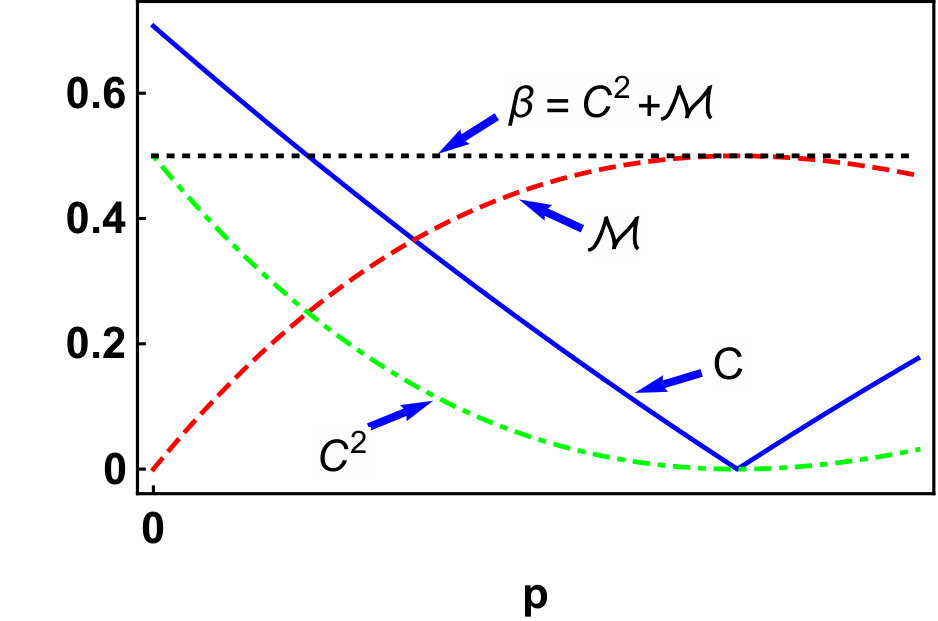 Figure 1
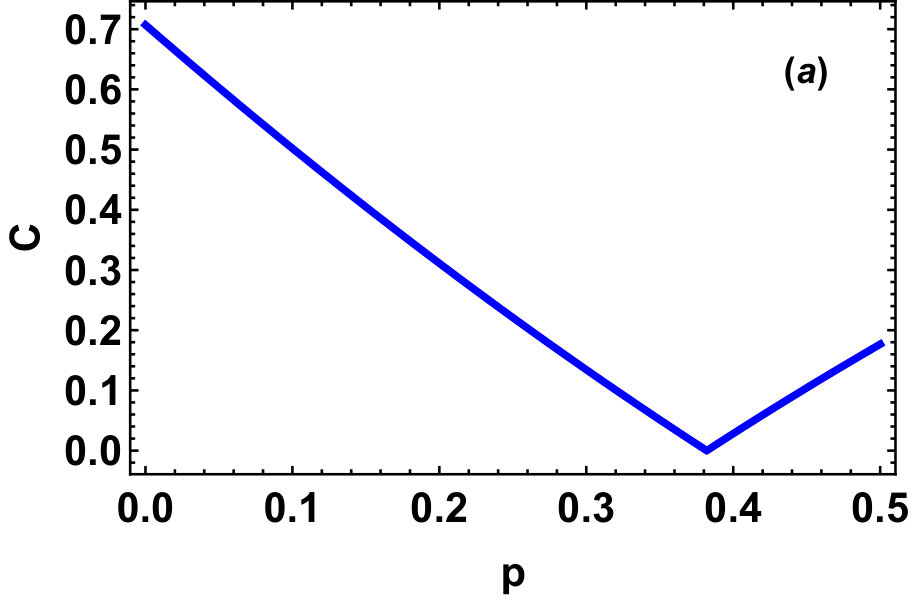 Figure 2
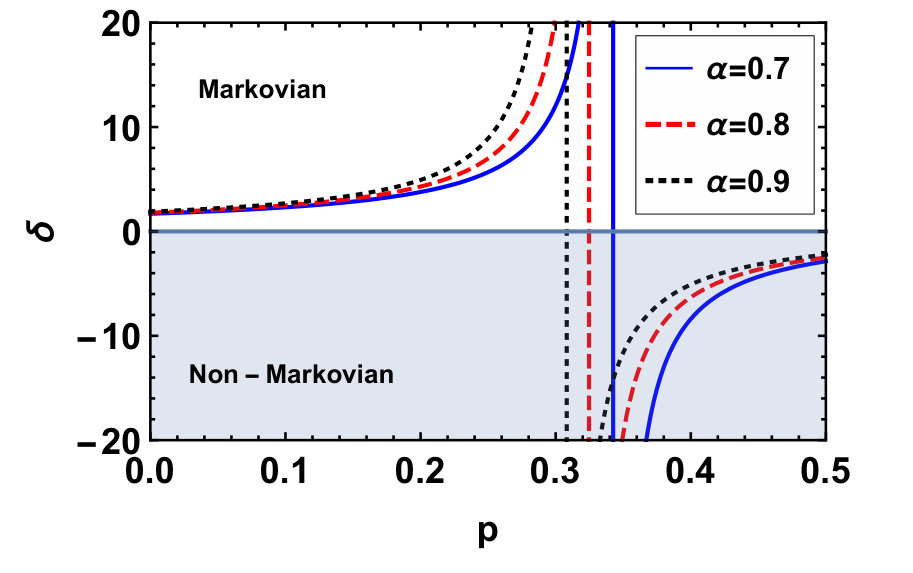 Figure 3
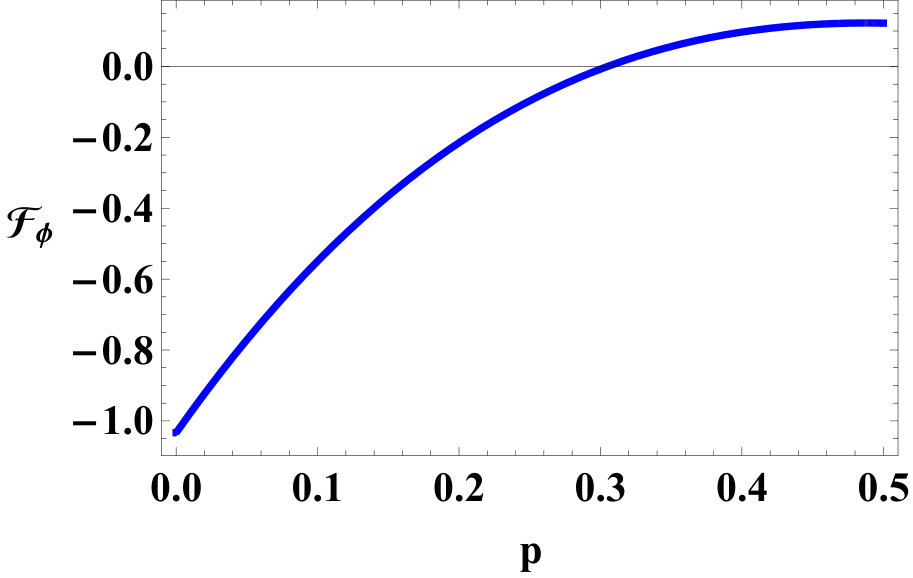 Figure 4
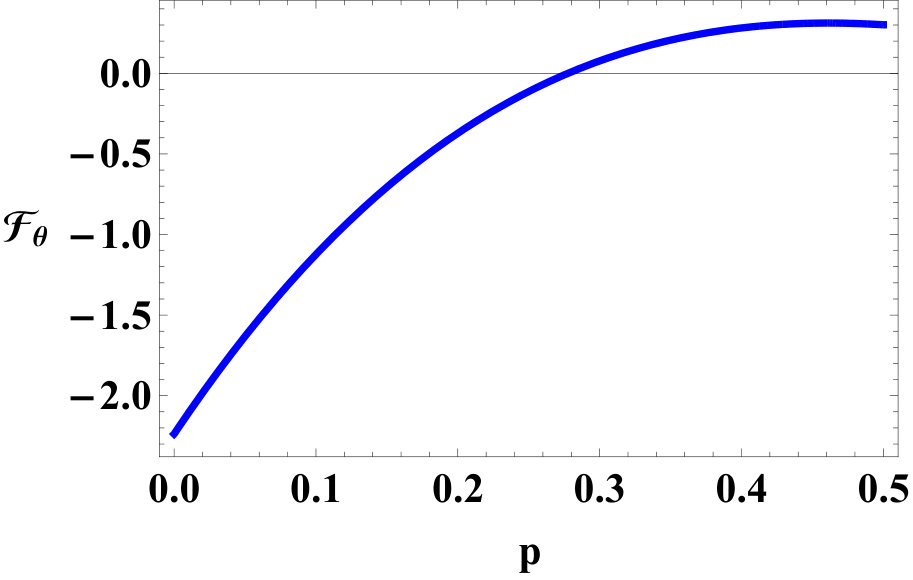 Figure 5
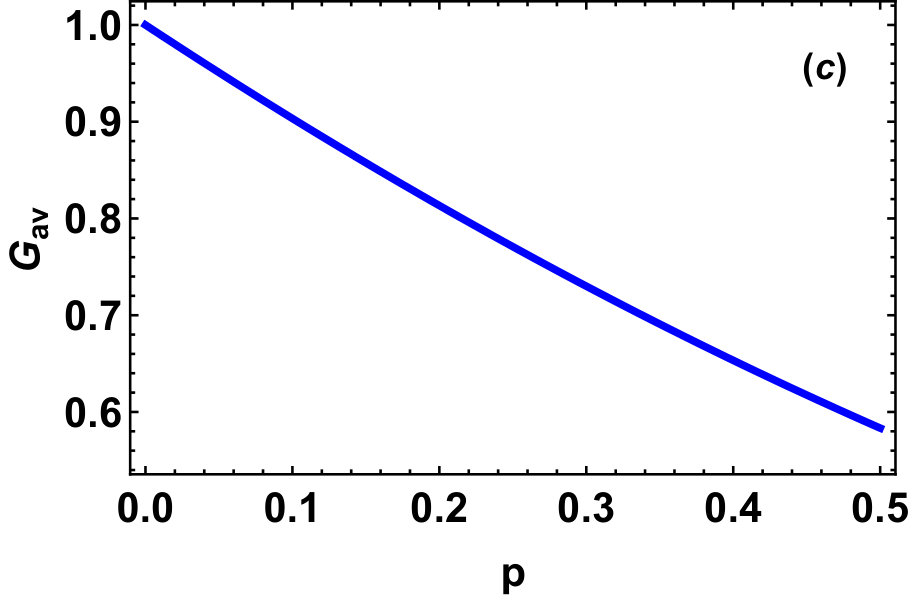 Figure 6
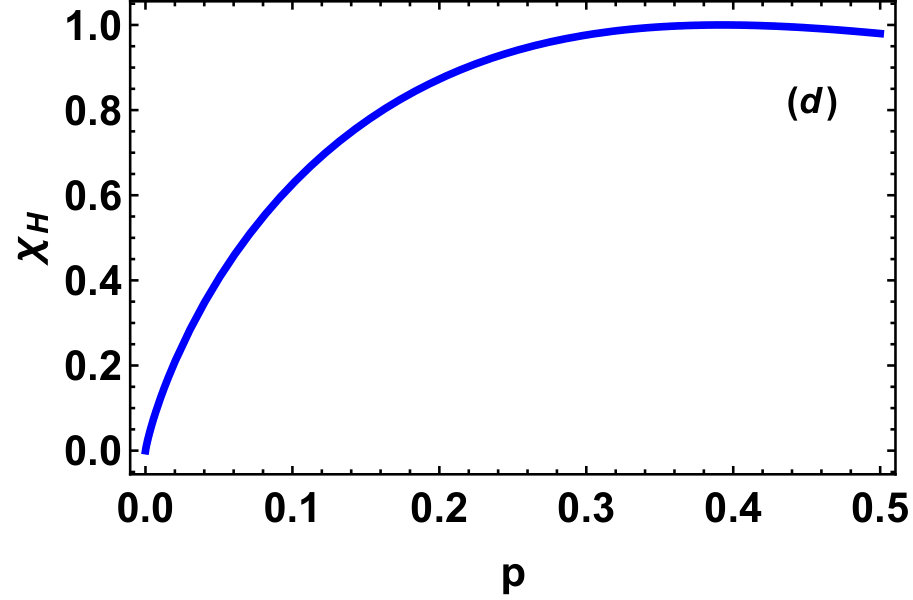 Figure 7
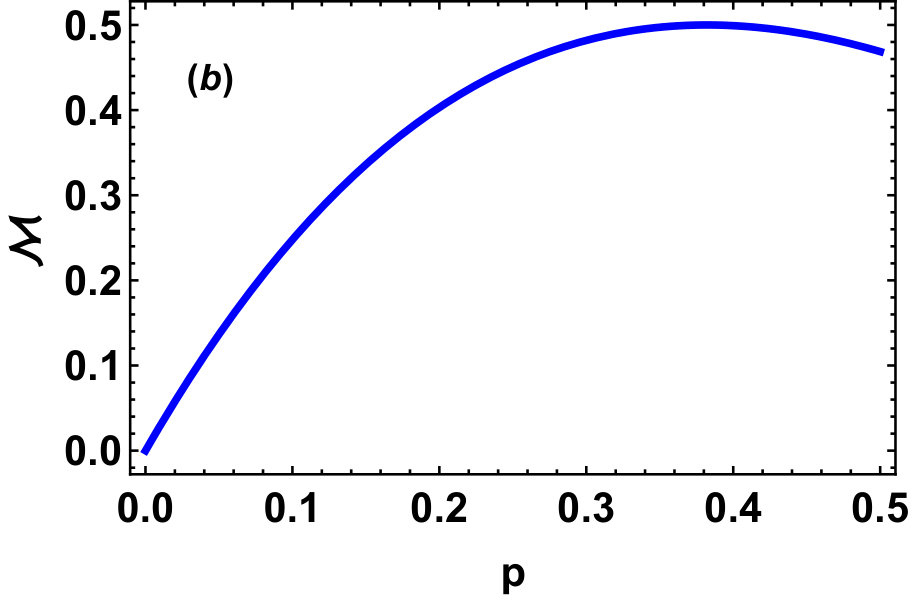 Figure 8
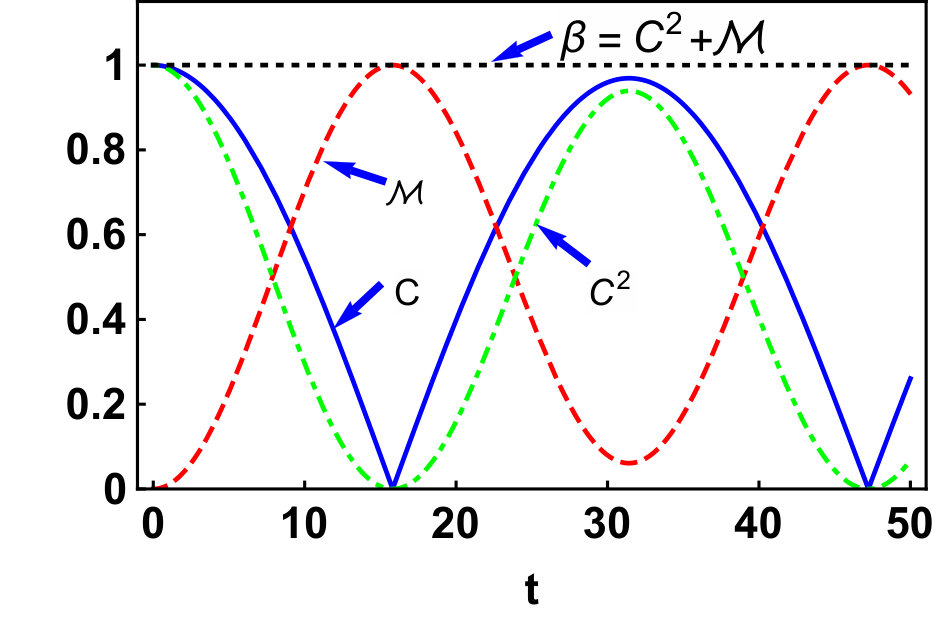 Figure 9
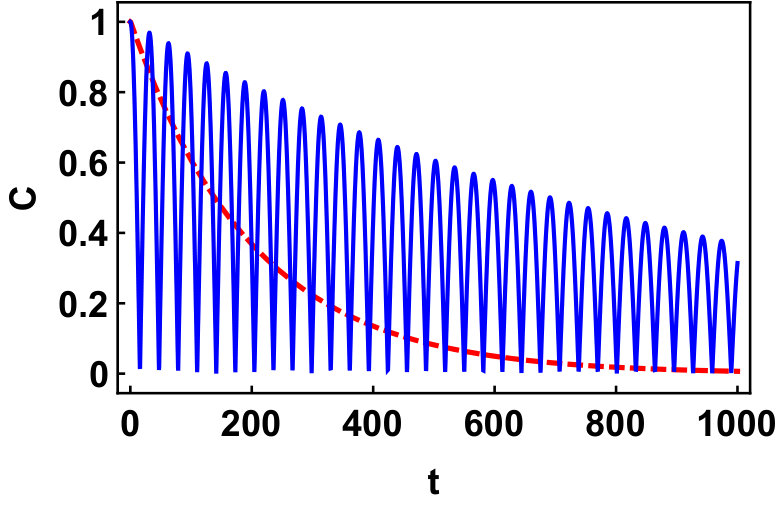 Figure 10
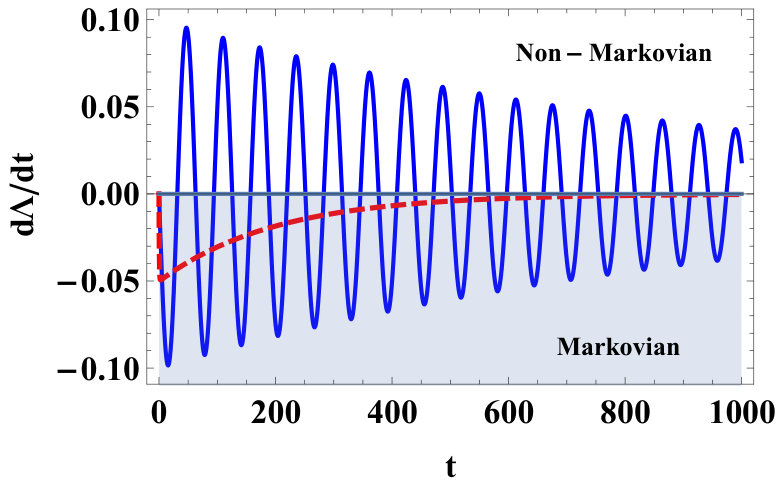 Figure 11
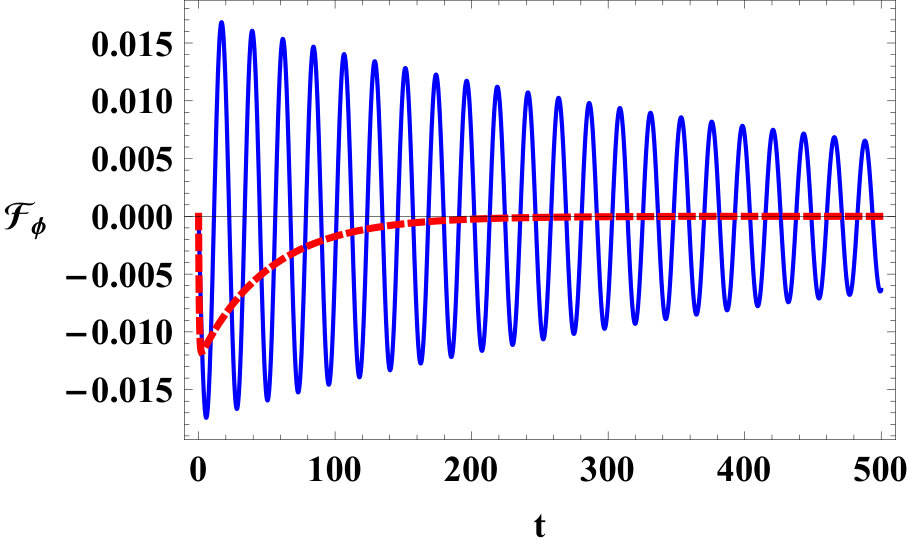 Figure 12
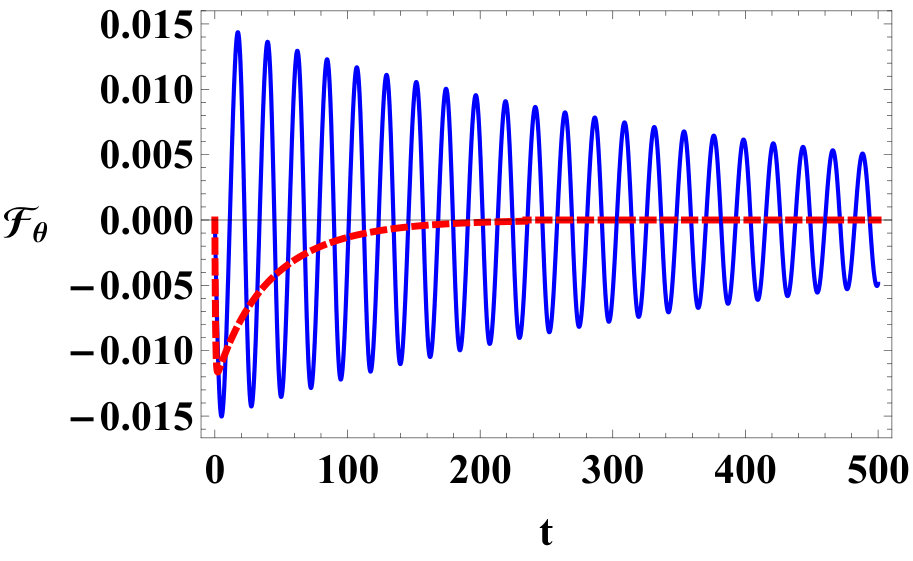 Figure 13
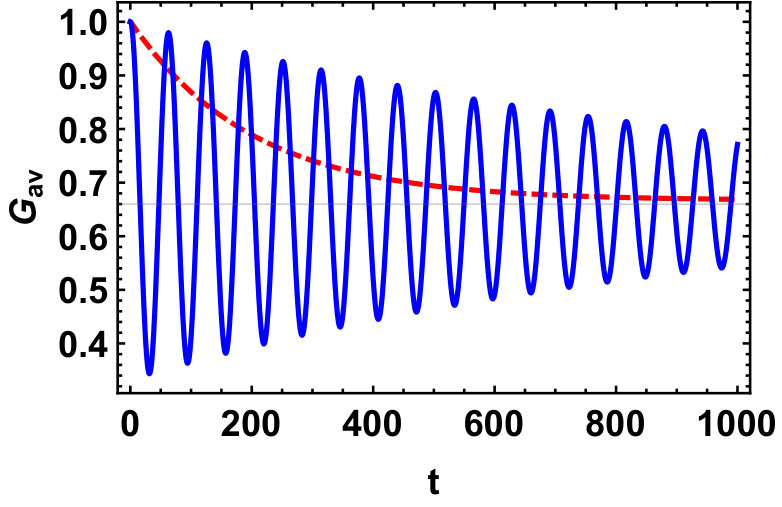 Figure 14
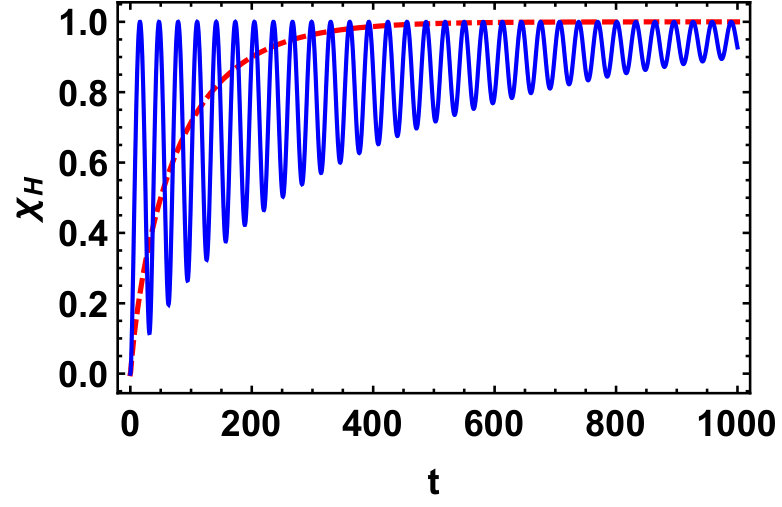 Figure 15
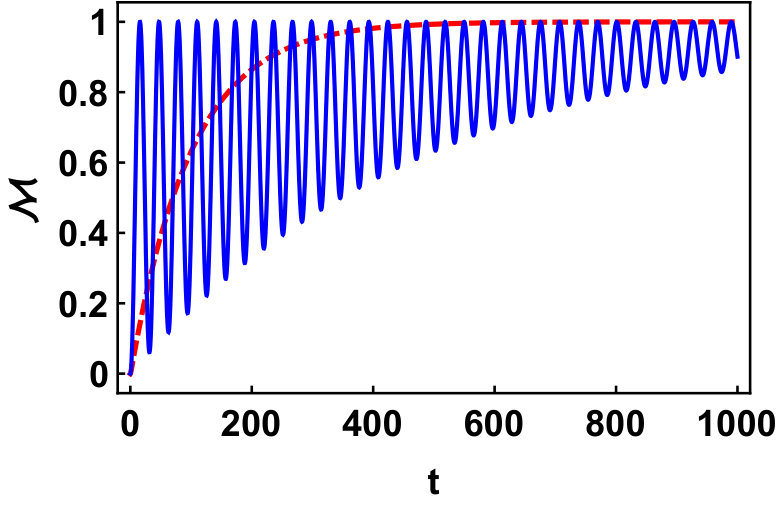 Figure 16
| Facets Models | RTN | NMD |
| Coherence | ||
| Mixedness | ||
| Coherence-Mixing | ||
| balance | ||
| Average gate fedility | ||
| Holevo information |
Peer Reviews
No public reviews on file for this paper yet. If you reviewed it on a platform where reviews are public (OpenReview, ICLR, NeurIPS, ICML), you can paste yours below so the community can read it here.
Videos
No videos yet. Explain this paper in a talk, walkthrough, or lecture? Add one.
Facets of quantum information under non-Markovian evolution
Javid Naikoo
Department of Physics, Indian Institute of Technology Jodhpur, Jodhpur, India
Supriyo Dutta
Department of Theoretical Sciences, S. N. Bose National Centre for Basic Sciences, Salt Lake, Kolkata, India.
Subhashish Banerjee
Department of Physics, Indian Institute of Technology Jodhpur, Jodhpur, India
Abstract
Abstract We consider two non-Markovian models: Random Telegraph Noise (RTN) and non-Markovian dephasing (NMD). The memory in these models is studied from the perspective of quantum Fisher information flow. This is found to be consistent with the other well known witnesses of non-Markovianity. The two noise channels are characterized quantum information theoretically by studying their gate and channel fidelities. Further, the quantum coherence and its balance with mixedness is studied. This helps to put in perspective the role that the two noise channels can play in various facets of quantum information processing and quantum communication.
I Introduction
The study of quantum systems interacting with their environment helps in characterizing the behavior of the dynamics of the system. This is useful in many application of quantum mechanics and has lead to the field of open quantum systems Breuer et al. (2002); Banerjee (2018). In many practical situations, the system-environment interaction brings in pronounced memory effects leading to the emergence of non-Markovian dynamics Breuer et al. (2009); Rivas et al. (2010); Breuer et al. (2016); de Vega and Alonso (2017); Li et al. (2018); Banerjee and Ghosh (2000, 2003). Recently, non-Markovianity has been a subject matter of various studies from quantum cryptography Vasile et al. (2011a); Thapliyal et al. (2017), quantum biology Lambert et al. (2013); Thorwart et al. (2009); Huelga and Plenio (2013), quantum metrology Chin et al. (2012); Ban (2015) and quantum control Hwang and Goan (2012). It has been shown with ample evidence that non-Markovian channels can be advantageous over Markovian ones. In Bylicka et al. (2014), it was reported that the non-Markovianity can enhance the channel capacity in comparison to the Markovian case. Non-Markovian behavior is a multifaceted phenomenon which can not be attributed to a unique feature of the system-environment interaction. Consequently, several different measures were introduced in order to quantify the non-Markovian behavior, viz., trace distance Breuer et al. (2009), fidelity Vasile et al. (2011b), semigroup property Wolf et al. (2008) or divisibility Rivas et al. (2010) of the dynamical map, quantum Fisher information (QFI) Lu et al. (2010), quantum mutual information Luo et al. (2012). In general, these measures are inequivalent and different predictions by these measures have been reported in Haikka et al. (2011).
The non-Markovian aspects become pertinent while dealing with quantum channels subjected to different types of environment. Another aspect of the system-environment interactions is the loss of the coherence and entanglement which is undesirable from the perspective of carrying out the tasks of quantum information. Therefore, this calls for the characterization of the quantum channels under the influence of different environments. Efforts have been made in this direction Omkar et al. (2013, 2015). Quantum coherence can be thought of as a resource Baumgratz et al. (2014); Winter and Yang (2016); Hu et al. (2018) bringing out the utility of the quantum behavior in various tasks Chitambar et al. (2016); Rana et al. (2016). As the system evolves under ambient conditions, modeled by the noisy channel under consideration, it has a tendency of getting mixed Banerjee and Ghosh (2007). A pertinent question then to ask is the trade-off between the mixedness and coherence Singh et al. (2015); Dixit et al. (2019). The interplay between coherence and mixing in the context of non-Markovian evolution, has been studied Bhattacharya et al. (2018). Gate fidelity Nielsen (2002), which tell us about the efficiency of the gate’s performance and channel fidelity Omkar et al. (2013), which is a measure of how well a gate preserves the distinguishability of states, and is thus connected to the Holevo bound of the channel, are two useful channel performance parameters. The performance of Lindbladian channels, such as the squeezed generalized amplitude damping (SGAD) channel Srikanth and Banerjee (2008) and the Unruh channel Banerjee et al. (2017a) have been studied using these parameters Omkar et al. (2013). Here, these are used to characterize the two non-Markovian channels, RTN Daffer et al. (2004); Kumar et al. (2018); Banerjee et al. (2017b) and NMD Shrikant et al. (2018).
The non-Markovianity in these two channels can be witnessed by using QFI-flow. The contrast in the behavior of the dynamics in Markovian and non-Markovian regimes is highlighted in case of RTN. The system considered is a general qubit state and the dynamics is given in terms of Kraus representation. This analysis would help to bring out the features of the system dynamics which plays a key role in the implementation of these two channels in quantum information and communication.
The paper is organized as follows: In Sec. (II) we give a brief overview of quantum Fisher information as a witness of non-Markovianity and discuss various facets of quantum information. Section (III) is devoted to a brief discussion of the open system dynamics in terms of Kraus operators followed by a description of RTN and NMD channels. In Sec. (IV), we discuss the QFI-flow as a witness of non-Markovian behavior in the two channels. The results and their discussion is presented in Sec. (V). We conclude in Sec. (VI).
II Facets of quantum information
Here, we briefly describe various facets of quantum information used below to analyze the behavior of the dynamics of the RTN and NMD channels.
*Quantum Fisher Information *(QFI): Consider a -dimensional quantum (qudit) state depending on parameter . The QFI Chapeau-Blondeau (2015); Zhang et al. (2013) is a measure of the information with respect to the precision of estimating the inference parameter. For the state parameter , the Fisher information is defined as
[TABLE]
Here, is the Bloch vector for the general qubit state , with denoting the Pauli spin matrix triplet (). One can define the QFI-flow as the time rate of change of the QFI as
[TABLE]
In Lu et al. (2010), it was proposed that a positive QFI-flow at time implies that the QFI flows back into the system from the environment, generating a non-Markovian dynamics. Therefore, we have
[TABLE]
The back flow of QFI is linked to the divisibility property of the underlying dynamical map.
Quantum coherence: Quantum coherence is a consequence of quantum superposition and is necessary for existence of entanglement and other quantum correlations. The degree of quantum coherence in a state described by density matrix is given by its the off-diagonal elements. Specifically, the sum of the absolute values of the off-diagonal elements of serves as a measure of the coherence
[TABLE]
The coherence parameter tends to zero with increase in mixing.
Purity and Mixedness of quantum states: For a normalized state , the purity is a scalar quantity {\rm Tr}\big{[}\rho^{2}\big{]} which is a measure of how much mixed a state is. Alternatively, one can define the mixedness parameter
[TABLE]
such that for pure state and for maximally mixed state. The interplay between coherence and mixedness was studied in Singh et al. (2015). For an arbitrary quantum state (), in -dimensional Hilbert space, the trade-off between coherence and mixing is quantified by the parameter given as:
[TABLE]
Average gate fidelity: One of the important tasks in quantum computation and quantum information is characterization of the quantum gates and quantum channels. In this direction, the average gate fidelity is a useful tool to quantify the quality of the quantum gates and is given by the compact expression
[TABLE]
Here, is the dimension of the system and are the Kraus operators characterizing the quantum channel. It gives some idea of how well a quantum gate performs an operation it is supposed to implement.
Holevo information: Given any measurement described by the positive operator valued measure (POVM) performed on state , we define the Holevo quantity as
[TABLE]
Holevo quantity represents the maximum amount of classical information that can be transmitted over a quantum channel.
III Dynamics and maps
Now, we briefly review the Kraus representation of open system dynamics. This will be followed by the specific models like Random Telegraph Noise (RTN) and non-Markovian Dephasing (NMD).
Kraus representation: An open quantum system is not necessarily governed by a unitary evolution, unlike a closed quantum system. A useful description for open quantum systems can be provided by Kraus representation Kraus (1983). The development of Kraus representation usually starts by assuming the system () and the environment () evolve together as a single system () unitarily. One can then write the state for , and as , and , respectively. One can trace over the environment degrees of freedom and recover the evolution of the system alone
[TABLE]
Here, is the unitary governing the evolution of the combined system. If it is possible to express the above equation in the form
[TABLE]
subjected to the condition
[TABLE]
we say that the evolution of has the form of the Kraus representation. Such a representation is always possible if the system and environment do not share any correlation at , i.e., if . However, as shown in Salgado and Sanchez-Gomez (2002), the initial separability of states is not a necessary condition for Kraus representation.
Random Telegraph Noise: The Random Telegraph Noise (RTN) is characterized by the autocorrelation function given as
[TABLE]
with being the stochastic variable. The parameter is proportional to the system environment coupling strength and controls the fluctuation rate of the RTN. The map, , governing the time evolution under RTN has the following Kraus representation
[TABLE]
with
[TABLE]
Here, , with and . The dynamics is Markovian or non-Markovian depending on whether or , respectively.
Consider a general qubit state at time given as
[TABLE]
Under RTN noise, the state at some late time is given by
[TABLE]
Now, the dephasing master equation in its canonical from is given by
[TABLE]
where is the decoherence rate. The necessary and sufficient condition for a map to be CP-divisible is that the decoherence rate must be non-negative Hall et al. (2014). Using Eqs. (16) and (17), the decoherence rate for the dephasing RTN map turns out to be
[TABLE]
Since , the decoherence rate is negative when is positive. The negative decoherence rate is a signature of non-Markovian dynamics. As shown in Fig. (1), RTN shown negative decoherence rates for certain ranges of time . This is consistent with the non-Markovian behavior studied using the QFI-flow, detailed below.
Non-Markovianian dephasing: The non-Markovina dephasing (NMD) is governed by the following Kraus operators
[TABLE]
Here, and is a monotonically increasing function of time such that . The above map reduces to conventional dephasing in the limit . The action of the map, , given by Kraus operators in Eq. (19), on a general qubit state in Eq. (15) is
[TABLE]
Here, . Corresponding to the Kraus operators in Eq. (19), the canonical master equation is
[TABLE]
Here, and the decoherence rate as well as the state are functions of the parameter . Using Eqs. (20) and (21), the decoherence rate turns out to be
[TABLE]
with . The regimes and correspond to Markovian and non-Markovian dynamics, respectively. The behavior of as a function of parameter is shown in Fig. (1). The singularity occurs at , which, in turn, depends on the value of parameter .
IV Quantum Fisher infomation flow and non-Markovianity
In this section, we discuss the interplay between QFI-flow and non-Markovianity in the context of RTN and NMD channels by using the dynamics sketched in the previous section.
For RTN channel: We will use the time evolved state given in Eq. (16) and compute the QFI and QFI-flow. The Bloch vector corresponding to in Eq. (16) turns out to be
[TABLE]
Therefore,
[TABLE]
Also,
[TABLE]
With above setting, the QFI corresponding to the parameters and becomes
[TABLE]
The corresponding QFI-flows are given by the following expressions
[TABLE]
These quantities are depicted in the Fig. (2) both for the Markovian as well as the non-Markvoian cases.
For NMD channel: The analytic expressions for the QFI-flow in this case are given as
[TABLE]
These quantities are plotted in Fig. (3). The various facets studied in RTN and NMD models are listed in Table (1) with their compact analytic expressions.
V Results and discussion
The nature of the dynamics is governed by the decoherence rate, which is positive (negative) for Markovian (non-Markovian) dynamics. In the specific models considered in this work, namely RTN and NMD, the behavior of the respective decoherence rates is depicted in Fig. (1). This behavior is in concord with that seen with the QFI-flow. The non-Markovian behavior in case of RTN is controlled by the channel parameters, while the NMD is non-Markoviann for all values of the parameter . Figure (2) depicts the QFI-flow corresponding to the state parameters and as a function of time. The positive QFI-flow is a signature of non-Markovianity and is linked with the divisibility of the underlying dynamical map. It is well known that the non-Markovianity emerges in the RTN governed dynamics under the condition . In this regime, QFI-flow is found to oscillate symmetrically about zero, thereby confirming the non-Markovian nature of the dynamics. The behavior of the coherence and mixedness under RTN evolution is shown in Fig. (4). The coherence parameter and the mixedness parameter decrease (increase) monotonically in the Markovian regime unlike the non-Markovian case. In the non-Markovian regime, these parameters shown recurrent behavior with time with an envelope of damped oscillation. The interplay between coherence and mixedness is symmetric in RTN model, Fig. (6), such that the increase in one is accompanied with the decrease in other. The parameter , Eq. (6), depends only on the state parameter , as given in Table (1). Similar observations are made for the average gate fidelity () and Holevo quantity and are depicted in Fig. (5) where the monotonic decrease with respect to time in Markovian case is contrasted with the oscillating behavior of these quantities in the non-Markovian scenario.
The decoherence rate in non-Markovian dephasing (NMD) model shows a negative branch separated from the positive branch by a singularity. However, the recurrent behavior observed in RTN is missing. The QIF-flow is positive for certain range of the time like parameter , as depicted in Fig. (3), demonstrating the non-Markovian nature of this model. The complementary behavior of coherence and mixedness is observed, that is, the decrease in the coherence is accompanied by an increase in the mixedness, Fig. (6), such that the parameter, defined in Eq. (6), is a function of the state variable , see Table (1). The average gate fidelity decreases, while the Holevo quantity shows an increase with in the range .
VI Conclusion
In this work, we considered two quantum channels namely Random Telegraph Noise (RTN) and non-Markovian dephasing (NMD) and studied the dynamics of a general qubit state in these models. The dynamics is governed by completely positive and trace preserving Kraus operators. The quantum Fisher information flow, which has recently been proposed as a witness of the non-Markovian behavior, is analyzed and is found consistent with the analysis made using the decoherence rates in these models. Further, various facets of quantum information viz., quantum coherence, mixedness, average gate fidelity and channel fidelity are studied, their compact analytical expressions are obtained and their behavior is contrasted in the Markovian and non-Markovian regimes for the RTN channel. Even though both RTN and NMD show non-Markovian behavior, there is a distinction between the two. The non-Markovian dynamics for the RTN model has a characteristic recurrent behavior, not found in the case of NMD. Nevertheless, a symmetric trade-off between coherence and mixedness, quantified by a coherence-mixedness balance parameter , is observed in both the cases, thereby testifying to their basic dephasing nature. Such characterization of the quantum channels can be significant from the perspective of carrying out quantum information and communication tasks.
The reference list from the paper itself. Each links out to its DOI / PubMed record.
- 1Breuer et al. (2002) H.-P. Breuer, F. Petruccione, et al. , The theory of open quantum systems (Oxford University Press on Demand, 2002).
- 2Banerjee (2018) S. Banerjee, Open Quantum Systems: Dynamics of Nonclassical Evolution (Springer Singapore, 2018).
- 3Breuer et al. (2009) H.-P. Breuer, E.-M. Laine, and J. Piilo, Physical review letters 103 , 210401 (2009).
- 4Rivas et al. (2010) A. Rivas, S. F. Huelga, and M. B. Plenio, Physical review letters 105 , 050403 (2010).
- 5Breuer et al. (2016) H.-P. Breuer, E.-M. Laine, J. Piilo, and B. Vacchini, Rev. Mod. Phys. 88 , 021002 (2016) . · doi ↗
- 6de Vega and Alonso (2017) I. de Vega and D. Alonso, Rev. Mod. Phys. 89 , 015001 (2017) . · doi ↗
- 7Li et al. (2018) L. Li, M. J. Hall, and H. M. Wiseman, Physics Reports (2018).
- 8Banerjee and Ghosh (2000) S. Banerjee and R. Ghosh, Phys. Rev. A 62 , 042105 (2000) . · doi ↗