Directional ellipticity on special domains: weak Maximum and Phragm\`en-Lindel\"of principles
Italo Capuzzo Dolcetta, Antonio Vitolo

TL;DR
This paper establishes maximum principles for a class of fully nonlinear, possibly degenerate elliptic operators on unbounded cylindrical domains, advancing understanding of elliptic PDE behavior in complex geometries.
Contribution
It proves maximum principles for nonlinear operators on unbounded cylindrical domains with ellipticity only in bounded directions, allowing degeneracy along unbounded directions.
Findings
Maximum principles hold under specified structural conditions.
Results apply to fully nonlinear operators with degeneracy.
Advances understanding of PDEs on unbounded domains.
Abstract
We prove the validity of maximum principles for a class of fully nonlinear operators on unbounded subdomains of cylindrical type. The main structural assumption is the uniform ellipticity of the operator along the bounded directions of , with possible degeneracy along the unbounded directions.
Click any figure to enlarge with its caption.
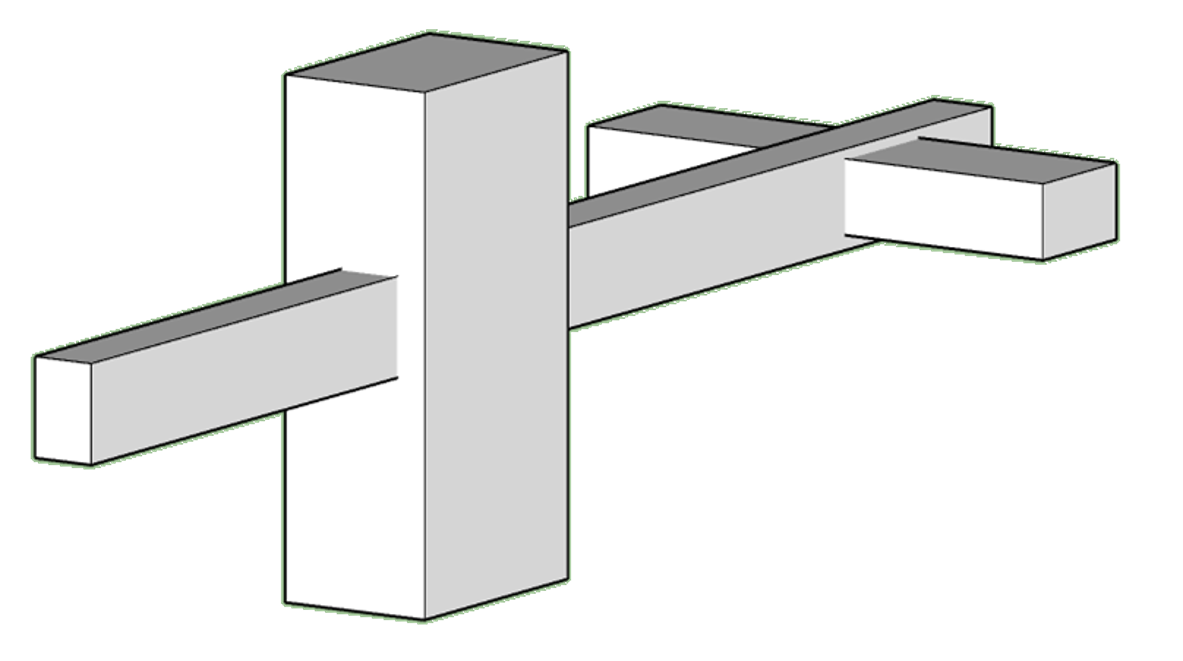 Figure 1
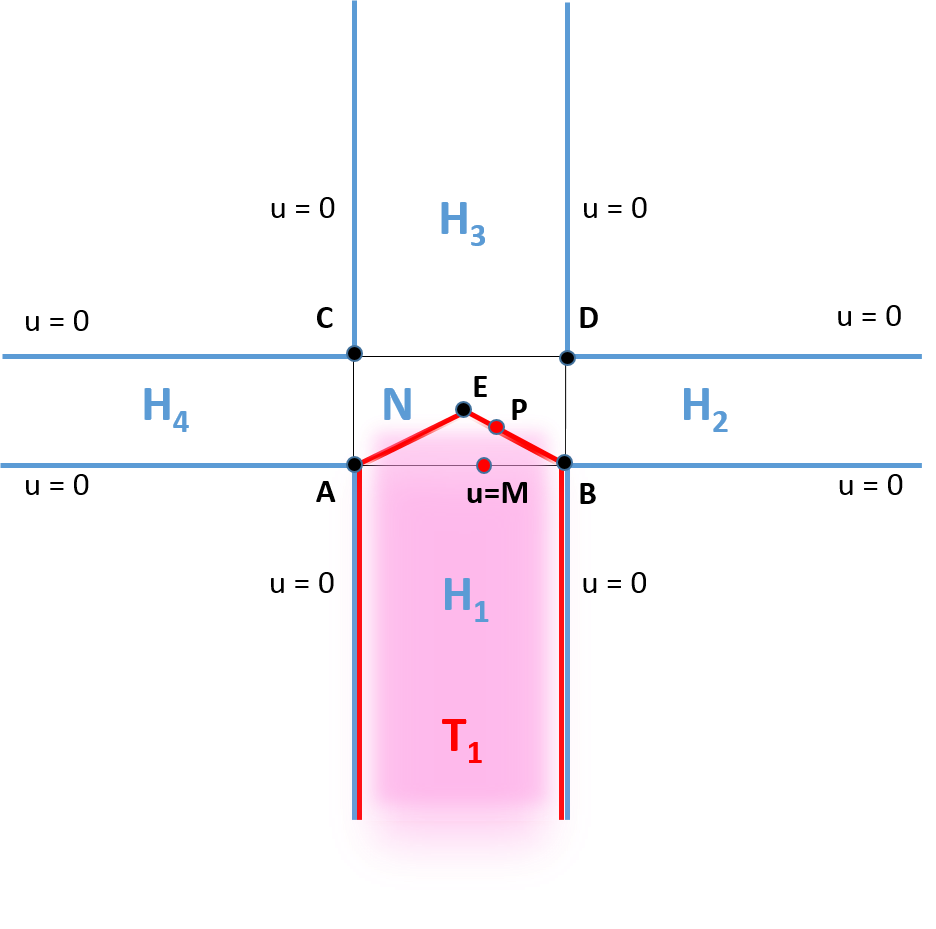 Figure 2
Peer Reviews
No public reviews on file for this paper yet. If you reviewed it on a platform where reviews are public (OpenReview, ICLR, NeurIPS, ICML), you can paste yours below so the community can read it here.
Videos
No videos yet. Explain this paper in a talk, walkthrough, or lecture? Add one.
Taxonomy
TopicsAdvanced Mathematical Modeling in Engineering · Nonlinear Partial Differential Equations · Advanced Harmonic Analysis Research
Directional ellipticity on special domains: weak Maximum and Phragmèn-Lindelöf principles
Italo Capuzzo Dolcetta1, Antonio Vitolo2
(1 Dipartimento di Matematica, Sapienza Università di Roma, 00185 Roma, ITALY 2 Dipartimento di Ingegneria Civile, Università di Salerno, 84084 Fisciano (SA), ITALY, and
Istituto Nazionale di Alta Matematica, INdAM - GNAMPA )
Abstract. We prove the validity of maximum principles for a class of fully nonlinear operators on unbounded subdomains of cylindrical type. The main structural assumption is the uniform ellipticity of the operator along the bounded directions of , with possible degeneracy along the unbounded directions.
MSC 2010 Numbers: 35J60, 35B50, 35B53, 35D40
Keywords and phrases: nonlinear elliptic operators; maximum principles; unbounded domains; Phragmèn-Lindelöf principles
1 Introduction
The aim of this paper is to show that the weak Maximum Principle for in , that is
[TABLE]
holds for a large class of degenerate elliptic nonlinear mappings and unbounded domains of whose geometry is related to the direction of ellipticity.
In the above, is an open connected subset of , denotes the set of upper semicontinuous functions on and is the set of the real symmetric matrices with the usual partial ordering meaning that is positive semidefinite.
For , and denoting, respectively, the gradient and the Hessian of the function , the differential inequality in (MP) has the classical pointwise meaning.
On the other hand, for upper semicontinuous the partial differential inequality has to be understood in the viscosity sense, see [14], [9].
We start describing the assumptions on the elliptic operator , whose directions of strict ellipticity are related to the bounded directions of the domain (pages 1 to 3), which will be all collected in condition . Next, we discuss a few examples of elliptic operators satisfying condition , which are not necessarily uniformly elliptic in (page 4 to 5). Next, we present the main results (pages 5 to 8), and finally a comparison with the existing literature (pages 8 to 9).
Here is a real-valued mapping defined in which is assumed to satisfy
[TABLE]
the monotonicity conditions
[TABLE]
and
[TABLE]
as well as
[TABLE]
where is the zero-matrix.
In order to single out the class of domains that we consider it is convenient to decompose as the direct sum , where is a -dimensional subspace and is its orthogonal complement. We shall denote for later purpose by and the projection matrices on and , respectively.
We will assume then that the open connected set satisfies the following condition
[TABLE]
where is an orthonormal system for the subspace .
Domains such as , which we will sometimes refer to as -infinite cylinders, with , for , are infinite parallelepipeds whose -dimensional orthogonal section is a -parallelepiped of edges , .
In particular, a -infinite cylinder is a slab, bounded in one direction and unbounded in all the remaining orthogonal directions.
It is worth pointing out here that such a domain is typically unbounded, perhaps of infinite Lebesgue measure , but it does satisfy the measure-geometric condition (G), used in [7] to obtain an improved form of the Alexandrov-Bakelman-Pucci ABP estimate, namely:
there exist , such that, for each , there is a ball , with , providing the inequality , where is the connected component of containing , and . The above condition, first introduced in [3], requires, roughly speaking, that there is enough boundary near every point in allowing so to carry the information on the sign of from the boundary to the interior of the domain. It is therefore satisfied for example by unbounded domains of finite measure with and also for a large class of unbounded domains with possibly infinite Lebesgue measure such as infinite cylinders, which we will be dealing with, or also perforated planes
[TABLE]
where is the disc of radius centered at .
Observe that , as for all domains satisfying condition (G). On the other hand, this fails to hold on cones, which therefore do not satisfy (G) .
It should also be stressed that no regularity assumption is made on the boundary so that the classical approach to establish comparison properties based on the construction of smooth barrier functions is not applicable in our general framework.
The next assumption is that there exists some such that
[TABLE]
where is a continuous, strictly positive function such that .
Condition (1.6) involves just the projection matrix over the one dimensional subspace of spanned by the vector . This strict ellipticity condition on related to the geometry of will play a crucial role in our results.
We will assume moreover that there exist and a continuous function such that and
[TABLE]
where is the orthogonal projection matrix onto the subspace . As for the behavior of with respect to the variable we assume that
[TABLE]
with continuous, bounded and such that is bounded above in by some constant .
We will refer collectively to conditions (1.1), (1.2), (1.3), (1.4), (1.6), (1.7), (1.8) as the structure condition on , labelled .
Observe that both and belong to and are positive semidefinite. It is also worth noting that conditions (1.6) and (1.7), requiring, respectively, a control from below only with respect to a single direction and a control from above in the orthogonal directions, comprise a much weaker condition on than uniform ellipticity.
The latter one would indeed require a uniform control of the difference quotients both from below and from above with respect to all possible increments with positive semidefinite matrices.
Consider for simplicity the case and , where . A very basic example of an satisfying is given by the linear operator
[TABLE]
with and continuous functions such that
[TABLE]
In fact, , where
[TABLE]
which of course satisfies (1.1), (1.2) and (1.4).
Next, (1.3) is ensured by the sign condition on in (1.10). Moreover, looking at the above matrix , it is immediate to check that is uniformly elliptic with respect to any direction of , so verifying (1.6). On the other hand, the differential quotients with respect to matrix increments related to the orhogonal directions are , which imply (1.7). The assumption (1.10) on provides (1.8). Hence we conclude that actually in (1.9) satisfies .
Relevant nonlinear examples are provided by fully nonlinear operators of Bellman-Isaacs type
[TABLE]
where
[TABLE]
with constant coefficients depending and running in some sets of indexes .
If is positive semidefinite for all and
[TABLE]
where is an orthonormal basis of , then satisfies our assumptions in any domain contained in a -infinite cylinder like (1.5).
Our results concerning the validity of (MP) are stated in the following theorems:
Theorem 1**.**
Let be a domain of satisfying condition and assume that satisfies . Then (MP) holds for any such that as .
The function in the statement is defined by
[TABLE]
and condition as is understood as
[TABLE]
The use of is convenient for a unified statement of our results which are valid both for bounded and unbounded , with the obvious exception of Theorem 5 below on Phragmèn-Lindelöf principles.
Note that some restriction on the behaviour of at infinity is unavoidable. Observe in this respect that, in the 1-infinite cylinder , the function solves the degenerate Dirichlet problem
[TABLE]
and in , implying the failure of (MP).
The above condition at infinity is in accordance, by the way, with the assumption of Ishii in [18, Section 7], where a comparison principle in unbounded domains is obtained under the assumption of at most linear growth of the solutions at infinity.
Let us consider now the degenerate elliptic operator
[TABLE]
where are continuous functions such that , , such , in the -infinite cylinders
[TABLE]
which have as unbounded direction. Therefore, according to Theorem 1, provided
[TABLE]
and , this operator satisfies (MP) in all domains contained in as well in and in . As a further application, noting that the intersection is the cube , where is uniformly elliptic, we infer that (MP) holds also in all domains contained in .
More generally, below we are going to show a consequence of Theorem 1, which supports this claim as a particular case.
As above, let an orthonormal basis of , and let be -cylinders having one of , as axis. We consider lattice domains which are finite union of -infinite cylinders. See Fig.1 below.
Our approach to prove this claim makes use of the strong Maximum Principle, according to which a subsolution of a uniformly elliptic equation cannot have a non-negative maximum inside the domain unless it is constant. See [15] for linear elliptic operators and [2], [1] for different approaches in the nonlinear case.
This explains why in the next result the uniform ellipticity will be assumed in the nodes where two or more cylinders intersect each other, which is not guaranteed by the one-directional ellipticity with respect to orthogonal directions occurring in the nodes as regions belonging to -infinite cylinders with different axes.
Corollary 2**.**
*Suppose to be a domain contained in a lattice domain of -infinite cylinders with axes in an orthonormal basis of . Letting be the - dimensional subspace orthogonal to the axis , we also suppose that satisfies the structure condition in each .
Let also be the union of points belonging to more than one cylinder. If in addition is uniformly elliptic in , then holds in , provided as .*
The next result can be seen as a quantitative form of Theorem 1 above, it is an version of the ABP estimate.
Theorem 3**.**
Let be a domain of satisfying condition and assume that satisfies . If satisfies as and
[TABLE]
where is continuous and bounded from below, then for all
[TABLE]
where .
The next result is about bounded functions in the so-called narrow domains, that is when is fulfilled with at least one sufficiently small. In this case we may assume that is just nondecreasing with respect to the variable :
Theorem 4**.**
Let be a domain of satisfying condition and assume that satisfies with (1.3) replaced by the weaker condition
[TABLE]
for some continuous function . Assume also that in with as in (1.6). Then holds for , bounded above, provided is small enough, where in .
The above result is often used as an intermediate step in the proof of Theorem 5 below concerning the validity of for unbounded solutions with exponential growth at infinity.
Theorem 5**.**
*Let be a domain of satisfying condition and assume that satisfies . In addition, assume that there exists a positive number such that .
Then, for any fixed there exists a positive constant such that if for some , then holds for functions such that as .
Conversely, for any fixed , supposing for all , there exists a positive constant such that holds for functions such that as .*
Note that the growth control (1.7) in the directions of is essential in order to have the maximum principle for subsolutions growing at infinity more than polynomially, as the following example shows.
Indeed, is a solution of
[TABLE]
in the cylinder , on but is strictly positive in .
Maximum and Phragmèn-Lindelöf principles are extensively dealt with in the book of Protter and Weinberger [20] for classical solutions of linear uniformly elliptic operator. A first Maximum Principle for strong solutions in nonsmooth domains of cylindrical type was proved by Cabré [7] using a measure-geometric condition, which originates from a work of Berestycki, Nirenberg and Varadhan [3]. Such a condition was generalized in [8] and [22] to include a larger class of domains like conically and parabolically shaped domains, and extended to the fully nonlinear setting in the viscosity sense in [13]. Results on the weak MP in cylindrical domains have been also established by Busca [6].
Further results on (MP) in unbounded domains with superlinear gradient terms as well as Phragmèn-Lindelöf principles have been obtained in [1] and in [11] for the natural quadratic growth in the gradient. For further Phragmèn-Lindelöf principles see also [21].
More recently, maximum principles in domains of cylindrical type as well as global Hölder estimates have been shown for degenerate or singular elliptic operators of -Laplacian type have been proved in [5], [4], based on the results of [17]. Different maximum principles for subsolutions which may be unbounded at finite points and their application to removable singularities issues for degenerate elliptic operators of different type, like partial sums of eigenvalues, have been stated in [16] and [24].
The most closely related paper to our present work is [12], where maximum and Phragmèn-Lindelöf principles for viscosity subsolutions in domains of cylindrical type which are bounded just in one single direction, called -infinite cylinders, assuming a strict ellipticity in the bounded direction and a bound from above on the difference quotients of with respect to the increments of the matrix variables in the orthogonal directions. Existence results in such domains can be found in [19].
In the present paper, a weaker control is assumed on the differential quotients of , which have no more to be bounded in the unbounded directions (at most linear growth with respect to is admissible). Moreover, the case of more bounded directions is considered, covering the case of -infinite cylinders with . The advantage of this sort of multidimensional boundedness lies in the possibility of assuming the control on the differential quotients with respect to less directions, more precisely with instead of . On the other hand, the role of strict ellipticity in more than one direction is pointed out in particular by considering domains which are union of -infinite cylinders.
2 The weak Maximum Principle via one-directional strict ellipticity
This section is devoted to the proof of Theorem 1 concerning the validity of the weak Maximum Principle in domains contained in -infinite cylindrical domains.
The next simple observation exploits a useful consequence of condition (1.4) and the growth condition (1.7) with respect to the so-to-say unbounded directions:
[TABLE]
Indeed, if is such a sequence, an immediate consequence (1.7) with and is that
[TABLE]
**Proof of Theorem 1 ** We may assume that so that and
[TABLE]
and being the zero and identity matrices, respectively.
We may also assume that for some for all .
Arguing by contradiction, suppose that has a positive value at some point . For we consider the function
[TABLE]
where . Since as , then for large enough. So there exists a bounded domain such that for , and
[TABLE]
Since on then . On the other hand, since is a subsolution, then satisfies the differential inequality
[TABLE]
Let be the direction of uniform ellipticity in , with , and the corresponding in (1.5).
We consider, for to be chosen in the sequel, the function
[TABLE]
where and is the maximum point of (2.3).
Note that and
[TABLE]
Modulo the addition of some number , we can make touch from above at a point . Therefore can be used as a test function for the subsolution , and will satisfy the inequality
[TABLE]
Since then by monotonicity condition (1.3)
[TABLE]
Computing the derivatives
[TABLE]
and observing that
[TABLE]
[TABLE]
with .
From (2.8) and (2.9), taking into account that , it follows that
[TABLE]
choosing .
Now we consider the two possible cases:
(i) bounded; (ii) unbounded.
In case (i), we can extract a subsequence converging to . In fact, we may esclude that , where , since by construction, using the upper semicontinuity of , we have
[TABLE]
Recalling that , by the continuity of we have
[TABLE]
so that, also using the continuity of , from (2.10) as we get the following contradiction:
[TABLE]
whereas by assumption, and this concludes the proof in case (i).
In case (ii), where is unbounded, we take a subsequence such that as . Computing the derivatives of , we get
[TABLE]
From this, using (1.8) and degenerate ellipticity, we get
[TABLE]
so that, using (2.1),
[TABLE]
Finally, letting , we estimate (2.10) with (2.13), so we again obtain a contradiction:
[TABLE]
whereas by assumption, concluding the proof.∎
Here below we see how Corollary 2 follows from Theorem 1.
Proof of Corollary 2. For sake of clarity, and without loss of generality, we illustrate the proof in the case with the union of two -infinite cylinders of axes and . Suppose in and on . We may also suppose, eventually passing to , that , in and on . To be more direct, we refer to Figure 2 below.
By the weak Maximum Principle of Theorem 1, the maximum of on each half-strip , , is achieved on the boundary of the central rectangle as well as the maximum on itself, so that the maximum on the whole is on .
Again looking at Figure 2, we suppose that is attained on the side . Considering the cylindrical domain (shaded area) obtained from with the addition of the triangle , then again by the weak Maximum Principle there is a maximum point on at least one of sides and . But , where is assumed to be uniformly elliptic. Therefore, by the strong Maximum Principle, has to be constant in , and this constant has to be necessarily zero, as it was to be shown.
A comparison principle between upper semicontinuous subsolutions and smooth supersolutions follows immediately from Theorem 1 and Corollary 2 above. Here is the result:
Corollary 6**.**
Assume on and the same conditions as in Theorem 1 or Corollary 2. If and satisfy
[TABLE]
and as , then
[TABLE]
To prove this, it is enough to observe that the operator defined as
[TABLE]
fulfills all the assumptions of Theorem 1, noting that the statement is equivalent to the maximum principle for the subsolution of equation .
3 The weak Maximum Principle in narrow domains
To deal with the (MP) in narrow domains we need the estimate of Theorem 3, a sort of quantitative version of (MP), which can be deduced from Theorem 1. Here below we show a proof of this result.
Proof of Theorem 3. Let be a viscosity solution of the inequality in . Conditions (1.4), (1.3) and some viscosity calculus show that satisfies
[TABLE]
We may assume that the direction in the ellipticity condition (1.6) is the positive direction of the axis and that for .
Suppose temporarily that and consider the auxiliary function
[TABLE]
where and are positive constants to be chosen in the sequel.
The structure condition (SC)U,Ω yields
[TABLE]
Choosing with as in (1.8) and we obtain
[TABLE]
By Theorem 1 we conclude that in , which implies
[TABLE]
proving (1.12) in the case .
For an arbitrary , we consider the rescaled variable and the operator defined by
[TABLE]
A simple computation shows that the function , where satisfies (3.1) is a viscosity solution of
[TABLE]
for .
Since satisfies the same conditions as we may the apply the result for the case to and conclude the proof.
We are now in position to state and give the simple proof based on the result of Theorem 3 of (MP) in narrow domains; that is, domains satisfying condition (1.5) with some small , as stated in Theorem 4.
Proof of Theorem 4. Let be as in . As already observed implies and so, by ,
[TABLE]
By the assumptions on and , bounded above, Theorem (3) applies with yielding
[TABLE]
since on . From this estimate the statement immediately follows if is small enough.
Remark 1**.**
It is worth observing that the same conclusion holds true for any such that for all , provided that is small enough. This fact is well-known for the case of uniformly elliptic linear operators of the form if is small enough with respect to the ellipticity constant of the matrix ; see for instance [6], [23].**
4 Phragmèn-Lindelöf principles
As in the proof of Theorem 3, here we will use the fact that subsolutions of the equation are in turn solutions of the differential inequality
[TABLE]
Proof of Theorem 5.
We may suppose are the positive directions along so that the orthogonal subspace is generated by the positive directions along , and , are as in the proof of Theorem 1.
Suppose that is contained in a -infinite cylinder as defined in (1.5) with , .
Let us fix . Our aim is to prove that for sufficiently small and viscosity solutions of the differential inequality (4.1) such that on and for a suitable , we have in turn in .
Let , and set
[TABLE]
where and will be chosen as follows . Computing we get
[TABLE]
where
[TABLE]
from which
[TABLE]
Computing , where , we find
[TABLE]
where is a positive definite real matrix, having eigenvalues
[TABLE]
with multiplicity and , respectively (here ). It follows that
[TABLE]
where is the orthogonal projection on .
For our purpose, we will choose large enough in order that
[TABLE]
where is an upper bound for , by assumptions.
Note that from (4.3) by continuity there exists such that for we have
[TABLE]
for all .
Next we set
[TABLE]
where
[TABLE]
Since , assuming on , we have on .
On the other hand, using and (4.5), from (4.4) we get
[TABLE]
Hence Theorem 1 yields in the bounded domain , namely
[TABLE]
Finally, consider an arbitrary , and choose big enough in order that . Letting in the above, since and , then .
The counterpart, that is the validity of the Phragmèn-Lindelöf principle with a suitable exponential growth for a fixed thickness of bounded orthogonal sections, is proved analogously.
Acknowledgements
The authors would like to thank the referees for helpful comments and suggestions, which improved the presentation of the paper.
The authors are also grateful to Gruppo Nazionale per l’Analisi Matematica, la Probabilitá e le loro Applicazioni (GNAMPA) of Istituto Nazionale di Alta Matematica (INdAM).
The reference list from the paper itself. Each links out to its DOI / PubMed record.
- 1[1] M.E. Amendola, L. Rossi, A. Vitolo, Harnack inequalities and ABP estimates for nonlinear second-order elliptic equations in unbounded domains. Abstr. Appl. Anal. 2008 , Art. ID 178534, 19 pp.
- 2[2] M. Bardi and F. Da Lio, Propagation of maxima and strong maximum principle for viscosity solutions of degenerate elliptic equations. I: Convex operators, Nonlinear Anal. Ser.A: Theory Methods 44 (2001), no.8, 991–1006.
- 3[3] H. Berestycki, L. Nirenberg and S.N. Varadhan, The principal eigenvalue and maximum principle for second-order elliptic operators in general domains, Comm. Pure Appl. Math. 47 (1994), no. 1, 47–92.
- 4[4] I. Birindelli, I. Capuzzo Dolcetta and A.Vitolo, ABP and global Hölder estimates for fully nonlinear elliptic equations in unbounded domains, Commun. Contemp. Math. 18 (2016), no. 4, 1550075, 16 pp. DOI: 10.1142/S 0219199715500753.
- 5[5] I. Birindelli and F. Demengel, Eigenfunctions for singular fully nonlinear equations in unbounded domains, No DEA 17 (2010) no. 6, 697–714.
- 6[6] J. Busca, Existence results for Bellman equations and Maximum Principles in unbounded domains, Comm. Partial Differential Equations 24 (1999), pp. 2023–2042.
- 7[7] X. Cabré, On the Alexandrov-Bakelman-Pucci estimate and the reverse Hölder inequality for solutions of elliptic and parabolic equations, Comm. Pure Appl. Math. 48 (1995), 539–570.
- 8[8] V. Cafagna and A. Vitolo, On the maximum principle for second-order elliptic operators in unbounded domains, C. R., Math., Acad. Sci. Paris 334 (2002), n.5, pp. 359–363.