Path-tracing Monte Carlo Library for 3D Radiative Transfer in Highly Resolved Cloudy Atmospheres
Najda Villefranque, Fleur Couvreux, Richard Fournier and, St\'ephane Blanco, C\'eline Cornet, Vincent Eymet, Vincent Forest, and Jean-Marc Tregan

TL;DR
This paper introduces an open-source Monte Carlo library designed to efficiently simulate 3D radiative transfer in complex cloud atmospheres, improving computational speed and accuracy for weather and climate modeling.
Contribution
It presents novel hierarchical grid algorithms that accelerate path-tracing in heterogeneous cloud data, with weak sensitivity to data refinement.
Findings
Hierarchical grids significantly reduce computation time.
Library effectively produces synthetic cloud radiance images.
Demonstrates improved efficiency in 3D radiative transfer simulations.
Abstract
Interactions between clouds and radiation are at the root of many difficulties in numerically predicting future weather and climate and in retrieving the state of the atmosphere from remote sensing observations. The large range of issues related to these interactions, and in particular to three-dimensional interactions, motivated the development of accurate radiative tools able to compute all types of radiative metrics, from monochromatic, local and directional observables, to integrated energetic quantities. In the continuity of this community effort, we propose here an open-source library for general use in Monte Carlo algorithms. This library is devoted to the acceleration of path-tracing in complex data, typically high-resolution large-domain grounds and clouds. The main algorithmic advances embedded in the library are those related to the construction and traversal of hierarchical…
Click any figure to enlarge with its caption.
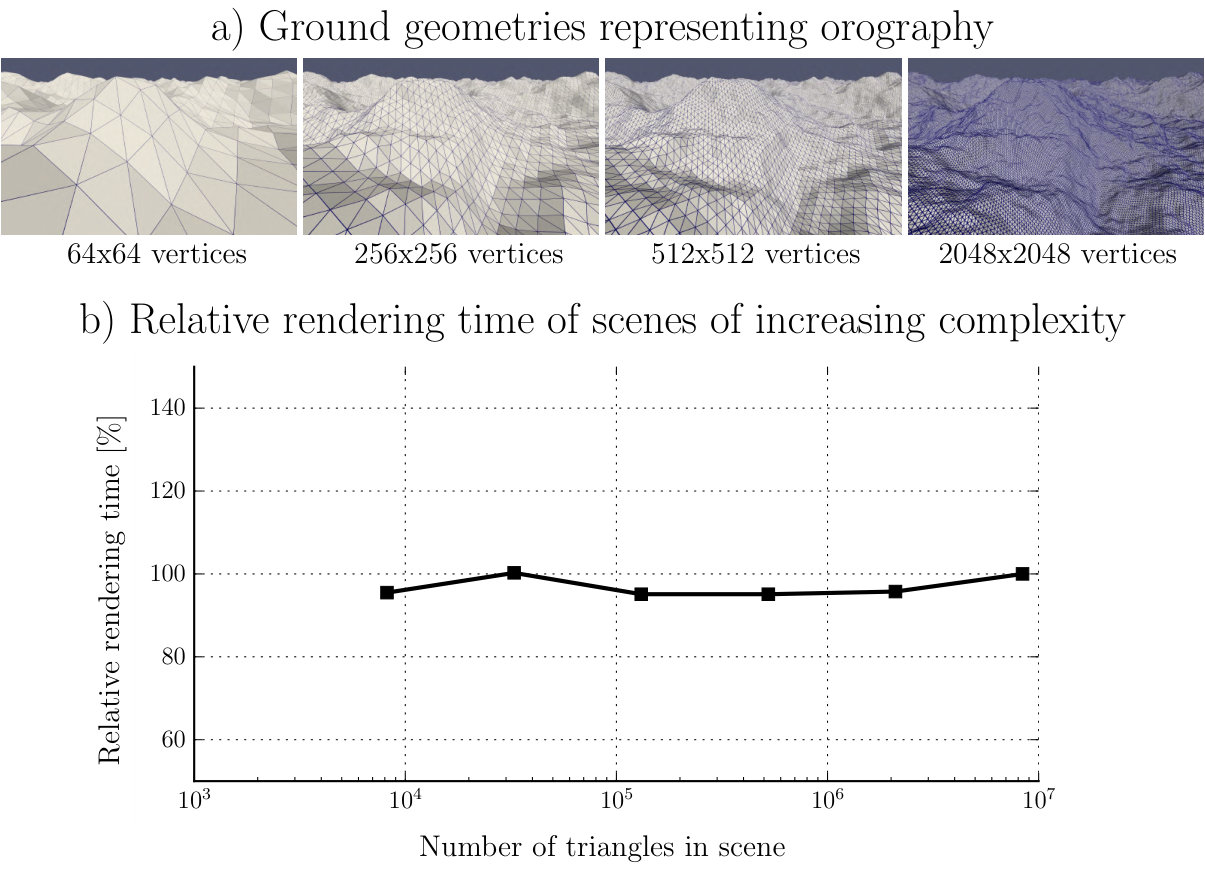 Figure 1
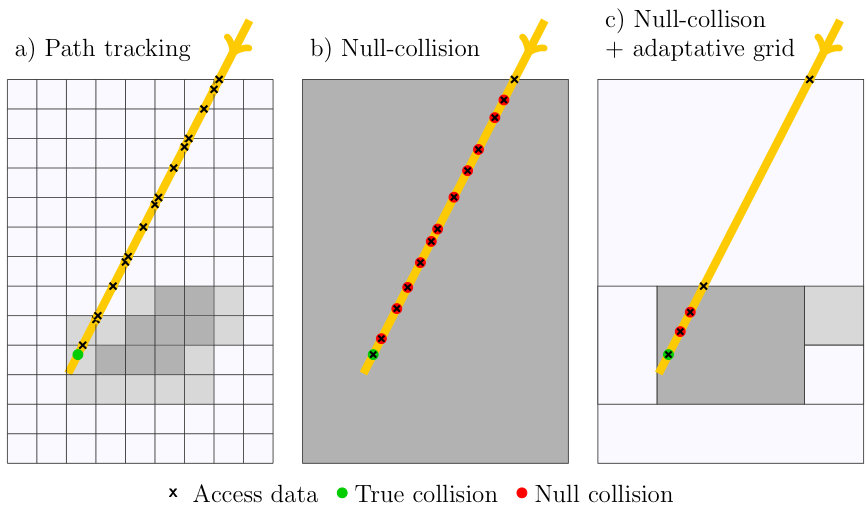 Figure 2
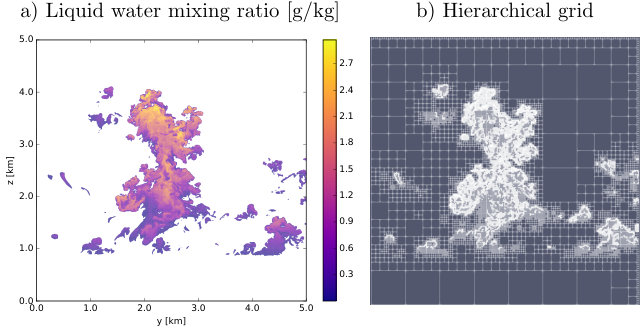 Figure 3
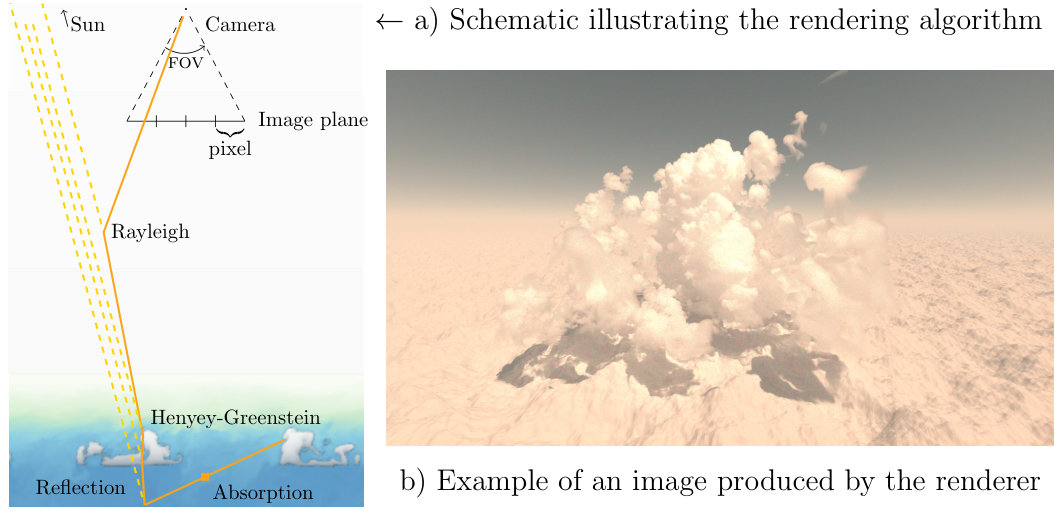 Figure 4
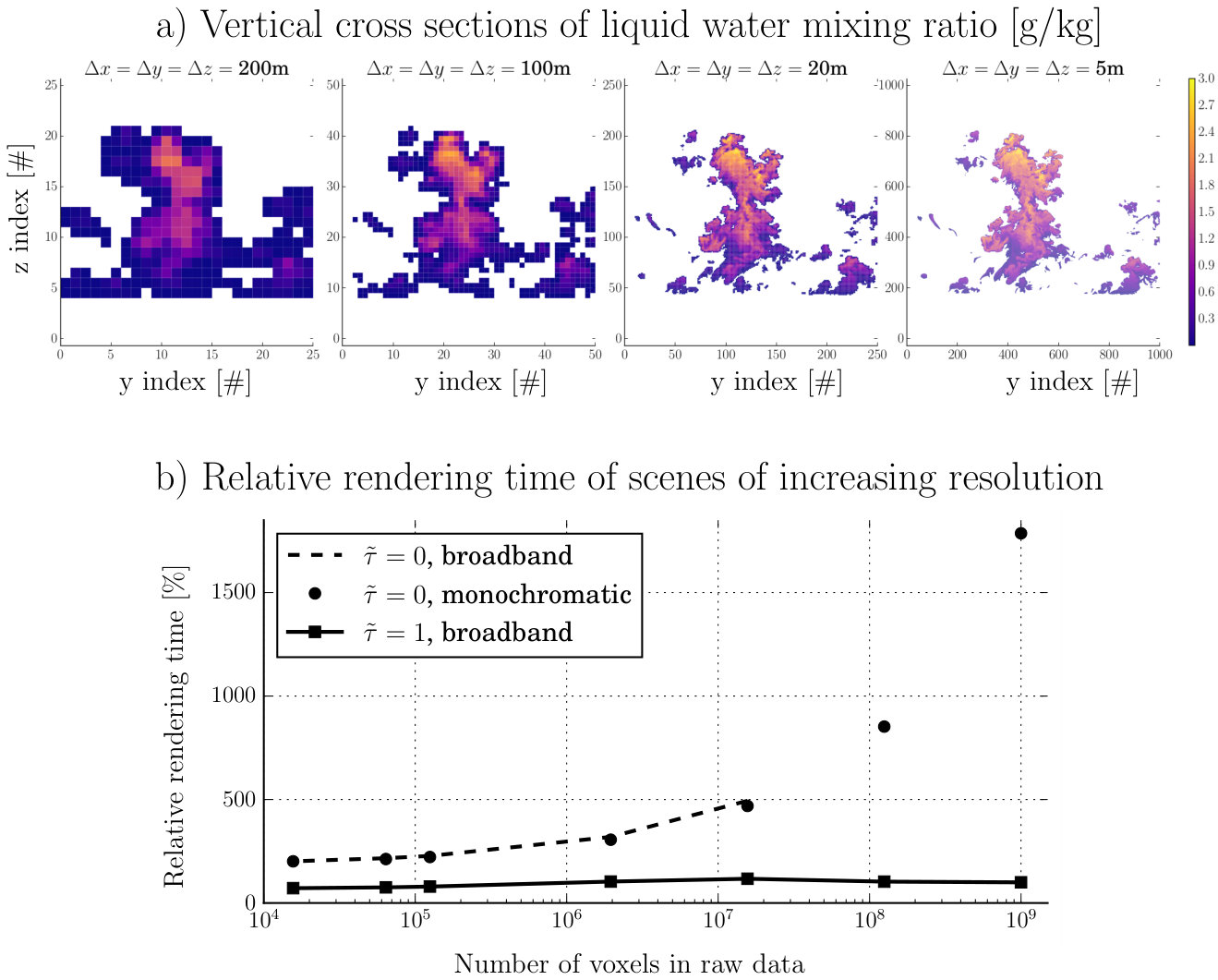 Figure 5
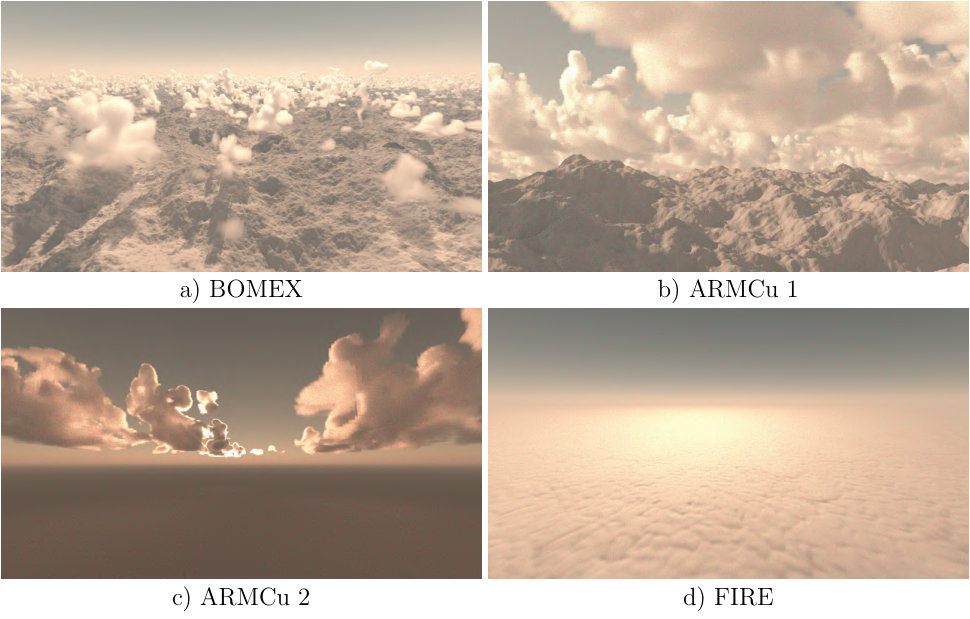 Figure 6
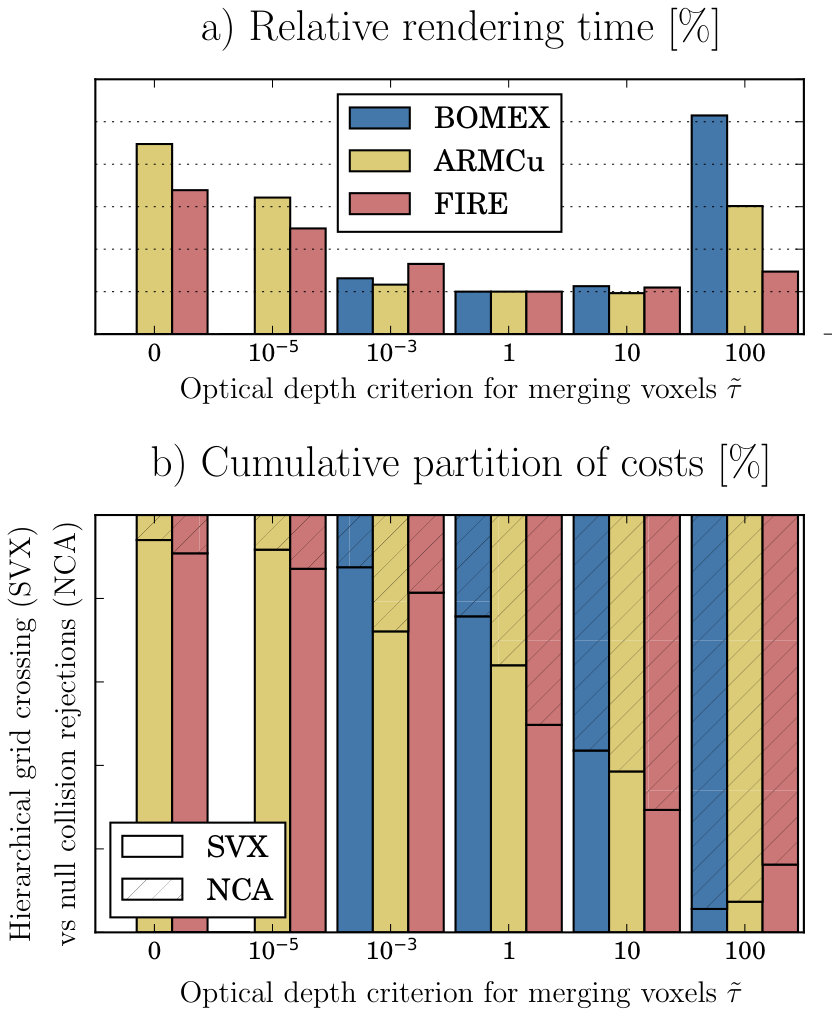 Figure 7
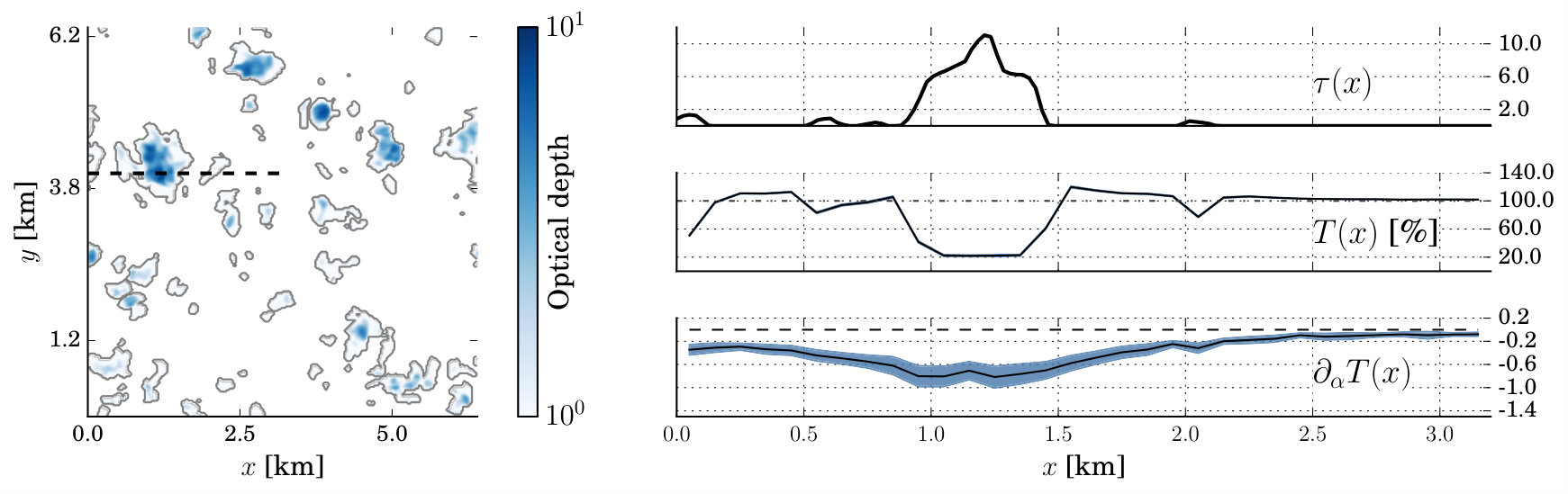 Figure 8
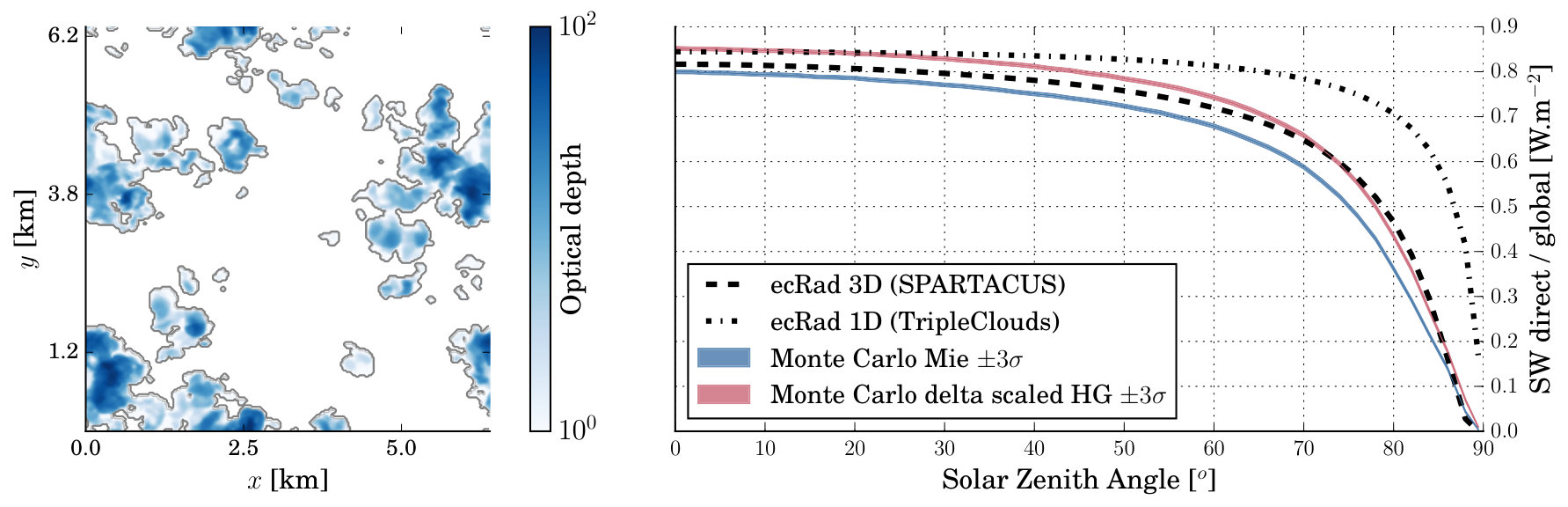 Figure 9
Peer Reviews
No public reviews on file for this paper yet. If you reviewed it on a platform where reviews are public (OpenReview, ICLR, NeurIPS, ICML), you can paste yours below so the community can read it here.
Videos
No videos yet. Explain this paper in a talk, walkthrough, or lecture? Add one.