Towards Smart Wireless Body-Centric Networks
Samiya M. Shimly, David B. Smith

TL;DR
This paper demonstrates that wireless body-centric channels exhibit long-memory properties, such as power-law autocorrelation decay and high Hurst exponents, which can enhance predictive analysis in human-centered wireless networks.
Contribution
It provides the first experimental evidence of long-range dependence in body-centric channels using real-world data from multiple BANs.
Findings
Channels show power-law autocorrelation decay
Channels have Hurst exponent > 0.5 on average
LRD properties can enable autonomous sensing and decision-making
Abstract
We investigate the existence of 'long-memory' or long-range dependence (LRD) of the wireless body-centric channels, e.g., on-body, body-to-body (B2B), with real-life experimental dataset collected from 10 co-located wireless body area networks or BANs (people fitted with wearable sensors). We examine two different factors on that purpose such as: the pattern of the decaying autocorrelation function (ACF) and the Hurst exponent. From the experimental outcome, we show that, the ACF decay of the body-centric channels follows a power-like decay and the channels have a Hurst exponent much greater than 0.5 on average. These results indicate that the body-centric channels can possess long-memory or LRD characteristic which can be used for predictive analysis and intelligent decision making to build futuristic wireless human-centered networks that can sense and act autonomously. We also clarify…
Click any figure to enlarge with its caption.
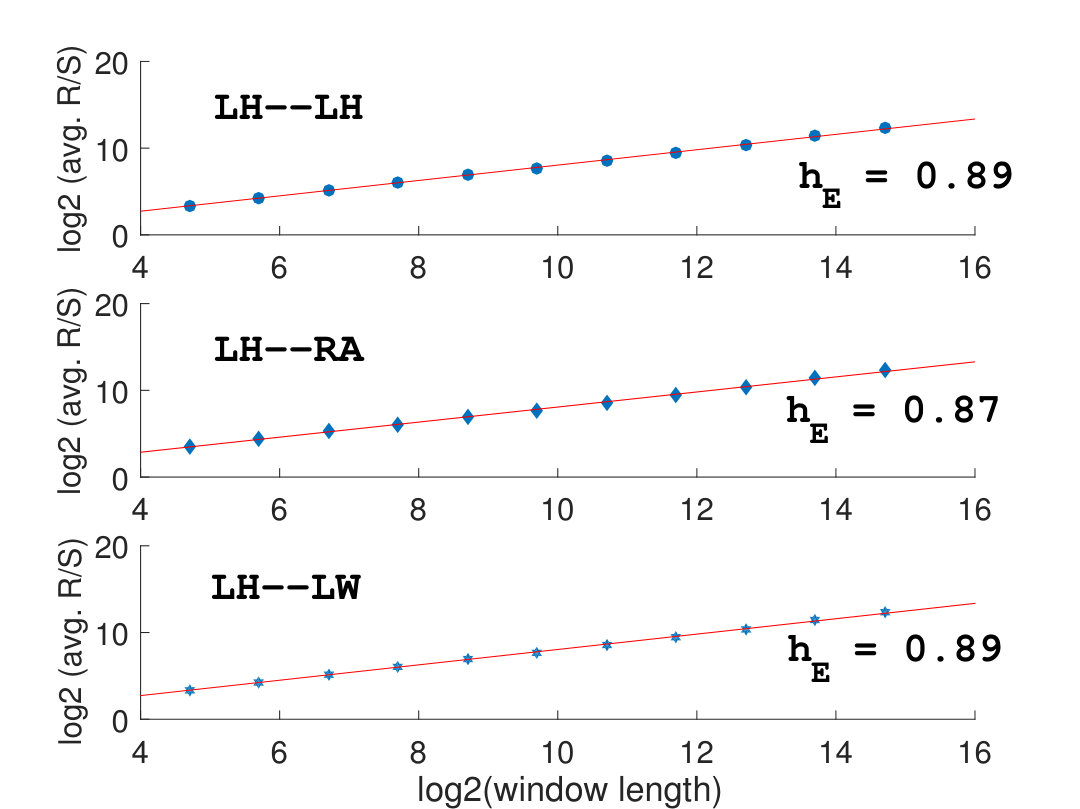 Figure 1
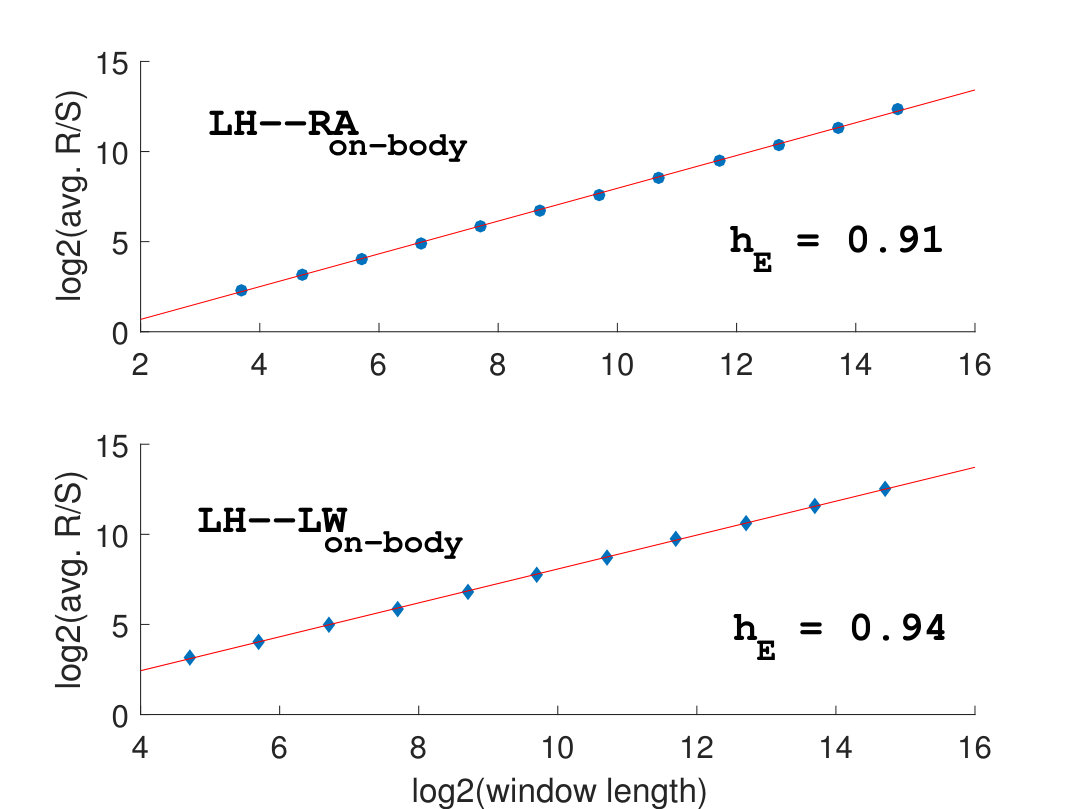 Figure 2
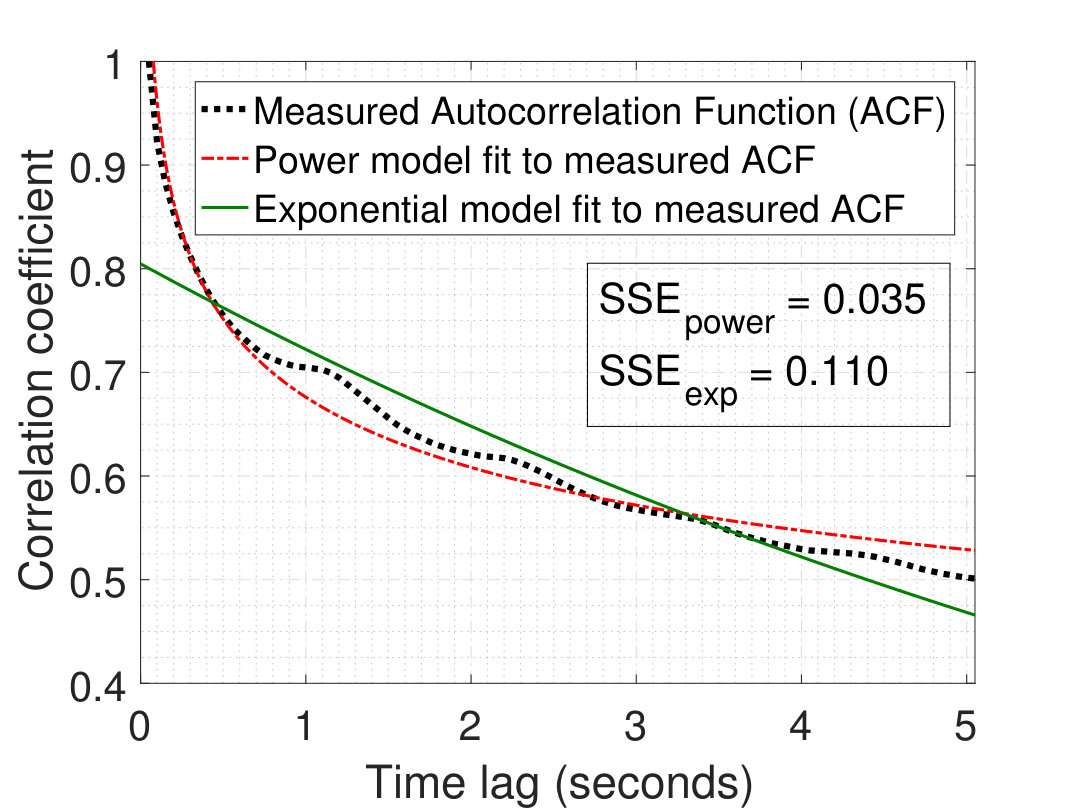 Figure 3
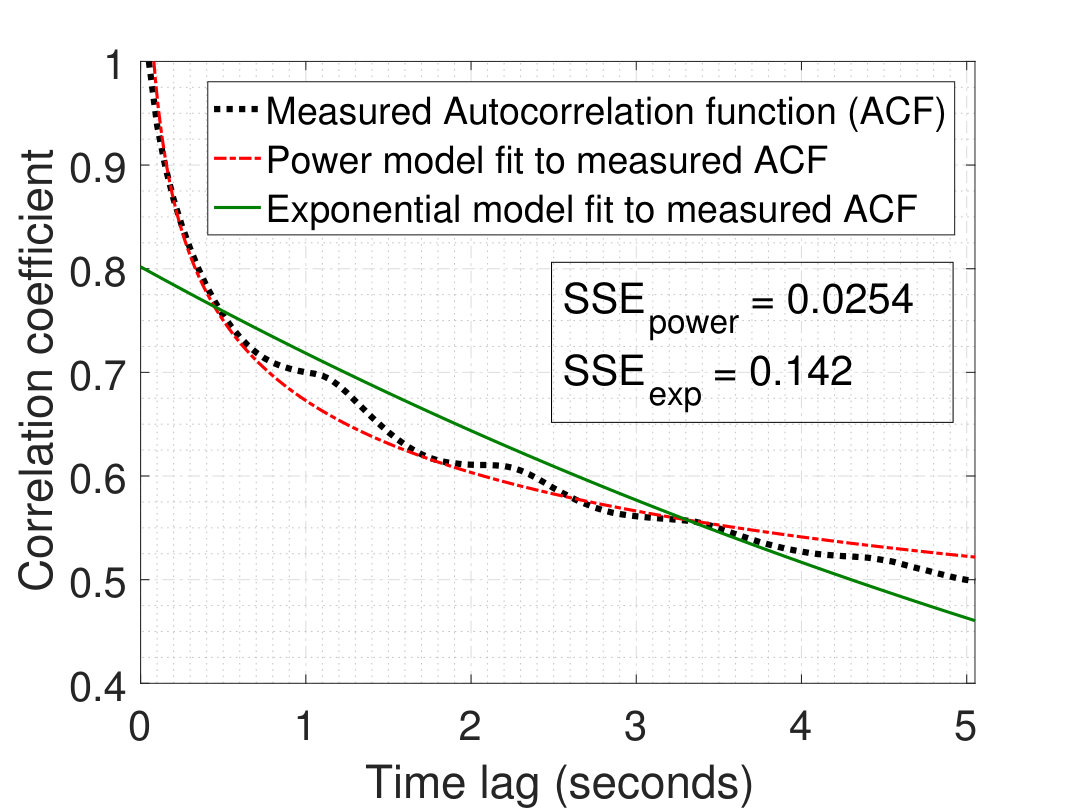 Figure 4
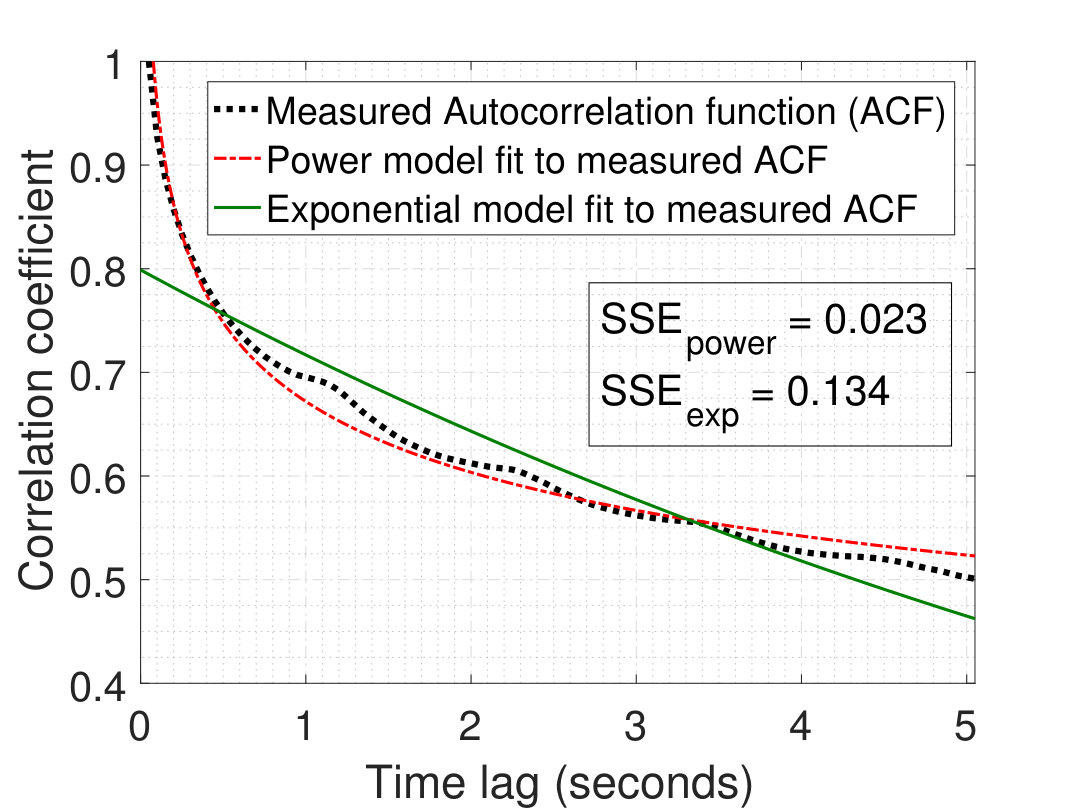 Figure 5
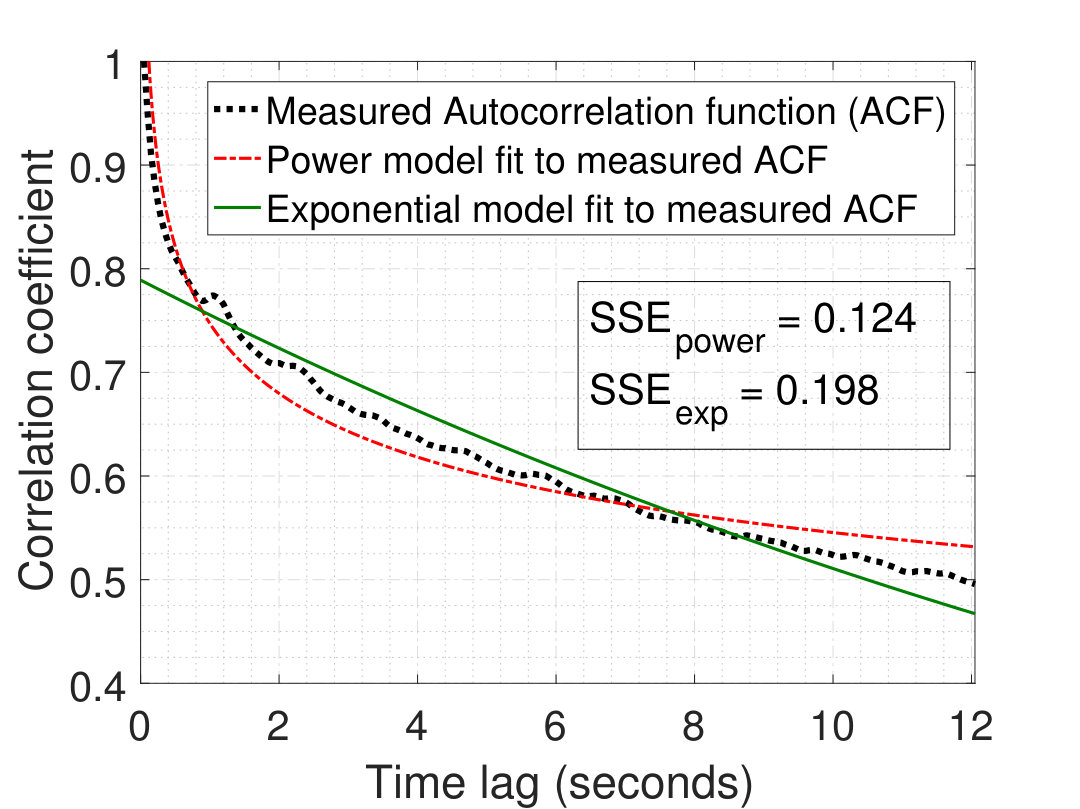 Figure 6
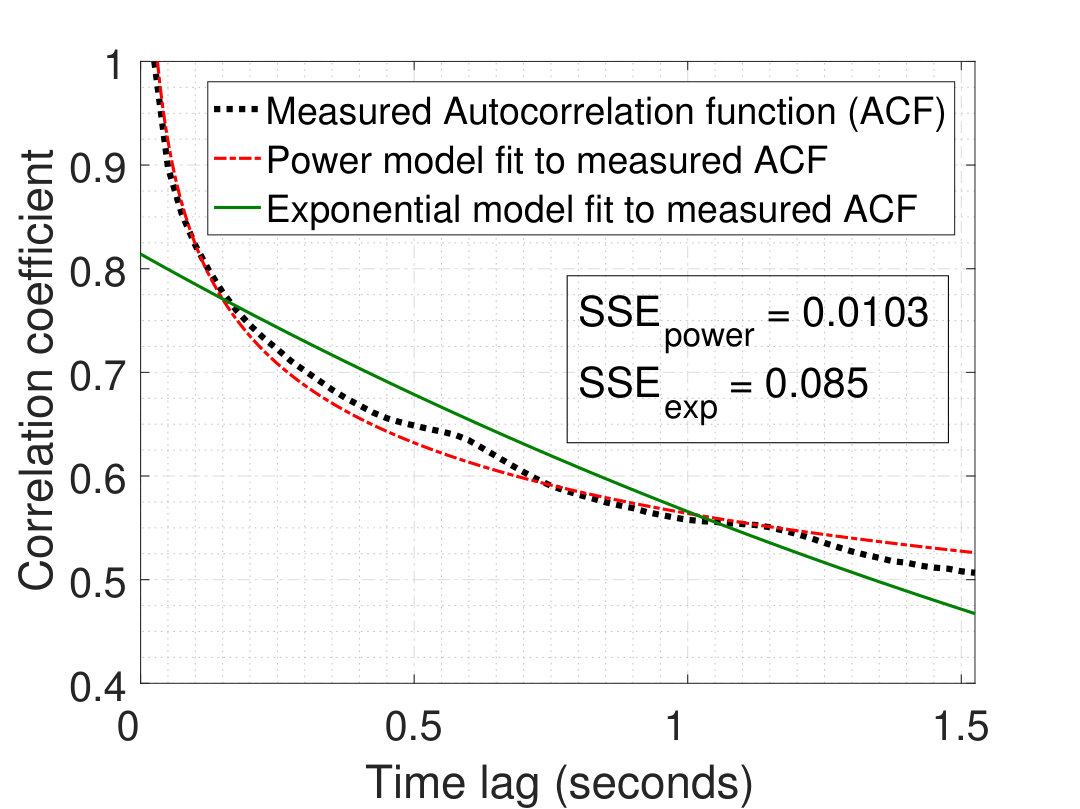 Figure 7
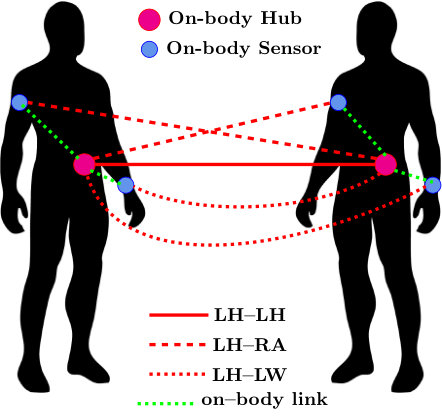 Figure 8
Peer Reviews
No public reviews on file for this paper yet. If you reviewed it on a platform where reviews are public (OpenReview, ICLR, NeurIPS, ICML), you can paste yours below so the community can read it here.
Videos
No videos yet. Explain this paper in a talk, walkthrough, or lecture? Add one.
Taxonomy
TopicsWireless Body Area Networks · Molecular Communication and Nanonetworks · Energy Efficient Wireless Sensor Networks
Towards Smart Wireless Body-Centric Networks
Samiya M. Shimly
The Australian National University & CSIRO Data61
Email: [email protected]
David B. Smith
CSIRO Data61 & The Australian National University
Email: [email protected]
Abstract
We investigate the existence of ‘long-memory’ or long-range dependence (LRD) of the wireless body-centric channels, e.g., on-body, body-to-body (B2B), with real-life experimental dataset collected from 10 co-located wireless body area networks or BANs (people fitted with wearable sensors). We examine two different factors on that purpose such as: the pattern of the decaying autocorrelation function (ACF) and the Hurst exponent. From the experimental outcome, we show that, the ACF decay of the body-centric channels follows a power-like decay and the channels have a Hurst exponent much greater than 0.5 on average. These results indicate that the body-centric channels can possess long-memory or LRD characteristic which can be used for predictive analysis and intelligent decision making to build futuristic wireless human-centered networks that can sense and act autonomously. We also clarify whether the presence of the LRD property is sufficient for reliable prediction of the body-centric channels.
I Introduction
Wireless body-centric communications are attracting a lot of attention due to the low-cost, suitable new technology for establishing human-to-human or body-to-body networks (BBNs) through wearable sensors. BBNs are envisioned to be self-organizing, smart, and mobile networks that can create their own centralized/decentralized network connection without any external coordination for serving different medical and non-medical applications [1]. This type of autonomous decision making activity requires systematic prediction and modeling of the channel behavior which further depends on the ‘long-memory’ characteristic of the channel. Here, we aim to address the following issues:
- •
What is ‘long-memory’ and why is it important?
- •
Do wireless body-centric channels have long-memory?
- •
Is having long-memory sufficient for making reliable prediction?
II Experimental Scenario
We use an open-access dataset which consists of contiguous extensive intra-BAN (on-body) and inter-BAN (body-to-body) channel gain data of around minutes, captured from closely located mobile subjects (adult male and female) with a sampling rate of Hz. Each subject wore transmitter (Tx hub) on the left-hip and receivers (sensors/ relays) on the left-wrist and right-upper-arm, respectively (Fig. 1). A description of these wearable radios can be found in [2] and the “open-access” dataset can be downloaded from [3].
III Long-memory or Long-range dependence
Long-memory or Long-range dependence (LRD) is the level of statistical dependence between two points in the time series. The ‘memory’ refers to how strongly the past can influence the future or, how useful is the past data to predict the future consequences. If a channel possesses long-range-dependence then it is more predictable as more data can be used to predict the future.
III-A Decaying ACF
A rough analysis of the dependence is to examine the pattern of the decaying autocorrelation function (ACF) of the channel. For a short-memory process, the dependence between two points decreases rapidly with the increase in time difference, hence the ACF has an exponential decay (faster decay) or drops to [math] after a certain time lag. On the other hand, if the channel possesses long-memory the ACF decays more slowly (power-like) than an exponential decay.
We analyze the average ACF of different BAN/BBN channels where we fit the single term exponential and power series models to the ACF decay in MATLAB, which uses the trust-region algorithm with nonlinear least-square method. The power and exponential fit to the measured averaged ACF for different BB and on-body channels are shown in Figs. 2 and 3, respectively. The models are fitted to the ACF decay till a moderate correlation coefficient of to measure the optimum result. We measure the goodness-of-fit with the sum of squared errors of prediction (SSE) statistic [4]. A SSE value closer to [math] indicates that the model has a smaller random error component, and that the fit will be more useful for prediction. It can be seen from Figs. 2 and 3 that, both the on-body and BB channels show a power-like decay for the autocorrelation function (SSE closer to [math]). From that outcome, we can imply that the autocorrelation function of body-centric channels (BB/on-body) has power-like decay, hence these channels possess long-range dependence.
III-B Hurst exponent
A more systematic approach to analyze the dependence of the channels is to estimate the Hurst exponent, which is also referred as the index of dependence. The value of Hurst exponent () ranges between [math] and . If , then it indicates that there is no correlation/dependence between the points of the channel. If (), then the channel characteristics is persistent (e.g., an increment/decrement is followed by another increment/decrement in the near future). And, if (), then the channel characteristics is anti-persistent (e.g., an increment is followed by a decrement in the near future and vice-versa). In a nutshell, as moves away from , it tends to give more information about the channel characteristics, hence the channel becomes more predictable.
For measuring the Hurst exponent, we follow the rescaled range (R/S) analysis method described in [5]. We average the value from different groups of similar BB/on-body links and measure the approximate Hurst exponent for specific type of BB/on-body links. The results are shown in Fig. 4, where all of the links are giving a higher value of Hurst index (greater than ). From these results it can be inferred that, body-centric channels (BB/on-body) incorporate long-range dependence.
III-C Long-memory and Stationarity
Beside statistical dependence, stationarity or wide-sense-stationarity (statistical properties, e.g., mean, auto-covariance, are invariant over time) is another important characteristic to estimate the predictability of a channel. From the long-memory outcome, it can be inferred that, both type of channels (on-body/BB) are predictable. But we show in [6] that, BB channels can possess wide-sense-stationarity (WSS) for certain period, whereas on-body channels depict non-stationary behavior. Hence, even if on-body channels can have long-memory, that memory is not useful because of the non-stationary behavior, which can produce spurious results.
IV Conclusion
We show that, body-centric channels (on-body/BB) can possess long-memory. However, only BB links can be utilized for reliable predictive analysis due to their WSS property.
The reference list from the paper itself. Each links out to its DOI / PubMed record.
- 1[1] S. M. Shimly, D. B. Smith, and S. Movassaghi, “Experimentally-based cross-layer optimization across multiple wireless body area networks,” ar Xivpreprint ar Xiv: 000.0000 , 2018.
- 2[2] L. Hanlen, V. Chaganti, B. Gilbert, D. Rodda, T. Lamahewa, and D. Smith, “Open-source testbed for body area networks: 200 sample/sec, 12 hrs continuous measurement,” in IEEE 21st International Symposium on Personal, Indoor and Mobile Radio Communications Workshops (PIMRC Workshops), Turkey , Sep, 2010, pp. 66–71.
- 3[3] D. Smith, L. Hanlen, D. Rodda, B. Gilbert, J. Dong, and V. Chaganti, “Body area network radio channel measurement set,” URL: http://doi.org/10.4225/08/5947409 d 34552 , 2012.
- 4[4] J. D. Hamilton, Time series analysis . Princeton university press Princeton, 1994, vol. 2.
- 5[5] J. Feder and P. P. Fractals, “New york, 1988,” Google Scholar , 1991.
- 6[6] S. M. Shimly, D. B. Smith, and S. Movassaghi, “Wide-sense-stationarity of everyday wireless channels for body-to-body networks,” in the IEEE International Conference on Communications (accepted), available on arxiv , 2018.