A Novel Bulk-Optics Scheme for Quantum Walk with High Phase Stability
Andrea Geraldi, Lu\'is Diego Bonavena, Carlo Liorni, Paolo Mataloni,, and \'Alvaro Cuevas

TL;DR
This paper introduces a highly stable, configurable bulk-optics scheme for implementing quantum walks using a one-dimensional lattice of displaced Sagnac interferometers, enabling detailed trajectory control and measurement.
Contribution
It presents a novel, phase-stable bulk-optics setup for quantum walks that allows full configurability and measurement at any step, advancing experimental capabilities.
Findings
Successful experimental implementation of ordered quantum walks.
Demonstration of disordered quantum walks with the scheme.
High phase stability achieved in the optical setup.
Abstract
A novel bulk optics scheme for quantum walks is presented. It consists of a one-dimensional lattice built on two concatenated displaced Sagnac interferometers that make it possible to reproduce all the possible trajectories of an optical quantum walk. Because of the closed loop configuration, the interferometric structure is intrinsically stable in phase. Moreover, the lattice structure is highly configurable, as any phase component perceived by the walker is accessible, and finally, all output modes can be measured at any step of the quantum walk evolution. We report here on the experimental implementation of ordered and disordered quantum walks.
Click any figure to enlarge with its caption.
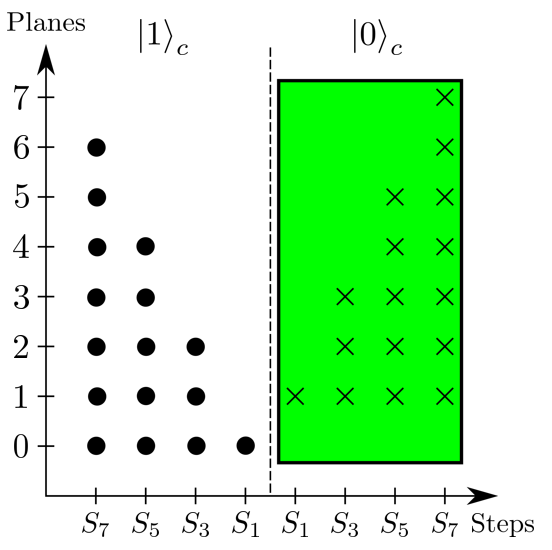 Figure 1
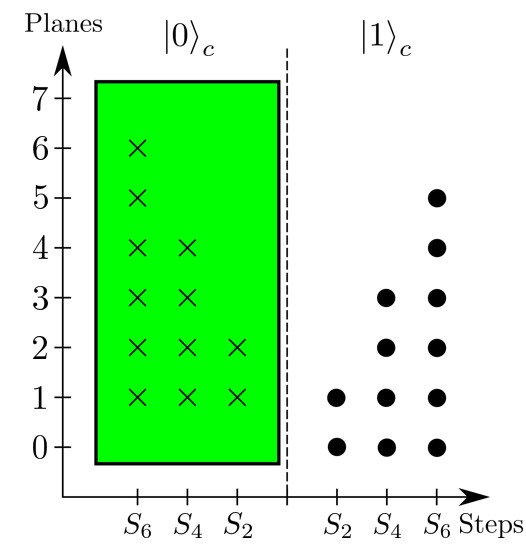 Figure 2
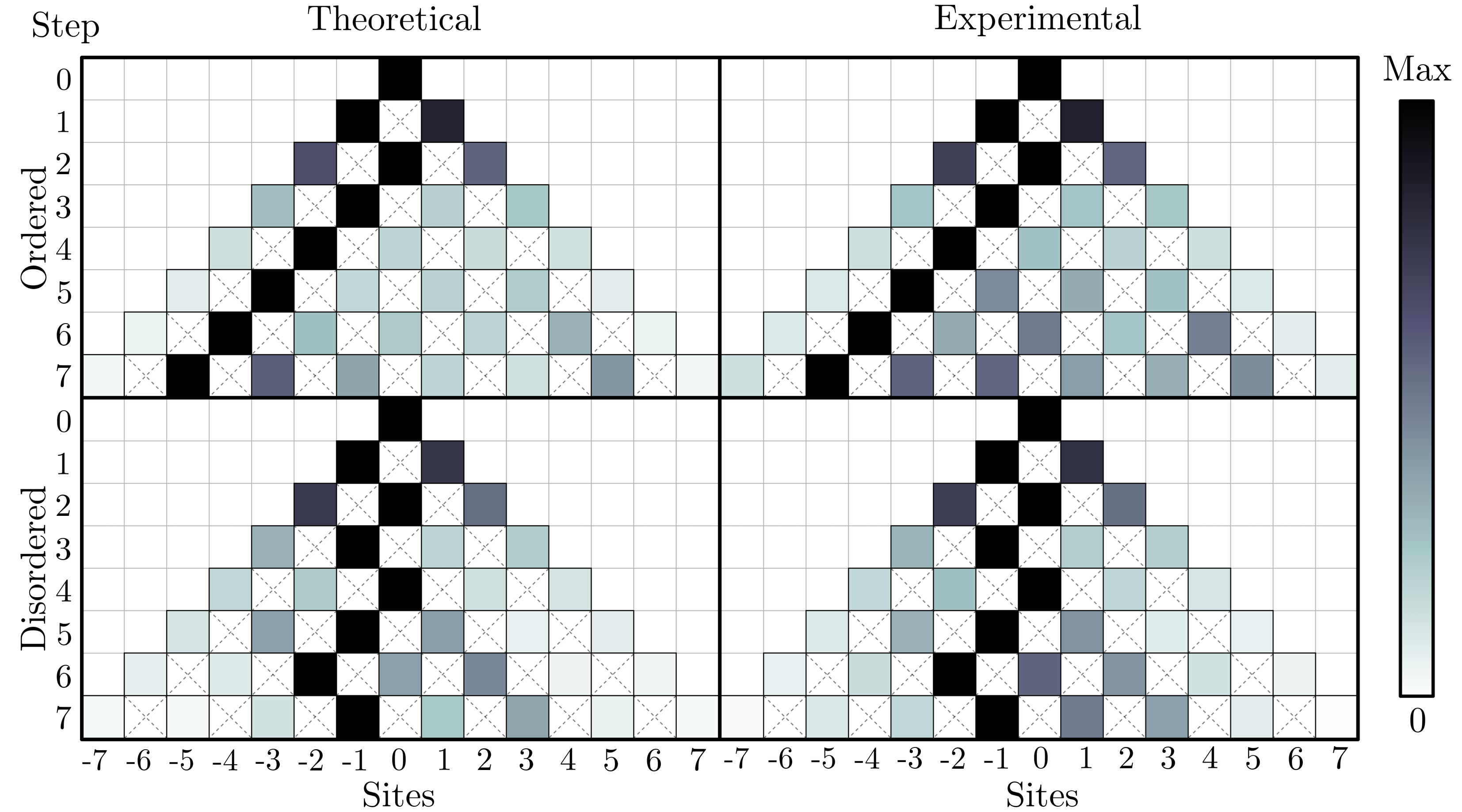 Figure 3
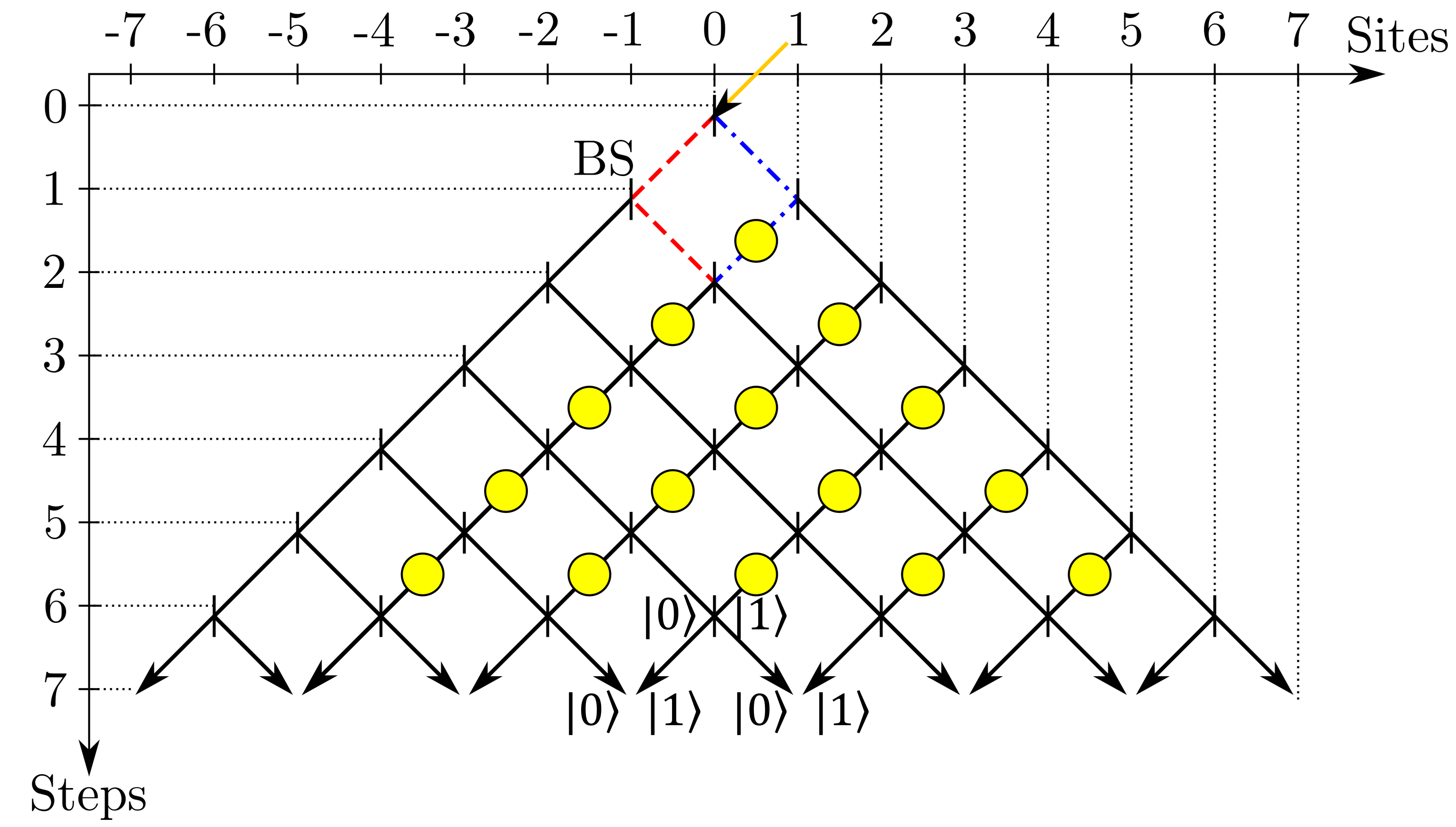 Figure 4
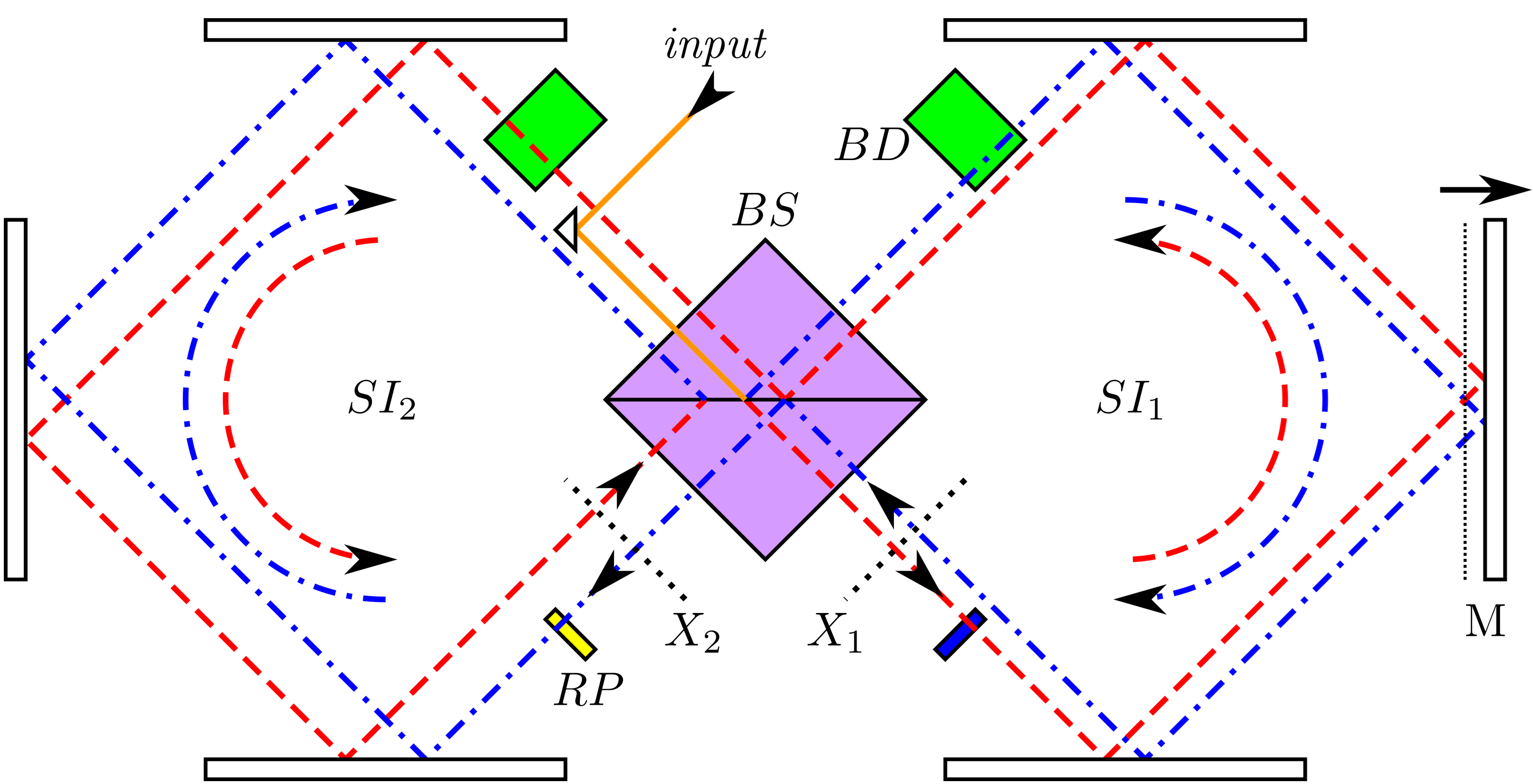 Figure 5
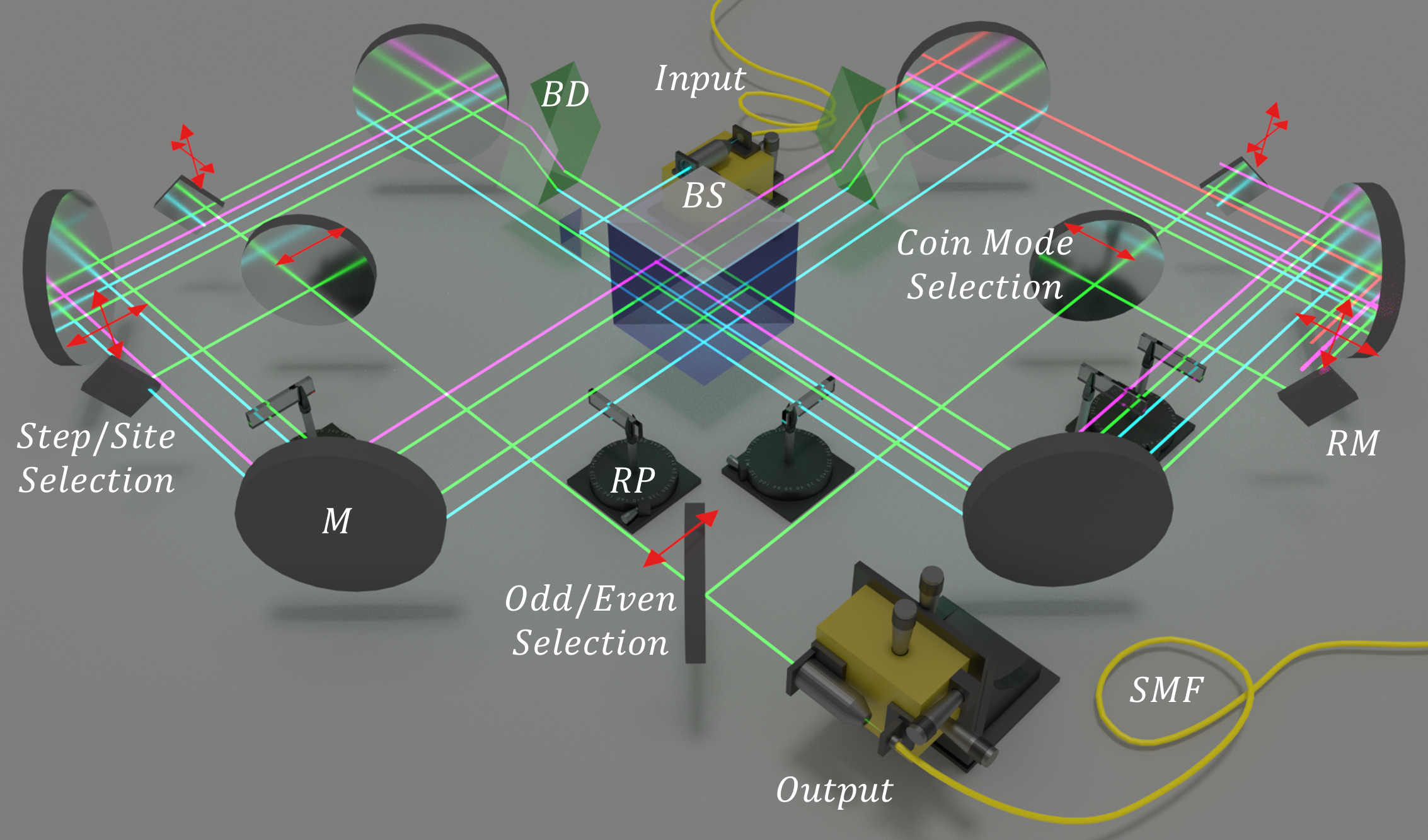 Figure 6
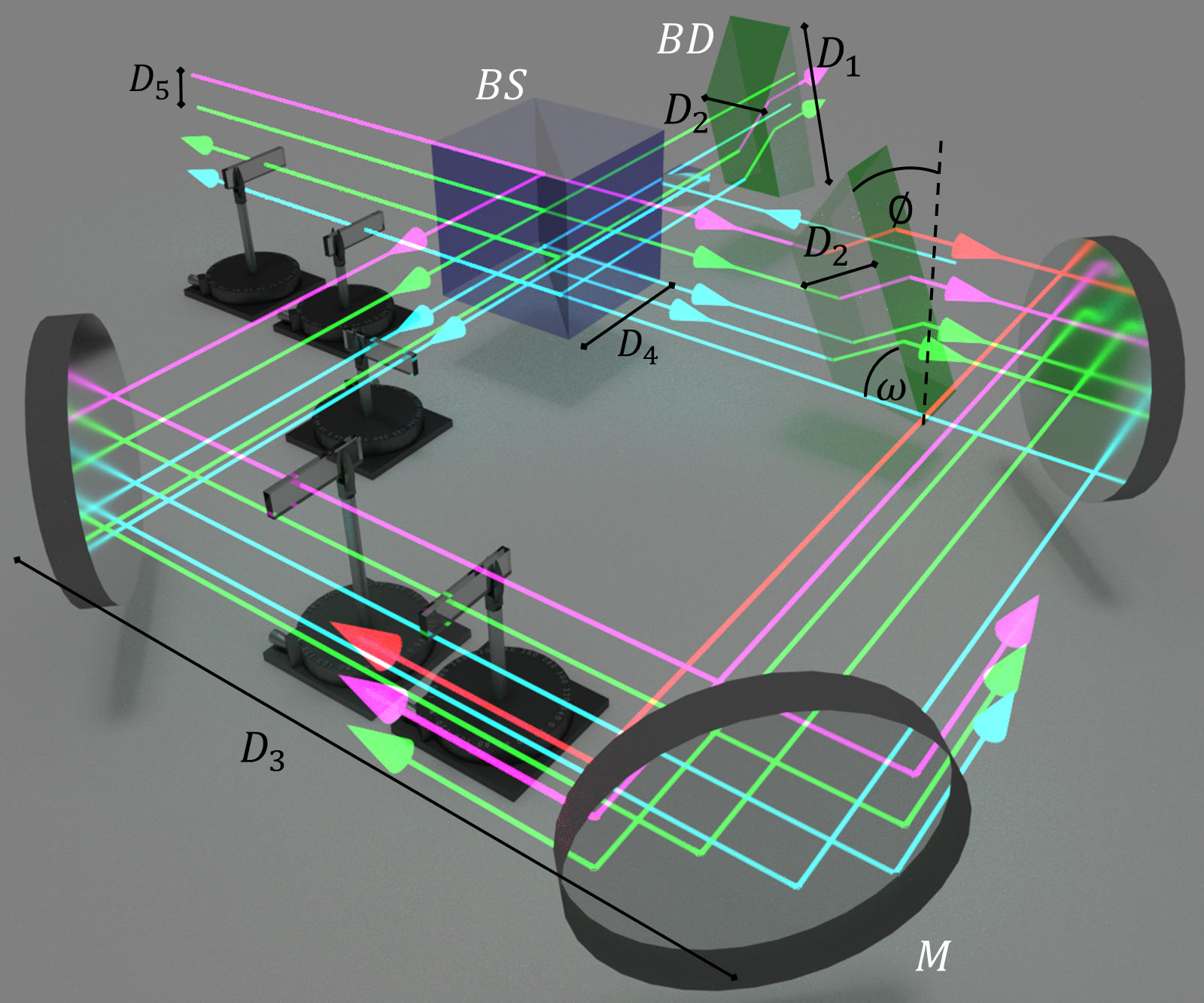 Figure 7
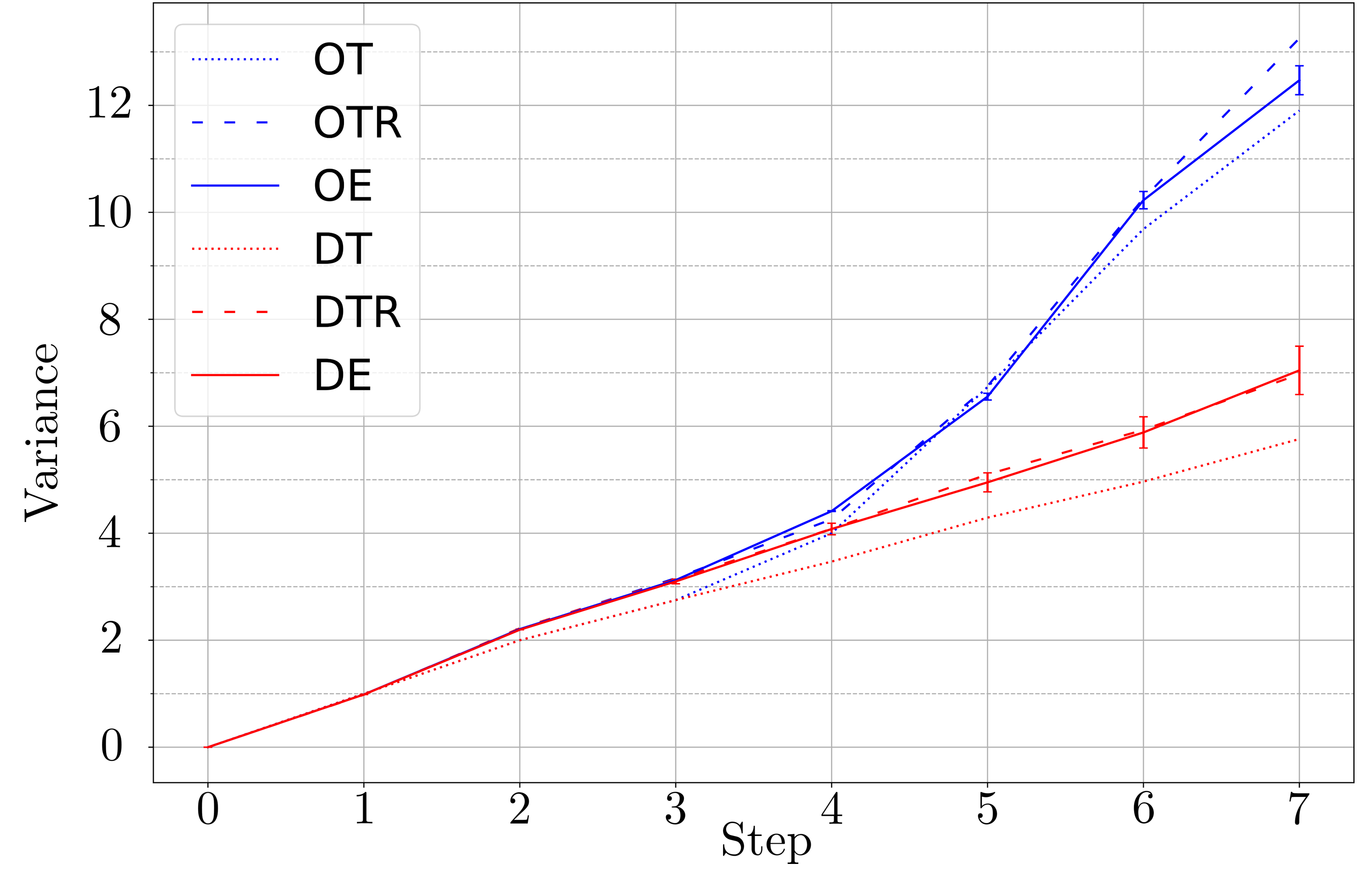 Figure 8
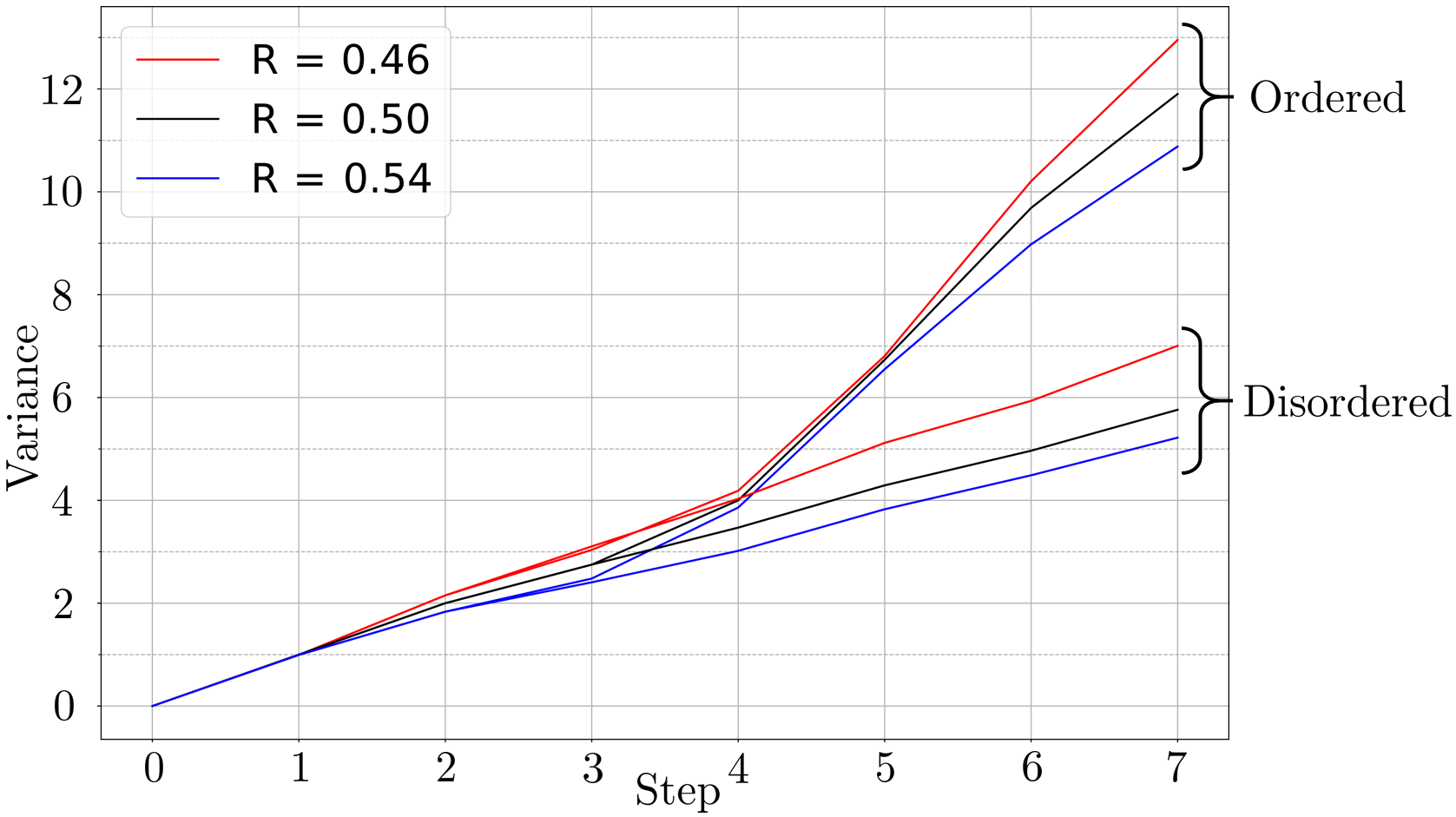 Figure 9
Peer Reviews
No public reviews on file for this paper yet. If you reviewed it on a platform where reviews are public (OpenReview, ICLR, NeurIPS, ICML), you can paste yours below so the community can read it here.
Videos
No videos yet. Explain this paper in a talk, walkthrough, or lecture? Add one.
Taxonomy
TopicsQuantum Information and Cryptography · Quantum Computing Algorithms and Architecture · Neural Networks and Reservoir Computing
A Novel Bulk-Optics Scheme for Quantum Walk with High Phase Stability
Andrea Geraldi
Physics Department, University of Rome La Sapienza, Piazzale Aldo Moro 5, 00185 Rome, Italy
Correspondence: [email protected] (A. G.)
Luís Diego Bonavena
Physics Department, University of Rome La Sapienza, Piazzale Aldo Moro 5, 00185 Rome, Italy
Carlo Liorni
Physics Department, University of Rome La Sapienza, Piazzale Aldo Moro 5, 00185 Rome, Italy
Heinrich-Heine Universität, Institut für Theoretische Physik III, Universitätstraße 1, 40225 Düsseldorf, Germany
Paolo Mataloni
Physics Department, University of Rome La Sapienza, Piazzale Aldo Moro 5, 00185 Rome, Italy
Álvaro Cuevas
Physics Department, University of Rome La Sapienza, Piazzale Aldo Moro 5, 00185 Rome, Italy
Abstract
A novel bulk optics scheme for quantum walks is presented. It consists of a one-dimensional lattice built on two concatenated displaced Sagnac interferometers that make it possible to reproduce all the possible trajectories of an optical quantum walk. Because of the closed loop configuration, the interferometric structure is intrinsically stable in phase. Moreover, the lattice structure is highly configurable, as any phase component perceived by the walker is accessible, and finally, all output modes can be measured at any step of the quantum walk evolution. We report here on the experimental implementation of ordered and disordered quantum walks.
1 Introduction
The control of quantum systems allows not only exploring the interaction mechanisms of the microscopic world, but also exploiting the parallel coherent evolutions of such particularly sensitive systems, developing a new generation of information processing and communication [1, 2], which will be capable of fast analysis [3] and dense data transport [4] with intrinsically-secure protocols [5]. For example, several quantum technology applications are currently under development, such as the implementation of search algorithms [6], the simulation of cellular automata [7] and the investigation of quantum diffusion processes, manifesting peculiar effects by the generation of topologically-protected quantum states [8, 9].
These diffusion processes occur when the behavior of a quantum system is controlled by a surrounding environment, and it depends on its structure, on the interaction strength, and on the interference between all possible evolutions [10]. A well-known particular case is the so-called quantum walk (QW), representing the spatial random movement of a quantum particle in an n-dimensional lattice, where all degrees of freedom are commonly decoupled [11]. Depending on the lattice structure, a QW makes possible the simulation of important physical phenomena, such as Anderson localization [12, 13] or a variety of other effects concerning different research fields [14].
In this work, we focus on the case of discrete QWs, where the quantum system only evolves at certain discrete times known as steps [15]. Here, we present a novel bulk optics scheme for simulations of QWs, exploiting unique features and presenting significant advantages with respect to current bulk [16] and integrated platforms [17].
2 Theoretical Model
The main elements of a QW are given by the walker, the coin, and the evolution operators of both the walker and coin [18, 14]. In particular, for our one-dimensional case the walker corresponds to the coherent superposition of all possible lattice sites occupied by the quantum particle during the evolution, and it is normally represented in the basis , spanning its associated Hilbert space . The coin corresponds to any degree of freedom enabling changes of position and is normally described by a two-level system with basis in the Hilbert space .
The QW evolution is controlled by the action of two operators: the first one acts on the coin state as a generalization of the Hadamard gate [19],
[TABLE]
with and ; the second one corresponds to a shift in the walker position, conditioned to the state of the coin:
[TABLE]
The operator , which can be considered as a physical device with two input and two output ports, can be optically achieved by encoding the coin basis in the path degree of freedom of a beam splitter (BS). Here, one can write , , , and , where is the BS reflectivity [20, 21]. Then, by using , , , and as solutions of the constraint , one can assume that all phase factors are effectively controlled only by and , which could be prepared experimentally by external devices in the BS outputs and , respectively. Since the absolute values of and are not accessible, only their difference is relevant. Thus, a generic state with evolves at each step (discrete time) according to:
[TABLE]
where represents the unitary evolution operator of an “ordered QW” [18, 14].
In a more general scenario, each lattice coin can be different from the others and time dependent, as in the case of the completely-“disordered QW”, where all lattice coins are random and independent at any step of the evolution [22]. Here, the state evolves according to:
[TABLE]
with , where is the coin operator at site for the step associated with the time interval .
3 Experimental Implementation
The standard optical realization of a one-dimensional QW consists of a network of BSs, where each of them represents a particular position site of the lattice, with their ports encoding the coin basis and achieving the effective phase shift difference (see Figure 1). It is usually achieved by using photonics-integrated circuits, where a suitably-prepared array of microfabricated waveguides reproduces a fixed number of steps in a small volume [24], or by time-synchronization of photon pulses in bulk-fiber circuits [25], or in noisy large schemes of bulk optics only [26].
The actual setup implemented in this work consists of two displaced-multi-pass Sagnac interferometers (SIs) connected to each other through a common BS, as shown in Figure 2. Here, all beam trajectories are initially prepared in a collinear regime, and after a single mirror translation in the first SI (), one obtains the displaced loops lying in a single transmission plane, as used recently by us in another experiment [23]. This configuration is equivalent to a chain of Mach–Zehnder interferometers (MZIs), with intrinsically-stable phases that can be addressed independently in each mesh of the chain. The number of consecutive passages of light through the BS of Figure 2 determines unambiguously the length of the chain.
The one-dimensional QW of Figure 1 can be realized by the scheme of Figure 2, including as a further spatial dimension, the vertical direction, perpendicular to the horizontal plane of Figure 2. This is achieved by using suitably-designed beam displacers (BDs) intercepting some of the light trajectories in both SIs, namely clockwise trajectories in and counter-clockwise ones in . For each passage of light through the BD, the number of QW sites grows by one unit, and the number of possible paths that the walker can go through is equal to , where is the total number of steps. Thus, our scheme exploits the three dimensions of the same BS to increase the number of sites and steps of the QW. Individual phases can be easily addressed by using independently-rotating thin glass plates (RPs) in each QW mesh point (see Figure 2).
Figure 3 shows the actual QW realized in the laboratory. In the system, BDs are realized by properly-oriented glass prisms. Additionally, the output radiation of each step can be extracted for measurement by a set of moving mirrors. In Figure 3a,b, different colors denote different transmission planes (light blue, green, violet, and red correspond to the beam in the ground, first, second, and third transmission plane, respectively). Two or more paths can exist in the same horizontal plane, but always along different directions. The transverse spatial distribution of the QW internal paths arising in the setup is shown in Figure 4a,b, and it is obtained by cutting the paths in the () plane of () (see Figure 2) and looking at the BS. Here, the green boxes correspond to the sections of BDs intercepting only the clockwise (counter-clockwise) paths of the ().
In the experiment, we have focused our attention on the case of single-photon evolution in ordered and disordered QWs. For this purpose, a proof of principle was performed using a CW laser at 810 nm as the input signal from a single-mode fiber coupler, as shown in Figure 3. An optical interference with visibility larger than could be guaranteed up to the seventh step due to the good parallelism between the prism faces ( rad of deviation) and the very small time delay between the two arms of each MZI, which is orders of magnitude below the coherence length of the laser.
4 Results and Discussion
In Figure 5, we show the evolution of the walker state for the two cases of an ordered and a disordered QW, for an initial state . Here, the experimental data were obtained from the laser power measured on each site, where each of them has a contribution deriving from modes and . The data corresponding to each time step have been obtained from the state where the probabilities for the occupation of site are normalized considering optical losses at each time .
The results of Figure 5 show the typical distributions obtained for a ballistic and dispersive quantum transport corresponding to an ordered and disordered QW, respectively. They are in very good agreement with the theoretical predictions obtained by taking into account the actual parameters of the optical setup. We compared the experimental distributions with the theoretical ones for both ordered and disordered QWs through the similarity , defined as , where index runs over positions and denotes different steps of the evolution. For the ordered case, where all phase factors were set to , we obtained a similarity value of . For the disordered case, where the phase factors alternate randomly their values between zero and , the similarity was . The large values of demonstrates the very good agreement between experiment and theory.
In Figure 6, we report the variance of photon position during the evolution inside the lattice, expressed as . The graph allows us to compare the experimental data as a function of the number of steps with the theoretical predictions corresponding to a totally-symmetric QW and those obtained taking into account the real parameters of the setup. Data behave as expected from the theoretical simulation obtained with real parameters. A small deviation is observed only for a large number of steps, probably given by the slight, but increasing spatial misalignment among all possible trajectories inside the setup.
The relatively large size of the apparatus (see Figure 3b) was responsible of an observed small amount of phase instability. This effect was taken into account in the evaluation of the error bars of each experimental point.
In the case of ordered QW, experimental data were in good agreement also with theoretical predictions based on ideal optical elements, while a larger discrepancy was observed in the case of disordered QW. This was due to the non-symmetric BS used in the experiment, with measured reflectivity . The larger probability of photons to be transmitted at each passage through the BS introduced preferential directions followed by the walker. These trajectories were those characterized by a lower number of reflections, while the path with the largest probability was the one transmitted at each passage through the BS. The disordered QW was more sensitive to this effect if compared to the ordered one. Indeed, in the first case, the disorder tended to localize the walker around a single position, while the non-ideal BS brought the walker into a wide range of positions due to the preferential directions, thus increasing the variance. This resulted in a discrepancy between experimental data and predictions obtained with ideal parameters, which was strongly reduced once the non-ideal BS was introduced into the simulation. On the contrary, in the ordered case, preferential directions concurred with the ballistic behavior of the walker, resulting in a smaller discrepancy between experimental data and ideal theoretical predictions.
A different effect was expected in the case of a BS reflectivity larger than . Indeed, an augmented reflectivity generated different preferential directions with respect to the case where the path with the largest probability was the one reflected at each BS interface. In this way, the walker was confined around a small range of positions, resulting in a smaller variance with respect to the ideal case for both ordered and disordered QW. This is shown in Figure 7 where it is possible to compare the different variance behaviors expected for . As said, when , the variance was larger than the one calculated for the ideal case (), and the disordered QW was more affected by this effect if compared with the ordered one; when , the variance was smaller with respect to the ideal case for both ordered and disordered QW; however, in this case, the disordered QW was less affected by this effect when compared with the ordered one.
5 Conclusions
In this work we have shown the feasibility of the bulk-optics implementation of a one-dimensional QW based on a novel double Sagnac interferometric configuration. We demonstrated its high level of customization, phase-stability and measurement accessibility, allowing at the same time to extract each coin mode at each position site and time step. This apparatus can manage more complex discrete QW scenarios, such as simulating two-dimensional lattices or studying two-particle interference by injecting the second photon in the other port of the BS. We estimated that by replacing the glass phase control with suitably-designed spatial phase modulators, the total dimension of the system can be drastically reduced, arriving at up to 20 steps, which represents a valid alternative with respect to other platforms currently achieving more than 10 steps [27, 28].
Henceforth, we expect to use this system to study exotic kinds of noise, to reproduce unusual kinds of quantum behaviors, like topologically-protected states [29], and to explore sub-diffusive and super-diffusive dynamics [30, 31, 32, 33].
Author Contributions
A.G. coordinated the experimental implementation and achieved the data analysis. Á.C., P.M. and C.L. contributed principally to the concept and experimental design. L.D.B. and A.G. achieved the experimental measures. All authors contributed equally to the writing of the manuscript.
Acknowledgements
We acknowledge support from the European Commission Grant FP7-ICT-2011-9-600838 (QWAD-Quantum Waveguides Application and Development).
The reference list from the paper itself. Each links out to its DOI / PubMed record.
- 1[1] O’Brien, J. L. Optical quantum computing. Science 318 , 1567–1570 (2007). URL http://science.sciencemag.org/content/318/5856/1567 . http://science.sciencemag.org/content/318/5856/1567.full.pdf .
- 2[2] Kimble, H. J. The quantum internet. Nature 453 , 1023–1030 (2008). URL http://dx.doi.org/10.1038/nature 07127 . · doi ↗
- 3[3] Harrow, A. W. & Montanaro, A. Quantum computational supremacy. Nature 549 , 203 EP – (2017). URL http://dx.doi.org/10.1038/nature 23458 . · doi ↗
- 4[4] Mattle, K., Weinfurter, H., Kwiat, P. G. & Zeilinger, A. Dense coding in experimental quantum communication. Phys. Rev. Lett. 76 , 4656–4659 (1996). URL https://link.aps.org/doi/10.1103/Phys Rev Lett.76.4656 .
- 5[5] Gisin, N., Ribordy, G., Tittel, W. & Zbinden, H. Quantum cryptography. Rev. Mod. Phys. 74 , 145–195 (2002). URL https://link.aps.org/doi/10.1103/Rev Mod Phys.74.145 .
- 6[6] Shenvi, N., Kempe, J. & Whaley, K. B. Quantum random-walk search algorithm. Phys. Rev. A 67 , 052307 (2003). URL https://link.aps.org/doi/10.1103/Phys Rev A.67.052307 .
- 7[7] Gross, D., Nesme, V., Vogts, H. & Werner, R. F. Index theory of one dimensional quantum walks and cellular automata. Communications in Mathematical Physics 310 , 419–454 (2012). URL https://doi.org/10.1007/s 00220-012-1423-1 . · doi ↗
- 8[8] Kitagawa, T. et al. Observation of topologically protected bound states in photonic quantum walks. Nature Communications 3 , 882 EP (2012). URL http://dx.doi.org/10.1038/ncomms 1872 . · doi ↗