MIMO Applications for Multibeam Satellites
Robert T. Schwarz, Thomas Delamotte, Kai-Uwe Storek, Andreas Knopp

TL;DR
This paper explores the application of MIMO technology in multibeam satellite systems to enhance data throughput and coverage, using spatial multiplexing and precoding techniques for improved performance.
Contribution
It introduces the use of MIMO in both feeder links and user downlinks for multibeam satellites, demonstrating potential throughput improvements.
Findings
Significant sum throughput gains shown in simulations
Effective spatial separation of user signals achieved
Precoding reduces interstream interference
Abstract
High throughput satellites employing multibeam antennas and full frequency reuse for broadband satellite services are considered in this paper. Such architectures offer, for example, a cost-effective solution to optimize data delivery and extend the coverage areas in future 5G networks. We propose the application of the multiple-input-multiple-output (MIMO) technology in both the feeder link and the multiuser downlink. Spatial multiplexing of different data streams is performed in a common feeder beam. In the user links, MIMO with multiple beams is exploited to simultaneously serve different users in the same frequency channel. Under particular design constraints, effective spatial separation of the multiple user signals is possible. To mitigate the interstream interference in the MIMO feeder link as well as the multiuser downlink, precoding of the transmit signals is applied.…
Click any figure to enlarge with its caption.
 Figure 1
 Figure 2
 Figure 3
 Figure 4
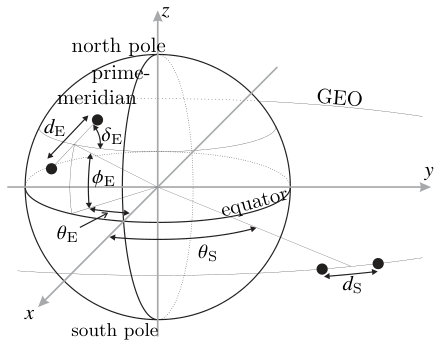 Figure 5
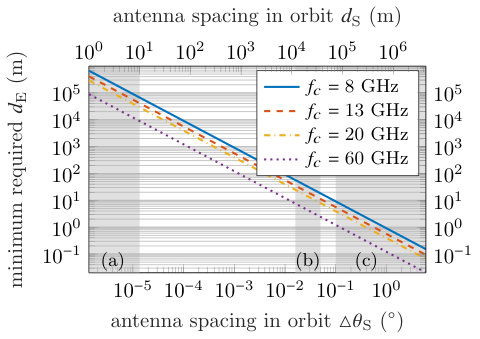 Figure 6
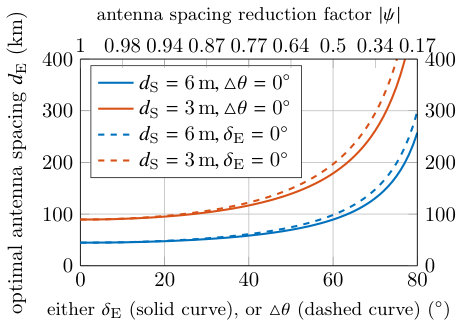 Figure 7
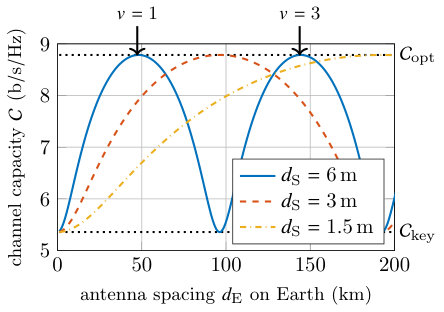 Figure 8
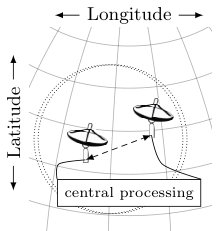 Figure 9
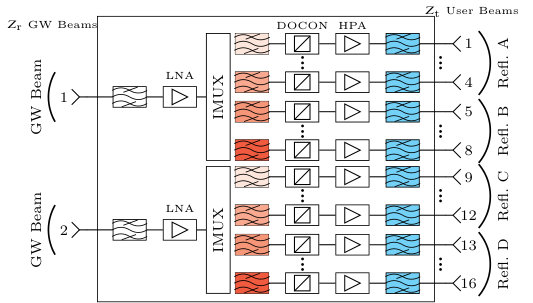 Figure 10
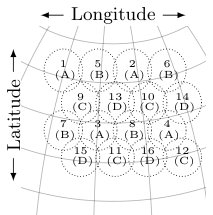 Figure 11
 Figure 12
 Figure 13
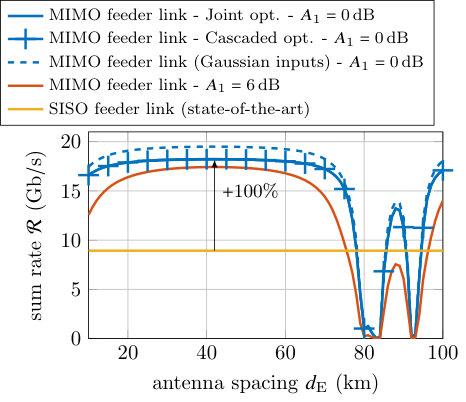 Figure 14
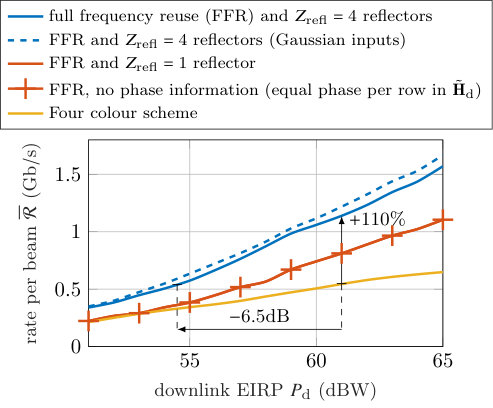 Figure 15
Peer Reviews
No public reviews on file for this paper yet. If you reviewed it on a platform where reviews are public (OpenReview, ICLR, NeurIPS, ICML), you can paste yours below so the community can read it here.
Videos
No videos yet. Explain this paper in a talk, walkthrough, or lecture? Add one.