Quantum state engineering by non-deterministic noiseless linear amplification
Hamza Adnane, Matteo Bina, Francesco Albarelli, Abdelhakim Gharbi,, Matteo G. A. Paris

TL;DR
This paper explores how non-deterministic noiseless linear amplifiers can be used to generate non-Gaussian quantum states and enhance entanglement in two-mode squeezed states, advancing quantum state engineering techniques.
Contribution
It demonstrates the effectiveness of NLAs in producing non-Gaussian states and significantly increasing entanglement in two-mode squeezed vacuum states.
Findings
NLAs generate highly non-Gaussian, non-classical states.
Amplification of two-mode squeezed vacuum states increases entanglement.
NLAs are effective tools for quantum state engineering.
Abstract
We address quantum state engineering of single- and two-mode states by means of non-deterministic noiseless linear amplifiers (NLAs) acting on Gaussian states. In particular, we show that NLAs provide an effective scheme to generate highly non-Gaussian and non-classical states. Additionally, we show that the amplification of a two-mode squeezed vacuum state (twin-beam) may highly increase entanglement.
Click any figure to enlarge with its caption.
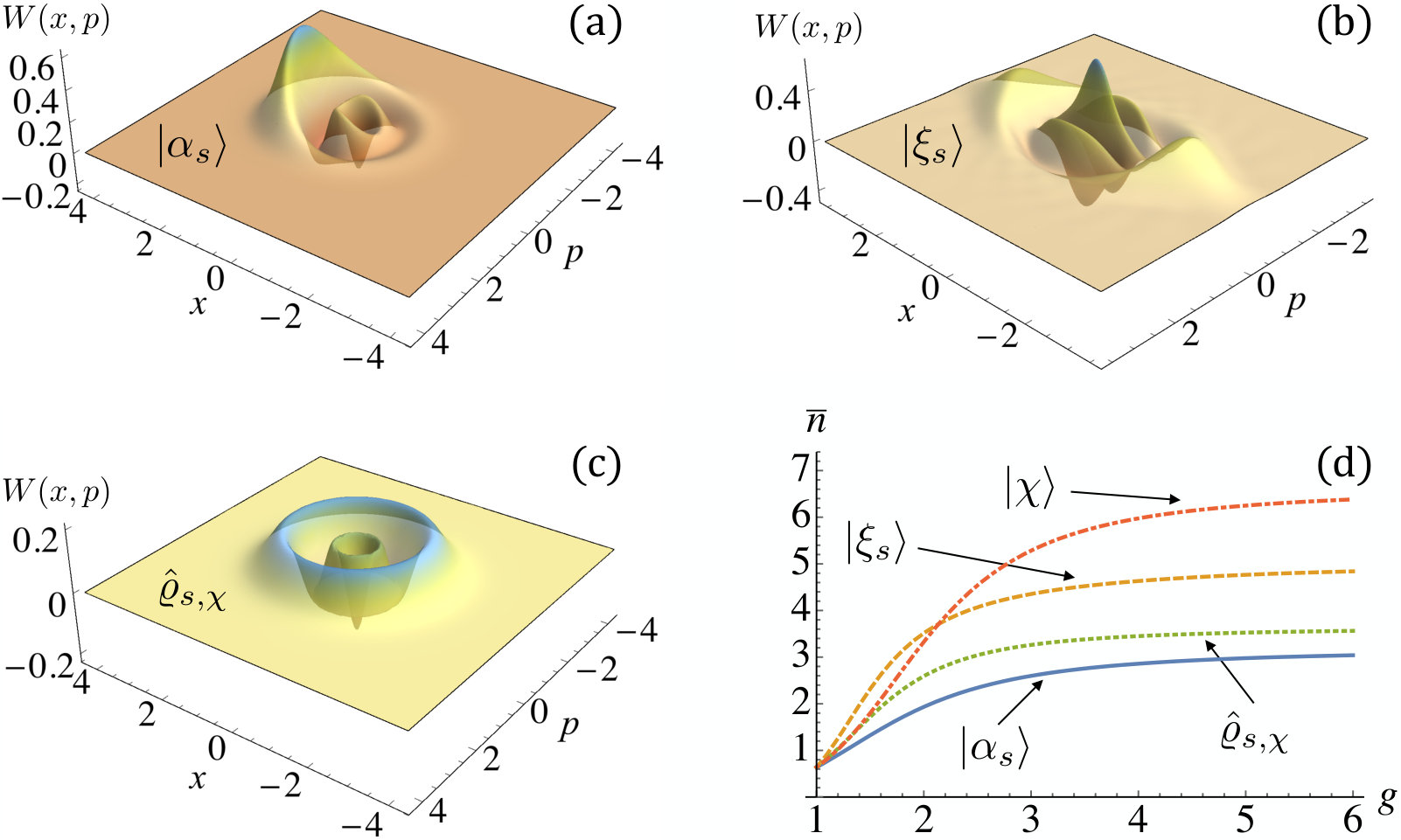 Figure 1
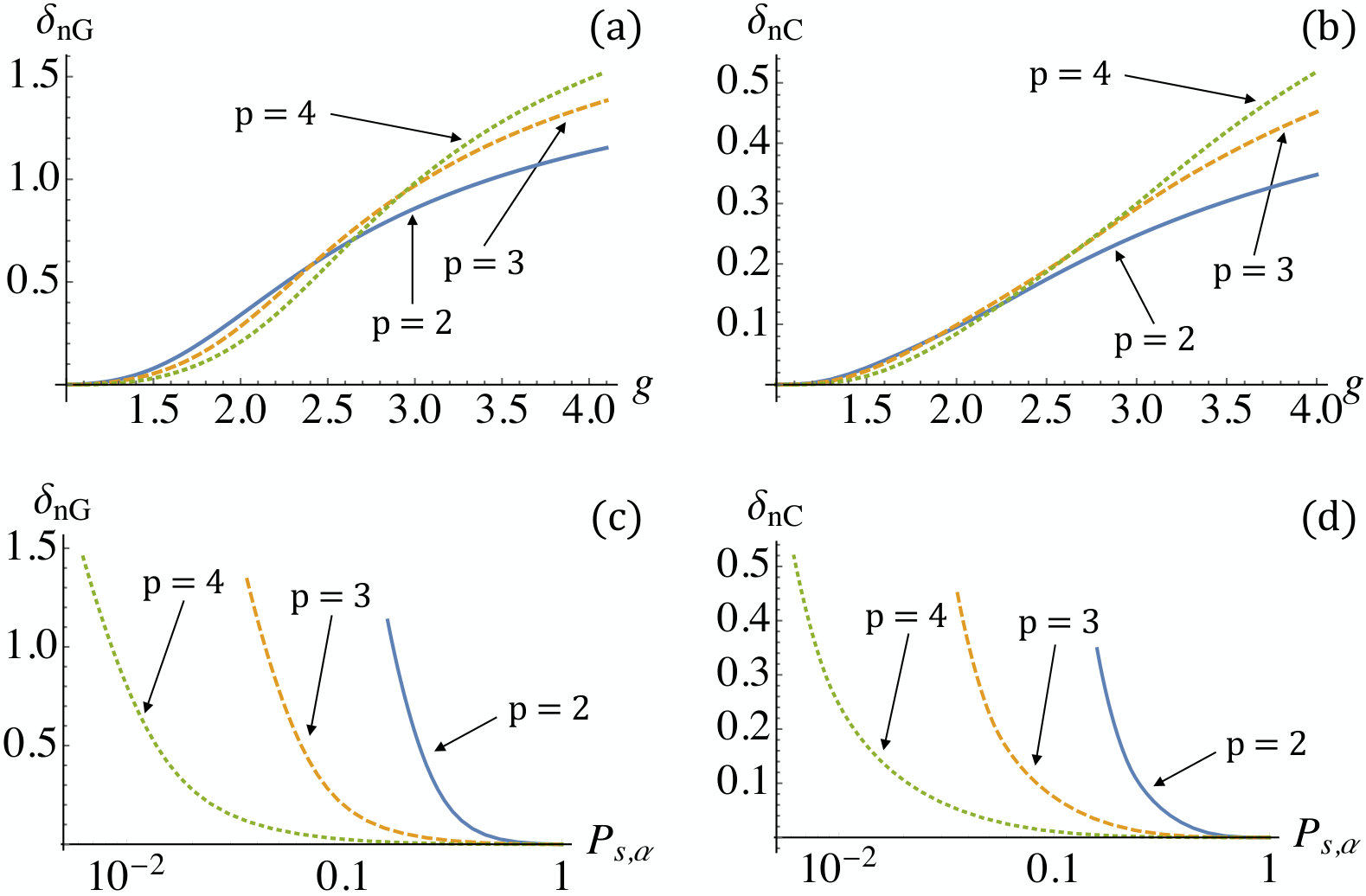 Figure 2
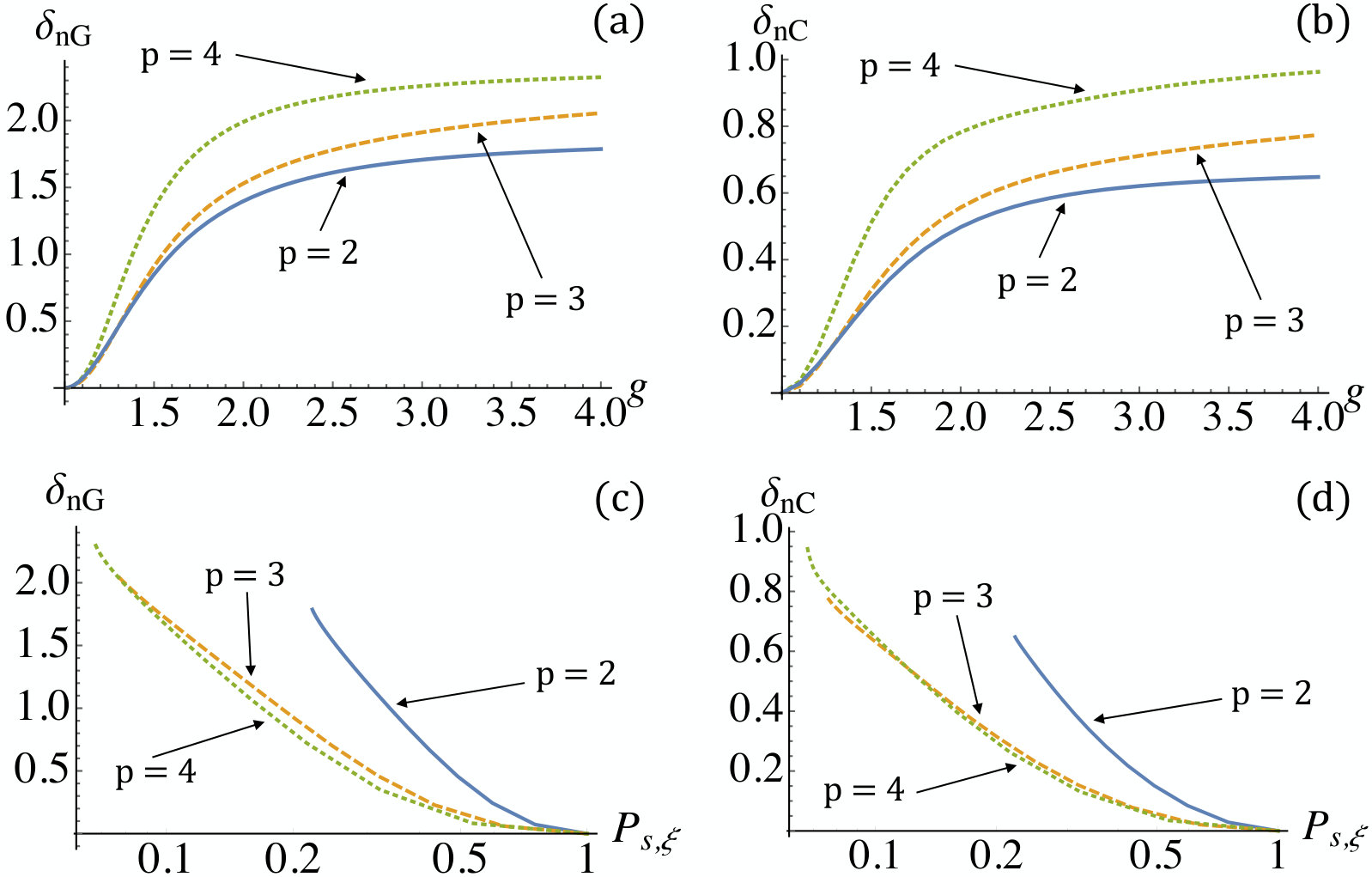 Figure 3
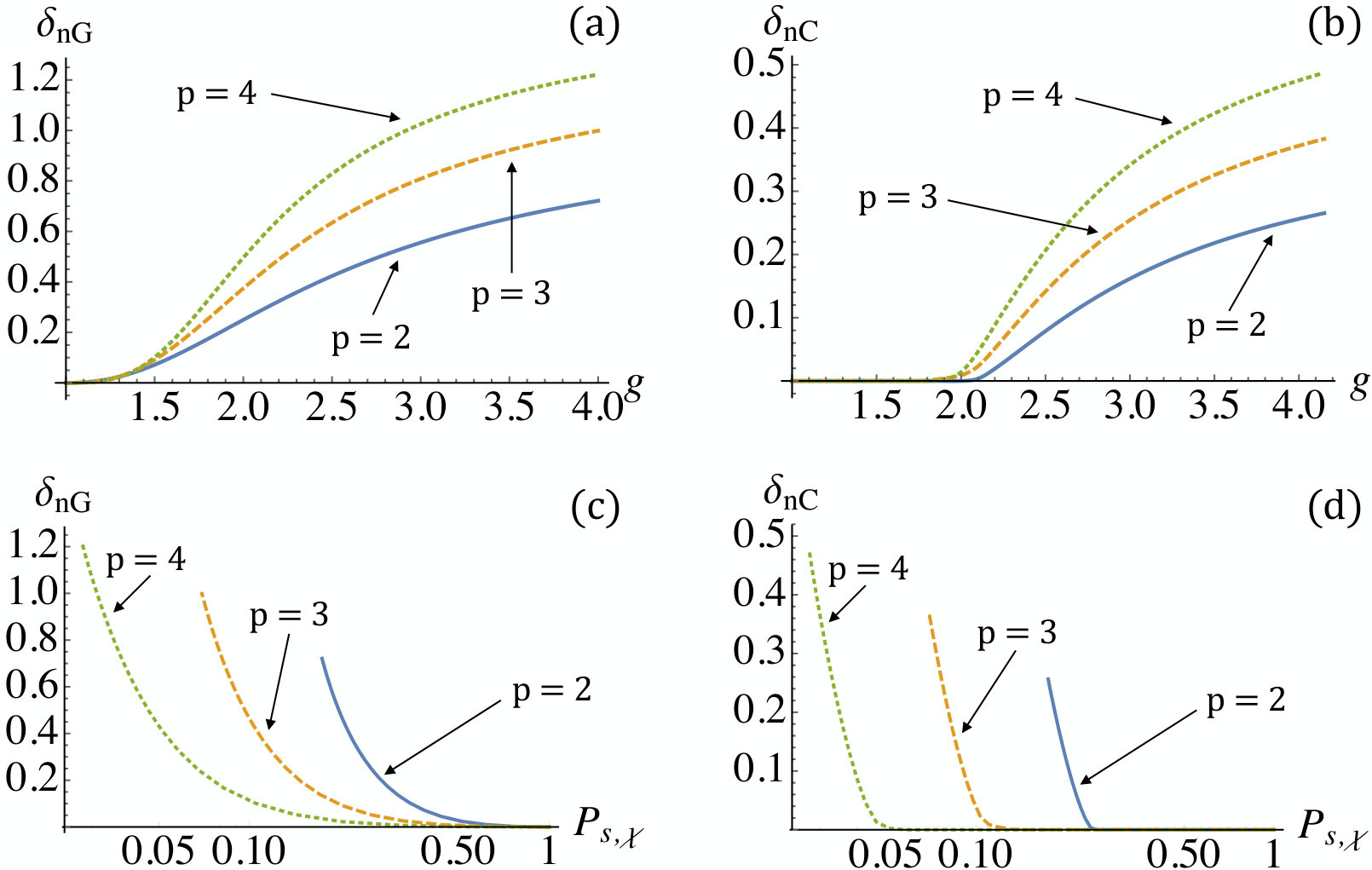 Figure 4
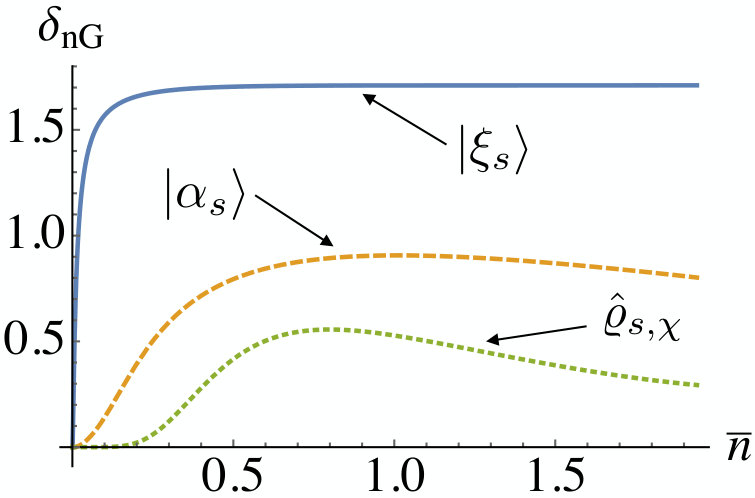 Figure 5
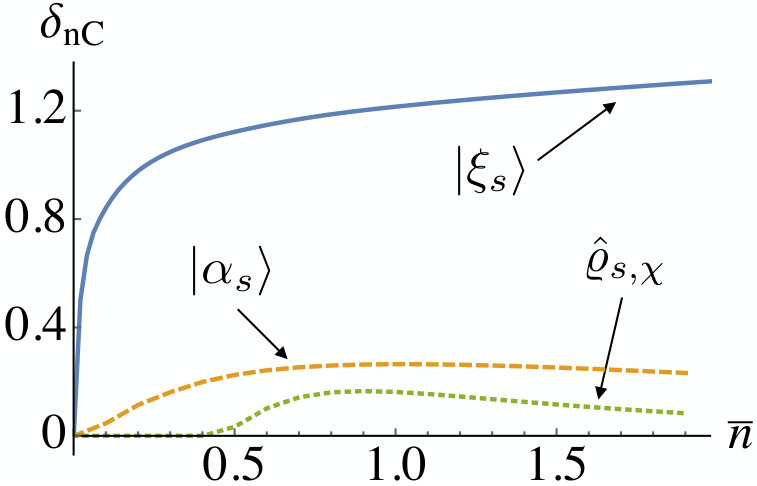 Figure 6
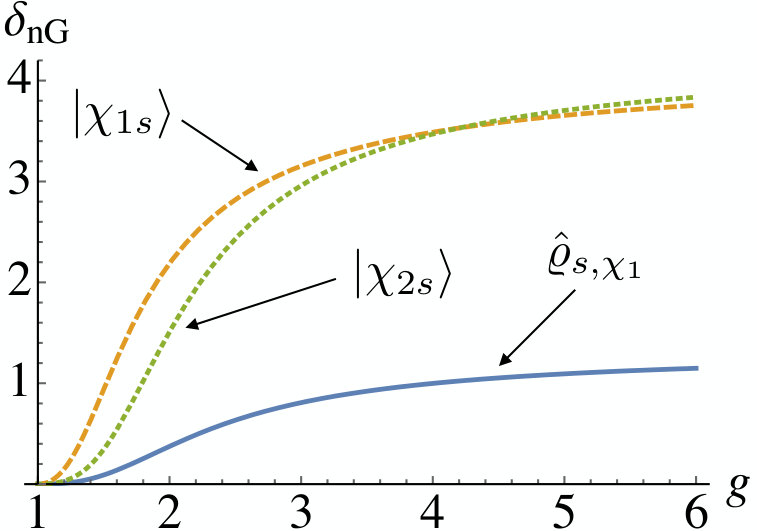 Figure 7
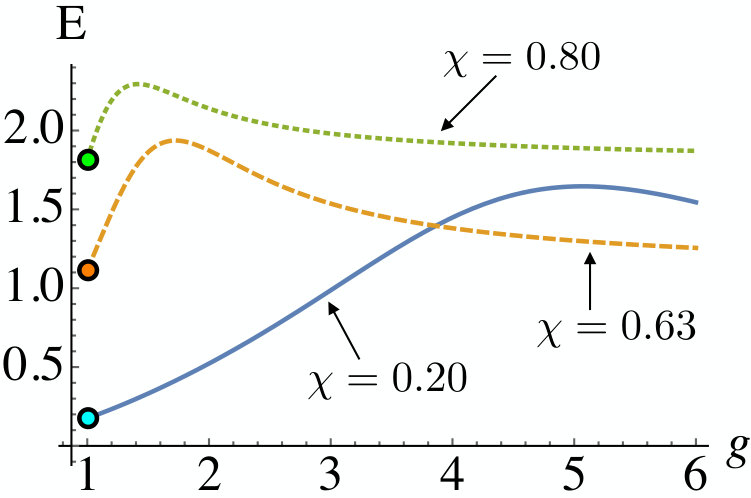 Figure 8
Peer Reviews
No public reviews on file for this paper yet. If you reviewed it on a platform where reviews are public (OpenReview, ICLR, NeurIPS, ICML), you can paste yours below so the community can read it here.
Videos
No videos yet. Explain this paper in a talk, walkthrough, or lecture? Add one.
Quantum state engineering by non-deterministic
noiseless linear amplification
Hamza Adnane
Laboratoire de Physique Théorique, Université de Béjaïa, Campus Targa Ouzemour, 06000 Béjaïa, Algeria
Matteo Bina
Quantum Technology Lab, Dipartimento di Fisica, Università degli Studi di Milano, I-20133 Milano, Italy
Francesco Albarelli
Department of Physics, University of Warwick, Coventry CV4 7AL, United Kingdom
Abdelhakim Gharbi
Laboratoire de Physique Théorique, Université de Béjaïa, Campus Targa Ouzemour, 06000 Béjaïa, Algeria
Matteo G. A. Paris
Quantum Technology Lab, Dipartimento di Fisica, Università degli Studi di Milano, I-20133 Milano, Italy
(March 7, 2024)
Abstract
We address quantum state engineering of single- and two-mode states by means of non-deterministic noiseless linear amplifiers (NLAs) acting on Gaussian states. In particular, we show that NLAs provide an effective scheme to generate highly non-Gaussian and non-classical states. Additionally, we show that the amplification of a two-mode squeezed vacuum state (twin-beam) may highly increase entanglement.
I Introduction
Non-classical and non-Gaussian states of continuous variable systems have been a relevant resource in the development of quantum information science and technology, as well as in several fundamental tests of quantum mechanics itself Dodonov (2002); Serafini et al. (2005); Hammerer et al. (2013). Quantum state engineering of those states, however, is often hampered by two major challenges. On the one hand, generation of nonclassical light usually involves nonlinear optical media, and the small value of nonlinear susceptibilities leads to low efficiency. On the other hand, light amplification is usually involved as well, and the linear and unitary character of quantum dynamics makes this task rather difficult, since it imposes that noise should be unavoidably added when a signal is amplified, in order to maintain the uncertainty relation Caves (1982).
Recently, in order to circumvent these difficulties, novel amplifying devices have been suggested, which act non-deterministically, i.e. the output state is obtained conditionally by post-selecting on a particular measurement outcome Ralph and Lund (2009); Xiang et al. (2010); Walk et al. (2013); Ferreyrol et al. (2011a, b); Marek and Filip (2010); Combes et al. (2016). In particular, optimal schemes describing non-deterministic linear amplifiers (NLAs) achieving successful amplification with the largest probability allowed by quantum mechanics have been put forward Pandey et al. (2013); McMahon et al. (2014). This kind of devices are appealing for quantum state engineering, especially in the continuous-variable regime, where several schemes based on conditional states of continuous variables measurements have been already explored and proved effective Ralph et al. (2003); Knill et al. (2001); Ralph et al. (2005); Paris et al. (2003); Kozhekin et al. (1996); Laurat et al. (2003); Genoni et al. (2010); Arzani et al. (2017).
In this paper, we address quantum state engineering of single- and two-mode states by means of non-deterministic noiseless linear amplifiers acting on Gaussian states. In particular, we prove that NLAs provide an effective scheme to generate highly non-Gaussian and non-classical states. We provide a general framework to address state engineering by NLA, and present explicit results for the non-Gaussianity and non-classicality obtained with single-mode coherent and squeezed vacuum states, as well as with two-mode squeezed vacuum (twin-beam state). In order to assess quantitatively the performances of NLAs on those signals, we quantify non-classicality using negativity of the Wigner function (from now on W-nonclassicality) Kenfack and Życzkowski (2004) and non-Gaussianity by the relative entropy to a reference Gaussian state Genoni et al. (2008); Genoni and Paris (2010). We remark that these and other closely related quantifiers have recently been studied also in the context of quantum resource theories Zhuang et al. (2018); Albarelli et al. (2018); Takagi and Zhuang (2018); Park et al. (2018).
Concerning the action of the NLA on two-mode states, we consider two working regimes. In the first one, we analyse the performances of a strong (destructive) NLA measurement on twin-beam and analyse the properties of the resulting single-mode conditional states Paris et al. (2003). Our results show that depending on the squeezing parameter and the gain of the device, the resulting conditional state has a Wigner function that includes negative parts. This suggests that such a scheme represents a robust source for non-classicality. The second regime that we are going to explore is that of non-destructive NLA measurement on twin-beam. Here, we address the degree of entanglement of the amplified state as a function of the NLA gain parameter, and prove that it may be significantly enhanced.
The paper is organized as follows. In Sec II, we establish notation and review the non-Gaussianity and non-classicality measures used across this work, that is, the entropic non-Gaussianity and the W-nonclassicality. We also recall the main ingredients needed to describe non-deterministic linear amplifiers. In sec III, we discuss quantum state engineering by NLA on coherent and squeezed vacuum states, focussing our attention on non-Gaussianity and non-classicality of the conditionally amplified states. Sec IV is devoted to conditional states generation by exploiting the action of NLAs on twin-beam, in both the destructive and non-destructive regimes. Section V closes the paper with concluding remarks.
II Preliminaries
In this Section, we briefly introduce the tools we will use throughout the paper to quantify non-classicality (nC) and non-Gaussianity (nG) of a single-mode bosonic quantum state. For the characterization of nG we employ a measure based on the quantum relative entropy (QRE) between the state under examination and a reference Gaussian state Genoni et al. (2008); Genoni and Paris (2010). Concerning the nC, we use an indicator based on the volume of the negative part of the Wigner function Kenfack and Życzkowski (2004). The final Subsection is devoted to briefly review the description of a noiseless linear amplifier in terms of measurement operators of to introduce the corresponding conditionally amplified states McMahon et al. (2014).
II.1 Non-Gaussianity based on Quantum Relative Entropy
In continuous-variable systems, a single-mode radiation field is described by creation and annihilation operators, and respectively, satisfying the bosonic commutation relation . Coherent states are the eigenstates of the annihilation operator , such that , whereas number states are the eigenstates of the number operator . The operators and , describe the observable quadratures of the field. A quantum state, i.e. a density operator , may be represented in the phase space by means of the characteristic function where is the displacement operator. The Wigner function, defined as the Fourier transform of the characteristic function , is the most iconic quasi-probability distribution for the quantum state Schleich (2001). In particular, it is the only one in the family of the -ordered quasiprobability distributions, widely used in quantum optics Cahill and Glauber (1969); Barnett and Radmore (1997), that gives the probability densities for quadrature measurements as its marginal distributions.
Gaussian states Ferraro et al. (2005); Adesso et al. (2014); Olivares (2012); Serafini (2017) are quantum states having a Gaussian Wigner function
[TABLE]
where we considered the Cartesian representation of real variables . A Gaussian state is fully identified by its first-moment vector and it’s covariance matrix (CM), given by
[TABLE]
where , the anti-commutator is denoted as and the expectation values are calculated over by the Born rule.
A useful measure of nG for a quantum state may be obtained by introducing a reference Gaussian state , having the same CM and first-moment vector of state under consieration , namely and . Given the von Neumann entropy , the nG measure is then defined as the quantum relative entropy (QRE) of these two states, i.e. , which, eventually, reduces to
[TABLE]
by exploiting the assumptions made on the reference Gaussian state Genoni et al. (2008). Furthermore, this quantifier corresponds to the relative entropy of nG, i.e. the minimum relative entropy between the state under consideration and the whole set of Gaussian states Marian and Marian (2013).
The quantum relative entropy is not a proper metric, since it is not symmetric under exchange of its arguments. In spite of this issue, it has been profitably used as a measure of statistical distinguishability between quantum states Vedral (2002). The von Neumann entropy of a single mode Gaussian state is fully determined by its CM as where the function is given by
[TABLE]
In the following, we will be mostly interested in pure states, for which ; the nG measure thus assumes a simple form
[TABLE]
II.2 Non-classicality based on Wigner Negativity
Phase-space analysis is at the heart of several approaches to detect and quantify the non-classical character of quantum states. Different notions of nC may be introduced, stemming from the quasi-probability distributions associated to the state under scrutiny, or by minimizing the distance to a set of classical states, similarly to the nG measurement we have just introduced.
From the physical point of view, the most relevant notion of non-classicality is associated to the Glauber-Sudarshan -function. A state is non-classical when its -function is not a well-behaved density of probability, i.e., includes singularities and/or negative parts Glauber (1963); Mandel (1986); Ferraro and Paris (2012). This notion of nonclassicality stems from the fact that coherent states are the only pure quantum states that show classical features from the point of view of quantum optics. A good measure of -nC is the so-called non-classical depth Lee (1990, 1991), which consists in evaluating the minimal amount of Gaussian noise required to turn the -function into a well-behaved probability distribution. A caveat of this measure is that all pure nG states saturate the upper bound of the non-classical depth, i.e. they are all maximally non-classical under this measure Lütkenhaus and Barnett (1995). As a consequence this measure is not helpful to analyze in details the nC properties of the pure Gaussian states we are going to consider hereafter. This notion of nonclassicality has been recently studied in the context of resource theories Tan et al. (2017), where an operational interpretation in terms of metrological usefulness has been introduced Kwon et al. (2018); Yadin et al. (2018).
An alternative approach, based on Wigner function, has been suggested few years ago Kenfack and Życzkowski (2004). The W-function is known to be a well-defined quasi-probability density function, i.e., it may display negative parts, but it never has singularities. The -nonclassicality (-nC) corresponds to the negative volume of the Wigner function, and it provides an intuitive and practical way to detect the amount of nC of a quantum state, as it allows to distinguish the degree of nC for different pure states. Moreover, this weaker form of non-classicality (any non-classical state is also nonclassical, while the opposite is not necessarily true) is the crucial resource for several quantum information tasks (see below).
-nC for a generic quantum state is defined as follows:
[TABLE]
where the integration is performed over the whole phase space and the second equality is obtained taking into account the normalization of the Wigner function. Notice that the Wigner function may also be computed directly, without passing through the characteristic function, upon employing the following expression, valid for any density operator
[TABLE]
with the parity operator defined as .
From an operational point of view, the notion of W-nC has been connected to the impossibility of efficiently simulating a quantum system via phase-space methods Mari and Eisert (2012); Veitch et al. (2013), or more quantitatively to the hardness of estimating the output probabilities of an experiment Pashayan et al. (2015). In turn, this fact seems to play an important role for schemes aimed at quantum supremacy with homodyne detection Douce et al. (2017); Chakhmakhchyan and Cerf (2017). For these reasons, W-nC has been studied in the context of an operational resource theory where the free operations are Gaussian ones; a particularly useful monotone is the so-called Wigner logarithmic negativity Albarelli et al. (2018), defined as .
We also stress that the connection between nG states and nC states with a negative Wigner function is strong. According to the Hudson theorem Hudson (1974), Gaussian states are the only pure states with a positive , while for mixed states the situation is more involved Bröcker and Werner (1995); Mandilara et al. (2009); Hughes et al. (2014). Interestingly, for families of pure non-Gaussian states where only a single parameter is varied, quantifiers of nG and -nC were always found to be in a monotonic relationship. In particular, this observation has been made for ground states of anharmonic oscillators Albarelli et al. (2016), where the behaviour of the two quantities is also qualitatively very similar. However, note that in some cases the behaviour can be wildly different, while retaining monotonicity, e.g. when varying the amplitude of cat states the measure saturates to a finite value, while diverges Albarelli et al. (2018).
Notice also that the quantifier of W-nC in Eq. (6) has the valuable property of being accessible through experimental measurements, since the Wigner function can be reconstructed by means of tomographic techniques, involving photon counting or homodyne detection of the marginal distributions of Banaszek et al. (1999); Vogel (2000); Lvovsky and Shapiro (2002); Allevi et al. (2009). Another experimentally friendly quantifier of -nC based on relative entropy was also proposed Mari et al. (2011).
In the following Sections, we are going to consider different kinds of signals undergoing noiseless amplification. In order to qualitatively anticipate the nature of our results, let us provide a phase-space snapshot of the corresponding conditionally amplified states: in Fig. 1 we show the Wigner functions of an amplified coherent state, an amplified squeezed vacuum state, and the reduced state of an amplified twin-beam. The -negativity and the nG character of the amplified states clearly emerge. We also show the effect of amplification in terms of the output signal energy (i.e. average photon number), assuming the same average photon number at .
II.3 Noiseless linear amplification
Ideally, a perfect amplification would be obtained by applying the operator , with a positive gain parameter . The idea behind the NLA is to approximate the action of this ideal operator, by implementing a measurement protocol with post-selection Ralph and Lund (2009). However, it is not possible to implement the ideal operation with a finite probability of success and therefore there is a trade-off between the probability of success and the fidelity to the desired results. The usual approach to obtain a feasible implementation with non-zero probability of success is to implement the action of the ideal amplification only on a finite-dimensional truncation of the Fock space. An optimal (w.r.t. the previously mentioned trade-off) measurement (Kraus) operator for this scheme was introduced in Pandey et al. (2013) and further studied McMahon et al. (2014). The action of this protocol is described as follows: we consider two possible outcomes, success () and failure (), which corresponds to a two-element POVM such that . The success measurement operator reads
[TABLE]
where is an integer truncation parameter of the Fock space, i.e. the amplification threshold. The probability of a successful amplification when the measurement scheme is applied to a generic pure state may be written as
[TABLE]
The corresponding conditionally amplified state is
[TABLE]
In the limit of low gain, i.e. with we may write the success operator in the following simplified form
[TABLE]
The corresponding probability of amplification may be written as
[TABLE]
In the following, we will consider amplification of paradigmatic examples of Gaussian states, with emphasis on the conditional generation of non-Gaussian and non-classical amplified states by means of the NLA process.
III Engineer non-Gaussian and non-classical states by noiseless amplification
of single-mode signals
III.1 Noiseless amplification of coherent states
In order to assess the performances of NLAs in the generation on nC and nG, let us start by investigating their action on coherent states, which can be easily generated experimentally. Coherent states correspond to displaced vacuum states , and may be expressed in the Fock basis as
[TABLE]
where is the coherent state amplitude and the mean photon number. According to Eq. (10), an amplified coherent state reads
[TABLE]
where denotes the probability of a successful amplification
[TABLE]
The nG of the resulting amplified coherent state is assessed in terms of the measure , as described in Sec. II.1, and, since the conditional state generated by the NLA is pure, it can be easily computed by means of Eq. (5). As shown in the upper left panel of Fig. 2, the action of the non-deterministic NLA on a coherent state is to generate an amplified noiseless pure state (14) with an amount of nG monotonically increasing with the gain parameter . In particular, we chose, without loss of generality, a real coherent amplitude and different values of the threshold parameter . As it is apparent from the plot, we have a monotone behaviour with for any . The larger is the larger is the nG at large values of the gain.
The Wigner function of the amplified coherent state may be conveniently obtained from the expression (7). As it can be appreciated from the plot in Fig. 1(a), the Wigner function clearly has negative values. In the upper right panel of Fig. 2, the -nC of an amplified coherent state, i.e. in Eq. 6, is shown as a function of the gain of the NLA. We notice that -nC increases monotonically with , and the larger is the threshold, the larger is the nC, for large . Remarkably, both the nG and the nC share the same qualitative behaviour against the NLA parameters, confirming the connection explained in II.2. The behaviours of the two quantities suggest to identify the NLA gain as the parameter driving the semiclassical coherent signal to a highly non-Gaussian and non-classical one. The lower panels of Fig. 2 illustrate the tradeoff between the amount of obtained nG (nC) and the corresponding probability of successful amplification. Larger values of are obtained for smaller gain.
III.2 Noiseless amplification of squeezed vacuum
Another important Gaussian state, employed as a resource in many quantum protocols, is the squeezed vacuum state , where the squeezing operator acts on the vacuum state. The phase of the squeezing parameter specifies which quadrature of the field is squeezed, whereas its modulus quantifies the amount of squeezing. The expression of a squeezed vacuum in the Fock basis is given by
[TABLE]
where and . The action of NLA on the squeezed vacuum with a successful amplification, employing Eq. (10), reads
[TABLE]
where the success probability is given by
[TABLE]
In the upper left panel of Fig. 3, we show the nG measure for the amplified state as a function of the gain parameter , for different values of the threshold , at a fixed value of the squeezing parameter , corresponding to the same input energy, at , of a coherent state with . We notice that, starting from a squeezed vacuum, the efficiency of the NLA in generating non-Gaussianity is much larger than in the coherent-state case, in particular for low values of the gain parameter.
In the upper right panel of Fig. 3, we show the non-classicality as a function of the gain parameter , for different values of the threshold , at a fixed value of the squeezing strength . Similarly to the nG measure, amplification generates a large amount of non-classicality, also for low values of the gain. The role of the threshold , likewise, is to increment the nC measure. Again, and are two increasing monotonic functions, and the amplified state is highly non-classical and non-Gaussian at the same time. The lower panels of Fig. 3 illustrate the tradeoff between the amount of nG (nC) obtained and the success probability . Remarkably, increasing the threshold value from to leads to substantially larger values of nG and nC, with basically the same success probability.
IV Engineer non-Gaussian and non-classical states by noiseless
amplification of twin-beam
IV.1 Destructive noiseless amplification of twin-beam
The projection postulate offers a viable mechanism to realise synthetic dynamics and, in turn, to generate quantum states otherwise unreachable with Hamiltonian evolution Paris et al. (2003). In this Section, we analyse the effects of both destructive and non-destructive implementation of NLA on a maximally entangled continuous variables states, namely the twin-beam (TWB) state:
[TABLE]
where and is the Fock basis for the two-mode system. The TWB state is a Gaussian two-mode state obtained by the action of the two-mode squeezing operator on the vacuum , where and denote the two involved modes. Without loss of generality, we will consider as a real parameter. These states of light may be generated in non-degenerate optical parametric amplifiers by spontaneous down-conversion or by mixing at a balanced linear mixer two squeezed vacua with opposite squeezing phases. Since the efficiencies of these processes are relatively weak, it is of interest to investigate protocols to enhance the resulting nonclassical properties.
According to the reduction postulate, a measurement performed on one of the two constituents of an entangled bipartite system leaves the other part in a conditional state, which depends on the outcome of the measurement. Considering the twin-beam state (19) and a successful NLA amplification performed on subsystem , the subsystem is reduced into a diagonal state
[TABLE]
where denotes an element of the POVM describing the NLA, the identity operator acting on and is the probability of successful amplification:
[TABLE]
In order to compute the nG measure for the amplified state in we refer to Eq. (3). As the state (21) is diagonal in the Fock basis, its reference Gaussian state is a thermal state with mean photon number and diagonal CM . Moreover, the von Neumann entropy can be directly calculated with the diagonal matrix elements of the state (21). The resulting nG measure for this amplified mixed state can, thus, be written in this simple form:
[TABLE]
In the upper left panel of Fig. 4 we show the nG measure ( 23) as a function of the gain parameter for the amplified state . The three curves correspond to different thresholds and, as already observed in the previous cases, the function increases monotonically with the gain. The same happens if one increases the threshold.
As highlighted in Fig. 1(c), the Wigner function of the amplified state may assume negative values. The nC measure is shown as a function of the gain in the upper right panel of Fig. 4 and it displays a monotonic growth. At variance with the previous cases, i.e. amplification of coherent and squeezed vacuum states, we observe that the W-nC of is zero before a threshold value of the gain, and then starts to grow monotonically for any value of . This happens since the Wigner function of the amplified state is diagonal in the Fock basis and, thus, phase independent. It begins to warp as the gain increases but remains positive. Only after a particular value of the gain, depending mainly on the TWB parameter , the Wigner function takes on negative volumes. Thus we have found that the two quantifiers we considered are still in a monotonic relationship, even though they have a qualitatively different behavior, as already mentioned in Sec. II.2.
Let us now compare the performances of the amplification process in the generation of single-mode nG and nC. To this purpose, we consider input signals with the same initial energy undergoing identical amplification process, i.e. where , and . In Fig. 5 we plot (left panel) and (right panel) as a function of , with fixed NLA parameters and . In particular, we see that for both the nG and nC measures the amplified squeezed vacuum state (17) performs better than the amplified coherent state (14), whereas the amplified reduced TWB state (21) has the lowest values of nG and W-nC. We observe that the single-mode squeezing is a better resource in obtaining highly non-Gaussian and non-classical states, whereas the destructive measurement performed on the amplified TWB state somehow spoils the input quantumness.
IV.2 Increasing entanglement by non-destructive NLA on twin-beam
In this section, we examine the action of a successful non-destructive probabilistic amplification on a TWB state by focussing on the nG and the entanglement between the two correlated modes. A non-destructive measurement performed by the NLA on one mode of a TWB results in the following pure conditional state:
[TABLE]
where the success probability is given by Eq. (22). The nG measure for the amplified TWB state reduces to Eq. (5), as the state (24) remains pure under the action of the NLA. In order to compute the reference Gaussian state, we make some considerations on the CM (2b) of a two-mode Gaussian state , which can be written in a block form as
[TABLE]
where , and are matrices. By means of local symplectic transformations, it is possible to derive four symplectic invariants, namely , , and and derive a simple expression for the two symplectic eigenvalues of :
[TABLE]
where . The von Neumann entropy of a generic two-mode Gaussian state can be written as . In the case of the amplified TWB state (24) it is easy to see that , with , and that . Overall, the nG measure may be expressed as
[TABLE]
and it is plotted as a function of the gain parameter in the left panel of Fig. 6.
As it is apparent from the plot, we recover the same behavior as in the previous examples concerning the monotonic growth with increasing gain of NLA. We compare the nG measure of the amplified states (21) and (24) for a NLA with, respectively, destructive and non-destructive measurements. In particular, by fixing the same squeezing parameter at , meaning that the resource TWB state (19) is fixed, we notice an enhancement of the NLA protocol in the non-destructive-measurement case (dashed curve with respect to the solid one). On the other hand, another comparison can be made by limiting the amount of mean energy of the resource state at , i.e. fixing with . Also in this case, the enhancement of the amplification process occurs for a NLA with non-destructive measurement (dotted curve with respect to the solid one). The initial resources being equal, a NLA with non-destructive measurement acting on a TWB state strongly enhances the non-Gaussianity character of the amplified state.
Let us now study whether the NLA enhances entanglement in the amplified TWB state. The most notable measure of entanglement for a bipartite pure state is the entropy of entanglement, which is defined as the von Neumann entropy of one of the reduced states :
[TABLE]
where are the eigenvalues of the reduced state. In our case, the initial TWB state is pure and the corresponding reduced state of mode is exactly the amplified state (21) with a non-destructive measurement. We already calculated in the evaluation of the nG measure , highlighting the strong relation between non-Gaussianity of the reduced amplified state and the amount of entanglement of the bipartite amplified state . We can observe in the right panel of Fig. 6 that the entanglement measure shows a characteristic peak depending on the value of the squeezing parameter, occurring at lower values of the NLA gain for higher values of . The remarkable result is provided by the comparison between the curves and the reference values of the amount of entanglement for the initial TWB state at (highlighted points in the figure). For any value of the NLA gain , the amplification process brings along an enhancement of entanglement in the amplified state with respect to the amount of entanglement of the corresponding TWB state.
V Conclusion
In this work we have investigated the action of a non-deterministic noiseless linear amplifier on single- and two-mode Gaussian states in order to generate highly non-Gaussian and non-classical amplified quantum states. In particular, we have focused on amplification of feasible Gaussian states, e.g. coherent states, squeezed vacuum states and entangled twin-beam.
Our results show that noiseless amplification is, in general, a powerful scheme to generate non-classical non-Gaussian states, with the detailed performances depending on the interplay between the gain of the NLA, its threshold for amplification, and the parameters of the input signal. Upon comparing results for input signals with the same initial energy, we have shown that better performances, i.e. larger output nG and nC nG, are obtained by amplification of squeezed vacuum. We have also analysed the performances of non-destructive amplification, showing that amplification of twin-beam highly increases entanglement.
Concerning efficiency of the process, we have shown that while the probability of successful amplification decreases with the NLA gain, there is a convenient trade-off between nG (or nC) and the success probability itself. We have also shown that for squeezed vacuum input, one may increase nG and nC at fixed success probability by increasing the NLA amplification threshold.
Overall, we have proved that NLA provides an effective scheme to generate highly non-Gaussian and non-classical states and may be used to increase entanglement in continuous-variable systems. Our results pave the way for optimised implementations of NLA and suggest that both destructive and non-destructive implementations of NLA would be of interest in quantum technology.
Acknowledgements
This work has been supported by SERB through project VJR/2017/000011 and by JSPS through project FY2017-S17118. MGAP is member of GNFM-INdAM. FA acknowledges support from the UK National Quantum Technologies Programm (EP/M013243/1). The authors thank Luigi Seveso for several useful discussions.
The reference list from the paper itself. Each links out to its DOI / PubMed record.
- 1Dodonov (2002) V. V. Dodonov, J. Opt. B 4 , R 1 (2002) . · doi ↗
- 2Serafini et al. (2005) A. Serafini, M. G. A. Paris, F. Illuminati, and S. De Siena, J. Opt. B 7 , R 19 (2005) . · doi ↗
- 3Hammerer et al. (2013) K. Hammerer, C. Genes, D. Vitali, P. Tombesi, G. J. Milburn, C. Simon, and D. Bouwmeester, in Cavity Optomechanics , edited by M. Aspelmeyer, T. J. Kippenberg, and F. Marquardt (Springer Berlin, 2013).
- 4Caves (1982) C. M. Caves, Phys. Rev. D 26 , 1817 (1982) . · doi ↗
- 5Ralph and Lund (2009) T. C. Ralph and A. P. Lund, in Quantum Commun. Meas. Comput. , edited by A. Lvovsky (AIP, 2009) pp. 155–160. · doi ↗
- 6Xiang et al. (2010) G. Y. Xiang, T. C. Ralph, A. P. Lund, N. Walk, and G. J. Pryde, Nat. Photonics 4 , 316 (2010) . · doi ↗
- 7Walk et al. (2013) N. Walk, T. C. Ralph, T. Symul, and P. K. Lam, Phys. Rev. A 87 , 020303 (2013) . · doi ↗
- 8Ferreyrol et al. (2011 a) F. Ferreyrol, R. Blandino, M. Barbieri, R. Tualle-Brouri, and P. Grangier, Phys. Rev. A 83 , 063801 (2011 a) . · doi ↗