$\rho\rho$ scattering revisited with coupled-channels of pseudoscalar mesons
Zheng-Li Wang, Bing-Song Zou

TL;DR
This paper reexamines $ ho ho$ scattering by including coupled channels of pseudoscalar mesons, revealing that the resulting scalar meson properties align more closely with experimental data, especially for $f_0(1500)$.
Contribution
It introduces the coupled-channel effects of pseudoscalar mesons into $ ho ho$ scattering analysis, refining the understanding of the scalar meson spectrum.
Findings
Pole positions are closer to PDG values for $f_0(1500)$ with coupled channels.
Partial decay widths better match experimental data.
Coupled-channel effects significantly influence scalar meson properties.
Abstract
The scattering has been studied by two groups which both claimed a dynamical generated scalar meson, most likely to be . Here we investigate the influence of coupled-channels of pseudoscalar mesons, i.e., and , on this dynamical generated scalar state. With the coupled channel effect included, the pole and partial decay widths are found to be more close to PDG values for .
Click any figure to enlarge with its caption.
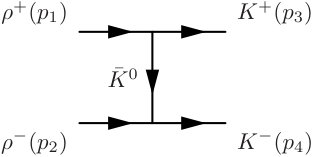 Figure 1
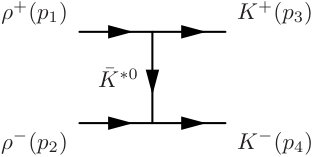 Figure 2
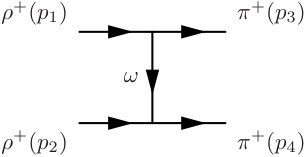 Figure 3
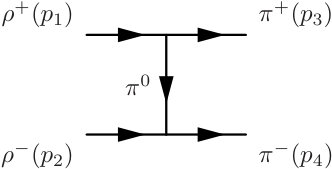 Figure 4
Peer Reviews
No public reviews on file for this paper yet. If you reviewed it on a platform where reviews are public (OpenReview, ICLR, NeurIPS, ICML), you can paste yours below so the community can read it here.
Videos
No videos yet. Explain this paper in a talk, walkthrough, or lecture? Add one.
scattering revisited with coupled-channels of pseudoscalar mesons
Zheng-Li Wang1,2,111Email address: [email protected] and Bing-Song Zou1,2,3222Email address: [email protected]
1*CAS Key Laboratory of Theoretical Physics, Institute of Theoretical Physics,
Chinese Academy of Sciences, Beijing 100190,China
2University of Chinese Academy of Sciences (UCAS), Beijing 100049, China*
3Central South University, Hunan 410083, China
Abstract
The scattering has been studied by two groups which both claimed a dynamical generated scalar meson, most likely to be . Here we investigate the influence of coupled-channels of pseudoscalar mesons, i.e., and , on this dynamical generated scalar state. With the coupled channel effect included, the pole and partial decay widths are found to be more close to PDG values for .
1 Introduction
The chiral unitary approach, which has made much progress in the study of pseudo-scalar meson-meson [1] and meson-baryon [2, 3] interactions, has been used to study the interaction of vector mesons among themselves. The first such study of the -wave interactions found that the and the could be dynamically generated [4]. The work found that the strength of the attractive interaction in the tensor channel is much stronger than that in the scalar channel, hence leads to a tighter bound tensor state than the corresponding scalar one.
The work [4] based on the assumption that the three momenta of the is negligibly small compared to its large mass. This assumption was questioned by a recent work [5] which pointed out the importance of relativistic effect for energies around well below threshold. The method [6, 7, 8, 9, 10] was used to get the partial wave amplitudes which result a pole for the scalar state similar to Ref. [4] but no pole for any tensor state in contradiction with Ref. [4]. However, this conclusion was not agreed upon by Ref. [11] in which the non-relativistic assumption was dropped by evaluating exactly the loops with full relativistic propagators in solving the B-S equation for scattering. Both scalar state and tensor state associated with and , respectively, were found in consistence with the conclusion of Ref. [4].
From the studies of above two groups, obviously, for the energies around well below threshold, there is strong model dependence for the interaction of two far off-mass-shell mesons. For the scalar state closer to the threshold, the two groups got similar result rather model independently. In this paper we shall study the influence of coupled-channels of pseudoscalar mesons, i.e., and , on this dynamical generated scalar state. In the coupling we consider the case of and exchange, while in the coupling we consider the case of and exchange.
2 Formalism
2.1 with -exchange
We investigate the coupled channel effect based on a chiral covariant framework [5]. We follow the formalism of the hidden gauge interaction which provides the coupling by means of the Lagrangian [12, 13]
[TABLE]
where the symbol stands for the trace in the space with the coupling constant with the mass of vector meson and the pion decay constant. The matrices and are given by
[TABLE]
To get the three different isospin amplitudes for we need the knowledge of the transitions , , etc.
Starting with the Lagrangian in Eq.(1) we can immediately obtain the amplitude of corresponding to Fig.1 as
[TABLE]
In this equation, the corresponds to the polarization vector of the -th . Each polarization vector is characterized by its three-momentum and third component of the spin . Explicit expressions of these polarization vectors are given by [5]
[TABLE]
where , , and are polar angle and azimuthal angle of , respectively. The -channel -exchange amplitude can be obtained from the expression of by exchanging . In this way,
[TABLE]
And now we write the tree-lavel amplitude for with -exchange
[TABLE]
In order to obtain the -wave amplitude in isospin channel we need the isospin eigenstates. We have
[TABLE]
where we have used the convention and of isospin. By taking into account Eq.(2.1) and the amplitudes in Eq.(2.1) we can now write the isospin amplitude for
[TABLE]
where and .
2.2 with -exchange
One needs the coupling which is provided within the framework [14] of the hidden gauge formalism by means of the Lagrangian
[TABLE]
with
[TABLE]
where and . At this point we can write down the amplitude of with -exchange corresponding to Fig.2 as in the -exchange case
[TABLE]
And the -channel -exchange amplitude can be obtained from the expression of as the case in -exchange by exchanging , thus
[TABLE]
Next we write the tree-level amplitude for with -exchange
[TABLE]
Then using Eq.(2.1) we can get the amplitude
[TABLE]
2.3 with -exchange
The coupling is provided in the same Lagrangian in Eq.(1), so we can immediately write down the amplitude of with -exchange corresponding to Fig.3
[TABLE]
and the -channel
[TABLE]
Then we can obtain the tree-level amplitudes for with -exchange as the following
[TABLE]
Similar to Eq.(2.1) we need the isospin eigenstate for . We have
[TABLE]
where we use the convention of isospin. By using the isospin wave functions we can obtain for
[TABLE]
with and the usual Mandelstam variable. We can see that the Eq.(19) is similar to the Eq.(8). The former can be obtained from the latter just by substituting and .
2.4 with -exchange
As for the coupling, we use the Lagrangian in Eq.(9). Then we get the amplitude for with -exchange corresponding to the Fig.4 as
[TABLE]
and the -channel
[TABLE]
Next we list the tree-level amplitudes for with -exchange as the following:
[TABLE]
Using Eqs.(2.1) and (18) we obtain the amplitude
[TABLE]
which can be obtain from Eq.(14) by substituting and .
2.5 Partial-wave decomposition
In term of these amplitudes with isospin , we can calculating the partial-wave amplitudes in the basis [5] , denoted as for the transition
[TABLE]
with and . And accounts for identical particles, for example
[TABLE]
By using Eq.(24) we can calculate the partial-wave projected tree-level amplitudes of Eqs.(8), (14), (19) and (23) with quantum number . We denote by for simplicity and we have
[TABLE]
[TABLE]
[TABLE]
[TABLE]
3 Results and discussion
We label the three channels, , and as 1, 2 and 3, respectively. With the channel transition amplitudes , , and given in last section, we calculate the full amplitude and its pole positions by using the Bethe Salpeter equation in its on-shell factorized form [4, 5]
[TABLE]
is a diagonal matrix made up by the two-point loop function [4, 5]
[TABLE]
with the total four-momentum of the meson-meson systems and the loop momentum. The channel is labelled by the subindex . By using dimensional regularization the integration can be recast as
[TABLE]
with
[TABLE]
or using a momentum cutoff as
[TABLE]
where . The integral can be done algebraically
[TABLE]
Typical values of the cutoff are around 1 GeV. has a right-hand cut above the threshold . In order to make an analytical extrapolation to second Riemann sheet we make use of the continuity property
[TABLE]
where the index indicates the second Riemann sheet of . Then
[TABLE]
Other potential of coupled-channels like can be found in [1]. Our results are shown in Table 1 for various values. For comparison, the results for the single channel without considering the coupled channel effects as in Ref. [5] are show in the second row. The rows show the results including one coupled channel with the exchanged meson listed in the first column. For example the denotes the channel with exchange and so on. The 7-th row gives the results including all three coupled channels of , and .
The above results show that the influence of vector meson and exchanges is very small; the largest influence comes from the channel coupling by the pion exchange, which shifts up the pole mass and results in a sizable decay width, comparable with relevant PDG values for [15]. For the coupled-channel case we can see that the width is consistent with decaying into in PDG, which is about . When taking into account all the three channels, the pole position is close to the results by considering only the pion exchange contribution. With , the pole mass and partial decay widths to and are roughly consistence with PDG values for . The largest decay channel should be either through directly or by its cross talk with . Note that due to the binding energy of the molecule as well as the kinetic energy of inside the molecule, the decay width through the decay of inside the molecule can be smaller than the decay width of a single free meson. Similar effect was pointed out by Refs. [16, 17] in their studies of as a molecule which gets a decay width smaller than the decay width of a single free state. This kind of effect was also observed by the study of other hadronic molecules [18, 19].
In summary, the scattering is revisited by including its coupled-channels of pseudoscalar mesons, i.e., and . It is found that the coupled-channel effect is important and shifts up the pole mass of the dynamically generated scalar state significantly. It makes the state to be more consistent with rather than as favored by the previous studies [4, 5] without including these coupled channels. This leads to a nicely consistent picture with a recent dispersive study [20] where a new parametrization for the scalar pion form factors is derived by fitting it to LHCb data on , and find an at mass coupling strongly to (or ). The scattering has been extended to the S-wave interactions for the whole vector-meson nonet by two groups [21, 22]. Both propose to be dynamically generated state. We expect similar significant coupled channel effects there. By including its coupled-channels of pseudoscalar mesons, the dynamically generated state could be suggested by the BES data [26, 27, 28] instead of . The , and have been studied before in quarkonia-glueball mixing picture in Refs. [23, 24, 25], trying to pin down partial contributions of glueball, nonstrange and strange quakonia in these scalar mesons. With the new configuration of meson-meson dynamically generated states, the structure of these scalars should be richer than previous assumptions and deserve further exploration by expanding the configuration space.
Acknowledgments
We thank Li-Sheng Geng, Feng-Kun Guo, Ulf-G. Meissner and Eulogio Oset for helpful discussions. This project is supported by NSFC under Grant No. 11621131001 (CRC110 cofunded by DFG and NSFC) and Grant No. 11835015.
The reference list from the paper itself. Each links out to its DOI / PubMed record.
- 1[1] J. A. Oller and E. Oset, Nucl. Phys. A 620 , 438 (1997) Erratum: [Nucl. Phys. A 652 , 407 (1999)] doi:10.1016/S 0375-9474(99)00427-3, 10.1016/S 0375-9474(97)00160-7 [hep-ph/9702314].
- 2[2] E. Oset and A. Ramos, Nucl. Phys. A 635 , 99 (1998) doi:10.1016/S 0375-9474(98)00170-5 [nucl-th/9711022].
- 3[3] J. A. Oller and U. G. Meissner, Phys. Lett. B 500 , 263 (2001) doi:10.1016/S 0370-2693(01)00078-8 [hep-ph/0011146].
- 4[4] R. Molina, D. Nicmorus and E. Oset, Phys. Rev. D 78 , 114018 (2008) doi:10.1103/Phys Rev D.78.114018 [ar Xiv:0809.2233 [hep-ph]].
- 5[5] D. Gülmez, U.-G. Meißner and J. A. Oller, Eur. Phys. J. C 77 , no. 7, 460 (2017) doi:10.1140/epjc/s 10052-017-5018-z [ar Xiv:1611.00168 [hep-ph]].
- 6[6] J. A. Oller and E. Oset, Phys. Rev. D 60 , 074023 (1999) doi:10.1103/Phys Rev D.60.074023 [hep-ph/9809337].
- 7[7] M. Albaladejo and J. A. Oller, Phys. Rev. C 84 , 054009 (2011) doi:10.1103/Phys Rev C.84.054009 [ar Xiv:1107.3035 [nucl-th]].
- 8[8] M. Albaladejo and J. A. Oller, Phys. Rev. C 86 , 034005 (2012) doi:10.1103/Phys Rev C.86.034005 [ar Xiv:1201.0443 [nucl-th]].