TNT, Watch me Explode: A Light in the Dark for Revealing MPLS Tunnels
Yves Vanaubel, Jean-Romain Luttringer, Pascal M\'erindol, Jean-Jacques, Pansiot, Benoit Donnet

TL;DR
TNT extends Paris traceroute to detect and reveal MPLS tunnels, improving the accuracy of Internet topology discovery by uncovering hidden layer-2 paths that traditional methods miss.
Contribution
The paper introduces TNT, a novel method that detects and reveals MPLS tunnels, enhancing topology discovery beyond existing traceroute limitations.
Findings
TNT successfully detects most MPLS tunnels in emulated and real networks.
TNT updates the state-of-the-art understanding of MPLS tunnel prevalence.
The tool is publicly available for further research and validation.
Abstract
Internet topology discovery has been a recurrent research topic for nearly 20 years now. Usually, it works by sending hop-limited probes (i.e., traceroute) towards a set of destinations to collect topological data in order to infer the Internet topology at a given scale (e.g., at the router or the AS level). However, traceroute comes with multiple limitations, in particular with layer-2 clouds such as MPLS that might hide their content to traceroute exploration. Thus, the resulting Internet topology data and models are incomplete and inaccurate. In this paper, we introduce TNT (Trace the Naughty Tunnels), an extension to Paris traceroute for revealing most (if not all) MPLS tunnels along a path. TNT works in two basic stages. First, along with traceroute probes, it looks for evidences of the potential presence of hidden tunnels. Those evidences are surprising patterns in the…
Click any figure to enlarge with its caption.
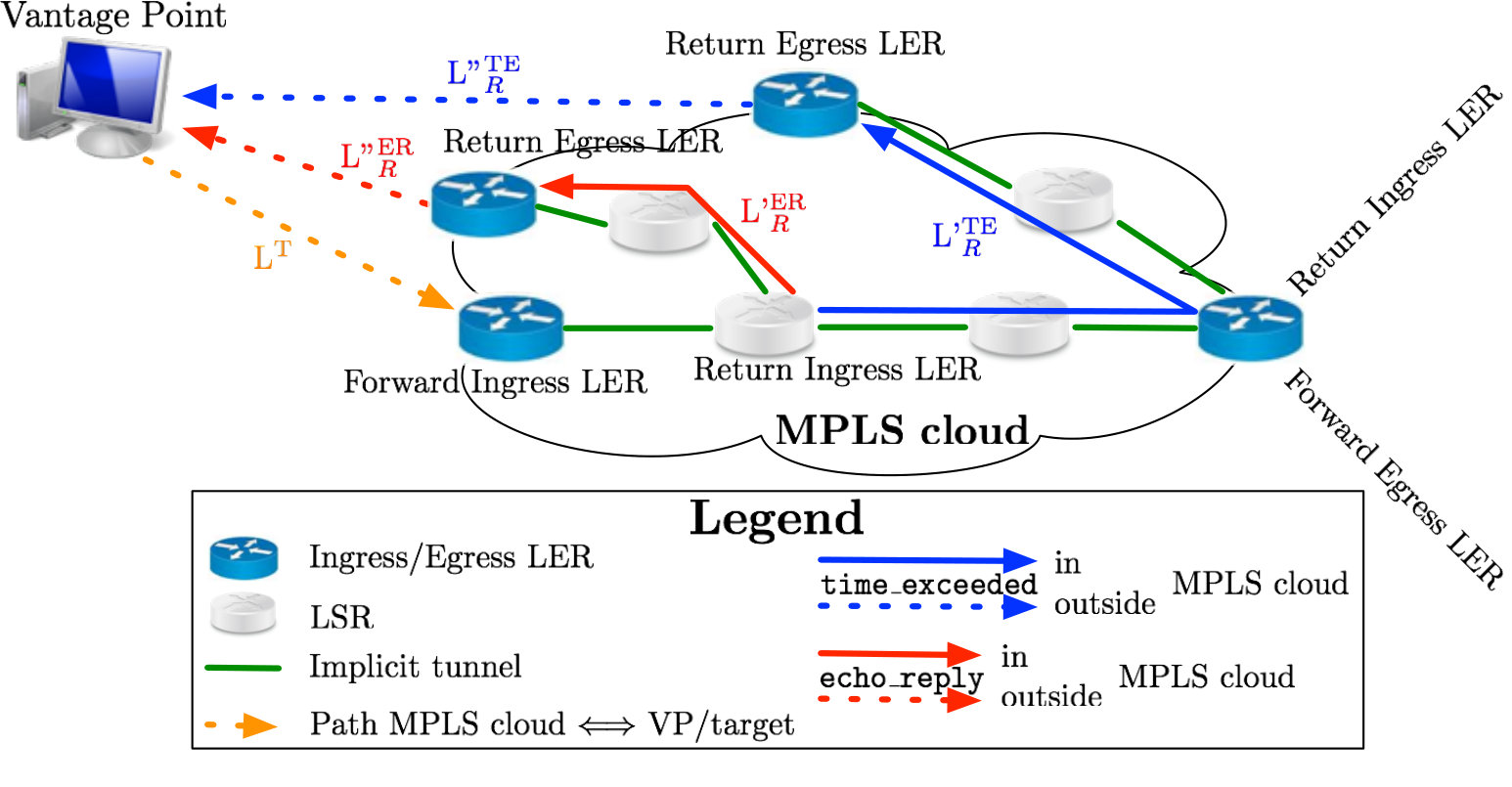 Figure 1
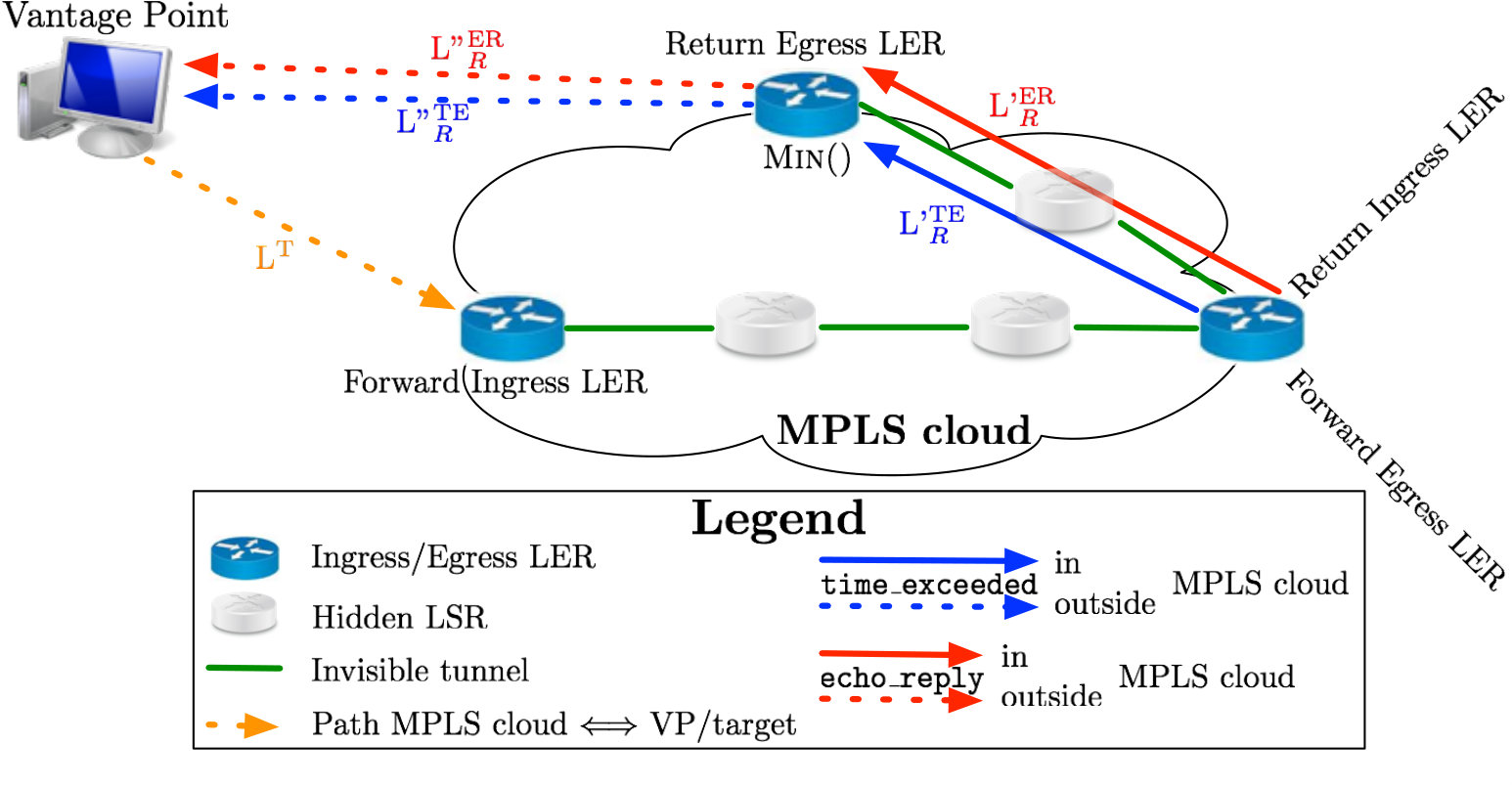 Figure 2
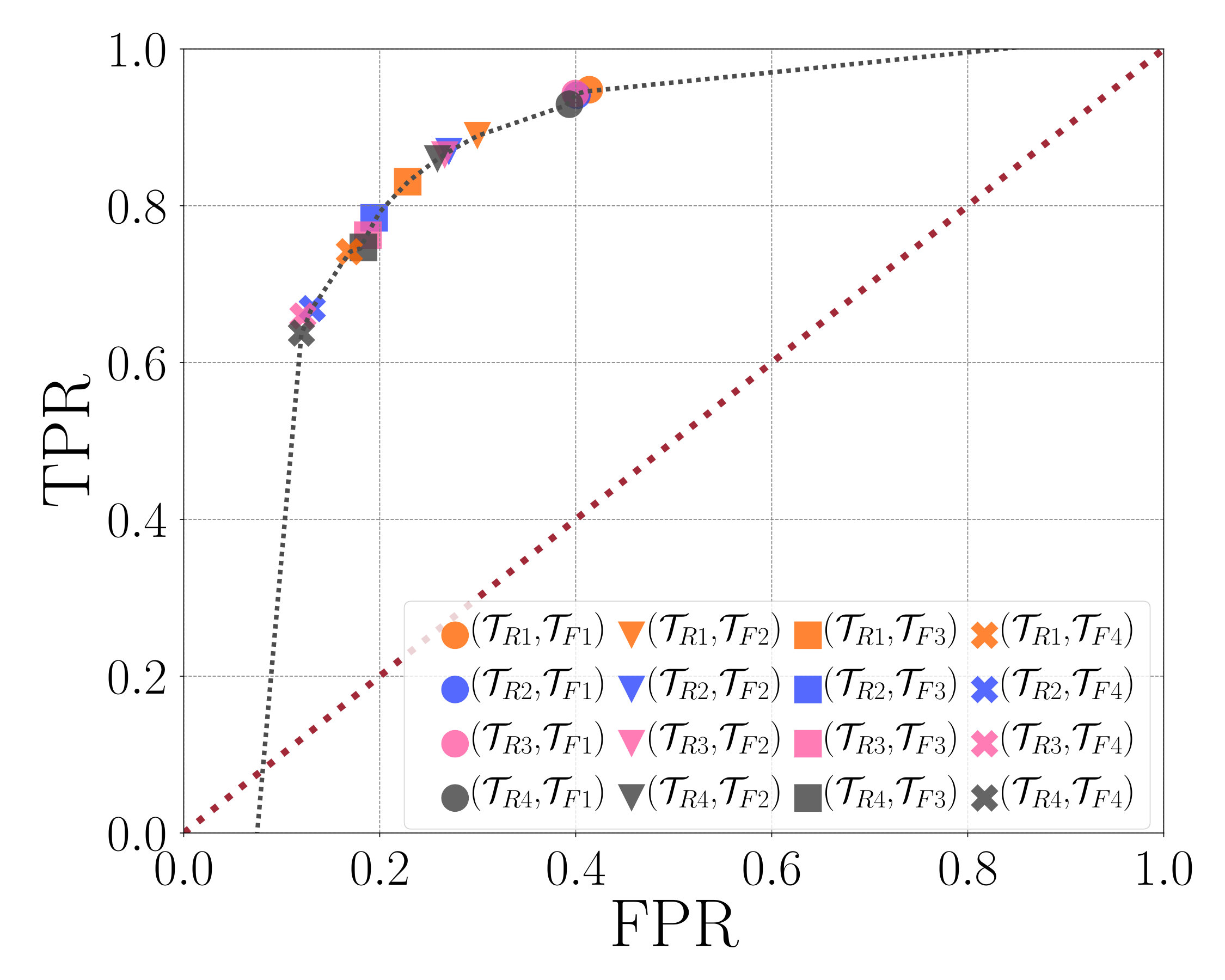 Figure 3
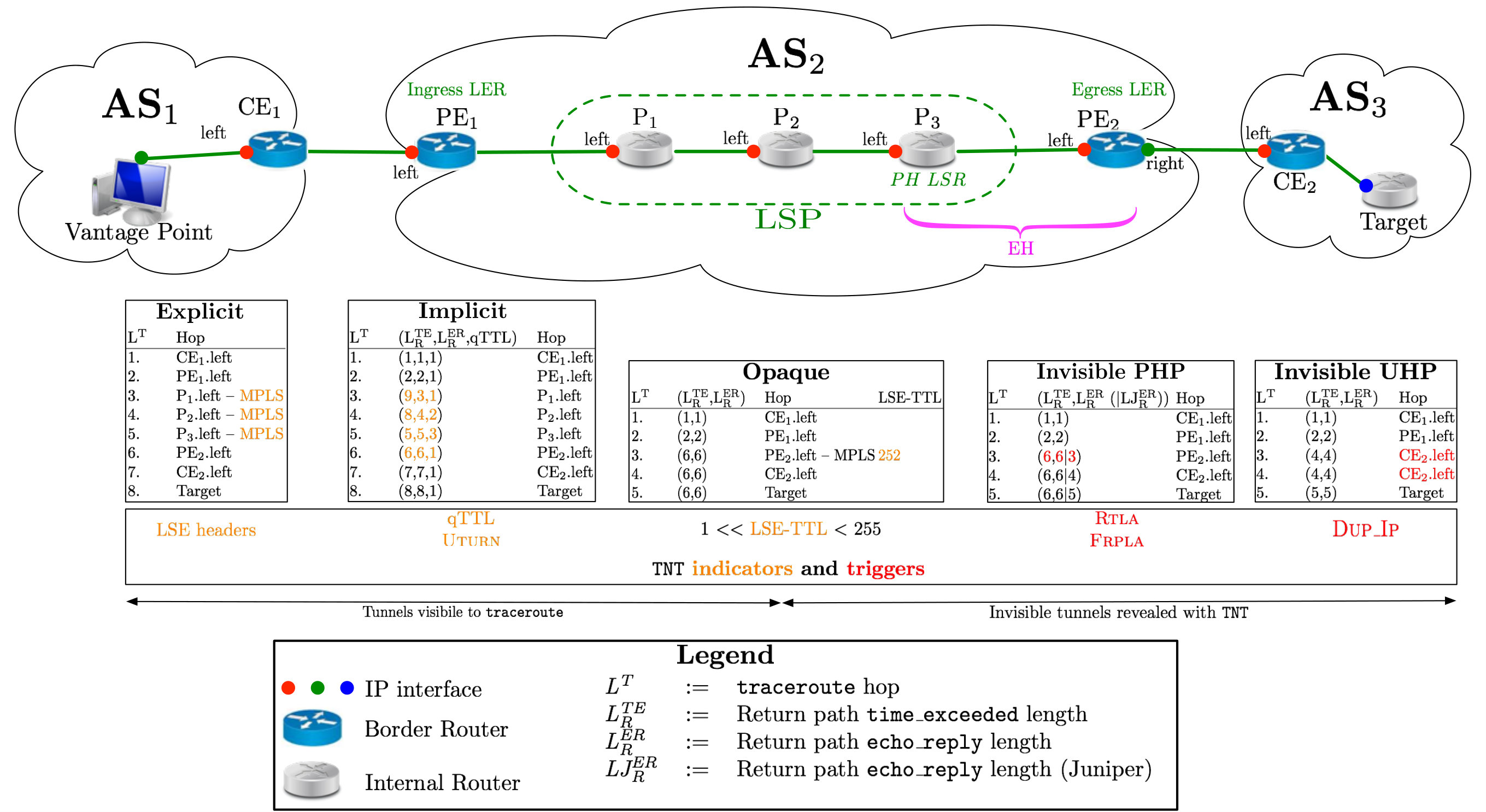 Figure 4
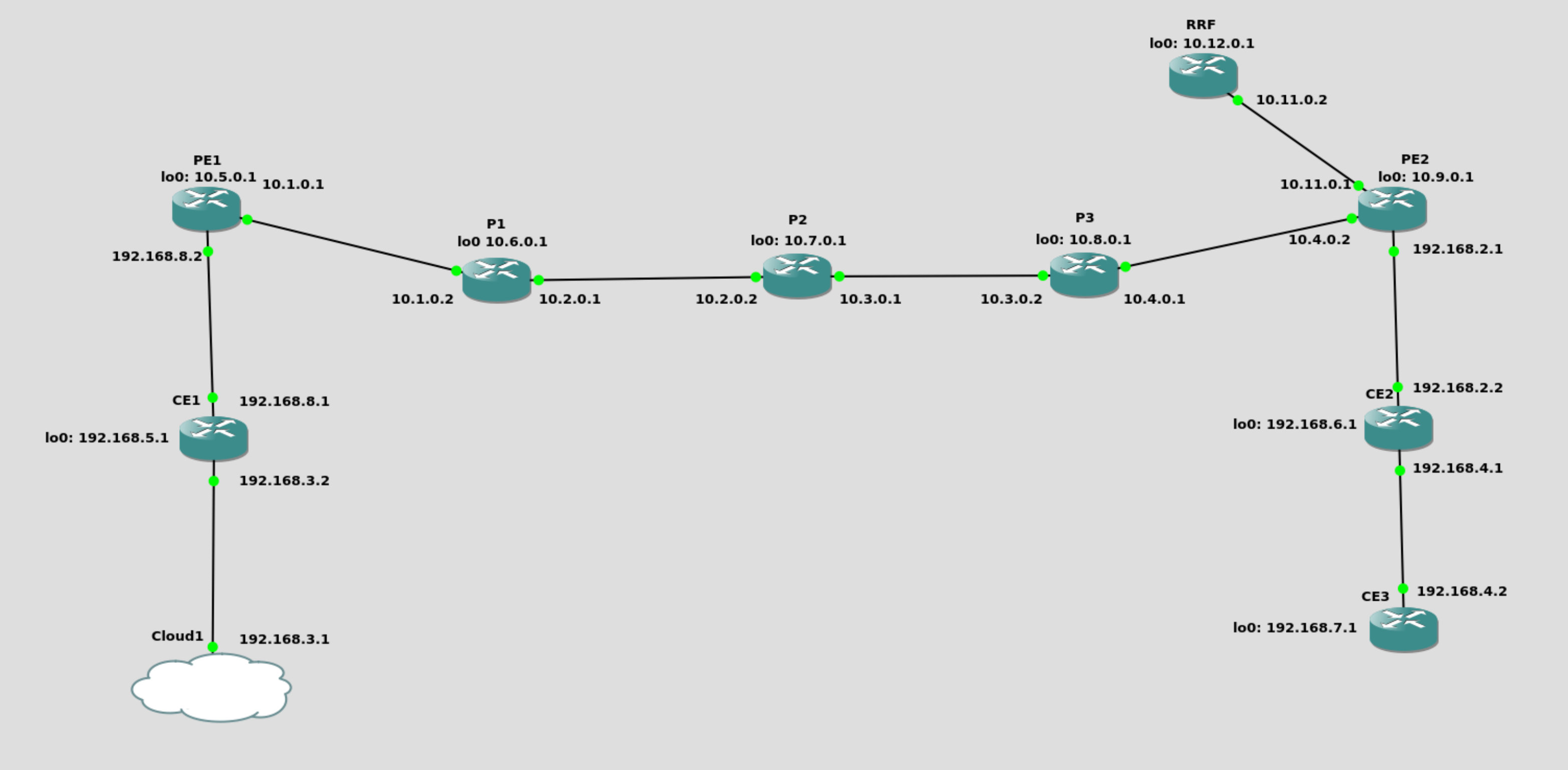 Figure 5
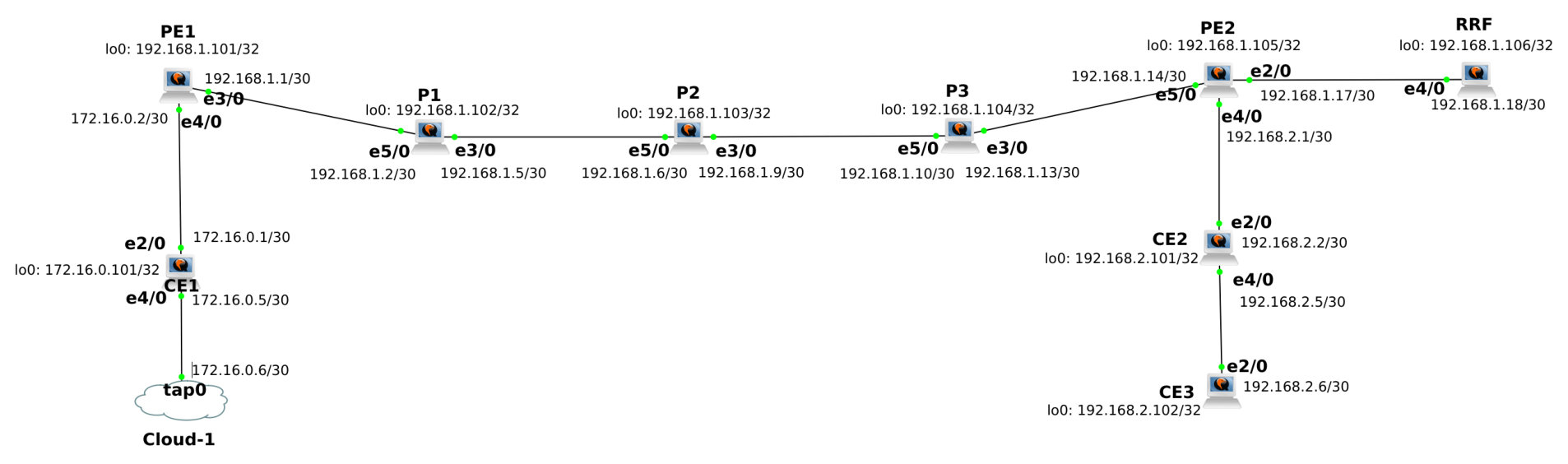 Figure 6
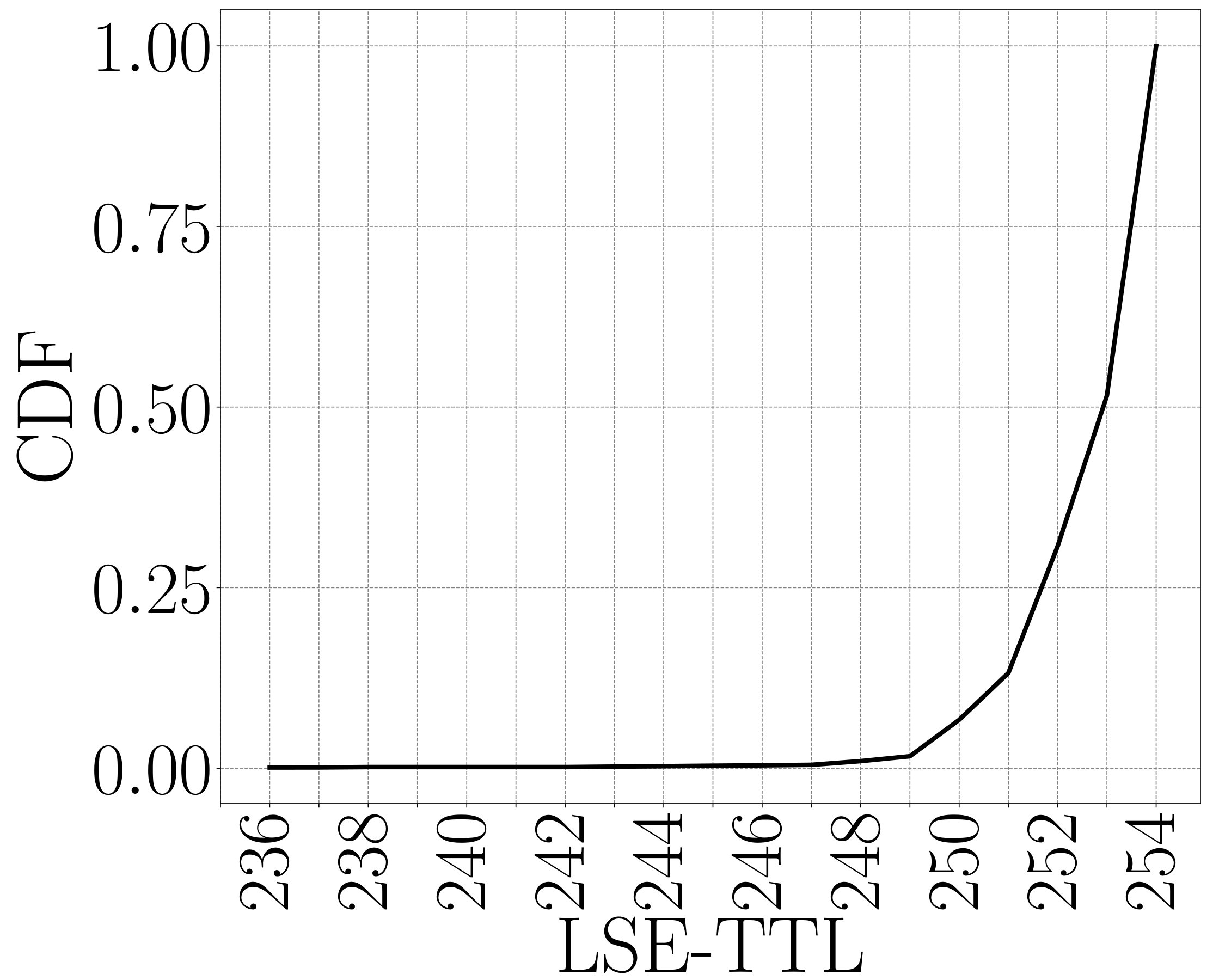 Figure 7
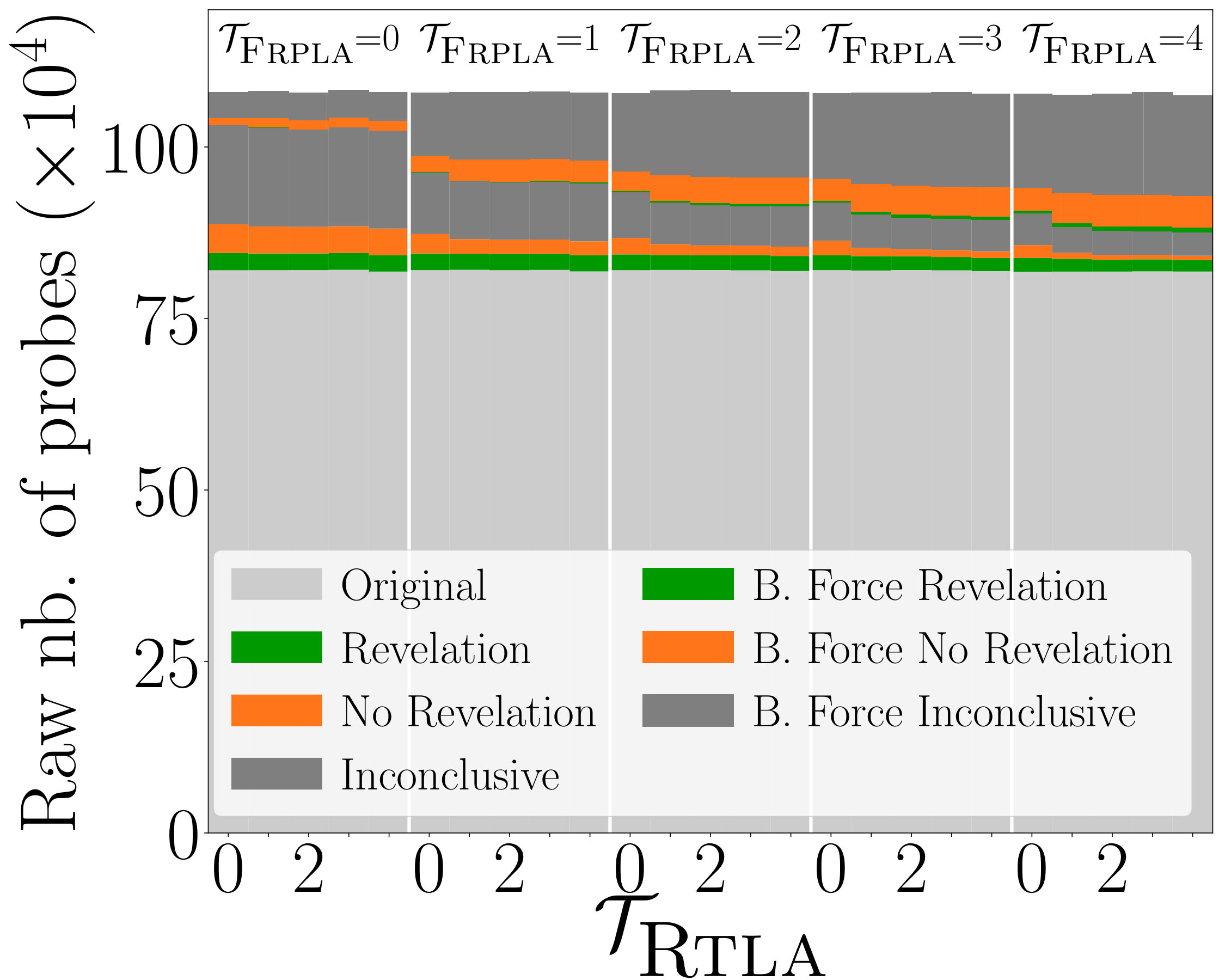 Figure 8
Peer Reviews
No public reviews on file for this paper yet. If you reviewed it on a platform where reviews are public (OpenReview, ICLR, NeurIPS, ICML), you can paste yours below so the community can read it here.
Videos
No videos yet. Explain this paper in a talk, walkthrough, or lecture? Add one.