Spontaneous Long-range Vortex-antivortex Pair in the Two-band 2D Superconductor
Zhi-Wei Wang

TL;DR
This paper demonstrates the spontaneous formation of a stable long-range vortex-antivortex pair in a two-band 2D superconductor, driven by Josephson-coupling effects, using a Ginzburg-Landau model.
Contribution
It reveals a new stable vortex-antivortex pairing phenomenon in two-band superconductors caused by Josephson-coupling, supported by numerical minimization of the Ginzburg-Landau model.
Findings
Stable vortex-antivortex pairs with long-range order are observed.
The total free energy depends linearly on the vortex-antivortex separation.
Josephson-coupling induces this spontaneous pairing phenomenon.
Abstract
The relaxation iterative method is used to minimize Ginzburg-Landau model for the two-band superconductor with Josephson-coupling. A stable spontaneous vortex-antivortex pair with long range order has been revealed. Our result appears due to the Josephson-coupling effect, which leads to a linearly-dependence of total free energy on the distance between vortex-antivortex pair, hence accounts for this phenomenon.
Click any figure to enlarge with its caption.
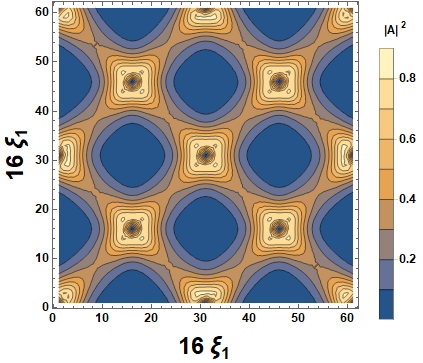 Figure 1
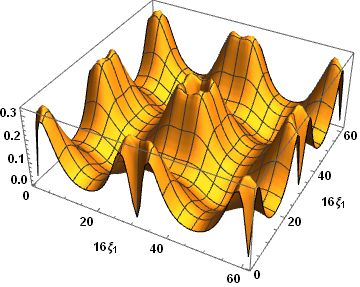 Figure 2
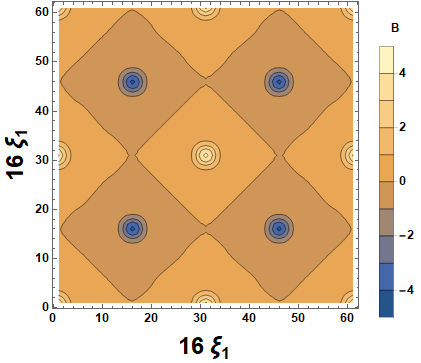 Figure 3
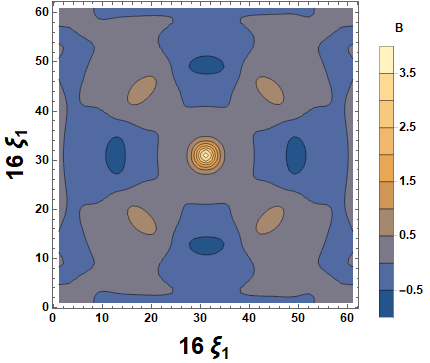 Figure 4
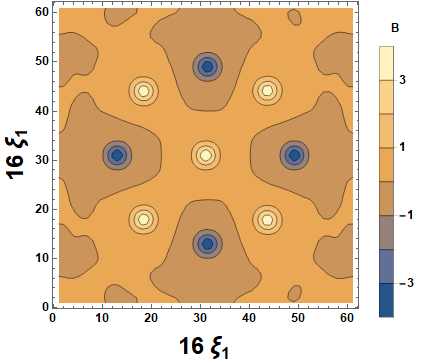 Figure 5
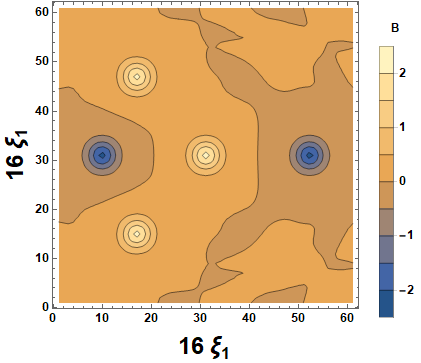 Figure 6
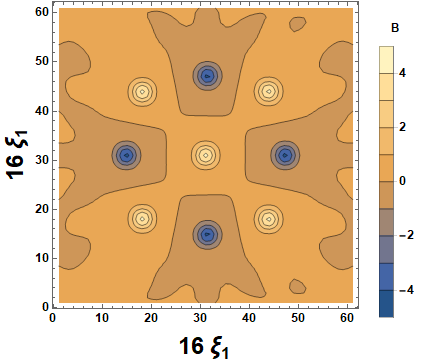 Figure 7
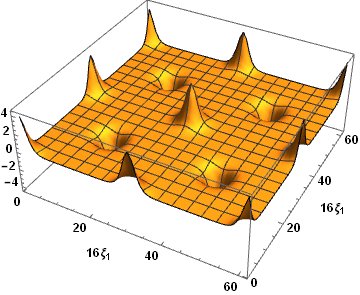 Figure 8
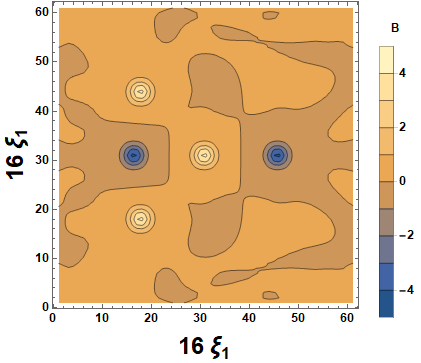 Figure 9
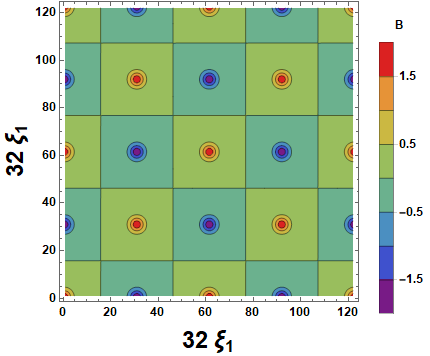 Figure 10
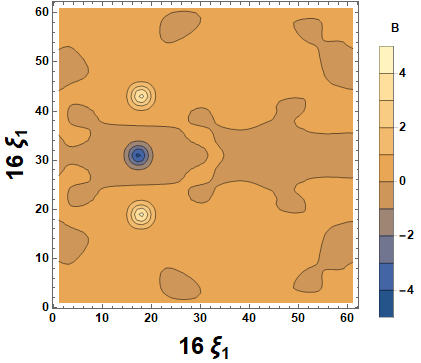 Figure 11
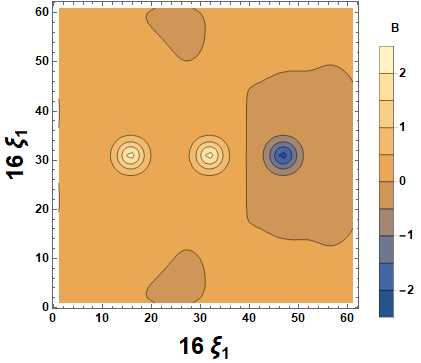 Figure 12
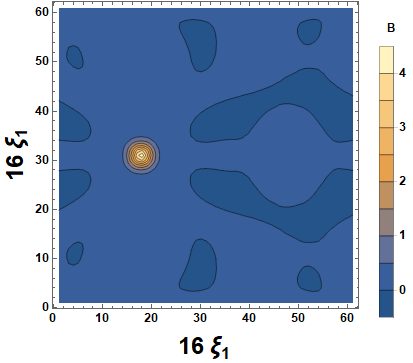 Figure 13
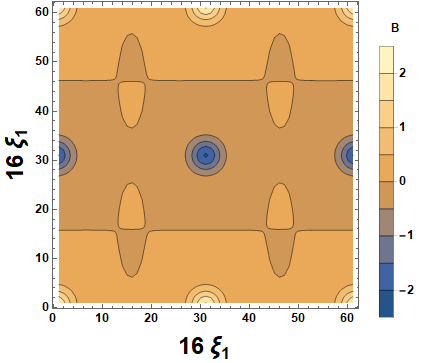 Figure 14
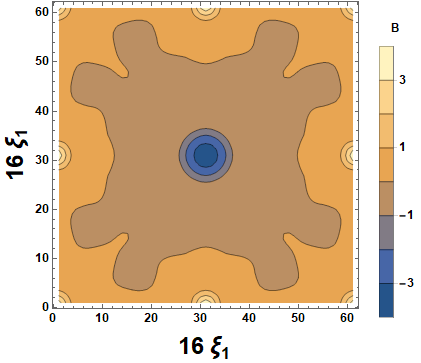 Figure 15
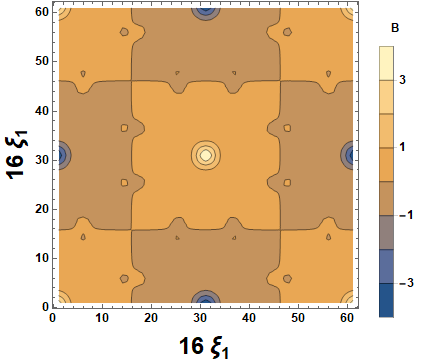 Figure 16
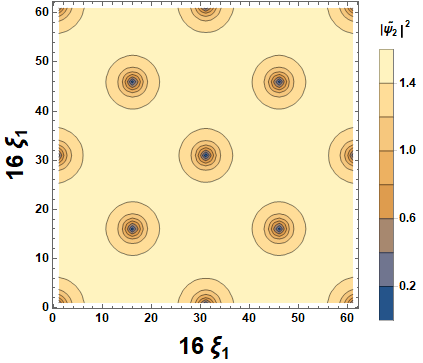 Figure 17
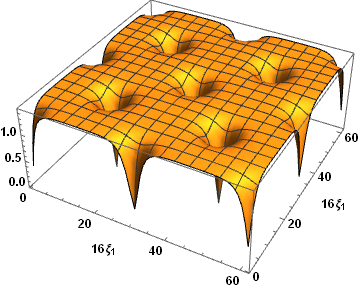 Figure 18
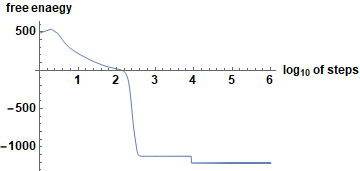 Figure 19
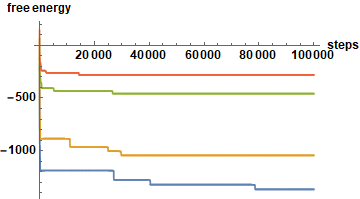 Figure 20
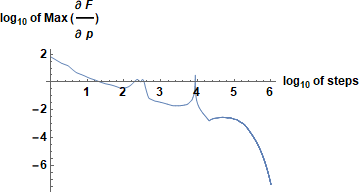 Figure 21
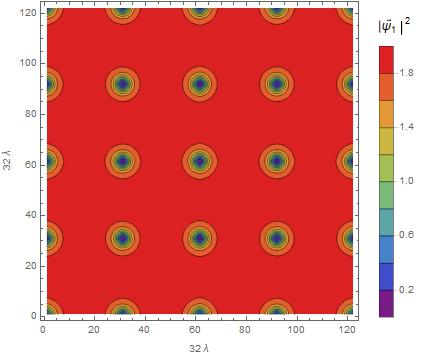 Figure 22
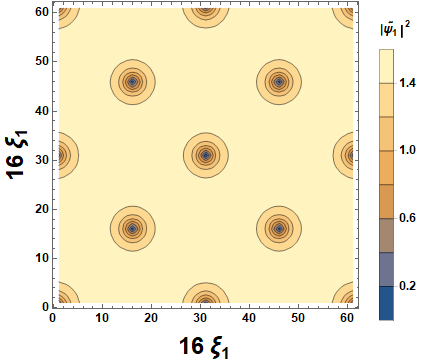 Figure 23
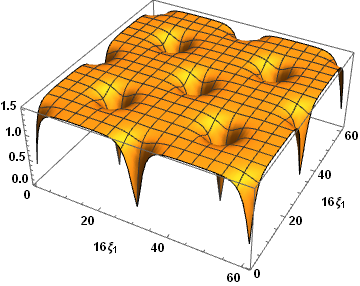 Figure 24
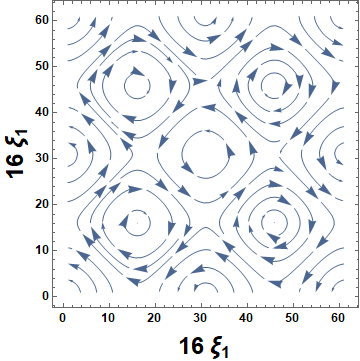 Figure 25
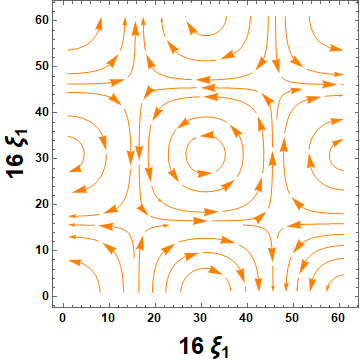 Figure 26
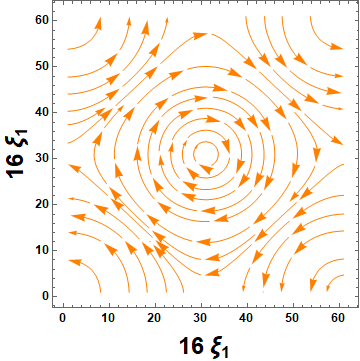 Figure 27
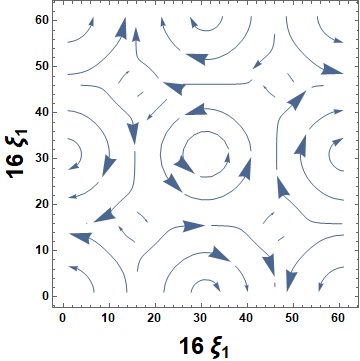 Figure 28
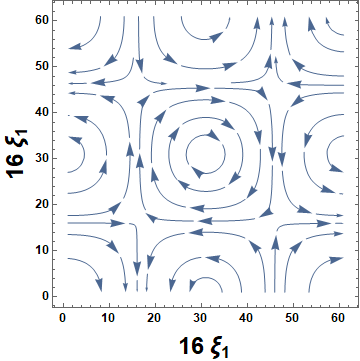 Figure 29
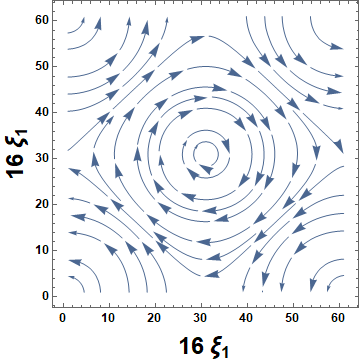 Figure 30
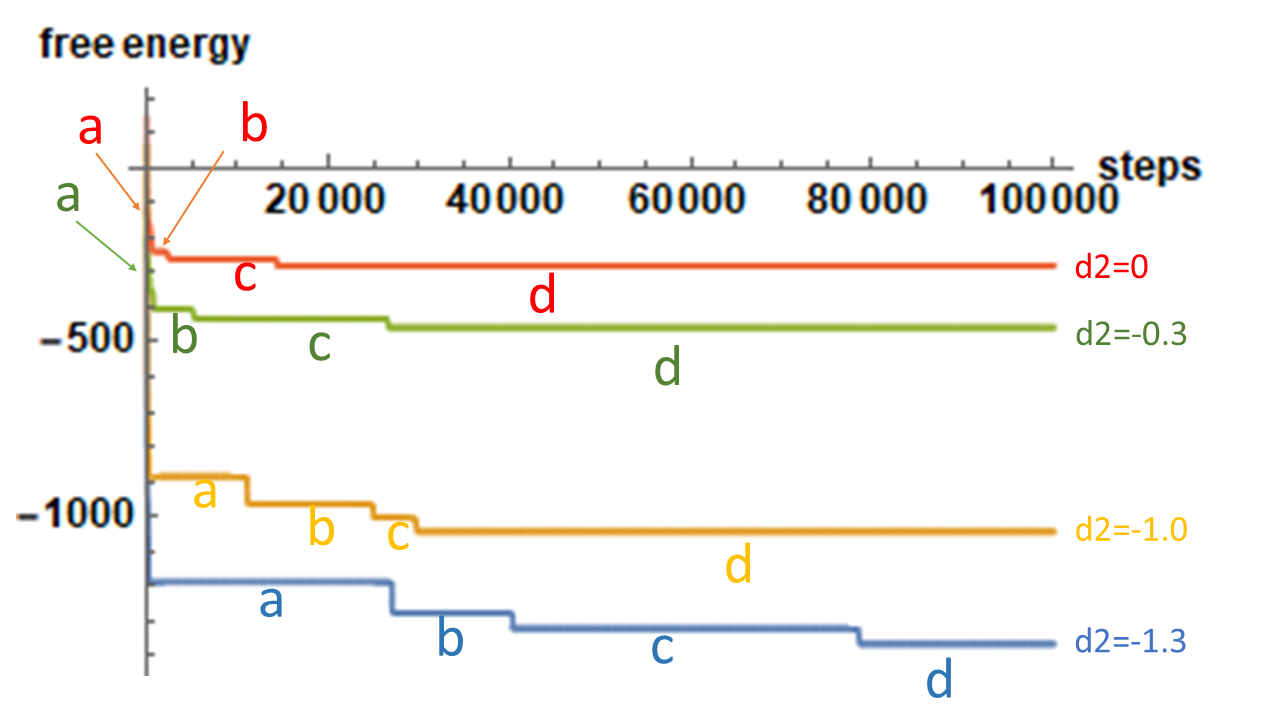 Figure 31
Peer Reviews
No public reviews on file for this paper yet. If you reviewed it on a platform where reviews are public (OpenReview, ICLR, NeurIPS, ICML), you can paste yours below so the community can read it here.
Videos
No videos yet. Explain this paper in a talk, walkthrough, or lecture? Add one.
Taxonomy
TopicsSuperconductivity in MgB2 and Alloys · Physics of Superconductivity and Magnetism · Iron-based superconductors research
Spontaneous Long-range Vortex-antivortex Pair in the Two-band 2D Superconductor
Zhi-Wei Wang
email: [email protected]
Department of Physics, Shanghai University, 200444 Shanghai, People s Republic of China
(29 January 2019)
Résumé
The relaxation iterative method is used to minimize Ginzburg-Landau model for the two-band superconductor with Josephson-coupling. A stable spontaneous vortex-antivortex pair with long range order has been revealed. Our result appears due to the Josephson-coupling effect, which leads to a linearly-dependence of total free energy on the distance between vortex-antivortex pair, hence accounts for this phenomenon.
Sec.1 1.Introduction
Traditionally, according to the Mermin-Wagner (MW) theorem, it’s commonly believed that no continuous spontaneous symmetry breaking and therefore no phase transition (except the discrete situation) could occur in an isotropic two-dimensional system without topological defect. Then, Korsterlitz and Thouless[1], also by Berezinskii[2], has indicated the existence of topological transition in a 2D system which explains the existence of vortex-antivortex pair observed in the superfluid helium-3. However, this type of phase transition cannot occur in a charged system (superconductor) since the repulsive energy between two vortices with opposite circulation fall off like instead of the necessarily ln r. In order to get a stable vortex-antivortex pair in superconductor, quantum confinement effect has been introduced where the vortex-antivortex pair can be stabilized with the reflection of boundary (namely: the mirror reflection force )[3]. Also, the possibility to stabilize the vortex-antivortex pair in Superconductor with the non-zero demagnetization factor has been discussed by Epstein et al.[4]. Moreover, vortex-antivortex pair can appear by quantum magnetic dots pinning discussed by [5]. Recently, Timm and Appel [6] has indicated that the total free energy of system in the two-layered superconductor with Josephson coupling is linearly-dependent on their separation and argued that KT’s theorem, which assumes a logarithmic interaction, is not applicable to such a two-layered superconductor with Josephson-coupling, therefore, suggests the possibility of a spontaneous long-range vortex-antivortex excitation in the charged system.
Multi-band superconductivity[7] in different systems such as [8] [9]and iron-based materials has been confirmed in the last two decades by several experimental techniques, showing quite different thermodynamic, reversible mixed-state and other abnormal properties from one-band superconductor due to interband coupling. To our knowledge, although numerous research has been done on two-band model, like phase soliton Lin et al.[10], (while the stability of their results needs further discussion)and by Tanaka[11], Type-1.5 Superconductivity by Moshchalkov et al.[12], a spontaneous vortex-antivortex pattern has not been reported. In present work, a novel long-range vortex-antivortex pair has been found by minimizing the free energy based on two-band Ginzburg-Landau model with Josephson-coupling where the direct iterative relaxation method [13] [14] [15]has been used with a periodic boundary condition. Due to the Josephson term, the interband symmetry has been broken, so wavefunction will organize itself under suitable initial condition.
Sec.2 2.Model
We start with the two-band Ginzburg-Landau model with Josphson-coupling which provides the parameter accessible to experiments. Derived from microscopic BCS theory with Gor’kov’s Green’s function technique, the GL free energy in such a model can be written as [7] [16]
[TABLE]
Here,wavefunction was introduced as a complex order parameter. was to represent the local density of superconducting electrons . is electron effective mass, pA is the magnetic vector potential, is the strength of Josephson-coupling and j indicates the band index from 1 to 2.The variational of F with respect to the and A leads to the usual GL equation.
To apply the iteration method, two steps are necessary. The first step is to make the free energy dimensionless by scaling energies by the superconducting condensation energy of band one, and lengths by the coherence length of band one = , setting also , where and
Equation becomes
[TABLE]
where , , , .
The second step is to discretize the GL free energy functional after variational, and therefore, by using direct local-optimization technique for a multivariable function, one can set the relaxation iteration formula as follow.
[TABLE]
Here, the original area S= is re-scaled into lattice area (). And n stands for the generation of iteration steps, with a suitable choice of factor and suitable initial state,the will reach its optimal state monotonically.
[TABLE]
where
[TABLE]
It’s easy to find out the boundary condition under the principle of gauge invariance [17]
[TABLE]
while the continuity of function must be satisfied as
[TABLE]
Here N stands for an integer, Therefore the boundary condition can be written as follow. Here i/j stands for the lattice number of x direction and y direction from 1 to , k stands for the imaginary unit and stands for total reduced flux.
[TABLE]
Sec.3 3.Results
3.1 3.1.Domains And Spontaneous Vortex-Antivortex Pair
In our calculation, the parameters for the lattice has been chosen as = 61 ,. The relaxation step-size has been set as , the equation is iterated for one million steps.
Figure 1 records the variance of energy, after ten thousand steps, the change becomes very slight. Figure 2 records the max of which shows the speed of convergence, and found the max of is less than which meets the criteria for convergence and stablity. Here p stands for()
From Figure 3, we can find that both the spontaneous magnetic B-field and wavefunction have the symmetry. It is quite nature, because the total free energy interaction between vortex-antivortex pairs are linear. Due to this symmetry, we can say that each vortex (antivortex) exerts same force to its antivortex (vortex) neighbor, which can also be considered as each vortex trapped by their antivortex neighbor and vice versa, therefore the system will go back to its stable equilibrium if there are some perturbation.
From Figure 3e/f and 4a/b, it is evident that our result can be analogous to the soliton behavior in two-band superconductor[11], where the sign of ( has the same sign as ) specifies the strength of the interband interaction. When it is positive(Figure 3e/f), the relative phase of and is . When it is negative(Figure 4a/b), the relative phase of and is is 0. This shows the influence of Josephson-coupling on the two-band model.
The influence of Josephson-coupling on two-band model can also be displayed by the spontaneous magnetic B-field, there are four (as far we found) possible stable structure under different chosen.
The aforementioned behavior is quite different from the behavior of one-band superconductor, where the vortex-antivortex pair can also appear spontaneously, but decay to blank pattern by the collision of pairs after several steps, the spontaneous pair keeps stable in the two-band situation.
3.2 3.2.Stability of Vortex-antivortex Pair Under Applied B-field
To study the stability of vortex-antivortex pair in two-band model with Josephson-coupling, we apply magnetic B-field as perturbation. Under the influence of magnetic B-field,the spin should take the same direction as the applied field. From Figure 6, we found that the interband coupling is beneficial to the stability of the vortex-antivortex pair, since the stronger the intraband strength is, the longer transient state exists. And, Figure 7a/b/c/d shows the details of four stairs which witnesses four collisions between vortex and antivortex.
Sec.4 4.Conclusion
We investigate the two-band GL model with Josephson-coupling on the basis of process of minimization the free energy with periodic boundary. A stable spontaneous long-range vortex-antivortex induced by the Josephson-coupling, which changes the coherence behavior between two band, has been found by the numerical search and theoretical analysis. In the meantime, this work shows the possibility of a new kind of topological excitations induced by the Josephson-coupling effect. Besides, there is an open question whether the similar spontaneous vortex-antivortex pair appears among other system with Josephson-coupling term or not. Furthermore, a generalization of this model by comparison with bright dark soliton pure mathematics structure is worth studying. Last but not least, this results shows possibility to trap unpaired majorana fermion if a two-band model (also with Josephson-coupling) applied.
Sec.5 5.Acknowledgements
We are grateful to Professor Shiping Zhou for his colourful discussions.
Sec.6 Reference
Références
- [1]
John Michael Kosterlitz and David James Thouless.
Ordering, metastability and phase transitions in two-dimensional systems.
Journal of Physics C: Solid State Physics, 6(7):1181, 1973.
- [2]
VL Berezinskii.
Destruction of long-range order in one-dimensional and two-dimensional systems having a continuous symmetry group i. classical systems.
Sov. Phys. JETP, 32(3):493–500, 1971.
- [3]
VR Misko, VM Fomin, JT Devreese, and VV Moshchalkov.
Stable vortex-antivortex molecules in mesoscopic superconducting triangles.
Physical review letters, 90(14):147003, 2003.
- [4]
MR Beasley, JE Mooij, and TP Orlando.
Possibility of vortex-antivortex pair dissociation in two-dimensional superconductors.
Physical Review Letters, 42(17):1165, 1979.
- [5]
MV Milošević and FM Peeters.
Vortex-antivortex lattices in superconducting films with magnetic pinning arrays.
Physical review letters, 93(26):267006, 2004.
- [6]
C Timm and J Appel.
Vortex-antivortex interaction in layered superconductors.
Physica B: Condensed Matter, 194:2407–2408, 1994.
- [7]
M Zehetmayer.
A review of two-band superconductivity: materials and effects on the thermodynamic and reversible mixed-state properties.
Superconductor Science and Technology, 26(4):043001, 2013.
- [8]
M Iavarone, G Karapetrov, AE Koshelev, WK Kwok, GW Crabtree, DG Hinks, WN Kang, Eun-Mi Choi, Hyun Jung Kim, Hyeong-Jin Kim, et al.
Two-band superconductivity in m g b 2.
Physical review letters, 89(18):187002, 2002.
- [9]
Cristina Buzea and Tsutomu Yamashita.
Review of the superconducting properties of mgb2.
Superconductor Science and Technology, 14(11):R115, 2001.
- [10]
Shi-Zeng Lin and Xiao Hu.
Phase solitons in multi-band superconductors with and without time-reversal symmetry.
New Journal of Physics, 14(6):063021, 2012.
- [11]
Y Tanaka.
Soliton in two-band superconductor.
Physical review letters, 88(1):017002, 2001.
- [12]
Victor Moshchalkov, Mariela Menghini, Taichiro Nishio, QH Chen, AV Silhanek, Vu Hung Dao, LF Chibotaru, ND Zhigadlo, and J Karpinski.
Type-1.5 superconductivity.
Physical review letters, 102(11):117001, 2009.
- [13]
Wikipedia contributors.
Relaxation (iterative method) — Wikipedia, the free encyclopedia, 2018.
[Online; accessed 11-January-2019].
- [14]
ZD Wang and C-R Hu.
Numerical relaxation approach for solving the general ginzburg-landau equations for type-ii superconductors.
Physical Review B, 44(21):11918, 1991.
- [15]
Stephen L Adler and Tsvi Piran.
Relaxation methods for gauge field equilibrium equations.
Reviews of Modern Physics, 56(1):1, 1984.
- [16]
A Vagov, AA Shanenko, MV Milošević, VM Axt, and FM Peeters.
Two-band superconductors: Extended ginzburg-landau formalism by a systematic expansion in small deviation from the critical temperature.
Physical Review B, 86(14):144514, 2012.
- [17]
Mauro M Doria, JE Gubernatis, and D Rainer.
Virial theorem for ginzburg-landau theories with potential applications to numerical studies of type-ii superconductors.
Physical Review B, 39(13):9573, 1989.
The reference list from the paper itself. Each links out to its DOI / PubMed record.
- 1[1] John Michael Kosterlitz and David James Thouless. Ordering, metastability and phase transitions in two-dimensional systems. Journal of Physics C: Solid State Physics , 6(7):1181, 1973.
- 2[2] VL Berezinskii. Destruction of long-range order in one-dimensional and two-dimensional systems having a continuous symmetry group i. classical systems. Sov. Phys. JETP , 32(3):493–500, 1971.
- 3[3] VR Misko, VM Fomin, JT Devreese, and VV Moshchalkov. Stable vortex-antivortex molecules in mesoscopic superconducting triangles. Physical review letters , 90(14):147003, 2003.
- 4[4] MR Beasley, JE Mooij, and TP Orlando. Possibility of vortex-antivortex pair dissociation in two-dimensional superconductors. Physical Review Letters , 42(17):1165, 1979.
- 5[5] MV Milošević and FM Peeters. Vortex-antivortex lattices in superconducting films with magnetic pinning arrays. Physical review letters , 93(26):267006, 2004.
- 6[6] C Timm and J Appel. Vortex-antivortex interaction in layered superconductors. Physica B: Condensed Matter , 194:2407–2408, 1994.
- 7[7] M Zehetmayer. A review of two-band superconductivity: materials and effects on the thermodynamic and reversible mixed-state properties. Superconductor Science and Technology , 26(4):043001, 2013.
- 8[8] M Iavarone, G Karapetrov, AE Koshelev, WK Kwok, GW Crabtree, DG Hinks, WN Kang, Eun-Mi Choi, Hyun Jung Kim, Hyeong-Jin Kim, et al. Two-band superconductivity in m g b 2. Physical review letters , 89(18):187002, 2002.