A VLBI study of the wind-wind collision region in the massive multiple HD 167971
J. Sanchez-Bermudez, A. Alberdi, R. Sch\"odel, W. Brandner, R., Galv\'an-Madrid, J. C. Guirado, R. Herrero-Illana, C. A. Hummel, J. M., Marcaide, and M.A. P\'erez-Torres

TL;DR
This study uses VLBI observations to analyze the wind-wind collision region in the massive multiple star system HD 167971, revealing how the collision morphology varies with orbital motion and confirming non-thermal synchrotron emission.
Contribution
It provides the first detailed VLBI characterization of the wind-wind collision region in HD 167971 and links radio morphology changes to orbital dynamics.
Findings
Confirmed non-thermal radio emission from wind-wind collision
Observed orientation changes of collision region with orbital motion
Detected inverse proportionality between intensity and separation
Abstract
Context. Colliding winds in massive binaries are able to accelerate particles up to relativistic speeds as the result of the interaction between the winds of the different stellar components. HD 167971 exhibits this phenomenology which makes it a strong radio source. Aims. We aim at characterizing the morphology of the radio emission and its dependence on the orbital motion, traced independently by NIR-interferometry, of the spectroscopic binary and the tertiary component that conforms HD 167971. Methods. We analyze 2006 and 2016 very long baseline interferometric data at C and X bands. We complement our analysis with a geometrical model of the wind-wind collision region, and with an astrometric description of the system. Results. We confirm that the detected non-thermal radio emission is associated with the wind-wind collision region of the spectroscopic binary and the tertiary…
Click any figure to enlarge with its caption.
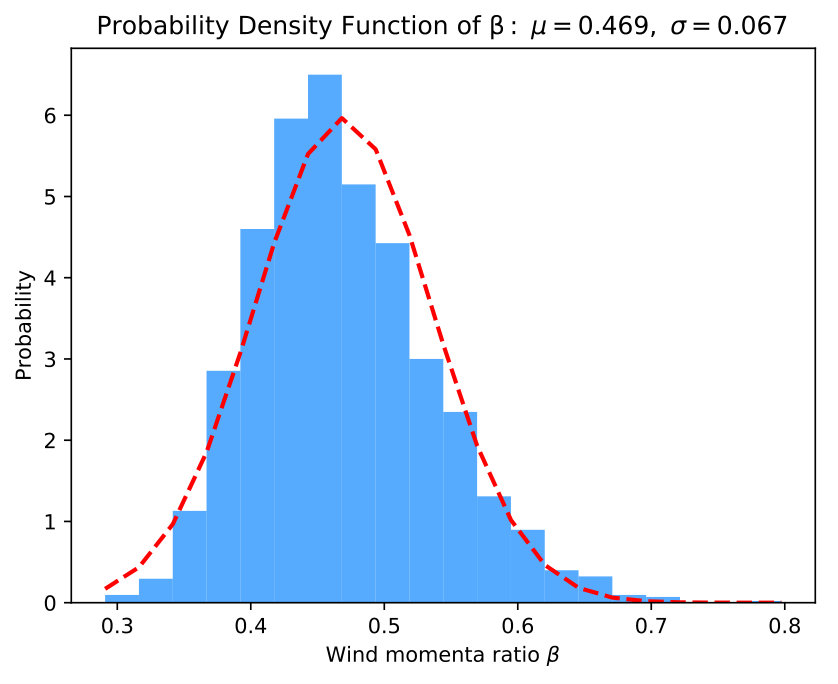 Figure 1
 Figure 2
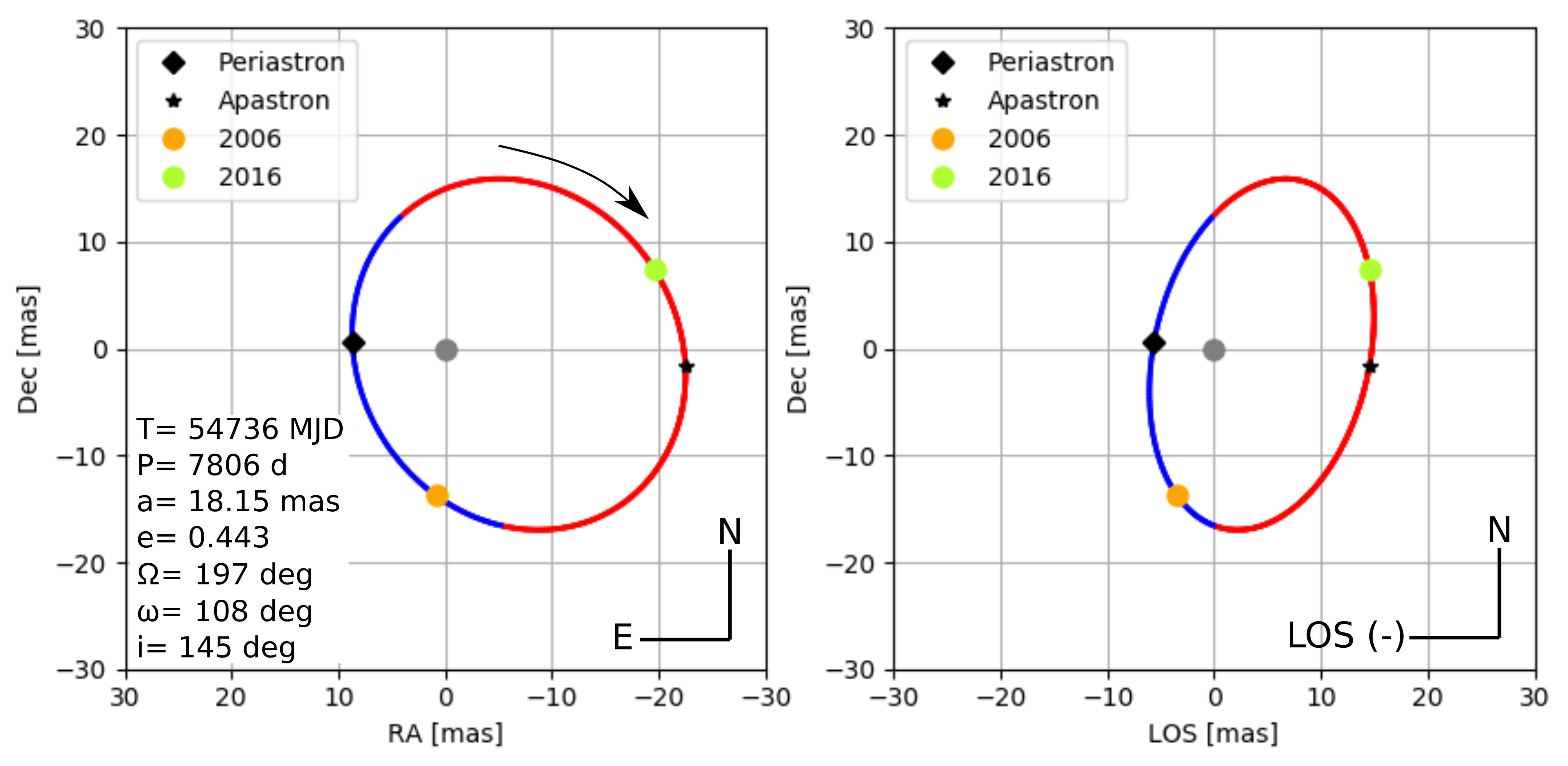 Figure 3
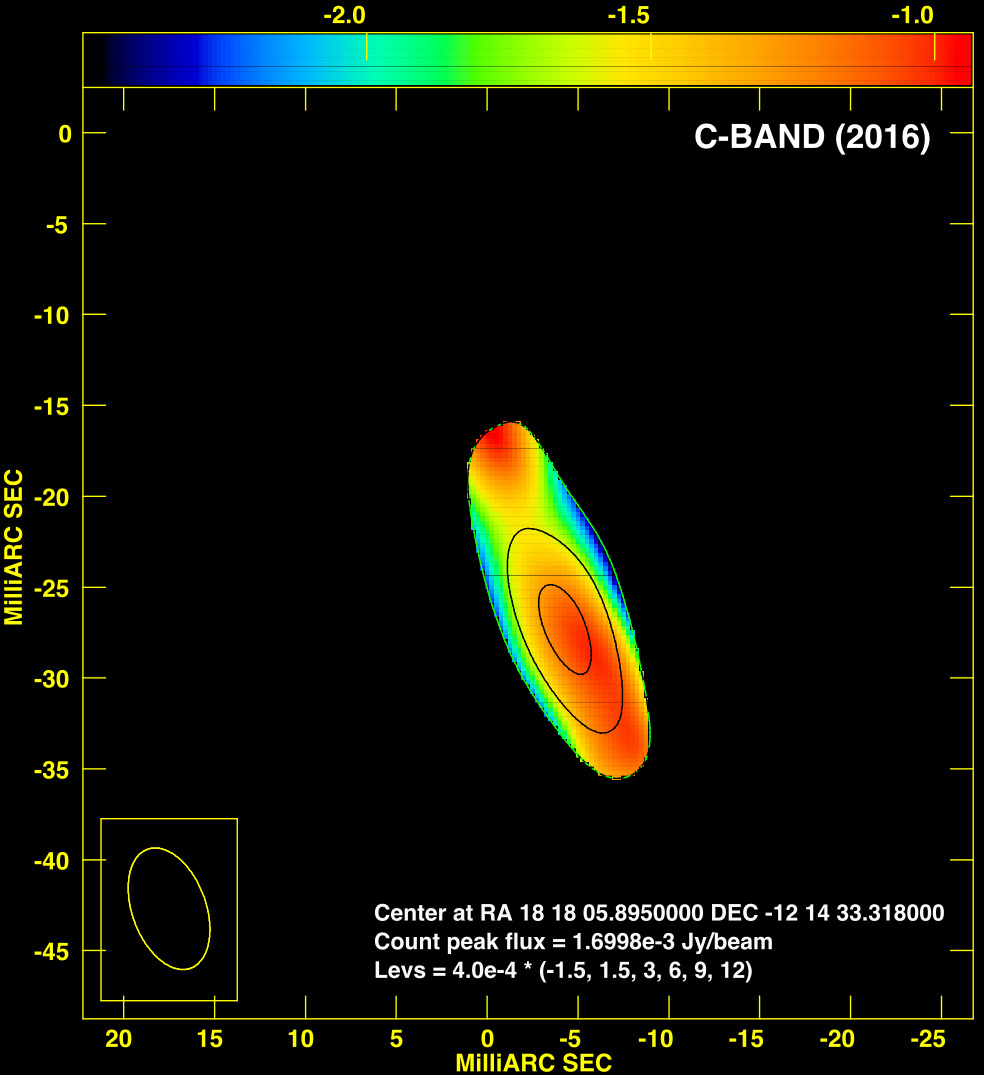 Figure 4
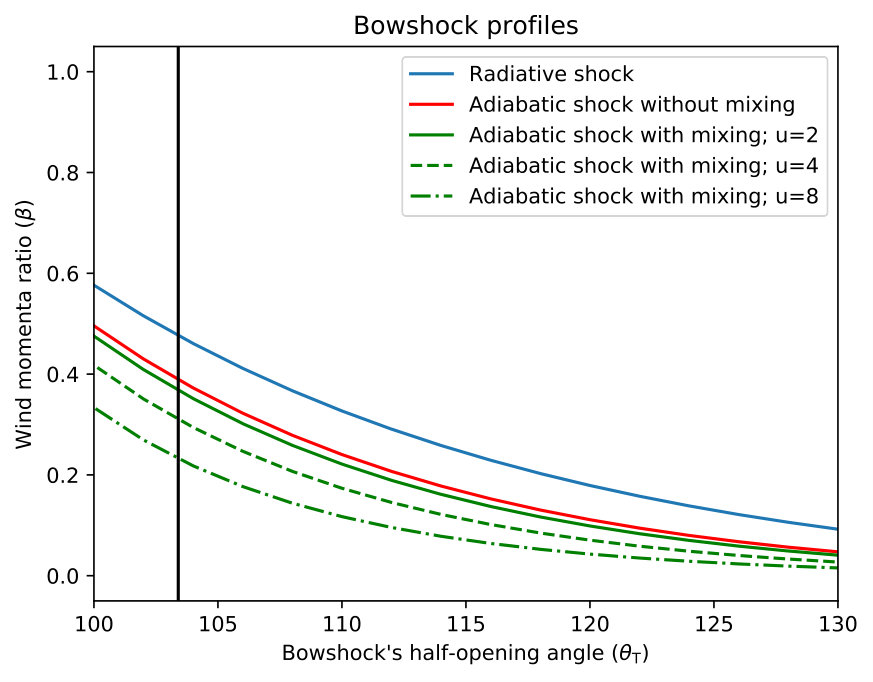 Figure 5
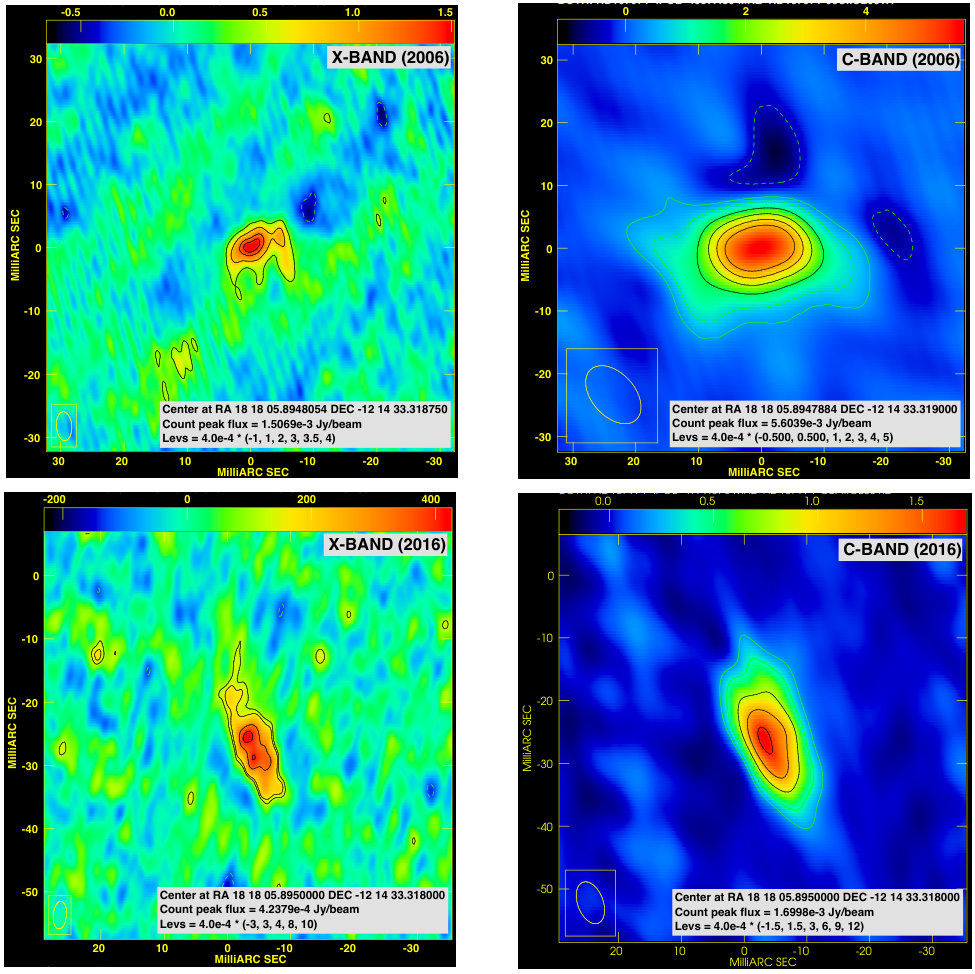 Figure 6
| 2006 epoch | 2016 epoch | |||
|---|---|---|---|---|
| Parameter | X-band | C-band | X-band | C-band |
| Beam FWHM [mas] | 4.6 2.4 | 10.8 6.9 | 4.38 2.11 | 7.36 3.54 |
| Beam PA [deg] | 4.0 | 42.0 | -5.0 | 7.0 |
| rms-noise [Jy/beam] | 134.0 | 196.0 | 40.0 | 45.0 |
| Total [mJy] | 5.324 | 12.314 | 2.817 | 7.316 |
| Peak’s [mJy/beam] | 1.507 | 5.604 | 0.423 | 0.169 |
| VLBI coordinates of the emission’s peak | ||||
|---|---|---|---|---|
| Epoch | R.A. | Dec. | ||
| 2006.59 | 274.5245618∘ | 0.4 mas | -12.2425887∘ | 0.2 mas |
| 2016.61 | 274.5245618∘ | 1.9 mas | -12.2425957∘ | 0.9 mas |
| SB relative position from the VLBI coordinatesa | ||||
| Epoch | R.A. | Dec. | ||
| 2006.59 | -0.4 mas | 0.4 mas | 7.0 mas | 0.3 mas |
| 2016.61 | -10.0 mas | 2.0 mas | -3.8 mas | 1.0 mas |
| Gaia coordinatesb | ||||
| Epoch | R.A. | Dec. | ||
| 2016.61 | 274.5245619∘ | 0.2 mas | -12.2425958∘ | 0.2 mas |
Peer Reviews
No public reviews on file for this paper yet. If you reviewed it on a platform where reviews are public (OpenReview, ICLR, NeurIPS, ICML), you can paste yours below so the community can read it here.
Videos
No videos yet. Explain this paper in a talk, walkthrough, or lecture? Add one.
11institutetext: European Southern Observatory, Alonso de Córdova 3107,Vitacura, Santiago de Chile, Chile
22institutetext: Max-Planck-Institut für Astronomie, Königstuhl 17, D-69117 Heidelberg, Germany 33institutetext: Instituto de Astronomía, Universidad Nacional Autónoma de México, Apdo. Postal 70264, Ciudad de México 04510, Mexico
33email: [email protected] 44institutetext: Instituto de Astrofísica de Andalucía (IAA-CSIC), Glorieta de la Astronomía S/N, 18008, Granada, Spain 55institutetext: Instituto de Radioastronomía y Astrofísica (IRyA), UNAM, Apdo. Postal 72-3 (Xangari), Morelia, Michoacán 58089, Mexico 66institutetext: Departament dAstronomia i Astrofísica, Universitat de Valencia, C. Dr. Moliner 50, 46100 Burjassot, Valencia, Spain 77institutetext: Observatori Astronòmic, Universitat de València, Parc Científic, C Catedrático José Beltrán 2, E-46980 Paterna, València, Spain 88institutetext: European Southern Observatory, Karl-Schwarzschild-Strae 2, D-85748 Garching, Germany 99institutetext: Visiting Scientist: Departamento de Física Teórica, Facultad de Ciencias, Universidad de Zaragoza, Spain
A VLBI study of the wind-wind collision region in the massive multiple HD 167971
J. Sanchez-Bermudez 112233
A. Alberdi 44
R. Schödel 44
W. Brandner 22
R. Galván-Madrid 55
J. C. Guirado 6677
R. Herrero-Illana 11
C. A. Hummel 88
J. M. Marcaide 66
M.A. Pérez-Torres 4499
(Received ; accepted )
Abstract
*Context. *Colliding winds in massive binaries are able to accelerate particles up to relativistic speeds as the result of the interaction between the winds of the different stellar components. HD 167971 exhibits this phenomenology which makes it a strong radio source.
*Aims. *We aim at characterizing the morphology of the radio emission and its dependence on the orbital motion, traced independently by NIR-interferometry, of the spectroscopic binary and the tertiary component that conforms HD 167971.
*Methods. *We analyze 2006 and 2016 very long baseline interferometric data at C and X bands. We complement our analysis with a geometrical model of the wind-wind collision region, and with an astrometric description of the system.
*Results. *We confirm that the detected non-thermal radio emission is associated with the wind-wind collision region of the spectroscopic binary and the tertiary component in HD 167971. The wind-wind collision region changes orientation in agreement with the orbital motion of the tertiary around the spectroscopic binary. The total intensity also changes between the two observing epochs in a way inversely proportional to the separation between the SB and T, with a negative-steep spectral index typical of an optically thin synchrotron emission possibly steepened by an inverse Compton cooling effect. The wind-wind collision bow-shock shape and its position with respect to the stars indicates that the wind momentum from the spectroscopic binary is stronger than that of the tertiary. Finally, the astrometric solution derived for the stellar system and the wind-wind collision region is consistent with independent Gaia data.
Key Words.:
**binaries – interferometry – massive stars **
1 Introduction
Massive binaries (and higher degree multiple systems) made of O-type and/or Wolf-Rayet (WR) stars are known to produce stellar wind collisions and have shown their capability to accelerate particles up to relativistic speeds. The individual stellar winds collide, and form shocks that define the wind-wind collision region (WWCR). Within this region, electrons are accelerated to relativistic velocities, emitting synchrotron radiation which is detected as non-thermal radio emission. This emission is characterized by a negative spectral index111; It is assumed that the flux density, , is proportional to the frequency of observation, , scaling with a power-law defined by the spectral index and a high brightness temperature (see e.g., Eichler & Usov 1993; Williams et al. 1990; White & Becker 1995; Dougherty et al. 1996; Dougherty & Williams 2000; Dougherty et al. 2003; Pittard & Dougherty 2006; Pittard et al. 2006; Blomme et al. 2007; Montes et al. 2009, 2015). Most of the stellar non-thermal radio emitters are multiple systems with at least one WR-star. There are only a few known non-thermal systems composed exclusively by O-stars (see e.g., Rauw 2004; Benaglia & Koribalski 2007). The study of these systems is necessary to understand the properties of their wind-wind interactions. During the last decade several individual studies have been done in stellar radio sources like 9 Sgr (Blomme & Volpi 2014), HD 168112 (De Becker et al. 2004; Blomme et al. 2005), or Cyg OB2 No. 9 (van Loo et al. 2008) among others, confirming that characterizing the radio emission in terms of the stellar parameters of the sources.
HD 167971, at a distance of 1.8 kpc (De Becker et al. 2012), is one of the brightest synchrotron stellar radio emitters (Bieging et al. 1989). It is a hierarchical triple system (Leitherer et al. 1987), which consists of an spectroscopic binary (SB), with a period of 3.3 days, and a third object (T) moving on a wider orbit, with a period of 21.4 years. The spectral types of the stars are O7.5III (Aa), O9.5III (Ab) and O8I (B)222The labels Aa, Ab and B follows the IAU component designation. However, in this work we would refer to the system Aa-Ab as the spectroscopic binary, SB, and the component B as the tertiary, T.. Near-Infrared interferometric observations (obtained with AMBER, PIONIER and GRAVITY at the Very Large Telescope Interferometer -VLTI- and reported by De Becker et al. 2012; Le Bouquin et al. 2017) demonstrated that the SB and T are gravitationally bound, with a projected separation that varies from 8 to 15 milliarcseconds (mas). The angular separation between the components of the SB is of the order of 0.1 mas, and cannot be spatially resolved directly with the VLTI nor with radio very long baseline interferometry (VLBI). Therefore, HD 167971 appears as a binary system (SB-T) in the near-infrared interferometric data.
Figure 1 presents the best-fit orbit of T around the SB reported by Le Bouquin et al. (2017). This solution is in agreement with previous estimates reported by the light-curve analyses of Blomme et al. (2007) and Ibanoglu et al. (2013). The VLA and ATCA radio light curves studied by Blomme et al. (2007) presented a periodicity consistent with the reported orbital period of the tertiary, and the emission shown a negative spectral index, thus confirming its non-thermal nature. These findings supported the hyphothesis that the non-thermal radio emission is produced in the wide orbit, probably, in the adiabatic wind colliding region between the SB and T. The difference of the light-curve profiles between 6 cm (5 GHz) and 20 cm (1.5 GHz), suggests that the emitting region is quite extended.
Additionally to the observed radio emission, De Becker et al. (2005) reported X-Ray (thermal) emission at energies of 2-4 keV that correspond to a high temperature plasma (2.3 - 4.6 107 K), which is typical of pre-shock winds near their terminal velocity. This fact is in agreement with a wind-wind interaction scenario with strong adiabatic shocks, and a phase variability scaling with the inverse of the distance between the SB and T. These characteristics make HD 167971 a unique target to test the physics of wind-wind collisions in O-stars.
Here, we report new HD 167971 X- (3.5 cm; 8.4 GHz) and C-band (6.0 cm; 5 GHz) observations with the Very Long Baseline Array (VLBA) obtained in 2016, complemented with archival VLBA data, at the same frequencies, from 2006. Sect. 2 presents our observations and data reduction. In Sect. 3 the analysis of the radio emission and our results are presented. Then, in Sect. 4 we present the conclusions of our work.
2 Observations and data reduction
We performed VLBA observations of HD 167971 on August 13th, 2016 at C- and on August 14th, 2016 at X-band. We used a sustained data recording rate of 2 Gbit/s in two-bit sampling. Each frequency band was split into eight intermediate frequencies (IFs) of 32 MHz bandwidth each, for a total synthesized bandwidth of 256 MHz. Each IF was in turn split into 32 channels of 1.0 MHz bandwidth. The data were corrected from Earth-orientation and ionospheric effects. The source J1751+0939 was used as bandpass calibrator and, the observations were phase-referenced to the source J1818-1108. Since this phase calibrator is not compact, all the fringe-fitting solutions were corrected from its structure.
The data were correlated at the NRAO data processor using an averaging time of 2s. We performed standard a-priori gain calibration using the measured gains and system temperatures of each antenna. This calibration, as well as the data inspection and editing, were done within the NRAO Astronomical Image Processing System (AIPS). No self-calibration was performed on the data since the peaks of emission were too faint. We also used AIPS to produce the images of both the reference source and target. Additionally, we analyzed archival VLBA observations performed on August 4th, 2006, half the orbital period of the system earlier. Then, a total synthesized bandwidth of 32 MHz was used, hence making those observations of lower sensitivity than those of 2016. The same calibrator source was used, and the fringe-fitting solutions were also corrected from the calibrator structure. Figure 2 shows the images of both epochs that were recovered by applying natural weighting to the data. Table 1 displays the main characteristics of the reconstructed maps.
3 Analysis and Results
3.1 Radio Maps Analysis
The reported VLBA observations image the non-thermal radio emission of the WWCR. Figure 2 displays the radio maps, which show that the emission is resolved and consists of an elongated structure that changes depending on the observing epoch. The observing epochs correspond to half an orbital period, and show radio structures that have rotated by almost 90*∘*. Considering the orbital solution from Le Bouquin et al. (2017), and the radio images, we confirm that the long-axis of the radio emission –for every frequency and epoch– is perpendicular to the line that connects the SB with T. Our observations, thus, support the hypothesis that the observed radio emission corresponds to the wind-wind collision region between the SB and T. The following structural properties are highlighted:
- •
The interacting point of the two winds could be characterized assuming that the WWCR is driven by the wind momenta ratio of the interacting stars (=). In this case, a bowshock-like structure is formed at the shock front between the two winds. This bowshock has its tails pointing towards the star with the smaller wind momentum. In the 2006 epoch, such bow-shock (arc-like) feature is observed with small tails pointing towards T, implying that the wind momentum of the SB is larger.
- •
The fact that the bowshock is better defined in the 2006 map is consistent with the projected orbital position of T at the predicted orbital phase, . In the 2006 data333For the current work, we assume epoch = 2454736.5 JD as reference for the orbital phases (=-0.1), we are observing the parabolic shock profile with a small inclination angle444Inclination angle, i, is measured between the bowshock (rotational) symmetry axis to the plane of the sky. This angle increases clock-wise in a plane orthogonal to the plane of the sky in direction to the observer’s line-of-sight. (=14.5*∘) from the plane of the sky, while in the 2016 epoch (=0.37 ; where T is behind the SB in our line-of-sight) we are observing the projected apex of the parabolic bowshock pointing towards us (=-152.8∘*) and, thus, its morphology resembles an elongated Gaussian instead of a parabolic arc (see Fig. 1 for a visual identification of the position of T at the two analyzed epochs).
- •
In the X-band maps, we identified an additional compact structure to the bowshock. In the 2006 epoch it can be observed as a small, elongated appendix to the northwest of the central emission peak. In the 2016 map, a similar appendix is also observed to the northeast of the central peak, and the peak itself appears to be shifted from the center of the emission. Possible explanations for this include (i) the interaction of non-spherical/clumpy winds and, (ii) the possibility of the interaction of wind-momenta of similar magnitude that could disturb the profile from the parabolic bow-shock solution (see Fig. 2 in Canto et al. 1996).
- •
We obtained spectral index maps of HD 167971 between 8.4 and 5 GHz (see Appendix A). The spectral index corresponds to non-thermal emission, with a value of -1.1 quite constant along the whole shocked region, suggesting that the Fermi acceleration mechanism is efficient. Dougherty et al. (2003) show that a synchrotron spectrum, without losses, goes as . However, HD 167971 has a steeper spectral index, which suggest a possible attenuation of the synchrotron emission due to several physical mechanisms (see below).
Blomme et al. (2007) determined, based on typical stellar parameters for O-stars, that the radio photosphere of optical depth unity at 5 GHz is (at 8.4 GHz, it is smaller), shorter than the minimum linear separation between the eclipsing binary and the tertiary component of the system ( 4000 ). Therefore, the observed WWCR should be outside the radio photosphere, with a negligible free-free absorption, showing the intrinsic optically thin synchrotron emission at all orbital phases. It is predicted that at frequencies lower than 5 GHz (e.g., at 1.4 GHz), the radio photosphere is much more extended. Therefore, the radio emission of the WWCR is embedded in the radio photosphere for a large fraction of the orbit, resulting in spectral index and turnover frequency changes of the radio emission along the orbit, which are not detectable at 5/8.4 GHz. Under these assumptions, attenuation of the synchrotron emission at the observed frequencies due to the Razin effect (Dougherty et al. 2003) is also negligible.
We suspect that the steepness of is caused by inverse Compton cooling, which is more efficient for electrons with higher energies. According to the model presented by Pittard et al. (2006), inverse Compton decreases rapidly the energy of electrons close to the central volume of the WWCR, confining only a portion or relatively energetic electrons in layers near the shocks, which, in turn, results in a steeper spectrum at high frequencies.
3.2 Bow-shock Model
Since the projected bow-shock profile in the 2006 epoch does not exhibit long tails, despite the small inclination angle from the plane of the sky, we suspect that the wind-momenta ratio of the SB and T are quite similar. To estimate the separation of the WWCR and , we used the algebraic solution of Canto et al. (1996) to define the shock profile of two interacting winds:
[TABLE]
where, in our system, corresponds to the bow-shock distance from T, and is the separation between the SB and T. The distance from to the apex of the bowshock is known as the stand-off distance . The angles and are the different half-opening angles between the line that connects the SB and T with the profile of the wind-wind shock front. The half-opening angles depend on , as follows:
[TABLE]
Since the wind-wind shock profile is more homogeneous in the C-band, we used the 2006 map to model the bow-shock profile with the previous geometrical solution through the following method:
- •
We mapped the position of the maximum of the source’s brightness distribution for each column of pixels, perpendicular to the bow-shock structure, in the 2006 C-band image. A prior rotation according to the orbital position, and image centering in a common reference frame were applied to the original map. We restricted our analysis to the structure with a brightness larger than 20% of the flux peak. To map the bow-shock profile, a Gaussian was fit to each non-zero element per column of pixels in the image. To estimate the errors in the position of the bow-shock profile, the standard-deviation of the Gaussian fit was used with a weight proportional to the number of pixel elements fitted.
- •
Once the profile was estimated, it was compared with the projected canonical solution of the wind-wind bowshock obtained from a Monte-Carlo Markov-Chain (MCMC) model using emcee (Foreman-Mackey et al. 2013). Our MCMC model evaluates values of between 0.3 and 0.9, smaller values would produce a very close bowshock with long tails, while higher ones would produce a completely open bowshock. The model was run with ten independent chains with 1000 steps each one. For every iteration the distance between T and the shock front was adjusted for both the model and data, according to the following expression:
[TABLE]
Although the stand-off distance is variable in this procedure since the half-opening angle of the bowshock depends on the wind momenta ratio, we found the most probable model at a and a stand-off distance that match better the half-opening angle of the extracted profile. The probability density function of the MCMC exhibits a clear peak at =0.480.07 (see Fig 3), which locates the shock front at a projected =0.41D0.02D from T, being D the separation between the SB and T across the orbital path. The value corresponds, thus, to a half-opening angle = 103 3*∘* of the bow-shock profile.
The used model is a solution for a radiative wind-wind collision shock. However, it is quite probable for the shock in HD 167971 to be adiabatic. Therefore, we compared the model solutions for adiabatic shocks described in Gayley (2009) (see also Pittard & Dawson 2018). The model for an adiabatic shock without mixing requires a 0.39 (notice that this value is within 2 of the reported value for the radiative shock) to generate a half-opening angle of 103*∘*. However, the situation changes when there is an adiabatic shock with mixing. In this case, the value of depends on the ratio of the terminal velocity of the winds, =. The bigger the value of is, smaller values of are required to keep the required half-oppening angle (see Fig. 6). In turn, the position of the shock relative to the two stellar components would be modified considerably. It is beyond the scope of this work to explore in detail these models. However, they should be taken into account for future studies.
3.3 Astrometric solution
Our VLBI radio observations provide us with the absolute astrometric position of the bowshock and our model allowed us to locate the projected position of the binary referenced to the radio emission. In Table 2, the positions of the emission’s peaks of the radio maps are reported, together with the relative position of the SB from its respective radio maps (as computed from our model). We confirmed our 2016 astrometric solution by comparing the position of the system reported in the Gaia Data Release 2 archive (Gaia Collaboration et al. 2016a, b). The Gaia 2015.5 epoch reported a R.A.= 274.5245621 and Dec.=-12.2425954 (with uncertainties around 0.1mas) for the position of HD 167971. Correcting by the barycentric proper motions (PM=-0.540.19 mas yr*-1*; PM=-1.250.17 mas yr*-1*), we derived a mean Gaia astrometric position for the 2016.61 radio-epoch (see Table 2). These new coordinates set the Gaia astrometric solution in between the line that connects the SB and T, confirming the astrometry derived from our VLTI binary fit and VLBA radio emission (see Fig. 4).
4 Conclusions
In this paper we have shown that the non-thermal radio emission observed in the C and X bands is in agreement with the wind-wind collision region between the spectroscopic binary and, the more distant, tertiary component in HD 167971. The morphology of the emission changes in accordance with the predicted orbital motion of the components as determined from NIR interferometric observations, with the semi-major axis perpendicular to the projected line that connects the SB and T across the orbital path. The total intensity also changes accordingly between the two observing epochs in a way inversely proportional to the separation of the stellar components in the long-period system, with a steep spectral index of -1.1. Since the WWCR is outside the radio photosphere of the SB and T for all the orbital path, free-free absorption and the Razin effect are excluded as attenuating mechanisms of the synchrotron emission at the observed frequencies. In contrast inverse Compton cooling appears to play an important role in the steepness of . Our model allowed us to locate the orbital components relative to the bow-shock position, finding an absolute astrometric solution for the system, which, in turn, was confirmed with an independent Gaia measurement.
This work presents the first step for understanding the physics of the observed synchrotron radio emission of HD 167971. It has shown the importance of VLBI observations to characterize the wind-wind interaction region in the system. Future multi-wavelength VLBI radio observations are necessary to fully characterize the emission across the different orbital phases. Monitoring the system would be important to constrain the stellar parameters of the components and to predict, through radiative transfer modelling, its evolution. Complementary observations with the high-resolution (R4000) mode of GRAVITY/VLTI are also envisioned to characterize possible infrared shock tracers (like Br) correlated with the observed WWCR at radio frequencies (see e.g., Sanchez-Bermudez et al. 2017; Gravity Collaboration et al. 2018). HD 167971 is a unique target that can bring us new insights about the synchrotron emission in multiple O-star systems. Understanding the properties of the stars, could help us to better characterize more distant targets in high-mass star forming regions (e.g., the stellar radio emitters in W51; Ginsburg et al. 2016), which in turn would provide important constraints on the radiation and chemical feedback of massive stars into the inter-stellar medium.
Acknowledgements.
We thank the anonymous referee for the very useful comments. J.S.B acknowledges support from the ESO Fellowship program.This work made use of data from the European Space Agency (ESA) mission Gaia (https://www.cosmos.esa.int/gaia), processed by the Gaia Data Processing and Analysis Consortium (DPAC, https://www.cosmos.esa.int/web/gaia/dpac/consortium). Funding for the DPAC has been provided by national institutions, in particular the institutions participating in the Gaia Multilateral Agreement. The research leading to these results has received funding from the European Research Council under the European Union’s Seventh Framework Programme (FP7/2007-2013) / ERC grant agreement no. [614922]. A.A.,M.P.-T. acknowledge support from the Spanish MINECO through grant AYA2015-63939-C2-1P, cofunded with FEDER funds. J.C.G., and J.M.M. were partially supported by the Spanish MINECO project AYA2015-63939-C2-2-P. R.G.M. and J.S.B. acknowledge support from UNAM-PAPIIT Programme IN104319.
Appendix A HD 167971 spectral index map
Appendix B Bowshock profiles
The reference list from the paper itself. Each links out to its DOI / PubMed record.
- 1Benaglia & Koribalski (2007) Benaglia, P. & Koribalski, B. 2007, in Astronomical Society of the Pacific Conference Series, Vol. 367, Massive Stars in Interactive Binaries, ed. N. St.-Louis & A. F. J. Moffat, 179
- 2Bieging et al. (1989) Bieging, J. H., Abbott, D. C., & Churchwell, E. B. 1989, Ap J, 340, 518
- 3Blomme et al. (2007) Blomme, R., De Becker, M., Runacres, M. C., van Loo, S., & Setia Gunawan, D. Y. A. 2007, A&A, 464, 701
- 4Blomme et al. (2005) Blomme, R., van Loo, S., De Becker, M., et al. 2005, A&A, 436, 1033
- 5Blomme & Volpi (2014) Blomme, R. & Volpi, D. 2014, A&A, 561, A 18
- 6Canto et al. (1996) Canto, J., Raga, A. C., & Wilkin, F. P. 1996, Ap J, 469, 729
- 7De Becker et al. (2005) De Becker, M., Rauw, G., Blomme, R., et al. 2005, A&A, 437, 1029
- 8De Becker et al. (2004) De Becker, M., Rauw, G., Blomme, R., et al. 2004, A&A, 420, 1061