Smallest Halos in Thermal Wino Dark Matter
Shin'ichiro Ando, Ayuki Kamada, Toyokazu Sekiguchi, Tomo Takahashi

TL;DR
This paper investigates the smallest halos formed by thermal wino dark matter, focusing on their properties and impact on indirect detection signals, with implications for understanding supersymmetry and dark matter detection.
Contribution
It provides a detailed analysis of the smallest halos of thermal wino dark matter, including kinetic equilibrium and density contrast effects, improving estimates of the boost factor for indirect detection.
Findings
Neutral wino remains in kinetic equilibrium via inelastic processes.
Density contrast shows overshooting at dark acoustic oscillation peaks.
Rigorous estimate of the boost factor for indirect detection.
Abstract
(Mini) split supersymmetry explains the observed Higgs mass and evades stringent constraints, while keeping good features of TeV-scale supersymmetry other than the little hierarchy problem. Such scenarios naturally predict thermal wino dark matter whose mass is around . Its non-perturbatively enhanced annihilation is a promising target of indirect detection experiments. It is known that identifying the smallest halos is essential for reducing an uncertainty in interpreting indirect detection experiments. Despite its importance, the smallest halos of thermal wino dark matter have not been well understood and thus are investigated in this work. In particular, we remark on two aspects: 1) the neutral wino is in kinetic equilibrium with primordial plasma predominantly through inelastic processes involving the slightly heavier charged wino; and 2) the resultant density…
Click any figure to enlarge with its caption.
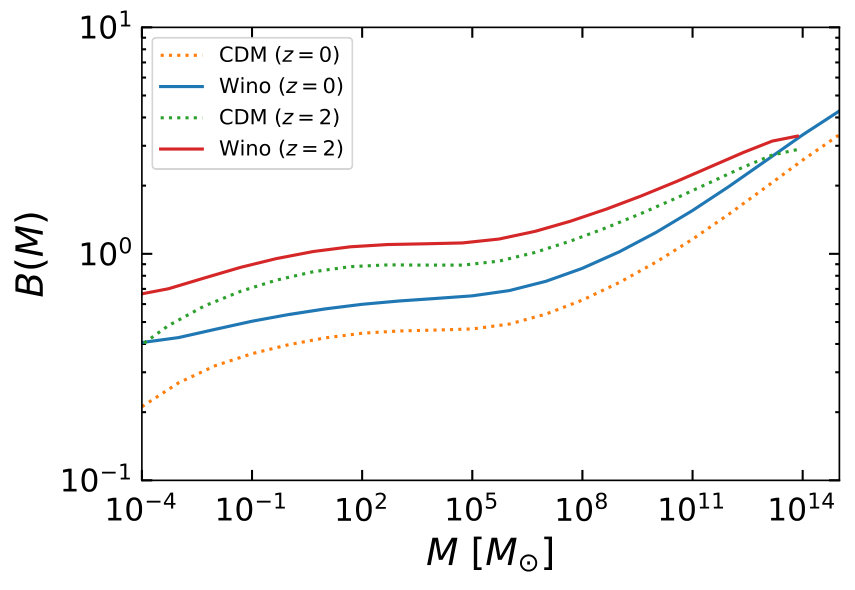 Figure 1
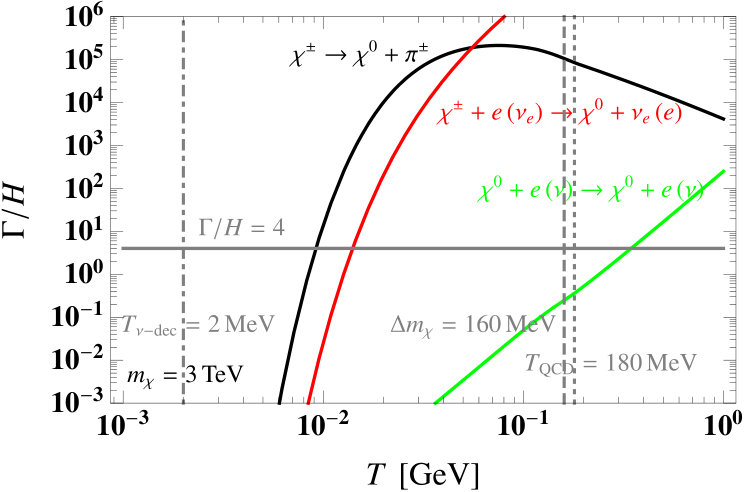 Figure 2
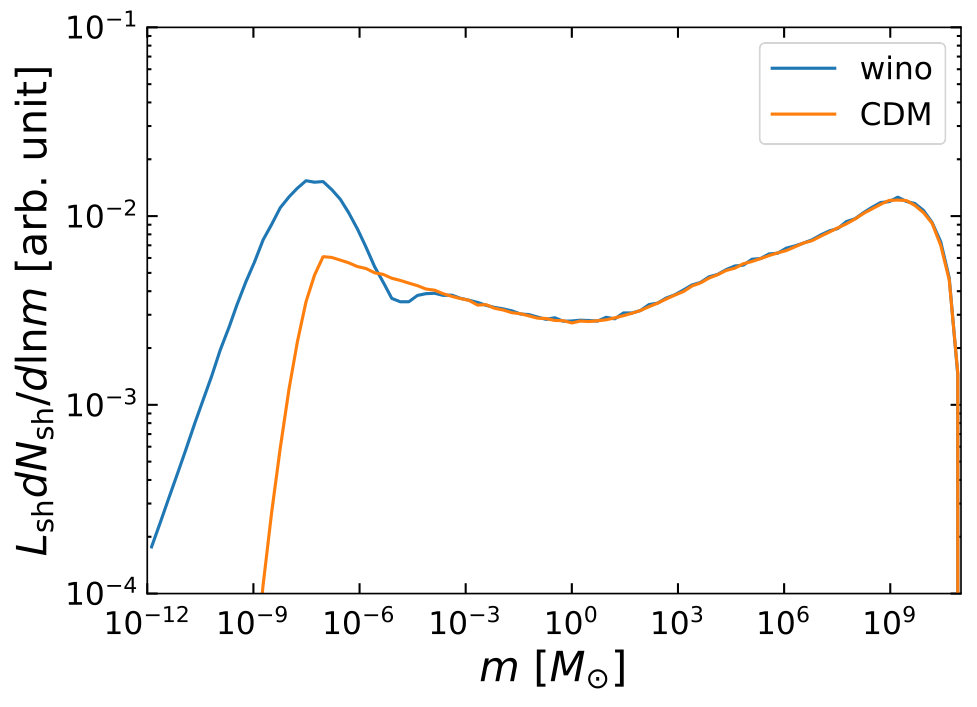 Figure 3
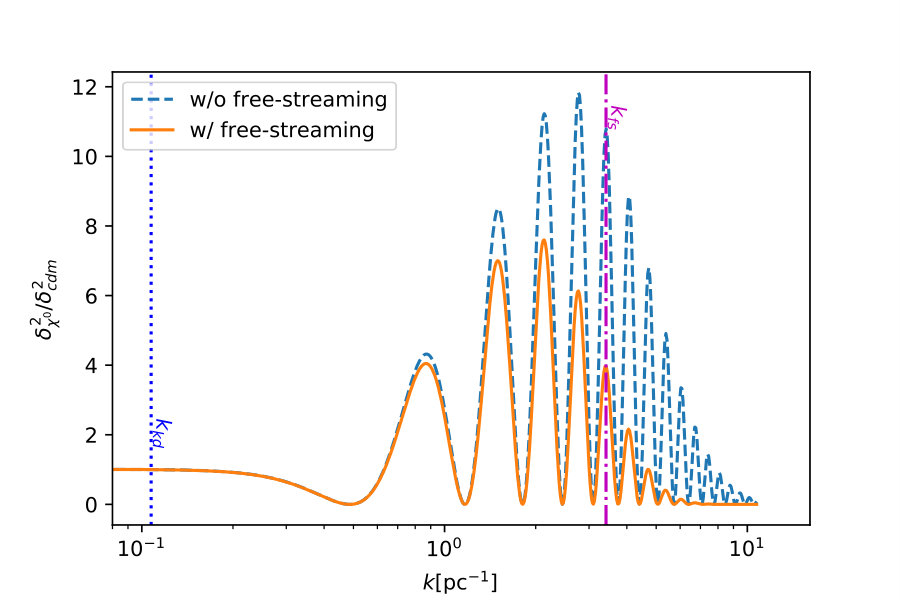 Figure 4
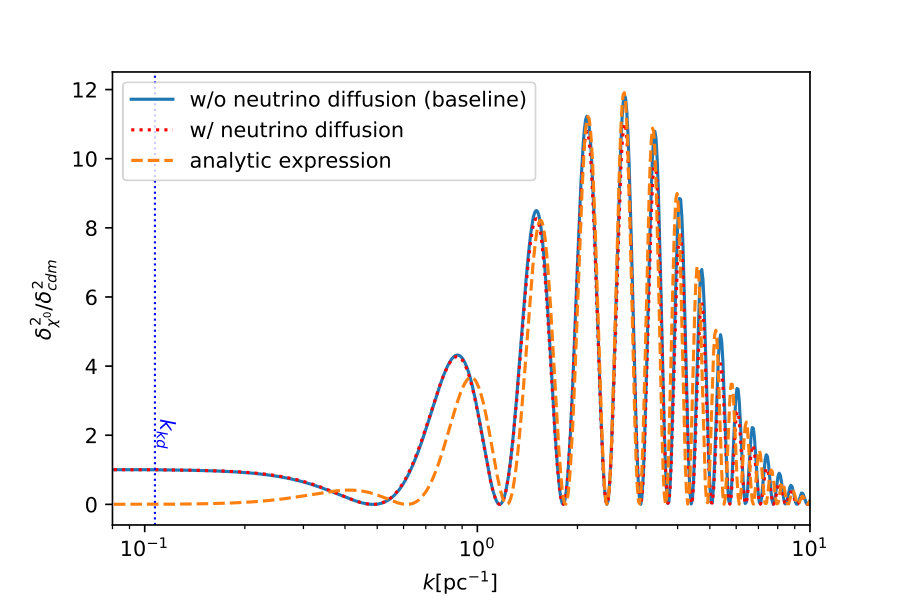 Figure 5
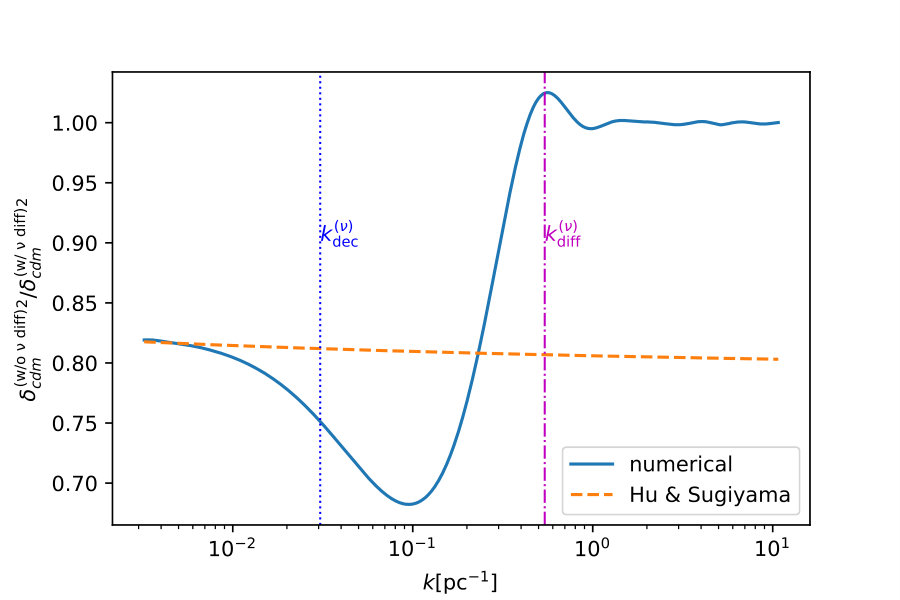 Figure 6
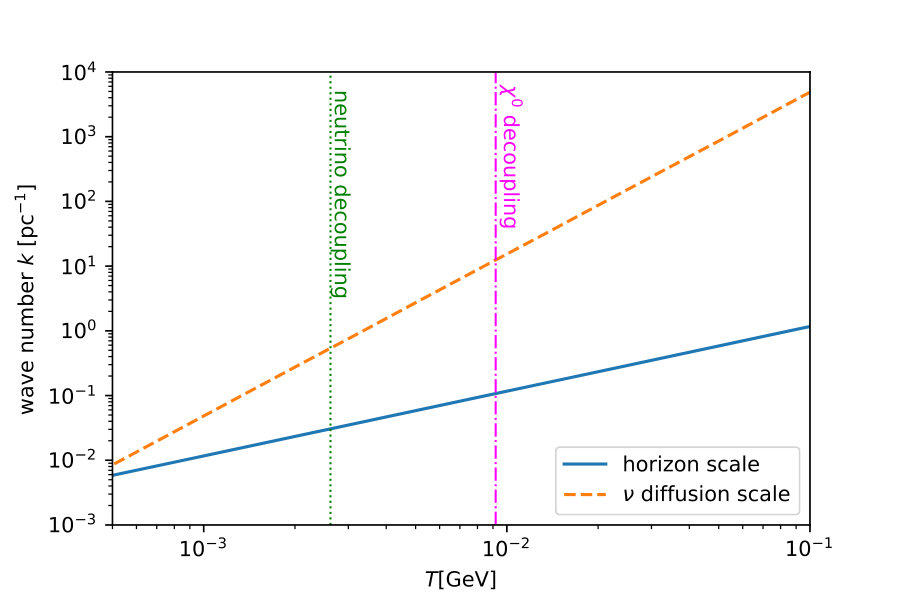 Figure 7
Peer Reviews
No public reviews on file for this paper yet. If you reviewed it on a platform where reviews are public (OpenReview, ICLR, NeurIPS, ICML), you can paste yours below so the community can read it here.
Videos
No videos yet. Explain this paper in a talk, walkthrough, or lecture? Add one.
Smallest Halos in Thermal Wino Dark Matter
Shin’ichiro Ando
GRAPPA Institute, University of Amsterdam, 1098 XH Amsterdam, Netherlands
Kavli Institute for the Physics and Mathematics of the Universe (WPI), University of Tokyo, Kashiwa, Chiba 277-8583, Japan
Ayuki Kamada
Center for Theoretical Physics of the Universe, Institute for Basic Science (IBS), Daejeon 34126, Korea
Toyokazu Sekiguchi
Research Center for the Early Universe (RESCEU), Graduate School of Science, The University of Tokyo, Tokyo 113-0033, Japan
Institute of Particle and Nuclear Studies, High Energy Accelerator Research Organization (KEK), Oho 1-1, Tsukuba 305-0801, Japan
Tomo Takahashi
Department of Physics, Saga University, Saga 840-8502, Japan
Abstract
(Mini) split supersymmetry explains the observed Higgs mass and evades stringent constraints, while keeping good features of TeV-scale supersymmetry other than the little hierarchy problem. Such scenarios naturally predict thermal wino dark matter whose mass is around . Its non-perturbatively enhanced annihilation is a promising target of indirect detection experiments. It is known that identifying the smallest halos is essential for reducing an uncertainty in interpreting indirect detection experiments. Despite its importance, the smallest halos of thermal wino dark matter have not been well understood and thus are investigated in this work. In particular, we remark on two aspects:
- the neutral wino is in kinetic equilibrium with primordial plasma predominantly through inelastic processes involving the slightly heavier charged wino; and 2) the resultant density contrast shows larger powers at dark acoustic oscillation peaks than in cold dark matter, which is known as an overshooting phenomenon. By taking them into account, we provide a rigorous estimate of the boost factor. Our result facilitates accurately pinning down thermal wino dark matter through vigorous efforts in indirect detection experiments.
pacs:
95.35.+d
††preprint: CTPU-PTC-19-01 RESCEU-1/19
I Introduction
The identity of dark matter and the origin of electroweak symmetry breaking are big mysteries of modern particle physics. A prominent possibility of addressing these two issues is supersymmetry. Supersymmetry controls a scalar potential by relating the scalar with a partner fermion. Electroweak symmetry breaking is insensitive to higher energy physics through the non-renormalization theorem and is driven predominantly by supersymmetry breaking. Furthermore, supersymmetry provides the lightest supersymmetric particle as a dark matter candidate.
In particular, (mini) split supersymmetry Arkani-Hamed and Dimopoulos (2005); Giudice and Romanino (2004); Wells (2005) (see also Refs. Ibe and Yanagida (2012); Ibe et al. (2012); Arvanitaki et al. (2013); Hall et al. (2013); Arkani-Hamed et al. (2012)), where scalar (other than the Higgs boson) masses are and fermion masses are , attracts growing interest. Heavy scalars and gravitino evade the constraints from collider searches, flavor physics, and cosmological problems, which TeV-scale supersymmetry suffers from, although supersymmetry breaking scale is mildly far from the electroweak scale (little hierarchy problem). Light gauginos drive a precise grand unification Hisano et al. (2013a, b) and also provide experimental windows on this framework. The anomaly mediation contribution Randall and Sundrum (1999); Giudice et al. (1998) is a promising dominant source of gaugino masses, where the wino is the lightest supersymmetric particle. In the following, we consider pure wino-like dark matter, where the higgsino is as heavy as scalars and the gauge interaction dominates the interaction of the wino. The neutral wino is accompanied by the slightly heavier charged wino . The mass difference is dominated by a loop contribution, Cheng et al. (1999); Feng et al. (1999); Gherghetta et al. (1999); Ibe et al. (2013a). The charged wino is thus long lived and leaves significant signals such as a disappearing track in projected high-energy colliders Low and Wang (2014); Cirelli et al. (2014); Grilli di Cortona (2015); Mahbubani et al. (2017); Fukuda et al. (2018); Han et al. (2018); Saito et al. (2019).
The wino thermal relic explains the observed dark matter abundance when Hisano et al. (2007); Hryczuk et al. (2011); Beneke et al. (2015, 2016); Mitridate et al. (2017). Its annihilation cross section is enhanced in the present Universe by a non-perturbative effect, known as Sommerfeld enhancement Hisano et al. (2003, 2004, 2005a, 2006). This is why thermal wino dark matter has been and is encouraged to be intensively searched in indirect detection experiments Ullio (2001); Chattopadhyay et al. (2007); Grajek et al. (2008); Bélanger et al. (2012); Cohen et al. (2013); Fan and Reece (2013); Hryczuk et al. (2014); Bhattacherjee et al. (2014); Cirelli et al. (2015); Shirasaki et al. (2016); Lefranc et al. (2016) as a clue to split supersymmetry. To lay siege to wino dark matter by accumulating all these efforts, reducing theoretical uncertainties is crucial. For example, infrared divergences and associated resummation for the wino annihilation cross section to electroweak gauge bosons have been studied intensively Hryczuk and Iengo (2012); Baumgart et al. (2015a); Ovanesyan et al. (2015); Baumgart et al. (2015b); Baumgart and Vaidya (2016); Baumgart et al. (2018a); Rinchiuso et al. (2018); Baumgart et al. (2018b).
This article is devoted to providing better knowledge on the smallest halos of thermal wino dark matter. It would play an essential role in reducing a theoretical uncertainty arising from enhancement of the annihilation rate through dark matter clumping Silk and Stebbins (1993); Bergström et al. (1999); Baltz et al. (2000); Bergström et al. (2001a). This enhancement is called a flux multiplier and is very significant especially in extragalactic gamma-ray searches Bergström et al. (2001b); Ullio et al. (2002); Taylor and Silk (2003); Elsässer and Mannheim (2005, 2004); Ando (2005); Ando and Komatsu (2006). Once a cross-correlation with large-scale structure of the Universe is taken as recently proposed Camera et al. (2013); Ando et al. (2014); Fornengo and Regis (2014); Shirasaki et al. (2014); Ando (2014); Fornengo et al. (2015); Camera et al. (2015); Xia et al. (2015), the clumping uncertainty is reduced to a boost factor. We are encouraged by its promising potential to pin down wino dark matter Shirasaki et al. (2016), since the cross-correlation with large-scale structure will be statistically improved in near future wide-field surveys.
There have been attempts to determine the smallest halos in supersymmetric dark matter Gondolo et al. (2004); Profumo et al. (2006); Bringmann and Hofmann (2007); Bringmann (2009); Cornell and Profumo (2012); Bringmann et al. (2018) and even particularly in wino dark matter Diamanti et al. (2015). However, previous literatures did not appreciate the fact that what keeps wino dark matter in kinetic equilibrium with primordial plasma is not elastic processes but inelastic ones unlike typical bino dark matter. Indeed it is known that the wino-nucleon scattering cross section is suppressed in the decoupling limit of the higgsino, while loop contributions barely keep the cross section just above the neutrino background in direct detection experiments Hisano et al. (2005b, 2010a, 2010b, 2011, 2013c); Cheung et al. (2015); Hisano et al. (2015). This subtlety on wino dark matter kinetic decoupling has been studied for the temperature evolution in Ref. Arcadi and Ullio (2011), but not yet for the evolution of the primordial density contrast, which determines dark matter clumping in the present Universe.
As we see, the fact that wino dark matter is kinetically equilibrated through an inelastic process results in an enhanced oscillation of the matter power spectrum, which originates from “overshooting” Kamada et al. (2017); Sarkar et al. (2017); Kamada and Takahashi (2018); namely, dark acoustic oscillation peaks have a larger power than the density contrast of cold dark matter. This overshooting phenomenon was discovered for the first time in the study of electromagnetically charged dark matter in Ref. Kamada et al. (2017) and confirmed by Ref. Sarkar et al. (2017). Its underlying physics was clarified in Ref. Kamada and Takahashi (2018). Our present work demonstrates that overshooting of the matter power spectrum can be seen broadly in minimal dark matter Cirelli et al. (2006, 2007), although we focus on wino dark matter.
II Relevant Processes
Elastic scattering of the neutral wino in late-time thermal bath, long after the wino freezes out, is suppressed in the decoupling limit of the higgsino Hisano et al. (2001); Ibe et al. (2013b). The leading contribution arises from a one-loop diagram with -boson exchange Ibe et al. (2013b). The collision term for the neutral wino phase space distribution can be approximated by the Fokker-Planck form Binder et al. (2016),
[TABLE]
with the three momentum of the wino , the temperature , and the bulk motion of the thermal bath. is neutral wino internal degrees of freedom. The momentum transfer rate is given by
[TABLE]
with the Fermi constant , the -boson mass , and
[TABLE]
with . As we see, this elastic process is subdominant when compared to inelastic processes in keeping the neutral wino in kinetic equilibrium with the heat bath.
A key observation is that the charged wino is in kinetic equilibrium with the heat bath through efficient electromagnetic interactions; and thus its phase space distribution follows
[TABLE]
where is charged wino internal degrees of freedom. Resultantly, inelastic processes between the neutral wino and charged wino can keep the neutral wino in kinetic equilibrium with the heat bath.
Furthermore, a kick momentum through the mass deficit in an inelastic process is negligible when compared to a typical wino momentum until a very late time, , since the wino mass difference is much smaller than the wino mass . The collision term can be approximated by a pure conversion from Arcadi and Ullio (2011),
[TABLE]
There are two contributions: decay,
[TABLE]
where is the pion decay constant, is the charged pion mass, and is the first generation diagonal component of the CKM matrix; and inelastic scattering,
[TABLE]
We remark that the inelastic reaction rate for the charged wino, , is much larger than the Hubble expansion rate . Resultantly, the charged wino is in chemical equilibrium with the neutral wino. Wino number densities,
[TABLE]
satisfy
[TABLE]
The last equality is valid when . Here a dot denotes a derivative with respect to the conformal time. We use the synchronous gauge following the notation of Ref. Ma and Bertschinger (1995),
[TABLE]
with being the metric perturbation in the Fourier space and decomposed as
[TABLE]
Until the next section, we consider only homogeneous and isotropic components.
The evolution of the neutral wino temperature,
[TABLE]
is governed by
[TABLE]
Figure 1 compares the elastic and inelastic reaction rates in this equation. As one can see, the elastic scattering decouples earlier than the inelastic processes. Thus we neglect the elastic scattering in the following. The inelastic reaction rates decrease rapidly with decreasing temperature below due to the Boltzmann suppression, and drops below the Hubble expansion rate around .
Until then, the neutral wino is in kinetic equilibrium with primordial plasma and thus is involved in an acoustic oscillation driven by photon pressure, called a dark acoustic oscillation. Naïvely, growth of the density contrast is suppressed below the horizon scale corresponding to kinetic decoupling. We define the epoch of kinetic decoupling with as done in Ref. Bertschinger (2006). One could identify as a kinetic decoupling temperature, at which the horizon scale is , and estimate the smallest protohalo mass as
[TABLE]
where counts the effective massless degrees of freedom. Here we replace the present total matter mass density in Ref. Bertschinger (2006) by the present dark matter mass density since the baryon does not collapse into such a small halo even with cold dark matter due to gas pressure. Our naïve estimate is already different from an estimate in the previous literature Diamanti et al. (2015) only considering elastic processes, where and . However, as we see in the next section, the true evolution of the density contrast is more complicated than naïvely expected due to the overshooting phenomenon.
III Evolution of Density Perturbations
We remark again that the charged wino is in chemical equilibrium with the neutral wino so that the evolution of wino (dimensionless) density perturbations,
[TABLE]
satisfies
[TABLE]
where and are (dimensionless) temperature perturbation and velocity potential of the thermal bath, respectively. The last equality is valid when .
Meanwhile the evolution of velocity potential of the neutral wino,
[TABLE]
is governed by
[TABLE]
Here we ignore sound speed of the neutral wino. We take into account the sound speed or generically free-streaming effect by multiplying the resultant by
[TABLE]
with
[TABLE]
and , as suggested in Ref. Bertschinger (2006). The second equality is valid long after matter radiation equality and is the conformal time at matter radiation equality.
One obtains a closed set of equations by combining the above wino equations with the radiation equations and the Einstein equations Ma and Bertschinger (1995). We start our numerical integration of when the mode is in superhorizon and the neutral wino tightly couples with radiation. We stop it when the neutral wino kinetically decouples and starts to logarithmically grow in deep subhorizon as . Figure 2 shows the resultant wino dark matter power spectrum at normalized to the cold dark matter one. One can see a dark acoustic oscillation below the horizon scale at kinetic decoupling as expected. A striking feature is that peak powers of the dark acoustic oscillation are times larger than the cold dark matter powers. This is the overshooting phenomenon, which takes place when kinetic decoupling proceeds suddenly, at Kamada and Takahashi (2018).
As is well known in the baryon acoustic oscillation Hu and Sugiyama (1995a, b, 1996), the oscillation amplitude of an acoustic wave is constant and undamped as long as radiation dominates the entropy of primordial plasma. Damping of a dark acoustic oscillation arises from intermittent collisions around kinetic decoupling, which mixes up different oscillation phases and averages out the oscillation. This is why it is sometimes called Landau damping in the literature. If kinetic decoupling proceeds instantaneously, there is no damping mechanism other than free-streaming of a dark matter particle or a particle with which a dark matter particle scatters (collisionless damping or Silk damping Silk (1968), respectively). Reference Kamada and Takahashi (2018) argues that in such a case, not only is the dark acoustic oscillation undamped, but its peak powers also exceed cold dark matter powers. This is because a supersonic motion of dark matter fluid, which is a remnant of the dark acoustic oscillation, further compresses dark matter fluid after kinetic decoupling.
In Fig. 2, the wino matter power spectrum multiplied by the free-streaming factor is also shown. One sees that damping of dark acoustic oscillation peaks is determined practically by free-streaming, for . Its cutoff mass is estimated by analogy to the Jeans mass as Green et al. (2005)
[TABLE]
We note that fudge factors, and , are calibrated in bino dark matter Bertschinger (2006). These values could change only slightly in our wino dark matter case. One needs to follow a full Boltzmann hierarchy to identify the precise values, but it is beyond the scope of this work. One also needs to take into account quantum chromodynamics phase transition, neutrino decoupling, and annihilation. We estimate that they may change our result up to 10%. (This estimation is presented in Appendix A.)
IV Impacts on Indirect Detections
To demonstrate the impact of the matter power spectrum in wino dark matter on indirect detection experiments, we compute the annihilation boost factor , which is defined for a given field halo mass as
[TABLE]
where is the total luminosity and is the luminosity of the smooth component. is a sum of subhalo contributions Strigari et al. (2007); Kuhlen et al. (2008); Ando et al. (2019),
[TABLE]
with being the subhalo mass function. To compute Eq. (26), one needs to know as well as the density profile of subhalos. We follow the method of Ref. Hiroshima et al. (2018), which analytically describes how these quantities evolve. They successfully reproduce results of N-body simulations, in particular, by taking into account tidal mass stripping that subhalos undergo inside their hosts. (A brief summary of the method is presented in Appendix B.)
Figure 3 shows the subhalo boost factor of dark matter annihilation as a function of the mass of host halos . It is manifested that, in the case of wino dark matter, the substructure boost factor is significantly enhanced when compared to the case of the naïve model featuring a sudden cutoff at (which we refer to as CDM). We find that the effect is as large as 30% for relatively large halos (galaxies, clusters, etc.), even though this affects only subhalos with very small masses, .
V Concluding Remarks
Thermal wino dark matter is a promising clue of split supersymmetry, which can be considered as one of the most attractive new physics after the Higgs discovery. A combination of indirect detection experiments has the potential to rigorously explore wino dark matter in the near future. To this end, astrophysical uncertainties should be understood in more detail. In this work, we have provided a rigorous estimate of the boost factor by taking into account two overlooked aspects of the wino dark matter density contrast. First, the neutral wino is in kinetic equilibrium with primordial plasma not through elastic processes, but through inelastic processes involving the charged wino. Resultantly, kinetic decoupling temperature is around , 2 orders of magnitude smaller than expected in the previous literature. Second, a dark acoustic oscillation of the neutral wino shows the overshooting phenomenon; namely, its peak powers of dark acoustic oscillations are larger than the cold dark matter case. It follows that free-streaming after kinetic decoupling, rather than the dark acoustic oscillation, determines the smallest halos of wino dark matter. The implications of our result are not limited in indirect detection experiments. Potential investigation of the small-size halo abundance, e.g., in a pulsar timing array Ishiyama et al. (2010); Kashiyama and Oguri (2018), has been proposed. Further studies including a set of dedicated -body simulations are warranted.
Acknowledgements.
A. K. thanks Satoshi Shirai, Masato Shirasaki, and Naoki Yoshida for encouraging A. K. to work on this project and providing valuable comments on the manuscript. T. S. thanks Piero Ullio for discussion. This work is supported by Institute for Basic Science under the project code, IBS-R018-D1 (A. K.), JSPS KAKENHI Grant Numbers JP17H04836 (S. A.), 15K05084 (T. T.), 17H01131 (T. T.), JP15H02082 (T. S.), 18H04339 (T. S.), 18K03640 (T. S.), and MEXT KAKENHI Grant Number 15H05888 (T. T.), JP18H04340 (S. A.), JP18H04578 (S. A.).
Appendix A Evolution of Density Perturbations
First, we summarize 1) the radiation equations and 2) the Einstein equations, which are followed simultaneously with the wino equations [Eqs. (18) and (III)].
- Before neutrino decoupling around , one can reliably use a perfect fluid description of primordial plasma,
[TABLE]
where , , and are density perturbation, velocity potential, and anisotropic stress of radiation, respectively. Note that and .
- Einstein equations during radiation domination are given by Ma and Bertschinger (1995)
[TABLE]
where and are the equation of state and the sound speed of radiation, respectively.
Second, we discuss the initial conditions. In the tight-coupling limit, adiabatic perturbations are given by
[TABLE]
where and is the initial amplitude of . This set of initial conditions fixes the residual gauge degrees of freedom in the synchronous gauge Kamada et al. (2017). For comparison, cold dark matter () evolves as
[TABLE]
with the cosine integral Ci.
Third, we compare our numerically obtained power spectrum ratio (Fig. 2 in the main text) with an analytic result. References Kamada and Takahashi (2018) developed an analytic approach to the evolution of the density perturbations by assuming . One finds that the resultant power spectrum ratio is approximated by
[TABLE]
for and . All the fudge factors, , , and , are unity in the case of . For our wino dark matter, we numerically find at . The above expression matches to the numerical result, when the fudge factors are , , and , as in Fig. 4.
Fourth, we discuss the impact of neutrino diffusion on the resultant power spectrum ratio. The neutrino starts to free-stream around . One needs to derive and follow the neutrino full Boltzmann hierarchy with collision terms to take into account diffusion consistently. Since it is beyond the scope of this work, here we take a practical approach instead. We introduce the collision term by hand as
[TABLE]
and
[TABLE]
where we followed the notation of Ref. Ma and Bertschinger (1995) except for the collision terms. Here, is the contribution of the neutrino collision term to the multipole . We approximate by
[TABLE]
where and are fudge factors. The number densities of the electron and neutrino are , counting 2 degrees of freedom for each. We take both and to be unity in our numerical analysis, so that is independent of . is the photon+electron fraction of radiation and
[TABLE]
is the neutrino fraction of radiation. We set in our numerical analysis.
Meanwhile, in the wino equations [Eqs. (18) and (III)], we set and . In the Einstein equations [Eqs. (30)–(A)], we set , , and . Figure 4 compares the power spectrum ratios at calculated with and without neutrino diffusion. We find that neutrino diffusion affects the ratios only slightly.
Last, we comment on a caveat when one evaluates the present wino power spectrum. We follow the evolution of the wino or cold dark matter density contrasts until the neutral wino kinetically decouples and starts to logarithmically grow in deep subhorizon as and extrapolate the growth till the matter radiation equality . In the calculation of the boost factor, we simply multiply the power spectrum ratio at to the present matter power spectrum in cold dark matter that is generated by a public code CAMB Lewis et al. (2000). We remark that a public code like CAMB or CLASS Lesgourgues (2011) takes into account only physics around last scattering. Thus the above procedure ignores the effects of quantum chromodynamics (QCD), neutrino decoupling, and annihilation. To be consistent, we should use just the free-streaming neutrino in cold dark matter but also take into account these effects in wino dark matter, when calculating . However, it is beyond the scope of this work. In the following, instead, we estimate the impacts of these effects.
QCD crossover takes place around Watanabe and Komatsu (2006); Saikawa and Shirai (2018) ( Aoki et al. (2009); Bazavov et al. (2012)). It could change, for example, the equation of state of primordial plasma up to 30% and thus the evolution of the density contrast. Our dark matter power spectrum would suffer from this uncertainty above , which is comparable with . If QCD phase transition is first order, the evolution of the density contrast would be further amplified Schmid et al. (1999).
Although the power spectrum ratios do not change with and without neutrino decoupling (see Fig. 4), the power spectrum itself is affected by neutrino decoupling even in cold dark matter. In addition, annihilation below changes the equation of state of primordial plasma up to 10%, which results in up to 10% change in the density contrast with Bertschinger (2006).
Even large-scale modes, which are superhorizon at the time of neutrino decoupling, get enhanced by neutrino free-streaming when compared to the case of the interacting (perfect fluid) neutrino Hu and Sugiyama (1996). We define the neutrino decoupling time as the time that satisfies in a similar manner to the kinetic decoupling of wino dark matter. The diffusion scale can be estimated as Jeong et al. (2014)
[TABLE]
where is the conformal mean free time of the neutrino. Figure 5 shows the evolution of the diffusion and horizon scales as function of the temperature. To see the impact of free-streaming explicitly, in Fig. 6 we show the ratio of the cold dark matter power spectra at with and without neutrino diffusion and free-streaming. The change in the power spectrum is up to 15%. For reference, the horizon scale and the neutrino diffusion scale at the neutrino decoupling are also shown. One can see a transition in the ratio, which takes place at . Above this neutrino diffusion hardly affects the cold dark matter perturbations. Below this the ratio converges to the result of Ref. Hu and Sugiyama (1996) that estimates the effect of neutrino free-streaming on cold dark matter perturbations.
Appendix B Calculation of Boost Factor
We briefly summarize how we estimate the boost factor according to Ref. Hiroshima et al. (2018). To compute Eq. (26) in the main text, one is required to know the mass function and inner density profile of subhalos, which can be achieved by tracing how subhalos form and evolve. Evolution of subhalos can be divided into two stages with accretion onto host halos as a border.
Before accretion, subhalos form and evolve as field halos. With their evolution well described by the extended Press-Schechter formalism, their accretion rate onto a progenitor of the host can be also given accordingly. Denoting the subhalo mass and the redshift at accretion respectively as and , the accretion rate we adopt is Yang et al. (2011)
[TABLE]
with being the (mean) mass of a host progenitor (that eventually evolves into a mass at ) at . In Eq. (B), is the variance of overdensity smoothed at a scale corresponding to and is the critical overdensity at . Similarly, and , which gives the boundary condition for the host halo evolution. The definition of in Eq. (B) is given shortly below.
For the mass evolution of the host, we adopt the fitting formula given in Ref. Correa et al. (2015a). The probability distribution of the host mass approximately follows the log-normal distribution with a logarithmic dispersion of
[TABLE]
The mean value of is given by
[TABLE]
The definition of in Eq. (B) is given as
[TABLE]
where , , , and is defined as at when .
In addition, as born as field halos, the inner density profile of subhalos at the moment of accretion is given by the Navarro-Frenk-White (NFW) one Navarro et al. (1996, 1997),
[TABLE]
The concentration parameter of subhalos is given by , where is their virial radius. We assume that the concentration parameter obeys the log-normal distribution with the standard deviation of Ishiyama et al. (2013). For the mean value of the halo concentration, we adopt the fitting formula in Ref. Correa et al. (2015b). In terms of (see Ref. Hu and Kravtsov (2003) for conversion), with being the radius within which the averaged mass density is 200 times as large as the homogeneous one, the concentration-mass relation is given as
[TABLE]
for and
[TABLE]
for . In contrast to the concentration-mass relation extrapolated from galaxy- or cluster-sized halos with a single power law (for instance, Ref. Neto et al. (2007)), Ref. Correa et al. (2015b) gives one flattened towards smaller masses.
Once accreted onto host halos, subhalos undergo tidal mass splitting as they orbit in the gravitational field of hosts. The mass-loss rate we adopt is Hiroshima et al. (2018); Ando et al. (2019)
[TABLE]
where
[TABLE]
is the dynamical time scale associated to the host halo Jiang and van den Bosch (2016), whose mean density is , and the coefficients and are given as
[TABLE]
is the gravitational constant. The mass-loss rate is integrated to give mass evolution of subhalos after accretion. Given mass evolution, subhalo mass function can be obtained from the initial condition given by the accretion rate Eq. (B). In addition, we assume that the subhalo profile is given as the NFW one truncated at ,
[TABLE]
We assume that and evolve according to Ref. Peñarrubia et al. (2010) in the course of tidal stripping, and then obtain evolution of from the mass-conservation condition Hiroshima et al. (2018); Ando et al. (2019).
Provided the above prescription for the evolution of subhalos, one can solve Eq. (26) in the main text numerically. Specifically, we compute
[TABLE]
where is the probability distribution of the , which is given above. In the above expression, the Heaviside function indicates that subhalos whose truncation radius is smaller than 0.77 times do not contribute to the boost factor, since those subhalos are supposed to be totally disrupted according to Ref. Hayashi et al. (2003). Omitting substructures inside subhalos (i.e., subsubhalos), the luminosity of each subhalo is proportional to a volume integral of the density squared. The profile in Eq. (75) yields
[TABLE]
which is specified once , , and the concentration parameter at the accretion are given. It is rather straightforward to incorporate effects of subsubhalos (and even their substructures) Hiroshima et al. (2018); Ando et al. (2019). Meanwhile, the luminosity of the host’s smooth component can be obtained by replacing with the concentration parameter of the host in Eq. (77).
Figure 7 shows the integrand of Eq. (26) in the main text, , for a host halo with the mass of . It is manifested that the subhalo contributions to the boost factor are significantly enhanced around and suppressed at smaller scales. This is exactly what we expect from the matter power spectrum in Fig. 2 in the main text, which exhibits boosted acoustic peaks and suppressed power within the free-streaming length. Even though this affects only subhalos with very small masses, , we find that the overall boost factor (after integrating over the subhalo masses) becomes larger than that of a naïve model with a sudden cutoff at (which we refer to as CDM) by about 30%.
The reference list from the paper itself. Each links out to its DOI / PubMed record.
- 1Arkani-Hamed and Dimopoulos (2005) N. Arkani-Hamed and S. Dimopoulos, JHEP 06 , 073 (2005), eprint hep-th/0405159.
- 2Giudice and Romanino (2004) G. F. Giudice and A. Romanino, Nucl. Phys. B 699 , 65 (2004), [Erratum: Nucl. Phys.B 706,487(2005)], eprint hep-ph/0406088.
- 3Wells (2005) J. D. Wells, Phys. Rev. D 71 , 015013 (2005), eprint hep-ph/0411041.
- 4Ibe and Yanagida (2012) M. Ibe and T. T. Yanagida, Phys. Lett. B 709 , 374 (2012), eprint 1112.2462.
- 5Ibe et al. (2012) M. Ibe, S. Matsumoto, and T. T. Yanagida, Phys. Rev. D 85 , 095011 (2012), eprint 1202.2253.
- 6Arvanitaki et al. (2013) A. Arvanitaki, N. Craig, S. Dimopoulos, and G. Villadoro, JHEP 02 , 126 (2013), eprint 1210.0555.
- 7Hall et al. (2013) L. J. Hall, Y. Nomura, and S. Shirai, JHEP 01 , 036 (2013), eprint 1210.2395.
- 8Arkani-Hamed et al. (2012) N. Arkani-Hamed, A. Gupta, D. E. Kaplan, N. Weiner, and T. Zorawski (2012), eprint 1212.6971.