Existence of pseudo-heavy fibers of moment maps
Morimichi Kawasaki, Ryuma Orita

TL;DR
This paper introduces pseudo-heaviness in symplectic geometry, proves the existence of pseudo-heavy fibers of moment maps, and extends results on non-displaceable fibers, including applications to generalized coupled angular momenta.
Contribution
It generalizes Entov and Polterovich's theorem by establishing the existence of pseudo-heavy fibers, providing a partial answer to their open problem.
Findings
Existence of pseudo-heavy fibers in symplectic manifolds
Generalization of non-displaceable fiber results
Multiple non-displaceable fibers in specific systems
Abstract
In the present paper, we introduce the notion of pseudo-heaviness of closed subsets of closed symplectic manifolds and prove the existence of pseudo-heavy fibers of moment maps. In particular, we generalize Entov and Polterovich's theorem, which ensures the existence of non-displaceable fibers, and provide a partial answer to a problem posed by them, which asks the existence of heavy fibers. Moreover, we apply our results to prove that some generalized coupled angular momenta have more than two non-displaceable fibers.
Click any figure to enlarge with its caption.
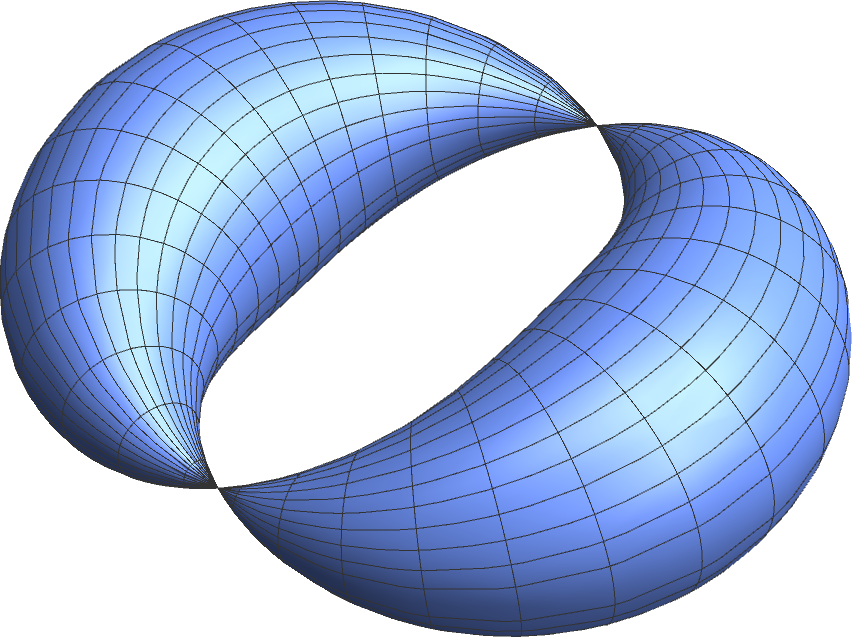 Figure 1
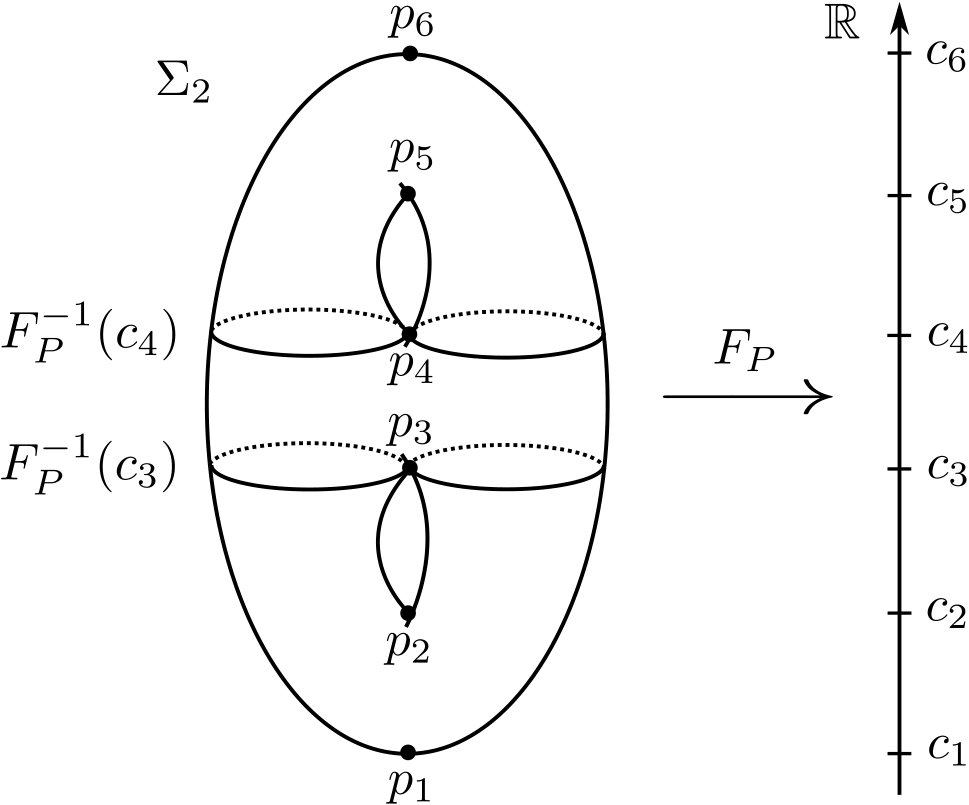 Figure 1
Peer Reviews
No public reviews on file for this paper yet. If you reviewed it on a platform where reviews are public (OpenReview, ICLR, NeurIPS, ICML), you can paste yours below so the community can read it here.
Videos
No videos yet. Explain this paper in a talk, walkthrough, or lecture? Add one.
Existence of pseudoheavy fibers of moment maps
Morimichi Kawasaki
Research Institute for Mathematical Sciences, Kyoto University, Kyoto 606-8502, Japan
and
Ryuma Orita
Department of Mathematical Sciences, Tokyo Metropolitan University, Tokyo 192-0397, Japan
[email protected] https://ryuma-orita.github.io/
(Date: January 31, Reiwa 2)
Abstract.
In the present paper, we introduce the notion of pseudoheaviness of closed subsets of closed symplectic manifolds and prove the existence of pseudoheavy fibers of moment maps. In particular, we generalize Entov and Polterovich’s theorem, which ensures the existence of non-displaceable fibers. As its application, we provide a partial answer to a problem posed by them, which asks the existence of heavy fibers. Moreover, we obtain a family of singular Lagrangian submanifolds in with strange rigidities.
Key words and phrases:
Symplectic manifolds; the groups of Hamiltonian diffeomorphisms; moment maps; symplectic quasi-states; heavy subsets.
2010 Mathematics Subject Classification:
Primary 57R17, 53D12; Secondary 53D20, 53D40, 53D45
The first named author has been supported by IBS-R003-D1. This work has been supported by JSPS KAKENHI Grant Numbers JP18J00765, JP18J00335.
Contents
1. Introduction
1.1. Backgrounds
Let be a closed symplectic manifold. Let (resp. ) denote the set of continuous (resp. smooth) functions on . Given a finite-dimensional Poisson-commutative subspace of , the moment map is given by for and .
A subset of is called displaceable from a subset if there exists a Hamiltonian such that , where is the Hamiltonian diffeomorphism generated by (i.e., the time-1 map of the isotopy associated with the Hamiltonian vector field defined by the formula where for ) and is the topological closure of . Otherwise, is called non-displaceable from .
Since Gromov’s famous work [13], it has been an important problem in symplectic geometry to find non-displaceable subsets. Biran, Entov, and Polterovich [4] proved that the standard moment map on the complex projective space has only one non-displaceable fiber using the Calabi quasi-morphism constructed in [8]. Entov and Polterovich [9] generalized that argument and proved the following theorem.
Theorem 1.1** ([9, Theorem 2.1], see also [23, Theorem 6.1.8]).**
Let be a closed symplectic manifold and a finite-dimensional Poisson-commutative subspace of . Then, there exists such that is non-displaceable from itself.
To prove Theorem 1.1, Entov and Polterovich [9] introduced the concept of partial symplectic quasi-state see Definition 2.1. In [10], they introduced the notion of heaviness of closed subsets in terms of partial symplectic quasi-states.
Definition 1.2** ([10, Definition 1.3]).**
Let be a partial symplectic quasi-state on . A closed subset of is said to be -heavy (resp. -superheavy) if
[TABLE]
for any .
Here we collect properties of (super)heavy subsets.
Theorem 1.3** ([10, Theorem 1.4]).**
Let be a partial symplectic quasi-state on .
- (1)
Every -superheavy subset is -heavy. 2. (2)
Every -heavy subset is non-displaceable from itself. 3. (3)
Every -heavy subset is non-displaceable from every -superheavy subset. In particular, every -heavy subset intersects every -superheavy subset.
Entov and Polterovich posed the following problem relating to Theorem 1.1.
Problem 1.4** ([10, Section 1.8.2], see also [7, Question 4.9]).**
Let be a closed symplectic manifold and a finite-dimensional Poisson-commutative subspace of . Let be a partial symplectic quasi-state on made from the Oh–Schwarz spectral invariant see [27, 21]. Then, does there exist such that is -heavy?
1.2. Main results
Let be a closed symplectic manifold. For an open subset of , let be the subset of consisting of all functions supported in . We introduce the notion of pseudoheaviness of closed subsets.
Definition 1.5**.**
Let be a partial symplectic quasi-state on . A closed subset of is said to be -pseudoheavy if for any open neighborhood of there exists a function such that .
By definition, every -heavy subset is -pseudoheavy. The following proposition tells us the reason why we call such subsets pseudoheavy (compare Theorem 1.3).
Proposition 1.6** ([17]).**
Let be a partial symplectic quasi-state on . If a closed subset of is -pseudoheavy, then is non-displaceable from itself and from every -superheavy subset.
We prove Proposition 1.6 in Section 2. Our main theorem is the following one which asserts the existence of a pseudoheavy fiber instead of heavy one.
Theorem 1.7** (Main Theorem).**
Let be a closed symplectic manifold and a finite-dimensional Poisson-commutative subspace of . Let be a partial symplectic quasi-state on . Then, there exists such that is -pseudoheavy.
As written in Proposition 1.6, any -pseudoheavy subset is non-displaceable from any -superheavy subset. Thus, we can see Theorem 1.7 as a relative version of Theorem 1.1. For another relative version of Theorem 1.1, see [16].
In Section 3, we will provide examples of closed subsets which are pseudoheavy, but not heavy. Moreover, we will point out that the positive answer to Problem 1.4 does not hold for a general partial symplectic quasi-state.
In Section 4, we introduce a notion of simplicity of partial symplectic quasi-states (Definition 4.2) and prove the following proposition.
Proposition 1.8**.**
Let be a simple partial symplectic quasi-state on . Then, every -pseudoheavy subset is -heavy.
As an application of Theorem 1.7 and Proposition 1.8, we have the following corollary which gives a partial answer to Problem 1.4.
Corollary 1.9**.**
Let be a closed symplectic manifold and a finite-dimensional Poisson-commutative subspace of . Let be a simple partial symplectic quasi-state on . Then, there exists such that is -heavy.
For a closed symplectic manifold , let denote the partial symplectic quasi-state on made from the Oh–Schwarz spectral invariant with respect to the fundamental class of the quantum homology of . Let be a closed Riemann surface with the symplectic form . Then, it is known that for any function (see [9] for genus zero case, [15] for positive genus case). Under this condition, one can prove that the partial symplectic quasi-state is simple. Among experts, it is an open conjecture for many years that every symplectic quasi-state (see [9] for the definition) made from the Oh–Schwarz spectral invariant is always simple. However, it is known to be difficult to prove that these symplectic quasi-states are actually simple when the dimension of is greater than two.
In Section 5, we obtain some singular Lagrangian submanifolds in with strange rigidities. To prove that strange rigidities, we use Theorem 2.6 which is the key theorem for proving Theorem 1.7. To be more precise, we define functions by
[TABLE]
for each , respectively. Then, (see Section 5) and the integrable system is called (a special case of) the coupled angular momenta [26, 19, 14]. We set . Given , we set the Lagrangian submanifold of (see Section 5 for the definition of and more details). Let be a topological space obtained by pinching two disjoint meridians in the 2-torus as shown in Figure 1. Then, we have the following result.
Theorem 1.10**.**
There exists a family of closed subsets of such that for any
- (1)
* is homeomorphic to if ,* 2. (2)
* is non-displaceable from and from in for any and any ,* 3. (3)
* is displaceable from in for any .*
We show Theorem 1.10 as a corollary of Theorem 5.5 in Section 5.2. In order to prove Theorem 1.10, we use the following partial symplectic quasi-states. For , Entov and Polterovich [10] constructed a partial symplectic quasi-state on such that the Lagrangian sphere is -superheavy. For every , Fukaya, Oh, Ohta, and Ono [11] constructed a partial symplectic quasi-state on such that the Lagrangian torus is -superheavy (see also [6, 18] for the case ).
Moreover, we deal with generalized coupled angular momenta (see [14, 12, 22]) in Section 5. We prove that some of them have at least two non-displaceable fibers (Corollary 5.1) using Proposition 1.6 and Theorem 1.7. Furthermore, we prove that another generalized coupled angular momentum has only one non-displaceable fiber (Theorem 5.2).
2. Proof of Theorem 1.7
In this section, we provide the definition of partial symplectic quasi-state and proofs of Proposition 1.6 and Theorem 1.7. Let be a closed symplectic manifold. Let denote the group of Hamiltonian diffeomorphisms of .
2.1. Partial symplectic quasi-states and pseudoheaviness
Definition 2.1**.**
A partial symplectic quasi-state on is a functional satisfying the following conditions.
**Normalization: **
for any constant function .
**Stability: **
For any
[TABLE]
In particular, Monotonicity holds: if .
**Semi-homogeneity: **
for any and any .
**Hamiltonian Invariance: **
for any and any .
**Vanishing: **
for any whose support is displaceable from itself.
**Quasi-subadditivity: **
for any satisfying .
Remark 2.2*.*
In this paper, we adopted the properties listed in [23, Section 4.5] as the definition of partial symplectic quasi-state. There are different definitions of partial symplectic quasi-state as in [9, Section 4] and [11, Definition 13.3]. One can confirm that our definition is more general than the latter. In addition, we note that the quasi-subadditivity is called “the triangle inequality” in [10, Theorem 3.6] and [11, Definition 13.3].
First we prove Proposition 1.6.
Proof of Proposition 1.6.
Let be a -pseudoheavy subset of . Assume, on the contrary, that is displaceable either from itself or from a -superheavy subset . Then, there exists an open neighborhood of that is displaceable either from itself or from . If is displaceable from itself, then by the vanishing of , for any . This contradicts the -pseudoheaviness of .
If is displaceable from , then we can choose such that . Since is -superheavy, for any F\in\mathcal{H}\bigl{(}\phi(U)\bigr{)}
[TABLE]
By the Hamiltonian invariance of , it means that for any . This contradicts the -pseudoheaviness of . Therefore, is non-displaceable from itself and from every -superheavy subset. ∎
2.2. Proof of Theorem 1.7
Let be a partial symplectic quasi-state on . We need the following proposition to prove Theorem 2.5.
Proposition 2.3** ([10, Proposition 4.1]).**
Let be a closed subset of .
- (1)
* is -heavy if and only if for any satisfying and .* 2. (2)
* is -superheavy if and only if for any satisfying and .*
Given a finite-dimensional Poisson-commutative subspace of , we recall that the moment map is given by for and . We define NPH-stems which generalize stems introduced in [9].
Definition 2.4**.**
A closed subset of is called a -NPH-stem (resp. stem) if there exists a finite-dimensional Poisson-commutative subspace of satisfying the following conditions.
- (1)
for some . 2. (2)
Every non-trivial fiber of , other than , is not -pseudoheavy (resp. is displaceable from itself).
Here NPH stands for “non-pseudoheavy.” By Proposition 1.6, every stem is a -NPH-stem for any partial symplectic quasi-state . A crucial property of stems is the following.
Theorem 2.5** ([10, Theorem 1.8]).**
Every stem is -superheavy for any partial symplectic quasi-state .
We generalize Theorem 2.5 as follows.
Theorem 2.6**.**
Every -NPH-stem is -superheavy.
The proof of Theorem 2.6 is almost parallel to that of [10, Theorem 1.8], but we use the quasi-subadditivity instead of the partial quasi-additivity (see, for example, [23, Section 4.6]).
Proof of Theorem 2.6.
Let , , be a -NPH-stem. Take any function which vanishes on an open neighborhood of . First we claim that .
Consider a finite open cover of so that each contains no -pseudoheavy fiber. Take a partition of unity subordinated to . Namely, and for any . Since \mathop{\mathrm{supp}}\nolimits\bigl{(}\Phi^{\ast}(\rho_{i}H)\bigr{)}\subset\Phi^{-1}(U_{i}), by the definition of pseudoheaviness,
[TABLE]
for any . Since for any and , by the quasi-subadditivity,
[TABLE]
and this completes the proof of the claim.
Now given any function satisfying and , one can find a function and an open neighborhood of with such that . By the normalization, the monotonicity and the above claim,
[TABLE]
Hence . By Proposition 2.3 (2), is -superheavy. ∎
Now we are in a position to prove our main theorem (Theorem 1.7).
Proof of Theorem 1.7.
Arguing by contradiction, assume that every fiber of is not -pseudoheavy. Then, every fiber is a -NPH-stem. Hence, by Theorem 2.6, every fiber is -superheavy. Since all fibers are mutually disjoint, it contradicts Theorem 1.3 (1) and (3). ∎
Remark 2.7*.*
In the proof of Theorem 1.7, we do not use the vanishing property of .
3. Examples of pseudoheavy, but not heavy fibers
Here we provide examples of moment maps with no heavy fiber.
Proposition 3.1**.**
Let be a closed symplectic manifold and a finite-dimensional Poisson-commutative subspace of . Let be partial symplectic quasi-states on . Assume that there exist such that and is -superheavy for . Then, the functional is also a partial symplectic quasi-state on and
- (1)
* is -superheavy.* 2. (2)
* and are -pseudoheavy.* 3. (3)
* does not admit any -heavy fiber.*
For examples of , and satisfying the assumption listed in Proposition 3.1, see [11], [5, Theorem 1.2] and [28].
Let be a closed Riemann surface of genus 2 with an area form . Rosenberg [25] constructed a functional from Py’s Calabi quasi-morphism defined in [24] and proved that is a partial symplectic quasi-state on .
Let be a generic Morse function with exactly six critical points as shown in Figure 2. Let be the critical points of such that , where for .
Proposition 3.2**.**
Let as above. Then,
- (1)
* is -superheavy.* 2. (2)
* and are -pseudoheavy.* 3. (3)
* does not admit any -heavy fiber.*
To prove Propositions 3.1 and 3.2, we use the following lemma.
Lemma 3.3**.**
Let be a closed symplectic manifold and a finite-dimensional Poisson-commutative subspace of . Let be a partial symplectic quasi-state on . Assume that there exist such that and \zeta(f\circ\Phi)=\frac{1}{2}\bigl{(}f(y_{1})+f(y_{2})\bigr{)} for any continuous function . Then,
- (1)
* is -superheavy.* 2. (2)
* and are -pseudoheavy.* 3. (3)
* does not admit any -heavy fiber.*
Proof.
We fix an isomorphism for some . For a continuous function , take a continuous function such that and
[TABLE]
Then, by the monotonicity of and the assumption,
[TABLE]
Since is arbitrary, we complete the proof of (1).
We show that is -pseudoheavy. For any open neighborhood of choose an open neighborhood of such that and . Take a function such that . Then,
[TABLE]
Since , is -pseudoheavy. Similarly, we can prove that is also -pseudoheavy. This completes the proof of (2).
Let . Since is disjoint from the -superheavy subset , by Theorem 1.3 (3), is not -heavy. We show that is not -heavy. Since , we can choose a function such that and . Set . Then,
[TABLE]
Hence is not -heavy. Similarly, we can prove that is also not -heavy. This completes the proof of Lemma 3.3. ∎
Proof of Proposition 3.1.
To confirm that is a partial symplectic quasi-state on , we only check the stability since other properties follow from the definition. Since () satisfies the stability, for any
[TABLE]
By summing up with and dividing by 2,
[TABLE]
Hence also satisfies the stability.
Now we claim that for any continuous function
[TABLE]
Indeed, since () is -superheavy, by Theorem 1.3 (1),
[TABLE]
Thus, and this shows the claim. Hence Lemma 3.3 yields Proposition 3.1. ∎
To prove Proposition 3.2, we use the following theorem which is a special case of Py’s theorem.
Theorem 3.4** (A special case of [24, Théorème 2], see also [25, Theorem 4.4]).**
Let , and as above. Then, \zeta_{P}(H)=\frac{1}{2}\bigl{(}H(p_{3})+H(p_{4})\bigr{)} for any smooth function with .
Proof of Proposition 3.2.
For any smooth function , since , Theorem 3.4 implies that
[TABLE]
By the stability of , this equality still holds for any continuous function . Thus, , , , and satisfy the assumption of Lemma 3.3. Hence Proposition 3.2 follows from Lemma 3.3. ∎
4. Simple partial symplectic quasi-states
Let be a closed symplectic manifold. Let be a partial symplectic quasi-state on . For a closed subset of , we define a real number by
[TABLE]
Remark 4.1*.*
When is a symplectic quasi-state in the sense of [9] or, more generally, a quasi-state in the sense of [1], then the above is a quasi-measure [1].
Definition 4.2**.**
A partial symplectic quasi-state on is called simple if or for any closed subset of .
Remark 4.3*.*
When is a quasi-state, then our definition of simplicity is equivalent to that of [2].
To prove Proposition 1.8, we use the following lemmas.
Lemma 4.4**.**
Let be a partial symplectic quasi-state on and a closed subset of . If is -pseudoheavy, then for any open neighborhood of , .
Proof.
By the definition of pseudoheaviness, there exists a function such that . By the monotonicity and the normalization of , . For any continuous function with , by the monotonicity and the semi-homogeneity of ,
[TABLE]
Thus, by the definition of ,
[TABLE]
Lemma 4.5**.**
Let be a partial symplectic quasi-state on and a closed subset of . Then, if and only if is -heavy.
Proof.
Assume that . Let be a continuous function such that . Define a continuous function by
[TABLE]
Then, the function takes values in and . Thus, by the definition of and the semi-homogeneity of ,
[TABLE]
By the monotonicity of and ,
[TABLE]
Let be a continuous function. Take a positive number so that . Then, the above argument yields . By the stability of ,
[TABLE]
Therefore,
[TABLE]
Since is arbitrary, is -heavy.
Conversely, assume that is -heavy. Let be a continuous function with . By the monotonicity and the normalization of , . On the other hand, since is -heavy,
[TABLE]
which concludes that . Since is arbitrary, . ∎
Lemma 4.6**.**
Let be a partial symplectic quasi-state on and a closed subset of . If the closure of any sufficiently small open neighborhood of is -heavy resp. -superheavy, then is also -heavy resp. -superheavy.
Proof.
Let . For any choose an open neighborhood of whose closure is -heavy so that
[TABLE]
Since is -heavy,
[TABLE]
Since is arbitrary, for all . Thus is -heavy. We can prove the case of superheaviness similarly. ∎
Now we are in a position to prove Proposition 1.8.
Proof of Proposition 1.8.
Let be a -pseudoheavy subset of . Let be an open neighborhood of . Then, by Lemma 4.4, . Since is simple, . Hence by Lemma 4.5, is -heavy. Since the closure of any open neighborhood of is -heavy, by Lemma 4.6, is also -heavy. ∎
We can prove the converse of Proposition 1.8.
Proposition 4.7**.**
Let be a partial symplectic quasi-state on such that every -pseudoheavy subset is -heavy. Then, is simple.
Proof.
Choose arbitrary closed subset of such that . By the definitions of pseudoheaviness and , is -pseudoheavy. By the assumption, is -heavy and thus, by Lemma 4.5, . Since is arbitrary, is simple. ∎
5. Generalized coupled angular momenta
In this section, we provide applications of Theorems 1.7 and 2.6. Let
[TABLE]
be the two-sphere with the standard symplectic form . We consider the product with the symplectic form , where is a positive number and are the first and second projections, respectively. Let be a smooth function. We define functions by the formulas
[TABLE]
[TABLE]
respectively, and set . Since the function is conserved along the Hamiltonian vector field associated to , Noether’s theorem implies that and are Poisson-commutative on .
Let . We set and when . Namely, for each ,
[TABLE]
5.1. Non-displaceable fibers of
In the following corollary of Theorem 1.7 and Proposition 1.6, we set .
Corollary 5.1**.**
If , then has at least two non-displaceable fibers.
Proof.
Recall and in . As pointed out in Secition 1.2, is -superheavy for each . By Theorem 1.7, for each there exists such that is -pseudoheavy. Since is -superheavy, by Proposition 1.6,
[TABLE]
Let . Since and ,
[TABLE]
Thus,
[TABLE]
and
[TABLE]
Since ,
[TABLE]
Therefore, by (4), and . Since , we conclude that , , are mutually disjoint -pseudoheavy subsets, respectively. In particular, by Proposition 1.6, the map has at least two non-displaceable fibers. ∎
On the other hand, some has only one non-displaceable fiber. More precisely, we have the following theorem. For a positive number and a smooth function , we define a function by
[TABLE]
Theorem 5.2**.**
Let be a positive number and a smooth function such that . Then, is a stem, in particular, by Theorem 2.5, -superheavy for any partial symplectic quasi-state on .
Theorem 5.2 immediately follows from the following lemma. We define a diffeomorphism of by
[TABLE]
We note that is a Hamiltonian diffeomorphism of for any .
Lemma 5.3**.**
Let be a positive number and a smooth function. If , then displaces from itself, where and are the maximum and the minimum of the function , respectively.
Example 5.4**.**
Assume that where . Then, . Since , and . By Lemma 5.3, the fiber is displaceable from itself whenever , where (recall (3) for the definition of ). Moreover, Theorem 5.2 means that is a stem.
Proof of Lemma 5.3.
Since
[TABLE]
for any ,
[TABLE]
Hence displaces from itself whenever .
Thus, we consider the case . Let and . Then, and . Hence
[TABLE]
By the definitions of and ,
[TABLE]
Therefore, since J_{R}\Bigl{(}\psi\bigl{(}\Phi_{R,f}^{-1}(0,b)\bigr{)}\Bigr{)}=\{0\},
[TABLE]
Hence displaces from itself whenever , equivalently, .
As a consequence, displaces from itself whenever . ∎
We set
[TABLE]
By Corollary 5.1 and Theorem 5.2, . It is an interesting problem to determine the exact value of .
5.2. Proof of Theorem 1.10
We set where and . The Hamiltonian circle action generated by the function is free on the regular level set (recall (1) for the definition of ). Then, the quotient manifold carries a symplectic form such that , where
[TABLE]
are the projection and the inclusion, respectively (see [20] for details, see also [23, Section 1.7]).
Let denote the coordinates of the annulus and set . Eliashberg and Polterovich [6] implicitly constructed a symplectomorphism \phi\colon\bigl{(}(J_{1}|_{M})^{-1}(0)/S^{1},\bar{\sigma}\bigr{)}\to\bigl{(}(-1,1)\times\mathbb{R}/2\pi\mathbb{Z},\sigma\bigr{)} such that
[TABLE]
for each , where and is the angle between and in .
Let be real numbers satisfying and . We set
[TABLE]
Then is a contractible simple closed curve in the annulus . Moreover,
[TABLE]
where (recall (3) for the definition of ).
Let denote the open disk bounded by . Then, the area of with respect to is given by
[TABLE]
where .
We consider the case where . We define subsets of by
[TABLE]
[TABLE]
where is the natural quotient map. We note that
[TABLE]
For convenience, we set and (see Figure 3). Since we have
[TABLE]
fixing , the function \mathop{\mathrm{Area}}\nolimits_{\sigma}{\bigl{(}D(s,b)\bigr{)}} on is continuous and strictly monotone decreasing.
We have the following result on the partial symplectic quasi-states , , on introduced in Section 1.2.
Theorem 5.5**.**
For any the fiber is -superheavy for any , and is not -superheavy for any , where s_{c}=-\cos{\left(\pi\mathop{\mathrm{Area}}\nolimits_{\sigma}{\bigl{(}D(1,c)\bigr{)}}\right)}.
To prove Theorem 5.5, we use the following proposition.
Proposition 5.6** (see, for example, the proof of [3, Lemma 3.1]).**
Let be a subset of and \psi\in\mathop{\mathrm{Ham}}\nolimits\bigl{(}(-1,1)\times\mathbb{R}/2\pi\mathbb{Z},\sigma\bigr{)}. Then, there exists such that and \bar{\psi}\left(\iota\bigl{(}\tau^{-1}(X)\bigr{)}\right)=\iota\left(\tau^{-1}\bigl{(}\psi(X)\bigr{)}\right).
Proof of Theorem 5.5.
Let . Since the function b\mapsto\mathop{\mathrm{Area}}\nolimits_{\sigma}{\bigl{(}D(1,b)\bigr{)}} is strictly monotone decreasing,
[TABLE]
Therefore, . Moreover,
[TABLE]
Let . If , then
[TABLE]
Thus, the contractible simple closed curve is displaceable from in the annulus . Namely, we can choose a Hamiltonian diffeomorphism of \bigl{(}(-1,1)\times\mathbb{R}/2\pi\mathbb{Z},\sigma\bigr{)} such that
[TABLE]
Then, applying Proposition 5.6 for yields that there exists a Hamiltonian diffeomorphism of such that and
[TABLE]
By (5), (\Phi_{1}^{s_{c}})^{-1}(0,b)=\iota\left(\tau^{-1}\bigl{(}\alpha(s_{c},b)\bigr{)}\right)\subset M. Note that \iota\left(\tau^{-1}\bigl{(}\alpha(1,d)\bigr{)}\right)=L_{d}\cap M. Since , using (6) and (7),
[TABLE]
Therefore, is displaceable from in . Since is -superheavy, Proposition 1.6 implies that is not -pseudoheavy. Moreover, by Example 5.4, is displaceable from itself whenever . Therefore, the fiber is a -NPH-stem, and hence, is -superheavy by Theorem 2.6.
Let . Since the function b\mapsto\mathop{\mathrm{Area}}\nolimits_{\sigma}{\bigl{(}D(s_{c},b)\bigr{)}} is continuous and strictly monotone decreasing, there uniquely exists such that
[TABLE]
Then,
[TABLE]
Hence the subset is displaceable from in the annulus . By (5), L_{d}=\iota\left(\tau^{-1}\bigl{(}\alpha(1,d)\bigr{)}\right)\subset M. We note that \iota\left(\tau^{-1}\bigl{(}\alpha(s_{c},-s_{c})\bigr{)}\right)=(\Phi_{1}^{s_{c}})^{-1}(0,-s_{c})\cap M. Therefore, applying Proposition 5.6 as above, we can prove that is displaceable from in . Since is -superheavy, Theorem 1.3 implies that the fiber is not -superheavy. This completes the proof of Theorem 5.5. ∎
Now we prove Theorem 1.10 stated in Section 1.2
Proof of Theorem 1.10.
Let . We set
[TABLE]
where s_{c}=-\cos{\left(\pi\mathop{\mathrm{Area}}\nolimits_{\sigma}{\bigl{(}D(1,c)\bigr{)}}\right)}. If , then is homeomorphic to the doubly pinched torus (Note that the points correspond to the pinched points).
By Theorem 5.5, the subset of is -superheavy for any . In particular, Theorem 1.3 implies that is non-displaceable from the -superheavy subset for any and from the -superheavy subset for any . Moreover, we have shown that is displaceable from for any in the proof of Theorem 5.5. ∎
Acknowledgments
The authors would like to thank Professors Michael Entov, Kaoru Ono, and Leonid Polterovich for some comments. Especially, they thank Michael and Kaoru for suggesting Proposition 1.8 and Corollary 1.9 and for giving some advice on notions, respectively. They also thank Renato Vianna for recommending the first author to read papers on semi-toric geometry.
The reference list from the paper itself. Each links out to its DOI / PubMed record.
- 1[1] J. F. Aarnes, Quasi-states and quasi-measures, Adv. Math. 86 (1991) 41–67.
- 2[2] J. F. Aarnes, Pure quasi-states and extremal quasi-measures, Math. Ann. 295 (1993) 575–588.
- 3[3] M. Abreu and L. Macarini, Remarks on Lagrangian intersections in toric manifolds, Trans. Amer. Math. Soc. 365 (2013) 3851–3875.
- 4[4] P. Biran, M. Entov and L. Polterovich, Calabi quasimorphisms for the symplectic ball, Commun. Contemp. Math. 6 (2004) 793–802.
- 5[5] M. Borman, Quasi-states, quasi-morphisms, and the moment map, Int. Math. Res. Not. IMRN 2013 (2013) 2497–2533.
- 6[6] Y. Eliashberg and L. Polterovich, Symplectic quasi-states on the quadric surface and Lagrangian submanifolds, ar Xiv:1006.2501.
- 7[7] M. Entov, Quasi-morphisms and quasi-states in symplectic topology, The Proceedings of the International Congress of Mathematicians ( ( ( Seoul, 2014 ) ) ) .
- 8[8] M. Entov and L. Polterovich, Calabi quasimorphism and quantum homology, Int. Math. Res. Not. 2003 (2003) 1635–1676.