Braided commutative algebras over quantized enveloping algebras
Robert Laugwitz, Chelsea Walton

TL;DR
This paper generalizes the construction of braided commutative algebras in monoidal categories, producing new algebraic structures over quantum groups and establishing Morita invariants, with numerous examples.
Contribution
It extends Davydov's full center construction to relative monoidal centers over arbitrary braided categories, enabling the creation of braided commutative algebras over quantum groups.
Findings
Constructed braided commutative algebras in relative monoidal centers.
Produced Morita invariants for algebras in braided categories.
Generalized centers as braided centralizer algebras.
Abstract
We produce braided commutative algebras in braided monoidal categories by generalizing Davydov's full center construction of commutative algebras in centers of monoidal categories. Namely, we build braided commutative algebras in relative monoidal centers from algebras in -central monoidal categories , where is an arbitrary braided monoidal category; Davydov's (and previous works of others) take place in the special case when is the category of vector spaces over a field . Since key examples of relative monoidal centers are suitable representation categories of quantized enveloping algebras, we supply braided commutative module algebras over such quantum groups. One application of our work is that we produce Morita invariants for algebras in -central…
Click any figure to enlarge with its caption.
 Figure 1
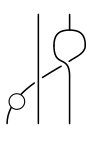 Figure 2
 Figure 3
 Figure 4
 Figure 5
 Figure 6
 Figure 7
 Figure 8
 Figure 9
 Figure 10
 Figure 11
 Figure 12
 Figure 13
 Figure 14
 Figure 15
 Figure 16
 Figure 17
 Figure 18
 Figure 19
 Figure 20
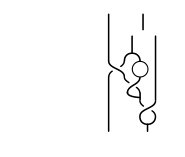 Figure 21
 Figure 22
 Figure 23
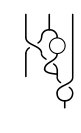 Figure 24
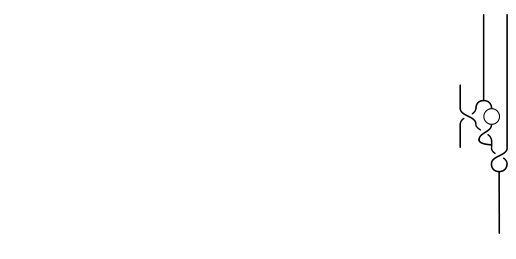 Figure 25
 Figure 26
 Figure 27
 Figure 28
 Figure 29
 Figure 30
 Figure 31
Peer Reviews
No public reviews on file for this paper yet. If you reviewed it on a platform where reviews are public (OpenReview, ICLR, NeurIPS, ICML), you can paste yours below so the community can read it here.
Videos
No videos yet. Explain this paper in a talk, walkthrough, or lecture? Add one.