All Equalities Are Equal, but Some Are More Equal Than Others: The Effect of Implementation Aliasing on the Numerical Solution to Conservation Equations
Will Trojak, Ash Scillitoe, Rob Watson

TL;DR
This paper examines how aliasing affects the numerical solution of conservation equations, highlighting that storing conserved variables reduces dissipation and that gradient calculation methods have minimal impact, with implications for high-order simulations.
Contribution
It provides a detailed analysis of aliasing effects on conservation equations, comparing storage strategies, gradient methods, and precision impacts in high-order numerical schemes.
Findings
Storing conserved variables introduces less dissipation.
Aliasing effects grow factorially with the order of the method.
Gradient calculation differences are generally small, favoring the product rule.
Abstract
We investigate the effect of aliasing when applied to the storage of variables, and their reconstruction for the solution of conservation equations. In particular, we investigate the effect on the error of storing primitives versus conserved variables for the Navier-Stokes equations. It was found that storing the conserved variables introduces less dissipation and that the dissipation caused by constructing the conversed variable from the primitives grows factorially with the order. Hence, this problem becomes increasingly important with the continuing move towards higher orders. Furthermore, the method of gradient calculation is investigated, as applied to the viscous fluxes in the Navier-Stokes equations. It was found that in most cases the difference was small, and that the product rule applied to the gradients of the conserved variables should be used due to a lower operation count.…
Click any figure to enlarge with its caption.
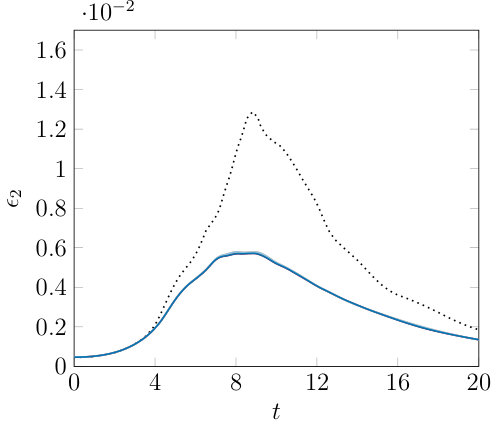 Figure 1
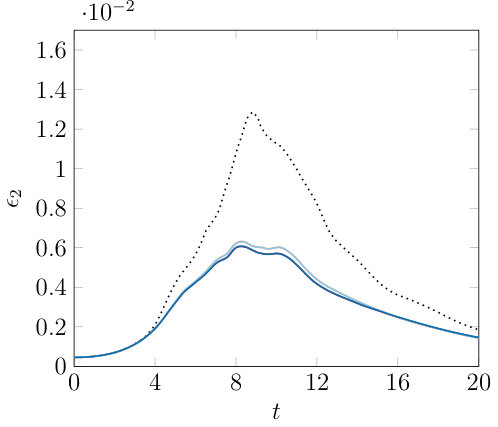 Figure 2
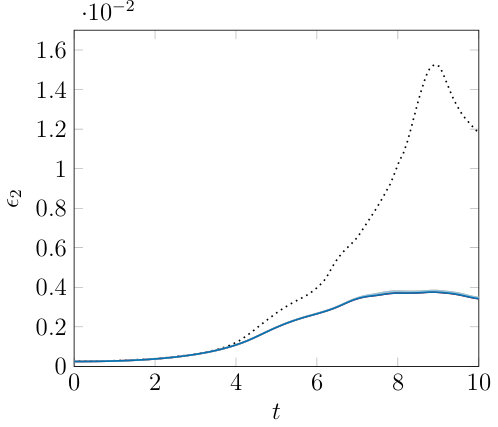 Figure 3
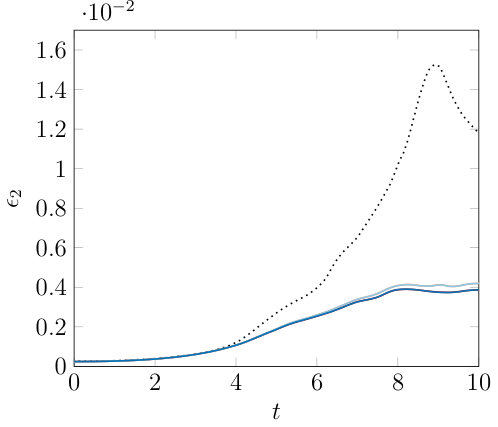 Figure 4
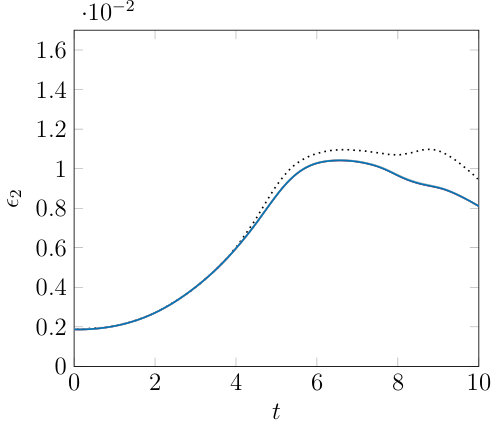 Figure 5
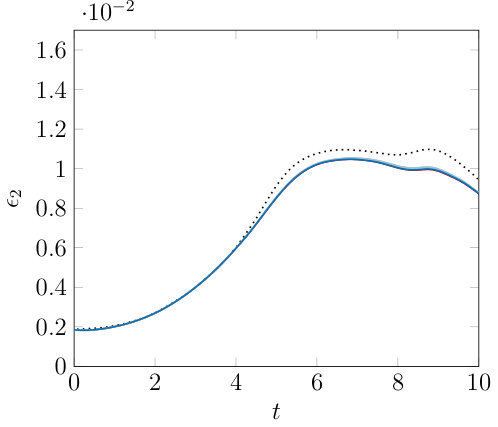 Figure 6
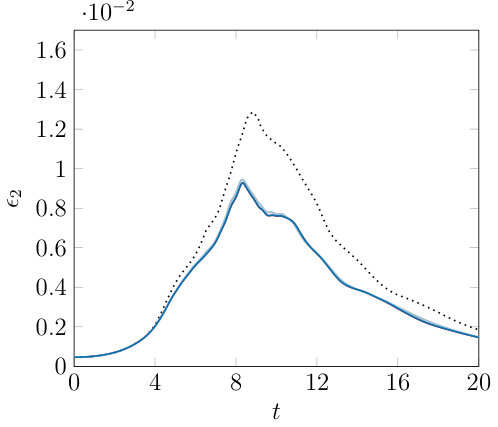 Figure 7
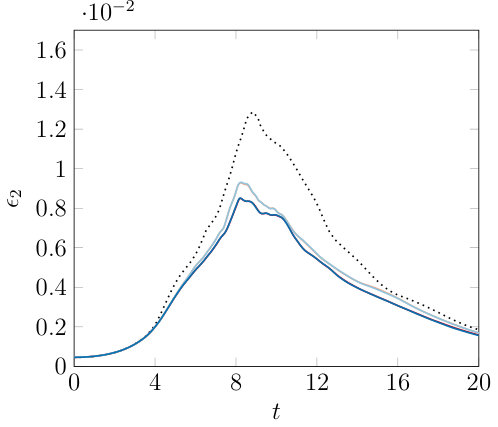 Figure 8
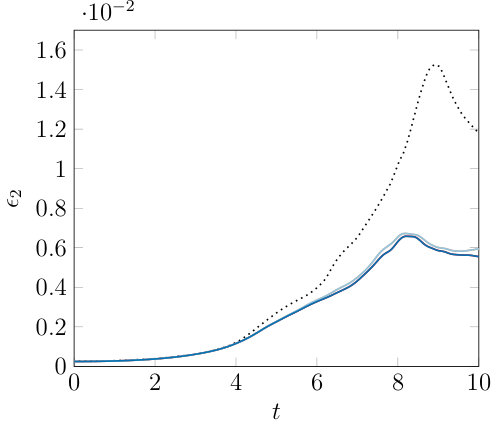 Figure 9
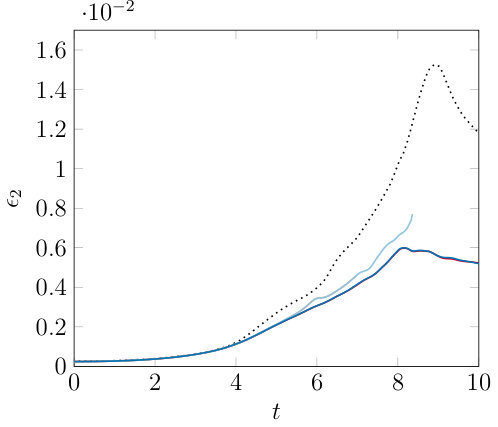 Figure 10
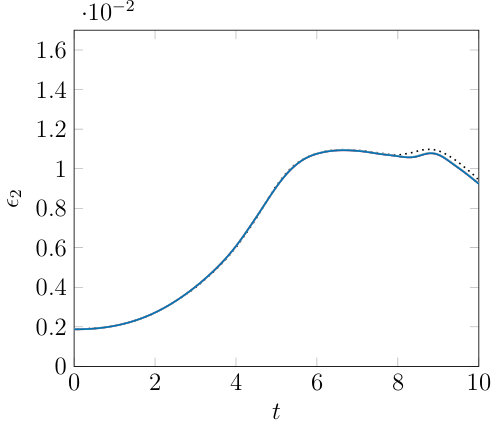 Figure 11
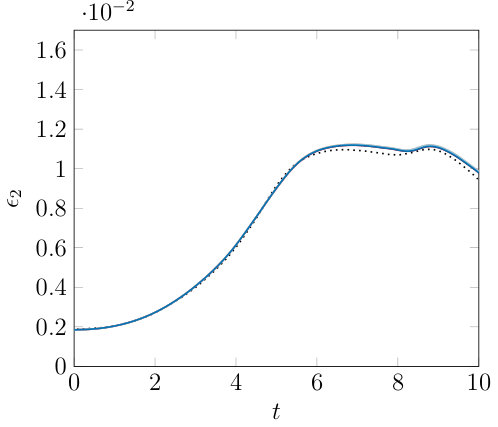 Figure 12
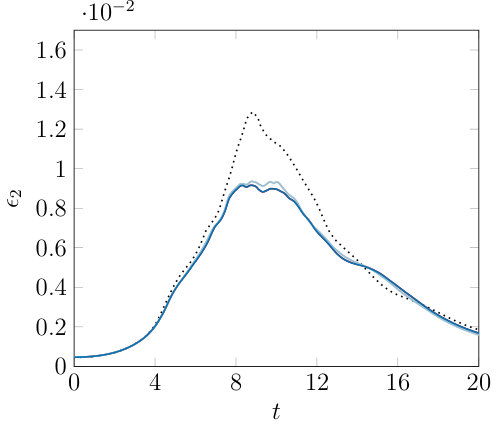 Figure 13
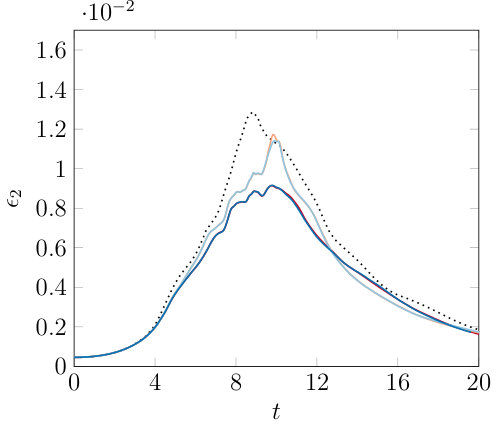 Figure 14
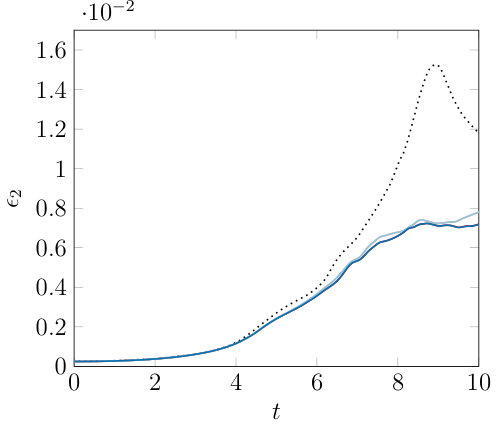 Figure 15
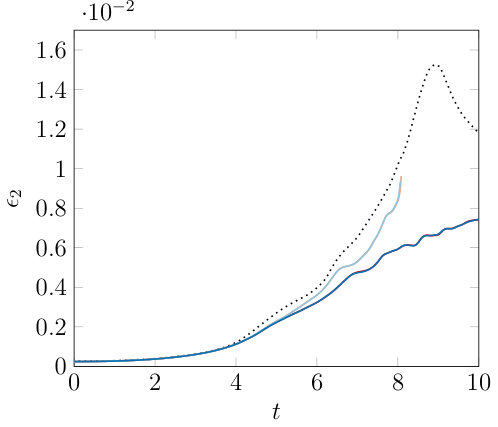 Figure 16
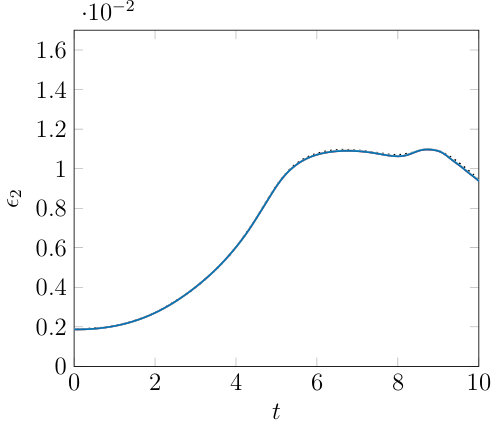 Figure 17
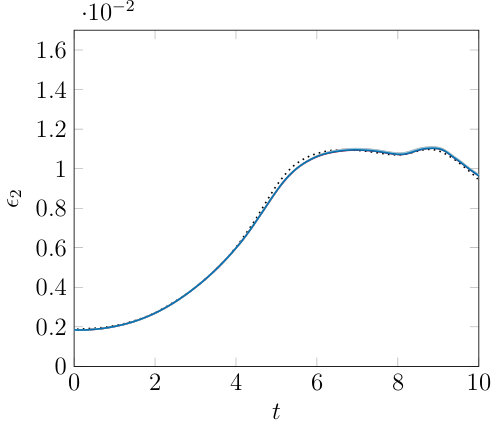 Figure 18
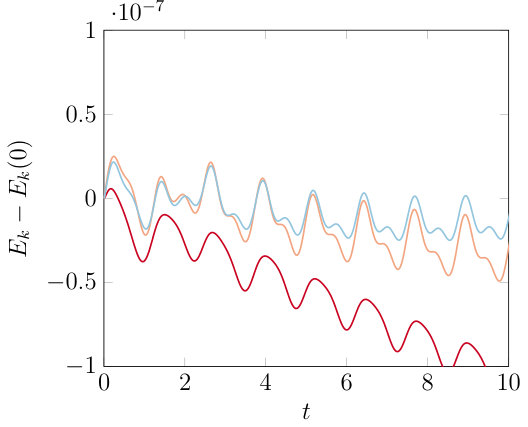 Figure 19
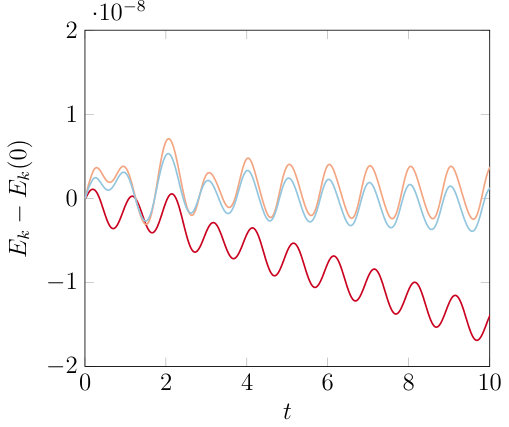 Figure 20
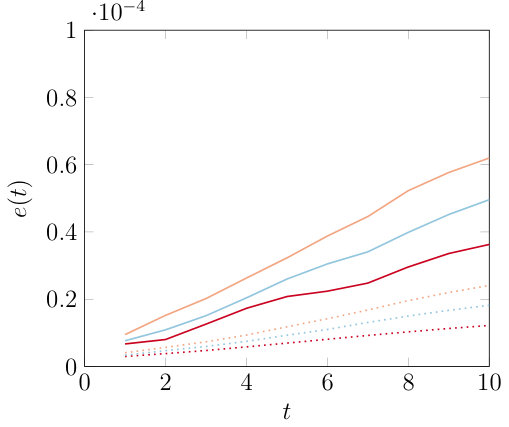 Figure 21
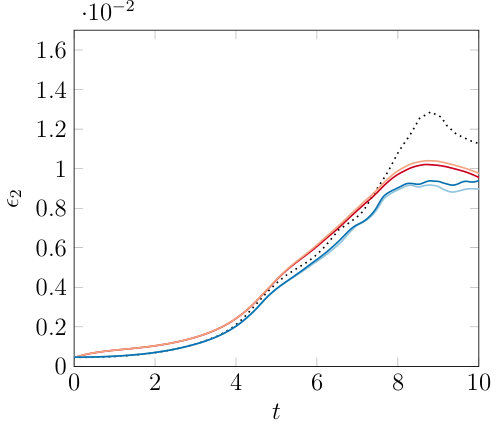 Figure 22
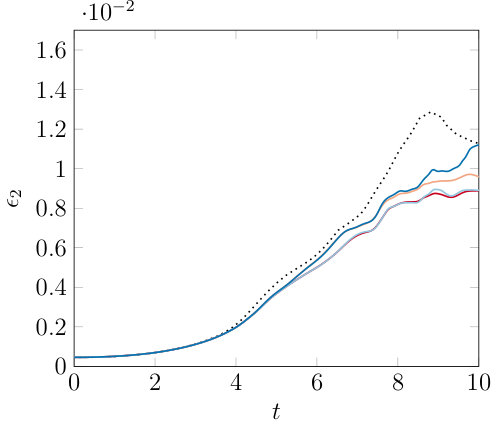 Figure 23
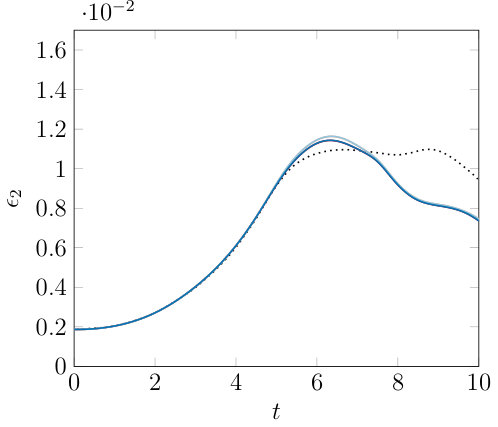 Figure 24
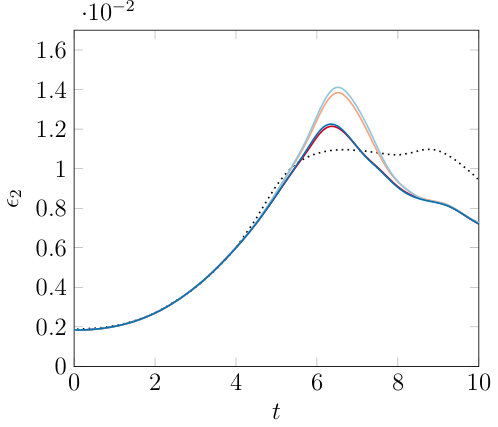 Figure 25
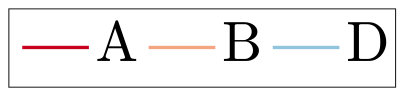 Figure 26
 Figure 27
 Figure 28
 Figure 29
 Figure 30
Peer Reviews
No public reviews on file for this paper yet. If you reviewed it on a platform where reviews are public (OpenReview, ICLR, NeurIPS, ICML), you can paste yours below so the community can read it here.
Videos
No videos yet. Explain this paper in a talk, walkthrough, or lecture? Add one.
Taxonomy
TopicsFluid Dynamics and Turbulent Flows · Computational Fluid Dynamics and Aerodynamics · Model Reduction and Neural Networks