Exponential time differencing for mimetic multilayer ocean models
Konstantin Pieper, K. Chad Sockwell, Max Gunzburger

TL;DR
This paper introduces an exponential time discretization framework combined with mimetic spatial discretization for multilayer ocean models, enhancing stability and efficiency for long-term simulations with larger time steps.
Contribution
It develops a novel exponential time differencing method tailored for multilayer rotating shallow water equations, incorporating Hamiltonian structure and layer reduction for improved performance.
Findings
Achieves stable long-term simulations with larger time steps.
Maintains accuracy of key statistical quantities.
Demonstrates efficiency gains in multilayer ocean modeling.
Abstract
A framework for exponential time discretization of the multilayer rotating shallow water equations is developed in combination with a mimetic discretization in space. The method is based on a combination of existing exponential time differencing (ETD) methods and a careful choice of approximate Jacobians. The discrete Hamiltonian structure and conservation properties of the model are taken into account, in order to ensure stability of the method for large time steps and simulation horizons. In the case of many layers, further efficiency can be gained by a layer reduction which is based on the vertical structure of fast and slow modes. Numerical experiments on the example of a mid-latitude regional ocean model confirm long term stability for time steps increased by an order of magnitude over the explicit CFL, while maintaining accuracy for key statistical quantities.
Click any figure to enlarge with its caption.
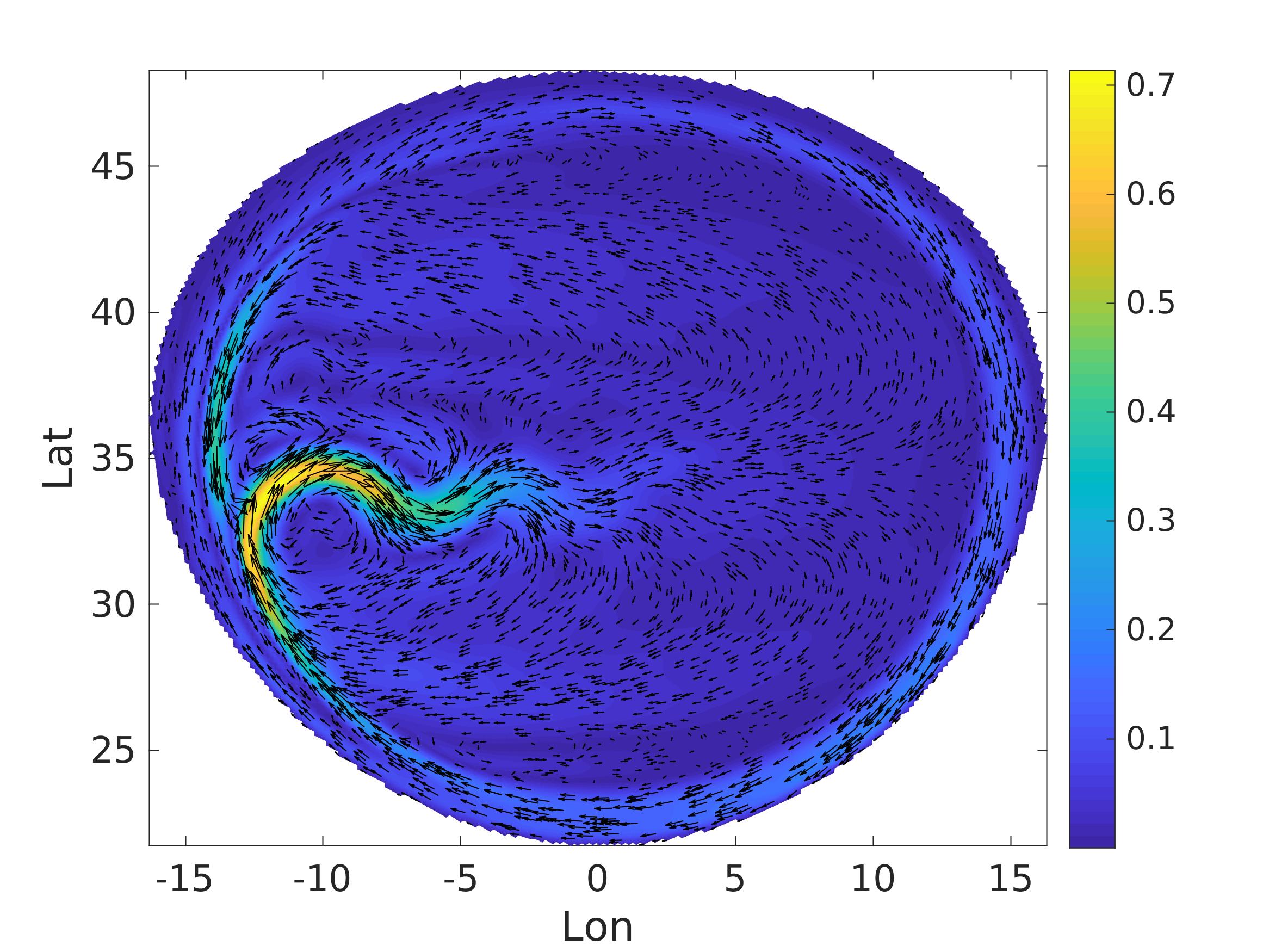 Figure 1
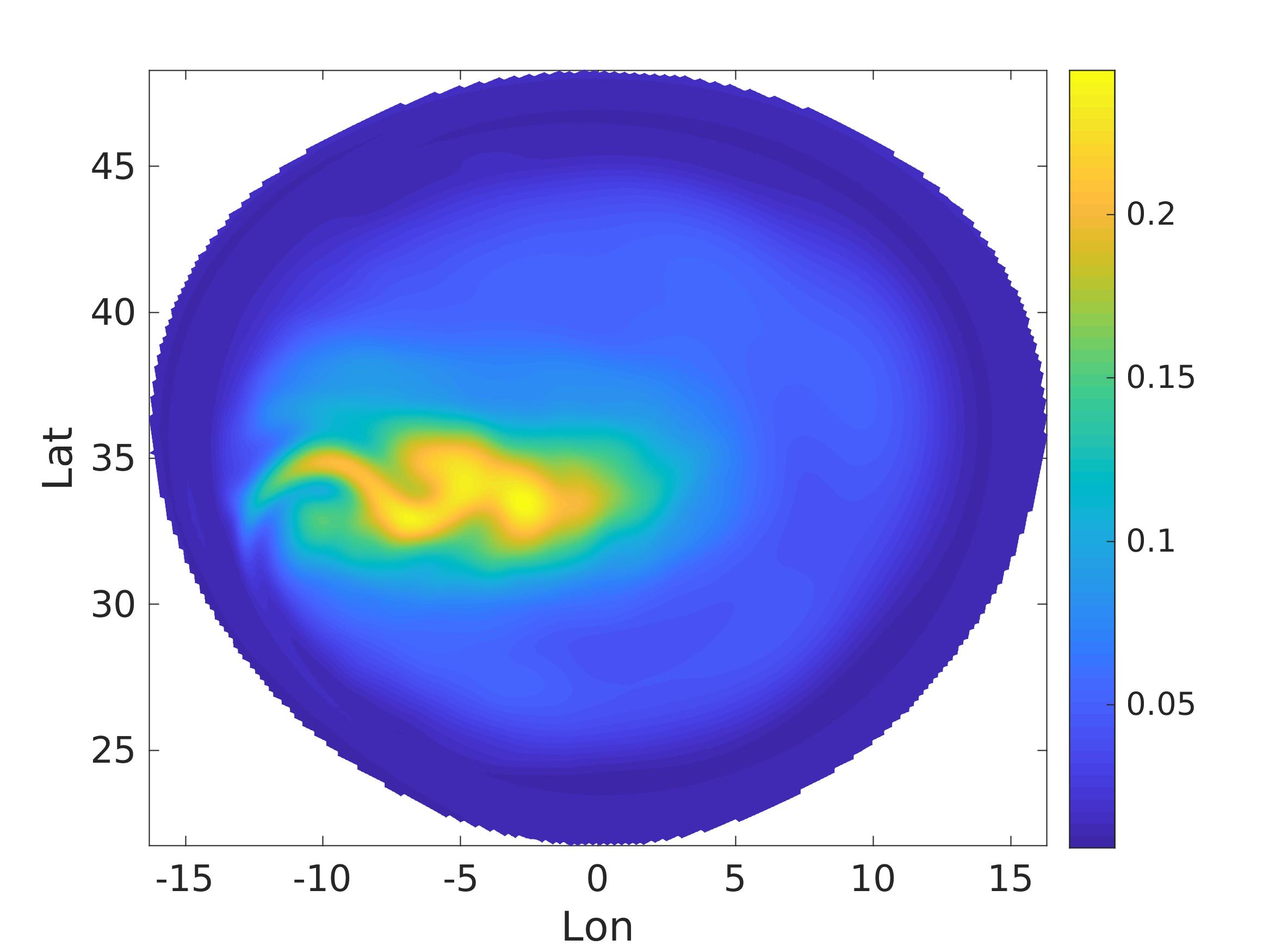 Figure 2
 Figure 3
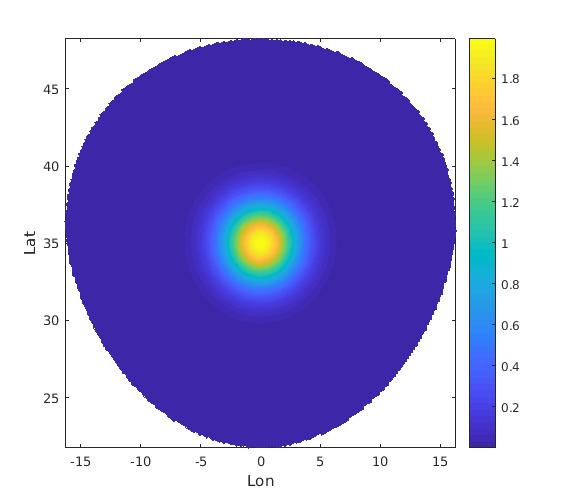 Figure 4
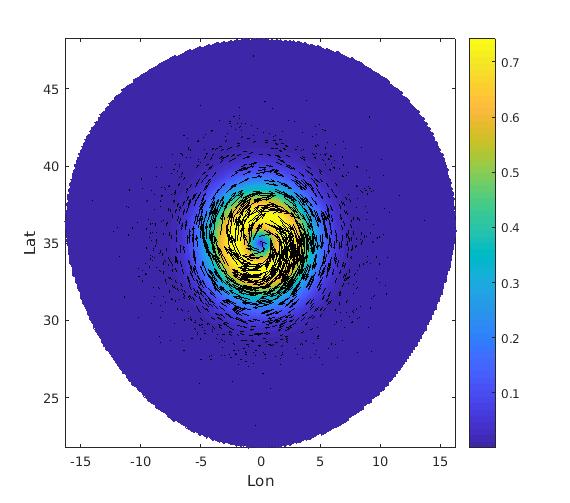 Figure 5
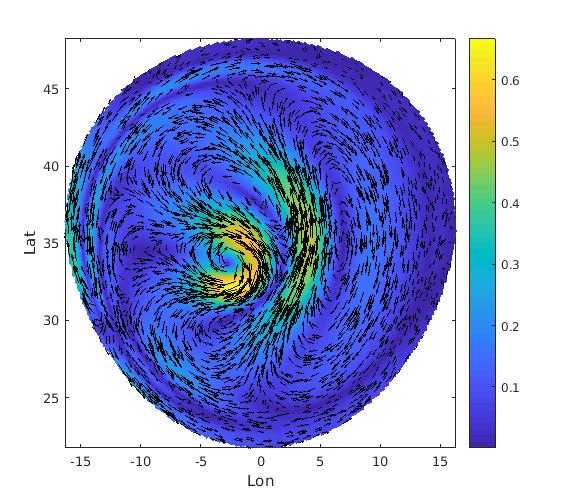 Figure 6
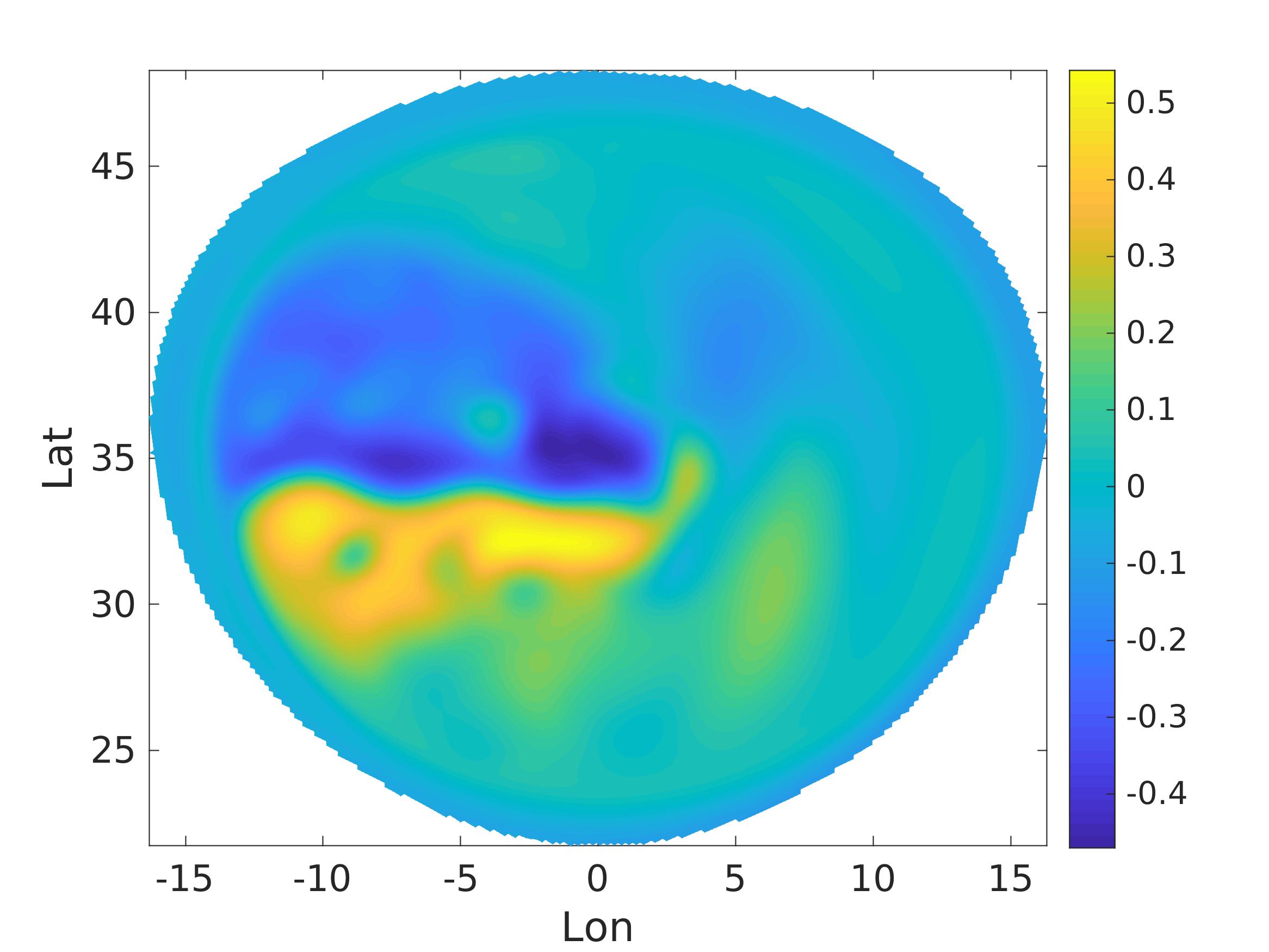 Figure 7
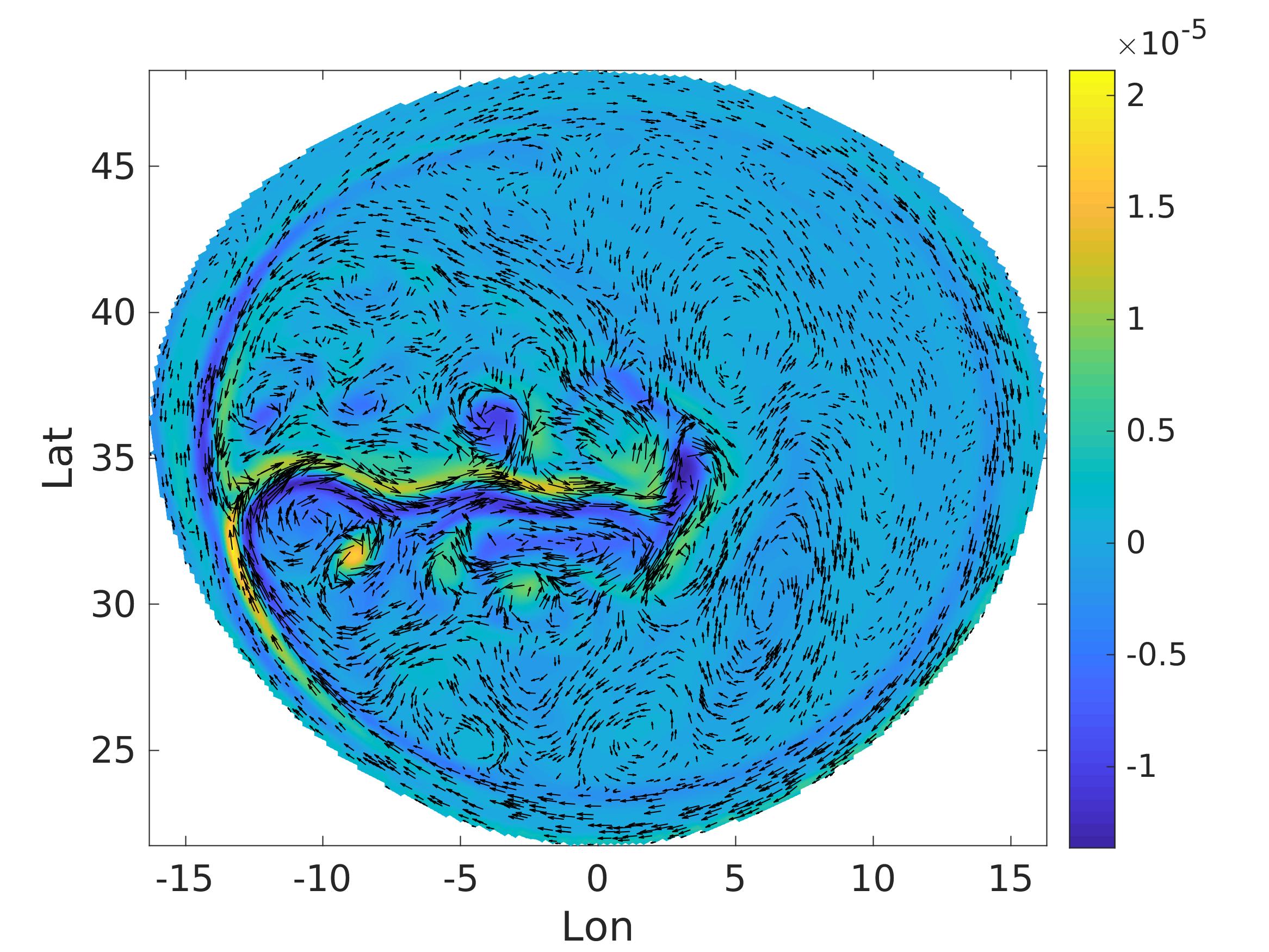 Figure 8
Peer Reviews
No public reviews on file for this paper yet. If you reviewed it on a platform where reviews are public (OpenReview, ICLR, NeurIPS, ICML), you can paste yours below so the community can read it here.
Videos
No videos yet. Explain this paper in a talk, walkthrough, or lecture? Add one.