Confronting Scherk-Schwarz orbifold models with LHC data
Dumitru Dan Smaranda, David J Miller

TL;DR
This paper reviews the analysis of orbifold GUT models, especially SU(5) variants, assessing their compatibility with LHC data and exploring extensions with additional scalars and gauge groups to improve phenomenological viability.
Contribution
It provides a comprehensive analysis of orbifold GUT models, identifies the minimal SU(5) models as incompatible with data, and explores extended models with additional scalars and gauge groups.
Findings
Minimal SU(5) models are ruled out by LHC data.
Extended models with extra scalars and U(1) gauge groups offer promising alternatives.
Future work needed to refine exclusion limits and connect to 6D theories.
Abstract
We will outline our recent efforts aimed at analysing a class of models known as orbifold GUTs and their phenomenology in a variety of minimal and non-minimal settings. We examine the minimal SU(5) models, rule them out, and proceed by extending them with an additional scalar field along with a gauge extension via SU(5)xU(1) models. We end up by commenting on the future improvements needed to more accurately handle exclusions along with tracing the U(1) gauge extensions to more complete 6D theories.
Click any figure to enlarge with its caption.
 Figure 1
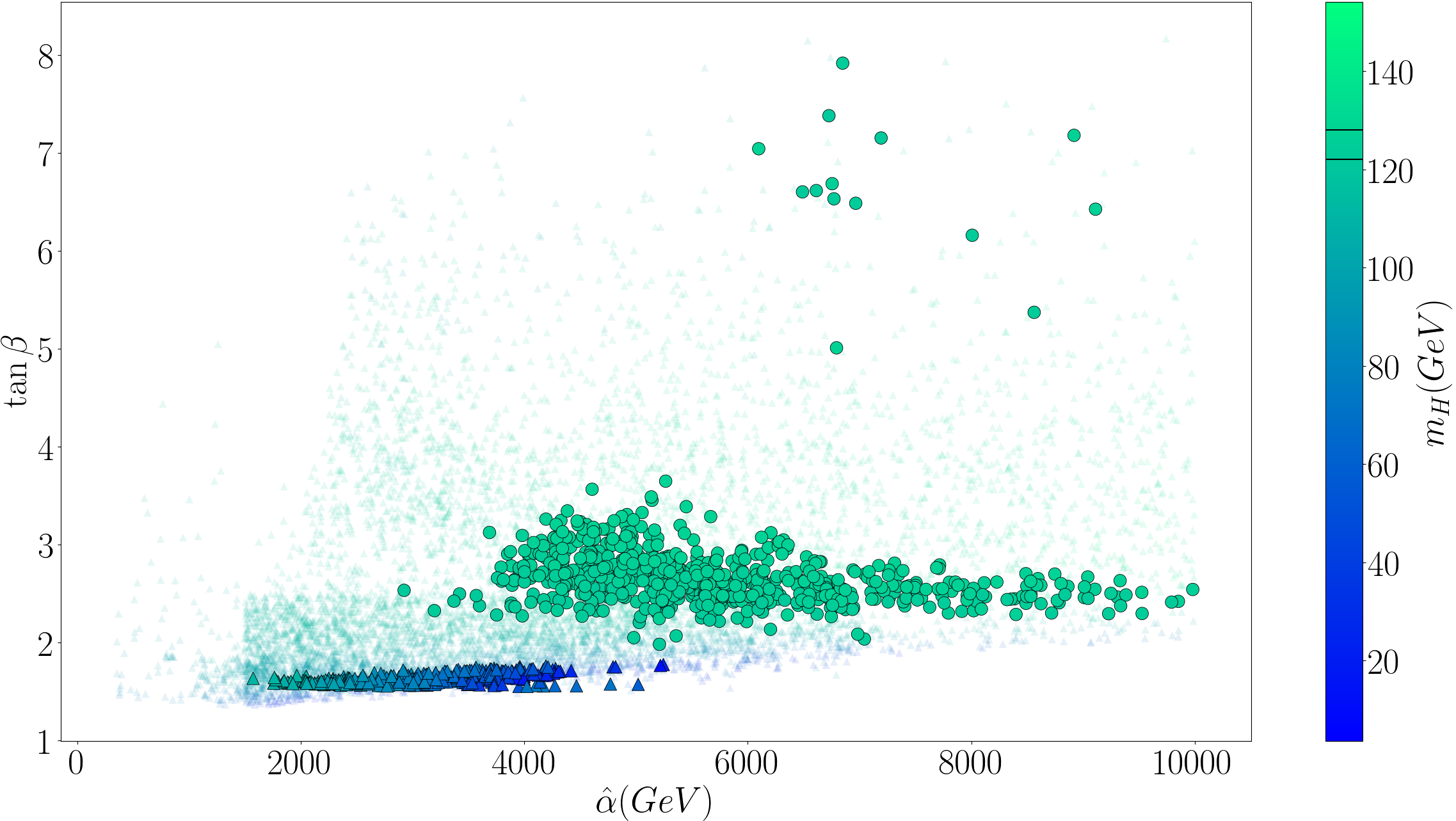 Figure 2
Peer Reviews
No public reviews on file for this paper yet. If you reviewed it on a platform where reviews are public (OpenReview, ICLR, NeurIPS, ICML), you can paste yours below so the community can read it here.
Videos
No videos yet. Explain this paper in a talk, walkthrough, or lecture? Add one.
Taxonomy
TopicsParticle physics theoretical and experimental studies · Black Holes and Theoretical Physics · Quantum Chromodynamics and Particle Interactions
Confronting Scherk-Schwarz orbifold models with LHC data
School of Physics and Astronomy - University of Glasgow, Glasgow, UK
David J Miller
School of Physics and Astronomy - University of Glasgow, Glasgow, UK
Abstract:
We will outline our recent efforts aimed at analysing a class of models known as orbifold GUTs and their phenomenology in a variety of minimal and non-minimal settings. We examine the minimal models, rule them out, and proceed by extending them with an additional scalar field along with a gauge extension via models. We end up by commenting on the future improvements needed to more accurately handle exclusions along with tracing the gauge extensions to more complete theories.
1 Introduction
After the Higgs discovery, supersymmetry (SUSY) has had to face significant exclusions from the LHC data. Indeed the constrained Minimal Supersymmetric Standard Model, which gives all the supersymmetry breaking parameters a common value at a high scale, is almost completely ruled out [1]. However, typical supersymmetric models are complicated by having over 100 additional free parameters, so plenty of the parameter space remains to be explored. To this extent non-minimal supersymmetric models fit within these regions providing a continuing motivation for the LHC to search for them.
In this presentation we’ll outline our efforts on how Scherk-Schwarz (SS) compactifications [2, 3] affect a variety of extra dimensional GUT models with Kaluza Klein modes [4, 5], and see if they agree with phenomenological constraints imposed by electroweak symmetry breaking and low energy experiments. We start of by exploring the basic model proposed in [6, 7], and then move on to study scalar and gauge extensions.
2 Theory and Models
Throughout this paper we’ll be working on a compactified space with SUSY. The SS action that we employ breaks the supersymmetry to on the brane at , the Higgs flavour symmetry and the gauge symmetry (note that we use the same gauge breaking for the extension). The full form of is the one used in [6, 7].
Using these will in turn provide a soft SUSY breaking Lagrangain, which will depend on the fermionic matter placement (i.e. brane or bulk).
Since the basic model in [6, 7] will fail to produce the right Higgs mass we’ll move on and extend the Higgs sector via a scalar extension: , which will produce soft SUSY breaking masses from the SS action depending on the scalar placement (brane or bulk).
3 Methodology and Constraints
High scale parameters are introduced at the GUT scale and are run down to low energies using the FlexibleSUSY [v.2.0.1] [8] spectrum generator with two-loop Renormalisation Group Equations (RGEs), to produce electroweak symmetry breaking and a low energy spectrum. FlexibleSUSY relies on SARAH [v.4.12.2] [9] to generate the RGEs and the tadpole equations.
We check our model against LHC bounds and constraints from the ATLAS and CMS collaborations [10, 11, 12], which in our case comprise of: a Higgs mass between (where we’ve assumed a theoretical uncertainty arising from FlexibleSUSY)[13, 14] ; a gluino mass larger than [15, 16]; a neutralino mass larger than for [17]; a stop mass larger than 1\text{,}\mathrm{T}\mathrm{e}\mathrm{V}$$ [18] ; a chargino mass larger than [19]; an extra gauge boson with a mass larger than [20] for the extensions.
To check the dark matter relic density we use MicrOmegas [21]. The dark matter relic density bound is in accordance with the latest Planck data [22] : , where we consider a uncertainty from the mass difference from MicrOmegas and FlexibleSUSY, and accept all points with a dark matter relic density smaller than .
4 Results and Conclusions
Throughout our scans we found that the basic model proposed in [6, 7] cannot produce the appropriate Higgs mass with brane or bulk matter. We then moved on to trying a scalar extension of the model which yielded in a better result concerning the Higgs, but failed in the end to meet the SS constraint. This will be further explored in future work to try and more accurately quantify the SS uncertainty resulting from threshold corrections. Furthermore to try and bypass the SS constraint we looked at a scalar extension with a trivialised symmetry. In this case we got the right Higgs mass but the model was eliminated due to LHC cuts and dark matter relic density constraints.
Finally the additional scalar within the extension framework resulted in a similar scenario where the points that obeyed the SS constraint did not produce an appropriate Higgs mass (see Figure 1). This has in turn prompted future work in which we will treat the spectrum in Figure 1 as a remnant of a theory (e.g. as in [23]) which would arise from a more complicated accidental flavour symmetry induced by the different representations delivering “a different SS constraint”.
To summarise, the basic model cannot produce the right Higgs mass, the naive scalar extensions don’t quite work and we are looking on quantifying threshold effects along with exploring more complicated theories that can accommodate SS breaking.
The reference list from the paper itself. Each links out to its DOI / PubMed record.
- 1[1] ATLAS collaboration, G. Aad et al., Summary of the searches for squarks and gluinos using s = 8 𝑠 8 \sqrt{s}=8 Te V pp collisions with the ATLAS experiment at the LHC , JHEP 10 (2015) 054 [ 1507.05525 ]. · doi ↗
- 2[2] J. Scherk and J. H. Schwarz, Spontaneous breaking of supersymmetry through dimensional reduction , Physics Letters B 82 (1979) 60 . · doi ↗
- 3[3] J. Scherk and J. H. Schwarz, How to get masses from extra dimensions , Nuclear Physics B 153 (1979) 61 . · doi ↗
- 4[4] T. Kaluza, Zum Unitätsproblem der Physik , Sitzungsber. Preuss. Akad. Wiss. Berlin (Math. Phys.) 1921 (1921) 966 [ 1803.08616 ].
- 5[5] O. Klein, Quantum Theory and Five-Dimensional Theory of Relativity. (In German and English) , Z. Phys. 37 (1926) 895 . · doi ↗
- 6[6] R. Barbieri, L. J. Hall and Y. Nomura, Softly broken supersymmetric desert from orbifold compactification , Phys. Rev. D 66 (2002) 045025 [ hep-ph/0106190 ]. · doi ↗
- 7[7] R. Barbieri, L. J. Hall and Y. Nomura, Models of Scherk-Schwarz symmetry breaking in 5-D: Classification and calculability , Nucl. Phys. B 624 (2002) 63 [ hep-th/0107004 ]. · doi ↗
- 8[8] P. Athron, J.-h. Park, D. Stöckinger and A. Voigt, Flexible SUSY—A spectrum generator generator for supersymmetric models , Comput. Phys. Commun. 190 (2015) 139 [ 1406.2319 ]. · doi ↗