Generalised BGP reflection functors via the Grothendieck construction
Tobias Dyckerhoff, Gustavo Jasso, Tashi Walde

TL;DR
This paper generalizes classical BGP reflection functors using the Grothendieck construction, providing a new categorical framework inspired by Ladkani's work.
Contribution
It introduces a novel categorical approach to generalize BGP reflection functors through the Grothendieck construction, extending classical theory.
Findings
New categorical construction of reflection functors
Extension of classical BGP reflection functors
Framework inspired by Ladkani's work
Abstract
Inspired by work of Ladkani, we explain how to construct generalisations of the classical reflection functors of Bern\v{s}te\u{\i}n, Gel'fand and Ponomarev by means of the Grothendieck construction.
Click any figure to enlarge with its caption.
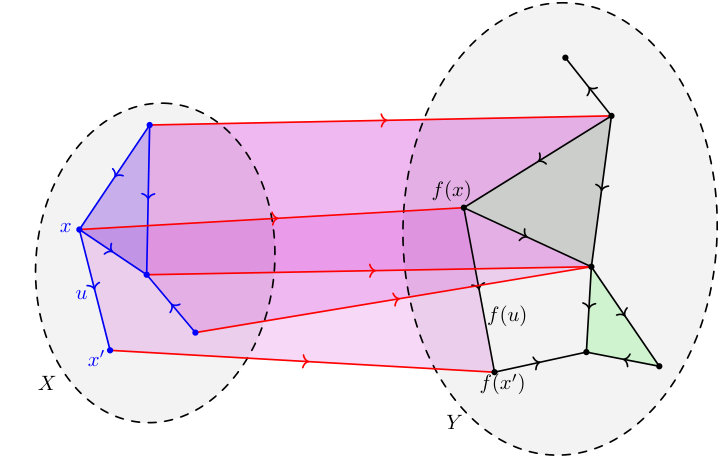 Figure 1
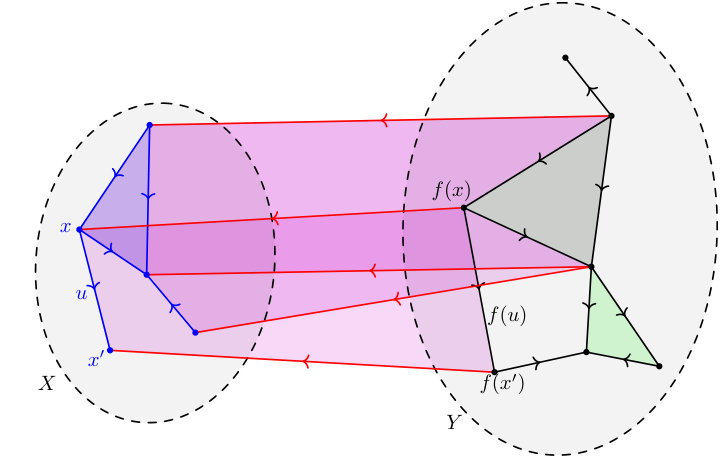 Figure 2
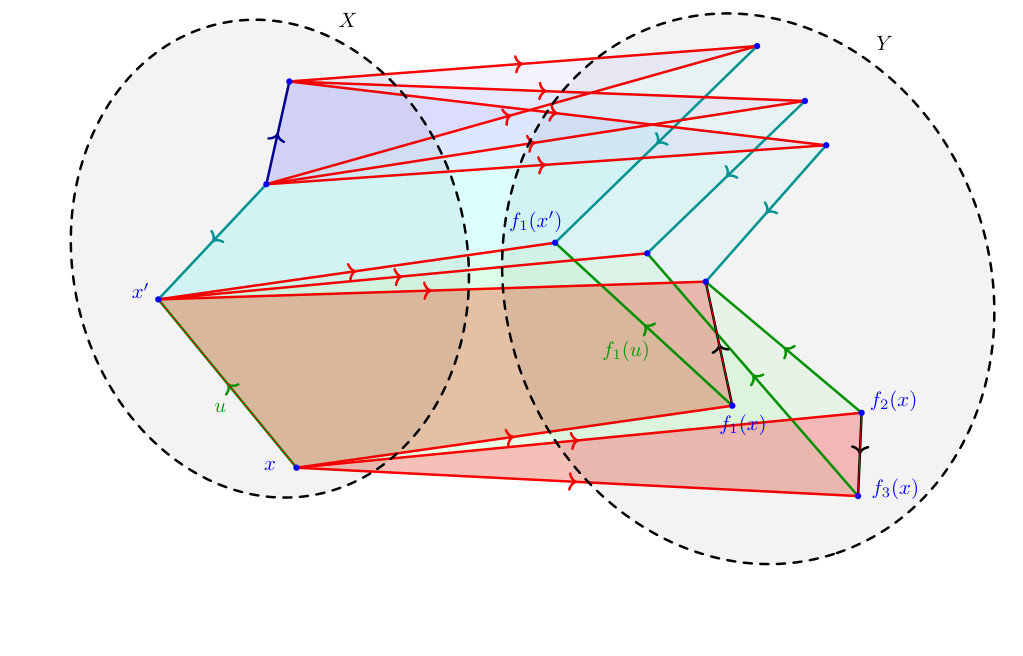 Figure 3
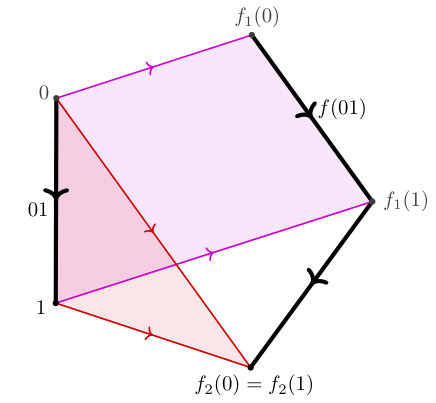 Figure 4
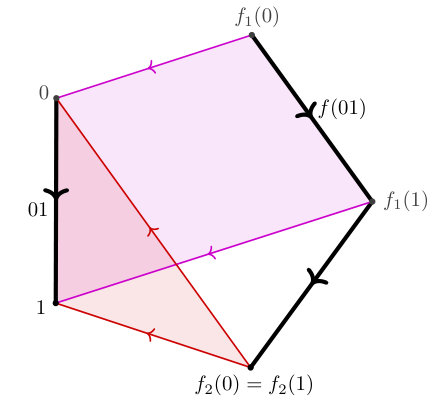 Figure 5
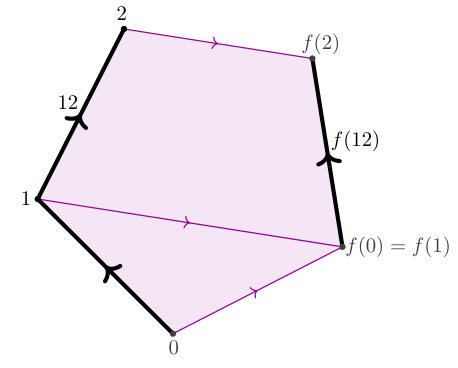 Figure 6
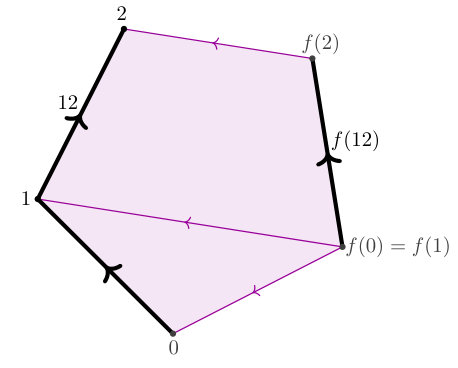 Figure 7
Peer Reviews
No public reviews on file for this paper yet. If you reviewed it on a platform where reviews are public (OpenReview, ICLR, NeurIPS, ICML), you can paste yours below so the community can read it here.
Videos
No videos yet. Explain this paper in a talk, walkthrough, or lecture? Add one.
Generalised BGP reflection functors via
the Grothendieck construction
Tobias Dyckerhoff, Gustavo Jasso and Tashi Walde
Abstract
Inspired by work of Ladkani, we explain how to construct generalisations of the classical reflection functors of Bernšteĭn, Gel\calculate@math@sizesfand and Ponomarev by means of the Grothendieck construction.
Introduction
Reflection functors were introduced to representation theory by Bernšteĭn, Gel\calculate@math@sizesfand, and Ponomarev in the seminal article [BGP73] to provide a more transparent proof of Gabriel’s Theorem [Gab72]. After fundamental work of Brenner and Butler [BB76], the BGP reflection functors were extended by Auslander, Platzeck and Reiten [APR79] to Artin algebras with a simple projective (resp. injective) module. It was then observed by Happel [Hap87] that BGP reflection functors can be understood conceptually in terms of derived equivalences induced by what nowadays are called APR tilting complexes. These equivalences have been used, for example, to show that the derived category of representations of a finite quiver whose underlying graph is a tree does not depend on its orientation.
Generalising the BGP reflection functors for tree quivers, Ladkani [Lad07a] constructed equivalences between derived categories of representations of finite posets in an arbitrary abelian category. Ladkani uses these ‘generalised BGP reflection functors’ to establish derived equivalences between posets arising naturally in representation theory and combinatorics [Lad07b, Lad07c, Lad08a]. In a similar spirit, abstract versions of the BGP reflection functors were developed by Groth and Šťovíček in a series of articles [GŠ18b, GŠ16a, GŠ16b] with the most general form of their construction appearing as the main result in [GŠ18a].
In this article we construct generalised BGP reflection functors by leveraging a general equivalence between two stable -categories associated to an exact functor via gluing operations, thereby unifying the aforementioned approaches. From the perspective of semi-orthogonal decompositions [BK89], these generalised BGP reflection functors can be interpreted as a mutation between the two decompositions associated to an admissible subcategory of a stable -category. Note that the mentioned gluing operations cannot be performed with triangulated categories and thus we are required to pass to a richer framework such as that of Lurie’s stable -categories.
In Section 1 we recall two—equivalent—procedures to glue stable -categories along an exact functor. In Section 2 we construct the generalised BGP reflection functors (Theorem 2.3) and discuss applications and examples.
Acknowledgements 1**.**
The authors thank Catharina Stroppel for detailed and valuable comments on an earlier version of this article. T.D. acknowledges the support by the VolkswagenStiftung for his Lichtenberg Professorship at the University of Hamburg; T.W. was supported by a Hausdorff Scholarship from the Bonn International Graduate School (BIGS) of Mathematics.
1 Preliminaries: gluing along an exact functor
Recall that a pointed -category with finite limits and finite colimits is stable if the suspension functor and the loop functor , given by
[TABLE]
respectively, are mutually quasi-inverse equivalences, see Proposition 1.4.2.11 in [Lur17]. The following construction is the raison d’être for the use of stable -categories in this article.
Construction 1.1**.**
Let be an exact functor between stable -categories.
Let be the -category defined by the following pullback diagram in the (very large) -category of -categories:
[TABLE]
Thus, informally, an object of can be identified with a triple
[TABLE]
where is an object of , is object of , and is a morphism in . The -category is stable as it is a limit of stable -categories and exact functors111The -category of stable -categories is closed under limits of -categories, see Theorem 1.1.4.4 in [Lur17].. 2. 2.
Dually, we define to be the (stable) -category defined by the following pullback diagram in :
[TABLE]
Thus, informally, an object of can be identified with a triple
[TABLE]
where is an object of , is an object of , and is a morphism in .
Remark 1.2**.**
The stable -category (resp. ) associated to an exact functor can be identified222See for instance Lemma 5.4.7.15 in [Lur09]. with the stable -category of sections of the contravariant (resp. covariant) Grothendieck construction. See Section 3.2 in [Lur09] for more details on the Grothendieck construction.
Lemma 1.3**.**
Let be an exact functor between stable -categories. There are mutually quasi-inverse equivalences
[TABLE]
which, informally, are given by
[TABLE]
Proof.
Consider the solid commutative diagram of stable -categories and exact functors
[TABLE]
where the bottom and top squares are the pullback squares (1) and (2), respectively. Since and are mutually quasi-inverse equivalences, the functoriality of pullbacks implies the existence of the desired mutually quasi-inverse equivalences and which render the above cube commutative. ∎
The statement of 1.3 has the following interpretations in terms of the classical concepts of recollements and semi-orthogonal decompositions.
Remark 1.4**.**
Recollements were introduced by Beĭlinson, Bernšteĭn and Deligne in [BBD82] in the language of triangulated categories. It has since been observed that, when working with enhanced triangulated categories, recollements can be recovered from their gluing functors. For example, using differential graded categories as enhancements—as proposed in [BK90]—the relevant theory is developed systematically in [KL15]; a treatment in the language of stable -categories can be found in Appendix A.8 in [Lur17]. Recall that a recollement is a diagram of stable -categories and exact functors of the form
[TABLE]
such that the following conditions are satisfied:
The functor is fully faithful and its essential image is precisely the kernel of . Moreover, there are adjunctions . 2. 2.
There are adjunctions and the functors and are fully faithful.
The gluing functor of a recollement of the form (3) is the exact functor . The results of Appendix A.8 in [Lur17] imply that the forgetful functor which associates to a recollement of stable -categories its gluing functor induces an equivalence of -categories between the -category of recollements and the -category of exact functors between stable -categories. 1.1 provides two possible quasi-inverses to this equivalence while 1.3 provides a canonical identification between these quasi-inverses. Indeed, for an exact functor between stable -categories, the functors and induce mutually quasi-inverse equivalences of recollements
[TABLE]
Remark 1.5**.**
Semi-orthogonal decompositions were introduced by Bondal and Kapranov in [BK89] in the language of triangulated categories. In their language, the datum of a recollement with middle term is equivalent333See for instance Proposition A.8.20 in [Lur17]. to the datum of the inclusion of an admissible subcategory, that is a subcategory such that the inclusion has left and right adjoints. To such a subcategory correspond two semi-orthogonal decompositions and of which are mutations of one another. In terms of the recollement data, the corresponding orthogonals are given by and . Let be the gluing functor.
The stable -category is canonically equivalent to the -category of arrows in from to and hence, via the fibre functor, also equivalent to itself. 2. 2.
The stable -category is canonically equivalent to the -category of arrows in from to and hence, via the cofibre functor, also equivalent to itself.
Hence, the resulting equivalence (which agrees with the one from 1.3) can be interpreted as passing from the description of the category in terms of the semi-orthogonal decomposition to a description in terms of the mutated decomposition . In particular, from this perspective, the generalised BGP reflection functors constructed below arise from mutations of semi-orthogonal decompositions.
2 Generalised BGP reflection functors
We fix a stable -category throughout this section. For a small -category we denote by the -category of -shaped diagrams in . Our aim is to construct equivalences of the form
[TABLE]
using the functors of 1.3, where
is obtained from by ‘reflecting some arrows’. When is a quiver or a poset and is the derived -category of vector spaces over a field, these equivalences reduce—after passing to homotopy categories—to triangle equivalences between derived categories of representations. This is a consequence of the following general fact, see for example Proposition 4.2.4.4 in [Lur09].
Fact 1**.**
Let be the derived -category of a Grothendieck category . The derived category of the Grothendieck category of -shaped diagrams in is equivalent to the homotopy category of the stable -category .
2.1 The main theorem
Let be a quiver. For a -shaped diagram of small -categories, we denote the covariant (resp. contravariant) Grothendieck construction of by (resp. ); we refer the reader to Section 3.2.5 in [Lur09] for details444What we refer to as the Grothendieck construction is called the relative nerve in [Lur09]; the explicit construction is given in Definition 3.2.5.2.. Following Definition 4.12 in [Lad08b], we say that is bipartite if there exists a decomposition such that all arrows are of the form for and . If is bipartite, then the (small) -categories and are characterised555Using the fact that is bipartite, these are direct applications of Theorem 7.4 and Corollary 7.6 in [GHN17] (after unravelling the notation). up to equivalence in terms of the pushout diagrams in the -category of small -categories
[TABLE]
where (resp. ) denotes the slice category of objects under (resp. over) . In the case , corresponding to a functor between small -categories, the -categories and can be schematically illustrated as follows:
The coloured regions indicate commutativity relations.
Remark 2.1**.**
If the diagram takes values in ordinary categories, then and agree with (the nerve of) the corresponding -categorical Grothendieck constructions. If furthermore takes values in posets, then (resp. ) is again a poset if and only if, for every pair of parallel arrows in and every , the elements and of have no common upper (resp. lower) bound. Under these assumptions—which are precisely the assumptions in the main theorem in [Lad07a]—the Grothendieck construction specialises to the construction therein.
Construction 2.2**.**
Let be a finite bipartite quiver with and a -shaped diagram of small -categories. We define -categories
[TABLE]
and an exact functor as the composite
[TABLE]
≃→
⨁_w∈WD(Fw) (-∘Fα)α→⨁α:v→wD(Fv)
⊕→ ⨁_v∈VD(Fv)≃→D(X). In particular, for and we have
[TABLE]
The following result extends Ladkani’s main theorem in [Lad07a] from posets to small -categories.
Theorem 2.3**.**
In the setting of 2.2, there are canonical equivalences of stable -categories
[TABLE]
In particular, the functors of 1.3 induce mutually quasi-inverse equivalences of stable -categories
[TABLE]
We call these equivalences generalised BGP reflection functors.
Proof.
We only establish the existence of the leftmost equivalence in (5), the other one being analogous. Note that the existence of the desired equivalences (6) then follows immediately from 1.3.
Firstly, applying the functor —which takes666Indeed, limits in can be detected after applying the functors for and the functor is equivalent to the representable functor which sends colimits to limits. pushouts in to pullbacks in —to the diagram (4) we see that the leftmost square in the diagram
[TABLE]
is a pullback of -categories, where the bottom horizontal composite is precisely the functor . Secondly the rightmost square can be identified with the pullback square
[TABLE]
Therefore the outer rectangle in (7) is also a pullback square. Finally, the claim follows by comparison with the pullback square (2) defining . ∎
2.2 Applications
We now explain how to recover the main result in [GŠ18a] (see 2.6 below) as well as further results from [Lad07a] (see 2.8 and 2.10 below) as special cases of Theorem 2.3.
We begin by highlighting the most important instance of Theorem 2.3. Let be the -Kronecker quiver, that is the category with two objects and parallel arrows . Let be functors between small -categories and denote by and the covariant and contravariant Grothendieck constructions of the corresponding -shaped diagram of -categories.
Corollary 2.4**.**
There are mutually quasi-inverse equivalences of stable -categories
[TABLE]
induced by the functors of 1.3.
Proof.
Apply Theorem 2.3 to the (bipartite) quiver . ∎
Example 2.5**.**
Let and and consider the functors given by and , and . The covariant and contravariant Grothendieck constructions and of the resulting diagram are as follows:
The coloured regions indicate commutativity relations.
The following result recovers the classical BGP reflection functors by letting be the derived -category of vector spaces over a field.
Corollary 2.6** (Classical BGP reflection functors).**
Let be a small -category and choose finitely many objects classified by functors . There are mutually quasi-inverse equivalences
[TABLE]
induced by the functors of 1.3, where is the associated -shaped diagram.
Proof.
This is the case of 2.4 where is a point. ∎
Remark 2.7**.**
In the setting of 2.6, the -categories and are obtained from by adjoining a new source (resp. sink) with free arrows (resp. ). In particular, if is a poset, then and are almost never posets. The functor acts as follows: Given a representation
[TABLE]
the representation
[TABLE]
is given by if and
[TABLE]
The action of can be described similarly, in terms of the fibre functor. This description is in complete analogy with the classical BGP reflection functors; moreover, one can show that it agrees with the abstract reflection functors of [GŠ18a].
The following result extends Corollary 1.3 in [Lad07a] from posets to small -categories.
Corollary 2.8**.**
Let be a functor between small -categories. There are mutually quasi-inverse equivalences
[TABLE]
induced by the functors of 1.3.
Proof.
This is the case of 2.4. ∎
Example 2.9**.**
Let and and consider the functor given by and . The covariant and contravariant Grothendieck constructions and of the induced diagram are as follows:
The coloured regions indicate commutativity relations.
The following result extends Corollary 1.5 in [Lad07a] from posets to small -categories. Recall that, given an -category , there are -categories and obtained by adding to a terminal object or an initial object , respectively.
Corollary 2.10**.**
Let be a small -category. There are mutually quasi-inverse equivalences
[TABLE]
induced by the functors of 1.3.
Proof.
Apply 2.8 to the unique functor and note that and are equivalent to and , respectively. ∎
Remark 2.11**.**
In the situation of 2.10 the functor acts as follows: For a representation
[TABLE]
the representation
[TABLE]
is given by and
[TABLE]
for each object of . The action of can be described similarly, in terms of the fibre functor. Note the stark contrast with the action of the reflection functors of 2.6, which deals with the case of freely adjoined sinks or sources.
The reference list from the paper itself. Each links out to its DOI / PubMed record.
- 1[APR 79] M. Auslander, M. I. Platzeck, and I. Reiten, Coxeter functors without diagrams , Trans. Amer. Math. Soc. 250 (1979), 1–46. MR 530043
- 2[BB 76] S. Brenner and M. C. R. Butler, The equivalence of certain functors occurring in the representation theory of Artin algebras and species , J. London Math. Soc. (2) 14 (1976), no. 1, 183–187. MR 0442031
- 3[BBD 82] A. A. Beĭlinson, J. Bernstein, and P. Deligne, Faisceaux pervers , Analysis and topology on singular spaces, I (Luminy, 1981), Astérisque, vol. 100, Soc. Math. France, Paris, 1982, pp. 5–171. MR 751966
- 4[BGP 73] I. N. Bernšteĭn, I. M. Gel \calculate@math@sizes fand, and V. A. Ponomarev, Coxeter functors, and Gabriel’s theorem , Uspehi Mat. Nauk 28 (1973), no. 2(170), 19–33. MR 0393065
- 5[BK 89] A. I. Bondal and M. M. Kapranov, Representable functors, Serre functors, and reconstructions , Izv. Akad. Nauk SSSR Ser. Mat. 53 (1989), no. 6, 1183–1205, 1337. MR 1039961
- 6[BK 90] , Framed triangulated categories , Mat. Sb. 181 (1990), no. 5, 669–683. MR 1055981
- 7[Gab 72] P. Gabriel, Unzerlegbare Darstellungen. I , Manuscripta Math. 6 (1972), 71–103; correction, ibid. 6 (1972), 309. MR 0332887
- 8[GHN 17] D. Gepner, R. Haugseng, and T. Nikolaus, Lax colimits and free fibrations in ∞ \infty -categories , Doc. Math. 22 (2017), 1225–1266. MR 3690268