Monitoring the Extragalactic High Energy Sky
Jean-Philippe Lenain (for the H.E.S.S. Collaboration)

TL;DR
This paper discusses the importance of monitoring blazars in the high-energy extragalactic sky using Fermi-LAT data, highlighting tools like FLaapLUC for triggering follow-up observations to study their flaring activity.
Contribution
It introduces and describes the FLaapLUC tool used within the H.E.S.S. collaboration for monitoring and triggering follow-up observations of blazar flares.
Findings
FLaapLUC effectively identifies blazar flares in real-time.
Monitoring enables timely multi-wavelength follow-up observations.
Data products and pipelines enhance blazar variability studies.
Abstract
Blazars are jetted active galactic nuclei with a jet pointing close to the line of sight, hence enhancing their intrinsic luminosity and variability. Monitoring these sources is essential in order to catch them flaring and promptly organize follow-up multi-wavelength observations, which are key to providing rich data sets used to derive e.g., the emission mechanisms at work, and the size and location of the flaring zone. In this context, the Fermi-LAT has proven to be an invaluable instrument, whose data are used to trigger many follow-up observations at high and very high energies. A few examples are illustrated here, as well as a description of different data products and pipelines, with a focus given on FLaapLUC, a tool in use within the H.E.S.S. collaboration.
Click any figure to enlarge with its caption.
 Figure 1
 Figure 2
 Figure 3
 Figure 4
 Figure 5
 Figure 6
 Figure 7
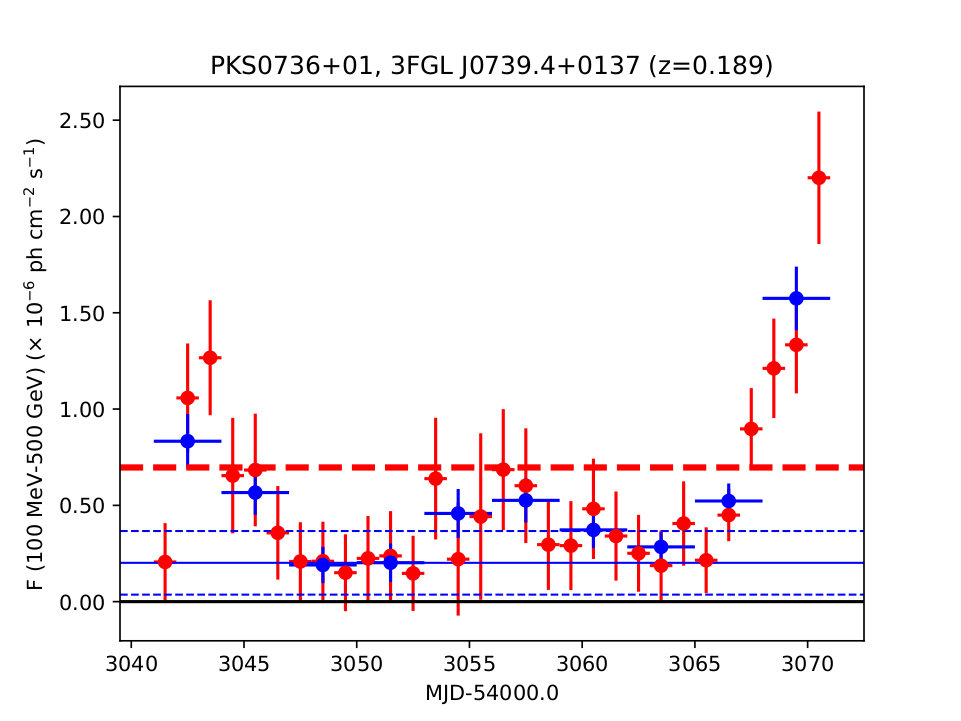 Figure 8
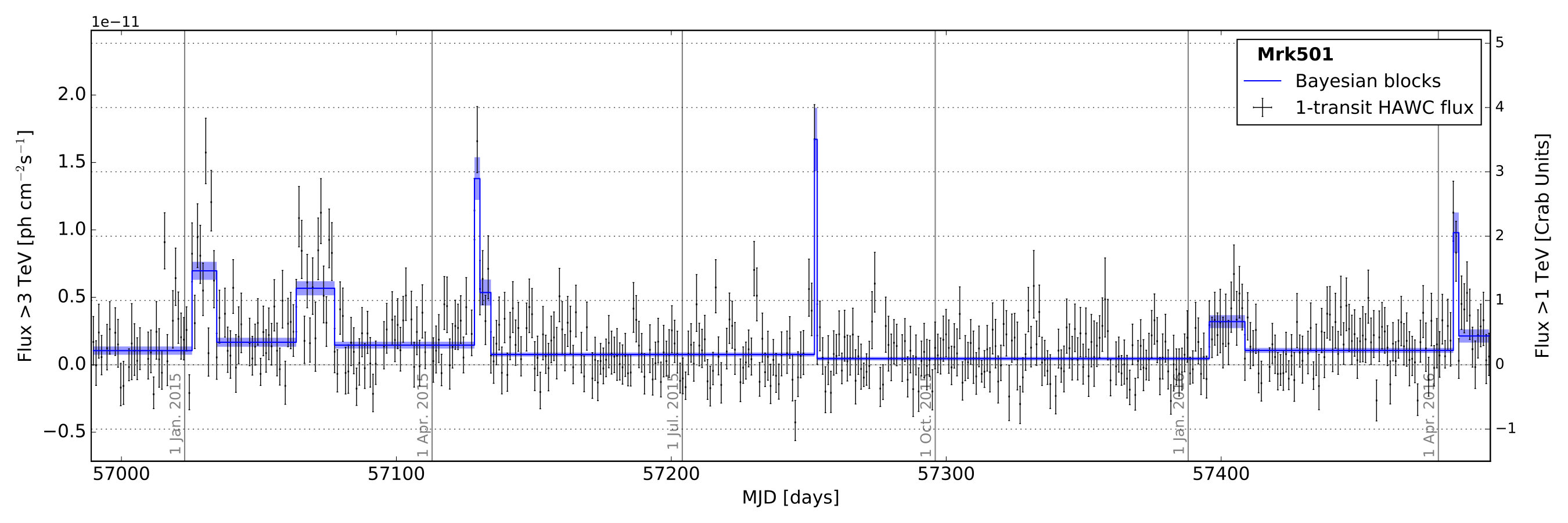 Figure 9
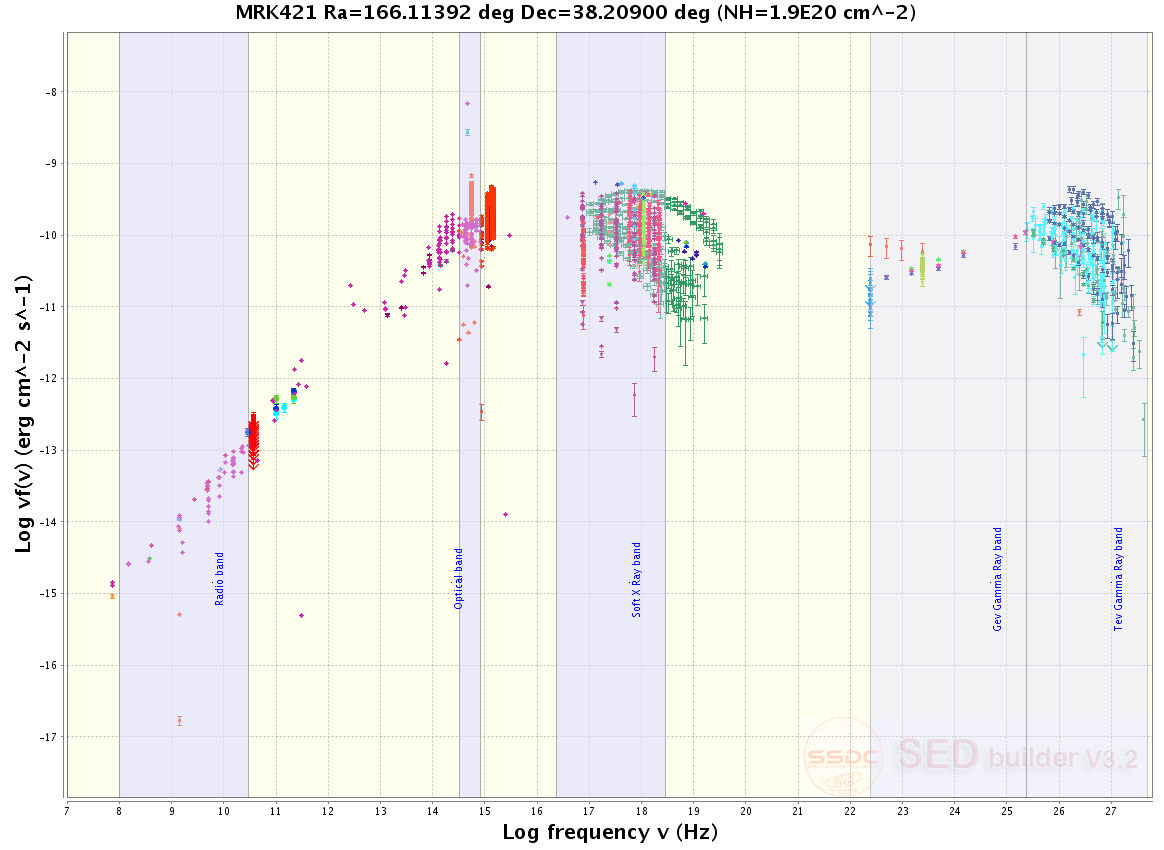 Figure 10
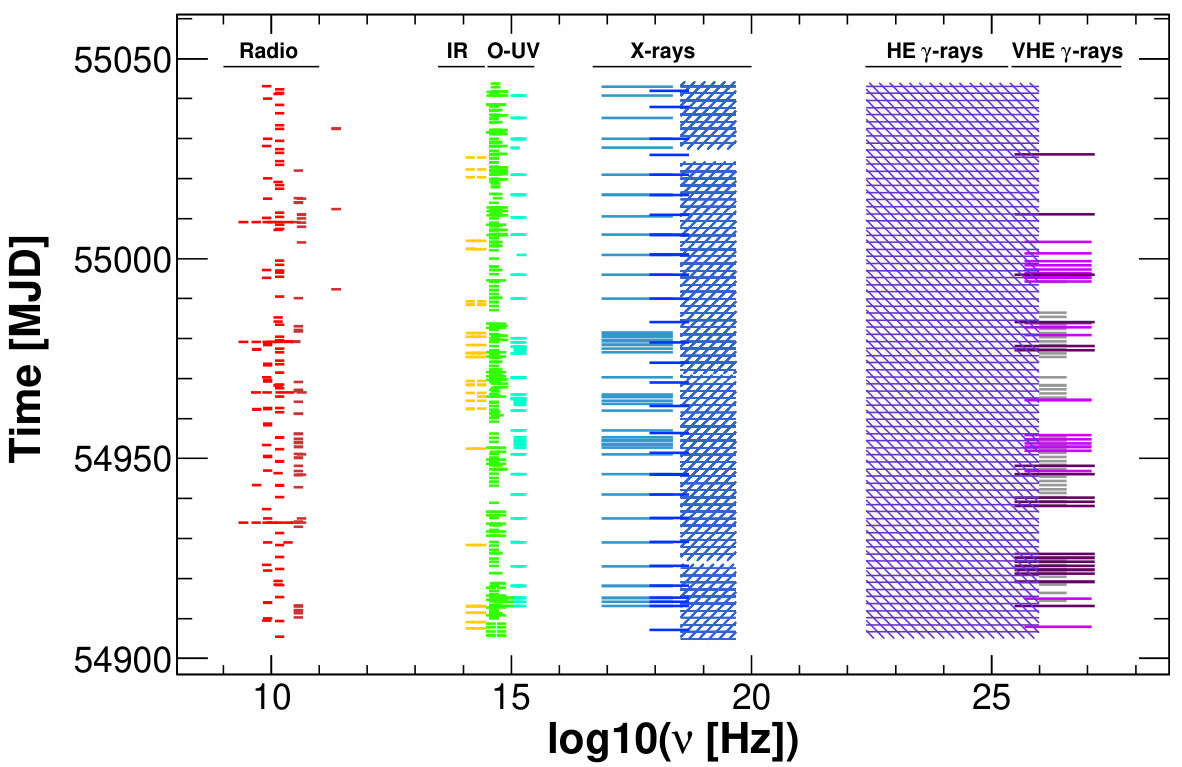 Figure 11
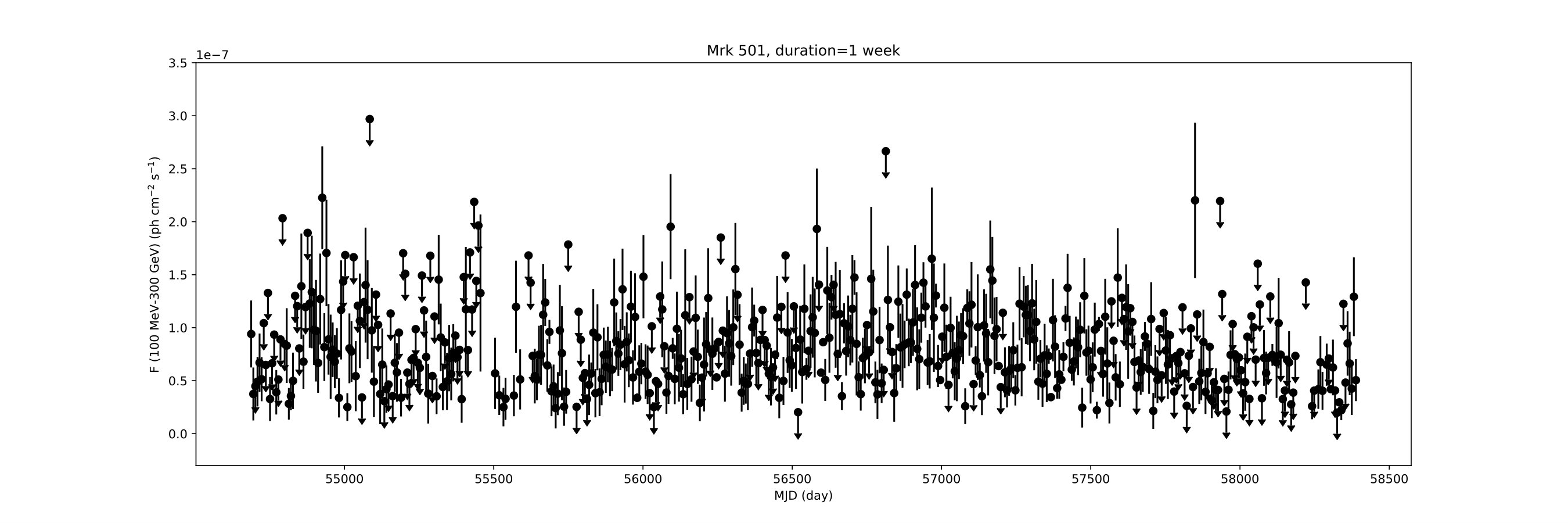 Figure 12
Peer Reviews
No public reviews on file for this paper yet. If you reviewed it on a platform where reviews are public (OpenReview, ICLR, NeurIPS, ICML), you can paste yours below so the community can read it here.
Videos
No videos yet. Explain this paper in a talk, walkthrough, or lecture? Add one.
Abstract
Blazars are jetted active galactic nuclei with a jet pointing close to the line of sight, hence enhancing their intrinsic luminosity and variability. Monitoring these sources is essential in order to catch them flaring and promptly organize follow-up multi-wavelength observations, which are key to providing rich data sets used to derive e.g., the emission mechanisms at work, and the size and location of the flaring zone. In this context, the Fermi-LAT has proven to be an invaluable instrument, whose data are used to trigger many follow-up observations at high and very high energies. A few examples are illustrated here, as well as a description of different data products and pipelines, with a focus given on FLaapLUC, a tool in use within the H.E.S.S. collaboration.
keywords:
active galactic nuclei; blazars; gamma rays; high energy; monitoring
\pubvolume
xx \issuenum1 \articlenumber5
\historyReceived: 27 November 2018; Accepted: 23 December 2018; Published: date \updatesyes
\TitleMonitoring the Extragalactic High Energy Sky \AuthorJean-Philippe Lenain\orcidA for the H.E.S.S. Collaboration \AuthorNamesJean-Philippe Lenain for the H.E.S.S. collaboration
1 Introduction
Active galactic nuclei (AGN) are among the most energetic sources in the Universe. They harbor a supermassive black hole in the center of their host galaxy, fueled by an accretion disk emitting mainly UV and X-ray thermal radiation. Blazars are a specific class of AGN, exhibiting relativistic jets, with emission dominated by non-thermal radiation from the radio to the -ray bands. The observational peculiarity of blazars stems from the quasi-alignment of their jet with our line of sight, thus Doppler boosting their emission (Rees, 1966; Blandford and Rees, 1978). Thus, their luminosity can be highly variable in almost all wavebands, and this variability can occur on a broad range of time scales, from years down to minutes.
Blazars are further divided in sub-classes: flat spectrum radio quasars (FSRQ), low-frequency-peaked BL Lac objects (LBL), intermediate-frequency-peaked BL Lac objects (IBL) and high-frequency-peaked BL Lac objects (HBL), depending on the peak frequency of their synchrotron component, but which also display different luminosities. FSRQ exhibit emission lines in the optical/UV range from e.g., their accretion disk, while BL Lac objects are mostly devoid of any detectable thermal component. From these different types, Fossati et al. Fossati et al. (1998) proposed the existence of a blazar sequence, characterized by an anti-correlation between peak frequency and luminosity. Since then, several studies have been conducted to assess whether this sequence is real or due to selection effects (see, e.g., (Padovani, 2007; Nieppola et al., 2008; Ghisellini and Tavecchio, 2008; Maraschi et al., 2008; Meyer et al., 2011; Giommi et al., 2012)). In the meantime, several outliers from this sequence have been detected, with, for instance, objects exhibiting both a high peak frequency and bolometric luminosity (e.g., (Padovani et al., 2012; Cerruti et al., 2017)). This subject is still a matter of debate (see, e.g., (Ghisellini et al., 2017; Padovani et al., 2017), and references therein).
The spectral energy distribution (SED) of blazars typically shows two main components (see, e.g., Figure 1). A low-energy component, peaking in the infrared to X-ray band, is commonly ascribed to synchrotron emission from relativistic electrons and positrons in the jet. The nature of the high energy component, peaking at high energies, can depend on the source properties and/or activity state. Leptons from the jet can interact with their own synchrotron emission by inverse Compton scattering, via the synchrotron self-Compton mechanism (Ginzburg and Syrovatskii, 1965; Konigl, 1981). In FRSQ or LBL objects, the thermal emission from the accretion disk, from the broad line region or the dusty torus can contribute significantly and give rise to external inverse Compton emission at high energies. In a hadronic framework, proton synchrotron and – interactions can dominate the high energy emission (see, e.g., (Mannheim et al., 1991; Mücke and Protheroe, 2001)).
The study of the variability in blazars, essentially of their flares, can help to reveal the nature of the emission mechanisms, as well as the location of the source emission (e.g., (Abeysekara et al., 2015; Zacharias et al., 2017; Romoli et al., 2017)). By contrast, in order to detect the thermal emission, investigable mostly in the near-infrared/optical range, the sources should be caught while in a quiet non-thermal state, such that the usually dominating non-thermal component does not outshine the thermal one. This is an almost necessary condition to reliably measure their redshift, obviously an essential quantity to derive the energetic budget in these objects (see, e.g., (Shaw et al., 2013; Pita et al., 2017)).
2 Facilities and Coverage
Catching AGN in flaring state, or quieter activity state for redshift measurements for instance, requires monitoring them with high cadence, given the diverse variability time scales they display. However, most astrophysical facilities have small fields of view, with respect to the entire sky, and rare are the instruments capable of instantly observing a sizable fraction of the celestial vault. Furthermore, depending on the observed wavelength and modes of detection, most instruments can not continuously operate. Such low duty cycles and small fields of view make exhaustive monitoring programs difficult to achieve, either by selecting a few sources on which observational efforts are focused, or due to high time pressure on the overall facility’s observation program. In a few cases, it is possible to gather different observatories to observe the same source at almost the same time (see, e.g., Figure 2), at the expense of notable efforts. This has been brilliantly demonstrated very recently during the multi-wavelength and multi-messenger campaign on NGC 4993 at the occasion of the binary neutron star merger event GW 170817 Abbott et al. (2017), or for the campaign organized on the presumable electromagnetic counterpart TXS 0506056 of the neutrino event IceCube-170922A IceCube Collaboration et al. (2018). However, observations performed with facilities having small fields of view and/or low duty cycle tend to be naturally biased to observations of high-flux states, if no long-term, persevering monitoring programs with regular cadence are in place.
On the opposite scale, some facilities such as the Neil Gehrels Swift/BAT (Barthelmy et al., 2005), AGILE (Tavani et al., 2009), Fermi-GBM (Meegan et al., 2009) and Fermi-LAT (Atwood et al., 2009) or HAWC (Abeysekara et al., 2017) have all-sky capabilities, with a large field of view, and almost continuous or high cadence observations (see Figure 3). Without such monitoring capabilities, it would have been, for instance, barely possible to serendipitously discover flares from the Crab Nebula, previously thought to be a steady -ray source (see, e.g., (Bühler and Blandford, 2014), and references therein). Furthermore, at high Galactic latitudes, the high energy -ray sky is largely dominated by AGN, and particularly blazars (Acero et al., 2015), making AGILE and Fermi-LAT perfect instruments to monitor the high energy extragalactic sky.
In particular, the Fermi-LAT has proven to be very useful to alert the community on unusual events for follow-up observations. As examples, observations at very high energies (VHE; GeV) following up source activity detected at high energies with the Fermi-LAT yielded the following recent results:
- •
the detection of the FSRQ Ton 599 by both MAGIC Mirzoyan (2017) and VERITAS Mukherjee and VERITAS Collaboration (2017), following an alert from Fermi-LAT Cheung et al. (2017);
- •
the discovery of VHE emission from a gravitationally lensed blazar, S3 0218357, at the time of arrival of the lensed component Mirzoyan (2014); Ahnen et al. (2016), which followed the prompt flare reported by Fermi-LAT Buson and Cheung (2014), making it the furthest VHE -ray source known to date with ;
- •
the detection of the second furthest VHE -ray source (with ), the FSRQ PKS 144125, with MAGIC Mirzoyan (2015) and VERITAS Mukherjee (2015) following activity detected in the optical, X-ray and high-energy -ray ranges Pacciani (2015);
- •
the detection at VHE of the FSRQ PKS 0736017 with H.E.S.S.—Ref. Cerruti et al. (2017) following a -ray flare identified as explained in the following.
3 Fermi-LAT as an All-Sky Monitor and Flare Detector
The Fermi-LAT team and the Fermi Science Support Center (FSSC) at NASA provide numerous data products and analysis tools to the community, from the Fermitools111https://fermi.gsfc.nasa.gov/ssc/data/analysis/software needed to analyze data, to high-level data products222https://fermi.gsfc.nasa.gov/ssc/data/access/lat. Catalog products, such as those for the 3FGL Acero et al. (2015) or 3FHL Ajello et al. (2017), are also made available.
Of interest for source monitoring and potential follow-up observations on relevant source activities are the available light curves for every source having experienced a flaring activity with a flux exceeding cm*-2* s*-1* at least once during the Fermi-LAT mission lifetime 333https://fermi.gsfc.nasa.gov/ssc/data/access/lat/msl_lc, as well as the light curves obtained using aperture photometry of all sources belonging to the 3FGL catalog444https://fermi.gsfc.nasa.gov/ssc/data/access/lat/4yr_catalog/ap_lcs.php. It should be noted, though, that these light curves have no absolute flux calibration but are relevant to reveal changes of activity, i.e., relative flux variations, from a given object. Another interesting product is given by the Fermi All-sky Variability Analysis (FAVA) tool555https://fermi.gsfc.nasa.gov/ssc/data/access/lat/FAVA Ackermann et al. (2013); Abdollahi et al. (2017), which blindly searches the whole sky to detect flares from -ray sources. One caveat related to the use of this tool is that its latency for flare detection is of the order of a week in order to accumulate enough statistics, which is sufficient for long-lasting events, but too long for e.g., some AGN flares which may last only a few days or less.
As a result, one may be interested in piping such products into an automatic stream such that follow-up observations could be promptly organized, or one may want to monitor other sources not covered by the aforementioned products, or to keep control on flux thresholds on which follow-up alerts should be issued. In that spirit, it is worth noting that Errando and Orr (2011) developed pipelines digesting Fermi-LAT data for potential target of opportunity (ToO) observations with VERITAS. We give another example below, which is in use in the H.E.S.S. collaboration.
Within the H.E.S.S. collaboration, the tool FLaapLUC (F**ermi-LAT automatic aperture photometry Light CUrve) has been developed to identify flares in Fermi-LAT data (Lenain, 2018). The purpose is to catch unusual activity in high-energy emitting sources as quickly as possible using Fermi-LAT data, while the flare is still on the go, in order to promptly organize ToO observations with H.E.S.S. The method used here is also based on the aperture photometry666https://fermi.gsfc.nasa.gov/ssc/data/analysis/scitools/aperture_photometry.html, which is computationally fast but inaccurate in terms of absolute flux scale, as mentioned above.
More than 320 AGN are monitored daily with FLaapLUC. This tool takes advantage of the whole mission data set of Fermi-LAT to construct a long-term average flux () for each source, which serves as the baseline for the identification of flares. Typically, if the last daily flux measurement of a source is above (see Figure 4), then an automatic alert is issued. In that case, a follow-up likelihood analysis is automatically processed to derive a precise spectral characterization. This alert is handled within the H.E.S.S. AGN ToO group, which then evaluates the feasibility, and potentially triggers follow-up ToO observations with H.E.S.S. FLaapLUC veto alerts depending on the source distance and zenith angle at culmination, to take into account -ray absorption by the extragalactic background light Hauser and Dwek (2001), as well as to account for source visibility at the H.E.S.S. site. For more details on FLaapLUC, whose code is available at https://github.com/jlenain/flaapluc, the reader is invited to Lenain (2018). FLaapLUC has been in use in H.E.S.S. since late 2012. Recently, H.E.S.S. detected VHE flares following observations triggered with FLaapLUC, for instance from 3C 279 (de Naurois and for the H.E.S.S. collaboration, 2018), TXS 0506056 along with a Fermi-LAT alert (Ojha and Valverd, 2018), PKS 202207, PKS 1749096 or PKS 0736017 (Cerruti et al., 2017; Schüssler et al., 2017).
4 Conclusions
Monitoring the high-energy sky is key for making new discoveries, either of previously unknown events, such as for the presumable coincidence of rays with neutrinos as observed in TXS 0506056 IceCube Collaboration et al. (2018), or to follow up on flaring events in known AGN. To do so, all-sky or large field-of-view instruments, with high duty cycle, such as HAWC or Fermi-LAT, are invaluable. Long-term monitoring programs as a strategy for observations, such as those performed by the FACT telescope Anderhub et al. (2013), are also a key asset, since they provide regular observations of selected sources in an unbiased way Temme et al. (2017).
In the near future, the future CTA (Cherenkov Telescope Array) observatory is expected to provide, as parts of its key science projects, long-term monitoring of selected AGN, as well as a survey of a part of the extragalactic sky and of the Galactic plane (see (CTA Consortium et al., 2017), for more details). Given its field of view of the order of a few degrees, CTA will presumably provide a shallow and wide survey of 25% of the sky, with an expected sensitivity of more than ten times better than Fermi-LAT or HAWC for steady sources in its core energy range (100 GeV–10 TeV). This survey is expected to be completed within the first few years of operation of CTA, and thus complementary survey-capable facilities, such as e-ASTROGAM de Angelis et al. (2018) or AMEGO777See https://asd.gsfc.nasa.gov/amego, are necessary to take such a survey over in the next couple of decades. Such satellite projects being still in the proposal stage, assuring that Fermi keeps flying in the next years is essential for the community.
\funding
This research received no external funding.
Acknowledgements.
The support of the Namibian authorities and of the University of Namibia in facilitating the construction and operation of H.E.S.S. is gratefully acknowledged, as is the support by the German Ministry for Education and Research (BMBF), the Max Planck Society, the German Research Foundation (DFG), the Helmholtz Association, the Alexander von Humboldt Foundation, the French Ministry of Higher Education, Research and Innovation, the Centre National de la Recherche Scientifique (CNRS/IN2P3 and CNRS/INSU), the Commissariat à l’énergie atomique et aux énergies alternatives (CEA), the U.K. Science and Technology Facilities Council (STFC), the Knut and Alice Wallenberg Foundation, the National Science Centre, Poland Grant No. 2016/22/M/ST9/00382, the South African Department of Science and Technology and National Research Foundation, the University of Namibia, the National Commission on Research, Science & Technology of Namibia (NCRST), the Austrian Federal Ministry of Education, Science and Research and the Austrian Science Fund (FWF), the Australian Research Council (ARC), the Japan Society for the Promotion of Science and by the University of Amsterdam. We appreciate the excellent work of the technical support staff in Berlin, Zeuthen, Heidelberg, Palaiseau, Paris, Saclay, Tübingen and in Namibia in the construction and operation of the equipment. This work benefitted from services provided by the H.E.S.S. Virtual Organisation, supported by the national resource providers of the EGI Federation. This research has made use of NASA’s Astrophysics Data System, of the SIMBAD database, operated at CDS, Strasbourg, France, and of the TeVCat online source catalog (http://tevcat.uchicago.edu). Part of this work is based on archival data, software or online services provided by the Space Science Data Center—ASI.
\conflictsofinterestThe author declares no conflict of interest.
\externalbibliographyyes
The reference list from the paper itself. Each links out to its DOI / PubMed record.
- 1Rees (1966) Rees, M.J. Appearance of Relativistically Expanding Radio Sources. Nature 1966 , 211 , 468–470. doi: \changeurlcolor black 10.1038/211468 a 0 . · doi ↗
- 2Blandford and Rees (1978) Blandford, R.D.; Rees, M.J. Extended and compact extragalactic radio sources - Interpretation and theory. Phys. Scr 1978 , 17 , 265–274.
- 3Fossati et al. (1998) Fossati, G. et al. A unifying view of the spectral energy distributions of blazars. MNRAS 1998 , 299 , 433–448.
- 4Padovani (2007) Padovani, P. The blazar sequence: validity and predictions. Ap&SS 2007 , 309 , 63–71. doi: \changeurlcolor black 10.1007/s 10509-007-9455-2 . · doi ↗
- 5Nieppola et al. (2008) Nieppola, E. et al. Blazar sequence - an artefact of Doppler boosting. A&A 2008 , 488 , 867–872. doi: \changeurlcolor black 10.1051/0004-6361:200809716 . · doi ↗
- 6Ghisellini and Tavecchio (2008) Ghisellini, G.; Tavecchio, F. The blazar sequence: a new perspective. MNRAS 2008 , 387 , 1669–1680. doi: \changeurlcolor black 10.1111/j.1365-2966.2008.13360.x . · doi ↗
- 7Maraschi et al. (2008) Maraschi, L. et al. Testing the blazar spectral sequence: X-ray-selected blazars. MNRAS 2008 , 391 , 1981–1993. doi: \changeurlcolor black 10.1111/j.1365-2966.2008.14030.x . · doi ↗
- 8Meyer et al. (2011) Meyer, E.T. et al. From the Blazar Sequence to the Blazar Envelope: Revisiting the Relativistic Jet Dichotomy in Radio-loud Active Galactic Nuclei. Ap J 2011 , 740 , 98. doi: \changeurlcolor black 10.1088/0004-637X/740/2/98 . · doi ↗